

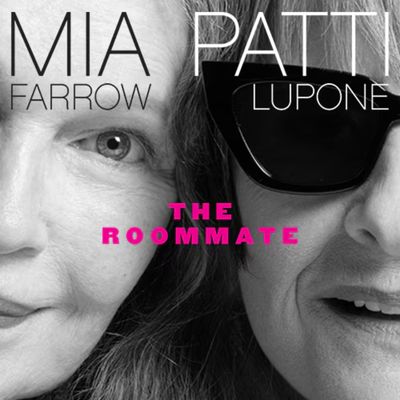
In this episode, we pull back the curtain on Broadway's latest, "The Roommate," starring the legendary Mia Farrow and Patti LuPone. Join us as we unpack this intriguing tale of reinvention and identity, exploring the unexpected chemistry between two powerhouse performers... Read More
From the show: Half Hour with Jeff & Richie (Post-Show Broadway Discussions and Interviews)
Guests


Featured Shows
About
In this episode, we pull back the curtain on Broadway's latest, "The Roommate," starring the legendary Mia Farrow and Patti LuPone. Join us as we unpack this intriguing tale of reinvention and identity, exploring the unexpected chemistry between two powerhouse performers. We'll dive deep into the plot's twists and turns, analyze the production's strengths and weaknesses, and debate whether the play lives up to its star-studded billing. From surprising performances to questionable directorial choices, we leave no stone unturned in our quest to bring you the ultimate insider's perspective on this production.
Is "The Roommate" a triumphant return for Mia Farrow? Does Patti LuPone's character get the spotlight she deserves? And why are audience reactions so divided? Tune in for our hot takes, behind-the-scenes insights, and a lively discussion that will make you feel like you're right there in the theater with us.
Follow and connect with all things @HalfHourPodcast on Instagram, and YouTube. Share your thoughts with us on THE ROOMMATE on our podcast cover post on Instagram.
Transcript
This transcript was automatically generated and might contain errors.
[0:00] Jeff Malone: Welcome to Half Hour with Jeff & Richie, the podcast where we explore the latest shows we see, sharing our insights and opinions on the performances, storylines, and everything in between. In today's episode, we're discussing the new Broadway play, THE ROOMMATE, currently playing at the Booth Theatre and starring Mia Farrow and Patti LuPone. Whether you cannot catch the show in person or you want to expand your thoughts after seeing it, this episode is for you. And as always, we want to inform you that this episode will contain spoilers, so if you're ready to dive into this production, stick around with us. I'm Jeff.
[0:31] Richie Grasso: And I'm Richie, and we're thrilled to be your hosts for today's episode. But before we start the conversation about THE ROOMMATE, here are a few words from our advertisers.
[0:42] Jeff Malone: Welcome, everyone, to a new episode of Half Hour with Jeff & Richie. Today, we're discussing the Broadway run of THE ROOMMATE. Sharon's never had a roommate before. In fact, there's a lot Sharon's never done before, but Robin's about to change all of that. Jen Silverman's THE ROOMMATE shatters expectations with its witty and profound portrait of a blossoming intimacy between two women from vastly different backgrounds as they navigate the complexities of identity, morality, and the promise of reinvention. Being bad never felt so good as it does in this riveting one act about second acts. So we're talking about THE ROOMMATE today in this episode, and we're always going to start with our hot take. So, Richie, your turn.
[1:29] Richie Grasso: This play seems oddly timed in this season. I don't really understand why we're doing this play. Other than it was wonderful to see Mia Farrow and Patti LuPone on stage live together, a vehicle for them, I guess. I think there could have been a better vehicle for them. I don't really understand the point of this play. I thought there were okay moments at best. I didn't hate it, but I certainly didn't really love it either.
[2:01] Jeff Malone: Yeah, my hot take on this is that this play seems very confused, and I feel like that's all I'm going to say about that. So let's get into it. So we go into overall plot and concept. To me, what this read was, hey, I'm a Broadway producer. Let's call Jack O'Brien. Hey, Jack, what are you doing? Nothing. Cool. Hey, Patti, what are you doing? Nothing. Hey, Mia, what are you doing? Nothing. Are you starting to catch my drift here? Whereas the concept of putting this play together, sure. But let's talk about the actual plot of this show first. Right. And that's why I'm saying, oh, Jen Silverman wrote this play. Cool. All right. It's about these two women. It's like the odd couple. They're roommates, I guess.
And I think it just didn't seem like there was any energy put into it, really. And yes, we'll talk about the direction and the design. But to me, I'm looking at this and I'm saying, okay, let's start at the very beginning. A very good place to start. Like, where do we go with, like, how did Patti get to find out that she needed a roommate?
[3:10] Richie Grasso: Well, that's like the big thing here. It's a very big thing to even just start without a loan. The premise of the show is two women, older women, becoming roommates together. We don't know how or why that is happening. You know, Patti was trying to go far, far away from New York. Okay. But Mia's character seemed very incompetent with internet and high tech. So did she post an ad in a newspaper? Did she post online? Did a friend tell her about it? How did Patti come to Iowa? I don't know. There were so many confusing things there. And then we spent the first 30 minutes of the play where we don't really understand Patti's character. We still don't. I don't really know what was a lie, what was real.
You want to believe that she's a vegan. Okay. She's a lesbian. She has a horrible past of doing bad things. Mia's character doesn't do bad things. It's an odd couple moment, right? Neil Simon already wrote this play. I mean, I'm not trying to say it's not done before. And then, to me, and I don't know if this was the point of the play, but if you notice this, Jeff, there was a lot of times where there was, Mia's character in particular is obsessed with labels. I'm a mother. Oh, I'm widowed. Patti, oh, I'm this, but I'm not that. I'm a lesbian. I'm a vegan. They were such obsession with the labeling of these characters that I think at the end, they finally got to a place where maybe they were stripping the labels and maybe they were just being friends, intimate friends. It was very confusing to figure out what they were.
[4:41] Jeff Malone: Well, there was a lot of moments of discovery within this piece, especially for them. I mean, it's definitely a reinvention piece for both of them, whether Sharon knew that she wanted to reinvent herself, but that Robin was coming to reinvent herself. So, I think establishing that was where this play didn't really start off like that. We had to learn that going on, that Robin was coming here with a secret. Robin was going to try to be better and actually was trying to morph into someone like Sharon, whereas in the end, Sharon comes around here and is morphing into Robin. So, both women in this piece wanted to reinvent themselves into someone else, their roommate. But also, there was this, they both had children that they were having difficult times with.
I thought it, I found it kind of odd. I was telling, I was saying this recently that Mia and her son had a complicated relationship, and I almost felt bad for the son. What's his story? He wasn't picking up the phone for the mom, the mom was having it. We never got resolved from that, what happened with the son and the mom's relationship. It just seemed odd, and it seemed like such a focal point in a two-person play, that this son was such a focal point and was never seen and never resolved.
[6:10] Richie Grasso: The comedy to me was surface level at best. I might have chuckled once or twice. Some people were hysterically laughing, I don't really understand that. To me, and listen, I'll tell you, and we'll talk about the actor performances in a second, it seemed like just a vehicle show for two stars to come in and do, stand there, say this line, do that. It didn't seem like the most difficult acting or writing they ever had to read lines of. I'm not trying to be overly critical, I just don't understand why. Why is this sitting here right now? What was the point? But I think if you're looking into the deeper message of the piece, about reinvention, that's where I think a lot of this is stemming from. Do you not feel that way?
[7:02] Jeff Malone: Totally, and I just feel like- And so if you're someone that is looking to reinvent themselves, forget Patti and Mia in this section, if you're actually watching this piece and you're looking to reinvent yourself or you're in this midlife crisis point, because they're both supposed to be in, I guess, their 50s, and they each have adult children, and they are kind of running from everything that was always part of their life. So that's where I think something like, maybe you and I don't fully resonate with a piece like this, but maybe someone else does.
[7:31] Richie Grasso: Totally, and that's fine, and very valid. I just looked at this like, I thought that we could have gone further with this midlife crisis of sorts that these women were having. The whole calling the phone, lying to steal the money, and then Patti coming in at the end, standing next to her, was a nice moment. I just don't know if we could have gone further.
[7:49] Jeff Malone: Well, I think we definitely, in terms of a structure of this piece, we definitely could have gone further. I actually think some of it could have been removed. I think there was some dialogue that was probably unnecessary, but that there were points that were needed to set this piece up for someone to actually understand, without having to try to figure out later on how people got there and whatnot. Sometimes, I do think there does need to be a little bit of setup for something to happen.
[8:21] Richie Grasso: Yes, and I thought that the plot moved very slow. I think we were like 45 minutes in, and I was like, what's happening? And then on top of that, I would love to understand a little bit more from the playwright as to why there were deeper themes put into this play, but there was a comedic edge put on top of them that I didn't fully agree with. I almost feel like it's a drama, right?
[8:47] Jeff Malone: Yeah, I think it probably would have worked better in that way. I think when we joke about things like guns and things like that, I don't know how offended one might be or how that sits well with some people, but it does make you laugh at times because you're like, oh, yeah, why is this here? I feel like someone in front of me was like, oh no, why is that even on the stage right now?
[9:12] Richie Grasso: Yeah, it just seemed out of place. I don't know. A lot of the jokes on lesbianism, on veganism, on just not understanding someone else, I actually thought it was odd that they were ridiculing her son. I don't know. I'm not trying to go back to the son, but when there was the scene when she was like, oh, he's a women's clothing designer in New York City, but he's not gay. Why are we stereotyping? And then Patti was like, oh, well, he could be, but maybe he's not. And then Mia was like, well, he's dating a woman who is a bisexual. It was like, why are we obsessed with your son's personal life? I don't know. It didn't land for me. But I think that's kind of like how that generation still talks.
[9:58] Jeff Malone: Yeah. I'm not everyone, but I mean. A lot. I mean, I think there are many people in that generation that still do talk that way, especially when you're talking to someone from the Midwest. I mean, I don't know we've come so far, but have we? Which I think this is actually a great segue into the next portion of this, of the overall production, the direction, the active performances, and the design. Because I do think there were some great elements, and I actually have a whole theory for this piece. So before we do that, let's get into a few messages from our advertisers.
[10:30] Jeff Malone: And we're back. So before we get into this overall kind of production here, because everyone knows it, it's Patti LuPone, it's Mia Farrow, it's on the stage here. It almost feels like this was supposed to be a movie, not a play. And I actually was talking about this with a friend, and I said, it felt like this kind of was like, it's like 10 years too late. It almost feels like if this came out 10 years ago, it would fit in this kind of like slapsticky kind of, maybe not like rom-com, not rom. I forget the genre that I'm kind of thinking about, but like, think Melissa McCarthy, Nicole Kidman in a film of this. And it's in this style. This is the kind of writing that was happening 10 years ago.
[11:18] Richie Grasso: Yes, but what's happening now is you have, I'll use these two plays as prime examples. When O'Mary is pushing the comedy with the way O'Mary is, and when Job is pushing the drama the way Job is, this is just this very safe middle of the road play. Well, it feels very safe. And not everything needs to be Job, and not everything needs to be O'Mary. But when you have things literally running at the same time, pushing those drama boundaries, pushing those comedy boundaries, it's very tough to sit here and say, oh, it was kind of funny. It was kind of sad. I don't really know. But when we go into the writing portion of this, and now the production of it, and when you slot in someone like Patti LuPone, and you slot in someone like Mia Farrow, and that's what's selling this piece, and at the end of the day, everyone goes and then sees this, and then they kind of leave, and they're like, hmm, okay, so we just went to watch those two women perform on the stage. Well, then that seems like a cop-out in my book for poor writing.
[12:21] Jeff Malone: Of course, on top of, I mean, the list of questions that kept developing in my mind, how did Mia afford this house? She divorced her husband. She said, what did she do for a living? We never understood why she was living so far away from her son in New York. There was so many, Patti had the daughter, but then there was multiple names. Why did Patti really leave? So, yes, talking about some of these other things, I'll say this. Listen, there's no bigger Patti LuPone fan than me. But this was Patti just up there, I don't know, punching the card in, clocking in and clocking out of work. It wasn't Patti's best work. She's up there doing Patti. Mia is doing some great stuff, and I really enjoyed Mia's performance. I thought she was very pleasant. I've never seen Mia Farrow live. She's a Hollywood legend of sorts. I really enjoyed Mia. I don't think Mia overshadowed upstage Patti. Patti helped her out.
[13:22] Richie Grasso: No, but she was definitely more of the surprise, I think, factor, because, you know, Patti can give acting very well, especially in a musical and acting through so much of her work. But when you look at something like this, I do think that there was a chemistry between the two of them, but it didn't feel like it was on the same level.
[13:43] Jeff Malone: Correct. And also, I'll say this. I'm kind of getting a little sick and tired of the, like, Patti has left the industry. Patti does not hold her equity card. Patti thinks Broadway is Disney world. Patti, Patti, Patti. And then we don't hear from Patti since company closed, right? And she does some TV. And all of a sudden, Patti LuPone returns to Broadway, and the media goes, how? Where? When?
[14:05] Richie Grasso: It's kind of like how she showed up to the house.
[14:12] Jeff Malone: Yeah.
[14:12] Richie Grasso: How? Where? When?
[14:14] Jeff Malone: But also, I look at it and I say, this is what she came back to do. Like, it didn't have to be a musical, but, like, she had made a comment once. I think when you got to put your name on a stage with Mia Farrow on this, how do you turn it down?
[14:31] Richie Grasso: Someone asked her once, why didn't you go do Dolly on Broadway and do Dolly Levi? And she said, oh, I don't really know if I would do that. But I would truly do the play version of the bad Thor Wilder's The Matchmaker. I believe that's the name of the play that Helen Dolly's based on. And I'm like, oh, yeah, like, Patty should be going to do like an epic play of a revival or something. Like, I'm not saying she can't do new works. I'm just saying like, this was just so interestingly odd. Did she need the paycheck? I don't know. I have so many questions.
[15:00] Jeff Malone: Yeah. And then in terms of that, too, it's like, how do you feel like each played the character? Like, well, how was Mia's portrayal of Sharon? You know, I thought that there was a storyline built with her. She was this meek kind of little thing that really evolved into this almost like Sandy in Grease kind of moment, you know? And then, and then you have Patty's character Robin, and you're just kind of like watching her and she's like the opposite. It kind of starts on the high and then it kind of deflates.
[15:40] Richie Grasso: Yeah. And I just feel like Patty's character was also small. Yeah, small in terms of the character, in terms of the writing. Mia had more to do on the phone. And I just feel like there was more for Mia to do. And then especially when Mia had the whole end of the play kind of by herself. Talking about some of this direction, I like some of what Jack O'Brien has done in his career. I don't think this is Jack O'Brien's best work. I'm looking at this and I'm saying, stand there. Now sit at the counter. Now go sit in the chair. Now go stand in the doorway. Now go back to sit at the counter. And then if Patty did this one more time, and I don't know if this was a direction or if this was- Get the oat milk out of the refrigerator. That didn't bother me as much.
[16:23] Jeff Malone: It bothered me. Every single time she went up the stairs, I don't know if you noticed this, she stepped up one step and turned around and finished the scene on the same step. No one would naturally stop on just the same one step every time to finish the scene. There's seven, six steps there. Go up a couple more and then finish at the top or start at the bottom. And I don't know, maybe that's too specific, but I just found that the direction seemed basic, very, very basic to me. And like we're in this big house, a set design by Bob Crowley. It's a beautiful home. I didn't mind the set design. But I would look at it and I would say, that's almost a home you kind of say, why? There's two people in this home. It's so large. Is that the right design for this piece? It almost looked too modern.
[17:15] Richie Grasso: She took really, really good care of a house that was built maybe 10 years ago. And I would have thought Sharon would be living in a little cottage up in a mountain. It seems… There was one interesting directorial choice I filmed that was kind of going on.
[17:33] Jeff Malone: It was through those really long scene changes that I was…
[17:36] Richie Grasso: Very long! We're in blackouts in this, I will say, the original music by David Yazbek. I didn't mind it. I mean, it was a little busy with the clarinets and the saxophones and all that. But I was like, why are these scene changes taking so long? And then I would see, if you looked very closely, Jeff, there was a lot of people on stage. There was like a couple stage managers and a crew member. That are just literally moving props around.
[17:59] Jeff Malone: And you can kind of see them because there's lighting happening in the background, which this is the point of what I'm touching on. Very early on in the play, they talk about how, and there's tornadoes. It was very touched on that tornadoes happening in the Midwest, which I think is kind of like a theme on here that Robin kind of comes in like the tornado and shakes everything up and then leaves like a tornado. It's interesting. But then it could get a little too literal in the scene changes by the sky changing each time.
[18:35] Richie Grasso: And I was like, all right, I guess that's a choice. It kind of works. Isn't needed.
[18:41] Jeff Malone: I will say something. I thought the lighting was some of the strongest design. And I think Natasha Katz, I mean, if you've seen one Broadway show, I'm sure you've seen Natasha Katz lighting. She lights more shows than God. And I've always liked Natasha Katz lighting. I think that woman knows exactly how to light a stage. I thought that was the strongest part of this. I really do. I actually think the best design directorial vision choice was the lighting. I thought it was very, very well lit. I mean, a lot of the times it was just the house turning lights on. No, there was some focal moments when she'd be on the phone and they'd pull focus a little. The sun would set when the car pulled up. That was cool with the headlights. There were some cool moments where I felt the ambiance a little bit.
[19:29] Richie Grasso: I also never, another directorial thing that I kind of found odd was they always went into the house in two different ways.
[19:36] Jeff Malone: Yes.
[19:37] Richie Grasso: Like sometimes it was.
[19:41] Jeff Malone: And I never kind of knew like, what was the front door?
[19:42] Richie Grasso: Yeah. Because I would think the door that was backed by the kitchen in between the refrigerator and the counter was actually the back door.
[19:49] Jeff Malone: That's what I would have thought too.
[19:50] Richie Grasso: But then the side door didn't feel like it was the front door.
[19:54] Jeff Malone: Yeah.
[19:55] Richie Grasso: So anyway, it's probably just like. And I also say, costumes were okay. I mean, fine. But to me, I will say this. Patti's wig, I don't know. I don't know. I just, I don't know. That just wasn't working for me.
[20:16] Jeff Malone: Oh, stop it.
[20:18] Richie Grasso: Why?
[20:19] Jeff Malone: No, I get it. It just makes it look like she's like straight out of, actually, you're probably right. Because it didn't seem like she was coming from the Bronx. It seemed like she was coming from Staten Island. I just, it just didn't work for me. I think Patti has short hair, and they could have did something with her. I know most people are wigged on shows. But I just thought, I didn't hate it. I just thought it was, oh, I don't know. I wasn't a big fan of that.
[20:42] Richie Grasso: Wasn't a fan.
[20:43] Jeff Malone: Yeah.
[20:44] Richie Grasso: So I mean, listen. It was.
[20:47] Jeff Malone: It's time to move into our own experiences at the show and some upcoming Broadway announcements.
[20:53] Richie Grasso: Oh, actually, first, we forgot to put in here too, some Tony talk. So we'll do that when we come back. But here are a few messages from our sponsors.
[21:01] Jeff Malone: Okay, before our own experience and some upcoming announcements, Tony's.
[21:08] Richie Grasso: I don't think so.
[21:09] Jeff Malone: Zero.
[21:11] Richie Grasso: Maybe they'll throw out a nomination for something.
[21:15] Jeff Malone: I don't know if this is me and Patti's Tony nomination moments. No, I don't think so.
[21:21] Richie Grasso: Yeah, I mean, I kind of agree with you there.
[21:23] Jeff Malone: I might get maybe like scenic design.
[21:25] Richie Grasso: Or lighting design. I don't think.
[21:27] Jeff Malone: But in the major categories, like new play, best new play.
[21:30] Richie Grasso: Oh, no, no, no.
[21:32] Jeff Malone: Yeah.
[21:32] Richie Grasso: I don't think so.
[21:34] Jeff Malone: I think we have plenty of new. I mean, right now, Hills of California.
[21:38] Richie Grasso: McNeil. I mean, there's so many new things.
[21:40] Jeff Malone: The George Clooney play that's coming.
[21:41] Richie Grasso: And there's some revivals too, but.
[21:43] Jeff Malone: Cult of Love and.
[21:45] Richie Grasso: Yeah.
[21:46] Jeff Malone: All right.
[21:46] Richie Grasso: I don't think so.
[21:47] Jeff Malone: I probably agree with you.
[21:48] Richie Grasso: I mean, I would hope Job gets a Best New Play nomination.
[21:51] Jeff Malone: Yeah.
[21:52] Richie Grasso: And Sidney Lemon.
[21:53] Jeff Malone: Yeah.
[21:55] Richie Grasso: Yeah, so no, no, no.
[21:55] Jeff Malone: Okay.
[21:55] Richie Grasso: I think this was just a.
[21:57] Jeff Malone: I hate to say it like.
[21:57] Richie Grasso: It also got mixed reviews.
[21:59] Jeff Malone: So I mean.
[22:00] Richie Grasso: I look at this as just like a place card holder in a season where maybe a theater was open. And I think it's closing in December or January.
[22:06] Jeff Malone: So I don't think it's really.
[22:08] Richie Grasso: Was meant for that maybe.
[22:09] Jeff Malone: Either for Tony Award Puz.
[22:11] Richie Grasso: Maybe.
[22:11] Jeff Malone: But.
[22:12] Richie Grasso: So.
[22:14] Jeff Malone: There we go.
[22:15] Richie Grasso: Not happening.
[22:16] Jeff Malone: And overall experiences.
[22:17] Richie Grasso: Listen, the theater was packed. People were enjoying this. What I found interesting in our own experience here.
[22:25] Jeff Malone: What I did find interesting was when people laughed.
[22:29] Richie Grasso: Because there were certain things that I found like not funny. And people were laughing. And I think that's a generational thing. Because when you can hear different laughter. You know when someone's either younger or older. And they're laughing and whatnot. But yeah.
[22:43] Jeff Malone: I mean.
[22:44] Richie Grasso: And other than that. Like I think it was fine at 90 minutes. I probably would have included some other things versus what was fully on the stage. Or maybe that just needed some editing. Or a show doctor. But other than that. You know.
[22:59] Jeff Malone: I love a 90 minute play. No intermission. You're in and out. I mean it's great.
[23:04] Richie Grasso: But that's just my feeling on that.
[23:07] Jeff Malone: All right. Moving into some recent Broadway news and buzz.
[23:10] Richie Grasso: We do have an announcement very recently that Barbara approved documentaries and the works about Miss Barbara Streisand. Love this of course.
[23:19] Jeff Malone: I don't. I'm not really shocked. I think Barbara was supposed to do the Gypsy remake movie. Barbara was supposed to do a couple things. Film wise didn't. So that's why I think she's releasing music still. I think she released her book.
[23:33] Richie Grasso: She did release her book.
[23:34] Jeff Malone: I think that's why she's now going to be like at the helm of her own documentary. Hey. Why wouldn't you end your. I'm not saying her career is ending. But why wouldn't you end your career in this way. Put your book out in your own words. Put your documentary out in your own words. If the producers of Hollywood aren't giving you roles. Aren't giving you directorial moments. Put your music out. Go tour if you want or not. She has amazing relationship with her record label.
[24:00] Richie Grasso: Like amazing.
[24:02] Jeff Malone: I don't know anybody who's had as long. It would actually be interesting. I would be intrigued to know a little bit about that. Because not everyone does have an amazing relationship. You have many, many horror stories about their relationships with the music industry.
[24:14] Richie Grasso: So for someone who has been with it through thick and thin from the beginning and having creative control. If she has creative control. Those are all things to like talk about. She must be okay with it. But she's also. She's one of the longest solo female artists to continue to keep releasing music.
[24:32] Jeff Malone: If you want to go.
[24:33] Richie Grasso: The best thing though with her. Probably this will be me off the record. Probably saying this. And not knowing is the fact that. You know if she renegotiated her contract at a certain point in her career. And what was she given with doing that. Because you know that's another thing.
[24:48] Jeff Malone: Right.
[24:49] Richie Grasso: So I mean. But I'm excited for that. That'll be obviously a 4D IMAX expensive movie to know.
[24:56] Jeff Malone: I'm sure.
[24:57] Richie Grasso: We have some casting announcements coming on. Joy Woods and Jordan Tyson, which was very predictable, were announced as Louise and June in Gypsy Thoughts.
[25:11] Jeff Malone: Love it.
[25:12] Richie Grasso: Love Joy. I don't know Jordan too well, other than Notebook, which is a nice voice. Tough roles. Did you predict it?
[25:20] Jeff Malone: I mean.
[25:21] Richie Grasso: I saw Joy.
[25:22] Jeff Malone: He definitely knew.
[25:24] Richie Grasso: I think Joy and Jordan. Listen Louise and June are tough. I mean Mama Rose is tough. The daughters. The relationship with Herbie. It's an amazing piece. And it's tough acting. It's tough scene work. So it's going to be given. And it's Tony nomination buzz like crazy.
[25:41] Jeff Malone: Which did Danny DePersie and Audra McDonald. I mean it's going to have Tony awards up the wassail.
[25:46] Richie Grasso: I think.
[25:47] Jeff Malone: So yeah good stuff.
[25:49] Richie Grasso: Hey and moving forward. Jordan Fisher, Taryn Killam, Kiela Settle, and Stephanie Stiles were announced leading the cast of the season opener of You're In Town at City Center.
[25:57] Jeff Malone: All four of these performers. Very talented.
[26:00] Richie Grasso: You're In Town. Great show. Haven't seen it in New York in quite a while. It makes sense for City Center to do that. I love some of the music in You're In Town. I think it's going to be great.
[26:09] Jeff Malone: All right well.
[26:11] Richie Grasso: We'll see what happens.
[26:13] Jeff Malone: I know nothing about You're In Town. So I'm not saying much.
[26:17] Richie Grasso: Well you'll learn now.
[26:18] Jeff Malone: Yes. Great stuff.
[26:20] Richie Grasso: Yeah so.
[26:22] Jeff Malone: Oh my gosh. We're just about out of time here. We're getting ready to wrap up. What are your final thoughts going back to The Roommate at the Booth Theater, Jeff?
[26:27] Richie Grasso: I was going to ask that slightly differently if that's okay. I would love to know your final thoughts on the play's actual ending. And what you think happens at the end of The Roommate.
[26:35] Jeff Malone: Sure. I think that Pat.
[26:43] Richie Grasso: Are you saying like you think Patty actually was on the phone with her?
[26:46] Jeff Malone: Just in general. Because like the reinvention word comes in there. So I feel like what do you think Sharon, Mia's character, and Patty happen.
[26:57] Richie Grasso: Like what happens between them afterwards.
[26:59] Jeff Malone: Patty left. They were changed, both of them. I think Sharon. I don't think Sharon does a million illegal things on her own anymore. I don't think so. I think she tasted poison and she's going back for it. Because the big spoiler here right now is that something happens and comes into Sharon's life. And she ends with that talking about how she's going to go do something with it.
[27:27] Richie Grasso: I don't know.
[27:29] Jeff Malone: What we think is cocaine out of the broken doll sitting there.
[27:33] Richie Grasso: It's definitely cocaine.
[27:36] Jeff Malone: I think something changed in each of them.
[27:39] Richie Grasso: Sure.
[27:39] Jeff Malone: It's a coming of age tale of sorts. I get that. I also don't really know how I feel about it because I was kind of numb at the end. I don't really know what happened to her for 90 minutes. I couldn't really connect with it. And I usually can when I see older women performers on stage. I usually love that. It was just okay for me.
[27:59] Richie Grasso: So overall, we're made just okay.
[28:02] Jeff Malone: Yeah. I think some people are going to love this play. I think some people are going to hate this play. And some people are going to be like, what did I just watch? Listen, Mia Farrow, cool. I don't know. She's great. I just think out of anything I took from this, it was cool to see Mia Farrow. I've never seen her live. And halfway through the play, I said, wow, she was married to Frank Sinatra. I just thought that randomly in my head. And if you're thinking that during the play, yeah. I mean, that's kind of cool that she was. Whether they're married, who knows?
[28:32] Richie Grasso: But anyway.
[28:34] Jeff Malone: Well, that wraps up our discussion of this episode. We hope you enjoyed our deep dive into The Roommate on Broadway. We're going to share the link with ticket information in our descriptions. Remember, we want to hear from you. Continue the conversation with us on Instagram at Half Hour Podcast.
[28:45] Richie Grasso: And let us know your thoughts on The Roommate. If you enjoyed our show, please leave us a review. Your feedback helps us bring more theatre to you.
[28:52] Jeff Malone: And remember, you can listen to past episodes and stay tuned for the many upcoming ones as well. Until next time, I'm Jeff.
[28:57] Richie Grasso: And I'm Richie, saying ta-ta for now.
[29:00] Jeff Malone: Bye.
© Broadway Podcast Network, All Rights Reserved