

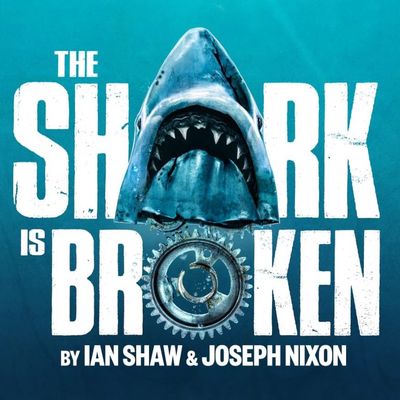
In this week's episode of our post-show Broadway discussion podcast, we take a deep dive into the highly anticipated new play, "THE SHARK IS BROKEN" by Ian Shaw and Joseph Nixon. Join us as we explore and analyze the performances and uncover the themes that permeate throughout the show... Read More
From the show: Half Hour with Jeff & Richie (Post-Show Broadway Discussions and Interviews)
Featured Shows
About
In this week's episode of our post-show Broadway discussion podcast, we take a deep dive into the highly anticipated new play, "THE SHARK IS BROKEN" by Ian Shaw and Joseph Nixon. Join us as we explore and analyze the performances and uncover the themes that permeate throughout the show. We discuss the creative elements that make this production unique, along with standout performances by Ian Shaw, Alex Brightman, and Colin Donnell. With nods to the iconic film JAWS, this play is a must-see for movie buffs and fans of the classic thriller. Tune in to our podcast to form your own opinions as we delve into the heart of "THE SHARK IS BROKEN."
If you liked this episode, don't forget to subscribe to this podcast and leave us a review.
Share your thoughts with us on this episode below:
On Instagram: @halfhourpodcast
On TikTok: @halfhourpodcast
On our website: www.twoworldsentertainmentllc.com
Transcript
This transcript was automatically generated and might contain errors.
[0:00] Richie Grasso: Welcome to another episode of Half Hour with Jeff and Richie, the podcast where we dig deep into the heart of Broadway.
[0:06] Jeff Malone: This week we're discussing the new Broadway play, The Shark is BROKEN.
[0:10] Richie Grasso: Want to know what happens between the cast of Jaws and the cameras weren't rolling?
[0:14] Jeff Malone: Well, let's find out in this half hour discussion.
[0:16] Richie Grasso: I'm Richie, a theater director and producer.
[0:19] Jeff Malone: And I'm Jeff, a music industry producer and manager.
[0:22] Richie Grasso: Let's dive into The Shark is BROKEN on Broadway.
[0:29] Jeff Malone: Half hour.
[0:34] Richie Grasso: Welcome everyone to the show. Before we get started, we always like to let our listeners know that there will be spoilers about the show in this episode.
[0:43] Jeff Malone: So if you want to see the show first, that's okay. Go check it out and then come back and listen to this episode.
[0:49] Richie Grasso: That being said, Jeff, can you give us a quick one, two, three on The Shark is BROKEN?
[0:54] Jeff Malone: I can, because you know I like to give my little quick, you know, knowledge of the show. So at the Golden Theater on Broadway in New York City is where The Shark is BROKEN is being presented as a new Broadway play written by Ian Shaw and Joseph Nixon. It stars Alex Brightman, Colin Donnell, and Ian Shaw. And it's directed by Guy Masterson.
[1:14] Richie Grasso: Uh, not to be confused with Sky Masterson.
[1:18] Jeff Malone: So for those theater people who don't know who that is.
[1:21] Richie Grasso: Oh, Lord. Sky Masterson is a character from a very famous Broadway Golden Age musical.
[1:26] Jeff Malone: I'm wondering, I would ask Guy if he ever gets there.
[1:30] Richie Grasso: Oh, you're related to Sky? Because Sky Masterson's the lead of Guys and Dolls. Come on. That's the leading character.
[1:38] Jeff Malone: Fun fact, I've never seen Guys and Dolls.
[1:40] Richie Grasso: Oh, the Marlon Brando, Frank Sinatra film.
[1:44] Jeff Malone: I don't know what to tell you.
[1:45] Richie Grasso: We're gonna watch it. We're putting it on the list, Jeff, to watch it. It's a classic film, a great show. It's an amazing London revival right now, which I hope comes to Broadway soon.
[1:53] Jeff Malone: Anyway, Guy Masterson directed The Shark is BROKEN. Not Sky Masterson.
[1:58] Richie Grasso: Okay, so SHARK is BROKEN. Let's just start with some overall plot and thoughts. Before I'm dying to know what you think of this, Jeff. I know we talked a little bit about this, but just for those of you who don't know, this is a play about what it was like filming the famous film Jaws, the three characters on the boat.
[2:17] Jeff Malone: A lot of you know that it took very long to film that movie. There was a lot of breakdowns of the shark as well as other issues. And this play kind of dives into that.
[2:26] Richie Grasso: And just for those of you who don't know, Ian Shaw, who wrote this and stars in it, is the son of Robert Shaw, who is the actor from the film.
[2:36] Jeff Malone: So this is his son telling the story of his father and playing his father, which I will say is maybe the coolest part of this whole thing.
[2:44] Richie Grasso: If I had to name like the one thing I think is totally like awesome about this, is that. Well, there's times up there that you're watching him and you're like, oh yeah. I feel like it's him. Because we just watched the movie Jaws, like right before we saw this, because we've seen bits and pieces, and as kids you've kind of seen it, but to sit as an adult and sit and watch it from start to finish was cool to kind of refresh our memory a little bit.
[3:06] Jeff Malone: But so that's just some knowledge on that. Jeff, what are your thoughts overall on this, the plot of this and what you thought of this piece?
[3:13] Richie Grasso: Well, one thing I did want to read that, and this is what they give you in the playbill, but from the author, the first line in here it says, "In 2017, I read a drinking diary that my father kept, which I found painful and very brave."
[3:26] Jeff Malone: So, right then and there, getting into the plot of this show, we clearly know that this is his take on what it was like for his father filming Jaws.
[3:39] Richie Grasso: And you see it very heavily in this show about his drinking problem. And I'm wondering how much of that drinking diary is truthful to what's happening in this show.
[3:52] Jeff Malone: So I thought it was like kind of like a cool concept here to say, wow, this is what my father was going through in this show, and to learn in the filming process of this movie, and to learn a little bit more about like okay, they were on that boat many times because the shark kept breaking.
[4:11] Richie Grasso: So, and then what was the dialogue happening between the three actors when this shark broke down? And we learn a lot more about his father's life, and that he comes from he's Irish, he has 10 children, he's you know, in film, he struggles with alcohol, and it kind of it kind of learns like that.
[4:37] Jeff Malone: Robert Shaw's father also had a drinking problem, and how it kind of trickled down into him. I'm curious, you know, with someone like Ian, is this something that he deals with as well, or is this something that he kind of wants to bring to light and say, like, you know, this is what was happening to him in the industry?
[4:54] Richie Grasso: So it's just interesting in that way. I also found that it was interesting that they were talking about drinking on the set of a film. I really don't think that would happen today.
[5:01] Jeff Malone: Right, I don't know. I don't know enough about film where people are like drinking on the set. I feel like whenever there's drinking scenes in movies and TV, they're fake drinking, like in a play, I'm sure it's like water or whatever.
[5:13] Richie Grasso: Like, so that's why I don't know.
[5:14] Jeff Malone: Well, I think there was supposed to be years ago.
[5:18] Richie Grasso: Right, I think there was also supposed to be like a little bit of a separation between what was real alcohol versus what wasn't real alcohol.
[5:25] Jeff Malone: Like, there was obviously drinking scenes that were happening in Jaws, but he kept hiding the alcohol throughout this book.
[5:32] Richie Grasso: Right, right. And so, like, I do think that I'm gonna assume the majority of this play was rooted in reality, that a lot of this was happening, and that these diaries and the stories that were passed on to him were happening here, right?
[5:45] Jeff Malone: Um, Alex Brightman plays Richard Dreyfus's character who Richard Dreyfus is still living and Steven Spielberg is still living.
[5:52] Richie Grasso: The other two characters, the actors from the film are not. And so there was moments where it was like, oh, there was a lot of like, let's highlight Alex Brightman's character struggles a little bit.
[5:55] Jeff Malone: There was a lot going on there with that.
[6:04] Richie Grasso: Um, I thought Colin Donnell's character kind of faded into the background for me at times. I didn't feel like it was equal playing field for these three actors and these three characters, and that's fine. Maybe that's just how it was on the boat.
[6:17] Jeff Malone: I will say something else.
[6:20] Richie Grasso: I'm and I think I mentioned this to you when we were leaving the theater too. I said, if this wasn't Ian Shaw, and this was a random person that said, I think I want to tell the story of what it was like about Jaws.
[6:34] Jeff Malone: I think people would be like, why?
[6:36] Richie Grasso: So I think the selling point here is Ian Shaw. I would probably have been upset if Ian was out that day.
[6:42] Jeff Malone: Like, do you understand what I'm saying?
[6:44] Richie Grasso: I feel like this was just a Hollywood history moment to tell a story of a famous film and a famous person from the lens of the son.
[6:53] Jeff Malone: That's the pitch sell to me that I'm sure these 20 producers probably bought onto too. That's what I think is the highlight of this.
[7:02] Richie Grasso: Well, if that makes sense.
[7:05] Jeff Malone: Yes. I feel like when I first heard about this coming to Broadway, and I said, Wow, let's learn more about what happened between these three characters or these three actors when the camera stopped rolling because the shark kept breaking down.
[7:22] Richie Grasso: Part of me was like, Wow, that's cool. I never knew that.
[7:26] Jeff Malone: Okay.
[7:26] Richie Grasso: It was a step one. But step two, I was like, is there some sort of history or something that we don't know about between these three actors that there's a reason for this play to be on Broadway?
[7:38] Jeff Malone: Like, are we gonna learn something more about them?
[7:41] Richie Grasso: And I just felt like it didn't go there. I didn't feel like there was maybe almost feel like we were pulling a little too hard.
[7:47] Jeff Malone: Like with Colin Donnell's character, did he have to get into a speedo and lay on the boat because he liked to tan? Did he really do that?
[7:54] Richie Grasso: I don't know. Like Alex Brightman had that breakdown moment, like the complete breakdown.
[8:00] Jeff Malone: I was like, this to me seems a little too dramatic.
[8:03] Richie Grasso: Like I don't really believe that Richard Dreyfus had major screaming, crying breakdowns of them.
[8:09] Jeff Malone: Maybe he did. I don't know.
[8:10] Richie Grasso: Like, and if he did, okay, but there was just moments where I was like, I'm kind of taking a step back here. I don't know if I believe every single thing that is being said here.
[8:19] Jeff Malone: And then to your point, Jeff, wouldn't it have been more interesting if we brought in a little bit more production value?
[8:25] Richie Grasso: Meaning, why wasn't Steven Spielberg played here? What is a major person to have been brought and told, like we had some voiceovers, or where was like the mechanical crew?
[8:35] Jeff Malone: Maybe you just show some crew people like on the boat fixing things while they're in between.
[8:39] Richie Grasso: It's hard for me to believe that these three guys were sitting on a boat and no one's to be found.
[8:42] Jeff Malone: Like, you know what I'm saying?
[8:44] Richie Grasso: Like they felt like they were, and I don't know, like they just bring a little bit more production element into it.
[8:49] Jeff Malone: That didn't bother me as much of not having crew, and I think that was supposed to be like the suspension of disbelief there, like you kind of come up with that on your own.
[8:58] Richie Grasso: But I did have a problem with the structure of the play, and how we weren't really brought into the play at a certain time.
[9:08] Jeff Malone: Like, how great would it have been for it to start with, like, okay, and we're day one on the boat, and we're gonna start filming here.
[9:15] Richie Grasso: And the first moment that the shark actually breaks down, you know, I don't think there was enough theatric moments happening first.
[9:25] Jeff Malone: Like, where was like the acting performances? And then it's like, okay, we're in the scene, and now this is the dialogue that happened in between day one of shooting and day two, or day three and day five, and day seven and day nine.
[9:38] Richie Grasso: You know, I think it was just missing that. We don't know where we came in to the filming process of the show.
[9:45] Jeff Malone: So, like, where were these actors already? Are they on week four? Are they on week five?
[9:49] Richie Grasso: And I know that they said it a few times, but it was just like said in passing, so it didn't really work that way.
[9:56] Jeff Malone: But I also just think you know, they end the show with him doing his monologue of his father's monologue, which is a pretty big deal from the movie, and that was like the only real like cut action cut moment that happened, but where was that earlier on?
[10:16] Richie Grasso: And that was the best part of the show for me, yeah, was the last scene.
[10:20] Jeff Malone: I'm I will tell you something. It's a 95-minute show, and for the first 90 of the 95 minutes, I'm like, okay, but I was really captivated for those last five minutes.
[10:31] Richie Grasso: I was like, time stood still for me. Because I was like, oh wow, this is really cool, and I just wish that I could have said more about that other than five minutes of the piece.
[10:43] Jeff Malone: I was like, wow, that you would swear that was his father.
[10:46] Richie Grasso: And if you really love his father and you really love this movie, you're gonna grip onto your seat during those last five minutes because you're like, this is like amazing.
[10:57] Jeff Malone: And that was the coolest part for me. Other than that, I don't know. It didn't build up to it.
[11:00] Richie Grasso: It didn't do much for me other than those last five minutes.
[11:05] Jeff Malone: Yeah. And I think there needed to be a little bit more movie inspiration in this play.
[11:11] Richie Grasso: Don't you agree?
[11:12] Jeff Malone: Yeah, and that kind of goes a little bit into some of the movie and the design.
[11:16] Richie Grasso: But yeah, I mean, when you're talking about this movie, you know, it's not just a horror movie, it is a commentary on political climate, on government, on people's well-being, community, uh safety.
[11:28] Jeff Malone: Which is funny because they even ask in the play. He's like, they're when they're sitting there, they're like, Who's this for? And like they all have three very different responses.
[11:36] Richie Grasso: And it's so funny.
[11:37] Jeff Malone: What he's like, the movie's about a shark.
[11:39] Richie Grasso: Yeah, that's it.
[11:41] Jeff Malone: But like the shark has so much meaning in the world today. You know, are you a money shark? Are you a political shark? Where does the shark come in to take over and attack?
[11:52] Richie Grasso: You know, it there is meaning behind that, which is cool. I wish we kind of went a little bit more into that.
[11:58] Jeff Malone: Also, is it a little bit like he's talking about okay, they're just actors playing a part, and they don't really care too much about um the movie that they're filming, you know, like taking that back and forth, like, okay, like Colin Donald's um character.
[12:16] Richie Grasso: He's just like, I just want to get paid.
[12:18] Jeff Malone: Right.
[12:18] Richie Grasso: Oh, here's what's going on in the world today. I want to tan, you know, I think, and then it um what is it? Richard Dreyfus.
[12:26] Jeff Malone: That's Alex Brightman's character.
[12:29] Richie Grasso: Alex Brightman. He's so infatuated about being famous and getting that landing role.
[12:34] Jeff Malone: You know, it's it's fun to kind of watch that.
[12:36] Richie Grasso: But it's nice to take, I mean, when you have a very famous film and you're doing a play about it, and it's not it's whether it's an adaptation or an adaptation or a commentary piece like this is, you're gonna have people coming to the show because people I uh do you know how many people told me I'm going to see Jaws on Broadway?
[12:55] Jeff Malone: I've had three people tell me, I'm going to see Jaws on Broadway.
[12:57] Richie Grasso: And I was like, actually, Jaws is not on Broadway. It's a play about the making of Jaws.
[13:02] Jeff Malone: And actually the response is, wait, oh, that's even better.
[13:06] Richie Grasso: Like when they find out what it's actually about, they're like, oh, that's so cool.
[13:09] Jeff Malone: So then I'm like, oh, and here's another thing I'll say, and this kind of goes a little bit into some of the creative design of the show.
[13:16] Richie Grasso: If we went to see Phantom of the Opera, and the whole time they talk about a chandelier and there's no chandelier, I would be like, why do they keep talking about the chandelier and there's no chandelier?
[13:28] Jeff Malone: Do you understand what I'm saying?
[13:29] Richie Grasso: Do you know do you know what I'm about to say?
[13:31] Jeff Malone: If the play is called The Shark is BROKEN, and it's constantly about the it's a little bit of waiting for Gato or waiting for Godot, like they're waiting they don't know where who Gato is or what they're waiting for, but they're there waiting.
[13:42] Richie Grasso: It's kind of a little bit like that.
[13:44] Jeff Malone: So I understand that.
[13:45] Richie Grasso: Like, for example, when you see Doll's House, the revival that we just saw a few months ago, and you're like, There's no set, there's no children, but you didn't need it because the dialogue spoke for itself.
[13:55] Jeff Malone: I unfortunately can't sit here and say, Well, you didn't need the shark, because the dialogue spoke for itself, because there is a part of me that's sitting here right now that's like, I needed the shark.
[14:04] Richie Grasso: I didn't even need it. I think I needed the shark. I'm gonna be honest with you, I'm not gonna try to be like, where is the shark? But like, I kind of needed the shark.
[14:13] Jeff Malone: No, that's what I'm talking about, though. We needed the moments of them acting out a scene, the shark breaking, and then them having their dialogue in between them.
[14:23] Richie Grasso: They're just it was missing that theatrical part to this show. The projections were amazing.
[14:30] Jeff Malone: And I really when they would rock on the boat once in a while, I was like, oh, like I thought it was actually designed pretty well from a lighting and projection standpoint.
[14:38] Richie Grasso: The set was fine. I don't know. I mean, maybe they didn't want to put a lot of money and didn't have the boat move or spin.
[14:43] Jeff Malone: I would have liked the boat to maybe have moved the other way at some point. Maybe there were other parts of the boat that were barely used and only used for entrance and exit. And so part of me looks at that and says, from a director and a scenic designer standpoint, I don't know. It's hard, you have a table and a bench around a table, and most of the scenes are taking place on a table. Well, let's go into a little bit of the design and also the direction at the same time here because how great would it have been in scene changes that you saw them like lights are dim, it's separating between the plays dialogue and the scene changes, but they're acting out a portion from that. Like maybe they're standing on the bow of the boat and the shark is coming in, and then it's like breakdown, okay, and then you see them go back inside, and it's like, okay, we're on another pause. Does that make sense?
[15:40] Richie Grasso: Yes, and when I look when it's hard for me to see Parade and Here Lies Love, and the actual projection use of photos and audio from the actual time we're talking about, and then have something like this not use any until the end, we're like walking out, and the usher's like, let's go, thank you for coming. I'm like, I kind of want to stand here and look at some of these foot in the at the bows, they had actual behind the scenes photos of this movie. And I was like, oh my god, I've never seen some of these, and I wanna kind of look and they were like, thank you for coming. And I'm like, wait, why didn't you use the scene changes of actual audio of Steven Spielberg? Actual John Williams score.
That's I don't think that score that they used in between the scenes was actual John Williams score. In the beginning they used the Jaws theme. But what did I say when we were watching the Jaws movie a few days ago? I was like, oh, I forget how amazing John Williams' score is here. In general, John Williams scores are amazing, but he scored that film so beautifully. Maybe they couldn't get the rights to some of audio and video. I understand that, but like if it's Ian Shaw and there's actual one of the yellow buoys from the film is actually in the set, and you're using actual this, and I do you notice I keep saying the word actual, actual this, real that, actual this, but then the scene changes, we're watching them in the dark, change scene. I'm like, give us some distraction, give us some audio, some visuals, some video of the actual film. That's what this whole audience is here for. Do you understand what I'm saying?
[17:09] Jeff Malone: This is these are fans. We're here. Brewing on that a little bit. I do think there has to be footage out there. There has to be audio out there. Of course. This wasn't a hundred years ago. And that actually should be what's the scene change like lead-in. So there's actual footage, video and audio footage from The Wizard of Oz. Come on. There's gotta be behind the scenes audio of this. Come on, right? Right. And just like that was a missed opportunity. That was just a missed opportunity for me.
[17:36] Richie Grasso: Yeah, I agree. I agree. And I don't really think it was fully directed perfect. I just think there were directorial moments that were missing. You have a room of hundreds of huge fans of this show. And we'll get to that towards the end of like who this show is for and what this audience is taking of this as. But I'm like, I don't know. That would have that was a missed opportunity for me from a creative standpoint.
[18:03] Jeff Malone: Right. Everything was kind of just very center on the boat, you know. They costumed and wigged designed that really well, though. You would have thought the three of them were the three of them. I thought I will say that. That was a great design. Where do you want to go here on cast and standout performances?
[18:19] Richie Grasso: Well, let's talk about the three of them. Yeah. Um well, let's say it. Alex Brightman kind of is a scene stealer, show stealer. He knows exactly what he's doing. He's amazing. I've always liked what he's done. Uh he's great. I enjoyed it. At times it verged on a little bit too much for me, a little too much screaming, a little too much physicality, a little bit of pulling focus just a few times, which totally makes sense for School of Rock and Beetlejuice. I get it. I thought it could have been some more subdued just a little bit here. But he is really, really great in the role. And I really enjoyed him. He got a lot of laughs. He gets the comedic timing right. He also kind of does know how to build a story, you know, from starting.
He didn't start at a hundred. He started at like a 75, but he was able to build himself to a hundred. You know, once you get to the hundred, though, kind of too early in the show. Sometimes that how do you go back down? Which, you know, possibly did happen with him. I do think Ian Shaw was great portraying his father in that way. Um, he those two are definitely the best characters to be playing. And Ian, and Ian's just a spitting image of his father. Yeah. And like you would swear was him. And I thought the Alex and Ian scenes were fantastic.
[19:34] Jeff Malone: Yeah. And then, you know, Colin Donnell playing um, oh god, I'm forgetting the name now. Colin Donnell played, oh let me look, I have the playbill.
[19:43] Richie Grasso: Roy Scheider.
[19:44] Jeff Malone: Roy Scheider. Yes, there we go. Um that character, I mean, Scheider. Roy Scheider, yeah. That character in the movie is kind of just He's there. He's very pops. Yeah. You kind of wish like he was a different person in real life. Like he was like over the top, or like wild. And you know, it seemed like he's just playing himself. You know, maybe that's something interesting to be looking at too. Like, oh, okay, here's this actor, and he's just playing himself in a movie, which was like fine. And it was just fine. He was there, he did the part. The part was pretty simple in the film. It's pretty simple here. Someone has to play it. Colin's great. I saw someone else say, like, the role was written so boring.
Well, to me, there was like part of me envisions the creative team like, what do we do with this character? Oh, he likes to tan. Oh, he has a great body. Let's just have him take his clothes off and wear a speedo and layout. That seemed gimmicky to me. That seemed forced to me. That it was completely, in my opinion, unnecessary.
[20:46] Richie Grasso: Yeah. You understand what I'm saying? And it also went on like a minute too long.
[20:50] Jeff Malone: Yeah, right. And there was a part of me that's like, I actually loved his references to the Nixon presidency and him reading the newspaper, and that was kind of really cool. Like hearing what he thought about what was going on in the world, reading the newspaper, because of course, what were people doing at the time before phones and internet? Reading the newspaper. What was going on in the world when you're on a break from work? So but it was great to tie that in. You know, that was some nostalgic moments that were happening there. I just wish there were more nostalgic moments from the actual movie that were kind of brought into the writing of this.
[21:21] Richie Grasso: It almost seemed like they have the bones for a really good script and a really great idea. Because how often do we want to know what's happening when the actors are not filming? Like, what's happening between Ariana Grande and Cynthia Erivo right now when they're not filming? Like they're sitting, are they sitting with each other? Are they talking to each other? Do they like each other? You know, all of those kinds of things. So with this, it's like these three guys, they're on a boat for most of the movie, they're talking with each other. What is happening off camera? And if this is what really happened off camera, cool. If it if there was more that happened off camera, we wanted to see it.
We wanted to go more in depth. And I just kind of felt like it needed someone to kind of come in and add to it. Fabricate it a little bit more and like make it a little bit more wild and interesting. We don't know what was actually said. I mean, Richard Dreyfus knows what was said, but you know, and how what was his involvement in this writing? You know, is that why there's so much happening with him? Because there's so much that he can remember and kind of contribute to this show. You know, these are questions to Ian Shaw. Where was the development of this? Was it just from his point of view? What he's seeing from his father's point of view, and like who could come in and kind of help really take this to the next level?
[22:46] Jeff Malone: And it's hard for me to believe the play lent it to believe that Steven set um Steven Spielberg was nowhere to be found. Like off on another boat. I'm sure he was off on fixing something. Of course, directors get pulled in a million directions, but like it led me to believe I I don't know if this is true or not, and I hate to say this if this is true, but it's not true, but it led me to believe that there was no actor relationship with Steven Spielberg. And that they had to do that. And maybe I don't know. If that was the point that Steven was over here and the actors were over there, then you got that point across because that was sad then. Because this is a huge director at the time, a new director, directing these three famous people.
And so I don't know, and that's why some of the it does lead into what we were just talking about. Some of the direction of this seems a little odd to me. Like it just seemed a little rushed and a little forced, and maybe we could have just kind of went a little more theatrical if we're gonna go commercial Broadway.
[23:39] Richie Grasso: Right. You know, and it kind of leads to this question, too, on who this is for, what our overall thoughts are. So bringing this to who this is for, this is definitely for a movie buff, and this is definitely for a Jaws fan. But I wonder if there's going to be a critique from both of those two groups of people, because if I was a diehard fan, I would want, and bring it back to this word of nostalgic moments in the show. Props are such a huge thing in the movie. They're such a focus. So when you're telling me that there's a barrel from the boat in the set and the creative design, I know you saw it, but I couldn't find it. It was like half hidden over to the side, never touched, never acknowledged, and in the dark half the time.
[24:29] Jeff Malone: Right. But the barrels, those barrels are such an important part. Yeah, that's all we're trying to catch the shark for 45 minutes. Like, yeah, that's so iconic. Important part there, it has to be the hook that when they're getting the draw, um, when they're trying to capture him, the greats for making the shark tank. Some of that could have been where were some of those like big things? They're such important parts. His glasses, the second pair of glasses that his wife tells him I'll put a second pair of glasses in your sock. The even the tank that blows up Jaws, and like you're not supposed to touch the tank. Well, like, where's the funny nod to like, oh, that tank's over there and there's nothing in it? Yeah, you know, that kind of moment from a Jaws fan or a movie buff fan, those are things that people probably definitely want.
[25:18] Richie Grasso: And I will say this too the audience I I'll never completely downplay a show that is selling well.
[25:25] Jeff Malone: Yeah.
[25:25] Richie Grasso: If the show is selling well, who am I to be like, this shouldn't be here? Because we need new works, and we need theaters full of people, and we need theaters full of people because maybe don't see Broadway all the time because how many of those people maybe never see Broadway? Because I got the vibe that this was a bridge and tunnel tourist kind of crowd. Everyone's wearing literally wearing Jaws paraphernalia on their t-shirts, hats, they're they're cackling, laughing at the 70s. There's a lot of 70s movies jokes, hilarious, and I'm like, wow, I don't know a lot about 70s movies. Like, okay, and to me, how many of those people even see, like, can I go? Let's go see another show next week or next month.
So, so I'll never sit here and say, ah, like, because I thought there were some redeeming moments of it. I didn't completely hate it. But I'm sitting here and I'm like, yeah, this audience is selling, and and it's not a typical theater crowd. This is not the crowd that's going to see a downtown off Broadway revival, which is something or something. You know what I mean?
[26:20] Jeff Malone: But this is something that we talk about all the time. There is something for everyone on Broadway, and sometimes you just have to find that audience. Luckily, this show has a built-in audience already. There are many fans out there that love Jaws. So this show is really for them. They're the people that need to talk more about it, though, too. Because this is not gonna be the everyday Broadway theater goer show. They're gonna probably leave it, they're not gonna talk about it, they're not gonna know who to talk about it with, you know, and but there are people out there that are gonna love this and think that it's cool and think that it's creative, and that's fine.
[26:56] Richie Grasso: Yeah. And then there's gonna be some people, maybe theater people, who are like, why this? Why do I want to see this? And and I I look at it like, well, I'd learn something new. And that's why it kind of brings it full circle to what I was saying. Ian Shaw is this moment for me. Yeah, I'm seeing this because I want to see his perspective of this, and I want to hear from him, and I want to see him, and I want to hear the writing, and I and that guy said that last five minutes is pretty amazing. So well, I did want to learn something. I think we learned some things. I wanted more from it. Um, but I'm fine with it.
[27:30] Jeff Malone: You know, it sits middle of the road for me.
[27:32] Richie Grasso: It does for me too, and that's why I've had a few people say, Oh, I'm a huge fan of this movie. Should I see it? I'm like, yeah, if you really love this movie, go like go buy a ticket, support. But I also want them to see it because I want to talk more in depth about it because I want to be enlightened about the show a little bit more. I want to talk to Ian Shaw about the show and see why he thought that this was a good idea, you know, and what's the real meaning behind it? Is it just to kind of tell his father's story, or is there like, no, we're we're showing what it was like for actors to be on set at that time. We're showing what it's like for you know, actors to be involved in development because it, you know, his monologue was an important part, which is a great way to kind of wrap this up, too. But he edited the monologue to what he thought it should be, and that's what they ended up going with.
[28:19] Jeff Malone: Yeah, yeah. So it was such a great way to end in that.
[28:23] Richie Grasso: Yeah. Because he has talent, he had something there, you know. It's a great moment in the film. There's so many great moments in the film, but yeah, very, very cool stuff.
[28:31] Jeff Malone: So my gosh, we are out of time. That flooded by gosh. Well, that does wrap up our discussion for this episode. We hope you enjoyed our deep dive into The Shark is BROKEN. I'm probably no pun intended there.
[28:46] Richie Grasso: And don't forget, we want to hear from you. Continue the conversation with us on Instagram and TikTok at Half Hour Podcast. Let us know your thoughts on The Shark is BROKEN and any other Broadway shows you'd like us to discuss.
[28:59] Jeff Malone: And if you enjoyed our show, please leave us a review. Your feedback helps us bring more Broadway to you. Remember, you can listen to our past episodes and stay tuned for some upcoming ones. We have some few more summer shows to talk about, as well as some fun interviews coming up that we can't quite say yet, but they're coming. We have some cool people gonna guest up here on our podcast. Something's coming.
[29:19] Richie Grasso: Something's coming.
[29:22] Jeff Malone: Well, until next time, I'm Jeff.
[29:24] Richie Grasso: And I'm Richie saying ta ta.
[29:26] Jeff Malone: Bye.
© Broadway Podcast Network, All Rights Reserved