

This week on Jay Binder... A Life in Casting, we explore the early days of many of your favorite Disney shows on Broadway... Read More
From the show: Jay Binder… A Life in Casting
Guests
Featured Shows


About
This week on Jay Binder... A Life in Casting, we explore the early days of many of your favorite Disney shows on Broadway. From finding a charismatic Belle in Beauty in the Beast to early workshops of Aida, and of course Binder Casting’s twenty-four-year relationship with Disney’s, The Lion King, Jay Binder joins host, Mark Peikert, for a discussion of developing and finding the original casts of these beloved musicals. Terrence Mann guest stars.
Transcript
This transcript was automatically generated and might contain errors.
[0:05] Mark Peikert: When you talk about the last 25 years of Broadway, the reign of Disney emerges as one of the defining characteristics. Beginning with Beauty and the Beast in 1994, Disney's influence on the Great White Way has been a sizable one. And leading the charge was casting director Jay Binder. From Beauty and the Beast to Aida and the Lion King, Binder and his team are the ones responsible for finding the performers who came to define the era. I'm your host, Mark Peikert. And you're listening to Jay Binder, A Life in Casting, The Disney Years.
[0:40] Jay Binder: Well, I must say that, you know, as you said, Mark, Disney really changed Broadway, and it really legitimized genuine intelligent family entertainment. And it also began a trend that is now very common on Broadway of adapting films for the Broadway stage. And that's always been, you know, a major part of what Broadway's shows are based on. But this really solidified intelligent theatrical family entertainment. And the irony is that it was one of the few shows that Beauty and the Beast was not well received by the critics, but it didn't matter. I mean, it ran for over 5,000 performances originally on Broadway. And that's because of the genuine sincerity and joy of the characters and the production, and the people that originally put it together.
[1:59] Jay Binder: Now, did this seem like a slam dunk when you first started having conversations about casting Beauty and the Beast? No one knew. I mean, Rob Roth, who I have such admiration for, Rob Roth, who had been very successful in Disneyland in California, had the idea, pitched the idea to Michael Eisner, and really created the need and really talked Michael into producing on Broadway. And his determination and his ability to imagine how this would be a Broadway show. Now, the reviews for the film, which were, you know, excellent, always said it was really a Broadway show as an animated feature. But translating it, you know, from an animated feature to the stage was a major, major undertaking. And the collaboration between Linda Wolverton, who wrote the original screenplay, and who wrote the book along with Alan Mencken, of course, and Howard Ashman, who was no longer with us, and Tim Rice created a wonderfully constructed, incredibly entertaining musical.
Between Linda and Rob, they deepened the characterizations. They made more sense of the backstory of the characters, and if you really look at the book of Beauty and the Beast, it's actually a perfectly constructed musical with characters you care about because it wouldn't have run that long if you didn't care.
[3:57] Jay Binder: Now the actors were paramount in bringing them to life, especially through the development and the evolution of the costumes, which were, you know, very, very difficult. And Ann Hold Ward did a brilliant job. That's an interesting point because how do you cast an actor who is going to be obscured by prosthetics for most of the show, as with the beast? Well, that was an evolution. When we opened in Houston, the entire company who had far more prosthetics and masks, and as we evolved, the beast especially evolved into something by which you could actually see a face through the makeup, but the audience was satisfied that they felt familiar with the character, but it was a very long process all during the out-of-town try-out, of which was brilliantly done with all the collaborators and by trial and error.
So it was a wonderful tryout. And but the whole evolution of the piece from the very beginning, no one knew. I mean, you know, a man named Robert McTyre was very high up. He was vice president of entertainment. They were very, very smart in having the Dodgers be the executive producers. And a man named Ronnie Rodriguez, who was the head of casting for the parks, and Bettina Buckley, who still is one of the vice presidents of Disney Parks Live Entertainment at Disney World, were all, you know, part of the team with Rob Roth, Michael Cosran, the incredible musical director, and you know, who's worked so many times with Alan Mencken and Matt West, the choreographer, in creating this. And how I got the job is another mystery to me, but I had a meeting with Rob and Rami, Ronnie Rodriguez and Bettina and on the east side, and there's a traffic jam on 57th Street. I didn't have a cell phone, I was 45 minutes late for this meeting.
[6:30] Jay Binder: And I was a wreck because there was no way to communicate, but I was very blessed in that they waited for me. And I came in and I had known Rob. We had done a show at a theater that doesn't exist anymore called Manhattan Punchline many years ago. And Ronnie Rodriguez was sitting there and he said, Well, I'm, you know, the casting director, and we're talking and talking and talking. And finally, I turned to Ronnie, I said, So, what the hell are you gonna do on this? And he fell down laughing, he fell down laughing, and he couldn't stop. None of us could stop, and I got the job.
[7:16] Jay Binder: So, what were your marching orders in terms of bringing the film musical to life on stage and finding that cast? What were they looking for? Well, they weren't looking for exact copies, but we had to satisfy the writing just the way you would satisfy the writing at any show. And we had a model from the film, but these were human voices and human people embodying these roles. So it was finding, you know, a Belle that was not saccharine, that had spunk, had strength, was a modern woman. Because I mean, Belle is incredibly brave in what she does. And to find a beast that we understood his problem and his dilemma from the very beginning, because we had to be in love with the beast, no matter how cruel he is to Belle in the beginning, it's because of the curse and his mistake.
So there's retribution, and the most remarkable special effect ever, I think to this day on Broadway, the transformation at the end, which shall remain a secret from the beast to back to the human, which was still to this day one of the most magical special effects I've ever seen on stage, and I must say that we were blessed with Michael Eisner and Jeffrey Katzenberg. They were so incredibly supportive.
[9:10] Jay Binder: The casting process was fascinating. And Jeffrey and Michael were at opposite ends of the theater on their cell phones constantly. Why they couldn't talk to each other, I have no idea. But that always amused me. And I always loved it. And we auditioned in front of several executives from Disney in the audience, which was actually wonderful. I was very nervous at the beginning, but the actors auditioning played to an audience. Now it was a tough house, but anyone that could, you know, make them laugh or have them respond or have them react, clearly that was an indication that we were choosing the right people. She sat backstage amongst three other women and was so focused, she just sat and read a book and was completely focused.
You know, and you know, not to go on with an endless list of the remarkable people, but I'll tell you Terrence Mann's contribution and Susan Egan's contribution, Gary Beach's contribution, Burke Moses' contribution, Beth Fowler, everyone in that cast brought those characters to life.
[10:48] Jay Binder: Our tryout in Houston was like any tryout of a major musical. We had scenery break down. We stopped the show several times. But the one thing that Jeffrey Katzenberg did, which I will never forget, is that we're in the parking lot at Theater Under the Stars, and he gathered the entire creative team, all the designers, everyone involved, and put us in a circle, and said, if there's one note that you have for improving the production, please give it to me now. And we went around the entire circle and gave our one note. And I've never worked with a producer that opened up a conversation between the creative staff the way Jeffrey Katzenberg did.
[11:46] Jay Binder: Listen, things that I'll never forget. I will never forget the scene that Linda wrote when she reads him, King The Legend of King Arthur, the chemistry between Susan and Terrence, the great vaudeville humor that is very difficult to pull off between the irreplaceable Gary Beach and a great Canadian actor, Heath Lampert's, who did several things for me, and the warmth of Tom Bosley and Beth Fowler, and listen, Burke Moses brought Gaston to life. He was credible as the villain and hilarious, absolutely hilarious. And Tim and Alan wrote six new songs for the musical. And also Human Again, which was cut from the film, which actually is a very important song in the second act. When all the characters truly have this tremendous wish and desire to become human.
And it also, you know, added a production number in the second act, and is a gorgeous song by Howard and Alan. But the song that defined Beauty and the Beast and defined the Beast was If I Can't Love Her, of all the songs of all the wonderful songs that Tim and Alan wrote. For me, that song and the song Home for Belle, that's how they deepened the characters, and we understood their pain, and we understood their needs. And you know, it was real genuine musical theater writing, and it had Stan Meyer did beautiful sets.
[13:45] Jay Binder: I mean, you know, there's no more painted scene, there's very little painted scenery left on Broadway because the technology is so advanced, but I mean, it was glorious to look at and romantic and eye popping, and reconceiving Be Our Guest for Broadway for a live audience, you know, having those dishes, those showgirls with the dishes on their back spinning. I mean, those are things you don't forget.
[14:18] Jay Binder: Uh, having a carpet that was an acrobat, those things you don't forget. The audiences just loved it from the very moment we started, and we were so fortunate to have so many wonderful people in this production. I mean, when we went to LA, most of the original cast went, and then James Barber took over. We were blessed in LA. We got better reviews, the show had established itself, and it was a magical production in LA. Really and truly magical.
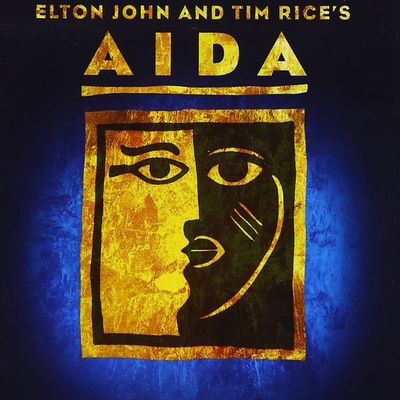
[14:59] Jay Binder: I wanna talk a little bit about moving from Beauty and the Beast to Aida, because I'm curious what it's like when you're creating this mammoth musical with Disney, and it's being built from the ground up. You didn't have the template of what works in Beauty and the Beast, the film. So, what was that out-of-town tryout in Atlanta like?
[15:20] Jay Binder: Well, it was very curious. Um, it was the design scheme was one of the most elaborate. It was a pyramid that did everything excepting brush your teeth for you. Um, and the show was very different. The father was much more involved. The young boy was not as involved. And it was a very, very difficult birth. When you're working on a show out of town and things are changing, the script is changing, the story's changing, things aren't working, things that you thought might work turn out to be entirely wrong. How much of that goes back to casting? How involved are you in working on shows to make them the best that they can be?
[16:20] Jay Binder: Well, it depends on with whom you're working. I mean, you know, as everything does. Right, exactly. I mean, when we were out of town with Beauty and the Beast, you know, I had very little to do with rewriting the show. I was very proud, very proud, along with Mark Brandon, who was invaluable. Because Mark joined Binder Casting when we were doing the National Company of Beauty and the Beast. And then was an integral part, of course, of Aida, and of course, Lion King, but we went through again the first reading of Aida was in, well, Elaborate Lives, it was called then, was in 1996. We didn't get to Atlanta until 1998. We had done so many developmental readings.
[17:20] Jay Binder: What people don't really remember is that Aida is again another modern woman, and this is in the late 90s, and there are always strong, strong female heroines all throughout the history of Disney. And Heather could make your heartbreak. And she sang breathtakingly. And she was astonishing. And the other person that I will never ever forget, the role of Amneris, when we were in Atlanta, was basically for comic relief. It was a very difficult line to walk. How to make this character believable to have been in love with Radames and then grieve for his loss, plus be funny. And she was just basically funny. And Sherry Renee Scott was valiant in working it through.
[18:38] Jay Binder: And the major change after it closed in Atlanta. And very rightly so. But when we were in Atlanta, a wonderful actor named Hank Stratton played Radames. And the father was much more important. And Tony Award-winning actor Roger Robinson played that role. You know, for the necessity to start from scratch for Broadway, but I was just honored that Heather, no one could replace Heather to open it, and no one could replace Sherry Renee Scott to open it.
[19:38] Jay Binder: Disney's The Lion King premiered on Broadway in 1997 with a stacked creative team. Who were some of the people responsible for making it such a huge instantaneous international hit? There are so many people responsible for the success of Lion King, but the major, major, major people were in no particular order, Tom Schumacher, who had the genius idea of hiring Julie Taymor. And Tom's idea of asking Julie to do this show was inspired. And Julie's commitment to creating this show was, I've never seen anything like it.
[20:27] Jay Binder: I mean, we started by Julie and I going to South African dance companies. We did research together. We talked and talked and talked. Because the most important, one of the most important things that had to be accomplished, and something that Julie has always said, and something that we realized from the very beginning is when the puppets went, which went through stages, various stages of development with Julie and Michael Curry, who's also a genius, but the mask and/or puppet and the actor had to become one, and you had to be as focused on the actor as you were the puppet.
[21:22] Jay Binder: And I mean, in every company of Lion King, there are six South Africans in the ensemble, and the role of Rafiki is always played by a South African. So the authenticity, not only of the music, but the spirit within an American cast of genuine South Africans, you were transported to another world. And the other thing that astonishes me to this day is Circle of Life is without question one of the most magnificent opening numbers of any musical to ever be produced.
[22:08] Jay Binder: And the great trick is that now a flop musical called Here's Love, brilliantly choreographed by Michael Kidd, had the Macy's Day Parade, and it was incredible, but you could never top it. Well, one of the reasons was it was so remarkable, but there was no story, really. You know, the story was not told as well as the Lion King and its collaboration. I mean, Garth Fagan's contribution, the authenticity and theatricality, and Mark, you know, was completely responsible for every dancer in that show.
[22:48] Jay Binder: I worked with Julie on casting the original principals, and her method was something that was so generous. I mean, she had no concern of me jumping in and helping clarify to the actor what truly wanted. Julie worked from movement. She worked from the outside in brilliantly. And I helped her with her gracious generosity from the inside out. And so that was one of the great collaborations I've ever had the opportunity to have.
[23:38] Mark Peikert: Well, I'm curious, what were the conversations like when you first began people bringing people in? What were you saying to agents and performers about the puppetry and wearing the masks? How are you explaining that?
[23:49] Jay Binder: Well, you know, in general, because you know, I had seen sketches, but it wasn't until after the first reading that Julie did a puppet presentation. And it was after the presentation that we then we had done a reading, a very successful reading, just in chairs, with no puppets, and then Julie and Mark and Michael Curry took the actors that we were very serious about and worked with them with the puppets to see who could do it and who felt comfortable and who could achieve it because it's like rubbing your, you know, stomach and patting your hands, you know, on your head. I mean, it really is not easy and remains to be not easy for everybody. There are certain people that don't want to do it, can't do it, and shouldn't do it. And we were very lucky in that our company and all the subsequent companies that Mark has cast have that ability.
[25:01] Jay Binder: Funnily enough, the most difficult character to cast originally was Mufasa. Mufasa anchors that show, and he is the conscience of that show and the strength that guides young Simba. And no one had the strength, no one had the gravitas, and I knew from the very beginning that Sam Wright, who had been the voice of Sebastian in The Little Mermaid, but I knew Sam Wright was the person that should originate this role. And Sam resisted and resisted and resisted.
[25:48] Jay Binder: And I sent him sketches of Julie's puppets. I sent him everything. Finally, I had known Sam, and I called him on the phone, and I said, Sam, I want you to realize how are you ever going to face your daughter by turning down the opportunity to play Mufasa? You're can you can never without guilt face your daughter. And suddenly Sam came in and got the part.
[26:26] Mark Peikert: Well, that's actually going to be my next question. When you're involved in setting the template of the casts for these shows that end up having wildly successful life on Broadway and on tour and around the world, how beholden are you to yourself to recreate what you previously did as much as you can? Or are you looking to bring something fresh with every new principal that you bring in?
[26:52] Jay Binder: Well, what Mark does is that there is a template that's been created. And you know, but there is the latitude of each person that plays the role brings their own specific personality, but again, they have to possess the innocence, the Mufasas have to have the strength, and the scars have to have that ability to be as evil, you know, a classic Disney villain, but without sending it up, with getting the laughs, because there are there's great comic writing, but to not in any way send it up or wink at it, and any actor that can't achieve that, you know, it's very easy to understand who is a candidate.
[28:01] Jay Binder: And you know, at final callbacks for you know, several several of the major companies, you know, Julie comes back to final callbacks and works with the actors and adjusts certain things physically and in blocking, so that yes, it a more it morphs to a degree uh with each actor, and that's the great joy of it.
[28:01] Jay Binder: And that's the great joy of any long-running show. I mean, you know, uh, everyone that played The Beast or Belle or Gaston had to, you know, have the same fulfill the same requirements, but they brought their own personality to it. I mean, you know, James Barber, who was the first replacement for Terry, brought his own persona to it and was very successful. Uh, Steve Blanchard, who ended up playing The Beast longer than any other person on Broadway. I he played it for almost eight years, gave a fresh performance every single night. I've never known another actor that every single night was as fresh as the first time he played it, and he played it with several bells, and that's discipline, and that's old-fashioned discipline. And I have the most tremendous amount of respect for the those actors that you know are in long runs that work so hard, the discipline it takes is remarkable.
[29:47] Jay Binder: And the upkeep that the actors and the physical condition, especially in Lion King, in Lion King, you have to be an athlete in order to maintain your physical health and be able to perform eight times a week. And that's discipline. It's given Mark Brandon the opportunity to cast it endlessly and still keep it fresh. And also Mark is also consulted on every foreign production. And really, you know, he's been the torchbearer after the original production opened. And I we should point out in terms of these shows giving people opportunities, the sheer number of Broadway stars now who got their start as replacements in Beauty and the Beast in Aida in The Lion King is staggering.
[30:52] Mark Peikert: Do you do you have any favorite performers who came in and landed one of those roles?
[30:57] Jay Binder: The wonderful story, of course, is in the first national company. Um I had a reader, and he was an actor named Patrick Page, and he was reading with all the actors. No one sung before, and he said, not really. I said, come to the piano, and he sang, be our guest, and he could sing, and he could give you, and Patrick can really sing now. Uh, but I mean, he was he had never really done it, but he had the ability to make you believe he was singing, and he met his wife, who was in the ensemble of the national tour, and they've been married ever since, you know. So, I mean, you know, it's stories like that, uh, you know, listen, not that I had anything to do with it, uh, but Hugh Jackman was the original guest on in Australia.
Yes, you know, so I mean, you know, shows like and and the same thing holds true with shows like Wicked, uh, which is which is really the only other show that is not a Disney show that you know has spawned endless amounts of actors giving them opportunities in the same way that we did with Beauty and the Beast and with Lion King, and but I will I will be forever indebted to the trust that Rob gave me and that Michael Cosrin gave me and that Linda did uh on Beauty and the Beast, and I will be forever in Mark Brandon's awe and you know uh and debt for the dedication of continuing Lion King as brilliantly as he has, because if I had continued, uh, because Mark eventually, after uh he contributed to uh the first tour, uh Mark basically ultimately took Beauty and the Beast over completely, as he took Lion King over uh completely.
[33:34] Jay Binder: And so, you know, uh I'm grateful and you know, so lucky to have such a great partner uh working on these shows.
[33:47] Mark Peikert: And I would say that theater goers and a lot of current Broadway stars are indebted to you and very lucky to have had these opportunities with the Disney shows in particular.
[33:58] Jay Binder: It's all part of the evolution of Broadway. And listen, if it weren't for Tom, I mean, just think. I mean, Matt and Rob, when they originally went to Michael Eisner, their first idea was Mary Poppins. And at that time, uh, you know, Michael Eisner thought it was too complicated, uh, of which it was, and you know, that's when Rob came to Beauty and the Beast. Uh the same way Robbie Marshall uh came to pitch the movie of Rent and uh switched to Chicago. So I mean, you know.
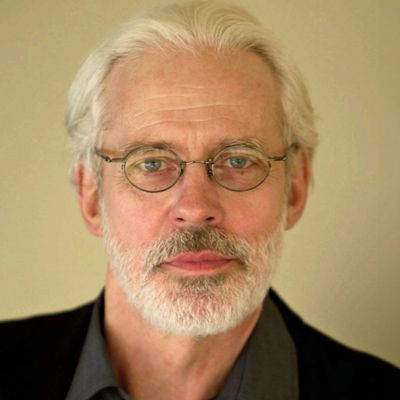
[34:45] Mark Peikert: Joining us for a little bit of a chat is Terrence Mann, who Jay cast in both Jerome Robbins of Broadway and uh more memorably uh in Beauty and the Beast.
[34:56] Terrence Mann: I've been asking this a lot from the performers who have worked with Jay, and I've been fascinated by the responses. So I'm curious what your response is. What is Jay like to audition for?
[35:10] Terrence Mann: I always remember looking in his eyes and him saying, or with his eyes, you're gonna get this. You're gonna get this. I always remember the positivity and the and that energy of, you know, you're gonna succeed. This is gonna happen. You know, go go go. And he did that from where I was sitting for everybody.
[35:30] Mark Peikert: What are your memories of the Beauty of the Beast audition?
[35:35] Terrence Mann: Well, the Beauty in the Beast audition was um it's one of those uh situations where I got asked to do the workshop, uh, which was nice. And so you do this whole workshop and you do the whole show and you present it to all the people. And this is Disney's first foray on the Broadway. So there were so many people there. And uh uh maybe too many people there, but a lot of people there, uh you know, this was their first time going. So um after doing the workshop, uh you and I think you told us up front that we would have we were doing the workshop, but you still gotta go audition it. So you always knew that uh oh I'm auditioning the whole time I'm rehearsing this show for three weeks or however long it took us to do that.
And then I remember going in for uh my audition for the show afterwards, and uh I I just saw Jay looking me right in the eyes and going, You're gonna get this, you gotta get this, you know, with his eyes. He wasn't saying it out loud, but that's what I always got. And you know, I you know, I I don't think I would have had, I mean, he's so part and parcel to my career and you know, getting to the next level of of things, you know.
[36:51] Terrence Mann: I don't remember anybody else uh once, you know, I had asked you to do the reading, uh, that we ever considered or nor should we have ever considered because you defined uh and not only did you define it, but you helped create it both dramatically and physically. What you brought to it was his humanity, and we loved him. I mean, he treats her terribly in the beginning, but we loved him and we loved his dilemma and struggle within himself, even in playing villains. Uh you always have heart and you always believe uh in that character's journey so thoroughly, which makes you Terry Mann.
[37:46] Mark Peikert: Terry, your times in the audition room with Jay, did those affect the way you approached auditions with other casting directors? Was there something that he did that you thought, oh, I want to bring this, I want to bring this feeling to my next audition, regardless of who it's for?
[38:01] Terrence Mann: Are you you know, your your job as an actor is to audition, you know. That's your job. Getting the show, then you're lying. But your job, and Jay was it was like Jay was like one of the is, well, was is one of the best bosses you could have at work. You know, you uh when you know you're going in for Jay, you you you feel like you're you're being taken care of. And this is not to say that all the other folks that are casting around the city or the you know, anywhere don't do that as well. But some people you connect with more than others, you know, some people want you in in there more than others. Some people will put you on their short list, and some people put you on the long list, you know, and that's just the way it is, and that's fine.
I always felt like I was uh on on Jay's short list. And uh that gives you confidence when you walk in anywhere, particularly after you got a few shows under your belt, you're going, well, I've done that. He believed in me. You know, let's let's hope these other folks believe it.
[39:01] Jay Binder: Listen, replacing Jason Alexander from Jerome Robbins' point of view was no easy feat. And going from you know, Jason Alexander to Terrence Mann, typewise, was a big leap of faith uh on Jerry's part. And the fact that you created and made it your own and was equally as effective, and you know, uh pulled off Tevya beautifully. I mean, you know, that that's that was an incredible challenge, uh, and a very difficult part. If it weren't for you as the beast, you created the mold, Terry, because you know, there were several beasts after you, you know, oh over the right many, many years. But if it hadn't been for you, uh the mold would not have been set. That comes from you.
[40:01] Terrence Mann: Wow.
[40:02] Jay Binder: Well, my gosh. And that makes me all the more excited to talk to you for in the next episode about the Broadway years, because you have contributed some great casts to some great musicals.
[40:18] Terrence Mann: Well, thank you so much.
[40:19] Terrence Mann: I can't wait.
[40:20] Jay Binder: And Mark, it's a pleasure as always.
[40:24] Jay Binder: This is Jay Binder of Life and Casting, a podcast from RWS Entertainment Group and Binder Casting, in association with the Broadway Podcast Network, starring Jay Binder, hosted by Mark Peikert, produced and directed by Mark Brandon and Kyle Coker, with executive producer Ryan Stana, consulting producers Joe Christopher and Abby Buell, artwork by Justin Swiggs Robertson, marketing concept by Kevin Lau, marketing content by Amy Cannon, edited by Derek Gunther, and a special thanks to guest star Terrence Mann.
© Broadway Podcast Network, All Rights Reserved