

Amidst working 16 hr days to manage the 21 productions that Disney Theatrical has shut down due to COVID-19, senior Vice President of Production, Anne Quart, joins us as our first remote guest... Read More
From the show: Mamas Talkin' Loud
Guests
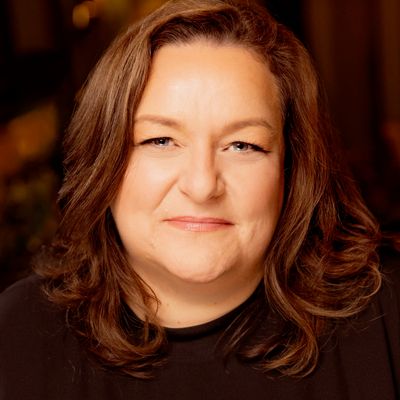
About
Amidst working 16 hr days to manage the 21 productions that Disney Theatrical has shut down due to COVID-19, senior Vice President of Production, Anne Quart, joins us as our first remote guest. Recognizing her responsibility as a woman in a position of power, she created Women of Broadway in solidarity and support of all female identifying members of our community. She understands firsthand the struggles of being a mother in show business as the first women at DTG to have a baby, and as a result, implements better business practices for maternity leave in all of her productions. Wrapping up our tribute to International Women’s Month, Anne puts experience into action and her perspective and endeavors are invaluable. She also knows in her gut that Broadway will be back and that’s the just ray of hope we all need right now.
Find more info about the podcast via BroadwayPodcastNetwork.com/mamas.
Produced by Dori Berinstein and Alan Seales.
Edited by Derek Gunther.
Transcript
This transcript was automatically generated and might contain errors.
[0:00] Jessica Rush: Hey everybody, welcome to this episode of Mamas Talkin' Loud.
[0:03] Cara Cooper: I'm Jessica Rush.
[0:04] Cara Cooper: And I'm Cara Cooper, and you're listening to our episode with Anne Quart, Senior Vice President of Disney Theatrical Group and the founder of Women of Broadway.
[0:12] Cara Cooper: Just a heads up as we start this episode, guys.
[0:15] Cara Cooper: Um, this was our first time recording remotely with a guest.
[0:18] Cara Cooper: And needless to say, it was a little tricky.
[0:21] Cara Cooper: So please bear with us as we go through it.
[0:24] Cara Cooper: You'll end up hearing much more of Cara than myself.
[0:27] Cara Cooper: But overall, we had a great conversation, and we can't wait for y'all to listen.
[0:30] Cara Cooper: Have a good one.
[0:32] Cara Cooper: Uh uh oh, uh uh oh.
[0:35] Cara Cooper: Uh oh, Mama's talking loud.
[0:39] Cara Cooper: Mama's talking loud, mama's talking tough, mama's talking how being good with good enough.
[0:46] Cara Cooper: Mama's talking life, mama's talking proud, mama's talking trash, mama's talking loud.
[0:57] Jessica Rush: Hi, everyone.
[0:58] Jessica Rush: Welcome to this episode of Mamas Talkin' Loud.
[1:00] Jessica Rush: I'm Jessica Rush.
[1:02] Jessica Rush: And I'm Cara Cooper.
[1:03] Jessica Rush: And today we have our first remote guest on our remote podcast, coming from you from my office.
[1:11] Jessica Rush: Jessica's coming to you from San Diego, La Jolla.
[1:15] Jessica Rush: Um, and today we have Anne Quart with us.
[1:18] Jessica Rush: She is the senior vice president of production at Disney Theatrical Group.
[1:22] Jessica Rush: She is also the producer of Women of Broadway, which just celebrated its third annual Women's Day on Broadway with both Jessica and I were at.
[1:30] Jessica Rush: It was incredible.
[1:31] Jessica Rush: Uh Hillary Clinton spoke.
[1:33] Jessica Rush: It was amazing.
[1:35] Jessica Rush: Um it was actually very shortly before Broadway shut its doors due to COVID-19.
[1:43] Jessica Rush: Um, but not only does she strive for women's voices to be heard in that way, but she also is promoting change within Disney Theatrical to better support mothers in our industry.
[1:53] Jessica Rush: And we are beyond honored to have her here with us.
[1:56] Jessica Rush: So welcome, Anne Quart.
[1:58] Anne Quart: Thank you for having me.
[1:59] Anne Quart: I'm honored to be with you.
[2:01] Jessica Rush: Oh, thanks so much.
[2:03] Cara Cooper: I know.
[2:05] Cara Cooper: We were so excited for this episode.
[2:07] Cara Cooper: I know.
[2:08] Cara Cooper: I'm so happy that we're finally doing it like a month later.
[2:12] Cara Cooper: Who knew we'd be doing it this way?
[2:13] Cara Cooper: But I'm glad we were able to make it work.
[2:16] Anne Quart: Me too.
[2:17] Anne Quart: Same likewise.
[2:17] Cara Cooper: Thank you for playing along and being a bit of a guinea pig with this, Anne.
[2:22] Anne Quart: Thank you.
[2:22] Anne Quart: Happy to.
[2:24] Cara Cooper: We always lead off our episodes asking about your children.
[2:28] Cara Cooper: Um because we feel like that's a question that most women don't get asked about in any sort of workplace.
[2:34] Cara Cooper: So tell us about your kids.
[2:35] Anne Quart: Yeah, no, it's true.
[2:36] Anne Quart: Nobody ever asks.
[2:37] Anne Quart: Um, I have two beautiful daughters.
[2:40] Anne Quart: I have a 14-year-old, and her name is Madeline, and she's a freshman in high school.
[2:45] Anne Quart: And I have a seven-year-old whose name is Zoe, and she's a first grader.
[2:49] Anne Quart: And they are very different, but they are also both very awesome and strong and smart and funny and my favorite humans in the whole world.
[2:59] Cara Cooper: I think that's pretty safe to say our kids are favorite humans, right?
[2:59] Cara Cooper: Favorite humans.
[3:04] Anne Quart: Most of the time.
[3:05] Cara Cooper: Yeah.
[3:06] Anne Quart: Yeah.
[3:06] Anne Quart: Yeah.
[3:07] Anne Quart: They have their moments, especially in the high, especially when they get to high school, they really have their moments.
[3:12] Anne Quart: But even then, they're still my favorite humans.
[3:15] Cara Cooper: Ooh.
[3:16] Cara Cooper: Not looking forward to that.
[3:20] Anne Quart: No, it's true.
[3:21] Anne Quart: You know, I always thought that kids um when they were little were so hard because you know, you gotta that they're so vulnerable and feeding and breastfeeding and diapers and the whole thing.
[3:30] Anne Quart: And I always thought the minute they got self-sufficient, it would be easier.
[3:33] Anne Quart: There's it, I would take an infant any day over a teenage girl.
[3:37] Anne Quart: It's that's just I sort of thought that might be the case.
[3:41] Cara Cooper: Yeah, holy.
[3:42] Cara Cooper: Holy we don't realize how easy it is when they're infants, even on the hard days.
[3:46] Cara Cooper: At least you can put them down and they won't go anywhere and they don't talk back.
[3:51] Anne Quart: If you have to, you can put them in the car and drive around, which Jeff and I did for with my first for over and over again, drove around New Jersey.
[3:58] Anne Quart: But no, the teenager thing, they have opinions and they think they own their own lives, and it's all very challenging.
[4:04] Cara Cooper: Oh gosh.
[4:05] Cara Cooper: Oh my gosh.
[4:06] Cara Cooper: Um in this time, I mean, having two school-aged children and such wide differences, you know, high school and elementary is so is she in first grade?
[4:16] Anne Quart: She's in first grade.
[4:17] Anne Quart: Yeah.
[4:18] Anne Quart: Yes, first grade.
[4:19] Cara Cooper: So having them in such different places and having to, I'm assume homeschool, right?
[4:24] Cara Cooper: Like all of us right now.
[4:25] Cara Cooper: Um, are you having to add that on to, I'm sure what is already a very full plate, uh, still working from home, or um your husband taking more of that on, or...
[4:25] Anne Quart: Well, actually it's the time, you know, it's interesting the timing of this because my husband is uh works on Broadway as well.
[4:43] Anne Quart: He's a technical supervisor and has been doing that for many, many years.
[4:47] Anne Quart: And as we were headed into this calendar year, um, my workload this year.
[4:53] Anne Quart: I mean, no one predicted what we're currently going through, but before this happened, we had it and we had an incredibly challenging year with many, many, many shows opening internationally.
[5:02] Anne Quart: And as we approached that year, Jeff and I talked about how we were gonna balance him being in tech and me being on an airplane a lot.
[5:10] Anne Quart: And um, he offered to uh take a year off and be at home with the girls so that I could leave and not worry about.
[5:21] Anne Quart: I mean, you all know what it's like, right?
[5:23] Anne Quart: When you go on a business trip, it's not just like see ya, you have to figure out what are the all the play dates and what are all what's everybody eating and what's the potential drama that could happen while I'm gone.
[5:35] Anne Quart: But um, so he did that last October.
[5:39] Anne Quart: So he's actually at home, still in that same frame of time that we had talked about.
[5:43] Anne Quart: So he's full on teaching in teaching mode and is downstairs with Zoe doing writing and reading, and she'll run upstairs with something and sometimes I'll go down and check.
[5:53] Anne Quart: But, you know, as much as we're working from home, I'm working a 16-hour day um just to try and figure out what we're doing.
[6:01] Anne Quart: So it's great that he's here and can be dedicated to making sure that she's getting done what she needs to get done.
[6:07] Anne Quart: You know, the year already was crazy.
[6:09] Anne Quart: We had eight shows opening in Europe over the course of three months and uh a show in Japan and a show in Australia.
[6:16] Anne Quart: And um, that is all now in this very complicated um matrix of everybody, every country trying to tell us what they're doing and what they think when they think they're gonna be able to have audiences back in theaters and so every week is different and everybody has a different schedule.
[6:33] Anne Quart: And so we're constantly toggling and figuring out how we can um make it all work.
[6:38] Anne Quart: So that's what the days have become, um, which of course is what it's like for everybody.
[6:43] Anne Quart: Um and the truth is we don't know what we don't know.
[6:47] Anne Quart: So we're all just trying to create five different options until we see some sense of what this thing does.
[6:54] Cara Cooper: Were any other shows closed before Broadway closed?
[6:58] Cara Cooper: Had you shut down any in other international productions?
[7:01] Anne Quart: Okay.
[7:01] Anne Quart: Yeah.
[7:02] Anne Quart: Do it.
[7:03] Anne Quart: We closed down uh Beauty and the Beast in Shanghai for was the first one.
[7:07] Anne Quart: And then our productions in Tokyo.
[7:09] Anne Quart: We have we have um five productions running in Tokyo.
[7:13] Anne Quart: Uh well, in Japan, really and um they all were closed before um before Broadway closed down and then after Broadway it was very quickly Europe and and then everything was gone.
[7:28] Cara Cooper: Okay.
[7:29] Cara Cooper: Let's talk a little bit actually I want to ask you because this is a question we ask all of our um friends or guests who are on the other side of this or on stage right so you're on the other side of the stage.
[7:41] Cara Cooper: Were you concerned having children that it was going to affect the way you and your work was perceived at Disney Theatrical was that a concern for you at all or was that not something that crossed your mind?
[7:54] Anne Quart: No it absolutely was I mean the truth is I was the first woman at at DT at Disney Theatrical to have a baby.
[8:00] Anne Quart: Really no one had ever had a baby.
[8:02] Anne Quart: I mean I've been at Disney for a long time it will be uh 18 years in um at the end of this month so I was the first one to ever have a baby there.
[8:12] Anne Quart: So um they didn't quite know what to do with that.
[8:17] Anne Quart: Um there was a lot of fumf around about you know I wanted a curtain so I could um breastfeed in my office and that felt all a little odd and um I used to not because anybody I I know what I never felt was any hostility by any stretch it was just a completely unknown experience for everybody.
[8:35] Anne Quart: So no one knew what to do.
[8:37] Anne Quart: But um I would uh I remember in the early stages when Madeline was just born I would I kind of around 4:30, pretend I was going to the bathroom and I would like leave the building and head back to New Jersey so I could be home for bedtime.
[8:52] Anne Quart: Um so I did a lot of stuff to kind of overprove or overrepresent that having a baby was not going to change my ability to to do my job.
[9:08] Cara Cooper: In doing that, do you feel like you made huge sacrifices or compromises for to yourself for for your own um mental health and your and your children?
[9:22] Anne Quart: It's interesting.
[9:23] Anne Quart: If you uh you know, uh the word sacrifice doesn't quite feel right because I feel like I have so much in my life to be grateful for that it's hard to categorize it as a sacrifice, but I do feel like it was unbelievably difficult because the thing when Madeline was first born, um Jeff was, you know, he was home for about 10 days and then he was gone.
[9:46] Anne Quart: And he was really gone for about five years, not because he was opening shows on the road and that was what his job was.
[9:53] Anne Quart: And so I was a single mom in the middle of all of that.
[9:57] Anne Quart: And um, around the time Madeline turned eight months old, I was offered a the it was a handful of complicated situations, but I eventually was offered the job.
[10:07] Anne Quart: I was production manager when I first started at Disney on Lion King.
[10:12] Anne Quart: And when she was eight months old, they offered me the associate producer's job.
[10:17] Anne Quart: And um, I then had to start traveling the globe with her.
[10:20] Anne Quart: And I would, we went to Paris and opened the Lion King, we went to Las Vegas and lived on the strip for four months, which I do not recommend to anyone.
[10:29] Anne Quart: Do not try and that is nobody should do that.
[10:34] Anne Quart: Um we went to Las Vegas, we went to Germany, and we went to London.
[10:37] Anne Quart: We've we just I just packed her up and we went.
[10:40] Anne Quart: Um, and that's how I got through those first five years of of as you know, in that new job as an associate producer.
[10:48] Anne Quart: I was the only woman who was who was an associate producer.
[10:51] Anne Quart: And uh yeah, I felt a I felt a real need to make sure people knew that my having a child wasn't gonna wasn't gonna stop me from getting on an airplane.
[11:01] Cara Cooper: Yeah, that's incredible.
[11:03] Cara Cooper: Did you have a nanny that traveled with you or...
[11:06] Anne Quart: Yeah?
[11:06] Anne Quart: So I did I did it differently every time because yeah uh every time was slightly different circumstances.
[11:11] Anne Quart: But for instance, when I was in Paris for four months, I packed up the nanny and we went.
[11:15] Anne Quart: And in Las Vegas I had somebody and yeah, everywhere I've been I've had some kind of child care with me.
[11:20] Anne Quart: Um to be the nanny in Paris.
[11:23] Anne Quart: I would have to say she had a pretty fantastic time.
[11:28] Anne Quart: I would come home from work and she would disappear into the night and had all kinds of fabulous French friends that I didn't have any of that.
[11:35] Anne Quart: But um, you know, she was 22 in Paris.
[11:40] Cara Cooper: I feel as if we traveled to Australia when Book of Mormon opened there for my husband. We were there for three months and we brought a therapist for our daughter, and that she was 24 years old and she had the best time. She would do her therapy and then she would go off, and I'm like, oh, I could be you. I wish I could go off and explore.
[11:58] Jessica Rush: Totally.
[11:59] Cara Cooper: Um yeah, exactly. Yeah, we've we took uh I've taken um childcare all over the world and every country is slightly different, but yeah, I always feel better taking somebody who I know, and then I can know that the kids have something that they feel comfortable with.
[12:15] Jessica Rush: Absolutely.
[12:17] Cara Cooper: So I just hearing you talk about your experience as the first um woman to have a baby at Disney. And certainly Jessica and I know that's not the case anymore, even in being with meetings with you. There are lots of mothers there. Um so I and I don't know if this uh connects to to women of Broadway, but what was it that prompted you to start Women of Broadway? And for those of you listening, I'm just gonna do a little blurb about what it is. Disney's Women of Broadway builds a community of women, including all those who identify as women and or non-binary who are working in or fans of the Broadway, off Broadway and professional theater industry. Each event is meant to offer an opportunity to share experiences, struggles, and victories with the goal of supporting each other to make our industry stronger, which is incredible. Um, and uh you are such a leading voice for women in our industry. So was there a moment that you were like, I need to do this, or what was how was Women of Broadway born?
[13:15] Anne Quart: Yeah, I mean, the truth of I mean, to be, I will give you the very truthful version of all of it, because um, it was really the combination of three of three different things, and there was a handful of things. One, it was the Me Too movement had just started to be present in the world at the very beginning. Um, we had held a second opening night for Frozen, and we had releasing one day, and Tom had said to me, 'What do you want to do with this extra day? And when and I at which point I said to him, 'I think we should do an event for women. It's that Frozen is a show written by women about women. And um let's let's make use of this moment in time. All of which is the backstory for all of that is my having many conversations with women in the industry, moms who not just moms, actually, women with and without children, who when you sit down and you get real about how hard it is or how things have not gone, have been difficult, or how you've been, you felt like you've been, you can't get your voice heard, to have a woman across the table, couch, bar stool say to you, God, this is so nice to have a conversation where we can talk really about what it is to be a woman in in a in an environment where there are a great deal of men.
And then my own personal coming to terms with the fact that as a woman in a position of responsibility and with a certain amount of profile, I had not done enough. I'd grown, I'd come into my career in a in an arena full of men. I'd I had run a scene shop in my early kind of mid-20s. And then, you know, uh at Disney Theatrical, you know, my family there is many, many men, all of who I love very much. And um I really felt I needed to do something. I had a responsibility and I wanted to not preach. I was had zero interest in creating an agenda for women. That is not, I've I feel no, I'm not, that's not what I want to do. Just to create an opportunity for dialogue, for one woman to say to another woman, that's an amazing story.
That really encouraged me because that happened to me, or I'm struggling with that. That just to give an opportunity for a sense of community. I didn't want it to be political, and I did not want it to be negative, and I did not want it to be preachy. I just wanted it to be a place, uh a box, not even a box, but like a an umbrella where women could have a space and a conversation and feel comfortable to say the things that they haven't been comfortable to say up until now.
[16:03] Jessica Rush: I mean, I feel like that's I in our society at large, I feel like that's a conversation that's really starting to or has gained momentum. Just women being able to talk about their experience openly.
[16:14] Cara Cooper: Yeah. Um, well, being at the Women of Broadway event uh a couple of weeks ago, gosh, it feels like a lifetime ago now, doesn't it?
[16:15] Jessica Rush: Doesn't it?
[16:24] Cara Cooper: All the changes that have happened.
[16:26] Jessica Rush: Oh my goodness.
[16:27] Cara Cooper: Um it just it was so empowering and so um fortifying. I feel like Jessica and I left uh wanting to do more than ever ever before. And it's interesting that you say you weren't you weren't trying to preach. There's not an agenda. Um, because I think that's really similar to uh kind of what Broadway Baby Mamas has been for Jessica and I, just a safe space, a safe space to talk and connect and not feel alone. Um, but I will say being at the event and hearing um so many incredible women speak, uh there was a lot of advice given on how we could empower the next generation and how um our experiences can help promote change and help um our ideas in this industry to shift a little bit more and to shift other people's perspectives, not just the women who were there.
Um, but like, but not with an iron fist. Like you really uh it was a very loving event and and it was incredible. And I'm so glad that we were there. Uh let's see. I uh I wanted to talk to you, Ann, because I do think that it's no surprise that you've begun Women of Broadway with regard especially to what Kara and I know about how you're example within Disney Theatrical, um, with regard to uh better standards for women who become pregnant, or the the concessions you have made or the work you've done to try to advance um maternity leave situations and just um such and also like you've mentioned how you make sure there's a room for pumping in every theater. I mean, the things you've done that obviously it's directly connected to the fact that you are a mother and your experience as a woman and as a mother.
And um, would you be willing to tell us a those things? I mean, we know, you know, we've come together and met with you on pr better business practices that you'd like to put forth. And I think it's important for people to know that that is being worked on and that there are people in positions of power and in leadership positions who are actively trying to um help us advance a little past, you know, where we are.
[18:44] Anne Quart: Yeah, I'm I'm happy to talk about you know this the handful of things that we're working on. I think that the more I dig into these issues of women and their ability to feel comfortable in the workplace and and own the fact that they have children. Somebody said, you know, it's the time for children to be kind of contraband for women is over. You know, so many women I know of a certain generation simply didn't talk about the fact they had children. They simply didn't do it. And I think that we have an obligation to try and fix that that kind of situation. So look, I'm incredibly blessed to work inside an organization that has has a set of values that supports my being able to say, I think we need to make sure that there's a pumping room in every theater.
And I want to talk about maternity leave. And I'll also recognize that within the Walt Disney Company, um, we have resources that others don't have. So I want to say all of that first. But one of the things that I am very passionate about, and my staff is tired of hearing me drone on about it, um, is this issue specifically about women on stage. And I recognize there are issues for women off stage as well. Um that eventually, you know, that we need to also be dealing with. But with women on stage who use Princess Jasmine as an example. If Jasmine gets, if the woman playing Jasmine gets pregnant, I can't have Jasmine pregnant. The whole freaking story falls apart, right? But it feels incredibly wrong and immoral to me that that woman, because of that set of circumstances, her doing this extraordinary thing of carrying a life, means that she loses her job immediately, like six months, seven months before she would normally to go on maternity leave, and potentially then loses her health insurance weeks, depending on what health insurance she has.
And I I that for me has become a real I that's a drum I continue to beat. Um, and I don't I haven't solved it holistically. We have come up with a handful of policies. We had a we had a woman on Frozen who became pregnant, and we were able to um have her have her move to an off-stage track, and she sang the show, and then we put somebody on stage and we were able to keep her employed all the way through her maternity leave, which kept her with a paycheck and it kept her with her health insurance. Um I don't know if that is the best solution, but it was a way that I could I could figure out that helped fix those two issues of a loss of salary and a loss of health insurance. I think we need to solve this as an industry.
I don't know how that happens, and I um, but I really think that this is it's it's kind of shocking that there is not a more comprehensive maternity leave policy in this industry, but not just for actors equity, for for everywhere.
[21:52] Jessica Rush: Yeah.
[21:52] Anne Quart: And I we, you know, so that's my that's one of my big drums that I I continue to beat. And and also just with the women on my staff, you know, um, to say you've had a baby, you you know, everybody says, I'm gonna come back on this day, and then it's, you know, but we all of us who've had a baby know that you have no idea what it's gonna be like, you know. So I've always been very like, tell me when you're gonna come back, and then a week before when you decide that's a terrible idea, then we'll work with you. And then maybe in the first couple of weeks you're gonna come back and you're only gonna work five hours a day, and that's okay. And and you want to be home for bedtime and or baby's up all night, like there's just a million things, and we'll just figure it out.
I'm not worried about it. Um, and Disney has a very um uh supportive maternity or supportive policy in terms of child extra weeks for child bonding that are really great. And so we're doing the best we can, but there's so much left to sort out on this topic. And I'm I am quite I'm annoying about this.
[22:55] Cara Cooper: Well, just the fact that you're searching for a solution at all, I mean, that is so encouraging, especially, I mean, we've been talking about this for so long, I feel like within our community, and we keep coming up against a brick wall. And for our listeners, you should know that Disney Theatrical um operates on a separate contract than the rest of Broadway.
[23:16] Jessica Rush: So you have negotiated with Actors Equity a specific contract. Um, so your ability to do things is a little bit different than the rest of the industry at large. Um, but just the fact that you are trying to do something is uh incredible and encouraging and the momentum that we all need. And it needs to be seen that something can be done for people to think it's possible. Um the fact that you were able to give um that cast member an offstage track that she could continue um gaining her health insurance week. We have we know so many women who have lost their health insurance when you are in the most vulnerable, either right before you have a baby or right after. Um and it's it's not okay. Um it's not okay.
[24:06] Anne Quart: No.
[24:06] Jessica Rush: So thank you for recognizing that. Um I'm trying, I'm gonna go through, I'm looking at our questions too. Just are you moving on to this?
[24:14] Cara Cooper: I I and this is a little bit less about motherhood, but a little bit more about where we are as a community um in the world. How are you feeling about the future of Broadway and theater? Um, I know that you are dealing with this every day, and obviously, like you said, you're trying to think of five different uh solutions to a scenario we don't really understand yet. Um, but I think that we are all feeling uh the complicated emotions of the unknown right now. And I and I wonder what your take is on that.
[24:53] Anne Quart: Yeah. Well, I I echo your feelings of it being incredibly emotional, incredibly complicated, and incredibly, yeah. We've I have in my lifetime never lived through everything, anything that I have no point of reference for. Right. You know, we've all lived through shows closing before we wanted them to close. We've all lived through that hell. We've lived through the firing of a choreographer, a director, a designer. We've lived through that. We know what that feels like, we know what the stages of that look like. You know, we've we've lived through various things that have been that are incredibly difficult and traumatic and painful, the loss of, you know, somebody important, all those things.
But there is no point of reference for this. We don't know what the arc looks like. We don't know where the middle is. We don't, we can't see what it looks like at the end. And so I think that is unbelievably terrifying and frustrating. And for those of us who are spend our whole lives trying to manage what knowing what the next 10 steps are, it's very frustrating.
[25:57] Um, I do have I'm very, very clear in my absolute knowing that we will get back to where we were. I just know it because I think you can't put an entire globe through this kind of trauma and and not and not need the arts to heal that. And people will want to be together. You know, there'll be fear. There's no question we're gonna have to navigate between now and the time when there's a vaccine, how people feel about being in a closed space. And I don't have the answers to those questions yet. We nobody does, I don't think. But I have absolute certainty we'll get back there. My my um my energies now are going to how do we get through this middle piece, this piece where we don't know what happens next.
[26:55] Jessica Rush: Yeah.
[26:55] Anne Quart: Um so I I can tell you that you know, I talk to people all day long here and all over the world, and everybody's grappling with it. Um, everybody is being really genuine and full of grace with each other and allowing each other to be angry and allowing each other to be frustrated and scared and sad. You know, I spoke to my staff, um, my larger group of my staff about two hours ago, and without I, you know, and got myself all upset and broke down in tears with them on the phone, but with not because I intended to do that, but I just the gravity of all of these humans stuck in this state of unknown is so painful. But you know, uh Tom sh Tom Schumacher and I, or Tom who runs Disney Theatrical, we've been a lot, we've been on through a lot of various fires together, nothing like this, of course. And his he has a saying, which is the only way out is through.
[27:54] Yeah, and that's the truth. We have to just go through this. Whatever this is, we just have to go through it until we get to the other side.
[28:01] Jessica Rush: Yeah.
[28:02] Anne Quart: And the problem with that is I feel like we're in a production of groundhog day because every damn day, you know, you wake up and you can't leave the house and the kids and the thing and the thing, and the I I'm I'm on the out I'm on the lookout for a moment of hope. For some sense that the numbers are coming down for some sense that there is a hope that there is the other side of this.
[28:26] Cara Cooper: Yeah.
[28:27] Anne Quart: Well I think what you said just saying you know the future holds a place where we will get back to where we were before. I mean that that's hope right there. I mean that's exactly what that is. Um and I think as uh a member of the theater community I mean and the world at large I it if we can't imagine a future without this pandemic then you know you can't get through the day to day so you have to you have to um envision that um and I and I to bring it back to motherhood I will say that having my children has kept me from going down this spiral of doom because I see them and I see you know my kids are six and three and they aren't are not really aware of what's going on and we talk about the big germ a lot but you know um just for safety purposes and I'm so happy I'm so happy that they don't have the weight of this um global uh experience that we're going through I'm so happy that they are going to remember this time as the best of the time of their life they had mom and dad home all the time that we are sitting down to family dinner every night they are getting us tucking them into bed every night and I and I hang my hat on that every night at the end of the day I say it's actually it's been a good day you know even though there is this crushing sadness and fear in our world right now it's been a good day um and i'm and i am fortunate to say that because we are not being directly affected by um this virus and i and i don't mean to say that anybody out there i know there are so many people who are being directly affected and i don't mean to come across as insensitive to that um you know i'm just saying that that is today what's getting me through yeah you know and everybody has to find the thing that's gonna make it okay to get up the next morning and start all over again exactly I do I also do think that when this is when when the dust from this is set settled and and we've have grieved what we've lost right because there will be grief that comes with this I think we're gonna there will be hidden there's going to be hidden treasures of what we gained as a result of this moment of global pause yeah and I I don't know what those things are right now but I do think that they're out there I think that we'll see that yeah I've said that I said that to Kara um just the other day I was just saying you know this is a hard reset of for humanity you know that we're all in this together and there is some comfort in knowing that the entire world is on pause to a degree so yeah yeah and one day we will get back.
[31:31] Cara Cooper: It might be might be a very long time from now, but you know, we'll be back.
[31:37] Anne Quart: We do have to get through it.
[31:38] Cara Cooper: And yeah.
[31:40] Anne Quart: And who knows? Um speaking specifically to what you have, you know been fighting for, maybe there will be a greater understanding of that for all the people who are at home right now with their families, with newborns, um, you know, all the things that go along with that. We're all experiencing that in a different way than we ever have before. So maybe the framework for change and the and the ability to um have people see different perspectives will benefit us in that way.
[32:14] Jessica Rush: Who knows?
[32:15] Anne Quart: No, go ahead and go ahead.
[32:16] Jessica Rush: No, I was just gonna say, I think for many families, and this, you know, I'm uh I'm lucky because we were everybody in my house is is very is healthy, and I know that's not the case with everybody, but I think for many people, this moment of of family time that's so different. I I think there is gonna be a foundation that comes out of that that will be pretty extraordinary.
[32:43] Cara Cooper: I agree.
[32:44] Jessica Rush: I just want to say thank you so much, uh, Ann for being a leader in this industry, an advocate for women and for mothers, and we are so lucky to have you on our side to have you fighting for us and recognizing that changes need to be made and uh and and moving forward, hoping to make them.
[33:04] Anne Quart: So thank you.
[33:06] Jessica Rush: Um I just want to thank you, Ann, for coming and not only being on the podcast, but for leading the charge and representing women and mothers in our industry across the board, on stage and off.
[33:20] Cara Cooper: Um, you are a voice of strength and a voice of reason. You know how to get things done.
[33:25] Anne Quart: Thank you.
[33:28] Cara Cooper: Um, which is impressive.
[33:31] Jessica Rush: And you I think that's something that Jessica and I, our emotions run so hot that you come in with such a temperament that is uh admirable and something we want to emulate.
[33:45] Cara Cooper: And we wish you all the luck in dealing with this uh current state of affairs and and juggling it all as you've been doing before, but now in extreme circumstances.
[33:56] Anne Quart: So thank you for that.
[33:58] Jessica Rush: And what you guys are doing with this podcast is amazing.
[34:04] Anne Quart: Thank you.
[34:04] Jessica Rush: Thank you so much.
[34:06] Anne Quart: It's good to see you.
[34:09] Jessica Rush: Bye.
[34:11] Anne Quart: Yeah, to talk to you.
[34:19] Cara Cooper: Thanks so much for listening to this episode of Mamas Talkin' Loud. Special shout-outs to Rachel Spencer Hewitt for our fabulous graphic, Kristen Anderson Lopez, Bobby Lopez, and Justin Ward Weber for our awesome theme song. Our producers Dori Berinstein, Alan Seales, and of course the Broadway Podcast Network for bringing us to you. If you like what you're hearing and you want to keep the conversation going, you can follow us on Instagram and Facebook. And of course, subscribe and review us wherever you listen to your podcast. Thanks so much for tuning in.
© Broadway Podcast Network, All Rights Reserved