

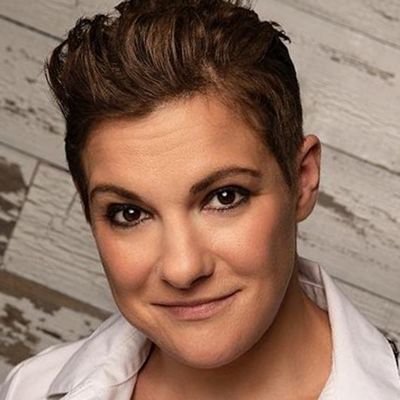
Continuing Pride Month, Daisy Eagan, the youngest female to ever win a Tony award for her portrayal of Annie Lennox in The Secret Garden, shares her motherhood/life journey with us... Read More
From the show: Mamas Talkin' Loud
Guests
Featured Shows

About
Continuing Pride Month, Daisy Eagan, the youngest female to ever win a Tony award for her portrayal of Annie Lennox in The Secret Garden, shares her motherhood/life journey with us. Coming out to her liberal parents at 12 years old, she continued to explore her sexuality and gender identity all while battling the pressures of show business that has for so long only accepted womxn who look and act a certain way. Wildly open and honest about her struggles and triumphs, Daisy continues to be an activist for the LGBTQ+ community and the #BLM movement, and a voice for the dismantling that needs to take place in order to heal and rebuild our broken society.
Find more info about the podcast via BroadwayPodcastNetwork.com/mamas.
Produced by Dori Berinstein and Alan Seales.
Edited by Derek Gunther.
Transcript
This transcript was automatically generated and might contain errors.
[0:00] Cara Cooper: Uh uh oh, Mama's talking loud, mom is talking loud, mom's talking tough, mama's talking, have a being good with good enough.
[0:14] Jessica Rush: Mama's talking life, mama's talking proud, mama talking trash, mama's talking live.
[0:26] Cara Cooper: Hi everyone, thanks so much for tuning in to this episode of Mama's Talking Loud.
[0:29] Jessica Rush: I'm Cara Cooper.
[0:30] Jessica Rush: And I'm Jessica Rush.
[0:32] Jessica Rush: And today we have with us the youngest female to ever win a Tony Award at the age of 11 for her portrayal of Mary Lennox in The Secret Garden on Broadway.
[0:42] Jessica Rush: Um, she's been seen on numerous television shows, most recently as Joey Riverton in Good Trouble, but also Girls, The Mentalist, Without a Trace, Ghost Whisperer.
[0:52] Jessica Rush: I mean, hello. Additional theater credits are uh include appearing in Les Misérables, James Joyce's The Dead, both on Broadway, and starring and writing in three one-woman shows.
[1:03] Cara Cooper: Holy damn.
[1:04] Cara Cooper: Daisy Eagan, fuck you.
[1:05] Jessica Rush: I love you.
[1:06] Jessica Rush: Still Daisy after all these years, and one for my baby.
[1:09] Jessica Rush: A published award-winning writer with a loyal and growing audience.
[1:13] Jessica Rush: Daisy is a fierce fighter and activist and a member of the LGBTQ community.
[1:18] Jessica Rush: Daisy Eagan, welcome.
[1:21] Daisy Eagan: Hi, wow, what an intro.
[1:22] Daisy Eagan: That was that was exciting.
[1:25] Cara Cooper: We like to make our guests super uncomfortable before.
[1:27] Daisy Eagan: I mean, I want to meet that person.
[1:30] Jessica Rush: And she's a mom.
[1:31] Daisy Eagan: I mean, and she's a mom.
[1:33] Cara Cooper: I just have to say though, when you were talking about uh Daisy winning the Tony Award, like I remember watching you win.
[1:40] Cara Cooper: Being a kid myself and being like crying and just going, oh my god, if she can do it, so can I.
[1:47] Daisy Eagan: That's lovely that you had that reaction because I was the same age and crying, and I said to my parents, no, I'll never be the youngest person to win a Tony Award.
[2:00] Jessica Rush: That's the truth. Had that been your goal up until that moment?
[2:04] Daisy Eagan: Or you didn't know until that moment.
[2:06] Daisy Eagan: I didn't know, like, my goal wasn't to be the youngest person. I just knew that I wanted to win a Tony Award, you know.
[2:11] Daisy Eagan: But um, but you and I are like the same age, uh, pretty much.
[2:15] Daisy Eagan: And so when that happened, I literally said, I was like, Well, there it goes. We might as well give up now.
[2:21] Jessica Rush: Yeah, I can't handle it, Jess.
[2:23] Cara Cooper: Oh my god. Daisy, thank you so much for joining us.
[2:26] Cara Cooper: Um the first thing um that we usually ask our guests is will you please tell us about your child?
[2:34] Daisy Eagan: Um, yeah. We're going through it right now.
[2:39] Daisy Eagan: So I'm gonna hearken back to a time when we were give us the like the overview of Monty.
[2:45] Daisy Eagan: Yeah, he's uh Monty is seven. He is a little firecracker.
[2:51] Daisy Eagan: Um he is a drummer.
[2:54] Daisy Eagan: Uh he loves to drum. He was just drumming a minute ago.
[2:58] Daisy Eagan: Um let's see. He's finishing first grade this week.
[3:04] Daisy Eagan: Um he is very good at math, which I don't know. I don't know where that came from.
[3:12] Daisy Eagan: Um I don't know what else. He's a good swimmer.
[3:19] Daisy Eagan: Yeah. Um this morning he was in a reading club that I signed him up for, which he was furious that I hadn't checked him, checked in like with him before I signed him up for it.
[3:29] Cara Cooper: Oh.
[3:30] Daisy Eagan: And they were she had given them prep prefaces, prefaces, prefixes, like the root of yeah, the root of the word and a suffix, and and like like a list of each, and they had to come up with as many words as possible.
[3:45] Daisy Eagan: And he's sitting there and he's writing and he's getting so frustrated and he's like, I can't do it, I can't do it.
[3:51] Cara Cooper: Monty, it's not a competition, and it was literally a competition.
[3:57] Daisy Eagan: So you're like actually it was.
[4:01] Cara Cooper: Oh my god.
[4:02] Cara Cooper: Well, I wanna I'm gonna sidebar you later because I want to see what that program is for.
[4:07] Daisy Eagan: I was gonna say, Jess, that'd be good for Elliot.
[4:09] Daisy Eagan: Yeah, because she's a big reader, and so we're looking for she's a year behind Monty, but yeah.
[4:14] Daisy Eagan: Um it's great. Oh my gosh. It's uh it's been something else to you, Daisy are so open with your life.
[4:24] Cara Cooper: I mean, I've followed your blog for years.
[4:26] Cara Cooper: I I met Daisy um through my husband.
[4:29] Cara Cooper: Um they did Wild Party out here in LA together. So um I've known Daisy for a while now, and I I started reading your blog way back, and I remember the and I even went today.
[4:40] Cara Cooper: I went to try to find the post about when you realized you were pregnant, that post.
[4:45] Daisy Eagan: Uh, but that blog, you have a different one.
[4:47] Daisy Eagan: Like I didn't realize that.
[4:48] Daisy Eagan: Yeah, I sort of I sort of cleared everything out this year and decided to start fresh, although there are some that I should probably import, but well, I just it was interesting um to follow your journey through for through to motherhood.
[5:04] Cara Cooper: I mean, because you know, that was something um clearly that from what I've read that was not um so much on the radar.
[5:12] Cara Cooper: You wanna you just give us a little like it that's a whole nother episode in and of itself.
[5:17] Daisy Eagan: Like besides, yeah.
[5:19] Daisy Eagan: But um, will you you let us sort of know where you were at?
[5:22] Daisy Eagan: What that yeah, yeah.
[5:24] Daisy Eagan: Um, I I never really wanted to have kids with any real purpose, you know.
[5:31] Daisy Eagan: I mean, like when I was young, I was like, if I have a boy, I'll name it Tennessee. Like I but I never really thought about it.
[5:38] Daisy Eagan: Um and then as I got older, I just thought, no, I you know, I enjoy being able to just like leave the house whenever I want, like just be have freedom.
[5:48] Daisy Eagan: Um and my boyfriend and I at the time were broken up, and I found out I was 10 and a half weeks pregnant, and we were still living together because we just hadn't I'd been traveling a lot and I hadn't I just hadn't moved out yet.
[6:02] Daisy Eagan: And because I was so far along, we didn't have a long time to decide uh what we were gonna do.
[6:09] Daisy Eagan: Um, so we basically like had a couple fights. I threw a a couple shoes at him, and then you know, went to a hotel for a weekend by myself and thought about it, and he thought about it, and the and we decided to have him for I to this day.
[6:28] Daisy Eagan: I don't really know what like what that decision really came from.
[6:33] Daisy Eagan: Um and here we are seven years later, and he's yeah, and I'm a full-time stay-at-home parent.
[6:44] Daisy Eagan: Which is a whole new meaning right now. Full time stay at home has a whole different definition.
[6:49] Jessica Rush: Yeah, yeah, these times.
[6:51] Daisy Eagan: Yeah, yeah. And some of us, that is not, I mean, I it's not my ideal.
[6:57] Daisy Eagan: Yeah, I don't think I'm you know I'm not a teacher, it turns out.
[7:01] Daisy Eagan: Um yeah, you know, uh, it's been bumpy, it's been very bumpy.
[7:07] Daisy Eagan: Um, and I've gone through a lot in my own like sort of personal journey and my identity and all these kinds of things.
[7:15] Daisy Eagan: And um, Kurt and I like we decided to have the kid and get back together, but we didn't really we worked a little bit on the relationship, but not really, and he was having a lot of his own struggles.
[7:28] Daisy Eagan: And so we broke up again when Monty was like three.
[7:33] Daisy Eagan: Um then it wasn't until about a year and a half ago that we were sort of living together again for the sake of Monty because I I don't know who can afford two separate apartments anywhere, but in New York or LA.
[7:50] Daisy Eagan: Um I don't know, I just realized after all those years that I actually really liked Kurt a lot.
[7:59] Daisy Eagan: Um, and I was actually at that point in a relationship with someone else, and it was it was a not it was a polyamorous relationship.
[8:07] Daisy Eagan: They were married, and their wife had like 17 other partners.
[8:12] Daisy Eagan: Um so uh yeah, so the window was open for that, and I don't know, and so we got back together and then uh moved back out to LA together, and we just got married a few weeks ago.
[8:29] Cara Cooper: Congratulations.
[8:31] Cara Cooper: I mean, might not get married in a pandemic and he, you know, it's funny, he lost his, he he got furloughed from work and he lost his health insurance, and I've just been fortunate enough to have worked a lot over the past couple years.
[8:47] Daisy Eagan: Um, and SAG has terrific insurance, and it's really affordable, and they're codependent insurance or their their dependent insurance is super cheap, especially compared to equity, where it's like $7,000.
[9:00] Jessica Rush: Right.
[9:00] Daisy Eagan: Yeah. Um, in our introduction at our wedding, our the woman who married us, she'd like sent us a couple different options for scripts.
[9:11] Daisy Eagan: And the intro, I rewrote it and I was like, you know, we don't really believe in this institution.
[9:19] Daisy Eagan: And it was started as a way to like barter women for like peace or you know, peace or property or whatever.
[9:27] Daisy Eagan: Um, and so we feel we feel proud that we're doing our part to overturn the patriarchy, and that in that in this union, the man is the one getting access to a basic human right, whereas it's usually a woman.
[9:42] Cara Cooper: So I'm down done.
[9:44] Daisy Eagan: Yeah.
[9:44] Daisy Eagan: Yeah, yeah.
[9:46] Cara Cooper: I feel like we we skipped over a lot in the middle of your journey, which is great.
[9:54] Cara Cooper: Uh, but maybe could you take us back?
[9:56] Cara Cooper: I mean, from what I've read, you came out to your parents when you were 12.
[10:00] Cara Cooper: Obviously, your journey with sexuality, gender identity, all of that.
[10:05] Cara Cooper: Can you kind of take us through the path that you have been on?
[10:09] Daisy Eagan: Because we know where you landed up and where you began, and everything that happened kind of in between.
[10:14] Daisy Eagan: Yeah. Well, you know, it's it's interesting because I just I'm writing about this right now for an essay.
[10:21] Daisy Eagan: Um, you know, I grew up in New York. I'm very lucky that I grew up in a place where people were generally liberal and progressive.
[10:30] Daisy Eagan: And I grew up in a family that was very liberal and progressive.
[10:33] Daisy Eagan: Although now looking back, I'm like, there wasn't a lot of color diversity in my life, even though my parents were involved with like the Black Panther Party and the weather underground, and like really involved in the civil rights movement.
[10:48] Daisy Eagan: But in our personal circle, it was it was pretty white.
[10:53] Daisy Eagan: Um, but there was a lot of um there were a lot of gay people around us growing up, and then I became an actor when I was nine, and you know, I was in musical theater, so um there were just a few gays, yeah, just a couple, you know, most of the men that I knew were gay, and um, but that but at this point in the 90s, like the lesbians that I was aware of were like, you know, the dykes on bikes and five lesbian brothers, like it wasn't I didn't know any I certainly like the idea of a femme lesbian, I didn't know what that was.
[11:35] Daisy Eagan: Um or bisexual, forget about it.
[11:39] Daisy Eagan: Even though my friends and I at our school, we we sort of all decided we were bisexual, and I was again very lucky to be in the group of like queerdos at school.
[11:50] Daisy Eagan: And my parents, you know, they didn't care, and it turned out my father's uh well, at the time he came out as a cross dresser, and now it apparently uh he's non-binary, which he didn't figure out until his late 70s, so um, I know bless bless this new world, yes.
[12:10] Daisy Eagan: Um, I was very worried about my career in the 90s because you know, Ellen hadn't even come out, and then when she did come out, they canceled her show. So in New York, the sense that I got was like it's okay for men to be gay in our community, but like, you know, we don't really talk about women being gay. Um, and if they are, they're like the term at the time was Bulldike, you know. Um, and I grew up in Park Slope, where like there were a lot of like crunchy Birkenstock wearing lesbians adopting kids. Uh, but it was still very like counterculture, and I was and I didn't identify with them necessarily, I guess. And then in my industry, I was being forced to look a certain way and behave a certain way.
And it is not like it is today. I mean, you know, I was dying my hair green, and everyone was like, you're never gonna work. And now it's like if a teenager's on TV and they don't have green hair, you're like, what's wrong with that kid? Um, so you know, I had to sort of go back in the closet, and um I sort of dipped my toe back out of the closet over the years as much as I felt safe to. Um, and then it really wasn't until Kurt and I broke up this last time, and I met a woman and I fell in love with her, and that was a very tumultuous, not good relationship, uh, which I'm told is appropriate for your first real life relationship. You're supposed to break up eight times. Um, and when that ended, uh a while later, I met um my next partner uh who was non-binary um and Polly, and a friend of mine joked that I went from like kind of bisexual to like full-on queer poly in under six months.
[14:17] Cara Cooper: Well, you had a lot of time to make up for.
[14:19] Daisy Eagan: I did, I really did. Exactly. Um, you know, and it is, it's a different time in our industry now, and um there's a lot more room for a lot more representation. And I came, I went on tour with The Humans and I was dating this person who was non-binary, and I um went through my own sort of journey with my own gender identity. I think just sort of realizing like it's not that I'm not female. Um, it's just that I don't feel like it's so complicated and it's really hard to unravel. It's like a it's like a ball of yarn that's all tangled up. But I never felt like the women that were being shown to me, you know.
[15:12] Jessica Rush: Right.
[15:12] Daisy Eagan: Like societal yeah, the idea of the. But that in itself, right? But that in itself is just a social construct. So that's not really real anyway. But it's me also magnified by our industry. I think that's the thing that's so there's so much pressure in our industry for women to look a certain way.
[15:31] Cara Cooper: Yes.
[15:31] Daisy Eagan: And I was all my life, all my career, like, oh, well, you're the chubby lesbian, like all my life. Um and it didn't matter if I had long hair, short hair, I was always the chubby lesbian. Um, also didn't seem to matter how much I weighed. Um, so yeah, so I never felt comfortable with any of the images that were being shown to me, but I also understand that those aren't real. Uh I think in some ways I identify as a woman because I feel okay with my body. Like I don't look at my body and say this isn't the right body for me. And I think also I identify with the underdog. Um, but I identify as a non-binary female because um I don't have like a strong inner core identity of femaleness. I don't know what that feels like.
And I in my reading and my paying attention to like trans issues, I thought, well, how could you possibly know that you're a man? Like, how could you know that? And I realized, oh, some people actually really do know intrinsically what their gender is. And I don't. And so for me, that means that I am more comfortable identifying as a non-binary female.
[17:02] Daisy Eagan: And then after I got off the tour of The Humans, I was like, I need to cut my hair for once and for all. I can't deal with it, I hate my hair long, I've never liked it. You know, and everyone was like, you're gonna pigeonhole yourself, you're gonna, you know, stereotype yourself. And I was like, yeah, but I but I'm getting cast in those roles anyway. So who what difference does it make? And if it really does end my career, then fine. Like I have to be who I am. I'm 40, you know. Um, and I cut my hair, and then a couple weeks later I got a TV gig playing like a butchy lesbian. Um and I was like, finally, I actually matched the thing.
[17:41] Cara Cooper: Right.
[17:41] Daisy Eagan: Um and that felt very important to me because I felt like I was being seen finally and I felt like I was helping other people feel seen um in a way that was never offered to me earlier in my career and that's due I think a lot to the millennials who were like I don't want to keep seeing the same shit on TV or in the movies or in culture um and so I think we owe them a lot.
[17:41] Cara Cooper: Absolutely.
[17:41] Daisy Eagan: It's so funny as you're talking about this not having this strong identification with being a female whatever that is but knowing that intrinsically you don't feel like a male I wonder how carrying a baby felt like how did that play into your identification um and how you felt in your gender.
[17:41] Daisy Eagan: Yeah, I mean at that point I wasn't um going through so much I mean I always knew I was a tomboy and I always knew that I wasn't necessarily straight um and and also even though it was only seven years ago there weren't the sort of resources that there are now you you never saw like a trans man pregnant you know so I don't know that it I don't know that those thoughts even really occurred to me um but I I never felt like oh now I'm a woman you know you always a lot of times you'll hear women say like you're not a woman until you XYZ and I you know one of those it's like have a baby which is so shitty and and privileged and ableist and all those things. But um I will say that I loved being pregnant.
I felt amazing um yeah my first time I felt amazing. My second time not so much. But yeah, that's why I think that's part of the reason I didn't have a second one is I was like, I don't want to push my luck, especially also just because Monty was so good and easy, and I thought the next one's gonna be a Damien child. So I'm not gonna I feel like the universe was like, here's your one good thing, don't fuck it up. Um but I listened to enough pressure itself.
[19:49] Cara Cooper: Yeah, yeah.
[19:50] Daisy Eagan: I had, you know, I just felt mentally I felt incredible. And I even, you know, I had to go off one of my medications because it wasn't it was like a class C or whatever the hell. And I was very worried about that, but I f I was on cloud nine, man. I loved it. Um up until about five minutes five months after I gave birth, and then I plummeted. But um, but yeah, it didn't, I didn't have any like weird gender stuff. I was like, wow, there's a human in there. Kind of fun, yeah. It's like a weird science experiment.
[20:23] Cara Cooper: It's so wild.
[20:24] Daisy Eagan: Oh my god. Well, you just touched on Daisy, you just touched on it when you said that about your medication that you had to go off of, and I know that um that's a huge part of your journey just through life as a person. And I know that it was you struggled a long time, you're very open about um mental health, and um I think that the have you ever felt like the stigma, like was it something because you are so open, and I'm not sure when you decided to be so open, right? I mean, uh, like you were saying, seven years ago, even it was the world wasn't the same. So I can imagine that if it was a while back that that was something that um maybe you had to give a second thought to, or if you thought that it affected your career in any way or how you were perceived.
[21:16] Daisy Eagan: Yeah, I think it absolutely has affected my career. And you know, it's unfortunate, but again, it's like I just I think it was like I was born 20 years too early, you know, like I was meant to be, and I feel like I feel like for a lot of my life I was sort of yelling into a void, and I felt very alone. And I don't think there was a moment where I was like, this is the person I'm gonna be. I'm gonna be very open and honest. I think I just I don't really know any other way to be. And um, I mean, I think it's cost me a lot. I think it's cost me work and friendships and relationships. Um, you know, even though even though we're a lot more aware of mental health issues today, it's still hard, I know, to be friends with somebody who has a lot of depression and anxiety because you don't know what to say to them.
And also a lot of times you're like, oh my God, again you're upset. But it's like, yes, again, I'm upset. I I'm sorry, you know. Um, and also you want to say things like just get up and take a walk, which is not the right thing to say to to somebody who's like, you know, in bed, depressed. Um but when I I did this really good doofy, doofy reality show at the very beginning of reality shows called The It Factor, which was on Bravo, and it was literally their first reality TV show. I ruined the world. Um and it was, you know, it was they were following eight actors in New York to see like what it was like to be an actor and what it takes to like make it. And do you have the it factor? And I was I was the one who was like I had been a child star and I was you know now I was an adult and I was struggling to come into my own and X XYZ.
And I joke that like you know how in reality TV they edit people to have to fit into a so they edited me to seem angry and depressed in that I showed up and I was angry and depressed and they just didn't record and I had uh and that was a very very difficult point in my life. I had had a full complete nervous breakdown and I was on medication for for the first time and I was very resentful about my success and about you know having lost my mother so so shortly after my success. So I was not and I was also 19 which like go talk to a 19 year old today. They're not well maybe today they're a little but they're not they're not that no it's not a great place. No and in my defense like I was I was on Broadway at the time like it's not like I was you know doing heroin in an alley but there was an episode of The It Factor where I was going into audition for like a commercial for an antidepressant.
[24:26] Daisy Eagan: And I said I know that these companies test on animals, and I have a lot of feelings about that, but I also know that like I wouldn't be alive without my medication today, so it's hard. And I don't know that I even thought about like, oh, I'm sharing with the world that I'm on medication. I think it was just important to me to say, like, yes, medication is problematic, but also it saved my life. So I am not embarrassed about it. Nobody else was doing that at the time. Nobody else was talking about being on medication. And again, like I feel like I, in some ways, was yelling into a void and not getting a lot of feedback back, except for like, you're too angry and depressed. Or like, we don't want to talk about we, you remind us that mental health issues are a problem, and therefore we don't want you around.
But you know, I was also talking about like rape and rape culture before the Me Too movement happened, and I was talking about abortion before people were like admitting you were so you're just so open, you know what I mean? And you're a truth teller, and I think there is, I love that. And Cara and I strive on this podcast to be honest and truthful and open with ourselves, and even today, like we had an episode talking about mental health, and I talked about being on medication now and what good it's been doing for me. And my father was like, I can't believe you talked about that. I can't believe you said that. And it's like, yeah, and I said, but that's who we are, and I am wanting to unapologetically be who I am, and exactly and be truthful, and so be it, whatever may come. But I do feel that there is a shift happening with regard to people being able to acknowledge all parts of ourselves.
[26:30] Jessica Rush: 1000%. And it's funny, Daisy, you were talking about when you were 19 and we're relatively the same age as well. In my first year of college, I was on anti-anxiety medication. So it would have been around the same time. And I, I mean, it was tough. My parents were going through a divorce. I was the first time I was away from them and trying to dismantle that and unpack that while figuring out who I was. But I never would have felt open during that time to talk about it ever. Now, I mean, it's not an issue, but I so I even just knowing how I felt in that moment 20 plus years ago, I can only imagine what that meant for you to speak so openly.
[27:07] Daisy Eagan: Yeah. And that was also, yeah, I mean, I that was the late 90s, right? Mid-late 90s. And it was, you know, that was like Prozac. Like that's what we knew. It was like Prozac. And we and as far as we knew, like crazy people went on Prozac. And so, and also, and also that was a period too where we felt like doctors were starting to like over-prescribe. So if a doctor said, I think you need, and I did have a doctor say to me within 15 minutes, I think you should be on Prozac. And I was like, you don't know who I am. I mean, he was probably right in retrospect. But it felt a little like he was jumping the gun. It's so funny because now I'm thinking about like that book Prozac Nation and the movie, which I auditioned for, and I remember at the time I had a shaved head because it was another period where I was like, fuck this industry, I'm gonna be who I am.
And they were like, fuck you right back. We're not gonna have to give you work. And the, you know, the great irony is, I mean, you know, it's not like Winona Ryder is free from her own issues, but like I don't have borderline personality disorder, but you know, I was I was pretty right for that part. But I think in some ways they were like, oh no, you actually have issues, so we're gonna go elsewhere. Fun times.
[28:33] Daisy Eagan: Yeah, yeah. I think we also think about it in terms of like, or we did anyway, psychiatric hospitals. And I think our idea was like if you're on medication, you're zonked out and you're drooling and so you can't work with psychological. Like nest or something.
[28:47] Jessica Rush: Like you're right, exactly. Yeah, but that's you know, that is, and in some ways it is what it used to be. I think if women especially were too loud or too angry or quote unquote hysterical, they were drugged up and put in a room somewhere, yeah, yeah. And forgotten about, um, or they, you know, walked into the river with rocks in their pockets, and I think now we're finally like, look, I can be depressed and I can have anxiety, and I can also be really angry, legitimate, like and be righteously angry, and I can also go to work and do my job and raise a kid, like these are things that can all exist at the same time. We talk a lot about that thing, like things simultaneously existing that seem to be polar opposites, like even just in being a mother, like I can be completely and totally frustrated and annoyed that I have to do these things and take care of this stuff and still love my child with every ounce of my being. It's you, this duality of being a human, you know. You know, if you're one thing, it doesn't mean you're not another.
[29:57] Daisy Eagan: Right. We I was talking about that with Kurt, my still feel weird saying husband. Um, like last week, you know, Monty's going through it right now, because we're all going through it. And that's um Jessica, you had sort of reached out to me because I put something online about oh my God, I this is so hard. And I appreciate you reaching out to me about it. And I was able to sort of take a step back and go, this was hard enough with the pandemic. I mean, look, for as far as I'm concerned, it was hard enough before the pandemic because and I don't know if you saw in my blog, but I was I said we're gonna start to have riots really soon. Well, I everyone should prepare. I actually I just texted Cara before we started this because I was going back and looking at a couple things because knowing where we are in the world right now and with the Black Lives Matter movement and the protests that are happening.
Um, I had gone back because I thought I had remembered something. And sure enough, on April 10th, Daisy, you wrote a blog post. And inside that post you wrote, capitalism and racism are far too entrenched. In order to create real change, there would need to be the kind of collapse that is scary and not easy to live through. And here we are.
[31:13] Daisy Eagan: Here we are. Yeah. Right. I mean, it was it's sort of prophetic in that you wrote that only two months ago.
[31:20] Daisy Eagan: Yeah. Well, uh because I've seen this coming for a long time, and you can't keep punching an animal or person in the face. You can't back an animal into a corner. And by animal, I mean all of us as a people. And then separately, of course, we've got black people who are being lynched. How many years after Jim Crow supposedly ended? How many years after slavery supposedly ended? And my feeling is if your eyes are at least a little bit open, you had to have seen this coming because this is unsustainable. The way we've been living is unsustainable. And the old white men who are in power are dying out. Thank God. Thank you, Jesus. And the younger generation, and again, the millennials are coming in and saying, no, this can't happen.
This can't be like this, but in order for it to get fixed, it's gotta it has to break completely. Um, and I've been reading, you know, I've been reading a lot about you know, um, black liberation and anti-racism, and I just didn't see any way out of where we are without this. Anyway, my point is that I live in a space and I've lived in a space my whole life where I'm like this sh this reality that we're living in is not this isn't gonna hold. And it's it's held together right, and it's like scotch tape over you know, over a geyser. Yeah, so I've been sort of braced for a long time.
[33:02] Daisy Eagan: Then I just remembered this morning that a few days after Trump was elected, I was sitting in the green room at the Shakespeare Theater in Washington, DC, and I was listening to like the The Daily or NPR or something, and I just put my head down and wept. And somebody was like, I think maybe you should go to the dressing room. Because there were like kids around. But I thought this morning, I was like, this what's happening right now is why I was weeping.
[33:31] Jessica Rush: Yeah. Absolutely. A thousand percent.
[33:34] Daisy Eagan: And so it occurred to me, and it occurs to me, and I forget it, and it occurs to me again, I forget it, that Monty is seven. And this shit is hard for us to process. Even without the pandemic, even without the riot, the political unrest and the riots and the protests and the rallies and the police state that we're living in. Like, even just Trump as president was too much to process. So now adding all these other things, we're all going insane. And so and so, of course, he's gonna throw things and freak out and not want to feed the dog and not want, you know, like of course. And of course he just wants to go to the pool and sit there and watch number blocks. And he just wants to feel okay. And I think that's a desire that everybody is feeling so deeply right now.
They just want to feel okay, and it's not nothing is okay right now. And I think we're also so used to living on this, like this like rabbit we this hamster wheel that's going too fast, you know. And I think I think as awful as all of this is, it really the positive, I think, is that it does give us a chance to just take a pause and take a deep breath and just say, what is the important thing right now? Like, is it important that he sits in this reading class that he's mad because he can't come up with all the words? Is that important, or is it important that he get a hug and that we sit together quietly and I read to him about exploding farts, which is all he wants to read about? Fine. Because it's light.
It's like, you know, it doesn't take any energy. You know, at the end of the day, it's I, you know, Eric Elliot will go to bed, and Eric will be like, what are we gonna watch? And I'm like, can we just watch like Top Chef or something? Yeah, like I don't want he he's still like, even though he's going through this and processing it as well, he finds comfort in watching movies and things and escaping into the world of art. And for me, I'm literally like, I don't want to have to think any more. I we I went to sleep last night. I fell asleep as soon as Monty did, and then I woke up at one point and came out, and Kurt was watching the Minority Report, and I was like, yeah, or Minority Report, you know, the time.
And I was like, I get it. And the night before last, I got obliterated drunk. I mean, I was like, it was a hard day, and I was like, I am going to drink until I don't know what's happening anymore. Yeah, and I did, and Kurt the next day was like, did you watch Skyfall last night? And I was like, you know, anything is possible.
[36:18] Daisy Eagan: I did that, I did that with Del Taco the other day. Like we had I had a really hard day, and it was only like one in the afternoon here. And I went out to Eric and I was like, Who wants Del Taco? Because I'm going right now. Screw no gluten, screw no dairy. I'm going to eat it all. That's when I texted you, Jess, that we like we just had a family drunken dance party in our kitchen. And then I was like, and you should see Graham and I trying to put our kids to bed right now. I mean, it is just like we can't manage it. No, no. But it's all just so overwhelming and it's so heavy, and it's yeah, and you want to you there's so many things you want to do, and there's so many facets of it and parts of it that are yeah it I mean it was also how how long is this gonna last and it's like in in one sense it's like it's okay if he just wants to sit there and watch whatever.
[37:10] Cara Cooper: Yeah.
[37:10] Daisy Eagan: But also how long is this gonna last? And like where does the point come where you go oh okay now we can't spend all day sitting on the couch because this is actually just life now.
[37:22] Jessica Rush: This is just life exactly.
[37:24] Daisy Eagan: And you know at the beginning of the pandemic as far as America is concerned when we started to get panicked about it I was getting into the shower one day and I unfortunately my bathroom is just all mirrors and I'm looking at my body and I'm like I'm like oh I'm gonna probably I'm gonna gain weight and then I thought wow we're all gonna get like all the actors who are not working are gonna gain weight and I thought what's gonna happen when the studios reopen and all the TV actors are 10 20 pounds heavier and there's no time to lose the weight and the studio execs are just gonna have to be like okay this is what everyone looks like now and I hope I hope I hope but for me it was a matter of like I mean I've always struggled I'm a woman in the industry so I've always struggled with my body and my body wants to be much fatter than then I let it um but I had to get to a point where I was like you know what if I wanna if I want to eat cake or whatever the fuck I'm that's what I'm gonna do because that's the thing that's making me feel better.
[38:34] Daisy Eagan: And when I look at when I look at my body and it's not where I want it to be, I just go, that's okay. I'm I'm taking care of I'm like nurturing exactly surviving. And that's all you can do.
[38:44] Cara Cooper: Yeah, I same girl, sir. I feel like that's all Tess and I talk about. I mean, it's like those first few weeks I got here, Eric. You know, he had the virus, he was down for the count, and I was with Elliot all day, every day doing all the things and like having an only who loves to pretend and her imagination, and you know, and I was eating a lot of triskets and cheese, and I was drinking a lot of wine, and I looked I looked in the mirror one day and I was like, or I went to put on some jeans or something. I was like, oh, these fit differently when I got here, you know.
[39:22] Daisy Eagan: And it's amazing how quickly, though, you know, it's like there are days where I don't hit 3,000 steps, easy. Oh, you know what I mean? And like going in there because I'm not going anywhere. So I I've started running, which is like run walking, let's be honest. But like if I go out and I start the day with that, I've at least done like 7,000 steps, and I'm like, okay, so I've started somewhere, but I realized, you know, I used to go up and down five flights of stairs like eight times a show.
[39:47] Cara Cooper: Yeah, and that was just not just walking in the city, yeah.
[39:51] Daisy Eagan: I mean, even moving to LA, yeah, moving back to LA from New York, like I'm so sedentary here. Like, I don't I don't have to walk anywhere. I mean, I have a dog, so I walk around the block or whatever, but like in New York, yeah. When I was in high school, I used to I had a 50-pound backpack or however heavy heavy it was, and I would walk from Soho to the upper west side, like once a week for therapy, and I could have easily taken the subway, but it's just like that's what you do in New York, you just walk and like just walk all the neighborhoods get to, you know, you see the neighborhoods change from like street to street. And it's but here it's like just sit on the couch.
[40:33] Cara Cooper: Yeah.
[40:33] Daisy Eagan: Well, and especially right now, it's just all so you know, when on one of our our Zoom calls with Tina, you know, one of our cast members just said, I pray that everyone can find a little bit of joy today. Yeah, because yeah, everything is heavy that it's all heavy. And I think, you know, I I'm sleeping a lot here, like eight or nine hours more than I've gotten in years, but I'm still exhausted and yawning by like one in the afternoon. And it's because the exhaustion of where we are at the constant information coming in, being inundated with um, you know, pictures and videos of and things, these are all things we need to be aware of, and that we need to actively, but now you know, and now the work is actively doing the work, right?
[41:18] Cara Cooper: Right.
[41:18] Daisy Eagan: To to show our support and to become more evolved people and to help raise anti-racist children, and and um just it's all and we want to do that, but boy, on top of a pandemic, yeah, and everything and I wanted to bring Monty to the to the rally yesterday, but you know, uh it's 20,000 people, and it's hard to have a seven-year-old keep his goddamn mask on. Yeah, and God forbid I get sick, like I just it didn't, I had to give myself permission to um just step out of that one. And I've sat down with him and I had, you know, we did the flashlight vigil for George Floyd last week, and he wanted to know what that was about, and so we sat down and we had a very difficult conversation. I told him about George Floyd and Brianna Taylor, and I told him about Tamir Rice, and I when I told him about Tamir, he burst into tears and he said he was like killing they killed a kid.
And I said yes. And he said, That's that's rude. And I said, Yeah, it's very rude. And then he said it's despicable, and you know, and I said, What can we do to try to make it better? And he said, Well, if I was president, I would say no killing and no guns. And I said, Yes, that's great. What can we do today without being president? And then again, it reminded me a few days later when he was flipping out and you know, whatever it was he was having a tantrum about. I thought, yeah, like he he just learned that like the police who just last week in school, they were talking about, you know, the police are here to protect us. Like he just is learning that that's not necessarily the case for everyone. And I how do you fit that into your brain?
[43:05] Cara Cooper: Right.
[43:05] Daisy Eagan: Yeah. On top of not being with your friends and not seeing and not, yeah. Yeah, not having any quote unquote normalcy.
[43:06] Cara Cooper: Yeah, yeah.
[43:13] Daisy Eagan: And all of his friends at school are are brown, all of them. That's what Elliot's Elliot's a minority at her school too. And so for her, this has been yeah, yeah. In his mind, I think he thinks like, you know, they're gonna get shot. Like, yeah, yeah, yeah. Oh, or oh yeah, it's exhausting. By by noon or one o'clock every day, I'm like, uh how am I gonna make it? And you know, and Kurt is now working full time again, which is thank goodness. Right. But that comes with its own like scary. He works at Guitar Center, which is like a you know, we just get worried they're gonna be like looted, although they haven't, thank God, knock on wood. But he's gone from like 10 30 to 8. I'm like, ah um and I'm very very lucky my sister moved here in February and she moved like three blocks away thank the Lord and she's she was a nanny for so many years so she she does all the school with she's got all the tricks too thank god yeah because I if she wasn't here I probably would have yeah jumped off the roof by now I mean I I don't have a high threshold um so I'm very very lucky well I any time you come on and tell us you know we it is and there I know sometimes all we can do is say you know solidarity like I I hear you I feel you right and that's all I really need I I remember in the beginning I posted something like they just said school's gonna be closed till the end of the year and my career's gonna die and people were like yeah everyone's in that and I was like oh sorry I didn't mean to oh god I know my pain is not matter it's all just it's we're all doing the best we can yeah right and there may be missteps and there may be you know you well and also when you're in a vulnerable place and someone says we're all in the same boat you don't read it as like oh girl I'm in the boat with you you read it as like yeah bitch shut up which is not which is not what they you know probably.
[43:57] Daisy Eagan: Oh my gosh Daisy I feel like we could sit here and like keep chatting I know just I would love for ages and ages maybe we'll do a part two come on back.
[45:31] Cara Cooper: We can talk more.
[45:32] Daisy Eagan: I'd be happy to. Because also you're now a doula, and you're all these fit. Like, there's these right there's so much.
[45:37] Cara Cooper: There's so much.
[45:38] Daisy Eagan: Are we able to do any of that right now? I mean, I know you get certified, but I didn't get certified because I have I did the training. Okay. Now in order to get certified, you have to attend three births. Um, and you have to go to a uh childbirth class. And so I can't do any of those things. Um, and so right now I'm just compiling a list of uh practitioners that I can recommend and I'm doing the reading, which has to be done, but also you don't have to be certified to be a doula. That's like a that's sort of a newer thing that like bougie people are like, Well, are you certified? And my and my teacher, my teacher was like, You were born a doula, you already are a doula, like I love it and I've yeah, and I all already attended obviously my own birth, but a friend's birth um years ago.
Uh I just can't be there in person right now. So I'm just I'm just waiting, and then I'm taking my postpartum doula training at the end of August. So I I did not have a doula for my first birth, and I had a second, I did have a doula for my second, and the difference in the experience I can't even begin to uh explain. It was I felt so much more in charge of what was happening to me instead of just being a passenger. I felt like an authority. I had a very new doula at mine because I couldn't afford like a an experienced one, and I'm so glad that I had her, but I realized in my lessons there were things that you know got missed, which is fine. It it was the way it was, and he's healthy and happy, and thank thank the goddesses above. Um but doulas are great.
[47:17] Cara Cooper: They are.
[47:18] Daisy Eagan: They rock.
[47:19] Jessica Rush: Well, thank you, Daisy.
[47:21] Daisy Eagan: Thank you so much.
[47:22] Jessica Rush: Thank you guys. I really appreciate it. This was fantastic.
[47:25] Cara Cooper: This was awesome.
[47:26] Daisy Eagan: I love what you did.
[47:28] Jessica Rush: Thank you.
[47:29] Cara Cooper: And good luck.
[47:29] Daisy Eagan: Good luck.
[47:30] Jessica Rush: Surviving the rest of the day.
[47:32] Daisy Eagan: I mean, you know.
[47:34] Cara Cooper: Surviving.
[47:35] Daisy Eagan: We're almost done with the remote learning.
[47:37] Cara Cooper: So you're almost almost there.
[47:40] Daisy Eagan: So close.
[47:42] Cara Cooper: Although then it's then what do we do?
[47:44] Daisy Eagan: I know.
[47:44] Cara Cooper: I know.
[47:44] Daisy Eagan: That's it.
[47:45] Cara Cooper: Let's not even talk about that.
[47:47] Daisy Eagan: Be well, girl.
[47:49] Cara Cooper: You too.
[47:51] Jessica Rush: Mama's talking about.
[47:56] Jessica Rush: Thanks so much for listening to this episode of Mamas Talkin' Loud. Special shout outs to Rachel Spencer Hewitt for our fabulous graphic. Kristen Anderson Lopez, Bobby Lopez, and Justin Ward Weber for our awesome theme song. Our producers Dori Berinstein, Alan Seales, and of course the Broadway Podcast Network for bringing us to you. If you like what you're hearing and you want to keep the conversation going, you can follow us on Instagram and Facebook. And of course, subscribe and review us wherever you listen to your podcast. Thanks so much for tuning in.
© Broadway Podcast Network, All Rights Reserved