

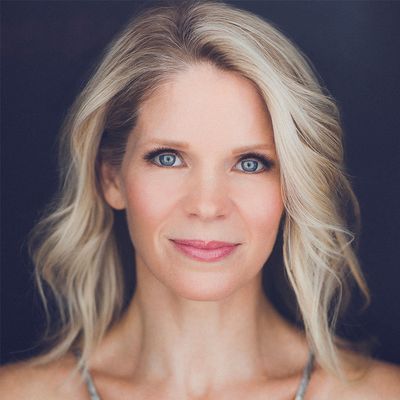
Tony Award winner, Kelli O’Hara joins us to kick off 2021 with a healthy dose of positivity and purpose. Now a mother of two, she faced her onstage pregnancies, performing postpartum and being a working artist mother with the same joy and passion she brings to all her roles... Read More
From the show: Mamas Talkin' Loud
Guests
Featured Shows


About
Tony Award winner, Kelli O’Hara joins us to kick off 2021 with a healthy dose of positivity and purpose. Now a mother of two, she faced her onstage pregnancies, performing postpartum and being a working artist mother with the same joy and passion she brings to all her roles. From her work on the advisory board of Say.org to using her platform to #sharethemic, Kelli is also keenly aware that it is privilege to even have a voice and therefore it is imperative to use it.
Find more info about the podcast via BPN.fm/mamas.
Produced by Dori Berinstein and Alan Seales.
Edited by Derek Gunther.
Transcript
This transcript was automatically generated and might contain errors.
[0:00] Jessica Rush: Happy New Year, y'all.
[0:02] Cara Cooper: Happy New Year.
[0:03] Jessica Rush: Oh my God.
[0:05] Cara Cooper: Cara, we've made it.
[0:06] Jessica Rush: It's 2021.
[0:07] Cara Cooper: We're here.
[0:08] Jessica Rush: I can't. I truly can't believe it, honestly.
[0:11] Cara Cooper: Not that anything is all that much different, but there is hope on the horizon.
[0:15] Jessica Rush: It certainly feels that way to me.
[0:16] Cara Cooper: Exactly.
[0:17] Jessica Rush: There absolutely is.
[0:18] Cara Cooper: And we are so, so happy to see 2020 go in the past.
[0:24] Jessica Rush: Be gone.
[0:24] Cara Cooper: Be gone.
[0:25] Jessica Rush: I mean, there were silver linings for sure. We've talked about those, but um I hear my kids in the background.
[0:31] Cara Cooper: Yeah.
[0:32] Jessica Rush: So so not everything has changed, everyone.
[0:34] Cara Cooper: No.
[0:37] Jessica Rush: No.
[0:38] Cara Cooper: Oh my God.
[0:39] Jessica Rush: But we are so happy to be welcoming you back to um a new calendar year of episodes. Thank y'all for sticking with us through 2020. You know, what a year that was. Starting in the studio and then transitioning to remote and all that has happened and all that we have all been through. Um, we are still here.
[1:00] Cara Cooper: And here is to moving forward in so many ways in 2021.
[1:05] Jessica Rush: Um, but as you will hear, this episode was recorded before the holidays. We are so excited. We have so many more exciting guests coming your way. Truly, we've already recorded some really, really wonderful and important and inspiring conversations. But kicking us off is the one and only Tony Award winner, Kelli O'Hara.
[1:27] ♪ Musical number: "Mama's Talkin' Loud" — performed by Kelli O'Hara ♪
[1:42] Jessica Rush: Hello, welcome, Kelli.
[1:56] Kelli O'Hara: Thanks so much for being here. I'm so glad to be here, guys. Thank you.
[2:01] Jessica Rush: Oh man. It's like you're just nailing all of the things. The remote learning, you've got the publicity zooms. It's like life and quarantine and COVID, right? It's so we appreciate it. Thank you so much.
[2:12] Kelli O'Hara: So much.
[2:14] Jessica Rush: The new norm, guys.
[2:15] Cara Cooper: The new norm.
[2:15] Jessica Rush: Oh my gosh. The first thing that we ask all of our guests is to tell us about their kids because we feel like it's something that we don't get asked a lot. So tell us about your kiddos.
[2:23] Kelli O'Hara: Yeah, thank you. I will. I'm so proud to. And it's not something I talk about a lot in these types, or well, this isn't even these types. This is a mama's group. And so I'm so happy to talk about my kids. Um usually it's more private for me. My son is 11, his name is Owen James. And my daughter is Charlotte Ann, and she is seven. Um Owen is in middle school. She's in elementary school. Um Owen is not in school today. He's upstairs with on his eighth hour of zooming. And and uh my daughter's in sort of a hybrid program, and she's actually home too now for the afternoon zooming as well.
[2:59] Cara Cooper: Wow. Wow, I love those names, Owen and Charlotte. I just have to say, I love those. They're very special. They're uh Owen's a family name, and Charlotte has uh an extraordinary story. I did not name her. Um, maybe maybe we have time for that later.
[3:14] Jessica Rush: Yeah, we have time now if you would share it.
[3:17] Kelli O'Hara: Yeah. Okay. Um, so when I was I couldn't uh I had my son very easily. It was during South Pacific, and oops, I didn't mean to get pregnant so soon. And then we went for a second one and it just never happened. It wouldn't happen. Well, it eventually did. Didn't happen, didn't happen for about two and a half years. Um, and in that time, my mother-in-law was very sick with pancreatic cancer, just a gorgeous, gorgeous woman. And um uh for some reason, out of nowhere, I got pregnant after trying forever. And at the moment I got pregnant, her health went horribly wrong, and she went into complete decline. And on her deathbed, I was about four and a half months pregnant. I didn't know if I was having a girl or a boy.
She was basically uh she was dying that day. The doctor said, This is it. We were all sitting around in hospice and in the bedroom, but she woke up and she started vibrantly talking uh to a little girl named Charlotte, and she said, Look at you, you're gonna be just like your mom, dancing around like that. And then she said, It must have been so hard for your parents having so much trouble at first. And she said, It's Charlotte, isn't it? And I went to the doctor the next day and found out I was having a little girl. She was due on my mother-in-law's birthday. She was born the next morning, and when she was about a year and a half, we found a picture, and I said, What's this picture of uh cousin said, What's this picture of Charlotte doing here?
And my father-in-law said, That's a picture of Pam, my mother-in-law. Um, they have the same physical, physical look. And then about three years old, Charlotte started to twirl and spin. So, in some strange uh time continuum, if Pam met her in some strange alternate universe, she was probably about three and she was spinning, and so they did meet. They did meet in their own time, and Charlotte is with us now, and every once in a while she will do something that only Pam could have done, like line up the rubber duckies on the bathtub, just the way Pam did, and nobody knows why. And she's here and she's my miracle, and she's Charlotte.
[5:23] Jessica Rush: Kelli, I'm in tears over here. That's absolutely beautiful. What a special.
[5:30] Cara Cooper: Oh my gosh. And your your listeners won't be able to see it, but I'll later I'll show you girls a picture of these two girls that look just the same.
[5:37] Jessica Rush: I would love that.
[5:37] Cara Cooper: Oh my god, that is beautiful.
[5:39] Jessica Rush: That's absolutely beautiful. I mean, I had goosebumps when you were talking about her in the hospital and and talking and seeing her. And I just I am such a believer, and I that's just beautiful to think that they've known each other or that on some plane there was um there was some my son was my son was very close with his grandmother before she died, and and I told him once what better way to to come back than as your best friend, your sister.
[6:08] Kelli O'Hara: Yeah, so that she could be still be with him.
[6:08] Jessica Rush: Still be with him. Yeah, Kelly, thank you for sharing that. That was thank you. That's like such a dose of goodness and love and light. And oh man, thank you for sharing that. That was beautiful.
[6:22] Cara Cooper: Oh wow, you guys, she's showing us this picture, and these ladies look they're like the same girl. If it weren't for the difference in the photo quality, knowing that one was older, you would absolutely think that's the same child.
[6:36] Kelli O'Hara: Wow, yeah. The family thought that's Charlotte, and I just found this one that looked sort of like it, so I put that together.
[6:44] Cara Cooper: Wow. So two special babies. I'm very, very proud of them.
[6:48] Kelli O'Hara: That's amazing. That's incredible. Well, and so talk about if you would like for specifically, you're one of our first. We've talked to moms who've been pregnant, you know, sort of as ensemble players, or um, you know, in Broadway shows, but you are the first person we've spoken to that was visibly pregnant during and starring in a show, and you know, Tony Nominee and Winner Now, I mean, you all it's like if I recall correctly, because my husband Eric was in South Pacific with Kelly, so that's how we've met. And but he told me, I remember him saying that did they add like a Chambre shirt or like a denim shirt or something to wash that man?
[7:32] Kelli O'Hara: I yeah, you know, I have to, I was visibly pregnant and and more on in both pregnancies, more so in the second one because I did a show until I almost until she was born. Um, and sort of the hysterically ruined the whole character by being hugely pregnant. But in South Pacific, I stayed until about five and a half months. And I remember uh I was so uh the the wonderful costume designer uh Catherine Zuber, I was like, Can I just have a pair of shorts? Can I put my shorts on early? Because I think I do have a pair of shorts. Can I put nope, nope, that's not gonna be period. So you're gonna have to wear that swimming suit. Um, she did let me move to a one piece from a bikini, but um, in order to, I it's almost like she allowed for me to have stolen one of the CB shirts, maybe Eric's shirt, you know, and put it on.
So we pretended like I sort of had one just draped over me because I think my backside was was really trying to catch up with my front side. And um, so I did uh for those cartwheels and all that stuff for watch that man, I I wore sort of this this open, unbuttoned, she didn't even want me to button it, this open unbuttoned shirt for like the last month because it was getting pretty pretty funny.
[8:39] Cara Cooper: Oh my god. Well, and those costumes in general. I mean, you're a really fit person, and I remember you you are, but you I remember like the and that satin, there was like a satin gown that you wore that's like cut on the bias. Like I just remember like thinking, how are they even gonna? I couldn't imagine what they were doing to try to hide that for you because satin is not forgiving. We know that. Anyone who's tried to wear a satin slip Calvin Klein dress or whatever, y'all. Those are not for every every type. But and also cartwheels, cartwheels when you were five months pregnant. Like, how were you feeling okay? I mean, I'm sure because you are someone who is athletic to a certain degree and and dancing already, like you're doing eight shows a week, so our bodies get into you know, into shape in a different way. But how was that for you? Were you sick or cartwheels? Your center had to be off.
[9:31] Kelli O'Hara: Yeah, it was off. I I will say that I at first I thought I'm gonna not do the cartwheels, and then it became changing at that point, became more parallel, like you know, scary to me because there was there was water on the ground from the chef from the wash that man scene. And so all the girls, you know, talk about girls having girls' backs every night. They would spend extra time with towels during the you know, during the scene, just wiping, wiping, wiping, wiping, making sure there was nothing for me to slip up slip on when I when I then did Wonderful Guy and the cartwheels and everything like that. Um, I did talk to doctors. I said anything that you had been doing, you're supposed to continue be able to continue to do.
So you're dancing, you know, after a while you're not gonna go jog a million miles, although I know some women do, but a little bit of dancing, a couple of cartwheels actually was just fine. I I was had a little morning sickness with Owen, definitely not nearly as sick as I was with Charlotte, but by the nighttime, I sort of felt energized by having the show, and that's the case for both shows that I did with both of them. I just felt like the job, the show was what kept me going, gave me the energy. It was a climbing of the tower at the end of Wonderful Guy that scared me the most, actually. Um, it was the slipping or the falling from there that I started toward the end of my time there to be really freaked out by.
And so if you probably if anybody took a video of those last, I was probably going up the stairs, great, really, really, you know, making sure I had my hands on every single rung of that ladder. Um, but other than that, I I was younger and more um more just energetic and maybe risky, but I I'm so proud. I'm so proud that I had him in my tummy for so much of that. And it was a blast when I think back on it.
[11:15] Jessica Rush: Yeah, it really is special. We both have been on stage pregnant, and I just think that it's a really very particular experience because you are kind of sharing it with this human you haven't met yet, you know. They're a part of it, and that's I I just think it's so special.
[11:28] Cara Cooper: What show were you doing when you were pregnant with Charlotte that you said you were almost up to the time you gave birth?
[11:34] Kelli O'Hara: So again, it was the same dancing. I was doing nice work if you can get it with her until four and four and a half months. So sliding down the banister, flipping off the bed, those pratfalls.
[11:44] Kelli O'Hara: But then I went into Far from Heaven, which was this musical about this housewife with these little 50s dresses and everything like that. And slowly but surely the dress became empire waist, grew, grew, grew, grew until it was under my chin. And by the end of it, I just looked like I just waddled on and off the stage. It was hysterical. But we did it, we did it until like right the month before she was born.
[12:10] Cara Cooper: That's so wonderful that they let you continue to do it, even while looking, you know, visibly pregnant.
[12:15] Kelli O'Hara: Well, I don't think there was a chance at that point. I still feel a little bit inside guilty, and that's the best word I can have, because you build something for a while, especially a brand new show that's sort of been written, and this happened for both Bridges in Madison County and Far From Heaven, which happened at the same time. I had been trying to get pregnant and have this child, and then I got pregnant unexpectedly, sort of. And so both of those shows were sort of put in jeopardy in a way. And I think Playwrights Horizons and that whole team for Far From Heaven, it was already scheduled. It was on the books, you know. They were like, let's just go ahead. Otherwise, we have to put a million jobs in jeopardy and everything.
So, in a way, I sometimes feel guilty that this show's reception might have been altered by my state, my physical state, or we maybe didn't run as long as we could have because I would just had to, I just had to go pop. And, uh, but anyway, I, you know, I don't spend too much time on it because why would I do that? But at the same time, it was strange. And then I had the baby and Bridges was sort of waiting on me, and I had to start that show way before I was mentally or emotionally or physically ready.
[13:25] Cara Cooper: I can't imagine doing that.
[13:28] Kelli O'Hara: I know, but you were gorgeous in that. I just I remember seeing you, and you were so stunning and so gorgeous. And I do have to say though, mama had some nursing boobs. I didn't, I mean, because I at that point had had Elliot or I was pregnant or something, and I remember like going to see the show, and I was like, Oh mama. Yeah, she looked gorgeous.
[13:53] Kelli O'Hara: I got it. And believe it, let me tell you something. On the stage, I had to time, I learned the hard way had to time that pumping out just right because I did have to get out of that bathtub. If I didn't pump it intermission, I was leaking all in that bathwater and standing up and spraying, you know, because I hadn't seen my baby since 1 p.m., you know, and it was already on a matinee, it was 4 p.m. or whatever by the time I got in that bathtub. So it was once you let those babies loose, oh my God, this is something like no one would ever think about the fact it's a lot. You know, we would pump an intermission but we were fully clothed at all times, but that's true. Oh my gosh, you had to work out that number two of just like how soon, yeah, when do I need a pump so that when I get out of this tub with no clothes on.
I just, you know, and I would feel it. I'd be standing there and I would feel let down. Yeah, oh my God, oh my God. Well sometimes just like the air hitting your breast would allow the letdown to happen like any sort of stimulation. So of course you're getting out of the water and that could be, you know, I have to say during South Pacific, which was my other, my first child, that's the first thing that started to change for me, which you know, that doesn't, that's the, I didn't complain. But at the same time, I was wearing this bikini and my sweet, very unproverted friend Danny Bernstein was the first person to know my secret because I wasn't telling anybody. We were standing backstage and I had this, you know, bikini on and we had to be backstage together for this long period of time and he looked over at me and he looked at my face and he goes, okay, what's going on?
You know, because he knew just by the shape of my body and he's a father of two. It was, and so I said, you're gonna be my secret holder for the next like four weeks before I can tell people. And I love that story because he, what better guy than to, my God, and so on the day for the next four weeks on the days that I felt like throwing up or something like that, he was like, let's do this, you know, take a breath, take a breath, we'll get through this next scene. I mean, he's just the best human anyway.
[15:52] Cara Cooper: I mean, and then to have him be a father, so he's been down this road with his, with the mother of his children, and like he knows what it is and what the journey is and how to, you know, best support a lady going through it.
[16:05] Kelli O'Hara: So oh, that's lovely. I love that. Well, it's something before we move on from that, what you touched on about the sort of feeling guilty with regard to like Far From Heaven and Bridges. I mean, Audra spoke to that as well with Shuffle Along. It's like there were when you are someone of your standing and caliber in our community, projects are created around you. And I, and I that's something I don't think we think about a lot when we're, you know, sending up our dreams of starring in a show or having someone write something for us. And the weight of that of all the people, especially, and it's not fair. I mean, I don't think it's fair for, you know, as women, particularly like you said, you were trying for so long, and our bodies are, we don't know.
We don't know when it's gonna happen, what's gonna happen, but at the end of the day, like the gift of having a child is gonna come first, you know, right? Our lives are gonna come first, but I'm sure that is, um, that was a weight that you had to sort of reconcile to a certain degree. Audra spoke to that too, and I think that's, it's just very interesting. That's not something that we hear about very often.
[17:13] Kelli O'Hara: So now, and you know, these shows for us, and I hope that any young mother or hopeful mother who might hear this, there's not one regret, you know. Like I might have felt guilty or I might sometimes, I never had any treatment. I don't know if I can speak for Audra. I never had any treatment of negativity. You know, they supported me. You know, we got out there and we did what we could do. We did the best we could do with the situation. But what happens with shows is they're so important to us. We think and we know they are in a certain way, but they're so fleeting. And guess what's not fleeting? My two babies. Yeah. And so when I look at them, I don't think for a second about that short sacrifice, that short amount of sacrifice professionally.
And so sometimes the whole idea of putting things off or because of this career, um, that's the one thing I wasn't gonna sacrifice. I was gonna just stick it in the middle, you know. And to be honest, doing that only made everything I was doing richer and that much more doable because it wasn't my whole psyche wasn't on the work anymore. In fact, the work became so much more joyous and less pressured because I had this, I had these little lives to make me feel so much more purposeful and also need me more.
[18:31] Cara Cooper: Yeah. So I, I don't know. I would, I don't, you know, don't wait, ladies.
[18:35] Kelli O'Hara: That's something that comes up a lot, actually, is that this perspective that you gain from motherhood and how it does kind of take this weird pressure off your life in the industry, and how we can be so like laser beam focused on it, and our world broadens to something bigger, and certainly it's a balance and a juggle, but the choices become really clear, like the priorities shift in a way that you're able to make decisions a lot more like efficiently and effectively. This isn't gonna work right now, or this is gonna work right now, and I'm gonna make it work, you know.
[19:08] Kelli O'Hara: Mm-hmm. Something that comes up a lot. Um, you are involved in so many organizations, and you're really vocal on social media about social justice. And I mean, you use your fame and your voice for so much good in the world, which is wonderful. But one of the organizations you are particularly vocal about is Say.org, which is a stuttering organization that you are on the advisory board of. Can you tell us a little bit more about it? Because I don't think it's an organization that maybe a lot of people know about.
[19:39] Kelli O'Hara: Yeah, and you know what? Maybe you wouldn't know about it if you don't know someone who stutters or you don't have a stutter yourself. Um, you're not a person who stutters. You know, my husband and I met about 18 years ago almost, and that one of our first dates was that he took me to meet this very small group of people in this organization called at that time Our Time Theater Company. And it was started by, um, it is founded by, uh, Tarot Alexander, who is a person who stutters, and he didn't meet another person who stutters until he was 27 years old. And he thought he, which seems impossible, but uh, it's not. You know, you go to school, you keep your mouth shut once you realize that a teacher's gonna shut you down or kids are gonna make fun of you, you stop talking.
And yet Tarot had all of this talent. Um, you know, he he's such a wonderful dancer and rhythm person. And um he started to have this great career, but then he thought, I've got to do something so that no kid, no person goes through what I went through. And what happened for me when I met this group is that I saw this group would put together, they would, these kids would write about their feelings, they would rap about them and dance about them and sing about them. And as we know, many people can open their mouths and sing, but they might not even be able to say their name, you know, if given, if put in front of that, you know, that pressure. And so I watched these children all of a sudden have this voice to use.
And when they're together, to be given the time to speak in the way they speak, and that was why it was called Our Time, which then eventually became Say. And I've seen these children come through that program having all these friends, going to camp, talking about their feelings, communicating about them. And it's made, it's gone from being a person who's a shut-in, who stops being a part of this world to someone who is literally just thriving and leading this world. And now we have the president elect of the United States as a person who stutters. So that example right there is just, it's extraordinary what we can do when we just give a person the ability to communicate. And I know you, the three of us girls, we use our bodies and our voices.
We sing to communicate and to show who we are. And the idea that someone might not know how to do that or be led to that. So I just got really passionate about it. And they asked me to be involved. I mean, they're so wonderful to include me in the involvement of this because it does more for me. I always say that I go to these things and I'm just, I'm sort of broken in a fresh, beautiful way and rebuilt by it every time.
[22:17] Cara Cooper: I love that. I mean, I, it's so, it's just so interesting that music in general is something that can bring out somebody's voice who might have a hard time articulating things, but the drive of the music and the, and the even the breath support of speaking continuously. I mean, I have very little understanding of stuttering, but the very little bit I do, that breath support of continuing the breath movement through your body allows a thought to get through completely. And what better, I mean, person to be inspiring these kids. I mean, come on. Like to have Kelli O'Hara walk into the room and, you know, be the one to inspire them to it. I just think that's phenomenal.
[22:56] Kelli O'Hara: Yeah. And now, like with Joe Biden with that video of him meeting the boy who stutters, and he, he, you know, he gets down to his level and he talks about it and says, Oh, you stutter too. You know, you can do anything, you can be anything. Look at me. And, and it's so touching. I mean, so many things about him are just heartwarming in general. But I know I'm so glad that there is someone who is using their platform and their privilege to speak up with regard to stuttering, something like stuttering.
[23:24] Kelli O'Hara: I mean, there are things that there are organizations that go under the radar a bit, you know, and issues that people struggle with that might not be as noticeable or might not have as much mention in the grand scheme of, you know, it's not a hot topic or it's not a trend, you know, to like talk about certain issues, and but there are still people out there who need help and who need assistance and who want to grow and discover their voice in that way.
[23:51] Kelli O'Hara: And I just think it's amazing.
[23:53] Jessica Rush: That's awesome.
[23:54] Kelli O'Hara: That's incredible.
[23:55] Jessica Rush: Well done.
[23:55] Kelli O'Hara: Yeah, yeah, thank you. I'm so proud of it. And you know, I work with a guy named Arian Moyet a lot who teaches a class, he runs a school, and he and his wife and they have two daughters, they're very much this is how they live their lives. But he teaches a class called Artist to Citizen, and it's this idea that if you have been given a voice that you can use for good, but you know, for me it's easy, it just comes out. I haven't had a problem with stuttering or but to be able to use your voice to sing or whatever, it's sort of a responsibility. It's not there's no by means no burden, it's actually a gift and a responsibility to then turn around and try to use it in another way. I don't do enough with it, I could do more, but for these kids who don't have it that easy to just speak their mind.
Sometimes if you speak up for them, then all of a sudden their voices become louder, and then they feel the confidence to then speak louder. And that's all I want for them. I want everybody to have a chance.
[24:52] Kelli O'Hara: Yeah, there's nothing better than seeing a kid realize their potential and their confidence and putting it into action. And it's that's awesome. I mean, I'll as mothers, we know that just with our own children, you know, and so that's incredible. Um, you also are really, I mean, you know, you scroll down your Instagram, you're super vocal with regard to the shift that's happening, I think, within our own theater community, you know, with regard to that has sort of been born out of the Black Lives Matter movement, with regard to Black Theater United or the dear white American theater letter that was going around. I know it's tricky, at least for me, for my own self. And I spoke about this with a guest a little while ago.
As a white woman in this industry, there are definitely times in the room where I have not been aware of microaggressions or things that have happened, or me even macro, I mean, like, you know, there might have been overt things that I was not even aware of because it wasn't on my radar. And I think that now we are all becoming much more aware, and we are, you know, I've signed the letter, you signed the letter, I Cara, I think sign the letter, you know, we're all pledging now to be more aware. And that was our privilege and our ignorance that until that point we weren't as present.
[26:19] Kelli O'Hara: And I not through any fault, you know, to a certain degree. Like we, if we're not looking for it, that is ignorance and privilege. But have you did anything specific happen within the rooms that you've been in or is it just sort of your the social justice and the need to use your voice like you just spoke about that has drawn you to these causes as we move forward in our community? Well, you know, I just feel like I am the same as you there's been a big wake up call and it's it's it's sad in in in huge ways that I feel like the African American community has been asking us to wake up for so long and all of a sudden we're like oh right, you know, let's jump into action and I don't want it to be frivolous I don't want it to be you know I've been working as much as I can with a group Broadway for racial justice that Brandon Nays founded because he asked me to help I mean he gave me the gift of asking for help because there's a part of me that's also what can I do and then my black friends are saying don't ask us we can work to do so it's for me right now I don't have the answers what I have are ears that are listening and then when the call is there and that there's something I can create and do I want to help.
[26:26] Kelli O'Hara: You know, it's I'm not gonna put all over my platform just what the next guy does. I want to listen to what's needed. I joined the Pass the Mike program because I thought especially because of where I'm from I felt like if 4000 of those followers are from Oklahoma, let's just say, and I give my page to the Zakia Young and have her talk on my page or Carmen Ruby Floyd and have them talk and talk about their passions and the way they grew up and how they feel about this business macro or microaggressions they've experienced that a new new ears will be there. And that's one of the ways I wanted to help. I feel again there's no obligation it's sort of a natural thing to say what how why are we doing better at this point and can we and can we make change and the thing is is that you just have to go day by day and hope that with the next generation of influence you know that things will change for them and then little by little this grander change happens.
[28:10] Kelli O'Hara: And without posting about it I've tried to have the hard conversations I've tried to send the emails you know that not everybody will see to try to gain some sort of help for certain entities like Broadway for racial justice or whatever it is because I don't want to do something that is a trend or fatty I want to do something that might help with the change even in small small ways but all this to say I'm being educated every single day right now I and I'm humbled by that and I'm not defensive about that in the ways that I've been wrong and the ways that I've been privileged and the ways I raise my children which seem easier in so many ways.
[29:29] Jessica Rush: And so right now I just feel the real need to be humble and to listen and open my ears you know I know I agree I mean it's you were from Oklahoma I'm from Texas and it's the same kind of um it's the same kind of thing is I'm always I try to think about that that if when I post either on Facebook, I mean, this has been going on for years with regards to like gay rights or gay marriage or you know the racism that's happening and things that are going on, I always think if there's just one person in Texas who might think differently for a moment or see something that I post or see, you know, a picture of my friend or an experience that's happening or hear their journey, maybe they will change their mindset and then move forward and change others. Because I do, you know, knowing being in the South, there is there's a large battle that's still taking place.
[30:23] Kelli O'Hara: And you know, moving forward. It's everywhere. I think that's what this has really illuminated that you know, this kind of systemic racism that even in an area that seems, you know, from the look of it to be very diverse, that there are the underbelly is still there, and that's what we really need to investigate, you know.
[30:43] Kelli O'Hara: Totally, totally. Yeah, and Zakia said something to me that was really important in this whole thing, which is you have these conversations, and the person, and especially people who don't want conflict, you know, it's hard. But she said they might not have the space then and there to hear what you're saying, but there will be a moment in the future, because you've said it, that their mind will be open to hearing it and they will take it in when they can, but it will be there for them to receive. So it's important to have these conversations, even if you're getting walls up in this present moment.
[31:16] Kelli O'Hara: Um, I also learned from talking to many of my friends, and I did try to reach out to my friends and say, Hey, when we were working on that show, did you feel, you know, um, what did you feel? And I was glad to hear those perspectives, but I also saw that the perspectives are very different from each other. Yeah, you know, just because a person is a black person doesn't mean they feel exactly like this black person or that black person.
[31:40] Kelli O'Hara: Yeah. So we're talking about human stories, and they all need to be heard and they all need to be processed. And you can agree or disagree. You can feel the way you need to feel, but hopefully we are going to the right end, which is equality and and uh you know, and I'm like I said, I'm humbled by that, and I just I see this as a journey that I just we're gonna stay on.
[32:06] Jessica Rush: Yeah, and you know, the engine is not going to stop.
[32:09] Kelli O'Hara: No, no, I agree.
[32:10] Jessica Rush: I agree.
[32:11] Kelli O'Hara: Yes.
[32:13] Jessica Rush: We're gonna take a quick break.
[32:15] Kelli O'Hara: Don't go anywhere.
[32:16] Jessica Rush: We'll be right back.
[32:22] Jessica Rush: I wanna, yeah, let's shift gears a little bit. I'm gonna shift uh I'm gonna shift gears for a second because there was just a big announcement made the other day about someone joining the cast of the Gilded Age, the new Julian Fellows.
[32:36] Kelli O'Hara: I mean, Kelly. That is amazing.
[32:40] Jessica Rush: That cast is incredible.
[32:42] Kelli O'Hara: It's gonna be gorgeous, I'm sure. Are you just like, I mean, you know, because there's been a lot of people putting themselves on tape during this time. I mean, let's be let's be honest. There have been a lot of self-tape auditions, and we've all been putting it out there trying to do it.
[32:58] Jessica Rush: Well, did you was this did this just come up or was it in the works before the shutdown?
[33:03] Kelli O'Hara: I mean, I, you know, because no, you want incredible well, you want to talk about an actor's ego. You know, I got the job last November and we went into production. My first day of shooting was the week of the shutdown. All of us, we were starting um March 12th, we were having a party, March 16th, we were gonna shoot. So I've not been able to talk about it. You know, I actually auditioned in the room at Telsey last November, um, maybe even late October. So I was sort of sitting on this really exciting piece of information, and then they never made an announcement. They made an announcement about a certain few people, like the main, the main leads, and then it just kind of stopped. And I tell you, I just didn't care anymore because HBO has been so lovely to all of us about the promise and the dedication to our the cast members that we are going to make this work.
We are going to give you gainful employment. And when I knew that I wouldn't be doing theater for a while or concerts, I I just basically got down on my knees and started to cry out of gratitude that I had this for the first time really, uh, you know, as a real television series.
[34:12] Kelli O'Hara: And I just um I really did feel you know blessed by that. And so where whenever they wanted to tell people was fine with me. And so they we I started shooting about uh you know two weeks ago, and then the announcement came out. So it's all happening at once, which is nice.
[34:30] Jessica Rush: How has that been? How has shooting been especially during this time?
[34:34] Kelli O'Hara: They're just doing the most amazing. Um, I think Cynthia Nixon even wrote an op-ed or something about comparing the protocol for the TV show that we're on, you know, versus her son's school protocol, which was so much less, you know, and um, and why that is where's that where the priorities? I don't think she was complaining for herself, but she was she was trying to say where do we put where do we put importance and priority? And and so I will tell you this this is just an example. I live in in Connecticut and I shoot tomorrow, and we have to be tested the day before, and they have concierge testing, and a man showed up on my doorstep in Connecticut, a nurse in full like front frontline gear and swabbed my nose at the front door.
[35:17] Kelli O'Hara: And I thought to myself, well, now I just feel like an ass. When there are all these people needing tests, I really, you know, and I listen, I need to work. Um, my children, my family, we need, we need it. So I'm really glad. But HBO is just going above and beyond to make sure that we are safe on that set. And we all were. I mean, there are masks galore, and then everyone is tested out the wazoo. And then we get it all set up, lighting everything, and then when it's picture up, someone comes by and you take your mask off and you put it into a safe bag, they run off, we shoot, they run back out, you get your mask back out and put it on immediately. And so you're really not putting yourself in harm's way.
Um, I do feel if this is the new norm, at least for a while, we're succeeding. Yeah, you know. That's hopeful. I mean, that's you know, anytime we hear of these stories, and we know people are filming, that's great. It's like that so do you have to? I'm wondering this. So you got tested today and you're shooting tomorrow. So are you supposed to like on the honor system, like stay in your house? Or what like what do you have to do to ensure that tomorrow when you go, you haven't been exposed? You know what I mean?
[36:27] Kelli O'Hara: Well, there's a you know, we talked, we had these huge Zooms with all of HBO and all of the nerd the the medical um everybody they've hired on to make to upkeep this um this protocol. And there is a bubble ish aspect to this. However, a lot of us have children who are going to some sort of hybrid school situation. So there is that sort of um just that over the line, you know, we have to we have to deal with that. But do we want you to go out and throw parties? Do we want you to go, you know, to stores unnecessarily? So for Thanksgiving, it was my husband and my two children and me. That's that's what we did this year. You know, we tried to be, we try to be as careful as we can. I was also tested three days ago.
You know, I'm testing regularly. Um that that test I did on my own. But uh I think there's a risk to all of it, but you do you do the very best you can. And I I do believe that thankfully everyone that's involved is thinking of it in the same selfless way, which is to not just protect myself, but to protect everybody I'm walking in and everybody's job to the minute we bring something in, we're all out of work.
[37:32] Kelli O'Hara: Right. So it's not the whole, hey, if I get sick, I get sick. No, no. It's you know, it's no, there's the responsibility. It's it's the been that way from the get go from the jump, like the responsibility to society to be safe, to protect the people around you, you know, to protect the person that you might see at the grocery store, even though you have a mask on, you know, the people you don't know as Mel as the people that you do. Oh my God. I would do all the tests and do all the things if I can just go back to work. You know, I have to say I did a I also did a Broadway workshop, which I'm not quite sure why, but um an in-person Broadway for this show I'm working on, and Brian Darcy James is my opposite, and I'm telling you, we tested all the time, like several times a week. We were in a bubble. We come into a room in New York City in masks. He and I are dancing and kissing in masks.
[38:24] Kelli O'Hara: Oh my gosh. And I'm like, okay, this is the most when someone sees this video in 50 years, oh my god. What was this moment in time? It's sort of interesting to be part of that history, but it's at the same time, you know, you just do it because we're working. Right, exactly. Is your nose raw? I mean, I've heard other people like I think like Laura Bonante said in an article the other day, she was like, I get tested every day because she's shooting something as well. And she was like, My nose is just yeah. Well, it's it's the it's the in the hands of the the medical professional because some people are like tickle tickle tickle, and other people are like up in your having like ripping your nose up. So I don't I don't know what is the right thing because when I do it to myself, which I do these these uh home ones that they send us, um, you know, I try to get in there. I want a real answer, right? I don't want a half, you know, half acid.
[39:16] Kelli O'Hara: So um yeah, my nose is raw, and then I've got like a line of pimples across my cheeks. Oh, from the mask. Yeah. I get them on the tip of my nose from it. And I've never had like pimples here, but they're all here from the mask. Yeah, yeah. Oh, I just let me let me know how was it, Kelly? I don't know about you. Kara and I had low-key Thanksgivings, and like you said, it was your kids and your husband and yourself. How was that lovely for you? Because for me, I really appreciated being in the pajamas, and you know, we had our side dishes, but it wasn't the big to-do. Although I have to say, I don't know about y'all ladies, but when I cook my cornbread dressing, there was still a massive amount, even though I only used like one pan of cornbread. I was like, I'm gonna cut this down. I'm just gonna make one pan of cornbread and make the dressing, and still there was a massive amount of food.
[40:03] Kelli O'Hara: So first of all, my southern mother taught me how to cook, and so I don't know how to cook exactly. So I had a 20-pound turkey. I still have two Pyrexes full of it. I made a King Ranch casserole last night with one of them. I had I had a sheet of we called it dressing, but the stuffing, mashed potatoes, cheese grits, gravy, green beans, cranberry, pumpkin pie, and that's just the way it's gonna be. And if we have to get, and I gave some to some friends, but other than that, we're gonna have leftovers even now. Same. I've I think I ate let yesterday I had some leftover cheese hash browns, and I was like, this is the end of it. I have to we're done.
[40:43] Kelli O'Hara: We're done. It was also super strange. And you've been you've been on the parade and you've done like the whole to do and had the Broadway show schedule. I texted Kara the other night, it was like Thanksgiving night, and I said, This is so weird to be sitting here on Thanksgiving night and not have six shows in the next three days, or not be having to worry about fitting in my costumes the next day because I ate so many things, you know, or whatever. So it's so interesting, right? It's like it's a strange sensation. And maybe you might have had this moment more so just because as a principal player, you do shorter runs sometimes, or like you do your years and and then you move on.
[41:21] Kelli O'Hara: But like those of us in the ensemble who sit at you know, Jersey Boys for six years, for instance, it's like I'm used to the I'm used to having a lot to do, not having a real holiday weekend. This was the first holiday weekend that I had, and it was really lovely. It was nice. Yeah, you know what? I think there's that as much as theater has been hit the hardest, like not the hardest, but you know, one of the hardest things besides you know the entertainment industry, restaurants, whatever. Um I think that there was also at least a moment, and I think you we can all agree back in around the holidays, for instance, but also back in March and April when you're like, this is awesome. For just a second, as long as I can pay the bills, and then about like end of April, or I was like, what are we gonna do?
[42:04] Kelli O'Hara: Right, yeah. For a second, I thought these are my babies, and I put them to sleep for you know seven nights in a row, and then another set, you know. I'm I there there's a part of me that has been wishing for this for 20 years, you know, just to have more time. Um, and then we realized, you know, our passion is is we don't know when we're gonna have it again, and and uh anxiety sets in. But I've been trying to go back into those feelings, and and the holidays did help. It's like this idea of let's just all curl up together. We did a living room sleepover for two nights this weekend, and and we started doing that back in March, like once a week.
[42:37] Kelli O'Hara: And I I feel like those are the things that you know, mom's gone, and you know, in the one night that I'm like Sunday, Monday, if you're doing a Broadway show, um, you know, you're trying to cram a lot in those nights, whereas, like you said, we're just in our jammy and we have time, let's play boggle, let's place categories, let's do something. So, yeah, this is there's a there's a real hell and a real heaven to these these times. And as long as we're, you know, every time we lose a friend or find out a friend is sick or lose a family member, it's devastation. Um, but in those moments when you can find some joy, yeah, we have to. We must.
[43:10] Kelli O'Hara: Yeah, yes, yeah, we must. There are definite silver linings that we can that we can find. Yeah, 1000%. Just to like circle it back and wrap it up, we like to ask our guests a little something that maybe we can put to our listeners too and ask them the same question. How do you think motherhood has affected or influenced your work as an actress, as a singer, as an entertainer? How has becoming a mother um influenced it?
[43:40] Kelli O'Hara: You know, the cliche of being an actor of of just be, please, you know, just just be in all of that, you know, access it right now, you know, just be in the middle of it. Um, having studied the method and sat for four hours trying to find how to do and failing miserably. You know, when you have children, the the preciousness of life is so huge and so emotional that for the first time in my life, those types of feelings, those powerful, powerful feelings about being, and not just about my own children, but then my childhood and and my grandparents and my parents, it all started to sit right there on my shoulder and on my arms and and things changed incredibly for me.
[44:28] Kelli O'Hara: I think it's because there was more space in in my psyche and in my heart. It was so kind of overflowing with many things as opposed to it being work or some sort of technical thing I could reach. I didn't have time for that part. What I had time for was just to access everything I was carrying around which was often fatigue filled with heart and emotion and then secondly so yes richer richer and more present but secondly my work became less uh desperate and less important to me and when it became less important to me I think I became better because it I I wasn't putting so much pressure on it because I had so many bigger fresh fish to fry at home with my children.
[45:17] Kelli O'Hara: And I think that it's being a mother for me has only made made my work and my career for me better whether or not it's more successful but more more doable more livable more exciting. Um, the highs were higher, you know. So that for me, that's that's that's just been that's a joy. I don't know how how I would um I just wouldn't be the an artist. I don't know what kind of artist I would be without that.
[45:46] Jessica Rush: Yeah. I mean lovely a better note to end on.
[45:50] Cara Cooper: Yeah, for sure. Kelly, thank you so much for sharing with us today for joining us and and taking a moment. We really appreciate it so much.
[45:56] Kelli O'Hara: Well, thanks for having me, guys. Thanks for doing this. This is really great.
[46:02] Jessica Rush: Thank you. We yep, we all try to use our voices the best we can, right?
[46:06] Cara Cooper: And pop form.
[46:07] Kelli O'Hara: So working artists' moms for the win, honey. Be well and have a happy holiday.
[46:14] Jessica Rush: All right, you too.
[46:14] Cara Cooper: Okay, thanks.
[46:15] Kelli O'Hara: Bye bye.
[46:22] Jessica Rush: Thanks so much for listening to this episode of Mama's Talking Loud. Special shout outs to Rachel Spencer Hewitt for our fabulous graphic, Kristen Anderson Lopez, Bobby Lopez, and Justin Ward Weber for our awesome theme song. Our producers Dori Berinstein, Alan Seales, and of course the Broadway Podcast Network for bringing us to you.
© Broadway Podcast Network, All Rights Reserved