

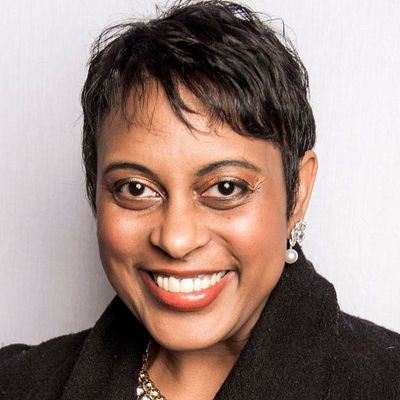
Kicking off our Black History Month celebration, actress turned director, writer, (and mother), Schele Williams knows the value of being a storyteller, how it is our obligation to the art form itself that mandates diversity and inclusion... Read More
From the show: Mamas Talkin' Loud
Guests
Featured Shows
About
Kicking off our Black History Month celebration, actress turned director, writer, (and mother), Schele Williams knows the value of being a storyteller, how it is our obligation to the art form itself that mandates diversity and inclusion. She shares her journey through different roles in the theater industry, the racism and misogyny she has faced, and her commitment to always look for who is NOT in the room and figure out how to get them there. This episode with Schele is required listening before Broadway reopens its doors, before we go back to our home that has sat empty for so long and rebuild it with a new framework that has room for everyone.
Find more info about the podcast via BPN.fm/mamas.
Produced by Dori Berinstein and Alan Seales.
Edited by Derek Gunther.
Transcript
This transcript was automatically generated and might contain errors.
[0:00] Jessica Rush: Since our initial launch, Cara and I have made it a point to actively seek out stories from various walks of life in our industry throughout our episodes to make sure to have representation of all types.
[0:11] Cara Cooper: That said, just as we made a conscious decision to celebrate Pride Month and International Women's Month last year, we are focusing our full-length episodes solely on the stories of black women, honoring and amplifying their voices in celebration of Black History Month.
[0:26] Jessica Rush: Thanks so much for listening.
[0:28] Cara Cooper: Hi everyone, thanks so much for tuning in to this episode of Mamas Talkin' Loud.
[0:32] Jessica Rush: I'm Jessica Rush.
[0:33] Cara Cooper: And I'm Cara Cooper.
[0:35] Jessica Rush: From being on stage in smash hits like Rent and Aida to helming the upcoming revival of Aida, this mama is a leading voice in the rebirth of Broadway.
[0:44] Cara Cooper: As one of the founding members of Black Theater United, she is working towards social justice and the eradication of systemic racism within our community.
[0:53] Jessica Rush: We were both moved to tears in this incredibly honest and hopeful conversation with the incomparable Schele Williams.
[1:30] Cara Cooper: Welcome, Schele.
[1:31] Schele Williams: Thank you so much for being here.
[1:34] Cara Cooper: Thank you.
[1:35] Schele Williams: Wonderful to be here.
[1:36] Cara Cooper: Wherever we are, it's wonderful to be here.
[1:40] Schele Williams: Right.
[1:40] Cara Cooper: Whatever this is.
[1:43] Schele Williams: Well, and all across yes.
[1:45] Cara Cooper: For the times, the pandemic times.
[1:48] Schele Williams: Still in it.
[1:49] Cara Cooper: Still in it.
[1:50] Schele Williams: Months and months and months, almost a year later.
[1:52] Cara Cooper: And we, I mean, we saw you two days before the world shut down at Woman of Broadway.
[1:59] Schele Williams: I mean, truly, that was like such a marker for Jess and I because we went to that little cocktail thing with Ann Court and everything.
[2:05] Cara Cooper: And then the next day, and then everything ended.
[2:09] Schele Williams: It was so strange.
[2:11] Cara Cooper: Um, but here you are.
[2:13] Schele Williams: And we always ask our guests to tell us about their kids, just because it's something that we don't get asked very often in our industry.
[2:23] Schele Williams: Yes.
[2:23] Cara Cooper: And I usually just punish people by talking about them anyway.
[2:27] Schele Williams: So it's so nice that you guys actually want to know.
[2:32] Schele Williams: Um, I have two amazing daughters that are nine and ten, Sayla and Sasha.
[2:40] Schele Williams: And they are in the other room remote schooling.
[2:43] Schele Williams: And you know, they could burst in on this, although I think I was sufficiently threatened and bribed them enough not to.
[2:50] Schele Williams: But I think it happened.
[2:51] Schele Williams: Um, and they are, I have to say, very resilient and keep me focused on what really matters in this moment.
[3:03] Schele Williams: So I'm really grateful.
[3:05] Schele Williams: Um, they're sadly, sadly have more of a purpose than maybe they need to have at this moment, but they are really like doing a lot for me by just being their joyous selves.
[3:18] Cara Cooper: Yeah, it's I find that so true.
[3:20] Cara Cooper: I feel like as the year is coming to a close, and certainly we have a long way to go with the pandemic, but I'm starting to feel a weird nostalgia for this time already.
[3:31] Cara Cooper: Um, and the simplicity of having all this time with my children, which is also maddening at the same time.
[3:39] Cara Cooper: But um, you know, I was thinking a lot about the holidays coming up and people who don't have kids who are alone and how grateful I am that this is the moment that I have right now, you know.
[3:50] Cara Cooper: And I do think that, I mean, there's a lot to look back on and it will be difficult.
[3:55] Cara Cooper: But I do think I will, you know, there will be things I miss.
[3:59] Schele Williams: Yeah, I mean, you know, the one thing that um, it's interesting because the one thing that so many people have been robbed of and other people have been gifted is time.
[4:12] Schele Williams: Um, and we're on the side of we've been gifted time, gifted time with our kids in a way that I've never had before.
[4:19] Schele Williams: So many people are being robbed of time with loved ones.
[4:22] Cara Cooper: Yeah.
[4:22] Schele Williams: It's such a uh interesting and heartbreaking dichotomy.
[4:27] Schele Williams: Um, I have, you know, done more baking with my kids and talking with my kids and explaining to my kids, you know, usually like there's a world in which they go to school and then I dive into like the news and politics and all kinds of things, and they kind of went through all of that in real time with us because you know, we're in a house with one TV.
[4:48] Schele Williams: So if we're all watching, if we're watching, if you're in the room, um and so it did spark a number of conversations that maybe I wouldn't have had, but certainly they were interested in having and were capable of digesting in their own way, you know, like kind of breaking it down to a version that they could understand.
[5:12] Schele Williams: But it was vital and it was important, and they do know what's going on, you know.
[5:18] Schele Williams: You know, when there were protests in the streets and they fully understood George Floyd and Brianna Taylor and you know, Ahmad Aubrey, they understood, you know, what was going on, you know, as much as a nine and 10 year old can, which is more than I thought.
[5:35] Schele Williams: And they understood what justice meant and they understand, and I don't know that I would have given them credit for that, or that I would have really gone into the depth of conversation had we had anywhere else to go.
[5:51] Schele Williams: Um, I mean, like their curiosity and their interest um and their growth, their growth has astounded me.
[6:01] Schele Williams: And even having like the really painful conversation uh a week ago and saying, you know, we're not gonna be able to be with my grandparents, you know, their grandparents, my parents and the cousins and Aunt Auntie for Christmas was rough.
[6:20] Schele Williams: And yet they were able to express disappointment and they understand the pandemic and they understand how important it is for us to make choices that are best for our family for the long haul, and you know, and I'm like really impressed.
[6:39] Schele Williams: I, you know, it kind of makes me think that like maybe, you know, if you don't get into the college you want, you're gonna be like, Yeah, I lived through a pandemic, you know, what's, you know, like I was like, they might actually come out of this with a greater sense of like the big picture and more resilience than I certainly did when I was, you know, that age and older.
[6:58] Cara Cooper: I think you're absolutely correct.
[7:01] Cara Cooper: I think there is something too, particularly kids of that age, like they aren't the teenagers yet who think they know everything, right?
[7:09] Cara Cooper: And Elliot is six, and you know, our kids are smaller, and we've definitely had conversations and she's aware of a lot of stuff, and but not we haven't probably delved into it the way you have with older children, you know.
[7:21] Cara Cooper: And um, I just think that if they had been in school and the pandemic had been happening, well, first off, I don't, I don't know that George Floyd and the protest would have happened if people weren't at home and able to focus, right?
[7:36] Cara Cooper: That's something that I think a lot of us have talked about is that if we were in our normal lives, quote unquote normal lives, it would have just sort of gone by like so many awful things have, you know, and we would have paid attention and then we would have kept going.
[7:49] Schele Williams: So I think that being in this space, especially you with your girls, being able to, you are with them, and you're not having to wonder what are they hearing at school or what are they learning or what information is coming to them.
[8:02] Schele Williams: And like you said, if they were gone, you would have the news on and then maybe turn it off so that you're not having to talk with them about it.
[8:08] Schele Williams: And instead, it's created opportunities for them to mature and grow as young women, and in a way that I think um otherwise might not have happened for a little while longer.
[8:20] Schele Williams: And you know, kids, a lot of times we talk about we don't want to expose them or that's too much for them, or it's too intense for them.
[8:28] Schele Williams: But if you speak to them on their level and you know your children, you know your children, you know what they're able to comprehend and what they're able to handle and understand.
[8:38] Schele Williams: And if you trust them enough to give them the information, I think that you can be pleasantly surprised, you know, like you've been, you know, they're they are growing and learning and changing and maturing in ways that only can happen in a pandemic when we are, you know, isolated and experiencing all of this.
[9:00] Schele Williams: Um, you know what else is also weird and interesting, um is that uh I'm black for people who don't know me, and my kids are biracial but present as black and are black, and uh when they're home all the time, no racism, right?
[9:22] Schele Williams: Like they are in it and completely like loving, fully supportive, no microaggression environment.
[9:28] Schele Williams: And I was like, well, that's nice.
[9:31] Schele Williams: Like no one's like, Can I touch your hair?
[9:33] Schele Williams: And no one's like doing the things, right?
[9:35] Schele Williams: I'm like, they have a year of like, you're awesome.
[9:39] Schele Williams: There's no gendered girls should do this and boys should do that.
[9:43] Schele Williams: Like, you know, they are in a fully like I get to be the curator of like their self-esteem and making sure that you know the things that we're talking about and the way that we're seeing situations and talking about handling them, like there is something about that that their confidence is high.
[10:03] Schele Williams: And I sat on the diversity and inclusion committee at my kids' school, and I was like, Yeah, guess what?
[10:08] Schele Williams: I don't have to be a co-chair anymore because like we're I'm not around your kids.
[10:12] Schele Williams: Like insulate my kids from your kids, but now like my kids are great.
[10:18] Schele Williams: So, you know, there is that, which is I kind of amazing for like, you know, BIPOC parents are having this moment where we're like our kids are in a fully insulated and super supportive environment right now.
[10:37] Cara Cooper: Yeah, I'm sure.
[10:38] Cara Cooper: And I in not just like the racism issue, but you were just saying your girls are so confident, and I just saw an article that said that at age eight, confidence in girls plummets.
[10:49] Cara Cooper: Like until age eight, it's the same as boys and girls.
[10:53] Cara Cooper: And then after age eight, it plummets.
[10:55] Cara Cooper: And I was just thinking, like at nine and ten, this is such an age of transition and an age, you know, how what a gift to be able to, like you said, be the curator of their space and their world right now.
[11:09] Schele Williams: And they see that.
[11:11] Schele Williams: I don't have I don't keep magazines in my house on purpose because I'm like, I don't want anyone else defining beauty for them.
[11:17] Schele Williams: So that's always been a role for every babysitter, every nanny, like no magazines.
[11:22] Schele Williams: Um, they get the week magazine, which is like a kids' magazine or whatever, but like no fashion, nothing like that.
[11:29] Schele Williams: And it's interesting because their definition of beauty is very different, you know, this year, the last two years versus, you know, especially this year, what they talk about, what they see, what they it's a it's fascinating.
[11:44] Schele Williams: You know, they're not really like Jonesing for, like at this age, I was like designer everything, and like they're full on, like, you know, in a different headspace altogether.
[11:55] Schele Williams: And I really see how much outside influence begins to feed and dictate and morph their perception of themselves and also, you know, of the world around them.
[12:05] Cara Cooper: So that's a plus if we have to find like positive for this period of time.
[12:12] Cara Cooper: Yeah.
[12:13] Cara Cooper: So for those people listening, Schele started out as an actress in our business and now is as a director and has so many incredible things on the horizon that we're going to get to.
[12:24] Cara Cooper: But can you tell us about that transition?
[12:29] Cara Cooper: What prompted you to want to move from actress to director and a little bit about that?
[12:36] Schele Williams: We've got some poll quotes about things that you've said, but tell us from your perspective what influenced you to do that.
[12:44] Schele Williams: Well, you know, the older I got and the more projects I worked on, I began to really see a linear line.
[12:54] Schele Williams: And it was almost like it kind of flatlined.
[12:57] Schele Williams: Like the kind of women that were being presented on stage were like the same.
[13:01] Schele Williams: And they were the same no matter what show in what era I did.
[13:06] Schele Williams: I was like, period piece, modern piece.
[13:08] Schele Williams: They're all the same.
[13:09] Schele Williams: And I was like, and it's amazing because in the life that I've lived, I've only ever known unique, extraordinary, supportive, kind, um, strategic thinking, you know, just bold, imaginative, creative women.
[13:32] Schele Williams: And how come I'm never seeing them or playing them on the American stage?
[13:38] Schele Williams: And is that because they're only being told through the lens of white males?
[13:42] Schele Williams: Is that because they're only written by men?
[13:45] Schele Williams: Is that because, you know, there isn't this deep understanding?
[13:50] Schele Williams: There's like, do you really get it?
[13:52] Schele Williams: Are you in the club?
[13:53] Schele Williams: Do you get who women are?
[13:55] Schele Williams: Or is this just the filter through which you see us?
[13:58] Schele Williams: And if that's the case, like let's get rid of the filter, right?
[14:03] Schele Williams: You know, let's let's like really start saying, huh?
[14:07] Schele Williams: It's almost like, you know, when you're in high school and you drink like cheap beer and you're like, oh my god, this is so good, right?
[14:13] Schele Williams: You're like, and then like you get a good beer and you're like, oh, huh.
[14:19] Schele Williams: And then you try a schlitz again, and then you're like, oh my god, how did I? It's kind of like that.
[14:26] Schele Williams: It's like once you actually know and see and really understand who women are, and it really took me into my 30s to kind of come into my own as a woman. I never wanted to play anything artificial again. I wanted to represent authentic women on stage. And I didn't want to be a party to anything else. So I couldn't do it anymore. I had to get on the other side of the table to be able to be a part of that decision, to be a part of that change. And the joy of that to begin to talk to writers and say, what woman do you know is like that? And it was like never their mother and never their sister and never their like it was, I was like, well, who are these women? They were just pulling them out of the, they were just ideas of who women are.
The woman brain factory of like, oh, we'll use this prototype of, you know, but it was like when we really got down to, you know, what does she do and why does she feel that way? And who are her friends? And you know, these aren't questions that were really being mined for these characters. It was almost like, we know this is a cut and paste, and let's see how this person like helps the male get to where they want to be, like, you know, or we'll make her the protagonist, but she's gotta be like super weak, right? Or she's gotta be this, or she's gotta be that. And so I have, it has been a fascinating and illuminating journey for the last 15 or so years going through that, you know, just kind of really dissecting and really kind of pushing writers and projects to be more mindful about women and certainly about the portrayal of, you know, black characters, you know, if I'm directing a play that is, you know, a play or musical with black characters really, you know, holding the feet to the fire to tell authentic versions of those characters as well.
[16:36] Cara Cooper: How has the actual journey of becoming a director been? You, when at Women of Broadway, you said this thing that I've never forgotten that you were talking to a male colleague about wanting to make this transition, and you're like, what do I do? How do I do this? And he goes, you just tell everybody you're a director. And it kind of blew my mind because I feel like white men in our society are given this ticket to ride, right? They're like, you can do anything, you can be anything, you just say what you're gonna what you want to be, and you have the opportunity to fail at it. And I think that women, women of color, I think we aren't given the opportunity to fail. You have to walk in the room with, you know, everything at your disposal, ready to be the absolute best version you could be.
And this person was telling you, no, you just do it, you just say that you're that, that you're it, you know, because he didn't have the fear of failure. I think we come with that baggage. Um, maybe I'm just speaking for myself, but how has it been? Did you just tell people you were a director? How did you make these inroads and, you know, steps towards becoming successful, which you are?
[17:47] Schele Williams: I mean, I took the advice because I was like, well, I got nothing to lose, right? Like at this point, I was like, sure, I'll try it. Um, and I was, it was pretty amazing to me that people were like, oh, that's great. Like, there was no question. And that was the part that was really surprising. And so when I said to people, they're like, what are you doing now? I eat his clothes. I'm like, oh, I'm directing. Oh, that's wonderful. And then I realized that it, and you know, I'm building a website for the first time, and you know, someone was like, what do you, what's the title you call yourself? And I was like, well, I've only to me ever had one title, and that's storyteller. And no matter what discipline I am using, whether I'm an actor or whether I'm a director, or whether I'm a producer or whether I'm a writer, I'm just telling a story, right?
And it just, it just depends on like what perspective I'm telling it from. So in that way, when people's response, when I said I'm directing, and their response wasn't like, oh wow, that's interesting. How'd you learn that? What could, how credentialed are you? No one said any of those kind of things because they kind of made the leap that, well, of course you know how to tell a story. And so once I began to really embrace this idea that I need to fortify my skill set and I need to grow and I need to study a hundred percent. But some of this I know. And so kind of saying these are the tools in my toolbox that I'm gonna use no matter what I'm doing. Like I am a musician, I grew up a musician, I am a better director of musicals because I understand how music works and it is the engine of a show.
And I am very snobby about directors that cannot read music because you can take a class, right? It's not hard, right? So like if you live in France for 30 years, learn the freaking language. If you direct musicals for 30 years, learn the freaking language. That's my opinion about it, and I'm a super snob about it. But um, you know, I don't sit down at the drums and play anymore, right? Like, and what I do, it's super frustrating because I can't play in my head through my hand. Like it's, I'm not as good anymore. But that skill set of knowing and understanding music, of understanding time signature, of understanding keys and how they work and positive and negative and theory, help me as a director, as a storyteller.
Understanding rhythm. I just wrote my first children's book, understanding the rhythm of language, that people have a pace, they have a tempo. Understanding music makes me better at everything. And so it was really kind of, you know, realizing that like I got a backpack full of crap, and like if we get stranded in the woods, we're gonna be fine, right? Because I've got like all the provisions we need for this outing. And so I every now and then like this crazy thing will come up. And you know, I feel like if I end up doing something next, that being a director will serve that in some way, you know. You know, like I so it has been once I kind of surrendered into I tell stories for a living, it liberated me from any kind of um imposter syndrome I may have felt stepping into a new facet of this industry.
[21:25] Cara Cooper: That's awesome. I mean it makes so much sense because at the end of the day, every single aspect of theater is storytelling in one way or another. Set designers tell the story through their design and the lights and the costumes and they um I always think too, like, I mean, this might just be me, like, I don't know, but as actors, I feel like when we're particularly when you're putting up new shows, I always feel like we can see the problems, right? Because we understand so many parts of the system. We understand all those different because we have to sing, we have to dance, we have to act, we have to do all the things. So when you're in like a preview period or something, you can see what needs to be fixed because you have a greater understanding of the project and the piece as a whole and the story that's being told.
So I do feel, I mean, I kudos to you. It's like to transition to that. But I think what you just said is so right on point. It makes total sense that you had the backpack and it's like you went from one and then now you're doing this and moving on and so forth. So, were you an assistant? Did you intern, or did you just start?
[22:33] Schele Williams: I called every person on every show I had ever been in, and I was like, if you ever need an assistant, like I'm here, I want to learn, I'm good. And I can't even tell you the people that were like, yes, of course, absolutely. Like, you know, Gordon Greenberg, I called Gordon and he was like, come on, let's do this. And like, it was unbelievable how supportive and loving this community is. You know, I was like, Broadway cares, you're doing gypsy. Can I be an assistant? And like, you know, like all the things, like it was, you know, whether it was Paul Smith, and he was like, I'm doing, you know, like stage managers, people would call me, I'm working on this reading, and they need I literally put it out there to the universe.
And I was like, I'm in a place I want to observe and learn and grow. And you know, it kept feeding. I will say this in this moment that we are in right now. There are so many of us in our industry who are really considering what's next. Can I, did I have another three or four years in me? Am I gonna be able to step back in on stage again? Do I even have the desire to do it anymore? And I really do believe that, and I've said this to many people who've been talking about, you know, I need to diversify my companies, and I need to figure out, you know, I need to find new people in various places. And I'm like, your wheelhouse of talent are the actors that you have been working with for years and years and years.
No one knows this business better. No one knows this business better. The ins, the outs, no one loves it more. The people you're looking for are under your nose. And you need to like train them on a skill, but you cannot, you know, that's easy. You know, what you can't teach someone overnight is how to love it, how to nourish it, you know, what it takes, how to respect it, the way that we do, you know, like it is a true labor of love to miss weddings and funerals and schlep in on snowstorms for a matinee, and you know, like how many, you know, to eat like kudama every Saturday. It is like literally, you know, sleeping and like I remember like sleeping in the Palace Theater and like the sound of Eddie, the doorman's voice being like delivery, like, you know, just like figuring out how to sleep through all the announcements between shows, like, you know, the people, the general managers, the company managers, the people in, you know, press, the, you know, the stage managers that that's us. That's us. You know, there's no reason to leave this industry, just shift to another part of it and love it in a new way.
[25:41] Jessica Rush: Schele, I know. You got me. I was crying over here hearing you say that. No one has really like put it so clearly and so eloquently and so well. And it's just it's true. I mean, it's talk about a labor of love, but thank you for that moment. I'm sorry, I might have cut you off a little bit. I just had to know I was completely um overwhelmed with emotion over here because it's true. And we talked about this with Lisa Gaida on an earlier episode. And Lisa, yeah, she's always she talk about there's a lot of laughs on that one. Oh my gosh. Um, but she, you know, was so many people are thinking about leaving the business in this moment, and you know, and it's making it very clear for some people, and I in that moment I remember saying to her like I all it has done is help me to double down on the life that I have and being who I am and the career that I've chosen and how much I love it and I can't wait to be back so thank you for that too like just the the announcements on the break when you're sleeping on the dressing room floor oh my gosh a delivery voice that one got me a delivery voice I was like I will never forget like delivery amazing it's amazing it is it is um, you know, uh I I I don't want people to leave because they if you want to stay then just find your new place you know find your new your new place inside this industry it you I don't I I always just think like in the same way of storyteller like you know be a part of the entertainment industry and and create your do it on your own terms don't let the pandemic take it away from you if you're not ready to go it might not be in the way that you you know you might not be in it in the way that you were but if this is where you want to be then get creative that's what we do we're gonna take a quick break don't go anywhere.
[28:01] Jessica Rush: We'll be right back.
[28:07] Schele Williams: I want to sort of talk about as you transitioned, there was something that you said um with regard that it felt like I died.
[28:19] Cara Cooper: I don't like it.
[28:20] Schele Williams: No, no, no. Sorry.
[28:22] Cara Cooper: Well, let me rephrase your pastors.
[28:30] Schele Williams: Sort of to that end, you know, there's been a lot of talk, particularly since George Floyd and Black Lives Matter and uh within the Broadway community with the development of Black Theater United, which you're a part of, which we will speak to, and um, and uh Broadway Advocacy League, and there is definitely a conversation happening that has been much needed and uh within our community.
[28:53] Schele Williams: And I wanted to talk to you in the variety article, you spoke about the gatekeepers, right? And diversity within our industry. And as someone who transitioned from being an actor to a director and had to move through sort of various gates, right? With the assisting and working your way up. The quote was this if you diversify the gatekeepers, the pipeline inevitably diversifies. When you have more diverse perspectives, the conversation about the art deepens. That is when we start to tell stories with greater authenticity. When we pair those stories with creative teams that are best suited to tell those stories, that is when you dignify the human experiences we are charged to tell with the care and consideration they deserve.
So that is so true. And it speaks a little bit to just what we touched on about telling women's stories, much less um people of color stories um on the stage. Are you starting to see or hear the shift happening at all? Um, with regard to the gatekeepers? And I know that you know, I've done numerous shows uh that are black women's stories that are directed by white men, white women. Um, and I I do think that there is something to the fact that that obviously affects the storytelling. You can't tell the story of a people or a person that who you have not lived in their skin and in their shoes and in their moments. Um are you what is happening with regards specifically to Aida? Because Shelly is directing a revival of Aida.
So fear she also was in it as an actor, which that's a full circle moment that I like that's a whole nother thing. But as you're working on Aida and the piece, uh, how has that been? And and did you encounter any sort of pressure to use people maybe that weren't telling the story so authentically, or on the creative team, or were you allowed to sort of say, this is what we're doing, and these are the people I'm using, and um tell the story in the most authentic way possible.
[31:01] Schele Williams: So it has been a combo platter of kind of all of the above. So I um have the great privilege um for many years to have been mentored by Tom Schumacher, and the mentorship happened in such an incredible and authentic way that uh, and it's been going on for so many years since I became a director. Tom has been like literally, we've been having conversations multiple times a year this whole time. And so when Aida came about, it wasn't like we were starting to get to know each other, right? He fully knew who he was hiring. Like, like you know, I'm opinionated, I'm, but you know, but I I really am a thinker and I'm a researcher. Um, I'm a I'm a very dramaturgical director. I I do believe like in life, the same in art, like love is in the details, as I quote Oprah, right?
I do think that the details matter, and that's the reason why I think you know, authenticity and representation is so important, because it is those details that define who we are, and if we miss them, if we group them together, then we are creating like this false, we're telling a false story. I think we do have to really push ourselves to go beyond our comfort zone and ask and have greater curiosity. And and I think that we are limited in as far as we can go outside of our experience. We actually do need someone there or a group of people there to continue to grow our understanding. So, do I think that it's possible for like a white person to write a story about a black experience or I yes, right?
I think it's possible for you know anyone to write about any experience that they want. However, I think that that lens through which the story is told, there has to be a community that is surrounding this. So it isn't a white writer and a white director and a white choreographer and a white producer, and like, and then you're like, and now we have a whole cast of color, and you're like, Because the people who are not going to tell you if it's true, are the people who fully know that it's not, right?
[33:22] Cara Cooper: Right.
[33:22] Schele Williams: Well, yeah, because it they have to be, they have to feel safe enough in the space to be able to voice their truth with regard to their experience to that white director or whomever I would in and the white director or writer or whoever has to be willing to hear that. Right. That is never happened. So, you know, right. Like, so now, you know, I mean, like, so now here we are. And so you've got a whole cast that's like, this is crazy and not true. And you've got a whole team of people who are like, it's a hit, right? And it's just like this like thing is just it is, and it's also not up to the cast to like save the show. Like, you know, it's not it's not our job to be like, hey, everybody, this is wrong and this is wrong, this is wrong, because you'd like to think that the people who are making the big bucks and the royalties are in a position to do that, right?
But so it's a it's a very weird thing. So that's why when I talk about the gatekeepers, it it doesn't, it's not just at the top, it's actually, you know, if you think about like a if you've ever been to Europe, like in Bruges or a place where there was like a series of locks, and like a boat has to go into a place and the lock opens up, and it's like a series of gates, and then at every single juncture, you actually need to make sure that you are doing a touchback. Are we are we telling the story in the most authentic way? Do we have the right are the right producers on this for the right reasons? Someone asked me the other day about doing a show that's like an almost like entirely black show, and they're like, should we do the out-of-town tryout in this city?
And I was like, if we're trying to grow the show with a black audience, decidedly not. If you just want to do the show at like a super sexy theater, yes. And they were like, uh-oh. I was like, if you want to know where the show is resonating with a black audience, you don't put it in a city with no black people, right? And at a theater that has not done any work to nurture a black audience. Right.
[35:29] Cara Cooper: Right.
[35:29] Schele Williams: And and that's a conversation I couldn't have had a year ago because no one was willing to hear it. And I wasn't brave enough to say it. But now every time I walk in the room, I'm like, all I'm trying to do is service the art. That's our actual job. And because now ears are open to say, if we are not having these brave conversations for the sake of the art, not the for the sake of my feelings, but for the sake of the art, which is actually what our job is, then we I have to say this out loud. And then it becomes like, oh, that's a terrible city to work on this show. You're right. We should actually go to a show where they do where they have cultivated a black audience and where we can learn about the piece and whether it's resonating with our core group. And that's a very different conversation. And that's a necessary conversation.
[36:29] Cara Cooper: Absolutely.
[36:30] Schele Williams: I mean, I think it makes so much sense. And like you said, it's like all of a sudden you say that, and now that their ears are open and the conversations are happening, they're like, oh, of course. That that's absolutely you're correct. And I think that, you know, for years we've heard about how you know the audiences, particularly Broadway audiences, I mean, all theater, but it there aren't there aren't a lot of people of color that that come, right? I mean, like they're always trying to figure out how do we get people of color, black people, how do we get the community because you know, Adrian Warren has talked about this with regard to our show with Tina, you know, she's like, I look out and I'm telling a story, and it's all white people looking at me, you know, and and I think there you're missing, you're missing out on a whole demographic, and you're not actively trying to figure out how to bring them in.
That's the thing. The whole thought is, and this is like such an interesting, I mean, we talk about this a lot of like they united, and we're beginning to get into deeper conversations with organizations about this, but you know, when there's a marketing budget, there's like uh a black marketing budget and a white marketing budget, right? And so they're like, we're gonna give this amount of money to this person that we've hired on the outside to just market to black people, right? But we've decided that this show is a show that black people want to see. So not only like are we deciding what we think you want, we're not inviting you to like every show. We kind of don't want you there, right? There's like an abyssal line, right?
We only want you at the show where we think you think we think that you want to see this, right? And so we treated that way as a community. You're like, well, I don't want to be at any of your stuff, right? Because like you really don't authentically want me to have a holistic Broadway experience. You want to curate the spaces that I'm in and when I'm in them, right? And what I say, like, you know, the black community spends so much money on concerts on like there is money in the black community for entertainment, it has always been there. Always, always, always. The Black community will spend a ton of money to go see Beyonce at the garden. And you know, all those there is money there. But there has it, but there has been no interest in saying we actually want you on Broadway. We want you to come. We want you to bring your families. That's a conversation that Broadway needs to have with itself.
[39:06] Cara Cooper: Yeah.
[39:06] Schele Williams: To say we need to stop deciding when we want the BICOP community to like grace our streets and when we don't. Right. And we need to market to the community at large and say, we need to do a little extra work, especially in BICOC BIPOC communities, because the door has been like a sliver open for so long that we actually do need to extend a genuine invitation and mean it. So it's gonna take a lot of time and money to say, we really do want you here all the time to see anything you want when you want. And without the work, there will be no Broadway because the demographics of this country are changing.
[40:02] Cara Cooper: Right.
[40:03] Schele Williams: And so there is not only like we're a good people mandate, but it's also like good business. And so, you know, racism is bad business, right? Like, so you actually, there is a fiduciary mandate, a reason to do this beyond just let's not be bad people.
[40:22] Cara Cooper: Right.
[40:23] Schele Williams: Yeah, yeah. No, that makes so much sense. I mean, it's absolutely, and this is a, you know, I something that's come up a lot with regard to these conversations is the fact that, you know, Broadway and theater in general prides itself on being inclusive and everyone is welcome. And I do think that's true with regard to specifically like the actor community, right? Actors, dancers, for the most, I think that as you get higher up with producers and theater owners and the creatives, I think that's a different conversation. And I do think they're stuck in a rut of oldness, right? With regard to, like you said, they don't actively market to everyone. They decide what they're going to market to the BIPOC community versus just sort of the white people at large, right?
Like what they do there. Um, and so I think that, you know, I if nothing else has come out with regard to our community of this time is the awareness has shifted. I would like to think, and that these conversations are happening, and that the really hard moments that we have to look at and the hard uh decisions that need not, they're not even hard decisions, but just the shift is what I'm saying. Like you said, it's gonna take a massive the shift that needs to happen, it's time. And it's it's just exciting to hear you say that the ears are open, like people are because that I think has probably been the key, right? Someone being willing to receive the information. It's always been there. It's like people being willing to receive the atrocity, atrocities that happen in the streets when black men are killed.
People were were able to receive it because of the pandemic. So now ears are open. And hopefully, because of that, you know, you said you felt braver to speak, that we can move forward. And I mean, just hearing you say that made me hopeful. I don't know if that's the right word, but that this is possible, you know.
[42:19] Schele Williams: The interesting thing, you know, about this whole summer, and the biggest thing that I kind of realized, you know, I wrote uh uh a very passionate post um right after um George Floyd's killing, and the the thing that surprised me the most about the responses that I got from people that I deeply love and know in this industry, is they were like, I didn't know that you felt that way. And it was interesting because it was almost this idea that like that happens to those black people, but like not realizing that when when I am seen on the street, no one's gonna like, oh, there's no credentials that like come up like a you know, one of these new age movies where they're like been on Broadway, has two children, blah blah blah blah blah blah.
[43:15] Schele Williams: Like there isn't like I experienced the world as a black woman outside of my identity as a person, you know, a professional on Broadway, and I feel the microaggression. I feel the, you know, I got pulled over by a police officer because I made a wrong turn, and I cried so hard, I could not find my registration. I was a mess. I was like, I'll never see my kids, like I lost it, lost it. And people are like, oh my god, you feel that way? I'm like, do you understand that like I'm just I'm just black? I am, I'm just, I get what I get, unless my friends start speaking out. It's serious. It is so serious. And all of a sudden, people were like, oh my gosh, I had no idea. And we we didn't see it, we didn't get it.
I was like, every time it happens, it's personal. That young man walking into his grandmother's house in Ohio and getting shot in the back four times. I'm from Ohio. I cried over that three days ago. I was like, I, you know, I I don't understand how that happens. I just don't get it. And it hasn't stopped. No. And you know, listening to my friends who like walk out of the stage door and are having those experiences on their way home from Broadway shows, those aren't conversations we've been having. And they're necessary. And it's necessary to make sure that we're responsible that in the stories that we're telling on stage, that we're not perpetuating these stereotypes. We can be part of the solution. And I've said this many times, we have been part of the problem.
[45:34] Schele Williams: And there would have been like a full revolt in our industry had there not been. And I can genuinely say that there are people that I love and trust that are the gatekeepers in this industry that are doing the work. And it's only because of that I have hope for us coming back and being better than we have ever been, being more responsible, truly creating safe space. And not just thinking about the communities that are named, but also the communities that are unnamed, right? Really thinking of like, are we creating a safe space for for people that are differently abled? Are we doing casting calls in spaces that they can come to? Are we creating a culture in which we can take the time and the care to allow for autistic men and women to be in shows? Are we educating our casts to be more inclusive and thoughtful?
[46:41] Cara Cooper: You're making me cry over here because I have a daughter who's autistic.
[46:45] Schele Williams: Oh, I didn't know that.
[46:46] Cara Cooper: No, yeah. Speaking to my soul over here. Um, and you're right. Until we can tell, you talk about the human experience. Yeah, the human experience, everybody, everybody's experience is worthy of an authentic story. It is. And during the show about uh an autistic girl, and I uh one of the things we talked about with the producers, um, and thankfully they are amazing human beings, is I was like, I won't do the show unless the girl we're doing this with this autistic. And uh the show's called Indigo, and we we did auditions, and when I tell you, we probably saw five or six young women that were all amazing, and the woman we ended up hiring is extraordinary, and there's no other way to do this piece than to tell it authentically.
And I was like, I can't be who I am as a human and not do this show with an autistic actress. There's just no way. And I don't care what I have to do as a director to learn, uh, that's my job, right? And we're we're gonna have to grow. And it like not only did the art grew grow, but like the humanity in the room grew. And I learned so much. Like, she's got amazing parents, she's in college right now, she's like extraordinary. And I was like, why in the world? And when we started auditioning for Aida, I was like, I want to make sure that we're doing like open auditions. I want to figure out, I want to open the door. I want to reach out and I want to say, hey, what are we doing here? You know, the thing that I learned about, you know, working with an autistic actress is, you know, especially like, you know, high functioning autistic actors and actresses memorize very quickly.
Um, and you know, routine is king. So, like, kind of the most the most amazing place for someone who has that gift and it is a gift, is doing the same thing every day. I was like, oh my god, the stage is amazing for you. Like, this is so joyful. And and this young woman, Madison, was like the anchor of the show because she could hold it down, you know. I mean, it's the lead role, but she was like the she could hold it down. And I was so it was so joyful to realize, oh my gosh, art once again can be part of the solution to opening our hearts and minds.
[49:34] Schele Williams: We have to live it. We have to walk it. We have to be it. We have to show it. We have to be braver. What was I afraid of? So, you know, I we have a we there's there's this is the beginning. It's a long, long, long, long journey. And we have to just, you know, what I keep saying is like every time I go, every time I go through a door, my job is to make sure that when I look back and I make sure that the door is still open, right? Do not let the door close behind me. And so, you know, what every time I am in a room, I have to look around and go, who's missing? And then go, hey guys, we need to find. That we're not like, okay, and now we've gotten all the BIPOC people, and we're like, wait a minute, who's where, where, where, where? That we, you know, we're continuing to just open, open, open, open, open.
[50:41] Cara Cooper: You're gonna change the world, Shelly. I like, I'm just so unbelievably inspired by everything that you've said and moved deeply by this thought that who's missing, who else needs to be here? I mean, what a way to move through the world, regardless of art, regardless of anything, you know, in every room in every community, who's missing, who's not spoken for, you know.
[51:05] Schele Williams: Yeah, absolutely. This has been so inspiring, Shelly. It's like I I literally could sit here and keep talking to you. You have so much, the wisdom is like flying through my computer at me. I swear. I just I'm it's so incredible. And I, you know, you also with I know, you know, we're coming to the end here of our conversation, but like there's still other things, you know, Black Theater United, like you touched on. Um, people look that up, you guys. We spoke with Audra about it earlier in the season, um, the work that y'all are doing. Also, Shelly wrote a book. She has a children's book coming out, y'all, um, in 2021, right?
[51:45] Schele Williams: So they've got some time.
[51:46] Cara Cooper: 2021, we've got time.
[51:48] Schele Williams: Yeah, exactly. Uh, it's called Your Legacy, a bold reclaiming of our enslaved history. Um, and it's a children's book. So uh to start conversations, continue conversations so that um children can learn of the history of the people, um, which is so it's so important. We are having, I've had those conversations with my six-year-old white daughter as well. You know, she we Harriet Tubman is one of our memory pieces, and we've been talking, you know, about who Harriet Tubman was. And um, these are conversations that I think, you know, we're to a certain degree or touched on when we were in school, but they're not talked about. And I these are not experiences that are given the weight and the attention and the um that they should with regard to our children and the world that they are living in, and that we are growing them to inhabit, right? We have to change.
[52:43] Cara Cooper: They take great care of these conversations. I mean, my my daughter's class, I was printing out her work, and it was like the unit on slavery and colonialism. And I was like, oh, and now the school's gonna be true. Like I'm like, oh boy, I'm gonna read this, and I'll be like, um, so yeah, my new neighborhood's gonna get to know me very quickly. Well, I just literally put that out this morning, and I was like, ah, geez. I haven't even been here a month and like and aren't they lucky?
[53:10] Schele Williams: Aren't they lucky that you are there to help to open their eyes? I mean, truly, this conversation, it makes for the first time, and and obviously we've been detached from our theatrical families and that process, but for the first time, I feel like change is not only possible, but it is happening. Um, through talking with you and and the things that you are aware of and the the conversations that you're having in the rooms you're in. Um I I just feel like it's not only possible, it has to happen. We know that. But um I I feel more motivated than ever to be, you know, a part of it.
[53:50] Schele Williams: Well, that's that's great because we're the ones that are gonna do it.
[53:54] Cara Cooper: Yeah, yeah, we are. Let's get back. Let's get back.
[53:58] Schele Williams: Yes. Yes. And you know what? That's that's the good news is that we're all individually on this growth, you know, this hum growth of humanity. And when we come back in the room together, and we will come back in the room together, the room will be changed because we're changed. Wouldn't it be terrible if we came back into the same stale room in the same space? That's what I kind of that's where I don't. I have a hard time with people who are like, I don't, you know, I have a hard time with people who hate who use the word um politically correct as like a slur. They're like, oh, we're being politically correct. And I was like, I don't, I don't really have a an affinity for words that I need to hold on to them for the sake of someone else's pain.
If someone doesn't want to be called something, I'm like, but I love that word, I'm gonna call them that. Like I don't have a like, I just kind of think like if that causes you pain, I want to change the word. I want to change the phrase. I want to, I don't mind growing, right? I I don't think of it as being like, I that's politically growing. I just think it's such a silly thing to put on someone as a negative when it is only reflecting kindness and empathy and growth, right?
[55:21] Schele Williams: So I think about when we come back into a space that we left in a different way. It's almost like going back into a house that you lived in as a kid, and you like walk back into that house, and although you have those memories, which maybe not have been so good or whatever, you can now approach it as an adult with a newer perspective, and you're like, huh. I never noticed the sunlight in this room. And maybe like the rooms feel a little smaller, or maybe they feel a little bigger. Maybe you discover something that I don't remember that cabinet, right? We're gonna walk into a house that we haven't been in for a year, right? And maybe the windows have been open, and maybe the air is fresher than it's ever been. Maybe the house needs to get redecorated, right? Maybe you can imagine having a feast at a table with all of your friends and being a host in a way that you never imagined before because the house has new life and new love.
[56:22] Schele Williams: And so that's what I think of. I think about I can't wait to go home into my old house and think about how do we redecorate it. How do we make it more beautiful? How do we reimagine this space to take us into the future?
[56:40] Cara Cooper: I did not expect to cry so much today, Shelley. Thank you. Thank you so much for sharing your time and your wisdom and your passion with us today.
[56:51] Schele Williams: Yeah. It was a pleasure. It was such a pleasure. It was absolutely beautiful. Thank you. Thank you so much. I can't wait for us all to be back in those new in those houses.
[57:04] Cara Cooper: We will, Mamas. We will all be back.
[57:13] Jessica Rush: Thanks so much for listening to this episode of Mama's Talkin' Loud. Special shout outs to Rachel Spencer Hewitt for our fabulous graphic. Kristen Anderson Lopez, Bobby Lopez, and Justin Ward Weber for our awesome theme song. Our producers Dori Berinstein, Alan Seales, and of course the Broadway Podcast Network for bringing us to you.
© Broadway Podcast Network, All Rights Reserved