

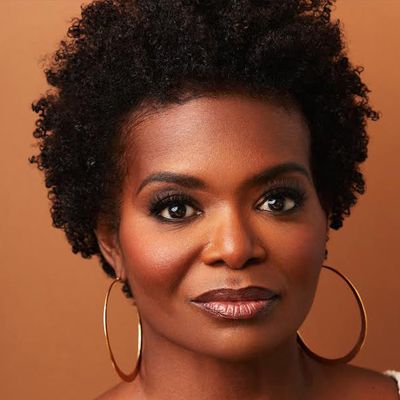
Tony and Emmy Award winner, currently appearing on The Blacklist, the one and only LaChanze joins us this week... Read More
From the show: Mamas Talkin' Loud
Guests
Featured Shows

About
Tony and Emmy Award winner, currently appearing on The Blacklist, the one and only LaChanze joins us this week. From making history along side her daughter, starring on Broadway in the same season, to her work as one of the founding members of Black Theater United, she has met her career with joy and gratitude, recognizing the power that theatre has to heal not only our personal grief, but our social and political injustices as well. Even in the darkest of times, following the death of her husband, she found solace on the stage and with her theatre family as she forged through raising her daughters on her own and is now breathing in the space of her "empty nest".
Find more info about the podcast via BPN.fm/mamas.
Produced by Dori Berinstein and Alan Seales.
Edited by Derek Gunther.
Transcript
This transcript was automatically generated and might contain errors.
[0:00] Cara Cooper: Since our initial launch, Cara and I have made it a point to actively seek out stories from various walks of life in our industry throughout our episodes to make sure to have representation of all types.
[0:11] Cara Cooper: That said, just as we made a conscious decision to celebrate Pride Month and International Women's Month last year, we are focusing our full-length episodes solely on the stories of black women, honoring and amplifying their voices in celebration of Black History Month.
[0:26] Cara Cooper: Thanks so much for listening.
[0:28] Cara Cooper: Hi everyone, welcome to this episode of Mamas Talkin' Loud.
[0:31] Cara Cooper: I'm Cara Cooper.
[0:32] Jessica Rush: And I'm Jessica Rush.
[0:34] Jessica Rush: Today's guest is a Tony and Emmy winner, currently seen on NBC's The Blacklist, and most recently on Broadway in the reimagining of A Christmas Carol as the ghost of Christmas Present and Mrs. Fezziwig. She has originated numerous roles on and off Broadway, including that of August in two-time Pulitzer Prize winner Lynn Nottage's A Secret Life of Bees, Donna Summer in Summer: The Donna Summer Musical, Kate in If/Then, and Seely in The Color Purple.
[1:00] Jessica Rush: And Jess, who could forget? Once on this Island, oh my God, I wore that cast recording out. She is one of the founders of Black Theater United. She made history appearing on Broadway at the same time as her daughter, and she shares how returning to the stage helped her move through grief following the loss of her husband. Welcome to our conversation with LaChanze.
[1:20] ♪ Musical number: "Mama's Talkin' Loud" — performed by LaChanze ♪
[1:49] LaChanze: I am so happy to see your face. Thank you for being here with us today.
[1:54] LaChanze: Oh, it's my pleasure. Nice to see you too, Jess. It's been a wonderful. I'm like fangirling over here. I am I've been a huge fan for such a long time. I of course saw you in Summer because I saw Jess, but um, I have been a fan for quite some time, so I'm so excited to be speaking with you today.
[2:11] LaChanze: Oh, thank you, Cara. Nice to meet you and speak with you as well. Um, well, it is we are recording actually on Celia's 21st birthday, her daughter, so and we always ask people to start by telling us about their children. So will you tell us about your daughters?
[2:25] LaChanze: Absolutely. Well, you mentioned Celia. She's my firstborn. She's 21 today. That's crazy. Um, she is actually up in Toronto working on a series. She booked a series regular role on an iconic series that I can't tell you about, but I'm so proud of her. She's, um, she, you know, being in this business, I did not want either of my daughters to go into this industry. I did everything I could to distract them from it. But I guess growing up backstage and on sets and traveling the world with a mom who's an artist, you can't help but having it rub off on you. So um, she's been working professionally since she was 17, and um, I'm really proud of her. Um, Zaya, my youngest, is a sophomore in college out at UCST.
I'm very proud of her. She's um completely the opposite of Celia in that she does not want to do anything on stage for anyone. She does not want attention, she does not like it at all. She wants to be in the absolute opposite of what I do and what Celia does. But she does have a very outgoing bubbly personality. Um, she is still very much an artist. She's a musician, she plays guitar, she writes music, but she is not, but she wants to be a professor, she wants to teach linguistics. So um, very different, very different. She um taught herself Japanese and she speaks fluent Spanish, and she's very she loves languages. Let me just say that.
[4:01] Cara Cooper: Mama, wow, that's impressive. I mean, that is, I didn't know that about the linguistic part. Like, oh my god, I can't even linguistic. That's a word that's sort of tricky, I think. If you're not used to having it roll off your title, it's also a world we're very unfamiliar with us people. Clearly, I had to ask her what that meant. I was like, So you want to teach languages? No, mom, I want to teach linguistics. Okay, well, have at it.
[4:27] Jessica Rush: Right. Did you see they are so different in that way? Did you see that from early on with the girls?
[4:33] LaChanze: I mean, they're so close in age. Yes. Right? They're like 18 months or 20 years. I mean, they're 16 months apart. Yeah. I did not know I was pregnant, obviously. Um, I just I just noticed that I was not losing weight when my trainer who I was paying was uh working me out for the blood, and I was like, oh my god, what is going on? I actually fired him because I didn't think he was a good trainer. And I found out much later that I was three months pregnant.
[5:00] Cara Cooper: Oh my God. That is wild. Like to have like two girls though, so close in age. I'm sure, you know, growing up they were bosom buddies at times and probably had their moments too, but for them to be so different with regard to their interests, you know.
[5:16] LaChanze: I mean, to have they're both creative in their own ways, but for Zaya to have gone a completely different direction. Yeah, and there's Celia just, just you know, Tony nominee, Celia Gooding. Do you know what I mean? Like what that must have been like for you to see them pursue their passions in their own way.
[5:33] LaChanze: Well, you're right in that when they're young, when they were younger, they were definitely, I saw at very young their personalities. Um, Celia was always very performative, no matter what, no matter what she wanted to do in the house, no matter what she wanted. Ever since she was a baby, she was very, very loud. Oh my god, her cries were the loudest cries. Like the neighbors would be like, oh, Celia's up. So um made her presence known. And we live in a house, so let's just say it wasn't a shared wall. And my neighbors were like, oh, Celia's awake, okay. Um so um, yeah, and Zaya um was very she's very, very headstrong child. I remember when she was two years old, it was as if she understood what no meant for the first time because I said no to her for something, and I never forget this.
The look she gave me was to you, it's no, but not to me, mom. And ever since then, she really she's she's my child that I have to explain in detail why she can't have something or why she just she just challenges every single question, and that's just how she is in life as well. I thought she would have been an incredible attorney because of the way her mind works, but she didn't want to go into law. She she was very much into computer science for a while. Well, but she dropped that once she got into college. Oh my god. Unbeknownst to me, but now she's doing linguistics. So we're happy.
[7:10] Cara Cooper: Headstrong. She makes her own decisions.
[7:13] LaChanze: Yes.
[7:14] Cara Cooper: Right. How are you feeling, emptiness, though? I mean, now that Celia has gone to Toronto.
[7:20] LaChanze: Oh, she's dancing. We saw a little dance. Well, you know, for everyone, all of my friends in my age range and that children have grown up with, particularly single mothers, they say to me, you know, LaChanze, it's gonna be tough once your daughters leave, even single fathers that I know or single parents, they always say it's gonna be so difficult once you're in their empty nesting, and you know, you're just gonna miss having them in the house. And that hasn't happened yet. I'm sure it's gonna kick in. But for me, I guess because I talk to them pretty much every day. Um, and it's just my it's my first time living alone since before I met my husband, my late husband, which is well over 25 years now.
So it's interesting because I only have to cook for myself, I only have to do my own laundry, I only have to clean up after myself. It's just very different. And I'm sure there will be a time when I'm like, oh, I want my babies to come home, but I'm still um I'm breathing in the the single space, and I'm doing a lot of purging. I've I've been in their rooms, I've literally redesigned Celia's bedroom. I've thrown out so much stuff, and with Celia's, I've put so much stuff. I mean, with Zaya's, I've put so much stuff away. So I'm I'm in the middle of a purge.
[8:43] Jessica Rush: So I like it. You said you're breathing in this like single space. Like I'm thinking about the head space that you probably have, not being worried about other people in your space, even if it's just, you know, are they home yet? Or are they gonna make it to this place on time, or are they fed? You know, that takes up a lot of space in a mom's brain.
[9:03] LaChanze: It does. So I can I can only imagine how free you feel right now. And to say I'm jealous is an understatement.
[9:12] Cara Cooper: It says the mothers of very of small children.
[9:15] LaChanze: Small kiddos. I mean, but you are so incredibly close to your daughters. I mean, I remember you texting them during rehearsals when we were in California and them coming to visit. And um, I wanna I want to come back to this part about how you balance being a single mom in the business. But before we do that, for all of our Broadway fans, because I know we have some people that listen who don't know Broadway, but then we do have a lot of people who are the Broadway audience. And I have there's a story you told about your audition for Once on This Island that I about, and I I think I think about with regard to like Celia, who's in this business. And I know, you know, kids nowadays in these college programs, they're prepping, they're getting all this material. The business is so hot, right? Like there's so many, there's an influx of people now. And you talked about when you auditioned, and if I'm remembering it correctly, there was nobody there, which is wild to me.
[10:09] LaChanze: It's wild. So will you tell that story? Because I remember being blown away by how different the industry is now and just what that must have been like to have that moment.
[10:18] LaChanze: Sure. Well, uh back then, this is pre-cell phones, pre-internet, this is all of that. So we would have to get the audition announcements through the backstage, which you would the actual paper. And you've got to actual paper, not online.
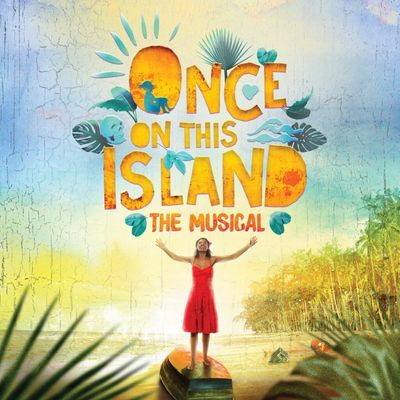
[10:30] LaChanze: Not the online. Nope. You would go to your local corner newsstands that were all over the city, and you would buy your backstage and you would look in the back to see what the auditions were that week. And this particular week, there was an audition for a teenage girl to play a Caribbean, a young Caribbean girl named, and I thought it was pronounced T-Moun at the time. So I was going in to read for T-Moun. And um I mean it is spelled M-O-U. I mean it was Timoon. So anyway, um, I said, Oh, this, I can I can do this. So I go to the equity building, which is where the open call was, and I walked upstairs and I went and it was completely empty. And I thought, uh oh, am I here on the wrong day? So I went to the room where the casting people were supposed to be, and there they were.
It was about three people, and someone sit at a piano, they were reading books, they weren't checking their phones, there were no phones, but they were reading a newspaper, reading books, and I pop peeked and I said, Hi, is this the audition for Once on This Island? They said, Yes, yes, please come in. And I was like, Okay, great. I went in, I sang my song. I I read the lines that they gave me, and then I got a call later saying they want to call you back. And it that's sort of how it started. There was no one else there.
[11:56] Jessica Rush: That is I can't even imagine. Like when you think about now the amount of people that I mean, of course it was a different time. So and in, and I know that like in the 80s, because that was late 80s, right? So, like in the 80s in New York City, it was a very different place.
[12:11] LaChanze: Yeah, and the industry had been struggling for a while. Broadway was struggling, and and so it wasn't what it is today. But when I think about even when I got to the city in like the early 2000s, it's like the waiting outside online to just get into the equity building to put your name on a list to hopefully be seen at three o'clock that day, whatever. Like it is wild to me that you thought there wasn't even an audition happening. That every time I hear that, and then you, you know, booked it, holla, hashtag booked it because LaChanze's fierce.
[12:41] Jessica Rush: And now we've got waiting for life to begin. Like over, you know, it's in our how many of us have sung that song, like over and over. I wore the soundtrack out, LaChanze. I wore it out.
[12:50] LaChanze: That's so amazing to me when I think about it because Once on This Island was, you know, it was a cult favorite, but a very small show. I mean, we were we were the smallest little cast. We were this little quiet musical that Graciela Danielle directed and choreographed over at Playwrights Horizons originally. And there was like no buzz about us. We didn't even know if we were gonna move. We didn't know anything. So when we moved, we were like, this is great. We're going to Broadway, but we were at the tiniest theater. We were at the booth, smallest Broadway house. Um it was very, very low budget, low, low, low budget. We were barefoot on stage. We used, I you saw the you might have seen clips, props for umbrellas, flashlights.
We it was only because there was no money. So Graciela created this iconic, memorable vision of the for this show that you can see and compare it to the revival where they had live animals on stage. I mean, very different budget. I'm sure our show was not a third of what that budget is, but um, yeah, we were this little, we were the small show that could, and it just got a lot of steam. And you know, we are we we just it just became a cult favorite, and we're so thrilled that it has got it has had the success that it's had. I've I've gotten calls from kids in Japan that do Once on This Island, and they just can't believe it. And it was just really a wonderful experience.
[14:22] Jessica Rush: I didn't see the original production, but I did see you did a reunion concert at the Winter Garden Theater.
[14:29] LaChanze: Yes.
[14:29] Jessica Rush: Uh, I believe it was Mother's Day, actually. I went with my mom, and it was the most moving thing I've ever seen. And it was, it was a bare stage, it was no set. It was you all just telling the story, and that's what was so powerful about it. It was I could cross. I mean, I like what? I mean, like, you just brought it in.
[14:47] LaChanze: I know, I know. But I I totally have fangirling because I remember that moment, and it was prior to me being on Broadway, prior to me living the life that I wanted to pursue and seeing that happen up on stage. I was just blown away. So thank you. Thank you for that experience.
[15:06] LaChanze: Sure. I had Sally and Zaya there that day, actually. I brought them out on stage.
[15:11] Jessica Rush: I remember. I remember. They must have been small.
[15:14] LaChanze: They were teeny. So you was in one arm, Zai was a baby.
[15:18] Jessica Rush: Oh my gosh. Can we circle back to Celia and the fact that you were both on Broadway at the same time?
[15:25] LaChanze: History making, everybody. I mean, what was that like for you?
[15:30] Jessica Rush: I can't, I I can't imagine being like, oh yeah, my daughter's a couple doors down, you know, doing her show. I I don't know. I I don't I can't imagine what that was like.
[15:40] LaChanze: Well, you know, you know you're never not a mom, right? You're always a mom. No matter what's going on, no matter where you are in your life, you're always a mom. So I would leave my show. Um, my show got out like about 15 minutes earlier than hers. And because she was so young, I didn't want her. She's like, Mom, I'm just gonna take the train home. I was like, No, you're not. So I would leave my show and go drive around, wait outside in front of her show to pick her up while after she signed her autographs, get in the car to drive my daughter home. So all it wasn't that, you know, oh, here's my star Broadway daughter, my Broadway star daughter, it is my daughter who I have to make sure she gets home safely. So that was just, you know, all I kept thinking about.
[16:20] LaChanze: But watching her when I would sit in the car and I would try to sit far enough away where people wouldn't see me because then it would be about me and not about her. And I just would see I saw her just grow so gracefully with the um with the fans outside. Initially she was overwhelmed, like, whoa, whoa, whoa, whoa, whoa, who are all these people? And she wanted to sign every single autograph and she took pictures with every single person and she was giving out her phone number. I was like, what are you doing? Relax, these people calm down. And then to see her grow into this graceful young woman who was very uh receiving and receptive of the compliments and the accolades, but also very centered and focused on um what she was doing. And I and I was so proud of her. But being on stage with her, um being on Broadway at the same time, leading with her was was very special for both of us because we got to do it. We got to check that box.
[17:19] LaChanze: And so we're very happy. It's a box that like so few people will ever have the opportunity to check, and like a dream that you don't even want to dream, you know what I mean? You're thinking like this could not be possible. I remember when we were out here in La Jolla, or maybe when we were back doing summer on Broadway, she was doing the workshop and she was in high school, right? Like she was a junior.
[17:38] Jessica Rush: Oh my gosh, I remember that. And I can't believe she's 21 now. Where what is time? What is time, y'all?
[17:46] LaChanze: The thing that I find so powerful about it, because we talk a lot about this, is that you know, when you become a mother, and this certainly hasn't been the case for you, but there is a sometimes your career takes a step back, right? And so you're you're fostering this next life into fruition, and you supported her all the way through this dream of making it on Broadway, but we're still able to do it yourself, you know. And that I think is so powerful for our listeners to hear that it's possible, right? It's possible to keep doing that thing that you love and that you dream of doing while also supporting your children to do their their thing as well. And it's something that we forget as moms a lot.
[18:27] LaChanze: It's true, but I do think that as moms, the our number one job is our children, it just is what we do for our for a living is our occupation. That's what pays our bills sometimes or keeps us sane in other areas. But the number one job for me is is as I'm sure for both of you, is your children. Everything has to work around that, and um, that was always my approach. So even when I started working on, I think it was I think it was the color purple, was when I started to request. No, no, no, it wasn't color purple, it was an off-Broadway musical that I did called The Bubbly Black Girl Sheds Her Chameleon Skin. And um, so it was so funny, quick funny story about that. Was I did the workshop seven months pregnant, and I only did the workshop because it was at Playwrights Horizons and I knew everyone and I loved everyone and I loved the music, but I knew that I was gonna have a baby, I was gonna have Celia, and I wouldn't be able to do the production. I just knew it.
[19:27] LaChanze: So after a while, they called me while I'm still pregnant and they said, LaChanze, we really want you to do the production. How long would it take for you after you give birth for you to be ready to come back to stage? I said, Oh, probably about three weeks. Uh-huh. Yeah, we think that. Don't we think? Probably about three weeks. I'll be ready. Now, mind you, I had a C-section. So I was like, when three weeks came and I had to show up at that rehearsal hall with my teeny weenie little baby that I was nursing. I cried so much. I would nurse, and then they would say, okay, 10 minutes is over. And I would hand my baby off to I had a nanny come with me, someone helped me care for the baby, and she would hold her while I she would sit outside the dressing room or an in another area they set up for her, like a little nursery, because she had to be with me because I was nursing.
[20:24] LaChanze: So they gave me the room for my daughter so that I could work, which was rare for me. Even when the show went into production, there was an area in the theater at Playwrights Horizons that they created sort of a nursery so that Celia could be with me while I was on stage. And whenever she would start crying, oh my God. I could tell because I had those pads on, and they would just fill up. I was like, and there I am playing a little girl with pigtails with these giant breasts that my daughter was with. She would, but um, so she grew, she literally was not even a month old before it's oh my god the struggle is real waiting for um so it's very funny but the struggle is real that is I mean that is crazy and you weren't even at three weeks you're not even healed from your C-section you know it's like no it's amazing that the you know in this moment that you become a mother in an instant everything you thought you knew goes out the window right it's like everything you thought you knew about what the experience was going to be is gone starting with the fact that you fully thought ah three weeks I'm good you know same I remember getting a call for an audition like a week after Elliot was born for side show to like stand by dreams right my I love that show yeah and they were like so rehearsals start in three weeks um do you think you'd be ready to do that and I was like oh my god no I mean I would have to be gone for eight hours a day at least for rehearsal then we're in tech then we're doing it and you'll never I'll never have this time back.
[22:08] Jessica Rush: And I remember in that moment like you said our occupations are our occupations and being a mother is our life right that is that is what comes first they are who come first and in that moment it was the first it's first time I had to turn down a job because of my baby.
[22:22] LaChanze: Yeah you know and now obviously I'm happy I did but it's just that moment where you have to make the decision and and it can be daunting to think like this is I have to I have to commit and make us a very unselfish decision.
[22:39] Jessica Rush: Yes after being selfish for so long as actors.
[22:42] LaChanze: Oh yes I I I did take some time off after um when they started to be to get to be toddlers and I was so busy with two I had two cribs, they were both they were so young. It I took off after the after bubbly, I stopped working for about I want to say about a good no, that's not true. I did bubbly and then I did vagina monologues after Zaya was born, and then I took time off because between the time that Zaya was born and Saya was born is when I lost my husband. And so I thought that I would never I I had made a commitment to myself, that's it. I'm never working again. I'm gonna stay home and raise my children, and um I've had a wonderful career so far. This was lovely. But then Eve Ensler, who's her name is V now, but formerly known as Eve Insler, she um called me and she she knew about everything that had happened to me, and she said, um, you know, LaChanze, I would I think it would be very healthy for you to get back on stage.
[23:47] LaChanze: And I have a musical that I wrote over at the uh forgot what the name of the theater, the West Side Theater. It's called the Vagina Monologues, and all you have to do is sit on a stool, read monologues and fake orgasms. I said, I could do that. So she sort of brought me back into this business, and I'm so forever grateful to her for encouraging me to get back on stage.
[24:14] Jessica Rush: I'm sure. I mean, I think you you touched on that briefly, and we won't go into too much detail, but when you're working through grief and moving through that, um, as you have experience with, I think that you said she called you and said, I think it would be healthy for you to come back. Because at the end of the day, yes, you had had this beautiful career, and now you have these babies that you're taking care of on your own. And I think that the gift of being on stage where it's home, right? Like I feel like so many of us feel like the stage is home.
[24:42] LaChanze: Yeah.
[24:45] Jessica Rush: And so to return to that after your loss and with the girls, um, was I would imagine, you know, I can't only imagine, but super cathartic and helpful to move forward and to see what the rest of your life would be.
[24:59] LaChanze: Yes. And the theater fam, you know, in the theater, your your co-workers are your like your family. You get we we get so close. And that that was what I was used to. I was used to having a theater family around all the time. Because I went from show to show to show or TV or film, whatever. But I but more in theater, I was used to having this community. And I was isolated with my children and my family and my I just felt like I was in another world with a support system around me. But I really needed to remember what I felt like for me. I needed to, I need I needed to uh challenge myself again. That's very that's very important to me, LaChanze, to have a challenge. It's a part of the way I'm wired.
And I'm only happy when I am handling some sort of challenge in my life because it's I feel like I'm growing, I feel like I'm adding something productive to society. It's when I sleep the best, is when I feel like I've worked the hardest or completed something. So it felt good to get back into my own my own skin again.
[26:08] Jessica Rush: Yeah, for sure. I mean, I think that's what so many of us are missing right now, right? I mean, in the in a in another way, the country is going through an experience, and so and but differently is that all of what we know is gone, right? Like our even our safe places, our safest spaces are not accessible and are not, we're not able to go be in those spaces. And the connection more than anything. I mean, that's what Kara and I have talked about on this podcast and why we've kept it going all throughout this year. Is that to connect with our listeners, to connect with our fellow moms in this business to support and to feel like even though we're on these journeys separately, we are all together to make our way through this time that is, you know, never ending, it feels like.
[26:57] LaChanze: And the morning of losing, it all was ripped away so quickly, right? The theater was just like gone. It's just, you know, I keep saying to people like my show didn't close, Celia's show didn't close. There was no, there was no closure to that situation. You know, we just um, and so I think that I love to think about our theater family, and it's so true. No, no, nowhere else do you get that? I mean, it truly is. They're there to lift us up to keep us afloat. They come together without fail in a moment and in a heartbeat, you know.
[27:26] LaChanze: Well, when you think about what we're doing, I mean, we're we're we've created we're creating magic. We're on stage. We're we're creating this world, and it it forces you to be open and and to share your emotions and to share your heart. We are trusting each other with each other's emotions, basically. And and that trust creates a bond. I mean, Jess, I've not seen you in years, but I will I all we have our our relationship because of that show. We were seeing each other every day, every com every on stage and offstage experience. All of those times we've had together will are in my memory. They're in my my history. And um, you know, you're not just the woman in the cubicle next to me, you're a woman whose eyes I had to look into and care for and sing with, and you know, which is uh very special, I think.
[28:18] Jessica Rush: For sure. We also had some really good bonfire nights at the beach with in La Jolla.
[28:25] LaChanze: I do have a photo of that, one of those nights. Those are, you know, especially also when you do go out of town. You know, LaChanze and I did summer on Broadway, but we also did it here in La Jolla. And when you're away, also on tour, you know, for those of you who aren't in the business, these are the only people you see.
[28:38] LaChanze: That's right.
[28:39] Jessica Rush: It is your company. You do dinner breaks together, and like I said, you know, bonfires on the beach or experiences or whatever, but like to go through these journeys in one um in one place without your family.
[28:51] LaChanze: That is a whole nother level to, I think, of bonding. I mean, we think of people who we worked with over 25 years ago, 20 years ago. And I know that I could reach out and a second, and they would connect and they would say, What do you need? You know, it's just like it's so funny you said that the way you said that, LaChanze's like I speak of all these people that I've worked with throughout my career as my friends. And I've had people say, like, well, when was the last time you talked to them? And it's been many, many, many, many years. But they are a part, they are a part of my being, my actual physical being because of what we shared together, whether on stage or off doing an out-of-town tryout or a national tour or something like that.
I think what you really hit home, what these connections are, these theatrical connections that we make. It's not the person that's sitting next to you, it is a person that you have shared your soul with in many ways, and that connection never goes away.
[29:49] LaChanze: No, it doesn't. And more, and you trust, you learn how to trust and relieve and you sort of release onto this other person. You give it to them and then trust that they will take good care of it, and vice versa. And they give you theirs. So it's a beautiful exchange. I love it. It's exciting and thrilling. I'm so thrilled to be an artist and an actor. And I love the theater and I love the stage. And I just think it's a wonderful place if you can be a part of this community that we call theater. It's a great place to build a sense of yourself and great relationships and to bring joy to many people.
[30:26] Jessica Rush: For sure. We're gonna take a quick break. Don't go anywhere. We'll be right back.
[30:37] Cara Cooper: That leads to sort of, you know, the one of the last things we wanted to speak with you about is Black Theater United. You know, we um Audra spoke with us about it earlier this season. Um we also uh I mean Natasha was on with us last season, but there are a group of you guys who have you are the founders of Black Theater United, and I know you're one of those. We also saw you speak um on the panels for Broadway Advocacy Coalition.
[31:01] LaChanze: Yes. Um, with Adrian, and um that was fantastic. But we know that you guys have something up your sleeve. I mean, I want to hear what you guys are up to because I've seen on your Insta stories that y'all are maybe filming something exciting for Black Theater United, right?
[31:20] LaChanze: I was like, what is she talking about? What is she talking about? What is she talking about? Because we're doing so many things that I was like, okay, which committee? I sit on four committees. Black Theater United. We're very busy. We have uh four committees just on Black Theater for Black Theater that I sit on.
[31:36] Cara Cooper: Wow.
[31:39] LaChanze: Yeah, I mean, so will you tell us sort of how that came about? I mean, because you were, I feel like you were one of the main you and Audra, right? Started this together.
[31:48] LaChanze: Definitely. So back when uh everything started when back when COVID first happened and we all started to get quarantined, um the murder of George Floyd happened. And um then all the social unrest happened, then all the protests happened. And you know, we're all sitting at home, and I'm looking at my computer and I'm scrolling Twitter and I'm scrolling Instagram and I'm looking, and I'm not seeing any support from our industry. And I wanted to make, you know, to put a note about that out there. So I put out a tweet about how um not condemning anyone or or pointing out anyone in any way, but how as a black woman, I felt that it was important that my community got behind and supported, supported me in this huge time of social unrest and racial inequality.
And I was I didn't hear anything. I didn't, I didn't, I was at that time I hadn't seen any theater make any statements or anything. And I felt like, and I think it I think in my tweet I said something like, you know, um, I have performed on several stages for free and supported many causes within my theater community. And I really would love to hear from the theater community now in support of what's happening in my community, in the black community. And Audra saw that and she called me and she said, LaChanze, I am, I feel exactly the way you do. We need to come together. So she said, we put together a list of people of our friends, and she said, let's just call them up and get them in a room and figure out what we can do.
And that night we had 19 of us on a Zoom saying, okay, guys, we have to do something in the as black theater professionals with all these experience among us because it's about it's about 500 years of experience because we're the OG between. I mean, truly, you are.
[33:53] LaChanze: So we're the old ones, but I'll say I'll say I'll take pillars. We're the old pillars. But um so we got together and we got on a Zoom, and Black Theater United was formed, and we decided what we wanted to stand for, we decided what we wanted to get behind, who we wanted to advocate for. And um, and we started forming committees. We had a couple town halls when we first started. We're gonna bring those back. Then we got very active in um social justice. We do quite a bit, but our main focus is to protect black bodies, black lives, and black talent on our stages and off. So, and we love, love, love all of our allies. We have so much support. We have black theater members and we have black and we have um black BTU allies, and our allies have come out in such full force.
It was like everyone read my little tweet and heard from me and Audra and said, Oh, really? You don't think we're here? Watch this. And so everyone has come out in support for the most part, and then you see all these other organizations that have been formed. I think BAC, Broadway Advocacy Coalition has been around, but then Black Theater um I don't know, it's BTC. Um, I can't think of the last what the C stands for Black Theater Coalition. I think it is. And then there's Broadway for Racial Justice. And you know, there are all these amazing organizations that have come together to help educate and um sort of just enlighten so many parts of our institution that has gone on for a very long time without this type of sensitivity.
And so and we're seeing movement, we're seeing change, and and we're grateful that Black Theater United has is a sort of a beacon in this in this movement, and we're thrilled to be to be doing some good work. But let me tell you, I've never been so busy with the volunteer organization in my life. I'm on meetings all every day, just about it feels like. But we're committed and we're getting the work done, so it's all good.
[36:00] Jessica Rush: It's incredible. I mean, Cara and I have, you know, with regard to being busy, I do feel like so many of us are busier than we have ever been. And I mean, and we're not even, and no one's getting paid. You know what I mean? And we're not doing the things we normally do. Like we're not doing the jobs we normally do. Although you've been a little busy. You've been shooting some TV shows and whatnot, haven't you?
[36:22] LaChanze: A little bit. Yeah, a little bit, a little bit. You've been doing some things, but we're volunteering so much of our time to because we've realized those of us who are allies as well, who I feel like we have all had time to pay attention, you know, like we like you spoke about. It's like there was uh there's an there's a reckoning and an awakening happening and a seismic shift. And I do believe that's true. You know, Shelly Williams talked about how she sees people in this industry actually listening and taking the steps to make it better and to progress forward. And um, and yes, while BAC's been around, there hadn't been, sadly enough, it took the murder of George Floyd and the racial um unrest, I mean, um, you know, society unrest to to catapult these conversations and to bring very much of an awareness because you and I, I mean, I I mean, I saw it firsthand on Summer, you know, with regard to microaggressions, some microaggressions.
Yeah. Um, I mean, I saw that firsthand and and didn't feel like I was in a position to speak up, being the ensemble. And um, but I think now all of us realize that it is our duty and our responsibility that no matter who we are in the company, we are all a company and we should be treated the same and with respect and admiration and um and have a safe space. And I know, you know, we've had those conversations with the Tina company as well with our general managers and so and they have been taking um active steps and uh and I'm I'm looking forward to when we go back. I know we're gonna have you know anti-racist training. I I know there are producers who are actively deciding what we're going to do to not because we can't go back, we can't go back, you know, like like Daniel Watts says, we can't go, we can't come back. We need to come forward as new people. And I think we are, yeah.
[38:15] LaChanze: Yeah. And I really do think we are. That's the thing. I was you're seeing that firsthand, you know. So you're you would know much more than we do as to what is happening, you know. And I and I, and it's nice to hear that you believe that because I think it can be easily easy for all of us to lose heart, right? Or feel like, oh, it's gonna get sort of swept under the rug once things come back. But um, but you guys are working so hard to make sure that it's not.
[38:35] LaChanze: Absolutely. And that's and that's one of our one of our main goals is to be support for artists for black artists who may be um, let's say out doing a show in Milwaukee somewhere and they feel like they're the only one and they don't know who they who they can call for support, they can always reach out to Black Theater United, um and and put their sit put that put their situation on our radar so that we will be able to pay attention and and we will send a letter to the company stating that this is a member of Black Theater United, and we are writing um in support of whatever they need and for protection and for security and safety, just to let you know that this is one of our members. And we actually have done that now for a couple of uh artists in the country back when we were back when there were the few of them that were working.
I feel that once we all get back on stages, it might increase, but um we're working towards establishing a kind of um sort of outline of the of a set of of guidelines for uh theaters to potentially potentially reference when they need to um whenever they're having any questions about um racial unjust or microaggressions within the theater.
[39:52] Cara Cooper: So incredible. And what and will you just give us a a sneak peek uh in into what the video is that you guys were doing?
[40:00] LaChanze: Of course. Vanessa Williams, everybody look y'all you looked gorgeous as per usual, LaChanze in your story. But um, what is this video that you guys are shooting?
[40:13] LaChanze: So we recorded a song called Stand for Change. And it was um, it's sort of our theme song, if you will. And um, Vanessa Williams, who we love, love, love, love, love, produced this entire production from getting the writer to us recording it during COVID, all because everyone was all over the place. And so we had to go to the court either in our homes or in a safe COVID uh environment, a studio, and we mixed it all. We have Michael McElroy, and we have, you know, because our founding members are a lot of people in our industry. And so we're lucky to have all these, and even Karen Ford, who is a black sound designer, she mixed it for us, and um, and but but it's I have to say, Vanessa gets all the credit because she's one who reached out to the record companies and the um and they got the sponsorship so that we can afford to go and shoot this beautiful video out at NJPAC.
We were able to be on a stage again. It was wonderful. We should we have an amazing uh production team, everyone had to get COVID tested that morning so we all so we could be together. And the feeling of being in the room with these people that I've only looked and on my computer through through Zooms for a year was just we just all wanted to cry because we couldn't believe we were actually seeing each other and touching each other. You know, it was it was a wonderful experience. So look for our video, Stand for Change. It's gonna be all over our site, and we're gonna promote it and everything. But it's sort of the theme song for Black Theater United. We stand for change.
[41:50] Cara Cooper: That's awesome. We love it so much.
[41:52] Jessica Rush: And I love you, mama. Like thank you. Thank you so much for joining us. You're just such a light, you know. It's like you come in with your smile, even when you're having to tell people what's what and make your points known. You always do it though. You're never, you know, you do it with a smile and with with a positive but firm, you know, conversation. But you know, you are joined. And I'm just so happy that we finally were able to have you on to talk to us, to share your journey and to hear your stories and learn more about Black Theater United. And um, I can't wait until we're all back in Midtown, like seeing each other on the street, you know.
[42:30] LaChanze: Yes.
[42:31] Jessica Rush: Between shows, between shows. But um thank you.
[42:35] LaChanze: Thank you for having me.
[42:36] Jessica Rush: Thank you so much. Great. Thanks for having me.
[42:38] LaChanze: Thank you.
[42:44] Jessica Rush: Thanks so much for listening to this episode of Mamas Talkin' Loud. Special shout outs to Rachel Spencer Hewitt for our fabulous graphic, Kristen Anderson Lopez, Bobby Lopez, and Justin Ward Weber for our awesome theme song. Our producers Dori Berinstein, Alan Seales, and of course the Broadway Podcast Network for bringing us to you.
© Broadway Podcast Network, All Rights Reserved