

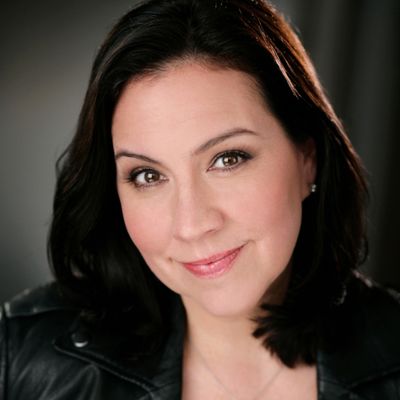
Oscar and Grammy Winner, currently featured on WandaVision, Kristen Anderson Lopez, shares what being a woman songwriter really means and the impact it can have... Read More
From the show: Mamas Talkin' Loud
Guests
Featured Shows

About
Oscar and Grammy Winner, currently featured on WandaVision, Kristen Anderson Lopez, shares what being a woman songwriter really means and the impact it can have. From the writing of Frozen, and how being a mother facing the “princess question” was essential to creating the story we all know and love, to the unconscious bias she faces daily as a female in a male dominated field, she is constantly reminded how important her voice is. Kristen divulges how needing to reimagine herself in the industry is how she found herself on the path she now travels, and the tools she and her husband use to maintain not only a healthy marriage but a super successful working relationship as well.
Find more info about the podcast via BPN.fm/mamas.
Produced by Dori Berinstein and Alan Seales.
Edited by Derek Gunther.
Transcript
This transcript was automatically generated and might contain errors.
[0:00] Jessica Rush: Hey everybody, welcome to this episode of Mama's Talkin' Loud.
[0:03] Cara Cooper: I'm Jessica Rush.
[0:04] Cara Cooper: And I'm Cara Cooper.
[0:06] Jessica Rush: Today's guest is a two-time Oscar and Grammy winner, songwriter and lyricist of Disney faves like The Frozen Franchise and Coco. She's co-creator of the original Acapella Broadway musical In Transit. And currently her work can be heard on the cult favorite WandaVision. And if you are a regular listener of Mama's Talkin' Loud, her voice and composition rings in your ear weekly as she wrote and performs our theme song. Here's our conversation with Kristen Anderson-Lopez.
[0:34] ♪ Musical number: "Mama's Talkin' Loud" — performed by Kristen Anderson-Lopez ♪
[1:00] Jessica Rush: Kristen, hello, welcome.
[1:03] Kristen Anderson-Lopez: Hi, and I'm so happy to be here.
[1:06] Cara Cooper: Oh my god. We are so excited. You know what? Kara and I were just talking before we started our convo, and we were scheduled to record with you the week of the shutdown last year. I don't, you probably don't remember because everything's a fog from that time. But we were scheduled, and you were like, oh, my daughter's schools are closing, something's you know, we're not everything's changing. And then look at where we are now.
[1:30] Kristen Anderson-Lopez: That is nuts.
[1:31] Kristen Anderson-Lopez: Yeah, I remember that week, that week in particular, just just like almost losing, flipping my lid. Like I had chills on and off all the time because I just knew my body knew like something really traumatic is happening, even just living it right now. I'm feeling that again.
[1:48] Cara Cooper: Well, we don't need to go there. We don't need to, we don't need to go there.
[1:52] Jessica Rush: Let's no crazy need to revisit those memories at all yes. The first thing we always ask our guests is to tell us about their kids because it's not something we get to talk about a lot so would you tell us about your girls?
[1:57] Kristen Anderson-Lopez: Yes I would love to talk about my girls. I have a 15 year old almost 16 and an 11 year old. The 15 year old named Katie is so interesting right now like I it's actually been an amazing time to be in a pandemic in a lockdown with these two because as opposed to I what I know you guys are dealing with and so many moms are dealing with of like kids who just need you know the relentless caretaking at this moment I feel like I'm getting to hang out with really cool people. So Katie is doing the musical right now she's doing songs for a new world it's all happening virtually and then they film in person they get tested and they film in person on the stage over four days. She's really musical she plays like 10 instruments and is just fascinating human being like really takes these deep dives into learning about like neurodivergent mental health and LGBTQ you know she's she's one of those teens right now that is like really learning the Gen Z world that's like we're gonna change the rules.
I was gonna say they're gonna save us they're gonna. So she's fascinating and funny, and she's really gotten me into Drag Race. We've that's been our new thing, like our Friday thing. And then our 11-year old who is much more of like a connector. She's it where Katie is like a thinker and a doer. Annie is like connector and wants to like just can pick up on somebody's vibe and instantly be like, what's up with you? So that was hard when we basically cut her off from all her friends, but she picked up a camera and started taking pictures of her cat, Una, and started developing this photography project that has sort of blown my mind because she got so good so quickly and sets up these photo shoots. You can see them because I post them all over my social photo.
[1:57] Jessica Rush: I was gonna say it's really impressive. I've seen those.
[4:27] Kristen Anderson-Lopez: Yeah. Is there a way for someone who's not friends with you to see them? Does she is she putting them out publicly anywhere?
[4:33] Kristen Anderson-Lopez: Or post them on Twitter. I'm not letting her up social media yet because she's only 11.
[4:39] Jessica Rush: Smart mama.
[4:40] Kristen Anderson-Lopez: And it's funny because even she's like, No, I'm not ready. I'm not ready. One day I will get an Instagram when it's appropriate. But I don't think I'm ready. I want to develop as an artist more.
[4:52] Cara Cooper: Very amazing.
[4:54] Kristen Anderson-Lopez: Amazing. It's really interesting hearing her talk about her art because there's certain things that she'll go back and look at something I posted from March or May, and she'll be like, oh, oh, I hadn't realized how grainy that looked. Like she's got she's developing like an artist. And I look back at old songs sometimes and I'm like, oh, don't rhyme wife with life. Like, oh my god, how incredible.
[5:23] Jessica Rush: I mean, that is just, I love it. I love, and also it's clear like the joy you have watching them develop too. I mean, it's coming through just in our conversation right now, and having them, you know, become these young women and you know, and who they're gonna be. I mean, that's just absolutely incredible.
[5:41] Kristen Anderson-Lopez: I'm so excited. I would love for my child to latch on to something soon and interest.
[5:46] Cara Cooper: Yes, yes.
[5:47] Kristen Anderson-Lopez: Well, your child is pretty it's still pretty young.
[5:50] Kristen Anderson-Lopez: Yeah, um, and I there, you know, now I can look back and just be like, oh, look at those pictures from vacation. We were having so much fun. But I I'll be honest, at the time I was so exhausted. I was so, it was so relentless. And there was there was just no room to take any time for myself. And I'm here to tell you it gets better.
[6:12] Kristen Anderson-Lopez: It does. It it and then you're like, you know, because their job is to kind of push you away, when you do get to go for like a long hike and really get into something that they care about, and you're learning things from them. It's like it's the coolest. I'm really I know they say like the teen years are hard. I'm saying it's so much better. I like this so much better than the exhaustion of just like get your shoes on.
[6:43] Cara Cooper: No, get your shoes on.
[6:49] Kristen Anderson-Lopez: I found a picture recently where I literally taped my daughter's crocs with gaffers tape.
[7:00] Cara Cooper: Oh my god.
[7:01] Kristen Anderson-Lopez: The things we do. It is, it's exciting to have that to look forward to, this kind of time and space where you get to know your kids as budding adults and and what it is that makes them tick. I find it so interesting too that your daughter Annie, I believe, the artist, right? Or the photographer, I wonder if she would have found this had they had there not been the time and space during the pandemic where she wasn't connecting with her friends and had the time to hone her art.
[7:31] Kristen Anderson-Lopez: You're exactly right. It's so insightful that you picked up on that because her friend, we did have her best friend, our neighbor come up and pod with us, like and do like three weeks of sleepover and so and Annie's photography stopped completely during that time. Which makes me say, like, as we move forward, we're gonna have to help Annie learn how to carve out that time to keep developing this gift of hers. And you know, she's gonna have to figure that out too.
[8:07] Cara Cooper: That's so cool.
[8:09] Jessica Rush: Well, let's dive into some some deeper stuff. So obviously you work a lot with your husband. But you but you work independently as well. And something that we're super interested in is have you felt a difference being in the room as a woman, either in the room that your husband is also in and the room that your husband is not in. Do you feel like your voice is heard or respected either more or less in either situation? How has that played out for you?
[8:47] Kristen Anderson-Lopez: Huh, that's such a good question. And there's a lot to unpack there. Because I've I've been very, very lucky in that I have, I always have my like best friend there next to me. So I I would say that it has given me definite definitely probably more confidence to be able to speak up in really key moments because I wasn't feeling othered in such a like I always have a security blanket there in a way. So that's been a wonderful way that it's really empowered me in you know Disney, Disney tables where it's just like this is this is it, speak up now, or do you want to build a snowman isn't in the movie?
[9:35] Cara Cooper: Oh my god, what would the world be without that?
[9:39] Kristen Anderson-Lopez: I mean, I'll tell you that story. That wasn't in the movie during the final preview before we were about to go to its first public viewing. And it had it the movie suddenly was starting to congeal and starting to like to work. It hadn't worked up until that point. And this is this is very common in the process that it doesn't work, especially in a musical, until that last IKEA screw happens, and then you're like, oh my god, it's a shelf. So the movie was finally starting to work, but do you want to build a snowman wasn't in the movie? And like Bob Iger was there, the whole board was there. And I I just totally spoke out of turn. Like that's not when the the composers are supposed to talk, but I was like, guys, I think I could just I just want to say that I think we can plus the front if we bring back do you want to build a snowman?
And in that moment, I was very lucky because John Lasseter really supported me in that moment and was like, I think Krista's right. I think she could I think that we can do this, but there was definitely a moment where the the whole board went, Who's this wish talking?
[10:56] Cara Cooper: But were you I'm inter I'm wondering if you were the only woman or if there were women on the board or in the room as well.
[11:05] Kristen Anderson-Lopez: There were no women on the board at that moment, but Jennifer Lee, the amazing Jennifer Lee, who's now the head of Disney Animation and and a brilliant, wonderful, strong single mother herself. She was there, and that was another part of it is I felt much safer because there was a another woman creator with me. It is helpful to have two women in the room. I I do feel a little a little othered sometimes when I'm the only one. But my husband's there, so that helps.
[11:40] Cara Cooper: I think it's interesting that I'm wondering if the story of you know, Frozen is such a women's story, and that's why I think so many people have connected to it and like you know, don't mind hearing it over and over. I mean, the music's great too, but also we love that our daughters, for instance, are seeing this story. And I'm wondering if to me, I think about do you want to build a snowman and the journey that happens within that song between, I mean, as you see the sisters start to, you know, come apart and have space between them, and you feel Anna's emotions through it, and you also feel Elsa's. I mean, I wonder if as a woman you connected more with that moment and realized that that's what needed to be shown for the film to come together. Like on some, maybe not consciously, even you knew it needed to be there, but I'm wondering if if with just because of who we are as women and as mothers.
[12:35] Kristen Anderson-Lopez: Absolutely. I mean, just in general, Frozen wouldn't be Frozen if there weren't two of the four creators who were not only women, sisters, but also raising girls, raising girls who were very much having their princess phase. And also Jennifer Lee was raising her daughter until like a year before we started writing Frozen; she was down the street in Park Slope. Like our kids went to the same arts camp, and we were from a very liberal bubble neighborhood called Park Slope. We were all dealing with the princess question of like, okay, my daughter's dressed like Cinderella, that's cool. When my daughter, my oldest daughter asked if she could be like the Ariel bride for Halloween, that's when I kind of went like, okay, how do I feel about this?
How do I feel about the messaging? And so we were very armed with that whole thing of like how do we change and adapt the idea of true love that we are spoon-fed through these beautiful princess movies that I love so much. But how can we evolve true love into being true love for yourself, true love for a sister or a family member? That sometimes the villain comes in the envelope of true love of that Prince Charming. You know, we all went through it in our 20s. How many? Yeah, there are some villains for sure. I just love, I mean, I also can't believe how long it's been since y'all wrote that. I mean, that's it is I saw it when I was pregnant with Elliot in the winter of 2014. And then I mean, and that and it was already out in the theaters, and I know that so much work goes into it before, and so it's just crazy to make time has lost all meaning.
It's gone, you know what I mean? But it's I can't believe how long ago it was. But yeah, no, that's so interesting to me. I love it. I mean, we know it well. We're very into Frozen 2 these days. Elliot has graduated; like for a long time, she didn't want to watch it, she thought it'd be too intense because she's a super emotional child. Yeah, but now she is all about it. We listen to the soundtrack. I mean, the Lopez's are the Anderson Lopezes are in our spectrum. I go by Lopez, it's fine. We started doing movie nights during the pandemic, and Frozen 2 was our inaugural movie night. So it's like the one we base all movie nights off of. It was super successful. Everybody loved it. The kids sat still, and they're still obsessed.
So you know, one of the best moments was when they released Disney released Frozen 2 to the streaming really early because of the pandemic. And that meant so much to us because we have so many friends who are parenting too, who just went, thank God, thank God.
[15:35] Cara Cooper: Totally, totally. Um, we couldn't like create a vaccine, but we could at least release this thing. Hey, look at that. How has that been? So, okay, so that sort of segues into what you guys are working on now with it, which is well, WandaVision. I mean, probably or you're done with that. I mean, because that's been shot, right?
[15:57] Kristen Anderson-Lopez: Yeah, it's all shot. It's all everything's in the can. Was that pre-pandemic or did that come up during this time? We had written all the songs pre-pandemic, but we had to produce them, so we had to produce all the tracks and, you know, get creative about that. It's also why a lot of the voices you hear are mine and Bobby's because just recording was a logistical nightmare this summer.
[15:58] Cara Cooper: Well, I mean, you guys are y'all are used to working with each other obviously, I mean for years and years and you live together, but I'm wondering how the stress, if the stress of the pandemic and the lockdown like all of a sudden it's like maybe perhaps y'all go elsewhere to do your own work or you can take time away or you can meet your friends and get away from one another, but in the lockdown you couldn't even go to your separate rooms to work so to speak because you were producing this and recording it together that you're creating and then you're living together and you're parenting in a pandemic and the weight of just the heaviness of the year, you know, I mean it was all so heavy. Was that a struggle for y'all getting through that time? Did you find that it was or did it not feel that different in a lot of ways?
[15:58] Kristen Anderson-Lopez: I would say it didn't feel that different for us. We are used to working together all the time; we're used to being together all the time. And we had done a ton of work prior to this pandemic about learning how to communicate and give each other space, and you know, we definitely hit some really hard times when we were working on writing Frozen 2, also Frozen Broadway, also Coco. We were working on another thing. And we had younger kids who really needed a lot more from us, and we hit a moment where we really didn't like each other for a second, and went to couples therapy, and it was the greatest thing we ever did, like the greatest thing as a team. Our everything got better. Our intimacy, our trust, our ability to communicate, and it gave us these amazing tools, which I'm happy to share, which we used in this pandemic.
The like when we hit a real moment where we're really tense at each other, or there's a specific thing that we're really fighting about. We can kind of we do this thing where we call it conscious dialoguing. And you have to clear out some space, like you can't be interrupted, you can't, you clear out the space, you face each other. You start with the intention of like this whole conversation is to help us progress our relationship and keep this relationship. It's not about winning points; both people have to feel that intention. And then one person gets to just speak what they're feeling, their whole story, just uninterrupted until they say, "Yeah, I think that's it." And then the other person has to reflect it back without editorializing or defending or doing anything.
You just have to say, "Okay, so what I'm hearing is X, Y, Z. Did I get it right?" And then the other person gets a chance to go, "Yeah," or say, "Actually, I want to add one more thing," and then you reflect that thing back. And that can that alone could take half an hour sometimes, just the reflecting back. When the other person feels completely heard, then you can—oh, and there's another thing that right at the end you go, "This makes sense to me because X, Y, or Z." So you're hearing them; your job is to hear them, and it's also to say that makes sense to me in some way. Then you then you get your turn; the other person gets their turn to do the exact same thing. And it's just amazing how that single slowing down of the fight, that slow just untakes you out of that flooded, like, "I'm gonna score a point," and "How dare you?" takes completely out so you can actually get to the heart of the matter, and more importantly, you can get to the vulnerability underneath the anger, and once you do that, then like amazing powerful things happen.
Your intimacy grows, your ability to tackle a problem together instead of on opposite sides grows, and it's like changed our lives. So we had that tool before we came into the pandemic, and that was super important.
[20:37] Cara Cooper: Wow, thank you. I mean, thank you for sharing that because I think so often, you know, I think mental health itself is an issue that can be a bit taboo, just what we do to take care of our mental health and therapy and things like that. And I just want to commend you for sharing that.
[20:53] Kristen Anderson-Lopez: There is no to us; we're all about it. Like, get the therapies, do the things. But I think that for some people, a lot of people, it will probably be really helpful to hear, you know, you guys are super successful. Both you work together your whole lives, your careers, your lives are all wrapped up in one another. So it's this precious package that you for sure, regardless of the marriage aspect, even too, you want to save and keep holy and safe. And the fact that you went to therapy and y'all have this format that you go through when you need to, and that you're open and sharing that with us. Thank you. I just want to say that for all of our listeners because I think it helps to hear we get in our minds that oh, people who are Oscar winners, Tony winners, like they don't have problems.
Everyone has the same things, right? We're all just humans. Like you have these awards and you're incredibly creative and brilliant, you know, composers and lyricists, but at the end of the day, you're also two people in a marriage, and you have to figure out how to get through that. And so thank you for sharing that.
[21:54] Cara Cooper: And I want to try conscious dialogue because the uninterrupted aspect is key.
[21:59] Kristen Anderson-Lopez: Yes. And I will say, like, there's a difference doing it over wine or not over wine. Like it's actually good to do it, not if all you have is that moment from like 8 to 10 p.m. once the kids go to bed, that's not always the greatest moment to do it.
[22:18] Cara Cooper: Yeah.
[22:18] Kristen Anderson-Lopez: Because that's when you're just like, oh God, I'm so exhausted. Like finding a— even if you're like, okay, conscious dialogue right now. And we've had those moments sometimes where we've had to like, what the hell is going on? And that really has been helpful for this pandemic. And I'll also just say when we were on top of each other in Brooklyn, that was harder. We were very, very, very lucky in that a month before this pandemic happened, we finally bit the bullet and bought a house in the woods. We didn't know what was coming, or maybe on some level we did, but we moved into this house in the middle in the height of the New York pandemic, like with no furniture, but we at least had woods that we could get out and walk in.
Because that was the hardest when it even got so scary that you couldn't go out in Brooklyn for a moment. There were like when we were all Cloroxing our oranges and you didn't know if somebody jogging by you would get you sick. Right. And that was a really tough moment. But we had an escape hatch, and that has been our savior, really.
[23:43] Cara Cooper: We're gonna take a quick break. Don't go anywhere. We'll be right back.
[23:52] Kristen Anderson-Lopez: Just touched on your many awards, which I want to go back to because you were quoted after, I believe it was your second Oscar, but I think this what had to do with your first. And you said, "I had to win an Oscar on this coast before I could produce a show on Broadway on the East Coast." You literally had to win an Oscar before you gained that respect or garnered that respect. And something that we talk about a lot, how women have to kind of prove their worth and their abilities before given opportunities. Whereas men—and this is not to take anything away from your husband, his work is unbelievable and amazing and deserves all the accolades it gets—but maybe his path has been a little different than yours, right?
You kind of needed this stamp of approval to say, guess what? I'm your gal, take a chance on me, even though you had already proven you are so capable. Can you speak a little bit more about it? You're very open about how women need to be represented more in this industry and across the board.
[24:54] Kristen Anderson-Lopez: Yeah, I mean, I think the I'm also on this, um, on this board of this group called the Lilies that started to tackle this problem before, you know, and clear the way before I was there.
[25:10] Kristen Anderson-Lopez: Um, but really started to label like, what is going on? Women are graduating from these programs at the same level. Often the women are winning those awards. And yet like crazy, crazy numbers, like the same amount of female produced plays um from 1912, it's the same percentage in 2012 when I started joining. Um it was like eight percent or something. Um, and and so there's clearly something going on, something systemic. I think we're spending a lot of time talking about systems and institutions right now. Um, you know, one of the biggest things that we tackle uh that I tackle is is unconscious bias, which frankly my husband also had to tackle. He's he's um half Filipino. And so he also feels the difference sometimes between between the way that um you know his our peers who are who are white and and look like look like the Sond Times and the Rogers and Hammersteins, and that how how easy it is for like a young, two young males to just be like, Oh, they're the new darlings, and um how much harder sometimes it seems, whether you're of color or you're female, to um to just fight through the fact that most people, many people in the position of hiring you are will take a chance on like, oh, he's the next young Steven Schwartz versus like she's the next young what what is she?
I don't know. I like I'm she's a she. I mean Lynn Ahrens, Lynn Aaron's um and Kristen Childs and Um even Mary Rogers, like they somehow got Betty Comden, you know, they got toeholds in an all-male industry. Um, but I don't think they had a very easy time of it.
[27:15] Kristen Anderson-Lopez: Well, and I just want to say, like, you're naming them Betty Camden. They all Betty Betty and Lynn both have male partners, male writing partners. Yes. And that is that is a factor. That's a huge factor, by the way. And my sister, my sister Kate and her amazing writing partner, Alisa Samsung, they did the songs for the Christmas special. They're also the the songwriters, in-house songwriters for um Central Park, which is on Apple. Um, they're writing beautiful, beautiful, great stuff. But I remember when Kate decided to really commit to Elisa as her as her work wife. I was like, you guys are gonna be fighting battles that I don't even think, you know, that I think are ready to be fought, but you're gonna have to fight different battles.
Um, you know, one of the battles circling back to your original brilliant question about the difference between having Bobby in the room versus not having Bobby in the room, is Bobby and I can play good cop, bad cops sometimes. He's allowed to express a level of anger and conflict that I know I can't. I I it's just I cannot go there or I will be labeled as difficult and a bitch. And and it even makes me uncomfortable sometimes because people um occasionally conflate us together, and somehow I get tarred with the anger that Bobby will sometimes be able to show. And then I have to be like, wait a second, I wasn't. Um, but there he's allowed to express a level of of anger that I can never bring to the table.
[28:57] Kristen Anderson-Lopez: And so, how do Kate and Alisa in moments where they really have to stand up for themselves and their voice? I know that they struggle often with uh a male in authority saying, like, you guys are being difficult, or like you can't be divas. Um, that's you know, that's that's something really hard. And and honestly, frankly, the fan base also that you know, I I love so many of our the peers that are that are really making strides in our business. But I feel like it's so much easier for young women to celebrate a male composer than it is for young women to celebrate a female composer. And that's something that um is hard because so and so male writer doing amazing work can suddenly get a thousand followers and people going, oh my god, I love blah blah blah.
Um, and you don't see that, you don't see that from for female writers. There's not a precedent to be like, you know, even Sarah Borelis, who is already a pop star, there's still a lot of she still doesn't get the love that a male, a male person piercing the musical theater culture mic. And that's something that nobody talks about, but it and I'm sure it's related to sexuality and what we feel comfortable. You know, it's really easy to be like, oh my God, I love that. You know, I love Bieber, um, in a different way than than you can celebrate a female writer.
[30:45] Kristen Anderson-Lopez: Well, I think that it's excuse me. I think that it's so deeply ingrained, right? I mean, it's like like with systemic racism, like this reckoning that we're having within our country, um, and rightly so, where we're realizing there are there are ideas and thoughts that are so a part of us that we don't even realize we do them, these microaggressions towards people of color, towards women, just in general, that we are we allow ourselves to be spoken to in a certain way, or we just make assumptions of how the person's going to view us based on history, just historical fact and how it is. And I do think I think you're absolutely right about that. Like I was as you were talking about that, I was thinking about all the the lack of, I should say, the lack of um very uh popular like women bloggers or mom bloggers, or even just spaces for women, you know, like we're Kara and I are starting, you know, Clubhouse is coming up.
It has, you know, Clubhouse is a thing now and it makes us feel very old but we were we joined clubhouse and we really want to make space for parents in there because it's all about like your tick tock and your this and promoting and self-promoting and no one's talking about the rest of you that comes with that you know and and that's the thing when you hire someone you hire the whole person and some of us come with children that's something that Casey Levy said who I know you know well it's like you know you hire an artist and a huge part of what makes us great artists is our life experience and some of that has to do with children.
[32:19] Kristen Anderson-Lopez: Absolutely I the first thing like I really want to write this article one day but the one of the things I wanted to write is that you hire a mother you are hiring someone who is thinking about how to develop a human being 247 you're not you're not hiring someone who's like how can I how can I be awesome how can I impress people you're really you're hiring someone who's like how do I raise a human being to be a good human representative in the world and so that comes with a whole different way of thinking of again you know going back to frozen and frozen to we frozen wouldn't be what it was if we weren't already dealing with like how do we help our daughters understand what true love is in a different way you know frozen two is about finding your power like the it how do you how do you find your power and handle change and how can change help you stand in your own power?
[33:24] Kristen Anderson-Lopez: Um and and we were we were writing what we knew as mothers at everything I do, I'm writing what I know as a mother. My god, once you become a mother, it it it's there for everything you do, like there's never a point where you're not coming at at a task as anything other than a mother, right?
[33:45] Cara Cooper: Right.
[33:46] Kristen Anderson-Lopez: But if you think about it, you're really any mother is getting a PhD in what almost in like you know, building a good human.
[33:58] Cara Cooper: Right.
[33:58] Kristen Anderson-Lopez: And so we're thinking about things in a very different way than someone who's not a mother. Um, but then there are there are all kinds of um traditions and and institutions in place that never took into account motherhood.
[34:14] Cara Cooper: So I know one of you guys is living in La Jolla right now.
[34:17] Kristen Anderson-Lopez: Yeah, yes, yeah.
[34:19] Cara Cooper: And um I loved Loya, I loved it so much.
[34:23] Kristen Anderson-Lopez: And and La Jolla has done a wonderful job of even getting child care in there.
[34:28] Cara Cooper: Yeah, well, you know why?
[34:29] Kristen Anderson-Lopez: I think a huge part of it is because Debbie Balkoltz runs it and she is a mother herself.
[34:35] Cara Cooper: I think that that is key.
[34:36] Kristen Anderson-Lopez: And I know this is something we've all talked about, but truly it when as more women get into positions of power, women and mothers, the changes will happen. But we have to get those women into those positions. They have to, you know, it's like, I mean, it's still, you know, Kamala Harris is our vice president, and still people don't think women are capable. Do you know what I mean?
[34:55] Cara Cooper: Like there are not, there's a reason that I think a huge part of why Hillary didn't win is because there are people who just in their soul don't believe women are capable.
[35:04] Kristen Anderson-Lopez: Well, and we're just that's that's a whole other yeah.
[35:07] Cara Cooper: I mean, that's you know, well, and even just you talking about the fact that you temper your own behavior in a room with your husband, and he's allowed to behave differently than you are because you know how your actions will be viewed, and that is the way we move through the world.
[35:20] Kristen Anderson-Lopez: That's the way we move through the world as mothers too. We know that there are things that we're you know, we haven't been talking about, which is why we're trying to be so vocal about the struggle, about the things that we deal with on the day to day, so that we don't feel like we have to hide these parts of ourselves and not be our authentic self, like you were talking about coming into your power in Frozen 2.
[35:42] Cara Cooper: By the way, I can't listen to Show Yourself without crying.
[35:45] Kristen Anderson-Lopez: No, like I just I can't. I was literally sitting here like I have I love show yourself.
[35:52] Cara Cooper: It's so good.
[35:52] Kristen Anderson-Lopez: I like the visual of it too, and the even that the way that Elsa like the I've never seen the facial expression of a Disney princess have the expression that she has when she's connecting with her mother.
[36:06] Cara Cooper: I am just so moved by that.
[36:07] Kristen Anderson-Lopez: I could cry just thinking about it. That it's just such a gorgeous song. So I just needed to bow down at your feet for it.
[36:14] Kristen Anderson-Lopez: I that was really important to us with Frozen 2 was was, you know, if Frozen One was about changing um the definition of true love to include family love, then Frozen Two was about the changing the definition of true love to actually be you can feel that kind of heady love when you find your purpose and your place in the world.
[36:41] Kristen Anderson-Lopez: And um, you know, expanding that idea uh of true love to just finding your finding your path. Um, and and that's how I felt when I found musical writing. I had been uh um I had been an actress because I I mean I had I was like doing theater in my backyard my whole childhood and but I was like creating it and producing it and directing it and starring in it but I downloaded the narrative that I had to be an actress and because that's what girls work because you didn't see female writers up there winning the awards so um it took me a really long time and a lot of pain and a lot of doing nonsense too in New Hampshire to um I I played a lot of nuns in New Hampshire basically what I spent my you know I'd go to these auditions for Maureen or or you know all these all these awesome characters I could be and I always got cast as a nun in New Hampshire.
[37:44] Kristen Anderson-Lopez: And I would uh I was like this can't be it I can't be temping and struggling and not able to go on vacation or pay for health insurance in order to do this. And I was very very lucky I like I did morning pages I did uh what is it the artist way and started realizing that like this weird thing of like being a songwriter started showing up I was even too afraid to say it out loud to myself um even though I would rewrite the lyrics of every show I was in and like do like a forbidden Broadway kind of cabaret often at the end at the cast party um it was not until someone somebody who was already who was male was um said, You're a lyricist, you should go to BMI. Um, then I went to BMI and I wrote my first song, and it really was this year that my first year of BMI that was truly heady, like feel like being in love, but being in love with finally figuring out where my talents interface with this thing that I loved so much.
And it's also no surprise that I met my husband that year as well, because I was having this moment where I like the windows were open to the universe a little bit more. Um, and it was it was exciting.
[39:07] Cara Cooper: I love that. That was like that was perfect. I just think about that. But stepping into your power, finding your purpose, that is all any of us hope, right? And then even when we know it within ourselves, it can be really scary to acknowledge it and speak it out loud because I think sometimes we know what we're capable of without without really, you know, you don't you're so you're scared to speak it because you know that it could take you to the next level and out of your comfort zone, and that is scary.
[39:37] Kristen Anderson-Lopez: Absolutely. Um, you know, in college, Jason Howland, we went, we were in the same college together. Isn't Allen wrote Little Women, I you might have done some of his shows, um, both of you, but he identified, he was like, you know, could you direct? I'm writing a new musical, will you come direct it? And the truth was I was so excited by it and so terrified because I didn't know what a what me as a director or creator would look like. And so I, you know, I did the safe thing and did the did the Shakespeare instead. Um which was fun. It was it was great. I got to play bottom, and I got to do like a gender bending uh midsummer. Yes, but I got to be bottom and pyramid and basically channel my dad up there.
Um, but uh I really missed this chance to grow because I was too scared. And it took suffering, it took like having to have that thing where I can't I can't go to the gynecologist because let's take a look at this. Uh to finally realize like, okay, you've got to do some work and figure out what what your path is.
[40:49] Cara Cooper: Yeah. Funnily enough, you said that. And I feel like in a lot of ways, we're about to feature a bunch of women doing their pandemic pivots during this time with probably baby mamas. And I feel like families are under a lot of duress right now. You know, people in our industry have not had work for a year, no one has health insurance, you know, it's the same sort of thing. Like, I can't go to the gynecologist. And so people are really having to like figure out something else that makes them tick. And and sometimes it comes from those extreme situations to find something else that's really all of a sudden clicking for someone and and finding a different path. You know, I think Jess and I have talked about this personally.
I don't even know if we've talked about it on the podcast, but when you're in our industry, you kind of get this like tunnel vision, right? And I it was like uh Broadway or bust. That was certainly what it was for me, you know. It was like, this is what it is. And so when that's taken away, or even when you become a mom and you have to kind of reprioritize, you can't do every single show, you can't go for every single out of town trial because your family is a priority. Um you allow yourself to think about yourself in new ways and and see where you fit into the industry in new ways.
[42:02] Kristen Anderson-Lopez: Even this podcast, who I mean, Jess and I never thought we'd have something like this, right? Um, but how your your voice and your passion for your art and what it is that you do can shift and change and being brave enough to take that step. Yeah, and and it is it it really is an interesting thing because Broadway does if if you're lucky enough to be you two and actually, you know, have the beautiful triple threat also be like stunningly gorgeous and a triple threat and actually achieve the Broadway dream in a way it could trap you. It could kind of you know get you stuck in like Broadway is my life.
[42:43] Cara Cooper: It's the golden cage, yeah.
[42:45] Kristen Anderson-Lopez: Yeah. Um, and and I had never really thought about that, but I do think crisis, I I really believe that crisis is always opportunity, that in a crisis, as long as you don't do anything too damaging, and as as long as you're able to find a way to calm the trauma down enough to say, okay, this is a moment where I need to react to a new normal. Um that there's all kinds of ways. Like honestly, this the crisis of not being able to do what we do in person has turned into like we're developing a streaming series, a musical, an original musical theater streaming series for a network. I don't think I'm allowed to announce it yet, but honestly, one of the major impulses behind that is finding a way to create musical musical work for all of the Broadway people we love so much, knowing that theater is gonna take a long time to get back on its feet.
[43:51] Cara Cooper: So we're inspired by like, how can we make sure that this films in New York, that we're using Broadway people? Um, and how can we create this the streaming is taking over? How can we pivot ourselves and turn what we do into an original musical?
[44:09] Kristen Anderson-Lopez: That's that's amazing. Thank you. Like, I literally just, you know, you're talking about when you said the part about in New York, that's the key too. I think, you know, it's like New York is struggling, and there's so many of us who we know, you know, unfortunately, we know it's gonna be much longer than we would ever hope until we can truly come back to the theaters, and um, but we're still there ready, you know. We we made our lives there, that's who we are. We are Broadway actors in New York City. And so to think that there are people every time I hear someone who is in a position of power or who has clout, when they when I hear them speak to um pivoting themselves or thinking, how can we put a hand and bring them up with us?
Because so you know, we've built our lives going to auditions and asking to be hired, right? Like we put ourselves out there, and it's like, please pick me. We don't create our own stuff for the most part, and even if we do, we don't have the money or the the accolades behind us to support that, and so we can like go so far. So in this time, I think so many of us have felt like um we've been left behind by a lot of you know, with producers or theater owners, and there are people the Broadway league to a certain degree. I think that we feel forgotten. And those of us who are solid, like middle class working actors, not the Adena Menzels, and not the people, not the Audras, and not the people who are hired constantly to do everything, but those of us who have made solid livings and lives in the theater community in New York City. And we're not, you know, we we don't want handouts, we want to work. And so when we hear that the people are creating opportunities to specifically use us, that is hopeful.
[46:02] Cara Cooper: So thank you, Kristen. I just that's there are a lot of musical streaming or streaming musicals on the horizon. Um, and the one thing I can say, you know, circling back to circling back to something that I learned about being a working mother in live theater. Um, it was it was unsustainable for Bobby and I to write music lyrics book and raise our children and do it repeatedly. Um the the original musical that we did that for, um, which we um we did in La Jolla almost killed us and almost killed our family. Like it was just too much. The um the time and the amount of head space you need to create in that kind of crunch time was just something that was not sustainable for two people who are also co-parents.
[46:56] Kristen Anderson-Lopez: And so we that's when we started turning more to, and we were lucky enough to be able to turn more to visual media. But that's one of the things that I'm hoping is if we can create this sustainable, ongoing original musical that films in New York, filming tends to be much more family-friendly than eight shows a week, but also just the grueling development previews period.
[47:22] Cara Cooper: Yeah.
[47:23] Kristen Anderson-Lopez: Um, when we were doing previews for Frozen Broadway, we literally had to move out of our house, move into an apartment next to the theater, leave my sister to take care of the kids for a month, basically. It was like we left our kids, even though we were in the same city, we couldn't even build in the time to commute from Broadway to Brooklyn. Wow because it was so relentless and we had so much work to do. And that's not something we can sustain. Uh maybe once every seven years you can pull it off. But um, but creating for streaming media and media is is much more family friendly. We found we look forward to our kids are old enough and we can be like, you know, those fun people who get to stay up all night and go to Joe Allen in the morning. Not our life right now.
[48:21] Cara Cooper: No, no, but it will be one day. Those girls, I mean, it's just I'm so excited to see what your girls are gonna accomplish. I mean, playing numerous instruments, photography, all the things, and then what you guys have got on the horizon. And I just think you know, Kara and I are so thankful that there are women like you in our business who speak up and who are focused on helping to figure out how to make it more parent-friendly, mom-friendly, and who at least like even if it's not your sole priority, obviously, it's always there in the back of your head. And you have the actual life experience to inform the conversation. And and times like this are super, this is what it is. And this is how word gets out, and this is how change gets made is getting to hear from people like you. So thank you.
[49:08] Kristen Anderson-Lopez: Well thank you. And I'm gonna buy, Kara, I'm gonna buy your wine. I keep getting interrupted, and and I definitely want some bracelets too.
[49:18] Cara Cooper: Brilliant. We're there. We've got you back.
[49:23] Kristen Anderson-Lopez: Incredible watching you both pivot and find this voice and and also find find your side hustle and and uh do it with such power. So congratulations to both of you too.
[49:36] Cara Cooper: Thank you. We appreciate that so much. And thank you for sharing your time with us today.
[49:40] Kristen Anderson-Lopez: Oh, it's my pleasure. Be well.
[49:43] Cara Cooper: Thank you.
[49:44] Kristen Anderson-Lopez: Bye.
[49:45] Cara Cooper: Bye.
[49:52] Jessica Rush: Thanks so much for listening to this episode of Mama's Talkin' Loud. Special shout outs to Rachel Spencer Hewitt for our fabulous graphic, Kristen Anderson-Lopez, Bobby Lopez, and Justin Ward Weber for our awesome theme song. Our producers Dori Berinstein, Alan Seales, and of course the Broadway Podcast Network for bringing us to you.
© Broadway Podcast Network, All Rights Reserved