

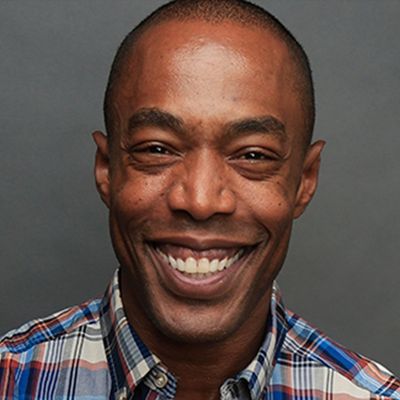
In this College Deep Dive, we welcome back Michael McElroy to talk about Howard University. Michael and MTCA Director Charlie Murphy discuss: What Michael is bringing to Howard. What a HBCU offers a prospective student. What it means to be an artist in a safe environment... Read More
From the show: Mapping The College Audition: An MTCA Podcast
Guests
Featured Shows

About
In this College Deep Dive, we welcome back Michael McElroy to talk about Howard University. Michael and MTCA Director Charlie Murphy discuss:
- What Michael is bringing to Howard
- What a HBCU offers a prospective student
- What it means to be an artist in a safe environment
- YoungArts
Be sure to check out more information about Howard University at:
- finearts.howard.edu
- @howardmusicaltheatre on Instagram
Join us for Junior Workshop on Saturday December 2nd and Sunday December 3rd online or LIve in NYC
If you have any questions about the college audition process, feel free to reach out at mailbag@mappingthecollegeaudition.com. If you’re interested in working with MTCA for help with your individualized preparation for your College Audition journey, please check us out at mtcollegeauditions.com, or on Instagram or Facebook.
Follow Us!
Instagram: @mappingthecollegeaudition
YouTube: @MTCA (Musical Theater College Auditions)
TikTok: @mtcollegeauditions
Charlie Murphy:@charmur7
Meghan Cordier:@meghanmarie2014
About MTCA:
Musical Theater College Auditions (MTCA) is the leader in coaching acting and musical theater students through the college audition process and beyond with superlative results. MTCA has assembled a roster of expert artist-educators who can guide students artistically, organizationally, strategically, and psychologically through the competitive college audition process. MTCA provides the tools, resources, and expertise along with a vast and strong support system. They train the unique individual, empowering the artist to bring their true, authentic self to their work. MTCA believes that by helping students reveal their potential it allows each school to connect with those who are truly right for their programs, which in turn guides each student toward their best college fit.
About Charlie Murphy:
Charlie is a proud graduate of Carnegie Mellon University’s BFA program. As an Actor he has performed with theaters such as: NY Public Theatre’s “Shakespeare in the Park”, The Pearl Theatre Company, Hudson Valley Shakespeare Festival, Chautauqua Theatre Company, Kinetic Theatre Company, and the Shakespeare Theatre of DC.
With MTCA [Musical Theater College Auditions -- mtca.nyc], he has been helping prospective theatre students through the college process for over 15 years. As a Teacher and Director, he is able to do a few of his favorite things in life: help students to find their authentic selves as artists, and then help them find their best fit for their collegiate journey. Through this podcast, he hopes to continue that work as well as help demystify this intricate process.
This episode was produced by Meghan Cordier and Charlie Murphy. Episode theme music is created by Will Reynolds.
Transcript
This transcript was automatically generated and might contain errors.
[0:00] Charlie Murphy: Hello, my dear listeners. This is your favorite podcast host, Charlie, from June of 2025.
[0:07] Charlie Murphy: If you're hearing one of these episode toppers, it means this episode is no longer totally current in some way.
[0:14] Charlie Murphy: Now, this may be obvious to you if you've scrolled deep into our episode archive of all these past dates, but just in case it was not, please receive this content warning that what you're about to listen to is not completely current.
[0:26] Charlie Murphy: In an effort to avoid confusion over the general state of the landscape, but still try to maintain some of the transparency of the project that this podcast has been, as well as I think some of that valuable process-based information that's present in all of our episodes, I have decided just to leave all of our older episodes up, even if the landscape has shifted significantly since the recording occurred.
[0:46] Charlie Murphy: So when we become aware of a big change, I'm just adding a topper to the episode like this to make clear what is current as of now in the middle of 2025.
[0:54] Charlie Murphy: Of course, now as soon as I release these episode toppers into the ether, my information becomes immediately not current.
[1:00] Charlie Murphy: So we appreciate your grace there. And we also can't commit to catching every single small shift in the landscape that may happen when you're talking about over 200 episodes so far.
[1:08] Charlie Murphy: But we're gonna do our best.
[1:26] Charlie Murphy: But just in general, one faculty member does not make an entire program, in our opinion, right? Obviously, there are some program heads and really valued professors that have had those outsized impacts on their programs and have built reputations with their strong hands, but nobody does that alone.
[1:41] Charlie Murphy: And the legacy of that work doesn't disappear with a person's leaving, right? So while someone leaving a program that might really shift your opinion on the school, and it's fair to allow it to, it shouldn't completely invalidate that school in your mind, certainly not automatically, right?
[1:54] Charlie Murphy: Both factors, the specific faculty and the institution itself around them, should weigh heavily in your mind.
[2:00] Charlie Murphy: And each situation, it's going to be unique about how much influence you think a shift might have, right? There are no easy answers, but each situation should be weighed individually based on those variety of factors.
[2:11] Charlie Murphy: So it was my goal with this podcast to give you that intimate look into a given program so that you could pick up the vibes of specific professors, hopefully better than you're able to read data off a website.
[2:22] Charlie Murphy: But hopefully, to some extent, you're able to extrapolate that vibe as best as you can to the program at large.
[2:28] Charlie Murphy: Right? Of course, not every professor is going to be fully representative of every other professor at the program. How could they be?
[2:34] Charlie Murphy: But at least gives you a nice data point and a window in, a vibe data point. And I hope you feel that it's relevant to the program at large, beyond just that specific person.
[2:42] Charlie Murphy: Okay, but let's get to your specific episode.
[2:45] Charlie Murphy: Okay, so with this specific episode with Michael McElroy, it is our second episode with Michael, and also the second time that we have to tell you that he is now gone from the program.
[2:55] Charlie Murphy: Um, after moving on from Michigan, he's now moved on again as of June of 2025 and is back at NYU.
[3:00] Charlie Murphy: Uh, by the time you're listening to this, who knows? Like I've said, many times you blink and the landscape shifts.
[3:06] Charlie Murphy: Um, but I do think this episode is still very helpful to listen to in order to get to know Howard as a program.
[3:11] Charlie Murphy: And also, as we said in the other episodes, to hear Michael's perspective as just a two-time guest and an influential voice in this academic world across many colleges.
[3:19] Charlie Murphy: So I hope you enjoy.
[3:30] Charlie Murphy: Hello, hello, and welcome to Mapping the College Audition, a podcast where we explore the landscape of the college theater world and try to demystify this daunting audition process.
[3:40] Charlie Murphy: I am your host, Charlie Murphy, director of MTCA, that's Musical Theater College Auditions. And today we have got Michael McElroy from Howard University on the show for you.
[3:51] Charlie Murphy: Michael is our first returning champion of a guest, at least from a school perspective, and someone I'm not married to. But we're really excited to have him represent Howard University on the podcast.
[4:03] Charlie Murphy: Michael is a great example of someone going from one prestigious university to another. When we last had him on, he was the chair of the musical theater program at Michigan. But far from our only example of professors moving around, we know this too well. Many of our great episodes from the past few years have seen program heads shift, faculty change schools, people leave academia altogether, etc. It is a constantly evolving landscape that we are continuing to try to capture like water in a sieve.
[4:32] Charlie Murphy: So we will try our best, which is just to say we absolutely will have people back on and programs represented once again for those that have shifted. You know, it's always a balance for us of having new programs represented versus going back to ones where the information will likely be pretty similar, but maybe with slightly a different perspective with a new head. But just to say it's something we're conscious of in planning our guests, and we absolutely will be having those schools back on the podcast with new heads in place.
[4:58] Charlie Murphy: Here, of course, we got the best of both worlds with a guest we love and a new great program represented. Um, I'm gonna do a few quick reminders of some MTCA events before we hit some Thanksgiving gratitude. For any of our class of 2025 and younger students, our junior weekend is happening this December 2nd and 3rd online and in New York City, which is a great way to start with us as an MTCA student.
[5:21] Charlie Murphy: It's a song, monologue, dance class, as well as an information meeting. It's really a great time. We only have a few spots left in that, so grab one of those if you're available. And for my class of 2024 seniors, our mocks are disappearing fast. We just had a great online mock last weekend. We have this December 3rd in New York City, which is full. We have December 10th in San Diego, which only has a very few spots left. And then the last mock of the year, which is January 6th, which will sell out and it'll sell out before you think it will. And after that, that's it. It's your prime audition season. So please jump into one of those if you haven't done so yet.
[5:57] Charlie Murphy: Y'all, am I the only one that Thanksgiving snuck up on this year? It was like Halloween, I took a nap, and here we are. Um, I hope you are all listening to this cozily ensconced in some wonderful Thanksgiving plans. Um, of all the holiday traditions, I am a big fan of listing things that we are grateful for. I love a New Year's resolution and I love some Thanksgiving gratitude.
[6:20] Charlie Murphy: Um, it's really hard in a stressful year, which I think in this process is always a uh personally stressful year for a lot of our students and families. You know, we're in a really difficult time geopolitically. All the thousand natural shocks that our flesh is heir to, right? But it's really hard in those moments to sit down and focus on the things we have. But oh man, is that perspective healthy and happy making for us all? You know, I feel personally like I am objectively blessed. I have an amazing wife, I have a healthy and happy daughter, I have a job I love, but that certainly doesn't make me immune from cynicism and from focusing on the things I lack all too often.
[6:56] Charlie Murphy: So I say to you this Thanksgiving year, give yourself a gift of a gratitude practice, not just during Thanksgiving, but beyond. And if you're like me, at least count your blessings once a year at this time. And one of those blessings, of course, is to be twice graced by the great Michael McElroy from Howard University.
[7:18] Charlie Murphy: Well, we are so excited to welcome back Michael McElroy. Michael has a BFA from Carnegie Mellon University, been on Broadway in Sunday in the Park with George, Next to Normal, Rent, The Wild Party, Big River, for which he got a Tony Nom and Drama Desk Nom, and enough more Broadway shows that unbelievably we're not going to read them all.
[7:38] Charlie Murphy: He founded the Broadway Gospel Choir in 1994 and Broadway Inspirational Voices in 1999. Previously, he's been an associate arts professor and head of vocal performance at uh the new school, the new studio on Broadway, excuse me, at Tish slash NYU. Um, he was also the chair of the Department of Musical Theater at the University of Michigan when we interviewed him last. And he is currently the coordinator of the musical theater program in the Chadwick A. Bozeman College of Fine Arts at Howard University, which is located in Washington, DC, and they take classes of about 20 to 22, offer a BFA in theater arts, and we'll talk about the different uh concentrations of musical theater, dance, acting, etc.
[8:17] Charlie Murphy: Uh, Michael, welcome back on the pod. How are you feeling?
[8:20] Michael McElroy: I'm feeling good. I'm always uh happy to spend time with you also. Thanks for having me back, Charlie. I'm honored and thrilled.
[8:27] Charlie Murphy: Um, often my first question is to throw uh, you know, give us in a little backstory, a little bio. I'm gonna kind of assume that basically all of our listeners, many of them, will have heard your previous episode, so they're gonna get to know you a little bit already and heard your personal background. I'd love to hear just a little bit about your journey since we chatted. So, what made the journey from Michigan to Howard? Why the jump?
[8:48] Michael McElroy: I look at every moment in my journey as being something that is predestined, and that as long as I have done the work fully in the present moment, not thinking about the future, then I'm ready when the next moment uh comes to me. Um, you know, part of that is just my upbringing. I'm a church kid, I'm a preacher's kid. Um, but um I started, you know, as an actor, as you said, and then this opportunity came to teach. Um, I never in a million years thought I'd wanted to be a teacher. My mom was a teacher, but this opportunity to help create this musical theater program at NYU, the new studio on Broadway, turned out to be an incredible opportunity for me to hone my skills as a teacher, um, in specifically acting through song performance.
[9:34] Michael McElroy: And I got to do it with this incredible group of artists who were teachers, but also still very much still working in the industry. With Kent Gash, who was our head of our program, and Byron Easley and Del Howlett and Don E. Lynn Fraser and Orlando Pobotore. And also in this group of artists of color, um, where we were actually building something from the ground up. So we were just uh we were figuring out what the pedagogical practice, what the curriculum, who were the faculty going to be, what was going to be the trajectory from first year to fourth year. And so I got to do that in such a nurturing space in New York City while I also got to continue to work as an artist.
[10:19] Michael McElroy: Um and then COVID happened. Um we all brilliantly um took uh an art form that depends on it is is is uh dependent on interpersonal connection, energy, all of those things, and we put it online basically, uh, and made that shift. And during that time, the offer came from uh University of Michigan, and I said yes uh and stepped into a position as chair, um, which was a totally different experience.
[10:56] Michael McElroy: Yeah. And in that space, I learned what it was like to chair a program. And the difference is what? It's more administration, it's more less creative artistic control. Well, in my first year, it was all administration, which was wise because it gave me an opportunity to learn how everything worked. Um, and then uh the after that, uh the second year I started to teach. Uh, and I taught a couple different courses. I taught the sophomores and I taught uh the seniors. I co-taught those clock courses. Um and then Howard came along. And it was an opportunity to take what I had learned in both of those spaces and to uh bring it to a space that really sits at the epicenter of who I am as an artist right now and how I want to give back to my community, but also to the art form.
[11:51] Michael McElroy: Uh and so I get to do that here in this what I what they call the Mecca at what they call Howard. And from the minute I walked on to the campus, I felt like I had come home.
[12:03] Charlie Murphy: So cool. And sounds like a blending of different experiences with you know the the new of new studio was happening uh at Michigan with that very established program trying to steer that that ship and then just love to hear about like what what your mission is now. Uh in if you're gonna say in my five-year plan, or what, you know, what is the the goal uh in terms of your coordination at Howard?
[12:22] Michael McElroy: Well, you know, I I don't know how I'm sure you do because you always do your research. The the College of Fine Arts was just reinstituted two years ago uh and reinstituted under the name of Chadwick A. Bozeman College of Fine Arts, um, in memory and dedication and honoring Chadwick Bozeman, who was a student here, a graduate of this university. Uh, and so under the leadership of Dean Felicia Rashad, um, they've spent the last two years rebuilding the College of Fine Arts as its own entity, as its own college.
[12:54] Michael McElroy: Um, so I have stepped in in the third year of its iteration as a College of Fine Arts again. And it's such an exciting time because it's still in a formation space, and we get to dream about still build what we want it to be. I know for me, uh these last few years uh have changed me in like all of us in many ways.
[13:20] Michael McElroy: I think one of the things that COVID did for us as human beings, it is made us really question what we do and what we want to do, right? You know, we saw how easily things could shift. And so for me as an artist, as an academic, as a person in that teaches, that mentors, that also continues to be a perpetual student. Um, the question became where can I be of service in the way that really is centers what I believe in in this moment? And in this moment, for me to be at this university that has been a leader in uh creating, fostering, developing, mentoring African American uh thinkers, scholars, artists, to go out into whatever field they're going out into to be change makers and innovators, sits at the epicenter of what I want to do with my life as it exists moving forward.
Just like when I left BIV after 27 years, I think it was 27 years, one of the things I said to the board was, you know, more of my life is behind me than is in front of me. So what I want to do in this moment is be quite intentional about where and how I spend my time and how I give back.
[14:50] Charlie Murphy: I'd love to kind of zero in on uh what the sort of vision of a Howard University, especially musical theater major is, but can we start a little bit broader? Because Howard is our first HBCU that's been on the podcast, historically Black College University. Um, and just talk a little bit about what that means, what it means to attend uh an HBCU, maybe what some of the advantages and disadvantages, especially as a student, as you see of attending HBCU, and then maybe we can zero in on the Theater Arts program, and then especially the musical theater program that you're coordinating.
[15:20] Michael McElroy: Yeah, well, you know, it's interesting. Um, I don't see any disadvantages in this. I think in this moment, what I've been able to learn in this moment uh being in multiple artistic spaces, as you said, coming from Carnegie Mellon, um teaching at NYU, building a program there, going to the University of Michigan, these are all like top musical theater programs. Um, what I see and understand from students, particularly what I'm starting to learn and understand from um students of color, particularly African American students, is there are a couple questions that I started to see or tease out that are very at the forefront of how they make their decisions in terms of programs. And one of those was you know, the financial, of course, uh, which is on every family's mind.
But then also more so I think in these past few years since COVID and all the things that have happened in our country is where will I be safe? And safe does not mean in terms of the work, it means in terms of the environment. And that environment can be the program, that environment can be the college or institution, and that can also mean the city where the university is. What I have found for me as an artist and as a uh person who teaches in academia, that that sense of safety of that ability to bring one's full self into a space and know that there is a space that was actually created to fully accept all of who you are and to shape that and to challenge you to go deeper and to expand wider.
Um, that's what I think an HBCU offers in this moment. And what I one of the reasons why it was important for me to be here, is because I want to be a part of helping specifically African American artists to step into the fullness of who they are in a space that was literally created for their success.
[17:27] Charlie Murphy: And can we talk about the specifics of so what does qualify a student to attend an HBCU? So, what what will the complexion of a class look like at an HBCU if you're attending one?
[17:37] Michael McElroy: Well, you know, I can only speak for this space. There is diversity here. Um, you know, there is no mandate that says that you cannot attend here if you're not an African American diaspora. Um, is African American. Most being 90%. Like what are we, you know, in terms of if we had to sort of guess, I'm not asking you to put that down on a 92.3, but but does it feel like it is nearly 100? I think it's above 90%.
[18:06] Charlie Murphy: Above 90%.
[18:07] Michael McElroy: Yep. You you mentioned already the re-endowment, I guess if I'm using that word correctly, of the Chadwick A. Bozeman College of Fine Arts. Let's talk a little bit about you know what sort of distinguishes Howard as a theater school, and then maybe especially if we we talk about the musical theater, what what you're trying to do with it. Um, you know, what do you see when you you meet these students? How do you find um they distinguish themselves than the students at NYU or the students at Michigan or the students at Carnegie Mellon?
[18:32] Michael McElroy: Well, I don't think that the students are different. I think that this generation is a very particular generation. I think they're all a manifestation of how they've grown up and how they've been socialized. The only difference I see is here coming into an environment that was fully developed and mined and um created for them to bring the totality of the who they are to the place. You know, so often, you know, as a person of color in academic spaces, you are navigating how to bring yourself in the room and at least find a way to get what you need at most to be safe. Right? And to take that off of the table and say, you don't have to think about that. Right? To be able to walk across a campus and see, like my very first day here was incredibly emotional for me because I'd never been in an academic space where most of the people that I saw, whether that's faculty, student, admin, staff, look like me.
I'd never had that academic experience. And it was such an exhale. And that is specifically speaking to where I am in my own personal journey based on the experiences that I've had. And so I think it is quite a gift to have a space that allows these students of the African diaspora to be able to come into a space and say, okay, you don't have to worry about that thing, but you do have to worry about not worry about, but be fully engaged in what it means to be fully an artist and a scholar, and to be challenged, to be the strongest, deepest, best version of yourself, to learn the tools to engage your work, um, to grow as a human being in a community that is solely focused on your success, the entirety of you as a successful artist, and whatever way that means, with some of the most brilliant uh pedagogues and and uh teachers. I mean, I'm in awe when I go through and look at some of the bios of the faculty that are here, who are legends and leaders in their fields.
[21:05] Charlie Murphy: Well, I'm hoping to change that. I'm hoping that by being here, as we are rebuilding and reforming, it's such an exciting time. I get to be able to be a part of that, bringing all of the knowledge that I had gained as an actor for over 30 years, as a composer, and as a teacher and academic in uh multiple institutions.
[21:26] Michael McElroy: Well, my money is on you changing that. I think we're we're gonna be talking about five years and go, it has changed as that has uh happened. Um, it's and it's so interesting hearing uh um like sort of conversations about safety because I think you know, especially in in COVID, we had a lot of conversations about safe spaces versus brave spaces, and how can you be brave? You know, we we all know as theater makers that in the educational aspects of this work, it takes a certain bravery, and you cannot have bravery without safety. So, in some ways, you're sort of saying, like, you that safety is like already a given now in some ways, that that specific kind of safety, which maybe does allow a different kind of bravery in your work to go, I don't have to be protecting myself in that way.
[22:06] Michael McElroy: Right. I can be brave. That's really cool.
[22:08] Charlie Murphy: Yeah, you're exactly right, Charlie. And it's the idea that what does it mean when you look across the room and see yourself reflected? Right? What does that mean in terms of that level of safety? Right? Um, there's still the human interaction, and we're all human beings with all of the things that come with that. But I found that it is incredibly powerful, and I think back on my own journey and understand that when I saw faculty members who looked like me, that was one of the strongest ways of me knowing that I could bring my full self into the space.
[22:50] Michael McElroy: I love it. And let's talk a little bit about the curriculum now. So, the um, you know, you've you've worked at now an NYU, which is uh very very academic for a musical theater curriculum, you've trained at a Carnegie Mellon, which is a very acting-based curriculum, even for the musical theater majors. You've now chaired a Michigan musical theater department, which is uh a really strong music uh component to it. I just love to hear, like, you know, of the three disciplines, is there a focus that Howard has or that you're gonna be pulling out in different ways? Um, how do you sort of approach the music, the acting or the singing, the acting and the dancing um as you sort of shape the program?
[23:23] Michael McElroy: Well, it's interesting. Uh I think we kind of just kind of tell on ourselves, Charlie, because we are uh you're a generation after or after me, or maybe a few generations after me, but all of those programs have changed. They're no longer just conservatory, you know. When I was at Carnegie, you know, I had, I think I took maybe three academic classes in my four years, and they were all in my first year. That doesn't exist anymore. To get into these programs now, your scores as a uh as a student have to be just as strong as your acting music dance scores, right? So what we're all saying is we are wanting to train the totality of an artist. And people say is the artist as scholar, right? Um and also the reality is, Charlie, no one wants to work with an actor who's not smart.
You know what I mean? So that has all shifted, I think, in all musical theater or any kind of acting training programs. You've got to have the academics to go with the art. Uh and so here, um, what I am focused on as I get to know the um curriculum and the faculty and the students, one number one, the biggest rule is always to listen. Uh so my first year as I'm teaching is really about looking, listening, asking questions, asking questions, you know, getting in there and just being a part of while thinking forward of what are some of the changes that I think I can help and offer to keep moving towards really strengthening and solidifying our mission as a training program. And so, you know, for me, it's always about the synthesis, the synthesis of acting, singing, and dancing, right?
To me, you have to be an actor first. To be synthesizing those things as soon as possible, right? At the same time, we're also challenging our students to say, okay, just as we're saying, okay, what are you learning in that dance class? How does it uh relate to your acting? How does it relate to your singing? We're also saying, okay, what you're learning in that biochemistry class, how does that relate to here and that? So that you're looking at things in a holistic way.
[25:34] Michael McElroy: When students are going from high school into college, or you know, there is that thing that we have to kind of shed that idea of okay, this class is this class, how do I get the A here, this class, but really start to think holistically.
[25:48] Charlie Murphy: Yeah, right. And that everything contributes to the artist as a human being, as an observer and a person who is deeply interacting with the world. Uh, and so you really encouraging and supporting students, not separating, but really starting to look at everything in a holistic way. Um, so that's what I think of when I'm talking about rebuilding or moving the curriculum forward.
[26:15] Michael McElroy: Yeah. Well, and you know, we we talk about sort of holistic um within the musical theater of it all. You know, when we talk about actors versus musical theater, um, you know, something the point I always make is that we sort of make this distinction in the audition, of course. Am I auditioning for musical theater? Am I auditioning for acting? But of course, as soon as you come out into the world, it's like, can you sing? Great, you can be an appropriate musical, can you dance?
[26:34] Michael McElroy: Like, you know, that it's more about the literal skill set as opposed to the bifurcation.
[26:38] Charlie Murphy: How does that work at Howard in terms of is there um interaction between the acting and the musical theater programs? How if I was an actor and I wanted to be in the acting program, do I can I take music classes? Can I take dance classes? How does that interaction work um for those students?
[26:52] Michael McElroy: Good question. I know in terms of performance, all students can audition for all shows. And in the theater arts program in general, you audition for the whole thing. Yes, and students across the campus can also audition. Um we just did um production of a play called a hip hop play called Rhyme Deferred. It's the 50th year of hip hop. And Rhyme Deferred was actually written here by Camilla Forbes, who now uh is the artistic director at the APAW Theater. But she was a student here, and she wrote this hip hop play with Chadwood Bozeman when he was a student. Hip hop theater was actually created here, and this is one of the plays that they did here, and that was a students who are musical theater students, acting students, students who are not in those programs.
It really can be anyone who can audition uh for the programs. Um for the shows. And then for classes, there's not as far as I can see so far, much of an integration acting and musical theater, but there are within each um discipline opportunities to take classes, like as an actor, you can take movement classes, you can take a dance class, those kinds of things as well.
[27:56] Charlie Murphy: And I guess same question for musical theater in terms of the leveling of the dance, um, how does that work in terms of um can I jump to a dance uh specific major class if I'm really more advanced? How does that work in terms of the different levels of of musical theater dancers?
[28:10] Michael McElroy: I think there is there, well, we have assessments at the beginning of the semester to see where students go, but there's also the opportunity if you come in and you're a really strong dancer, we have a wonderful uh dance program here, and our faculty will work with you to figure out where's the best place for you to go while you're still taking the pro the training that's within our program as well. So students are have the ability to minor, they have the ability to take additional credits in ways that they want to take credits. So, you know, we've had students who will, you know, what I've been able to glean so far, students can say, okay, this is something I'm really passionate about within the artistic field, so I'm gonna take more classes here.
[28:49] Charlie Murphy: Well, and you've set me up perfectly for, you know, as you talk about uh Carnegie Mellon and us taking three classes throughout. I took like seven classes, but yeah, it's very few non-acting classes while I was there. Um how does that work at Howard? If I wanted to minor in something that wasn't um theater related, if I wanted a minor in psychology or God forbid double major, how does that work in terms of outside of the theater um school? How what opportunities do I have as a Howard student?
[29:14] Michael McElroy: Um well, each of us are advisors for a different year. And so this is gonna be my first time I'm an advisor for the second years. Um and so they come with their schedule of what they want to take, and then I look at it to make sure that it aligns with what they have to take for the major. And then they start to look at okay, well, this is what I have to take, this is when I have to take it now. I also want to make sure I can get this minor in and start to build around their classes for their for their major. And so I uh you know, I think we have lots of students who minor. Just like at Michigan, I had lots of students who minored in psychology, or um, there was an entertainment um uh minor that students would take.
Uh, you know, as I think on any instant at any institution today, which is very different from your years and my years, there's a much more of a push in terms of making sure that you are getting a holistic experience in the academic setting. Therefore, minoring in something that's outside of your mate out of your focus is encouraged.
[30:15] Charlie Murphy: Let's talk a little bit about how do you prepare students for the launch into the business itself. So I know this is now, it sounds like the the from the re-endowment. It's now the third year will be the new school itself in terms of how they're they're launching into the business. But what is the plan in terms of stuff like showcase, stuff like how they're gonna um interact with agents and managers, all that kind of stuff?
[30:35] Michael McElroy: We have a showcase that happens for our seniors in New York, um, and that'll happen at the end of the spring, at the end of the next year, um, and will happen there every every year after. Um, and uh we have one that they do here that we film so that there are a digital form that can go out into the industry, and there's also the in-person live event that will happen. And we do our showcase in collaboration with the arts, with the actors. So the actors and the musical theater do their showcase together. All together.
[31:10] Charlie Murphy: Yep. Well, and I'd love to talk about the complexion of your your class in terms of you call it mentioned the Mecca. So, how many of your students come from the sort of Mecca area, if that makes sense, they come from the the you know, greater DC area for in all those different states, versus how many come from across the country, how many come from around the world?
[31:28] Michael McElroy: Um, and then I'd love to also talk a little bit about where they end up. How many go to New York? How many LA? Do people go to Atlanta? Do people go in different directions? They call it which, you know, when I I always saw the DMV as the modal vehicles. Here in DC, the DMV is this tri-city, what we call tri-state area of New York, which is Maryland, DC, and Virginia. Um, so I think there's a a sizable population that comes in the DMV. Um, and then we have uh students from you know places like Atlanta, uh Houston, Dallas area, Fort area. And then we have some kids from the West Coast from the Bay Area from LA. Um, and then we have our Midwest kids. I have a student that's from Wisconsin, you know, they come from everywhere.
Uh and then we do have some students who are international. So it just depends on that year and who uh applies um and who gets in to make up that cohort. But we also have programs within our uh department where students get to travel abroad over the summer and study. We have one called Bata that's in London, and then there's one that's in LA the students can do as well. Um there's one that's potentially happening in Ghana. So, you know, we are Howard as a university is a global institution. And so now we are mandated as we are looking at our mission as a department to make sure that we are looking and thinking globally as well. So making sure that we're providing opportunities for our students not only to go everywhere to study and bring that back with them, but for other other students from other nations to be able to come and study here.
[33:07] Charlie Murphy: And then what about the second half of that? Do you have a sense of where students end up from, Howard? Or are some of them staying in the DC area? I mean, there's a great theater scene there. Do some go to New York? Where do people um seem to end up?
[33:18] Michael McElroy: A lot of them go to New York. Um, a lot go like to Atlanta, um, and some go to the West Coast. Um, so we have them in most in Chicago. That's what I'm hearing so far. Uh, but I'd say a bulk of them go to New York.
[33:32] Charlie Murphy: Yep, makes a lot of sense. Um, let's talk a little bit about cost. So, not a cheap school from the the sticker price, you know, where I what I found was undergrad on campus was 55704. Um compared to Well, compared to some other schools that are even higher, I know. Um, but let's also I'd love to talk about the Chattergay Bozeman Memorial Scholarship. So, how how does that work in terms of you know what would most students expect to pay? You know, if we talk about from a need perspective, we talk about uh a merit, whether that's talent or academic money. How do how do the sort of finances end it end up for most students in terms of what they're paying?
[34:08] Michael McElroy: Yeah, I'm I think you know, for some students uh it it's like it is uh on a national scale with uh Pell Grants, what federal funds do you get? And then what are the scholarships or grant monies that come from the university? Uh and all of that is done by our admissions department, so I can get back to you on the specifics of that. Um, but I know that we are working, and one of the things that I'm very passionate about is making sure that there is um an endowment and also um grant monies here specifically for musical theater students so that we can um so there are no deterrents for students coming here. Um but that's just me speaking on in terms of my vision for things because I know and having been in multiple institutions, I I know and have experienced how the admissions process and the offer process works. Yep.
[35:11] Charlie Murphy: I love it. Um any sort of best kept secrets about your school? I mean you sort of mentioned the uh you're hoping it won't be such a secret, it'll be less and less of a secret over the course of the next couple years and with your leadership. But um, what's something that maybe if people if Howard wasn't on the map, what's something that they've been doing for a while that you go, uh this this is more people should know about this. More people should know about what's been happening here.
[35:30] Michael McElroy: Well, I mean, I'll just give you an example of this the last couple of weeks. Um, two Mondays ago, we had Misty Copeland here. Um, she has produced and stars in a documentary that she created about the homeless crisis in um outside of Oakland. And we um had the movie uh premier here, um, shown here, uh, and she was here. Uh, and it was an uh an evening to show the film, then also to speak with our students. We had a reception beforehand where she could interact with some of our students, specifically from the dance program as well. Then three days later, the August Wilson Society was here doing an event um that our dean co-hosted. And then this past Sunday, we had a Hattie McDaniel uh uh day evening where her a copy of her Academy Award was returned here to the university and now sits in the hallway in a case, and her descendants were here to talk about her life and her experience. So there's all these incredible things that are always happening here that unless you ha are actively you know connected to Howard, you may not know about.
[36:42] Michael McElroy: And I also want to make sure that we're starting to get that word out so people can start to know about these wonderful things because that's also a part of the experience here. Part of the experience is not just the training, not just the education, but it's also about how we are connecting to legacy, how we're connecting to what came before, and how we are also inspiring for what's to come. And so having these different artists who are coming here to talk about their work, having these things that have to do with generations past that are coming here. This is it's just it's just such an exciting time. And then also the other thing is, you know, is the social aspect of being at an HBCU. You know, my first day here, I was looking out my window onto the quad, and there was, you know, uh the marching band.
You know, and then a few minutes later, there were all these different fraternities and sororities doing a step show. I mean, it's like there is a social community aspect that's cultural that you won't find in other institutions that you'll find in HBCUs that I think is really exciting about what it means to go here.
[37:50] Charlie Murphy: So well said. Okay, we're gonna take a short break, and on the back end, we'll chat a little bit about the audition process.
[37:55] Michael McElroy: So back in a flash.
[37:58] Charlie Murphy: All right, we are back with Michael McElroy from Howard University, and we're gonna chat a little about the audition and admission process. So I just love to chat through um the audition and admission process in terms of you know, first off, just what you're looking for when you look at auditions for musical theater students. So, what is a good musical theater audition for you?
[38:20] Michael McElroy: Um that's a great question. I don't think that changes no matter it doesn't change whether whether I'm at you know NYU, Michigan or here. I'm looking for talent and potential. Yep. Right. Uh we learn so much about a young artist by the material they choose and how they engage that material. Uh, you know, because we're in this, you know, early decision, early action video world where you submit all these videos. Every opportunity that of what you submit is an opportunity for us to get to know who you are, right? So the music you choose, how you engage that material. Um, we've now instituted in our early decision, early action and moving forward in all the submissions that we do online, a wild card of you can either answer one of two questions or you can do something that's not included in the mandatory video submissions.
That's an opportunity for us to get to know you. Uh and so I encourage students to pick material that they're passionate about that shows what they can do, not what they cannot. Right? Um, that they know, for example, when they slate, that they know who wrote the material that they're um going to share, and that they pronounce their names correctly, right? Little things like that. Um then, you know, well, like I said, I'm not looking for a finished product. I'm looking for someone that when I see them, there's a spark there, there's talent there that can be developed that could be really super raw, but but it's there.
[39:58] Michael McElroy: Um, and I'm looking for potential, meaning there's potential for growth. And I'm looking for someone I'm going, will I be a service to that student when they're and how does it work with the different you know platforms? So especially you mentioned those videos, so people are uploading videos, and then there are callback auditions.
[40:16] Charlie Murphy: Yes. Are you is the video for you a check for talent, and then the callback is a deeper dive? Do you come back to the video at the end? How does that work in terms of sort of the way that you're using you're viewing that video submission along with the application and then the callback audition itself?
[40:32] Michael McElroy: Well, this is my first time going through the process here, but I can tell you what I've always I've always done is the first viewing is for that do is this there's what I think needs to be here to call that person back to come in person. And then the callback in person is about does this fulfill what I thought it did, or does it take me somewhere even that I didn't even see? Right? Um, you know, and I think it's wonderful. We live in a time where there are lots of support systems around helping students to prepare for college and specifically around musical theater auditions. But when I see you in person, I always give a note. I always give an adjustment. I want to see if a student can take a note and not do what they've already been doing, right?
Or is it so you know baked in that they can't, you know, and it is and it usually is something that's kind of out there that makes no sense. Because I want to see, can this young artist say yes? Can they play? Yes, right? And then once they've we've had that, then yes, I will sometimes go back and look at the videos just to see what my assessment is and if I if I'm still having questions about something or you know, but we spend a lot of time because we understand for these students, they put a lot of time and effort into their work. We want to make sure that we respect that on our end um in every way possible.
[41:57] Charlie Murphy: So, you know, I do spend a lot of time going back and forth. I love that you said that. This is the your timing is perfect for we just did a mock audition where I was trying to underline that exact point for our students where um I had asked like a group of them, like, what's the worst thing that could happen if you get an adjustment? And someone raised their hand, they're like, it could be really, really bad. And I was like, that is far from the worst thing that could happen. It is so much worse if you did it the same. Like I would so much rather you go and be terrible. And then it's like, that's on me. I gave you that crazy adjustment, as opposed to like if you just do it the exact same. Now I start wondering, are you overly coached? Are you stuck? Is there no, are you not willing to play with me? So I'm gonna underline and save what you just said and put it online and all the things.
[42:36] Michael McElroy: Yeah. Um, I'd love to talk about do you look, you know, and I know this is your first time going through this process. Do you uh look and or are planning on looking at any of the other parts of the application that aren't the wild card, that aren't the the sort of theater arts part of it? Do you look at grades or um SATs? I know SATs are optional for how we we found, but do you read the essays and stuff like that, letters of rec, anything else that you you sort of take in from the application?
[42:59] Michael McElroy: Yeah, we have yeah, we have all of those things. And I think that once again, when you're looking at the totality of if you're looking, if you're saying you're looking to train the whole artist, then you need to look at all those things. Right? And we do. Um, we are in partnership with the admissions office, right? But I think in my past experiences and what I've seen thus far, we have access to a lot of information and we make sure that we do our due diligence. Because once again, we want to look at all of it to understand is this a space where this young person can thrive? And then as you think about filling out your class, you know, so often when we use the word diversity, we're trying to say beyond just racial diversity.
But you know, when you're considering diversity of you know, of height and of gender balance and size and you know, maybe specifics of racial diversity within uh, you know, the diaspora you mentioned. Is there how do you think of that? I mean, are you thinking of um do you have specific uh quotas of we want to be about even male and female identifying? You know, uh how how do you think about the the way you fill out the class um of your individual artists?
[44:07] Michael McElroy: Well, you know, this is my first time, so I don't know how it will be, but I do know that um I would like there to be some form of of or closeness to balance in terms of how students identify, identifying female identifying um students. Um that because that affects the kind of material we can do in class, what what kind of material we can then do on stage, et cetera, et cetera. Um, but other than that, you know, it's it's it's it's a far step away from the day like our day of I want the blonde, I want the this, I want that, right? I'm interested in artists, young artists who are passionate and who have are curious, in addition to have talent and potential, I want you to be curious. I bring joy in the room, uh, who um are thinkers, don't um you'd be surprised how much you can find out in the moment of in person auditions about, you know, is this a student who's gonna go there, who's gonna risk, who doesn't mind failing, who doesn't mind but is gonna be joyful in the space.
All of those things contribute to uh creating a cohort of artists. I'm really more interested in building a cohort of artists that are going to challenge each other, support each other, you know, and that's always uh, you know, a luck of the draw. Um but if you can tease out in those audition moments certain qualities that you know you look at and kind of s send off kind of bells for you, you know what I mean? There's certain things we're we're energy people, right? We're in energy beings. So just kind of getting a second sense of when I'm uh working with a young artist in an audition situation, paying attention to my gut instincts about things. Because ultimately I want them to thrive.
[46:00] Michael McElroy: And is there something, you know, is there something that that you are um sniffing for in terms of you know of going, I think you would be particularly you would particularly thrive at an HBCU? Does does that, you know, I know it's about the first time you're gonna go through this process, but is that something you're you're looking for as you say, hey, I think this kind of student either would be especially good for us or maybe wouldn't fit as well for us in terms of like the interview, or is there anything you're sort of checking to go, I think this would be a really great home for you?
[46:29] Michael McElroy: I think um most uh students of the African diaspora, this would be a good space for. Sometimes they don't know that because they've never been in spaces. Sometimes they haven't been in spaces where they've been not been the one or two or three or four. Um so I think any student of the African diaspora, I think would thrive here. Um so there's not a student of that of of like I said, of the African diaspora who I think would not. Right. When I would go, oh, you wouldn't do well. I mean, there may be multiple spaces where they could thrive. But and I guess I wonder, you know, if you're a non black listener, are there students where you go, well, uh b because of your background, because of your history, this actually might be a great fit for you, or someone where you go, I'm not sure that it would be as good of a fit for you. You might not you might not thrive as well here.
[47:16] Michael McElroy: Yeah, I don't think that we uh once again. This is the first time I'm going through it, so I don't uh but there's no like denying anyone based on on race. I know that's for sure. And as I said, there is some diversity here. Um so once again, it's about instinct and really about the brief in terms of what are the things, the benchmarks, the things that we are looking for, which are very clearly delineated for us. And then me as an artist and as a teacher going, okay, what am I getting in this moment? And do I think that this is a good fit? Race doesn't play into that ever. Totally.
[47:49] Charlie Murphy: Um, let's do some bonus questions. Um, because I know we also want to talk a little bit about young arts. I know you sit on the board of this um really awesome scholarship opportunity. Uh, this is a competition that we recommend to all of our students. We just chatted it about in our most recent webinar on scholarship opportunities. But can you talk about some of the rewards of it, both financial and then some of the non-financial rewards as well?
[48:10] Michael McElroy: Great. I am actually a young arts alum. I was actually in the second year of his existence back in the 80s. Um, and I am a testament, a living testament to the fact that once you are a part of that family, you remain a part of that family. And so, as you say, right now I serve on the board of Young Arts. Uh, but there are many different ways in which it can really be something phenomenal in a young artist's life. For me, coming from a you know, suburb in Shaker Heights, Ohio, it was the first time that someone outside of my world said that I had talent, that I had something, and they wanted to celebrate it and foster it and support it. Um, if you apply in one of the 10 disciplines, uh, and you are chosen, there are three different tiers, I guess you could say.
You could be chosen as a finalist. If you're chosen as a finalist, that means they fly you down to Miami in January. Who doesn't want to be in Miami in January? Um, where you are there for a week with 20 to 21 other uh young artists in high school in your discipline, and there's a performance aspect to that where you prep you prepare a show, and then the rest of that time is spent in workshops, master classes with this cohort that you travel through that week with, also at the same time seeing all the other disciplines work every evening. From that, you can either be uh you can get a uh uh a grant or I mean a scholarship rather from anywhere from 1,000 to $10,000 to do with as you want. It does not have any restrictions on it.
If you want to take that $10,000 and go take dance classes, you can do that. If you want to go to Vegas, you can do that. Right. Mostly students they won't do that, they will use it either for college or they'll use it for their art. Uh, but also if you're not chosen as a finalist, you can also be chosen as an honorable mention or merit uh uh finalist, which then means that you are eligible for all of the things as an alum of the program of the young arts family, um, which includes anywhere from being a part of the regional shows that they do, they do regional shows in Miami, New York. Right now, I think we used to do them also in LA. Uh, and then also the the grants. Um, we are working to make sure that we are supporting our student, our our alums and having opportunities for collaborations with other arts organizations and arts institutions, um uh building spaces where they can come and create work and collaborate with other artists, all of those things, um, and it really is for life, and we're really looking at how we're supporting artists uh at the beginning of their career, which is really that post-high school, college, out into the world, then at that midpoint in their career, and then also into the later years of their career as alums because the needs are different. Um, because Young Arts really believes that the arts are an integral part of our world.
[51:11] Charlie Murphy: Yeah. Uh and so making sure that we are celebrating and really finding how to support at those main kind of touch points in in the in the young in an artist's career is is really um an integral part of how we're uh of our mission.
[51:25] Michael McElroy: Well, we we talk about it a lot with our artist guests of just like the value of community, and many people get that from their alumni networks of their schools, great, but depending what school you go to and how robust that is, it it cannot hurt to have more communities in when you move to New York. As many as much support and community as you can have when you're here, it's always helpful to people.
[51:44] Charlie Murphy: Yeah. Um, I'd love to dive in a little bit of like uh you mentioned the sort of post-college world into what young arts can do, but just in general, you know, as a as an artist who has been so connected to the industry while still living in the educational world, where do you see this industry going? Like, you know, where do you see these kids? They're creating a whole new world. And we're we're all trying to figure out what this industry is gonna be. Post-strike, we record this post-writer strike, but still within the actor's strike. Um, where do we see uh you know, four years from now, these these students graduating into?
[52:16] Michael McElroy: Well, you know, I think uh when we shut down, when the industry shut down, there was a lot of attention and uh work towards change. But we are creatures of habit, and once we were back up and running, there is a tendency to kind of go just get things back to business. And I think this generation that's coming up now will be an absolute vital part of making sure that we're still moving things forward. That we're still creating spaces for diversity where all across all aspects of our the fields within our industry, so that there are stories being told that represent the the vast lived experiences of our country and of our world. And so I think what I when I always think about with my students is I want you to have the tools to be able to go out and meet the industry exactly where it is right now and do everything that is required of you.
[53:13] Michael McElroy: But I also want you to have the tools that you can be a change maker to make it into what we only can dream it can be. So you're not only having the tools for now, we also want to train you with the tools for five years from now.
[53:24] Charlie Murphy: Yep.
[53:25] Michael McElroy: Right? And this generation, they are activated in a different way. And if we can channel that activation towards, you know, grace in spaces, um, healing spaces, but also still advocating that things move forward, I think that it's gonna transform our industry.
[53:45] Charlie Murphy: I mean, I think that second part is it has never been more necessary. Just in terms of they're graduating to a world that the an industry that doesn't fully know itself still. I mean, that there's part of the old, there's some of the new, there's no, there's no cohesive this is what we are, whether it's regional theater or film or you know, Broadway. So they're gonna need a lot of that second part of things of creating the new and you know, of what 2027, I guess, for these students will look like.
[54:07] Michael McElroy: But exactly.
[54:08] Charlie Murphy: Yeah, exactly. Um, any final thoughts? I had you give advice last time, but um, if you want to give some advice to the parents out there who are listening to the students who are going through this process, or you know, any other final thoughts?
[54:18] Michael McElroy: If you're like my advice last time was great. I got nothing new to say there. That's absolutely I don't remember what I said last time, but I will say this. Um, I think I probably said this. Uh if you can, like we with our auditions, I think it's important that we are uh accessible to everyone. So in every part of our audition process, there's a virtual component, meaning if you if you live out of the country or if you can't afford to get here, because we do want to, you know, acknowledge that you know finances are hard during this college application uh season. Um we want to make sure that students who can't afford to get here or for other reasons can't get here, that there is a virtual component that they can do uh of the audition process. But if you can always try to go to that institution, always try to walk across that campus.
[55:04] Michael McElroy: I know for me, and I don't know if it was like for you, but when I the minute I got out of that car on, I think it was Forbes Avenue, yep, and walked across what you probably don't know, Skibo and the old um podcast is trying to figure out Charlie's age right now. You're trying to be like, was Skibo around? Was it this? Was it more would get? Yeah. Uh but when I walked across that campus, it felt right. And then it only had to be proven or disproven when I walked into a class. Uh-huh. And when I walked in class, it was like, oh wow, I sat there and went, yes, this is it.
[55:39] Charlie Murphy: Yeah.
[55:39] Michael McElroy: There's an energy that you feel when you walk across a campus that you know or you can see yourself there. And not only see yourself there, but see yourself thriving there.
[55:48] Charlie Murphy: Yep.
[55:48] Michael McElroy: Right? And so I always say, if you can go there, if you can't, at least see if you can talk to students who are in that first year's uh cohort, yeah, so that you get a sense of it, not the party line, but a real sense of what that experience will be like for you. Um, and ask a lot of questions.
[56:05] Charlie Murphy: Yep.
[56:06] Michael McElroy: And is that that I mean certainly advice we would always give in terms of before you would attend a university. Do you feel like for the audition portion, is that important to you that someone comes to campus and does it live? And I also didn't get to ask about, you know, I know I don't know if it's all nailed down yet in your your first year of doing this, but do you have a sense of what regional auditions you might be are you going to be going to a unified alongside New York, Chicago, LA? I almost didn't want to ask you that just in case you didn't feel ready for it. But just in terms of um how important is it that live experience to be on campus for you when auditioning versus if they auditioned somewhere else virtually or or in one of these other opportunities and then came to the campus for you.
[56:43] Michael McElroy: Well we're we're doing two umifieds uh virtually this year and really starting to expand back out into that world that's a part of what we want to continue to reestablish those connections so we're starting with the virtual version of that um but students are never um it's never uh a negative that they if they only do virtual right um I'm just saying for me one of the things that was so incredibly valuable to me when I was making this decision over and deciding to attend yeah wasn't I when I but I could do that because I was in Cleveland two and a half hours from Pittsburgh.
[57:20] Charlie Murphy: That's right right that's not always possible.
[57:21] Michael McElroy: Yeah but you know as I I think I did say before so often we get caught up in the idea of a place or what we're told is the place and every place that is the place may not be the place that's going to be right for you. So I say that keeping an open mind and really asking yourself the tough questions about what do I what does it take for me really to be challenged and where can I thrive? That may be in a program in Oklahoma, as opposed to New York City. Or that may be in Michigan or it may be in Pittsburgh but to be honest about what's going to be best for you as opposed to where you think you're supposed to go because that is considered the best.
[58:03] Charlie Murphy: So true.
[58:04] Michael McElroy: It's great advice. Anything else we want to say? And also where people can follow you. We have a website, of course. We have we found H U Fine Arts on socials, if that's the right social to tag, or if there's other um places people should be following. How's the best way to get more information on this thing exchange?
[58:22] Michael McElroy: Go to our website and put in the theater arts. But also we're going to start, and it's part of my my uh charge, is to start really amping up our social media presence. But see, now we've been talking about your age all day. So now what are you talking about? Social media? This is not that's the generation, right? This is not good. This is not we can't be over 40 trying to do social media.
[58:41] Charlie Murphy: We'll embed it in an email for you.
[58:42] Michael McElroy: Well, we'll send you an email and we'll embed a video in it.
[58:46] Charlie Murphy: Um I need an email.
[58:47] Michael McElroy: I need an email, maybe a text message. If it's on social media, I miss it completely. This is my my my wife now, uh, when she was we were dating. I could not believe every business I'd be like looking at their website to see what happens. She goes, that's not where the information is, it's on their Instagram. It's like, are you kidding me? I gotta go to the Instagram to see their hours of operation.
[59:03] Charlie Murphy: Yep.
[59:04] Michael McElroy: There it is. Welcome to the world.
[59:08] Charlie Murphy: We maybe get in or get out.
[59:10] Michael McElroy: It sure is.
[59:10] Charlie Murphy: Well, until next year, when we have you back on. It was great chatting with you, Michael. I really, really appreciate it.
[59:16] Michael McElroy: All right, and thank you all for the wonderful work that you do.
[59:23] Charlie Murphy: Oh boy, I hope you enjoyed that episode with Michael, our first returning champion of a guest, and a smash hit, if I do say so myself. And I do, I say so myself. Um, I have a few mini takeaways today. Uh, first, I want to make sure I addressed Michael's comment, in which I believe he insinuated that I was old. How could he? Um, about the nature of schools being more academic than they were in his day. Um, I think it's a really great perspective for you to hear in terms of someone who attended a conservatory BFA program in Carnegie Mellon, and then has worked at a number of excellent liberal arts style BFA programs like NYU, Michigan, now Howard. So certainly his experience at those programs suffuses that perspective.
[1:00:03] Charlie Murphy: But I also think some of that generational part of the comment is really smart in the way that in Michael's time, they might have been viewing, you know, acting as more of a craft or uh, you know, maybe view as more of a technician back in the olden days, right? Acting is more almost a vocational training, and how that's really shifted across the landscape of the business. We now want informed, smart actors with perspectives on the world. You know, that word multi hyphen it has become so overused on this podcast and everywhere that I'm sure you're almost sick of it, but for good reason. That is reacting to what was for a long time the expectation, which is that you had no hyphens. You were expected to be an actor who was trained deeply on this technical craft, and that was your sole focus.
And the idea of being a teacher or a director or a writer might mean you were taken less seriously, whereas now those hyphens only increase your marketability and your artistry to the world. But the reason I'm bringing this up is anytime I hear a general statement like that doesn't exist anymore, I just wouldn't want you to hear that as literally true. There certainly still are conservatory style BFA programs where the focus is more on the artistic classes than the liberal arts classes, and where the GPA is not factored in as heavily in admissions, et cetera. While the holistic idea I think is really helpful, the specifics of how admission is factored in in class curriculum, that still varies from school to school on that spectrum, which is part of the reason you listen to this podcast to get all of that specific information from school to school.
[1:01:24] Charlie Murphy: Changing topics, I just also want to quickly underline and kind of plus one on two things Michael started talking about. The first is just the way he talked about, can you take a note? You know, we've talked about this a number of different times on the subject of adjustments and the kind of audition skills that go beyond the initial material. But I really like the way Michael phrased it. I thought another great perspective on hearing what goes beyond just the stuff that I bring in in terms of that interaction that happens in the room. And lastly, I just want to underline uh the comments about safety. I mean, I think Michael put it really well. Uh we've talked about this uh in a bit in some of sort of the risk-taking takeaways that we've done before.
But I guess the part I want to underline in terms of my perspective is just how important safety is in order to be brave. I do think sometimes people get that a little twisted and think that you either need to feel safe or you need to put yourself in a place where you think you can take risks, which somehow is an unsafe place, right? And in general, I think you need the former to achieve the latter. You need safety in order to achieve bravery, right? Taking artistic risks in a place where you don't feel physically or psychologically safe can be really unhealthy. And on the other end of that spectrum, of course, you don't want to look for an artistic home that is so concerned with any potential lack of safety that it actually discourages risk taking.
But that sweet spot, the balances I think that most colleges are looking for, is to have a place with enough baseline safety and trust that I'm able to take a leap and really put myself out there vulnerably and grow. You know, if if I were to think my classmates are secretly filming me to post a video online or to make fun of me later, that's just never gonna be a classroom where it's possible for me to do my best artistic work. Um, this is why many of you in your high school English classes may have experienced this. Your high school English class is probably not getting your best version of Romeo during the classroom reading of Romeo and Juliet. Right? If you really go for it, you risk being deemed uncool.
Uh so maybe you're gonna play it safe or you're gonna comment on the work with a funny British accent so you don't ever really have to show up and be vulnerable. And conversely, of course, if a professor is so afraid of possible offense or harm to me, the student, that they're never willing to give me any challenging material or push me in any way, that's not a place where I would personally find the most growth. But this idea of safety is why some students uh choose to go to school outside of New York City. Maybe they take all New York City schools out of their list because they don't they feel it's gonna be too real if they know a big agent or casting director could walk into their shows. Of course, that's conversely why some people are excited by those schools, and they will feel like their work itself can't be safe.
You know, also you can talk about safety in the context of the conversation we had a few weeks back in our American University episode about geographical safety. If there's certain locations or environments where you're not gonna feel safe and supported by your community, it's probably not the best place for you. But I think what Michael's talking about when he says safety is more of that psychological safety of being amongst a peer group that instantly understands you. I think he put that really well in the episode. You know, it's a privilege that I have had in almost every artistic room I've walked into as a white, straight cis person. I mean, I may have made the minority gender in most of my dance classes, but I have rarely felt like I had to explain or speak for my identity in an artistic setting.
And this is the gift that an HBCU can offer for interested students. Of course, Howard's gain can become another college's loss in losing that potential diverse perspective that might enrich the experience of those non HBCUs. But for you, the individual artist, that's not your responsibility. For your college experience, you get to decide where do you learn the best, and in this case, where that balance of safety and bravery can be found.
[1:04:51] Charlie Murphy: Well, that's it. Another episode of Mapping the College Audition. We are eternally grateful to Meghan Cordier for producing our show, as well as my wonderful assistant, Kelly Prendergast, who I don't believe I've yet shouted out on this podcast, but who helps book and prepare our interviews as well as our social media posts. Thank you to both of you wonderful ladies, both MDCA alums, shout out. We could not do the show without you. Of course, I gotta say a big thank you to you, the listeners, for your time and attention. Of course, an extra thank you for those who took time to rate and review us on the podcast. We deeply appreciate that. But just your downloads and your listens themselves are deeply appreciated.
Our audience has grown steadily each year we've done this podcast. And I know a big part of that comes from personal referrals from all of you, so thank you for that. And while we're thanking, should we thank our theme song composer Will Reynolds and our vocalist extraordinaire Elizabeth Stanley? Sure we might as well. The latter can never be thanked enough. You want more gratitude? Follow us at Mapping the College Audition on Instagram or MTCA at MT College Auditions on TikTok. Check us out on our website for more information about how we can help you with your individual college prep needs. And hopefully I'll see many of you at Junior Weekend on December 2nd and 3rd, or MTCA Mock Auditions this month in New York City or San Diego, or of course January 6th in New York City as well. To my young artists out there mapping their journeys. What Thanksgiving side are you most looking forward to eating? And why is it not yams? See you next week.
© Broadway Podcast Network, All Rights Reserved