

In this College Deep Deep, Kevin and Charlie discuss growing where you are planted, school sizes, loving your audition material & adjusting curriculum with the changing industry. If you would like to learn more about Shenandoah University, visit the following places: @Shencomusicaltheatre... Read More
From the show: Mapping The College Audition: An MTCA Podcast
Guests
Featured Shows
About
In this College Deep Deep, Kevin and Charlie discuss growing where you are planted, school sizes, loving your audition material & adjusting curriculum with the changing industry
If you would like to learn more about Shenandoah University, visit the following places:
If you have any questions about the college audition process, feel free to reach out at mailbag@mappingthecollegeaudition.com. If you’re interested in working with MTCA for help with your individualized preparation for your College Audition journey, please check us out at mtcollegeauditions.com, or on Instagram or Facebook.
About MTCA:
Musical Theater College Auditions (MTCA) is the leader in coaching acting and musical theater students through the college audition process and beyond with superlative results. MTCA has assembled a roster of expert artist-educators who can guide students artistically, organizationally, strategically, and psychologically through the competitive college audition process. MTCA provides the tools, resources, and expertise along with a vast and strong support system. They train the unique individual, empowering the artist to bring their true, authentic self to their work. MTCA believes that by helping students reveal their potential it allows each school to connect with those who are truly right for their programs, which in turn guides each student toward their best college fit.
About Charlie Murphy:
Charlie is a proud graduate of Carnegie Mellon University’s BFA program. As an Actor he has performed with theaters such as: NY Public Theatre’s “Shakespeare in the Park”, The Pearl Theatre Company, Hudson Valley Shakespeare Festival, Chautauqua Theatre Company, Kinetic Theatre Company, and the Shakespeare Theatre of DC.
With MTCA [Musical Theater College Auditions -- mtca.nyc], he has been helping prospective theatre students through the college process for over 15 years. As a Teacher and Director, he is able to do a few of his favorite things in life: help students to find their authentic selves as artists, and then help them find their best fit for their collegiate journey. Through this podcast, he hopes to continue that work as well as help demystify this intricate process.
This episode was produced by Meghan Cordier and Charlie Murphy. Episode theme music is created by Will Reynolds.
Transcript
This transcript was automatically generated and might contain errors.
[0:10] Charlie Murphy: Hello, hello, and welcome to Mapping the College Audition, a podcast where we explore the landscape of the college theater world and try to demystify this daunting audition process.
[0:20] Charlie Murphy: I am still your host, Charlie Murphy, director of MTCA, Musical Theatre College Auditions. And today we have a really fun show lined up for you.
[0:28] Charlie Murphy: Kevin Covert from Shenandoah is going to be on the pod today. And Kevin has taught master classes for MTCA before and done private auditions for our students, which have been really successful and are going to be continuing this year.
[0:40] Charlie Murphy: So we're so grateful to him for that and for his time on the pod today. This is another one of our college deep dives. So just as a reminder, these are kind of where we give you a snackable audio tour of all these great theater programs around the country.
[0:54] Charlie Murphy: Again, with the idea that it can be nice to hear directly from the professors in discussion format as opposed to reading it on a website or potentially watching a pre-produced video. Today with Kevin, we talk a little bit about growing where you are planted.
[1:07] Charlie Murphy: We talk about different school sizes, how it can be different, a larger program versus a smaller program. Kevin gives the advice of loving the material that you choose to do for auditions and maybe not showing off all of your weaknesses in an audition room.
[1:21] Charlie Murphy: And then Kevin really talks about especially his program with the changing curriculum to sort of match today's industry and how that's important in general, but also specifically in his program. So I hope that's something that you will enjoy listening to today.
[1:35] Charlie Murphy: Our next interview is going to be an artist exploration with my friend Gabe Ebert. He's one of my oldest buddies, and he's a Tony Award winner for Matilda, as well as a fantastic actor and a Juilliard grad.
[1:48] Charlie Murphy: So I'm really looking forward to chatting with him next. But for now, let's get to Kevin.
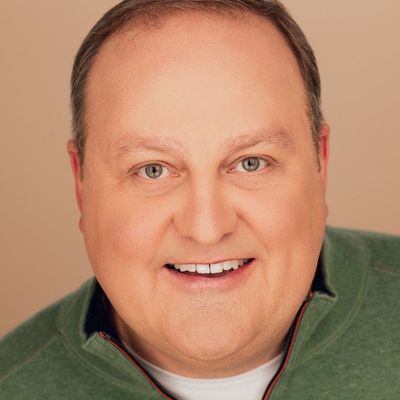
[1:57] Charlie Murphy: All right. I am here with Kevin Covert. Kevin is an actor, a teacher, a director, and a choreographer. He is a BFA in music theater from Florida State University.
[2:07] Charlie Murphy: He's an original Broadway cast member of Spamalot and Memphis. And for Memphis, he was nominated for the Fred Astaire Award. He was an original Broadway revival cast of How to Succeed in Business Without Really Trying, as well as numerous national tours.
[2:21] Charlie Murphy: He's directed and choreographed regionally all over the United States. And he's been at Shenandoah since 2016, where he is the director of the musical theater program. Shenandoah University is located in Winchester, Virginia.
[2:34] Charlie Murphy: They have small class sizes of about 18 students. And their conservatory offers degrees in BFA and acting, a BFA musical theater, as well as a number of other BMs, BAs, and BFAs you can get all around the music theater dance world.
[2:49] Charlie Murphy: Kevin, how'd we do there?
[2:51] Kevin Covert: I think you did pretty well. I mean, I sometimes forget all the things I did before I got to Shenandoah. So it's nice to be reminded.
[2:59] Charlie Murphy: Well, it sounds very impressive reading it out, I have to say. And how are you doing today?
[3:03] Kevin Covert: I'm well. I do have to say that when for Memphis, the entire men's ensemble was nominated for the Fred Astaire Award. I had very little to do with it, but you know, it was still nice to be nominated.
[3:15] Charlie Murphy: I've heard specifically that you were the reason for it, though. That's why we included this, because we heard that it was mostly you that really gave the asterisk to it.
[3:22] Kevin Covert: Oh, yeah, I think there would be a lot of people that would argue with that, but you know, it's nice to be included.
[3:27] Charlie Murphy: These are my sources. Okay, Kevin, don't doubt my sources. This is what I've heard is true about you. It's also worth saying that Kevin has a really special relationship with MTCA.
[3:35] Charlie Murphy: Not only has he taught a number of master classes over the years and done private auditions for us. We had a really successful virtual audition day last year, and we're gonna be having another private audition this year.
[3:49] Kevin Covert: As are we, I mean, the great thing about MTCA, first of all, I love teaching the master classes. The students are always so well prepared. And I love how you have different coaches, like each student has a different set of eyes on them.
[4:02] Kevin Covert: And yeah, it was super successful our virtual audition, and we're looking forward to having another audition the next recruitment cycle, which I can't believe we're already talking about the next recruitment cycle. Unbelievable.
[4:14] Charlie Murphy: I know, I know. Before we dive into Shenandoah, what got you from that wonderful Broadway career to finding yourself the director of musical theater at Shenandoah?
[4:24] Kevin Covert: You know, I think somewhere in my brain, I always knew that education would be a part of my life. I definitely went when I graduated from college, I definitely had many goals that I wanted to achieve. And I'm pretty I'm a tourist, so I'm pretty bullheaded about making sure I was going to achieve those things.
[4:42] Kevin Covert: And so I was blessed to have an amazing career both on national tours and amazing regional theaters. I mean, does anything beat Goodspeed or Sacramento or Tuts? You know, and then a very lovely career on Broadway.
[4:57] Kevin Covert: And when How to Succeed closed, I always say, I left Spamalot and I left Memphis, but How to Succeed left me. You know, I was still there on closing night. And my agent called, you know, the next week with a lot of auditions, and I sort of took a step back and said, you know, I think I'm ready to try something else or do something else.
[5:20] Kevin Covert: I'm not sure what that is. So I started teaching all across the country, sort of master classes, and really, really was noticing that I thought that I was making a difference and that I kind of fell in love with it.
[5:32] Kevin Covert: Actually, went back to my alma mater for a few months to be a guest artist, and I also taught a few classes there, and the students were very responsive. And so I sort of called my agent and said, I think I'm gonna take, you know, a 20-second timeout, you know, and explore some other venues.
[5:50] Kevin Covert: And then randomly a friend sent me a text with a link that said, I think this job sounds really right for you. And I clicked on the link, and it was the director of musical theater at Shenandoah.
[6:01] Kevin Covert: And the crazy thing is, is that I grew up in Winchester, Virginia, where Shenandoah is located. So it was sort of this like, wow, full circle moment. You know, I swore when I graduated I'd never come back, kind of a thing.
[6:17] Kevin Covert: And I was like, I'm gonna consider this, and my family is still here, and that was a big part of my decision to apply. Plus, the university itself is a wonderful reputation.
[6:30] Kevin Covert: So I applied, and five years later, in fact, when I finish with you guys, I'm actually going to the president's office. I was just awarded a promotion and career contract at Shenandoah.
[6:42] Kevin Covert: So I'm now an associate professor, not an assistant professor.
[6:47] Charlie Murphy: Oh, fantastic, fantastic. I love that story. I feel like it's the 20-second timeout turning into a homecoming is such a cool thing, and something I think a lot of artists right now are kind of experiencing of like, okay, so there was a pause put on the industry.
[7:02] Charlie Murphy: What does that mean for my life? Whether it is a transition to teaching, a transition out of the industry. Some people are leaving New York. Some people are now coming to New York. It's a it's we've all been put on that timeout, and I think it is a chance for us to kind of reflect and see what industry we want to come back to.
[7:17] Kevin Covert: Absolutely, absolutely. For sure. Maybe let's get into a little bit of what it means to be a Shenandoah student. I think one thing that we really try to look for when we're looking for students is obviously, you know, talent.
[7:33] Kevin Covert: I mean, we want strong actors, singers, and dancers, and but people that want to push themselves, people that want to get better. I have a big saying, and it's grow where you're planted.
[7:44] Kevin Covert: You know, you can be the most talented human being and go anywhere. If you're not putting in the work required, you're not gonna get any better in the four years you're there. So I'm looking for people that want to be in the practice room, that want to make a difference, that want to improve their art form.
[7:59] Kevin Covert: You know, if you're not the strongest dancer, I want to still see you in those dance classes pushing yourself, you know, making sure you're the best mover in the entire country. I want to hear people in the practice room. I want people that have a drive and a focus to get better at their art.
[8:14] Kevin Covert: But I also want good human beings. I want good citizens of the world. I think our attention to your physical and mental well-being is just as important as our attention to your craft.
[8:25] Kevin Covert: You know, I love when casting directors call me and say, you know, not only were they incredibly prepared and amazingly talented, but my gosh, they're so nice. They're good people. So we're a small school, we're not a ginormous university.
[8:42] Kevin Covert: So it's very family-like. You know, we're all in each other's business a lot. So I think a really good Shenandoah student is a person that's dedicated to their craft, but also dedicated to helping others, dedicated to being an advocate for everyone.
[8:47] Kevin Covert: You know, I love my favorite moments at Shenandoah in quote unquote normal times are opening nights when the students sort of line the lobby and wait for the cast to come out, you know, of the dressing room and they're just it's like thunderous the noise that's made because they're so supportive of one another and I think that's so important.
[9:21] Kevin Covert: You know, I mean you have to dedicate yourself to your education and your learning but you also need to be an advocate for everyone else. So I love that about Shenandoah and that's what we look for in an incoming student for sure.
[9:33] Charlie Murphy: That's so beautifully said and I can really echo that with I was just looking over some of our MTCA students are at Shenandoah right now and that was my first thought not only some super talented people just like really cool human beings and artists right which I think is clearly the Magna's working on both ends there in terms of what you're looking for and what they were looking for.
[9:51] Kevin Covert: Absolutely. I'd love to ask a little bit about so from maybe from a little bit more of a skill-based perspective if you're spending four years at Shenandoah so I say I'm gonna commit there I did that maybe four days ago for you and I said I'm here I come how does a student come out change so how do you feel like a student is going to grow specifically at Shenandoah from freshman to senior?
[9:51] Kevin Covert: Sure, you know, it's always amazing to me because I you know I'm looking at my seniors now and they were the first class I recruited with these graduating seniors and I you know I wish that there was like you know something that we I could go back and like pinpoint you know the growth and and so you could like you know jar it you know, and then pass it on.
[10:32] Kevin Covert: You certainly can't do that, but it's astounding to me the growth. I think a lot of it has to do with our focus on our curriculum. The university is very wonderful about making sure that we are able to change our curriculum as needed.
[10:46] Kevin Covert: It's my job and my colleagues' job to keep our finger on the pulse of what's happening in this industry. It's because it's ever changing, as you know. And I think our focus on all three disciplines in equal fashion is really, really strong.
[11:00] Kevin Covert: You will always be in an acting class of some sort every semester. You will always have a private one-hour-long voice lesson every week, and you will always be in a minimum of two dance classes in the dance studio four days a week, more advanced dancers five days a week in the dance studio for a minimum of an hour and a half a day.
[11:20] Kevin Covert: You know, it's that sort of dedication to the art of musical theater, along with music theory and music theater history and sight singing, keyboard, you know, preparation for the profession, you know, all of those kinds of classes.
[11:35] Kevin Covert: It's just you know, I call it all singing, all dancing, all acting all the time here at Shenandoah. It's like the conservatory, your schedule's going to be very full in addition to shows and things, but it's really the curriculum and our focus on making sure that we know what's happening in this industry so that we can pass that information and that education on to our students.
[11:58] Kevin Covert: For example, in this new normal, the self-tape is here to stay, right? I mean, so we've I've added, you know, units in my classes about self-taping and practicing self-taping, and we had a wonderful workshop with Rachel Hoffman from Telsey Casting about how to how to self-tape.
[12:17] Kevin Covert: You know, it's just the ability to be fluid and sort of like make sure that we're giving our students the tools that they need to succeed when they leave here.
[12:27] Charlie Murphy: I love that. Um, why might a student not choose your school? So for some students who, again, maybe five days ago said, ugh, it's I had some options and I said no. Why do you think a student might say no to you?
[12:38] Kevin Covert: How dare they? Um, no. You know, again, we are not a giant university. I mean, when I went to college, as you read in my bio, I went to Florida State. That's what I wanted. I wanted a big state school, you know.
[12:55] Kevin Covert: Like, I wanted that sort of big college experience. Um, I think if that's what you're looking for, we're definitely not your school. Um, people are more interested in, you know, more general education classes. Uh, at a conservatory, you take less general education courses and more acting, singing, dancing all the time. Um, so I think if you're interested in sort of that business minor or something like that, um, you might choose another school. Although it is very easy to minor in things at Shenandoah, you just have to be careful with your advisor about how you go about doing it. But I think it's the size of the school would be a detriment if you were really looking for a big, you know, university.
[13:38] Charlie Murphy: Totally makes sense. And that leads me to outside of the theater program, what does Shenandoah afford a prospective student? So what can you do outside of just the acting, singing, dancing all day that we know is happening?
[13:47] Kevin Covert: Well, I think there's some cool things about Shenandoah in the fact that you don't pay by credit hour, you pay a flat tuition, which allows you to take up to a certain amount of credits. Um, for your degree, it's about 15 credits a semester, so 15 or 16. So you have these extra credits to play with. Um, it is very easy to minor in something. Um, we have students that are interested in health sciences. We have a lot of students who get the dance minor, you know, you can study language. We have a very unique, I think we're the only university that offers, we have a one-year master's degree. It's a master's in performing arts management and leadership. And if you decide you want to get that master's, your junior and senior year, you start taking courses towards that master's. And then you graduate with your BFA in musical theater, you move to New York, and the entire last year is online.
So you can take that online, and then at the end of the fifth year, you have a master's degree as well. We have a great new esports degree. Like if you're interested in esports, uh, we have a VR lab. Um, there's all sorts of mischief you can get into at Shenandoah, you know, including a ton of student theater groups as well, but we can talk about that in a bit.
[14:54] Charlie Murphy: I love that. Um, and now if I were an acting major at musical theater at Shenandoah, and now we're interested in musical theater, right? We have a lot of students who are kind of straddling that cusp of I love musical theater, but maybe I want to go for straight acting. How do the acting and musical theater majors um interact in your program?
[15:10] Kevin Covert: Um, the first three semesters uh that you're here, you're the acting and musical theater majors take acting together. It's a Meisner sequence. It's taught by a wonderful man named Scott Hudson. Scott is a member of the Labyrinth Theater Company in New York City. Um, so your first three semesters, they're all together. So the acting's very focused. Your sophomore year, the MTs shoot off to me and the acting majors go elsewhere. Um, but again, with those extra credits that you're allowed, even if Shakespeare acting for Shakespeare is not required in our curriculum, it's still easy for you to take it because you can use those extra credits that you have if that's something you're really super focused and want to continue to do. We do all require uh acting and MT also all take acting for the camera together as well.
[16:04] Charlie Murphy: It's so true. Yeah, well, even seems like singing for the camera now is becoming it feels like uh all we I see is uh concerts that are filmed on an iPhone or filmed right in front of you.
[16:14] Kevin Covert: Right. Um, I'd love to talk a little bit about the audition if we can transition into the maybe the audition for Shenandoah. In short, what do you think makes a great audition for your program?
[16:23] Kevin Covert: You know, first of all, nothing beats preparation. I mean, we can I'm sure at MTCA you drive that home. You know, um, if I was a junior in high school right now, getting ready to enter my senior year, I would say by the end middle of the summer, you should have your audition material selected. You know, nothing needs preparation. And also I think it's so important to be yourself, you know, and remember that we want you to be great. When you walk in the room, I'm we're all rooting for you, right? So as much as you can be yourself, you know, and not just get you know wrapped up and it's not, you know, you're not going in front of a firing squad, right? It's musical theater at the end of the day.
So, you know, be yourself, be confident, be kind, you know, have a conversation, you know. Um, I always say you have to do material you love. You can't you can't do material because your mom loves it or your coach loves it. I mean, and it's still something I'm learning. This year I really, really wanted one of my students to sing this particular song. And about three coachings in, I was like, you don't like the song dude. He's like, I really don't. And I was like, okay, then we need to stop singing it. Just because I love it doesn't mean that you have to love it, right? So doing material you love, because you're never gonna bring your best self if you don't, you know, love what you're doing.
I think it's just in the audition room, I want to see, you know, because you know, we have this finite period of time to decide if we want to spend four years together, right? If you want to spend four years with me, and if I want to spend four years with you, the more that you can be yourself and just know that we are rooting for you and to have fun. There has to be an element of fun in it and an element of joy. So um, but again, nothing needs preparation. I always say to my students, you know, a hurricane could whip through this building, and if you're in the middle of your song, you should be able to finish it. You should know it backwards and forwards and inside and out.
[18:15] Charlie Murphy: Such a good advice, and I it's such a good lesson as a coach, the material you love thing, especially my first year or two. I'd be like, but this is such a good monologue. It's like, wait a second. If you don't like it, I already got into college. I don't need to do my favorite monologue. It's got to be what is going to show you up the best.
[18:32] Kevin Covert: Absolutely. Um, I'd love to hear how does that change or how did any of those answers change as we talk about the dreaded pre-screen? Um, sort of what has your relationship been with the pre-screens over the years and anything specific that you'd want uh students to know about that?
[18:45] Kevin Covert: My relationship with the pre-screen, I can write a novel. You know, they're overwhelming. And you know, the first year that I was at Shenandoah, we only had a few hundred applicants, and now we're, you know, we're in the four digits. So um applicant, so you know, a lot of my life is you know, is pre-screening. I believe that I was watching pre-screens on Thanksgiving Day this year because I was so far behind. But um I think with a pre-screen, it's very easy to overthink them and to put too much effort into them. I mean, I don't think you need to spend thousands of dollars on your pre-screen. I think they can be done very effectively on your iPhone as long as you know the sound is working well.
Um, you know, for me, the pre-screen is just a chance to see, you know, if you can match pitch and sing, you can string a series of words together, you know, in a no in a natural fashion. And if you're a dancer to really show off your dancing. You know, I think the common pre-screen has gone a long way towards you know, simplifying things for students so that they don't have to make 82 different videos. Um, I don't think a pre-screen or a college audition is the time to show me your the ends of your range and your stretching. I want to see what you do really well right now, right? So, ladies, if you're not a soprano yet, that's okay. That's why you go to college to work on those soprano notes, or vice versa, if you're if your chest voice isn't strong.
Boys, if you don't have that strong falsetto, no need to show it to me. I want to see what you're doing really well right now. And I think you know, it's just that's when I'm judging on a pre-screen. I'm not really like analyzing it, you know, in detail. You know, that's for when you get in the audition room. I will say I'm always surprised at Shenandoah, we do not require you to submit a dance video. That may change with the common dance, you know, that that's hopefully gonna come out as the world gets back to normal. And I'm always shocked by people who throw in a dance video that aren't completely not dancers because it doesn't help you, right? I mean, if you're an amazing dancer, yes, please submit a dance video, but don't just throw one in because you think, oh my god, everyone has to have a dance video.
We're gonna forgive you. You know, we're not going to expect everyone to be Barishnikov when they audition. But uh, you know, so you know, definitely use your pre-screen as you know, to show your strong suit, you know, for sure.
[21:14] Charlie Murphy: I think that's such good advice. And yeah, I love the idea that sometimes you have to be like, I just want you to know I am weak at this. I want you to know I'm gonna show you this. This is something I'm not good at. That would be me in a dance video. I'd be like, just so you know, I have two left feet, but I'm really gonna try. Here's here's what you're gonna see.
[21:27] Kevin Covert: Right. I mean, we're gonna see it when you come to you know to the dance audition. And for those people, like, you know, if you're not a dancer, it's okay. But don't give up. You know, we want to see effort, we want to see you trying, we want to see a good attitude about it. You know, it's it's all about I say to my students, you know, you can't move forward if you're looking side to side. You know, you you have to judge your own growth and your own. So just because the person next to you is, you know, kicking their face and doing triple pirouettes, you know, do what you're capable of doing, and that's why again, that's why you go to college to train and to get better. And I have seen people come to Shenandoah that I would say are absolutely not dancers and leave, you know, with the ability to go to a dance call in New York City, which is amazing.
[22:12] Charlie Murphy: Absolutely. Um, I'm gonna ask you my favorite question, which is really just like me taking a personal poll of the colleges because I'm so interested. Um, how much if you were to estimate how much of the decision to accept or not accept a student is based on like the skill-based assessment? So, like, you know, their acting, singing, and danceability. If there's any kind of numerical sense of that, how much of is that factored in versus some of those other things we talked about of their how they like in the interview and what they're like when they take adjustments from you and and what they're like as a human being outside of their material, right? How much if you had to guess between um the skill versus those intangibles, would you say it factors into the admission?
[22:51] Kevin Covert: That's a good question. Are you trying to stump me? Um, I'm just trying to get some good juicy answers. You know, I mean, we have a unique process in the fact that after we film all of the auditions, obviously this year they were all filmed because they were virtual. Um, and after each audition, the music theater team, which consists of myself, Patrick Brady, Shiloh Martinez, and Matt Edward, we will assess the day and we sort of put the ones that the people that were very interested in in a certain, you know, folder. At the end of all of the auditions, we go back to that folder, we lock ourselves in a room. It normally takes about eight hours. We look at our notes, we all take notes, uh obviously, you know, we talk about the interview first.
Like, was there anyone that really stood out, you know, or anyone that was a big red flag. Um, and then we start looking at your then we do start looking at the videos. Like, you know, we we look at the dance, we look at the monologues, we look at the singing. So I would say if you've made it to that round, you know, after we've talked about life things, if you've made it to the realm where we're we're, you know, uh reviewing your videos, it's pretty much acting, singing, and dancing. You know, we very much I have no interest in cookie cutters. Like if I'm losing a six foot two blonde tenor, it doesn't mean I'm looking for another six foot two blonde tenor. I want unique individuals that want to make their mark in this world.
So we try and assess everyone individually and you know, and talk about their strengths and their weaknesses and where we think we can help them. Um, you know, and oftentimes, you know, there'll be someone amazingly talented, and we'll be like, we maybe we're not the school for them. Like they're you know, they're voice a little more legit or something than we're because we love the golden age, we love contemporary music theater, but you know, some some schools, not every school's for everyone. So um I would say so to for a very long answer to your question, um, I would say it's probably 75% reviewing the acting, singing, dancing, and then 25% talking about the interview and and and who the person is.
[24:55] Charlie Murphy: That's a fantastic answer. Maybe the best version I've heard of that answer. So great. I wasn't trying to stump you, but if so, you've beaten the stump. Um just now here's the one that's gonna stump you. Um for your school. Now, once you now have the artistic, I definitely want to admit this person. How much isn't based then on the university in terms of academics with grades, SATs, you know, the sort of neural modification process.
[25:16] Kevin Covert: Um sure. Um our admissions team does an incredible job of um letting us know at your pre-screen if you're going to be admissible to the university. So if you are perfect. We you look at your pre-screen and the decision's made from there. If if there's like a a yellow light, you know, that's sort of like, oh, this person might have some difficulty getting in. And I watch the pre-screen, I'm like, well, you work on it because they're incredible. And if there's a red light, then we have to have a discussion.
[25:48] Kevin Covert: You know, interestingly enough, very rarely does that happen. Like someone was even remarking that, you know, the GPAs of the music theater applicants just keep getting higher and higher and higher and higher. I mean, you know, but by its very nature musical theater, there, you know, you've got to be a go-getter, because you know, like you're training in three different disciplines. So, you know, it really starts at the pre-screen level. We really try and not offer anyone a live audition unless they're admissible to the university. Because I don't want you to have to go through all of that only, and then we want you, and then my heart's broken because you know, you can't get into the school and your heart's broken.
So we really try by the time you get to the audition portion that you hopefully are admissible to the university. Love that. Any other pieces of advice that we didn't get to in terms of for a prospective student looking at your school? Is there anything else that you'd really want them to know before they audition for you?
[26:48] Kevin Covert: Yeah, I mean, I think we're very focused on industry prep. You know, our goal is hopefully for students who are going to finish our degree and be the most competitive they can be in a large market, whether that be New York City or Chicago, wherever you decide to go. So we're really interested in students that are focused on that. A piece of advice I have, you know, I think it's super important to do your research. You know, you have to do your research too. Look at the faculty. What are the faculty doing? What have they done? What careers have they had? Look at the alumni, what are the alumni doing? Really, really decide. It's always strange to me. You know, we aim for a class size of 18. If someone could tell me how to get that exact number, I'll a million dollar question.
We normally end up with 20, 22, 24. But there's a difference between our and then we do everything in two sections. So the class sizes are small. So in my acting classes, there's never more than 12, 14 people. I'm always shocked at like when people are picking, you know, choosing between my school and then a school that takes, you know, a lot on a lot, a lot, a lot of people. I think you have to do that research before you apply to schools. Like, do you want a school that takes 70, 80 people? So, I think that's super important. You have to do your research on the faculty and the students and the alumni, the area and the size and all of that.
[28:29] Charlie Murphy: I think that's great advice. You could probably save yourself a lot of heartache too. Well, and some of that research they're doing right now, listening to you talk. I think they're going, Hmm, is this feel right for me? That's part of the goal of this podcast is to try to figure some of these things out. I'd love to now turn forward a bit into sort of the current moment we're in. So looking maybe forward at the challenges of 2021 and beyond. And just we heard a little bit about kind of the ways you're trying to meet the demands of a virtual industry, which is really cool. What about in terms of some of these discussions around equity and some of the big things that are coming up in the business today? How's Shenandoah trying to meet that moment?
[29:07] Kevin Covert: You know, I think Shenandoah was doing, I'm not gonna say a great job. I was doing a decent job already before IDE came to the forefront this past year. And there's been a lot of growth and a lot of learning. There's a lot of learning still to do, and a lot of sort of taking a step back and looking at our curriculum and saying, how are we going to change that to represent the global majority? I think we've always been very good about best person for the part, you know, sort of doesn't matter. When we did Guys and Dolls a few years ago, the young lady that played Sarah Brown was a black actress. When we did Bonnie and Clyde, Clyde was white and his brother was black. You know, we've no issues with that at all, and we'll not have issues with that.
I think it's about looking at our faculty and sort of knowing that, you know, I wish that overnight that that could change, but you know, we still need to hire the best people to be the best educators and the best pedagogues to help you get ready for this industry. But in looking at, you know, guest artists or teaching fellows or auxiliary adjuncts, you know, places that we can start to sort of diversify our faculty until you know, until it's, you know, we're able to sort of be representative of that as well. You know, it's difficult. I think Shenandoah is, you know, we're constantly, you know, it's every meeting we have, we discuss it, and how are we going to be better? How are we gonna do better?
Super proud of my students this year. They started a group, a student organization that's focused on targeting schools with diverse populations to help them navigate the college audition process, not necessarily even for Shenandoah, just for students that might not know what a pre-screen is. So they're targeting the tri-state area, and they did a great job of sort of like helping people like figure out how to build a resume and, you know, and apply to these schools that otherwise might not, you know, know how to do it. So we're working hard. I think I even I think I spoke at that. I think one of your students asked me to come on and speak to some of those students. I did like an hour long. Here's how this might work for them.
[31:27] Charlie Murphy: Amazing, amazing. Yeah, a diversity recruitment group. That's how we started. You know, lots of things still to be done. And a lot of, you know, reading and learning, and yeah, and, but I'm proud of the work that has been done, and I'm proud of my colleagues, and I'm proud of the students for being, again, looking for great advocates of others.
[31:50] Kevin Covert: So yeah, I love that. Any kind of final thoughts, and or anything you kind of want to plug or things you want people to check out? If you're if I'm a prospective student, I'm kind of interested in Shenandoah. Where should I be following you? Where should I be following Shenandoah? What should I know about?
[32:06] Kevin Covert: I mean, I think one of the coolest things about Shenandoah in the past five years since I've been here is our ability to hire wonderful, not only educators, but people that have had lifelong careers in this industry. When we hired Shiloh Martinez to be our director of music theater dance. I mean, she comes from, you know, the dance in Broadway world, she was in Wicked, she was in Cats, she was in Moving Out. I call Patrick Brady my winning lottery ticket. Our music director Patrick Brady had a brilliant career in New York City. He was the original music director and conductor of The Producers and Young Frankenstein and Flossey, and decided to retire from the eight shows a week five for five years life, and we were so lucky to get him.
His connections, his knowledge is invaluable. And then, you know, we're sort of known as the pop rock school. I think that's because many years ago, Matt Edwards, who's the head of our music theater voice department, sort of saw a trend happening in New York that, you know, my god, all these rockers and musicians are writing Broadway scores, and you know, about 77% of new scores have a pop influence, right? So he realized that that was a different kind of vocal training. And so he started doing research and started, you know, training this healthy pop rock singing. Now, that having been said, that doesn't mean that we still don't love golden age and contemporaries. I said, you know, we're gonna get training in all three areas.
But it's kind of cool to have these colleagues who have so much connection to the industry and sort of, you know, we between the four of us, I think we know everyone. We figured out. So that's sort of nice because I always say that my job doesn't end when you get your diploma in your hand. I kind of think that's really where my job starts. My job is to help you navigate, you know, your life moving into this industry. We all know that, you know, training is invaluable, talent is invaluable, but connections are super important and getting in the door and getting in front of people. You know, our showcase this year's being our creative consultants are Rachel Hoffman and Justin Bohan, and they have been amazing.
And we also have a wonderful thing in the spring where we bring about 14 talent agents and casting directors to campus virtually this year, obviously, to do auditions and master classes with the seniors. So they really, besides their showcase, they get to like know these people and work with them. So that's really incredible. And it's proven very successful for our graduates.
[34:29] Charlie Murphy: Absolutely. It's really, really smart. I think it's the freshness of you coming into the university only recently, you are bringing a perspective that is so much more current than some of these other schools in terms of, I mean, pop rock is clearly a huge part of the industry today. I mean, most successful Broadway actors are singing more pop rock at auditions than they're singing, you know, classical songs. That's just this, you know, whether that's the universities are quick enough to adjust to that. That's certainly something that is true.
[35:01] Kevin Covert: Absolutely. And then I always say, Charlie, I'm just getting started. In terms of that, you know, we also we do three musicals a year, and we always try to make sure that we're hitting all sorts of genres, you know, pop, dance, rock, contemporary, golden, all that. Even though Shenandoah's music theater program has been around for a long time, I feel like it's a very young program still. I think five years ago the game changed, and we're excited about, you know, continuing on and as I said, we're just getting warmed up.
[35:36] Charlie Murphy: Well, we were so excited to have you. Thank you so much for the time, Kevin. I really appreciate it.
[35:39] Kevin Covert: Thank you very much. Have a great day.
[35:45] Charlie Murphy: All right. Well, I hope you enjoyed that conversation with Kevin. It was so fun getting to chat with him for me. So I hope you enjoyed it as much. One little takeaway I just want to highlight, it's really just kind of a note to keep listening for about this relationship with pre-screens. You're gonna hear a lot of professors, I think, talk truthfully and specifically about their relationship with pre-screens and each school. Just notice how it's different from school to school. So some will really talk about it like very casually, like just throw yourself on tape. Some will be honest and say, I might watch that video 20, 25 times. So just seeing the difference between, you know, how some schools will really use it as a full this is your audition, and this is what we keep going back to and might use as a final decision maker.
And some will say, It's really just I want to see you, and then the big stuff happens in the live audition or the live virtual edition in the case this year. So just notice that from school to school. It makes it, I know, really frustrating for you as a student because you always have to kind of go to that, which schools might be considering it a little bit more. But I thought what Kevin said was really interesting, and it's also true for a lot of schools in the way that he talked about their relationship with pre-screens. It's also the truth of their relationship with auditions, right? You heard the way that he videotapes his auditions and they may rewatch that. Not every school does that. Of course this year a lot of these were videotaped because they were virtual, but even in the live audition, some will videotape them and watch them again later.
Some go just based off the live experience and their paper scorecards, right? So it can really vary school to school. But it's sometimes I think interesting to hear how the sausage gets made in terms of those decisions. Not always so helpful. I don't, it's not always sometimes to think about okay the four people in a room and what are they saying? You know, some of that we at MTCA I always say kind of let them do their job and you do your job. Your job is to go up there and show your best self and then they're going to make the decision how they make the decision. But I certainly think it'll be interesting to kind of peek behind the curtains and hear about how some of these different schools make their decisions.
[37:44] Charlie Murphy: All right well if you enjoyed this episode and want to hear more please hit that subscribe button. If you have the ability to rate and review us where you are though please give us a five stars. Give us a thumbs up a little smiley face in a comment whatever you want to do. If you have questions you can also reach out to us with questions for the pod at mailbag at mapping the college audition dot com and we're going to start working a mailbag segment once we get a lot of juicy questions. If you're interested in working with MTCA for help with your individual preparation for your college audition journey please check us out at mtcollegeauditions.com. To my young artists out there mapping their journey do not forget to grow where you are planted. We'll see you soon.
© Broadway Podcast Network, All Rights Reserved