

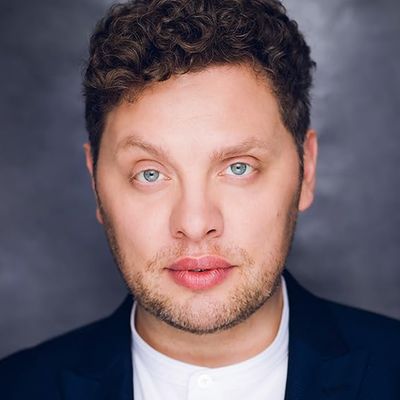
Joshua: Joshua is a diverse, singing actor who has worked on Broadway and regionally at esteemed theaters such as Woolly Mammoth Theatre Company, Arena Stage, Theatre Under the Stars, Folger Theatre, Triad Stage, and Signature Theatre... Read More
From the show: Mentors on the Mic: Your guide to pursuing a career in the Entertainment industry
Guests
Featured Shows
About
Joshua: Joshua is a diverse, singing actor who has worked on Broadway and regionally at esteemed theaters such as Woolly Mammoth Theatre Company, Arena Stage, Theatre Under the Stars, Folger Theatre, Triad Stage, and Signature Theatre. His television appearances include "FBI," "Law and Order," "Law and Order: Organized Crime," "Law and Order: SVU," "Lincoln Rhyme," and HBO’s "Paterno." Joshua co-founded and served as Artistic Director of the Helen Hayes Award-winning No Rules Theatre Company in Washington, DC, and Winston-Salem, NC.
Mike Labbadia (co-host) an actor, producer, writer and filmmaker, a “multipassionate” you can say. As a company member of BEDLAM he's appeared Off-Broadway in shows from Arcadia to Julius Caesar. Regional work includes Alabama Shakespeare Festival, Gulfshore Playhouse, Penguin Rep and Virginia Rep. He's in the upcoming film "On the End" with Tim Blake Nelson. As a producer he's had films premiere at prestigious festivals around the world.
In this episode, we discuss these "Rules" actors should break:
06:15 - Rule 1 - Don't pitch yourself
- Sent 37 self pitching emails, without an agent, and booked a Broadway show
9:03 - Rule 2 - Don't complain to our Reps
12:45 - Rule 3 - We can only be one "kind of artist"
17:15 - Rule 4 - Wait until you have a big project to grow an audience
21:20 - Rule 5 - Don't actively pursue industry relationships
15:52 - Rule 6 - Take on Gig work to support your career
30:29 - Rule 7 - Let the Industry define you as an artist
PODCAST DESCRIPTION: “CREATIVE RISK”, is a new podcast hosted by actors Joshua Morgan and Mike Labbadia of Artist’s Strategy where they explore all things art, entrepreneurialism and everything in between. The acting industry is more volatile and competitive than ever before, therefore the artist must evolve in order to take radical ownership over their creative businesses. Each episode, Mike and Joshua will get raw and unfiltered, giving hot takes and cutting edge strategies on how to build a sustainable career in the arts.
Guest:
For Joshua Morgan :
Website IMDb Instagram Broadway World
For Podcast: Spotify Apple Podcasts Youtube Instagram TikTok
Host:
Instagram: @MentorsontheMic @MichelleSimoneMiller
Twitter: @MentorsontheMic @MichelleSimoneM
Facebook page: https://www.facebook.com/mentorsonthemic
Website: www.michellesimonemiller.com and www.mentorsonthemic.com
Youtube: https://www.youtube.com/user/24mmichelle Stay tuned to the end of the episode for a clip of the Creative Risk podcast.
If you like this episode, check out my episode on their podcast"
Transcript
This transcript was automatically generated and might contain errors.
[0:09] Michelle Simone Miller: Welcome to a special episode of Mentors on the Mic Podcast, your roadmap to all things the entertainment industry. It's where you can find mentorship without having to ask for it. I'm your host, Michelle Simone Miller. I am an actress, a native New Yorker, a frequent moderator, and producer and host of this podcast. And if you haven't yet, please follow us on Apple Podcasts or subscribe on Apple Podcasts, follow us on Spotify, you know, follow us on Instagram at Ms and at Mentors on the Mic and at Michelle Simone Miller. Say hi. Tell me if you like this episode. Tell me what you love about this episode. Um, and and uh yeah, leave a review. If you haven't yet, please give us five stars. Please uh leave a review.
I love listening, I love reading these reviews. So they make my day. I would really appreciate it. I often share them on social media and say thank you. Um our episode today is very exciting. It is with actor Joshua Morgan. You might have seen Joshua on FBI, On Law and Order SVU, On Law and Order at Organized Crime, Lincoln Rhyme, Hunt for the Bone Collector. He has also frequented Broadway and theater, including Ain't Too Proud, The Life in Times of the Temptations. He and his friend Mike Labbadia, he is an actor and film producer, host the Creative Risk Podcast. Now, this podcast explores all things art and entrepreneurialism. That an artist must evolve to really take ownership of their creative businesses.
And how do we do that? Well, in this episode, we focus on all the things, seven things, in fact, that Joshua feels that actors could break, right? Rules that we could break. We are so used to following a set of written or unwritten rules of what we should and shouldn't do. And often, you know, especially if we're not really, you know, your average rule breaker. I know I'm not, we tend to feel like risking it, you know, risking reaching out, pitching ourselves for projects, or following, you know, following uh industry professionals on social media, or um taking the reins and really creating our own projects and creating a team of representatives. I mean, the list goes on of the things that we might cut ourselves short on, or we might not give us ourselves permission to do so.
So this is the episode that will break that, right? Joshua gives us the seven rules that he feels that actors should break in order to pursue this career. Please stay tuned to the end of the episode because we also have a clip from the Creative Risk Podcast. You can see them in action, Joshua and Mike. And without further ado, this is Joshua Morgan with seven rules for actors that should be broken.
[0:09] Joshua Morgan: Hello, Joshua. Welcome to Mentors on the Mic.
[3:17] Michelle Simone Miller: Good morning. It's nice to be here. It's nice to be here with you. I'm very excited about the topic we're gonna talk about today because, and we've talked about this before. I feel like there are all these rules that actors feel like they should follow it. And I happen to be a rule follower. I'm I'm one of those people I was very good at school. I like to follow the rules, and then I sort of graduated. I mean, I'd always been acting, but I graduated college and I was like, okay, what is this industry? Let me get into it. And everyone tells you all these rules, these unspoken, unwritten rules. And you feel like you just have to follow them. Um, whether it's like don't reach out to the people in the industry, you know, don't follow them on social media.
Don't, you know, there's always things, there's always rules. And I think it's been the last couple of years where I was like, you know what, Michelle, girl, just just start breaking these rules if need be. You know what I mean? Don't feel like you have to follow all these rules. So let's talk about some of the rules we think actors should break.
[4:15] Joshua Morgan: Yes, yes, yes. And let me just start by saying that you kind of underlined the point, but so many of these rules are made up. I often call this a structureless industry. So and everyone has their own rules. And you're like, and and so then you're going, well, what rule do I listen to? But let me, but then I have another macro thought that can give us permission to uh sort of say F you to some of these rules, and that is that in a capitalist society, in in what it means to be an entrepreneur, if you play by the same rules as everybody else, if you use the same strategies as everybody else, you're gonna just put yourself in the same category as everybody else. But you know, what it means to get ahead in business is to consider how do I think outside the box.
I'll use a crazy example. Remember when um oh it wasn't Dolce and Gabbana, was what was that uh designer? Um that had the bears dressed in the BDSM outfits. Oh, right. Yeah, what was the name of the um it wasn't Dolce and Gabbana? I can look it up. I know literally right if you type in uh BDSM bears. You know what? That it just gives me porn hub, I gotta tell you. Valenciaga, Valenciaga. I know. I just typed in BDSM bears as well. I should have seen it. That's a joke. Oh my god, all the ads that I'm gonna get now from that. Thank you so much. Well, I was already getting them. I'm just so so when Balenciaga did that, you can't tell me that this company didn't do a long extensive research process with a marketing firm to think how do we put us in the spotlight?
So I I use it as a random example, because in terms of this idea of rules, you know, us coloring within the lines, especially within this industry, doesn't do much to help us. So let's let's talk about some of those examples. And you sort of started once, let's start with low-hanging fruit. And then I I think it is the idea of self-pitching specifically. Um you know, we we assume that that whether it's become we need to go through our representation or if you're doing theater, you know, you want to go to an EPA, and that's the way that you just sort of climb the ranks and you sort of wait until essentially people go, okay, here's your chance to show us the goods. But this is a rule that 100% should be broken, quote unquote rule. These are all quote unquote rules as far as I'm concerned.
[6:46] Joshua Morgan: Exactly. Because if nothing else, make an introduction. You know, if nothing else, when you're pitching yourself for a project, it's an opportunity to say, hey, we've not met. And I would like you to get to know my work, and I would like to get to know your work. And this project could be a way for us to do that. So self-pitching and advocating for your own career, right alongside your representation. You actually said something to me just a little bit ago, uh, before we were doing this, about uh um you know letting your reps know, oh, if you see breakdowns for such and such, let me know I could maybe write to them myself. And that is absolutely right. But again, there's a lot of limiting beliefs that we're not allowed to reach out to casting or will look cringy because we're we're desperately trying to get seen for something.
But this is not true. And in fact, again, another instance where you will ha even hear directly from casting who will tell you, please reach out to me. Now listen, there are some people who won't. And in fact, I uh I won't say who it is, but there's a pretty famous casting director who said, Don't email me unless you have one television credit. And for that, let me just say this my opinion, F them. I really mean it. If if if because again, when you're playing the rules of business, that is one example where it's it's not helpful for you to do the exact same thing. So self-pitching is a rule for me that we grow up. And you've gotten stuff from self-pitching. What you've told me before, but there were a couple of things that were pretty incredible that you got from self-pitching, correct?
[8:21] Joshua Morgan: Well, I mean, just yes. And my I'll just my first Broadway show, I um sent 30, I had no New York credits. I hadn't, I hadn't done a musical before. I didn't have any representation. I wasn't living in New York. I sent 37 emails, 37 emails to get in the room for this project. And then I prepared like my life depended on it, and I booked it. I mean, and and still to this day, I often tell people I pretend like I don't have representation. I just pretend like they don't exist. And it's not a disrespect to them. It's that when things come in, amazing. And sometimes I'll be like, Will you do an extra push on this? What they might not realize is that I'm pushing on the side myself, trying to make sure, because I do view it as a as a team effort.
In fact, that's kind of a good segue to another rule about working with our teams. I think, you know, when I first signed with an agent in New York, they said to me, let's let the industry decide you know where you belong, quote unquote. And in doing that, you know, I I want to be careful because it's not to ever disparage anybody else in the industry, reps and casting and the like. But I do think that actors are often accidentally gaslit. And when it comes to our representation, we've heard this, you know, they work for us, and but I do think that that one of the a rule that we don't think about that should be instilled is the idea of managing our team, leading our team, exciting them. I often say, if if you go cold for your team, it's because you went cold for your team.
And you we all know those moments when we're a little cold, when we're like, not either booking, things aren't coming in, and they might not be paying as much attention to us. Why? Because they're trying to make money off other artists who are warmer, and that's okay. But that's also includes communicating needs and disappointments. I don't, that is not a problem. You know, these are kind of intimate relationships, interestingly enough. And us feeling like we have the runway to communicate is really important. And of course, again, the limiting beliefs are I don't want to be annoying, or that somehow like our reps are are responsible for moving forward and dictating our careers. I'll just give an example.
Whenever I express a frustration or a need from my team, I uh uh or I'm wanting them to do more of X, Y, or Z, I also usually always include what I can be doing more of. Because again, you're leading a bit by example. But most importantly, the point I want to make is again, um, you don't just have to sit back and wait for your reps to bring the work to you to move the needle. Any thoughts on that?
[11:01] Joshua Morgan: So many thoughts. Well, I love the idea of taking more ownership and creating and managing that team for yourself. Do you feel like what is that team include? Is it just your agent? Is it a manager as well? I mean, some people want both, some people just want one. What else is in that team that you're talking about?
[11:20] Joshua Morgan: Well, it could be everything from, I mean, I personally have um, I'm too many reps, if you ask me, but I I personally have um agents and a manager at le for legit and other things, but but this could include a publicist for sure. Um, a hundred percent. And actually, publicists is a great example because publicists crack me up uh because they always want to lower expectations. So when you're working with a publicist, you know, they'll they'll tell you all the reasons why it's gonna be hard to get that. And I I get it, you know, underpromise over deliver. Meanwhile, I always come, and this is a great example. I come to these meetings with 20 angles and examples that are of that, and once again, personal, I have relationships here, you can go here, do this, this we can pitch if you need help.
Because I want I'm a big believer in leading and leading by example. So um, and this also could, if you're working with social media folks, the same is true. Don't let them dictate your content or approach based on, you know, just uh algorithms and trends. Of course, there's some consideration and strategy there. Yeah but you want to make sure you're telling your story. So this can extend in a lot of ways. I love that. I love that. Um what's next? What's another rule that should be broken?
[12:40] Joshua Morgan: Okay, let well, because you do this one inadvertently, even if you don't think about it this way. But but it's but it's a hundred percent self-producing. You know, the the and I'm talking about this with with actually mentors on the mic, because I do think podcasting is a version of self-producing. Sometimes we live in a bit of a bubble as artists. And and when again, I'm just looking at this through the lens of the sustainability. And the reason why self-producing plays a role in this is because who is your work for? Um, I do believe that we are seeing the death of specialization. I don't think that we can just be a ballerina, a singer, an actor. I d I think that that is and social media changed the advent of that.
But also in a very general sense, if I may, just show us the goods. You say you do the thing, show us the goods. If you say you act, I wanna see you act. And one of the fears that comes up along with this is that people wanna be seen primarily as the thing they say they do.
[13:42] Joshua Morgan: I don't want to be seen as a producer, or I just want to be an actor. I actually think self-producing is the most powerful tool we have in our arsenal. The reason all related to mentors on the mic is because of nothing else. Self-producing allows us to build relationships. People are flattered. I'm sure you've experienced this when you ask them to come on the podcast. More often than not, they say yes. Well, also if imagine if you're like, Will you come be in my short film? Will you do this feature? Will you do this play? Will you do this reading? The number of actual stars who always say yes when I ask them to do something, it's kind of amazing.
[14:21] Michelle Simone Miller: It's funny, yeah.
[14:22] Joshua Morgan: You know what I mean? I do no, I think it's a, I completely agree with everything you're saying. I have one guest on the podcast, his name is Ben Giro. He's a series regular in a couple animated shows. He's currently pitching his own stuff to all these networks. He's doing super well. But when I asked him about the beginning, because that's what Mentors on the Mic is, it's always about how'd you start? And he started, I mean, he started, you know, booking some guest stars and co-stars on different TV shows. And then when he was creating his own work, he went to the call sheets for those shows that he was on, House and all those shows. Yes. And he looked at some of the crew and he asked them to do his small stuff.
He's like, hey, he called them up. He said, Your number's on. He's like, I hope it's okay. I was on this show as a guest star, do you remember me? Would you like to be the cinematographer for this project that I'm doing? It's gonna be a two-day shoot. It's a music video, it's like a parody music video. And he said more often than not, these people found a way to say yes because they wanted to be part of creative projects, even at that high level. Maybe they weren't feeling creatively inspired, but they were doing it for work, they were doing it for a paycheck. And so they wanted to do creative stuff. And he said, Michelle, most of those people said yes. I found a way, he's like the cinematographer, he's like a brilliant cinematographer.
He said to me, I'll work for free for those two days if you make sure you get all the equipment. Like I want really good cameras. And so my friend was like, Great, I'll figure out how to raise the money. I'll get those cameras, and now I'm getting that cinematographer. So, you know, just take the risk, you know, and it goes back to self-pitching, but it but again, self-producing is like you said, find ways to put yourself out there, create those relationships.
[16:05] Michelle Simone Miller: And if you say you're doing something, if you say you are this, I think people are afraid to be multi-hyphenates now. I think people feel like they roll their eyes. When now I think it was a trend for a while, and now people are like averse to it. They're like, oh yeah, I just I don't know, I don't want to have like seven titles to my name or something like that. Meanwhile, look at the Jim Cummings, Issa Rae, Phoebe Waller-Bridge, even Spike Lee. Look at these people of the world who've really paved their own way forward. And it's funny when I talk with artists and work with them one-on-one about the things they want to accomplish. Everyone wants to be Lin-Manuel Miranda. You know, and I'm this is not even me coming for Lin-Manuel, I mean it is a little bit, but it's not like Lin-Manuel is like, you know, actor God, right?
Clearly, like, but like the but created the work as a vehicle, and it became many more things. And just to think about, think about the people who are listening, just for us, the people who are making their own work, the quote unquote, because I use this word, not in any pejorative sense, but the power they have in our minds. Wow, they're doing that. You know, we want to be in their orbit. It kind of takes me to this next rule though, which is waiting for a project to help you grow your audience.
[17:23] Joshua Morgan: So, what I mean by this is to be hyperbolic. This is low-key kind of what it means to be alive today, meaning we live in a moment when the monolithic celebrity, the star is kind of low-key non-existent, that there's a 13-year-old in Bangladesh who has more worth than both of us combined and millions of followers. And this, I think about this a lot, Michelle, recently. You will see casting. We don't care about your followers. You might not. You might not, but I promise you the producers do. And they might not be thinking, like, oh, get us someone with such and such, but if it's just it's just basic. If someone comes with an audience that is instilled that could help potentially sell tickets or bring in viewership, why is that a bad thing?
Therefore, in this moment, especially in 2024, 2025, you take responsibility for growing your audience. Now, look, this is unfortunate or unfortunately, one of the main ways that we do that is through social media. And so we know that people hate social media. I know lots of influencers who hate social media. It's also hard as actors, right? Because it's easy if you're MT or doing comedy mainly, but you know, one of the things we were talking to Eric Hartle about this too. You want to be an interesting person who happens to act. That's the vibe. So it's a challenge in some ways to consider what that content is that is also shareable and growable. But that is exactly your challenge. And I think that this is a necessary quote unquote rule again that has to be reconsidered into the how we as artists grow audiences in particular.
[19:10] Michelle Simone Miller: I 100% agree with you. I had a couple publicists on the podcast a while back. And I remember when they were talking, they said, you know, don't come to us when you book a huge job. Because by the time you book the huge job, you will not have the audience to talk to about that job. Right? Start now. Start creating that audience for yourself now. So by the time you book a job and you hire me, you have people to speak to. You have people that you already are connecting with. And by the way, it's social media, but it's also, hey, look, we're growing our audience with podcasts, right? That's not considered a form of social media, and yet it is a way to form communities. So there are different ways you form community.
There are different ways to grow your audience, but start now so that when you do have that project that you're so excited about, you have people to talk to about it. But also, like you said, you could leverage that audience. And you're right. I mean, granted, I you know, we like to think that if there's, you know, if it's between two people and they're equal in all things, and one person just happens to have a huge social media following, why wouldn't they go for the other person? Why would they go? They want to go. I mean, look at Charli D'Amelio right now and Juliet, right? She's, you know, I I'm not sure how the show was doing before. I know the show was doing really well for a while. But right before she's cast, I mean, they now have a whole other audience coming to that show. And she's not even she doesn't have a line, she's just dancing. So why not create those opportunities for yourself by growing your audience?
[20:49] Joshua Morgan: You know, this is one of the biggest mistakes I've made. This is where I'm a big introvert, and it's still to this day, it's challenging for me when I do a project. I think back to Les Mis, in fact, you know, we had a huge fan base. There were fan accounts made for me. And who am I? I'm nobody. But I didn't take advantage of it. And this has been a big lesson for me to exactly your point, you know. Period. You actually brought up another one though, which is specifically relationships. And I just want to say this because as artists, and especially in this moment, we fight for authenticity. That's sort of like that, I think quite literally was the word of the year last year was authenticity, actually, according to Merriam-Webster.
But relationships do not happen organically. And I want to be clear what I mean by this. When you know, this is a relationship-driven business. And so people want you know, them to just sort of naturally flow and know my work speaks for itself, and I oh look at me, weaving together with all these amazing people. If you want to grow a community, not just a fan base, but of other artists around you, you want to think about a little bit like dating. So when you're dating, you're actively seeking out ways to show interest and engage someone. You're trying, think about it. Well, can I text them? We do that. And the same thing needs to be in consideration for professional relationships. This is a big one, Michelle, because I see people so afraid to step out of their lane.
What do I have to offer? Why would they speak to me? Again, a beautiful example about podcasting and the potential it has for you to have a reason to ultimately provide value, because I will say we talk a lot about, you know, using the basic premise of giving as a way to consider how you can forge relationships.
[22:40] Michelle Simone Miller: Yeah.
[22:41] Joshua Morgan: But this is a rule that I think again, and I mean this isn't even a quote unquote rule, it's more of a mindset of they should it should be organic. But what does that even mean to be organic if you haven't created that opportunity for it to happen? And sustain it. I mean, I think this is so imperative. I mean, I did a whole episode when I did the Hampton Film Festival and it was just like all the things I learned and how I did it and how I got you know the badge and stuff and I remember one of the things that came to me that I wanted to share that a friend of mine actually just reiterated to me she was like I listened to your episode and this really resonated with me is that I used to go to film festivals for films that I had been a part of and I felt so I a little off like I felt I remember and I'm I'm a pretty extroverted girl to be honest.
So you would think that I I mean I get along with people I talk to people I love talking to people but there's something about going to a festival and feeling like you have to sell something or talk about something or you feel like I felt this pressure to connect with people to advance my career in some way and it felt very inauthentic. It felt very inorganic and I wanted it to feel both those things both organic and authentic and I remember you know and people would say to me Michelle why don't you just go to Sundance? Why don't you just go to Tribeca? Just meet people just go and meet and network and I'd be like I don't if I don't have a film there, why would I why would I just go to the festival?
Like I why would I who would what would I talk about? And it was only in doing the podcast where I started to get it. I started to understand how I can showcase myself and connect with people and you don't even have to connect with like 15 people at an event. I think people feel like oh in order for it to be a successful event of networking and creating relationships you're creating with a lot you know talking to a lot of people if I talk to one person and feel I have a very like you know nice rapport a connection with I'm happy and I've gone to events where I remember, I mean I've been working on a children's book this year, and I went to an event, a filmmaking event, and I was speaking to a documentary filmmaker, and I was talking to her husband for a while.
Presuming the husband wasn't in the industry. He wasn't. And I was talking to him for 45 minutes, and I just enjoyed talking to him and his wife. And at the end, I was like, Oh, by the way, what do you do? I never I never asked. And he goes, Oh, I'm a literary agent for children's books. I mean, we have no idea how relationships form. Like we shouldn't force them, but we should understand that, you know, just talking to someone, just putting yourself out there, going to that event was already great. But connecting with one person is sufficient, right? And so, but you have to, like you said, actively go and find those people. You have to actively try to connect with these people. And also you have to actively try to sustain that relationship over time.
[25:22] Joshua Morgan: You just said it exactly staying active and seeking them out and then making sure you're putting the time and work into those relationships. In fact, you know, I think the one way to think about it is you don't have to know everybody, right? It just take casting as an example. You don't need to know every casting director ever. You know, you might go, well, who is really working on the work the realm of what I want to be doing? And how do and how am I able to make sure I'm staying on top of those relationships? Okay, two more rules. Let's see what could be controversial, but I do have, and I think you have some thoughts on this as well. When it comes to making money. I don't think you should take on gig work.
And I understand the focus of short-term cash. I've been there many, many, many times myself. But we're in the business of losing our jobs. And one of the things that I've long fought for, and I think again, I think from what you've said to me before in the past, you might agree with this. The goal, in my way, in my opinion, should somewhat be consistency. And therefore, that can look like a lot of different things. So if it's not gig work, your secondary income stream, I would argue has to be, we call it secondary income, but in behind the scenes, Michelle, we call it primary income, secondary focus because we believe it needs to meet five key criteria. Needs to be mobile, needs to be flexible of schedule, of course, needs to have an adaptable earning income capacity.
What simply what that means is, oh, I'm filming, I'm working on this play, I can make less, or I now I can make more. It needs to be scalable. What does that mean? Oh, I want to now have family. Has this something that I can take with me and grow? And it needs to be something that I'm passionate about, so that when I'm up at 2 a.m. doing it, you know, after I filmed three tapes and I'm exhausting, it's still something that I can get behind.
[27:16] Joshua Morgan: Now, what could be a little, um, yes, I'm saying basically start another business. And this is a lot to stomach for some artists because a lot of artists didn't get into this game to start another business. But I do believe is certainly gig work is how often do we hear people say this is hell on earth? I have to get out of this, I can't do this anymore. But I also do think that that floating from job to job is risky. You have to reinvent the wheel over and over again. And to me, it's a distraction and is more problems than it's, you know, actually setting the foundation and seeds for something that can grow long term. Any thoughts on that?
[28:00] Michelle Simone Miller: So many thoughts. One I'll say the way I think about it, and I agree with you wholeheartedly, is that acting is already unstable, and like it's, it being an artist can be very unstable. Like you said, there's some months you could be working consistently and then, you know, not working consistently for months, and you have to use that income you got from those first six months to supplement the second six months. It's already unstable, the money is already up and down. Your next gig, your other gig, your other form of income has to be more stable. And so you can't have multiple forms of unstable income, and that is what gig work is. So I agree with you on that. I'll also add that, you know, a rule that I sort of encourage actors to break, especially new actors.
But I also encourage, I talk to friends all the time about this. Don't be afraid to get a full-time job, right? That full-time job can turn into a business that can turn into this experience you need to start your own thing, and that'd be greater consulting work. However, a full-time job is something I feel like, especially when you come into the industry, you think, okay, I'm ready, I'm gonna be an actor and I'm gonna audition and I'm gonna find an acting class I love and I'm going to get an agent and it's gonna be fantastic. Most of the time you are not busy for a while. You don't get that agent right away. If you do, even if you do get the agent right away, you don't, you know, you're not running around in auditions.
And right now, unless you're in theater, you're not really auditioning in person anyway. Yes. So you can always try to carve out time for self-tapes, meaning it's important to have that stable income to supplement all the other stuff, the headshots, the acting classes, all the expenses we need, all the website stuff, right? All that stuff adds up. My IMDB Pro. I mean, everything costs money. You do not want to have to worry about all that money and trying to book gig work. You want to have something stable, consistent. You can use that experience to then create your own business, if you will. So it doesn't have to be forever. But do not be afraid to get a full-time job if that's what you need in order to be an actor.
[30:05] Joshua Morgan: I love one of the things that you just highlighted that relates to this very much is investing in your career. What business starts without capital? And so if you're not able to invest in your career, be it IMDB Pro or relationships or self-producing or marketing, you know, whatever it is, you're likely not going to see the growth. Where's that money coming from? It is a really crucial consideration. So the last problem for me, or rule, excuse me, is a kind of conceptual one, but I think it's really important. And I think it's never, it's a journey. And that's simply identifying the problem that you solve. You know, any good business, any good business solves a problem. That's what it does. There's a need in the marketplace, and I feel it.
And, you know, I'll just take myself as an example. I love musicals, like in theory, like I love watching them, but I don't love always being in them. But here's the truth, here's the truth. That is where I solve a problem. Because my background is in musical theater. I was classically trained, and yet so when I walk in the room, I'm doing something different. I'm doing something different with the lyric. I'm doing something different with how I approach the work. And subsequently, there is interest, and I continue to fill a hole in the marketplace. I'm not saying other people don't do that though. I'm just saying that that is one niche that I found. Oh, this is where I can work and I can work commercially and I can make money.
Not that it's just about money, but you get it. And I say it because that's been a bit of a journey for myself, oftentimes pushing against it for a long time, being like, I, this is because it's actually quite challenging for me, because I don't, other people are quite skilled in this area. But it's, I solve a problem for, in a lot of instances. And I think that this is an important reflective question where we don't just go, oh, I want to be in film and TV and theater, and I'm also gonna do voiceover. Fine. But also, what problem do you solve as an artist? Where do your skills lend to? Because I can sing. I can't sing as well as everybody else, but I can sing enough that people go, oh no, he's interesting, we want him.
What is that for yourself? And I think that it could take some reflecting, it could take some research, it could take some trial and error, and it can also change. It could change as you get older too.
[32:26] Michelle Simone Miller: Exactly. It doesn't always have to be the exact same thing. But I do think considering that lens is really valuable in order for us to find ways to move the needle. So those are my rules to be broken, Michelle.
[32:41] Joshua Morgan: I love that. And I love that, and I really appreciate you coming on. You talk a lot about this stuff on your podcast. I've already in the intro introduced you and the Creative Risk podcast, but could you tell us a little bit about the podcast and some of the people you've had on, and just what people should expect if they wanted to check it out?
[33:00] Joshua Morgan: Of course, Creative Risk is an offshoot of work that I started about a decade ago called Artist’s Strategy, which is a focus on artist sustainability, and that's what the podcast is. We talk about art, entrepreneurialism, and surely sometimes too much of everything in between. And we talk to all of our guests, it's through the lens of artist sustainability. So we certainly talk with casting directors. We've actually had Erica Hard on. We talk to a lot of producers. We have a great episode with Luke Catler, who's like looking at the future of commercial theater. Next week is the amazing Julia Kennelly, who won an Oscar for her work on The Neighbors Window. We talk with social media influencers on what that journey is.
And we talk about everything like I was sharing with you before. We just did an episode on starting a family as an actor, and I'm excited to do one on even aging in the business and reflecting on what all this means in terms of meeting the ultimate goal of how we can make art for the rest of our lives.
[33:59] Michelle Simone Miller: Beautifully said. Thank you. Well, it's been a pleasure connecting with you. And we're gonna play a clip from your podcast soon, which is very exciting. But thank you so much for coming on. I appreciate it, and we appreciate all the rules that actors should be breaking. We shouldn't, we should encourage other people, other actors, and we should ourselves push ourselves to break some things, to not follow every single unwritten rule out there, and really ask ourselves what more we can do on a daily basis to further our dreams. Go forth and color outside the lines.
[34:38] Joshua Morgan: Nice, so true. All right, thank you again.
[34:42] Michelle Simone Miller: Thank you. Thank you so much for listening to that interview. I hope you enjoyed it. And here is a clip from the Creative Risk Podcast.
[34:53] Joshua Morgan: Um, you know, give your, I always say, you know, when people want their big break, right? And this is also kind of related to professional growth, but you know, people, oh, I want my big break, and we all can kind of imagine, oh, I want to be the lead in this indie feature that goes to Sundance, or oh, like if I could get this kind of part, create your showcase. Give yourself a showcase to show what you do. Back, you know, back build that, and we'll talk about that too more with professional growth. You know, I really think that this is the best way. Self-producing is to level up and show people what you have to offer. If you are somebody who is, you know, can't get, it's always what I say to clients who are like are booking tons of co-stars, but they want to get into guest star land.
I always say the number one thing you gotta focus on is self-producing. That's the number one thing you have to focus on because you have to give yourself an opportunity to play to be a bigger role. You have to give yourself an opportunity to step into can you carry a movie? Can you carry a web series? Can you carry a play? You know, if I see it's all co-star credits on your fucking resume, I don't know if you can carry a show.
[36:17] Michelle Simone Miller: Well, and again, again, wait for no one. You know, you're hearing you say this. It's like wait for no one. Why? Okay, you can cultivate casting, you can get great reps all you want. And then what? Sit, twiddle your thumbs while people until the appointments just come supposedly pouring in. I also want to say, well, see, this is a can of worms. It hits nearly every other piece. Also, from a marketing standpoint, you know, one of the things that we believe is that, and Mike, I think you really brought this point up when we were sort of really cracking open marketing for actors in particular. We were talking about, well, how do actors get discovered? Right? How do they get discovered? And how they get discovered is through a project.
I mean, that's how actors, oh, I know that person. I know Kathleen Freeman from Hocus Pocus, you know, whatever the hell it is. Or your girlfriend, the little girl in the beginning of the, you know what I'm saying? Jesus Christ. I don't do that too much, too much. But you know, one of the ways that we can control that and to develop our own base is by having our own self-produced project that even allows for us to do the very thing we're talking about. When people are marketing, I mean, you can't market, we talk about this a lot with our clients. You can't market just being an actor. You can't market that.
[37:37] Joshua Morgan: Right, right. Okay. Well, and to be clear, it's not that, oh, so you be you're an actor, potter, writer, all that shit per se. It's that what you're not marketing is I'm an actor, sad face, happy face, literally the logo of our podcast. You know what I'm saying though, like it can't be yeah, but ours is fun. But you can't, you can't market, you can't just market being like, hey, it's like, when did you ever discover an actor just because they were oh hot? It's like there's an actor on the scene, and it's like, no, it's always through a project. Yep. This person just starred in this breakout performance in this movie, or so and so is in this. You can't market yourself as an actor without being in projects.
And so obviously, you know, self-producing is a w as opposed to what you're talking about, as opposed to waiting for those projects to come, you can actually, that's how you're gonna get exposure, right? Is by marketing a project aggressively and whatever angles you have take things. Take Rachel Senate. You know, Rachel Senate who sort of broke out onto the scene with Shiva Baby. And we talk about Rachel Senate a lot because Rachel Senate's an interesting example of a really great artist, someone who's really broken through in a lot of big ways and is telling a really dynamic story. I would argue part of that story isn't just about oh, Rachel Senate through good actor. Part of it is that when you create your own work, when you e-seer Phoebe Waller Bridge, that shit, right?
You are positioning yourself in a very different way in this industry because you now become a provider of opportunity. We'll talk more about that in terms of relationship building, but the story that it tells from a power standpoint, quote unquote, is remarkable. We feel it, we see it when people's think about it, folks. You're your colleagues who are out there making stuff and call you up sometimes and say you want to do this. How much more do you lift them up? Because you're like, oh, they're the real freaking deal, they're doing the thing. I better continue to run alongside them.
[39:55] Michelle Simone Miller: Thank you so much for listening to Mentors on the Mic. If you enjoyed the episode, please share it with a friend in entertainment you know would love it. Let me know what you've learned or what stayed with you on our Instagram at Mentors on the Mic. I love reading your messages. You can also find me at Michelle Simone Miller on Instagram. On both accounts, I'll be sharing even more information about our mentors. Talk to someone about what you learned today who would really appreciate it and send them the episode. Also, if you love the show, please go ahead and leave us a rating and review on iTunes. It really makes a huge difference in growing this. It makes it easier for people to find our podcast, and I love reading your reviews. So thank you so much, and I'll see you next week.
© Broadway Podcast Network, All Rights Reserved