

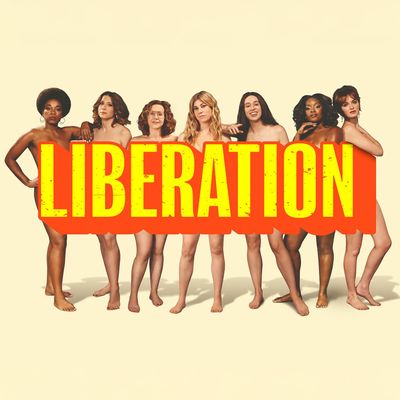
Episode 3: Whitney White. This week on Odd Woman Out, Tutz is sitting down with Whitney White—Broadway director, creative force, and the mind behind Liberation, a New York Times Critics’ Pick. Casual legend behavior... Read More
From the show: Odd Woman Out
Guests
Featured Shows

About
Episode 3: Whitney White
This week on Odd Woman Out, Tutz is sitting down with Whitney White—Broadway director, creative force, and the mind behind Liberation, a New York Times Critics’ Pick. Casual legend behavior.
Recorded at the Welcome to Times Square Studio, this episode is equal parts inspiring and real. Whitney talks about her path from acting to directing, owning her voice in rooms that weren’t always built for her, and creating theatre that centers women—loudly and unapologetically.
Powered by WelcomeToTimesSquare.com—because being the main character applies behind the table too.
We get into:
-
Making the jump from performer to director
-
Leading with vision (even when you feel like the odd one out)
-
Creating work that uplifts women’s voices
-
Why embracing your “different” is actually the power move
If you’re ready to take up space and trust your instincts… press play
Transcript
This transcript was automatically generated and might contain errors.
[0:00] Samantha Dawn Tuozzolo: Hi everybody, this is Samantha Dawn Tuozzolo, and you are listening to Odd Woman Out, a podcast and a show where we're chatting with women artists about what it is like to be a woman in the entertainment industry, the struggles that we face and the fun that we have while we do it.
[0:15] Samantha Dawn Tuozzolo: So thank you for listening. Enjoy this episode. Tell a friend to listen and tell a woman to love themselves a little more every single day.
[0:24] Samantha Dawn Tuozzolo: Hi Whitney.
[0:25] Whitney White: Hi, Diva.
[0:26] Samantha Dawn Tuozzolo: Welcome to Odd Woman Out. I'm so happy to have you here. How are you feeling today?
[0:31] Whitney White: No, we had some traffic getting here.
[0:33] Whitney White: The Welcome to Times Square Studio. I'm feeling good. Honestly, you're fabulous. Odd Woman Out is fabulous, and I'm kind of gooped, gagged, and excited to be here. So thank you for having me.
[0:43] Samantha Dawn Tuozzolo: Oh my god, gooped. I'm gagged.
[0:45] Whitney White: I wrote in your thank you card. I said, when this show was born, please, yes, for the viewers, here we go. When this show was born, I had like a list of women that I was like, have to have on this show. And girl, you were at the top.
[0:45] Samantha Dawn Tuozzolo: Thank you.
[0:58] Whitney White: Because I've been a Whitney White stand since the Dear Dead Drug Lord.
[1:02] Samantha Dawn Tuozzolo: Yes, our Dear Dead Drug Lord by Alexa Shear.
[1:06] Whitney White: Thank you. Thank you so much. That was a special one.
[1:10] Samantha Dawn Tuozzolo: Yeah, so we're gonna talk about that because that one fucks me up.
[1:10] Whitney White: That one fucks me up a lot.
[1:17] Samantha Dawn Tuozzolo: So let's go back to your childhood. Let's talk about was there a woman, artist or a woman in your life that inspired you to want to become an artist?
[1:28] Whitney White: I have to give a shout out to my mother. My mother, Janice inspired me deeply to want to become—shout out to Janice. Thank you for putting up with me all of these years. But you know, my mother was, is, and was just so fabulous. She exposed me to art with a capital A. Cinema, music, all these things, and it deeply inspired me to be the person I am today.
[1:56] Samantha Dawn Tuozzolo: Now let's go to one of your first artistic jobs, or it doesn't have to be the very first one. Was there a woman who uplifted you, maybe in a situation where you were coming in like a little insecure, not really knowing what was going on? Was you have one of your first times? Tell us about it.
[2:11] Whitney White: Uh yes. My first professional artistic job, I was a replacement actor and actress in a musical called Carolina Change at the Court Theater in Chicago, Illinois, and I was Radio 3. Tough and dreary and all disheveled. That was me. I replaced this woman, and I was terrified. I think I had a week of rehearsals and then a week or two, and then I had to start doing the show. And the incredible Ife Butler was playing Caroline in Carolina Change. And to this day, she's one of the greatest actors I've ever worked with. I've since directed her in a play.
[2:53] Whitney White: Wow. The A-man Corner. And like she just taught me the A's, B's, C's, P's, Q's, ups and downs, how to show up, how to have a voice, how to be a professional, how to own a crowd, how to deal with disrespect, how to command respect. To this day, Ife Butler is everything and was everything. And I was just fresh out of the little Northwestern musical theater program. Shout out to Northwestern. And I knew nothing about how to show up as a professional woman, especially a black woman in an artistic space.
[3:25] Samantha Dawn Tuozzolo: Right.
[3:25] Whitney White: And I learned it from her.
[3:27] Samantha Dawn Tuozzolo: I love that. And then look at the full circle. Then you got to direct her.
[3:31] Whitney White: Yes.
[3:31] Samantha Dawn Tuozzolo: How cool was that?
[3:33] Whitney White: It was surreal.
[3:34] Samantha Dawn Tuozzolo: Were you like, what is happening?
[3:35] Whitney White: It was surreal. Because I don't know if I've ever seen anyone command an audience like Ife Butler. If you're not in New York and you get the chance to see her in one of her shows, she's also directing now. It's kind of like you can't breathe. It's like you can't breathe when she's working on stage. It's so powerful and mighty, and she delivers up her performance for every audience member. And I think honestly, since working with her, I'm always trying to encourage that for my actors. Don't forget your audience. They need you. Give your energy and send your energy to them. And Ife Butler does that so beautifully. Shout out to Ife.
[4:16] Samantha Dawn Tuozzolo: Mm-hmm.
[4:16] Whitney White: So you were started out acting. So how did you make the transition?
[4:20] Whitney White: Oh my gosh. From acting to directing. Um, I applied to the MFA acting program at Brown University, which at the time was joint with a place called Trinity Rep. And at the time I applied as an actor, I got in as an actor. Um, because I had been doing so many musical theater roles in Chicago. I used to joke and say, you know, if there's a musical with a black girl in it, I'm in it. I was in Rent, I was in Hair, I was in Show Boat, I was on the Showboat. I did all these shows, and eventually I just hit a wall. Because I thought I had more to offer, but I realized it was bigger than me. I just thought that female roles have more to offer everyone. And how am I gonna do that? So I thought going to an acting program would do it, but then at the end of my first year, it just didn't click. And I had a directing teacher, Brian Murtis, and his wife Melissa Kieveman, and they encouraged me to think about directing, which was something that was so outside of my experience.
[5:22] Whitney White: And so Brian Murtis gave me a copy of Ibsen's Head a Gobbler, which I'm hoping to adapt. Look out for that production. Hello, if anyone's listening. Um, it's happening. So let's do it. Just deal with it world. But he charged me with adapting Head of Gobbler for eight people and directing it, and it changed my life. And it was like my brain was quiet. I've been working as an actor and singer for a long time. I had studied politics, I had studied music, and it just as a performer, I wanted to give more but didn't know how. And that Ibsen, the Head of Gobbler, it really changed my life. And then I moved here and I started assisting Sam Gold, and I got my Who's a Gem, and I got my first directing job in the city on What to Send Up When It Goes Down by Alicia Harris.
[6:09] Samantha Dawn Tuozzolo: That's an amazing story.
[6:11] Whitney White: Isn't it so interesting how you know you started your artistic journey thinking, you know, it was gonna be one thing and now it's something completely different. Now you're a Tony nominated director, you know what I mean? Like, did you ever think that as you were coming up?
[6:24] Whitney White: So it's just so important to always trust the journey and like take the opportunities as they come and can always continue to learn because you never know what it will lead to. Because it was a big journey, you know, and I at first I wanted to be an opera singer, then I wanted to be an actor, then I wanted to just do TV and then I found directing, and every time someone said no, I found a window to jump through. So journey with a capital J is really how I got here. So I try and encourage people, you know. Sometimes no is an opportunity to find your true path forward.
[6:58] Samantha Dawn Tuozzolo: For sure.
[6:58] Whitney White: Yeah, I love that. So tell us about a time in your artistic journey with the capital J that you have felt like the odd woman out.
[7:07] Whitney White: Oh my gosh. I think there's been a lot of moments. I'm the only black woman working on Broadway currently this season this fall. And so there's a lot of times I come into rooms and I'm the only one there. Or, you know, I'm looking at shows and I feel like my point of view sometimes feels a little different than other directors, you know. But I don't get discouraged. I think it's a wonderful opportunity. And I love our theater community. I think all theater workers are equal and all of our—we need all of our voices to keep theater alive, you know. And I'm really someone who goes to see every show. If I can see it, if I have the time, I want to see it on and off Broadway because it's a real gift to be in the community.
But a lot of times I feel like the one and only, you know, but it's not true, right? That I think being the odd woman out, it's sometimes people make you feel or the system makes you feel like you're the only one, but you're not. You know, there's Liliana Blaincuse, there's these other women working, but right now it's just me this season this fall. So there's a lot of things I go to where I'm like, oh, I am the odd woman out, quite literally.
[8:29] Samantha Dawn Tuozzolo: Yeah.
[8:29] Whitney White: And I also think when I was an actor and when I wanted to when I pivoted from acting to directing, I felt like the odd woman out. Because I remember I went to an agent at the time and I said, I want to do more. How can I do more? And there was no answer for me. I was like, I can't be a chorus girl for the rest of my life.
[8:48] Samantha Dawn Tuozzolo: Right.
[8:48] Whitney White: And which respect, shout out to the chorus girls, they are the heroines of the American theater, for real. But I was like, I think I have more stories to tell. Isn't there a way to do it? And the people around me at the time said, no, this is the path. They said, no. Yeah, this is the path. You just get another show or you do a TV show here and there, and that's it. And I said, that can't be it. And that is really what led me, I guess, to be where I am.
[9:19] Samantha Dawn Tuozzolo: Yeah, well, you've like made your own path. You're like, oh, I'm not taking no as an answer, I'm gonna do XYZ. And again, look where we landed, Tony nominated director. Okay, guys. Thank you so much for sharing that. It is so important to remember that when you aren't the only person in the room that looks like you that to stand in your power and know you deserve to be there and you're paving the way for the next—what somebody else on the show said, pull up a chair to the table and then keep pulling up another and then keep pulling up another, and that's sort of what it has to be.
[9:49] Whitney White: Mm-hmm.
[9:50] Samantha Dawn Tuozzolo: And I think sometimes people are just surprised. I experience a lot of times people being surprised by me. Like people say things like, oh, I never knew you could X, or I didn't expect you to be able to—why?
[10:02] Whitney White: Yeah, but why?
[10:03] Samantha Dawn Tuozzolo: And I think that's the T is like, but based off of what? And I think assumptions like kill us every time. You know, if you assume, you know, you're cutting off so much possibility. So when people are surprised by something about me or an ability that I have, I say, no problem. I'm happy that you know my skill set can be useful right now in this moment.
[10:25] Whitney White: That's a good way to do it. I'd be like, why? What do you mean?
[10:28] Samantha Dawn Tuozzolo: Yeah.
[10:30] Whitney White: So we talked a little bit about our Dear Dead Drug Lord.
[10:33] Samantha Dawn Tuozzolo: I cannot speak it.
[10:34] Whitney White: I know, our Dear Dead Drug Lord.
[10:36] Samantha Dawn Tuozzolo: Thank you.
[10:37] Whitney White: There we go. So for me as a theater goer, this was the first time that I've seen a play about women breaking the boundaries and just taking risks and being bold and fearless.
[10:52] Whitney White: And for me, I've always been like women empowerment and what can we do as women. And that inspired me and took my breath away in so many ways. I saw it multiple times. And that hanger scene was so brave and bold and we needed it. We needed that play to continue on with what we're doing now. So can you tell us a little bit about your experience with that and how that play came to you and why it was important for you?
[11:23] Whitney White: Well, Alexis Shear is fierce. That she is I highly recommend you all get a copy of our Dear Dead Drug Lord because what she was doing at the time she was doing it, I think paved the way for a John Proctor, paved the way for the television show that's on in the BBC right now, Riot Girls. I think, you know, when I got the text, I always say yes to a play based off the text first. Because I'm like, I don't know, I'm such a Midwest lady. It's like if I look a puppy in the eye, I'm gonna fall in love. So I try and like honestly read the play or listen to the musical. Every job I've ever done, I read it first before meeting the writer because I wanted to armor myself with my true opinion. And when I read the play, I was blown away by how unblinking it was.
It's like looking down the barrel of a gun and not blinking about what it's like to grow up in a teenage girl's body dealing with different issues and wanting power. That is a play about a group of girls who want voice and power. They go about it an insane way. I don't want to Insane. I don't want to give it all away. Like it gives A24. It gives get out. It gives you horror movie, comic book gore. 100% delivery at the end. But I said yes to the play because at the time I was trying to find my voice. I was trying to find my power. My identity as a director. And when Alexis and I met, it was clear she had a vision, but it was also clear that she was comfortable with my vision. And she was comfortable with me taking up space, and I was comfortable and passionate about her taking up space.
I'll never forget, you know, in that hanger scene, there was a beat that I couldn't crack. And Alexis was like, I have the way forward. And I said, go do it, you know. And it was that mutual taking up of space that made that such a divine experience. I also think being a woman now, having had a child, having gone through puberty, it was a while ago, but we went through it. I think the hormonal changes that we experience really we have a heightened experience. That science and people in the world don't always acknowledge, and that showed like tapped into to me the physiological experience of being in my female body.
[13:41] Whitney White: Yeah. The ups and the downs. Yes, the big swings, the emotional swings. Um, and I just loved it. It was insane. I loved it too. And also, I was like, this is an impossible ask. I love things that are impossible. Which let's let's just transition right into liberation because we're going from one female focused play to another. Liberation off Broadway. I have not seen it on Broadway yet. It took my breath away. You're taking my breath away. Didn't I just say that? It took my breath away. It is so beautifully crafted in every single way possible. So can you tell us a little bit about how your experience maybe with Drug Lord then got you on got you on like the women power play directing train or whatever you want to say about it because liberation is so powerful. So how what made you want to jump jump into the liberation pool?
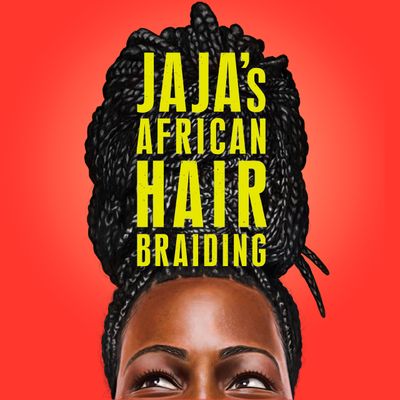
[14:40] Whitney White: I think the thing that's very has there's a sisterhood in those two plays in terms of what I call a diverse, and I don't mean DEI, I mean diverse in terms of different psychological, different people, right? Not just just identity politics, but like our Dear Dead Drug Lord had a snapshot of four very different women. And similarly, liberation is an ensemble. They're ensemble pieces, is what I I mean to say. And I think the most of the thrilling pieces of my career have been ensemble pieces. Just African hair breeding, What to Send Up When It Goes Down, the A-Men Corner. There are these impossible plays with like so many voices, and each one is singular. And I'm just deeply attracted to that.
Um I think it prepared me. It was a boot camp on how to make everyone in the ensemble shine. I'm very passionate about that idea. Probably from having been a chorus girl. I just remember I was in a production of Showboat as like slave number two or whatever. And like, I don't think the director talked to me once about like my inspiration or where I was coming from, you know? And so I think I'm always trying to remedy that experience. And liberation just takes that to the max. It's this beautiful ensemble piece of theater that is undeniably loud, undeniably real, and each character you just fall in love with and you want to fight for each one.
[16:06] Whitney White: For real. You really do. So if you're listening and you haven't seen the play, I'm giving a spoiler, sorry. So for me, I walked out of that play being like all those actresses are sitting butt naked on that stage. And a lot of a theme I talk about on this show a lot is feeling secure in our bodies as women and not looking back at this footage and me hating myself, right? And that is something that I think all women artists deal with. So the I walked out of that play being like, holy fuck. Holy fuck. I don't know if I could do that and do it and still be so present in the play and in your character. So how did you tackle that as a director? And what were the struggles and rewards with that scene?
[16:51] Whitney White: Yes, that's a really good question. I think that well, I always like to foreground the fact that theater is not a solo sport, it is a team sport. 100%. And the designers I worked with helped create a vegetable of safety around those actors. Intimacy coordinator, Kelsey Rainwater, lighting designer, Chasse, costume designer, Queen Jean, Scenic Hare, Nikia Mathis, Davidson, you know, all of these designers really sat with me and were like, what is the what can we give these actors that they can hold on to? Um, so what I mean to say is I was in dialogue with a lot of people about safety, about comfort. Um, and we took it in baby steps, you know, because ultimately what's most important about the scene is what they're they're saying, right? Is what they're sharing with each other.
[17:43] Whitney White: Exactly. And so I'm I actually focused on rehearsing the scene clothed, just to be like, let's find what these characters want to communicate first. It's actually about the sharing, it's not about the body. Yeah, the body is a vessel to their deeper connection. Exactly. I look I don't mean to interrupt you. It's not about it is about the sharing, not about the body. That's gotta be my new catchphrase for this show. It's about the sharing, not about the body. Okay, please continue. You know, I love it too. Actually, we should be putting that on more things. Yeah. Uh we need some merch. And I think what I struggled with was just reassuring my actors, my playwright, everyone around the production that the work will take the time, the amount of time it needs to take.
You cannot bake a cake in a minute. Correct. You cannot have a baby in a day. And when we're doing this podcast right now, we just froze the show yesterday. And opening is on the twenty-eighth. And even in this time from freeze to opening, we'll still be working on the show, crafting these notes. And sometimes you give an actor a note and it won't make sense till closing. So I I really try and just make a safe environment so that people feel comfortable to keep working. Because when you lock up and you freeze and you can't adapt anymore, and you can't be fluid and you're just in a defensive place, that's when the work really dies.
[19:15] Whitney White: Yeah. But if you feel comfortable enough to keep rolling your shoulders back, pulling up your sleeves and cooking, keep cooking the stew, um, the work gets better. So I feel like that scene has been directed to continue to evolve and deepen over time. And that's all the only struggle I've faced is just keep encouraging everyone on the team to let them keep cooking, you know.
[19:37] Samantha Dawn Tuozzolo: I love that. Keep cooking the stew.
[19:39] Whitney White: Yeah. Thank you for sharing that. I again I walked out of there being like, fuck, that is amazing it's amazing. It really is incredible. And it was also an impossible challenge. When I read it, I was like, how am I gonna do it? But then the playwright did all this in Bess Wool, shout out to her.
[20:00] Samantha Dawn Tuozzolo: Shout out to Bes Wol.
[20:01] Whitney White: Yeah, she did all this incredible research with women who actually sat in these groups at the time. So these characters are inspired partially by women who actually did this, and the surviving women, there are women still alive. They're very proud that they did this. So I'm like, if those women could do it for real, can't I do it for play? I've gotta have enough courage if they did it, if they could do it.
[20:27] Samantha Dawn Tuozzolo: Right.
[20:28] Whitney White: Yeah. I love that. So I um we talked a little bit about your Tony nomination for Jaja's African hair breeding. I want to talk about that play too, because that play gave a story for women that don't always get store their stories told.
[20:40] Samantha Dawn Tuozzolo: Yeah.
[20:41] Whitney White: At all. And it was so important. And I've I watched a ton of videos about it about women who are coming being so emotional, being like, I see myself and my story on that stage. So how is it for you to get a Tony nomination for such an important show and to give women a voice? Black immigrant women, a voice who don't get that.
[21:07] Whitney White: I have to say it's very surreal. Because of course I know that my story is universal. Every human is a human outside of identity politics and the things that keep us apart. Um everybody's just a human being alive for the moment. We're alive. And so I know my story's universal. Many people have told me throughout my life that a story rooted around a black woman is not universal, but that that is a lie. That's not true.
[21:35] Whitney White: And so with Ja's, it felt so thrilling alongside the incredible Joss and Bio. She's amazing. To make something that so many people identified with, even though it was about a very specific group of people. And I just I loved that experience so much. It's very dear to me in my heart. And I sometimes blink, did that really happen? But it gave me courage for liberation. Because female stories are universal stories. Like men should come to liberation. If anyone who's ever had a mother, anyone who's ever been in love with a woman, anyone who's ever admired a woman, then the show is for you. Um, because it's a human story. And so Ja just gave me um a spine. It's like you can't lie to me anymore. You can't tell me that a woman's story is not universal, that everyone can't learn from a woman's story.
You can't tell me anymore that a black story isn't universal. Um, you can't tell me that our stories don't have currency, our stories don't have a place in the marketplace. Right. You can't sell that to me anymore. You can't tell me that you can't debut cold on Broadway. We did that. So it was good. I think it healed a lot of um, it healed a lot of kind of trauma and fear around or a believing things that have been told to me, things that have been sold to me about what's possible for me and you and every woman working on theater, every female identifying person working in theater. We have been sold a lot of lies about what's possible for us. Based off of nothing. Based off of nothing. And that is that's been shattered. You can't you can't keep me down with that anymore.
[23:14] Samantha Dawn Tuozzolo: Yes, girl, you can't keep her down. You can't give it down anymore. Okay, you've directed a ton of amazing plays. Is there one character in any of the plays that you have directed that you've learned a lesson from? And what is that lesson and who is that character?
[23:29] Whitney White: Oh my gosh. That is the best question I've ever been asked. Oh my god. I have never hold on. Wait a second. I'm blushing. Okay. Wow, I'm gonna spill tea now. Okay. We love tea. Give us the tea. Oh gosh. Okay, there is a character in the Amen Corner. The Amen Corner by James Baldwin. The lead character is named Maggie. She runs a church in Harlem. And she runs it with a mighty hand. She's always telling the congregation she knows what she's doing. They should do what she says. She tells them how to obey God. She's a leader with a capital L who's a little full of herself. And then in the second scene of the play, this woman who's been saying she's so perfect, she's so holy, her lover comes back into town.
And the church is like, now wait a minute. Now wait a minute. You told us that this man was gone. And the lover, the father of her child comes back into town, and he's a jazz musician. Child, it's a scandal. And so her hypocrisy breaks down everything that she's made. Because there's a lady in the church who was played by Ife Butler who takes her down. It's epic. The Amen Corner, I'm gonna also do this in New York, so prepare yourselves, world. Anybody's listening, but we could use some. The Amen Corner is such a fabulous play because it's like Julius Caesar upstairs, August Wilson love story downstairs. Oh my god. And she's brought down off her throne, Julius Caesar's style for her hypocrisy.
And I learned, baby, I learned a lot, and um, you know, that character motivates me in a scary way to try and keep it real as much as I can when I'm in a leadership position. Because I'm not perfect, you know, and uh so how can I lead from a place of being imperfect and honest? Because everybody has stones under the water, skeletons in the closet, everyone has strong traits and weak traits, and that character's brought down because she's built her house of lies around a mythology of perfection. So, ooh, that is the role. Woo, I love that. And I can't wait to see it in New York City really soon.
[25:54] Samantha Dawn Tuozzolo: Um what's your advice for a woman artist who is struggling, feeling like they're less than, feeling like the odd woman out, feeling like they're not good enough, feeling their insecurities. What is your advice to them to plow forward and continue to tackle their dreams?
[26:12] Whitney White: I think my most honest advice is remember that other women have done this before, and so can you. You can do it, you can find your way. You might need to find your inspiration, you might need to look to the past to a woman who inspires you and learn how she kept herself going. Read that book, you know, listen to your favorite podcast, go to the museum. I like to say what I mean by saying doing those things is fill up your well. Because if you fill up your artistic well, your creative well with the things you love that make you feel strong when you have these moments of adversity when you experience challenges, you're not empty. You have strength to meet the world. And I try and practice that every day. Look to the past, because we are not the first people to try and do this. And water your garden, you know? Water the garden.
[27:30] Samantha Dawn Tuozzolo: I love it. So I already think you're doing this, and I think you're doing it a lot for the women artist community. What can we do to continue to make space for women to speak their voices in a way that's not gonna be like, oh, this woman play.
[27:50] Whitney White: Yeah. You know, and you're already doing it. So what can we all do to keep that going and to keep pulling up a seat for women at the table to be equal to our male counterparts doing the same same shit?
[28:05] Whitney White: I've been this is maybe I hope this is a good answer to this question, but I've been trying to practice this thing where if I'm out in public and a woman is laboring for me, uh, a bus driver, a waiter, I'm at the bookstore, the books person working at the bookstore, the bookstore owner. I'm trying to have just more conversations with women. Like, look into the eyes of the women you meet and talk to them. I love that. And just take the moment. I'm trying to practice that a little bit more. Um so that's my weird everyday practice. And it's like, I think sometimes our it was really the quarantine that did this to me. Like I remember how the world just stopped, but every now and then you had to get a vaccine or you had to go on a bus somewhere.
It was a woman who gave me my vaccine. It was a woman who gave me my ballot to vote. It was a woman who drove was driving the bus around when I was with my mask trying to get around, you know. And I was like, we're kind of keeping the world running right now. Um, and I I'm not seeing these women. How can I see these women?
[29:14] Whitney White: Yeah. And then I think professionally in the theater world, it's like, go see the plays. Go see the plays and support the plays. I feel like, you know, Ragtime is running, Phantom is running. There's a lot of work that's being directed by women that's running. Go see it. Support it. Before you leap to a criticism, remind yourself how impossible it was for that person to get there and make that work. For real. And then talk about it from there. You know?
[29:41] Samantha Dawn Tuozzolo: I love that.
[29:42] Whitney White: Yeah. Tell everybody why they need to run to Liberation A-S-A-P.
[29:47] Whitney White: Uh, you need to run to Liberation to be transported to a different time. We all need to go to a different time right now. For real. Because you need to be transported to a time where people thought utopia was possible, where people thought revolution was possible. People thought that positive political change was possible and get a little inspiration from that time. You also need to run to Liberation because these people in the play are hilarious. And I think it's a lot easier to make someone cry right now than it is to make them laugh. And this cast just gifts the audience with so much life and humor. So, you know, come hang out with my little oddball motley crew of people from the 70s. Yeah. Because you're gonna have a good, a good time, a good evening, you know. And that's why you need to come. Come for a good time, come for the motivation to get some fuel to fight.
[30:36] Samantha Dawn Tuozzolo: I sign off on all that. Run, run, run, run. Um, before we let you go, by the way, this was an amazing interview. I barely looked at my cards. I feel like we were here for one second. What happened?
[30:47] Whitney White: Um, let everybody know how they can keep up with you on the social medias with your projects and all the things.
[30:53] Whitney White: Yes. Um, I have a website. Uh it's like Whitney.com, and I try to keep stuff on there. And I'm on Instagram. Yes, I'm Whitney White. And um, you know, if there's a theater near you, I'm usually creeping around. I have a tour, Ja just after the hair braiding is touring right now. So if you're in LA, go see that cast. They're incredible. And if you're in New York City, you have one more week to see Saturday Church, the musical at New York Theater Workshop I directed. Yes. And then Liberation on Broadway will be running to the end of the year and into the new year. Come see those shows. See, that's the thing. You have so many things that we could have talked about, but then we would be here for hours. I haven't even touched, I didn't even touch on half of it. I touched on four. But you did ask me honestly the best question I've ever been asked. I hope I feel like I shared too much about myself a little bit, but yeah, no one has ever asked that.
[31:44] Samantha Dawn Tuozzolo: Oh my god, thank you. That means a lot. I love Odd Woman Out.
[31:48] Whitney White: I do too.
[31:48] Samantha Dawn Tuozzolo: And I'm so grateful you came on. Thank you so much for coming on the show.
[31:52] Whitney White: Thank you for having me. Everybody go see Liberation now.
[31:57] Whitney White: Yay!
[32:01] Samantha Dawn Tuozzolo: Hi, Odd Squad. Thank you so much for tuning in to this episode of Odd Woman Out. I hope you liked it and enjoyed it. Please give us a like, subscribe, and follow. Follow us on Instagram and TikTok at Odd Woman Show. Telefriend to telefriend. She's back.
© Broadway Podcast Network, All Rights Reserved