

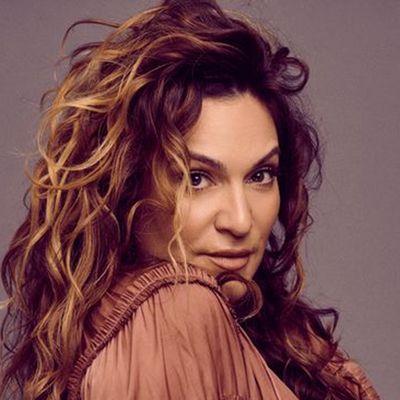
Episode 5: Shoshana Bean. This week on Odd Woman Out, Tutz is sitting down with Shoshana Bean—Grammy winner, Broadway icon, and certified vocal powerhouse behind her new album Only Smoke. No chill. No filter. Just truth... Read More
From the show: Odd Woman Out
Guests
Featured Shows
About
Episode 5: Shoshana Bean
This week on Odd Woman Out, Tutz is sitting down with Shoshana Bean—Grammy winner, Broadway icon, and certified vocal powerhouse behind her new album Only Smoke. No chill. No filter. Just truth.
Recorded at the Welcome to Times Square Studio, this episode is all fire and feelings. Shoshana opens up about finding her voice (literally and emotionally), the magic of Waitress, the full-body high of headlining Carnegie Hall, and what it’s like to stop apologizing for how you sound, look, or take up space.
Powered by WelcomeToTimesSquare.com—because being the main character is a lifestyle.
We get into:
-
The raw inspiration behind Only Smoke
-
Making art that heals instead of fits the mold
-
What Carnegie Hall actually felt like
-
Why Waitress was pure Broadway magic
-
Choosing authenticity over “mainstream” every time
If you’ve ever been told to tone it down, smooth it out, or fit the box—this episode is your permission slip
Connect with Shoshana Bean:
Connect with Samantha Dawn Tuozzolo (Tutz):
Transcript
This transcript was automatically generated and might contain errors.
[0:00] Samantha Dawn Tuozzolo: I held my breath, you held all the cards, you knew my wounds, you knew my wants, you chose to choose me with all of my faults. Hi everybody, this is Samantha Dawn Tuozzolo and you are listening to Odd Woman Out, a podcast and a show where we're chatting with women artists about what it is like to be a woman in the entertainment industry, the struggles that we face and the fun that we have while we do it. So thank you for listening. Enjoy this episode. Tell a friend to listen and tell a woman to love themselves a little more every single day.
[0:42] Samantha Dawn Tuozzolo: Hi Shoshana, welcome to Odd Woman Out. Oh, I feel right at home already. I'm gagged. I'm being cool guys, but I'm slightly gagged. For those of you who are just listening and not seeing this video, we're here today with Shoshana Bean, literal superstar, and we're so excited to have you here.
[0:59] Shoshana Bean: Oh, I'm so honored to be here. Thank you. We have so much to talk about. Your new album is so incredible.
[1:03] Samantha Dawn Tuozzolo: Thank you. I've been like heaving listening to it because I feel like any woman or any human who's felt these things are like connected so easily. It's so beautiful and so perfect.
[1:15] Shoshana Bean: Thank you.
[1:16] Samantha Dawn Tuozzolo: But first we got to talk about the woman of it all. And I want to take it back to baby show, little Shoshana. Oh, when you first discovered art and singing and you knew you wanted to be an artist, was there a woman who influenced you to want to go down that path?
[1:32] Shoshana Bean: I mean, I guess I would start with my mom because with my creative energy and tendencies, her only knowledge of, you know, art and creativity was she was a dancer. And so her instinct was to put me into dance class. So I guess the immediate influence was her for seeing that and knowing we have to sort of channel this energy into something creative. So, yeah, mom first. And then I think, you know, it was the women who were spinning on the record player, which was like Aretha Franklin and Sarah Vaughan and Barbra Streisand and Whitney Houston.
[2:11] Samantha Dawn Tuozzolo: Yeah, I love that. So your first professional gig, what was it? And was there a woman on set or in the show that sort of uplifted you and showed you the ropes and did like a woman supporting woman thing?
[2:26] Shoshana Bean: So many women, my first professional gig, so professional being paid gig, correct, was I was nine years old and I was cast in this. I guess it would have been a regional production. It was an equity production of Sunday in the Park with George. And it was a big deal in our town because they were opening. This production was like the sort of what's the word I'm looking for? The production that was going to open the Performing Arts Center, this brand new Performing Arts Center that they built in downtown Portland.
[2:58] Samantha Dawn Tuozzolo: Oh, I know this story from Carnegie Hall. OK, sorry if you weren't there.
[3:02] Shoshana Bean: So, yeah, and they brought the leads in from the L.A. production of Sunday in the Park. And one of those leads was Pam Myers. And Pam Myers was the Marta in the original company, another hundred people. Pam Myers is also one of the first graduates in the first graduating class of the University of Cincinnati College Conservatory of Music, Musical Theatre, Bachelor of Fine Arts in Musical Theatre program. Thank you for the entire wording. She was in the first graduating class. So let's start with Pam. I'm the only child in the show. Pam is just like patient and accommodating. She lets me come in and out of her dressing room. She gets me my own sort of dot powdering system to be able to like dot, dot, dot myself backstage.
And then the woman who played the nurse was a voice teacher. And my mom sort of, I don't know, begged her to take me earlier than she normally would take girls. She liked to wait until they reached puberty and sort of their bodies settled into some semblance of normalcy and consistency. But should that ever happen to a woman's body? Because today I'm dying. Yeah, she she took me and she changed my life because she's the one at a certain point who was like, you know, you can go to college for musical theatre. You know, there's this school, University of Cincinnati. You know, Pam went there. And in my mind, I'm like, anything Pam did is good enough for me. Yeah. And so it was all that. Totally.
Yeah, it was. She was so sacred to me. All these women were so sacred to me. And they took such good care of me and just opened up a whole other world. So that's why I said in the story at Carnegie Hall that like that experience with those two women in particular set my train on the tracks. No question.
[4:51] Samantha Dawn Tuozzolo: I love that. That's so cool. Did you go to college for musical theatre?
[4:56] Shoshana Bean: At University of Cincinnati College. There you go. This is something I didn't know. Amazing. Okay, so now tell us about a time in the industry, whatever vertical that is, where you felt like the odd woman out. And how did you handle that?
[5:02] Shoshana Bean: All the time, every time, still to this day, always, which is why I told you when I walked in, I 99% of the time say no to doing podcasts. And I had seen the name of your podcast and seen it promoted somehow on socials before you asked me to be a guest. And I remember just being like, whatever that is, I want some of that. So when my manager presented it, it was like, I know you're going to say no. And I was like, actually, this is a yes for me, because it just so simply resonates and articulates exactly how I felt from day one. And yeah, I mean, I just in every way from how I look to how I sing to what feels authentic to me versus other people and feeling like that doesn't feel mainstream or what's, you know, working and you go to school for musical theatre and you're really trained to sort of shape shift to fit this mold of what is whatever the trend of what's working is right now.
And gratefully, I think it's been both a blessing and a curse in my life. I think my rigidity in terms of my insistence at being who I am and doing what I do, how I do it has limited me and also sort of been the wind beneath my wings, really, because it's forced me to create my own space and forge my own lane. And that has been the most painful, frustrating, infuriating, like exhausting experience. But like, you know, I just I honestly don't know any other way that I would have or could have done it. I know I'm being really vague and broad right now, but no, it's so I've always felt.
[6:51] Samantha Dawn Tuozzolo: Yeah. And that then sort of forced you to create your own work.
[6:55] Shoshana Bean: Yes. I was watching this YouTube thing you released about the journey of all of your albums. You said something like whoever signed you first. I don't remember who it was. You were like you were waiting and waiting and waiting for them to start working on your material and they wouldn't. You're like, so I just did it myself.
[7:08] Shoshana Bean: But that's been my whole career. Yeah. And that's one of the things I always say to younger generations when they ask for advice is I'm like, just create your own opportunities. You have to. One, because as creatives, we we got to stay, you know, in the creative act and to sit around and wait sometimes is really detrimental and damaging. And so and sometimes it never comes. And you wait and you spend all these years doing things for other people and you just need to do it.
[7:39] Samantha Dawn Tuozzolo: That's right. That's right. Which is why there's so much show was born also.
[7:46] Shoshana Bean: Hey, I love that. Absolutely. Okay. We have to talk about Only Smoke. I wrote down some lyrics that I need to talk about because man, Shoshana, this album, Lucky Number Seven, huh? Yeah. Seven albums is crazy. How did you feel? Like, holy fuck. I made seven amazing albums. Does it like settled in?
[8:04] Shoshana Bean: I guess it's a two or two of them are EPs. And one of them is a live album. So yeah, I mean, it's technically four full length solo studio albums. And the other ones are, you know, fall under the subheading. Yeah. EPs, which is just like three, four songs, five songs. And then the live at the Apollo album. But yeah, it's, I'm proud of it. Mostly because every time I release one, I get really retrospective. I just am like, proud that I've been able to do it all along. I won't say alone because it takes a village truly does and a village of supporters as well. But I just didn't even want to do the first one independently. And to think that I've just kept doing it is either amazing or crazy. I'm not and now you're selling out Carnegie Hall, which we're also going to talk about when we get to that.
[8:54] Shoshana Bean: Yes, only smoke. I was telling you, it just resonates so much with me personally, because you know, if you've gone through life experiences, when you're feeling these things, you're like, okay, these lyrics and the way it sounds, it just so deeply connects. So I imagine you know, this is your writing from your heart from experience that you've had. How difficult was it for you to literally crack yourself open and pour it out? Or it was like healing?
[9:15] Shoshana Bean: Not hard at all. It was essential for the healing through this whole entire thing. And not even just the writing process that was like part one, part two was, you know, the arranging, producing recording process and part three was like, deciding we were going to get all of that done and not sacrifice quality in order to have it ready for Carnegie Hall, you know, so the whole entire process felt like going back to the wreckage of a house that had burned down and sifting through every inch of the ashes and whatever's left and being like, ah, I see, I left the candle burning. Oh, I see, you know, just like, I just say like every part of this album for the past year and a half has been sifting through the wreckage.
And it on the other side of all of that has been so healing. But in terms of the authenticity and cracking myself open, and some people have said like, this album feels like we're being really voyeuristic, like we shouldn't know these things about your business. But I just thought like, what is the point otherwise? What good am I for having gone through all of these things to not then share that in a way that could potentially feel connecting or healing for somebody else? So that was my bar that I set from day one, which the first conversation I had with my producer, he said, What kind of album do you want to make? And I said, I don't care. If you're asking about like sonically, or I don't, I'm not there yet.
All I care about is that the stories that this is the most raw, authentic, best storytelling, most heart centered, vulnerable thing I've ever made. That's the bar. And it just went from there. So the storytelling was always primary. And I think he really strategically put me in the rooms with the co writers that were going to align with that. And man, I think I just felt safe. Yeah, I felt like this album is only going to be as good as I'm willing to put my guts out there. And every one that I was in the rooms with made me feel so safe and and seen and not shamed and understood. And yeah, yeah, because what's the point of like, creating art if you're not going to be truthful?
[11:30] Shoshana Bean: Oh, plenty of people create art that's not truthful. Plenty of things are built on illusion. And, and I really get that, like the world wants and needs that right now, for some reason, right? As this as an escape, as something to sort of aspire to, like, I get it. But the older I get, and the more this world does what it does, and bees how it bees, the more I crave really, like solid quality, authentic, real reflections of humanity.
[12:02] Samantha Dawn Tuozzolo: Yeah, for real. So I saw your show at the nines. Is that what it's called?
[12:08] Shoshana Bean: Yeah, yeah.
[12:09] Samantha Dawn Tuozzolo: Yes. And you tease a couple songs.
[12:13] Shoshana Bean: Yes, I did make it.
[12:14] Samantha Dawn Tuozzolo: No, I think you did strangers to lovers. Yeah, you did, because it stuck with me so much. I thought about it so much after and I was like, I'm so mad. I can't listen to this anywhere.
[12:18] Shoshana Bean: So what what do you hope your listeners get from these songs? And what do you hope they walk away from the album with?
[12:24] Shoshana Bean: That's a really good question. I think that the sort of like easy answer is I just, when you said it, it feels so connective, it feels so connection is so wildly important to me, like authentic connection. So that makes me very happy when people have an emotional experience, or they have the desire to repeat listen. That makes me really happy. I love that people are responding to it so much lyrically, because of course, I've, I know, I sing, I know, I'm a singer, I know that what people expect or want or enjoy, right in terms of the vocals, but like,
[13:06] Shoshana Bean: I believe that this album sort of goes to another level lyrically and emotionally. And so when people resonate with that, that makes me really happy. But I think what I would hope for that experience is just like if it ushers in a good cry, amen, if it ushers in empowerment, amen, if it ushers in, you know, being inspired to whatever it is to do that thing that whatever it is, those would be my hopes. I think that music has this ability to walk with us through whatever we're doing or wherever we're at in our life. And it's been a minute since I feel like I've been able to put on an album and have it walk with me. Songs, individual songs, for sure, but a whole album. And, you know, I'm, for better or for worse, just really old school in that way, where I remember albums, the very few two handfuls of albums that are no skips from top to bottom.
And so having an experience that we curated so specifically, we chose these songs. If you remember the nines, there's a lot of songs that didn't make it, you know, we chose them to tell a cohesive story, we ordered them to be listened to in order from top to bottom to tell a story and have take a ride. You know, we curated it all so intentionally in a way that is, I guess, very old school, you know, that people don't, it's really a singles world, like it's just quality, quantity over quality and like, you know, keep people's attention another single after another single. And it feels like, you know, grabbing a bag of chips here and it feels like having a can of soda here and I wanted you to sit down to a meal.
And so I hope that's people's experience. I hope they listen from top to bottom and take the whole ride and I hope it walks with them like a witness. Well, like just in my friend circle, people are listening to it from top to bottom. And you know, it sort of reminded me of like, Beyonce's Lemonade, how like it told this story, you know, David, I'm like, okay, Shoshanna, I see you. I love that. I love that. It's like truly is and it's it's so incredible and congratulations. Thank you. I've been a long time follower and I'm like, screaming. Thank you. You know, because heartbreak is some of the worst pain I've ever felt personally. And so like, if I was in that raw place of like, the immediate aftermath, this album would be like, my wine of like, oh, thank God, you know, other people feel this.
[15:38] Tutz: Oh, yeah. As intensely. Oh, yeah. You know, we all do. For real. For real. Okay, so you sold out Carnegie Hall. I mean, did I? Yeah, I was there. I looked around. I'm pretty sure we did it. Like there's like a number you have to hit to be okay. And I'm sure we didn't because no one wants to sit all the way up top. But I got to tell you, for anyone listening for the future, the sound is best all the way up top. You know, I was looking and there were people on maybe and listen, I was in the orchestra. Listen, I'll follow up again. But I'm all I have heard is that it was sold out. It was if it wasn't completely it was really close to sold out you guys. So tell us it was a lot of people. I came out there and I was like, I can't because I've been to Carnegie Hall a lot of time when they say sold out.
But I think sometimes people buy tickets and don't come or they buy them and they Sorry, I'm not staying close enough. They buy them and resell them. You know, and I walked out and I was like, wow, this is a lot of people that came for me. I don't think you know, I've done the Apollo is probably the biggest venue I've ever done. And we've sold that out a number of times. But it was it was a different feeling to be like, that's a lot of people. There's a lot of people sometimes the whole theater is there. Sometimes women out most of the time my narrative in my head is nobody cares. You know, we post something and people don't seem to engage when you tell me about an album and you're looking at the streams when you put a show up for sale and the tickets aren't moving.
I'm like, oh, right. Nobody cares. No one cares what you're doing. Shoshana, like, why do you bother? And then you walk out and you see all those people are like, somebody cares. These people care. Pink cared pink, pink. Oh, my God, what a freaking angel. New friendship that has like what a gift that woman is. I love you, Alicia Moore. Shout out. So tell us like what that experience was like. And I'm curious to know if you treat, you know, your preparation mentally before playing the Apollo or Carnegie the same as you do the nines or like a pebble bar.
[19:02] Shoshana Bean: No, because logistically, it's so much more involved at a union house, larger venue, larger band like no. But I think the one common thread is, and I was so happy to hear this as sort of some feedback from Carnegie Hall audiences was my intention is no matter how large the space, I always want it to feel intimate, like we're all here and in a space as big as the nines. It's just cozy and and pebble bar. And like, I always want to create a living room experience because I remember being in the very last row of Staples Center seeing John Mayer or the very highest box in Staples Center seeing Adele and feeling like they were right. And I just felt like they created and had the ability to create such an intimate experience in such a horribly massive venue.
And that stuck with me. And I always aim to to be able to do that no matter the size. And I think there we achieved moments of that at Carnegie Hall, which made me really happy. So that's really the only common thread. Other than that, you know, the set list and the curation of its flow and order and pacing is always wildly important at the same and the same. But I think the pressure is different. The expectations are different and the expectations I place on it. But I think one thing that I have made clear over the years, which is another reason that I'm this says odd woman, if you can't see it. We're working on new merch so you can see it better. This is this is we're workshopping the white hat.
Yeah. Another thing that I think makes me an odd woman out again, for better, for worse, is that no matter how much I strive for or reach for some level of perfection, which is so arrogant because what even is perfection? But the more I strive for that is this psychotic Virgo only child control freak. Like I truly end up being the most human, the most flawed, the most messy. I mean, you were at Carnegie like no matter how I tried to just boss everyone so specific. People came on and off stage willy nilly whenever the fuck they wanted. The lights were doing. I was like, are you kidding me? We can't even get it together for Carnegie. And I'm like, that's it's my blessing and my curse. And we roll with it and we handle it and it doesn't ruffle our feathers.
And here we are being wildly flawed and human and messy. You're welcome. You know, I loved it. I'm thrilled. I have to take this off. So that seems to be a common thread in whether I'm at the Pebble Bar at Carnegie, you're getting the very authentically flawed human. But I think that's why, you know, you have such a large fan base because you're just you like talking to you right now. And like when you walked in, you were the same here. They're on stage.
[25:02] Tutz: Are other people different? I don't know. Yeah. I'm like, isn't that how am I doing this wrong? I don't know. Persona. I feel like I mean, listen, I'm not speaking from knowledge, but I feel like people put on like an act when they're doing an interview and then they're like not and I can't do it. Yeah, I should try. I don't know.
[25:40] Shoshana Bean: No, I think we're good. I think we're doing a great job. So do you have a preference? Carnegie Hall, Pebble Bar? Like, do you prefer I know you just said you you like to keep the vibes intimate. But which do you prefer?
[26:05] Shoshana Bean: I think I prefer something in the middle. Um, I prefer an environment that is somewhere in the middle, because I think there are factors you can control like you this the sound in Carnegie and granted, we did the thing you're not supposed to do there, which is plug in, which is amplify any instrument like it's really built for acoustic. Didn't somebody like scream at you? Yeah, that was amazing. Someone was like, the band is too loud. We need to hear more of you. We can't hear you was like song number three. And I was like, I everyone was like, wasn't that rude? And I'm like, No, it was amazing. Because I don't know what your experience is. And I want if I can say, Hey, you heard that? Yeah, mark on sound.
Help us out out. You know, or if the band hears that they know they're, they're going a little hard to that. So I love that. I love audience feedback. It's my favorite take notes. Well, be easy. Um, but yeah, I don't I think it's somewhere in the middle where it's like an environment that's more easy to control. Or maybe it's, you know, on, on me to be able to do those things more consistently that we have a system and we can troubleshoot and we know what to do. But I just think that I hope I never have to choose. I hope I always get to have the gift of doing them all. Yeah, I just Yeah, what a blessing. Now, tying back into like why I started the show. How do you fight your insecurities, whatever they may be, when you're putting yourself in these spaces and giving your heart out? Like, in other words, how do you stay present with your songs, and not worry about if your hair's out of place, or if your outfit is fitting, right?
[26:14] Shoshana Bean: Exactly. We're talking about you need it. And you see every view or not view, you see every comment or not comment, you see every stream or not stream, and it is a mind fuck. And that's probably the hardest thing to navigate is shutting out the noise or not looking because how do you not look? Yeah, and then you're like, how do you fight that? It's so hard and it's become like a value trade, so it's become like my value and my worth is directly correlated to whether or not people are liking, subscribing, streaming, watching. Yeah, it's wild. And so that's again part of the work is like my value and my worth and my contribution as a creative cannot be contingent upon these numbers, and it is a daily struggle. I won't even sugarcoat it.
[27:10] Samantha Dawn Tuozzolo: Okay, we have to talk a little bit about Broadway.
[27:12] Shoshana Bean: Yeah.
[27:12] Samantha Dawn Tuozzolo: So a lot of these characters you played on Broadway, first of all, play. Second of all, a lot of them are based off of female relationships, you know, sticking with our theme of empowering women and all that, you know, Jenna and the girls, Jersey and Ali, Elf of England. So I want to talk a little bit about female relationships. We're talking about support, getting support and all that, and why female relationships are important to Shoshana. And you know, it's sort of the thing of like we talked about earlier, women supporting women. Like there's enough cake for everyone. Like I see you and Eden supporting each other all the time, and it's just so beautiful because I feel like we came from a world of like women are, you know, cutthroat and competing for this, that, or the other, and that's just not the way it has to be. So why are female relationships important specifically in this industry?
[28:08] Shoshana Bean: Oh, man. I think if you can find the right ones, I just don't know that there is a more loving, tender, accepting, supportive—I just don't know that there is anything more connected to the heart than women. I mean, women are the most sacred relationships that I have. Yeah. And even now at this age, like me, Eden, our other friends, we sit around and we're like, listen, men can come and go, or like, you know, we could meet our fucking forever person tomorrow, but like nothing is gonna be what these things are, these relationships are. And I even, you know, have friends who've been married for ages, and they're like, yes, he's my husband. But like these, you know, it's sisterhood is a whole different sacred experience.
There's just no love like it there. And it has been a journey because I don't know what it's like anymore, but in college, you know, 25 almost 30 years ago, all they did was breed competition. All they did was make it feel like it was us or them, us against each other. And so we brought that into this city, and I do remember feeling like at least the first, you know, I don't know, more than five years in my career, I felt like it was like, you know, that was inside of it was bubbling under the surface, and that, you know, took a while and some great freakin friendships to rewrite, to like reprogram. And I really, you know, more than just Eden, there's so many incredible women friendships inside of this business, and weirdly a lot of them are alphabets, a lot of the most supportive, wonderful, because I think we all know what it felt like to be pitted against one another or to feel like there's some kind of—and I just feel like there's a loyalty and a connection with a lot of those women that's really special.
So I do, you know, for any young female listeners, performers, like there really is enough for everybody. There really is space for everyone. You got to have the tenacity and the endurance to stick it out long enough for your opportunity and your time to come, but there really is. And, you know, yeah, there's enough cake. There is. And if there isn't, let's just make our own cake, make some cookies.
[30:45] Samantha Dawn Tuozzolo: It's me. Fine. Out of all the roles you've played, who have you learned the biggest lesson from, and what was that lesson?
[30:49] Shoshana Bean: Oh my gosh, every single one of them has been a lesson, but I think with, you know, with the clock ticking, and I have to say Jenna, just like the immediate reaction to the question is Jenna. Yeah, every single one of these women has taught me something vital and important and at the perfect time. I think these roles slam into your life at the exact time that you are up to learning what they have to gift you. Yeah, but Jenna because it was my first time back in 14, 15 years. I had cultivated so much comfort and freedom on stage that I had never experienced in a musical. I was able to bring that into Waitress. She was so wildly different from any character I'd ever played. She was so much more fragile and vulnerable.
So she brought that not just into Shoshana as a performer on stage, but she brought that into my life. Yeah, I learned so much from that character on stage and off. I learned so much from that cast, that creative team. It is still by far and away the most extraordinary, sacred theatrical experience of my life and career, and it may always be, and that will be fine. If I have one Waitress in my lifetime, may we all be so lucky.
[32:11] Samantha Dawn Tuozzolo: That's Diana or the Jews in the room, Diana. It would have, it will have been enough.
[32:20] Shoshana Bean: Yeah.
[32:20] Samantha Dawn Tuozzolo: Okay, we're wrapping up, which is so sad. I could talk to you for 12 more hours, but we simply can't. Great questions. You're killing it. You're killing it.
[32:27] Shoshana Bean: Sometimes you just need to hear that you're doing a great job.
[32:33] Samantha Dawn Tuozzolo: Thank you. You're doing a great job.
[32:35] Shoshana Bean: Thank you.
[32:38] Samantha Dawn Tuozzolo: Any plans to come back to Broadway soon?
[32:44] Shoshana Bean: I believe the fifth, okay.
[32:44] Samantha Dawn Tuozzolo: Love that. We love that. Plead take that for what you will, people.
[32:50] Shoshana Bean: Okay, can you please give—you mean you've already given so much great advice and your stories are so inspiring—but for all of our odd squad listening, odd squad, we love the odds.
[33:01] Samantha Dawn Tuozzolo: Cry before this is over. We were so—I cried today already.
[33:07] Shoshana Bean: Oh, you already got it out. Well, I can baby cry again.
[33:10] Samantha Dawn Tuozzolo: Okay, let's see if I can get you to cry. Okay, ready? This is your challenge for our odd squad, for all the odd girls, all the odd women listening who maybe feel like insecurities are standing in their ways of auditioning or feeding their own things. What do you want to say to them?
[33:27] Shoshana Bean: I feel like the easiest thing—again, I'm just gonna go with my gut instinct on this one—the first thing that comes to mind is like if I told you you had a month to live, if I told you that it's later than you think it is, how, what would you do today? Would you care about not going to the audition because you're on your period and you're bloated and you feel like you can't sing at your level of peak perfection? Like would you let the insecurity keep you inside? Would you go live wildly, bravely, out loud? I think that's a question we don't ask ourselves enough because we just really think that time is on our side and that we're promised tomorrow. And like I could leave here today and get hit by a bus, and, you know, was I as—will I look back and be like glad I said everything I said, whatever, you know, whatever the task at hand is today?
I have friends who ask those kinds of interesting questions all the time. Okay, you have one week to live. Everyone on the planet has one week to live, and everyone's up to this, you know? So I think it's just—I think there's something to being aware of how precious every given moment is, and I think we aren't aware of that often enough. We are in moments, but not often enough, and I'm wildly guilty of that. Right? When you're like in the busyness of it all, in the stress of it all, it's like you lose track. That's something that's been fucking with me a lot lately too, is time. I'm like, how is it November? Yeah, and what is going on? And like what if I died next week? Because we don't know.
Well, I have felt happy with what I've done. It doesn't even have to be death. Let's take it away from like dark and scary. Okay, if it's just, you know, I was talking to a friend of mine who had this big moment happen, and she was kind of like uncomfortable with all the attention and the media and all the stuff that was happening, and I was like maybe for five minutes can you indulge in the fact that this might never happen again? You may never get another Tony. You may never—like this might be it. Would you let yourself indulge a little bit? Would you let yourself receive it? And she was like, it just reframed everything for her. So I don't wonder if the other question is like what if you never had an audition again?
What if you actually—we all hate auditioning, right? We love hate and despise. I've seen so many TikToks lately of people being like, so I just left this audition to Ripley here, and I'm like, oh god, I don't miss it. You—I can't even imagine. But like what if you never got to again? Yeah, because you couldn't? Like what, you know, for real? Because it's possible. Yeah, you could be living in—what's that show? I don't think that actually is gonna make any sense. You know that show where the guy's like not living in real life? You know what I'm talking about? A TV show?
[36:11] Shoshana Bean: Oh, yeah.
[36:15] Samantha Dawn Tuozzolo: Truman. We kind of are living in the Truman Show, but that's another podcast.
[36:22] Shoshana Bean: Okay, what's coming up? Tell us what's coming up. Are we—can we see you in anything soon? And what's going on?
[36:29] Shoshana Bean: Lots of things coming up, but specifically here in New York, you know, we have this Apollo Christmas show tradition. Our beloved Apollo is under construction for a full from the ground up rehabilitation, so we obviously can't be in the main theater, but they have a small space next door called the Apollo Cafe. So we're just gonna do a really intimate, lovely, you know, to keep the holiday tradition going. So that's December 15th and 16th at the Apollo Cafe. It's a small space, so there are not a ton of tickets available.
[37:02] Samantha Dawn Tuozzolo: When do they go on sale?
[37:07] Shoshana Bean: You can get tickets through my website. There'll be a link or any of my socials. I'm trying to be very diligent about keeping—
[37:11] Samantha Dawn Tuozzolo: Shoshana, tell everybody where they can keep up with you, where they can follow you.
[37:17] Shoshana Bean: You can keep up on all things Shoshana Bean by going to my website and signing up for the email mass email list. I think that's probably the safest, cleanest, surest way because I've probably fallen out of your algorithm because I took a long break from Instagram, and it's punishing me for it. But Instagram, TikTok, and the email list, Only Smoke is available everywhere that you stream. You can buy CDs, cassettes, and vinyl and new merch on my website. Yeah, stay tuned, and we pleaded the fifth. So paying attention to the Broadway briefing, let's see what we have coming up.
[38:00] Samantha Dawn Tuozzolo: Shoshana, little shit, I can't thank you enough for coming on this show. Like it means so much.
[38:04] Shoshana Bean: A great pleasure. Thank you for having me.
[38:14] Samantha Dawn Tuozzolo: Thank you. Thank you. Thank you.
[38:19] Samantha Dawn Tuozzolo: Hi, Odd Squad. Thank you so much for tuning in to this episode of Odd Woman Out. I hope you liked it and enjoyed it. Please give us a like, subscribe, and follow. Follow us on Instagram and TikTok at Odd Woman Show. Tell a friend to tell a friend. She's back.
© Broadway Podcast Network, All Rights Reserved