

U Guys! This week, Jayke shares the latest Bway updates in the segment, the BroadwayWorld recap, brought to you by BroadwayWorld.com. Then Jayke is joined by playwright, actor, and musician, Justin Huertas to talk about his show, 'Lizard Boy', coming to off-broadway!.. Read More
From the show: Oh My Pod U Guys
Guests
About
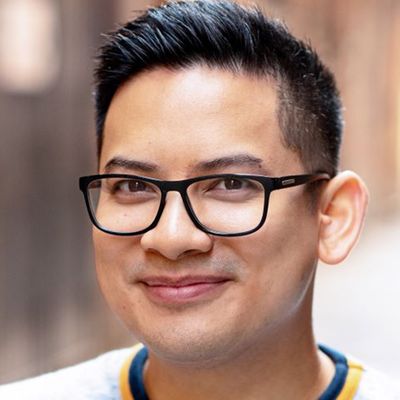
U Guys! This week, Jayke shares the latest Bway updates in the segment, the BroadwayWorld recap, brought to you by BroadwayWorld.com. Then Jayke is joined by playwright, actor, and musician, Justin Huertas to talk about his show, 'Lizard Boy', coming to off-broadway! A Seattle based creator, Huertas shares his artistic process in creating musicals, and what it's like to perform in his own works. He also touches on his experience as a queer Filipino man in the theater industry, and how his upbringing in Seattle has affected his life's work.
Transcript
This transcript was automatically generated and might contain errors.
[0:00] Jayke Workman: Girl, the way Halle Bailey slayed that Little Mermaid red carpet look, she said, POD of your god, did you hear? Did you hear? Did you hear my god guys? Take that hot. Hi, Jake is a god, oh my god, you guys! What's up, everybody? My name is Jayke Workman, and this is Oh My Pod, you guys, a musical theater and pop culture podcast. You guys, the LA premiere of The Little Mermaid starring Halle Bailey just happened in Los Angeles. And oh my pod, it looks so beautiful. Everyone on the carpet was turning looks stunting pretty, and every promo for this movie looks absolutely ridiculous. I cannot wait to see it. Halle Bailey, unreal. I mean, just unreal. She's absolutely stunning. The vocals, duh, sings the house down boots. But I cannot wait to see her rendition of Ariel, the mermaid. Y'all, let's dive right into this week's Broadway World recap.
[1:20] Jayke Workman: We must talk about the casting announcement for Little Shop of Horrors at the Muni this summer. You guys, Robin de Jesús and Patty Murin are both set to star in Little Shop at the Muni. I cannot even tell you how freaking obsessed I am with this casting. Robin de Jesús as Seymour and Patty Murin as Audrey Girl. Do I need to make my way to St. Louis to see this show? I guess the answer is yes. It was also just announced that Some Like It Hot is going to launch a North American tour in the fall of 2024, which is kind of wild to me because the show really didn't open that long ago. And though it has been met with like such critical acclaim, it's kind of crazy that they already have this like certainty that the show is gonna do well enough to like warrant a national tour. So I will be very interested to see what the casting process is like for the show and how long it takes to get it up and running before they actually open in the fall of 2024.
[2:31] Jayke Workman: It's also interesting to me how you replace such incredible people like Jay Harrison G and Christian Borle. I'll be interested to see what they come up with in terms of casting. And lastly, you guys, I'm so sad to report that after many ups and downs, it was just announced that Bad Cinderella is set to close on Broadway on June 4th. I'm kind of bummed about this, only because I know how hard all of these artists have worked to put up such a huge production. Obviously, the show was met with a lot of critiques, mine included, but I did see the show and I did have a very fun time. So it always makes me sad to see a production close, and I wish everybody at Bad Cinderella the best. And you guys, this has been the Broadway World recap. Oh my pod, you guys. I am so excited to welcome my next guest to the show. He is a Seattle-based playwright, composer, lyricist, and performer. Please welcome Mr. Justin Huertas. Welcome to the show.
[3:39] Justin Huertas: Hi, everybody. Thanks for having me.
[3:44] Jayke Workman: Yes, thank you for being here. How are you?
[3:46] Justin Huertas: I'm so good. I'm in Seattle. It is 10 a.m. I'm drinking my coffee and I am I'm ready.
[3:53] Jayke Workman: Work. Tell me about Seattle. Is that where you're from?
[3:56] Justin Huertas: Yeah, it is. Yeah, yeah. I grew up here, which is why Lizard Boy, my show is based in Seattle. It's um, I'm I'm a lot of the original musicals that I write are like love letters to the city that I grew up in. It's gray today, but all weekend it was really nice. So I got we got a taste, we call it summer preview here in Seattle. We got summer preview this past weekend.
[4:17] Jayke Workman: Yes, I've only been once, and it was in the winter, so I didn't really get the full like Seattle experience, but I would love to visit in the summer and you know, get the full weather. Um, but so you mentioned it. You mentioned your story, your or your show, um Lizard Boy, and I cannot wait to hear about it. Um, for the listeners, this show is already an award-winning creation by Mr. Justin Huertas, and now it's going to jump across the country and have its off-Broadway debut at Theater Row this summer. I am so excited to hear about this show.
[4:54] Justin Huertas: It is crazy. Yeah, I've been working on it for I mean, I was commissioned by Seattle Rep here in Seattle to write myself a show, which is already insane. I was in my early 20s, and the then artistic director, um, Jerry Manning was just like, oh, you're an actor who also plays cello. You should write yourself a show. And I'm like, yeah, whatever that means. And um, and so he paired me up with this wonderful playwright named Andrea Allen, who kind of coached me into like writing diary entries, essentially, and then we kind of zeroed in on one where I made up a story about myself with green lizard skin. And so they were like, Whoa, what's this? And so we focused in on that, and then it sort of became Lizard Boy. It premiered in 2015 at Seattle Rep, and we've been working on it ever since.
[5:41] Jayke Workman: Love fantastic. Well, I was, you know, fiddling around on the interwebs and trying to do my research on the show, and um, it looks so fun and beautiful. The music is excellent. There's you know, full cast recordings um anywhere that you want to listen, but um, I was so taken by this the story, and um I think it's really exciting that there is the element of queerness and also amplifying, you know, BIPOC narratives. I'd love to hear about um how maybe your personal experience and your your background has informed how you go about creating musicals, and specifically Lizard Boy.
[6:18] Justin Huertas: Absolutely. Well, it's funny because like Lizard Boy is the first thing I ever wrote. I had no experience except for like one playwriting class in college, and um, and so when we when we kind of focused in on this this story that I made up about myself, um, it was it sort of came from uh Andrea, the playwright would um kind of prompt me sometimes with my journal entries, and she'd say, How about today you write about your family? How about today you write about your coming out story? And so when I was asked to write my coming out story, I thought that's gonna be really boring because my coming out story is literally like, yeah, I told my friends and family I'm gay and they were like, Yeah, we know.
So um so I was like, okay, I need a way to like make it more dramatic. So I'm gonna give myself green lizard skin and say, like, all the drama in my life is because of my green lizard skin. And it's so funny because as we develop the character and as we developed the story, I really like I was writing from a very a very um deep and instinctual place. I didn't even know that I was writing about my experience actually growing up with skin that was different from everyone else around me.
[7:26] Justin Huertas: Right, quite literally. So uh so yeah, being able to like understand what I was doing really changed the trajectory of the story and really helped me understand the story that I was telling. Um on top of that, as a queer person, I uh I I knew from the beginning that I wanted uh Trevor, the the lizard boy main character to be queer, but I didn't want the source of his trauma to have anything to do with his queerness. I just wanted him to be gay, and that is just a given. And so I'm really proud of that aspect of the show. He um he he's kind of a recluse who who stays inside all year because he's too uh ashamed to go out in his you know green lizard skin. Um, but he does leave once a year on uh uh a fictional holiday called Monster Fest, uh, where everyone is dressed up in crazy costumes. So he blends in in a way. Um, and he decides um this year on Monster Fest, he's going to try and find a friend on Grindr, and uh, and then he ends up meeting the man that he kind of um falls for.
[9:02] Jayke Workman: Love it. Just you know, tale as old as time falling to the state.
[9:06] Justin Huertas: Tale as old as time. It's very standard stuff, you know.
[9:11] Jayke Workman: I love it. That's so exciting. I mean, it really is so important now more than ever to have um queer representation and also you know, BIPOC present representation on stage, and I think that it's sort of um excellent that our timing just so happened to work out that we are recording on the first day of AAPI Heritage Month.
[9:34] Jayke Workman: Yeah, we have an Asian American Filipino on the pod. I'm just so thrilled to have you. So I'm I'm I'm just delighted. But um, I want to hear about the sort of um background that you have as a writer. Did you always know that writing was going to be an element of your life, or was performance and um how you mentioned cello um were those you know the elements of of art that you focused on first?
[10:01] Justin Huertas: You know, what's interesting is that I um I didn't set out to be a playwright. Um it really wasn't until I wrote Lizard Boy that I found a passion for it, and um, and after that, uh uh some some theaters here in Seattle then commissioned me to continue writing more shows, so now I have this like awesome kind of um repertoire of of musicals that I've written for Seattle um that are all like kind of magical realism stories like Lizard Boy, where there's um some kind of like cool, fantastical fairy tale, fantasy, sci-fi element, um, but I use it to tell a very human story. Um, and I think like, I mean, I, you know, I uh I didn't set out to be a playwright, but um I've been a storyteller my whole life, and I think that's where writing came very, very naturally to me because as a child I wanted to be a comic book artist, a Disney animator.
I would draw and draw and draw, I drew myself as superheroes, I drew my friends as superheroes. Um I would imagine like if I were one of the X-Men or one of the Power Rangers, what would I look like? What would my color be? Um, and uh, and then I picked up the cello and realized wow, I can tell a story with the cello, and so I would choose these solos that had so much drama to them and very romantic. And then I found um theater and acting was so much fun, but my first musical, I think was the first time that I understood that all the skills I had been accumulating over my entire life kind of all intersected at musical theater in terms of the acting, the singing, the music, the visual storytelling, all of it, it kind of came to a head at musical theater.
[11:48] Justin Huertas: Um, and now that is my favorite medium to work in. I love writing musicals because there's just so much possibility and so much emotion and um and and so much opportunity for all kinds of storytelling. Um and it surprises me sometimes that um that that you know the things that I'm writing end up being so um new in a way, you know, a a story that that centers a a uh BIPOC um hero superhero um who is also queer, um and the queerness is just a given in his life. I mean, that um surprised me that I was like kind of on the front line of that kind of storytelling.
[12:31] Jayke Workman: Right. You're like it was really strange. Are we really like I've been alive for this long? How is this possible?
[12:38] Justin Huertas: Right.
[12:40] Jayke Workman: Absolutely. But it's people like you who, you know, are paving the damn way, which we're so grateful for, truly. Well, you mentioned um your commissions with Seattle theaters, but you also have a very thrilling commission by the one and only Kennedy Center. Can you tell me how that came about?
[13:03] Justin Huertas: Yeah. So yeah, that was one of the most random, amazing uh happenstances. Um so Mary Wynne Hyder is a wonderful author who wrote this uh this um uh this middle grade novel called The Mortification of Fovea Munson, um, which centers a 12-year-old Filipino girl whose parents are doctors and own a cadaver lab, and the parents want her to be a doctor so badly, and she does not want to be a doctor. She doesn't quite know what she wants to be, but she's stuck working at the lab for the summer, and uh she hears voices from the lab, she goes in and encounters uh three disembodied heads who dream of becoming a barbershop quartet.
[13:49] Justin Huertas: And so the story kind of revolves around her supporting these heads and helping them achieve their dream.
[13:57] Justin Huertas: Um and Mary Wynn and our director Graham Smith were looking for a composer.
[14:06] Justin Huertas: And you know, with the power of Google and YouTube, they found me and reached out to me, and I was like, this is completely up my alley.
[14:16] Justin Huertas: Um, and so, and then they said, Okay, great. Well, we're gonna propose this project to the Kennedy Center, and hopefully we'll get a commission.
[14:24] Justin Huertas: And I was like, okay, whatever that means. Um and then, like two weeks later, suddenly I'm getting an email from a Kennedy Center person saying, 'All right, let's talk about the terms of your agreement.' And I'm like, wait, what? Whoa, hey, whoa.
[14:39] Justin Huertas: So yeah, that's been in the works since January 2020. And since then, we've just kind of been waiting in the theater pandemic line for our moment, and yeah.
[14:53] Justin Huertas: Um this past winter, we got to run the show in March. So that was and what did you say that story was called?
[15:01] Jayke Workman: That show?
[15:01] Justin Huertas: The Mortification of Fovea Munson.
[15:05] Jayke Workman: Just rolls right off the tongue. I love it.
[15:07] Justin Huertas: This rolls right off the tongue. Yeah, I mean, there was a moment when Mary Wynn, so Mary Wynn Heider, the author, she also wrote the book of the musical, and I wrote the songs.
[15:16] Justin Huertas: Um, and she had a moment where she was like, 'Should we just call it Mortified?' And I was like, 'But the mortification of Fovea Munson is such an awesome title. We can't change that title.'
[15:28] Justin Huertas: So because of me, and because I fought for it, I made them keep it. We got this brilliant.
[15:35] Justin Huertas: It's like a poem. That's so thrilling. How amazing.
[15:40] Jayke Workman: So, what was the timeline of working at the Kennedy Center like? Or are you still in commission with them? Is it like an ongoing partnership?
[15:48] Justin Huertas: So we were commissioned in 2020. Our first workshop was going to be in May of 2020, and then it didn't happen.
[15:55] Justin Huertas: Um, and then we basically pushed a couple years. So our first workshop ended up being in February of 2021.
[16:02] Justin Huertas: Wait, 2020. It's 2023 now.
[16:05] Jayke Workman: Wow, you guys.
[16:06] Justin Huertas: I know. Like time? What is it? It's not real.
[16:11] Justin Huertas: Last year, which was 2022, we had a workshop in February. We did auditions for actors in June.
[16:18] Justin Huertas: We came back for a workshop with those actors in October. And then we got into rehearsal at the end of this past January.
[16:27] Justin Huertas: Um and yeah, rehearsed a show, put it up, and it ran for like three weeks in the Theater for Young Audiences space, which is the family theater at the Kennedy Center.
[16:38] Justin Huertas: And um, and yeah, it centers a Filipina American girl and her family, and we had two Filipino actors in the cast, and I didn't know until we were in rehearsal that they said to me, you know, this is the first Filipino story we've ever had on stage in the DC area.
[17:03] Justin Huertas: And I was like, Wow, what? That's one of those things where I'm just like, but I've been alive this long. How is this the first thing?
[17:10] Justin Huertas: So um, so because of that, we had such amazing support from the Filipino community in the DC area. A lot of people showed up, which was really cool, and um, and I got to meet a lot of really awesome Filipino artists over there.
[17:24] Justin Huertas: So um, so that was dope. I love DC. I want to go back. I want to go back.
[17:28] Justin Huertas: So maybe they'll hear this and be like, hey, we should bring Justin back. I don't know.
[17:33] Jayke Workman: Well, that's just amazing that you had such a warm welcome from the Filipino community in that area.
[17:40] Jayke Workman: I think it's like I said before, it's just so important, and I'm excited to see, you know, that more and more creatives are actually saying, we're here and we're gonna tell our stories.
[17:53] Jayke Workman: We're not just gonna be the people who you know write it and then put somebody else on stage. You're like, no, no, this is we are the creators and also the performers, and I think that's so exciting.
[18:04] Jayke Workman: Um and that's this Lizard Boy and this other hilarious sounding creation are not the only things that you have written.
[18:13] Jayke Workman: Um I would love to hear also about Lydia and the Troll at Seattle Rep.
[18:18] Justin Huertas: Yeah, so that is Lydia and the Troll is also a show that's been waiting in the pandemic theater line.
[18:24] Justin Huertas: Um we uh so Lydia and the Troll is a show that I, in the last week of the Lizard Boy's original run at Seattle Rep, I called myself into a meeting with the then interim artistic director Braden Abraham, and I said, Hey dude, you have to let me do this again.
[18:49] Justin Huertas: So you have to commission me, and I have these ideas. What do you like? And he chose one that eventually sort of like morphed into an Alice in Wonderland through Seattle kind of story where each like there was a, you know, we have a lot of like magical locations that I believe are magical here in Seattle.
[19:11] Justin Huertas: There's like Pike Place Market, there's the Space Needle, there's and then we have a statue called the Fremont Troll, which was commissioned in the early 90s.
[19:22] Justin Huertas: It's this really huge concrete sculpture of a troll that's like holding a VW bug in its hand. And it's kind of a Seattle staple.
[19:33] Justin Huertas: It was in the movie, the movie Ten Things I Hate About You filmed in the Seattle, Tacoma area, and they had one scene at the Fremont Troll.
[19:42] Justin Huertas: So that's like the Fremont Troll's claim to fame is Ten Things I Hate About You. But uh, but I had that as part of this like wonderful Alice in Wonderland journey, and then I started zeroing in on the troll and being like, oh, maybe this is the thing that I'm excited about.
[19:57] Justin Huertas: So then I started writing this story Lydia and the Troll, which is about kind of an up and coming aspiring music producer who's like she's trying to level up, but she's kind of stuck in this codependent relationship with an equally kind of broken human named Pete, and she's just very vulnerable, she's really insecure, which leaves just enough of an opening for a troll in disguise to come try and steal her life from her.
[20:31] Justin Huertas: Um very straightforward.
[20:35] Justin Huertas: Yeah, I mean, I tell very straightforward stories.
[20:38] Justin Huertas: Um, and you know, and it's all, you know, it's partly my life because I too was in a codependent relationship with someone who was also broken, and like we, it kind of imploded and it was very melodramatic, and so I wrote that into this story, and then we brought on a wonderful director named Amina Kaplan who became my co-creator because she then started pouring aspects of her own life into the character of Lydia.
[21:08] Justin Huertas: Um, and so now we have this really amazing complex story, and we were going to put it up in 2019, and then Amina was offered the role of the resident director on the Lion King National Tour.
[21:22] Justin Huertas: So Seattle Rep was like, okay, great, let's wait a year so that Amina can go do that.
[21:28] Justin Huertas: Sure. And then we can come back to it in spring of 2020 and then spring of 2020.
[21:34] Justin Huertas: Um I know everything.
[21:38] Justin Huertas: So we've been waiting, and finally, finally, finally, we're in tech right now for Lydia and the Troll, and it feels so surreal.
[21:46] Justin Huertas: I'm just sitting there with stars in my eyes, a huge smile, the music is so fun and loud, and the lights are so, I mean, Robert Aguilar is our lighting designer, and he's such a genius, and I'm just like watching all of these people's creative genius collaborate and mesh and turn into something that is so much better than what I imagined.
[22:09] Justin Huertas: So yeah, and it opens May 10th and runs for a month.
[22:14] Jayke Workman: Fabulous. And are you performing in the show as well as being on the show?
[22:19] Justin Huertas: I mean not so I um this is one of the shows that I wrote for a friend of mine, my friend Sarah Russell is playing Lydia.
[22:29] Justin Huertas: Um, and she's also been on this journey too ever since the first workshop in 2017.
[22:35] Justin Huertas: She's been a part of it. Um, and that was always kind of the I knew from the beginning that this was going to be a story that I was not going to be inside of as an actor.
[22:46] Justin Huertas: Um, which is also really lucky because Lizard Boy off Broadway has a little too much of an overlap with Lydia and the Troll.
[22:58] Justin Huertas: So Lydia and the Troll is gonna open on May 10th. I'm gonna fly to New York on May 11th, and I'm gonna start rehearsal on May 12th.
[23:05] Jayke Workman: Good lord.
[23:08] Justin Huertas: It's gonna be great. It's the working performer's life.
[23:14] Jayke Workman: I love it. Well, that's so exciting. I can't wait to hear how that show goes.
[23:19] Jayke Workman: And um obviously I can't wait to see Lizard Boy when you guys come to off Broadway New York City.
[23:26] Jayke Workman: Have you spent any extended amount of time in New York City before?
[23:29] Justin Huertas: Um no, I mean no.
[23:32] Justin Huertas: Wow. Yeah, I think the longest I've been there has been for a two-week workshop of my friend Timothy Huang's musical American Morning.
[23:41] Justin Huertas: Um and I was there for a workshop at Playwrights Horizons.
[23:45] Justin Huertas: Uh, but like two weeks, I think is the longest time I've ever spent there.
[23:50] Justin Huertas: Um one of our other actors, I guess two of our actors. So Lizard Boy is three people, it's me, it's Kiki Delore who plays the role of Siren, the awesome comic book supervillain.
[24:01] Justin Huertas: Um she lived in New York for like three years and then ended up moving back to Seattle right before the pandemic.
[24:08] Justin Huertas: And then um the third actor is William A. Williams, um, Bill, Bill Williams, who is based in New York.
[24:16] Justin Huertas: So, like, so I visited those two, but yeah, I myself, um, this will be the longest time I've ever spent in New York.
[24:25] Justin Huertas: And I'm and I'm nervous because I think I was, you know, I was here in the middle of the summer in like 20, oh gosh, 2018, and I it was so hot and humid, and I had a lot of trouble existing.
[24:39] Justin Huertas: Um I was just like wet the whole time.
[24:44] Jayke Workman: It's a little much.
[24:47] Justin Huertas: I am like notoriously just a sweaty Betty, so the summer here can be a lot.
[24:54] Jayke Workman: Bring a fan, bring a water bottle, yes, walk around in a G string, I don't know.
[25:00] Justin Huertas: I know, right? I'm used to like Seattle, which is like when there is summer, which is for a very short time, it is very dry and it is very easy for me to.
[25:10] Justin Huertas: I'm very acclimated to Seattle. So when I go anywhere else on the East Coast, um I went to Atlanta once and I was like, oh I could not I can't I have to leave now.
[25:11] Justin Huertas: I have to leave right now.
[25:20] Jayke Workman: Atlanta.
[25:22] Justin Huertas: Oh god.
[25:23] Jayke Workman: Well, I'm very excited to be part of your welcoming committee to New York City.
[25:28] Justin Huertas: Thank you.
[25:28] Jayke Workman: Of course.
[25:30] Jayke Workman: So did you um go to school for um either like cello performance or writing or performance, or did you have any um like element of quote unquote higher education when it comes to education?
[25:44] Justin Huertas: Um yeah, well, I mean, I picked up cello when I was 10 years old and I was taking private lessons all through school.
[25:51] Justin Huertas: Um and I originally was accepted into college, I went to Pacific Lutheran University in Tacoma, Washington.
[25:57] Justin Huertas: And um, and I was originally accepted into the music program for cello performance, and then my senior year of after I accepted um my senior year of high school, I was cast as the major general in Pirates of Penzance.
[26:12] Justin Huertas: Um and the experience of being the major general, where like I was in this, you know, I was in this ridiculous colorful costume, and I had this rainbow parasol, and every single time I entered, I got an entrance applause, and I was like, oh wait, wait, this is what I want to do.
[26:28] Justin Huertas: I think I want to do this so uh so I went to PLU and studied theater instead but I kept up with my cello and um and a lot of times when they cast me in roles at PLU they would incorporate the cello.
[26:42] Justin Huertas: I was the MC in cabaret and I played the cello. I was Festi in 12th Night and I played the cello and um and yes I was able to keep it up and which was great because you know then like Lizard Boy became like oh this was the thing that I was leading to maybe all my life because it combined everything.
[27:01] Justin Huertas: But yeah I studied acting and directing and took one playwriting class so a lot of the stuff that I learned in writing was on the job.
[27:13] Jayke Workman: Wow one playwriting class and look at you now head a too look at me now that is so cool.
[27:23] Jayke Workman: Well I'm fascinated by writers and creatives who can not only you know put their brain onto paper but do it so actively and you know you're not just working on one thing at a time you've got you know clearly your fingers in many things going on but I would love to hear if you would like to share about um how you even start writing.
[27:50] Justin Huertas: I myself have written songs here and there or had ideas for a play or whatever, but I've never been able to articulate what I am trying to convey through a song or a scene in the way that I would love to. And I think it would be really exciting to hear how you go about creating either a scene or a song or a melody or anything like that.
[28:18] Justin Huertas: Yeah, well I was obsessed with Sondheim in college as I'm sure many of us were. And I decided that my senior project at school was going to be on Sondheim and his music. And so I have a lot of love and respect for the work that he did. I also grew up on pop music. I grew up on, you know, literally like Spice Girls, boy bands, I mean Aaliyah, TLC, like I listened to all of that. I watched TRL every day after school, and that was the music that I loved to listen to. So after college, when I started kind of like dipping my toe into songwriting before the Lizard Boy commission even happened, I started trying to understand how to combine everything I learned of Sondheim's methods in terms of pitching a singing voice close to where that person's speaking voice is so the transition is seamless, to like, you know, maybe the person's emotional state influences the shape of the melody in some way.
If it's more anxious, does it flip up and down and up and down? Or does it go in one tone in a straight line? Is it part of me? Is everybody there because everybody's there? Is it like, is it that? And so I started trying to understand what that kind of philosophy looks like on top of pop music and how does an emotion kind of influence the melody in a pop song. And that was something that I got really excited about as I was writing Lizard Boy, are these kinds of melodies and how to motivate the melodies. One of the songs that people kind of find the most, which is random on Spotify, is from Lizard Boy's "A Terrible Ride." When I ask people how they found Lizard Boy, a lot of times they say, "Oh, 'A Terrible Ride' was on a random playlist that I listened to and then I just found the musical through that."
And that's a song that I wrote from a place of like, I know that in that moment in the story, Siren has tried so hard to achieve her goal and she failed, but I also knew I wanted a rock song. So how do I express the frustration of failure through a catchy hook? And for me, yeah, it was just kind of like a lot of writing the chorus of "A Terrible Ride" was very much like, what is the anger part? The anger part is the four to the floor. I fought and fought hard, and I could have died, but I got scarred. And then the frustrated sadness of "A Terrible Ride." A lot of it for me comes from a place of emotion first. When I'm writing a song, it will often start from just writing phrases that the person is feeling.
For "A Terrible Ride," it was "I fought hard, I got scarred," and I would just write phrases, decide which phrase is the most exciting to me, or maybe has the most passion or emotion behind it, and then figure out how to sing it. Once I figure out how to sing one phrase, I'm like, okay, so if that's this phrase and this is how it's sung, what does the rest of the song sound like? And then I kind of build from there.
[32:59] Justin Huertas: So yeah, that's kind of like the main thing that I do, starting with words, and then it's back and forth between melody and then words and then melody and then words.
[32:59] Jayke Workman: Wow, that's so fascinating. That is just so cool. And so then do you find that there is a big difference in how you approach creating lyrics or melody when you are working with an already existing book, or you're working with people who are creating the story with you as opposed to just you doing it all on your own? Are there elements of songwriting that have to be adjusted when you are collaborating as opposed to completely creating something by yourself?
[33:39] Justin Huertas: You know what's interesting is I haven't had to change much of what I do because what I like to do is start with a phrase. If I am working with someone who, you know, like for instance with "The Mortification of Fovia Munson," we're adapting from Mary Wynn's book. I'm reading the book, and then where generally I would write a bunch of phrases and then find an exciting one and try and sing it, now there's just a book of phrases, and I can zero in on the text that I think might serve the story really, really well as a song and try to expand on it. The method kind of stays the same, but now I have a book writer to bounce ideas off of. I'm like, okay, great. Especially working with Mary Wynn, who is the book writer, I can say, "Hey, so this phrase is awesome and I want to use it, but here's a bunch of other words that you didn't write in your book.
How do you feel about them?" And that collaboration kind of moves forward in that way. Mary Wynn, for the most part, will be like, "This is awesome, keep going," and just making sure that everything that I do as I'm writing a song brings us closer to the core of the character, especially if it's a character that I didn't create myself. I'm very thoughtful about how I create and making sure that my writing partner has as much say in it as I do, even if I'm the composer lyricist. She gets to help me decide how to express this character.
[35:36] Jayke Workman: Sure. And I would imagine too that there is definitely an element of ownership and sensitivity sometimes when working with new people or even, you know, like longtime collaborators, where you could cross a line or cross a boundary where someone's like, "Oh wait, this is really important to me, and this needs to stay," or "This needs to go," you know, like throughout the development process. So that must be interesting to navigate.
[36:05] Justin Huertas: Yeah, it's cool. Luckily, I've had wonderful collaborators who, when we do come up to that line, they'll say, you know, we'll approach it with open-mindedness every time. It's never shutting each other down. It's more like, "Okay, that's interesting. That wasn't what I was thinking, but let's keep going and see what happens." In the end, either it works or it doesn't, and then we'll be really honest with each other. If it's an idea that's new and not what I imagined, this has happened a lot with "Lydia and the Troll" because Amina Kaplan is such an amazing imaginative collaborator. We constantly throw ideas at each other, and there are some times where we're like, "Huh, I mean, let's see it." More often than not, it's just like, "Okay, yeah, that's awesome. I'm really glad I didn't stamp that out because that's amazing."
[36:58] Jayke Workman: Totally. That's so cool. And it just leaves the door wide open for play and growth.
[37:05] Justin Huertas: So then when it comes time to hold auditions, how involved do you get to be with either choosing people to take on the roles that you've created or inviting people to audition who you think would be really right for it? Are there lots of opportunities for you to throw your opinion into the ring?
[37:27] Justin Huertas: I am, yeah. I'm very involved in all the casting processes. I know that I am a writer and I'm not a director, and I'm not a music director. So I might have my opinions, but I trust the director and the music director. For instance, in "Lydia and the Troll," when we had auditions, Amina Kaplan, the director, and Steven Tran, my music director and orchestrator, I have my opinions, but I will listen to what they say. If Steven Tran says, "This person's awesome, but they're not able to emulate the style of the genre that we're looking for," or Amina Kaplan might say, "That person's voice is dope, but they're not available," you know, they don't feel as available as we need them to be for this role or whatever, emotionally, intellectually. And I'm just like, "Yeah, I trust what you guys say. I don't do that. I don't direct." I'm sitting there and I'm just like, "That person's cool. They just said my words in an audition. That's awesome."
[38:50] Jayke Workman: Right. Totally.
[38:50] Justin Huertas: So yeah, I am, and they welcome my opinion, but for the most part, at least like the initial impulse opinions, I'm always like, "You guys talk first, and then I'll jump in."
[39:04] Jayke Workman: Well, it's interesting too to get to hear your perspective as a creator whose work has been so admired and praised on the West Coast in your community, and now clearly, you know, coming across the states and having your off-Broadway debut with this show "Lizard Boy." But I've had people on the pod who have been very open about their experience working regionally and how that is just as fulfilling and rewarding as what some would say is like the pinnacle, the Broadway, the off-Broadway stuff. How important is it to you to have your work recognized and produced in places like New York City? Is it something that you have always wanted, or are you just as comfortable with having theater companies across the country produce your works?
[40:03] Justin Huertas: I think when I was coming out of college, I was like, "I have to go to New York because that's where theater is." And I think that's what I had thought for a while. I worked a lot as an actor and as a musician here in Seattle for some years, just out of college, knowing that eventually I'm gonna make it to New York and I'm gonna do something there. The more I kind of understood, especially as I started working as a writer and started connecting with my community here as a writer, and then eventually, you know, when we brought "Lizard Boy" to San Diego and then the Bay Area, connecting with those communities too, it became very clear to me that New York is amazing and also not the only place where theater's happening.
And I think it took me a while to understand that. At the same time, while New York is not the only place where theater is happening, New York is a place that a lot of people go to experience theater. Because of that, I have still wanted my work to show up there and to connect with people there. My hope is eventually that these things that I've written for my community here in Seattle, that I will be able to license them so that they can be done in regional theaters wherever they want to do them.
[41:31] Justin Huertas: Yeah. Um, because I I'm I just I love yeah, I just love making those kinds of connections. Um and and and it was it's it's wonderful now because like my my um my point of view has shifted uh to you know, not that uh for me, like you know, obviously like New York is is amazing and not the only place where theater happens, and I would love to go to New York because I know that um it's going to uh kind of allow me a sort of platform to be able to reach out even further. Um so that's yeah, I think my dream, my real dream is that like, you know, the stories that I write are continuing and just like I don't you know wherever they are done, I don't really care where they're done. Um I don't even I don't even care if like the productions are good.
I just want I really want the stories to be out there and I want people to, you know, people who see themselves and uh in the protagonists of of these stories to be able to connect to them and be able to understand that like even if you haven't grown up seeing yourself as a hero of the story, like you're the hero in my story, you're the hero in all of my stories. So um, so that's the that's my aim, and um and I I I do still very, very much believe that New York is is a part of that journey. For sure.
[42:57] Jayke Workman: And who knows what what doors could open, you know, with a theater row and and bringing your stories to New York. I think this city is so rich um in terms of of art and the the web of creative people that you will just inevitably fall into, you know, like being here. Um so I'm so excited for you. This is so it's gonna be great. Um we touched on it a little bit before, but as far as I know, Seattle is a fairly queer centric place to be.
[43:37] Justin Huertas: Um what it was like to grow up as a a queer Filipino kid in Seattle. Yeah, it was um uh I always feel really like privileged and gross saying this, but it was easy. No it was like it was such I feel very privileged to you know to to say that that my experience growing up queer. I mean, you know, the what I saw on TV Um was what I saw on TV in terms of like the lack of representation or the representation of queer people being that they are the joke. Right. Um or that they are the villains. Um that was enough to keep me in the closet through most of high school. Um but after I came out and it was I was so warmly received. Well, I mean like was I warmly received, or were people just like shrugging and saying like, yeah, we've known this since you were a child.
Um so yeah, it was very it felt very um very easy um to the point where like I did get nervous any time I left Seattle to go anywhere else. I was like, okay, well, I don't really know how queer people are received in this city or that town. So I'm gonna try and hide it as best as I can. Um until someone says, hey girl, and I'm like, oh yes, okay, great, we're in the same club. Um so yeah, I mean, like it's it's wonderful. I mean, you know, there it's it's not like you know, a queer Mecca by any means. It's definitely like um, but but we're here, you know, queer people are here, and particularly like the neighborhood that I live in, which is Capitol Hill, it's a very um queer neighborhood. It's you know, one of those places where the crosswalks are rainbows and um and all of the good gay bars are here. Um yes.
[45:41] Justin Huertas: Um so uh so yeah, it's it's it's really easy, it's really great. And I, you know, I remember um uh I remember be, you know, early on um in my life being nervous to hold hands in public with the person I was dating, and now I do that all the time, and I see other people. I see people who are younger than I was um when I was nervous. I'm seeing young, young couples doing that comfortably, and it's just it makes me really happy to know that like this is a place where we feel comfy cozy doing that, especially, you know, it is a touristy town, so sometimes you see tourists in from other places with, you know, I don't know, like camo patterns and American flags. It's so funny that like now American flags to me are just like a like a red flag.
Um they like America. Oh um but uh but but you know, still like even even though like we see we see we still see that when people come into Seattle from other places and we still feel comfortable, you know, being ourselves here. I think says a lot about um this city. Um but yeah, I feel like the only like rival to our community is like the tech people as Amazon and Google and Microsoft is expanding. We're seeing we're seeing more of them.
[47:07] Jayke Workman: More of those. More of those people, engineers, whatever that means.
[47:14] Justin Huertas: No, they're great. I love them. Well, I mean, I'm just so glad to hear that you had such a wonderful experience because um, like you said, more and more. I mean, I I graduated high school in 2015. It was not long ago that I was also, you know, in that in that world, and um now to be able to see my little sister who is seventeen, she's a senior, about to graduate high school, and her her perspective on you know, queerness and and having friends who are trans and you know, non-binary, uh is just so different than what I had literally like eight years ago. So it's just I'm so grateful for that for her and for you know, that next like age of people coming up, and I think it's only informed by and aided by people like you who are quite literally creating these these narratives and these stories where people can see themselves.
Children can can look up and see themselves. Um and how you mentioned it's not the the butt of the joke and it's not the the queer struggle story. It's just an inherent element of who these characters are. So that's so exciting and refreshing to hear. I felt I have also felt very privileged in my in my queer experience because I was so so embraced by my mother and you know, my family. So, um that it is important to acknowledge that like that is not the case for for the majority of the queer experience.
[48:52] Justin Huertas: Yeah. Yeah, yeah. And it's true, like and I you know, I I I I'm I some p I sometimes like, you know, um, I I I say that I had a privileged kind of like upbringing, um uh with some I don't know, I don't know that it's shame, maybe it's embarrassment, but I also have to remind myself like I think people need to know that I had a very pril I not have privilege, but I had a very easy I was in a community that accepted me, and um when I when I didn't expect them to do that, um coming out was very hard for me and my heart was racing. Um but uh but I was immediately welcomed and accepted and like um and it is possible, you know, after seeing like you know, the queer people that I did see in media, it was like you know, people were people came out to their parents and were kicked out of their homes.
Um and uh and and that's why you know like I was preparing myself for the very worst. And um uh and and you know, I think it's helpful for for young people uh who might be uh afraid of that to know that like it's possible that you know you're you're you're going to tell someone you're you know who you are and they're going to say yes, that is exactly who you are.
[50:14] Jayke Workman: So 100%. And I think it's so exciting too to see um just baseline on like the commercial side of it that um New York City and Broadway are really trying to embrace that way of thinking and um embrace that type of of storytelling to be put on stage. Are there things that you are excited to be able to see while you're in New York?
[50:40] Justin Huertas: I mean, I hope I have the time and energy.
[50:43] Jayke Workman: Yeah, I'm sure you're gonna be hustling.
[50:46] Justin Huertas: Oh my god. But I mean, like, you know, it's really meaningful to me. So, so Here Lies Love. Um, they had a production here in Seattle, and I have I have some um I have some mixed feelings about Here Lies Love.
[51:03] Jayke Workman: Do tell.
[51:03] Justin Huertas: It's it's meaningful to me that there's a Filipino story out there. It's meaningful to me to see that many Filipino artists on stage together. Yes. Um speaking Tagalog and like um and and telling a a piece of our history. Um I think my mixed feelings stem from glamorizing this like evil dictator.
[51:26] Jayke Workman: Well, I mean classic. We've seen it.
[51:28] Justin Huertas: Exactly. Exactly. Um and uh and it's just yeah, I think I think that my mixed feelings are like partying with Imelda. Because I'm like, I would never party with Emelda. And I'm so freaking stoked um for for Here Lies Love. I worked with Ariel Jacobs a long time ago, and um, and I'm so excited for her. Yes. Um and uh and yeah, and I'm so I'm really hoping that I get to I get to go experience it there. Experiencing it here in Seattle. I mean, like, for all of the you know, opinions that I have, it was one of the coolest theater experiences I've ever ever had. Like they, you know, they did it the same way they do it everywhere else, where it was here at Seattle rep and they gutted the theater and built a dance floor.
[52:19] Jayke Workman: Right.
[52:20] Justin Huertas: And the experience was so freaking amazing and seamless. They moved the audience around, and I never felt like I was confused or being shoved in a certain direction. I was like a part of it, and it was like that kind of immersive experience is so rare. Um, and uh, and the fact that it was uh it was intertwined with a Filipino story was so incredible to me.
[52:46] Jayke Workman: So that's amazing. And was was Ariel Jacobs part of that original production that you saw?
[52:50] Justin Huertas: No, no, it was um JG. It was JG Makubai. Um, and um, yeah, but I'm stoked. I'm stoked for Ariel.
[53:00] Jayke Workman: Oh my gosh, I saw the announcement and I screamed.
[53:03] Justin Huertas: Yes, I know. I talked about it last episode. I was like, this is gonna be so good. I can't wait to see that show.
[53:10] Jayke Workman: Well, regrettably, I still have not seen And Juliet, which is like this, you know, buzzed about queer show.
[53:18] Justin Huertas: So I'm I really want to see it.
[53:20] Jayke Workman: Maybe we'll just see it together.
[53:22] Justin Huertas: I would love that off.
[53:24] Jayke Workman: Yes, please. Because honestly, like that is also that's also on my list. I um I listened to the Broadway cast recording, and I was like, okay, this is um this is what I'm gonna listen to for the next like two months. Like non-this will now be my personality, thank you.
[53:39] Justin Huertas: This is my personality, yes, exactly. This is this is it, this is it for me.
[53:43] Jayke Workman: Um, yeah, definitely and Juliet. Love it. Well, Justin, thank you so much for being on the pod. Would you tell the listeners where um they can find you on socials?
[53:53] Justin Huertas: I am on Instagram um at Justin Huertas. I am on uh Twitter, but I never use it. Um so I would say find me on Instagram.
[54:05] Jayke Workman: Yes, and can you tell the listeners um when when does Lizard Boy go up officially off Broadway?
[54:11] Justin Huertas: Yes, Lizard Boy's first performance is going to be June 1st. Um, and uh, and then we're set to run until July 1st. Um, I don't know if we're gonna extend, but buy your tickets and we'll see.
[54:26] Jayke Workman: Because I would love to extend.
[54:30] Justin Huertas: Totally. Well, thank you so so much. This was so fun, and you are such a delight.
[54:36] Jayke Workman: Oh, I can't wait to meet you when I'm there.
[54:39] Justin Huertas: I know we're gonna pod yeah.
[54:41] Jayke Workman: We're gonna be besties.
[54:47] Jayke Workman: You guys, that's it for another episode of Oh My Pod, you guys. Don't forget to rate, review, and subscribe anywhere you listen to the pod. And you can follow the show on Instagram at oh mypod, you guys. Thanks so much for listening. Talk soon. Bye.
[55:03] Jayke Workman: Oh my god, oh my god, you guys.
© Broadway Podcast Network, All Rights Reserved