

Author, Editor, Librarian, and former performer Kevin Winkler is here to talk about his brand new book, "On Bette Midler: An Opinionated Guide." U Guys, this week's BroadwayWorld Recap has all the latest Bway news, including some very exciting new shows coming to Broadway!.. Read More
From the show: Oh My Pod U Guys
Guests

Featured Shows
About
Author, Editor, Librarian, and former performer Kevin Winkler is here to talk about his brand new book, "On Bette Midler: An Opinionated Guide."
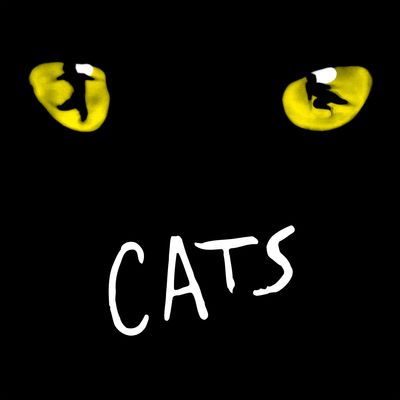
U Guys, this week's BroadwayWorld Recap has all the latest Bway news, including some very exciting new shows coming to Broadway! Then I am joined by author, editor, librarian and former performer, Kevin Winkler, to talk all about his extensive career as an author and literary historian. He shares about his love for Bette Midler, and what led him to publish his third biographical book, "On Bette Midler: An Opinionated Guide." We chat about his other works, which include biographies on Tommy Tune and Bob Fosse, as well as his work as a former performer in shows like the National Tour of CATS. Kevin is truly a Broadway expert, U don't wanna miss this episode! Order, "On Bette Midler: An Opinionated Guide," today!
Follow the pod on Instagram: @ohmypoduguys
Transcript
This transcript was automatically generated and might contain errors.
[0:00] Jayke Workman: Please welcome the wickedly talented, the one and only Adele Dazim.
[0:12] Jayke Workman: Oh my god, did you hear? Did you hear? Did you hear? Oh my god, guys. Take that high. Oh my god, can I go to my god! Oh my god, you guys! What's up, everybody? My name is Jayke Workman, and this is Oh My Pod, you guys, a musical theater and pop culture podcast.
[0:34] Jayke Workman: You guys? You guys, it's here. It's happened. We received the official trailer for the Wicked Movie, girl. Girl, I cannot tell you how homosexual I am for this trailer. I can't believe I ever doubted the Wicked movie. I know, I know. I'm owning it. I poo-pooed the Wicked movie. I said that we didn't need it. I said I wasn't gonna like it. Girl, this trailer, I think I've watched it 25 times. I am obsessed. Miss Ariana as Glinda. Are you kidding? She looks amazing. She sounds amazing. Cynthia, obviously singing down. I am, I do think it's a little questionable that Alphabet has a two-inch acrylic nail, but that's neither here nor there. I will still be seated on Thanksgiving for this movie. We got a teeny tiny little look at Jonathan Bailey as Fierro, but I think they're trying to keep a lot of the extra goodies and surprises a surprise. But you guys, run to watch this trailer. It's phenomenal. And if this three minutes and 30 seconds is any indication of what this actual movie is going to be, we are not ready. We're not ready.
[1:56] Jayke Workman: And with that, you guys, we have to dive right into this week's BroadwayWorld Recap brought to you by my amazing pals at Broadwayworld.com. First, you guys, we got the amazing announcement that none other than George Clooney is set to make his Broadway debut in Goodnight and Good Luck. This will be the first stage adaptation of the 2005 film Good Night and Good Luck, which actually earned George Clooney his directing and writing Oscar nominations. And the movie was also nominated for Best Picture. Um, and he is gonna star in it this time, but not direct. Uh, it's gonna be directed by David Cromer, and it's gonna premiere on Broadway in the spring of 2025 at a Schubert Theater to be announced. So stay tuned for any updates on Good Night and Good Luck. I mean, it's about time we had Mr. George Clooney on Broadway. Come on! And he's so dreamy. I can't wait. So stay tuned, because I'll keep you updated with all things Clooney.
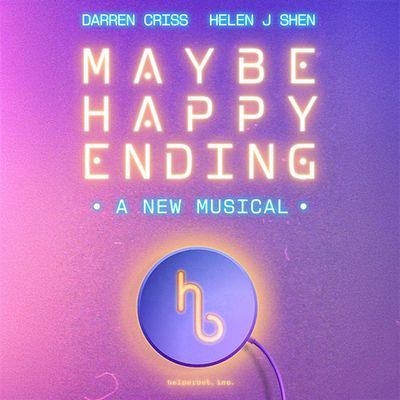
[2:52] Jayke Workman: Next, you guys, we got a really exciting announcement that a new musical comedy is coming to Broadway, starring Darren Criss and Helen J. Shen. The show is called Maybe Happy Ending, with music by Will Aronson, lyrics by Hugh Park, and a book by both Aronson and Park. And it is going to be directed by Tony Award winner, Mr. Michael Arden. You guys, I'm so excited about this. It's been a long time since we've gotten just like a happy-go-lucky classic romantic comedy on Broadway. And who better than the dreamboat that is Darren Criss to be the leading man in this new musical? I'm so excited. It's gonna premiere in October on Broadway, and more information will be coming out soon. So I can't wait to keep you guys updated on that.
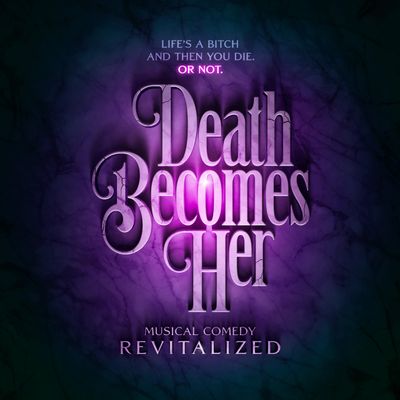
[3:43] Jayke Workman: But you guys, this is not the only new musical that is set to premiere on Broadway in October, because we got word that Death Becomes Her has officially been announced to open at the Lunt-Fontanne Theater this fall. You guys! I am so excited about this show. Megan Hilty and Jennifer Simard together is going to blow up Broadway. We're gonna blow up the Lunt-Fontanne. I'm just kidding, we're not doing that, but I'm excited. Broadway star Christopher Sieber is also starring in it, alongside Michelle Williams of Destiny's Child. Like, come on. And it's directed and choreographed by Tony Winner, Chris Gatelli. You guys, I am so, so excited. I've had so many friends who have been able to see the out-of-town tryout in Chicago, and they have raved about it. So this is gonna be so thrilling. I can't wait. And so soon, I didn't think it was gonna be this fast from Chicago to New York. But here we go, baby. This fall, we get Death Becomes Her on Broadway.
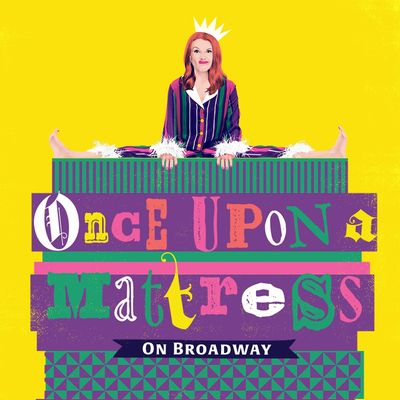
[4:51] Jayke Workman: And lastly, you guys, in a kooky crazy announcement, Broadway World just shared that Sutton Foster is going to lead the revival of Once Upon a Mattress on Broadway beginning this summer. You guys, they just finished this run at New York City Center, and now previews are gonna start Wednesday, July 31st with an opening night set for Monday, August 12th of 2024. This is crazy. I mean, it had to have been in the works and part of the plan, you know, when they originally did it at City Center, because a show this big being revived on Broadway, you know, you have to have a theater, you have to have money, Lord knows. But I'm so excited for Miss Sutton Foster because I feel like this is a role that she really, really is gonna make her own and shine in.
I heard nothing but wonderful things about the City Center production, and I can't wait to see her do it on Broadway. So from Mrs. Lovett at the Lunt-Fontanne to Miss Winifred in Once Upon a Mattress, Miss Sutton is doing it all.
[5:59] Jayke Workman: And you guys, this has been the Broadway World recap. Oh, my pod, you guys, I am so excited to welcome my next guest to the show. He is an author, an editor, and a librarian historian here to talk about his newest book on Bette Midler: An Opinionated Guide. Please welcome Mr. Kevin Winkler.
[6:21] Kevin Winkler: Hey, Jay. Great to be here with you.
[6:23] Jayke Workman: Thank you for being here. I am so excited to chat with you. When I saw your request come through to be on the show, I was like, this is something that I have not ever talked about on the pod, and I'm so excited too.
[6:36] Kevin Winkler: Really? You know, I was so glad when you accepted my request because I'm not sure how many youngins, younger people like you, actually know who the hell Bette Midler is.
[6:52] Jayke Workman: Yes. I know.
[6:53] Kevin Winkler: Well, and when you have like a sort of frame of reference of like the zeitgeist of musical theater, you sort of inherently know. But when, you know, I think the most exciting thing that has recently reintroduced her to the world was the newest Hocus Pocus film.
[7:09] Jayke Workman: Absolutely.
[7:09] Kevin Winkler: Absolutely. Which we, I mean, of course we will be doing a deep dive, as it were, into the world of Bette. I always ask my guests, where are you calling in from on this fine day?
[7:10] Kevin Winkler: I am calling in from sunny Fort Lauderdale, Florida.
[7:25] Jayke Workman: Ah, you bitch! How dare you! What's it like in New York?
[7:30] Kevin Winkler: Yeah, disgusting per usual. It's always disgusting in New York.
[7:30] Kevin Winkler: My husband and I are snowbirds. I haven't quite wrapped my mind around that term yet. So we spent half the year in Florida and half the year in New York City.
[7:49] Jayke Workman: Fabulous.
[7:49] Kevin Winkler: So we'll be heading back the beginning of June for six years.
[7:54] Jayke Workman: Okay, perfect. Right in time for all of the gorgeous Tony Awards hoopla and catching up with all the shows that opened during the spring that I missed, the gay shenanigans of pride events.
[8:06] Kevin Winkler: Oh yeah, oh yeah.
[8:06] Jayke Workman: Yes, oh my gosh. Well, I'm so excited to have you here. You are obviously extremely well-versed not only in the knowledge of Bette Midler, but you have so beautifully written numerous books and biographies, sort of chronicling the history of Tommy Tune and the Bob Fosse and the world of dance. Because if I gather correctly, you have a history as a dancer before you became a writer. I'd love to know what was your sort of road to shifting from a performance aspect to a creative writing aspect.
[8:52] Kevin Winkler: Well, I've actually had, I guess I've had about three careers. I was a dancer in New York for about, I don't know, eleven or twelve years. When I graduated from college, I moved to New York. I had danced when I was in college and done shows, moved to New York in the late 70s, and I did, you know, I was a gypsy. I guess you're not supposed to, I'm not supposed to use that word anymore, but I was a dancer, singer, dancer, actor.
[9:21] Jayke Workman: Yes.
[9:21] Kevin Winkler: So forth and so on. I did a lot of summer stock, a lot of regional theater. I did a couple of shows on Broadway that closed very quickly. I toured in CATS for a long time.
[9:35] Jayke Workman: Yeah.
[9:35] Kevin Winkler: Yes. And I, you know, the flip answer is I turned around one day and realized I was a 35-year-old chorus boy. Not that there's anything wrong with that at all. But I just thought I have a feeling that my career trajectory is not gonna go up and up at this point. It's just gonna kind of level off, and then I'm just gonna be too old to really dance and really kick it out, you know. So I'd always been interested in libraries. I'd work, I'd put myself through school on a work-study program, working in the college library, and so I got my master's in library science at Columbia University. That was when they still had a library school; they don't have it anymore.
[10:26] Kevin Winkler: And it is a shame. It was the oldest library school program in the United States.
[10:32] Jayke Workman: Wow.
[10:33] Kevin Winkler: And then I worked for most of my career at the New York Public Library for the Performing Arts at Lincoln Center. So I really got to marry my love of academics and research with the performing arts. So I felt like I really, much of the time I didn't feel like I was out of the theater. I was still in the theater, just from a different angle, from a different perspective.
[11:02] Jayke Workman: Sure.
[11:02] Kevin Winkler: So I did that for over 20 years, then I retired, and before I retired, I had started working on my first book about Bob Fosse. And when I retired, I said, well, I guess I'm gonna do this full time. So that's sort of what I've been doing for the last half dozen years.
[11:24] Jayke Workman: Like a true performer workhorse. We say, we're gonna retire and then we're just gonna start a new career.
[11:30] Kevin Winkler: Thank you so much. I'm busier than ever.
[11:32] Jayke Workman: Of course, of course. But we're so lucky that you are because you've turned out these amazing works that I am so excited to dive into. I mean, thank you specifically in speaking about, you know, Bob Fosse. My Broadway debut was Chicago, so that I love and respect that I have for Mr. Fosse and also Miss Ann Reinking, and that we still get to see on stage every single night at Chicago is just so magical. So we're so lucky that you have decided to continue to tip your hat to the musical theater and give us these amazing histories because you...
[11:59] Kevin Winkler: I'll just, I was just gonna say, you know, two of the people that I most wanted to talk to when I was doing the Bob Fosse book were Ann Reinking and Chita Rivera. And they were my two big gets. And I was just thinking about that the other day, you know, they're both gone. And I thought how precious that was for me to be able to talk to them.
[12:35] Jayke Workman: Oh, absolutely.
[12:36] Kevin Winkler: You know, because those voices are gone now. And they were part of, you know, they're part of that foundational history of dance and musical theater. And I feel really lucky and blessed that I was able to talk to them.
[12:55] Jayke Workman: Yeah.
[12:55] Kevin Winkler: If I were doing a book like if I were doing that book today, I wouldn't have that option.
[13:00] Jayke Workman: Right. And you know, on the flip side of it, it's like we, I feel like we're so lucky that you did take the time to do the research and to put the energy into getting them to talk to you because books are just so not treasured the way that they once were. And but they are like truly the written history that we have, and without them, like you said, those voices would just disappear. So it's so thrilling that you have those like actual documented conversations and like the firsthand accounts of, you know, the history of Broadway, which when I think about the history of it all, sometimes I forget that like we're only talking about really the last fifty, eighty, a hundred years.
[13:48] Kevin Winkler: So it's not as if, you know, this is like lore and like relics from a time that we can't connect with. Like there are still people in that building at the ambassador who knew Annie well and, you know, were her right hand people. And I will forever cherish when I did the tour of Chicago, Ms. Rye King sent us all a letter that she had written to us, and I have it printed and I'll keep it forever, but you know, it was just like thank you for joining the Chicago family and, you know, continuing to share the legacy of the show. But I was like, this is insane. Like never in my life did I get to think that I would have this personal letter, you know. And so, like similarly, I would imagine that you were like thinking, how did I bamboozle these people into talking to me to write down this history? It's precious, it's precious.
[14:44] Jayke Workman: Yeah.
[14:45] Kevin Winkler: Wait, so before I ask you about writing, I have to ask, which kitty did you play in Cats on tour?
[14:54] Kevin Winkler: Oh, oh. You know, this is almost going back almost 40 years. I was Skimbleshanks.
[15:01] Jayke Workman: Yes!
[15:01] Kevin Winkler: The railway cat. I was hungry. The railway cat. Have you done that show?
[15:06] Jayke Workman: I have not, but I was immediately, I think that was like my very first exposure to true musical theater was that VHS recording that I absolutely wore out. That baby homosexual in me was like, this is my future. I always loved Skimbleshanks though. Did you happen to do the tour? Did you do it with Charlotte Dambois?
[15:26] Kevin Winkler: No, I was in the fourth national tour. You know, back in the late eighties, there were, I don't know how many tours crisscrossing the United States. And there were productions in Germany and all over the world. So this was actually what they called the fourth national. It was the bus and truck.
[15:51] Jayke Workman: Yeah.
[15:52] Kevin Winkler: Honey, believe me, it was the bus and truck. I remember schlepping my suitcases upstairs to a motel in the snow somewhere in Elmira, New York. And the girl I was schlepping up the stairs with, she said, is this the bus tour from hell or what? And I said, one of us said, if it wasn't for the glamour, I'd quit. I'd be out of here. And so she must have picked it, that must have made an impression on her because she picked that up, and every time someone left the tour, she would get a t-shirt from whatever town we were in, and she would like, I left in Rochester, New York. And so I have a t-shirt, I still have it, it says Rochester, and she would write it where the glamour ended. So everybody has a t-shirt from, you know, Nashville, where the glamour ended.
Akron. Des Moines, where the glamour ended. So, but it was a lot, it was a lot of fun. And actually that tour, it was a fabulous cast. It was a really terrific cast, and that tour was out for something like 12 years.
[17:12] Jayke Workman: Wow.
[17:12] Kevin Winkler: And it closed. We went out in the beginning of '87 and we ended the tour. Well, I was with it for over a year, and then I left. Then the tour ended in, I think '99. And there were a couple of people who were in the original company who went back out and closed it to finish it off. That's 12 years later.
[17:33] Jayke Workman: Oh my god.
[17:33] Kevin Winkler: You know, they deserve an extra pension credit for that.
[17:38] Jayke Workman: Truly they do.
[17:40] Kevin Winkler: Wow. Well, switching gears, I of course have to ask you about your most recent writing endeavor about one Bette Midler. Where do we even begin? I mean, I guess I have to ask, like, why Bette? What started this whole project for you?
[18:00] Kevin Winkler: Well, Oxford University Press has an informal series called Opinionated Guide that are sort of deep dives into the careers of important figures in movies, theater, music, whatever popular entertainment. There have been books on, there's one on Stephen Sondheim, there's one on Barbra Streisand, there's one on Marilyn Monroe, and I had read a couple of them, and I thought someone needs to write a book like this about Bette Midler. And then I think it took me, I don't know, five seconds to say, well, I'll do it. Because I had, you know, I followed her career since I was a teenager, since I was a little sprout, and I really had come to feel in the last several years that people had not that she's neglected, she certainly isn't neglected, she's a big, big star, but a lot of people aren't aware of her early days and what a transgressive figure she was early on in her career, and how she was very much a major transmitter of a kind of gay humor, gay sensibility to the mainstream.
And we don't even think about it now. And it wasn't, it's not because she changed to fit herself into the mainstream. She, among other people, I won't say she was alone, but she, among other performers, brought the mainstream closer to our sense of humor, our sensibilities. And I thought someone needs to write about that. And there really hasn't been very much critical analysis of her career and her importance as an artist. So I thought, well, this would be an opportunity to set that down.
[19:53] Jayke Workman: Well, and she's such an interesting figure because she really does land at the intersection of feminism, being a Jewish woman, embracing the queer community, specifically in a time when that was not common. There are all of these sort of intersectionalities that make her and her work sort of standalone. And aside from all of that, she also is just this spitfire of a woman who owns her shit and does not take bullshit from anyone. And it's been so wonderful to see that, you know, now with social media and, you know, the sort of like more modern televised Tonys and all of that, we really get to see more of a sense of her actual personality than I think we could have, you know, in a different time where we didn't have that access to her.
But I remember watching her accept the Tony for Dolly. And I was like, I mean, I knew who Bette Midler was, but I was like, who is this bitch? She does not give a brass ass what anyone thinks, and I loved it. And they tried to play her off, and she says, shut that crap off. Shut that crap off. I worked long and hard to get here. I'm gonna have my say. I'm gonna have my say. But you know what the other thing that's so fabulous about her is that she, you know, she's kick-ass, but she also in that speech, in that acceptance speech, she really went back and paid homage to Carol Channing and Pearl Bailey and all the great women who preceded her in that role. She paid tribute to Gower Champion. She understands history.
[21:42] Kevin Winkler: Yes, and she understands the people who've come before her and their importance. So she's a real mensch. She's a real mensch.
[21:51] Jayke Workman: Absolutely. That's the perfect word to describe her. So when you decide to dive in and begin your research, what is your sort of first plan as author and as, you know, researcher, historian? Where do you begin with a figure like that? Do you try to contact her directly and get things from the source? Are you pulling information from outside sources? Like, where do you sort of map that all together?
[22:25] Kevin Winkler: Yeah, thanks for asking that. You know, the two previous books I did were very research-oriented. On the Tommy Tune book, I interviewed, I spent a fair amount of time with Tommy, and I interviewed him in person over the phone, and I had his full cooperation. For this book, this book was different because I think the key is this, the book's subtitle, an opinionated guide. The book is my opinion on her career and her importance as an artist. And I realized when I first started working on it that I'm Facebook friends with people who have been in her orbit over several decades. Sure. And it would have been very easy for me to reach out to them. And I could certainly could have reached out to Bette Midler.
I didn't want, I wanted what I wrote to be my, again, my opinion. And I was worried about having the perspective of other people who had worked with her have that color what I was writing. So this is very much a critical analysis of her work as an artist. And I almost hate to say that because it makes it sound very dry. And I think the book is a very good and a lot of fun to read. But I wanted to dig into the, I didn't want anybody else's perspective to color what I was writing about her work in a variety of media. So that's why I didn't contact her, I didn't contact anyone who'd ever worked with her. I relied on my memories of her performances, and then I revisited her work through her recordings, through her films, you know, YouTube, I think is the greatest invention of mankind.
[24:27] Jayke Workman: Absolutely.
[24:28] Kevin Winkler: I was able to really go back to YouTube and look at her performances, you know, bootleg things that are out there, television performances that I had some in some cases forgotten about. It's all out there, and so I guess my job was to really figure out how I was going to structure the book and then go about doing the research and structuring each chapter. So the book is really structured by media. So there's a chapter on her theater, a chapter on her recordings, a chapter on her movies, and a chapter on her what I call her career as a sort of a television personality, which is, I think a lot of the ways is a big way that a lot of people first got to know Midler by seeing her on television. So I dig deep into each of those subjects.
And I think the overriding theme is that, you know, she's a true multi-platform artist. Yeah, she had her success and her great accomplishments are not subject to one particular medium. They're, she's a big talent, and her talent exceeds media. So I love being able to dip into each of those sections. I'll tell you a quick story, something else that informed my writing. Just as I was starting to work on the book, I was talking to my mother on the telephone, and she asked me what I was doing. I said I was starting to work on this book, and the first words out of her mouth were, oh, I just love her. And I said, Mom, what is it that you love about her? And she said, oh, she's so funny, and I love the way she sings, and I love her movies.
My mother's favorite movie is First Wives Club. Of course. And I said, Mom, you know you're engaging in a little revisionist history there. And she said, what do you mean? I said, I distinctly remember the first time I saw Bette Midler. It was on TV. We were sitting on the couch. I was still living at home before I went to college, and I think it was Johnny Carson, The Tonight Show, and I thought she was the greatest thing on two legs. But you thought she was vulgar and trashy, and you were particularly upset that she didn't appear to be wearing a bra. That was a big deal with my mother. And she, my mother was silent for a minute, and she said, well, that was a long time ago. And I thought, exactly. How so? One of the things that I want to try to grapple with in the book is how did we get from vulgar and trashy to, oh, I just love her? And I think it's part of what we were talking about earlier.
[27:27] Kevin Winkler: She didn't change; she kind of helped the culture change to embrace her own sensibilities. So, that's one of the threads that I weave through the book, hopefully.
[27:41] Jayke Workman: Love it! I cannot wait to read it. I'm so, so intrigued. I mean, it seems like a different format than the other books that you have written, and then also just, you know, the sort of this is who this person was and this is where they are now. You know, there's more personality in it because you obviously, as you mentioned, growing up, knew and appreciated her work and her career.
[28:08] Kevin Winkler: And I'd love to know, like, was there, without, you know, getting too personal on the podcast, did you ever, when did you know that you were a queer person? Or was that part of your identity as a queer person, you know, coming into the world of musical theater?
[28:28] Kevin Winkler: Um, I think I knew I was a queer person minutes after I popped out.
[28:33] Jayke Workman: I mean, same.
[28:34] Kevin Winkler: You know, I mean really, I was, I think minutes after I was delivered, I was going, "Whee!" But I was really, I grew up in northeastern Oklahoma in a very rural area, and all the things that happened to me are much of the same things that happened to lots of queer kids who grow up in small towns.
[28:59] Jayke Workman: Of course.
[29:00] Kevin Winkler: You know, I was bullied. We didn't call it bullying back then; we were picked on, I guess, or made fun of, but it was bullying. And so I certainly knew I was gay from a very early age, and I was very much drawn to, you know, again, I hate to sound like a cliché, but I guess I am in some ways. I was drawn very much to outsized personalities, theatrical, flamboyant personalities of flamboyant theatrical entertainment and so forth. So I again, I really remember seeing her on television when I was, I guess I was sixteen or seventeen, and she struck a chord with me because she, the other thing was she didn't look or act or sound like girl singers are supposed to look or act or sound like. She was transgressive, she was unruly, she was disciplined, scrappy.
[30:04] Jayke Workman: Yes.
[30:05] Kevin Winkler: And I, you know, I certainly related to that, definitely, as someone who didn't look like, didn't look or act or sound like other boys. So I certainly related to that. But I was really, I was really, then I went away to college. I was very poor, really just, I won't go into it, but I was really poor. And I couldn't afford to see her in concert. I know she came to San Diego once or twice when I was in college. I couldn't afford to go see her. I could barely afford to buy her records, which I, you know, I played till there was a hole in them. But after I graduated, after I graduated high school, excuse me, after I graduated college, I moved, I lived in LA for about a year before I moved to New York. And I was trying to make it in show business and get jobs, and I was not doing very well, and I was also, you know, looking for love.
[31:13] Jayke Workman: Of course.
[31:19] Kevin Winkler: And there was a bar disco. This is the disco era. There was a bar disco near where I lived in North Hollywood, California, and it was called Oil Can Harry's. The bottom floor was a disco. I love disco music. I would just go and dance by myself. And I discovered after going there a couple of times that there was an upstairs, there was a bar upstairs. And on Sunday nights, I think it was Sunday nights, once a week, they would show Bette Midler's first HBO special that came out in 1976. They filmed her tour, her Clams on the Half Shell tour. Clams on the Half Shell was a big show that she did on Broadway at the Minskoff Theater, big, big hit. And then she took it on tour, a kind of a scaled-down version of it.
And when the tour was in Cleveland, they filmed it for HBO, and they showed it on HBO. And I was too poor to have HBO; I barely had a TV, but I didn't see the HBO special. But at Oil Can Harry's, every Sunday night, they would show the HBO show on one of these big first-generation Betamax machines, and they would project it on the wall upstairs in the bar. And so I would go every, this sounds so pathetic, but I would go every Sunday night. I'd nurse a Coke. This is before I drank. I would nurse a Coke, and I really felt like I was, I don't know, I felt like all those men must have felt sitting at her feet at the Continental Baths, you know, six or eight years earlier. And there was a, what was really so moving about it is that she engendered on that screen, on that two or three-year-old videotape, she engendered a sense of community among all of us lonely gay boys in this North Hollywood bar disco.
And it was, I mean, when I think about it, it was very moving. And I met people, you know, and I had a circle of friends through going and watching that performance of hers. So that's one of the most meaningful experiences I've had with theater and performance, understanding how that can engender a sense of community among people who don't know each other, and that's the essence of theater, really.
[34:04] Jayke Workman: It absolutely is, and I think it's so cool. I mean, you know, we have these sort of icons that we associate with, you know, being the mother of it all, you know, Barbara and Bette and all of these women. But I'd love to know, did you ever have a sense of like, oh no, she might read this? This is my opinion, and I am putting it out into the ether, and she can take it or leave it. Like, have you ever met Bette?
[34:37] Kevin Winkler: No, I'll tell you another story about, no, I have, I've never met her. And in terms of the book, you know, she's a public figure. She's been written about; there have been other books written about her, of course. So I had no compunction about writing this book about her. My publisher told me that she was, they did need to, she needed to approve the cover image that we were using of her. So they sent a PDF of the cover image to her attorney, and they heard back from the attorney that yes, she approved it. And I know she has received an advanced copy of the book, so I know she has it. And, you know, I adore her, I revere her, right? But I also make some criticisms of some of the things that she's done.
But overall, it's a very flattering book. I can't imagine she would be upset by it. And of all people to sort of take it, you know, tongue in cheek, it has to be Bette. I mean, there has to be humor involved in anything that is critical of her because she would criticize, I'm sure, just as much looking back and talking about a history of her career.
[35:51] Jayke Workman: So in writing this book, was there a difference for you, maybe on a personal level, in writing this compared to something like the Bob Fosse book or the Tommy Tune book? Was there anything that really struck you on a personal level differently?
[36:10] Kevin Winkler: Huh, that's it, that's, hmm, I hadn't thought about that. Well, I have to say, in both those cases with Fosse and Toon, there was, I felt a real passion. I had a fire in me to write each one of those books. I absolutely, you know, I revere Bob Fosse's work, and who doesn't? And I wanted to really get into what made his work so unique, and I loved working on it. It was a real passion for me to do that. With Toon, the same thing, you know. My heyday working in the theater was the '80s, and that was a period when Tommy Tune ruled. I mean, he totally ruled. And he's another person who I felt has been somewhat neglected. People know his name, but his shows haven't been revived to a large extent and so forth.
So that was a passion project too. But certainly, there was great passion in my work on this, but it felt more personal. Those books felt like a more, I had a professional passion for them. This felt more, yeah, it felt more personal. It felt like I was, in a way, revealing part of myself in writing about it in ways that I didn't with the other books.
[37:43] Jayke Workman: Yeah. Wow, that's so exciting. So is the book available for purchase now?
[37:49] Kevin Winkler: Well, the pub date is May 21st, the official pub date.
[37:54] Jayke Workman: Yay!
[37:54] Kevin Winkler: But anybody who has ordered it, has pre-ordered it from like Amazon or Barnes and Noble, has already received it. I was stopped in the hallway here in my building in Florida the other day. One of my neighbors ordered it from Amazon, and it already arrived. He said, "I gotta have you sign it for me."
[38:15] Jayke Workman: Oh my god!
[38:16] Kevin Winkler: So it's out there. So it's out there, but the official pub date's May 21st.
[38:20] Jayke Workman: Wow, congratulations! I'm so excited to read it. I mean, writing one book in my life would be an accomplishment enough. I think I would be absolutely exhausted. But the fact that you've been able to do it time and time again on this scale is just so thrilling. You must feel so, so accomplished. Are there other figures that you feel this passionate about documenting?
[38:44] Kevin Winkler: Um, yeah, yeah, there are. I'm actually, I've started working on something very, just very preliminarily, that's more in the dance area. I always get kind of superstitious about things, so I don't like to talk about them. But I'm kind of veering back toward the dance research aspect of writing now. But yeah, there's certainly people I'd love to do a book like this about.
[39:08] Jayke Workman: Lies in the network.
[39:18] Kevin Winkler: Lies, look at her, she's behind me.
[39:18] Jayke Workman: Oh, look at that.
[39:24] Kevin Winkler: Oh yeah, there she is. Her mama. So if I live long enough, I'll write some more. You know, I'm tired, honey, right now I'm tired.
[39:35] Jayke Workman: And I don't blame you for one second. Like I said, so I'm gonna take it easy right now.
[39:44] Jayke Workman: Well, Kevin, you are such a delight. Thank you so much for being here. Before I let you go.
[39:47] Kevin Winkler: Wait, this is it?
[39:49] Jayke Workman: This is it?
[39:50] Kevin Winkler: Well, it's just a quick little bit.
[39:52] Jayke Workman: Oh my god.
[39:53] Kevin Winkler: Oh, okay. All right.
[39:54] Jayke Workman: Do you have more to share?
[39:56] Kevin Winkler: Um, it just, it went so fast, it was so much fun.
[40:00] Jayke Workman: I'm so glad you had fun.
[40:03] Kevin Winkler: Yeah.
[40:04] Jayke Workman: Well, um, we're not done yet because I have a series of musical theater rapid-fire questions that I ask every guest.
[40:12] Kevin Winkler: Okay.
[40:12] Jayke Workman: Oh, are you ready?
[40:14] Kevin Winkler: Not trivia.
[40:15] Jayke Workman: These are your opinions as they were.
[40:18] Kevin Winkler: Okay.
[40:18] Jayke Workman: Oh, I'm scared.
[40:19] Kevin Winkler: Okay.
[40:19] Jayke Workman: Alright.
[40:20] Kevin Winkler: Alright, here we go.
[40:22] Jayke Workman: Sondheim or Andrew Lloyd Webber?
[40:25] Kevin Winkler: Sondheim. No question. Absolutely. Don't get me started.
[40:28] Jayke Workman: Okay.
[40:31] Jayke Workman: Sweatpants or jeans?
[40:34] Kevin Winkler: Depends on the occasion. Depends on who I'm wearing them for.
[40:41] Jayke Workman: Exactly.
[40:43] Kevin Winkler: Or who I want to get them off.
[40:45] Jayke Workman: Yeah.
[40:48] Kevin Winkler: Very well put.
[40:50] Jayke Workman: Do you have a favorite musical?
[40:53] Kevin Winkler: Um, I have two favorite musicals.
[40:59] Kevin Winkler: I have three favorite musicals. Can I can I do more than one? Yes, yes, by all means. Okay, and I don't know what order these are in, but these are my three favorite musicals. Chicago, the original Chicago, which was life-changing for me when I saw it with Gwen and Cheetah in 1976. That was incredible. Um Follies. The Sondheim Follies. Love. That's a show that has um it's had different meaning for me as I've gotten older. Now I'm older than the characters, the four main characters. You know, I used to think they were oh my god, those people are so damn old when I was a teenager and listening to that cast recording. Now I I couldn't even play um uh Roscoe, the you know. Um but that's a show that that has uh means different things for me as as I've gotten older.
And I think that's true for a lot of people who are who love that show. And then the fine my my third favorite show is Gypsy. Uh and why not? The b and why and why not. That's also a show that's that means different things as you get older. Oh yeah. You know, and as you your relationships with your your parents change, and yeah, yeah. So those are my those are my top three.
[42:18] Jayke Workman: You're Roxy Hart. You're older than you ever intended to be.
[42:22] Kevin Winkler: Truer words were never spoken or written. Um okay, what about do you have a least favorite musical?
[42:31] Jayke Workman: How much time do you have?
[42:33] Kevin Winkler: How much time do you have? We have as much time as you need. What have let's say I'm t mine as Footloose. I think it's absolutely wrong. Well, all of those, all of these, all of these jukeboxy things, all these uh all these movies that get turned into musicals, it's like a dog chasing its tail. Yeah. It's just no more, please. Please, no more. I like original, I like original thought, original composition. For me, musical theater is original music and lyrics, uh, illuminating character. And you don't get that if you're cramming someone's songbook into a prefab plot. I was thinking that about the score of The Rink the other day. Because it I I feel like if somebody presented that story and that score now, people would be like, why the hell are we talking about this?
Who who cares about the you know, the ins and outs of owning a skating rink? Yeah. But it's so much more than that. Uh that's another show about mothers and daughters, parents and children. And the jazz uh orchestrations are just in the city. Fabulous. Uh fabulous. See, that's a show, you know, I was around when that opened. Right. I went I went, I saw it, I think I think I saw it in previews. Um and that was a show that was just it it I think it ran about six months. Yeah. Yeah, it just was it was sort of forgotten. Now, if that show if that show was done the same way it was done 40 years ago, it's 40 years old, um it would be uh uh it it would be like a revelation. Yeah because there's there's talent, there's skill, there's real craft.
[44:33] Jayke Workman: Craftsmanship, yes.
[44:34] Kevin Winkler: There's real craft in that show. The other oh the other big music oh the other can I do four musicals? Yeah, it's they the fourth musical I was I neglected to mention is um a Tommy Tune musical, Nine. Nine was one of the greatest shows I have ever seen on Broadway. It's never really done anywhere. You know, um I think the movie I think the movie was such a disappointment to a lot of people that it kind of um it kind of tainted the the property. Right. I keep thinking I keep waiting for Encores to do it with a full orchestra, and really with some like an opera singer. Yes, Paolo Schott, who did uh South Pacific, who's hot and sexy and has a fabulous voice. Yeah, but he was Billy Flynn. Oh, that's right, he did play Billy Flynn.
Did you do it with him? I did you he he was before I did it. Oh wow, yeah, I'd forgotten he had done that. Anyway, um uh that that show that's a show that needs to be done with a full orchestra, a full cast, all the fabulous um costumes and scenic uh scenic effects. It could also, you know, I could also see the see it being done at an opera house. Oh, a hundred dollars. You know, if you oh my gosh, give us Nine at the Met. At the Met. Oh man, could you see that? You heard it here first, ladies and gentlemen. We are Who do we get Peter Gelb, but get me Peter Gelb. Pete, I got an idea for next season. Bartlett Cher. Bartlett, are you there? Oh yeah, Bartlett Cher could do it at uh at the Vivian Beaumont. Yes, Lincoln Center. Okay, we've got it all planned out. Okay, we're doing it.
[46:17] Jayke Workman: Okay, we're doing it.
[46:18] Kevin Winkler: Okay, great. Uh are you a morning person or a night owl?
[46:27] Jayke Workman: It depends.
[46:28] Kevin Winkler: Um it depends. I actually like I'll tell you, I really like writing later into the afternoon and evening. I really enjoy writing later in the day. Um, but in terms of like doing chores and things, I'd rather do them first thing in the morning, just get them over with. Get that shit out of the way. Get that shit out of the way. That makes sense, if that makes sense.
[46:53] Jayke Workman: Yeah. Totally. Uh Golden Age or Contemporary.
[46:58] Kevin Winkler: Go what do you how what do you mean by that?
[47:00] Jayke Workman: I guess maybe pre-1960 Golden Age.
[47:05] Kevin Winkler: In terms of musical theater? Yes. Huh. Uh, oh, wait, that's kind of rough. Let's see. I always feel like Golden Age goes until like 1965, and then it becomes contemporary when it's like Yeah, you know, 64 was like Funny Girl, Hello Dolly, Fiddler on the Roof. And then that was just actually 64 was when the Beatles uh broke through. Oh my gosh, yeah. And so there was the British invasion, and after that there be there became a kind of trend toward doing rock, using rock sounds and musicals, Hair, and so forth. Hmm. I can I um can I straddle both? Can I straddle? Whatever you want. It's a it's a lot to straddle, baby. It's a lot to straddle, but I'd I'd have to straddle if you had a nickel, what? I'd have about ten cents. Okay. So I I'd have to straddle both those those areas. I don't think I could choose one. I'm by I'm by I'm by non-binary.
[48:19] Jayke Workman: I'm non we're non-binary.
[48:21] Kevin Winkler: In terms of in terms of the golden age of contemporary. Uh are you a coffee or tea person?
[48:27] Jayke Workman: Oh, you know, I for the longest time, this is way too much information. For the longest time, I was a coffee drinker all through college. You know, I learned to drink coffee in college. And you know, coffee in rehearsal. Do you remember the uh do you remember Lauren Bacall had a coffee commercial on in the 80s?
[48:48] Kevin Winkler: Yeah.
[48:48] Jayke Workman: Do you remember that?
[48:49] Kevin Winkler: In the theater, we love coffee. We drink it by the bucket. We drink it by the bucket. Um, and it was for Taster's Choice, which was a decaffeinated, instant coffee. Yes. And she said, Taster's Choice for me. Ca uh I don't need caffeine. I'm active enough, thank you. Um with her rich, warm voice. With that rich, warm, caffeinated voice. So I used to be a big coffee drinker, and then I don't know, somehow or other in the last several years, I've kind of switched to coffee to tea, and I I drink tea mostly. I drink coffee occasionally, but I want to drink mostly more. I want to feel posh and and make myself a kappa. And it it um uh when I drink coffee now, my breath smells terrible after I drink coffee. Yes, you know I always have to brush my teeth and use a mouthwash, yeah, yeah, yeah. Have you ever kissed someone who's been drinking coffee?
[49:47] Jayke Workman: Oh, oh ma'am.
[49:48] Kevin Winkler: No. Someone told me years ago, someone told me um this is a very important lesson I learned working in the theater. Oh my god, please we were drinking coffee before, I don't know, half-hour call or the five-minute call or something. And um, I got ready to go on stage, and one of the guys I was working with told me that he said, You do not go on stage with coffee breath. Mm-hmm. You do not go here. Here's a mant. You do not go on stage with coffee breath. You have a mant. I always brush my teeth before a show. But I also I feel like and maybe it's just my own superstition, I always feel like it makes me sing better. I'm like, clear everything out. I want to be pristine and fresh. But then if I'm on for Mary Sunshine, I have to wear a red lip, so I have to do all my makeup and brush my teeth and then put on my red lipstick or else it will get everywhere. Does the red lipstick get into your into your mouth?
[50:39] Kevin Winkler: Um, sometimes, but I you I usually do the little the little finger trick where I pull my finger out of my lips so it doesn't get on anything else. Right, right. And then I just use a setting spray that basically makes my face a mask and that it goes nowhere.
[50:53] Jayke Workman: Yeah, no, I know what you mean.
[50:54] Kevin Winkler: Yeah. Well, Kevin, my last my last question for you is a question that I ask every guest, which is what is one thing that you would tell baby Kevin?
[51:05] Kevin Winkler: Oh God, let's see. Baby Kevin. Hmm. Um I would tell baby Kevin, don't be so afraid. Don't be so cautious. Don't be so timid. If you see something you want to do, go for it. Um and if if it doesn't work out you're not you're not any worse off for it if for trying. Um I would just be bolder and and less timid and just step up and say I'm gonna try this. I'm gonna try to do this. Um and like if if it doesn't work out you're you're not the worst for it. So that's I guess that's what I would say to fail yp fail. If you what are they gonna you know if they fa if you fail what are they gonna are they gonna shoot you at dawn no take it. You know I I really used to do that when I was performing there were things that I just I was scared to audition for. Which kind of blows my mind now because I think well what's the worst that could happen? You don't get the job?
[52:13] Jayke Workman: You don't get the job.
[52:14] Kevin Winkler: Yeah. Yeah so what? Big deal. You know again they're not gonna shoot you at dawn so why not give it a shot?
[52:21] Jayke Workman: Hell yeah.
[52:22] Kevin Winkler: So you know Kevin you are such a delight. Will you tell the listeners where they can find you on the interwebs and keep up with all of your fabulousness and also find your your latest book?
[52:32] Kevin Winkler: Oh god, okay. Well, I'm I feel like a real um um uh Luddite when I when people ask me this. I'm on Facebook, which I just recently learned is basically for old people. Okay. Um Facebook, I'm on X or Twitter. I hate Elon Musk, but I I'm on it. Um I can't figure out Instagram. Um That's okay, she's a complicated beast. It it I I can't I don't get it. But anyway, um, and you can get the book on um at at any bookstore if you can find a bookstore these days. Um it'll be at it'll be at the Drama Bookshop, you know. If you're in New York, it'll definitely be there. Um and and and the online retailers, Amazon, Barnes and Noble, and so forth. All you know, wherever you wherever you get wherever you buy your books, either online or in person, the book will be there.
[53:27] Jayke Workman: Fabulous.
[53:27] Kevin Winkler: I actually they just opened a new Shakespeare and Co. like a block from my apartment.
[53:32] Jayke Workman: So I'm gonna have to march my little booty over there and order it.
[53:36] Kevin Winkler: Are you talking about on Broadway in 600?
[53:39] Jayke Workman: I'm on uh further up, but yes, on Broadway.
[53:43] Kevin Winkler: Oh, you're we're neighbors. I'm right on 66 in the West End.
[53:46] Jayke Workman: Oh my gosh, you love.
[53:48] Kevin Winkler: Yeah, oh we have to get together for coffee or tea.
[53:50] Jayke Workman: We we mu Yes. Well, and because I of course will have to have you sign my copy of the book.
[53:55] Kevin Winkler: I'd love it.
[53:56] Jayke Workman: I'd love it.
[53:57] Kevin Winkler: Oh, we'll have to do that. We'll have to seriously, let's do that. I would love it.
[54:00] Jayke Workman: Oh, that'd be fun. Well, Kevin, thank you so so much for being on the podcast. You are such a a lovely, lovely one.
[54:07] Kevin Winkler: Jake, you're a doll.
[54:08] Jayke Workman: You are a doll.
[54:10] Kevin Winkler: And I'm so glad.
[54:11] Jayke Workman: Thank you, thank you.
[54:12] Kevin Winkler: Thank you.
[54:12] Jayke Workman: Of course. It's been my pleasure.
[54:15] Jayke Workman: You guys, that's it for another episode of Oh My Pod, you guys. Don't forget to rate, review, and subscribe anywhere you listen to the pod, and you can follow the show on Instagram at oh mypod you guys. Thank you so much for listening. Talk soon. Bye!
[54:30] ♪ Musical number ♪
© Broadway Podcast Network, All Rights Reserved