

After taking her career into her own hands, Arts Journalist Ruthie Fierberg shares how you can too. Thank you for taking the time to listen to our chat with Ruthie Fierberg! If you are listening to this on Apple Podcast, we'd love it if you could share your love in a review!.. Read More
From the show: Page To Stage
Guests
Featured Shows
About
After taking her career into her own hands, Arts Journalist Ruthie Fierberg shares how you can too.
Thank you for taking the time to listen to our chat with Ruthie Fierberg!
If you are listening to this on Apple Podcast, we'd love it if you could share your love in a review!
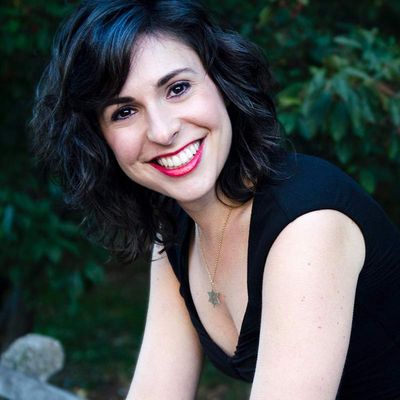
About Ruthie Fierberg:
Ruthie Fierberg is a savvy, intuitive, and creative freelance journalist. Based in New York City, Ruthie is the creator and host of the podcast Why We Theater on the Broadway Podcast Network. She has written for such national publications as Playbill, Parents, American Baby, Parents Latina, Good Housekeeping, and Backstage. An in-demand moderator, Ruthie is the regular host for Second Stage Theater Company's new artist talk series 2STREAM and has led talkbacks and panels for the 92nd Street Y, the JCC Manhattan, Disney Theatrical Productions, and BroadwayCon 2016-2021. Most recently, she served as the Executive Editor of Features and Branded Content at Playbill, creating innovative and engaging content through in-depth written pieces, multimedia and video features, live broadcasts, and as executive producer of digital concert specials.
Resources from this episode:
- www.ruthiefierberg.com
- www.instagram.com/ruthiefierceberg
- Her Medium Article: ruthiefierberg.medium.com
Come say hi to us!
Facebook: @PageToStagePodcast @BroadwayPodcastNetwork
Instagram: @PageToStagePodcast @TheMaryDina @BrianSedita @BroadwayPodcastNetwork
Twitter: @TheMaryDina @BwayPodNetwork
Youtube: @PageToStagePodcast @BroadwayPodcastNetwork
#PageToStagePodcast
Transcript
This transcript was automatically generated and might contain errors.
[0:00] Brian Sedita: Hey everyone, welcome to Page to Stage. A conversation with theater makers. We're your hosts. That's Brian. And that's Mary. Join us as we focus the spotlight back on the theater maker to uncover their process. We speak with folks in the industry that often aren't heard from, such as stage managers, producers, crew members, marketing professionals, and everything in between. We hope you enjoy this episode.
[0:26] Ruthie Fierberg: Hi, my name is Ruthie Fierberg, and I am an arts journalist. Welcome. I'm so excited to be here, you guys.
[0:34] Mary Dina: So excited to have you. We haven't, I was actually thinking about this, Brian. We have not had a journalist. We've not talked about journalism.
[0:40] Brian Sedita: No, I don't think we have to do it in this way.
[0:45] Ruthie Fierberg: So I'm excited. As I was brainstorming questions, I was thinking about that too. I think I have the best job because I get to learn what literally everybody else does in all of theater.
[0:55] Mary Dina: Well, it's kind of interesting that you say that because I feel like, in a way, since we've started this podcast and podcasting in general, and I do want to touch on this later when we talk about your podcast specifically, is kind of a form of journalism in a way. I feel like we're we have like that responsibility to and like pressure to like get something right or like that story right and like lift up other subjects in the work that we've been doing on the podcast.
[1:21] Ruthie Fierberg: Okay, so I was completely fascinated by the things that you've done, Ruthie, just by looking at, I mean, obviously, I've known of you since we joined the network, and so you've been on my radar. Obviously, I read Playbill. I've read several of your articles, especially one which we'll talk about in a little bit that was more recent. But what I was most fascinated by was the fact that you have a degree in psychology.
[1:47] Ruthie Fierberg: Yeah.
[1:48] Mary Dina: Which is like not necessarily what most people, which is totally fine, but what most people would say, oh, if okay, someone who works in journalism, okay. So their track is certain X, and actually, right. Most of our guests is that that's not necessarily true. So breaking that stereotype of what you have, like what is traditional, what is expected. So was, and then obviously as soon as you graduate or almost immediately after graduating, you went and started working in places, you know, working in journalism. So was writing always the plan, or what was it about psychology and writing?
[2:26] Ruthie Fierberg: There was not much of a plan, to be honest. I so I went to Barnard College of Columbia University, which is one of the four undergraduate colleges there, distinguished by the fact that it's a women's college, but you know, everything was pretty integrated. I was I did not have the goal of going to a women's college. All of my friends growing up were guys, so like that was not the appeal. One of the biggest appeals actually was that it was in New York City. And I grew up in Connecticut, which was, you know, not too far from the city, but in central Connecticut, which was pretty much halfway between Boston and New York. You kind of like pick your team, and we were New Yorkers, and a huge part of that was because of theater in Broadway.
Like we are a theater family. We took, you know, one to two trips a year to New York to see shows as a family of five, which is I kind of marvel at it now. I'm like, that was an expensive trip, mom and dad. But I digress. Yeah, I think you know, going to liberal arts college, you don't study a trade, so to speak. So there was no journalism option in undergrad. If I had wanted to study journalism, I would have gone, I would have applied to grad school to the Columbia School of Journalist. Most people assume that I must have been an English major because oh, writing and reading. And it's like, no, I went to liberal arts school very much because you get to study what you're most fascinated by. Like the only job is to pick what you want to learn more about.
And I actually think that psychology does fit in really well to journalism. Although, like I said, journalism was not the goal. So I didn't know it then and I didn't choose it for this reason. But psychology is the study of people. And I think that it applies to any profession anywhere, because you're going to have to work in an office and you're going to have to work with people. And it very much helps when you're like interpreting office politics and things like that. But in terms of being a journalist, being curious about people and being curious about why they do the things they do. And then being a theater journalist at that, which is all about storytelling and all about understanding people and all about understanding why people do what they do.
It really works out in my favor, I find. But yeah, I was a biology nerd growing up, and I thought that I would maybe want to be a doctor pre-med, again, liberal arts college. Pre-med was not a major, but it was requirements that you could fulfill. So I thought I would probably be a biology major, and I was kind of doing pre-med in case I wanted to apply to med school. And I was like, I will just do this and graduate with the requirements. And if I want to take the MCAT and if I want to go to med school, then I will have done the coursework. But I kind of stopped once I hit organic chemistry at the end of my sophomore year because as they say, organic chemistry will weed everyone out. And it does, I mean, it was killing my GPA, but it was more that like I loved bio, I hated chemistry.
And I also like I liked bio, but I didn't care to learn about plants and I didn't care to learn about fish. So I just kind of kept moving towards people, you know. It was like, oh, so do I want to do neuroscience? Nope, still learning about rats. Okay, I'll learn, I'll do psychology. And I found journalism in college, but not necessarily through coursework.
[5:55] Mary Dina: Looking back on where you are in your career right now and the journalism that you have done, where do you think that it intertwines most with your psychology background? I know you just touched a little bit upon it, but if you could think back to maybe just starting out things that you had at your arsenal that now maybe if you look back, you could employ.
[6:14] Ruthie Fierberg: Yeah, I think a lot about things like availability bias when I'm thinking, you know, as an and this is more as an editor than a writer, but when you're learning how to write, especially for digital publication rather than print, because they are kind of two different animals, right? Like the print publication is like you get to put it together and people are actively buying into your it's like it's like ordering the chef's tasting menu versus a la carte. The print publication is the chef's menu. You are trusting the experts to serve you what they think is most valuable. Digital is like a la carte, where you are searching for what you want. So in writing headlines for digital, you have to be using keywords and topics and the structure of a headline.
Like, like is it a question? Is it using the word you to address the audience more directly? Doing that kind of stuff and making things what we call SEO friendly, which just means that it is more searchable, is a lot of getting inside the head of your audience. And so I think a lot about psychology in that way. And availability bias is like basically what is top of mind, like what is out there in the ether and most available to you. Therefore, you are more likely to notice it and pay attention to it. You know, there's things like name bias, which is if you're at a cocktail party and all of a sudden you hear your name, you actually, your brain recognizes that as a stimulus, you should pay attention to more than the rest of the noise around you.
So thinking about things like that. So I think it definitely plays into the editor role. Hindsight is so 2020. I took a class in college on personality psychology, and I was we had to do a lab with that class. And I remember our lab project looking at different broadcast personalities, Katie Couric, who is you know, the three along the three main networks, NBC, CBS, and ABC of Nightly News, and who was most likable or what personality traits corresponded with highest viewership. I'm really like trying to remember off the top of my head. And so like that is so ironic, right? Because now that is quite literally what I do because I'm not just a writer, I am also a broadcast personality, whether it was my time at Playbill and doing the red carpets on opening nights and at the Tony Awards, or now where I continue to moderate panels for 92nd Street Y, and I have a like a regular moderating gig with Second Stage and BroadwayCon.
So like I am very much doing that thing that I was investigating. And I would not say that I am at all calculating my own presentation in terms of like, oh yes, the Q quotient or like viewers during my junior year psychology project like this trait most. So I'm gonna try and be like that. But clearly there was something in my brain that was interested in that.
[9:21] Mary Dina: Yeah, it's just now in your toolbox.
[9:23] Ruthie Fierberg: Yeah, exactly. And I would also say that, you know, I took a class on cultural psychology when I cultural anthropology, I apologize, cultural anthropology that was a combination between the anthropology and psychology departments at Barnard. And my like final thesis there was all about cultural beauty ideals, which then when I ended up seeing Jocelyn Bio's school girls was like, oh my god, I wrote a paper about this in college, and then that ended up being the first episode of my podcast. So all of these topics, you know, continue to come up for me. And I do think that my studies really played into that, but I didn't take those classes with the intention of like, ah, this will serve me in years to come.
[10:06] Mary Dina: I feel like that's very relatable. And I kind of just want to like call that out for any of for all of our listeners because none of us know what we're doing here. Like, I think that's very important. Like, I think as theater makers, and I use that term for everybody here and beyond, like, we tell stories. I think that like full stop, like I think that's why we like the theater. We like storytelling in some capacity. I would argue that maybe like we all most people think that storytelling really is on the stage, but I would I would argue that that's actually not true. I would say storytelling is everywhere, and that none of us know what we're doing. We're just here to kind of like figure it out and eventually we'll maybe finish the story at some point.
[10:48] Ruthie Fierberg: Absolutely. And that could be for our careers, that could be what's happening on stage. It could be, you know, what we're writing, what we're who we're interviewing, that kind of thing. Since you brought it up though, with the live events and the moderating gigs, so how do you go about preparing for those gigs?
[11:04] Ruthie Fierberg: Deeply is how I go about preparing. I mean, I'm an insane, insane researcher. I have no interest in asking the questions that have already been asked. So if there is a podcast interview, if there is a video, if there is a New York Times profile, if there is a Playbill article, if there is, you know, your personal website and what you write about yourself. I'm about to do another second stage panel, and I am reading all of the scripts of all of the plays of the two artists who I'm about to interview. All of them. All of well, I shouldn't say their entire repertoire, but all of the ones that have been on second stage's spaces. So I am exhaustive in my research. I'm probably it's I know that it's unnecessary, but at the same time, it's what makes me feel composed and calm to go into that interview.
So I read everything I can and I always want to ask the second question, you know. I will say things like, I read in the Times that XYZ. So knowing that, here is my actual question because I don't want to waste time on something that you've already answered and you've already put on the record. So it's a lot of deep research. It's a lot of reading as many things as I can read in that person's own words. And then it's also, you know, I do panels a lot and more than like one-on-one interviews. And so it's also really thinking about how can I get these two people, these three people, these five people to play off of each other? Where are the intersections and who is best to answer this question? And also I try to anticipate some answers because writing my questions for an interview is like writing a story to me. Like it all has to build.
[13:16] Ruthie Fierberg: And she did one with Barbara Walters. And one of the things that Barbara Walters said, and I listened to this, you know, over this past summer. So like I don't know, eight months ago, where Barbara Walters said, I do all of this research, I write a, you know, 200 questions, knowing that I will use eight of them, but also knowing that after I ask the first question, I will probably throw out every single one of my questions. And that was so reassuring to me that like if Barbara Walters does that, then I am doing okay because that is kind of the same thing that I do. If it goes in a different direction, you have to follow where it goes. But if it goes in a different direction that's irrelevant, you also have to be dexterous enough to navigate it back to where you want to be. And that's a tough, tight rope to walk.
[14:01] Mary Dina: Do you prepare differently for something that you know is gonna be a live interview versus something that you know you're gonna have time to go back and like look at it, proof it, and you know, figure it and polish it before it goes out there?
[14:15] Ruthie Fierberg: I'd say that the preparation process isn't really different. Sometimes the questions are just because you know, if you're writing something, you can jump around a little more or be slightly more disjointed in your topics than have to have the flow when you're doing something live.
[14:34] Ruthie Fierberg: If you're asking questions and leaving space for answers, the best thing I have ever learned is how to listen. If you're leaving space for answers, you will get to the guts of it no matter what.
[14:47] Ruthie Fierberg: I think that's so fast. I mean, yeah, I mean, as we prepare questions, like for our podcast, I always think about like if we're doing it necessarily correctly, and I know that correctly is not a way to measure anything. Um, but if you're doing it, you know, in an engaging way, I think that's really like correctly is really is it, you know, we use the word interesting, which to me is like, does it capture something? Do I want to keep listening? Does it have forward momentum? And I imagine that's something that is built over time. Like maybe you—I'm imagining, correct me if I'm wrong—that it wasn't something that you started out with with your first moderating gig. And just like, yep, I with my 200 questions in hand, or maybe you did, and maybe you learned how to craft the conversation better over time, or you learned like maybe I don't need 200, maybe it's like one ninety, you know.
[15:43] Ruthie Fierberg: Like everything, there's a certain natural affinity for things that I do think makes me a good interviewer, and I've cultivated those things over time. You know, I remember before I was at Playbill, I was at Parents Magazine, and I started doing celebrity interviews for parents.com. And there was someone who kind of did the contributing on celebrities for the print magazine. And she had been doing it for a very long time. And I asked her to sit down for coffee or lunch or whatever it was. And I asked her all these questions like, how do you do this? And meanwhile, I should say that like I had interviewed people for a long time before that. I had interviewed people all through college. Um, I was a staff writer and then the theater editor of the Columbia Daily Spectator from my sophomore.
I wrote from my sophomore through graduation, my sophomore year through graduation, and then I was the editor, the calendar year of my junior spring and my senior fall. I had an internship at Backstage magazine. You know, I had been interviewing people. So it wasn't brand new to me, but it was a larger platform and it was different, a different caliber of celebrity, I guess you would say. And whereas I was always talking to theater people previously, now I was talking to celebrities from all different places. So I felt like I couldn't necessarily just fall back on the theater of it all. I had to be a really great interviewer no matter what the topic was.
[17:15] Ruthie Fierberg: And I remember asking her questions. And a lot of what she said was like, you'll figure it out, you'll feel it out. And I think that's where the psychology comes in too. Like I really have to feel things out in an interview. And I know when I can push the envelope, and I know when it's gonna be a non-starter and someone's gonna end the interview. Like I remember I was interviewing Hillary Duff at one point, and this was at Parents, and we were having a very nice conversation. And at the end, she had just gone through either a separation or a divorce, but like it was contentious. And a lot of our readers at the time were either going through separation or divorce as well and were learning how to co-parent.
And I felt that that was too valuable not to ask about. And we had developed a decent rapport with my previous, you know, 10 minutes of questions, because you get 15 minutes with these people, that I decided to go for it. And I said exactly that same preface of what I just said to you. Our readers are—and I asked the question and her publicist jumped on me and was like, we're not gonna go there, you know, if you have another question, great. If not, I think we're done. And Hillary said, actually I'd like to answer that. And that comes from me correctly judging that we had developed something there and that I was asking it in the most respectful way. I wasn't asking it for its salaciousness. I was asking for her to offer advice to other people in their position. And I do think intention matters when you're asking questions.
[18:48] Mary Dina: I know that I just went off on like a wild tangent.
[18:51] Ruthie Fierberg: No, I think that that was so interesting because I mean it's like if I was in that position, I mean like obviously you have so much experience and stuff like that and this is like what you do for a living but if I was in some sort of situation like that where I wanted some question like that, I definitely would have been a little less confident and you know kind of maybe even said you don't have to answer this if you don't want to or if you're not comfortable. And like had you ever been in some sort of position like that, or did you always just like really just dive right in? Cause I mean, this was early in your career when you're speaking about this moment, right?
[19:30] Ruthie Fierberg: Yeah. I mean, it uh yeah, I'd say it was about midway, and certainly before I was, you know, established at Playbill as an arts journalist. Um, yeah, I think again, it builds over time and you learn and you get a feel for situations and you get a feel for things. I'm trying to think is there is definitely like an instance in my head going on, but I can't quite bring it to the fore. But yes, there have definitely where it kind of clicked for you. Like just go for it. You have nothing to lose. Well, more that there was definitely a time where I was asking something that I was wondering if I should or should not ask. And like you definitely have those moments because what I do, I do not review, and I also am not really a news writer by trade.
I'm a features writer. So relationships are everything with what I do. Like critics, their goal is not at all. Like you can listen to Ben Brantley talk about it. Like, you know, not here to make friends is his position, and he's right. Like he has to stay objective. He does not go backstage, or did not, I should say, go backstage to productions. Whereas I go backstage almost every time I go to the theater now, which by the way, as a fan, is a wild experience to be like, this is my norm. It's as if I'm going to like my best friend's high school production of like waiting for them to come out and like now it's Broadway and I'm doing that? Are you kidding? But that is crucial, and that tells me that, like I actually think that tells me that I'm doing something right, but because of the very specific style of writing I do.
[21:09] Ruthie Fierberg: Again, this goes into like editor-writer territory. Um, and it also goes to like the platform that I was writing for and how I'm renavigating this question now that I am not at Playbill. Because for those who don't know, I was there for five years and it was incredibly rewarding. And I am so grateful to that place for all of the opportunities that were presented to me that I, you know, took advantage of every single one. I started out as the features editor, became the senior features editor, and then right before leaving was the executive editor of features and branded content to kind of incorporate the executive producing that I started doing. And so Playbill not only is like a big one-stop shop and a very small staff, like there's a reason why Playbill doesn't print reviews.
Playbill prints, you know, the like the roundup of reviews when reviews come out. So that we are providing, like Playbill was providing that resource to its audiences without taking its own stance because playbills are distributed in the theaters. So it acknowledges the fact that, like, quote, we can't be unbiased, um, but we're not going to deprive audiences of reviews altogether. So that's how that was handled.
[22:22] Ruthie Fierberg: And in the same way, features, it features was a very liberating place to be because I only had to write about things that I found interesting. And I think that's the thing too about, you know, when you're reading a magazine and you read the letter from the editor, the reason that that page exists is because it is important for you to understand whose point of view you're buying into. An editor is a point of view. They cast, you know, on whatever subject it is, whether it's parents, whether it's Forbes, therefore, finance, like it is a lens. And it does not mean that anything printed is untrue. These publications are fact checked deeply. And nothing that I wrote at Playbill was untrue, but it does have a perspective.
And so if I like someone's costume design, my perspective comes through in the fact that I am, and I think that it's um does storytelling well. Not just that I like it, but if I think that there is something fascinating to learn about it, I choose to make that the topic of an interview. Whereas if I saw a costume design in a show and thought it was horrendous, I'm just not gonna write about it, you know. So I was in a great position where my job was to elevate, and then I, as an editor, had like you were reading what I thought should be elevated.
[23:45] Ruthie Fierberg: And then in terms of um like maintaining a line, I would say it's kind of like anyone, you know, you have your hat on when you're at work, and you have your hat on when things are personal, and you also have to develop that trust. I remember I was at Thirsty Thursday at Sardi's one night, which it was like it was a big moment for performers to gather, really theater people, the makers, the artists to gather. And I was honored to have been invited because you don't always cross that line. And I think if I was like a news journalist or a critic, you have to turn down that invitation. As a feature writer, I accepted it and I went because my friend invited me. And I was sitting there and I remember they were talking about, you know, something that had not yet been announced, and someone said something, and another person looked at them and was like, Ruthie is sitting right here.
And I was like, I'm not on duty. I'm not on duty. It is not my job to report this. And I respect—I also just respect embargoes, you know, I respect when people say off the record. And there are a lot of things that I know, but no one would ever know that I know them. And then that being said, like, you know, that's a building of trust that when it doesn't come out in the news, someone knows that they can then trust me the next time to tell me the thing in advance and give me a scoop to tell me something and trust that I'm going to convey it to audiences appropriately.
[25:10] Ruthie Fierberg: Um so, you know, and that's a choice that I made at that time in that moment. Would I make the same choice again today? I don't know. I'm in a position that's different today. And every moment and every circumstance is different and changes. I would never lie to someone's face and say, oh yeah, yeah, off the record, and then publish that. And I would never do that. Opening nights are a really good example because there's the moment when I'm on that carpet and I am talking to people who sometimes at this point, after five years of doing it, might be a friend of mine. But I gotta ask them about the real questions about their work. And I gotta ask them if something, you know, on an opening night, I have to talk about every show, whether I liked it or not.
So I'll ask the real questions. And I think people respect me for asking some real questions, but I'm also there to, again, it's opening night, it's celebratory. I'm there to elevate. And then when that camera goes off, if I'm invited to the party, heck yeah, I'm gonna go to the party, and then I'm gonna be on the dance floor with these people. And then the reporter, you know, the journalist, the feature writer, the host, that hat is off. So it's a figure it out as we go kind of thing.
[26:25] Ruthie Fierberg: For anyone who might be looking to get into journalism as a career, or let's say for argument's sake, they have not gone through a traditional journalism program in school. How would you like recommend navigating the different parts of journalism to them? Like do you would you really just recommend just going out and just trying them all? Or is there more of like a formula, if you will?
[26:47] Ruthie Fierberg: Yeah, I mean, my advice to anyone who's about to graduate high school or college, no matter what they're looking to do, is kind of always the same. Where it's we very much have this narrative in American culture of I have to decide what I want to be when I grow up. I have to decide what I want to do for the rest of my life. I felt like that since I was 13 years old because they were talking to me about, you know, what classes I was going to take in high school, which would then reflect which colleges I could get into, which would then reflect what I was going to be able to do for the rest of my life. So from the age of 13, my public school system, which was an incredible public school system, that was very much the mentality.
And I try to relieve people of all ages of that because you don't. You don't have to figure out what you want to do for the rest of your life. Life is long. You have to figure out what you want to do for a year. Figure out what you want to do for the next year. And then from that year, learn what you like and learn what you don't like. And the next thing for the next year, whether that's at the same company in the same type of position, the same company in a different type of position, or moving all together, is trying to accumulate more of the things that you like and fewer of the things that you don't.
[28:07] Ruthie Fierberg: And I did not go through a journalism undergrad degree, and I chose not to pursue a graduate degree, and I could have. If you want to be a doctor, you have to go to med school. You want to be a lawyer, you have to go to law school. You want to be a journalist, you have an option. And I will never knock anyone who goes to journalism school, but I will also not knock people who don't, as I am in that latter group. I learned through writing, you know, like I said, I didn't intend to write.
[28:48] Ruthie Fierberg: I fell into writing at Columbia because I couldn't get cast in any of the Columbia University extracurricular productions because being in New York City, it was pretty competitive, even extracurricularly. And even though it was not like a conservatory BFA situation, um, but people were there to do it. And more than anything, people were there to write it too, because Columbia has the varsity show, which is a student-produced, student-written um original musical that they make every single year. And its alumni include people like Tom Kitt and Brian Yorkie and like I think Richard Rogers, or yeah, Richard Rogers and and Lawrence Hart. So, like, you know, kind of big. And I couldn't get cast in anything.
So my father was the one who suggested to me, like, you're in New York, you love seeing shows. It's part of the reason why you went there. Why don't you write for the paper? I bet you'd get free tickets. So I signed up to write for the theater section in hopes that, like, ah, they'll give me some free tickets to go see shows and review them for the college paper. The joke is I started by feature writing, and it was a year before I got my first free tickets, though I did get them, and Cheetah Rivera at Feinstein's on the upper east side was phenomenal. But um, you know, I was the editor of a daily paper where I had to publish one article a day, Monday through Thursday, an expanded art section on the weekend and one magazine feature a week.
It was a full-time job while I was in college. And then I also um my senior fall, I was interning for Backstage. And the summer before that, I actually worked in theater for Kevin McCullum and Jeffrey Seller when they were a producing partnership. I worked for their office called the producing office at the time and learned the ropes of like what general management is, what is investing, what is producing, um, what is company management? What does it take to get a show off the ground? What does it take to get a tour off the ground? And that was when I was introduced to SpotCo, which is one of the major marketing and advertising firms, mainly for Broadway, although they do some other things, because Kevin McCullum was producing the ragtime revival in the fall of 2010 and was coming up with the artwork campaign for that production.
And I was hugely obsessed with the artwork and the messaging. And that's when I said to myself, I need to work for Spot Co. when I graduate. So when I graduated in the spring of 2010, my plan was to travel, which I did. I lived in Argentina for the summer, and then come back and work for SpotCo, which I did. I had an internship for the fall of 2010. And um, or so I I misspoke. The ragtime revival was fall 2009. Anyway, but I worked for Spotco the fall 2010 and I was hoping to be hired. And, you know, sometimes there are open positions and sometimes there aren't. And so when it was clear to me that I wasn't going to be hired, I applied to journalism jobs and I applied to marketing jobs because I had been introduced to marketing through SpotCo and was like, girls gotta pay rent, which everyone hits first.
You know, I really do like journalism, but I also am kind of intrigued by marketing, and I just have to broaden the pool. And the thing is, you end up where you're supposed to be because I ended up in marketing for Time Out New York. Um, so I was in marketing for magazines and eventually made my way over to Meredith Corporation, which owns Parents, and I was in marketing there first before moving to editorial. So, like I said, like I was learning what I liked and what I didn't like. I was in marketing, and every time I had to write promotional copy, you know, for a branded something or the contest page of Time Out New York, I was so excited to be writing. And so that's when it became clear to me, yeah, Ruthie, like marketing's fine, but it does not light your fire.
And just as you suspected previously, writing and journalism lights your fire. So you need to figure out how to do more of that and fewer of this, you know. So that's how that's how I got to where I am. And I think, you know, in terms of advice, like, you know, follow that and do any kind of writing. You know, I had a blog for a long time where I would just like post once a week just to exercise the muscle of writing. I wasn't interviewing anyone, it was just it was almost like a public journal. So do it where you can. Try and get paid for it. That's good advice.
[33:07] Mary Dina: I love that you brought up the blog.
[33:11] Ruthie Fierberg: Oh, yes. That's where my Twitter handle comes from. Everybody wants to know where my Twitter handle comes from, and the mystery is solved. My blog was called the A Train because it was about how to live your best life in New York City, and I was working for peanuts, and everybody was complaining that there was nothing to do unless you made money in New York, which don't get me wrong, the best things in New York are if you have money. But there are plenty of cool things to do for free and on the super cheap. And at the time, every like when Twitter came out, everyone was like, you know, name your stuff based on what you're promoting. So I named it after my blog because naivete. So uh so there you go.
[33:54] Brian Sedita: That's amazing. I don't know when we're when we're releasing this, but we'll just say late March, you published an article on Medium.com that and I probably should I should have gotten the title of it, but it was I was fat I was completely enthralled by it. I spent I think about a half hour reading it.
[34:12] Ruthie Fierberg: I think that's actually what it says right.
[34:15] Brian Sedita: Well, it says on Medium 33 minute read.
[35:19] Ruthie Fierberg: It does. But don't be everyone out there, don't be afraid by that.
[35:23] Brian Sedita: No, no, no. Worth it 33 minute read.
[35:26] Ruthie Fierberg: No, I I mean I really feel like I spent probably a half hour reading it just because I was like, yeah, like I literally was like out loud. I mean, I working from home alone, like just saying like yes, yes, yes to everything that you were saying in the article. But and then I even sent it to my boss and was like, you have to read this because we've been having a very similar conversation internally. So I was like, you have to read this. Now, Medium.com for anyone who doesn't know, and I will put the link to Ruthie's article in the description notes for anyone who has not yet already has not already read it by now. But Medium.com is like the is it feels like a blog, but it also feels more than a blog. Is there was there a reason? And I'm jumping slightly, but I will say that you you have already said that you've left Playbill after five years and now you're freelancing. Is that correct?
[35:30] Ruthie Fierberg: It came about organically.
[35:33] Brian Sedita: Yeah, go ahead.
[35:33] Ruthie Fierberg: Yeah, no, I was gonna say this kind of goes with like where I was gonna segue to this in that like you talked about that one year at a time. You just think about the next year and you think about the next year. And so, like, I mean, clearly this I'm sure has been a very uh transitional period for you, at least this next year. And I'm wondering if you have a strategy for this. And you know, I mean, to go back to Mary's question, where does Medium.com fit in that strategy?
[35:59] Ruthie Fierberg: Yeah, I mean, it came about organically. Um, I had not, I had not intended to put it up on Medium. In fact, I finished the article a full week before I published it, because I was pitching it out to major outlets um and seeing if anyone would pick it up. I knew that its length um makes it the certain uh a certain publications kind of story, and its timeliness meant I had limited time. And I also fully acknowledge that I I did this backwards. Like normally, as a freelancer, you write to a publication and say, Hey, I have an idea for an article, and here's who I would interview. Can you green light it? But I also know that like current magazine staffs, especially when it comes to theater and arts, like they're trying to find things to write about.
So if someone liked my idea, the likelihood is that they would assign it to one of their staff writers, which they have every right to do, but I felt very personally strongly about this topic and wanted to be the one to do it. So I sent off a finished manuscript to places. Now, I will say there is this big narrative that is my lifelong goal to debunk that theater is niche and no one will read this and no one will spend however much time it is on this. I honestly don't think the length is um links to this. I think it's just another factor. But like I could have written uh an 800-word article instead of an 8,000-word one, and still people don't want to publish about theater. And it drives me mad because it is such a fallacy that people don't want to know about theater.
People don't care about theater, people don't like theater, theater is local to New York. Now, this feature was very specifically Broadway and off-Broadway. But in general, I don't know a single person in the world right now who is not curious as to when Broadway will come back, why it has not, why we have heard nothing. It's the only question I get from anyone who doesn't know anything about me and the people who do. I 100% agree. I'm kind of sick of trying to tell them I don't know, and I'm the wrong person to be honest. Like, seriously, and we've tried the argument of like, look how much, you know, money talks. So now we've tried the argument of look how much money we make for the economy.
You know, 878 billion dollars nationally in in the creative economy. We are greater than transportation, we are greater than agriculture. Honestly, it's not that it has nothing to do with the money, but it just has everything to do with the fact that it's a self-fulfilling prophecy of people saying no one cares about this, therefore no one cares about this. You have to tell people what they should care about. And by like, yes, I as an editor, I fully understand you have to deliver to an extent what people are asking for, but you also have to deliver what people need. And people need this piece. And so that's why when I got a few no's and a few no responses, I was not like, well, it's publish it in a major publication or not publish it.
It was publish it in a major publication. And if I can't, Medium is at my disposal for that. And Medium, I I don't want to call it a glorified glorified blog because it's not. What it is is a democratized publication. Yes, you do not have the guarantee of fact checkers and the guarantee of copy editors when you read something. So you need to be careful when you read things on Medium, and you need to be careful about what writers you are reading. I will say that for my feature, this was fact-checked. I link out as much as I possibly can to my sources, and it was copy edited by a professional copy editor that I asked to engage with it. So this was done as professionally as if I were at a big publication.
That is not the case for everything you read on Medium. But as you can see, like major publications also publish their things on Medium to reach a wider audience. Because unlike regular magazines that are focused on a singular topic and therefore can go deep into that topic, whether that's the New Yorker and going into things that are deeply New York or whether that's Forbes and going into things that are deeply finance, Medium has the flexibility to publish about anything in the world. And so I do find it to be a powerful platform. I also think it's powerful that they pay their writers. You know, I can get paid off of the piece that I wrote, um, you know, based on how widely it's read. So please support.
I did not know that. I have no idea. Yeah, read it, clap for it at the bottom. There's that little like clap emoji, bookmark it, share it. It all impacts like whether I get compensated well or less well. Um, but yeah, they put money behind their writers and their editors. And so that's why I want so I do want to say that like it's similar to a blog and that you may not have editors looking over this content, but it is dissimilar and that some of the content is, and there are some advantages to that.
[41:16] Mary Dina: So talk about the process of you know, you sending out your manuscript to um other news outlets. When you do that, what goes into sending it out? Are you sending like a log line or like a brief summary of what it is and then the whole thing? Are like you know, of course, with something 33 minutes long, are you trying to truncate it or do you want to intrigue them and try and get them to read the whole thing?
[41:39] Ruthie Fierberg: As is evidenced on this podcast in any other interview I've ever done and every other piece I've ever written, I am a very wordy person. It is the one skill in life I aspire to get better at. Although I will say, like for all its 8,000 words, the piece is actually very economic because I cover so many different facets and I divided it part by part so that you can read part one and take a break and then come back to part two and take another break. Um, or you could read it all the way through. In terms of pitching it, yes, it was a little like you know, two sentences on who I am, in case the people, you know, not everybody know I don't expect people to know who I am, you know, a little line about like why I wrote this, what it covers, and then I included a list of my sources, a list of who I interviewed to give it some credence and authority there of like, you know, I'm not just shouting into the ether.
And quite frankly, as you can hear, I'm very passionate about this, and I think that there are so many things that we could be doing. And I want to clarify that I did not go into depth about the things that you cannot be doing because we've talked about what we can't do, and we know that there are things we can't do without an opening date. Like you can't cast a show without an opening date, even a show that was running because you don't know who's gonna be available for an invisible date. And if you don't know who's available, you don't know who you're gonna need to replace. And if you don't know who you need to replace, you don't know when to have auditions. And if you don't know when to have auditions, you can't book an audition space. And this is also part of the reason why the staggering needs to happen, because there are only so many rehearsal rooms and audition venues.
[43:14] Ruthie Fierberg: There are only so many soundboards to tech a show, which is something that Jessica Posse told me in progress of our interview for this piece, but I chose, you know, not to include that. Things end up on the cutting room floor always. And so this focuses on the things that we can do in a shutdown time that you can do without an opening date. So I would do want to clarify that. But that listing the people that I interviewed says that this isn't just me screaming into the wind because I've been passionate about this for so long, my time at Playbill included, and I did not have the time to do this while at Playbill. But when I first left, I was thinking about writing an op-ed. And then I thought back to what really my intention is, which is always to provide information.
It's always to provide voice to people who aren't being heard. And to, you know, to go deep. You asked me in the very beginning how do I prepare for an interview? I go deep. I was pouring over peer-reviewed journals and the Harvard School of Public Health Studies and all of these things because I think it is my job to be the translator. You, lay person out there listening and reading, do not have time for that. And you do not necessarily have the equipped equipment to understand all of that. So it's my job to read it and talk to the experts and translate it for you because it is nuanced and it is complicated. But that doesn't mean we can't talk about it, right? People use that as a smoke screen all the time in government too.
Oh, we can't talk about why taxes are so comp, you know, taxes are just so complicated. It's better if we don't talk about it. Oh, insurance is so complicated, it's better if we don't talk about it. No, it's better if we don't talk about it broadly and without information and fact. But knowledge is power, and everybody should know things. And so I set out to do this, and that's why I decided not to write an op-ed. That's why I decided to write a piece that is, you know, as investigated as I could make it in the time allotted. And again, I, you know, I'm grateful for the editors that did read my email that went on to read the piece. I can't say whether they read it in full or just looked at how long it was and read a part and was like, not for us.
You know, I don't know. But I'm wordy and I like it. That's a problem I will just I yes, I will just say the article title, which please go read it, because that we gave some context as to really what we're talking about here, is what it will take for New York theater to come back as the industry and the community it professes to be. Yes, because that's the other thing too, is we hear all the time about the theater community, the Broadway community, and I do believe that it is an aspiring community, and I feel that I am part of that community, and I am grateful every day. And again, my 12-year-old self, my 18-year-old self, my 23-year-old self cannot believe, cannot believe that I am part of this.
It never occurred to me that I could be. It was never my goal because I did not know it was an option. So I take that very seriously, but I also think that that community is leaving out a lot of people, leaving out a lot of people. And so if we want to be a community like we say we are, there are a lot of things that we have to do. And if we want to be an industry like we say we are, rather than a collection of industries, because you can absolutely argue that Broadway is just a collection of individual companies. When you make a Broadway show, you form, you know, Hamilton LLC. And when you launch a tour, it's the Angelica Tour LLC. And they're not, I mean, sure, they're related in the rights of the show that they're producing, but they're actually not really related.
Like they're different contracts, they're general partners, they're lawyers and all these things involved. So if we want to be an industry and if we want to be a community, there are things we have to do to make it so. And there are things we can do. It's not a lost cause.
[47:43] Mary Dina: There's so much of what you've been saying that I'm just like soaking in. I'm curious, do you think that certain stories or certain conversations are better served over specific mediums?
[47:57] Ruthie Fierberg: Meaning I do.
[47:59] Mary Dina: Okay.
[48:00] Ruthie Fierberg: Yeah, I do. And I thought about that a lot when I was at Playbill as an editor because there were certain stories that I was like, this is a written piece, right? Like I want to be able to tell the story about this person that I want to tell. Like, for example, I wrote a piece about Jordan Donica that I am extremely proud of. It was a profile with like a larger overarching purpose about what it means to be a leading man, both in theater and in culture and in life. And it was during a lot of talk about toxic masculinity was first coming to the fore. And knowing Jordan from a few previous interviews, I felt that there was just something there about the modern day man on stage and off. That was for a written piece because the interview we did, while one of the best and most fascinating, you wouldn't get that storyline if you listened to it as a podcast, if you watched it as a full video interview.
So that becomes a written piece with really produced, like we did a very like we did a styled photo shoot. There are other stories like lighting design that is best for video. I did a feature on Ben Stanton and his lighting for junk at Lincoln Center Theater. I did a story on lighting and projection design with Peter Negrini and Kenneth Posner for Beetlejuice, which if you don't see that happening in real time, it doesn't necessarily make sense. So you have to take the tools at your disposal to tell the story the best way possible. And sometimes that's a video, and sometimes that's a podcast, and sometimes that's a photo gallery, and sometimes it's a written feature, and sometimes it's a combination of all of these things. So I believe in using the tools at your disposal.
[49:46] Mary Dina: And is that something that you know going into it? Or is that something where sometimes maybe you're like, oh, in the middle of it, you're realizing this would be better served as more visual than written?
[49:57] Ruthie Fierberg: I'd say I usually know going into it because you have to set up either the interview as just a phone call, and you have to set up the photo shoot, you have to set up the video shoot. And sometimes you also have to compromise, right? Like we were really lucky that for Beetlejuice, they offered us to come into the theater and film the lights in motion, which is unbelievably cool, right? But not every theater can do that at the moment that we want to do the feature, especially, like calendar is everything. And so sometimes you might have to revert to photos or to B roll footage rather than original footage. So we pivot, you know, I have pivoted, I should say. But yes, I always pitch the story with because content has to match form and form has to match content.
There is a reason I want to tell a story a certain way. And so I present, you know, it's not, oh, we just want, you know, I get pitches all the time from publicists that, like, can we do something with X person? It's like, do what with them? Tell me something about them. So, like, you know, I do my research and then I decide you want to know what the cool thing about them is that they started as a writer off off Broadway and a sketch comedian, and now they're in this very serious drama on Broadway. So let's do a photo shoot of them outside this off off Broadway theater and in front of the Broadway theater, and we'll embed a timeline in there to show it, an interactive timeline, but most of it will be written, right?
But that has to come out of the story that you're telling. And of course, like a lot of the visual elements of theater, costume, scenic, lighting, do come out in photo galleries and video because that just makes the most sense. But the Times has done this before. They kind of do one a year with whoever's nominated for sound design. Although I would argue that like I don't necessarily agree with the clips that they're picking, um, because they tend to fall on sound effects a lot of the time. And sound design is so much more than just like the doorbell and the birds chirping. It's really about how are you telling a story through sound? Can I hear the diction of the actors on stage? Like, if I can't understand what people are saying, I promise you that is not the actor's fault. So yeah, I always choose how I'm telling a story when I decide what that story is about.
[52:30] Mary Dina: I kind of wanted to touch a little bit on the podcast.
[52:33] Ruthie Fierberg: I did too.
[52:35] Mary Dina: Where does it fall in your trajectory?
[52:37] Ruthie Fierberg: Actually, I had the idea for the podcast before I started at Playbill. I had it about a year before I started at Playbill, and I started at Playbill in the fall of 2015. So maybe like sometime in 20, yeah, 2013, 2014, because that's when I saw Disgraced. And that was the production that like changed it all for me. Aid Oktar's play. It played on Broadway, I should say, in 2014, because it was before that, and it won the Pulitzer Prize. That's the thing too, is like theater that spoke to social issues, I think wasn't quite as prevalent as it is now. And certainly I will say I was seeing less of it just because you know I was a college student and then I was poor. So, like choosing what theater I could see, like you I saw limited theater before it was my job and before I was getting press tickets.
But that's a really interesting idea because when I think about like the history of theater and like theater history, all that kind of stuff from like the Greeks and like Shakespearean theater, a lot of it actually does have a lot of those elements of social justice in it and like playing to the time and the culture and the politics. And I do think that there was a time in American theater history at least where it kind of lost a little bit of that, and it was more of the flashy showiness.
[54:01] Ruthie Fierberg: Yes. I mean, that's what I think that it was always there and it never went away, but I do think there are peaks and valleys, and so that play is what made me look at this idea closer because it just felt so active to me. And that's why the name of the podcast is Why We Theater and uses theater deliberately as a verb, E-R. Because I think it is something that I firmly believe that it is something that you did. Going to see Disgraced and sitting there and being just bowled over. I mean, seriously, like leaf blower to the face, was how I felt after that show. And it was an epiphany light bulb moment that I went, oh shoot. Artists are telling us to do something. They're telling us to do something, and we're not listening.
We haven't been listening. And now we need to listen. And I have finally heard the call. And so I will listen and I will do something. And for about a year, I was toying with the idea like, is it another blog? Do I start a website? What is this? And then someone suggested to me, this is a podcast. This is, you need to hear people's voices talk about this. So I started doing research with podcasters. And back then, like the Ensemblist was the only like active theater podcast. There were a few at that point that had started and stopped. So there really was no saturation in the space. And I was like, great. And then I got hired by Playbill. And then you have a new job. And then it's like, ah, yes, there's no time for this.
And then subsequently, there kind of became new jobs within my job at Playbill. Like every time I thought there was going to be a lull, it was like, nope, now you're doing cruises. Nope, now you're doing opening nights. Nope, now you're doing video. Nope. Now you're doing our podcast. You know, when we launched the Broadway podcast. Now you're doing executive producing of digital specials. You know, there just were more and more and more and more things. And again, beyond grateful for all of them. I loved every single one. But you know, I was working, there were I was working 16-hour days, um, pretty much for like five years straight, which is why people are like, You were only there for five years.
I'm like, Yeah, but I worked 80 hours a week, so I was really there for 10. But um, so it was an idea for a very long time, and it was kind of just me saying, like, enough, I have to put this out into the world, happening at the same time that Broadway Podcast Network was coming into fruition. And I had been looking into like audio production and finding an editor on all of these things, and VPN is just such a phenomenal platform, as you know, that they were like, we will provide this for you. You just have to be the creative person. And that was a huge relief. So that gave me the bandwidth to figure it out. But then even though I was one of the first early podcasts to sign on, because every episode is a panel, not just a one-on-one, it takes a very long time to plan those episodes.
I always sign the artist on first. And once they say yes, then I find my experts because I was finding that like finding everything, if you then get a no from an artist, that's a no for me on the episode. So then I wasted a lot of time. So it's a very calculated and puzzle piecing process. And, you know, the first season is 10 episodes. I did eight productions because there was one like kind of special episode and one two parter.
[57:33] Ruthie Fierberg: I had been thinking of those productions for forever. You know, I reached out to Jocelyn like literally years ago. Um, Dominique multiple years ago, Aid and I are still figuring out a time to record for season two. But yeah, it's all about being an active participant in theater. And also, it is like I say it's for like two different groups of audiences. One, the audience of people who are already going to the theater, and then have this appetite for oh, the school to prison pipeline is a huge problem. What do I do? It's not the actor's job to tell you. And it's not even really Dominique's job, Dominique Morisseau as the playwright, to tell you either, even though she is beyond generous to do it in talkbacks after her play and to have guessed it on my podcast.
It's our job to find out what to do. So I want to provide resources of like, here is the very tiny tiny thing you can do. Here is the very big thing if you want to make this your cause. And then the other group is for people, again, my lifelong mission, who think that theater is not for them. Theater is for everyone. No one walks out of a movie they didn't like and says, Well, I hate movies. No, they say, I hate that movie. So if you walk out of a show that you didn't like, it's not that you hate theater. You just that theater, what that piece, that play, that musical was not for you. But there is theater for you. And so I really want this to be the bridge to someone who works in social justice, someone who is passionate about being anti-racist, someone who is passionate about education reform, someone who is passionate about gun control, someone who is passionate about campaign finance reform, someone who is passionate about the images they see in magazines, someone who is struggling with their own depression, someone who is struggling with queer, you know, the queer identity of their child, or as a queer child themselves, whatever it is, this is saying like you haven't been able to find the theater that's for you yet.
Let me show you what it is. Let me introduce you to this because theater is so many different things. And to bring it back, Mary, to something you said at the beginning, yeah, storytelling is everywhere. I'm actually, I know Brian Stokes Mitchell very, very well. And he and I have conversations about this all the time. But one thing he said to me, and I'm gonna paraphrase it because it's definitely not verbatim. But essentially what he said was like, Ruthie, you know how fish can't see water? They don't know what water is because they're just in it, and it is so fully encompassing that they don't even know how to explain it. That's what art is. We are swimming in it. We cannot even define it.
Yes, every building tells a story. Architecture is art and it is telling a story. Street, the urban planning is an art that tells a history of a place. People are stories, theater are stories, every type of art. We are swimming in it. And quite frankly, we're swimming in theater because no one does the school movie when they're eight. They all do the school play. So I just really want to be that bridge for people to have solutions if they're already going to theater and to come to the theater if they're already in kind of the solution-facing or solution-seeking world.
[1:01:03] Brian Sedita: You could like sign me up to be one of your soldiers in this mission and like register me. But it's true. Like, that's what you need. You need the army and you need to demand it. And we also just, I mean, and this goes back to the Medium piece, is like that's a tool. That's a tool for you to use. You don't have to agree with everything in that article. But if there is something you agree with, write to your union and say, Ruthie says a lot of shit here, but I don't know that I agree with all of it. But here is one piece I do agree with. Can you address this? Like, I stand by this point. I stand by these seven points. Lord knows I made only like 55. So you have your you can choose. But um yeah, it I want to provide the tools for people because things only change when you demand change.
No one, everybody thinks like it ain't if it ain't broke, don't fix it. The thing is, it's often broke. It's often broke, but it's running, so we don't think we have to fix it. But it can run so much better. We are leaving so much money on the table. We are leaving so many audiences unaddressed and uninvited. I don't mean actively uninvited, but like they have not been invited. We're just leaving too much out there. And if we capitalize on all that, and if we do mobilize as an army, and if we also recognize, like, hey, what up? Like, we are a hundred thousand in New York City alone, strong artists, and you are, I don't know, seven people in power. Hey, guess what? The hundred thousand are gonna be heard, but only if the hundred thousand speak up, and that speaks to like the social justice of it all with the podcast too. The world and democracy, it only changes if you speak up and if you make your voice heard to the people in power.
[1:02:59] Ruthie Fierberg: I remember listening to your first episode when it first came out, and just thinking, like, well, one, I think I was like, This is Brian all over it, but two, this is not something that we're seeing. And I mean, and this even came out last summer in the heat of what was what we were seeing on Broadway. And so I was like, we're having the conversation, but like it's really funny too, because a lot of people think that I I had like, oh, the pandemic hit, she has more time, and now she did this. And I'm like, ha ha ha, jokes on you. It's six years in the making. Um, but and and also that like people think that maybe I was doing it um in a moment when there wasn't theater, so we can talk about theater, and it's like it's all just that was all coincidental and organic.
I would have chosen the same plays and the same musicals. Um, I'm really excited to do more and and keep doing it once theater opens up. Like there's only more fodder for it. And I thank you guys so much for listening and so much for the support, because it that's just that's again, that's how it happens. So thank you guys for being listeners. Like, after after Mary read your article, she texted me right away. She's like, Did you read the article? You you have to read it. It's so good. Carve out some time and and read it. I split it up into two readings, but it was great. And like we, you know, we've we've wanted you on the podcast for a while, and this just felt felt like a really great moment to have you on um to you know, talk about your process. Um, but if we want to move into the lightning round and yeah, uh yes, my forte.
[1:04:34] Ruthie Fierberg: Your forte okay, so the first question is what is one thing in the theater industry that confuses you?
[1:04:46] Brian Sedita: Oh my god.
[1:04:47] Ruthie Fierberg: Um, why? Why we continue to propel the narrative that um only some people are theater people. Very on brand with this conversation. Um and why we're not streaming, and why we're not streaming.
[1:05:00] Brian Sedita: What are three adjectives that describe your favorite working environment?
[1:05:04] Ruthie Fierberg: Collaborative, honest, and passionate.
[1:05:09] Brian Sedita: Yeah.
[1:05:10] Ruthie Fierberg: That that feels right to me. Is there something in your process that you find unique to you?
[1:05:16] Ruthie Fierberg: Yeah, I would say how deeply I research. Um I think that that's my secret superpower.
[1:05:25] Brian Sedita: What's one job in the theater industry that you would trade jobs with for only one week?
[1:05:32] Ruthie Fierberg: Oh. I mean, look, I grew up singing and dancing like everyone else. If I could be on stage, hell yes. Um, but I do think that in a in another life, I could have been a stage manager or a casting director.
[1:05:48] Brian Sedita: Who was your dream interview that you haven't gotten a chance to interview yet?
[1:05:51] Ruthie Fierberg: Jane Fonda.
[1:05:53] Brian Sedita: Ooh.
[1:05:54] Ruthie Fierberg: That's so fitting. Within within within the arts, I would say not within the arts Oprah.
[1:06:00] Brian Sedita: She's in the arts color purple.
[1:06:03] Ruthie Fierberg: Sure, sure, sure, sure, sure. Yes, yes, yes, yes, yes. But yeah, Jane Fonda.
[1:06:08] Brian Sedita: What's one hobby that you have outside of the theater industry?
[1:06:12] Ruthie Fierberg: Yoga and tennis.
[1:06:14] Brian Sedita: Yeah, I'm a big I I'm a big Bickram Yogi, and I also people don't know this, but or now they do. Um, I'm a crazy, crazy tennis freak. I stay up till all hours of the night when the Australian Open is on. It is my favorite thing to just like be up at four o'clock in the morning watching tennis. And I do all of my traveling tied to tennis because my work is so tied to the theater that when I go away, like I don't want to see theater. I don't want to go near theater. My brain needs a break because if I go see something, it automatically starts. Even if I go intending to just enjoy, it's like, oh, I could write about this, oh, I could talk about that. Um, and so I travel for tennis. I went to the Australian Open in 2018. I've been to the French, I went to Indian Wells out in California. I freaking love tennis and Rafael Nadal, Stefano Sitipas forever.
[1:07:03] Brian Sedita: That's a cool strategy for travel.
[1:07:07] Ruthie Fierberg: 10 out of 10, highly recommend.
[1:07:10] Brian Sedita: Okay, so do you have any books that you have found helpful to you along your career?
[1:07:16] Ruthie Fierberg: Or resources in general.
[1:07:18] Ruthie Fierberg: Yeah. You know, most of my reading I do for pleasure. Like I'm a big reader of novels, but I'd say that as a writer, those are helpful too. Um, just in terms of like creating pace and momentum and storytelling. Um here's two things that I think of from AP English, junior year of high school, because I do think that that class shaped me more than anything. We read On Writing by Stephen King, which was completely instrumental in the way that I write and what my toolbox is. Um, the phrase kill your darlings uh is real and it kills me every time I keep a document of like cut things that are just like all the clippings of like my favorite lines that often end up having to be cut. And then the other one is um amusing ourselves to death by Neil Postman.
I think of this book at least once a week. Um, it's a it's a comparison between 1984 and um by George Orwell and um oh my god, Brave New World by Aldus Huxley, and kind of like a thought beyond that of like, is the end of our society going to be because of an authoritarian like big brother thing that happens and the conclusion that it kind of comes to is like no, we're just gonna amuse ourselves to death, which is exactly what is happening, by the way. Like Donald Trump doesn't become president, regardless of whether you love him, hate him. He doesn't become president unless we're in a society that's about amusing ourselves and entertaining ourselves to death.
[1:08:55] Brian Sedita: Our final question is what's the first show you want to see when Broadway reopens?
[1:08:59] Ruthie Fierberg: Of course, we are not, we don't have a crystal ball and know exactly what's coming back or not. Moulin Rouge, the musical. People may judge at me. At me, I dare you. I'm obsessed with that show. I love it so much. Sonia Taya, Alex Timbers, geniuses, every performer. I love how it makes me rethink pop music. I love a love story. I mean, just also like, come on, artists clawing their way to do the thing they want to do. I hadn't seen it, so I'm excited when it comes back. I'm sure it'll come back. I just I love it for everything that it is.
[1:09:41] Brian Sedita: If you go to Australia, you could, right? Aren't they in Australia right?
[1:09:43] Ruthie Fierberg: I guess.
[1:09:45] Brian Sedita: Well, not yet, but they are what they are. They're planning, like they have a date to open in Australia before they have a date to open here.
[1:09:53] Ruthie Fierberg: Yeah. Um, but I will say that like no diss to Australian talent at all. And heck yeah, I love Australia, and I will go back there and I will see that cast because I'd love to just see a new cast do it. But like, I want to watch my I want to watch Danny Burstein. I want to watch Robin Herter. I want to watch Ricky Rojas and Sa and Aaron. Like, I want to watch that cast of Ensemblists who I have seen no less than four times do it again.
[1:10:21] Brian Sedita: Us two.
[1:10:22] Ruthie Fierberg: Well, thank you so much. I think you're you might have hit a record on Page to Stage as our longest episode. This is, I mean, this is, you know, the most Ruthie thing ever.
[1:10:28] Mary Dina: The most Ruthie thing ever.
[1:10:34] Ruthie Fierberg: Mary on Brand.
[1:10:35] Brian Sedita: It's great.
[1:10:37] Mary Dina: How can I listen to Find You and Your Well?
[1:10:40] Ruthie Fierberg: Uh find me at Ruthiefierberg.com. F-I-E-R-B-E-R-G is how you spell my last name. You can find me at Ruthie Fierberg on Instagram at Ruthie's A Train on Twitter. I swear I'll come up with a TikTok profile. Like I I troll like I watch on TikTok. I don't create on TikTok, but I freaking love TikTok. Excuse my language. Um and then of course on Medium. Find me at me. What is it? Ruthie Fierberg.medium.com. So all the things.
[1:11:11] Mary Dina: All the things that we'll be sure to link to.
[1:11:13] Ruthie Fierberg: Yep. Thank you guys so much. This was so fun.
[1:11:15] Brian Sedita: Oh, it was.
[1:11:17] Ruthie Fierberg: Thank you, anyone who has made it to the end of this.
[1:11:20] Mary Dina: Yes.
[1:11:20] Ruthie Fierberg: You get a golden.
[1:11:23] Brian Sedita: They're part of the army now.
[1:11:25] Ruthie Fierberg: Yeah.
[1:11:26] Mary Dina: Yes.
[1:11:27] Brian Sedita: Thanks everyone for listening to this episode of Page to Stage.
[1:11:30] Mary Dina: To keep up with us, you can find us on Instagram and Facebook at Page2Stage Podcast.
[1:11:34] Brian Sedita: And if you're enjoying these conversations, we would really appreciate it if you could take a couple minutes to rate and review us wherever you're listening to this podcast.
[1:11:42] Mary Dina: Until next time.
[1:11:43] Brian Sedita: That's Brian.
[1:11:44] Mary Dina: That's Mary.
[1:11:45] Brian Sedita: We will see you later.
[1:11:46] Mary Dina: Bye.
© Broadway Podcast Network, All Rights Reserved