

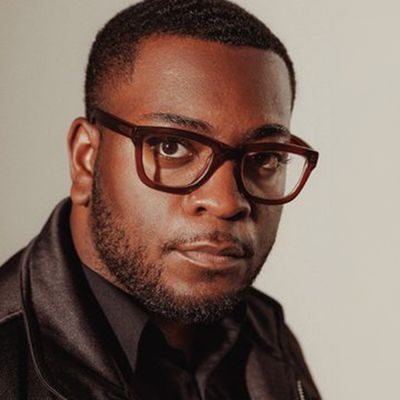
In the first part of our conversation with Zhailon Levingston, Director of Chicken & Biscuits, we chat what it takes to direct a comedy, asking questions from new work, casting unicorns and so much more!.. Read More
From the show: Page To Stage
Guests
Miniseries Inclusions
Featured Shows
About
In the first part of our conversation with Zhailon Levingston, Director of Chicken & Biscuits, we chat what it takes to direct a comedy, asking questions from new work, casting unicorns and so much more!
If you are listening to this on Apple Podcast, we'd love it if you could share your love in a review!
ABOUT ZHAILON LEVINGSTON
is a Louisiana-raised director and storyteller specializing in the development of new plays and musicals. He is making his Broadway debut with Chicken & Biscuits, as the youngest Black director in Broadway history. Other credits include Neptune at Dixon Place and the Brooklyn Museum, The Years That Went Wrong at The Lark and MCC, The Exonerated at Columbia Law School, Chariot part 2 at SoHo Rep for The Movement Theatre Company and Mother of Pearl at LaGuardia Performing Arts Center. He is the co-director of Reconstruction with Tony Award winner Rachel Chavkin. He is the director of industry initiatives for the Broadway Advocacy Coalition and the resident director at Tina—The Tina Turner Musical on Broadway and the associate director of Hadestown in South Korea. Thank you, Shannon Levingston and Louella Levingston, for giving me the consent to dream the biggest dreams.
Connect with Zhailon! @zhailon
MENTIONED IN THIS EPISODE:
- Chicken & Biscuits on Instagram: instagram.com/chickenandbiscuitsbway
- Chicken & Biscuits on Facebook: facebook.com/chickenandbiscuitsbway
- Get Your Tickets: chickenandbiscuitsbway.com
Come say hi to us!
Facebook: @PageToStagePodcast @BroadwayPodcastNetwork
Instagram: @PageToStagePodcast @TheMaryDina @BrianSedita @BroadwayPodcastNetwork
Twitter: @TheMaryDina @BwayPodNetwork
YouTube: @PageToStagePodcast @BroadwayPodcastNetwork
#PageToStagePodcast
Transcript
This transcript was automatically generated and might contain errors.
[0:00] Brian Sedita: Hey everyone, welcome to Page to Stage. A conversation with theater makers. We're your hosts. That's Brian. And that's Mary. This episode is part of our series on Chicken and Biscuits, a new play by Douglas Lyons. In this series, we uncover the process behind the play through our central question. How has this play fed your soul? We hope you enjoyed this episode.
[0:26] Zhailon Levingston: Hi, my name is Zhailon Levingston, and I am the director of Chicken and Biscuits. Welcome. We said just off air that we've chatted with three other people on the creative team, and they've all had amazing things to say about you. So we're pumped to be talking with you this morning.
[0:44] Brian Sedita: So when we were talking with Douglas in our first episode of this miniseries, we learned that he sent you the script for Chicken and Biscuits after meeting you at a Britain and the Sting concert. What was your memory of that night meeting Douglas and how did this relationship form in which now you're directing one of his plays on Broadway?
[1:05] Zhailon Levingston: Yeah, I mean, it's actually a pretty significant memory because not just one of his plays I'm directing on Broadway, it is the fully realized version of what was three years ago, 25 pages that was sent to me after meeting him at this Britain and the Sting concert, which happened very kind of organically. We were standing by each other. Hey, what's your name? What's your name? What do you do? Oh, you write plays, oh, you direct, oh, you should send me something. Okay, cool. And he sent me what is now Chicken and Biscuits. Douglas made a point to say that he only writes a few pages at a time.
[1:42] Zhailon Levingston: Yes. And then asks people to read it, whether it's actors, whether it's directors or other creative team friends, even. So was that something that you were used to, or were you used to reading fully, not even fully fleshed out, but fully written, you know, plays or musicals, before kind of making a decision?
[2:02] Zhailon Levingston: It wasn't so much that writing in pieces was unusual for me, but it was how willing Douglas always was to bring actors into the conversation as early as possible, probably because he is also a performer and kind of understands the value of that mindset that sometimes goes undervalued in a developmental process. And so what I had never experienced was here's 10 new pages, now let's call all of our friends and they'll read this thing that's not completely done yet, you know, this very vulnerable act of process, but he works off of people probably better than anyone I've ever met. And so it actually is part of his writing process to be using as big of a room as possible, which is really exciting.
[3:01] Brian Sedita: So, how does his process meet your directing process in terms of the whole storytelling? Because I would assume when you go into a project as a director, you want to know the full story. Did he have a full outline or were those first pages that he showed you really just like the first section of the play? And then if it was only a first section of the play, how did you guys discuss what were those discussions like about what the play would eventually become, what you wanted from it, what he wanted from it?
[3:35] Zhailon Levingston: I would say that if I remember correctly, I'm like, okay, rewind three years. But I'm pretty sure he had a very good idea of where the play was going, even at the beginning. So I know that in our initial conversation, I heard the entire story. But yeah, it started as this first kind of initial pass at it. And, you know, I think something that I have told myself this entire process from the very beginning of the process to now is that my job is to direct the play and not let any kind of vision of ambition cloud what the play actually wants to be. And I think that's just the way that I want to be as a director in general.
[4:22] Zhailon Levingston: And so my kind of way of making sure I don't do that is making sure I can get as inside of the playwright's head as possible. And so I love having the playwright in the room. I love having the playwright talking, I love talking after, before whatever we need to do. Because for a very significant chunk of the process, that's the person that's gonna know more about this thing we're all making than anyone else in the room. And if we tend to the very important beginnings of that process correctly, then there'll be a gracious pass off of knowledge to where there's a time in which I may know more about the play than anyone else in the room. But that really it's all in the service of saying one day, okay, this company of actors know more about this thing we're making than anybody else in the room.
[5:19] Zhailon Levingston: And so, you know, it starts working really, really, really, really closely with Douglas as a way of being able to eventually not even have to be that close to each other and just know and vibe and feel each other's energy. We always laugh because we never talk about what we're gonna wear and we show up wearing the same color palette all the time. I guess that isn't also to say that there isn't an individual artistic agenda and I think whatever that is is triggered pretty early on. And so I think that selfishly once I read the play and saw how funny it was, I wanted to be responsible for creating a space wherein that kind of comedy could be released.
[6:02] Zhailon Levingston: And then for me I guess everything comes back to did they laugh? Did they feel that? Did they laugh? Did they feel that? And that's the barometer that we use to make sure that the story works basically and it's a joyous one as opposed to one that burdens us which can be unusual when given the opportunity to make art that is reflective of the Black experience.
[6:27] Brian Sedita: Do you use that barometer whether it's those two questions or another two set of questions for all of your directing work that you've done or is that just something that you found that's very helpful in this particular process?
[6:38] Zhailon Levingston: I think it's helpful for this particular process. You really have to like trust your own sense of humor and comedy and instinct and wit when making a comedy because for so long you won't have an audience. So being able to explicitly ask yourself of the room is that funny did it work that you feel that is important but I think primarily every gig asks its own questions.
[7:05] Zhailon Levingston: And yeah, I guess I primarily see my job as one to uncover what the right questions are to ask in a process.
[7:14] Brian Sedita: Do you feel like you have to be funny to direct a comedy in some capacity? Or do you just need to know the components and the recipe for what audiences find comical?
[7:27] Zhailon Levingston: I think you have to be funny. And I think you have to be funny because the comedic aspect of the play has to evolve dramaturgically with every other aspect of a play, you know? So you have to be someone who can help push the comedy forward, who can, you know, help identify what needs to be punched up or punched down. I couldn't conceive an unfunny person making a comedy, I guess. But I think more importantly, one has to be able to identify the funny in everyone else.
[8:00] Zhailon Levingston: And that is probably maybe different than just being funny, but being able to see what particularly makes a specific person funny. And I imagine, I mean, we can maybe dive more into casting now or later, but when you're looking for actors who can either portray like a single track or someone who might cover multiple tracks, trying to figure out does their funny match the rest of the company's funny, especially when you get into replacing actors. I want what does that look like? Is that you find that any more difficult? Does that really just become seamless as you get going?
[8:40] Zhailon Levingston: Well, I can talk about it specifically from the perspective of Chicken and Biscuits because I think we wanted actors in the room who we knew could bring a certain palette of comedy with them, right?
[8:57] Zhailon Levingston: To paint with that these weren't just blank canvases, but these were like fully formed kind of, you know, unicorns is how I think of these actors. And so when that's the spirit of the initial casting, it actually kind of, I think, frees up how to think about covering and how to think about replacements or whatever. Um, because then what we're trying to do is just find another unicorn, which is its own challenge because there's not a lot of unicorns in the world. But when you find one, they're perfectly free to be their own individual specific distinctive self. And our covers are that they, you know, are within the kind of vibe and energy of the, you know, uh, principal cast there. Um, but they're their own individual unique artists who I think get to show their specific tools um in the show in their own way, which doesn't always happen.
[10:00] Zhailon Levingston: I'm sure we could talk for hours because you guys have been developing this play for so long, but just to fast forward to the Broadway production and um talk about the brand new design team that you guys have. Uh, what goes into the conversations when selecting a new design team for a new uh remounting of a production, right? Or would you call this a remounting from Queen's Theater, or do you consider this its own thing?
[10:26] Zhailon Levingston: I I I would say that it's its own thing. I think we think of it as a return for sure, because COVID shut down our original workshop production um a couple of weeks into our run, or a few weeks into our run. But this is the first time we've actually gotten the chance to actually really mount it. So then were your goals in selecting your team for this production? There was a feeling that I get, you know, when I look at designers or I'm into their work, there's just like a vibe that I hear people speak, and I'm like, oh I know we would speak the same language. So that's like a kind of general sense of things. But with this team, I just wanted to be inspired. And I wanted to pick people who I was fans of. And um I wanted to show that there were so many people out there who are ready for this moment who are just not being looked at for this moment.
[11:30] Zhailon Levingston: Um, and so there was a political agenda to the team I picked as well. I wanted an all-black design team because I had never seen it on Broadway before. Um, and so I wanted to see it, I wanted to make it, and so it was that. And and ultimately, you know, I think about um George C. Wolf kind of talks about musical theater works best when people bigger than the form come into the form and have to push against the form. And ultimately, I think everyone on my design team are people who are bigger than the form who I'm asking to come into the form and push against it. And I think it's part of why the experience of Chicken & Biscuits feels so specific when you're in the theater.
[12:19] Brian Sedita: I think one of my favorite stories, I mean, this was just last night for for me and Brian, but was hearing Lawrence share um the moment that he got, you know, the call from you and the the conversation that you know transpired, and then after you asked him if he was if he was available, then you let it know then you let him know that it was a Broadway contract. Um the way he tells it is was amazing. And I literally got goosebumps. I didn't I don't think I told him that in the moment, but I literally got goosebumps because it was just the he was so passionate about obviously his craft and what he does. He told us many times that he loves what he does. Um, and then to have the opportunity where he actually missed your original call and wasn't gonna call you back right away.
And it was a life-changing moment for him. So you can easily tell. I mean, I haven't seen the show yet. We're seeing it this weekend. Brian has already seen it though. Um, of just how I mean from the photos that I've seen, it looks beautiful, and not just scenic, but like the whole production from costumes from the actors, from you know, just the photos that I've seen of just the placement of where everything takes place. And um, it is very clear that of what you just said about who how you pick and who you've picked to do this.
[13:32] Brian Sedita: And I also think that you know, representation on this on the stage and off the stage is a huge reason why we started this podcast was to to show people that there are way more jobs out there in the theater industry than just what you see on stage or just what you are experienced from high school, if that's where you start um, and the fact that you're able now that you have the power in the situation that you're able to bring those people with you is is amazing. We've heard from from Douglas, Twee, and Lawrence just how quickly things happened. Um, especially even some of the the final casting. I know that it was Douglas was in California in June, right before you guys announced, and like one of the last casting happened there.
So what were those earlier conversations before maybe, or were there any early conversations prior to Hunter, prior to choosing or even knowing that Circle of Mosquare was a possibility? Were you discussing future productions? I guess I'm speaking to you probably, I guess, earlier this year. Like, were you looking towards anything? Were you kind of just waiting to see what happens next?
[14:41] Zhailon Levingston: Yeah, I think the hope was always that it would come back somehow. You know, I think that was the most we could hope for with the information we had. And so, you know, there was never a sense that the story was finished, but I don't think um we were thinking Broadway at the moment. Um, and definitely not that immediate. Um, and I think there were for a while conversations about trying to find uh a house that was off Broadway um and remounting the show that way uh with some producing partners. Um, and then this this opportunity popped up and kind of very quickly decisions had to be made, but I feel like everyone stepped into the process on the same foot. And so though it's been fast and furious, it's been relatively smooth because I think we just all were more ready for this to happen than we thought we were.
[15:45] Zhailon Levingston: And was there anything that you particularly learned from this quick process? I mean, it it's hard to compare maybe production, even if it's not Chicken & Biscuits to Chicken & Biscuits, it could be other works that you've directed. Um, but because of how how fast everything happened, was there anything that you learned about yourself as a director?
[16:05] Zhailon Levingston: That you know, I did not go to school for directing. I went to school for performing. I didn't know that I was going to be a professional director this early in my career. I thought you were supposed to act for a very long time, and then someone knocks on your door and say, now you get to direct. And for a long time, I made theater that had to be made in two weeks with seven dollars, basically. And I think what this process has taught me is the fast kind of decision making that one has to be able to make when you're working on low budget theater, off, off, off Broadway theater, even community theater. Um, the kind of flexibility you have to have, the kind of patience with actors you have to have, the kind of, you know, willingness to throw something completely away because resources say that you just can't do that.
And you know, you you actually just get a broomstick now. That it actually prepared me, I think, as much as I could be prepared for the kind of quick decision making and leadership that it takes to lead a Broadway company.
[17:22] Brian Sedita: Thanks everyone for listening to this episode of Page to Stage. This episode is part one of a two-part episode with today's guest. Check back next week for part two. To keep up with us, you can find us on Instagram and Facebook at Page2Stage Podcast. Until next time. That's Brian. That's Mary. We'll see you later.
© Broadway Podcast Network, All Rights Reserved