

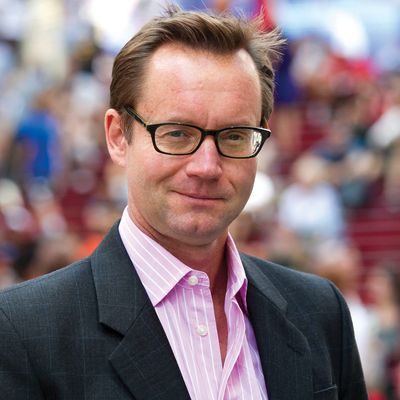
The infamous New York Post columnist and author of the New York Times bestseller "Razzle Dazzle" about his new book "Singular Sensation". We discuss his twenty year career reporting the ups and downs of the Broadway business in both his tabloid articles and his books, and the rapidly changing role of the theatrical journalist in the digital age... Read More
From the show: Putting It Together
Guests
Featured Shows

About
The infamous New York Post columnist and author of the New York Times bestseller "Razzle Dazzle" about his new book "Singular Sensation". We discuss his twenty year career reporting the ups and downs of the Broadway business in both his tabloid articles and his books, and the rapidly changing role of the theatrical journalist in the digital age.
Transcript
This transcript was automatically generated and might contain errors.
[0:02] Ollie Southgate: Hello there, I'm Ollie Southgate, and from the Broadway Podcast Network, this is Putting It Together.
[0:07] Ollie Southgate: We're on the first Friday of each month. I sit down with Broadway's best business minds to talk about the state of the art and their role in keeping the world's biggest theatre town at the top of the list.
[0:16] Ollie Southgate: On this month's show. They're selling goods. If the goods are good, we'll champion them. If they suck, why should we have anything to do with them trying to make money if the product isn't a good one?
[0:28] Ollie Southgate: I had fun, and I'm delighted to have gotten to know all the wonderful theatre people I've gotten to know, but at the end of the day, you've got to be honest about the show. If it sucks, it sucks. I'm talking to Michael Riedel, the infamous New York Post columnist and author of the New York Times bestseller Razzle Dazzle: The Battle for Broadway about his new follow-up book, Singular Sensation: The Triumph of Broadway.
[0:48] Ollie Southgate: I met my friend David Stone. I said, I have this idea for a book about the 90s. And he mapped it out on a napkin. And he said, Rent, Chicago, Angels in America, The Lion King, Disney, The Producers. That was a great decade.
[1:02] Ollie Southgate: We discussed his 20-year career reporting the ups and downs of the Broadway business in both his tabloid articles and his books, and the rapidly changing role of the theatrical journalist in the digital age.
[1:11] Michael Riedel: I think you have this one-two combination of the internet, which makes everybody a critic, but also the fact that critics aren't—they're just not as good as they used to be.
[1:20] Michael Riedel: Listen, Jesse Green's a friend of mine, but you know, I don't rush to the New York Times to read his review the way I used to rush to read Frank Rich.
[1:26] Ollie Southgate: So let's find out how Michael Riedel puts it all together.
[1:45] Michael Riedel: I mean, you know, every morning I got up and looked out my window and I saw a cornfield. Um, so theater was not a big part of my life, but I did do a play when I was in ninth grade, and the play was The Diary of Anne Frank by um Goodrich and Hackett. They were a husband and wife team back in the day, and they wrote some good plays.
[2:04] Michael Riedel: Now, this is an interesting production because it was the all-Christian version of The Diary of Anne Frank, because there was only one Jewish family in uh Geneseo, New York, and everybody always said, you know, you know the Levins, the Jewish family. That's what they always said. And the Levins, their kids, they auditioned for The Diary of Anne Frank, but they weren't cast.
[2:24] Michael Riedel: So for whatever reason, the director of the play cast uh Episcopalians, Presbyterians, and Catholics. So I had the distinction of being in uh The Diary of Anne Frank that did not have a single Jewish person in it. And I can't say it was very good. Maybe it was a bit like um that uh production of Fiddler on the Roof I saw that David Laveau directed, and there were no Jews in that production either, and uh David and I had a little set to about that, which I could tell you about later.
[2:51] Michael Riedel: Uh, but it was kind of fun being in the play. I played Jan Dussel, he was the dentist that the Frank family brought in at the last minute to hide him up in the attic. Uh, but anyway, so it was kind of interesting to be in that play. Uh, I can't say it was a fun experience because being a ninth grader and doing a play about the Holocaust, it sort of made me read other books about the Holocaust and got me interested in history, and that's what I really wanted to do.
[3:17] Michael Riedel: Uh, I guess it was because of the theater that I fell in love with history. And I went to Columbia University here in New York, and I became a history major, American and European 20th century history. And I really had only two ideas in my mind for what I wanted to do. And one was to become a history professor, and the other was maybe be a lawyer, because you're gonna make more money as a lawyer, probably, than a historian.
[3:39] Michael Riedel: But I really had no plans to do anything. And then I remember I wanted to stay in New York one summer, and my father said, Okay, if you want to stay in New York, you have to get a job because you know I can't afford to pay for your dorm room through the summer. It's either that or you come home.
[3:56] Michael Riedel: So I went to the um the career services thing at Columbia, and they would have a bulletin board and they would have postings for jobs that were available for this summer. And I remember thinking, uh, Elizabeth I.
[4:21] Michael Riedel: So I applied for the job. I went in, I met Liz, who is, you know, one of the most colorful characters on the planet. You know, dear, dear friend of mine now. And Liz said to me, Kid, why do you want to be in the goddamn theater? And I said to her, I said, I don't. I just I need a summer job. That's why I'm applying.
[4:40] Michael Riedel: And she said, Alright, fine, you're hired. She hired me on the spot. And Ollie, I kid you not. True story. My first day in the job, now Liz is producing a play. I'm not gonna tell you what the title is because I'm gonna save it for the end. And she's brought a bunch of English actors over. And she put them up in, I don't know, I think the Whitby Hotel there on 45th Street, wherever it is, the Whitby apartment buildings.
[5:02] Michael Riedel: Anyway, so she says, Kid, this goddam English actor is complaining that his air conditioning unit doesn't work. Go over and fix it. So there was a Black and Decker hardware store in the corner. I thought, well, I'll buy a screwdriver so I look like I know what I'm doing. So I buy my screwdriver, pretending to be Mr. Fixit. I go to the Whitby, go up to this guy's apartment, knock on the door.
[5:26] Michael Riedel: I can only describe him as a praying mantis. He was the most elongated person I had ever seen in my life. And he opened the door and he said, Yes. I said, Uh-huh, I'm from Liz McCann's office and I'm here to fix your air conditioning unit. He said, Oh God, it's beastly hot in here. It's beast beastly hot.
[5:45] Michael Riedel: So I walk in and I go past his bed, and I remember seeing this calf, a leg sticking out from under the covers, and then this woman took her covers off, blonde. She said, It's so hot on here. It's so uh so hot. It's so hot. So I walk over to the window where the air conditioning unit is, and this is where my career in the theater began.
[6:06] Michael Riedel: I stuck the um screwdriver into the vent of the air conditioning unit, and I jiggled it around, and it started. You know, back in those days, air conditioning units on and he's like, Oh, thank you, thank you. So beastly so hot in here. I said, Well, the air conditioning unit's thank you very much. And I went on my way. And that elongated, praying mantis-like man was one Alan Rickman, who was starring in Les Liaisons Dangereuses that Liz McCann was producing on Broadway with the Royal Shakespeare Company in 1988.
[6:42] Michael Riedel: And the girl in the bed was one B.D. Edney, who went on to become a very good actress. And then I worked for Liz that summer. I got to know all of them because I was around the theater all the time. And I thought, these people are hilarious, and this is far more interesting than going to law school or becoming a history professor.
[6:59] Ollie Southgate: Was the first instinct then, like, boy, I'd love to write about these people, or did that come later on some other way?
[7:06] Michael Riedel: Well, that was another happenstance, too. I mean, I, you know, I did my internship with Liz, and that was the end of it, and I thought, well, now I gotta go to law school. And then I was at a party when I was uh the weekend I was graduating from Columbia, and I'd been having this fling with an actress, an older woman at Columbia. She was uh taking a class that I was in, and she was a soap opera actress, and she had taken me to the theater too, and she introduced me to this guy who was in her graduate program at Columbia.
[7:34] Michael Riedel: And so we were at a Friday night party, the weekend of graduation, and we were talking, he said, you know, I I've taken this job as the editor of this magazine called Theater Week. I'd never heard of it before. And he said, I'm looking for uh a managing editor, and would you be interested? I said, Well, yeah, I mean, you know, I really have no big plans after uh graduating.
[7:55] Michael Riedel: So I went and interviewed with the people who ran Theater Week magazine back in those days. I mean, they said, Do you have any writing samples? And all I had was, you know, a bunch of history papers, so that's what I gave them. And then they called me on I think John called me on a Sunday. It was his name was John Harris. He called me on a Sunday, he said, They want to hire you, and can you start on Monday?
[8:12] Michael Riedel: So I graduated from Columbia on Saturday, and on Monday I am at 25 West 23rd Street. That's where the offices were, and I show up and suddenly I'm writing about the theater. Now here's the thing though that changed everything, because I had no clue what I was doing. I did yeah, I barely knew what a musical was. But my first assignment, I had to go interview this guy. He had a new musical coming to Broadway. Um, so yeah, you have to go interview this guy.
[8:35] Michael Riedel: So off I go to the Mark Hellinger Theater, and he had this office, this rickety old office. I remember walking up those stairs. I mean, every foot on the stair, one leaned to the right, one leaned to the left. It was like I thought, my god, there's like mothballs. So I knock on the door, and this woman with huge sunglasses, chain smoking her. What do you want? What do you want?
[8:56] Michael Riedel: I said, Well, I'm here to have an interview. Oh, yeah, yeah, yeah. And then I look, and this other guy, he's in this kind of dingy room, but a lot of pictures of old Hollywood celebrities on the wall. He's like, kid, come in, kid, kid. He's got these big sunglasses on. I mean, these are like Hollywood sunglasses from the 70s. And he had this gold chain on. He said, Sit, what do you think about this?
[9:20] Michael Riedel: I'm sitting at this upright piano, got a cigarella. It was not a cigarette, it was a cigarella. And I noticed on the piano there were all these cigarette burns in it, because I guess he would put the cigarella out on the piano. So it had burns all over it. And he plays me this song. Oh, that's very nice. And then I said to him, I said, um, could you play me something, um, maybe something that I'm familiar with? Something, you know, uh a song that that's—I remember saying, uh, could you play me a song that you wrote that's famous?
[9:44] Michael Riedel: He said, How's this for you? He goes, People, people who need people. The luckiest people in the world. And that guy was Jule Styne. And I spent three hours that afternoon with Jule Styne. He played me the score to Gypsy, Bells Are Ringing, all the old Sammy Cahn songs he did. And I remember leaving that uh interview and thinking, there was no way I can ever go to law school. There was no way I can ever become a historian because I just had the most exciting moment of my life. And I never looked back.
[10:28] Ollie Southgate: Incredible. And I think it's fair to say, uh, since then you've made something for uh something of a reputation for yourself when it comes to um your coverage of Broadway and uh and particularly in the papers when you when you write there. It seems to be something you relish, or at the very least you're comfortable with.
[10:44] Michael Riedel: I was watching the um Dori Berinstein documentary uh Show Business: The Road to Broadway for the 20th time a few nights ago uh and you and you're painted in a very specific way in that and you know what also jumps to mind I just wrote this in my notes because it always makes me laugh is your your very willing uh cameos on Smash as yourself after you were described in the pilot episode as a Napoleonic little Nazi. Do you do you see yourself in that same way that the industry um or at least some people in the industry have come to paint you or do you think that's kind of an exaggerated caricature?
[11:17] Michael Riedel: Listen, I mean somehow I I guess I recognized in some way that if I was going to pursue this career such as it is I thought you know look everybody in this business show business is on a platform so I gotta be on a platform too. So yeah I could be spicy and you know go for the gossip and go for the jugular and I and to be honest with you I was building my career up. I mean I knew every time I wrote something nasty I got paid more money so I just kept going down that route.
[11:44] Michael Riedel: But to me it's Ollie to be honest with you it just to me it was always fun. It was just like I can poke people in the eye and they can hit me back and I always thought to myself I I can't even imagine how my life turned out this way. And it's it's funny you say about Smash I have a good story about that. My friend Teresa Rebeck uh she wrote Smash and I was slipped by a source the script the pilot script for Smash and in it you know she uh God who was it I can't remember the woman who was in Smash but it was uh my friend Brian Darcy James was in it.
[12:15] Michael Riedel: Who was the star?
[12:16] Ollie Southgate: Deborah Messing.
[12:17] Michael Riedel: Yeah, Deborah Messing.
[12:18] Ollie Southgate: Yeah, yeah, yeah.
[12:19] Michael Riedel: Not the greatest actress in the world, I have to say.
[12:21] Ollie Southgate: But she was okay.
[12:22] Michael Riedel: Anyway, so I remember reading the script, and they said, Michael Riedel has gotten hold of your script to Marilyn, and he's writing about it, and they're in the bed, you know, and looking at it online, and she's just, I can't stand him.
[12:35] Michael Riedel: He's a Napoleonic little Nazi. I think that was the phrase. And then they read and they say, I like it, and they say, you know, he's really misunderstood. I really like him. Because that was my relationship with Teresa. She was always like, everybody hates you, but I love you.
[12:49] Ollie Southgate: Right.
[12:49] Michael Riedel: So I read that, and I wrote a column about it. And Teresa said, how did you get the script? How'd you get the script? I said, well, you know, I can't reveal my sources, but I got the script. And she said, look, here's the thing. I want to write you into the show, and I think you should play yourself.
[13:03] Michael Riedel: And I said, that's great. I'm happy to do it. I said, but you're gonna have a bit of a problem here because your producers, Bob Greenblatt, who was then running NBC, he had done 9-5, and that's a show I killed. And Bob and I had been friends, and because I did not like the nine to five, that friendship kind of ended.
[13:22] Michael Riedel: And Craig Zaydon and Neil Merrin had done Promises Promises, and we'd been sort of friendly before that revival. And of course, I wrote columns about how Neil Simon was very upset that they brought Aaron Sorkin in at the last minute to change his book. So I had all the people against me who were doing Smash. Greenblatt hated me, Neil and Craig hated me. They all just hated me.
[13:45] Ollie Southgate: So I said, Teresa, you're gonna have a problem because your bosses are gonna say, what? Michael Riedel is not gonna be on this show. She said, don't worry, it's my show. I can take care of it.
[13:54] Michael Riedel: All right, so she sends me her script and she's written me in an episode. I said, oh, it's fun, I'd be happy to do it, you know. What fun? I've never done anything like this before. So I go to the, oh, I can't remember the opening. It was some opening on Broadway, and I run into Bernie Telsey, who was casting Smash.
[14:10] Michael Riedel: And Bernie said, oh, I saw your sides, it's gonna be great, it's gonna be so much fun. This is a true story, Ollie. I get home, and about two o'clock in the morning, I'm still up because back in those days we were up all night long after openings. Bernie says, oh, Michael, the scene has run long and your scene has been cut, so sorry, you're not gonna be in the show.
[14:32] Michael Riedel: I thought I know what's going on here. I know that's gone up to Greenblatt, and I know they said, we hate this guy, no way. So I thought, all right, how do I fight this? At that point, I, you know, I was at the Post then, and I thought, okay, I'm gonna leak this story to Page Six. Because it happened that the next morning I was going on Don Imus' radio program.
[14:55] Michael Riedel: And at that point, you know, back in the day, Imus was listened to by 10 million people. I thought, if I put this on Page Six, that I was cut out because those guys hate me for what I said about their shows. Don will see that on Page Six, and he will bring that up in the interview. And sure enough, Don said, so Riedel, I'm reading Page Six here, and you're supposed to be in this some sort of TV series called Smash, and they cut you out of it because those guys, they're mad at you because you didn't like their shows.
[15:19] Michael Riedel: I said, yeah, yeah, you know, Don, it's okay, it's fine. But I just want them all to know that I'm gonna be still here covering the theater for the Post. And the next time you guys have a Broadway show, I will be lying in wait. And Don said, you know, I think we should boycott this show. Nobody listening to me should watch Smash unless Riedel's on it. In fact, we should boycott all of NBC's shows.
[15:41] Michael Riedel: I kid you not, Ollie. I got home an hour later, Bernie Telsey was on the phone. Your scene has been restored, and you have to be on set tomorrow at 7 a.m.
[15:50] Ollie Southgate: Oh my god.
[15:52] Michael Riedel: That's amazing.
[15:53] Ollie Southgate: That's absolutely incredible.
[15:56] Michael Riedel: And ultimately, though, in spite of that reputation, as with any role in the theater business, as you've sort of already described, you do it all because you know you genuinely do love the art form, and that's so clear in your books as well. Have you ever worried that something you've written has, you know, directly caused any damage to a show that, you know, wouldn't have happened if you hadn't hit send on a certain column or something, either financially or in reputation?
[16:24] Michael Riedel: Uh no, I mean I've never really thought of it that way. To me, it's a business, you know. People are putting on a show and they're charging people a lot of money to see the show. So, you know, it's up to people like me and, you know, Ben Bradley, God rest his soul, Jesse Green, you know, my old friends, the critics, Jacques Lesour, John Simon, Clive Barnes.
[16:42] Michael Riedel: We all had this attitude, look, I mean, you know, they're selling goods. If the goods are good, we'll champion them. If they suck, why should we have anything to do with them trying to make money if the product isn't any good? I never had any emotional connection to it whatsoever. I had fun, and I'm delighted to have gotten to know all the wonderful theater people I've gotten to know, but at the end of the day, you've got to be honest about the show.
[17:02] Michael Riedel: If it sucks, it sucks. I mean, the smartest people in this business, the smartest producers that I've gotten to know over the years, they kind of say, you know what, we step up to the plate. Sometimes we hit a single, sometimes we strike out, sometimes it's a double, and sometimes you hit a home run. But the point is you have to keep stepping up to the plate.
[17:19] Michael Riedel: So they don't really personalize it. I mean, I have found in my conversations with producers over the years, they know if a show's good, they know if a show sucks. They know if they're gonna get killed by the critics. They're not in the dark. They really aren't. They can step back and assess what they have. And look it, if it doesn't work out, this one didn't work out, the next one may work out.
[17:38] Michael Riedel: But you know, all you need is a Wicked or a Chicago or a Book of Mormon, and you're set for life. And you sort of talked about some of your peers in the journalism while they're in the theater journalism world specifically. As one of the best-known figures at the intersection of those two businesses, both of which have gone through metamorphic change in the last 20 years or so with almost everything going digital.
[18:02] Ollie Southgate: What's your take on the direction things have headed in there? Were the glory days of a job like a theatrical journalist back when everything was still paper and ink, or do you think people trying to get into that business now still have a bright and breezy future?
[18:16] Michael Riedel: That's a good question, Ollie. I have a two-part answer for that. One, you can never go back. And you have to understand why critics were powerful. It was because there were very few outlets. You had four newspapers in New York City when I started. Frank Rich at the New York Times, Howard Kissel at The Daily News, Clive Barnes at the Post, you had the magazines, Jack Kroll at Newsweek, John Simon, a good friend of mine at New York magazine.
[18:40] Michael Riedel: There were just a handful of places where you could read about the theater and read the reviews. So those guys had a lot of power because they had a monopoly on that power. I mean, I've lived long enough to see the internet come along, things like all that chat come up. And now you've got a gazillion voices out there of people's opinions about a show.
[19:01] Michael Riedel: So that dilutes the power of the old newspaper critic when he really had the monopoly on the audience. That said, I do believe there is still room for a really great writer, great voice, an unusual perspective on the theater, somebody who could become a critic that a lot of people could not wait to read.
[19:26] Michael Riedel: And I don't think, to be honest with you, that the crop of critics today are as good a writer, as interesting a thinker as somebody like John Simon, Frank Rich, Walter Kerr in the movies, Pauline Kael or Roger Ebert. So I think you have this one-two combination of the internet, which makes everybody a critic, but also the fact that critics aren't, they're just not as good as they used to be.
[19:53] Michael Riedel: I mean, listen, Jesse Green is a friend of mine, but you know, I don't rush to the New York Times to read his review the way I used to rush to read Frank Rich. I mean, with Frank Rich back in the day in the 80s and the 90s, you thought, oh my God, I have to read what this guy says because every sentence he wrote was electric. Just, you know, it jumped off the page.
[20:12] Michael Riedel: I remember when I got to know John Simon as a kid reporter. You know, in college, I never, I didn't have the money to go to see these plays, but you read New York magazine and you read John Simon because my God, the man was brilliant. He was vicious, but witty and clever, and you thought, if you enjoy writing, you want to read these people.
[20:29] Michael Riedel: So I think frankly, it's a failure of critics who just do not write as well as the great critics used to write. And I do think there's an opportunity for somebody to come along. It's not me, because I'm too old. And I, you know, to be, you know, to be honest with you, Ollie, I think I did bring something new to the table.
[20:47] Michael Riedel: I mean, I wrote with energy and verve, and I wrote about the gossip about Broadway, and I dug in, I found the behind-the-scenes things, and that's probably, you know, the key to my success was people said, you know, what does Riedel say? What's Riedel gonna write about, you know? But there's nobody out there now.
[21:03] Michael Riedel: I mean, you're in the theater business. Is there anyone you think, oh, I can't wait to read this person? Oh my God, what is Frank Rich going to say?
[21:10] Ollie Southgate: Yeah.
[21:10] Michael Riedel: No one's out there saying, what is Adam Feldman gonna say? You know, what is Jesse Green gonna say? What is, I don't know. I couldn't even tell you who the critics of the Drama Critics Circle are today. Is there anyone out there, Ollie? And this is a question for you, that you can't wait to read.
[21:22] Ollie Southgate: I think probably the one I was still the most excited by would have been Ben Brantley, who as of a few weeks ago is no longer in that position, has decided to move on during the COVID pandemic.
[21:37] Michael Riedel: So yeah, Ben's a friend of mine, I like Ben, but the monopoly kind of slipped away under his watch in a sense, and I always thought the problem with Ben's writing was he was so absorbed in the theater world that he would write about, oh I saw, this reminds me of this play that I saw.
[21:57] Michael Riedel: That reminds me of this other play that I once saw. And it was not really newspaper writing. It was kind of living in his own mind. The thing about Frank Rich, you go back and you read those reviews, and Frank understood something fundamentally that a newspaper is a newspaper, okay?
[22:12] Michael Riedel: And you're a newspaper writer, which means that your reader has no idea what happened yesterday, but you're gonna tell them. And Frank's whole approach to writing reviews was something happened last night in a Broadway theater that is worth your time learning about in my review.
[22:32] Michael Riedel: Now, it could be the greatest thing of all time, Angels in America, his rave reviews for that play. Makes you feel if I miss this, I'm missing out on the cultural event of my lifetime. Or it could be a hilarious pan about something. But he made it seem urgent, newsworthy, and fun.
[22:51] Michael Riedel: And I don't think Ben, as good a writer as Ben is, was ever fundamentally a newspaper guy. I mean, that's the way I am. I mean, you know, I'm a newspaper man. I start out the Daily News and the New York Post. Every time I wrote a column, I thought most people reading my column, I gotta put aside all the theater people because, you know, they're gonna read it anyway.
[23:11] Michael Riedel: But I was thinking, I gotta make this column interesting for people who don't give a f about the theater. But oh wow, that's a good lead. Oh, wow, oh, that's kind of juicy. Oh, that's kind of fun, that's gossipy. That's good. It's about news.
[23:23] Michael Riedel: And I think two critics these days are just, they're so absorbed in their little lives going to the theater all the time that they lose sight of the fact that most of the people who read a newspaper are gonna spend about 30 seconds on a page and flip it. I mean, I learned that lesson.
[23:40] Michael Riedel: I remember I was on the subway years ago when I first started the New York Post, and I was so excited I had my column in the New York Post, you know, my career is beginning. I get on the subway going to work, and I sit next to a guy and he's reading the New York Post, and he flips to my column and he looked at it for about two seconds and he turned the page.
[24:01] Michael Riedel: I thought, well, if you can't get him in two seconds, you're not doing the job.
[24:06] Ollie Southgate: Right.
[24:07] Michael Riedel: So do you think some distance from the industry maybe, maybe it's best if you want to be sort of that critic that really grabs people's attention and really gains some notoriety, it's probably best not to be someone who, you know, is absolutely indulgently in love with the art form.
[24:23] Michael Riedel: Well, whatever success I've had is probably because I was not a theater person.
[24:27] Michael Riedel: I mean, I approached it from another point of view as a reporter. I mean, I was more interested in the business side of things. Uh I got to know the producers who became great sources over the years. And I was just, I was not a fan, you know. You know, I just, I it was like, oh, can't wait to get my free tickets to go to a show. I want to know what's really going on. Where is the power? If you read my first book, Razzle Dazzle, you see my real interest in the theater. And, you know, I write about Broadway in the 60s and the 70s when the city was falling apart and um uh Times Square was dangerous and the theater was in trouble. And I write about, you know, people you've never heard of before, Bernie Jacobs and Jerry Schoenfeld, these two lawyers who took control of the Schubert organization and how they rebuilt it and how they created their own empire. That to me is far more interesting than any play I'm ever gonna see.
[25:20] Ollie Southgate: So you spoke a bit about uh sort of the end of that critic's monopoly with the dawn of the internet and social media and that kind of thing, and uh and the fact that now the news starts breaking about the quality of a show, you know, in its first out of town preview because somebody posts about it on Twitter. Would you agree with that assessment? And if so, what do you think that makes a professional critic's role now?
[25:42] Michael Riedel: In I mean, I would say 2020, but we'll we'll say 2021, since that's probably the next review anyone's gonna write. If you're a critic, you know, might you might as well throw yourself off the balcony. I mean, it's there's no point anymore. It doesn't matter. And these critics are so they're freaking pompous. I mean, I know a lot of these guys now, and they all they feel well, we have the experience and the history and we know and nah, forget about it. I think that that art form of criticism, which I loved, by the way. I mean, I have great collections in my bookshelf of great critics, but that art form is over with. I mean, maybe it's moved on. Maybe there are critics in you know the hip hop world or uh uh other worlds that I don't really know about who are great writers and critics, but for the theater, I think I think criticism is pretty much dead.
[26:26] Ollie Southgate: Gotcha. Okay.
[26:30] Michael Riedel: They're not personalities. I mean, come on. Name can you Ollie, can you tell me the names of the members of the New York Drama Critics Circle today?
[26:38] Ollie Southgate: Absolutely not, no.
[26:39] Michael Riedel: No. I mean, when I started out, John Simon, Howard Kissle, Clive Barnes, Linda Weiner, Jack Kroll, William A. Henry III, those were formidable people, formidable names with great writing. Forget about it. Please, anyone listening to this podcast, don't become a drama critic. It is a thankless job. And you're just driving your car right into a dead end.
[27:07] Ollie Southgate: Oh boy, okidoki. Um, all right, I'm gonna I'm gonna move on to another question. It's gonna sound very specific to me, but I know that many of our listeners are in the same line of work as I am, uh, as we discussed before we started recording marketing and advertising. Um so the closest I ever get to a critic's work generally is is helping decide what the poll quotes from your review are gonna be on the poster. If you really like a show, do you ever go out of your way to write something that you think might be uh helpful to producers and and folks like me in promoting a show or vice versa? Are you ever extra careful not to leave something in a less favorable review that might be taken out of context for the purposes of you know promoting a show?
[27:46] Michael Riedel: Well, I was never really a critic. Uh I was a columnist, so I and I I dug I dug up the news. But I was definitely, you could tell if you read my columns, that there were shows that I was promoting and shows that I hated. Yeah. Um but uh that's not the way I write. I mean, I just try to write in a casual, fun, kind of chatty way. The way I try to write is the way I would sit around uh the table at table number seven at Joe Allen with my friends, uh the old critics, all dead now, Jacques LaSourde and uh Donald Lyons from the Wall Street Journal, Mike Couchwar from the AP. And we would just, you know, slag off on stuff and laugh about stuff and really tell us honestly what we thought about stuff. So I thought my column is pretty much that. It's like, you know, pull up a chair with Joe Allen and we'll all gossip about stuff. That's the way I write. I'd never thought about writing for a billboard or a bus.
[28:33] Michael Riedel: Now, I have heard over the years that there are certain critics who do want to write lines that they hope would have been taken out and put on the side of a bus or under the marquee. And I have known a few critics over the years who've called press agents screaming that their quote was not used on the undersling or the side of the bus. But that was never my g racket. I mean, I'm not a critic. You know, I'm I'm a reporter. I dig stuff up, so writing has to be a conversation. You know, the the best books I've read, and I've read a lot of books, believe me. The best books I've read basically begin and say, you know, pull up a chair and let me tell you a story. And that to me is writing.
[29:16] Ollie Southgate: Absolutely. So let's talk about writing. Let's talk about your books, Michael. Uh both of your books, uh Razzle Dazzle and the new one, Singular Sensation, The Triumph of Broadway, uh, are about a specific period of about give or take, ten years each on Broadway, with this most recent one taking us from the end of the British invasion, as you repeatedly describe it. I'm not taking it personally, um, up to the recovery of Broadway after 9-11. How do you decide when you start writing these books, what the bookends of each one are going to be? Do these eras of Broadway history sort of pop out pretty naturally on the calendar, or do you really have to tell yourself, okay, this is ninety one to 01, and I'm not gonna stray outside of that period too much?
[29:58] Michael Riedel: Well, with Razzildazzle, I I the book I wanted to write uh with Razzildazzle was I I did want to show I I wanted to tell the story of how Broadway was important to the recovery of New York City. Because I, you know, I knew Jerry Schoenfeld who ran the Schuberts. I was very close to Phil Smith, who also ran the Schuberts. I knew Jimmy Niederlander very well. And, you know, I spent a lot of years with those guys. And they were telling me stories, and I thought, you know what? There's a book here about what you guys did. When everybody else was abandoning New York, when everybody was fleeing New York because it was dangerous, and Times Square was the Times Square of the you know, of taxi driver, porto houses and drug dealers and pimps and prostitutes.
You guys stuck by it. You guys kept Broadway going. And I thought, you know, no one's ever told that story. And I think Razzle Dazzle works because I'm going to be arrogant here, but I think I was the only person who ever thought that the one of the reasons that New York stayed alive back then was because these guys, the Schuberts and the Needlanders, they kept the whole thing going. And they did shows like A Chorus Line, an Annie, and Cats and Phantom. Shows that really kept the whole firm alive.
[31:12] Ollie Southgate: Right.
[31:12] Michael Riedel: So I finished that book, and I, you know, I I knew I can never write a book unless I know the end. And I knew the end for Razzle Dazzle was Bernie and Jerry had really saved a business, saved the neighborhood, and helped save New York. And I thought, well, you know, you end it when Bernie Bernie Jacobs dies. He was a big character in my first book. And when he dies, that's the end of the book. And I really thought, I don't really have anything else to say. I mean, I I I spent a lot of time on that book. I researched it, and I read a gazillion books, and I read a million old newspaper clippings. I mean, I had I had old yellow newspaper clippings scattered all over my apartment when I was writing that book because I r I was really delving into the past.
I thought, okay, book is done, it's over with. And then my publisher, Simon and Schuster, called me and they said, We want another book. I said, Well, I don't I really I'm exhausted from the first one, so I don't really think I have another one. I said, No, we r we really want another book.
[32:11] Michael Riedel: And then I go back to something that Nathan Lane says in this new book, Singular Sensation. When Nathan Lane left um the producers after he and Matthew Broderick had such a big success with it, and they wanted them to come back. And Nathan was completely wiped out. He was so tired he couldn't do it. I said, So why did you go back? Why did you and Matthew go back for that that last hurrah? And he said, Well, there was the money, and then there was the money, and then there was the money. And the other thing I forgot to tell you was the money. So Simon and Schuster offered me money for another book, and I thought, okay, well, you know, I need to make some money. And they wanted a sequel. And I thought, okay, well, I could take this whole thing up to Hamilton, you know, Lynn Manwill, Miranda, Broadway's bigger than ever. I thought, yeah, that's that's a big book. And I don't have the energy or the stamina to write, you know, a thousand-page book.
[33:07] Michael Riedel: Yeah. But I thought, you know what? The 90s, which is really when I came into my own as a reporter. I thought that was an interesting decade. When Broadway went from being kind of the backwater of the entertainment business to becoming once again in the mainstream of American popular culture. And I remember I met my friend David Stone, the producer of Wicked. And I said, I'm I have this idea for a book about the 90s. And he said, Oh, I got it. And he mapped, we were at, I think we were at dinner, and he mapped it out on a napkin. And he said, Rent, Chicago, Angels in America, The Lion King, Disney. I remember I put in Garth Trubinski, Live End, The Producers. That was a great decade where those shows were as famous and as well known as any TV series or movie of the time.
I thought, oh, that's good. I can write about those shows, how Broadway became so big in the 90s. And then I thought, well, how do I end it? How does that book end? And I remember Ali, I got up one morning, and this was really on my mind. And I looked out of my window here in the West Village, and I thought, you know, once upon a time, I had a view of the World Trade Center. Because I bought my apartment here in the West Village in 1996. And every morning I got up and had my coffee and I'd look out and I'd see the World Trade Center. And one morning I got up and I saw a big black gash in the North Tower of the World Trade Center. And I saw the other plane hit and I watched those buildings fall.
And I thought, you know what? I remember vividly that morning when I called Jerry Schoenfeld at the Schubert's. And I said, Jerry, what's going on? What's going to happen? He said, Michael, we don't know. We've heard that there are bombs in Times Square, can't open the theaters because there are terrorists who may, if we open the theater, they may take it over and hold people hostage. We don't know what's going to go on. And yet, within two days, on Thursday, as I detail in my book Singular Sensation, The Triumph of Broadway, Rudy Giuliani, who was he was then sane, uh, as the mayor of New York, he called all the Broadway producers together and he said, We cannot bow down to this. We have to show the world that New York is standing up and open for business.
And the best way that we can do that is to have Broadway shows up on Thursday night. I don't care what you have to do, open those shows on Thursday night. And that occurred to me that's the the way to end this book. Because the first book, you know, was about Broadway was in the dumps and the city was in the dumps, but Broadway helped save the city. I thought, once again, when the city is in its hour of need, what is there for it that no other city in the world has but Broadway? And Broadway stepped up and opened those shows on Thursday night. I went to see the producers September 13th, 2001, the Thursday after September 11th. I went with Mel Brooks and Anne Bancroft to see the producers. And 500 people showed up.
I mean, it was the hottest show in the world. You couldn't get a ticket. You know, theater was half empty. And at the end of that show, Matthew Broderick and Nathan Lane, they led 500 people through tears singing, God bless America. And I thought, that is a way to end a book. It just shows you the resiliency, the strength of Broadway, and how important Broadway is to New York City.
[36:25] Ollie Southgate: Absolutely. And you I mean, listen, you you've told so many sort of wonderful, richly told stories. You're clearly an expert storyteller. And I read both books again in advance of speaking to you today. And what struck me is that although they're both nonfiction books, they have these incredibly rich, gorgeous narratives and gloriously told stories that read almost as if you personally were in the room for every single one of them.
[36:50] Michael Riedel: Um, obviously, there's some moments in these books that you were present for in the role that you had, but so many of them have come from things that people told you in interviews. The one that jumped out to me in particular, just in its detail, was the daily routine of Candor and Ebb writing the Chicago score in Fred's apartment and the funny look that a dancer gave them before they saw it at Encores and that kind of thing. And I may be asking this question a little selfishly under the context we're talking in, but what have you found is the best way to getting those little details out of people that really paint the picture of a scene that you weren't personally in.
[37:26] Michael Riedel: I'm glad you brought that up because that's what I try to do as a writer. And I learned this from my old friend Peter Stone, who wrote 1776 and Titanic. Peter was a great friend of mine, wonderful guy. And I always said to Peter, I said, you know, you wrote you wrote two shows. 1776, we know that they're gonna sign the Declaration of Independence. And Titanic, we know the ship's gonna sink. But how did you make the shows so compelling? And he said, You and I know the outcome, but the people who were there did not. The founding fathers did not know if they could get all of the 13 colonies together to sign the Declaration of Independence. The people who boarded the Titanic had no idea that they were gonna hit an iceberg and the ship would sink.
And you have to put yourself back in their minds at the time. And so I went to everybody my interview for this book, and I said, Fran and Barry Weisler, the producers of Chicago, we know it's a hit, but take me back when you did not know. And Fran said, you know, Michael, we went to see it at Encores, the third performance. It was only supposed to be a four performance concert. Fran called Fred the next day after Barry and Fran saw it and they loved it. They called Fred Ebb and they said, you know, Fred, oh God, if you could just give us a little piece, just a little piece when it moves to Broadway, we would be so grateful. And Fred said, Fran, nobody's called. Nobody wanted to move a concert to Broadway.
Who's going to pay $75? That was the top ticket price, if you could imagine back in those days. Who's going to pay $75 to see a concert of an old show that only theater geeks know? And Fran and Barry could not raise the money to produce Chicago. They couldn't raise it. And they violated Mel Brooks's cardinal rule of show biz don't put your own money in the show. They put up of their own money, and they were not wildly rich back in those days. They put up two thirds of the capitalization for Chicago. And I remember interviewing Fran about this, and she said, Michael, Barry and I, we got into bed, we turned out the light, and I pulled the covers over my head, and I said, What have we done? What have we done?
And jump ahead, you know. Chicago ran 22 years. It will reopen again when Broadway reopens, I hope. And the worldwide gross of Chicago is about $3.5 billion. And Fran and Barry have 75% of that. And over the weekend, I was up there visiting them in the beautiful country house that Chicago built. Absolutely. Wow. But you got to put yourself back in those days. You have to, when you interview people, you have to say, don't project ahead. I don't want to know. We all know this is how it turns out. Tell me what it was like when you first read the script. When you first started to write the script. And that's what I try to convey in the book is the stakes, as you know, Ollie, are so high in this business. And that's what I try to get at in my books.
[40:27] Ollie Southgate: Absolutely. And you do it so well. And this is probably an unfair question, but of all those interviews that you did, either for this most recent book, or sure we'll tag in some from the last one as well. Do you have any favorites or at least a standout one that you'd care to mention?
[40:42] Michael Riedel: Well, I have to say my interview with Garth Drabinski was interesting because Garth is a big character in the 90s. He built up Live End, a company that was a fraud at the end of the day, and Garth went to jail. And I felt I knew when I was mapping out the book, I knew Garth had to be a big figure. And he's kind of forgotten these days, but he was fascinating to me back in the day because I covered him, and I was always a little suspicious of what was going on. I mean, I had no inside knowledge, but I thought, I mean, I know the finances of Broadway, I know how much a show costs to run, I know how much you spend on it, what do you spend on advertising, and I looked at those shows and I thought I don't understand how these shows can make money for all the amount of money he's spending.
And I had some good guides, like the Schuberts and the Nederlanders who said, something's fishy here. We know how this business runs, and there's something weird here. And I covered Garth's fall, and he did go to jail for forgery and fraud, and I thought, well, I'm gonna write about him, but I owe it as a reporter, you know, you have to be fair to everybody. I found an email for him. I said, you know, I would like to have an interview with you. And he and I always kind of got along back in the day. Sometimes he would scream and yell at me, and sometimes he would laugh at me. Complicated relationship. And I did meet him. I met him down at the South Street Seaport. He was staying at the hotel down there.
And he came in. He said, You know, I'm only doing this because I really loved Razzle Dazzle. He was charming and fun, but I began to push him on some things. And then he got defensive and he got a bit angry. And he got angrier and angrier. And he finally said to me, I'll never forget this. He said, you know, you don't understand Michael when I what what what went on? This narrative that you're writing is not the real narrative. I said, Well, Garth, tell me the real narrative. I'm here. I mean, my tape recorder's running. Tell me the real narrative. He said, No, I won't do it. I said, you know, Garth, the only narrative I know is that you went to jail and got up and left. Boy, and that was the end of it. You never you never got the story.
[42:47] Ollie Southgate: Nope. And you say in the afterword of your new book, Singular Sensation, The Triumph of Broadway, that you never intended to write the sequel, and you kind of alluded to that earlier too. And you also sort of mentioned in the afterword that you needed a bit of encouragement to write the first one, too. So my question is, what's next for you on the book front? Does this feel like it's probably going to be it? Or because presumably 2020, or perhaps more importantly, the return of Broadway, which again, let's hope means 2021, is also a gold mine of content for a series of books that journalize momentous periods in the theater business. Have you put any thought yet as to what a book about this period and the recovery might look like, or is it sort of too early?
[43:34] Michael Riedel: Give me a break. I just finished the fing book here, so you know I'm loving it now. So I mean I'm not thinking ahead. But I do have to say though, I think I moved on from Broadway. I had a great run. I had a lot of fun. I got two books out of it, and I make my living now as a morning radio talk show host, and we cover everything. You know, my partner Len Berman and I, Len Berman and Michael Riedel in the morning, 7 10 W O O R. And we cover politics and sports and entertainment, local news. I do think my days of Broadway are done. I have another book I'm under contract for for Simon and Schuster, but I think I've pretty much have said all I want to say about Broadway. So I'm gonna close the book, so to speak.
Find my life on Broadway. And I would like my next book to be something that has nothing to do with Broadway. I think I think I'm done with that part of my life. And as much as I love the theater, and God, I hope my friends still listening to me, when it all comes back, they will still invite me to their opening nights, but no, I'm not going back as a columnist. I mean I've done that and my life has moved on, and I enjoy being a broadcaster, I enjoy the radio gig, and I have some other things in the works right now, so but I think my time out of Broadway is done, and you have to pass it on to somebody else. There should be a I got I only hope there will be a new Michael Riedel out there who like will dig in and learn about everything and be as excited as I was and find out all the dirt and the scuttle butt and the this and the that. But at 54 years old, it's not me.
[45:10] Ollie Southgate: Well, if anybody with the relevant powers is listening, I will gladly put my name forward. And also I wanna keep you if I could keep you on Broadway for just a few more minutes in that case. The very last line of Singular Sensation epilogue reads, Broadway is in the midst of its new golden age. Obviously, you wrote that before that Golden age was so rudely interrupted. What impact do you think this pandemic and this shutdown are gonna have on that golden age? As things stand right now, what do you see Broadway's road to recovery being on the other side of the pandemic, whenever that might be?
[45:48] Michael Riedel: Well, it can't come back until there's a vaccine. Because the actors can't feel safe. The musicians, you know, they're playing in a cramped little pit, they're blowing on things, and that's how you spread the virus. So the workers have to go back and feel safe. You can open it up when they feel safe. When does the audience come back? I don't know. My concern is people have fallen out of the habit of going to Broadway. I mean, you know, before the pandemic, Broadway was huge. Everybody wanted to go there. Tourism was gigantic. You know, everybody from around the world was coming to New York. It's gonna take a long time. If you read the New York Times story the other day, you know, they don't think tourism will come back to the levels till 2025.
I mean, that's four years from now. All I can say is, and Rocco Landisman, who ran Drew Jampson Theatres, he and I talked about this at an event I did for my book at the 92nd Street Y was when you reopen Broadway, the tickets have to be affordable. You cannot say, hey, everybody, come back to Hamilton at a thousand dollars a ticket. No. You have to say, come back to Hamilton at a hundred bucks a ticket to entice people to come back. And Broadway, frankly, got a little too greedy, and it has been humbled, and it has to reopen and make it not only for the 1%, but for everybody.
[47:11] Ollie Southgate: Author and columnist Michael Riedel. You can follow Michael on Twitter, although he hasn't posted in a while. He's at Michael Riedel N Y. That's R-I-E-D-E-L. But you'll get a much more recent account of his take on the theatre business by buying a copy of his new book, Singular Sensation, The Triumph of Broadway, available now at all good book outlets from Avid Reader Press and Simon and Schuster. If you enjoy today's episode, please do me a favor, share it with your friends on social media and head to your podcast app of choice to rate, review, and subscribe to putting it together. The ads you hear on this show pay to keep it online, but I personally don't make any money from this show, and we've got more great guests lined up for 2021. I would be so grateful if you could help me get the word out.
[47:56] Ollie Southgate: Our music is by Eulas Pacan, and artwork and editing is by me, Ollie Southgate. You can find me on Twitter as well. I'm at OllieSouthi, or take a look at my website, that's Ollysoutgate.com. In both cases, my name is spelled with an IE, not a Y. Given the upcoming holiday season, I'm taking another month off in January of 2021, but I will be back with a new COVID 19 special on the first Friday of February. So that's Friday, February 5th. And who knows where the Broadway industry will be by then or what the timeline will have shifted to. I look forward to finding out myself and updating you on it then. But until then, thank you as always for listening. Over 7,000 of you have tuned in over the course of this very tumultuous year for Broadway, and every single one of you has my eternal gratitude for doing so. Please have a safe and happy holidays, and goodbye.
© Broadway Podcast Network, All Rights Reserved