

With the Broadway shutdown looking set to continue through the summer, Ollie Southgate speaks to another six guests from the world of show business about the ongoing impact of the coronavirus pandemic on live theater, focusing this month on the eventual comeback and what shape it may take based on what little we know so far... Read More
From the show: Putting It Together
Guests

Featured Shows
About
With the Broadway shutdown looking set to continue through the summer, Ollie Southgate speaks to another six guests from the world of show business about the ongoing impact of the coronavirus pandemic on live theater, focusing this month on the eventual comeback and what shape it may take based on what little we know so far. In this episode, Ollie chats with Damian Bazadona (Situation Interactive), Elizabeth Furze & Scott Moore (the managing partners of AKA NYC), Michele Groner (of independent marketing consultancy The Groner Group), Bob van der Beek (the Group Commercial Director of Stage Entertainment), and Kelly Wajsgras (a Broadway avid).
Transcript
This transcript was automatically generated and might contain errors.
[0:51] Ollie Southgate: Hello, I'm Ollie Southgate, and from the Broadway Podcast Network, this is Putting It Together and our second COVID-19 special. It's been a month since my last episode when I spoke to seven Broadway business leaders about the impact of coronavirus on Broadway as an industry. And speaking frankly, not a great deal has changed since then. Five days after my last episode came out on April 8th, the Broadway League extended the shutdown of all theaters by an additional eight weeks to June 7th. But the general understanding in the rooms I've been in since then is that June, as a getting back to business date, is still a little too optimistic. A sentiment apparently shared by the state.
[1:39] Ollie Southgate: You anticipate mass gatherings beginning before June 7th.
[1:42] Unknown speaker: I don't know.
[1:43] Ollie Southgate: I don't know, but I wouldn't use what Broadway thinks as a barometer of anything. That was New York State Governor Andrew Cuomo on the same day as the league's announcement, commenting at a press conference that the June 7th date was basically not realistic, or based on any official advice, or even any data that he knew of. He went on.
[2:00] Unknown speaker: All of these projections basically turned out to be wrong, right? This is a very hard thing to model because besides all the variables, you're modeling public behavior and what people will do. If you go back and you look at even models that were put out in January, they all had a premise about how effective social distancing would be, what percent of the population would actually comply with social distancing, etc. And they have turned out to be wrong.
[2:35] Unknown speaker: But I think, Jesse, they can be wrong either way. You know, I'm more worried about people saying, oh, well, the number of cases is coming down, it's now safer. It's not. It's not. I'm more afraid of the number changing and the curve changing because people read something into it that's not there. So all these weeks after the closure hit, uncertain remains the hot word of the moment. It's too soon to say, too unprecedented to compare against, too unpredictable to know what's going to happen next. The world is being asked to take it one day at a time, and so must Broadway. And whilst nobody can say for sure when it will end, this week I want to talk about something a little more encouraging. When it does happen, what will it look like?
How do we get Broadway theatre back on its feet? Even if the amount of solid, reliable information dwarves in comparison to the guesses we're having to make right now, there are some hard facts we can start learning from, which help us begin to take a look at how this will all end. So that's the main talking point of this episode: the comeback.
[3:34] Ollie Southgate: This month I'm talking to five more Broadway business experts, mostly advertisers, as well as one very special guest who doesn't work on Broadway at all, but more on that later. We'll be talking about what resuming performances will look like and how the public will be convinced that both New York City and its theatres are a safe place to go back to. So thank you for joining me for Putting It Together, the COVID-19 Specials, episode 2. I mentioned on the last episode that I was an analyst at a Broadway ad agency, and I want to speak completely candidly for a second about that before we get stuck into this episode. When I talk about job losses and economic impact, I want to make sure that's not an abstract concept.
I'm so fortunate in that my employer, the ad agency, AKA NYC, has been able to keep me on through all of this. But when the shutdown started, just like every other company that relies on people buying tickets to have income, they had to make cuts, institute furloughs, and in the absolute best case category, the one that I was lucky enough to fall into, reduce hours and pay.
[4:29] Ollie Southgate: I also mentioned at the start of the last episode that thousands of jobs were put at risk by this, but since then I found out there's a tangible number to put to that, estimated by the Broadway League. In the 2018-19 season, Broadway was responsible for financially supporting 96,900 jobs, and the longer this goes on, the lower that number gets. That's almost a hundred thousand positions, not just across the city, but also across the country through Broadway tours, many of which have already been lost or halted, and the rest of which are at increasing risk of heading the same way as the return date gets further away. I don't say this to scare monger or to dramatize, but to put emphasis on the fact that nobody in Live Entertainment is coasting through this, and I want to reiterate that point to express how grateful I am that my guests are still sharing their time and their thoughts with me in these unbelievably stressful times, not least my first two.
[5:15] Ollie Southgate: Elizabeth Furze and Scott Moore are the managing partners of AKA NYC, and just in case you hadn't put the pieces together by now, full disclosure, they're also my bosses. I began by asking how shows are communicating right now, what they can say to make sure they don't go totally silent while staying sensitive to the fact that the world has much higher priorities.
[5:33] Elizabeth Furze: One of the things that we've already started to see in research about what audiences miss most about specifically Broadway is the idea that Broadway is an escape from reality. So I think one of the challenges that Broadway brands have right now is how to stay true to that ideal while also being sensitive to the reality that we're in right now. And it's a very fine needle to thread, I think. I think shows have had some good success taking advantage of members of the company. So we've seen a lot of the actors and actresses that have been authentically engaging with each other, and that has provided some rich content that I think can be shared with audiences that are sent in a way that it essentially provides entertainment to the audiences that are sitting at home, but it's not necessarily pushing commercial ticket sales at this time because I think that that wouldn't be appropriate.
We've seen performances for charity, which I think have been successful. We've seen music videos recorded at home or Zoom calls, which again they're just they are they're there providing almost a gift to the audience. The one that comes to mind, obviously not in the Broadway space, but still in the entertainment space, and one of our clients is the Met Opera that's had tremendous success streaming their nightly operas online. I think that that's been successful in it both attracting a new audience to the Met Opera while also keeping their loyal audience base coming back to the website and enriching their lives during this time in a way that they would not be able to do otherwise.
[7:05] Elizabeth Furze: And we've seen, you know, that has that's played out. I think the Lion King just announced that they're doing their virtual theatre courses for kids, they're making those available. Yoga and fitness studios and providing free online classes. And I think anything like that allows a brand to communicate in such a way that that doesn't feel icky. Anytime you're telling somebody something, you need to be conscious that you're telling them something that they want or need to hear at a time that they want or need to hear it. Communication can't just exist in a vacuum. You don't just talk to people. I mean, we all have those friends who just chatter incessantly, and you're like, why are you telling me this now?
And do I need to know this? Like, I have some friend who talks on the phone with a friend of theirs who talks so much that he just puts the phone down and comes back like 10 minutes later, and it's like, don't be irrelevant, isn't that like it's actually a mantra in our lives?
[7:54] Ollie Southgate: Also, on that topic, his Damian Bazadona, the founder of the digital agency, Situation Interactive. Obviously, we're in the middle of a crisis, a major health crisis. So, at what point is it appropriate for brands to step into that conversation? And when they do decide to step into that conversation, what are they actually bringing to the table that's of value to the patron?
[8:10] Damian Bazadona: That's been probably one of the stickiest topics. My stance on this is we have to be one with our community. So we there's a few things that we know. First off, is that New York City is disproportionately suffering compared to many other cities, and we as a Broadway community are a fundamental part of that community. And so anything we can do to help people, like we're suffering, everyone's suffering, but I think as an industry, anything we could be doing to participate in the community to help our patrons, and whatever that means, that can mean everything from using our musical talents to helping out in food banks, whatever that is. I think we need to have outreach into our communities to help people because people need help. They do not want to be talked to about the future in our brand language. I think that that's not where what I would recommend, especially where we sit right now.
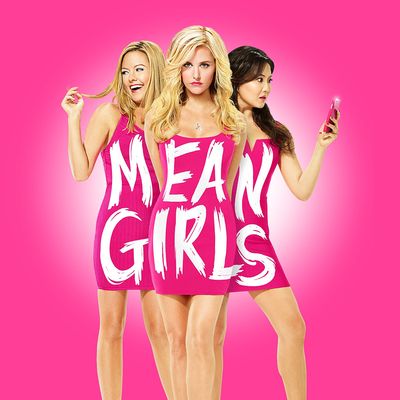
[8:52] Ollie Southgate: And now someone my regular listeners will recognize. Michele Groner of the Groner Group. She was my last guest on a regular Putting It Together episode before the shutdown began. Given the kind of brand we are, we have basically pulled all of our advertising. It just doesn't make sense for us, nor do we have the budgets to be continuing to quote unquote advertise the show while you I mean you technically you can buy a ticket. And I'm specifically talking about Mean Girls right now. Um but uh but no one is, and why would they? I don't blame them, right? We're all unclear about when we're coming back. It's a scary time. But that's not to say that we don't put things out into the marketplace via social media, uh, organic social media.
And we are doing quite a bit of it right now. Um, you know, the Mean Girls brand is one that uses a lot of humor and a lot of joy. And I think that that's something we can all use right now, but certainly, certainly we are uber sensitive about trying to thread the needle of what humor is appropriate right now.
[9:51] Michele Groner: Look, it's a very serious situation. Tens of thousands of people have sadly lost their lives. We're very keenly aware of that. And so we're trying to provide joy and a little bit of a respite for people when they're scrolling through their social feed. And we do. We look at every single post that either myself or the agency suggests, and um we're very careful about it. We're actually doing a lot of reposting of content that our amazing, amazing cast um is kind of putting out there into the world just as creators. Um, there's a few things that we've put out there, but again, it's mostly things that we think will bring a smile to your face, hopefully while you're stuck inside, rather than trying to be too heavy or serious and also not so funny that you know, we're not trying to crack you up right now.
We're just trying to bring you a little a little bit of joy. Um, but I do think it's tricky. And I do think that, you know, we don't want to fade away completely. We are absolutely planning on coming back when Broadway comes back. And I think um, you know, look most shows are, whether or not that will be the case is a is a different story, uh, depending on how long this goes on. And I think that everyone is trying to stay true to their brand, but also try to stay true to the compassionate voices that I think really do exist within this community of Broadway.
[11:06] Michele Groner: Certainly the voices of the creators of the shows, of the casts of the shows, of the producers of the shows, you know, it's hard. And it is tricky, right? None of us are making any money. The actors are all furloughed or on employment. Um, a lot of the employees of the shows, whether they sit in the general management office, company management, advertising, marketing, press firms, like a lot of people are furloughed. So it is hard to ask people to do stuff for free. Um, some people are more willing to do it than others or want to do it more than others. But there's also a huge amount of content creation that's happening all across the spectrum of things. So I think a lot of shows with the permission of the people involved are able to capitalize on that as well and and try to, again, it I really think it's about bringing joy and bringing comfort um rather than selling right now, because we're not selling right now, and nor should we be, I don't think.
[11:56] Ollie Southgate: And as we begin to look to the other side of this, let's look at what we can learn from other countries. Mainland Europe contains some of the worst countries, and they closed their theaters even earlier than Broadway did.
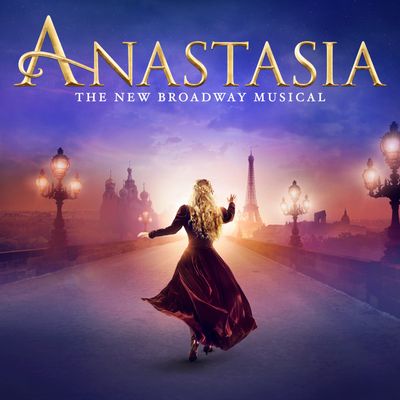
[12:05] Bob van der Beek: The big player there is Stage Entertainment. Bob van der Beek is their Group Commercial Director. We are one of the largest producers and theater operators. We are also the market leader in continental Europe. So we have presence in Germany, Netherlands, Spain, France, and Italy. And in addition to shows that are produced in our theaters in continental Europe, as you know, we also produce Tina, the Tina Turner musical on London's West End and New York Broadway since November 2019, as well as the US tour of Anastasia. And if you look at the size of the company, we performed almost 10,000 shows last year across 44 different productions, with more than 10 million visitors to our productions, and we have 20 venues in major cities in continental Europe, all with productions in local languages and taking into account local taste and customs.
Exactly that part, the localization of productions, makes things very complex for us. As you can imagine, we cannot simply move one production from one country to another because it is all fully localized productions. The good thing is that our unique position of both producing shows and having our own theater enables us to be in full control of our programming calendar across continental Europe. We are basically in control of our own destiny when it comes to optimizing how shows are rolled out across our network. Over the years, we have developed a solid approach for managing our programming calendar three years out, and exactly that is where we now face the biggest challenge. Existing plans we need to readjust, and as you can imagine, our international programming calendar is like a 1,000 piece jigsaw puzzle.
The producing part of our business is now where we face the biggest challenge, simply because today we cannot yet fully plan ahead for the next season and beyond. While we still also want to offer our existing audiences the opportunity to see the show they originally booked for, but the show that we had to cancel due to the lockdown. There's plenty of producers and even some theater owners who are dealing with the fallout from COVID in both the West End and on Broadway. But Stage Entertainment is the only one I know of handling the impacts of coronavirus in as many as seven countries at once. So I asked Bob what the nuances were country to country. What are they seeing in Europe that we might be able to brace for here in New York?
[14:27] Bob van der Beek: Well, there are some things really different between Europe and the US. So for example, we have conducted consumer sentiment research recently in mid-April to find out what the perception of consumers is, and there you really see a difference. So for example, if you think about the impact that coronavirus will have on the country, people really differ in terms of their opinion. For example, US consumers in general are more optimistic. They think it will not last as long as people think in Europe. So that's where you really see a difference. More than one year impact is only 14% of consumers who think that it will have a more than a one-year impact, whereas that is much higher in continental Europe, where it is, for example, in Germany and the Netherlands, around 30%.
So the consumer sentiment is really, really different. Of course, Europe is still in the middle of lockdown. There are still national emergency periods that have been extended several times in different countries. There's not one European approach, so countries are really dealing with it on a national basis, and there's no clear end date yet inside for most of the current limitations that were imposed on society. What you see in Europe, but also in the US, is that the current sentiment in most of the countries is quite negative. So people have feelings of sadness, fear, and people's lives these days are occupied by more critical and immediate topics such as personal health, safety, risk of unemployment, home screening of children, etc. So that's what we see common across the countries. But it seems that the people in the US are more optimistic as to how long it will last than people in continental Europe.
[16:10] Bob van der Beek: Consumer sentiment may sound like a buzzword, but actually it's incredibly important. As much as we're responding to the ever-changing news from the CDC as well as national and local governments right now, what Theatico is thinking of all this is some of the best information we have. So when Broadway comes back, what are we planning to tell them? I think that Broadway will be able to take advantage to some degree of some research and experiences that perhaps other industries have before Broadway opens. I'm thinking, for example, retail. There's certainly now there's an expectation that retail and businesses which are open to the public where you can navigate footfall in an easier way than perhaps the live entertainment show might be able to.
I think there's certain things that we'll be able to learn from those industries about what consumers need to hear. But I think it has to be led by research and the market that we exist in at the time that performances resume. One thing that the situation has taught me is that what's true today in terms of consumer sentiment might not be true next week. It might not even be true tomorrow. So I don't think that that answer can truly be addressed until we have a path to reopening, and we're much closer to a moment where we're proactively selling tickets and proactively pushing the sales. Theatre won't come back before so many other things have come back. So that we're going to both have the benefit of safety communications that are made that are successfully made on behalf of other businesses, and safety messages that are unsuccessfully made from other businesses, and the barriers to people's believing or non-believing those messages.
But ultimately the government's going to tell us what we have to do, and then we're gonna say we've done it, and by virtue of that, do everything we can to make people feel like we've done everything in our power to make them as safe as possible to come back to this kind of brilliant thing that none of us can imagine not being there.
[17:56] Bob van der Beek: I know what I want to be able to say to consumers once the safety hurdle is crossed, is that theater isn't theater until you're there, right? Theater isn't theater without you, without you, the live audience, right? Like we can all put on a show, but if nobody comes, the magic doesn't happen. But from a truly gut instinct honest standpoint, both as a fan and as someone who's in charge of helping craft this message for when we do come back, I really do believe that the ultimately the message is theater doesn't happen without an audience, and that audience is you. We rely significantly on tourism, and that number is just going up. And so now we're going back into a world in which our relationship with the local market has never been more important.
So when you're thinking about the opportunity now for Broadway, is that you know, as I was saying about how we're engaging with our community, we are beginning to build an on-ramp, if we do this correctly, where we begin to recreate and create new bonds with the local community, that Broadway is a fundamental part of the community and part of your life, and you should be attached to us.
[18:59] Bob van der Beek: So part one is in terms of the on-ramp back to Broadway, is for patrons feeling connected with the Broadway community at large, and what are the things that we are doing? It has to start there. Who's really looking out for the person who lives out in Bay Ridge, Brooklyn, who's been coming to shows their whole life in different ways over the long game? Like we don't have customer retention programs. Yeah, sure, there are versions of that, the subscription houses and audience rewards, which do amazing jobs, but as an industry, it's not like we say, "Oh, Damian, this is your fifth show. Let's have you for a sixth." And I think that the more we begin to focus on that and start thinking as an industry of how are we sort of trying to create long-term bonds with people.
I think that's where I hope some of the innovation happens over the next year, is reconnecting with the local community in a substantial way. Then obviously over time it's going to go towards making sure we're hitting all the public health elements, right? Saying it's safe to return back. And the safety elements of that I think are critical. But I think if we miss that first step of really doing everything in our effort to create new bonds in the local community, then I don't think you can just jump to the public health part saying it's safe, come back. Obviously, that's important. That's what people are going to want to hear. But I think we have a gigantic opportunity to re-engage the local community, unlike any other chance we've had in the past.
I think that's if you were to ask me, one place we've fallen flat on an industry over time, it's that. We've not embraced the local community in an impactful enough way. And so here's our moment to do that.
[20:30] Bob van der Beek: This is a frequent topic lately. For the first time in many, many years, rather than just assuming New Yorkers will hear about a show one way or another, we're going to be reliant on them almost 100%. Even if the city's restrictions are lifted, restrictions on travel, not just country to country, but even state to state will still be at the very least ill-advised, if not flat out restricted. It's a concern shared by several of my guests. Short-term change is the strong dependency we traditionally see on the tourist destinations for theaters on West End in Broadway, Hamburg, and the trade. I think that international tourism will not rebound as quickly as we may hope for now. So that requires us to rethink our sales strategy in that sense, because we cannot immediately count on that piece of our business for the future.
There's a suggestion in research that we've already put out that younger audiences are going to be more apt to return to Broadway and to return to live entertainment before older audiences, perhaps a more traditional Broadway audience might. We know that there are likely to be ongoing travel restrictions, so we can also imagine that those audiences are going to be more local. So both the shows that might be produced and the advertising campaigns that are running will need to be able to appeal to that younger, more local demographic. I think that will be key, certainly in the short term to midterm.
[21:52] Ollie Southgate: Then another light bulb moment as I was asking everyone about what they think Broadway audiences need to hear, and the fact that we're gonna have to try doubly hard to reach the out-of-towners, it occurred to me why don't we just ask them.
[22:02] Kelly Wajsgras: My name is Kelly Wajsgras. I live in Northern Virginia, right outside of DC. I'm a stay-at-home mom. I've got three kids, one in college, one about to go to college, and one still in high school. I see 15 to 20 shows a year. I called my friend Kelly. We met a few months ago when Kelly and her husband were seated at the same table as me for a 54 Below show. She told me all about her favorite things about Broadway, her frequent trips to the city to see all the new shows, and we added each other on Facebook. I got back in touch and asked if she'd speak to me. I was delighted when she said yes. I love the whole experience of going to see a show. I love dinner before, I love going in, I love meeting the people sitting next to me.
And then obviously I just love the whole show. For me, it's just sort of an escape, almost like an emotional outlet. I forget about everything going on in my life, and I, you know, the two hours, two and a half hours of just focusing on the show, beautiful music, costumes, great environment. I just love it all.
[23:05] Kelly Wajsgras: I asked Kelly straight up. As someone who buys Broadway tickets all the time, what signal is she waiting on? When might she feel ready to book another trip to the city and get her Broadway fix? I think as soon as I hear from the city, and also I have, you know, our stay-at-home orders here have to be up too. I don't want to go to New York if it's not okay for me to be traveling. But I feel like once it's reopened on Broadway, I think I'll feel okay about going. I obviously don't have all of the data, but I do really trust the people in charge in New York City. And I think once they feel like it's safe enough to reopen Broadway, I won't be wasting too much time getting back. I don't think they'll reopen before it's safe.
So when the city says it's ready, when Broadway says it's ready, people like Kelly at least will be ready to come back. But one of the sticking points that's come up in every single interview I've done for these COVID episodes is the fact that we still have no idea when that will be. There's such a lack of information or previous examples of something like this to know when we might put the plan for recovery into action.
[24:04] Ollie Southgate: Moving target isn't even the word anymore. So although it's just one opinion, although it's based on all kinds of assumptions that may or may not come true, I want to walk you through the timeline as I see it, based not just on what's happened here in New York, but also based on what's happening in some of the first countries and cities to be hit by coronavirus. The ones that are now recovering, lifting lockdowns and quarantines, and beginning to light the fire under their economies again, to estimate as best we can where New York and in turn Broadway might be headed. First, here's what we know for sure.
[24:34] Ollie Southgate: The first confirmed case of COVID-19 in New York State was here in Manhattan on March 1st, 2020. A Manhattan woman aged 39 who had recently traveled to Iran and contracted the virus had tested positive and was now isolated at home. A lot of New Yorkers, certainly here in the city, woke up and said, "Oh no, here we go." What can you tell us about this latest case? What do we know? First, New Yorkers should not be surprised. We've been talking about this for days. I said it's not a question of if but when. You see the number of cases around the globe. New York is the gateway to the world. So that's not shocking. And we've been preparing for it, and we've been truly diligent on this issue.
[25:15] Ollie Southgate: From there, it took 11 days for the situation to worsen enough to warrant a ban on gatherings. At that point, a 500 people or more, which included Broadway houses. On March 12th, that ban came into effect, and the Broadway shutdown began. Governor Cuomo tweeting out that they are taking new actions to reduce the density of people across the state. Starting tomorrow night, gatherings with 500 people or more will not be permitted in New York State. Another 10 days pass, March 22nd. Case numbers are growing and fast. New York State on pause comes into effect, limiting outdoor activity to essentials like grocery shopping and getting medication, and requiring New Yorkers to cancel all non-essential gatherings and stay at least six feet away from others when out in public.
[25:55] Ollie Southgate: By this point, many workplaces, including mine, are already closed and having their staff work remotely. But this is the date it becomes a legal requirement. So we're going to put out an executive order today. New York State on pause. Policies that assure uniform safety for everyone. Two basic rules: only essential businesses can have workers commuting to the job or on the job. Second rule, remain indoors to the greatest extent to protect physical and mental health. And just over two weeks later, on April 6th, the order is extended to April 29th, as the numbers continue to rise with no apparent slowdown in their trajectory.
[26:37] Ollie Southgate: Ten days later, it's extended again to May 15th. How important is the business to society? How essential a service? And how risky is that business from a rate of infection? And obviously, the more essential a business, the lower the risk, the more they are a priority. What nobody knew then is that exact same day, April 6th, would also end up being the day that new cases would peak, with 6,155 cases confirmed in the city in that 24-hour period. Every day thereafter, the number was slightly lower.
[27:10] Ollie Southgate: So then, 12 days later, on April 18th, some good news comes, albeit very cautiously. In light of that downward trend, the governor announces that the numbers appear to be showing that the spread is slowing. If you look at the past three days, you could argue that we are past the plateau when we're starting to descend, which would be very good news. For the first time since the pandemic began, New York sees a consistent decrease both in numbers of new cases and deaths over a statistically significant period of time. As of mid-April, precluding any second wave, the curve is flattened.
[28:03] Ollie Southgate: That doesn't mean it's anywhere close to being over, though. The best analogy I've heard for it is this one. If you're jumping out of a plane and you pull the cord on the parachute, successfully slowing your fall, that doesn't mean you can just lose the parachute. You don't cut the parachute until both feet are firmly on the ground. Otherwise, you're right back where you started in free fall at terminal velocity. So how long does that take when it comes to coronavirus? This is where those numbers from other countries come in that I was talking about. Remember, it took 36 days from case one being confirmed on March 1st to the peak on April 6th. That's remarkably close to the timeline in China.
[28:37] Ollie Southgate: There, the date range from first confirmed death to peak active cases was January 11th to February 17th, so 37 days, just one day longer than in New York. When you compare the timelines of New York versus Wuhan in terms of days since first death and actions taken, stay-at-home orders, that kind of thing, everything falls within just one or two days, city to city. Wuhan reopened on April 8th, after 76 days of intense lockdown measures. So let's start there. Seventy-six days from the pause order being put into place to slow the spread is when it might be lifted. We're at Saturday, June 6th, 2020. At the time of recording, that's just one day earlier than Broadway is currently confirmed to be closed until, according to the league.
[29:25] Ollie Southgate: The next stop in 9 clear 47th Street. So, let's say in that early summer weekend, the recovery begins. Non-essential businesses are allowed to reopen. New Yorkers are allowed to go outside and be within less than six feet of one another. These everyday activities are no longer technically prohibited, but this doesn't mean everyone's rushing to go anywhere. In Wuhan, masks are not being thrown away. There is no influx of foot traffic to parks or stores or anywhere a person doesn't absolutely have to go. And then we should account for a difference between how long it is for everyday restrictions to be lifted versus the mass gathering restrictions. Mass gatherings inherently pose a much, much bigger risk of spreading the virus than simply leaving the apartment or going to work.
[30:09] Ollie Southgate: It took 10 days from mass gatherings being restricted in the state to the original pause order being put in place. So let's build that in on the other side. That may sound generous, but given the importance of these kinds of gatherings to so much of the city's economy, I'm not convinced the state will wait any longer than it has to. Ten days later is Tuesday, June 16th. Now we're in a place where legally at least a show could go ahead. But this isn't a switch you can just flip back on. Since the state isn't likely to have announced its return date very far in advance, for fear of people flouting the rules earlier than they should, this is probably a same day or day before announcement, and most business owners will not be in a position to get going again on that very first day. Broadway is no exception.
[30:54] Ollie Southgate: In an April 17th interview with Deadline's Greg Evans, the president of the Broadway League, Charlotte St. Martin said, quote, "We have said that when we're told we can come back, it will probably be six weeks before we can actually get back." Sixteen shows were somewhere in rehearsals or previews at the time of the shutdown, and there will be a lot of work to be done for those shows. End quote. So let's build that into our theoretical timeline. Six weeks after June 16th, the work may be done to have shows ready to resume performances. That's rehearsals, new cast members, etc. Now it's Tuesday, July 28th, the midpoint of the summer tourist season. But with ongoing travel restrictions and general worldwide cautiousness, even those tourists that could come to New York City this summer probably won't, since every news outlet's been telling them that that's where the epicenter of the whole country's infections are.
[31:42] Ollie Southgate: And locals will not want to be spending any more time inside than they have to. So whilst we may see some plays on in August, off-Broadway shows, the kind of thing that appeals to the devout theatre-goer, it's the absolute worst moment for a big commercial, tourist-driven enterprise to start incurring costs again. Broadway remains dark for the summer, although it does now put its plan into action for coming back. The biggest industry-wide marketing campaign in Broadway's history begins in late July or early August.
[32:16] Ollie Southgate: Tuesday, September 8th, the day after Labor Day. This is usually the first performance post-summer that isn't filled wall-to-wall with tourists, and every year you see that in the grosses. In 2019, that first week after Labor Day grows 10% less than the week prior, when you take out the anomalies like shows that were in previews or cross-opening in those two weeks. It generally ranks as one of the bottom two or three grossing weeks of the year. So although shows will be allowed to open at that point by both the government and the league, many will probably elect not to. Perhaps the Disney titles will. Almost certainly Hamilton, probably Moulin Rouge. The kinds of shows that have had a relatively good advance for those weeks, even back in March when this all began. But for your average show, that's still a fraction too early.
[32:59] Ollie Southgate: Broadway Week, the two-for-one initiative between Broadway Shows and NYC and Company, usually spans the first two weeks of September to help mitigate these poor sales as much as possible, with it generally being accepted that from week three of September, most shows are getting back into a normal stride, albeit with a different audience makeup. So that's where my fantastical, hopeful, as fact-based as possible timeline takes us to Tuesday, September 22nd. That's one possible date I can get behind as things stand for all of Broadway to be open for business again. And by the way, it's also the absolute earliest plausible date I've heard anyone dare to whisper so far. I know it's not helpful to speculate or guess amongst all of this, but I do think that based on what we know, the information we have and past trends on Broadway, the data we've seen coming out of other countries, that's more than a guess. It's a forecast, or at the very least, an educated guess.
[33:55] Ollie Southgate: Of course, there's also several cancer worms I haven't opened yet. What if there's a second wave of infections during that reopening process? And even if shows are back on then, what will the public attitude be towards anyone going to see them? But even as someone who just took a stab at establishing a timeline for recovering from a pandemic of unprecedented scale, those are the kinds of guesses I'm not willing to make yet. Those are the kinds of things that, yes, absolutely could happen. But saying they definitely will or they definitely won't, it's a fool's errand at this point. Besides which, by that September 22nd date, we'll be in the middle of week 28 of the closure. We will have lost over half of an entire year of Broadway performances, and thinking about it going on longer than that just isn't something I have the emotional bandwidth to deal with right now.
[34:37] Ollie Southgate: So here's me very quickly sprinting back to the camp of wait and see. I also asked my guests how they thought the timeline might shake out. Most were reluctant to tell me, but Bob van der Beek has a wealth of data to look at, and one of the reasons I love speaking to Michele Groner is that she doesn't have a boss that she has to hold her tongue for. Here are their takes on it.
[34:54] Bob van der Beek: So the pandemic crisis seems to be more and more under control, with some also very first positive signs, such as reduced death rates across continental Europe. Also, even in Italy, for example, there is good news recently, so that is good. So now everybody starts to prepare scenarios for reopening. However, national governments have taken different approaches so far when it comes to lockdown measures and also the sequence of next steps. In general, no one has yet made any concrete statements as to when the live entertainment sector, the theaters in particular, may be allowed to resume performances.
[35:29] Bob van der Beek: So to give you perspective, just today in France, President Macron said that big events will not resume before September. So that's what we now know for France as a specific date. But it doesn't say that it will be then allowed as of September. So that's still not decided. And the same for the other markets. So we do see huge differences per country. I would expect more clarity by mid or end of May, also then including decision making regarding the measures that will apply through summer and beyond. What you also see that society may be brought back to a certain state of normality in a phased approach, like starting with schools and shops.
[36:08] Bob van der Beek: That's what we now see, for example, happening in Italy and the Netherlands. And what we expect, however, is that theater will be among the last sectors that will be allowed to function again. Similar to, let's say, big football matches, festivals and big arena concerts. So yes, reopening in September is one of the possible scenarios that we and also other producers in Europe are investigating at this moment. However, it is too early to assess whether this will indeed be feasible or not. And the final dates may differ by country. I can imagine that in some countries, venues may already reopen even before September, while in other countries this may take longer. So the only thing we can do now on our side, and that's what we do together also with other theater producers, is prepare for different scenarios and continue to foster the strong relationship with our audiences and companies for the time being.
I don't see a world where we come back this calendar year, which breaks my heart. And I hope to God that I am wrong. But I just, like I said before, about kind of the various industries that will come back ahead of us. We just don't know enough yet about the virus or what's happening in order to make sure that we can have all of our safety protocols in place. So, you know, I'm hoping that I'm wrong. I'm hoping that we come back, you know, as early as January. But I do think it could be as late as April of next year. Again, I think it's all kind of about science and vaccines and antibodies and protective measures that will make a large group of people comfortable. But I really, you know, when this all first started, there was a whole group of us that kept saying, oh, by July, by July. And then we kind of all flipped into September, and now I think the prevailing thought really is 2021. And I hope it's early in 2021, but TBD. It's kind of where I'm at.
[37:53] Elizabeth Furze: And here's Liz, Scott, and Damien on the very good reasons why they're not quite ready to speculate on that yet. I think there's tremendous temptation to speak in finite and to speak in a way that has some certainty around it. But one thing we absolutely know for sure right now is that nothing can be certain. It would be ill-advised for us to plan against any specific opening timeline. So at this juncture, we're looking at four different scenarios, recognizing that our reality is likely to be probably somewhere in between one of those four scenarios. But we're looking at four different opening timelines and essentially just preparing ourselves to be nimble to be able to respond to news as we get it, which is really about what preparing these different scenarios is.
We're just focusing on ultimately on preparedness so that we can avoid any panic decisions, and it really just gives us time to think through the repercussions of a potential outcome while knowing that we don't know what it's going to be yet. We're essentially trying to create a roadmap for the bumpy roads ahead, which is not easy in these uncertain times, that's for sure. But you know, we're focusing on being open and transparent with our team as we move through this and being honest about the fact that you know, like everyone, we don't know.
[39:10] Damian Bazadona: So, really, for both the business at large and again for myself personally, looking for reassurance where there can be little, but essentially just trying to be transparent about the fact that we're all in uncharted territory and navigating through it as best we possibly can and making informed decisions as we go, but essentially not trying to get ahead of ourselves because I think that wouldn't be in anyone's best interest. We run models based on tons of timelines, and you know, at one point it was June, and at another point it's January, and then at another point it's November. I think that you know, again, the therapeutic news, the vaccine news that came out yesterday kind of makes you think, well, just I throw out that model and come up with a new model based on whatever the new data is telling me about when these things might be viable.
I don't have any more insight than anybody else has into this, but I know that being dug into a certain fixed period of time is counterproductive. I need to be ready to go as quickly as possible when all of the signs point to going.
[40:06] Bob van der Beek: You know, what are we gonna learn from parts of Europe opening up? There's two words that I've used everywhere, anyone I talk with, particularly my team: patience and trust, right? So everything I'm running operates off those two components, which I think is important. So I want to make the I want to make wait as much time as humanly possible before I need to make any decision. So I'm inherently an optimist. I'm very optimistic, and I'm always like that. And I think people often will make fun of me and say, I think you're crazy. And I understand sometimes I am delusional, but I am inherently an optimist in how I think about things. Now, does that mean live performances will be back in July or September, December, March?
Who knows? I can't predict that. But what I can do is begin to think of things. Look at what is the next three weeks look like, and what are the things I can do over the next three weeks. I create milestones in my head of when will be the next moment I could probably have a better understanding of what the world would be ahead of us.
[41:02] Damian Bazadona: I think we are looking through the lens of a kaleidoscope. And every single day that passes, the view through that kaleidoscope gets a little bit clearer. And so time is our friend in this. As a business owner, live events is my right hand. I'm a righty. And so live events is at the core of what I do. Now, a lot of my skill set is easily transferable to other industries, which we'll call my left hand. Okay. I got cause marketing, education, all these other universes that are not significantly live events. As a business owner, I'm trying to take my skills of the live event business and apply it to other industries on my left hand. So by the time we come out on the other side of this, I'm far more ambidextrous and smarter as a business and more diversified than when I started.
That's the optimistic view, and I think a realistic one if you just buckle down with patience and trust with the people around you and barrel forward. I mean, there's no nobody has any answer to what this is gonna look like because the reality is the function of what the virus tells us, what public health policy will tell us, and then the reality is what the media headlines tell us and what consumer behavior is, all those three forces moving at once makes it completely unpredictable.
[42:11] Ollie Southgate: Before we end this month, a huge thank you again to everybody who spoke with me from the Broadway community, and to all of you for listening and getting in touch with me since the first of these special episodes came out. I've loved hearing from you. If September does end up being the comeback date, this is the second of six COVID-19 specials for Putting It Together. If you'd like to participate in one of the remaining four, or just let me know what you think of the show, please continue to reach out. My contact info is all on my website at OllysSouthgate.com. That's Ollie spelled with an IE. I want the last word in this episode to go to somebody else, so I'm getting the credits out of the way now.
Putting It Together is produced by Dory Berenstein and Alan Seals for the Broadway Podcast Network. Our theme is by Eulis Pakan, with additional music in this episode from Drew Masters and Jason Zambito. Artwork and editing was by me, Ollie Southgate. For more information on this show and others available from the network, visit BroadwayPodcastNetwork.com. I'll be back on the first Friday of next month. That's Friday, June 5th.
[43:07] Ollie Southgate: But it feels most apt to end this month's episode by paying tribute to a great American playwright and one of the heartbreaking losses that theatre has felt as a result of coronavirus. As a reminder that whilst this shutdown is difficult, it's also so important to protecting those at risk and save lives, not least those within our own community. On March 24th, the four-time Tony Award-winning playwright Terence McNally passed away in Florida at the age of 81 due to complications from COVID-19. Terence has been described in the past as the bard of the American Theatre by the New York Times and one of the greatest contemporary playwrights the theatre world has yet produced by The Observer. In addition to his four Tony Awards for writing both plays and books of musicals, he was the recipient of last year's Special Tony Award for Lifetime Achievement in the Theatre.
And what you're about to hear is his speech from the 2019 Tony ceremony, in which he paraphrases a line from his exquisite play Masterclass and says four words that I first read 12 years ago and are more important than ever to me in this exact moment. What we do matters. See you next month, and thank you to Terrence's husband, the wonderful Tom Curdehy for his blessing to use this clip.
[44:14] Terence McNally: Lifetime achievement, not a moment too soon. I love being a playwright. The hours are flexible, and you don't have to wear a tie unless you're invited to the Tony's.
[45:25] Terence McNally: Thrilling to Ethel Merman, shooting out candles while reclining on a motorcycle in any get your gun. I love it when I remember not being able to get out of my seat after a devastating performance of Long Day's Journey into Night. I love it when my parents, shaken by their experience at death of a salesman, it changed their lives. My father quit his job at General Foods and struck out on his own. I love it when I know something I wrote softened the hearts of parents who had banished their son and daughter from their lives when they came after them as gay and lesbian. I love it when I remember the artists who tried to help us understand the devastation of AIDS, even when they were stricken with it themselves.
I love it when I remember theater changes hearts, that secret place where we all truly live. I love my playwright peers, past, present, and especially future. You're chomping at the bit for your turn. Your diversity is long overdue and welcome. It's a club with open admissions. The only dues are your heart, your soul, your mind, your guts, all of you. Oh, and beauty are. Oh brave new world that has Shakespeare that has leave it to me to screw up Shakespeare. Oh brave new world that has such people in it. Shakespeare's talking to all of us. No one does it alone. Least of all playwrights. Most of all this one. Tonight is overwhelming for me. Thank you.
© Broadway Podcast Network, All Rights Reserved