

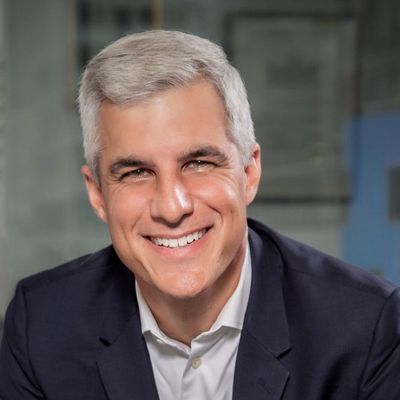
Ken Davenport is a Tony-Award Winning Producer who has worked on shows like Once On This Island, The Play That Goes Wrong, Groundhog Day, Kinky Boots, Godspell, Macbeth, and so many other amazing works of art we have all come to know and love!.. Read More
From the show: Real Talk with Mason Bray
Guests
Featured Shows


About
Ken Davenport is a Tony-Award Winning Producer who has worked on shows like Once On This Island, The Play That Goes Wrong, Groundhog Day, Kinky Boots, Godspell, Macbeth, and so many other amazing works of art we have all come to know and love! Ken also hosts "The Producer's Perspective". A podcast where you get all the information about producing Broadway shows from the eyes of a Producer.
Join us for a few short minutes as Ken discusses how you can start making Theatre happen NOW no matter the circumstances! With that, we discuss marketing and handling publicity for your shows!
Check out Ken's social media and blog:
Instagram - @kendavenportbway
Facebook - Ken Davenport
Twitter - @kendavenport
Website - theproducersperspective.com
Broadway Podcast Network - The Producer's Perspective with Ken Davenport
Thank you for supporting my podcast!! If you like this episode or want to check out more, our social media platforms are:
Instagram - @_RealTalk_Pod
Twitter - @_RealTalk_Pod
Facebook - Real Talk with Mason Bray
Broadway Podcast Network - Real Talk with Mason Bray
Website - realtalkmasonbray.com
Transcript
This transcript was automatically generated and might contain errors.
[0:00] Mason Bray: So we have Ken Davenport, who's a Broadway producer known for shows such as Once on This Island, The Play That Goes Wrong, Groundhog Day, Godspell, Macbeth, Kinky Boots, and several others. Ken also hosts the podcast, The Producer's Perspective, where he gives you, the audience, a glimpse into how Broadway shows are made. I've been on his newsletter for years, and I'm so excited to have him here. Hi, Ken.
[0:22] Ken Davenport: Hi, how are you? Thanks for having me.
[0:25] Mason Bray: Good. It's a pleasure to have you here. So to start out, can you walk me through how you got to where you are working on so many high-profile Broadway shows?
[0:34] Ken Davenport: Well, like most people in the business, I started and got involved with theater when I was a kid. My parents exposed me to it, and that's why I always say for anyone looking to help develop the next generation of theater makers or audiences, if you're a parent, take your child to see a show. That's where it all begins. My parents got me involved with the local theater when I was five years old. They dragged me to an audition for a show, and that's it. I got hooked. And I did it all until I was about 12 years old, took a little break when I got a little too cool for the theater or thought I was too cool for the theater. Got rebit by the bug my senior year of high school when I saw Le Miz. And that led to one thing after another, from me pursuing a career in acting for a while, to working for an agent to stage managing to company managing, and then producing.
You know, it may seem that people just arrive at a position or, oh, Ken's a producer. He must always have been producing. It takes a long time to get anywhere you want to go in this business for sure. But in life in general, there's a lot of different stages, pun intended, until I got to where I am now.
[1:52] Mason Bray: Like that pun stuck in there. So if someone brand new to theater walked up to you and asked what a producer does in a show, what would your answer be?
[2:00] Ken Davenport: So that's a great question. And actually, a 10-year-old girl asked me that question via email probably about 15 years ago. I wonder where she is right now. I probably just graduated from college, and hopefully she's still in the theater. She said to me, what does a producer do? And I started to type an answer, and I really didn't know what to say. And actually, one of the most popular blogs I've ever written was that question, what does a producer do? And I didn't answer it myself. I got like a hundred of my fellow producing peers to give me their definition of it. And it's actually on my blog, and I urge all your listeners to Google it because it's fascinating to hear people describe it. I describe it this way.
I describe it as, you know, it's like any other business. I'm the producer is like the CEO or the chairman of the board or the president of a company. And they handle all of it from the development of the product to the bringing on the team and the staff members to the marketing to the advertising to the raising of the money, everything. So for those of you out there who have never, like, oh, I don't know the business of theater. Well, certainly you know someone that owns a small business, whether that's a hardware store or a restaurant or a plumbing supply company or a computer company. It's set up actually the same way. It's just that our product is the theater. The other way that I describe it is that producers get people in a room.
That's what we do. We get actors and writers and directors in a room, we get an audience in a room, we gather people together, and hopefully great creative energy comes from that group of people gathered in that room, and something spectacular happens.
[3:47] Mason Bray: So before you get those people in the room, how do you get started with a project?
[3:52] Ken Davenport: So it comes up with an idea, you know, it starts with an idea. It's that seed of an idea. I'm reminded of a children's book that I read to my daughter all the time, which is what do you do with an idea? Because ideas are cheap. Actually, ideas are, everybody has them, right? You listen to people on the subway talking. People have ideas for movies, people have ideas on how to fix the healthcare system. The big difference between people who have ideas or those people and so few of the population is that so few actually execute the idea. You water the idea, you add people to the idea. So that's what it's about. Like it's about acting on the idea. So I have ideas all the time. But ideas, again, I believe are worth nothing.
It's what you do with them. So usually I will try to work some things out on paper, or I'll call smart people. What do you think about this idea? What do you think? What do you think? What do you think? And slowly the idea, like a snowball rolling down the hill, just gathers speed and momentum. Next thing you know, you're opening on Broadway and you don't even realize how you got there.
[5:00] Ken Davenport: Yeah. A huge thing within productions and any theater show is marketing and publicity. So, what tips do you have for anyone wanting to improve those skills for their shows?
[5:14] Ken Davenport: So, the simplest tip I can give to people about learning how to market is to remember that you are a customer yourself. So every day you are susceptible, you are in front of millions of advertising impressions, people trying to gather your attention, whether that's you scrolling on social media, like what makes you stop, or, and this is what I tell people do when you make a purchase in the world, when you're at the cash register or online preparing to click buy now, stop for a second and ask yourself what got me here. Why am I about to purchase this thing? Was it because I heard about it from a friend? Was it because of a billboard I saw, or I saw it on television, or my favorite celebrity was using this product on social media?
Like what was it? These are the things when you recognize that you are experiencing marketing and that you participate as a consumer, it helps you realize what will also work on others when you're trying to market your own show. Because basic, the basic marketing principles are the same. Again, you, I've already said this once, so you're beginning to sense this trend in me is that to remember that theater is a product like anything else. And the more we look at it that way, even though we don't like to, no one likes to because it's an art form, right? But we have to sell that art form, and you have to look at the basic principles of marketing in order to do that.
[6:57] Ken Davenport: So recently, a big topic between Broadway workers and the fans is making a better and more inclusive Broadway for when it reopens in a few short weeks. So, from your perspective, what can be done to make a better Broadway?
[7:12] Ken Davenport: Well, so much has to be done in order to do this. And it's not gonna happen overnight. And you know, we're making great strides. And it involves all different areas, but it involves being inclusive and presenting shows for all audiences. It involves marketing to all audiences. I mean, for too long, Broadway has just marketed to one group. And we, in order to attract an audience that looks like America, we need to market more towards America, towards all the groups that make up this country. And that's part of it is not being so isolated or niche-focused or this is always the way we've done it. No. The reason why we don't have certain audiences coming to Broadway shows is we've never marketed to them before.
We need to do more of that. We need to present more works by people of color so that the audiences of color will also come so that the world of Broadway looks like them as well. It's about price, it's about providing all different types of individuals and groups the chance to experience a Broadway show. One of the worst things I hear that I hate to hear is that I can't see a Broadway show because I can't afford it. We need to come up with more ways to allow more people to experience it, especially the young. Just like I said at the top of this podcast, I got involved with theater when I was a kid. That's where most people get bit by the bug. There was an NEA study years ago. It said if you're involved with theater as a child or the arts as a child, you're much more likely to not only participate in it, but to support it as an adult. So we need to do a lot more planting the seeds of the Broadway we want with the next generation. Not only your generation, but the generation after you.
[9:17] Ken Davenport: So a prominent thing that you're wanting to do, and your big goal is to help produce 5,000 shows by 2025. So what motivated you to start that?
[9:29] Ken Davenport: Well, it comes down to this very simple principle that I have, which is I believe the world is a better place if there is more theater in it. It's that simple. I believe in this quote that I found years ago that said, art changes more minds than politicians ever will. And I believe the theater is one of the best ways to change hearts and minds. My mission is to, when I produce shows, to educate, inspire, and entertain all at once.
[10:05] Ken Davenport: And I just believe that theater is such a great communicator and in such a way to get great messages out into the world to do those things, to educate, inspire, and entertain that I wanted to give myself this big goal of what can I do? Can I blog? Can I podcast? Can I create a community like the Theater Maker Studio? Can I have a conference like the Theater Makers Summit? What else can I do? Can I start a scholarship in the name of my father? Can I do all sorts of things just to help inspire theater makers to make more theater? If I anything I can do to get people talking about the theater with the hope that people make more of it, I just believe is my way of helping to make this planet a better place. Um, you know, I'm a theater maker, that's what I do. So I can have this is how I contribute because I believe the theater can be a part of making a better world.
[11:02] Mason Bray: Yeah, and with that, you're not only creating theater that inspires, but by you doing that, it's inspiring others to create theater as well.
[11:11] Ken Davenport: Exactly, exactly. That's the hope. That's the hope. So, what advice would you pass on to the next generation of theater makers?
[11:20] Ken Davenport: Um, on top of what I what all you've said. Well, listen, the theater has suffered a great many challenges over the past year. Challenges that we could never have imagined. If you had said to me five years ago, or at any time in my life, there will be a time when there is no theater. Like, that's it, none of it. I'd say that's crazy. That can never happen. Never happen. And yet it did. It did. And I think what we've all learned over the past year is that life is short, right? Unfortunately, so many people have suffered great personal tragedies and lost lives in this. And we've also lost an industry that we never thought we could lose. We never thought we could be without the theater. We lost it.
So the biggest piece of advice I can give to the next generation of theater makers is don't take the theater for granted. It can be taken away from you. It was taken away from us. And get out there and start making it yesterday. Don't wait. Don't wait. Because you just never know. So if you have an idea for a show, like we talked about, just to bring it full circle, don't just let it be an idea. Put action behind it. Put energy behind it. Call a friend if it helps to get some more energy behind it. Get people together and make something. Don't expect it to be Hamilton if this is your first show. Don't try to make it that. Just try to make it something. It's actually advice Hal Prince gave to me years ago, which started my career. So don't wait. It's the one thing we've learned that you never know when something is going to happen. And if you want to do great things in the theater, the time to start is right now.
[13:11] Mason Bray: That's amazing advice. So I've asked this in every single interview I've done over the past year plus. But do you prefer education or experience in your career field?
[13:23] Ken Davenport: I definitely prefer experience. Like, look, I'm gonna tell every single one of your listeners out there, everybody should go to college and everyone should get that education because the education is a foundation, right? Like I can always go back to what I studied. Uh also educational experiences is where you learn and meet some great connections, people like you that you can call to say, hey, I want to make some theater. That's where so many of those collaborations are started. And to be honest, I didn't take advantage of that as much as I should have. It's another piece of advice I give to young theater makers, is make sure you're connecting with people in your world, wherever you are now.
Find people just like you in high school and college, and college provides that opportunity for you. But at the end of the day, uh, and this advice I also have given to people, everyone should go to college. Not everybody should go to graduate school. I've told some people rather than spend that money on grad school, take that money, produce your own show. Even if you're an actor, produce your own show and star in it. Like more can happen because of you doing something like that than sometimes even the greatest of educational experiences in a postgraduate world, uh, and now all the grad schools are gonna be calling me, yelling at me. But it's about experience. You need to, everyone needs to follow their own path.
And if the educational system is where you flourish the most, then go for it. But you also have to get out there in the real world, work with people, internship, get your own shows up. That's where most likely the most success for you is gonna happen.
[15:07] Mason Bray: So I'm gonna add in a question before I get to my last one. Um, how would you suggest people do theater when they don't have much of a budget?
[15:18] Ken Davenport: I'm a big believer that anything can be done with any amount of money, right? I scraped together a few hundred bucks for my first reading. I like you can do anything on anything. People say, Oh, I can't. I can't afford a theater. Okay, do it on a sidewalk, do it in an office space, do it in your apartment. I don't care, like immersive theater is in actually. There are more opportunities to do that now. Uh you just have to put some energy and passion behind it and figure out a solution. The answer is never like, oh, that can't be done, especially when you're coming up. The answer always has to be, okay, what's another way to do it if we don't have X? If we don't have $10,000, how can we do it for a thousand?
If we don't have a thousand, how can we do it for a hundred? And you just have to figure it out. And this is where you'll find out the passion separate the passionate from the non. People are like, oh, there's not enough money here, forget it. I'm gonna go do something else. Well, they weren't really passionate about that project. So I just encourage you to use, and some of the greatest theater makers I know have said this to me like I'm at my best when I have less of a budget because I actually have to be more creative. And the world is filled with stories where people were so creative because they were restricted. John Doyle's famous, you know, production of Sweeney Todd where the characters played instruments and played the role. That was because their theater couldn't afford musicians. Like those kind of things happen all the time. So I encourage everyone to get creative and don't let lack of money stop you.
[17:01] Mason Bray: So my last question is um, what have you been doing during your time in quarantine in the past year plus some?
[17:10] Ken Davenport: What haven't I been doing, I guess? I have described it to people for someone like myself who likes to keep busy and create and produce. This has been a very difficult time. I've been telling people it's been a bit like pedaling on a stationary bike. Like I've never pedaled faster, but yet I'm not going anywhere, right? So I've tried to do things. I got some great advice, which was one this is a great time to look at the plumbing of your business. So I've done everything from I'm in the process of redesigning my websites to triple down on my social media, to we looked at the scripts for all the shows I'm developing, everything from a Neil Diamond musical to Joy the Musical. We've done a lot of development.
I started some new stuff, some contracts and things. I live streamed a couple of productions. I wrote a screenplay I've been working, like had an idea about for years, but frankly never did, just like I talked about. So it's about again, almost to answer this question the same way I answered the budget question. For reasons beyond my control, I was restricted for what I could do during this period. But that didn't mean I didn't do anything. I didn't just sit back and wait for it to be over. I just did what I could with the resources that were available to me. And there's always something you can do. There's just always. So again, no matter what restrictions you may have, where you live, right?
You don't live in New York City, or you're going to school, you're not going to school, you have a big budget, you don't have a big budget, whatever that may be, there's always a way to challenge yourself to try to find another way in or something else to do to get you a little bit closer to where you want to be.
[19:06] Mason Bray: That's awesome. So is there anything else you want to add before we wrap up the episode?
[19:12] Ken Davenport: No, I'm just very thankful for you for doing this. I mean, you're part of what I believe in, which is you're amplifying the conversation about theater just by hosting this podcast at your age, you're helping to inspire other people to make more theater. So I'm thankful for people like you for helping to amplify this conversation and for helping me do my job of getting 5,000 shows by 2025. But because people listen to you, they will be inspired to make theater. So thank you for doing it.
[19:45] Mason Bray: Well, thank you so much for saying that, and thank you so much for being here.
[19:50] Ken Davenport: My pleasure, Mason. My pleasure.
© Broadway Podcast Network, All Rights Reserved