

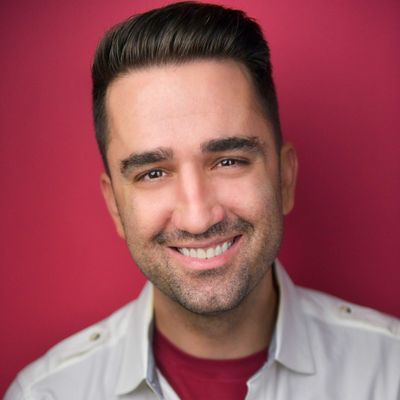
Alan is a fellow podcast host on the Broadway Podcast Network with his show The Theatre Podcast with Alan Seales. Not only does Alan have a podcast on the network but he is also the Chief Technical Officer and a Co-Founder for the BPN!.. Read More
From the show: Real Talk with Mason Bray
Guests
About
Alan is a fellow podcast host on the Broadway Podcast Network with his show The Theatre Podcast with Alan Seales. Not only does Alan have a podcast on the network but he is also the Chief Technical Officer and a Co-Founder for the BPN! He also works for Talks at Google where he conducts interviews with A-list celebrities!
I am so excited to have him join my line-up for Season 5 and I am SO excited for you to join us! In this episode, you can hear us talk about Alan's early life, getting a degree in Computer Science, Meeting Dori Berinstein and starting the Broadway Podcast Network, how theatre affected his life, and so much more! On top of all of that, you can hear from him about starting out podcasts and what he suggests for people wanting to get into content production!
Check out Alan's Podcast:
Instagram - @theatre_podcast
Twitter - @theatre_podcast
Broadway Podcast Network - BPN.fm/ttp
Website - TheTheatrePodcast.com
Thank you for supporting my podcast!! If you like this episode or want to check out more, our social media platforms are:
Instagram - @_RealTalk_Pod
Twitter - @_RealTalk_Pod
Facebook - Real Talk with Mason Bray
Broadway Podcast Network - Real Talk with Mason Bray
Website - realtalkmasonbray.com
Transcript
This transcript was automatically generated and might contain errors.
[0:00] Mason Bray: So we have Alan Seales, who is a podcast host on the Broadway Podcast Network with his show, The Theatre Podcast with Alan Seales. Not only does Alan have a podcast on the network, but he is also the chief technical officer and a co-founder for the BPN. He also works for Talks at Google. And if you've seen any videos on YouTube with Talks at Google, you've probably seen Alan. I'm so excited to have him joining my show today so I can interview the interviewer and flip it around, but also talk to my boss in a way. Hi, Alan.
[0:34] Alan Seales: Hi.
[0:34] Mason Bray: Like holding in that laughter. I don't know if you're gonna edit out the my side of the intro. Thank you. Thank you for the intro. That was lovely. Um, how are you?
[0:43] Alan Seales: I'm good. I'm I'm good. Uh it's weird here in New York uh with all this flooding that just happened, but otherwise we are doing we're doing just fine. Broadway's coming back. And uh gosh, as of recording this, what last week Hades Town opened, and there's more on the way. So things are ramping up. I love it. And it seems like national tours are coming back into rehearsals, touring's about to start opening too. Um, so to dive right in, how did you get started in theater and technology and get to the BPN?
[1:16] Alan Seales: Oh my goodness. Um let's see, I hope this is a five-hour podcast. So when I was a wee lad, I always liked to watch on a VHS Singing in the Rain, Music Man and West Side Story. Old, old videos, and I just I didn't think anything of it. My parents were in musical theater, so I just watched this with them and I enjoyed it. So I started singing, uh singing, dancing, and doing voice choirs and things. And so then while doing all of that, I was that was one side of my brain, and the other side was doing sports and loving to be outside. And then when I came back inside, um, this gosh, it was uh 1986, 87, something like that. We got our first computer, and it came with a 2400 baud modem. The first thing I ever did was take the computer apart and I started playing with jumper cables.
And I it just fascinated me how all this technology fit together to make one perfect little machine. And so there was always this these parallel competing paths in my mind of like I want to perform, I want to be on stage, but then I want to build the stage that I'm standing on, and this is so much fun. And I love eventually as I got older, started getting into camera work, and I had the uh the giant VHS camcorder that you've slung on your shoulder. So I would go make videos with the neighborhood kids when I was younger. Fast forward to high school, uh, I'm in choir, trying to decide where to go to college, and my parents convinced me to get a computer science degree because they say you can always act with a computer science degree, but you can't do computer science with an acting degree.
And so there went my dreams of going to Columbia and being a great actor, which originally was my plan because I wanted to come to New York. And so my path right there went to uh NC State in North Carolina, North Carolina State University. Uh, and I got a computer science degree and a psychology minor because my plan originally was to move to Japan and develop AI. I took three years of Japanese in high school, strangely. And so that was my original plan. But then as soon as I got out of college, I said, This this is just weird. And so I used my computer science degree and then started to perform. I was a I I was a regular, very regularly working regional theater non-union actor. All along the East Coast.
And I was, I thought I was making it big, doing my non-regional shows all up and down the East Coast and even as far west as Indiana. And I did that for over five years, right uh tail end of five years supporting myself that way. Oh, while making websites for my castmates, because that was this was before Wix, before Squarespace, before anything. It was uh I knew how to make websites and nobody else did. So I'd make websites and support myself, supplement my income that way. And then 2007, the writer's strike hits, and I said, okay, now I have a break in my performing. I'm gonna move to New York. And then when I moved to New York, it was not only the writer's strike, it was also November of 2007, I want to say.
And um, there's nothing to audition for because it was coming up on winter time and we're in the middle of a strike. So I started doing computer science again. The regular paycheck was something I had never experienced in a personal in a in a professional way after college before. So I was like, oh, this is great. I'm gonna try this for a while now. And so fast forward another five years, I end up at Google as an engineer, and then the people I was performing with five years prior had some of which had made it to Broadway. So I show up at Google as an engineer. My friends that are also in New York, some of which are on Broadway, at Google, I discover the Google Talks program, the Talks at Google, and then immediately realized I can volunteer for this, Google's famous 20% stuff, uh time.
And so I started bringing in my friends with their shows on Broadway to perform at Google. And then fast forward another couple years. And I somehow have made my 20% part-time role at Google a full-time job. And I'm the global lead of this amazing program. And through that, uh through the theater scene in general, I end up meeting Dory Berenstein, uh, who is the other co-founder of Broadway Podcast Network. And right before I met her, I had just launched my podcast individually. And my podcast I would never have launched had I known how many other podcasts already existed at that point, but there was a discoverability problem. I couldn't find any of it. I couldn't find anything I wanted to listen to, I couldn't find anything releasing actively.
And so as soon as I launched, and a couple months later, meet Dory, and I've realized that I'm one of many that I couldn't find. I was like, this I I wanted to, I was researching Dory to be on my podcast as because I never had a producer on my podcast before. And I said, this is the lady I think I I want to be in business with. This is the person I want to share this idea with, and the idea being that there is no destination for us, for theater lovers, for the for Broadway, Broadway adjacent people to find content in this medium. It was next to impossible. So now we created this destination in app form, in web form, in uh many different types online um in social media accounts, right? So we've got all these different places where through us you can come and find all of the content you ever want about all the Broadway shows. And so here I am.
[7:12] Alan Seales: Yeah. Um that was not five hours. Well, I I think that was a lot I left out. I I abbreved. Um, so to put to the test your three years of Japanese, I need you to do the rest of the interview in Japanese.
[7:31] Alan Seales: Oh my goodness. Uh uh Yeah, uh no. Choto. That is a polite way of saying no thank you. Um so in a day of your life, what do you do? Like what's your schedule? How much do you work on BPN and how much do you do Talks at Google? And what do you do for each of those?
[7:54] Alan Seales: Wow. Um, well, in I guess part of my story that I left out was I got married and had two kids. So I am a father of two kids uh who just started kindergarten in first grade. So in the morning, if one of them didn't kick me in the face and wake me up in in my sleep, um, I wake up, get the kids ready for school, send take them to the bus stop, send them off, and then come back. And and essentially my I've split my day in half. Uh I I do a full a full-time full-time hours uh in one side of my office working on Google and Google Talks and scheduling uh talking with publicists. The I'm one of several people now on a larger team. So I work with the the rest of the people in my team, and like right now we're planning events with the big movies that are coming out for December, and you know, it's September, early September as we're recording this now.
So we're already looking into September. We're plan uh sorry, into December for these other big uh moments. We we're always trying to schedule around heritage months because representation, heritage is very important to all of us. And so we're even we are we're already looking now, it's September 2021. We're already looking into February, Black History Month 2022, like this Mental Health Awareness Month and the UK coming up in October. Um, there's other things around the world. We are a global company with a global representation, and we want to make sure that we're always pulling in these heritage months and working with ERGs in what uh they're called employee resource groups. So you have internally at Google, you have um the jugglers and the graglers and the gagglers and transit Google, and you have Douglers, people who have dogs, and there's all sorts, there's Christians at Google, and there's ever you know, everybody fe has has somewhere they can that they can identify with.
And so we worked very specifically with all of them to make sure that across regions around the world, all of the different cultures and heritages and and other things are being represented in multiple ways. And there is, I mean, it's it's like that famous of you know the stereotypical picture of the iceberg. It's like all you see at the end with the final event that you see that goes on YouTube is the tip of the iceberg, and it's the polished, pretty reflecting rainbows in the sunlight sort of sort of event. But below it is all the work that went into it, and it literally sometimes takes months and months and months for us to plan events and schedule with with multiple celebrities and their teams and get the cultural moments and find a moderator who's like a high up executive in the company usually.
Uh and it's it's just a lot of work. So that's the day that as the evening comes, shift into BPN mode, Broadway Podcast Network mode, and we'll we'll literally shift to the other side of my office and work on other machines. And it's meeting with with the BPN team, and we're strategizing around um how making new content, right? Because we're always trying to put out new radio plays, we're bringing on and and listening to new podcasts like um Real Talk with Mason Bray, maybe you've heard of it. It's one of my favorites. So we're always evaluating, trying to bring new podcasts into the fold and figuring out what works for us. Uh we're putting together presentations to present to the ad agencies because we are the new medium, and it I don't know how much you know about the business of show business, but it's slow.
It's slow to evolve. Because when we launched BPN, which was wasn't very long ago, it was 20 October 2019, right before the pandemic. We launched and we had this great business model, and the producers of the shows they say, Awesome, what's a podcast? We're like, okay, well, here's what a podcast is. And they're like, cool, how can I find one? And so they hand me, I say, give me your phone. They hand me their phone, I subscribe them to my podcast, and hand them their phone back, and they say, There you go, now you have a podcast. That's how easy it is. Or now you're listening, and they're like, wow, that's okay, that's great. So why do I need to advertise on a podcast? And that became the conversation that took us into COVID, because traditional TV and radio ads are not uh they don't convert as well as podcast advertising.
And that's just statistically proven now by Edison Research and other Nielsen rating systems and things that I don't need to get into because this isn't a sales pitch. But now then COVID hit and we had to pivot like crazy because now there's no industry. And so when I said at the beginning of this interview when Broadway is coming back and we're really excited, there are so many reasons why the excitement is there. Aside from the fact that, you know, I said this, I say this all the time on my podcast too, that art heals. We need to be able to express ourselves. We need to be able to experience emotion in a safe way to practice empathy. We can't, like that's how our brains work. So aside from the physical need for art and for theater and for singing and for dancing, just purely from a business standpoint as a business owner.
It's really exciting to see these conversations that we've been having for years now and have put on hold for 18 months to actually come full circle and they're like, Yes, you. All right. So we're gonna give, we're gonna try this now. This is all new, this is all different. We're gonna try it. So that's so then to finish your question. Take a break, spend time with the kids in the evening, have dinner with the family, put them to bed, and then my wife is the best, she supports me, and hopefully I'll be able to not do this uh all the time. But I put the kids to bed and then come back and keep working, usually until the wee hours of the morning, go to sleep, do it all again the next day. I try to take my weekends off.
It's probably not the best idea to uh not sleep that time. No, no, you know, I met Ariana Huffington a couple years ago, and one of the things she told me uh was what what she regretted from um as she was starting HuffPost was she wished she would have slept more. And I that's one of the things that I listened to the most is that you know, she said that you you don't make good decisions when you're tired, you're not as productive when you're tired, so you actually get more done when you're awake by sleeping more hours and working fewer hours. So I've taken that to heart. And I've and at that point in my life I needed to hear that too, because I was I was sort of overworking myself at Google.
[14:26] Alan Seales: I was still an engineer at that point in as a TP and a technical program manager. So I was still doing that sort of overworking, and I was like, you know what? I need to just like work life balance, prioritize that.
[14:39] Mason Bray: Um so obviously theater has such been such a big impact on your life and the life of many other people, as we see on theater, Twitter, and theater socials coming back. Um but what was the moment for you where you were like, this is this is what I want to do. This is it in my life.
[14:58] Alan Seales: I don't think I've hit that moment yet. Which is why I was saying at the beginning, uh when you asked, you know, when I uh about my childhood, right? I've always had these sort of diametrically opposed interests between the left hemisphere and the right hemisphere on my brain, the logic side and the art side. And when I I'm always flip-flopping back and forth, and I I love talks, I love Google Talks because it's one of those things where I can I can ex I can bring knowledge to the world, I can bring great messaging to the world, I can meet amazing people, and I don't have to worry about my own talent as a singer or a dancer or imposter syndrome that I may or may not have for being in theater or whatever the case is at them at that time, right?
So I love the technical side of that. I love I've got a project management brain. I've always loved to organize and to check boxes and to make lists and to solve problems. I'm just a problem solver, which is why BPN exists. I said there's a problem here, there's a discoverability problem. Let's go fix it. And then low, yeah, I if I knew how hard it was gonna be, I wouldn't have done that either. But ignorance is bliss. And I started it and I'm like, well, I gotta finish it now. All right. So let's continue. Let's make this great network. And now it's turning into this awesome thing. So now that I'm here, I still love Google. I still love that job. I love podcasting. Basically, it's you know, I want to say say yes to the dress.
Say yes to opportunities. I I'd love to say yes to opportunities. I love to try everything once. I love to just help others and problem solve. And so as I've been going through the last decade of my life, really, like my strong professional years, uh, it it's been basically using using what I've learned up until this point, or up until that point in my life, uh, to to help others. And I'm finding that as I'm helping others and contributing to their success, it's coming back and helping me further with my success. And so we just kind of stair step and build each other up as a as a as a successful community.
[17:03] Alan Seales: And it one of the on my podcast, I out I ask three standard closing questions to every guest, one of which is what advice would you give to your younger self? And a very common thread among those answers is be the person that everyone wants to work with the next time. So don't worry, you know, be be that nice person, be that, you know, just be a genuine human and be the person that people are gonna want to come back to and work with again. And I've I take that to heart too. That and Ariana Huffington's advice. And so it's it's very much about um relaxing, prioritizing what's important, which of course is family, and striving for that that amazing work life balance and and not getting burnt out.
I got burnt out once and and not again. I I know what that feeling is coming on, and I know how to head it off. And so that's why I think I love to have so many different irons in the fire, because it allows me if I'm getting tired with one thing, I just kind of put that off to the side for a second and I know it's still there, and I can focus on other things that I may that I start putting off again. I'm yeah, it's I'm uh what is it called? A jack of all trades and a master of none, I guess, which has its ups and its downs, pros and cons, but I don't know how else I would exist.
[18:25] Mason Bray: So diving into talking about your podcast, you have your description as intimate personal conversations. And being a fellow podcaster, I know that it isn't always easy to make those connections with your guests. Um so how do you get in that mindset to make a connection with your guest and have a great interview in general?
[18:48] Alan Seales: It started out and it comes with practice, but it started out with me literally writing out a bunch of questions and and like these are the things I want to ask, and these are like personal questions I want to get into. And it didn't work, it didn't feel right. And then as I started to to realize, and I was I was probably uh I've released 180 something episodes now, and I think I was probably about 30 episodes in, maybe almost 40, when I was just like, you know, I just need to be honest. I need to be as honest with my guests as I want them to be with me and see what happens. And it ended up working. When I some people are are an open book and they always will be, and that's just who they are.
But you know, this may or may not come as a surprise, but a lot of big successful Broadway stars are very shy, they're very reserved, they're very closed off. And to get them to open up about themselves, you first have to share a little bit about myself. I first have to share a little bit about myself. So if I ask a question and I get a little bit of and in a story, like the long monologue that I just gave at the beginning of this podcast, there's a little bit of a nugget in there of like, yeah, I had a conflict with with uh with my parents, or I was struggling here, or I wasn't quite sure at this point in my life, like I note that, and I come back and I just kind of like try to peel off the band-aid a little bit.
And normally when you ask about something specific, then they'll the guest starts to just open up because a lot of times people don't get asked about that kind of thing. But I've also found that if they don't, they don't go into the level of detail that that I'm hoping for, then that's when I try to bring up a story similar to them that they can relate to and say, you know, this is listen, I'm I was going through, I was going through a similar thing at this point, or at right here when I did the show, I felt like this, and like, does that make any sense to you? And lo and behold, yes. Like Patty Murin, Patty Murin was a breakthrough for me. When I talk with Patty, she we got into her having straight up panic attacks on stage in the middle of solos during during her numbers, and that was a foreign concept to me at that time.
So I was like, wait, people have these stars, a literal Disney Queen is having stress about doing all of this, is having a panic attack. And we got into it in that. And it it was it was so refreshing to be able to talk about my mental health compared to her mental health. And instead of it being question and answer and question and answer, it was a legitimate conversation. And then that's what I realized was was missing. Instead, you know, the the tagline of the show is intimate personal conversations. I wasn't having conversations until that point. I was doing interviews. Um and going back to talking with um Patty, it's so easy to put these Broadway stars on pedestals to where they don't seem human. So that's one thing I love about your show is it brings them down to earth and makes people see that they're actually humans and not just people who go on stage and perform.
[22:03] Alan Seales: Yeah, that thank you. Thank you for saying that. Because that is that's literally my sort of the the mission that I went on when I'm helping people start podcasts and may come as no surprise. I've helped a lot of people start podcasts both in and outside of the Broadway space, and I and they always ask me, you know, what should it be about or what should it what should I talk about? And I said, Well, there's two things. One is you've got to do you gotta talk about things and have content that interests you because it's hard work. You're not you're not gonna get into this and have it just be this. I mean, it it's like anything, it's so rare to be an overnight success and be an instant millionaire.
That just doesn't happen for the vast majority of people. So you gotta stay at it for years, and if it's ever successful, then you're one of the lucky ones, but you've got to do something that's fun and entertaining for you. But the decisions you make around that, think of your one perfect listener and always have them in mind if. If you want to change your name, if you want to change your logo, if you want to put out like, should I have this guest on? Should we talk about this? What are the things that your one perfect listener are is going to want to hear? And what's going to make that one perfect listener come back time and time again? And for me, growing up in a tiny little town in North Carolina, I imagine my perfect listener is someone in their early teens.
Um, you know, a kid who loves musical theater but maybe afraid to talk to their friends about it, or maybe can't afford to come to New York or doesn't think they'll ever be good enough to be like their heroes. Uh and and so those are what I want when when I'm talking, I always have this this perfect kid in mind of maybe you know, maybe they're closeted, they don't know how to come out to their parents, they don't know how to come out to their friends. And so that's you know, so that's something else I love to talk about too is is for people when when LGBTQ, you know, when the queer lifestyle is part of something they talk about publicly, um, I I like to dive into that because I find that me being a cis white male, I don't have the experience to help people like I want them to be helped.
So I want to get that knowledge pulled out of my guests so that my perfect listener again will be able to understand what my guests have gone through where I where I can't help them. Does that make sense?
[24:29] Mason Bray: Yeah. Um, just to get a taste of what you help people with with making podcasts, do you have any tips for those wanting to start a podcast of any sort to get into marketing it to that perfect listener?
[24:43] Alan Seales: Well, yeah, I mean, well, I guess the first two things are just what I just said was was do it for you, because you you need to have something that's fun. It's gonna be a passion project for a long time, if it ever makes money. Um yeah, and then think of your personal, think of your personal uh your perfect listener, but then being that I'm a tech nerd, of course we talked about that, is think about your gear. Gear makes sense. You don't have to brak the bank to have good quality. I actually recommend just to get your feet wet with everything, is to get a Yeti blue, um, the blue model Yeti. And there are certain things I'm laughing because uh a lot of a lot of mics, you know, you it's a handheld mic and you talk into the tip of it.
But there are there are a lot of these mics, the Yeti included, where the where the pickup is flat on the inside, so you don't talk into the top, you talk into the front of it. And I've done interviews with people who have brought their Yeti on, and I'm like, you know, your mic is backwards, right? And they're like, what? I've been doing voiceover auditions for a year. No wonder I'm not getting cast. So when it comes to audio quality, gear can be inexpensive, but make sure you're using it right. So there are plenty of ways. Just read the instructions when you get your microphone, because it's gonna tell you exactly how you need to talk into it. Read the instructions, get get a halfway decent microphone, and uh I tell people too, we used to have a studio with BPN before COVID hit, and um then when we move to this virtual remote model, everyone's recording from their living rooms and their kitchens, and I'm like, listen, if you have an echoic space, build a pillow for it.
Get under a table, put a blanket over it. Go into if you have a walk-in closet, sit in your walk-in closet. And there are many Tony winning actors who are now doing voiceover work from their walk in closet. Literally, like I I'll get on uh Zencaster session like this, like we're on, or any other session where we're recording, and I see like all their clothes and and shoes behind them hanging on the wall and everything. But their sound is great because they have soft, not flat surfaces that are absorbing all the echo. So take audio quality, audio quality into into account. You don't need fancy panels, you don't need to break the bank. Just use what you've got, make sure you like it. Um talk about content you you you want to talk about that you find it interesting because you're gonna hear it, it's gonna come across in your voice.
If you're like, all right, now let's talk about math. Math is amazing. Like, obviously, I mean, nothing against people who love math. I love math, but you see my point, right? Talk about something that is gonna make you smile, because even if it's audio only, you can still hear a smile. Um, and oh gosh, what else do I do I say? Uh yeah, make sure your platform is good. It's it's really difficult to be your own producer and lighting designer and audio engineer and podcast producer and and all this, and COVID has forced us to learn new skills that obviously we haven't needed to use before, but um practice by yourself, get into like find find these platforms ahead of time. We're recording on Zencaster.
There's tons of competitors to Zencaster. Um, you know, Squadcast, Riverside, you could even use Zoom, you could use StreamyYard.com, but everything has pros and cons depending on what's important to you. To me, audio quality, no internet dropouts is tip top important. So I don't use Zoom and StreamYard for that exact reason because they don't do local recordings. So Zencaster here is a great platform because it's recording multi-track. You come out with a track, I come out with a track. We we each are gonna sound great with no internet blips. So I'm sure we're boring the hell out of your listeners with this technical stuff, but it really makes me excited. I understand it. It's fine.
[28:41] Alan Seales: Um, so we were talking about um having a pillow for it, and I remember on vacation last year, I was working on an intro for one of my episodes, and I set up pillows in a corner and threw a blanket over my head.
[28:56] Alan Seales: No one knew.
[28:57] Mason Bray: Yeah, and it's still out today somewhere.
[28:58] Alan Seales: Oh, absolutely.
[29:00] Mason Bray: As the curtain rises, which is the first end-to-end original radio play BPN did.
[29:06] Alan Seales: Uh, I have amazing screenshots of these huge actors.
[29:10] Mason Bray: Um, like Alex Brightman.
[29:12] Alan Seales: I don't know if you know who Alan Tudyk is.
[29:14] Mason Bray: He's uh no, I don't.
[29:16] Alan Seales: Do you remember? Did you ever watch Dodgeball?
[29:18] Mason Bray: Yes, I did.
[29:19] Alan Seales: He was the pirate, right?
[29:21] Mason Bray: So that he's and he and he was on um Serenity.
[29:25] Alan Seales: Uh, he's been he's like he's got that sci-fi career going, but he is one of the most prolific voiceover actors ever. And if you just look up Alan Tudyk, T-U-D-Y-K. Um, his voiceover resume is off the charts. It's insane. He can do any voice in any way. But we had him as one of the characters, Alex Brightman was the narrator, or we had Alan as a character in something else in Dracula, but Alex Brightman was the narrator in As the Curtain Rises, and we've had all these actors record from their homes, from their dressing rooms on set, from being in their hotels on locations somewhere. And I mean, Alex Brightman, I think it is still one of my favorite screenshots. I've got him doing the narrator with this giant pillow fort around him holding his pop filter because he's traveling somewhere, so he's got his mic and his whole setup with him, but he's not, you know, it's not like his nice at-home setup.
But yeah, so even these great amazing professional actors when COVID hit, we had to get super super creative and figure out how we were doing everything. And so Tony winners, Tony nominees, uh, you know, Emmy winners, like all of these amazing, amazing people. I got all I got all of them in pillow forts because that's all you can do. That's when you make the best of what you got and they understand the need for it because you got to absorb the sound, and there was never any question asked. It was a lot of fun actually to build all of these. You know, I said, well, all right, what pillows do you have? And you know, get your couch cushions, get your pillows to put on top. Let's get let's throw Alan had a uh Alan Tudyk had a his dog blanket that he dried his wet dog off with, so he threw that over his head and he's like, It smells like dog, and you know, so we were uh whatever he was reading, he go, God, it smells like dog in here. So there's lots, lots of behind the scenes fun stuff.
[31:18] Mason Bray: And was that something that you checked off of your bucket list?
[31:21] Alan Seales: Um, make big time performers be in pillow forts for my I didn's fine. Put it needed to be on my bucket list, but uh yes, I checked it off now.
[31:31] Mason Bray: That that's funny. We still go through that. Even now, because you know what? Again, September 2021. We're still recording remotely. There's there's people all the time that we're we're in production now. Um, we're in post-production for another radio play that's gonna come out soon. We're starting pre-production for another one, and every time, every single time we do this, there's always a new round of people who have never had to get perfect audio before, studio quality audio before. Because in an interview, you got a little echo, your kid busts in, you hear a honk outside, that's totally fine. But when you're when you're doing a radio play, you need that perfect unfiltered sound that has no other extra ambiance or you know uh Brooklyn horns outside or sirens of uh ambulance going by. So there's a lot of retakes and hold for sound and hold for kid walking through the background or whatever the case is. So you you make do at home.
[32:29] Alan Seales: Um, so getting back into my list of questions. So with your college, do you think that helped your further your career more than experience, or do you think it's the other way around?
[32:42] Mason Bray: My experience in which?
[32:44] Alan Seales: Um, just to get to your position now in your career.
[32:49] Mason Bray: Oh, it definitely it definitely wouldn't have happened without it because uh I the route that I went down gave me the technical experience and the degree, the literal piece of paper that says I got a computer science degree, I am a computer science major that was required for the job that got me to Google that then got me the job that I have now that allowed me to meet the people that I have met that got me into the podcasting need in the first place. And I I sort of skimmed over this, but um, when I was getting burnt out, that's when I started my podcast because I was so heavy on the text side that I was missing the performance side, and I needed to feel connected to these people again. And then all of a sudden, like a light bulb went off, and I said, Oh, these people I want to hear from.
I actually kind of know most of them now through this other work I've been doing. So I'm just gonna text them and say, like, hey, friend, like Andy Carl and Orfe were the first two people I ever interviewed. And I literally just texted Andy and I was like, Hey man, I I know that like I'm I'm starting this new project. Can you you want to be a uh can you be a guest of mine? And I would love to to have you. And he was like, Yeah, can Orfe come too? I said, Of course. Yeah, so you know, and then Tony nominee Nancy Opel, I've known for a decade through personal friends, and I texted her and I was like, Hey Nancy, let's talk about things. And she was telling me stories about no, like her and Mandy, Mandy, Mandy, Mandy Patinkin, right?
Like, so she was starting out in her career when Mandy Patinkin was starting out, and they've got all these stories about how Prince and things that like, oh god, I I love I'm going off on a tangent now. I love talking with younger generation actors, like current uh younger and people in their 20s, 30s, and even 40s. Um, but then people of a certain age who have been around before social media, before the internet, they have a they have a perception and a view of of the stage and of the industry that that is so fascinatingly unique. And that and I think we're gonna lose some of that magic a little bit because it's gonna become a competition about social media numbers versus like just straight talent.
[34:58] Mason Bray: Yeah.
[34:59] Alan Seales: But anyway, I don't remember what your question was, so I'll stop.
[35:03] Mason Bray: Um, so yeah, if someone asked if Orfe can join, of course.
[35:03] Alan Seales: Of course.
[35:09] Mason Bray: There's no way you can say no.
[35:11] Alan Seales: I mean, Orfe was wonderful. I didn't I would have asked Orfe anyway. I didn't want to abuse the friendship, but he offered Orfe. I was like, okay, cool, let's do it.
[35:19] Mason Bray: Yeah. So what are some things that you've learned through the theater that you don't think you could have learned elsewhere?
[35:27] Alan Seales: Oh my god, so much. Um to really trust my instinct to be authentic with myself, to be honest with what I want in out of out of my life, right? And I always thought midlife crises were kind of a stupid concept until I hit 40. I'll be 41 next month. And so it's literally, it was like 40 hit, and I was like, oh man, this is I'm literally midlife now. That's kind of a little bit scary. And looking back on what's kind of scary about I guess, well, what am I gonna miss out on? Why is it scary, right? So I I for me it's a feeling of it it is a feeling of missing out. Maybe I'm not gonna be good enough, maybe I'm not gonna do enough, maybe I'm not gonna be influential enough, maybe I'm not gonna help enough.
And so many so many of the people I've talked to in the space in theater, have taught me through their example that you have to embrace what makes you different. To be successful, embrace what makes you different because if you try to be like somebody else, you're not you're you're gonna be not as good as them. You have to be you. You have to be the best at being you. And again, when it comes to mental health, these intimate conversations, whether it be coming out, or whether it be um dealing with stress or anxiety, or even um having having issues with with parents, right? You know, there's so many people that I talk to that that are sort of at odds with their parents because they took the acting route and then they had to go through this whole decade of proving themselves before their parents would come back and accept them as as reliable children.
And so for me, I guess to answer your question, like what is what is it taught me? Gosh, it's I don't even know where to stop. I feel like everything everything about who I am right now is because of the arts. It's because of theater and performing and the emotional, yeah, the connection, the ability to see people as humans versus assets or quantities or statistics, right? Because we get again, it goes back to the social media thing of what is the best version of yourself that you can put out there, and that gives people a false sense of reality. I don't want to look at people's Instagrams to know who they are. I want to have a real conversation with them. I want to see what they can bring to the stage.
If they could dive deep down into personal anger or sadness or something like that tells me more about who somebody really is than posting a then watching a video that they posted about them traveling to some Caribbean island. I don't I don't care about that.
[38:15] Mason Bray: Yeah, that's fascinating. Um, so we're getting into some of my last questions. So is there any advice that you want to give to anyone looking to follow nearly the same same career path as you?
[38:30] Alan Seales: Oh gosh. Um never stop challenging yourself. I one of my fears is the actual physical calcification of my brain. Because when you get to be a certain age, if you like our brains are hardwired to find the least path of the path of least resistance. We want to find the shortcut. We want to find the easiest way of doing things. And by doing that, we stop challenging ourselves. We get stuck on our waves. And it and it's, you know, you look at grandparents who don't know how to work a VHS player or a CD player or don't understand the concept of even the internet at this point, right? Which is still foreign to somebody even of my age, but your age especially, you you grew up not knowing what it's like to not have the internet in your pocket.
That's I remember when when my parents were like, don't use your cell phone in the c unless it's an emergency. It's super expensive. Like they sent me out with the one cell phone we shared as a family, right? Um totally lost my train of thought. Uh oh, the advice, yeah. So don't stop challenging yourself because the more the I like to read things I've never read before, I like to watch documentaries about things that I didn't that I don't know if I'm interested in. Um even I'm left-handed, I like to brush my teeth every now and then with my non-dominant hand because it keeps I feel like it keeps even if it's actually not doing anything, I feel like, at least for me, it's keeping me a little bit more malleable.
And uh don't be afraid to change. Don't be afraid to adapt. If BPN hadn't had to quickly adapt when COVID hit, we wouldn't, we wouldn't be here. We have we immediately figured out a plan to start keep recording virtually, keep our podcasters going, to put out live events, to do live streams when nobody else in the industry was doing anything. It was basically BPN and Seth Rudetsky with stars in the house. We were we were putting out content. So yeah that I guess yeah that's I'll stick with that advice. Just constantly challenge yourself. Even if you do the same thing over and over again, just ask yourself what it would be like if you did something a little bit different. Because you may actually find a better way of doing it that you didn't know about because you never thought about it outside of the way you were taught.
[40:58] Mason Bray: That's awesome. Is there anything else you want to add before we start to wrap up the episode?
[41:04] Alan Seales: Um I guess for you, just thank you for doing this. It it's really important to hear from to hear from your generation to hear from people who I I'm constantly impressed. I feel like an old man now like get off my lawn you damn kids. Um I I think the youngest person I have interviewed at the time no I've I interviewed Madison Legaris from Get on Your Feet recently. Um but at the time who I was thinking was Andrew Barth Feldman he had just turned I think 17. When was he in in Dear Evan Hansen? I think he was uh 17 or 18. Yeah he it was he was the youngest Evan Hansen I know that. Right, right. He was just a couple months into Evan Hansen and I had such an in-depth deep conversation with him more so than some of the older adults that I had talked to at that point and was just I'm just so absolutely impressed with the level of awareness that that teenagers have right now.
And I'm I'm I'm jealous. I'm really jealous of not jealous, I guess that's not the right word. I guess I'm envious because if I had the tools at my disposal when I was your age that I do now because of the internet and because of technology, I I'm I'm just so excited to see what you and your friends and your peers and your generation are gonna produce by the time you're my age. Because it it hands down, you guys are just some of the brightest people I've I've ever seen. So thank thank you for doing this podcast. Thank you, thank you all your everyone listening now, thank you for listening because you guys are gonna create the next generation of theater, and it's gonna come from innovation and it's gonna come from challenging yourself.
[42:51] Mason Bray: That means so much to hear. Um, and thank you so much for letting me join your network and be part of that. Um, but yeah, that's all I have. Thank you so much for being here.
[43:00] Alan Seales: You're welcome. Thank you for having me.
© Broadway Podcast Network, All Rights Reserved