

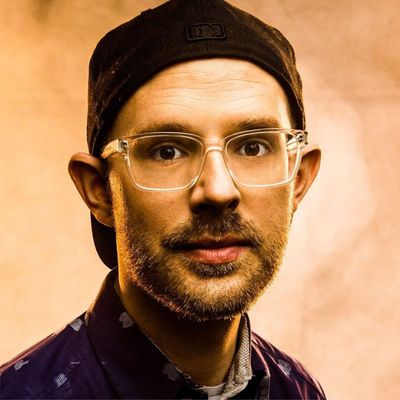
Ryan Scott Oliver is the phenomenal composer behind 35 MM with Lindsey Mendez, Alex Brightman, Betsy Wolfe, Jay Armstrong Johnson, and Ben Crawford. He also wrote the musical Future Demons, Three Points of Contact, Rope, Mrs... Read More
From the show: Real Talk with Mason Bray
Guests
About
Ryan Scott Oliver is the phenomenal composer behind 35 MM with Lindsey Mendez, Alex Brightman, Betsy Wolfe, Jay Armstrong Johnson, and Ben Crawford. He also wrote the musical Future Demons, Three Points of Contact, Rope, Mrs. Sharp, and so many other great thrilling rock musicals!
In this episode, you can hear us talking about his road to creating musicals, where his inspiration for 35mm and his other shows come from, what drives him to create more, and everything in between!
You can check out Ryan and his work here:
Instagram - @ryanscottoliver
Twitter - @ryanscottoliver
Website - ryanscottoliver.com
This season I want to highlight the people that can and should be the mentors for people of all ages wanting to get into the industry! Join me in connecting to Broadway and figuring our way into the industry!
Instagram - @_RealTalk_Pod
Twitter - @_RealTalk_Pod
TikTok - @RealTalkPodcast
Facebook - Real Talk with Mason Bray
Website - realtalkmasonbray.com
Thank you so much for your support!
Transcript
This transcript was automatically generated and might contain errors.
[0:00] Mason Bray: So we have Ryan Scott Oliver, who is a phenomenal composer behind 35mm with Lindsey Mendez, Alex Brightman, Betsy Wolfe, Jay Armstrong Johnson, and Ben Crawford. He also wrote Future Demons, Three Points of Contact, Rope, and so many other amazing musicals. I am so excited to chat with him in the middle of my 35mm phase. Hi, Ryan.
[0:22] Ryan Scott Oliver: Hi, I love that you have a 35mm phase. That makes me very happy.
[0:27] Ryan Scott Oliver: It has been a long time. The seraph, I think, was on my Spotify Wrapped playlist.
[0:32] Mason Bray: Oh, I'm so happy to hear that. That song means a whole lot to me, and I'm glad that, you know, I'm glad that you're enjoying it.
[0:39] Ryan Scott Oliver: Yeah.
[0:39] Ryan Scott Oliver: Um, so how are you?
[0:41] Ryan Scott Oliver: You know, I'm really good. Um, my husband and I moved to Beacon, uh, which is about 90 minutes north of uh New York City. Uh we moved during the pandemic, and we are just really, really thrilled to be here, but we're close enough to the city that we get to go and see shows. Uh last night we got to go to the opening night of Company, uh, which was very exciting, obviously very emotional for all of us who are still in our Sondheim phase. Uh, I've been in my Sondheim phase since I was a teenager, and uh I expect I'll be in my Sondheim phase for probably the rest of my life. So it was a very special moment to be there last night. Today, uh, we're gonna see uh West Side Story. So, uh, you know, I don't actually see a lot of theater.
I actually find myself um seeing or listening to a lot of music, going to a lot of museums, sort of exploring a lot of theater, sorry, exploring a lot of art that isn't theater, because I find that I get a lot of my ideas by sort of fusing other mediums into the work that I do. But occasionally I do get to enjoy theater um and uh, you know, getting to see Company, getting to see West Side Story. Very excited about all that.
[1:45] Mason Bray: Yeah. Um, so jumping in, can you tell us how you got to where you are in your career?
[1:49] Ryan Scott Oliver: Uh yeah, for sure. I didn't come from a family of artists like at all. Um I uh had a uh close friend whose mom was obsessed with musical theater and she was obsessed with musical theater and she got me into it. And I went to a performing arts high school. Uh I actually was a classmate of Josh Groban's, which is so cute because whenever I see him at an opening night, it's like high school reunion. And then I went to UCLA for music composition and NYU for graduate musical theater writing. And so I I kind of discovered my love, you know, it uh uh late in my teenage years, really fell in love with sort of the science of music, I guess. Um not I shouldn't say science, but the craft of music. Um between you know, music and and and literature and and drama, like I just knew that this is what I wanted to be doing.
And so I I put myself on a path and I, you know, I it was a streamlined path. It was just pretty much one to the next thing. And then after grad school, I wrote a musical called Mrs. Sharp uh in 2009. Um some people know the songs, uh What I Wouldn't Do For You or Out of My Mind. And um that show was a great calling card for me for a while, uh to let people know, you know, what I did, what I was interested in, and um that uh was a springboard and I I wrote a couple of other shows. Um I pretty quickly wrote 35mm, as you mentioned, um uh and I wrote that based on the photographs of my husband, Matt Murphy, Matthew Murphy, and um 35mm then became this kind of calling card for me, and it sort of started everything.
Um I wrote a show called Jasper and Deadland shortly thereafter, and since then it's been, you know, commissions and and working on new projects and and waiting for my big Broadway break, which I hope is around the corner.
[3:31] Mason Bray: I definitely think it should be. Um But so what is your inspiration behind all the shows? Where do you start to get those ideas? What is something that would strike on to you?
[3:42] Ryan Scott Oliver: Yeah, yeah, yeah. So I always try to keep my eyes and ears open for great stories. Um oftentimes I will just, you know, hear about something on a podcast, or I'll read a book, or I'll, you know, see something in the news and it'll interest me, and I'll kind of kind of make a note of it and tuck it away for a period of time. And so I don't tend to have, and I that's also how I write the shows that I write. Um, I do a lot of research. I do a lot of listening, I do a lot of um reading before I do anything, before I even start a show, before I start a song, before I start a scene. Um, there's a lot of preparation that goes into all of it. And um that research really keeps me from having writer's block or sort of not, you know, let's or letting a year go by where I don't make something.
Um I'm pretty good about making sure that I'm always working on something, I'm always writing something. I try to hold myself accountable to write at least one musical a year. Sometimes I'll be getting to the end of the year and I won't have finished a show. And so I'll, you know, write something that's 20 minutes long or 25 minutes long. And um I've written I've had a number of things on on Spotify and Apple Music that were born from that idea. Um, so that's that, you know, the the research phase is something that I think a lot of not enough theater writers and especially musical theater writers uh take seriously because I think it's one of the things, it's one of the most important things to make good work that feels fresh, feels exciting, feels engaging for the audience.
I think a lot of people don't uh realize that because it it sounds academic and it sounds like school. And you know, I liked school as much as anybody does, but it's been a huge part of how I make the work that I make, and I think it's you know, yielded good products so far.
[5:31] Mason Bray: Yeah, and you started you talked about um writer's block and how you started trying to listen to ideas. Is the writer's block you got stuck one day and you started coming up with these ideas and listening to the people around you, or was it a different process than that?
[5:46] Ryan Scott Oliver: You know, I think that I kind of like anything that that interests us, you know, you don't know that you're looking for it. You don't even know you could be interested in it until you see it and you start playing around with it. And I think that Darling, which preceded 35mm and Mrs. Sharp, um, I started to do that a little bit where I would where I would listen to things and sort of infuse them into my work. But it wasn't until 35mm where I really fell in love. And part of that was because my husband was was so into pop music and so into new music and and music that was being released, you know, in real time. And I would start to like fall in love with these songs. And I I had always been a musical theater kid.
I'd never I had not listened to a lot of pop music and a lot of rock music. And I would start to listen to these songs and I would fall in love with them and I'd be like, this is so fun. And I would then use those songs as research and as inspiration for the work that I was doing. And once I got into that process and I found out how kind of effective it was in creating a very unique sound that was still mine, but was born from several different influences. It sort of became, you know, like how could I ever write a different way? And so no writer's block really, and and if I do, when I do get a moment of like, I don't know how to solve this writing problem, or or I thought I knew what I was doing here, but I'm not sure.
That's a cue to me to go back to the research, go back to listening, go back to reading, continue to sort of get input so that I can do the right and successful output. Um, this is also last thing I'll say about that is this is also a concept that I got from Stephen King, because in his book On Writing, which I recommend to anybody who's a writer, um, it's a pretty great, great book. Uh, he talks about, you know, if you're gonna write, then you need to read half the day if you want to write half the day. And so it's like input and output. And I think a lot of writers don't appreciate the input part of it or don't realize that they appreciate it.
[7:41] Mason Bray: Um, and what would be what would you say your process is for most of these shows? Like lyrics, music, all that kind of stuff.
[7:47] Ryan Scott Oliver: Yeah, yeah, yeah. Well, for me, I'll always start with a I sound like I'm beating a dead horse here, but uh, I will always start with a research phase. And if I'm doing book music and lyrics, which I I've done a couple of times and I probably will do again someday, though that's not really what I'm doing these days. I'll spend at least six months without writing a thing, just reading, listening, absorbing, observing, taking notes, um, building the world inside my head, getting the ideas for the songs and what I want it all to be. And so then I start the process. You know, sometimes I'll try to do that in June of a year while I'm writing something else, and I'll just do research that year the rest of the year.
And then in January of the following year, I will then start writing and I'll try to get a draft out, you know, with about in about six months or nine months. And for me, because I've done so much preparatory work and I've you know fielded outlines with people and I've been collecting ideas for what these songs could be, you know, I'm going into this sort of like an architect who got the blueprint approved, who has purchased all the materials, and now it's just time to do the building. There's at that time, it's just the fun. It's the fun of the making and the fun of the building. And, you know, that'll be oftentimes I would say when it comes to writing a song, I'll have sort of the musical concept.
I might have a uh title in mind or a or a phrase in mind. And it's like a little, you know, the right foot goes, then the left foot goes, then the right foot goes, then left foot goes. It's it's it's a little bit of each element at a time, and then I fill in the rest with the other element. Very rarely, I started out this way, but I I didn't when I started, I would write the entire lyric out first because I, you know, felt like I was coming from sort of the Sondheim school where you know the lyric appeared to be more important. And I would start with the lyric, write the whole thing out, and then I would set the whole thing to music. But I found for me that kind of going a little bit, you know, a little lyric, a little music, a little lyric, a little music is is the best process for me.
[9:43] Mason Bray: And do you prefer to work with collaborators on the shows, or do you like to stay alone and work on it yourself?
[9:48] Ryan Scott Oliver: Definitely prefer collaborators. I think that there was a time period after 35mm where I think I needed to do some soul searching and I needed to do some, I needed to continue to develop myself as an artist because I had thankfully so much success as a young person and as a young artist that I, and this is what happens, I think, with a lot of child actors or or a lot of you know artists who who find their success, find some success, you know, early. I got really complacent and I took that success for granted. I took my world for granted. And I think that I needed to do some soul searching as an artist. And I, and um, I I did that. I wrote a couple of shows. And uh the irony is a lot of those shows that I wrote by myself, I then later got collaborators to work on with me, which was awesome.
These days, you know, everything is a collaboration pretty much. You know, now and again I'll do something like you mentioned Future Demons, and I'm I'm gonna release a follow-up to that um called Past Demons in a couple of months. You know, products like that I'll do by myself, but but when it comes to musicals, I think, you know, it's important, it's important to collaborate, especially as like, you know, a white man, you know, people have heard plenty from me. And uh getting the opportunity to work with other people uh and get unique perspectives and continue to learn about myself and learn about the world. That's I think the best way to make a musical these days.
[11:07] Mason Bray: That's fascinating. At the beginning, you mentioned that you were doing commissions of musicals. So do people usually give you ideas and commission you to write it, or do you come up with the ideas and everything that goes with that?
[11:17] Ryan Scott Oliver: It can happen either way. I've had a couple of commissions um where it was essentially like they wanted me to come up with the idea and I had to sort of get the idea approved. Um, and those are, you know, of course the best commissions because you know it comes from you.
[11:31] Ryan Scott Oliver: But now and again you get to write something that is a pre-existing property, whether it's a novel or a film or a play, and sometimes you have to audition for it, and you have to write what we call spec songs and that are essentially our audition. And sometimes you get the job and sometimes you don't. And you know, those jobs tend to be a little bit more lucrative and tend to be a little bit more higher profile. But then the trade-off of that is that you are writing something usually with a corporation or a company or a studio, and so you have a little bit less freedom in terms of what you're making, but usually you get paid a little bit more, so it all works out.
[12:08] Mason Bray: Um, you might have mentioned this in some of your other answers, but what pushes you to keep telling these stories that you hear and telling these stories that inspire you? What's the thing that connects it to you?
[12:21] Ryan Scott Oliver: Well, I think that I, for one thing, you know, it's I love doing this. I love writing musicals. I'd like to think I'm good at it, and I'd like to think that there are lots of people out there that enjoy the work that I produce and feel seen by the work that I produce. And you know, I think I have something to say. I think lots of writers have something to say, and I think it's not really I don't think I'm special in that I have something to say. I think that it's accepting yourself, appreciating yourself, appreciating your experience, and wanting to share that with others as a sort of gift that you've made special for them. It's addicting. It's totally addicting to write and to present what I make. And so that's why I keep doing it.
[13:05] Mason Bray: That's amazing. And you said you think you are good, you are good. Um, but also so I listed some of the amazing actors that were in 35 millimeter. Um, and I think a lot of writers would be interested to know how to get shows on their feet and get those amazing actors behind it.
[13:24] Ryan Scott Oliver: Uh yeah, for sure. I mean, I feel very lucky, but I also feel I'm also very proud of myself because you know, while those actors, especially Lindsey Mendez, Alex Brightman, and Jay Armstrong Johnson, while they had Broadway credits already and why they had been doing things before I got there, I certainly was one of the first people to really embrace them, not just for a project, but for every project. I mean, for a long time I couldn't write a show without them all being in it. And you know, what I would say to other writers, and this comes up all the time, and it's come also comes up for actors all the time. You want to work with your friends and you want to have talented friends, and you have to believe in people, and you have to hone your ability to see potential and to see greatness and to support those people as you hope that they would then support you.
And you know what? Here in New York City, you know, it's when people come to see 54 Below shows or go to downtown Mama to see shows, or they go to college showcases, or they go see their friends in college musicals. These are the ways we identify talented people, and then you should reach out to those people in a really safe and comfortable way. And you should try to form friendships with these people, try to form relationships with these people. Work. I mean, for me, you know, all of these relationships and these friendships began with us working together and us just really enjoying working together and enjoying those moments before and after and during rehearsals, and that blossomed into a proper friendship based on respect and admiration.
And I've built a lot of those relationships. I mean, it's no surprise that the majority of my closest friends are people that I continue to work with, and I think it's essential. I think it's essential as artists to continue, especially artists who you know, writers can't do unless we're writing for ourselves as a one-person show. We can't do what we do without other people. There is no other option than collaboration, so you have to start developing those relationships and nurturing them and doing right by the people you love and that you think are talented, and that's how I do that.
[15:33] Mason Bray: Absolutely. Um, and just a general question: are people allowed to produce your shows? Are the rights out there for those?
[15:38] Ryan Scott Oliver: Yeah, 35 millimeter is produced all over the world. Um, I think it's been in already a dozen countries, um, and you know, hundreds and hundreds of performances and productions, and we're very lucky with 35 millimeter. I also have Jasper and Deadland is also licensable. Um, there are some, there's a production I think going up in the UK. We've had a couple, we've had probably about a dozen productions of Jasper and Deadland so far. It's a show that's really, I think, connected with teenagers, um, you know, almost to the detriment of it not connecting maybe with adults sometimes. But I think it really does connect with teenagers who feel like in their relationships they are, you know, the stakes of their friendships and their crushes and their relationships and their relationships with their parents they feel there's the stakes are as high as like going into the underworld.
And it's, well, the last thing I'll say about that is that I think Jasper and Deadland has really connected with the LGBTQ community of teenagers. I think a lot of queer teenagers, um, especially queer girls, um, really get very interested in this world and they really connect to it and there have been multiple productions where Jasper has been played by a girl and or a non-binary person. And you know, gender and sexuality just sort of don't play a huge part in that.
[17:00] Mason Bray: Yeah, and I think it's so important to open up those opportunities to those groups who have been left out for a lot of years. I was going to try to put a number on it but it's a lot. But how did you go about as a writer getting your show's license and getting to those big agencies?
[17:16] Ryan Scott Oliver: Yeah, um, you know, fortunately I've been lucky enough to have some really great agents, um, and they had really great relationships here in New York with a company that used to be called Samuel French which is now called Concord. And I think that those companies, um, you know, there aren't a lot of them out there that are popular licensing houses. There's probably three or four. And, you know, you've got to find the one that is interested and invested in your work and is interested and invested in nurturing you as an artist. And I've definitely found that with Concord. And they're a very, very special organization that has done, you know, has really taken care of me via Sam French to begin with.
And yeah, you know, I would say this for any writers out there that are interested in like how a show goes from being a show to being a licensable show with a company, one of the most important elements is the cast album. And some of these companies will produce the cast album for you, but generally speaking, the cast album needs to exist. And that's sort of on us as writers and our producers of the musical to create the cast album. Because the cast, I mean, if you think about it, it's like when we did shows or do shows in high school, you know, most of the time our drama teachers discover these shows because they either, you know, visited New York once, or more likely, they listened to the cast album and fell in love with the show through the cast album. And, you know, certainly for 35mm, you know, that's definitely how that show got out there and continues to get out there. People listen to the songs and they want to do it. They want to perform it.
[18:44] Mason Bray: Yeah. Um, so going on with some of my last questions, do you think your education pushed you further in your career or the experience that you've had working with people and just in the industry?
[18:54] Ryan Scott Oliver: Ooh, great great question. You know, um, I think the short answer is yes. I think that my education was a huge, you know, high school, college, grad school were obviously hugely formative. But sometimes something can be formative in sort of a reverse way, where you know, generally, you know, we think of somebody more experienced is going to teach you something that you are going to absorb, and now you will do what you have been taught or you will continue on what you've been taught. But there's also the reverse sometimes that you can learn, you sort of learn, this is a weird way to say this, but you can sort of learn in the absence of a lesson or in spite of a lesson or the reversal of a lesson, because maybe a lesson doesn't resonate with you.
Um, to, you know, as an example at UCLA, you know, um, which is a lovely, lovely school, um, but the composition department is mostly focused on film and television. And as a stage writer, you know, there were very few people there that were in that were able or interested in helping me in this specific form of composition I was doing. So, in the absence of opportunities and in the absence of somebody really there teaching me, I had to go out and discover opportunities and discover mentors and teach myself in many times in many ways. And those experiences and what I learned and what I was able to learn for myself, specifically for myself, was something that I wouldn't have been able to find had I gone to a school that was more open to stage composition.
And I'd also say that at NYU, I, you know, I really enjoyed NYU, but I learned as much from my peers that I respected as I did from my faculty. You know, the NYU program as an example is a program that welcomes all, and you don't have to have a ton of experience in theater, you just have to be interested and talented. And I was somebody who walked in with a lot of experience and a lot of knowledge. And so sometimes, you know, I felt like other people were playing catch-up to the many of us that were there with sort of a breadth of knowledge already. And so, because of that, because there were moments where I think when some of us weren't challenged as much as we had hoped to be, we taught each other or we taught ourselves.
And so I think people who want to learn are going to find a way to learn no matter what. Even people who don't go to college, if you are somebody who is anxious to learn and to grow, you are going to find that no matter what. And so I think this idea that I think some parents have for their kids that like you know they have to go to college or you know they're not going to learn is not, I mean there are plenty of kids who go to college and learn nothing because they don't really want to be there and they're being and they're there because they have to be. And similar there are people who don't go to college and go on, you know, trips and journeys to discover themselves, find themselves and they learn a ton more. So I'm, I'm directly saying yes my education played a huge part in this but my education in many ways created experiences that ultimately were the thing that taught me trained me.
[21:55] Mason Bray: Yeah that's amazing. So after the pandemic what was your first Broadway show back?
[22:01] Ryan Scott Oliver: Ooh I know that my first show in a theater was Moulin Rouge which I had seen on Broadway in the months before the pandemic but then when they changed casts and the show returned, I got to see it again and it was very exciting. I loved it.
[22:18] Mason Bray: And do you get to go to see some of the shows that your husband takes photos for?
[22:18] Ryan Scott Oliver: Oh yeah, oh yeah I mean I'm very fortunate there. Um I have no lack of tickets when that's concerned oftentimes we get to go to the opening of those shows and if not then you know we'll get a chance to see it.
[22:39] Mason Bray: The perks the perks.
[22:39] Ryan Scott Oliver: Yeah. Um well is there anything else that you want to add before we wrap up?
[22:39] Ryan Scott Oliver: No this is just my pleasure. I'm you know I'm I so appreciate what you're doing and the these interviews with me and the other people that you've talked to. I think I hope there's a lot of people out there that are excited to hear what we have to say.
[22:57] Mason Bray: Well, thank you so much for being here.
[22:58] Ryan Scott Oliver: Absolutely.
© Broadway Podcast Network, All Rights Reserved