

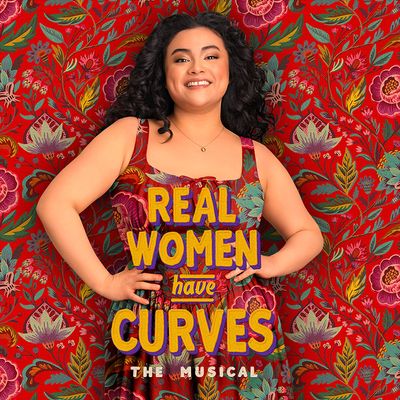
This week, the Sentimental Men are chatting with the breakout star of Real Women Have Curves, Tatianna Córdoba. Together, they talk about offstage community, standing ovations and what it’s like to make a Broadway debut in such a packed Broadway season... Read More
From the show: Sentimental Men
Featured Shows
About
This week, the Sentimental Men are chatting with the breakout star of Real Women Have Curves, Tatianna Córdoba. Together, they talk about offstage community, standing ovations and what it’s like to make a Broadway debut in such a packed Broadway season. Plus, the boys get Sentimental about Audra McDonald in the Gypsy revival, Mandy Gonzalez in Sunset Boulevard and Caissie Levy in Next to Normal.
Transcript
This transcript was automatically generated and might contain errors.
[0:00] Quincy Brown: I love watching Wicked. I love watching Elphaba. Girl, go off. I don't know if I want to do that eight times a week. That's crazy. I think that's a little illegal to ask of someone.
[0:16] Kevin Bianchi: I'm Quincy. And I'm Kevin. And this is Sentimental Men. We're here to talk and maybe scream about our favorite women in musical theater. I had a dream. I dreamed it for you, June.
[0:36] Quincy Brown: It wasn't for me, Herbie. And if it wasn't for me, then where would you be, Miss Gypsy Rosalie? So we saw Gypsy. Kevin, I feel like you should talk about it because I know this is your top.
[0:57] Kevin Bianchi: Well, it just like... Well, and also you went to the... Sorry. You also went to the freaking Tiny Desk. We have a lot to talk about. It was a long time ago and we were all very young. So a couple months ago, I did. I went to the recording of the Tiny Desk concert of the cast of Gypsy, which I went having very little expectation because you don't get to know who's going to be there, how many songs they're going to do or anything.
[1:26] Quincy Brown: It's very hush hush.
[1:30] Kevin Bianchi: We got a very cryptic email saying they couldn't tell us who. They were like, here's a list of dates. Pick two. We'll pick one and then we'll let you know who it is. But so anyways, it was really cool for a couple reasons. But most of all, first of all, the whole cast was there. I was like, oh, it's like on a Monday. It's on their day off. Maybe like Joy and Jordan are going to go. You know what I mean? I was not expecting all four principals plus the three strippers. All were there. But when you're there, it's not amplified. Like you're just hearing like the raw sound in the room. They're capturing it for editing, but they're not amplifying it.
[2:21] Quincy Brown: What is the room? Is it like a classroom?
[2:27] Kevin Bianchi: No, baby. It's like an office like you work in. That is literally the corner of a large open office space.
[2:35] Quincy Brown: Is it like the NPR office?
[2:43] Kevin Bianchi: Yes. And literally, they'll start and everybody's like and they all sit and watch and listen. And then as soon as it's over, everyone was like, great, and back to work. It was such a weird, not at all where I imagined it being. It was really cool. But what was so cool was to like hear them singing specifically to hear Audra McDonald singing unfiltered straight from her mouth to my ears. That's cool.
[3:08] Quincy Brown: Was really, really special because Audra McDonald is my like first it was The Wizard of Oz and Judy Garland. And then it was Annie starring Audra McDonald. Baby. Audra McDonald on that Soprano 2 line, we have but one Regal West. It's ingrained. She's excellent in that movie. And she's like fresh out of school. She's so young. She's so good.
[3:31] Kevin Bianchi: Should we watch that movie?
[3:39] Quincy Brown: I've rewatched in our freaking interview, too. I know. But that so Audra McDonald is very much like it was Judy Garland. And then it was Audra and Kristen Chenoweth as far as like my lore of musical theater ladies. And so to hear her voice directly was very special, which then brings us to seeing the show was equally as special because I also love the musical Gypsy, like almost as much as I love Into the Woods. And so it was very much like across the street.
[4:18] Kevin Bianchi: Yes. Yes. It was very like seeing Audra do Gypsy was very akin to seeing S.J.B. do The Baker's Wife for me or see S.J.B. do Into the Woods. I loved it. I thought she was so good. It was like I don't have anything else to compare it to because it's like when else do you watch the master do like the greatest role? There are so few chances that we get to see that happen. And it's like I know Gypsy gets revived every 10 years or so, but it's like I'm so grateful that this time it was Audra. I feel very lucky to have seen her interpret this role. It's impeccable. It's joy. It fits her like it was written for her. It's really incredible. And Joy Woods is insane. The way that role is crafted around her, like the dance that they added in the Garden of Eden section and like just a different read on the character than I've seen before.
[5:27] Quincy Brown: Yes. And it's all I love. Like every interview they do, they're like, we didn't change a single word. Like every every change that you feel is just a change like of the actor. And I feel like that is very that permeates the whole production is it's like everything feels so like actor driven. Even Leslie Margarita in that long scene in the dressing room. I was like, you better act the house down boots, hammering it down and just like carrying that like 15 minute section of the show. It really is. This is like everybody agrees this is one of the greatest books ever written for a Broadway musical. And it's that is like so clear in this production because everybody is just chomping on these meaty roles.
[6:20] Kevin Bianchi: You also saw Sunset Boulevard.
[6:26] Quincy Brown: I also saw our girl Mandy in Sunset Boulevard in Sunset Boulevard. My first time seeing this production. All right, let's hear it.
[6:31] Kevin Bianchi: OK, I'll lead with this. I did cry when he went outside.
[6:31] Kevin Bianchi: I cried because OK, here. So I also OK, wait, OK, I have so much. I literally was like, this is theater. I went on Pierre Mouret's Joe Gillis debut. He looked good. Maybe. So I didn't know that it was his debut going in, but because it was everybody was very electric. But like something about like 44th Street is so pretty and like something about like the camera they're using and the like the filter they have on the camera. Walking by the boob under slings. I got so teary.
[6:36] Quincy Brown: Really? When he went outside, did you cry?
[7:12] Quincy Brown: No. And like the lights of Times Square in the background, like it was just so like visually beautiful and like Norma sitting there watching it. I don't know. It really hit me in just the right way that I did cry a little bit. And then when he came in, people jumped up to give him a standing ovation, which I don't know if that happens every night, but it happened probably his debut because it was. Yeah. So that was so exciting. And then I did cry at one other point. I forget one of one of Mandy's big songs. I shed a little tear. I can't remember which.
[7:43] Kevin Bianchi: If we never said goodbye, it was it might have been that or it might have been it might have been with one look, honestly, that early on. No, I don't know. Anyways, they both did get a tear. Oh, no, I know what it was. I didn't cry completely, but I did. I like I gasped and I got a little misty in the New Year scene when all the set went away and there was that big wall of beads along the back and just the two of them so tiny in this big, huge space. Oh, it's a beautiful production. It's goofier than I was prepared for.
[8:24] Quincy Brown: Oh, there's there's much more of a sense of humor than their outward presence would believe lead you to believe.
[8:29] Kevin Bianchi: Yeah. How was Mandy?
[8:36] Quincy Brown: Mandy was phenomenal. Phenomenal. It really like fits her voice so well and fits each part of her voice. I don't have like Nicole's performance to compare it to, but I thought that like her. Embodiment of Norma was so kind of like we're talking about today in our interview is like it felt like it started with her, like it feels so much like man, like Mandy Gonzalez as Norma Desmond, not just like Mandy Gonzalez doing Nicole Scherzinger as right. Yes, I think that's true for the covers. They let them kind of do their own thing. Yeah, it was so specific and so like. You know, having seen her in a few things across the years like her sense of humor landed on the role so beautifully. And like her relationship to the camera was so fun, like she she really knew like when her moments were to play and be silly.
I loved the way that she kind of showed us. How and why Norma is like becoming on. Fashionable in her film career, like like seeing like everybody else give these very like, but Norma, what if I don't want to stay here? And she's like, because I like and it's like that usage of the camera and Mandy's use of that in that way was was so good, was so good. And of course, it's like she sounds like she's singing it once a week, you know, like she's she's. She's in the pocket. She's good.
[10:15] Quincy Brown: Yeah, I didn't get to see sunset with you, so I haven't seen Mandy. I did have a sunset week, though, in the sense that I met Tom Francis at an event and he told me I had a beautiful smile. And then I met Nicole Scherzinger at something else where I told her you're going to win that Tony. So now that you have seen Gypsy and Sunset, where do you fall in the Tony debate?
[10:41] Kevin Bianchi: Well. Like I said, I don't have Nicole's performance to let's just talk about revival. We don't have to talk about actor. This is very I knew you were going to ask me this and it is feeling very like bombshell hit list for me. Like it's very like, oh, yeah, one is a very like Broadway musical. It is a and it is a revival that honors the like art form of the musical. But then the other is like, but what if we did musical theater in twenty twenty five? And it's like the the use of the camera. I really liked more than I was expecting to, because as you might remember from our pre-Sentimental Men days, I did not love the cameras in the West Side Story revival. I loved that revival so much. That's like my biggest thing about Covid.
Not my. Well, I shouldn't say my biggest thing. That was your biggest thing. But a deep cut that the pandemic gave me was the fact that it shut down that revival of West Side Story. Yeah, that was that was art to me. That was a really cool in a lot of ways, but something about the. Maybe it was because like in that, like. The cast would like go into a little room and do the show like a movie and you couldn't see them and the screen at this. I don't know what like it just like it clicked really well for me. And the use of the camera, I think, because of the subject matter of the musical felt. It did not feel gimmicky at all like it it was like, oh, I can't believe it took this long for us to see a movie sized image of Norma Desmond.
I don't know which way I think it's going to go, but I think one show will get best actress and the other will get best revival. I agree, but I can't say safely which way that'll go without having seen Nicole.
[12:47] Quincy Brown: Who are we talking to today?
[12:58] Kevin Bianchi: Well, today we're talking to Tatiana Córdoba. Star legend and icon of Real Women Have Curves.
[13:03] Quincy Brown: Who is that on the playbill of Real Women Have Curves? It's not Tatiana. I don't think it's anybody in the show. It's not America Ferrera.
[13:12] Kevin Bianchi: Ghost playbill. We're just these two. Casey Levy, Richard Flushman-esque.
[13:16] Quincy Brown: Yeah, like imagine if the Gypsy playbill also just had like people who looked like. You know what this is giving? It's giving when Laura Bell Bundy left Legally Blonde and they switched to like an illustration of her so that it wasn't her likeness. This is giving we're going to run for a long time and we don't want it to change it. But we're talking to Tatiana today, which I'm really excited for because you and I were both so taken with her when we saw the show. Powerhouse vocalist. Incredible voice. One of the best voices, like new voices on Broadway.
[13:52] Kevin Bianchi: On stage the entire show. Yeah, on stage the entire show. It is just like a little powerhouse performance that she's giving and I'm really excited to talk to her at this early stage of her career because I think that's a perspective we don't often get on our show. We're usually, you know, talking to people who are a couple Broadway shows in kind of it.
[14:20] Quincy Brown: Yeah, Drama League Award nominee for We Want to Have Curves. This is her Broadway debut.
[14:26] Kevin Bianchi: Yes, this is her Broadway debut. She's young. I was like, I mean, I knew she was young, but in talking to her and like hearing her talk in the very recent past tense about like graduating and things, I was like, oh, oh, you're young. Again, it's giving Laura Bell Bundy leading Legally Blonde at 26. Crazy. I know. I'm like, you're so brave. You're so young.
[14:52] Quincy Brown: Wait, before we get into the interview, I don't think I've talked about this on pod yet. You must watch The Next Normal Pro Shot on PBS.
[15:02] Kevin Bianchi: I know. I know I have to watch it. I'm off tomorrow. Maybe I'll watch it tomorrow.
[15:09] Quincy Brown: Watch it today. Turn it on. Skip work. Watch it today. It's so good. A lot of it is like you're watching Next Normal for the first time. Like the story just feels so much more fleshed out. And I also think because Next Normal was one of those shows that like was just a thing when I was first learning about theater, but maybe not fully brain developed yet. So there's a lot about Next Normal that I just like accepted as fact or as canon without really connecting the dots for myself. And in watching it now, the through line, it's so well crafted. But I also think that's the way it's been directed and the way it's being performed, like it really ties together a lot of things that maybe weren't tied together in the original production.
[16:31] Kevin Bianchi: Yeah. And Casey Levy is so incredible in it. Oh, my God. I can't wait. I can't wait. I loved Next to Normal so much in its heyday. But I was also like a freshman in college. And I was just like, because like, I'm going to be gay. And then I will say like, probably like two years ago during the pandemic, probably like around my 30th birthday, I like revisited it, revisited it for the first time as like a mentally ill adult. And I'm like, mm hmm. This hits very differently. I don't have kids or anything. Not like my circumstances are so different, but just like that. I have enjoyed discovering how different that show is as you age and like the themes of growing up and the themes of adulthood versus young adulthood are just very interesting. I'm very excited to watch this production.
[17:55] Quincy Brown: Well, and it also like, I think it shows like the growth that the culture and society has had in talking about mental health and understanding the nuance of mental health and mental illness from OG production to this one, because the way that Casey is portraying bipolar is so drastically different than the way that it was done in the original production and so layered and nuanced and interesting. And it's just it took me three nights to watch because I kept pausing the songs after they were done to cry and then restarting it. It was like it's intense. Yeah, I'm very excited to watch it. And I love visually how like realistic the set looks like. I think setting a show like this in something that you don't have to imagine it in like when it's just the framework of the house, it's like you can kind of fill in the gaps and remove it from the reality a little bit.
But when it's a photo realistic set of a house at the point or oat milk into their coffee, it just like grounds that that story. And the kids read more as kids in this production than they do in the original game is like a completely different take. It's super interesting. Gosh, we could do a whole season of the podcast about Aaron Tveit and the Broadway body and the the way that teenagers look on stage. It all started. It brought me back to like they had him come out in his boxers in just another day and as this like sex object. And I was like, is this supposed to be a 16 year old? Well, yeah, I mean, it was heavy on the Oedipus complex, but I was like, this is supposed to be a guy at the time.
I'm 16. I'm like, yes, it's amazing. I love Broadway. But yeah, now I'm like, oh, yeah, this could just be a child. This could be a teenager that the mom doesn't want to fuck. A kid in like a zip up hoodie and a striped shirt. Yeah, I highly recommend everyone go watch it. Should we fly away into this interview with Tatiana Cordova?
[18:43] Kevin Bianchi: We should fly away into this interview. De nada. Ay muchacha.
[18:47] Quincy Brown: Ay muchacha. Tatiana Cordova, thank you so much for joining us on Sentimental Men today.
[18:53] Tatianna Córdoba: Of course, I'm so excited to be here.
[18:55] Quincy Brown: So backstory on us is we started off as like a wicked centric podcast. So when we have non wicked guests on, we like to start off with what is a touchpoint that you have with the musical? Because I think we realize that everyone has a touchpoint with Wicked.
[19:11] Tatianna Córdoba: That was the first musical I ever saw, like the first like Broadway. I didn't see it on Broadway. That wasn't my first Broadway musical like on Broadway, but it was my first Broadway musical on tour in San Francisco. That was the first one I ever saw. And like, hello, it blew my mind.
[19:25] Quincy Brown: Mm hmm.
[19:27] Tatianna Córdoba: Like, that's like, just also just I've personally the best musical to show anyone who's never seen a musical before, because then they like get it. Because how does your how do you not get your mind blown? So that was my first experience with it. And I mean, it's the best way to fall in love.
[19:44] Kevin Bianchi: Yes. Do you remember who you saw?
[19:46] Tatianna Córdoba: Oh my God, I don't. You know what, though? I still have the playbill somewhere. So I should actually check because-
[19:51] Quincy Brown: Find it and let us know.
[19:52] Tatianna Córdoba: Because I was like 11 or 10 or 11. And I bet I saw someone crazy without even knowing that I did. So I should actually check.
[20:00] Quincy Brown: Okay, so what is your journey? How did you end up on Broadway and Real Women Have Curves?
[20:06] Tatianna Córdoba: I'm still wondering. I mean, it's been so crazy. I've been doing musical theater, basically my whole life. I started off doing ballet and my dad's a singer. So I've always been singing in my life. And I remember my parents showed me the movie Annie, the 1980s Annie. And that was another like my that was my first ever mind blowing moment where I was like, that's crazy. That's so amazing. Yeah. Oh my God.
[20:38] Quincy Brown: That's like my Annie is in my origin story. So.
[20:41] Tatianna Córdoba: Oh my God, just so good. And ever since then, I was just always doing it. And then I went to art school for middle school and high school. And at art school, my focus was actually contemporary voice. So and my dad being a singer, so I grew up mostly doing theater outside of school. And then I was training, like R&B, pop, that kind of stuff is what I was being like trained in. So that, that, like sort of meshing together at the same time as like Hamilton coming out and as the same time as Hadestown, like coming through was a really contemporary sounding scores, too.
[21:24] Kevin Bianchi: Yeah, yeah, which I love all the like classic stuff, too. But I never sort of knew my exact place in musical theater until all that stuff started coming together at the like, perfect peak time of like my adolescence of like, okay, what do I want to do next? And that kind of stuff that was very much in my wheelhouse started coming up and, and becoming really popular. And I was like, Oh, okay, like, this is, this is awesome. So yeah, and then I and then I went to college for musical theater at Boston Conservatory at Berklee College of Music, which was an experience.
[22:03] Quincy Brown: And tell us more.
[22:03] Tatianna Córdoba: I honestly didn't want to go to college. I mean, I've never my parents knew from a very young age that none of their children would be academics. Just that was, I was not gonna none of us were gonna be, you know, saving lives. But, but I, they were like, really pushing me to apply. And I did, and I was privileged enough to get a really good scholarship. And they were like, you're going as soon as I got money, they were like, you're going, it's just some first generation and being first generation college student, what like, that not not pressure that they gave me, but that pressure on myself to like, do that for them was something that was very real for me. But anyways, it was just a crazy experience.
I mean, also going from the Bay Area to Boston was a bit of a culture shock. Boston musical theater program was like, was like really crazy. And you know, going from where, you know, where I grew up in like the Oakland area of the Bay Area. Like I grew up with mostly black and brown people. And then it was like such a 180 switch in the musical theater program. And it was very, just it was so crazy. And as much as COVID was awful and terrible, it ended up being actually a really great moment for me to not to be away from, to be able to study, but be away from that environment was really awesome for me. But it was, yeah, just a crazy.
[23:43] Kevin Bianchi: Cause did you go back to the Bay Area during the pandemic?
[23:47] Tatianna Córdoba: Yeah. Gotcha.
[23:48] Kevin Bianchi: Which was awesome. And yeah, just having, getting to still train, but have that space was really cool. But yeah, just also going to college during COVID was just, it was just a crazy four years. So when I say an experience, there's just a lot of things going on, but yeah. And then I moved back home to the Bay Area after college to save up and I worked, oh my God, so many crazy, different, weird jobs. And then moved back here and I've been, you know, auditioning ever since out of college. And this, this show in particular was just crazy because I had been in for it a few times over the past like two, three years. And then I got a tape for it on a Sunday and that next Saturday I got the part. So it was like just whirlwind.
[24:43] Quincy Brown: Would you have overlapped with it at all when it was at ART? Were you at school still at that point?
[24:47] Tatianna Córdoba: No, that was my year. I believe that was my year at home. Yeah. I really wanted to see, yeah. And I really wanted to see the production because I mean, as a young Latin actor, as soon as you hear about something that identifies you with, with you so much, especially when, you know, the Latin musical theater canon is very, very small, very limited. So when you hear about something you really like, you follow it for, you know, whether you're a part of it or not. Like I was going to support that show regardless. So I really wanted to see it, but yeah, I didn't get a chance because I was home at the time.
[25:26] Kevin Bianchi: And it feels like hearing your personal story, there's a lot of overlap between your character's journey and the show being first generation going to college and yours as well.
[25:36] Tatianna Córdoba: Yeah. Yeah. That's another, like, I, as soon as I heard about this show, I was like, I don't care at what part of the process. I don't care if I'm one of the sewing machines. I don't care what it is. I want a need to be a part of this process at some point, whether, you know, even if it's for one workshop, like I just really felt a need to have my hand in it, be a part of the blueprint of the making of it at some point because it felt so like close to home and reflected my journey so much and couldn't have been more of a special show to be a part of identifying with everything that the show talks about being bigger bodied, being Brown, being a woman, like just as an actor, your job is to play other people. So to get a chance to, you know, the possibility of playing yourself and representing your community is so, so cool and not something that always comes up. So that was always something that I, I was always so excited about this project.
[26:43] Quincy Brown: Can you speak a little bit more to like, kind of the difference between when you are approaching a character and the Venn diagram is like a little bit of overlap between you and the character versus something like this, where you're handed this material and the, the well of what you're starting with is so much deeper because of the larger overlap.
[27:07] Tatianna Córdoba: The larger overlap? Yeah. Yeah. That's a great question. I think that when there is so much overlap, I have learned that I think that you just have to lean into that, like lean into it being your story and being so much of yourself. I think that that only makes it richer. And I think, especially just not even just with my character, Anna, but just the show in general, this story is so deep to everyone in the cast and in their own ways. So this show being about a community of Latin people, that's what we are in the rehearsal space and, and with each other every day. So, you know, just diving deeper into what that means, I feel like, and leaning into the familiarity of it, I think is what has made it more real. And I think that's also what audiences have gravitated towards is I think they can feel how much of ourselves we're putting into it.
[28:13] Quincy Brown: I think something that really comes across in the show and watching it and all of your cast and your social media efforts is how much you all love the piece and enjoy being around and with each other. It just feels so earnest.
[28:37] Tatianna Córdoba: Oh my gosh. I tell the social media team all the time that they got, we all tell them, we're like, take advantage of us because you have the silliest, most willing group of people. And because especially most of us, 90% of us has Broadway debuts. Like we're so excited to do all those things. Like it's so fun for us. And we genuinely do have so much fun, like making those creative. I don't know if you, you've seen it yet. The Tony dresses video was hilarious.
[29:00] Quincy Brown: That's what I was about to say. That's what I was about to say. Oh my God. Whose idea was that?
[29:05] Tatianna Córdoba: That was, that was Shelby's. I think that was Shelby and Florence. And all these ideas, like we will just have like randomly. And like, even I did, I had a video idea that the second one's about to come out, but of doing like a de la novela style, like a little thing called Las Chismosas de Boyle Heights. And I was like, that's a lot of work. Like everybody's busy and tired, but I texted the group chat, like, Hey, if I can get this from each of you, like I had homework assignments. I have this idea. That would be great. I got all of them within a day. Like everybody was just like, let's do it. Sounds great. Like, so it's, it's so fun how like willing everybody is to like do it. Even the voiceover, if you listen to the voiceover in that, in that de la novela video, that's one of our cast members who voiceover is what he mostly does.
And one day during intermission, during intermission, I was like, Hey, do you have like Antonio Banderas, like, like de la novela, do you have a voice? And he goes like this. And I was like, Oh my God, record that at home, go home and record that. This is your script. Do that for me. And it's just, I mean, that's one of the ways that we like keep everything like fun and fresh with each other, you know, is doing those fun little things.
[30:26] Kevin Bianchi: Yeah. It's great. And it's like, what shows need, and I do social for Broadway shows and it always is so much better when the cast is willing to play. Cause you can just get so much better content out of it, you know?
[30:36] Tatianna Córdoba: Yeah. And the, and also just everybody's personality, especially the factory women, all of their personalities that you see on social media really are not that far from what you see on stage. So you really get a sense and you see that immediately, like when the show starts. So you really get a sense of, you know, them as people, which I think is awesome.
[30:57] Quincy Brown: Yeah. And I think that even kind of to touch back, what you were saying before that blurry line between onstage offstage, it just translates that the fun you guys are having making the videos and being creative backstage just continues on stage. Cause one of the things Quincy and I said after we saw the show was we were like, it feels like the cast wants you to be having fun as much fun as you guys are on stage. So I think that that playfulness is really tangible throughout the building.
[31:26] Tatianna Córdoba: Yeah. That's awesome to hear. Cause that is truly like what our goal is every time. And I think that the show being so community based, our goal, as soon as you watch the opening number is to feel like you're a part of that community so that you're strapped in with us the whole time. So that's awesome to hear.
[31:48] Quincy Brown: And it's a tricky line to tow in the show. Cause the show does deal with some pretty serious themes of immigration and the immigration crisis, but you still walk away being like, wow, what a feel good, warm hug of a show. Can you talk a little bit about when you were building the show, how you layered those serious elements in without letting it kind of overcome the piece?
[32:12] Tatianna Córdoba: Yeah. I think, I think one thing that Sergio, our director was telling us a lot when we were starting the process, um, was that he wanted the topics and ideas of immigration and the immigration crisis to sort of smack the audience in the face. Um, because, and it does, I mean, the whole first 30 minutes is, you know, it's really bright, uplifting, you know, and it's like so happy. And then all of a sudden bang on the door, lights go off and you're like, oh shit. Yeah. Yeah. And that's the exact feeling he wanted. Um, because I think one thing that's really amazing about the Latin community and honestly just marginalized communities in general is there are these struggles that, you know, that's not the first time that that factory has been almost rated.
You know, that's the first time the audience is seeing it. That's the first time Ana's seeing it, but that's not the first time. And that probably won't be the last, right? Um, so these are things that are everyday struggles or worries. And through that, they're still singing. They're still dancing. They're still making jokes because what else is there to do, right? Like our community has never been one to wallow and never been one to, you know, let outside forces dampen our joy and our, and the culture, the joy that comes from our culture. And I think that that was something that we really wanted to come across is that there are these things that are really scary that happen that are forever present in our communities. And that's not gonna, you know, dampen what, what, what we have going on. And I think that that's coming from that point of view is what I feel like really beautifully weaves together.
[34:16] Quincy Brown: You know, what's funny. I know exactly what's funny is I know exactly what dryer you have, because I know that song, um, but I think that's what coming from that frame of mind. I think that's what makes it, that's what weaves it together so beautifully and how the audience is able to, you know, yes, it's stark, but then it doesn't, it doesn't feel out of place. You know, you know what I'm saying? Like, I feel like that mindset that we've been coming from and that way of approaching it has made it, you know, a seamless sort of thing. And especially because like, unfortunately, y'all are performing this show in a time when this is not far fetched at all. And so to be able to confront that with this, but still we dance, but still we, we live, I think is not to be all like in these times, but like in these times, that's a hard balance to strike.
And it's, I think, a really important to include those themes and to include those really scary grounding moments. Um, but it does not, uh, come at the cost of the joy of the piece. It's not the focus of their stories. Right. And I think also one of our goals too, was to make sure that audiences that might come in feeling like they're not going to understand the Latin experience or they're going to be watching something, you know, that's not their story. I think weaving in those moments with the such real everyday, you know, family banter and, and, and, you know, talk about menopause and, and, you know, and, and all the like, all the, like just normal family dynamic stuff. I think weaving that in with that makes, you know, humanizes that experience more for people who think that they don't understand or think that they're so far removed from those experiences. I think it sort of makes them feel a little more in a way where maybe when they leave, they feel a little bit more sense of community with our community.
[36:36] Quincy Brown: How did your family react when they first saw the show since there is so much overlap to your personal life?
[36:44] Tatianna Córdoba: Oh my gosh. I mean, they were, they came to opening weekend and, um, my dad like, could not like talk to me for like 20 minutes after the show. He just like, could not, could not talk. And also there was so much like, um, anticipation because so much of my family came during previews. My like house family, like my mom, my dad, my brothers were the last people to see it. And so they had the worst FOMO for like weeks where they were hearing like, and I was like, don't spoil it for them. And it was just more than they like could have imagined. I mean, not just because, you know, they're watching their daughter live out her dream that like they've known was something for so long, which it could have been any show, right?
Like it could have been my Broadway debut in any show. And they would have had this like visceral reaction, but then to tack on the fact that it really meant something to them and touch them in a way outside of me, just being their daughter was what was, what was really cool to me because I know they're always going to be proud. They're always going to love what I do because they're my parents and whatever, but to know that they really, you know, even if I wasn't in the show, it would have done something like that to them makes it like even, even cooler. And my brothers are 20. So they're, they're younger than me and they play baseball. Like they never were, they always came to my shows and were like, yeah, my sister does that thing. But you know, it was never like a, you know, they didn't think I was like nerdy theater sister, but they just not something I, they ever like fully understood.
[38:11] Quincy Brown: My siblings used to call my high school shows expensive naps.
[38:18] Tatianna Córdoba: That's amazing.
[38:23] Quincy Brown: Well, yeah. So literally, right. Like they're like, yeah, yeah, whatever. But then them seeing the show and then seeing, you know, the scale of it, not just, you know, the high, my high school cafeteria, whatever it was like the scale of it. And then, you know, it being such an important show and something that they really could wrap their brain around, understand, think about our family that we know while watching it. They were, my brothers were crying, which is like weird. My boyfriend was like sitting by them and he was like, oh my God, I caught them crying. It was crazy. You should have seen it. It's like, so yeah, it was just, they, it was like such an overwhelming amount of emotions for them because it was just so many things happening at once.
[39:09] Kevin Bianchi: Yeah. Well, and to be making your Broadway debut in this mammoth of a role and leading a show is insane.
[39:16] Tatianna Córdoba: Right. You're not just like the third factory girl in Les Mis. Like it's, it is like all you, the whole show belting in the rafters.
[39:26] Quincy Brown: Yeah. Talk to us about taking that on to be so new in your professional career and for this to be your first professional gig. What has that journey been like?
[39:36] Tatianna Córdoba: Oh my God. I mean, that's the journey I thought I was going to have, right? Is factory girl number three and then maybe number one, and then maybe like a line, you know, maybe I'm the old woman.
[39:50] Kevin Bianchi: Yes. What pretty hair.
[39:52] Tatianna Córdoba: Exactly. Like that's, that was my dream trajectory, right? Is to sort of like make my way, you know, maybe do more regional stuff and then maybe a tour, you know.
[40:03] Quincy Brown: Right. Climb some ranks.
[40:04] Tatianna Córdoba: Yeah. And so to just come out guns blazing was really terrifying. Especially for this show, because it was so important to me to get it right. And it was so important to me to, you know, to do it justice. And all the principal cast has done it for years. They've been a part of this project. Some of them, Jen Sanchez has been with this since before COVID. She's been with it for five, six years. So this is like something that all of these wonderful, amazing Latin women that I admire have been working on and putting their whole lives into for years. And so to pop in and be like, Hey, you know that one TikTok sound that's like, Hey, that's how I felt like first day. Cause they all, they all know each other.
Like not only have they worked on making this beautiful show, but they've cultivated this sisterhood that is so apparent on stage. That is so real. And coming into that was very scary being opposite. Justina was terrifying. Cause she is just, I mean, Tony nominee, hello. Like she is just insane. And honestly, I don't know if with any other show I would have, would have been able to do it with the not always confidence, but, you know, but, you know, now with the confidence and like the, the freedom that I have, if it wasn't for that group of people, because immediately like our first, it wasn't even a rehearsal. We had like a press event, like the premiere of this is room and of course on Broadway.
And I met them all for the first time that day. And they immediately were so excited for me and so happy I was there. And there's a picture that Jack knows where they are producer took of me singing flying away for them for the first time. And they're all like their faces. They all look like proud, like big sisters and moms. And they met me like an hour before. And so them like immediately like embracing me really gave me the freedom to sort of be like, okay, like and the safety to be like, let's do this. Cause also when it's a role like that and leading a show, you, I feel like you have no choice, but to just like dive in. I feel like if you have too much hesitation, like it just, you just have to go all in or, or it's just not going to work.
And so I just had to sort of just dive in. And I think that also Sergio made me feel really, you know, really safe as well in just this really being a collaboration. And again, it helps so much that 90% of our cast is Broadway debuts, including our crew, our composers, if they're Broadway debuts, like it's a new experience for everyone. So I think that really made space for a lot of, a lot of creativity and a lot of, we had the women had a lot of, we're able to say a lot of our opinions and even about like, you know, our lines and be like, Hey, I don't think Rosalie would say this, or I don't think, which you don't get like the fact that we were able to, you know, really have a hand in creating these characters was, was honestly, what helped me just gain more confidence, not in my, not just in the show, but as an actor, like, I feel like going into another experience, I have a new sense of self.
[43:49] Quincy Brown: What's something about stepping into these leading lady shoes that you didn't expect prior?
[43:55] Tatianna Córdoba: I don't, I'm so, I didn't never know what day it is, you guys. I don't, I never know what's going on, which is crazy because I'm very like, I have, where is it? Oh, you can't see it. I have like a very, I have like four calendars. Like I am like a, I'm like a very, I'm a planner. What's your sign?
[44:04] Tatianna Córdoba: I'm a Pisces. Okay. I'm a Pisces sun. I'm a Leo rising and a Sagittarius moon. I love that for you.
[44:21] Tatianna Córdoba: Thank you. Um, but so I'm very like, I love to plan. I always know what's going on. I'm the person with my boyfriend. I'm like, you don't have to use it, but we have a shared calendar. You know what I mean? Like, like I'm very, you don't have to use it, but I'm using it. Um, so, and this just like, has made me totally have to break from like my control issues in that way, because so much gets thrown at you every day that you just have to like roll with. And whether it's like in previews, like things, things changing and, you know, most of, I don't really leave. So a lot of changes like affect me or, you know, like I don't really leave the stage in that, or, you know, there's a lot of all the press stuff and like that we're doing constantly, which is so, I love doing it and it's so fun.
And I'm, I'm an extrovert. So I always like, I'm the first to volunteer for those things and the social media stuff I'm so willing to do, um, without thought. And then I don't real, I don't realize how much it affects like my body and spirit until like right in the middle of a two-show day where I'm like, whoa.
[45:39] Kevin Bianchi: We also hear a lot from actresses later in their career, looking back on when they began saying how they wish they had a better sense of boundaries and when to say yes to things and opportunities and when to say no for self-preservation. How have you been navigating wanting to capitalize on this moment you're having in your career and use it for everything it's worth while also making sure you're taking care of yourself?
[46:07] Tatianna Córdoba: Yeah. That's been a big thing for me lately is, is figuring that and also trying to do the work-life balance thing, because as much as, you know, I need to take care of my body and whatever, like I was just saying, I also want to make sure I maintain a life outside of what I'm doing in the theater as well, just for my mental health, which is hard to do, which is so hard to do. So I'm figuring all that out, but I think the awesome thing about my first, I mean, it's really one of my first professional productions in general, not even just Broadway, but for my first thing being, you know, a role like this is that I'm learning those things very early. I think that because usually I'm the first person they go to for press or for, you know, or for social media things or whatever, for all of these amazing opportunities, I think I, when we were like first in rehearsals and like even early previews, I said yes to everything and it took me out or even not even just yes, but like, I would be so scared to say, Hey, can we not do three in one day?
Can we maybe, can we maybe do two or, you know, just one, can they reschedule? I was even so scared to ask people to move things around. And I mean, it's still, you know, I don't, I don't like being an inconvenience or anything like that. So it still is not my favorite thing to do, but I think I am learning how important it is to like, be okay with asking for those things, especially when all of this is happening because of the show. So if I can't do the show because of these extra things, you know, then what is, then that doesn't make sense to me. Whereas like the show, doing the show well is like my first priority. And then the rest is an awesome addition because I'm doing the show. And so sort of balancing all of that has been a great thing for me to learn now so that, you know, moving forward, I, I feel like I won't be as scared to, you know, ask for a little grace or reschedule that one thing or whatever.
[48:10] Quincy Brown: Right. Yeah. So Real Women Have Curves did not get as much love at the Tonys as it deserves. How did that affect company morale? Because I thought that Instagram video with the Tony dresses was actually a very nice and sweet and cheeky way to kind of address that. But what was it like day of the Tony nominations?
[48:38] Tatianna Córdoba: Yeah, it was, it was, it was disappointing. I mean, of course. Right. I mean, especially when I think as actors, like we want to work, right. So it doesn't, it doesn't most of the time, it doesn't matter what that work is. Like we want to work. But you know, as an actor, whether, you know, when you're doing something that's like the last show I did was Rock of Ages, like Rock of Ages isn't changing anybody's life, but it's fun. And everybody loves, you know what I mean? Like, like you, you know, what you're, what the work is that you're doing. We know how important this show is and how much this show means. And as much as we believe in it, you know, we could believe in it and think it's great all we want, but it was really the audience response that was like, okay.
It's like the most electric audience I've been in a very long time. We had so much fun. The audience, a lot of people have so much fun because of the audience too, because they're so responsive. They're so in it with sometimes I feel like y'all are on stage, like, like it's like another character almost. And, but the audience response really told us right away what we had. And so, you know, it was, it was disappointing and it was, you know, a little, a little sad especially when you just believe in something so much. And also we know that like Latin stories need like that extra boost and that extra platform for people who wouldn't just normally come in our doors to come and, and, and see. So yeah, it was, we, we were, we were all a little down and, and, and sad, but I think that again, we, we know what our show has to offer.
And at the end of the day, you know, the audiences that come in love it so much. And we're still like, so surprised every time, not surprised, but just overwhelmed with how much it really moves people. And I think that, you know,
[51:19] Quincy Brown: Are you getting a main show standing ovation every night after the title number?
[51:23] Tatianna Córdoba: Yeah, pretty, yeah, pretty much sometimes because actually going into the next section is off of me and Shelby, we're holding hands. And when we like are the ones that are telling the conductor, it's time to, it's like time to go to the next part. So we're, yeah. So we're like watching that. And there are a few times where we're like, oh, I don't think it's going to happen tonight. But what actually is happening is the audience is like, like, like, because it's also something that it feels this way in the movie too, where you don't expect that that's coming like at all. Like, it's like very kind of a little bit out of nowhere. Like you don't expect something like that to be happening. And so a lot of times it'll take them a second and we're almost like, okay, maybe, maybe they're not going to stand that night.
Like, we don't expect it to happen every night. Because, you know, even if they're not standing up, you can hear people loved it. You know, it's not, we never expect that. So sometimes we'll like almost cue and then we see people we're like, oh, just kidding. Give them a second, give them a second. But yeah, it's crazy that the response for that number.
[52:32] Kevin Bianchi: You know, something we hear from the Elphaba's is that it's a tough psychological role to play because for the first half of the show, everyone's just being mean to you on stage and throwing insults at you. And it's a similar case for your role where you are catching these wild strays sometimes. How do you remain centered and not let that affect you?
[52:56] Tatianna Córdoba: Well, I think that the wild strings that I'm that I'm catching, like I catch from my abuelita and my mom all the time. Like, I think, I think that that's one way in which that, you know, our show feels very real is like, it's like, you know, or like, I think about how my I'm half Filipino, my Lola's coming to the show for the first time in a week. Like, she's like the biggest, she's the biggest culprit of all, you know, saying everything Carmen has said, and that says in the show, she said to me times 10, like, literally everything. And we still love them for it. And you know what? I think that's just part of like, I think every family dynamic, but speaking from from me, like just the immigrant lady experience is just very much that.
So and also like, as a cast, and I think, again, you can tell from social media, whatever, we're like a sassy bunch, like we're constantly throwing shade at each other. And like, that's like, sort of our love language is to mess with each other. But, but yeah, I think I think it all. I mean, for me, it just helps my character so much more because it only makes like her like, little teenage angst and her whatever even more present. So I love all that, especially all my interactions with Justina, because she's just also just so brilliant. And she does all of that so well, while still being funny. And she always remains so lovable to like, even in those moments, I'm like, that was out of pocket, but still, I would die for you.
[54:40] Kevin Bianchi: Like, yeah, she, she really is like one of a kind. Yeah. Because to be funny and to also be like, really, really out of pocket a lot of the times, but then you just you really feel for her as a as a character and as a mom in that story.
[54:57] Quincy Brown: Yeah. This has been such an insane Broadway debut for you. What looking towards the future, what are your hopes and dreams? What are some of your dream roles?
[55:08] Tatianna Córdoba: Oh my gosh. Um, it's so hard starting with a show like this, because so many people say their dream role is to originate a role. It's your original Broadway cast, like original Broadway cast album. And also like, my dream has always been to like, try to be a part of the representation I didn't see. And like, I'm doing that, like in real time, with this role, like, it's kind of like doesn't get more dream role than that. So now it's like, you know, my standards are so high with what I know, but um, but I dream roles. Eurydice is a dream role for me.
[55:48] Kevin Bianchi: That is a dream, especially like I said earlier, coming from the more like, pop contemporary, like, musical theater world, like a Eurydice is a dream role. I would love to I would love to do six one day. I mean, things like that are so so fun. I think it's kind of just a rite of passage. I would love to be an in the heights when I like, it's like a right of every Latin theater kid has done in the heights. I've never done it. Everybody's actually begging to not do it again. I want to do it. One more and hire me. Everybody's tired of doing it. I'm not tired. I haven't done it. Tomorrow if you want to do it tomorrow. But yeah, and you know what I used to my dream role used to be Elphaba and not that it wouldn't be but I don't know if I could do it.
It is just maybe I think I think one thing I've also learned like, not just in this show, but just in my like, my few years and again, I still you know, I'm so fresh in the industry still, but in my few years of auditioning for things and sort of coming to terms with myself and also doing this, I realized that some things aren't for me. And that is okay. And I love I love watching Wicked. I love watching Elphaba. Girl go off. I don't know. Yes. I don't know if I want to do that eight times a week. That's crazy. I think I think that's a little illegal to ask them. So.
[57:39] Kevin Bianchi: That's how I felt too. When I watched Joy was in the notebook. I was like, girl, that is crazy to do eight times a week. Yes. That one song alone is crazy to ask someone to do twice a day. That's crazy. My little Alto heart. I was like, you know what? I think it's okay. I'm okay. There will be new shows. But now I'm really excited and interested to do new work, which I never, you know, you don't think about that because you don't know what new work is. Right. When you're at school, that's not what you're learning on. You're learning how to interpret somebody else's. But to be given a slate is. Yeah. Yeah. And it's just it's it's so fun in that way. So, yeah, it's amazing. Tatiana, this has been so much fun. You're a star. Everyone needs to go see Real Women Have Curves. It's incredible.
[58:29] Tatianna Córdoba: Yes. Go see it. If you need somebody to go with me and Quincy, we'll go.
[58:34] Quincy Brown: I love it. Great. Thank you so much for coming.
[58:41] Tatianna Córdoba: Of course. This is so fun. Thank you so much.
[58:46] Kevin Bianchi: You've been listening to Sentimental Men. We'd like to say a big thank you to everyone at the Broadway Podcast Network. And a special thanks to Michaela Reynolds and Julia DiMarzio, our photographer and logo designer. You can find Sentimental Men on Instagram, TikTok and X at Sent Men Pod. Or you can email us at sentmenpod at gmail dot com.
[59:03] Quincy Brown: Till next time, I'm Quincy. And I'm Kevin.
© Broadway Podcast Network, All Rights Reserved