

The Tony-winning actress talks intimacy onstage, Broadway diversity and why she calls Michael Shannon "The Rev.".. Read More
From the show: Stagecraft with Gordon Cox
Guests
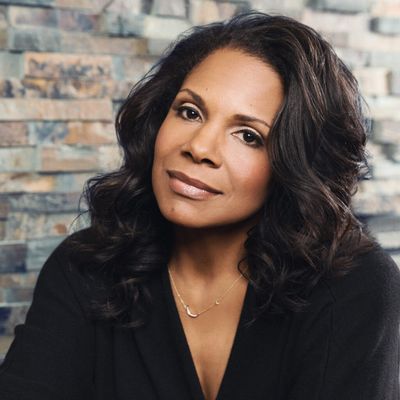
About
The Tony-winning actress talks intimacy onstage, Broadway diversity and why she calls Michael Shannon "The Rev."
Transcript
This transcript was automatically generated and might contain errors.
[0:06] Gordon Cox: Welcome to Stagecraft, Variety's Theater Podcast, bringing you backstage and behind the scenes with the stars and creators of the hottest shows on Broadway, off Broadway, and beyond.
[0:16] Gordon Cox: I'm your host, Gordon Cox.
[0:18] Gordon Cox: On this episode of Stagecraft, I'm talking to Audra McDonald. She's someone who needs no introduction for theater fans who know her as the winningest actress in the history of the Tony Awards, with a record six trophies for performances in shows including Carousel, Masterclass, Porgy and Bess, and most recently, Lady Day at Emerson's Bar and Grill. She's widely beloved for her work in musicals, but she's equally at home in straight plays like A Raisin in the Sun, which earned her one of her Tonies, and like her latest Broadway outing in Terrence McNally's romantic comedy, Frankie and Johnny in The Claire de Loon. She's also been in films like the live action remake of Beauty and the Beast, and had regular roles in TV shows, including Private Practice and currently The Good Fight, CBS All Accesses critically hailed spinoff of The Good Wife.
With Frankie and Johnny now playing at the Broadhurst Theater through August 25th, McDonald is in the studio with me to talk intimacy on stage, Broadway diversity, and why she calls her co-star Michael Shannon the Rev.
[1:20] Gordon Cox: Hi Audra. Thanks for being here.
[1:22] Audra McDonald: I'm good. How is the show going?
[1:25] Audra McDonald: Um, it's going well. It's um, you know, our audience response has been really lovely and um, you know, vocal. I'm starting, you know, as now that we're doing matinees and evenings, I'm starting to realize that some of the um like some of our biggest responses are coming from the older audiences, actually. Sometimes at uh Wednesday matinees, you know, they're shouting Bravo, and it's sort of interesting you would think with a piece like this that has, you know, such frank sexuality and nudity and all that stuff, but um they're connecting with it. All the audiences are.
[1:57] Gordon Cox: Yeah. And you were saying you were telling me started to tell me just before we turned the mics on that uh this feels even harder to you uh than Lady Day. Tell us a little bit.
[2:04] Audra McDonald: It does. You know, I've never done a two-hander before. This is my first time doing a two-hander, and um Lady Day. For people who haven't seen it, you're on stage. You and Michael Shannon are on stage doing it.
[2:14] Audra McDonald: The entire time.
[2:14] Audra McDonald: Yeah, yeah. And uh the uh Lady Day uh playing Billy Holiday, I was on stage the entire time and it was just me. Right. But because she's already in quite uh uh a medicated state when she starts the show, you know, she's very, very drunk when she starts the show, and she just goes on a steady decline downwards. So it's like a slow motion car wreck with that. But with Frankie and Johnny, um I've just today been using this sort of analogy with it. It's like um someone who is flat lined who's then whose heart is then shocked back alive, and you see what happens on the the screen with the the lines just going up and down, up and down, up and down. That's what's happening with both of these characters.
So one moment they're in the throes of you know, ecstasy, and you know, they're having this great climax and sex, and then the next minute they're laughing, and then the next minute she's trying to kick them out of her apartment, and then next minute they're crying, and then the next minute they're eating meatloaf sandwiches. I mean, it just goes all over the place emotionally, and so by the end of the night uh the hardest thing to do is to get up off of the the bench to take the curtain call because you we're just so exhausted uh emotionally, we've been through it.
[3:26] Gordon Cox: Yeah, yeah. Um you alluded to this uh a little bit, but Frankie and Johnny opens pretty famously with uh sex scene, sort of mid-quitus with a sex scene, and there is an extended sort of nude scene after it. That's sort of about you know, people being comfortable in bed together with each other. Uh how did how did you was there any trepidation for you about that? And how do you end up feeling comfortable with it?
[3:48] Audra McDonald: Hell yes, there was trepidation. Um I said yes, and then I said yes to doing this project because I I was just looking for something a little bit different. Um something, you know, something that was going to challenge me. And the last show I did on Broadway was a a big musical with tap dancing and all that and shuffle along, and I loved that experience, but I I I kind of knew that the next thing I wanted to do it needed to be something a little bit different to stretch me in a different way.
[4:13] Gordon Cox: Specifically a play?
[4:14] Audra McDonald: Yeah. I think I knew I was looking for a play. Um and so when Tom Curtihy, the producer and also Terrence McNally's husband, um uh emailed me and said, What do you think, Frankie and Johnny, you and Michael Shannon? I just said yes immediately. Um and then remembered what the play and then remembered, oh right, that's that opens that way, doesn't it? Um and so I was, you know, I especially when Tom uh emailed me over a year ago, uh maybe more, you know, I I had I had a baby, you know, I'm geriatric pregnancy. I had a baby at 46, and so I was I was scared. And the the more afraid I got, the more I realized I have to do it, you know. Um but the the show has done something very interesting. It's the first time on Broadway we've had an intimacy director.
[5:07] Gordon Cox: Right. Yeah, tell tell listeners a little bit about what that is.
[5:10] Audra McDonald: An intimacy director um is someone who comes in and she she choreographs the love scenes. She helps, you know, along with your input. She, our intimacy director also choreographed our fight scenes. She's a fight director as well. Um, but she acts as um sort of our our advocate uh before we even started working on the the intimate scene. And it's the the opening play, this huge, you know, the opening scene of the play, this huge graphic sort of sex scene that's happening, um, calls for the nudity, it calls for it to be graphic. You know, he says all of this in the script. He says it it's the real thing. So this is stuff that the the playwright is demanding, you know. Um and it's not gratuitous uh because it's necessary for the story.
But our our intimacy director, Claire Warden, because I'm sorry, my daughter has a friend named Claire Wheeland, so I keep getting the tooth and confused. One's an 18-year-old girl and one's an intimacy director. Claire Warden. Um met with each of us separately, met with Mike and met with myself and talked to us about what we're comfortable with, what areas of our body we are not comfortable with being touched or um explored, um, uh what our our safety parameters were. And then she uh met with us together, and then uh with the director, and then once we figured out the shape of what that scene needed to be, she came in and helped us figure out every sort of specific move, like when someone's on top, when someone's on bottom, what's the safest way to do it where it looks real, but you've got the safe space that you need, all of that stuff.
Um she gave us a mental way of checking in and checking out of the scenes. You know, she said she talked about I think I think intimacy directors need to be a thing forever and ever now because before you're just sort of fumbling around and not really knowing, you know, where the boundaries are, and the director is not really getting that specific with you, and so it was just always up to the actress to figure it out. But and there was with no communication, so you had no idea of knowing are you comfortable or are you not comfortable? Wait, well, all of a sudden this has changed. We weren't doing this three weeks ago, and now we're doing this, what's happening? What it all of that stuff is that's all eliminated with an intimacy director.
Um she says uh she does this thing where she checks in weekly with us, but she also asks us to tap in and tap out, which means you know you're gonna just sort of do a high five and say, All right, we're tapping in. Now we're these characters, we're gonna you know do this scene, and then you tap out at the end of the night, and that way it's a it's a mental way of telling your body, okay, all that may have felt real, but it's not. And I think those things are necessary because you have to go to those places to be actors to do the this intimate work that we have to do. But sometimes your body and your brain gets confused. I mean that's why you know Hollywood romances and and and theater romances are known in marriages are known for breaking up all the time because you just you all of a sudden you're doing things that you should be doing with your only with your partner at home.
You're doing with the stage of this other person, and uh it's just easy to get confused with all that. But intimacy director helps put it all in its safe space and keep it there. Um, and so it's just uh especially in this era of me too. I think it's a it's a really great way of moving forward in in that arena and protecting everybody that protects me, that protects Mike, right? Protects the production, it protects everybody.
[8:45] Gordon Cox: Right, yeah. How how did you know Michael?
[8:51] Audra McDonald: First of all, did you know Mike before um not professionally?
[8:53] Audra McDonald: Yeah. No, you'd never met him before.
[8:55] Audra McDonald: I had never met him. Um, once I'd said yes, because Mike has been attached to this for a while. I think once I said yes, uh, we all went out to lunch and had a lovely lunch with the Tom Curtihy and Mike. And then we did a a two-week workshop where we just sat around the table with Aaron Arbis, our director, and Terrence, and we just sort of talked about the characters and read through the play a bunch of times. And then we s then we all said goodbye for seven months while he went off and did stuff and I I did the good fight.
[9:21] Gordon Cox: Right. And then um April 9th, we started rehearsals.
[9:27] Gordon Cox: Right. Yeah. So we didn't know each other at all. And so what's he like to work with as an actor?
[9:31] Audra McDonald: He's a dream. He's an absolute dream. He's someone who's so committed to the work. I call him the Rev sometimes because even when I'm starting to feel like, oh gosh, this is hard or da-da-da. He just has, he just he just has he puts it all in such a in such a you know great perspective. You know, he's like, you know, sometimes when you have a weekend off, uh theater weekend off, which is Sunday through Tuesday, you come back to your Tuesday night show and you you're a little rusty or things aren't feeling right. And I we I was feeling that way uh what's today, Thursday, so last Tuesday I was feeling that way. And so at intermission, as we were walking up to our dressing room, I was like, oh man, I just don't know.
I'm having a hard time. Just it feels weird. And he said, All right, here's my philosophy for Tuesday nights. You ready? And I was like, Well, he's like, don't panic. Just don't panic. We know the play, we know the show, don't panic. And I said, Thank you, Rev. I'll see you in the second act. I mean, it's just stuff like that. Or even he talks about for us with each show, once we do it, that's it. It happened. Don't don't try and recreate what we've done. Embrace the imperfection and no more.
[10:42] Gordon Cox: Is that hard sometimes as an actor?
[10:43] Audra McDonald: Yes, it is. I mean, a lot of time we're trying to recreate. Well, I I really nailed that last night, so I'm gonna try that again. And of course it's not there because that was just a fleeting moment. That's what life theater is all about. And so instead it's just being present in the moment and letting what comes comes, but you know, not trying to recreate and then panicking once you haven't. You know, it's about being present.
[11:02] Gordon Cox: You've worked with Terrence McNally's you've done Terrence McNally's uh performed in Terence McNally's work for a long time now. Back to Master Class and Ragtime and how why do you enjoy working with him and what do you enjoy about the characters that he creates?
[11:16] Audra McDonald: Oh, I think his characters are s are just so full and and three and four and five and six and eight dimensional characters.
[11:23] Audra McDonald: I mean, there's just you, you, you, I find that you never stop learning about these characters. I think they're just such rich, colorful beings to inhabit. And the fact that, you know, I'm playing a role that Kathy Bates and Edie Falco and Rosie Perez, I mean, I don't think you would ever say, "Oh yeah, they're all a type." You know, but they're characters with such deep humanity that you can find yourself in them. And I think that's what a lot of his work, you know, how it speaks to audiences as well. And then just being with Terrence, he's someone who's still, he's at 80 years old and having had a play on Broadway every decade for the last six decades. Just won the lifetime achievement at the Tonys the other night.
But he's someone who just, he's not jaded at all. He's still so, he's still a wide-eyed little boy about the theater and as in love with it today as he was, you know, as a young kid back in Corpus Christi, Texas. He's someone who loves actors, he loves them and admires them, and he loves bringing people to the theater. He loves enticing them to it. He's someone who goes to theater all the time. He sees everything, not just Broadway shows, off-Broadway shows, off, off, off, off-Broadway shows. He sees everything and everything moves him. He's so moved by this art form. And that's infectious, you know, and it makes you want to really respect the work, respect the craft, and give of your all to the work and the craft because he sees it as the magical, brilliant art form that it is. So shame on you if you bring anything less than your A-game to it.
[13:28] Gordon Cox: What do you bring specifically to Frankie in terms of, you mentioned all these other actresses who you don't consider a type, and every actor sort of brings their own pieces of themselves to a role. What do you bring to Frankie?
[13:39] Audra McDonald: Well, it's interesting, you know, because people will say, "Well, you know, yeah, right, you're a diner waitress, yeah, right." Some people will say, "You're not the right type to play Frankie. Aren't you supposed to be this glamorous sort of Broadway star? How could you be playing this role?" But Frankie is someone who is emotionally traumatized and damaged and shut down. And, you know, she's a victim of domestic violence, so she's got PTSD from that. And there's just enough in my life and enough in my own psyche in terms of what I think of myself, what I think of how I look, how I've been in the past, how I felt about myself, love's lost, pain from love that I've felt and gone through that I can understand.
Maybe I made a different choice about love, but I could understand how someone could then just sort of wall themselves off and cover themselves in armor and chain mail and say, "I'm gonna protect myself at all costs and not let anybody in ever again." I understand that.
[15:00] Gordon Cox: What feels particularly resonant to you with what's going on today in the world about doing this play now?
[15:07] Audra McDonald: Well, we have all of these ways of connecting and communicating with each other nowadays, don't we? You know, you got the Snapchat and the WhatsApp and the Instagram and Facebook and Twitter and all this stuff, and in some ways we're more alone than ever. We're more disconnected than ever. You know, "Oh yeah, that's a friend of mine on Facebook." It's like, yeah, but I don't see you, I don't talk to you. I just see that you had, you know, steak tartare for breakfast, and you took a lovely picture of it. So there's still, as more Borg-like that we become, that's a Star Trek reference. I'm a Trekkie, said on the Borg. The more we become like the Borg, I think we're forgetting that we're still human, and there's still this innate need for true connection.
And it's scary to do, but in order to fully be human and feel, like, are we really alive? I mean, if you've experienced love, I mean, all of that. I mean, this play addresses all of that. Johnny talks about in the play, you know, "I'm afraid that there's I'm trapped inside, I'm this person trapped inside this body longing to connect, and I keep just bumping into someone else who's also trapped inside a body that just longs to connect. And if we don't connect, we're gonna die." And so I think that's a very resonant thing right now.
[16:56] Gordon Cox: Speaking of things that have a lot of contemporary resonance, let's talk a little bit about The Good Fight, which fairly recently ended its third season.
[17:05] Audra McDonald: Yes.
[17:06] Gordon Cox: And we'll gear up for the fourth, presumably at some point.
[17:10] Audra McDonald: I don't know.
[17:10] Gordon Cox: Yeah, we'll start again in the fall.
[17:12] Audra McDonald: Yeah, yeah.
[17:13] Gordon Cox: That is, I mean, it is like really ripped from the headlines, that show. Is that part of the, you're also, you're pretty outspoken on Twitter and you're very clear about sort of who you are and what you believe. Was that part of the attraction for working on a project like that?
[17:29] Audra McDonald: Well, I didn't, you know, I mean, the attraction for me was getting a chance to work with the Kings. I think Robert and Michelle King are just brilliant writers and showrunners. And just to remind people now, this was a character you played on The Good Wife.
[17:41] Gordon Cox: Yes.
[17:42] Audra McDonald: Just one episode.
[17:42] Gordon Cox: Right, just once.
[17:44] Audra McDonald: And now you're back.
[17:45] Gordon Cox: Yeah, and they decided to give her quite a backstory and then throw her into this world. And so for me, the opportunity was to work with them, to work with Christine Baranski, who I've known for years and loved for years and admired for years and always wanted to work with her, so now we're getting a chance to be together. And obviously I loved the premise of the show. I loved that she's the diversity hire in an all African American law firm, you know, reeling from Trump being elected. I loved that premise. But I didn't know where they were gonna put me in terms of my Audra's politics as opposed to Liz's politics because within the show we have a character, you know, one of the, Michael Boatman's character, Julius, he's a Republican, he's conservative, he voted for Trump.
That's his character within the show. So I didn't know where I was gonna land in that, but I love that we were in that landscape, you know, and that they were pushing the envelope and the way that they, you know, because it's on All Access, we've got the freedom to, you know, we can cuss if we have to, or you know, the fact that we have these animated shorts. We just sort of go into these sort of wild, sort of esoteric ways of storytelling, or the fact that we have one episode this past season where Christine Baranski's having an argument with a bruise in the shape of McDonald Trump on the back of her husband. I mean, so they, Robert and Michelle King are not afraid to really explore all the different ways you can tell a story.
[19:26] Gordon Cox: Did you ever, was there a time where you ever got any scripts and you read it and thought, "Oh, I can't believe we're gonna do that"?
[19:34] Audra McDonald: Every script.
[19:35] Gordon Cox: Really?
[19:35] Audra McDonald: Every script of theirs. And the thing is they're also, they're not, because we have African American writers in our writing room, which is wonderful and necessary, especially for a show like this. But they are also very open, Robert and Michelle. So like the first episode I did where I was, the third season where I'm finding out about the fact that my father has been, you know, sexually assaulted, he's dead now, but he just assaulted all these women, his secretary and the stenographer and all that. They had a scene where I come in to talk to the one secretary that he assaulted for years to try and talk to her about a non-disclosure agreement, and the script had me saying something about my father but using really foul language.
And the woman playing the secretary is supposed to be of a certain age, would certainly be considered an elder to Liz's character. And I said to Robert and Michelle, "I can't, I mean, I say the F-word all the time on the television show. I said, but I cannot say that in front of this character. I said Liz would not do that within, I mean, I don't know other cultures, but I know my own African American culture, and I know there's no way that she would say, 'Fuck him.' Well, now 'Fuck him too,' an elder, especially a female elder. It wouldn't be done." And they said, "Thank you. Thank you, that's thank you." I mean, so it's in that sense, they're wonderful. They're very collaborative.
[21:01] Gordon Cox: Am I right about this? This is your last real sort of ongoing TV gig since Private Practice?
[21:06] Audra McDonald: Yes.
[21:08] Gordon Cox: Yeah, right?
[21:09] Audra McDonald: Yes.
[21:09] Gordon Cox: Do you like TV work? Do you enjoy doing it?
[21:11] Audra McDonald: I do. I do. I was very afraid of the camera prior to Private Practice 'cause I just, you know, it was just this monstrosity in my way and I was just afraid, "Well, I better not breathe, I better not move, I better not do anything because it'll look strange," and I just didn't understand how to work with it. So Private Practice gave me an opportunity to learn to get used to a camera and to find my artistic self in front of a camera.
[21:42] Gordon Cox: What was the key to that?
[21:44] Audra McDonald: For me, it was starting to treat the camera like I would the audience. Once the camera stopped being this thing that was scrutinizing me right in my face and seeing it for me, specifically as an audience in a theater, that's just where the audience is. I mean, which is duh, that makes sense. You know, of course it makes sense, but for me, once I put the audience there, I was no longer afraid of this machine. The machine no longer was a machine to me. It was something that was gonna just judge me. Instead, it was like, "Oh, this is how, this is where the people I need to communicate with are." And so I became less afraid of it, you know, when you're working fourteen, sixteen hour days, day in and day out, you get used to it. And so yeah, I was thrilled about my time on Private Practice to really get that, but the hard thing about being in Private Practice was I was commuting the shoots in LA and my family was here in New York and that got too hard.
[22:48] Gordon Cox: And Good Fight is here in New York, isn't it?
[22:49] Audra McDonald: Yes, I just have to commute to Green Point.
[22:51] Audra McDonald: Which on some days, believe me, is as long as getting to LA.
[22:54] Gordon Cox: Oh, sure.
[22:55] Audra McDonald: But for the most part, I get to sleep in my own bed every night.
[22:57] Gordon Cox: Right.
[22:58] Gordon Cox: So it feels to me though that you, uh, gravitate most toward your stage work. Is that, is that, that's from an outsider's perspective. Do you feel that way? Is that, is that where you're at home?
[23:08] Audra McDonald: Yes. You know, it's like what's your first language? If your first language is English, my first language in the arts was the stage, you know, so that's where I feel the most comfortable.
[23:21] Gordon Cox: Uh, has influenced the way you, um, act on stage?
[23:25] Audra McDonald: Yes. Oh, very much so. I find that in, um, the time since I've, you know, was doing Private Practice and now, um, The Good Fight, I find that what that gives me when I get back on stage is I'm, I'm finding, uh, I'm learning how to relax more on stage and find more specificity than I used to have on stage.
[23:53] Audra McDonald: And that's because, you know, in camera work, you don't have to do as much, you have to think loudly.
[24:00] Gordon Cox: Right.
[24:01] Audra McDonald: Um, so that has helped inform my work on stage.
[24:06] Gordon Cox: Yeah, obviously that then has to translate to the back of the house and whatnot.
[24:09] Audra McDonald: I was gonna say that must be a challenge.
[24:11] Audra McDonald: It is a challenge, but at the same time it's informing, it's making sure that my work sometimes on stage you can get, uh, sometimes you can get away with less specific work because we're farther away.
[24:11] Audra McDonald: We're farther away.
[24:24] Gordon Cox: Yeah.
[24:25] Audra McDonald: Um, so I mean it's, it's, it's, it's helped me to at least begin to understand the depth of the specificity that needs to be there. I'm not saying that I've mastered it, you don't ever master it, but you know, I understand that I need to work on it.
[24:40] Gordon Cox: Yeah. And how do you think of screen work as sort of fitting into your overall career? Like were you looking for another TV show? Did the sort of thing?
[24:47] Audra McDonald: I just fell in my lap. It really did. I was in London doing Lady Day and, um, which you did after Broadway. And, uh, they called and I, I had a tour planned, a concert tour planned. And so I thought, well, they're never gonna say yes to this because I have, I can't, I can't cancel these dates.
[25:09] Audra McDonald: And they said, we'll make it work. Uh, Robert Michelle said, we'll make it work. So I was able to do both, which, um, put a few more of the crow's feet in my eyes and here. Plus the baby. But, um, no, it was, um, I, I, it was something that really fell in my lap. I don't think I'm ever truly planning anything. I mean, the master plan is grow, evolve, try things that scare you. And then touch wood or formica, whatever this is, formica, but yeah.
[25:39] Audra McDonald: Yeah, or let's do that. Um, a l, uh, life seems to present the right thing at the right time. I mean, I've been very lucky.
[25:46] Gordon Cox: And how do you think about, you mentioned your concerts, you, but you know, you perform in concerts pretty regularly. How, what do you get from that that, uh, you enjoy doing it?
[25:50] Audra McDonald: Oh, you know, there's no fourth wall. It's me and the audience. Um, you know, the other thing is you can play five hundred different roles one night in a concert, you know, I can, you know, I can be Desiree from Little Night Music and I can be, I don't, I don't know, Dorothy from The Wiz on the same night, you know, I get to, um, explore in that sense.
[26:16] Audra McDonald: And so it's, um, that's a joyous thing. The hard thing about that is the touring is going all over the country, you know. But, um, I, I, I do enjoy being able to like rip down that fourth wall and, and be with the audience in a very, um, open way.
[26:32] Gordon Cox: Right.
[26:33] Audra McDonald: And then the joy of just soaring above an orchestra or my incredible band either is also a lot of fun.
[26:38] Gordon Cox: Yeah. When's your next, do you have a concert lined up or?
[26:38] Audra McDonald: Oh, I have a bunch in the, in September, but, uh, don't ask me where they are. I don't, I don't know. I go where they tell me. I show up in the airport and say, where am I going? And I go.
[26:50] Gordon Cox: Yeah.
[26:51] Gordon Cox: Uh, your first Broadway credit was in the early 90s, um, in The Secret Garden, which I didn't know until I just looked it up. It was right over, right before, uh, Carousel.
[27:00] Audra McDonald: Um, it was in Nicholas Hytner's, uh, revival of Carousel in ninety-four. Uh, how do you, what's your sense of how Broadway has changed since then?
[27:08] Audra McDonald: Um, I, we're seeing more, I think I'm seeing more diversity for sure.
[27:13] Gordon Cox: That was gonna be my next question is what do you, where do you think we stand on that?
[27:16] Audra McDonald: Yeah, I mean, I think, uh, yes, there is more diversity.
[27:23] Audra McDonald: Um, yes. Long shot of gu by, by a long shot there is, you know. I mean, I remember trying to get an audition for one of the revivals of Les Mis at some point and then being like, well, who you gonna play? You know, you can't do that, you know.
[27:36] Audra McDonald: And that's, that would never happen now.
[27:40] Gordon Cox: No.
[27:40] Audra McDonald: Never, not in a million years, but back when I was first starting, and that was, that was still very much the case. I would say, um, we obviously, um, we need to work on the gender diversity in, um, you know, the, the creative powers in Broadway a little bit more.
[28:00] Gordon Cox: Yeah.
[28:00] Audra McDonald: It is, it is still notable when a female is a director, as your show is directed by, uh, not only a female director, a female, uh, lighting designer, and the female, uh, production stage manager and the female, uh, intimacy director.
[28:12] Gordon Cox: Yeah.
[28:13] Audra McDonald: But yeah, we've got, we've got a long way to go as far as that's concerned. Um, but yeah, that's, that's what I would say. And there's just the awareness. Let's put it that way too. Now I'm like when I was first starting on in Broadway, um, you'd see all white ensemble and no one would think anything about it.
[28:30] Gordon Cox: Right.
[28:30] Audra McDonald: You see an all-white ensemble now, and people go, where's the, there's, that's an all-white ensemble.
[28:35] Gordon Cox: Yeah.
[28:36] Audra McDonald: Where is there? I don't see any color up there, and that's noticeable now. Whereas before people had blinders on.
[28:42] Gordon Cox: Yeah.
[28:42] Audra McDonald: And feels less real and feels the reaction is always pretty instantaneously the minute you see it.
[28:48] Gordon Cox: Absolutely.
[28:48] Audra McDonald: You know, you know.
[28:49] Gordon Cox: Yeah.
[28:49] Audra McDonald: Right. Yeah. So we've, we've, we've made some progress.
[28:52] Gordon Cox: Yeah.
[28:54] Gordon Cox: Over the course of your career, is there a role that you think of as the one that got away?
[29:00] Audra McDonald: That I wish I had played?
[29:01] Gordon Cox: Yeah.
[29:05] Audra McDonald: Yeah. Well, I mean, yeah. Well, I, I wanted to play Eliza Doolittle at some point, and then I'm way, but I can play her mother now. I mean, I'm way past, not her mother, but you know, Freddie's mother.
[29:17] Gordon Cox: Yeah, Freddie's, well, sure.
[29:18] Audra McDonald: Um, but even in that, we have a black Freddy Einstein Hill right now. This is a whole new world now. Um, but, uh, no. I, I, well, yes, I mean, as far as my fur lady, I could obviously not play that role now. Um, that has nothing to do with my color and every much everything to do with my age.
[29:38] Audra McDonald: Um, she's a flower lady.
[29:44] Audra McDonald: She's a flower fro. Um, I wanted to play Sally Bowles at one time. I think I'm, I'm a little long in the tooth for that now. Um, but, uh, there's still roles out there that I'm looking at and I'll try and reach for.
[30:01] Gordon Cox: What roles do you think of as being particularly formative for you?
[30:07] Audra McDonald: Ruth in Raisin in the Sun, Sharon in Masterclass. Obviously, I mean, they all were in some way. Um, Zoe Caldwell, um, she's, I love her and she's an amazing woman. And we did Masterclass together and she was very, she's a very blunt woman. Um, she doesn't have it in her to lie to you.
[30:31] Audra McDonald: And that's a wonderful thing. Um, because if she loves you, she'll tell you that. And if she's furious with you, she will tell you. And if she doesn't think that you've done your best, she will tell you that too. And, uh, I think we're deep into the run on Broadway, and before we did the Broadway run of Masterclass, we did it in Philadelphia, and then we did it in LA, and then we did it in Washington, DC, and then we came to Broadway.
[30:53] Audra McDonald: And we were deep in the run on Broadway, and she said, you know, darling, when we first started, you weren't an actress. You were very talented, but you weren't an actress. Now you're an actress.
[31:07] Audra McDonald: And I, uh, I mean, I didn't know where she was going when she started. I was like, okay, here it comes. I don't know what she's gonna say. But I know that that role was formative for me because I started to understand some things about acting that I had. I mean, I didn't, I never studied acting formally, so but being on the stage with that hurricane, uh, that five foot two hurricane called Zoe Caldwell every night, you're not gonna come away with at least some knowledge of what you lack.
[31:36] Audra McDonald: You may not be able to say you're as a great actress, but you're gonna understand what you, you know, what's there to discover because it's, it's, it's writ large in front of you every single night, you know. Um, so I, I, I would consider that to be hugely formative, that role.
[31:53] Gordon Cox: Let's say you've got fifteen million dollars to mount a show, dream show. The show you want to be in and choose all your collaborators. What do you do?
[32:01] Audra McDonald: What? How much time you got?
[32:06] Audra McDonald: No. Um, I d, I'm still passionate about doing an all-female, um, revival of Sweeney Todd with me playing Sweeney.
[32:15] Gordon Cox: Sold.
[32:17] Audra McDonald: In fact, I think I saw something about that.
[32:19] Audra McDonald: Yeah, I really want to. Maybe suggested Christine Baranski.
[32:25] Gordon Cox: Come the fuck on.
[32:27] Audra McDonald: I'm sorry. Excuse me for saying that, but that would be amazing. Christine, oh my gosh, we'd have so much fun.
[32:33] Audra McDonald: Um, that's the one that's first and foremost in my mind right now. All female. Um, I don't, I don't, you know.
[32:43] Audra McDonald: Yeah, I mean, maybe Rachel Chavkin would direct it. I don't know. Sure, great. Why not? Wee-hoo.
[32:50] Gordon Cox: Right.
[32:51] Gordon Cox: And what is next for you after, uh, Frankie and Johnny?
[32:54] Audra McDonald: You mentioned the fall, you've got some tour dates, yeah.
[32:56] Audra McDonald: Tour dates, and I go back to The Good Fight.
[32:57] Audra McDonald: Yeah, and then there is maybe another musical in my future, but let's, let's, let's give it a minute. Let's, let's, let's get some kids off to college. You know, let's get one out of diapers and, you know, we'll see.
[33:11] Gordon Cox: Well, we can't wait to see what it is.
[33:12] Audra McDonald: Oh, thank you.
[33:13] Gordon Cox: Thanks, Audra. Thanks for talking about who stars with Michael Shannon in Frankie and Johnny in the Claire de Lune, now playing at the Broadhurst Theater through August 25th.
[33:30] Gordon Cox: If you like what you're hearing on this and other episodes of Stagecraft, I'd very much appreciate it if you took the time to rate and review us on Apple Podcasts.
[33:38] Gordon Cox: Or tell a friend. On the next episode of Stagecraft, I'm talking to Hilary Bettis and Caroline V. McGraw, two of the new group of writers who have stepped up to lead the Kilroys, the playwright producer collective fighting for gender parity on American stages.
[33:52] Gordon Cox: Thanks for listening, and until next time, see the theater.
© Broadway Podcast Network, All Rights Reserved