

The Tony-winning actor, now returning to the New York stage in "The Great Leap," talks basketball in Beijing, dinosaurs, mad scientists, Whiterose, and the secret origin of his name... Read More
From the show: Stagecraft with Gordon Cox
Guests
About
The Tony-winning actor, now returning to the New York stage in "The Great Leap," talks basketball in Beijing, dinosaurs, mad scientists, Whiterose, and the secret origin of his name.
Transcript
This transcript was automatically generated and might contain errors.
[0:06] Gordon Cox: You're listening to Stagecraft, Variety's Theater Podcast, bringing you in-depth conversations with the stars and creators of the hottest shows on Broadway, Off Broadway, and beyond.
[0:16] Gordon Cox: I'm your host, Gordon Cox.
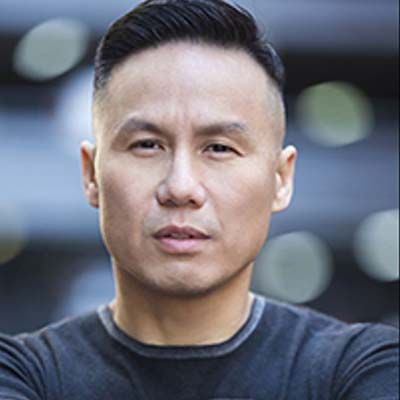
[0:19] Gordon Cox: On this episode of Stagecraft, I'm talking to B.D. Wong, the actor, familiar to film and TV viewers for his roles in Oz, Law and Order: SVU, Mr. Robot, Gotham, and the Jurassic World franchise. He got his start in the theater, winning a Tony Award as Song Liling in the original production of M. Butterfly. He's back on stage in Lauren Yee's new play, The Great Leap, now at Off Broadway's Atlantic Theatre Company, and he's here in the studio to talk about basketball in Beijing, as well as dinosaurs, Batman, and the mysterious Whiterose. Hi, B.D. Thanks for joining me.
[0:47] BD Wong: Of course. Happy to be here.
[0:50] Gordon Cox: Um, as I was saying to you, I just saw The Great Leap last night, and I really enjoyed it. It's, for listeners who haven't seen it yet, it's about an international basketball game between the University of San Francisco and Beijing University, and it's set against the tumultuous backdrop of Beijing in 1989. Um, what was it about the play that you really responded to and that made you think you wanted to be a part of it?
[1:12] BD Wong: I um, uh, was just becoming familiar with Lauren's work, Lauren Yee, the playwright's work, um, when this play was offered to me. And I really kind of examined it very closely because I really was curious and interested in her work and what she really looked like she was kind of exploding on the playwriting scene, and I was really wanting to be a part of that. And so I read it with great hopeful expectation, and I really responded to the role. I think I responded more primarily to the role and to the character's role in the play, which I thought was really skillfully written, uh, moving and funny. Tell me, which are the things that I'm always looking for is a balance, a really good balance between funny and moving, yeah, which is um, not that easy to find.
[2:08] Gordon Cox: And tell us about that role. Tell us about the character you played and what specifically you that really got you.
[2:13] BD Wong: Um, well, the character is the character of a, uh, what we, it takes place over the years, uh, in two periods, actually, 1971 and 1989. So in 1971, he is a young, uh, translator. Um, or he's a young, he's actually a young, um, person during the Cultural Revolution who has been kind of taken, um, uh, uh, uh, he has been kind of, uh, encouraged by the Communist Party to work as a translator, or they take, they've taken him in to, and pressed him into service as a translator because this big, um, uh, this American, um, basketball coach is coming to teach the Chinese basketball team how to play. This is in 1971.
[2:56] BD Wong: Right. And um, to make a long story short, he, in 1989, they're reunited for a big, uh, basketball game that is between, uh, the coach's current team and, um, the Beijing team as it has evolved.
[3:15] Gordon Cox: Coached by your character.
[3:17] BD Wong: Coached by my, now coached by my character because he starts as a translator and then he gets pressed into service against his will as a coach, and that's what he's doing. And it's kind of, um, one of the really specific aspects of the play is an understanding of how a person is a, um, pawn of the Communist Party and how one doesn't really have much of a choice. And so the climax of the play and the weight of the play hinge on this big game that happens in the second act of the play, and all of the characters in the play approach this game with a different point of view and their stories in relationship to this game of what the play's about.
[3:40] Gordon Cox: Right. And so for you, your character specifically, what was it in the character that you really responded to?
[3:40] BD Wong: Well, I, you know, I have no problem describing to you that when you read a play, uh, as an actor, you're approaching it from a point of view of whether you think you can do it or not, whether you think it's in your wheelhouse, whether you think it's something that you'll be good in and will, because it's a play, will enjoy. You need to enjoy it more in a play than you do in a television show or in a film, I think, because you have to do it every night, uh, repeatedly, and you want to be a hundred percent behind it. You really want to want to tell that story. You can be in another kind of project where the camera's rolling and not like it that much, but you can get it together for the one time that the camera's rolling when they are shooting it.
Um, not that that has happened to me a lot at all, but that is a truth. And so, um, I responded to my fantasy of how I might be in this part, to be quite honest. I thought he was, there was an opportunity for a certain amount of humor, and I thought there was a certain amount of, um, there's a kind of, um, what's the word, there's a kind of a way that the audience responds to him. They kind of are rooting for him in a way and really feeling for him in a way, and I really liked that. I, of course, who doesn't want to be that guy in the play? So I responded to it and wanted to do it. My agents had said, you know, I don't, we don't know whether or not this is the play you need to do to, uh, since you haven't done a play in a while.
[5:43] Gordon Cox: Right.
[5:43] BD Wong: And I said, I do, I think it is, actually. And they were kind of lowballing me with it, and I said, no, I think this is the play I really want to do now. And so I went after it, and I was really, really happy that I did. I think it's turned out beautifully. I think the production is really handsome. I think Atlantic Theater, which is riding high in a wave right now from the Tony Awards, and the band's visit, which they also produced, is a really good theater that really did a really handsome job and has a really wonderful little second stage.
[6:14] Gordon Cox: Yeah, which is where the show is.
[6:16] BD Wong: Yeah, and I really have liked that. I love, um, the opportunity to play an intimate play in a smaller space that has a kind of size to it as well. There is a kind of emotion to the play and a sweep of the time going by that is theatrical, yeah, but this particular production is in a very small scale, and it's really beautiful that way.
[6:38] Gordon Cox: Um, it's true. The playing space is very small. Like you guys are right on top of each other, and we, the audience, are right on top of you guys, right?
[6:45] BD Wong: Yeah, and it's great that way. It's really, uh, fun. It's challenging because you can see the audience much better than you can usually see them, and you don't always want to, to be quite honest.
[6:55] Gordon Cox: Yeah, um, and but, and so that makes it challenging. You're easily just, I'm easily distracted because of the city.
[7:00] BD Wong: Yeah, I was gonna say because it's distracting.
[7:02] Gordon Cox: Yeah, yeah. People, uh, you know, not behaving well in the theater is a big pet peeve of mine, and so you and Patti LuPone.
[7:09] BD Wong: Yeah, that's right. I totally relate to her fire, yeah.
[7:13] BD Wong: And anyway, um, it is a, but it is a beautiful, and I think it's a rare opportunity to see a play with the actors up close in this way where you can see their, um, technique or their, what they're doing in their performances from every seat in the house. And this play, uh, not only goes back and forth between time period '71 and '89, but also between Beijing and San Francisco, which is your hometown.
[7:36] BD Wong: Which is my hometown, yeah. And actually that played some kind of a role in it. Lauren and I are both from San Francisco, we'd never met before. I had started to hear her name over and over and over again in recent years, and I really wanted to be, uh, I really wanted to kind of, uh, collaborate with her. And, uh, the bond of being from San Francisco is really great. People from San Francisco tend to be kind of snobby about being from San Francisco, and I'm no exception to that. And there's a, so there's a pride to it. But all the references in the play about San Francisco are meaningful to me.
[8:11] Gordon Cox: You mentioned that, uh, this was the first play you've been in for a little while. You do always tend to come back to the theater. Um, why is the theater a thing you come back to, and why was now the time to do it for you?
[8:25] BD Wong: Well, the, I mean, having said all that, you know, I do do a play every other year or so. I just do a regional play, and I don't do it in New York. So what it was really kind of meaningful professionally for me was to do a play in New York and to choose the right one to do in New York because you're kind of setting yourself up for getting raked, you know, across the coals if you don't choose wisely.
[8:46] Gordon Cox: So, um, however, the—
[8:46] BD Wong: Was the last one Orphan of Zhao for you?
[8:51] BD Wong: Orphan of Jiao. And that was an A.C.T. in San Francisco and La Jolla, is that right?
[8:55] Gordon Cox: That's right. Thank you. Thank you for your diligent Googling.
[8:59] BD Wong: I mean, I love that play actually. I think that, I don't, I didn't see that production, but I love that play. A very nice play. Also a very satisfying emotional experience. And also I was able to perform in my hometown, which was great. But the reason is because I think, I mean, it will be no surprise to anyone for me to try to describe that when you go back to the thing that originally, um, interested you, um, you're always feeling at home. And it was the theater that drew me into being a performer in the first place that really made me kind of feel, um, like it was the first thing that I was good at that I could actually try to derive great, uh, satisfaction from. And because I was kind of good at other things, but I didn't love doing them, and so this was the thing that really, uh, spoke to me.
And over the years, I've had the great pleasure of, and the luck to be able to work in different mediums, and I have been able to compare them. And the human, um, component of the theater in which you have a kind of relationship with an audience, um, that is not impeded by any kind of equipment like a camera or anything like that, is super satisfying to me.
[10:11] BD Wong: I feel the audience's breathing, and I feel they're following the play or not following the play, and I feel like I am an agent in the, there, directly an agent in their enjoyment or their lack of enjoyment of it. That responsibility feels huge and it feels, uh, scary, and it's also very satisfying when it goes well. And so riding the wave of being in a great play, um, through the audience's response to it, there's just, it just, there's no comparison to any of the other kind of work that I've been able to do. The trade-offs are a kind of exposure that comes from working in film and television, which is absolutely essential to maintaining a career. And I enjoy that. And I've also enjoyed, you know, I just came from this big Hollywood movie premiere of a movie that I made.
[11:03] Gordon Cox: Yes, which is about to, which is about to open in this, right?
[11:06] BD Wong: This is Jurassic World.
[11:07] Gordon Cox: Oh shoot, what's the name of it?
[11:09] BD Wong: Fallen Kingdom.
[11:10] Gordon Cox: Thank you. I wrote it down.
[11:11] BD Wong: Yeah. Fallen Kingdom. And that movie is, is, I have such a, um, uh, you know, I get a real kick out of being in that movie. So I'm not really down putting it down at all. It just has a different kind of emotional component for me. Um, I don't feel like I'm sitting in the movie, uh, here's a perfect example. I'm sitting in the movie watching it with my family and loving it, and I hadn't seen it yet. And it turned out, it really honestly turned out great. It's a really good fun. Um, it's a movie that if you're a fan of that franchise will not let you down at all. But the, what I'm feeling is the audience's enjoyment of it, but I'm separate from that enjoyment. I'm enjoying it with them, and I'm appreciating that I played a role in their enjoyment of it. If I say a line in the movie that gets a reaction, I do appreciate that, but I'm not directly hitched to them, if you can imagine it.
[11:58] Gordon Cox: Yeah, yeah.
[11:59] BD Wong: I'm directly, I mean, and in this particular play, I'm, um, I have the good fortune and the scary task of actually speaking to the audience.
[12:08] Gordon Cox: Yeah.
[12:08] BD Wong: So you really do feel a connection to this audience from this play, playing this character, that is rare and really exciting to me. I mean, even in terms of the rest of the other cast members in our show, they're not even as connected to the audience as I am, just because of their different roles that they're playing. And so I can come off stage and say, oh my goodness, uh, this is, I can describe the audience as if it has a personality in a way that they are less able to do so. And that's interesting to me. So I like parts like that in which you're able to do that.
[12:43] Gordon Cox: Right. Yeah. Do you, are you aware of how what you do for screen work carries over, how you use that then on stage or vice versa?
[12:52] BD Wong: Oh yeah, absolutely. Um, I mean, the first thing that comes to mind when you say that is that when you're working in a really small house, those opportunities that you have, you have opportunities to use, um, cinematic kind of techniques that you wouldn't have in a bigger theater.
[13:10] Gordon Cox: Right, right.
[13:11] BD Wong: Um, The Orphan of Jiao was performed in really big theaters, and Butterfly was my first Broadway play, was performed at a big theater.
[13:17] Gordon Cox: Right.
[13:17] BD Wong: No amplification. Everything's kind of like a lot of things.
[13:19] Gordon Cox: Oh, back in the day, no idea.
[13:21] BD Wong: And so it's kind of a completely different thing. So here we are doing this play, emotional and funny play, that is, the audience is sitting really close to you. And so you do have to kind of calibrate your performance, uh, based upon the distance that the audience is, the proximity of the audience to you and your proximity to it. And that's fun to try to figure out. It takes you a long time to kind of figure it out. There were a couple of, you know, throughout the preview process, the director is calibrating the performances and making new choices, and we're tweaking and changing things, right?
[13:56] BD Wong: Before the opening. And so one of the notes that I would be getting was, um, you're speaking too softly in this scene or on this line, you're speaking too softly. And I'm going, ah, okay, so I could—if I thought the audience could hear me when I said that. So now I'm calibrating that equation to understand, uh, how much, how far down I can go, how far back I can pull back. And that's part of the fun of creating it.
[14:21] Gordon Cox: Yeah. And do you, uh, going the other direction, is there an awareness of your sort of theater training and how that shapes your technique specific to the theater that you use in the world?
[14:33] BD Wong: Yes, because what I've learned over the years that I'm still learning and I'm still fascinated by is the notion of the role that rehearsal plays in your performance. I've come back to do this after doing a lot of television and doing, um, some films. I realize that I don't rely on the normal rehearsal period in a film and a television show. And I really— it behooves one as an actor, in my opinion, to rehearse on their own separate because you rehearse a play for four weeks until an audience is sitting there and you know it backwards and forwards, or you hopefully know it as well as you can. You know, you get to know it better and better. But it's completely—it's a completely different brain exercise.
The other exercise in television and film, particularly in television, which is shot very fast, is that you're memorizing on the spot kind of or very quickly the night before or a couple weeks before, something like that. You're memorizing it and then you're self-directing a lot and you are acting on the fly a lot and making choices based upon things that you're learning in the moment. Like you walk onto the set and they'll say, oh, okay, so here's where the table is, and the computer that you practiced in your bedroom when you were practicing it isn't actually right here, it's way over there. So then you're going, oh, okay, well, that affects my performance in some way. In a stage play, that would never happen.
Right. You have the computer there in front of you the whole time, and you're practicing it, and you're making details from your performance based upon the comfort of that prop being right there. Um, it's completely different. And what I—well, I guess what I'm saying in the—in to make a short story long is that you realize that going over something over and over and over again, the way you do in a play, is helpful to you in a movie, and you don't get the opportunity to do that. It won't happen naturally. That the director won't do this for you naturally. The director may say to a couple actors, you guys don't seem like you really know the lines. Why don't you run the lines a few times? And that's about as far as it will go.
There are big fancy movies that I have yet to actually be in, like movies with Meryl Streep and stuff like that in them, where they're rehearsing and they're doing a lot of that. The post, I'm sure they rehearsed a lot of things, you know, a lot of weeks of rehearsal. And I did one movie, um, not a very good movie, but it was one of my first movies called Family Business, which was a Sydney Lumet movie. And it was shot in New York, and Matthew Broderick and Sean Connery and Dustin Hoffman, all playing three generations of the same family, which is a— which tells you a little bit how that movie turned out. But anyway, that movie was rehearsed in a big rehearsal room where we would go from set to set, and he would say, okay, I want you to get a flow of how this movie kind of plays out. That's the only time I've ever done it. Right. Rehearsed a movie, and I really enjoyed it very much, but that's the difference.
[17:36] Gordon Cox: Right. Speaking of your TV work, you, um, play, I think, one of the most intriguing characters on television in White Rose. I think, uh, she's pretty amazing. Um, for people—she's on Mr. Robot. Um, and she is—tell me if I'm describing her right—a trans woman who spends a lot of time masquerading as a very powerful and fairly sinister man.
[17:58] BD Wong: Yes. Right?
[17:59] Gordon Cox: Yeah, I think so. She's fairly sinister herself.
[18:01] BD Wong: I mean, she is. That's a good thing. Sinister, you know, those words are really kind of mean. I feel very protective of using words like that.
[18:07] Gordon Cox: I think she's just mysterious, really, right?
[18:09] BD Wong: Yes, and she's, uh, but she doesn't—what's the expression? She doesn't hold back.
[18:15] Gordon Cox: Right, she's—she'll do what it takes to make something happen that she wants to happen.
[18:20] BD Wong: Right. And so she's ruthless in a certain way, and she's devised rather brilliantly a kind of sense of protecting herself from her, uh, the consequences of her own actions by maintaining a mystery and by being invisible actually to most people. Um, that adds to her, um, mystique and her, um, her power, I think.
[18:49] Gordon Cox: Did you end up calling on your experience back in M. Butterfly to create White Rose, or are they completely different characters in your mind?
[18:57] BD Wong: I did, I did, um, I did, um, use, uh, I did, um, uh, access certain aspects of that. First of all, there are technical aspects of it, like, you know, you have to do voice work, you have to kind of figure out where your voice is gonna sit.
[19:13] Gordon Cox: Yeah.
[19:13] BD Wong: When you—when, as a character actor, you always have to kind of figure out where your voice is gonna sit. And, um, more than non-character actors who just kind of speak as themselves. And so her—this was a character that it behooved me to figure out how she spoke. And I didn't find myself—because your instrument, your vocal, your musical, your vocal instrument is limited by your own, um, uh, uh, uh physiology, your own anatomy. You know, there are gonna be times when I'm going to access a certain part of my voice, and it's gonna sound similar to the way that she sounded back in M. Butterfly. So there was definitely that. And, uh, yeah, so there was, you know, it was a—it's a very different person, and, um, and yet there are similarities because of the gender thing and that, um, so that—so I guess what I would say is that I felt that it was a valuable experience to have had coming to this, and I was really happy that it was a long period of—it was three decades spread between these two parts, yeah.
So that it gave me a real sense of enjoyment doing it, um, and I didn't feel like I was repeating myself or, um, and even if I was repeating aspects of things as I have described to you in a small way, it felt fresh to me because it was a new context. I'm a completely different person now, and I feel much more confident about, um, kind of owning something like that than I used to.
[20:40] Gordon Cox: Um, and you are still involved in Gotham, I'm assuming?
[20:40] BD Wong: Yeah. I did. I mean, I—you know, Gotham is very—also, uh, Mr. Robot and Gotham and a lot of TV shows now are very, um, spoiler-phobic, you know, they don't want to tell anybody anything.
[20:55] Gordon Cox: Uh, Sam is including you, right?
[20:59] BD Wong: My whole thing with Sam in the very first couple seasons was I just felt I was in the dark the whole time, and he was just kind of spoon-feeding me little tidbits to get me to act a certain way for him, you know. And I found that maddening. I really trusted him and grew to trust him more and more, and I trust him now implicitly. But it was really challenging for me because he'd say, well, you should be more emotional, and I go, wow, that's really hard for me to just cry for no reason. Like, I need to know why. I mean, I need to know what that means. And can you tell me why? No, I can't really, so I've had trouble a couple of times, but it was really fascinating.
[21:34] Gordon Cox: Yeah. Um, so Gotham—and, uh, Gotham, which for people who don't know is a Batman show—well, I mean, it's not exactly a prequel to Batman, but it is set in Gotham when—what do they call it?—as a child origin story.
[21:47] BD Wong: Oh yeah, that's good.
[21:48] Gordon Cox: Yeah, it's an origin story about Batman and how Batman w—his life as a child before becoming Batman. And you are Hugo Strange who is—mm, can we call him a mad scientist?
[21:58] BD Wong: Is that—he's a mad scientist, yeah.
[22:00] Gordon Cox: He's a mad scientist who is in—you know, I seem to have this mad scientist kind of vibe that people think I'm really good at or something.
[22:10] BD Wong: What is that about, you think?
[22:11] I think it's because these parts are the most interesting parts. I think they're really, really interesting people. They're really tasty, and they require people that have fun with that kind of thing and all of that. Anyway, they're the spoil—just to get back to the question, that the spoilers are rampant, and you know that they don't want—sorry, their desire to keep things from being spoiled is so strong is what I mean that I don't know much of anything.
[22:39] Gordon Cox: Right.
[22:39] BD Wong: And so I just kind of go when they call me in. Um, and so you're in The Great Leap through the twenty-fourth of June.
[22:45] Gordon Cox: And then what's on your plate after that? I mean, you've got these two shows for one thing.
[22:48] BD Wong: I have a movie that I did for Netflix coming out.
[22:52] Gordon Cox: Oh, uh, called The Bird, uh, it's called Bird Box.
[22:55] BD Wong: Um, it's, uh, got, um, it stars Sandra Bullock, John Malkovich, and Travante Rhodes.
[23:03] Gordon Cox: Wow.
[23:03] BD Wong: Um, and it's really great. And it's a kind of, if you could believe it, it's a dystopian present, um, alien zombie kind of sci-fi thriller action movie.
[23:21] Gordon Cox: Sold.
[23:21] BD Wong: It's great.
[23:22] Gordon Cox: Sold. That's really fun.
[23:23] BD Wong: Yeah.
[23:24] Gordon Cox: And, um, when does that—when does that come out? Do you know?
[23:27] BD Wong: It comes out in the fall. My understanding was that, um, uh, Sandra Bullock had to open Ocean's 8 before she could open that one. So this one's—Ocean's 8 is opening and playing out at it, so I think it's gonna be more like August or something like that.
[23:38] Gordon Cox: Right.
[23:39] BD Wong: Uh, but I don't know for sure. And, um, then Mr. Robot is shooting in the fall, and I have a lot more, you know, I—one of the things that I'm really into these days is my own projects, my own writing and my own—
[23:44] Gordon Cox: Yeah, that was actually my next question. You wrote a memoir, I know, and, um, you're doing some other writing stuff, it sounds like writing with a book, uh, with a writing partner.
[24:01] BD Wong: I've been—I've written two musicals, and what—the first one is probably—I mean, knock wood, I shouldn't be speaking before it's actually announced, but sh—it's supposed to be getting its first production next year.
[24:12] Gordon Cox: Excellent.
[24:13] BD Wong: And here in New York or elsewhere, or have you said too much?
[24:16] Gordon Cox: Yeah.
[24:17] BD Wong: No, uh, not in New York though.
[24:18] Gordon Cox: Right, yeah, okay.
[24:19] BD Wong: And that's just great for—to be a writer and to have your show produced is a dream, you know.
[24:25] Gordon Cox: So, um, can you tell us anything more about that, or do you not want to?
[24:28] BD Wong: I can tell you that it is the musical adaptation of a beloved 90s movie.
[24:35] Gordon Cox: All right.
[24:36] BD Wong: Excellent.
[24:38] Gordon Cox: And that's all I can tell you because if I say so, then, and it doesn't happen for some reason, then that would be bad.
[24:43] Gordon Cox: That's right.
[24:43] BD Wong: Yeah, yeah.
[24:44] Gordon Cox: Last question—very important question, which is how do you—how do you prefer to—you took the name B.D. as I understand it for M. Butterfly, right?
[24:52] BD Wong: Um, and you've been called B.D. ever since. Is that right? And do you prefer—I mean, your name is Bradley Darrell?
[24:57] BD Wong: Yes.
[24:58] Gordon Cox: Yes, that's right.
[24:58] BD Wong: Um, and, uh, do you ever miss Brad? Do you still get called Brad? Who—how do you prefer to be called?
[25:04] BD Wong: I prefer to be called B.D.
[25:06] Gordon Cox: Okay.
[25:06] BD Wong: And I prefer to be called B.D. only because I feel like a person should have one name. I took the name—the producer came to me and said, would you take the gender out of your name for the program? And I said, yes, that would be great. And he suggested B, calling myself B. And my dad's nickname was B.D. when he grew up.
[25:24] Gordon Cox: Oh.
[25:24] BD Wong: I found old, um, just recently found old photo albums in which he'd written B.D., B-E-E-D-Y, which is his funny—being funny because his name really—his initials really were B.D.
[25:36] Gordon Cox: Same name, same name.
[25:37] BD Wong: No, B.D.
[25:37] Gordon Cox: Okay.
[25:38] BD Wong: He was William, but he went by Bill. And then his Chinese name, Duck was Chinese. So B.D., yeah.
[25:43] Gordon Cox: Yeah.
[25:44] BD Wong: But he wrote B-E-E-D-Y. And I said to Stuart Osho, the producer, well, you know, my dad's nickname was B.D., so I think if you could call me B.D., that would be great. And I was kind of proud to do that, take that on. And then I was just—was gonna be Brad after that. You know, I thought it was just for that play. And it just stuck, and then, uh, then it was—there was this kind of tension awkwardness where people call you things because they think they're supposed to, where they want to get to know you better, so they call you the name that they think is more familiar to you, and I didn't like that at all. I didn't like that tension. So I just said, everybody call me one thing, please. That would be great. My mother, she calls me both things.
[26:20] Gordon Cox: Well, but she's your mother. She can get away with it, right?
[26:22] BD Wong: I mean, that's—you know, gets all up. And every once in a while, I mean, even my nieces and nephews call me Uncle B.D. Um, who just turned 18, he's a sassy teenager.
[26:34] Gordon Cox: Oh.
[26:34] BD Wong: Likes to say Brad from across the room.
[26:38] Gordon Cox: Oh, yeah.
[26:39] BD Wong: He loves that. In exactly that tone.
[26:40] Gordon Cox: Oh, yeah.
[26:41] BD Wong: Like when he's trying to get my attention in a group and trying to kind of possibly embarrass me. Um, he's, as far as I'm concerned, can do whatever he wants.
[26:51] Gordon Cox: Sure.
[26:52] BD Wong: Um, so, but there are very few—there's some—there's sometimes I—well, to be honest, brutally honest, I think in super intimate, vulnerable situations, I don't mind being called Brad.
[27:04] Gordon Cox: Right.
[27:06] BD Wong: But for now, I'll thank B.D. for being here.
[27:08] Gordon Cox: Thanks for being here.
[27:10] BD Wong: Thanks for being here. It was great talking to you.
[27:14] Gordon Cox: Thanks very much, thanks.
[27:22] Gordon Cox: That was B.D. Wong, now starring in The Great Leap at the Atlantic Theater Company through June 24th. In the coming weeks on Stagecraft, I'll talk to the creative team of the new Go-Go's musical, Head Over Heels, as well as Zachary Quinto of Boys in the Band. Until then, see you at the theater.
© Broadway Podcast Network, All Rights Reserved