

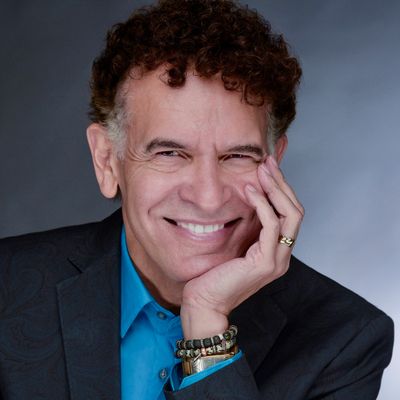
The Tony-winning Broadway favorite on his coronavirus recovery, the Actors Fund, and why “Impossible Dream” is the perfect song for right now... Read More
From the show: Stagecraft with Gordon Cox
Guests
Featured Shows

About
The Tony-winning Broadway favorite on his coronavirus recovery, the Actors Fund, and why “Impossible Dream” is the perfect song for right now.
Transcript
This transcript was automatically generated and might contain errors.
[0:06] Gordon Cox: Welcome to Stagecraft, Friday's theater podcast, bringing you backstage and behind the scenes with the stars and creators of the hottest shows on Broadway, off Broadway, and singing from an apartment window near you.
[0:19] Gordon Cox: On this episode of Stagecraft, I'm talking to Brian Stokes Mitchell.
[0:22] Gordon Cox: Theater fans probably don't need me to introduce him, but here goes, just in case.
[0:26] Gordon Cox: Mitchell is the Tony-winning Broadway favorite from shows like Ragtime, Kiss Me, Kate, King Headley II, Man of La Mancha, and Shuffle Along.
[0:34] Gordon Cox: He's also the chairman of the board of the Actors Fund, the human services organization supporting entertainment industry professionals.
[0:41] Gordon Cox: And more recently, he spent some of his time during the coronavirus lockdown serenading first responders from his apartment window with The Impossible Dream, his signature number from Man of La Mancha.
[0:51] Gordon Cox: He's since had to quit singing out of concern for the safety of the crowds he was attracting.
[0:55] Gordon Cox: But now he's in the virtual studio with me to tell us about his continued work with the Actors Fund and everything else keeping him busy while theater is on pause.
[1:03] Gordon Cox: Hi Stokes, thanks for joining me.
[1:05] Brian Stokes Mitchell: Thanks, Gordon. It's great being with you.
[1:08] Gordon Cox: So before we start talking about the Actors Fund, you had to give up singing out your window. Tell us why.
[1:12] Brian Stokes Mitchell: Yeah, um, well, uh, as a lot of people know, uh, I mean, it kind of started with I actually went through COVID and I had quite a uh, uh, a battle with it. And um, uh, during that process, that's when everybody started applauding, you know, for all the healthcare workers out of the windows. And I was doing that um, even while I was kind of recovering. And at some point I felt, oh, I think I can sing because I was vocalizing to kind of help my lungs and everything. And I just started spontaneously singing The Impossible Dream out the window. And then I did it the next day because it felt good, and I did it the next day, and I noticed that there was a crowd starting to form underneath, and then I started getting a lot of uh, uh, news coverage about it as well. Uh, people were telling me, "Oh, I saw you in Japan," or "I saw you in Italy," or something like that. I said, "Oh, really? I didn't know I was over there."
[2:03] Brian Stokes Mitchell: Yeah. But as a result of that, the crowds on Broadway started to get uh kind of large, and I was getting a little concerned.
[2:10] Gordon Cox: And this is Broadway the street, we should say.
[2:15] Brian Stokes Mitchell: Yes, I was starting to get a little concerned because I was looking down and I could see people, you know, when I started singing, sometimes people would come across the street without really paying very much attention to the traffic, and sometimes the people driving in the cars would be, you know, not paying it, be paying so much attention. So I actually talked to someone from the NYPD about it, you know, and I said, "Hey, I'm really concerned. I want to make your lives, you know, easier, not more difficult. And uh, what can I do?" And the guy I talked to said, "Well, how about not singing from your window?"
[2:47] Brian Stokes Mitchell: So I said, "Yeah, I could do that." And you know, I was starting to get a little concerned about it anyway. So actually, that evening I made an announcement from the window that I wasn't going to do that. But what I might do actually now is, uh, somebody just told me that this week um is uh National Nurses Week. And somebody said they go to one of the hospitals around here uh from the neighborhood that had seen me sing in the window, and um, and said, "Why don't you come up and sing for the nurses up there?" Because the crowds are getting a little smaller there, and the fire engines used to come and applaud them, and they're not doing that anymore. So I think I actually might do that starting tonight.
[3:21] Gordon Cox: Yeah. How hard was it to start singing after COVID? Because one of the, as I understand it, uh, one of the things that it really hits is your respiratory system. So uh, how was that a long process to sort of get yourself back to singing form?
[3:38] Brian Stokes Mitchell: Yeah, not so long because I was kind of doing, you know, act as singers are just like we're just such delicate flowers, and we're like hyper-focused on our, you know, everything that has to do, you know, your lungs, your trachea, your, I mean my vocal cords, I can literally feel which of my vocal cords is having an issue, whether it's the right side or the left side. You know, we're concerned about our, our, our sinuses and all of that stuff. So because we're so, you know, hyper-focused on all of those things, um, I was very aware of what was going on in my lungs. And I was fortunate that towards the end of my illness is when it started going into my lungs, but it didn't go in terribly. I felt it first in my trachea and then I could feel it going into my lungs a little bit.
And it got to the point where if I took a big breath I would start coughing. But when I was vocalizing I realized it was going away more and more and I just was doing vocal uh vocal exercises and breathing exercises as well. And I was trying to, uh, you know, move as much as I could uh as well and um, so uh, you know, but it was that's hard to do while I was in isolation at the house but yeah of course yeah I know some like qi gong exercises that I was doing for the lungs so I was doing those as well so by the time I got to the window to sing I was really feeling pretty good and it keeps improving more and more every, you know, every time uh kept improving every time that I did it. Um, so and I would say now even I if I take a really deep breath I'm 99 point, you know, 99% back I can feel just a little something at the top of my breath but other than that, you know, um, it feels quite quite good now.
[5:15] Gordon Cox: Yeah, good. And so a lot of the streaming shows that people have turned to during this lockdown, particularly theater people have turned to during this lockdown, have been benefits, several of them for the Actors Fund, which is an organization you have been involved with for a long time. Tell us about your involvement and what the Actors Fund does.
[5:33] Brian Stokes Mitchell: Um, I'm the chairman of the Board of the Actors Fund. I've been the chairman of the board now for 15 years. I signed up uh just for my last three years, never knowing, of course, we have a pandemic. But actually, I'm very glad that uh I did that because it seems like, well, maybe this is one of the reasons I'm on the planet and the Actors Fund is on the planet as well. The Actors Fund has been around for 138 years, and it doesn't just serve actors, it serves anybody who is a an entertainment uh community professional. Um, I like to say, uh, call us um that has made a living. Um, so it serves actors, singers, dancers, camera people, boom operators, radio uh announcers, um, uh, you know, anybody that you can think of. Uh, and that's a lot of people because those are all the people right now, particularly that are uh, uh, are have gotten hit really, really hard.
[6:27] Brian Stokes Mitchell: Um, kind of as an example, um, you know, I was uh I was hit like in all four of those areas. Um, I was doing a show with my wife at City Center Encores, uh, they got canceled along with the rest of Broadway.
[6:39] Gordon Cox: Right.
[6:39] Brian Stokes Mitchell: Um, I had a television show that I've been working on uh called Prodigal Son that I've been recurring on, but that got canceled uh because I had some more episodes to film on that, uh, or postponed, as they're saying. I had about six concerts, uh, because I do concerts all over the United States. All of those were canceled. And um, and also uh a film that I was about to do some work on that also got canceled. But when I say that, I I don't say that to call attention to me. I call say that to call attention, you know, on a film, we're talking about hundreds of people that that includes. Same thing with the television show, same thing with the Broadway show. You know, there are at least dozens of people that are also involved with that show that people don't see and aren't aware of that are in the background, um, you know, doing incredibly important work, like the crew, the lighting people, the um, the orchestra that you often don't see but you hear, um, you know, all kinds of people, but and everybody's out of work. And I think unfortunately, we're gonna be one of the last sectors to come back, particularly live theater, because we rely on people gathering in a room in a group together.
[7:44] Gordon Cox: Right. And what sorts of things are the Actors Fund doing uh to sort of mitigate this crisis right now, and what is it trying to do with all these funds that it's raising?
[7:59] Brian Stokes Mitchell: Oh, we, well, that this is what we do. This is what what we specialize in is you know, uh our um motto is to help people in in uh in times of need or crisis or transition, and we seem to be in all three of those now. Um, one of the main things that we've been doing is uh dealing with uh emergency financial assistance, um, which has really gone up quite a bit. Um, normally in a year we would give out about two million dollars in emergency financial assistance to different people. And this is for things like uh, you know, things that they need sometimes help with the rent, um, help paying for their insurance, sometimes help with food. Um, but right now we're getting about 250 requests a day uh for emergency financial assistance.
[8:50] Brian Stokes Mitchell: And um, at this point, we've given out about an I think nine and a half million dollars uh in emergency financial assistance. Normally in a year, that would be two million. And we're thinking probably by mid-June we'll be up to about 27 million dollars. But it's about four times the amount that we would we would normally do in a uh in a year. Um, but that those are that's one of the things that we do. But we have all kinds of programs. One of the great things about the fund is that they were they were very forward-thinking. Um, and uh we transitioned the financial assistance applications and all those uh to online and to phone services quickly, so people can still call up and go online and and get help from people because everybody is still, you know, at work at the Actors Fund trying to help uh out with that.
[9:43] Gordon Cox: And I imagine that the onus is now on the Actors Fund to raise even more money than it always has, because you're giving out so much more money and you know, uh so many more people are in need at this moment. Is that right?
[9:56] Brian Stokes Mitchell: Oh, uh yeah, yeah, absolutely. Um, it's kind of um, uh shocking, I think, at this point when I when I look at the the numbers that we're we're dealing with right now. Um, because our our usual budget, our 2020 budget is 46 million dollars, and it looks like support and revenue is going to increase to about 76 million dollars this year. But one of the great things is, you know, it feels like for the last 138 years, the fund has been in this marvelous kind of rehearsal for this very moment that we happen to be in right now, because uh in that time we've been connecting, kind of I feel like we've almost been like the hub of the wheel to a lot of different organizations, to a lot of the uh the unions, most of not a lot of them, I would say pretty much all of the entertainment uh unions and organizations.
[10:48] Brian Stokes Mitchell: Um, so now a lot of them have come forward and they're giving lots of money. Netflix, uh TikTok, uh uh Disney, um, uh lots of individual donors as well have been giving money. And of course, uh Broadway Cares Equity Fights AIDS, which has always been our um our single uh largest donor has been incredibly generous during all of this. Uh but people, everybody's coming forward at this point to help out. And then, as you said, there are all kinds of artists that are coming up with wonderful ideas like the Seth Rudetsky and James Wesley's Stars in the House that happens at two and eight every day, which is to make money for the Actors Fund, uh Jason Howland and the cast of Beautiful that did this incredible video uh You Got a Friend, also for the Actors Fund.
Um, uh Hump Day with Hampshire, um, which is uh another show that that raises money for the fund. I mean, there's lots and lots of things. Artists, you just can't keep artists down, nothing can, even a pandemic, it seems, and we are compelled to do what we do, and especially now, all those artists are really coming forward to help with such amazingly creative and wonderful ideas.
[11:59] Gordon Cox: And what still needs to be kept in to the forefront of everybody's mind as we're looking ahead, as you mentioned, uh it seems like the performing arts are are the uh are the thing that will one of the things that will come back uh latest.
[12:15] Brian Stokes Mitchell: Yes. Uh, uh well, on from from what aspect do you think do you ask that question? Because there's lots of different points of view. I could answer that question.
[12:24] Gordon Cox: Yeah, I guess in terms of what uh an organization like the Actors Fund is able to focus on and what it's where it wants to sort of direct things in the future.
[12:33] Brian Stokes Mitchell: Yeah. Um, well, right now we're we're dealing with the immediate, which are is the emergency assistance fund. That's uh almost every single call we get. Of course, we have, you know, all kinds of other programs, and those things continue. Uh, programs for seniors. We still have the Actors Fund home, we have housing, uh, the Palm View, the Freedman Residence, we have all of these other things that are continuing to go go on. But what we're really dealing with now is of the emergency assistance. But in the coming months, um, you know, we have work stoppage coming on, we have state quarantines that are still going to be in transition. And um, what we're looking at is kind of trying to figure out where we'll need to be.
[13:14] Brian Stokes Mitchell: Um, and so we're we're trying to respond to like the ongoing demand for the emergency financial assistance and also an increased need for services around health insurance, uh, education, enrollment, um, navigating careers, because nobody knows where we're gonna be with our careers, and also the government systems uh in the COVID economy, um, mental health, uh, addiction and recovery, which is being impacted really strongly by this, of course, and and for affordable housing as well, because so many people are going to be out of work. And you know, where are we gonna how how are they going to be able to to live? And where are we going to be able to live? And we don't even know what's going to happen with the housing market at this point.
[13:53] Brian Stokes Mitchell: Um, the problem with this disease is there's more questions than there are answers. And we have 50 million questions, and we have 10 answers. And um, what we need to do, I think, is kind of which is so incredibly difficult. Sit back and wait till we have some answers. And mostly now we're waiting for those answers from the scientists, um, because they're the ones that are listening to the virus. And honestly, the virus is telling us what we are going to be able to do and what we're not going to be able to do. It's Mother Nature. It's like, you know, um being uh kind of the the victims of uh a tornado, a hurricane, a tidal wave, something like that. We realize how small we are as human beings, but also we realize how um creative and uh um uh and uh uh amazing we are as human beings as well, to be able to, you know, battle this kind of thing, and especially the the I whether that's the immediate effects or the after effects of it.
[14:55] Brian Stokes Mitchell: I mean, we have lots of really, really great minds working in a lot of different areas, and you know, and of course, with that you also have some not so great minds. Um I won't say any more than that. One of the you also work with an organization called Americans for the Arts. Uh tell us a little bit about that and what they're doing at this time.
[15:15] Brian Stokes Mitchell: Yes. Americans for the Arts is another really terrific organization. It's an arts lobbying and advocacy organization, and it's not just for the performing arts, it's for all of the arts, for visual arts as well. And people can find out more about both of these organizations, Americans for the Arts.org or ActorsFund.org, or just Google them, and that'll take them straight to probably the sites. Americans for the Arts is focused on arts in our communities, arts education, both for-profit and non-profit arts as well. And there's a lot of really interesting information they have. They just have done two surveys, not only with artists, but with arts organizations as well. And the numbers that are coming back are kind of depressing, you know, about the number of people that have lost their jobs because of COVID and the number of theaters that are not working anymore.
And I think about 10 or 15 percent of them at this point think they're not gonna come back from this. And the ones that are getting hit the hardest, it looks like, are gonna be the mid-size theaters. You know, the larger ones have endowments, the smaller ones are used to scrapping for money and having to work hard and doing things for free. But it's the mid-sized theaters that are most of them all over the country that are gonna get really hit because they kind of work from month to month. Their budgets are much, much more closely shaven than the rest of them. Americans for the Arts has suggestions on how you can help the theater in your community as well. So people can go online and kind of see those ideas. And if you're an artist, also please take the surveys that they're putting on or an arts organization that would be very useful.
[17:11] Gordon Cox: I'll have more with Brian Stokes Mitchell right after the break.
[17:23] Gordon Cox: And now here's more with Brian Stokes Mitchell. You're someone who for a long time, as you mentioned, 15 years with the Actors Fund has been very associated with the sort of charitable organizations that you do a lot of work for. Why is that important to you to remain involved as you have and for as long as you have?
[17:41] Brian Stokes Mitchell: Well, you know, I feel incredibly fortunate. I have this is all I have done for my entire life is performing. Since I was 17 years old and left home, I immediately went into an acting company and I went from there to Los Angeles and I immediately got into a television series, and then from there I got into a Broadway show and you know, one thing has led to another, and I keep changing, you know, what it is that I'm doing. Sometimes it's voiceover work, sometimes it's concerts, sometimes it's theater, sometimes it's television or film. But I've always been able to make my living only doing that. And I haven't had to have a backup job, you know, like waiting tables or something like that, which are by the way, in the top of the thing.
Also not viable right now, right? Those are also not viable. So that's the other thing, you know, all the backup jobs that actors are so accustomed to having. But I've been very, very fortunate that this is all that I've done in my life. And when I was asked to be a part of the Actors Fund and also Americans for the Arts as well, and it was I think 18 or 19 years ago now, because I was on the board before I was the chairman of the board for a number of years as well. That's for the Actors Fund. When I was asked to be a part of it, you know, I think, you know, the universe has been so good to me when the universe asks for you to help and give something back, you say yes. So that's what I've been doing.
And that's what I'm doing now and I continue to do now. If people ask me, you know, to do things, generally I say yes. And honestly, I'm finding that I'm busier now than I was when I was getting paid for it. Like I get up in the morning and I'm doing videos and I'm doing interviews and I'm doing something for somebody or whatever it is. And then I look at my clock and it's one in the morning, and I think where did the time go? But it's really good. It's very, very good work, and I felt that all along with my work with the charities as well. It just makes you feel good. And I'm working with brilliant people. Joe Benincasa, who's the president and CEO of the Actors Fund, and Robert Lynch, who's the CEO of Americans for the Arts, are just not only brilliant human beings, but wonderful human beings, really great people that I just feel so honored to know. And so I feel blessed being able to even give that way, you know, on a number of different levels.
[20:14] Gordon Cox: You, as you mentioned, you work in all sorts of media and you have for your entire career. When did you first feel the pull of Broadway? Because Broadway has, at least for us theater fans, become the place where you are kind of most strongly associated with.
[20:32] Brian Stokes Mitchell: Yeah, that which is kind of I love that, but it's been odd to me because throughout my career, that's kind of been, you know, when I was doing television, that's what everybody thought I was a television person, and they were surprised when I did Broadway, and then I went into voiceovers. I did a lot of animated voiceovers, and people, you know, a lot of people knew me from that, and they thought that's what I was doing. So, you know, I always say it's harder to hit a moving target, so I keep changing things up. It's also useful because you know, you never know where the work is, and you kind of have to keep reinventing yourself every now and then. But I actually was raised on the stage when I started acting. I started in San Diego when I was about 14 years old with a company called or group called San Diego Junior Theater, which was originally founded 80 or 90 years ago now by the Old Globe Theater.
[21:08] Gordon Cox: Is that where you're from, the San Diego area?
[21:21] Brian Stokes Mitchell: No, I'm from Seattle, but we moved around a lot. I was raised overseas; my father was a civilian working for the Navy, so most of my childhood was spent in Guam in the Philippines. But when I was 14 years old, we moved back to San Diego, and that's when I got involved in acting, and then I got involved, I started working at the Globe Theater and Starlight Opera, and that kind of was my beginning. But I always think that my roots are in the theater. They're not I studied film acting for a very long time and with lots of different people as well, and I did that for a long time and I continue to do that. But I think my first love is the theater and especially musical theater because I love to sing, and music has been such a big part of my life since I was six years old is when I started playing the piano, and I've been singing even before that.
So I do feel like this is really my home, New York and Broadway, and I feel very honored and blessed and happy to have been welcomed to this community like I have. But after I did the series that I was on called Trapper John, M.D., you know, for the three people that remember that, I actually went into a theatrical production at the Pasadena Playhouse that ended up being transferred to Broadway, so that was my introduction right to Broadway, and then it kind of took off from there. And I would go back and forth for a while, but I love Broadway so much. And I felt in my heart, you know, that's what I'm supposed to be doing.
[22:52] Gordon Cox: What do you think of as a particularly meaningful early gig for you or an early job that really shaped your career and how you tackle it?
[23:02] Brian Stokes Mitchell: Wow, it's funny because it's hard for me to pick out any one thing early in my career. I feel like my career has been this series of different events and different shows. Literally, I could track everything that I'm doing up till now all the way back to San Diego Junior Theater when I was 16 years old and played Conrad Birdie in Bye Bye Birdie, which is the first musical production that I had ever done as an actor. And I remember feeling the response of the audience, and you know, and that I think was the first experience that made me say, oh, I kind of like this. I maybe have an ability or an affinity for this as well. And then one thing led to another, and the connections that I made from that and from being in junior theater led to the Globe and the other places that I work and Starlight Opera, and those connections led me to the 12th Night Repertory Company, which took me up to Los Angeles, and because I was there, that allowed me to go into television, and because of the television that allowed me to enter Broadway on a certain level.
You know, I didn't have to start from the very beginning on Broadway. So everything has fed into everything else, and that's what I feel, you know. I think that life is kind of a continuum for most of us. I don't think there's that many people that, you know, get have that lucky big break that goes boom and here they are all of a sudden. And, you know, that puts them on the map. Some people do. And most of those I find are kind of one-hit wonders. They seem to disappear quickly as well. But I think it's the people that really work hard and work at their craft for a long time and kind of ripen slowly that seem to have the longest careers. Not always, but usually, I think. And I feel maybe I was one of those slow ripeners.
And I think really it's been about the joy of learning. I do lots of things. I also write and music and orchestrate and compose. I've done three solo albums that I produced, and so you know, you learn a lot of things as well with that. And people often ask me, what do you do best? Well, what I think I do best is I'm a student. I like to study, I like to learn new things, and I think that's taken me far in life, and I still love that. It's great to be curious, I think, if you're an artist.
[25:26] Gordon Cox: Do you among your more recent work, Impossible, I guess relatively recent, Impossible Dream, the song you were singing out the window is one that's been very associated with you. Did that start with Man of La Mancha? Or did you have an association with that song prior to that?
[25:43] Brian Stokes Mitchell: No, I never did. It started with Man of La Mancha. It's a show that I actually did at the Belleville Dinner Theater in San Diego, which is long defunct, you know, along with most of the other dinner theaters, and I just played one of the muleteers. As a matter of fact, I was one of the nameless muleteers because I had an extra muleteer, so I don't even have a name. I think we made up something like I was Paco or something like that. The other ones are mostly named in the script. But I remember seeing the gentleman who was playing Don Quixote and thinking, oh man, one day I would really love to do that role. Because even back then I had this big baritone voice. You know, it wasn't as refined or as schooled at that point, but I could still carry a pretty decent tune.
I never dreamed that I would be doing it on Broadway. And when I first approached Mitch Lee about doing the show, I found out that he had seen me perform in Ragtime and some other shows and Kiss Me, Kate, I think as well. And he and Dale Wasserman, who was still alive at the time, both of them were there; they both passed on. They both said, you know what, it would be great to do a revival of the show with that guy. So they were kind of thinking of me. So it was a mutually wonderful. And one of the things I was looking forward to was doing The Impossible Dream. You know, I mean the good news is you get to sing that song, which is one of the best-known songs in the world. It's been covered by everybody.
And the bad news is you get to sing that song, which is one of the best-known songs in the world; it's been covered by everybody. So my challenge was to find a new way to sing it and a new interpretation. And I think I found that for myself. It has kind of become like a signature song for me and probably the most requested song that I get. Usually, yeah, I can hardly do a concert without somebody screaming out to sing Impossible Dream, even if I had not planned on singing it. So it's an amazing song, actually, and especially now, you know, it applies very much to this time, you know, the lyrics of it to dream the impossible dream, to fight the unbeatable foe, to bear with unbearable sorrow, to run where the brave dare not go.
And I love it because it's not a song about trying to do the impossible; it's a song about trying, period. Right. You know, we can't do anything unless we try, and that's what we're all trying to do right now. The nurses, the doctors, the EMS workers, the scientists, all of us just living life, just trying to get through. We're all trying right now, and it seems to be a perfect song for this time.
[28:07] Gordon Cox: When all this is over, what is the thing that you are most looking forward to doing?
[28:13] Brian Stokes Mitchell: Wow. I think what I'm most looking forward to doing is sitting in a theater with other people without fear. Not only me, but everybody else sitting around me, without fear that you're going to catch some disease, and to be able to celebrate what's going on on the stage and to hear the music of the orchestra, to watch the work of the people on the stage, to experience the work of all of the people behind the scenes as well that are a part of that production that make that happen. That's what I think I most look forward to.
[28:58] Gordon Cox: Yeah, well, I look forward to that moment when we can all gather in a theater with you up on stage or in the audience with us. Thanks very much, Stokes, for taking the time to speak with me.
[29:07] Brian Stokes Mitchell: It has been my pleasure. Thanks so much for having me, Gordon.
[29:18] Gordon Cox: That was Tony-winning Broadway favorite Brian Stokes Mitchell. If you like what you're hearing on this and other episodes of Stagecraft, you can rate and review us on Apple Podcasts, and you can subscribe and find past episodes there and on all the other pod places, including Spotify and on the Broadway Podcast Network, which is a great place to find more theater for your ears. I'll be back next week with another new episode. Thanks for listening and see you soon.
© Broadway Podcast Network, All Rights Reserved