

The Tony-winning Broadway favorite takes listeners on a tour of. her dressing room, reveals her favorite part of her new musical “Redwood,” and. reflects on “Rent,” “Wicked,” and what she’s most proud of... Read More
From the show: Stagecraft with Gordon Cox
Guests

Featured Shows
About
The Tony-winning Broadway favorite takes listeners on a tour of
her dressing room, reveals her favorite part of her new musical “Redwood,” and
reflects on “Rent,” “Wicked,” and what she’s most proud of.
Transcript
This transcript was automatically generated and might contain errors.
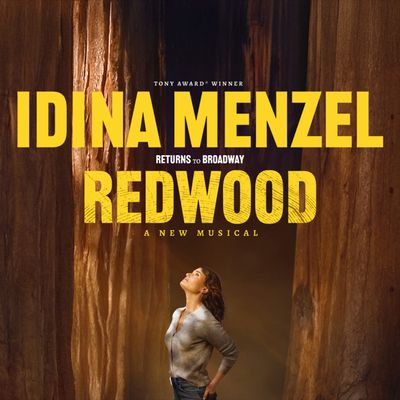
[0:00] Gordon Cox: Welcome to Stagecraft, Variety's theatre podcast. Your backstage pass to revealing conversations with stars, creators, and industry leaders, on Broadway, off Broadway, and beyond. I'm Gordon Cox. On this episode of Stagecraft, I'm talking to the actor Idina Menzel. You know her as Maureen in the original cast of Rent. You know her as Elphaba in the original cast of Wicked, the show that won her a Tony Award. And you know her as the voice of Elsa in Let It Go, in the Disney animated films Frozen and Frozen II. Now, this musical theatre favourite is back on Broadway, and back in the Nederlander Theatre, the former home of Rent, starring in the new musical Redwood. It's the story of Jessie, a woman who leaves behind her life on the East Coast, and the tragedy that haunts her, to drive west and find healing among the redwood trees of Northern California.
Menzel co-conceived the musical with book writer and director Tina Landau, and the music is by Broadway newcomer Kate Diaz. The technologically ambitious production premiered at the La Jolla Playhouse last year, before it opened on Broadway in February. Now, Menzel is in the virtual studio with me to take us on a tour of her dressing room, share which is her favourite part of Redwood, and reflect on Rent, Wicked, and the work she's most proud of. Hi, Idina. Thanks for joining me.
[1:26] Idina Menzel: Hi, I'm so happy to be here. Yeah. So, Redwood opened in February, and now you've had some time to get back into the swing of the Broadway performing schedule. How's the show going for you?
[1:36] Idina Menzel: I am. I'm so relieved to be on the other side of previews and opening, honestly. I've been reminded that that is just the most taxing time. Rehearsal is so exciting and thrilling, and text, I find it fun. Probably a lot of my friends don't find it fun, but I do. But then previews, it's just the new information, and the changing of lines, and the cuts, and this. And especially when we've done an iteration of this a year ago in La Jolla, you'd be surprised how many times I get on stage, and all of a sudden, an old line out of nowhere from last year comes out of my mouth. My brain was ready to explode. And then I got the flu, which I've never had the flu before, and I tried to do—I'm not even answering your question.
I'm sorry. But it's a lot. It's a busy time for a new musical, right? It was crazy. So then we got together, we opened. It feels like people are really responding and connecting with it, and kind of getting it on a deep level, which is what's most important to me. And now, yes, now it's in our bodies, and you actually can discover even more things, because you're relaxed a little bit more. And our small cast is extremely close. And so, yeah, and our audiences have been really wonderful. And so I'm really—it's an emotional journey that the character has to go on, but doing eight shows a week, being at the Nederlander, settling in, knock on wood, feeling healthy. I'm just so happy to be here.
[3:33] Gordon Cox: The Nederlander was, of course, the theater where Rent ran for many years. Are you in the same dressing room?
[3:39] Idina Menzel: I am. Oh, it's been renovated since then, though, right? The whole theater went through a whole renovation.
[3:44] Idina Menzel: Yeah, they renovated the house. It's so beautiful. Coincidentally, they reupholstered the seats to this sort of grayish-olive green, which is why when Tina Landau and I and the producers went in to see different theaters, we fell in love with it, because we thought, wow, this is great. It's not red velvet that we're trying to compete with in this world that we're trying to set up. But then the backstage of the Nederlander, you know, still pretty much looks the same from close to 30 years ago. But of course, they help you make your dressing room feel nice. I had a friend who designed it for me. He did this beautiful job. I found this wallpaper. This is so stupid. I don't know if this is stuff you want to talk about.
[4:42] Gordon Cox: No, this is exactly what we want to talk about. Are you kidding?
[4:46] Idina Menzel: I found this beautiful wallpaper on Etsy, and it's Redwoods, but there's a specific one where it's literally a road. It's from the perspective of you driving down the road on the way, probably on the Avenue of the Giants, where you go down this road, and then you see the Redwoods to each side, and that kind of speaks to everything my character, Jessie, is going through, and the turbulence and the juxtaposition of the turbulence and the serenity that's kind of like fighting in her mind.
[5:25] Gordon Cox: Yeah. What are the three things that you make sure to have in your dressing room, no matter what the show and what the theater?
[5:30] Idina Menzel: A bathroom.
[5:33] Gordon Cox: Sure, that's key.
[5:35] Idina Menzel: They don't all have that. And not just a bathroom, a shower. Because I'm a big, I like to steam, and in between shows, I like to start over. I was just, also, I have, this is a living component, but I have Jobe Horrigan, who's been my dresser since, when was it? I don't know, she's done the last eight shows of me or something. She's one of my best friends, and so I have to have her in the dressing room. She keeps me sane. She reminded me yesterday that when we did Wicked together, that I actually showered off all the green makeup on matinee days in between shows, because I just need to feel like, ugh, start over. But I think some people would just kind of leave it on and deal and go, which is maybe better for their skin? No idea.
[6:31] Gordon Cox: Not clear, yeah.
[6:31] Idina Menzel: But anyway, I don't know which way is better. But so I have to have Jobes in my dressing room. I have to have a shower. I have to have photographs of my son and my husband and family and friends. I have to have some cards. I have this beautiful card that Tina Landau wrote me on opening night, and some other people that are very meaningful to me. In this particular dressing room, I have a baby redwood, which can be in its little pot for about two, three years before you have to plant it, but I'm going to get her out of there much sooner. I just have to find somewhere where 400 years from now, her roots don't, you know, like a supplant, no pun intended, someone's house. And I got that gift from Tim, who's my new dear friend who took me climbing up into the canopy at the redwoods near the Santa Cruz Mountains.
He's one of the only people who's actually a permitted, licensed, certified, if you will, to bring people into the canopy. So people can climb redwoods, but they're not allowed to go all the way to the top, and you have to have all of this permission to do that. And he brings people on these climbs like once a year in March. And so he took me up there, and I serenaded him. I sang some of my songs up there to him so I could feel what it would feel like to be singing these melodies and lyrics, you know, 300 feet in the air. And so he's given me a lot of amazing mementos, one being this baby redwood.
[8:34] Gordon Cox: You mentioned climbing up an actual redwood, and you spend a lot of time in this show climbing up the redwood on stage. You know, you spend some time on a platform high above the stage. Are you comfortable with heights? Since you, you know, defied gravity for so long, is that kind of thing just easy for you? Or how comfortable are you with that kind of stuff?
[8:56] Idina Menzel: Well, in general in life, I've never really been that afraid of heights. I like roller coasters. And no, I've not really been afraid of heights. This process of climbing has been pretty gradual in the way that we've been introduced to it. Well, for the most part, I can talk about one other thing that happened. But so we've been taught, you know, safety, or safety checks. And, you know, we've sort of been massaged into it in a way that feels like we have control, and we understand what we're doing. And we're all looking out for each other. And for the most part, when you're learning, you just start on the ground, and you learn how to get your harness on. And then you put your foot in this, what do we call it?
I'm so certified that I can't even remember the name. But it's my day off. I'm a little snoozy. But, you know, you can go up five feet, 10 feet. You say, okay, I did this. I'm good. Tomorrow, I'll try something else. So there's climbing. And then there's what I call the singing and swinging. There's two different things we do in the show. One is very literal, like literal climbing, where people just the other day, someone came backstage and said, are you really climbing? Or is someone pulling you? And I was so offended. I'm kidding. Michael, Kayla, and I are all busting our asses. We're literally doing this shit. And then there's the poetic version of it that we have incorporated into our show that is more about the way you would feel if you were, I like to think of it as a kid back in your tree climbing days.
And if you could sort of find that levity and innocence and freedom, it's this way that we also do what we call vertical dance, inspired by Bandaloop, this vertical dance company that are our choreographers and our mentors who have taken us through all of this.
[11:16] Idina Menzel: So that being said, safety. My utter, complete adoration and crush I have on these people that are my friends now. They did do one thing that has now traumatized me forever, which is when I was doing one of my many training sessions in Oakland, where their studio is, they dance on the side of buildings, mountains. This is Bandaloop that you're talking about.
[11:49] Idina Menzel: Yeah. And they go all over the world. And I mean, people should check them out. The Times just did a beautiful story on them. But you can go to their website and you'll just see it's just exquisite what they do. And so they have a whole place where people train. They have this building that's like seven stories high. They took us into the redwoods, all this stuff. But one of the first days I was there with them, they had taken me climbing in a redwood that's just like 20 feet up. And then they took me over to their studios in this building. And they took me up to show me how they climb on these buildings. Little did I know they were going to take me over the edge and I would go down. So it's like you're in a seven-story building. You're looking over the top. And they put me in my harness and I wasn't really sure what was happening. I just thought, oh, they're teaching me my harness stuff again.
[13:19] Idina Menzel: Disintegrate, while we're on the wall on this one particular day in the middle of this year in my life. So, they take you through how they do it and the experts and how they do this all over the world and all the different materials that they've worked on. Anyway, so I went over the top and there's actual footage of me swinging with them and dancing with them. And it was a magical day, but it was also, talking about fear of heights, I think I experienced a little bit of that. So, Redwood is an idea that came from you, it sounds like. It was inspired by a true story that you came across. Can you tell us a little bit about why you connected so much with it and why you felt like it was a story that could sing on stage?
That's always interesting. So, Redwood's not a biopic or anything, but it's a fictional story. But I, many years ago, learned about the story of Julia Butterfly Hill, who was a woman who lived in a redwood tree for, I think, 736 days in order to protest the logging companies. And I was just so fascinated and moved and inspired by the courage and the fortitude and the depth of advocacy that it would take, that it took for this woman to do this. And it made me contemplate my own priorities in my life and if I had the will or conviction to do something like that. And so my first foray into this idea was the idea of this woman and her strength and also the notion of escaping and what it would feel like to press pause and just turn everything off and stop this runaway train that I feel like sometimes I'm on with my career and saying yes to this and that and multitasking and family and trying to do it all and my fear of not working again and what if I say no to something and just everything.
What would happen if I could just press pause and escape and go live in a tree? I don't know. That's just what I thought about. Of course, just to have a little aside that since I've had my son, which by the way, this idea, I learned of this story before I gave birth to my son. So now the idea of escaping and leaving this little man-child that I absolutely would live and die for, you know, is a little bit further from me. But I think everyone can relate to the idea of escaping and being able to kind of, you know, get away from it all. So all of that to say that that was my first foray into the story. And then secondarily, is that a word? I learned about the Redwoods. And then I fell in love with the Redwoods.
And I fell in love with all their attributes and their entire ethos of the Redwoods and how they are sort of shining examples of and models for how we could live as human beings and how they are these survivors and these wise men and women that have seen it all. I don't know. I said men and women. They're probably gender neutral. They can be whatever. He, she, they. But it's funny. They do call them the mother trees, but then they call some of the really old ones the grandfather trees. So let's not have a whole pronoun discussion about the Redwoods. I bet they don't care. Yeah. They are a shining example of resilience and regeneration and connectivity.
[18:10] Gordon Cox: I'll have more with Idina right after this break.
[18:18] Gordon Cox: And now back to my conversation with Idina Menzel. What is it like for you as a performer to inhabit this story that you were so involved in the genesis of and how we were talking about what it's like to, you know, get past opening night and get into the swing of things? How were you sensing your performance evolve?
[18:35] Idina Menzel: First, let me answer what you asked me about was that, how does this sing and why? And so what happened was the idea of a woman in a tree, I was, I don't know, I found that fascinating. I found I was found myself coming back to it a lot. I knew I wanted to work with Tina Landau for a long, long time. And so I went to her. I started talking to her about this. She said, oh, my God, it's so weird. You know, I have this. I love trees. I'm fascinated with trees, all kinds of trees. And we talked about Julia Hill Butterfly. And we both had this affinity for this idea of this woman in a tree. And could that be a musical? And so it was just in our hearts. We vowed to, you know, to talk more about it.
Of course, life happened, you know, different jobs come up, different things. We didn't really return to it two years later. But it was hard to put my finger on. But I've always been, you know, obviously, I think my proudest moments in my career have been with original musicals. And so it's, I know that it's a lot of it's a lot. It's a huge risk. And it takes a lot of patience and belief. It takes a real leap of faith when you start from a kernel of something and try to get it all the way to Broadway. But I really believe in that in trying to tell new stories in different ways. And so then we brought, we found Kate, which was the whole thing, because we wanted to find a young female composer, someone that hadn't been part of Broadway, who would bring a different aesthetic and sound.
[20:39] Gordon Cox: How long of a process has it been? When was that first idea?
[20:45] Idina Menzel: Oh, yeah. Like I said, like, the kernel of the idea was, it must have been about 14 years ago. I was a tiny baby or before he was born. And then, but it wasn't honestly until, it wasn't until the pandemic that it really started to take shape. Tina, you know, as most directors, they weren't directing, because they were home. And so but she's also a wonderful writer. So she thought, Okay, I'm going to do stuff I haven't been able to really do. And that I, I haven't given love to that I've that I want to. So she called me and she said, I, this is sticking with me. Could we work on this? And I said, of course, where you've been on where you've been all my life. So we started talking it through. And, and we weren't sure we knew we wanted to do a story where this woman left New York, very New York, East Coast woman, something happens in her life that she gets in her car, and she just starts driving, and doesn't stop, and then finds herself in Northern Carolina, Northern California, at sort of at the foot of these mystical trees.
And so she starts like outlining, we're coming up with, you know, what's it's going to be and starts researching and doing all of her stuff. And then there was a tragedy that happened. Her nephew, her sister's son, passed away from a fentanyl overdose. And, and she, you know, they were obviously just besides themselves and grieving. And I guess it took her another six months before she felt like she could start writing again. But now she felt invigorated. And she wanted to dedicate this, our show to her nephew. And we also felt like we had an understanding now of what this woman was possibly experiencing. And so then it started to take form. And then she, we thought, where was there a good home that would help us sort of lab this thing and experiment workshop?
And that was La Jolla. And, and then ever since then, it's been every six months, we did a reading, we started working, we're less, you know, and then if you're, you, and then if you really committed to a timeline that you put yourself on, and which is good for all creatives, I think, because we need it, we need deadlines. Then, then you start to see things come to life.
[23:30] Gordon Cox: Yeah. And how are you sensing your performance evolving now that you've gotten into this?
[23:35] Idina Menzel: That's what you asked me like 20 minutes ago.
[23:40] Gordon Cox: I knew we'd get to it.
[23:43] Idina Menzel: Oh, oh my gosh, so many ways. I mean, you think like having done it a year ago in La Jolla, I discovered so much, right? And then, then we did so many rewrites and just really trying to enrich every part of my character and other characters and tell the story in a deeper way. So I'm constantly, I'm constantly discovering, I'm constantly discovering physicality, her humor, her deflecting, her, her, her, her way of deflecting, being in denial and all those ways that my character Jesse copes or doesn't cope. I'm finding new parts of my voice that I don't think people maybe have heard as, as much that, that I like that Kate's written that I've been able to get inside of. But even now, every show, I find more and more, uh, ways to marry my, um, my instincts with Kate's, uh, instincts.
[24:54] Gordon Cox: Was that part of the goal in working with Kate was to show off your voice and maybe ways that you hadn't had a chance to show us before?
[25:01] Idina Menzel: Yeah, and I hate that I said show off because that sounds mean, but, uh, to use your voice.
[25:06] Gordon Cox: Yeah.
[25:07] Idina Menzel: Um, well, that's why Tina really liked Kate's music. Kate's, um, singer songwriter. She plays like every instrument, but she's also, she scores, um, films, um, she's very young, but she, she's, that's what she was doing. And for our show, we have a very, we have, um, there's a, a real grandeur and scope to the show, um, and a world that...
[26:05] Gordon Cox: Welcome back to Stagecraft. I'm your host, Gordon Cox, and today we have the incredible Idina Menzel with us.
[26:35] Idina Menzel: Thank you for having me, Gordon. I'm excited to be here.
[26:55] Gordon Cox: So, let's dive right in. You recently opened a new musical called "Redwood." Can you tell us a bit about it?
[27:20] Idina Menzel: Absolutely! "Redwood" is a beautiful story about family, love, and the environment. It really resonates with me, especially the themes of connection and growth.
[27:40] Gordon Cox: That sounds wonderful. What has been your favorite part of working on this show?
[28:00] Idina Menzel: I think my favorite part has been collaborating with the creative team. The energy in the room is just electric, and it's inspiring to see how everyone brings their unique talents to the table.
[28:20] Gordon Cox: Collaboration is key in theater. Speaking of collaboration, you've worked with some amazing people throughout your career.
[28:40] Idina Menzel: Yes, I have been so fortunate to work with incredible artists. Each experience has shaped me in different ways, and I cherish those moments.
[29:00] Gordon Cox: Looking back, how do you feel about your time in "Rent" and "Wicked"?
[29:20] Idina Menzel: Both shows were monumental for me. "Rent" was my first big break, and "Wicked" allowed me to explore a character in such depth. I’m proud of the impact both shows have had on audiences.
[29:40] Gordon Cox: It's amazing how those roles have become iconic. What do you think makes them resonate so much with people?
[30:00] Idina Menzel: I believe it's the universal themes of love, sacrifice, and finding one's voice. People connect with those struggles and triumphs, and that's what makes the stories timeless.
[30:20] Gordon Cox: Absolutely. And now with "Redwood," you're continuing that legacy. How do you feel about the evolution of your career?
[30:40] Idina Menzel: I feel grateful for every step of the journey. Each role has taught me something new, and I love that I can continue to grow as an artist.
[31:00] Gordon Cox: That's a beautiful perspective. What are you most proud of in your career so far?
[31:20] Idina Menzel: I think I'm most proud of the connections I've made with fans. When people tell me how my work has touched their lives, it makes everything worthwhile.
[31:40] Gordon Cox: That's so meaningful. And as you continue to take on new projects, what are you looking forward to next?
[32:00] Idina Menzel: I'm looking forward to exploring new characters and stories. I love the challenge of stepping into different shoes and bringing those experiences to life.
[32:20] Gordon Cox: It sounds like you have a lot of exciting things ahead. Thank you for sharing your journey with us today, Idina.
[32:40] Idina Menzel: Thank you for having me, Gordon. It's been a pleasure!
[33:00] Gordon Cox: And to our listeners, be sure to check out "Redwood" and follow Idina's journey. Until next time!
© Broadway Podcast Network, All Rights Reserved