

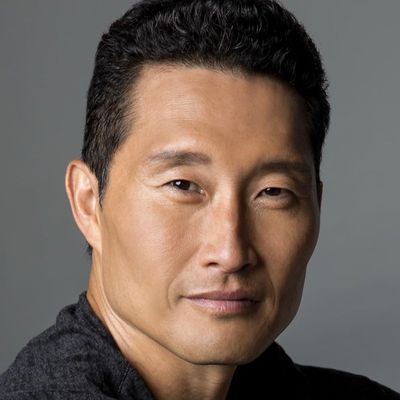
The "Lost" and "Hawaii Five-0" actor takes listeners behind the scenes of his return to Broadway, portraying a flawed, fictionalized version of the playwright David Henry Hwang in Hwang's comedy of mistaken racial identities, "Yellow Face.".. Read More
From the show: Stagecraft with Gordon Cox
Guests
Featured Shows
About
The "Lost" and "Hawaii Five-0" actor takes listeners behind the scenes of his return to Broadway, portraying a flawed, fictionalized version of the playwright David Henry Hwang in Hwang's comedy of mistaken racial identities, "Yellow Face."
Transcript
This transcript was automatically generated and might contain errors.
[0:00] Gordon Cox: Welcome to Stagecraft, Variety's theater podcast, your backstage pass to revealing conversations with stars, creators, and industry leaders on Broadway, off-Broadway, and beyond. I'm Gordon Cox. On this episode of Stagecraft, I'm talking to the actor and producer Daniel Dae Kim. You probably know him best for his work in TV, like his breakout role in Lost or his seven seasons in Hawaii Five-O. But he's also a stage actor, who made his Broadway debut in 2016 in the revival of The King and I. This season, he's back, and he's getting the rare opportunity to show off his comedy chops in Yellow Face, the 2007 play by David Henry Wong that's now on Broadway in a Roundabout Theatre Company production directed by Lee Silverman.
Yellow Face is a mockumentary mix of fact and fiction in which Kim plays D.H.H., the play's flawed, fictionalized stand-in for the playwright himself, David Henry Wong. In real life, Wong was the leader of a 1990 protest movement against the Yellow Face casting of the white actor Jonathan Price in a major Asian role in the Broadway production of Miss Saigon. The play Yellow Face chronicles the experiences of the character D.H.H. as he leads those real-life protests and gets embroiled in an embarrassing casting misstep of his own. With Yellow Face now in previews ahead of an October 1st opening, Kim is in the virtual studio with me to talk about playing against type, his own efforts as an activist, and his super fandom of Saturday Night Live. Hi Daniel, thanks for joining me.
[0:42] Daniel Dae Kim: Pleasure to be here. I'm talking to you just a few days before you start Broadway previews for Yellow Face. How's it going?
[1:00] Daniel Dae Kim: It's going really well. It's that exhilarating, slightly terrifying, exciting time where we've just moved into the theater, we're teching the show, we're getting used to the audio dynamics of the space and, you know, what the mechanics of the stage are, and we're making staging adjustments, you know, and so it's all happening, and it's all happening under the shadow of, like, the prospect of being on stage in front of people in four days.
[1:35] Gordon Cox: Yeah, this will be coming out probably about four days after your first time on stage, so you'll have a few performances under your belt by that point. All of your listeners will know whether we've lived to tell the tale.
[1:41] Daniel Dae Kim: Exactly. What's the thing you're enjoying most right now about the process?
[1:47] Daniel Dae Kim: There are so many things. I guess I'll start, though, with the people involved. I'm really, really excited to be working with this cast. Everyone brings a sense of play, a sense of joy, everyone is so inventive and really bringing their best every day, and it's a very supportive environment, and when you're working on a comedy, that's so important, you know, when you feel judgment from anyone that's negative, be they performers or directors or even just bystanders, you know, you can feel it in the environment, in the atmosphere, and there's none of that here, and of course, a lot of that is because we have a director who encourages that kind of environment. Lee has been fantastic. She's been encouraging us to find choices every day, to play, to explore, to not feel result-oriented.
David has been in all of the rehearsals, and he's been so generous with his words and his play, and very often that's not the case, you know, with playwrights, and especially when it's a play that's already been produced somewhere. This play has never been on Broadway, but it has had runs off-Broadway and regionally, so it's really been refreshing to realize that he's not precious about his words the way that he's not precious about his character in the show.
[4:08] Gordon Cox: What is most challenging right now for you in the whole process?
[4:15] Daniel Dae Kim: I think this idea that, you know, when we put it in front of people in a few days, that we're still in a position to continue to find the show, explore moments, and maintain the mindset that we want it to continue to grow. You know, it's nice to be able to have feedback from the audience in the form of previews, but, you know, so many people who come to previews don't think of it that way. They think, well, I paid my money, so I want a good show, and so that kind of slight tension is the thing that, you know, I'm navigating right now.
[5:02] Gordon Cox: Does it feel like a different challenge than the last time when you were on Broadway in The King and I?
[5:09] Daniel Dae Kim: Slightly, because I'm originating this role. You know, when I did The King and I in 2016, I was stepping into an established show. You know, my co-star and I, Marin Mazzie, the late, great Marin Mazzie, were both finding the show together. We were both stepping in at the same time, which was a life raft for me. Like, the fact that we were discovering it together made it much easier, but, you know, there was no teching. The blocking was pretty much set. We were able to make our adjustments. Bart was actually, Bart Sher, the director, was actually really great about that, but there was no, but we were definitely the newcomers into an established show, and that's a very different vibe. On this show, we're all finding it together, and it's great. It feels like a collective, collaborative, creative process.
[6:01] Gordon Cox: The germ of this project lies in an Audible digital release of the play that you also starred in. Did you feel at the time that it was a piece that you wanted to explore further?
[6:06] Daniel Dae Kim: Absolutely, and it's what gave birth to this entire production. When we came together for the Audible production, we realized, and when I say we, Lee, David, and myself realized how timely this show actually was right now, and when I'd asked David whether it had been done on Broadway ever, and he said no. You know, a light bulb went off, and we just thought, why not be the ones to bring it to Broadway? And so I think, you know, collectively, between the three of us, it was an attractive enough package to Scott Ellis and the Roundabout that he said yes, and the rest is history, as they say.
[6:51] Gordon Cox: Had you wanted, had you been interested in returning to Broadway in general before that?
[6:57] Daniel Dae Kim: Yes, that's a very simple answer, yes. Theater has been a big part of my career. It's where the basis of my training was, and has been. I've done plays throughout my career, but you know, there have been reasons, i.e. my family, where I needed to make a little bit of money, and you know, I ended up in jobs that were very far away from New York, so it became logistically difficult to come back, but it was never something that was far from my mind, and this was the perfect opportunity to come back.
[7:33] Gordon Cox: Yeah. Had you seen the play the first time around? Did you know it?
[7:39] Daniel Dae Kim: I saw it when it was in Los Angeles. I was living there at the time, yeah, and so I really enjoyed it then, and I remember thinking, wow, this deserves to be on Broadway. David Henry Wong is a Tony Award-winning playwright, and why wouldn't this be fit for Broadway? But again, so much is about timing, so much is about what's going on in the culture, so much is about finding the right package in terms of personnel and creative vision, and so I'm just happy it's getting to a Broadway stage at all.
[8:12] Gordon Cox: Yeah. When you saw it the first time, would you have cast yourself in the part that you are playing right now?
[8:21] Daniel Dae Kim: I never presume to cast myself in these things, you know. Working with David Henry Wong is so many actors' dream, you know, especially if you're Asian American because of the themes that he delves into and the topics he explores, so of course, this is a thrill for me to be able to work on one of his plays, and I never dreamed I would actually be playing a version of him.
[8:55] Gordon Cox: What was your relationship to his work? I know you were in a production of Golden Child several years ago, but what was your relation, you know, like many of us, you would have known his work and seen his plays. How would you describe your relationship to his work and how you thought about it?
[9:00] Daniel Dae Kim: Yeah, my relationship with his work goes right back to my beginnings as an actor. When I first started acting, the very first monologue I ever learned was one of his. It was from his play FOB, and so the connection was real right from the start, and then from that point, you know, I'd gotten to know him from around the way because we were all kind of working in the same industry and the community is on the smaller side if you're Asian American, and then I worked on Golden Child, as you said, and even though I was living in LA, you know, again, theater was not far from my mind and heart, so I did a production of The Tempest in LA. I did a production of Golden Child, and we met. Actually, we didn't meet there, but we reconnected there, and it was the first time we'd actually formally worked together.
[10:44] Gordon Cox: I see. Yeah, and just like David in real life and DHH in the play, the character you play, DHH, you've also been an activist and an advocate for Asian Americans in the entertainment industry and at large. Can you tell us a little bit about that facet of your work and how it fits into, you know, the other work you do?
[10:54] Daniel Dae Kim: It's one of the reasons I wanted to do this particular play so badly. I have so much respect for the advocacy work that David has done, and, you know, when people talk about the kind of birth of Asian American advocacy coming in the 2020s through COVID and the anti-Asian hate incidents that were plaguing our country, all you have to do is turn to a page earlier to know that there were champions for our community much earlier, earlier than David as well. You know, there are so many chapters that I could go into if it were a different kind of podcast, but I will say that David standing up for Asian Americans not being portrayed by white people in yellow face and taped up eye and eyelids was a watershed moment, not only for
[11:06] Daniel Dae Kim: Representation for our community, but representation on a larger scale in our country. The same way that blackface is now unthinkable. It wasn't that long ago. These kinds of things require champions, and David has always been one of those champions. The work that I do echoes the things that David has done, and we believe in a lot of the same things. These ideas of representation, of equity, of inclusion, are all things that I think the country has become much more aware of. Whatever small part I've had in that awakening, I'll take because it really does require a lot of us to be working together, rowing in the same direction.
[12:03] Gordon Cox: Yeah, yeah. I had forgotten this until I was prepping for this interview, but you were on Hawaii Five-0 for seven seasons, and then you and a fellow actor sort of walked away from it at a certain point due to a dispute over pay parity with the white co-stars that I think a lot of people, and I remember thinking it at the time, that it felt like a really significant stand against the racism that's so often built into the industry. What is your take on where things stand now? How far have things come, and how far do we still need to go?
[12:29] Daniel Dae Kim: I think there's been a lot of progress. I've said this before, and I don't mind saying it again, but I think there's never been a better time to be an actor from a marginalized group in this country in terms of representation. There's more awareness, and there's simply in sheer numbers more jobs. The more work that we can get, the more we can apply our trade, work on our craft, pursue our art. I think those are real signs of progress, and I think there are more people who are aware that their experience might not be the only valid experience. I think that awareness is a real sign of progress. Of course, there's further to go. There are other communities that have not had their time to be spotlighted, and so in the same way we've asked for space, we have to also give space.
I'm fully aware that those are the next steps in the journey. I would also say that there are limits to what we can do when the people in the C-suites, and what I mean by that are the CEOs and the decision makers, when they are not representative of the people who are telling these stories and just members of this community. There are definitely markers of progress that have yet to be hit, but at least we're heading in the right direction.
[14:16] Gordon Cox: Yeah, and that must guide also your work. You also have a production company that produced The Good Doctor, which had a very successful run, and now you're working on another TV show, I know. That must also guide your choices, both as an executive in that company and then in the kind of work that you do.
[14:34] Daniel Dae Kim: Absolutely. I'm very mindful of that in everything that I do, and it's because it's affected my career from day one that I'd like to be a part of positive change, because I am fortunate enough to be in a position to make some change. If those of us in a position to do it aren't doing it, then who can we expect to do it? You mentioned that it had affected your career, and that was actually my next question, was about Yellow Face set in the 90s around the time of the Miss Saigon protests. What are your memories of that time and being a working actor in the 90s? Were you in New York at the time or LA or both?
[15:21] Daniel Dae Kim: I was in New York at the time. I had just graduated from drama school. I went to NYU in the grad acting program, and it was literally just as I was graduating that everything exploded about Miss Saigon. I remember there distinctly being two camps of people. The group that was like, Yellow Face can't happen, and I don't care if this show doesn't come to America, because these kinds of jobs are not the jobs that we should be going for. Then there was another camp that said, are you kidding me? A Broadway show? We get to be in a Broadway show? This is the only chance we're going to get. We have to take it. Both sides have validity to them. This is why issues like this are so difficult to navigate, because we're talking about livelihoods.
We're talking about principles. We're talking about the practical versus the ideal. I remember thinking, it's ridiculous that there is Yellow Face and that this is still allowed. I also remember thinking when there was the argument put forth that they couldn't find an Asian actor. This was the one that I just thought was ludicrous from the start. Sure, you're not going to be able to find anyone if you're not looking. Back then, there were all these tropes about Asians, like we're not funny, we're not masculine. Asian women, they fall into two stereotypes, the subservient female or the dragon lady or the geisha. These kinds of perceptions were prevalent and pervasive in the culture at large, and they affected how we got cast or not cast.
When David is writing for Asian Americans at that time, of course, he was going to face challenges, because he was trying to move the needle. He was trying to push things forward. Those who try to push these things forward are going to meet resistance. The systemic resistance, the misperceptions, all of them, he was staring straight in the face of. It's why I admire what he tried to do so much. He may not have been as successful as he would have liked, but we wouldn't be here today if he hadn't done what he did.
[17:49] Gordon Cox: Yeah. I'll have more with Daniel right after the break.
[18:04] Gordon Cox: Now, here's more of my conversation with the actor Daniel Dae Kim. Looking back, what do you consider some of the roles that really helped you rise above to start to really get your career moving and the momentum going?
[18:15] Daniel Dae Kim: Well, I was constantly looking for role models, people who look like me who were actually succeeding, and they were few and far between. David was definitely one of them. I remember seeing BD in I'm Butterfly, and I thought, wow, if he can be on Broadway and win a Tony, then it's possible. If I'm Butterfly, I could win a Tony. That's why I think role models are so important, but I didn't see that many of them. As a result, I started looking to other communities for role models like Sidney Poitier, Denzel Washington, people like that who I knew came from similar circumstances and succeeded despite them. When you want something so badly, like a young actor who wants to build a career and be able to work on this craft that you love, you're going to find anything to hang your hat on and say, if this person can do it, I can do it.
If there's a reason to do it, a reason to keep going, I'll find it because that's what it takes. I think that's universal among actors. It is something of a calling. Some people have said, why did you choose acting? The phrase that always sticks in my head was, I don't know that I chose acting as much as it chose me because it's not a sensible career choice, especially in the theater. You have to really love it to do it. Fortunately or unfortunately, I fall into that category. I happen to love it.
[20:05] Gordon Cox: When did you become aware that it was your calling?
[20:05] Daniel Dae Kim: When I was in college because my father was a doctor. I'm a first-generation immigrant. For first-generation immigrants, a lot of their mindset was to keep your head down. Don't make waves. Find just the best way to find your little corner of America and stay in it. I had a bigger dream than that. That was, I think, hard for them to understand and accept because they wanted safety and security and the white picket fence and 2.5 kids for me. They had that vision for me. I had that vision too, but it just came with some other things. It was just something very non-traditional. The fact that I chose not to follow a professional path was the first time that I knew that it was a little bit beyond my control. I loved acting so much that I was willing to forego the sensible choice, the quote-unquote practical choice. Although in retrospect, everything turned out fine. It was the right choice for me.
[21:26] Gordon Cox: Was there a play or a character or a story that really grabbed you in those first early days of finding your love for entertainment and for theater?
[21:32] Daniel Dae Kim: Gosh, there were so many productions that I saw back then that were so moving. I remember seeing Angels in America on Broadway. I just thought that is just the commentary it was making on America and the ways it was, again, fighting for progress on issues that were leading edge at that time. Just the level of craft that was involved was so moving. M. Butterfly, again, was meaningful to me because it showed that it could be done by people who look like me. I remember seeing things like
[22:12] Daniel Dae Kim: So I don't mind just focusing on acting. But I'm open to producing theater. I would love to.
[22:39] Gordon Cox: And as an actor, what do you feel like you would like to see yourself in on Broadway next?
[22:45] Daniel Dae Kim: That's a great question. I haven't thought about it, to be honest. My focus has been on this role because this role in so many ways is ideal for me because it's with people that I really respect and love working with, by a playwright whose work I've adored for a really long time, and subject matter that's near and dear to my heart. So it's a great combination of things. So I'm really hopeful that people receive it in the same spirit.
[23:17] Gordon Cox: Well, break a leg in those first previews, and we look forward to seeing you on Broadway in Yellowface and in whatever gets you there next. Thanks so much, Daniel.
[23:26] Daniel Dae Kim: Thank you, Gordon. Nice to talk to you.
[23:28] Gordon Cox: That was Daniel Dae Kim, now on Broadway in Yellowface.
[23:58] Gordon Cox: Until next episode, find me on Instagram and Twitter at Gordon B. Cox. You can also check out my newsletter about international theater. It's called JQuies, and it's at gordoncox.substack.com. Thanks for listening, and see you at the theater!
© Broadway Podcast Network, All Rights Reserved