

The two-time Pulitzer Prize winner of "Ruined" and "Sweat" reveals the secret origins of her new play "Mlima's Tale" -- including its surprising link to Oscar-winning director Kathryn Bigelow... Read More
From the show: Stagecraft with Gordon Cox
Guests
About
The two-time Pulitzer Prize winner of "Ruined" and "Sweat" reveals the secret origins of her new play "Mlima's Tale" -- including its surprising link to Oscar-winning director Kathryn Bigelow.
Transcript
This transcript was automatically generated and might contain errors.
[0:05] Gordon Cox: You're listening to Stagecraft, Variety's Theater Podcast, bringing you in-depth conversations with the stars and creators of the biggest shows on Broadway, off Broadway, and beyond.
[0:15] Gordon Cox: I'm your host, Variety's Theater Editor, Gordon Cox.
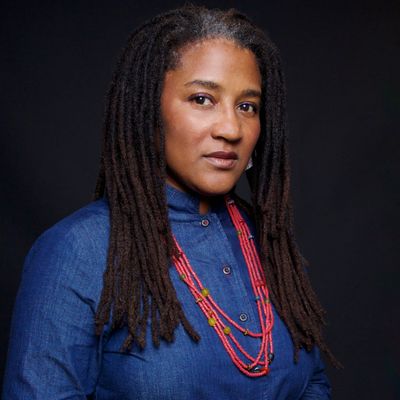
[0:18] Gordon Cox: On this episode of Stagecraft, I'm talking to Lynn Nottage, who has not one but two Pulitzer Prize on her mantle.
[0:24] Gordon Cox: One for her 2008 play Ruined and one for Sweat, the play that marked her Broadway debut last season.
[0:30] Gordon Cox: Her latest, Malima's Tale, now playing at Off Broadway's Public Theater, explores the illegal ivory trade from the perspective of its title character, who is an elephant.
[0:40] Gordon Cox: She's also a writer-producer on Spike Lee's Netflix series, She's Got a Habit, which was recently renewed for a second season.
[0:46] Gordon Cox: Lynn is in the studio with me to talk about all that and more.
[0:49] Gordon Cox: Hi Lynn, thanks for being here.
[0:50] Lynn Nottage: Hi Gordon, thanks for having me.
[0:52] Gordon Cox: A lot of your plays grow out of an extensive research process. You know, Ruined was inspired by time you spent in Uganda, if I remember correctly. And Sweat came from your research into the economic hardships affecting Reading, Pennsylvania. Did Malima's Tale come from a similar process?
[1:09] Lynn Nottage: Malima's Tale definitely came from research, but unlike those plays, I didn't actually have to go to the savannah to do the research. Fortunately, this is a subject matter that has been widely covered. And even though it's widely covered, it still needs more amplification.
[1:25] Gordon Cox: And how did you land on it as a subject of interest?
[1:29] Lynn Nottage: Well, really, it came to me when I began a dialogue with Kathryn Bigelow, who is a film director. The film director who's really passionate about elephants, and she directed Hurt Locker.
[1:37] Lynn Nottage: Yes, back to an awesome vampire movie if I remember.
[1:46] Lynn Nottage: And Detroit, much in Detroit. She's a phenomenal human being and also a great director, and she said, "I really want to do something about elephants. And I feel like the right medium is theater, but I'm not a theater artist."
[2:00] Gordon Cox: Why did you ask her why?
[2:01] Lynn Nottage: Because why she thought theater was the right medium. Because I think that what I personally love about theater is that you can have a very direct dialogue with the audience, that it's much more intimate and that you can build empathy very quickly. And I think she felt like film might be distancing and that we also might be able to tell the story more quickly. And I've been a longtime lover of elephants. I have had sort of the privilege of going on safari many years ago and actually seeing elephants in their natural habitat, and I thought this is a fantastic idea.
[2:39] Gordon Cox: And so tell me about the research process then. What did you look into and what did you learn that surprised you as you were doing it?
[2:46] Lynn Nottage: Oh, since there is an abundance of research—National Geographic magazines, articles, documentaries, books—I just immersed myself probably for about six months to a year in everything that I could find out about elephants. And I think the thing that I really came away with is that they're not that dissimilar from us, that family is immensely important, that they mourn and they love in very similar ways to human beings, that they have these very close-knit communities that they build for life, and that they're able to have love affairs.
[3:23] Gordon Cox: Did that factor into your decision to have the main character be an elephant who is played by a human?
[3:29] Lynn Nottage: Yeah, absolutely was part of it, and also the complication of getting a real elephant. I mean, the line can kind of...
[3:35] Gordon Cox: Yeah, yeah.
[3:38] Lynn Nottage: But I didn't want it to be a puppet because, as beautiful as puppets can be, I felt like it was really important for us to build empathy and for the audience to feel a deep connection to Malima.
[3:52] Gordon Cox: And so tell us about how Malima is portrayed on stage.
[3:56] Lynn Nottage: So played by Sarin Gauja, who's phenomenal. A lot of people will probably know from Fela, the musical play Pala Kuti. So Sarin plays the elephant and tells the elephant's story, but the story is really amplified also by Justin Hicks, who's a musician who creates the sound effects of the elephant to really give him sort of the weight and the gravitas. Because one of the things that we think of when we think of elephants is their sounds, just their cries. And so we really wanted that to be part of the landscape of this piece.
[4:31] Gordon Cox: And is Sarin doing anything physical to sort of convey elephantness?
[4:36] Lynn Nottage: Yeah, he absolutely is. I will say he fully embodies the elephant and has found this beautiful movement with the assistance of choreographer Chris Walker, who's trying to get him to bring the elephant into his body without imitating the elephant. So we didn't want him to be on all fours pretending to be an elephant, but to capture really the essence of the elephant and its majesty.
[5:02] Gordon Cox: Did you meet any elephants as you were working on this project?
[5:07] Lynn Nottage: I did not.
[5:08] Lynn Nottage: Aww, you know, and I have to say thankfully I haven't because I think in America at least we're slowly becoming much more aware of what it means to imprison an elephant.
[5:17] Gordon Cox: Right.
[5:18] Lynn Nottage: So you don't see them in as many circuses, you don't see them in as many zoos. So I feel actually blessed that I haven't encountered an elephant.
[5:26] Gordon Cox: And so when was the decision made that the main character would be an elephant as opposed to another human character?
[5:33] Lynn Nottage: You know, I think the decision was made when I decided to write the piece that I wanted to tell the story from the point of view of an elephant, what happens to that elephant in the last moments of his life, and then take the journey of this elephant as he continues to haunt the people who are responsible for his death.
[5:53] Gordon Cox: And as you're going through the process of doing all the research, how and when do you decide what the story is, what you feel like the story you want to tell in this particular play is?
[6:07] Lynn Nottage: I mean, that's such an interesting question because I don't know whether I have a very good answer for it in this case. I think I discovered the story as I began to write it down and think about who would have touched this elephant. And I really wanted to show how many people are responsible for the actual killing of this beautiful animal, that it's not just the person who shoots the poison arrow, but it's all of the people who kill this elephant because of desire.
[6:33] Gordon Cox: Right.
[6:34] Lynn Nottage: And so I think that that's how the structure revealed itself.
[6:38] Gordon Cox: Did that feel similar to your other plays?
[6:41] Lynn Nottage: No, it's really different. And when people come and see, I hope that they'll be pleasantly surprised that this doesn't feel or look like anything else that they've seen by Lynn Nottage, that it's a piece that's very poetic, and I like to say that it's a meditation, even though I know that word really scares a lot of people. I embrace it. And so when I hear it, I actually think, "Oh, it's going to be something beautiful and something that I can meet in a very different way than a lot of theater that's being made today."
[7:08] Gordon Cox: Right. And there are three other actors in the...
[7:12] Lynn Nottage: Yes.
[7:13] Gordon Cox: Do they play elephants as well?
[7:14] Lynn Nottage: Well, they play a multitude of characters. And I think part of the fun of the piece is watching how quickly they transform and become people from all over the world and sort of work with these wonderful accents, and they're really agile and quite amazing. And I think part of the reason why this process has been so delightful is that the actors are so creative and so willing to meet the work where it is.
[7:42] Gordon Cox: And what is it that you hope viewers take away from the play about the issues that it's touching on?
[7:48] Lynn Nottage: Well, that's an interesting question. I think on one level, what I want people to think about is just the cost of ivory and how in many ways, in order to feed our desire, that we're destroying our planet. Another way is I want people to think of this on a more meta level, that it's not just about the ivory trade, but it's actually about the exploitation of the African continent and how for hundreds of years this beautiful continent has been ravaged for human desire and human greed. And so I hope that people look at this play on two levels, and they see one play which is really about the ivory trade and about an elephant, and on the other level is looking at the exploitation of our environment and what we're doing to it, and in particular the African continent, because it is being ravaged for our desire.
[8:45] Gordon Cox: Do you ever hope as you're writing a play that it inspires action and activism? Is that always something that's in your mind?
[8:52] Lynn Nottage: I hope so. I mean, I hope that when people leave here that they think a little deeper about whether they have ivory in their homes, they think a little bit deeper about the clothing that they're wearing and where it comes from. Yeah, I mean, I'm not someone who sort of backs away from activism and politics, you know, and I know that for a lot of people that that's a dirty word. For me, it isn't. I think in order for us to be global citizens, we have to be engaged on some very profound level. And I'm an artist, and that's the way in which I engage.
[9:26] Gordon Cox: And last season you made your Broadway debut with Sweat.
[9:29] Lynn Nottage: Yes.
[9:29] Gordon Cox: And do you have a sense of how a Broadway credit changes the reach of the play or of your work overall?
[9:36] Lynn Nottage: Well, I think Sweat's going to have a very different trajectory than some of the other plays because, you know, when it's on Broadway, it won a Pulitzer Prize, so I think that a lot of regional theaters are going to be more inclined to do it.
[9:49] Gordon Cox: Right.
[9:49] Lynn Nottage: And so it's going to go around the country in some ways that perhaps some of the other work has not.
[9:56] Gordon Cox: And how what's your sense of how the Pulitzer affects the life of a play?
[10:01] Lynn Nottage: I think that the—how does it affect the life of the play? I mean, Ruined, it's interesting because Ruined also won the award. And I thought that in some ways it was going to amplify the life of that play, but a year after it won the Pulitzer Prize, it didn't have any professional productions.
[10:23] Gordon Cox: Why do you think that was?
[10:24] Lynn Nottage: I think it has a very large cast. I think perhaps thematically it's really tough. Perhaps it's because it has an African woman at the center of its story. I don't know. Other than I was disappointed that the play hasn't taken the journey that I would hope.
[10:41] Gordon Cox: Oh, that's—I'm surprised to hear that actually.
[10:43] Lynn Nottage: That's a good thing.
[10:44] Gordon Cox: Me too.
[10:44] Lynn Nottage: Yeah.
[10:45] Gordon Cox: And speaking of surprising, it was for many of us surprising, or for a lot of people who maybe weren't paying as close attention, it was surprising that it was not only your Broadway debut, but also Paula Vogel's in the same season, which Paula, like you, is one of our best-known dramatists, right? And that fed into a conversation that we were in the middle of having about, you know, gender parity and diversity. What's your take on where things stand now on the Broadway scene and the theater scene?
[11:16] Lynn Nottage: Well, it's interesting because I heard a statistic which hasn't been made public yet that we're doing much better in terms of gender parity in theaters around the country, which is extremely exciting. And I think it's because there's been a concerted effort to push theaters to do more plays by women and by people of color, and I think that it's beginning to bear fruit.
[11:40] Gordon Cox: Right, right. And there's also a feeling that it's increasingly hard for new plays that don't have a giant celebrity in the title to kind of carve out a life on the commercial landscape, right?
[11:54] Lynn Nottage: That's true. I mean, how many new plays are on Broadway that aren't in not-for-profit theaters?
[11:59] Gordon Cox: Not that many.
[12:00] Lynn Nottage: Not that many. I think the producers are really frightened to do new plays, but I feel like that's kind of what theater's about. It's about walking to the edge.
[12:09] Gordon Cox: Right.
[12:09] Lynn Nottage: And I just—I don't know. It disappoints me that more producers aren't willing to take a chance on something that they read and love. There are some people in the industry who feel like there is going to have to be an effort as more and more musicals come into Broadway and then continue to sit in houses longer and longer, right? That a lot of people think that the industry is going to need to make a concerted effort to kind of preserve the Broadway play. Would you agree with that?
[12:41] Lynn Nottage: Well, I think that you're beginning to see not-for-profit theaters encroach in that space because they understand that if they don't, the modern American play may not ever reach the commercial stage. And so you have places like Second Stage with their newspaper. What Second Stage is doing is going to bring that up to the show.
[12:59] Lynn Nottage: Which is dedicated in their mandate to producing work by American playwrights.
[13:06] Lynn Nottage: Living American plays.
[13:09] Lynn Nottage: Which is fantastic.
[13:11] Lynn Nottage: Yeah, the beautiful new Helen Hayes, and that's really important.
[13:14] Lynn Nottage: And you will see one of your shows there when you I guess produce the case.
[13:18] Lynn Nottage: God willing, right?
[13:19] Lynn Nottage: God willing, I think.
[13:20] Lynn Nottage: You were one of the commissions, yes.
[13:21] Lynn Nottage: I was one of the comic commissions there.
[13:24] Lynn Nottage: But I think it's really important.
[13:27] Lynn Nottage: And you have Manhattan Theater Club and Lincoln Center and the Roundabout Theater, which understood that if they don't carve out these spaces, that the plays are gonna die.
[13:36] Gordon Cox: Right, right.
[13:37] Gordon Cox: Can you imagine any other things that you feel like need to be what other factors could help kind of keep the Broadway play alive?
[13:46] Lynn Nottage: I mean, that I imagine arts and education is a very good idea.
[13:47] Lynn Nottage: I would say arts and education, but I have to say, Gordon, from the other side where you sit is that the critics can help us.
[13:54] Gordon Cox: Yeah.
[13:54] Lynn Nottage: And I feel like they're not really helping to keep alive American plays.
[14:01] Lynn Nottage: And I think that diversity of the critical body is really important because perspective and context help frame the shows and what right now the plays are being reviewed by folks who may not know how to enter them.
[14:19] Lynn Nottage: And for me, it's profoundly disappointing.
[14:22] Lynn Nottage: You know, it's only the equivalent of only being taught by one type of teacher.
[14:28] Gordon Cox: Right.
[14:29] Lynn Nottage: And I think it's unfortunate.
[14:31] Gordon Cox: Yeah.
[14:31] Gordon Cox: That's really interesting.
[14:34] Gordon Cox: We were talking a little bit before we turned the microphone on about your work on the Netflix series, She's Gotta Have It, on the first season, which you enjoyed.
[14:44] Gordon Cox: And I asked you, so when do you start work on season two?
[14:47] Lynn Nottage: And your answer was, you know, I would have loved to have started work on season two, but Mlima's Tale fell right smack in the middle of the writer's room, and so I found myself having to, um, it's Sophie's choice.
[15:00] Gordon Cox: Yeah.
[15:01] Lynn Nottage: And Mlima's Tale was.
[15:05] Gordon Cox: Did you enjoy writing for TV?
[15:07] Lynn Nottage: Um, I really enjoyed writing for television in particular.
[15:10] Lynn Nottage: I enjoyed the writer's room.
[15:11] Lynn Nottage: Um, and the group of people who I was with, because a lot of it, a lot of them were writers who I've admired and people who I've really wanted to sit around the table with, and I got to work with Spike Lee.
[15:25] Gordon Cox: Yeah.
[15:26] Lynn Nottage: Um, who's a master of his form and who is really deeply invested in bringing the story about a woman to the small screen.
[15:33] Lynn Nottage: And in a neighborhood, Fort Greene in Brooklyn, that has changed quite a lot in the 30 years since the film was released.
[15:39] Lynn Nottage: Which is fantastic.
[15:40] Lynn Nottage: And one of the great things about the writer's room is that it was only six blocks from where I live.
[15:44] Lynn Nottage: And so I could literally get up half an hour before I was due there, get dressed and get there.
[15:50] Gordon Cox: Right.
[15:51] Lynn Nottage: Which was the bonus.
[15:53] Gordon Cox: And were you, I know you're from New York. Are you from Brooklyn?
[15:55] Lynn Nottage: I am from Brooklyn.
[15:56] Lynn Nottage: I'm from a neighborhood that's adjacent to Fort Greene.
[15:58] Gordon Cox: Oh, so you really do know.
[16:00] Lynn Nottage: So I really do know that neighborhood.
[16:02] Lynn Nottage: And I got to fetishize a neighborhood that I love.
[16:05] Gordon Cox: Right, right.
[16:06] Lynn Nottage: And that part of that season involved one of the episodes tackled the election of Donald Trump and sort of talking about that.
[16:15] Gordon Cox: Why was that important for the show to be able to do that?
[16:17] Lynn Nottage: It's interesting because when we're in the writer's room, it hadn't happened yet.
[16:21] Gordon Cox: Wow, really?
[16:22] Lynn Nottage: So Donald Trump was just sort of trumping, stamping around the country all bluster.
[16:32] Lynn Nottage: And we were fearful of it when we're writing, and we'd often sort of chat about, well, what if this happened?
[16:37] Lynn Nottage: And we felt it was really urgent to tell this story, but then after we finished writing it, he got elected.
[16:45] Lynn Nottage: And so I think that Spike felt it was really important to, in some ways, to respond to it.
[16:49] Lynn Nottage: Because he felt like those characters would have an opinion.
[16:53] Gordon Cox: Right, right.
[16:55] Gordon Cox: Yeah.
[16:56] Lynn Nottage: That feels unusual for, or at least I guess it did, maybe before this episode and then the new Roson reboot for shows to really specifically address the political context.
[17:08] Lynn Nottage: I feel like all more of the shows should.
[17:11] Gordon Cox: That's true.
[17:11] Lynn Nottage: Yeah.
[17:12] Lynn Nottage: And particularly now.
[17:14] Lynn Nottage: I don't know whether you feel this, but we're in such a restless time in which we all are feeling the implications of having this leader make decisions for us much more profoundly.
[17:27] Lynn Nottage: And I feel, I just feel like my art has to be pushing back.
[17:34] Gordon Cox: If there's a season three for She's Gotta Have It, would you want to be involved?
[17:37] Lynn Nottage: Um, I certainly would be if they would have me.
[17:40] Gordon Cox: Yeah.
[17:42] Lynn Nottage: How did you start writing?
[17:43] Lynn Nottage: I don't actually know the answer to this question, I realize.
[17:46] Lynn Nottage: Um, how did I start writing?
[17:47] Lynn Nottage: I guess I began writing when I was really young, not consciously.
[17:52] Lynn Nottage: I always wrote plays for my little brother, and we'd perform them for my parents and their guests, and um, they were a captive audience, and we got lots of good applause.
[18:03] Lynn Nottage: They were about princesses and cupcakes and things that children are thinking about at that age.
[18:16] Gordon Cox: What does your little brother do now?
[18:18] Lynn Nottage: My little brother is a Brooklyn DA.
[18:20] Gordon Cox: Oh, okay, so nothing.
[18:21] Lynn Nottage: So nothing.
[18:22] Lynn Nottage: He has nothing to do with the theater.
[18:23] Lynn Nottage: No, I mean, he's someone who is a consumer of art, but he's not really ever been remotely interested in making art.
[18:30] Gordon Cox: Sure.
[18:30] Lynn Nottage: And who are some other playwrights that you admire working today?
[18:33] Lynn Nottage: Um, working today.
[18:34] Lynn Nottage: Yeah.
[18:35] Lynn Nottage: Gosh.
[18:36] Lynn Nottage: I mean, the list is endless.
[18:39] Lynn Nottage: Um, I admire Paul Lavoguel, who was one of my professors.
[18:42] Gordon Cox: Yeah.
[18:43] Lynn Nottage: Um, I admire a lot of, I mentor a lot of playwrights, and I'm really, I always like to give them a shout out because I'm particularly proud of them, like Katori Hall.
[18:52] Lynn Nottage: Oh yeah, sure.
[18:53] Lynn Nottage: And Betty Shamia and Terrell McCraney and Marcus Gardley and Antoinette Anwandu.
[19:03] Lynn Nottage: Um, gosh, I feel like I could just sit here.
[19:08] Gordon Cox: Yeah.
[19:08] Lynn Nottage: And run off, but I just, I don't say this because I'm a playwright writing now, but I really do feel like we're in a golden renaissance age, in which there's such a diversity of voices right now that if you asked me this question 15 years ago, what are the playwrights that you admire working today?
[19:27] Lynn Nottage: It would have been much more difficult for me to answer, and I would have been really frustrated because it would have been a list of by and large men.
[19:34] Lynn Nottage: But now I can roll off all of these people.
[19:37] Lynn Nottage: I can say, you know, Chiara Hoodis, who is this brilliant writer.
[19:42] Lynn Nottage: Also doing a show at the public.
[19:43] Gordon Cox: He's also doing a show at the public.
[19:45] Lynn Nottage: And I, you know, and I can rattle off the name of all like just about everyone who's working in the building of the public right now, or any of the stages, and that just excites me.
[19:55] Gordon Cox: Right, right.
[19:56] Lynn Nottage: What else is on your plate these days?
[19:57] Lynn Nottage: So you've got really missed out.
[19:59] Lynn Nottage: Oh my god, I feel it.
[20:01] Lynn Nottage: I wish you hadn't asked that because suddenly I just got a wave of anxiety.
[20:05] Lynn Nottage: And I may just like fall on the floor from like a panic attack.
[20:09] Gordon Cox: But is the involvement of Kathryn Bigelow, does that possibly portend a movie version of Mlima's Tale at some point?
[20:16] Lynn Nottage: I don't know.
[20:17] Lynn Nottage: I would say Mlima's Tale is really a piece that's designed for the theater.
[20:25] Lynn Nottage: And I'm deeply invested in being that piece and not thinking beyond that.
[20:29] Lynn Nottage: Because I think too often we're asked, would you like this to be a movie?
[20:33] Lynn Nottage: But it's not designed for the screen.
[20:34] Lynn Nottage: It'd be something other than this, which would be wonderful.
[20:37] Gordon Cox: Right.
[20:37] Lynn Nottage: But it wouldn't be this.
[20:38] Gordon Cox: Right, right.
[20:39] Gordon Cox: And so tell me what else?
[20:40] Lynn Nottage: You've got all this stuff on the, what else?
[20:42] Lynn Nottage: Um, I'm gearing up for a workshop of Secret Life of Bees.
[20:48] Gordon Cox: Right.
[20:49] Lynn Nottage: Um, with Duncan Sheik doing the music and Susan Birkenhead and Sam Gold directing, and we're really excited about, and I'm working on an adaptation of the film Black Orpheus.
[21:03] Gordon Cox: Yeah, that's how's that going?
[21:05] Lynn Nottage: It's going great.
[21:06] Lynn Nottage: I think it's gonna be very exciting and fun and beautiful, and directed by George Wolf.
[21:11] Gordon Cox: Right.
[21:12] Lynn Nottage: Um, that and that music, that's Bossa Nova music from the film is.
[21:17] Lynn Nottage: Yeah, well, not just the film.
[21:18] Lynn Nottage: Um, what a lot of people don't know is that it originally it was a stage play with all this beautiful music that was created for that.
[21:24] Lynn Nottage: So what you're gonna see is a combination of some of the original music from the stage play and from the film.
[21:29] Gordon Cox: Interesting.
[21:30] Lynn Nottage: And are you enjoying the process of writing the book for a musical, which many contend is the hardest thing anyone's ever done?
[21:36] Lynn Nottage: It's different.
[21:37] Lynn Nottage: Yeah.
[21:38] Lynn Nottage: It's really, it's yeah, it's different.
[21:40] Lynn Nottage: Um, in a good way.
[21:42] Gordon Cox: Yeah, yeah, yeah.
[21:47] Lynn Nottage: What for you is the challenge that you're, the problem that's...
[21:47] Lynn Nottage: I can tell you for me, I mean, just as a playwright, the challenge is just when I feel like, oh, I'm getting to the good part, I have to surrender it and turn it over to someone else who gets to have all of the fun.
[22:03] Gordon Cox: True.
[22:03] Lynn Nottage: And so that's how book writing is.
[22:05] Lynn Nottage: I get to sort of write around all of the fun parts.
[22:07] Gordon Cox: Yep, yep.
[22:08] Lynn Nottage: But the good parts would not exist without you.
[22:10] Lynn Nottage: Without the frame, that's true.
[22:11] Gordon Cox: Yeah.
[22:12] Lynn Nottage: Yes.
[22:12] Lynn Nottage: Right.
[22:12] Lynn Nottage: Yeah.
[22:13] Lynn Nottage: So that's two musicals moving along.
[22:15] Lynn Nottage: Um, two musicals.
[22:17] Gordon Cox: And are you working on your, have you begun work on the second stage play yet?
[22:21] Lynn Nottage: Um, yes.
[22:25] Gordon Cox: Can you tell me anything about it?
[22:26] Lynn Nottage: Um, no, it's top secret.
[22:28] Gordon Cox: Oh, okay.
[22:29] Lynn Nottage: Um, and when you start research for a play that you're working on, what is it, how do you choose, how does the subject catch your eye?
[22:42] Lynn Nottage: Do you have a sense of like where you're interested in?
[22:44] Lynn Nottage: Yeah, yeah, you know, I can't even tell you how it happens, other than, and I'm sure this is true of you, is that you read something that really interests you, and you think, oh, I want to know more about the subject, and the next thing you know, you've gone down the rabbit hole and you've become an expert because you've read so much about it.
[23:01] Lynn Nottage: And I think that that's how the idea, it's an idea that I literally can't shake.
[23:04] Lynn Nottage: It's something that I become obsessed with.
[23:06] Lynn Nottage: Right.
[23:06] Lynn Nottage: And I want to live with for a long time because writing the play, it doesn't happen instantaneously.
[23:11] Lynn Nottage: It has to be an idea that you're invested in, not just for the time of writing, but then for production.
[23:16] Lynn Nottage: So you spend a lot of your energy with the subject matter.
[23:21] Lynn Nottage: So it has to be something that you're absolutely a hundred percent passionate about.
[23:26] Lynn Nottage: You mentioned that one of the reasons you gravitated toward theater is, and that Kathryn Bigelow gravitated toward theater for this Mlima's Tale, or for the story that became Mlima's Tale, is its ability to kind of generate empathy.
[23:38] Gordon Cox: Can you give me an example of that that you've observed with your own work?
[23:42] Lynn Nottage: Sure, sure.
[23:43] Lynn Nottage: I think most recently I did this performance installation called This Is Reading in Reading, Pennsylvania.
[23:48] Gordon Cox: Right.
[23:49] Lynn Nottage: Related to Sweat.
[23:50] Lynn Nottage: Which was related to Sweat.
[23:51] Lynn Nottage: And um, it was a grand experiment.
[23:54] Lynn Nottage: We didn't know whether it was work.
[23:55] Lynn Nottage: It was a verbatim piece which drew all of the stories from the people in town.
[23:59] Lynn Nottage: And the idea was theater.
[24:01] Lynn Nottage: And it was theater, and it was a performance installation, it was theatrical.
[24:05] Lynn Nottage: People came in, they sat shoulder to shoulder, but in Reading, Pennsylvania, in this abandoned train station, which was the Franklin Street Reading Railroad, and it was at a point in town which most people were really afraid to go to, and it was considered to be quite dangerous, and it bridged downtown and this other neighborhood.
[24:24] Lynn Nottage: And we brought these folks who aren't used to sitting shoulder to shoulder, black, white, Latino, to see this story, which basically is the story of their city, and it's one tale, and it was magical.
[24:36] Lynn Nottage: And this is not an exaggeration or hyperbole.
[24:39] Lynn Nottage: It was magical to watch how those people sat down next to each other with some form of resistance.
[24:45] Lynn Nottage: And by the end of the piece, we ended with the celebration and dancing and how people danced with each other and wanted to linger and stay and talk to each other.
[24:52] Lynn Nottage: And I thought that's what theater is supposed to do, is really shift people's perspective.
[24:56] Lynn Nottage: And you know, and I say that it does that when I'm sitting in a Broadway theater or in some other theater, but I actually saw it working, and I thought this is why I do it.
[25:11] Lynn Nottage: Thanks for chatting.
[25:12] Lynn Nottage: Great to talk to you.
[25:27] Gordon Cox: On the next episode of Stagecraft, I talked to Lauren Ambrose and Harry Haddon Peyton, the two stars of the critically acclaimed new Broadway revival of My Fair Lady.
[25:35] Gordon Cox: Until then, see you at the theater.
© Broadway Podcast Network, All Rights Reserved