

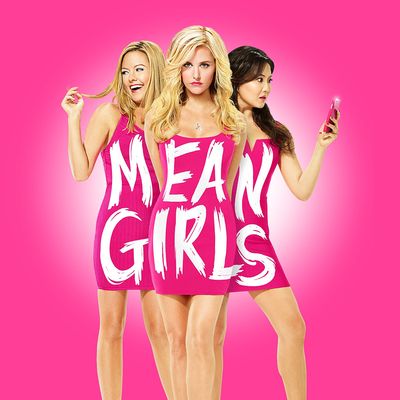
The writers of the Tony-nominated "Mean Girls" -- book writer Tina Fey, composer Jeff Richmond and lyricist Nell Benjamin -- take us behind the scenes of their fetch new musical... Read More
From the show: Stagecraft with Gordon Cox
Guests


Featured Shows
About
The writers of the Tony-nominated "Mean Girls" -- book writer Tina Fey, composer Jeff Richmond and lyricist Nell Benjamin -- take us behind the scenes of their fetch new musical.
Transcript
This transcript was automatically generated and might contain errors.
[0:00] Gordon Cox: You're listening to Stagecraft, Variety's Theater Podcast, bringing you in-depth interviews with the creators and stars of the hottest shows on Broadway and at this year's Tony Award.
[0:09] Gordon Cox: I'm your host, Gordon Cox. Today I'm talking to three of the leading creators of the new musical, Mean Girls.
[0:15] Gordon Cox: Tina Fey, the writer of the 2004 film comedy that starred Lindsay Lohan and Rachel Adams, wrote the book to Mean Girls based on her own screenplay, with a score provided by Fey's frequent collaborator, the composer Jeff Richmond, who is also her husband, and the lyricist Nell Benjamin. The musical is now up for a dozen Tony Awards, including Best New Musical, a Best Book nomination for Fey, and a Best Score nod for Richmond and Benjamin.
[0:37] Gordon Cox: To start, I'll talk to Fey about her first foray on Broadway. Hey Tina, thanks for being here.
[0:40] Tina Fey: Hi Gordon, thank you for having me.
[0:42] Gordon Cox: So I'm talking to you just a few days after you hosted the season finale of Saturday Night Live. Um, and it seems to me that as television, Saturday Night Live kind of has a little more in common with musical theater than a lot of TV shows, just in that it's live and there's music and it's funny and is it am I right about that?
[1:02] Tina Fey: Yeah, I think you're right. It is a variety show. It's one of the last few, maybe the last live variety show certainly. So it it's um in some ways has uh its legacy comes from another time. It comes from the 50s, 60s, and 70s. And yeah, you you you are putting stuff up in front of an audience or using the audience as your sounding board, kind of like being in previews on a musical. There are um really talented musicians, uh playing live music every week. I mean, the one difference is that we are always kind of like, as the cast, we're almost always kind of faking uh singing and dancing, uh whereas people on Broadway can actually do those things.
[1:39] Gordon Cox: Right.
[1:40] Tina Fey: I mean, we'll do it, we're doing it, but we're doing it as a joke, but they're doing it for real.
[1:44] Gordon Cox: Right. And did you find your experiences writing for SNL or for writing for TV comedy in general? How did you find that experience came in handy with Mean Girls, and in what ways did it not apply at all?
[1:55] Tina Fey: Well, it really felt like it started to apply late in the process. Because we'd worked on the show for five years. And so, and I've written movies. I've I wrote well, I wrote the movie Mean Girls, and I've written for episodic television, where you're kind of mapping things out over the course of a season. Um and so for the beginning, the first couple years it was very kind of like, what if? And there's a lot of well, we could try this, and you just feel like you have infinite time. And then what really felt comfortable and familiar to me was when you finally have the actors that you're going to have, and when you're in, especially when you're in rehearsal and then in previews where you're kind of looking at what the audience is telling you every night and trying to make changes and trying to make them quickly so you have the benefit of you know seeing more options in front of the audience. That felt very much like like a week at Saturday Night Live, and even that kind of um except for what four weeks is the preview process four weeks, right?
[2:48] Gordon Cox: Yeah, but you're kind of also going like, well, let's what can we do that goes in tonight?
[2:51] Tina Fey: Right. And so that feels familiar. And even this sort of anxiety and adrenaline of it felt like a very warm, uh cozy sweater. Like coming home, yeah.
[2:59] Gordon Cox: Yeah. Right. And what were the biggest surprises in the process for you in terms of what didn't you expect?
[3:07] Tina Fey: Um I think not I guess not so much of a surprise that when we got to Washington, we felt like we felt like, okay, we're in really good shape and we have things that work. And and we were in pretty good shape, but that there was still so much work to be done, and we did do a lot of work, and I'm really glad that we did. And we really learned a lot from the audience on there. They were very smart. Um helpful. Can you identify one thing in particular that really stands out to you in terms of what they the biggest takeaway we learned down there that was in terms of just getting uh into the heart of our main character, getting into Katie's wants and needs that we we had her singing front to back in the whole show, but the what she was saying and what she was singing weren't letting us connect with her enough.
Um, and so that was a that was probably the biggest takeaway. And then um there were just some very obvious pacing things that you just like had to find a way to tell the story differently so that the act could be shorter. There's a scene that it was a really um lovely scene between Katie and Aaron that came like after Revenge Party, if you've seen the show, and an act one that was just like, Oh, we we just simply cannot sit down into a scene right now, we have to run out the act, and that kind of took me back to to my Second City days uh in Chicago, where you talk so much about running order and the impact of running order, and you know, you you all you can feel when an audience wants to the act to start ramping out. Um I like that stuff. I like figuring out that puzzle. I like not being precious about jokes or scenes and finding a way to make things work. Um, I think that's the most exciting part.
[4:59] Gordon Cox: Yeah. And so you mentioned you've been working on this for about five years. When did the idea of Mean Girls as a musical occur to you?
[5:07] Tina Fey: I think you know, other people had been kind of experimenting with it, and we would get, you know, someone's in the case. Other creative teams or but like, you know, at like you know, unlicensed productions at colleges, and someone would send me a link and be like, Look at this, isn't it cute? And I was like, It's not cute. That's my IP. And I don't own it, so I was sort of sort of feeling like, oh, what if somebody, you know, Paramount owns it, and I thought I was like, I really would not want someone other than us to do this. And so we went to Lauren Michaels. And this was kind of we started right when the series started. Was Lauren your first thought in terms of the producing this?
[5:39] Gordon Cox: Lauren produced the movie.
[5:40] Tina Fey: Yeah, right. And so we knew that we would go to that Lauren, we would go to Lauren, that we would all go then as a group to the late Brad Gray, who was running Paramount at the time, and um he and Lauren were very close and had a good relationship, and we had to get permission to do it. Um and uh and they you know, they thankfully gave it to us, and I think a lot of that credit goes to Lauren because he had that close relationship with Paramount because it's you know, you're asking a lot. They only get one shot at it, and I had not written a book for a musical before.
[6:11] Gordon Cox: Um what was your musical theater experience before then? Did you are you a fan?
[6:15] Tina Fey: I am a fan. I grew up I'm a drama major, but I'm not a particularly strong singer. Uh I played Sally Bowles in my senior year of college to not great effect. Um I would have been better if it was I am a camera. Um don't have a big voice. But uh so yeah, I'm a huge fan. I, you know, grew up doing community theater and all through high school, um, teach like directing children's theater, so uh I am an admirer of it and and and a and you know, uh felt like I understood the form as a playwrighting student author, but it was my first time really trying to do it. And there was I you know, Nell Benjamin, our lyricist, and Casey Nicholaw and Jeff had much more experience than I have writing uh musicals, but they they kind of guided me through the process because um there were moments where I mean there were definitely moments where I would just sit and Google things like you know, act two opener wiki and be like, What what are examples of act two openers?
Like you're like, Oh okay, so the act two opener, maybe it maybe it shouldn't move the story, maybe this is a moment to settle in and when I all the examples that I would look up, I would was familiar with them as a fan, but then when you really start to break it down the structure, you know.
[7:25] Gordon Cox: How did you connect with Nell? How did you guys first connect with her?
[7:28] Tina Fey: We met with a few people and Nell um, I really hit it off with right away because she's very smart, and I think she approached these characters the same way I did, which is you you have to approach them and their stories and their stakes, you know, as if they're Chekhov characters. Like you have to take them fully seriously to be able to then write jokes about them. If you take them as like silly characters from the beginning, then the jokes will just get thinner and shallower. And she I didn't realize this until until recently, actually, that Nell was a women's studies, has like a master's degree in women's studies, like, oh that's applicable. Um, but we talked a lot about the source material and the and the ideas behind the original uh movie, and so and she was very tuned into that and and into the idea of making the show sort of secretly uh about those relationships about something.
[8:24] Gordon Cox: What did you find creatively was the hardest uh fit for um taking this story that exists on film and making it into a musical theater piece?
[8:35] Tina Fey: Well, um I think um one of the hardest things was anything that was slightly flawed in the screenplay, because it was my first screenplay, became magnified when you would get to that part and you're trying to tell if it's stage, you're like, oh, wait, so what happens here? Like they try to sabotage her and fail a bunch of times, and then we but then they accidentally there was things like that that were a little wonky in the screenplay became uh areas that we had to really figure out and reinvent. Um we and we did have to update it, but that wasn't as hard.
[9:06] Gordon Cox: Um the updating to modern day.
[9:08] Tina Fey: Yeah, to modern day. We sort of tried I tried I wanted to do it with a light touch because um I felt like it was about the people more than their phones, more than the front, yeah.
[9:17] Gordon Cox: Yeah. D was there ever a thought of setting it in 2004 or about when it I mean not on my part because I felt like that's not a distinct enough period. Um I uh I had uh a bunch of uh young women, some teenage women, some daughters of friends come and be a sort of an informal focus group when we were working on the lab, and they were very helpful on on those fronts, you know, um very just like, oh um like a reference to Twitter, like um no young people use Twitter. I was like, great, good to know.
[9:49] Gordon Cox: Right.
[9:52] Tina Fey: What did they use? Uh I think they Snapchat or this is again, this is already over now.
[9:56] Gordon Cox: It's probably over.
[9:57] Tina Fey: I was gonna say, yeah, what is it now? That's why we sort of made an effort to not to mention too many real platforms.
[10:03] Gordon Cox: Right. How attached did you find you were to stuff that was in the movie that you had a real uh affection for?
[10:12] Tina Fey: Um I very attached to the characters and what I believe their motivations to be and where their hearts are.
[10:21] Tina Fey: Um, joke wise, uh, found as we went along that I wanted to do fewer and fewer jokes from the movie if we could because it's just, as a comedy writer, it's weird to reuse a joke. It's a weird feeling. And they knew there would be some things. Like, I kind of didn't mind using sort of strange lines from the movie that weren't necessarily jokes, but to do the same jokes, like that, you know, um, we tried to replace as many of them as we could get away with.
[10:50] Gordon Cox: And is that a process you enjoyed in terms of the thing?
[10:52] Tina Fey: Yeah, it's fun to have a chance to pitch on the same scenes that you wrote 15, 10 years ago. And so when you guys first started out, you partnered with a producer named Stuart Thompson, who, you know, was a much beloved Broadway producer who died tragically a little just before the opening. Did you, how far along were you in that then? Did was there any thought of, um, I don't know, delaying or rethinking or anything or no?
[11:17] Tina Fey: Stuart, who was such a gentleman and so smart and really guided Lauren through this process because Lauren hadn't produced a show for Broadway since "Guild Alive."
[11:35] Gordon Cox: Yeah, which like '79 or something.
[11:37] Tina Fey: Yeah. And Lauren really, they got along so beautifully because Stuart was, you know, such a class act, and like Lauren felt very trusting of him and he knew this world so fully. Um, and I think Stuart in his infinite wisdom kind of built relationships to set us up for his passing. He knew that he was not well. We'd, I didn't know, but he knew and he had brought Sonia Friedman in early on, and so Sonia Friedman is a UK-based producer when he's still on Broadway and including "Harry Potter," et cetera.
[12:13] Gordon Cox: Yeah, "Caronel" and "The King."
[12:16] Tina Fey: Um, and she's really, really smart, and he had brought her in and he was sort of setting us up so that we would be able to continue. And I think we felt like he wanted us to continue and to, um, to the greatest gift we could give him would be to continue and to succeed. And his partner Joe Baker has been around and been a very enthusiastic cheerleader of us for the remainder of the process.
[12:43] Gordon Cox: What was the best piece of advice that he or anyone else gave you about this whole process?
[12:48] Tina Fey: Oh, that Stuart gave?
[12:50] Gordon Cox: Uh, or anyone, right?
[12:51] Tina Fey: Yeah. I mean, I think Stuart was one of the people who set us up with Casey Nicholaw, so that's a wonderful, you know, piece of guidance. Um, and just we knew that Stuart had worked on "Book of Mormon," so we trusted that while he understood the Broadway world, that he also understood the comedy world. Um, and they would kind of leave us be, uh, and he certainly did.
[13:15] Tina Fey: Um, I'm trying to think what other advice, you know, uh, early on, uh, the very one of the first ways we met Casey was, um, Lorne was very close with Mike Nichols and he invited, he wanted to come hear some songs and he said, "Can I bring Mike to hear some of the early songs like four years ago, five years ago?" And Casey worked with Mike in "Spam."
[13:37] Tina Fey: So, uh, Mike brought Casey, um, I think also setting us up in a sort of a blind date way, and they listened to some songs, and Mike was such a great audience. And his note at the time, because we only had four or five songs to him, he said people are, um, people need to sing to each other more. Everyone was singing sort of pronouncements out, and it was like the most clear, correct note, of course, of course they do.
[14:01] Gordon Cox: Um, yeah.
[14:02] Tina Fey: Did, uh, when I, the last time I spoke to Casey, he mentioned that you guys were, uh, uncommonly fast as writers. I'm assuming that's from your, um, TV days, right?
[14:10] Tina Fey: And your SNL days?
[14:11] Gordon Cox: TV training, and but I will say Nell is very fast, our lyricist. She's very fast.
[14:14] Tina Fey: And, um, she's mostly, uh, I think she has written for TV, but is mostly a legit, uh, stage background. But yeah, uh, and the great thing, Casey I think also likes to go fast, and I think, um, compared to, uh, what I hear of other directors in the process, if you have something in a preview that didn't work, he doesn't, if he can, he doesn't want to wait three days to take it out. And the beauty of this young, facile cast, I mean, Erica Henningson was learning new songs, new lyrics every day for a while and just had the muscle to do it.
[14:46] Gordon Cox: Yeah, this is Erica who plays Katie in the musical.
[14:49] Tina Fey: Yeah.
[14:50] Gordon Cox: And congratulations on a dozen Tony nominations. That's very exciting. Um, so the Tony ceremony is like what, two back-to-back episodes of "Saturday Night Live," basically. Do you have any advice for the Tony ceremony?
[15:03] Tina Fey: Oh, for the host?
[15:06] Gordon Cox: For the show, for the anything, yeah.
[15:07] Tina Fey: I think it's one of the best shows. I've only sat in it in the audience once, but I was just saying today to somebody that the nice thing about it is when people come out to speak or to perform, you can relax that they can actually do it. Because when you go to things with movie stars and stuff, you sometimes a big movie star will come out and be like, oh, this person literally cannot speak. They're terrible at public speaking because they're a movie star.
[15:27] Gordon Cox: Yeah.
[15:28] Tina Fey: Um, and so these stage people, you know, everyone's gonna make sense, everyone's gonna pace it up, everyone who's coming out to sing can sing. So it's actually very, uh, I find it very relaxing to go to.
[15:40] Gordon Cox: So this is your first, uh, do you want to do another one?
[15:43] Tina Fey: I would love to do another one. I would love to, or I'd love to write a play. Um, I realize now, now that I know what I know, I should have, that means I should have started something two years ago so that I would only be three years away. But at this point, I'm cold.
[15:57] Gordon Cox: Uh, something original or is anything that you've worked on before that you could...
[15:57] Tina Fey: I think it would be nice to find something original to see what we could do without, without, uh, licensing a property. Plus I haven't written any other movies, so I've already used my catalog fully.
[16:12] Gordon Cox: Right, there's the "30 Rock" musical, I guess.
[16:16] Tina Fey: We can't wait to see what it is.
[16:17] Gordon Cox: Thank you, Tina.
[16:18] Tina Fey: Thank you, Gordon.
[16:18] Gordon Cox: Nice having you.
[16:22] Gordon Cox: That was Tina Fey, the Emmy and Golden Globe winner, who is now a Tony nominee with her first musical, "Mean Girls." Up next are the Tony-nominated songwriters of the show, composer Jeff Richmond, and lyricist Nell Benjamin.
[16:33] Gordon Cox: Hi Nell and Jeff, thanks for being here.
[16:35] Nell Benjamin: Thanks for joining me.
[16:37] Jeff Richmond: Absolutely.
[16:37] Gordon Cox: Um, I feel like one of the first decisions that a creative team on a musical has to make, particularly the songwriters, is what kind of musical palette they will use to convey, to tell the story and convey the world. What do you consider your influences for "Mean Girls"?
[16:53] Jeff Richmond: Well, let's see. Do you want me to start a little bit?
[16:55] Nell Benjamin: Sure, what do you think?
[16:56] Jeff Richmond: I was gonna say I was just gonna talk about music things.
[16:58] Nell Benjamin: Well, I have so, I love so much music and so many musical theater palettes. Like, you know, old stuff for, you know, Rogers and Hart and, you know, Frank Loesser and Leonard Bernstein, that that's a real tradition that I came up in, and I really, I love all that stuff, but I also grew up in the 70s, so I have this rock and roll drive that I also like, like being in a, you know, a garage band and stuff.
[17:20] Jeff Richmond: But, uh, just old school rock and roll and plus, uh, just Broadway. Uh, and so when we're talking about "Mean Girls," we just talked about, well, that's what I came from.
[17:30] Nell Benjamin: You talk, talk just to talk about music now for a minute. Um, I would say I don't think we sat down and said, it's gonna sound like Jeff Rotal. It's gonna sound like this. We didn't say any of that. I think we sort of started with characters, and Jeff was so great about, you know, okay, well, if Damien is a musical theater fan, maybe he has...
[17:39] Jeff Richmond: Damien, who is one of the main characters for people who haven't seen it, who is, uh, how do we describe him?
[17:53] Nell Benjamin: He was one of the misfits of, uh, one of the mean misfits.
[17:56] Jeff Richmond: Damian was a good way.
[17:57] Nell Benjamin: Yeah, he's sort of an underdog theater geek.
[18:03] Jeff Richmond: And, uh, he can sing in school choirs.
[18:03] Nell Benjamin: Right. He can sing with the show choir and acoustic wit.
[18:07] Jeff Richmond: Yeah.
[18:08] Nell Benjamin: Probably watches old movies, I'm guessing, like things like that.
[18:11] Jeff Richmond: And he, yeah, he knows who that kid is.
[18:15] Nell Benjamin: Yeah.
[18:16] Jeff Richmond: Yeah, back lot.
[18:17] Nell Benjamin: Exactly. I remember.
[18:19] Nell Benjamin: But sorry, actually, speaking of Damien, he has the number that is kind of the most traditional Broadway in a way, right?
[18:24] Jeff Richmond: Because he's got the top number.
[18:25] Nell Benjamin: Right. And we, so when we talked about these things, we wanted them to sing or that their music and they would come from a truthful place of who we really felt. If they would sing what their heart was, it would sound like this kind of music.
[18:36] Jeff Richmond: And we did that in, we did it purposely, I think, but we all, it kind of serendipitously kind of crept up on us that it was becoming that, and then we realized, oh, this is kind of why, because we want these, all these characters to sing from a truthful place.
[18:48] Nell Benjamin: Right.
[18:49] Jeff Richmond: And in high school.
[18:49] Nell Benjamin: Yeah, and, and Damien, so Damien's best friend, Janice in the show, is with him a lot, and you know, uh, and they're like, you know, with Katie a trio of friends, but Janice doesn't sound anything like Damien.
[19:02] Jeff Richmond: She has a totally different voice.
[19:04] Nell Benjamin: Um, and that variety is really, really fun. So I think that was rather than pick a style, it was what's the voice, and how would that sing?
[19:12] Jeff Richmond: Right. And so we need band we also knew, like, oh Damien, we would feel most honest singing just old-fashioned musical theater.
[19:19] Nell Benjamin: Mm-hmm.
[19:20] Jeff Richmond: Big fat, juicy, splashy numbers.
[19:22] Nell Benjamin: Yes.
[19:22] Jeff Richmond: And he gets a couple of them. And then we knew Janice was gonna kind of be our anarchist and a little edgy and probably sing from a punk thing. It sounded like every time she would sing it would be like that.
[19:32] Nell Benjamin: And then with as we wrote characters and wrote songs for characters and character songs, they kind of shaped themselves 'cause I would say like, uh, um, you know, we thought Regina feels like she has so much power that, uh, she would say and she's kind of a villain and she's got all this duality and she's very complicated in that way, but we found that she sounded like she wanted to be a Bond villain in a Bond movie.
[19:56] Jeff Richmond: Like her themes were very cinematic and big broad strokes and so we wanted to have these big fat sounds for her.
[20:04] Gordon Cox: Did you have a favorite character to write for?
[20:04] Nell Benjamin: Well, I from, I, Damien is awfully fun to write for.
[20:11] Jeff Richmond: It seems it sounds like you like Damien a lot.
[20:11] Nell Benjamin: Yeah, he's fun to write because then you could do that old-fashioned fun stuff that you really, uh, it feels like it's in your wheelhouse in a lot of ways.
[20:18] Jeff Richmond: So he gets those big splashy numbers in the first act.
[20:21] Nell Benjamin: For a lyricist, everybody's great 'cause they all have their own languages. Like Katie's got this, um, this Kenya, this science background we can pull that vocabulary and, you know, Janice is sort of like angry artiste and so you can have, you know, she can say things that, you know, girls are not often allowed to say in public.
[20:38] Tina Fey: Um I think Regina sometimes was the hardest one. Certainly her number was the hardest to find but it you know when Jeff was like well what about where does pop hit orchestral and then he was like Bond theme of course. Yeah that's kinda cheap yes that's exactly what it should be. Uh if I and talking about those characters like that, I remember one of the we were first writing this years ago, I remember saying, well, w there was all this turmoil o of over. When when does Regina sing first? And like she's this big powerhouse. She is the center of so much of this of the drama, the show When Does She Sing? And she has so much power. Uh but then I realized, oh well the first time she sings, she s almost sings in a whisper.
It dawned on me today, like she sings this beginning of a Bond thing, but she sings about herself and she just sings. It's a big build up and then my name is Regina George. But it's so tiny that I think it was kind of cool. Oh and every time you would see it and in the labs when we were first putting this thing up, people would sit on the edge of their seat because I think they got sucked in that they had to actually listen because it was almost a sung stage whisper. And I think there was so much power in presenting Regina that way that she could sing small and everybody in the room would just crane for want to listen to it.
[21:54] Jeff Richmond: Yeah. And Taylor has run with that. I mean she's Taylor Latterman the actress who plays Regina. Yeah she has sort of like she she's almost terrifyingly quiet and she does she barely moves and when she does it's to strike sort of this perfect pose and you can just sort of feel everybody gravitate around her. And that's the key to Regina. She doesn't make effort. Why would she? You know she's got Gretchen running around her like you know singing her incredible Latin rhythms and all this sort of stuff, you know, she doesn't people come to Regina.
[22:25] Tina Fey: Right. What can you describe a moment that you struggled to sort of musicalize and and or get right? What was what was sort of tough for you in telling this story? You know, there there's leg we found let me think there we found logistic problems when you're building a full show that you can't just come out and write what you think is a great song and what many people think is a great song and put it in the equation and the running order of a show and think that it's gonna put work in this particular slot. And I think a hard one we found was a Regina song. Because she had in DC in the first time we were doing it, I think she had a song that was a really solid, sexy pop uh song. Was this her introduction number or this was no, this was at the party when uh when Regina decides she is going to sort of seduce back the boy that Katie is still act one?
Yeah, and it's still act one, so it's like he likes and the original take of it was you were very much inside Regina's head. The song actually is the same title and some of the lyrics are similar, but it was very sort of her processing and making all this effort to seduce him back, um and and then it came up against the well, but Regina doesn't make effort. Regina's magical. Like if she wants it to happen, it happens. Uh so this the second take was more in line with that.
[23:47] Jeff Richmond: Right. The first take was also that in the logistics of s of uh propulsion of the first act, is we came out of a number called uh sexy, which is this big number, and then you had to like try to top that number with Regina and you get to that point in the act. Whatever Regina sings after Karen has to top it. And so even though that song was a really good song, it it didn't have a big set piece about Halloween costumes. It's very funny for people who haven't seen it yet. Yeah, thanks. It's really it it is very funny, Nelk, very good, very good lyrics, and Tina I think jumped in on had ideas with that, but it's such a big splashy number that we could never figure out a way how to for for Regina to top it until we like rethought it through and made it a bigger, more cinematic, magical, really go for the throat kind of uh big rock opera epic, sweeping thing. And then that felt like we finally finally kind of got it.
[24:39] Tina Fey: It seems like if writing comedy is hard, then writing comedy set to music is even harder, right? Like I I just feel like there is tell me about the process of how you go about crafting a punchline that is set to music. They 'cause they work to they work hand in hand, right?
[24:54] Jeff Richmond: Well this is where Jeff excels. No, this is where Nell excels. But you know, it's if you if yes, if you come up with a joke, there's always a rhythm by which you have to deliver a punchline. And um the one of the many joys of Jeff is that because he himself is so funny and knows how to deliver punchlines, he can also deliver tunes that deliver punchlines.
[25:16] Tina Fey: How did you tend to work? Did did music come first or lyrics? Or did it depend?
[25:21] Nell Benjamin: Um it was almost always lyrics first. And it's just I I work I work best that way I think.
[25:27] Tina Fey: Yeah.
[25:27] Nell Benjamin: Uh 'cause I really need I need something to hang it all on. You know, I just need to know kind of what it wants to be and how it it helps me in for but to Nell back to that thing. But Nell rates really funny c can like find a couplet, keep that rhyme as impure and still find a funny punchline for it. And I don't know if she works backwards from it. I've never grilled her about it. But she's very good about it. But that funny music thing, yeah and that also just comes from like years of writing at for com for comedy people at Second City in Chicago and years at SNL and those guys don't know how to or they say guys and girls I I shouldn't be so sexist that way, but they uh they can't scan like they can't they don't know how to write scan properly and so you it was just years of this like trying to butcher like take words and shove them into a box that make things fit into a song and finding what well maybe we can take these four words and make this the hook and but with Nell it's always just uh it's just a beautiful fitting suit that shows up and you're on your on your hotel door in the morning. Oh it's clean, it's ready to go.
[26:26] Jeff Richmond: And so no, you were working with a couple of first timers with Jeff and Tina. Um, didn't feel that way.
[26:31] Tina Fey: Yeah.
[26:32] Jeff Richmond: Did but did their experience in other realms, did they did you find that um they brought a perspective to the show that you having worked with lots of you know, right you know, Broadway regulars that that th maybe they that was would have been a that was a new perspective to this process? What did you find?
[26:49] Nell Benjamin: For one thing, the the improv uh background, just the idea of like we're gonna try it and try it and try it and throw it out and try it again, and that everything is possible. That's the there's I mean, Jeff i is not really a newbie. You're not really a newbie. You know Broadway backwards and forwards, you know.
[27:07] Jeff Richmond: Um I can remember you and Glenn Kelly, who is our dance arranger, and just sitting sitting at the piano. Just like pulling out songs from musicals you've just never heard of. Like the it's just just, you know, oh remember that, you know.
[27:22] Nell Benjamin: And uh and so it was just.
[27:24] Jeff Richmond: So remember when Leroy Anderson wrote a musical I was one of the people in the audience.
[27:30] Nell Benjamin: Yeah, and I remember that nice.
[27:33] Jeff Richmond: Yeah.
[27:33] Nell Benjamin: Um but it so I i it it wa you know, so there's all the chops there, but there's also this sense of like we can do this quickly and and anything is possible, uh which really ups your game.
[27:45] Tina Fey: Did you have fun doing this, Jeff, and will you do it again?
[27:48] Jeff Richmond: I would love to do it again. I I really did. I had it was the most and I've done a lot of fun things with joyful. I'm including my children, the birth of my children, and what uh but there is something that uh is so joyful about the process, bringing in all these young people and you're with them for a year and they are so pumped and enjoyed uh performing and doing the things that you're writing, working with such a great creative team like Nell and Tina and Casey and all the support their supportive teams and designers. I d it it is the most collective uh rewarding thing I've ever worked on.
[28:22] Tina Fey: What else is on your plate these days?
[28:24] Jeff Richmond: Uh we are we're gonna Yeah Kimmy Schmidt and we have a actually a talking some musical things uh coming around.
[28:30] Tina Fey: Right.
[28:31] Jeff Richmond: So yeah.
[28:31] Tina Fey: Right.
[28:33] Nell Benjamin: And what's on your plate? I know one of the things you're working on is Dave.
[28:37] Nell Benjamin: Yes, um musical of the film uh Dave uh musical the film coming to Arena Stage uh this summer and uh half time coming to paper mill uh in two weeks and so yeah.
[28:47] Tina Fey: Oh gosh.
[28:48] Nell Benjamin: Yeah it's right out there.
[28:51] Jeff Richmond: But before all that uh you've got the Tony Awards to go to um have you Jeff have you ever been to the Tony's
[28:51] Jeff Richmond: I have, but only as security person. No, I've only been there as yeah as a guest in the audience with Tina would uh and what is your impression of them?
[29:05] Jeff Richmond: I well growing up my impression of them was they were the most the most fun of all the award shows because I am not I'm an Ohioan. So I come from a very small town and you had to really look around for your arts and your culture and a lot of it came through the television and the the Tonies was one of the most cultural things you got all year. So I look at fond memories and delight and you could see big numbers and you could finally see you can't you couldn't get to New York as much as other people so you were you really looked at the Tonies as being this thing. So I look at 'em with such reverence and fondness.
[29:36] Tina Fey: Um I'm looking forward to it.
[29:38] Jeff Richmond: Are you no you know we're going there with great people in a great show and that's really it feels great.
[29:45] Tina Fey: I can't wait for people to see that that number that we're doing that night choice.
[29:52] Jeff Richmond: Figuring out what you're gonna do.
[29:55] Tina Fey: I think we finally have have narrowed it down to something.
[29:57] Jeff Richmond: Which we're not revealing, I'm imagining.
[29:59] Tina Fey: Yeah, I didn't think so.
[30:02] Jeff Richmond: Well, we'll just wait to see it on Tony Knight.
[30:05] Tina Fey: Um, thank you guys both for doing this. I really appreciate it. Nice to talk to you.
[30:08] Jeff Richmond: Thank you.
[30:08] Nell Benjamin: Thank you so much.
[30:16] Gordon Cox: That was Jeff Richmond, Nell Benjamin, and Tina Fey, the creators of Mean Girls, now doing great business at the August Wilson Theater, and currently nominated for twelve Tony Awards. On the next episode of Stagecraft, I'll talk to Andrew Garfield, nominated for lead actor on a play for his performance as prior Walter in the current Broadway revival of Angels in America. Until then, see you at the theater.
© Broadway Podcast Network, All Rights Reserved