

The Broadway favorite reveals how his work, including new Audible release “Bella Bella,” speaks to the current moment... Read More
From the show: Stagecraft with Gordon Cox
Guests
Featured Shows
About
The Broadway favorite reveals how his work, including new Audible release “Bella Bella,” speaks to the current moment.
Transcript
This transcript was automatically generated and might contain errors.
[0:06] Gordon Cox: Welcome to Stagecraft, Variety's Theater Podcast, bringing you backstage and behind the scenes with the Broadway stars, creators, and industry leaders keeping theater alive during the pandemic.
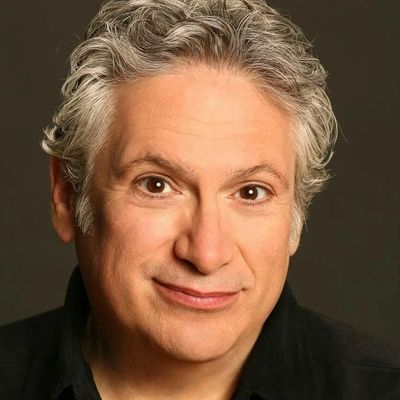
[0:17] Gordon Cox: I'm your host, Gordon Cox. On this episode of Stagecraft, I'm talking to Harvey Fierstein. He's a three-time Tony winner and longtime Broadway favorite. And although you can't see him on stage right now, he's bringing his latest play to your earbuds. Audible has just released the audio adaptation of Bella Bella, the solo biography of Bella Abzug that Fierstein wrote, and in which he stars as Bella herself. The play premiered at Manhattan Theater Club in the fall, but that already feels like a different era, and Abzug's life feels resonant to our own now in entirely new ways. Fierstein comes to Bella Bella after a career that launched with two early breakouts, Torch Song Trilogy and La Cage aux Folles, that became landmarks of gay representation in the theater.
He's also no amateur when it comes to playing women, not after winning a Tony as Edna in Hairspray, and reprising the role in Hairspray Live on NBC. Along the way, he's had memorable parts in films like Mrs. Doubtfire, and worked on TV shows, including recently The Dark Crystal: Age of Resistance. He's someone whose work and life were deeply engaged in an earlier epidemic and an ongoing fight for civil rights. And he's in the virtual studio with me to tell us what he's learned that's helping him through the current moment and why Bella Abzug's fight for equity is just as important now as it was when she was alive. Hi Harvey, thanks for joining me.
[1:36] Harvey Fierstein: Hi, Gordon, in the little hole up there.
[1:40] Gordon Cox: We're just gonna let the listeners guess what that subtext was.
[1:45] Harvey Fierstein: This is life in the pandemic. It's people talking to each other and nobody knows what anyone smells like.
[1:54] Gordon Cox: Well, before we start, let's, or as we start, let's talk about first the origins of the show, Bella Bella. What did, first of all, did you have a personal connection to Bella Abzug?
[2:03] Harvey Fierstein: Um, I had, I met her. I met her several times. She was, I'm happy to say, a fan. And um, the last time I saw her, um, I, there was, uh, Shirley MacLaine took her to my, uh, the two of them came to my dressing room. Um, I forget what show it was. Uh, but anyway, uh, the two of us had a kind of riotous time in, uh, in my dressing room together. And uh, my favorite photograph with her though, um, is me, uh, Jesse Jackson, Bella, and Patti LaBelle.
[2:36] Harvey Fierstein: Wow. The four of us together. We were dating. Yeah. You know, Jesse and I didn't want, we were like using the women as our, as our, um, our beards. Yeah. But uh, it was, it was cool. Yeah, it was at, uh, uh, Human Rights Campaign, uh, dinner. Patti was singing and, and, uh, and Bella and me was there.
[2:56] Gordon Cox: Yeah. And when did you first get the idea to write about her?
[3:00] Harvey Fierstein: I never got the idea to write about her. A daughter, a daughter came to me and said, "Harvey, I want you to write a musical about my parents." And I said, "Oh, did they have like a rocky marriage or something?" "No, they had a very happy marriage." And like, "Did they break up or didn't?" "No, so what do you want?" "Yeah, you want two people to stand on the stage and go, Bella, bella, more and more." And I didn't think it was gonna work, so I said, "Leave me alone." Um, when was this? How long ago was this?
[3:31] Harvey Fierstein: The 1920s.
[3:34] Gordon Cox: Okay.
[3:35] Harvey Fierstein: It's hard to remember since they locked, uh, since they locked me up in this room, it's very hard to bring out anything. I don't know what day of the week it is, I don't know what year it is. It's very hard. I, I don't know. It was, it was years ago.
[3:47] Harvey Fierstein: Okay. Then when Hillary, but I did, but I did, I did my due diligence. I read a whole bunch of stuff about Bella. I read a couple of books. I read, I read her book, which was never published. She, she had, uh, proposed a, uh, autobiography, so I had a lot of notes from that. Um, what I didn't realize at the time was that her friend Mim did all her writing. So she told stuff to Mim, but Mim was like the other Bella, and she did most of the writing. So the only stuff I actually had in her words were her speeches, of course. The ones that were off the cuff, right? Otherwise, Mim wrote them. And, and this order, this notes for an autobiography, which supposedly Bella wrote. So anyway, I knew I read all that stuff and I put it away.
I didn't see a musical Bella Bella Martin Martin here. Come, uh, the last election and Hillary lost. And I said, I think it was the Israel stuff. I think it was the Hillary is anti-Israel. And I said, I know she's not anti-Israel. I mean, you secretary of the stage every single, I know she's not. Where is this coming from? Who would make up some stuff? And I said, but it sounds awful familiar. And then I remembered almost line for line, it was the same stuff they put out about Bella, and I realized it's the same, it's the same boys' club, and the boys' club was out there coming up with the stuff, just targeting who the voters were and coming up with the stuff to get you not to vote for her.
[5:21] Harvey Fierstein: And I said, I'm gonna go back and look at that Bella stuff again. So I did. I went back and I looked, and I called the daughters and I said, "I kind of thinking about writing a piece. I don't know what the piece is." And they said, "Well, um, uh, what's it? Julie Taymor is doing a movie with Bella's character in it. There's a TV series called, uh, Mrs. America, yeah, which is now out on Hulu. Um, they're about to film that with, with the fabulous Margot, um, um, uh, um, Margo, oh my god, Barndale of play playing Bella. Uh, Bette Midler is gonna be playing Bella for, for, um, for another movie. Um, there's, uh, uh, a documentary we're making, so all this stuff. So I said, who needs my view of this?
But I kept thinking about something I had read in her stuff about the night that she lost the election. And I said, all of this could be what it's about. I could get all this political stuff plus her history in that moment right because what happened was she was in Congress. She was very successful in Congress as you know, she got a lot of stuff done but nobody wants to stay in Congress. I wish these people would stay in Congress. Look at all the mess they make. I'm dealing with Joe Kennedy the third right now is what a mess. Um, stay in, stay in Congress. You don't have to go to the Senate, you stay. Anyway, so she wanted to go to the Senate and I put in the arguments into right into the play as to why she wanted to go to the Senate but she wanted to go to the Senate.
Her friend's bed turned out to, she wanted to. And then what happened was eventually she lost by less than one percent of the vote to, um, to, um, oh my gosh. What happens in a pandemic? To, uh, yeah, you just told me. I just listened, I just listened to it. Yeah. Who was dragged into the race months after it should have been over? They played so many dirty tricks on her, it wasn't even funny. And I thought there has to be a moment. And oh, and, and the daughters, and when I asked the daughters about it, she said, "Oh, yes, we were sitting in this hotel room, you know, um, uh, until early in the morning." And I said there had to be a moment when she finally realized she's gonna lose because she thought she was gonna win the whole time. She thought she was gonna win, and I thought that's interesting, that's human, that's interesting, and so the idea for the play was born.
[7:53] Harvey Fierstein: So I wrote this play. As a solo show, it was always a solo show as you were thinking about it. Well, because it took place on that evening, yeah, it was either do a solo show or have somebody play Gloria Steinem, somebody play Shirley MacLaine, somebody play Marlowe Town. You know, there's too many famous people, and I didn't want to do the Peter Allen story. Yeah. I did want somebody coming out as Liza and five minutes later, they were Judy Garland. I mean, I didn't, you know, you don't want that. And um, so I wrote, so I wrote this as a locked in the bathroom, blah, blah, blah. And at what point did you think about you playing Bella as well?
[8:34] Harvey Fierstein: I um, we did a couple of readings. Uh, we did a reading with Patti LuPone. Um, a wonderful Patti did it, did it for me, and um, and then I kept thinking about, uh, uh, I kept thinking about all these other versions of Bella that would be out there. Uh, I love Margot. If I could get Margot to put to the do the play today, I'd put it up again with Margo. I love her. Um, I talked to Bette about it. I talked to several of the actresses, and I kept saying, they're already doing it. They're already doing it, they're already doing it. Why am I doing the same thing? Am I not doing something else? And then I thought, and then there were some people who said you should do it yourself. And I said, "Ah, to put on the wig and the hat and the dress, I would feel like I was dragging Bella."
And I thought in this moment of Me Too, the idea of a man writing a woman's story and then putting those words in her mouth was so phony and so disingenuous, so much making a woman into a puppet, which is what we do in theater anyway. I mean, that is what we do. How could I, as a theater artist, um, I never looked to make money off the show, and I'll tell you what I actually wrote it for.
[10:05] Harvey Fierstein: Uh, we can get to that. But um, but I, as a theater artist, what could I do to be more honest? And I said, if I just go out there and well, wait, gotta step back if this didn't happen yet. Um, you see what happens, the brain just goes. Um, my agent said, let's do a reading of the play and try and attract actors and actresses. And we had no director, we had no theater, we had no anything. So I said, okay, I'll read it. We went to CAA, which was up at the crest of the building. Now it now it's in everyone's basement. Um, but it once was up in a beautiful office in the Christmas building. And I and my agent stood up and said, "Hello, everybody, thank you for coming. We have no theater, we have no producer, we have no director, we have no actor.
Here's Harvey reading the play. Maybe you got an idea." And I read the play. And out of that reading, I did get several offers, wonderful offers. Broadway, off Broadway, off off Broadway. I got a couple of producers that said, you know, if I could get a star, I'll do blah. But also out of that reading came something which was if you do it yourself, there's something very honest about it. And that's when that we had the discussion saying, if I do it and I don't do it in drag, I just stand there and I say, I am bringing you Bella's words. I'm not dragging it up. I'm not putting any artifice on this. This is as honest as I can be. Let's see what could be.
[11:41] Harvey Fierstein: We then decided that the room should be, I should be the only man in the room. I should be the only testosterone in the room. We needed, I wanted to be immersed in this. So I was not imitating Bella, but I was as close as I could get to understanding why and how. Because she's a very particular human being, as you may know. But uh, I assume you heard the piece or you saw the things, yeah. So you know she's no one quite like Bella. Very, I'm not saying she was right about anything or everything, but she definitely had a view. And um, and so Kimberly Senior came in as director and brilliant, brilliant woman, and and I love her. We had only um women stage managers and and um even assistants in the room, and um uh our sound designer, uh we we tried as hard as we could to make it a room of women.
We then brought in Bella's friends, um, Lily Tomlin, uh, Gloria Steinem, who was incredible help, um, and and we created this room in which we could um develop this Bella play, uh, and then brought it out to the stage.
[13:03] Harvey Fierstein: And as you know, I just wore black pants, black shirt. The only nod to femininity was my toenails. Yeah, uh, and the one and the hat. And the big red hat. You couldn't do it without a big red hat, right? Right, and that was made by her hat maker. Oh, yeah. But I only but I only I only wore it at the very end of the play. I only put it on at the very last moment of the play. I carried it out at the beginning of the play, right? And well, and it was really interesting to see the reaction. It was it was really interesting. Women almost uh uh you know, because you get a lot of male when you're in a theater like oh, and then we decided to do it um, you know, at MTC, which I had done, uh Casa Valentina, um the public theater wanted it.
There were several other theaters wanted it. Um, but I wanted to do it as quickly as possible. The idea being do the play, and as soon as the play is done, um release the play to groups that want to put it on to raise money for women candidates, further, her friends like Gloria or or or Sherlock McLean or Marlo Thomas or or um Renee Renee Taylor. I I created a version of it that could be read, uh, a concert version of it. So they could go to whatever um woman running for office they wanted and use it as a fundraiser. Um that was the idea for doing the play. Along comes COVID and that all goes down the toilet. Right. Yeah. And and is the audible version then that concert version that the audible version is pretty much that concert version where you don't, though we use sound effects, um but you're not seeing anything.
You're not, you're not, I mean, there's no toilet there, there's no whatever, so it it is imagined. And so, yeah, so it is, I guess, I guess it pretty much is. I used the same script because you know, I was doing what I was doing, but and I'd already been there, done that. Um, so but what was most interesting was the audience reaction to it. Um women went with it, 99.99% went with it. You know, once I'd been on stage for a couple of minutes, they sort of forgot that I was a man and they just went with it. Um some men had more problems with that, which I thought was interesting. I think my theory, they don't want to be told they're wrong. They don't want. It's fine if a woman does it. So if a woman stands there and makes fun of men and tells men they're idiots, they're already used to being told stuff by women and not listening.
They don't care what women say. But having a man say it, you're a bunch of assholes and you don't know what you're doing, and and and this country's going down the toilet because of men and the whole world would be better if men didn't run it. They really didn't like that. They really didn't like that. And I thought that was really funny because I said to myself, I've never seen anybody criticize Bella for saying that kind of stuff, but I've never heard those words come out of a man's mouth before. And that was my personal take on it. Not a lot, obviously, um most men that saw the show loved it. But uh, but there were men who really took offense at um at what the play was saying. Um and what of course it said it's spoke very particularly to the time you know, as you were doing it late last year.
And now it feels like, as you've said, we're in an entirely different world where it feels like everything is different and time is shifting, and there are these we're dealing with these sort of giant uh changes, we're sort of sort of dealing with a pandemic, and then they're we're in the midst of this reckoning over you know justice for black lives. And how do you find now with the show coming out right now um of over Audible, how do you find the show speaks to this moment? Well, the joke is that it actually speaks to this moment more than it's I mean, it's but it spoke to both moments, right? But people are more aware of it now. It might have been more shocking then, or you might have questioned what is she talking about?
Um uh manipulating uh voters that way. Right now, people actually understand, or they're beginning to understand that you're being manipulated. You watch Donald uh the the king of Cheetos stand there and and and do a um uh uh uh uh uh declare war um just to get himself some good press, or to actually it's not even to get himself good press, they're declaring war to get footage so that they have TV ads to run. I mean, there's no reason. Hundreds of thousands, I don't know, millions of dollars being wasted, which no one's talking about. Millions of dollars being wasted bringing troops to Portland so he can get an ad to run for president, and no one's talking, they're saying take away money from from the homeless people.
Don't give don't give unemployed people money. Well, he's taking millions of dollars and spending them to make ads. We have the military used as a prop. So in Bella, I talk about stuff like that. In Bella, we talk about about using the war that way, and and um, and obviously you see the manipulations. In Bella, uh, there's a large section that talks about her um being the defense attorney for a man who who was accused of rape in in uh in Mississippi. What's what's sort of on a personal note on a one of those personal notes? So I wrote that section about about um about uh the the rape in Mississippi and and and the trial and all that, and and um it was incredibly hard to perform day after day.
That section, especially it's very emotional. Um, you know, to think here's this woman who's 30 years old, sleeping in that bus station, um, unable to get a meal in town and all. And right because she was for people who maybe haven't seen it recently, it's because she was defending a black man. She was defending a black man, nobody in the entire state would do it, and and she went there and and had her life threatened on a daily basis, and uh and eventually they they killed him. Um what's sort of funny is we brought in students to the rehearsal room um and had them watch the play. And because you uh I we knew we wanted to keep it to 90 minutes or under 90 minutes, and the play was two hours or more long, and so we we wanted to see what registered with them, what didn't, what had to be explained more to kids, you know, uh uh and and what didn't. And it's sort of funny, we cut out stuff that uh that now I wish you know was still back in that we took out we took out stuff about about um we have m we have Martin's death and we have Martin Luther King's death and Bobby Kennedy's death in it.
Um but we but we took out um the Malcolm X stuff, which I think people would now understand more what she was talking about. Um these kids didn't know who Betty Shabazz was. Oh they didn't know really who Malcolm X was. They knew who he was, but they didn't know why he was killed or how he was killed. Um, because uh um Bella actually found a home for Betty Shabazz and her children after Malcolm X was killed. Bella sold her own home. Wow. She needed her to have a safe place to be. And and she she sold her her own home when the when all of the neighbors threatened to to sell their homes, um, you know, the white flight. And uh and she sold her own home. So there was lots of stuff. I mean, uh, you know, my left and stuff about Sydney Portier left and stuff.
Um But there's a there was there was a lot more of that stuff, and I just, you know, it it made me sad that um cultural history is not taught, that history is still taught by by white people, written by white people. Um school books is still written by only white people, and um and you could and you couldn't put that stuff on stage without standing there and explaining to so um that that made me sad, but no, the play has lost none of its of its presence. Um in fact it it's it's it's more meaningful now than ever, I think. I'll have more with Harvey right after the break.
[21:55] Gordon Cox: And now here's more with Harvey Fierstein.
[21:59] Harvey Fierstein: After your work, I'm not sure. You just you just heard it. Did it did did it not ring?
[22:05] Gordon Cox: Oh, it absolutely did.
[22:06] Harvey Fierstein: Yeah, yeah. I just but I just wondered for how you think about that.
[22:11] Gordon Cox: So actually leads me into my next question is what now after the process interview the interviewer.
[22:19] Harvey Fierstein: Yeah. That's kidding.
[22:25] Gordon Cox: Um after working on uh and just you know, studying Bella's legacy and thinking about all that, what have you come away admiring most about her work um her legacy?
[22:40] Harvey Fierstein: That she was a Pollyanna. I mean, she she faced such darkness. She faced darkness in in her work uh, you know, against against McCarthy and and her work in in social justice and and racial uh uh divisions and and her women's rights and i mean she did nothing but face uphill battles most of which she lost most of which she lost and she still was a fucking Pollyanna she still how um Harold Holzer said to me um can you put that song uh from Annie tomorrow in the show because that's who she was and I said I can't because it was written after afterwards but he said that's really that's really who she was she really believed the sun will come out tomorrow it will get better and um you know so yeah so I admire that she took her she certainly took her knocks um and she was never never down and that's uh the other reason I wanted to write that moment and that that last moment when she finally realizes that she's gonna lose and she's you know and she says I could I could walk out there and cry she said but I'm going out there with a smile on my face and speaking of this moment we're all in I feel like you're someone whose life and work has already been grappling with or has grappled with in the past if not a pandemic then at least an epidemic with uh your work during the AIDS crisis and certainly uh it's intersected with the fight for civil rights with your ongoing commitment to to gay causes I just wonder if well let's start with the pandemic, how has your experience as an artist and an activist during the AIDS epidemic informed your view of what's going on right now with COVID?
[24:39] Harvey Fierstein: I think very much. I think any of us who live through the AIDS epidemic um are not in as panicked a mode. We're in we're in we're more angry because we know that this is we already know how this is passed on. Remember with AIDS, it took a long time. Yeah. It took a long time. And um, and with AIDS my anger's starting to come up, and I'm trying to keep it calm because look how calm I am. No, come on. In the in the during the AIDS epidemic, you had people saying, I'm not going to that restaurant because those waiters could be gay and I could get AIDS. In this pandemic, where you can get it in a restaurant, they don't want to stay away. Right. Makes me fucking crazy. Yeah. You know how not to get this. It's very easy not to get this. And still, they're out there getting it.
[25:38] Harvey Fierstein: Parties to go out and get it. Now, did we have did we know of parties where people went out and got AIDS? Yes. Yes. I knew people. I knew, uh, one of my dearest friends wanted to die. His lover had died of AIDS. He didn't have AIDS. He wanted to die. That's all he wanted. And he went out and he fucked and he fucked and he fucked till he finally got sick. And then took him seven or eight years to die. I mean, such insanity. So you can't live through that and then look at this rather simple disease. Not this disease is not harmful. It's killed a hundred and forty-five thousand people in America alone and nobody cares. We got four million cases, and they act like it's the flu. It's just the flu.
We now see evidence that children who are getting it, even though they're not symptomatic, are going to have permanent lung damage from it. Send them to school, it's fine. Send them to school. They don't even care about their own children. So how does living through AIDS? It keeps you a little calmer and it makes you not want to take out a machine gun.
[26:51] Gordon Cox: What was done during the AIDS crisis that you feel like we could learn from right now?
[26:58] Harvey Fierstein: Community, community. Oh, that's I was gonna say we had no leadership. We had no leadership from the top. Because they said to Ronald Reagan, we know this. The scientists said to Reagan, we have no way to cure this. We're not even sure what it is. We have no drugs for it, we have no way to cure it. Do not mention it. Don't mention it because you will look like a loser because you can't take care of it. That was not the way to handle AIDS, and that's not the way to handle this. And so Idiot Cheeto King is doing exactly that, saying, I'm not gonna talk about this pandemic because I can't cure it. I can't do all I can do is blame other people, which is all he ever did back in New York. I mean, those of us who actually know him, and I do know him.
Um, none of us would ever vote for him. Not a person, only people who never met him and somehow believe that crap would vote for him. But nobody who knows him would ever vote for him. And that's exactly what he did. He took a page out of Reagan saying, if I can't have a good, um, ending to this, I'm not even gonna mention it. And that's gonna cost hundreds of thousands of lives. But back then, our community jumped in. Now the community seems to want to just go out and party instead and just ignore it.
[28:19] Gordon Cox: And what about, uh, what's going on now with the uprisings and the movement for black lives? In what ways does your own experience as an activist sort of, uh, inform how you think about what's going on right now?
[28:30] Harvey Fierstein: Um, I came into, uh, teen years in the 60s. Um, and, uh, I watched the civil rights movement and I, you know, and the anti-war movement and all doesn't frighten me. I know that that's how you make change and that's how you get the message across. Um, I don't like it. Uh, is there a pretty way to protest? I don't think we found it. Um, you know, there's a the nonviolence, uh, doesn't mean it's not going to be hurtful. It just means we don't create the violence. But if we're doing it right, the violence will get created against us. That's just the way it is. Um, I think these moments come. I think they're incredibly important. Uh, possibly the most important thing us white people can do is to shut the fuck up and listen and try and learn something, but that's really hard, especially if you want to help.
You jump right in there and without understanding it. Just the theater argument alone is mind-boggling, mind-boggling. Um, August Wilson, uh, gave a speech once where he talked about putting white, putting black actors into white roles, saying that's not how it's done. Um, it's not gonna get us anywhere. Uh, uh, one of the young men, uh, writing a piece for the Black Lives Matter, uh, movement said, um, black lives, black bodies and black lives are not the same thing. So I put, I write a role, you know, um, my mother or whatever, and I put a black woman in it. It's she's playing the role, and that's wonderful. She's an actress, she should be able to, but it's not going to ever express. And the only way to express that is to have black writers.
It's never really gonna come from from a well-meaning, uh, white Jewish gay writer. It's gonna come, I mean, I can write great black roles, hopefully, but the authenticity, the what needs to be said, what the roles with spielkis have to come from the black experience, which means education. It always comes back to education.
[30:50] Gordon Cox: Yeah. Does what's going on right now at all has it influenced the way you think about some of your own work and sort of some of the work you've done in the past?
[31:00] Harvey Fierstein: Um, we've had to grapple with it. We've had, we've we've had we got a phone call, um, asking about about, um, allowing productions of Hairspray, um, you know, all white productions of Hairspray or all Japanese is the better example because we do have a Japanese producer. Yeah. I said, no, you can't. I said, said, but we've been doing it for years. Well, yeah, what you did for years, let's just start at this moment. You start with this moment. If you can't tell me that you can put an actor on that stage who in real life, when he was walking down the street, people would cross the street to get away from that person that they immediately saw as a threat, then you can't do Hairspray. Right. Those kids were not putting the kid, the black kids were not put in that special egg class because, uh, they didn't read as well.
They were put in that special egg class. I mean, it's a comedy, it's a musical comedy, but it's about something. It's about something very real. So we do have to face those kinds of things. Now there are all kinds of moments. I mean, you live with these choices, you know. When you're doing something like, you know, you live with these choices all the time. When I was offered Mulan, the wonderful Disney movie, yeah, I said no. I said, you need to show me how many Asian actors are playing, uh, Asian roles before you come to a Caucasian actor and ask. I'm willing to do it. I would love to play an Asian role, but, um, show me first. And they did. And when they showed me that there were enough Asian actors, I said, okay. You know, the leads were being played by Asian actors. I said, okay, I would do that. Um, you have to, you have to think about this stuff if you're involved in the world. You just have to.
[32:58] Gordon Cox: Yeah. And so how are you spending your days on a lighter topic? How's your pandemic going? What's happening?
[33:05] Harvey Fierstein: I'm a hermit by nature. Um, so my life has changed very little during the pandemic. Um, I and you were up, you were in Connecticut, is that where you are?
[33:17] Gordon Cox: Yeah, I live in Connecticut. I've been here for 35 years.
[33:20] Harvey Fierstein: Um, very at home in my home. I mean, I'm a real nester. And, um, so, uh, so my days haven't changed. I have my dog, his zizz, and I play with my dogs, and I have my dog play group, and so friends come over and all the dogs play together, and we all visit, and, um, and I have my writing.
[33:40] Gordon Cox: Yeah, what are you working on?
[33:41] Harvey Fierstein: That's my next question. Yeah, I don't ever talk about what I'm working on. Okay, but let's put it this way I have finished everything that was on my desk. Oh so if theater ever comes back, we're ready to go. Great. I finished all my assignments, so they're all done, and they've all been turned in and everything else, and I am working on something new, but that's hither and thither. And I make quilts. Uh, and, um, and usually I manage to make one quilt per winter if I'm home. Um, and so I have all these friends who've been waiting for quilts for years. And I've been able since we've been in lockdown, I finished seven quilts. Yeah. That's not nothing. That's a lot of work. That's a lot of freaking work.
And I'm starting a new one this week. So and this there's after this one, there's one more, and then I'm all paid off with them. And I've been eating. Look. Yeah. I mean, this that's the horrible part. I mean, if somebody died, I don't know that I have a black suit I could wear. I think I'd have to take a page out of Alan Carr's playbook, put on a black moo, and go.
[34:48] Gordon Cox: Yeah. Can you tell us anything about any of those finished shows that are sitting on your desk?
[34:54] Harvey Fierstein: Their plays, their musicals. Uh no, well, um, no. Uh, um, I can't tell you about that one. I just think I can't tell you about that one. Um, my agent actually called me CAA, God bless. We have we have rent to pay. Um and they said, whatever happened to those these other scripts, these, these um sitcom scripts that I wrote like 10, 12 years ago. So they're just sitting there. So you want to you want to like polish want to do up and give us let us see? And then fine. Um so I've done so I've handed those in. Um Casa Valentina, my play Casa Valentina was sold to Ryan Murphy. But I don't know if he's gonna do it. So I'm waiting to hear, you know, a final thing if he's gonna do it or not. Um, and then there's another producer that wants to do it, so you know, make a film of it.
Because that would be like one of those safe films to do, because it all takes place in one building. Right. So you could go get a house in the woods. It takes place in the Catskills. So you can get a house in the woods with a motel nearby, put everybody on lockdown, film it just in the it could be a safe set. They're looking for things that are, uh, like that, yeah. Yeah, that are that are safe. I was yes, I wrote you asked what the difference was. Back in the AIDS days, I wrote Safe Sex. Now I'm writing safe sets. That's that's the difference.
[36:22] Gordon Cox: Well, you know, they said they shut it down. I was just about to leave for DC. I was doing um, I was gonna play um, uh, Albert's mother in in uh Bye Bye Birdie. Oh, oh I was gonna play that's right, that's right, yeah. Vanderbeek's Dave Vanderbeek's mother in Bye Bye Birdie at the Kennedy Center. Um what else was about to happen? Lakage Foe was supposed to be done at um City Center. Yeah, but was also being done at the Hollywood Bowl. Um, I mean, we had there was there was like, you know, a whole mess of stuff. I'm happy to say Kinky Boots is just reopening in Korea. Okay. Where they know how to handle it. Yeah. So, yeah, I have a friend who's conducting Center of the Opera. They were on lockdown for three weeks in their hotel room.
Can't imagine. I mean, they couldn't even go in the hallway. They weren't allowed on their balconies. Wow. For three weeks. They were just, it was TV, porn, and food dropped off into Joe. Yeah, and room service. Yeah, exactly. Well, it wasn't even moving. He said the food arrived. You couldn't even order it in the hotel, had to get it at once, yeah.
[37:29] Gordon Cox: Well, right, Gwen. Well, it was great talking to you, Harvey. Thanks for watching. And, uh, we look forward to seeing you on stage as soon as we can.
[37:37] Harvey Fierstein: Okay.
[37:45] Gordon Cox: That was Harvey Fierstein, whose solo performance in his play Bella Bella is now available on Audible. If you like what you're hearing on this and other episodes of Stagecraft, we'd very much appreciate it if you took the time to rate and review us on Apple Podcasts. You can subscribe and find past episodes there, and on all the other pod places, including Spotify and on the Broadway Podcast Network, which is a great place to find more theater for your ears. I'll be back in two weeks with another new episode. In the meantime, find me on Twitter at G Cox Variety. Thanks for listening and see you soon.
© Broadway Podcast Network, All Rights Reserved