

Actor David Morse and playwright Paula Vogel on what they’ve learned revisiting the Pulitzer-winning, Tony-nominated play... Read More
From the show: Stagecraft with Gordon Cox
Guests
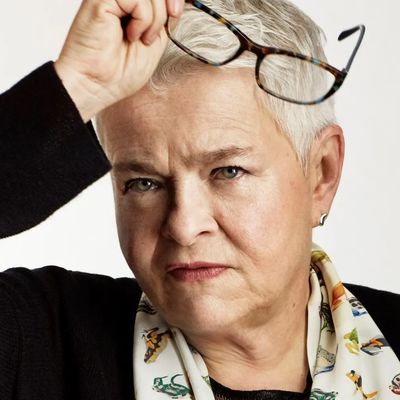
About
Actor David Morse and playwright Paula Vogel on what they’ve learned revisiting the Pulitzer-winning, Tony-nominated play.
Transcript
This transcript was automatically generated and might contain errors.
[0:01] Gordon Cox: Welcome to Stagecraft, Variety's theater podcast, bringing you backstage and behind the scenes with Broadway stars, creators, industry leaders, and Tony nominees. I'm Gordon Cox.
[0:19] Gordon Cox: On this episode of Stagecraft, I'm talking to the playwright Paula Vogel and the actor David Morse about their work together on Vogel's Pulitzer Prize-winning play, How I Learned to Drive. Morse, an actor best known for film and TV work including St. Elsewhere, The Green Mile, and Dancer in the Dark, starred in the play's premiere production at the Vineyard Theatre in 1997. And now, 25 years later, he's Tony nominated for his performance in the same role in Manhattan Theater Club's Broadway production of How I Learned to Drive. Morse is reprising his role alongside fellow original cast member Mary Louise Parker, who's also Tony nominated, and so is the production itself in the category of Best Revival of a Play. Now, Morse and Vogel are in the virtual studio with me to tell us about everything they've learned revisiting How I Learned to Drive. Hi, Paula and David. Thanks for joining me.
[1:12] Paula Vogel: Thank you for having us.
[1:14] David Morse: Yeah, we're happy to be here. Thanks for doing this.
[1:16] Gordon Cox: Yeah. But before we talk about the production now, I wonder if we could rewind 25 years ago, more at this point, to, I guess, Paula, for you first, tell us a little bit about the inspiration and what led you to write the play.
[1:28] Paula Vogel: I've had the inspiration to write about this probably from the time I was 19 or 20, thinking there's got to be some way I can express this. Um, when I was in college, I read Lolita by Nabokov. And I thought, what an amazing book. I don't know if you can do this in a play to have that kind of layered subjectivity. But I did start to wonder, could I do this from Lolita's point of view? And I realized very early on that I didn't have the techniques. I was just too young to do it. So I tucked the, you know, the idea away. And it's when I started teaching, and I had kids come into my office, I guess I just looked like a safe human being to them. And they said, I want to tell somebody, I want to talk to somebody.
And I'd say, it's safe to talk to me. I'm a lay person. I'm happy to listen, it will go no further. But absolutely feel free. And I had a Kleenex box. And these kids would tell me about relationships with family members when they were very young. One young woman had been kind of bartered by her father for his business partner. You know, and at the end of this, I would say, this isn't your fault. This is nothing you did. Please let me refer you to a psychologist, just to help you process it. And then in earnest, in my 30s, I thought, I've got to write something. And so I started concentrating on it more. And then one day, as I was driving, I saw a young woman driving and adjusting the rearview mirror, and the ghost of her uncle appeared in the backseat. And that's when I went, I've got it. But that was when I was 45. So it took a while.
[3:42] Gordon Cox: Well, do you mind if I just ask Paula something?
[3:44] David Morse: Yeah, please.
[3:46] Gordon Cox: I would love to know, because I've never known this. You said when you're 20 years old, you thought of it as a play. Were you writing plays? Were you thinking of yourself as a playwright?
[3:56] Paula Vogel: I wasn't thinking of myself as a playwright. I was writing plays. I was writing these things that, in a girl's school that were called class shows. I wanted to be a director. And I didn't get into any graduate programs. So and then I wanted to be a stage manager. And I didn't have the steel nerve to be one. So and then I tried acting and I flunked out of that. Um, so by the time I was about 21, yeah, I was like, it's not, there's not many escape patches left. You know, I was in grad school, because I thought, well, maybe I can teach drama, because I sure as hell can't act in it, stage manage it or direct it. So yeah, I was writing plays. But you know, I just think I wasn't, I hadn't been exposed enough to all the things that theater can be, you know, when you're in a working class family.
I mean, this must be your story. And in a way, it's like, what are the shows we see in high school? And the only playwright, there are two playwrights that really interested me in high school. One was Thornton Wilder. And the other one was Edward Albee. I mean, Edward Albee blew my 16 year old mind. And I'm like, Listen, man, he's telling something that's very truthful. Follow that guy. Um, what about you? I mean, what was the first? I don't want to say adult play, because I don't mean to say that what we do in high school is not adults. But did you act early on in something that was a little risque and a little dangerous? How about Edward Albee?
[5:41] David Morse: The Zoo Story. The Zoo Story is what got me out of high school into the first theater I was in, the Boston Repertory Theater. I was, yeah, I was, I was, you know, 17 years old. It's a fellow had come back to our high school. He had been having some problems. And the wonderful woman who directed everything he she was the president of the Drama Society Massachusetts. She was just a fantastic woman. But she was trying to help him heal. And she suggested he direct something at the high school. And it was in my senior year, and he had experienced a Zoo Story. He had done it. And he decided, well, maybe he would just find a couple of kids at the school to direct that, you know, direct them in it. It was a very successful production in our school.
And he said, You know what, I'm part of a company that's forming in Boston, you should come in and audition for this company. But it was Edward Albee's play that really changed me. It was so amazing, that play. It is an amazing play. Edward, I hope your ears are burning.
[6:47] Gordon Cox: Yeah, but then the next then, but then this amazing play that I read called How I Learned to Drive to get us back on track. Well, when did you first encounter it? How did it? How did it get to you? How did you first get to know it?
[7:02] David Morse: Well, you know, we had we had, we had been living in Los Angeles for a long time, we lost our house in the earthquake out there, we moved back to Philadelphia, because we didn't know where to go. We had no place to live. And we had really only been there for a few years, I think. And I just started to do some, I didn't, I didn't know if I could work from there or not. I didn't know. It felt like the end of the world when we left Los Angeles. So I'd done, I'd done a few things. And I just got a script one day asking me if I would come into New York and do a reading of this play called How I Learned to Drive. And I read it, man, I just, you know, and I told Paula this before, I just couldn't believe that, why are they asking me?
This is such a fantastic play. And I, I didn't have much hope that anything more than the reading would happen. But I went in and I read with Cherry Jones, who Paula had, you know, originally wanted to do this, and some other terrific actors. And then I took the train back to Philadelphia and thought that was that. And a couple weeks later, they asked me if I would do the production.
[8:03] Gordon Cox: And, and what's the answer to that question? Why, why are they asking David? Paula, what was, what made, what made David right for this?
[8:14] Paula Vogel: You know, one of the great things about the Vineyard Theatre is Doug Abel. Doug Abel, you know, as a casting director, makes a pretty great artistic director. And I had seen David and just really enjoyed him. And I had said, we talked about this, the original stage direction said, cast someone whom you would cast as Atticus Finch, someone who is just decently good, and carries that goodness with him into the room. And David walked into the room, and I went, Oh, my God. I mean, you know, it was my first time also working with Doug, but he was absolutely on. And after that first reading, I was so imprinted on David. And, you know, we did it as a cold read. We didn't discuss it. I don't think we didn't go over it.
None of that. It was like, bam, cold read from, from the start. But I got so thrilled. It was so, so incredibly clear to me. And of course, you know, Doug knew that all along. So it was a matter of finding, you know, the scene partner in our minds at that point, hoping that you'd be able to say yes. You know, from my point of view, I'm like, Oh, my God, he's not going to take this. Come on. He's not going to, there's no possibility that he would, he would do a play off Broadway. But you know, sometimes you get lucky.
[9:41] David Morse: Yeah. Well, thank God I hadn't done all those bad guy roles at that point. He may not have thought of me so quickly. I was still saying elsewhere was not too far in my past at that point. Yeah.
[9:54] Gordon Cox: Do you remember for this is a question for both of you. Do you remember what was hardest to get right in that first production or to really nail about the way you told the story or you're in your portrayal of a character?
[10:08] Paula Vogel: There was a stumbling block in the writing. There was a stumbling block in the writing that this is where I sound schizophrenic when I talk. As I was writing this, and I wrote it in a great rush. I stayed up all night in Alaska. I finished it in two weeks, just by taking naps and staying up all night. And there was a moment when I had my outline and I was going through the outline. And in my mind, I saw Peck. Now, I can't see anyone but David doing this. But at the time I wrote it, I saw some man at the end of the scene that was in my outline, suddenly get out of the car, suddenly take off his jacket, suddenly start rolling up his sleeves, slipping out of his shoes. And I literally said out loud in the middle of the night, what the hell are you doing?
It's not in the outline. That's not the outline. And then another voice went, Vogel, shut up and follow him. So the fishing scene, literally, I felt like I was taking dictation. It didn't come from, which is a very weird experience. So, you know, it makes no sense in the structure of the play. It's a complete interruption of the narrative. And, you know, Mark came to me and said, hey, the logic of this doesn't work. It's just not working. You know, this is little bits narration. And all of a sudden, and I said, Mark, here's the damn thing. It's the one part I can't cut, because I don't think it came from me. It doesn't feel like it's mine. I have no idea. It doesn't make sense. It's a huge headache.
And guess what the headache is David and yours. I don't know why it's there. And then, like in preview, I think it was the second preview, David, it was the most exciting thing. It's like you cracked it. There was this explosion in the performance, because somehow or other, and I still don't know how you do it.
[12:14] David Morse: Because it still makes no sense. But however you worked out that logic, it worked that night.
[12:20] David Morse: And Mark came running after the show to me and said, thank God you didn't let me cut that scene. That's from my point of view. And David, what about for you? Was there anything that you remember being particularly challenging about the character to get right for you? I mean, clearly something clicked right from the beginning, from that very first reading. The character is so vivid and he's got so much going on. There are so many layers to this man. But the simplest thing about him is the love that he feels. And that was always clear to me. And we didn't know who was going to be playing little bit. And when Mary Louise got there, it was not too hard to fall in love with her. And that really, to me, has always been the key to it.
And the fishing scene, Paula did not actually tell me until later that they were thinking about cutting that scene. Nobody told me that. All during rehearsals, they were struggling with what to do with it. I really, the thing that I had to do was bring Bobby to life, you know, be there and fish with him. That's all. That's all I had to do. Go teach him how to fish. And the more clear I could make that that boy, the better it was going to be. So that really was the challenge for me because everybody else, you know, I'm an honest guy. Look at Mary Louise. It's like I said, it's not hard to fall in love with her. She's so amazing. But having Bobby and really knowing who that boy was, that really was, in some ways, the biggest challenge. And he's become only more vivid to me, being out there with him.
[14:15] Paula Vogel: In the years since that first production, our broader sort of cultural awareness of, you know, harassment and coercion and power differentials and gender dynamics, all of that has changed a lot, particularly in the wake of Me Too. How did your work on this play for either of you give you a particular lens on those events as they were happening, as those shifts were happening? I think for me, in a way, having the play out there did something to me. Watching David and Mary Louise and the cast did something to me that was incredibly healing and just made me feel lighter watching them. So when I left the Vineyard production, I kept the lightness with me. And the one thing that I think it's helped me do is realize that, yes, things happen to us that are extremely traumatic that we will carry the rest of our lives.
But they do not predict or determine what happens to us in the rest of our lives after that trauma. And I think that one of the difficulties is knowing that when men and women are suffering, you need to believe them, you need to listen to them, you need to hear them. But my urge is to tell them, it's not the end of your story. No one gets to write that but you. And that's what the production did for me. What about for you, David?
[16:02] David Morse: You know, when we originally did it, people really were not talking about this stuff. I knew it was happening. Of course, secretly in our family, there has been multiple occurrences of this. And I've even learned more as I've gotten older. Not to go into too much of other stuff, but I did a movie called Indian Runner that Sean Penn directed. And I played a town sheriff, a small town sheriff. And I went and spent a couple of days with a real town sheriff. We drove around in his car and he was telling me stories. And he said, the hardest thing about being the town sheriff is knowing the secrets of all these families. He says, it doesn't matter if it's a judge in the town. It doesn't matter if it's somebody who's throwing drugs in their little house.
It doesn't matter if it's your plumber. He knows all their secrets. He knows how much sexual abuse is in there. And having to face the decisions of how do I deal with this, prosecute this? Do I arrest them? What do I do with this? I saw the struggles that he had with just trying to professionally go through his daily life with this. That's how pervasive this is. And, you know, what Paul is talking about, the forgiveness, the living with it. 25 years later, I'm still coming to grips with it. And, you know, my own family. I feel like I have better perspective on it, but I have the person in the backseat. I have the people in the backseat. You know, they're there with us.
[17:42] Gordon Cox: I'll have more with Paula and David right after the break. And now, here's more with the actor David Morse and the playwright Paula Vogel. Fast forward 20-some years and the conversation begins to bring the show to Broadway with members of the original cast. Tell us about how that started and what the impetus for that was, Paula.
[18:06] Paula Vogel: Well, I think it started with a conversation with David Morse and the playwright Paula Vogel. I think it started with a conversation with David Morse and the playwright Paula Vogel. We did an anniversary reading of this. When was it, 10 years ago? Maybe more. It was for the Vineyard Theatre's 25th anniversary. And they had different nights with different productions. And this was one of the productions they chose. So probably it was 10 years ago. Yeah. So we did this reading with all of us coming back. And it's interesting. So I think a lot of people are commenting upon this to me. It felt more potent on the 10th anniversary reading. It felt more potent because of the layers in everybody's body as actors and performers and human beings.
And I think Mark Brokaw and I, we started talking about it constantly, realized that time was on our side, which is not something that we normally think about as theatre artists. But to me, I mean, it's me as a kid being in love with the tales of repertory theatres in the 17th century and how these companies would form and they'd go back to roles that they had played 10 years ago. How beautiful and magnificent that is. But also how much in loving the art, you even love the artist more when you're in that repertory. So it felt like we were experiencing our own company. And it took that amount of time to work out the logistics because fortunately, David and Mary Louise were going through the world creating new roles and new parts and new work. So that's kind of how I saw it. But once we experienced that reading, Mark and I turned to each other and said, we can't let this go. We've got to do this again.
[20:17] Gordon Cox: And David, why was that something that interested you in? Why were you interested in revisiting that? Or were you even initially?
[20:27] David Morse: Well, I've said this before. They actually came to me, Mark and Mary Louise, on the 10th, literal 10th anniversary of our off-Broadway production. It never got to Broadway. It was always something we all felt it deserved to go there. It just wasn't the time in that world, financially, whether Broadway would welcome such a play, whatever it was. It just didn't find its home on Broadway then. So 10 years later, it felt like maybe this is the time. But I had not done a play in 10 years since doing Honor and to Drive. I didn't feel like this could be the next play that I do. I really felt like I had to do something. And I thought, as soon as I do that, I would be all for it. I would just love to do this again and especially get it on Broadway.
But, you know, it only took 15 years to actually make all those logistics work. There were a lot of almosts during that time. But something always, you know, got in the way of it happening. And then the pandemic, when we finally got there.
[21:28] Gordon Cox: Because you were in rehearsals. Yeah, you were heading into start, about to start, I guess, previews in a few weeks, right? When the shutdown happened?
[21:35] David Morse: We were about a week. Yeah, we were about a week and a half from when the shutdown happened.
[21:40] Gordon Cox: And what have been the rewards for you, David, as an actor of revisiting this role that you have played a few times now in the past?
[21:52] David Morse: You know, there, you know, there are certain rewards that come from your fears and insecurities, which I certainly had during the second production. My age having a lot to do with it. Really, how remarkable that that original production was, and how rarely you're in something that that is, that you experience like that, to somehow think that somehow we could do anything comparable to what we did before. I was concerned about it. Once we got in that rehearsal room, and started talking to each other about why we should do this, about why we should do this play at all. Are we just doing it to do it? Or is there a reason to be doing this in this world at this time? For each other, personally, are there really reasons to be doing this?
And we started talking and saying, yes, there are, there absolutely are. And then to just be across from Mary Louise with Paula's words and being in that place again, it became clear pretty fast how, how deep this is, how really deep it is, these connections between all of us. So the rewards, just in the depth of the experience, it was deep before, it's deeper now. And, you know, it's, it's a rare event. I, the original production was just before I got to New York City. So I never saw the original production. How much does what we see on Broadway resemble what you were doing initially at the Vineyard, Off-Broadway? Paula, you can answer that better, because I'm inside of it.
[23:34] Paula Vogel: Yeah, you're inside it. It's, it's something that I wish you could see how beautiful it is. You know, the spirit, it's, it's like tasting a really good wine that somehow or other, you have the ability not to open the bottle until 25 years later, and taste it. It's, it's the similar taste, but it's, it's exponentially grown deeper. So we were determined not to do a revival, but to do a re-examination. And I feel like you and Mary Louise really led that charge. What does it mean in 2022? Do I still believe these words here? How do, how does
[24:29] Paula Vogel: I think you had your eye on that, David, pretty... entering the room. I remember we had a discussion before we began the first rehearsal in 2020. I believe we talked in December. And I think we were all scared. I mean, I was very scared. But I stopped being scared the first day of rehearsal when I heard the cold reading. And I just thought, what am I being scared for? I mean, it's in their hands, and they've got it. They've got it on the first day. I think I turned to Mark after we did the first reading in 2020. And I said, when are we opening? That's how I felt, because it really felt like it was there. It was just... it was a more finely-tuned peck than I'd ever seen. It says, if he continued to tread the earth for 25 years.
You know, part of it is, we obviously, again, instinctively, we know what this play is. We had done it so intimately for so long, we originally did it. But I felt like, even though that first read-through was wonderful, I said, we have an opportunity to just ask questions. Let's ask every question we can ask about these people, these characters, this world, while we have it. Let's just do that. Let's not assume anything. And that's what we did. And I may have been, you know, annoying sometimes with the questions. I hope not. But I thought they were important. I thought we have to ask these. We'll never get this chance again. And so we did it. And we, you know, find our way back to something familiar, but with way more to it when we get there. How do you feel that this story resonates now in 2022 versus 1997? What were your discoveries about how... about your own reactions to the piece and about audiences' reactions to it?
[26:26] David Morse: I think that's yours. Yeah. It's... Most of the people I get to interact with who experience it, because we aren't allowed to see people after the show, there's signs on the door, you know, saying no photographs, no autographs, the actors won't be able to, you know, be with you, which is really too bad because it was so much part of that experience 25 years ago, people outside after work. And you just felt, you know, the people who couldn't walk away because of what they've been through. And it's not so much now, except for the friends who come. And I see it. I see it in their eyes. I see it in just how... just overwhelmed by their experience of this play. It's deep. And it's important. And it just confirms to me, we are absolutely right to do this play.
There are generations of people who never had an opportunity to see this. They may have seen it somewhere else along the way. But I think there's something... part of it feels that I think too, that is the closest to what she wrote and what she hoped for in this production. And I can just see the power of it, feel the power of it. And people, you know, friends who come who think they are impervious to being moved by something like this and say, oh, you know, fine. And they can't speak. It's powerful. Is it any harder or easier to do now than it was back then? There's nothing about this as easy. It never was easy. It wasn't easy then. It's not easy now. And I think more now, which is helpful for me, and then I felt the weight in that original production of what we were doing, and particularly because of what it means to Paula, this production.
And I felt the weight of just giving her everything we can with what we were doing. And, you know, that to the audience as well, to everybody, to Mary Louise, to other people on the stage. Now I don't... now I feel it's not helpful for me to do that. I only want to focus on one thing. I want to get into that car with a little bit of the beginning of the play and just give myself over and let's just see where it takes us. Just the fun of being in that car with her, the fun of getting a teacher out of drive, the fun of, you know, getting to take photographs with her. That's all I try to focus on now. The other stuff is going to happen. But if I think about that too much, it's too much for me. I just have to give myself over to the simple joy of being in the car with her and go for the drive.
[29:36] Paula Vogel: The one thing that I'm mindful of after the Me Too is that I feel that in this moment of time, because of the direction of political discourse, that we are more entrenched into seeing black and white than we were in seeing the gray or the nuance. And I think it's more difficult now for people to be aware or to admit that there is desire and attraction that good people have terrible flaws and do terrible things. And I think it's a little bit more difficult that we want to have heroes and villains instead of saying everybody is complex, everybody is nuanced. And to go out accepting that, I do believe because seeing David and Mary Louise worked for me this way, is that by no longer being furious, angry and seeing my own uncle as a demon, but recognizing that there was love, and it was a terrible cost.
And it was not something that either of us could control. And to reach forgiveness, you have to turn the monster into a man. You have to turn the victim into a woman who also has to own what happened in different ways. The one thing that this time around that I've gotten to is that for me, the play is about a forgiveness of self. And I think that that's made it a little bit more pointed. But that's what I'm noticing right now. And it's not that I'm saying we must forgive those who trespass against us. But I think it's an easier path forward if we try to comprehend or understand why they trespassed. And I think I'll spend the rest of my life trying to figure that out. And actually, the play has given me a desire to keep learning and growing.
And it's extraordinary to be in this time when we are paying attention culturally. And I want to say, David, that I think you contributed a lot with your performance back in 1997, in terms of that quest with Uncle Peck and shattered stereotypes.
[32:11] David Morse: Yeah. Just in terms of the phrase that you have, black and white and gray. Every time I hear that in regards to this play, there is definitely black and white in this world. To me, it's not gray in between, it's color in between. And you have brought so much color to this relationship, this world, that people just don't imagine. Nothing gray about it at all to me. It's so colorful and vivid, these people, these circumstances. And I think that's part of the beauty of what you've done.
[32:49] Paula Vogel: Thank you. Congratulations to you both on the Tony Award nominations, both the production and two performances. How do you think about nights like that? And what are you looking forward to the most?
[33:05] David Morse: I'm looking forward to seeing Paula Vogel being there after all these years, deserving to be there in the audience with her play up there being recognized. That, for me, is the highlight.
[33:22] Paula Vogel: It's a celebration for me to see you both in that room and to feel that is really wonderful. I have to say this year, this season, has been the happiest that I've been as an audience member. For the first time, I'm in the room with artists, many of them younger artists, that I've known for a very long time. So regardless, I'm feeling celebration. I'm going to enjoy the tequila that I sneak into my purse. It's a long night.
[34:02] Gordon Cox: Do you drink tequila, David?
[34:04] David Morse: I, on occasion, have had tequila. Maybe I'll have to sit next to you for a little bit.
[34:09] Paula Vogel: Yeah, I'm going to say, hit me up. And what's next for you both? How I Learned to Drive is wrapping up its run. What's next for you? Do you know?
[34:21] David Morse: Well, for me, I get to go home for a while. I'll be organized to be home. And after that, I don't know. We'll see what happens.
[34:29] Paula Vogel: I'm starting rewrites on my memoir called Travels Without Carl and hoping to get that out with my book agent. I'm going to finish the next new play called The Mother Play. And then I'm going to start thinking about the next larger canvas. So I'm very excited. And you know, isn't it always a strange thing of being excited about going back home and what's ahead and then this kind of bittersweet morning?
[35:05] David Morse: So, Paula, I am thinking of a new role and hoping that I can move you. So expect a knock on your door.
[35:17] Paula Vogel: Oh, good. Well, I would love a knock on my door anytime you feel like knocking. Well, we look forward to seeing that production and that performance materialize when it all comes together. Thank you both.
[35:32] Gordon Cox: Thanks for being here. Congratulations on How I Learned to Drive. Thank you.
[35:36] Paula Vogel: Well, thank you for having us. It's been great.
[35:39] David Morse: Thank you so much, Gordon.
[35:44] Gordon Cox: That was playwright Paula Vogel and actor David Morse from How I Learned to Drive, now playing at Manhattan Theatre Club's Friedman Theatre. Both Morse and the play are nominated for Tony Awards, set for June 12th on CBS and Paramount+. If you like what you're hearing on this and other episodes of StageCraft, I'd really appreciate it if you took the time to rate and review us wherever you listen to podcasts. It really helps us grow our audience of folks who love theater as much as you and I do. Or tell a friend about StageCraft, or give us a shout out on social media. Find past episodes and subscribe on all the pod places, including Spotify, Apple Podcasts, and on the Broadway Podcast Network, which is a great place to find more theater for your ears. Until next episode, find me on Twitter at gcoxvariety. Thanks for listening, and see you at the theater.
© Broadway Podcast Network, All Rights Reserved