

The actor, director and photographer talks directing in a language he doesn't know, memories of Hal Prince, and sexy flowers... Read More
From the show: Stagecraft with Gordon Cox
Guests
About
The actor, director and photographer talks directing in a language he doesn't know, memories of Hal Prince, and sexy flowers.
Transcript
This transcript was automatically generated and might contain errors.
[0:06] Gordon Cox: Welcome to Stagecraft, Variety's Theater Podcast, taking you backstage and behind the scenes with the stars and creators of the hottest shows on Broadway, off Broadway, and beyond.
[0:17] Gordon Cox: I'm your host, Gordon Cox.
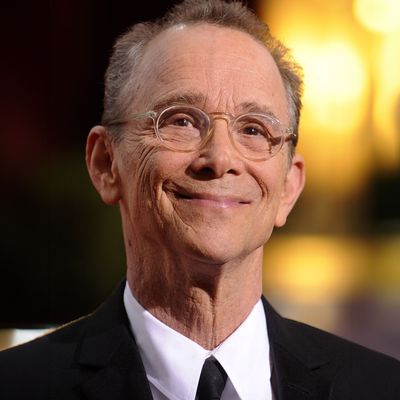
[0:19] Gordon Cox: On this episode of Stagecraft, I'm talking to Joel Grey.
[0:23] Gordon Cox: He's a Tony, Oscar, and Golden Globe winning actor whose storied career has included creating the role of the MC in the original production of Cabaret and reprising the part in the 1972 film, originating the role of George M. Cohan in the musical George M, playing Amos Hart in the original cast of the long-running revival of Chicago, and creating the role of The Wizard in Wicked.
[0:46] Gordon Cox: He's also a photographer who just published his fifth book, The Flower Whisperer. And in recent years, he's also directed regularly. He co-directed the Tony Winning 2011 Revival of the Normal Heart. And he also more recently directed the Yiddish language production of Fiddler on the Roof, which got raves from critics, won the 2019 Drama Desk and Outer Critic Circle Awards for Best Musical Revival, and recently celebrated one year of off-Broadway performances.
[1:12] Gordon Cox: Gray is in the studio with me to talk, directing in a language he doesn't know, his memories of Hal Prince, and sexy flowers. Hi Joel, thanks for joining me.
[1:20] Joel Grey: Great to see you.
[1:23] Gordon Cox: So I have a thousand. I don't think we've met before.
[1:27] Joel Grey: I think unless briefly, briefly, no, I think this is the first time we're actually sitting down and chatting. So I'm delighted to sit with you.
[1:49] Gordon Cox: But before I get to that, I want to talk to you about why you feel like this translation ends up being so successful. I was saying before we turned the mics on that I am not the biggest Fiddler fan, as much as I recognize it as a great work of art, and yet I was surprised by how much the change in language, sort of hearing it with new ears in this new language, made the whole thing feel fresh and surprising and affecting in a way that other productions I've seen in English have not been. What's your take on that? Why do you think that happens?
[2:28] Joel Grey: Um I think it's I think we've brought it to its kernel, its beginning. And I worked with the Sholom Aleichem stories, which is what Fiddler was derived from.
[2:48] Joel Grey: Right. The story of Tevye the Milkman, and I wanted to tell it in a way that was more like Chekhov than Broadway. And more about the play and the people rather than the production. Plus, we didn't have any money for a production.
[3:15] Gordon Cox: Right.
[3:17] Joel Grey: And I didn't speak Yiddish.
[3:20] Gordon Cox: Right.
[3:21] Joel Grey: And half the cast learned it in three weeks.
[3:28] Gordon Cox: Wow.
[3:29] Joel Grey: It's not it's if you think about it, it's not possible.
[3:33] Gordon Cox: Yeah, it seems like it. And did working on the show in this way have the same effect as it had on me? Did you see it sort of differently as you began to work on it in another language?
[3:47] Joel Grey: Yeah, yeah. I did. I saw it in a very intense human story about a family not unlike families across the world today.
[4:05] Gordon Cox: Yeah. And how well did you know this show? I mean, I'm sure we've all seen it, but I knew it very well.
[4:13] Joel Grey: I was at the out of town tryout in Washington.
[4:17] Gordon Cox: Wow.
[4:18] Joel Grey: Hal Prince was my very good friend.
[4:22] Gordon Cox: Sure.
[4:22] Joel Grey: And had you this was this was before Cabaret?
[4:25] Gordon Cox: This was before Cabaret, wow, okay.
[4:26] Joel Grey: So we were just buddies. And his family was part of my family, and you know, I loved him very much.
[4:33] Gordon Cox: Yeah.
[4:34] Joel Grey: And so we were invited down there, my wife and I, and I was very moved and thrilled by Robin's work.
[4:48] Gordon Cox: Yeah, right.
[4:49] Joel Grey: Thrilled by the lyrics and the music. Did it feel groundbreaking at the time?
[4:58] Gordon Cox: Oh, you had no nobody had ever seen anything quite like it.
[5:02] Joel Grey: Yeah, I would imagine so, yeah. And I was overwhelmed at the end of it as a Jewish man. It got me. And even though it was very in the best sense broadly, somehow the story and the circumstance and to see it so beautifully portrayed on Broadway with an outstanding unique performance by Zero Mostel.
[5:45] Gordon Cox: Right, yeah, who brought something to it that was not necessarily the origin the real Tevye.
[5:54] Joel Grey: Right. But he brought something to it that was magical, and so I just was gobsmacked.
[6:02] Gordon Cox: Right. And then I've I think I've seen every production. But this made us the fact that it was in a foreign language and that there was no money to do anything, and it was in a little theater downtown.
[6:24] Gordon Cox: Yeah, let's talk let's actually talk a little bit about how the production came about because originally it was just supposed to run for a few months, right?
[6:31] Joel Grey: Uh yeah. I mean, if it ran at all it was that kind of like what are we doing? Something.
[6:38] Gordon Cox: And after I read the play, we listened to the we did a cast reading in Yiddish.
[6:50] Joel Grey: Okay, and my agent Gary Kirsch was there, and I said there's something we need to do here. And then we started to look around for cast members, and this genius, Steven Skybell, came in out of the blue.
[7:14] Joel Grey: I had directed him in a play at Two River Theater.
[7:19] Gordon Cox: Okay, yeah.
[7:20] Joel Grey: Of On Borrowed Time. And he had a small regular, you know, Midwestern part, and he was really good. But I had no idea that he knew Yiddish.
[7:34] Gordon Cox: And that Oh, he knows Yiddish.
[7:35] Joel Grey: Wow. Yeah. Yeah. Oddly enough, he's from Lubbock, Texas. One of, you know, I don't know how many Jewish families there were.
[7:46] Gordon Cox: Yeah.
[7:47] Joel Grey: But they were very connected, and they were very involved in Shabbas and all those things. And then he went to Northwestern, maybe, and studied, yeah, thought to study Yiddish, not knowing he was ever gonna do this.
[8:09] Gordon Cox: Yeah, right.
[8:10] Joel Grey: Play Tevye in your production.
[8:12] Gordon Cox: Lovely, yeah. Lucky, lucky, lucky.
[8:14] Joel Grey: Yeah, right.
[8:15] Gordon Cox: And so whose idea was the production to begin with? Whose idea was Fiddler in Yiddish?
[8:21] Joel Grey: It was done 50 years ago.
[8:23] Gordon Cox: Right.
[8:24] Joel Grey: In Israel.
[8:25] Gordon Cox: Right.
[8:26] Joel Grey: And Zalman Molotek, right, who's the head of the Folksbiene, had...
[8:26] Gordon Cox: Which is actually tell listeners who don't know what is National Yiddish Theater.
[8:38] Joel Grey: Right, here in based here in New York.
[8:39] Gordon Cox: Yes.
[8:39] Joel Grey: Yeah. And I think he had known of this version and loved it. But whoever imagined it could ever get done.
[8:51] Gordon Cox: Right.
[8:52] Joel Grey: And it was a sort of a mini success in Israel. Israelis didn't like the Yiddish.
[9:02] Gordon Cox: Oh.
[9:03] Joel Grey: Because they were pioneers. And they were looking not to be persecuted and run after. And they were thinking of themselves as new. And that language was old.
[9:19] Gordon Cox: Right.
[9:20] Joel Grey: So then they did it, I guess, in Hebrew.
[9:23] Gordon Cox: Yeah.
[9:23] Joel Grey: And that was a success. However, 50 years ago. But Zalman had been following it and you know, pursuing this property, I think for many years.
[9:41] Gordon Cox: Right. And did he reach out to you about the idea?
[9:47] Joel Grey: Yes, yeah. He did.
[9:48] Gordon Cox: And what did you think of it?
[9:49] Joel Grey: He said, would you like to direct it or play Tevye?
[9:55] Gordon Cox: And did you have to think about that?
[9:57] Joel Grey: No. I always wanted to play Tevye.
[10:01] Gordon Cox: Yeah.
[10:02] Joel Grey: But I knew that the time had passed.
[10:05] Gordon Cox: Yeah, yeah.
[10:06] Joel Grey: It's a big part. I really thought it should be a younger man. Plus, I didn't I'm no longer very interested in performing.
[10:17] Gordon Cox: Yeah.
[10:18] Joel Grey: I love directing. So I said, I don't understand I don't speak Yiddish. He says, okay. I and I called him the next morning. I said, I'll do it. Not knowing how, when, where, or why. All I knew is that I needed to do this.
[10:45] Gordon Cox: And then it was so it started last summer.
[10:49] Joel Grey: You just oh you in fact the show has been a year worth of performances as of I think today, actually, as we're recording or very soon.
[10:59] Gordon Cox: Um the recording is phenomenal.
[11:02] Joel Grey: Yeah, yeah, yeah.
[11:04] Joel Grey: Phenomenal good, including songs that were cut from the show originally.
[11:11] Gordon Cox: Oh, interesting.
[11:12] Joel Grey: It's really beautiful, yeah.
[11:15] Gordon Cox: Yeah.
[11:16] Joel Grey: And so time life. I think that's okay.
[11:20] Gordon Cox: Yeah.
[11:21] Joel Grey: Okay, yeah.
[11:22] Gordon Cox: Um and so you ended up you ended up doing it for three months.
[11:29] Joel Grey: You started in the summer, you got yeah, but how do we do it?
[11:33] Gordon Cox: Yeah, how did you tell me how do you do it?
[11:35] Joel Grey: Yeah, with no money, uh-huh, and very few actors who know Yiddish.
[11:42] Gordon Cox: Right.
[11:43] Joel Grey: Well, we auditioned, and Stephen was heaven sent. I mean, that's just fate right there, right? He's just magnificent. And there was a lot of interest in it. A lot of people, you know, who had never done anything like that before were curious and came and auditioned.
[12:06] Joel Grey: And we had so many people wanting to be in it. That was the surprise.
[12:15] Joel Grey: Right. And so we had the pick of the you know, the litter, so to speak. And was there any sort of knowledge of Yiddish requirements of their own? They all needed to be able to audition a piece in their audition. They had a prep to prepare that. And um there were just so you know that anybody was gonna do that is serious.
[12:47] Joel Grey: Yeah, absolutely. And really wants it. So it created a kind of dynamic. Right. That like, ooh, how do you get into this? And we had a great guy from the folks being there by the name of Muttoldidner, who was the Yiddish expert. Right. And he would work with those people all day long. Whenever they were out of rehearsal, they were in Yiddish.
[13:22] Joel Grey: I imagine, yeah, because you have to really, in order to deliver a line, you have to know what every single piece is and how it adds up to convey meaning, right? So you really have to. I just needed to know the English.
[13:34] Gordon Cox: Is that true though? Could you get away with just knowing the English?
[13:39] Joel Grey: Yeah, that's how I did it.
[13:40] Gordon Cox: And did you work off the original English?
[13:43] Joel Grey: I worked off a translation, like a translation back into English of the Yiddish.
[13:53] Gordon Cox: Okay. And how much of a challenge did that end up being? Did it surprise you in either way on either end of the spectrum?
[14:03] Joel Grey: No, that wasn't a problem because as a director, I was just doing the job. But then I thought, how are we gonna make this pure and simple? So I called good friends, Hal Prince.
[14:25] Joel Grey: Yeah, for one, yeah, and he recommended Beowulf Borett. Uh-huh. Yeah. Set designer, yeah. To design it. And Ann Hulled Ward, I worked with before and loved working with her.
[14:41] Joel Grey: Yeah, both Tony Winners. And Peter Kazarovsky, who I worked with on Anything Goes.
[14:50] Gordon Cox: Right.
[14:50] Joel Grey: All right. So I got all these top Broadway talents.
[14:55] Joel Grey: Yeah, absolutely. To come down and work their tushies off.
[15:01] Gordon Cox: Yeah.
[15:02] Joel Grey: For nothing. As did I. Yeah. But somehow there was a passion. And we were all just so focused on telling this story. And it grew.
[15:17] Gordon Cox: How big was that first theater?
[15:19] Joel Grey: That's 400, maybe?
[15:22] Gordon Cox: Yeah. When did you start to have a sense that there could be a larger life to it beyond the initial run?
[15:30] Joel Grey: Um, opening night.
[15:34] Gordon Cox: Oh, okay.
[15:36] Joel Grey: Oh yeah. Because of the response?
[15:38] Gordon Cox: Yeah.
[15:38] Joel Grey: Because of what we saw and what they responded to.
[15:43] Gordon Cox: Right.
[15:44] Joel Grey: Right.
[15:45] Gordon Cox: Yeah. Were some actors better with the Yiddish than others, did you find? Or like was that did you deal at all with that?
[15:50] Joel Grey: Oh yeah, that was absolutely important to the folks. Is that everybody who was gonna speak Yiddish had to be perfect?
[16:08] Joel Grey: Right. Because their audience came after hearing so many performances in Yiddish, that's why they came.
[16:19] Gordon Cox: Right.
[16:20] Joel Grey: And so there was always that feeling that somebody in the audience was gonna say, hey, wait a minute, that's not you didn't pronounce that right.
[16:28] Gordon Cox: Yeah, right.
[16:29] Joel Grey: So it was very monitored and beaten into them.
[16:34] Gordon Cox: Do you have a sense of how well now these actors can like maybe who didn't know actors who didn't know Yiddish very well?
[16:44] Joel Grey: It's amazing now. It's amazing. I am stunned.
[16:50] Joel Grey: But we were also scared of doing it wrong. Yeah, that everybody just fought to make it right. And uh they do it every day.
[17:05] Gordon Cox: Wow.
[17:06] Joel Grey: Still, I imagine they're not gonna be able to do that.
[17:09] Gordon Cox: They had Yiddish.
[17:10] Joel Grey: Yeah, of course.
[17:11] Joel Grey: Um, you know.
[17:13] Gordon Cox: Yeah. You started to talk a little bit about this uh earlier, but you mentioned kind of wanting going back to the stories and really getting to the kernel of it. Why? What was the impulse there for you and what were you really hoping to draw out of it that you feel like maybe had gotten lost or overshadowed?
[17:36] Joel Grey: Um, anti-Semitism.
[17:39] Gordon Cox: Uh-huh.
[17:40] Joel Grey: Growing anti-Semitism that I was feeling very personally and powerfully. I mean, not specifically because of somebody that but just the world.
[17:54] Joel Grey: Right. And um also my father was a great Yiddish klezmer, clarinetist, and comedian.
[18:05] Joel Grey: Right. And he loved Yiddish.
[18:10] Joel Grey: Oh. I mean, adored it and played it, I mean, as if his life depended on and gave his life to performing that.
[18:21] Joel Grey: And he was not he he suffered anti-Semitism in his work.
[18:34] Joel Grey: Jews, especially, who said, oh no, no, we're American now. We don't do that in the United States. Those are for the greenhorns. Or old people or whatever.
[18:48] Joel Grey: And he never backed down. And somewhere that stood very strong in me.
[18:54] Joel Grey: Yeah. And I ended up thinking that I was in a way doing this for him.
[19:01] Gordon Cox: Yeah.
[19:02] Joel Grey: Do you feel like you too love the language now? Or did you before?
[19:05] Joel Grey: I always loved it.
[19:07] Joel Grey: Yeah. I loved hearing it.
[19:09] Joel Grey: I just didn't speak it.
[19:10] Gordon Cox: Yeah.
[19:11] Joel Grey: Because my mother didn't.
[19:12] Gordon Cox: Right. You mentioned you directed it uh Two River, New Jersey, and we've seen uh you co-directed The Normal Heart on Broadway. Directing is a thing you're doing more of, and you mentioned earlier that it you've you're really enjoying it. Why? What uh what do you what are you enjoying?
[19:26] Joel Grey: I've always loved it.
[19:29] Joel Grey: Yeah.
[19:29] Joel Grey: And what are you what are you getting from it now? Why do you why are you really enjoying it these days?
[19:34] Joel Grey: I love actors.
[19:36] Gordon Cox: Yeah.
[19:37] Joel Grey: And I love solving the actors' problems with them.
[19:43] Joel Grey: Right. That's um very satisfying.
[19:46] Joel Grey: And then seeing them go out like grown-ups and getting the laughs and making the audience cry and being true and real is joyous.
[20:03] Joel Grey: It's like having kids that grow up and turn out good.
[20:09] Gordon Cox: Do you find you're also a photographer? Do you find that the sort of working with designers on a uh production? Is there anything that sort of visual element? Do you find that they're oh the visual visual either that those two visual sort of skills are overlap for you in terms of playing?
[20:28] Joel Grey: They are.
[20:28] Joel Grey: Okay. They definitely are in my choice of the artistic team really came from my own taste, right?
[20:41] Gordon Cox: So to speak.
[20:42] Joel Grey: And of course, with every director, I'm sure that's it's true.
[20:46] Gordon Cox: Right, yeah.
[20:47] Joel Grey: Um, and uh speaking of photography, earlier this summer you released this is your fifth book of photographs, is that right?
[20:55] Joel Grey: Um you've been taking photographs for a long time now.
[20:58] Gordon Cox: When did you start doing it?
[20:58] Joel Grey: Sixteen years ago.
[21:01] Joel Grey: Okay. I had my first book and sh uh exhibition.
[21:09] Joel Grey: But I'd been taking pictures for 30 years before that.
[21:12] Gordon Cox: All your life, yeah.
[21:13] Joel Grey: For me.
[21:14] Joel Grey: Yeah. I never thought that was it was going to be, you know, something anyone else would be looking at.
[21:22] Gordon Cox: Right.
[21:22] Joel Grey: And when did you discover that they would be, or that you were interested in having go with the colours?
[21:28] Joel Grey: A friend of mine did a book of oddly enough, flowers.
[21:34] Joel Grey: Oh, all right. And he said, I like your photographs.
[21:39] Joel Grey: He just knew me as a you know playful photographer.
[21:43] Joel Grey: Right. He says, Would you do something for this book?
[21:46] Joel Grey: And I said, Oh, all right. And my favorite flower is Lily of the Valley.
[21:50] Joel Grey: Right. So I went about making a collage of a picture of myself when I was nine in a little garden of Lilies of the Valley, which were like trees.
[22:16] Joel Grey: And it ended up in a book.
[22:18] Gordon Cox: Right.
[22:18] Joel Grey: And the editor of that book said to me, Do you have any other photographs that you've done?
[22:28] Joel Grey: Yeah. I said, Yeah, but they're millionaire. They're my kids and my travels and the movies, blah, blah, yeah, yeah, bah.
[22:38] Joel Grey: I'm sure your audience is going to like that.
[22:40] Gordon Cox: Yeah, well, I mean.
[22:42] Joel Grey: Anyway, um I s I happened to have been very lucky during the time I was in Cabaret and George M and most of those shows.
[22:54] Joel Grey: I had a secretary who thought that everything I did was perfect.
[23:03] Joel Grey: The one person in the world.
[23:05] Joel Grey: Yeah.
[23:07] Joel Grey: Right. So she saved every negative.
[23:13] Joel Grey: Of all my travels, my kids, my uh brother, my relatives.
[23:21] Joel Grey: Wow. And so I said, Yeah, I think we have stuff.
[23:28] Joel Grey: He says, send me everything you've got.
[23:32] Joel Grey: I said, you know, never thinking.
[23:35] Joel Grey: Right. I'm an actor.
[23:36] Gordon Cox: Yeah, right.
[23:39] Joel Grey: And um so we sent stuff over to him, and he called me a couple of days later.
[23:45] Joel Grey: He said, I think it's a book.
[23:50] Gordon Cox: What?
[23:50] Joel Grey: Yeah.
[23:51] Joel Grey: What?
[23:52] Gordon Cox: He said, I think it's a book.
[23:54] Joel Grey: Give me a few weeks and um come in and take a look.
[24:00] Joel Grey: And then he had done these things of my travels.
[24:04] Gordon Cox: Right.
[24:05] Joel Grey: And um.
[24:08] Joel Grey: And I came in.
[24:09] Joel Grey: Went from there.
[24:10] Gordon Cox: Yeah.
[24:10] Joel Grey: Yep.
[24:11] Joel Grey: And this latest book is Flowers, is uh you uh.
[24:17] Joel Grey: But the first book was not.
[24:18] Gordon Cox: Was not, right?
[24:19] Joel Grey: Yeah, yeah.
[24:19] Joel Grey: Right.
[24:20] Joel Grey: This latest book in like that first photo you took, uh, or the first photo that was published, um, is flowers, and you have uh you you've had a long fascination with flowers, it sounds like.
[24:31] Joel Grey: Yeah, yeah. And um I've it's just they've been very important in my life in every way. Just fascinating and Georgia O'Keeffe. Right. Robert Mapplethorpe. Yeah. Sexy flowers. Well, they were, but I didn't think necessarily because I would always have fresh flowers in my house. I think my mom did. And um I just always loved that. And I even gardened and um sent away for seeds when I was like nine.
[25:13] Joel Grey: Okay. Yeah. And so this book is your uh your recent photographs.
[25:20] Joel Grey: Yeah, but this book took about three years.
[25:22] Joel Grey: Oh, okay. Because I was just shooting flowers. I hadn't really opened myself up to the way they open themselves up and reveal their parts.
[25:42] Joel Grey: Uh-huh. So to speak. Yeah. That most people just sort of take for granted. And um I wanna it took me a while to become really focused.
[25:55] Joel Grey: Right. On those those ways in which they're so sexy.
[26:01] Joel Grey: Yeah. Yeah. What do you smile? Do you know yet what your next book is about?
[26:07] Joel Grey: No. The subject, the photographic subject of your book. I just wondered I I how actually?
[26:14] Joel Grey: Okay. I don't think it's my next book, but I've become obsessed with clouds.
[26:21] Joel Grey: Oh, okay. I can look at pictures of clouds all day, I feel like, so that'd be fun to take photos of, right?
[26:29] Joel Grey: So I don't know.
[26:31] Joel Grey: Yeah. Um you mentioned Hal Prince earlier, who was actually the very first guest on this very podcast uh a few years ago. Um you worked with him uh knew him well, of course. What well, first of all, was there anything you learned from working with Hal that you carried with you into directing as you started directing?
[26:54] Joel Grey: Probably probably be he trusted actors, and I think that casting was the clue, the right actor for the part who had talent.
[27:13] Joel Grey: Right. And it could be unexpected in terms of what the the script says.
[27:21] Joel Grey: Right. And then I I played a lot of parts that I was really not ideal for.
[27:33] Gordon Cox: Like what?
[27:33] Joel Grey: But I made them my own.
[27:35] Gordon Cox: Yeah. What what do you consider one of those parts?
[27:39] Joel Grey: George M. Cohan.
[27:40] Gordon Cox: Yeah, okay.
[27:44] Joel Grey: I mean tough Irishman.
[27:46] Gordon Cox: Yeah.
[27:47] Joel Grey: Sure. Right. On on feeling.
[27:54] Joel Grey: Um so there I was.
[27:59] Joel Grey: Yeah. And the MC.
[28:03] Gordon Cox: Uh-huh.
[28:03] Joel Grey: I mean, he was just I couldn't imagine even thinking of such a character. Or to play, because he's so disgusting.
[28:16] Joel Grey: And vicious and powerful.
[28:21] Joel Grey: Right. Yeah. And a real villain. And yet I had to find something about him that made the audience accept him when he was trying to be charming.
[28:44] Gordon Cox: Yeah.
[28:45] Joel Grey: And he fooled them.
[28:47] Gordon Cox: Right.
[28:49] Joel Grey: Yeah. What uh do you have a favorite memory of working with Hal over the years?
[28:58] Joel Grey: Lots. We also did an opera together.
[29:03] Gordon Cox: Oh, I'm not sure I knew that. Which one was that?
[29:05] Joel Grey: Um Silver Lake.
[29:07] Gordon Cox: Oh, okay.
[29:07] Joel Grey: Kurt Weill.
[29:08] Gordon Cox: Uh-huh.
[29:09] Joel Grey: New York City Opera.
[29:10] Gordon Cox: Uh-huh.
[29:12] Joel Grey: My debut.
[29:16] Joel Grey: And he directed it.
[29:18] Gordon Cox: Oh.
[29:20] Joel Grey: Huh.
[29:21] Gordon Cox: I didn't know that.
[29:22] Joel Grey: See?
[29:22] Gordon Cox: Yeah.
[29:23] Joel Grey: It's not in your papers, right?
[29:24] Gordon Cox: No, it's not.
[29:25] Joel Grey: It's not, right?
[29:28] Gordon Cox: Um what was the question?
[29:30] Joel Grey: Uh just what your favorite one of your favorite memories of working with him uh is.
[29:36] Joel Grey: Um I think recently it was uh I was quoted as struggling with the character of the MC.
[29:53] Joel Grey: I I it was sort of written as a German song and danceman. And not quite as ugly and dangerous as he ended up being.
[30:14] Joel Grey: And I did not want to be a song and danceman in my first Broadway appearance.
[30:22] Gordon Cox: Right.
[30:23] Joel Grey: Creating a role.
[30:33] Joel Grey: Uh-huh. A song and dance man had become a bad thing.
[30:33] Joel Grey: Because it sort of stopped me from getting acting jobs.
[30:33] Gordon Cox: I see.
[30:33] Joel Grey: Oh, he's a song and dance man.
[30:35] Gordon Cox: Right.
[30:36] Joel Grey: So it was tough. And I remembered I was learning all the songs and doing everything that was supposed to be done.
[30:46] Joel Grey: And I thought to myself, I was on tour once, and I saw a nightclub comedian in somewhere, Kansas City or something, and he was the lowest, slimiest, uh just absolutely would do anything to make the audience laugh, no matter how gross or disgusting.
[31:17] Joel Grey: And they loved him.
[31:20] Joel Grey: They ate it up.
[31:22] Gordon Cox: Yeah.
[31:23] Joel Grey: And I thought, God, that's the most horrible thing I've ever seen.
[31:28] Joel Grey: And while we were rehearsing just before we went out of town, I said to Hal, I'd like to try something today at the run-through.
[31:40] Gordon Cox: You know the story?
[31:41] Joel Grey: I don't know the story.
[31:42] Gordon Cox: Tell me more.
[31:44] Joel Grey: Um, he said, okay, Jolie.
[31:48] Joel Grey: Yeah, he's the only person.
[31:50] Joel Grey: You like calls you Jolie?
[31:52] Gordon Cox: Yes, who I ever allowed.
[31:53] Joel Grey: Yeah. Except for my Aunt Jean.
[31:55] Gordon Cox: Yeah, well.
[31:56] Joel Grey: Yeah, she she gets a she gets a pass too.
[31:59] Gordon Cox: Yeah.
[32:00] Joel Grey: The two of them.
[32:02] Gordon Cox: Yeah, yeah, of course.
[32:02] Joel Grey: So I thought to myself, I'm gonna play this like that creep in Kansas City, who was so disgusting.
[32:15] Joel Grey: And I started to feel up the girls in the opening number, and I was vicious and intent, and I thought, oh my god.
[32:30] Joel Grey: I kept doing it till the end, and I said, people are gonna think that's me.
[32:38] Joel Grey: You know, yeah, right. How does he know about that?
[32:43] Joel Grey: And I was so devastated that I had shown that part of myself.
[32:50] Joel Grey: Yeah, I was I went and hid behind a um a corner of the theater.
[33:01] Joel Grey: Yeah, and I was practically in tears, and uh Hal came back, he put his arm around me, he said, That's it, Jolie.
[33:16] Joel Grey: So together, we found that crazy thing.
[33:24] Gordon Cox: Yeah.
[33:26] Joel Grey: Who else do you feel like uh you sort of learned the biggest lessons from uh in the entertainment industry? Are there people that you consider really influential on to you and sort of how you work and the kind of work you did?
[33:42] Joel Grey: Well, there I mean, there are a lot of actors and actresses that I worship in terms of their magic and openness and uh guts it's always you know Angela Lansbury, Bernadette Peters, Donna Murphy, Patti LuPone, yeah, Audra McDonald, those are the those are the talents that make me crazy.
[34:37] Joel Grey: Yeah, yeah. And happy.
[34:41] Gordon Cox: What's next for you now? What's on your plate as a director or a photographer or I'm I'm trying to put together um a new project to direct.
[34:54] Joel Grey: To direct, okay.
[34:56] Gordon Cox: For Broadway.
[34:57] Joel Grey: Okay, I was just gonna ask here in New York.
[34:59] Gordon Cox: Okay. Can you tell us anything about it or not yet?
[35:03] Joel Grey: Yet.
[35:03] Gordon Cox: No, that's what I figured.
[35:04] Joel Grey: Yeah.
[35:04] Gordon Cox: I know you I knew that's what you figured.
[35:06] Joel Grey: Is there a show?
[35:06] Gordon Cox: We both figured?
[35:10] Joel Grey: Yeah, we both figured.
[35:12] Gordon Cox: Uh. Is there a show that you'd really like to get your hands on as a director?
[35:15] Joel Grey: Not maybe this one that you're trying to get your hands on at the moment, but uh is there another maybe classic like Fiddler that you're interested in really tackling?
[35:25] Joel Grey: Um is there anyone who you have not yet had the chance to work with who you would like to work with?
[35:38] Joel Grey: I'd like to work with John Kander again.
[35:40] Gordon Cox: Yeah, great.
[35:41] Joel Grey: On something.
[35:42] Gordon Cox: Great.
[35:44] Joel Grey: Sold.
[35:45] Gordon Cox: Make it happen, Broadway.
[35:49] Joel Grey: Good.
[35:50] Gordon Cox: Well, I uh look forward to hearing what your new project is uh as soon as it comes together.
[35:56] Joel Grey: Um thanks for being here, Joel.
[35:58] Joel Grey: Thanks for chatting.
[35:58] Gordon Cox: It's great talking to you.
[36:00] Joel Grey: It was fun.
[36:01] Gordon Cox: Yeah. Thank you.
[36:08] Gordon Cox: That was Joel Grey, the director of the Yiddish language revival of Fiddler on the Roof, now playing it off Broadway's Stage 42. If you like what you're hearing on this and other episodes of Stagecraft, I'd be very grateful if you took the time to help other theater fans find us by rating and reviewing us on Apple Podcasts.
[36:25] Gordon Cox: Or tell a friend. I'll be back with another new episode in two weeks. Until then, see you at the theater.
© Broadway Podcast Network, All Rights Reserved