

Co-founders Adrienne Warren and Zhailon Levingston on BAC's work at the intersection of arts and activism... Read More
From the show: Stagecraft with Gordon Cox
Guests

Featured Shows
About
Co-founders Adrienne Warren and Zhailon Levingston on BAC's work at the intersection of arts and activism.
Transcript
This transcript was automatically generated and might contain errors.
[0:00] Gordon Cox: Today's podcast is brought to you by the Hulu original documentary, We Are Freestyle Love Supreme.
[0:06] Gordon Cox: Before the world knew of the award-winning Broadway musicals In the Heights and Hamilton, Lynn Manuel Miranda, together with Thomas Cale and Anthony Veniziale, founded an improv hip hop group called Freestyle Love Supreme.
[0:19] Gordon Cox: Experience their 15-year journey, culminating with much anticipated reunion performances in New York City in 2019. Stream We Are Freestyle Love Supreme now, only on Hulu.
[0:38] Gordon Cox: Welcome to Stagecraft, Variety's Theater Podcast, bringing you backstage and behind the scenes with the Broadway stars, creators, and industry leaders keeping theater alive during the pandemic.
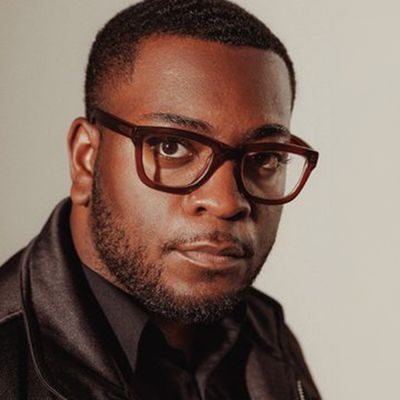
[0:49] Gordon Cox: I'm your host, Gordon Cox. On this episode of Stagecraft, I'm talking to Adrienne Warren and Zhailon Levingston, two of the co-founders of the Broadway Advocacy Coalition.
[1:00] Gordon Cox: With theater on pause and the country in the midst of a national reckoning over racial justice, the Broadway Advocacy Coalition last month hosted a three-day digital forum called Broadway for Black Lives Matter Again, addressing systemic racism in the theater industry.
[1:15] Gordon Cox: But that's far from the first time the coalition has worked at the intersection of art and advocacy. The group was founded in 2016, launching that year with its first Broadway for Black Lives Matter event, and has organized a number of initiatives since then, including Theatre of Change, a methodology developed by BAC in partnership with Columbia Law School's Center for Institutional and Social Change.
[1:37] Gordon Cox: BAC's broad engagement has also led them to work with organizations like the Center for Popular Democracy, the Alliance for Quality Education, and the Bronx Defenders. Now, Warren, who was playing the title role in Tina before the pandemic put Broadway on hold, and Levingston, who is the U.S. Associate Director on Tina, are both in the virtual studio with me to talk to us about the work they've done, the work that lies ahead, and how BAC developed one model for how theater folks everywhere can think about the ways that art and advocacy can fit together.
[2:14] Adrienne Warren: Hi, thanks for having us, Gordon.
[2:16] Zhailon Levingston: Yeah.
[2:16] Zhailon Levingston: Hello, hello.
[2:17] Gordon Cox: I wonder if we could start first by talking about where you both were in your lives and your careers in 2016 when the Broadway Advocacy Coalition first formed and what prompted that.
[2:30] Adrienne Warren: Um, I'll go first. I was um in Shuffle Along at the time on Broadway. And we it was, you know, a fantastic time on Broadway specifically because you know, it was the year Hamilton was on, Shuffle Along was on, Color Purple was on, Broadway was finally seeing all this diversity that we always talk about. And then it was the, I think it was the murder of Eric Gardner that really was the straw that broke the camel's back for us. And um we realized there was a lot of silence within the Broadway community um towards the matter and towards supporting black lives and black bodies. And it was a very isolating moment. And I remember being on stage and seeing the ensemble of our cast. They were tapping and they were dancing and they were smiling, but there were tears falling from their eyes.
And I will never forget that image in my head of looking out into a sea of white faces in the audience and looking on stage, these incredible performers who were black bodies and they were hurting. And um at that moment, Ambrahimon, myself and Britain Smith and Christian Dante White, we were all in the show together and we were in close proximity with our dressing rooms, and we were just talking about it a lot. And something needed to be done, and we wanted to do something. And so that's kind of how it happened.
[4:04] Gordon Cox: Right. And how did you know Zhailon? How did you how did the group of co-founders all know each other? I know a lot of you were in Shuffle Along. Zhailon.
[4:11] Zhailon Levingston: Yeah, so in 2006, I had just shown up to New York. I was living in Los Angeles before. And like I showed up with three suitcases, one equity check in the middle of a blizzard, and was so inspired, right, by the season that Adrienne was just talking about. So I was like, I'm about to take over Broadway. Here I am, City, take me in and begin, you know, whatever the stereotypical path for a performer who shows up to New York is, but very quickly realized that I was showing up to New York, yes, in a very inspiring time on Broadway, but in a very dire time in our country more broadly. And so to kind of make a long story short, I switched my creative intention from performing and really started to think about how I could create space for conversations to happen around uh police brutality and injustice in our country, and end up forming a um arts campaign called Words on White, wherein we used a giant white canvas to bring communities together to talk about some of these issues and through that campaign uh some of the folks uh in the original cohort I think heard about what we were doing and invited us into the fold and then from there I just kind of like melded into what would eventually become Broadway Advocacy Coalition.
[5:46] Gordon Cox: Right. And tell me a little bit about what that what the goal was at least initially for the organization and how you imagined it working.
[5:55] Zhailon Levingston: Well the crazy thing about it is I don't think we imagined it as an organization at all initially we hosted a um a concert called Broadway for Black Lives Matter because we thought you know Broadway does a concert for everything. When something happens Broadway responds with an event and we fundraise and we you know show we amplify the voices of those who need to be heard and yet no one was there to support us. So we wanted to do that first. And so we produced this incredible concert and it was free but it was completely sold out and it was an opportunity for us to bring artists into a room in the same space as you bring in a correctional officer into a room same space you brought in a lawyer to the room to talk about policy and we had never really seen anything like that done before.
And um that was just the beginning and we realized there that wait there's a there's a void here. There's like a need for this and um and so that was kind of the beginning and then we just kind of said well you know we had an incredible partnership with Columbia Law School for Broadway for Black Lives Matter for the event. They were so helpful. And um Susan Sturm and a bunch of people.
[7:06] Gordon Cox: How did you become connected to them? Was one of my was one of my first questions, actually, is how you sort of found all these. You partner with a lot of really great organizations. And I just wonder how those came about.
[7:16] Adrienne Warren: Yeah, I think didn't that come from Ben, Zhailon?
[7:19] Zhailon Levingston: I wasn't really sure.
[7:21] Zhailon Levingston: Yeah, it for sure came from Ben.
[7:22] Zhailon Levingston: So Ben Wexler, who is a composer and a writer and a uh artist in his own right, was a part of the uh coalition, a part of that weekend, uh in that event that Adrienne is talking about. And his mother happens to be uh Susan, who is uh a law professor at Columbia and just an amazing force of nature, who for some reason was really taken by what uh the original founders were trying to do and had a particular set of skills in helping us build capacity around coalition building, and um that's kind of how that partnership started. And also just to say, she could recognize that artists needed to be in conversation with policymakers and lawyers, but also like law students and policymakers needed to be in conversation with artists, and that artist had a very particular set of skills to bring to a certain conversation.
And I think it is her realizing and recognizing that that I think empowered us so greatly at the very beginning to then just like have the confidence to reach out to whoever very broadly and understand that we deserve to be in as many conversations as we felt uh we needed to be in.
[8:39] Gordon Cox: Yeah, absolutely. One of the things that I think makes what the Broadway Advocacy Coalition uh is doing so unique is this is the coalition part of it, the part where you join across, it's not just an arts organization, it is uh equity and an education and other, you know, like it's just sort of concerns, uh takes on a broad uh spectrum of ideas and uh thinking and action. How tell me about how that has evolved uh as the coalition has grown?
[9:09] Adrienne Warren: It's such a beautiful thing to see because I think one thing BAC does really well is that we examine the intersectionality of advocacy work within our community as a whole, and um it's so incredible because we're able to, like Zhailon said before, be in a lot of these conversations with people I never in a million years thought I would have a conversation with and be in a space to actually talk about social change work um and mass incarceration and you know, police brutality, and it's it's just been so beautiful to see. BAC is um an organization that is full of artists, lawyers, advocates, um, scholars and educators. It is unbelievable. And um, the amount of access there, the amount of resources there is incredible, and it's just been very, very inspiring to be a part of.
And I feel like I'm learning every single day. Every time I'm working with BAC, I am learning something new in some kind of capacity because I am I'm working hand in hand with people that are so versed in what they do, and they are so passionate about social change work. And it's been it's been such an honor and a delight, and it's been so inspiring.
[10:28] Gordon Cox: And how has being a part of all these conversations and talking to all these people uh for both of you changed you as artists? Zhailon, how does that for for you? How does that uh how did it affect what you do?
[10:42] Zhailon Levingston: I can't remember where this quote comes from, but it feels the heart of this quote is central to everything that BAC does, which is those that are closest to the problem must be closest to the solution. And what BAC does is centers the stories of the directly impacted, whether we're talking about Broadway, whether we're talking about mass incarceration and the criminal legal system, whether we're talking about our immigration system or the educational system. What we're doing is trying to find who's most directly impacted by the policies that are put out by these institutions. And thinking in that way is a dramatic shift from, you know, maybe before my work with BAC, thinking, where's the power?
Who has the power? Who has the power? And now I say, who has the story? Where's the story? Who has the story? And then understand that BAC's job is to bring the power to the story and to position the story in a way that builds capacity for everyone who was trying to affect policy, whether they're directly impacted or not. And conversely, what we learn and what we realize is that in some way we're all directly impacted. And what BAC has come to do is to kind of fill the void and the blind spot of people working in silos to uh impact the the lives of the directly uh affected. And we bring them all together in one room and say you have to start with this story. You have to start with this person's real life narrative, and you have to understand that this person is closer to the policy than the person who wrote the policy.
And once you like accept that, then it actually makes space for everyone, no matter who they are, to be able to put their hands in the change work machine and figure out how we all work together to um you know create impact, which is what we're all about.
[12:41] Gordon Cox: Yeah. And for you, Adrienne, how how have you shifted as an artist?
[12:46] Adrienne Warren: Well, that was so good. Um I I it's very similar to what Zhailon just said. I think, you know, I have been working in on Broadway in this industry for a little while now. And one thing that BAC has definitely amplified for me in my life as an artist is to focus on the story. What story am I telling? What do I want to actually be a part of? What do I want to put my energy in into? And what needles do I want to help push forward? And so I think I've always approached my work in that way, but I'm even more so cognizant of the choices, artistic choices that I'm making and um the spaces that I am being invited into.
[13:33] Adrienne Warren: I'm curating those a bit more because it really does matter. And it has actually really inspired me to learn about producing and learn about providing opportunities for other Black creators and Black minds and like-minded people. Um, it has given me an opportunity to learn more about policy and to implement that into my producing work if I have the opportunity. And it has just widened my lens so much on what I can do as an artist, as a songwriter, as someone who wants to produce, as someone who is working to learn to do more. Every day I'm learning to do more and more and more, especially in this time as we're all on this moment of pause. But all the work that we do in BAC has informed me in such a way that it has made me very passionate about helping my community and using any spotlight that I possibly have to share stories that I feel need to be amplified. And hopefully those stories can help change things within our community as a whole, things like policy change. And that is something I'm very, very passionate about, thanks to BAC.
[14:58] Zhailon Levingston: And tell us a little more about some of the cool initiatives that BAC has done over the last few years. Jalen, I'll let you take that since I was living in another country for a year.
[15:10] Zhailon Levingston: Yeah, you're in your hand, which I'm sure we'll get to that as well. I mean, there's, you know, to kind of try to condense some of our work to a concise answer. Um, first and foremost, a lot of the work has been trying to figure out who we are, what we do, and what our methodology is, and working together and with the community to figure out a methodology to do this change work. Um, one of the more prominent things that we've created over the past couple of years is a course at Columbia Law School called the Theater of Change. And what we do within the Theater of Change is we bring in these, um, we end up by the end of the course calling everyone changemakers, but we bring in people from education, we bring in the directly impacted, we bring in people from policy law students, and put them in a room with professional artists.
And we go through the process of centering a narrative, finding where there's policy potential within that person's narrative, figuring out where there's a theater of change, and by that, what we mean a place wherein the right audience will hear the right story in order for that story to affect policy and have a maximum impact. And we set up what we call an engagement strategy and help people find an engagement strategy to figure out how they not just produce a one-off kind of presentation of a person's narrative, but how do you actually create long-term engagement around policy work and how do you make it as specific as possible? So that has been a big part of our work.
[16:55] Zhailon Levingston: Also just partnering with different organizations and working with them to either produce events wherein we tell these stories to advocate, to fundraise, to build capacity. Um, and sometimes these are public-facing and sometimes these are inward events. Um, and a lot of the work that we're doing now is trying to figure out how do we take all of the work that we've done in other communities that are impacted by the criminal legal system, immigration, education. How do we bring what we've learned and turn it inward to Broadway itself? And so we've started with the Broadway for Black Lives Matter Again Forum, um, which was very, very, very, very successful last month, and we're building coalition across all of the industry.
There's so many different organizations and um collectives and campaigns that are popping up now and have who have been doing the work for a very long time. And so BAC is now trying to connect everyone as best as we can in order for us to all share resources, build capacity, and to advocate for things across points of connection.
[18:13] Zhailon Levingston: Um, we have one coming up this month, which is around education and how Black students are trained within white institutions. Normally in this country, you have to go to a predominantly white institution to get the resources needed to set yourself up in a certain kind of way in this industry, and we want to challenge that. We want to look at that, we want to look at what that costs internally for a student. Um, and so that's a program that we're working on that'll be on the 27th of July. Um, we're in lots of different conversations across the industry right now, um, from the ground and all the way to rooms wherein artists aren't usually allowed to advocate for themselves.
[19:04] Gordon Cox: I'll have more with Adrienne and Jalen right after the break.
[19:09] Gordon Cox: Today's podcast is brought to you by the Hulu original documentary, We Are Freestyle Love Supreme. Before the world knew of the award-winning Broadway musicals in the Heights and Hamilton, Lynn Manuel Miranda, together with Thomas Kail and Anthony Veniziale, founded an improv hip hop group called Freestyle Love Supreme. Experience their 15-year journey, culminating with much-anticipated reunion performances in New York City in 2019. Stream We Are Freestyle Love Supreme now, only on Hulu.
[19:44] Gordon Cox: And now here's more with two of the co-founders of the Broadway Advocacy Coalition, Adrienne Warren and Zhailon Levingston. You sort of alluded to one of my next questions, which was there are these organizations that have sort of popped up in recent weeks, like Black Theater United and We See You White American Theater. What are you part of my question was how do you work with those groups and what what's the link there?
[20:11] Zhailon Levingston: I think for Adrienne talk about that. I think for us really, um, we just recently had a meeting where we were just kind of connecting all these different coalitions and organizations that have been popping up and just seeing how we can support one another. Like, look, this we are not a monolith in this, and everyone is, you know, everyone can go and fight this their own way, but we should be there to support one another. And I think that's very, very important in social change work. Um, and so for us, it's really about connecting with them and seeing how we can be of service and help to them in any way. And, you know, let everyone do this work the way in which they see suit and the way in which they see fit.
And um, you know, BTU, um, Black Theater United, they are doing a lot of initiatives that are out on the ground in our country about political participation and voting and the census. And, you know, we're doing a lot of the work at home within the industry and talking to some of our higher stakeholders within the industry, as well as our community members and actors and artists. Um, so it's kind of nice to kind of just be aware of who's doing what, so that we don't necessarily have to take on all that work ourselves. So no organization has to take on all that work themselves because it is a lot of work. And we're already exhausted and tired. And this is a very, very difficult moment within our world that we're all dealing with.
Like, let's not forget we're also dealing with a pandemic here. So it is really important to have that thread of communication between organizations so that there is no crossover necessarily, but rather just support and amplification. And I think that's something that BAC does really well, and something we will continue to do during this time.
[22:01] Gordon Cox: And what does the organization look like right now? You've got a staff with the sort of positions and you've got a board and tell us about sort of how big it is. Is it a nonprofit, you know, a 501c3? Or please tell us about how it's out administrate on the administrative side, what it looks like.
[22:16] Zhailon Levingston: Yeah, we've been a nonprofit since 2016. Um and we have grown and branched out into this incredible team now. And like I said before, it's of artists, lawyers, educators, um, advocates, and that has just been so beautiful to see. And we also have an artist impact team that anybody can sign up for. You can go to our website, BwayAdvocacyCoalition.org, little plug there, and sign up to be on our artist impact team because when we do a lot of this, uh, like the Theater of Change work or the work that involves um people who are directly affected by mass incarceration and criminal justice reform, when we tell these stories, we have a team of people who are involved in telling those stories, and anybody can be a part of that.
And we just they just we just um released a campaign and it's on our Instagram, and it's been incredible. And we've just seen, we documented um the stories of um people imprisoned in our criminal justice system right now dealing with COVID, and we were telling their stories, and that is something that is not done because we don't have cameras in prisons. We don't really know that what's happening with these people who are deeply, deeply affected by this pandemic right now and cannot get the resources that they need to be taken care of. And so there's an opportunity there for anyone to be a part of that kind of work, and it doesn't have to be with BAC. You also can do that work on your own. And that's what's so beautiful about art is that all we we're storytellers.
So if you see something, you see a void there, use your voice, use your music. And that's what BAC encourages everyone to do. And if you would like to do it with an organization, we are also here to support that.
[24:06] Adrienne Warren: What have you found to be some of the biggest challenges in doing this work and putting this organization together and finding the support for it?
[24:16] Adrienne Warren: I will say for me, it's, you know, a bit like another nine to five job that I've already put on, you know. I'm, you know, as an artist, my hand is in a lot of different kitchens right now. And I'm working on things personally, but it's nice because I'm finally finding a bit of a balance and letting my social change work also influence my art. So it's feeling a bit more seamless as opposed to them being two very separate things. So that's been nice. So I've just been waking up a lot earlier than I usually wake up to answer emails.
[24:57] Zhailon Levingston: And what about the answering emails thing is a real thing in the time of COVID? That is a real test. But yeah, I agree with Adrienne 100%. You know, all of us have separate professional artistic lives, whether we're directors or performers or musicians. We all are also on our own separate artistic paths. And so it has been an interesting kind of evolution to see how can we balance both of those things and in what ways does the art intersect and in what ways does the art not? Because I think we also need our, I mean, artists are, in my opinion, to be the freest members of society. And so that does not always mean that, you know, things are easy for us or that it's easy to be the freest member of society.
But sometimes we have to go off into the wilderness so that we can come back with something. And so, you know, working to build the organization so that it has the space and capacity to deal with what it means to be led by a bunch of artists, basically, and you know, really a bunch of people who have other things that they're working on as well, not just artists, but our educators and the people who work in policy? Like everyone came to this after already having their own stuff going on, and so that's been, I think, a challenge that we've come to really embrace now and find a really happy medium with, as well as like defining ourselves. I think we spent a long time just trying to figure out like who are we, what do we do? And how does what we do, how is that different than what is already being done? And how do we not reinvent the wheel? Which is I think a question that can haunt new organizations for quite a while.
[27:02] Zhailon Levingston: As you mentioned, you know, Broadway for so long never really showed up for Black lives in the way that, you know, we pass the red bucket every spring and fall. Like how, what has been the reaction and has that changed at all in recent weeks?
[27:17] Adrienne Warren: Um, it's changed quite a bit in recent weeks. The truth of it, you know, to be completely honest with you, Gordon, I think there has been society has put a lot of pressure for this industry to act and to acknowledge what is happening and to hold a position in what's happening, and that doesn't also necessarily mean that people are gung-ho, like 100% changed, 100% enlightened and involved into these social, socially aware and aware creators and producers. That doesn't necessarily mean that, but what it does mean is now there's a willingness to listen, to learn, to unlearn, and to hopefully implement changes within institutions that need it most right now. And I'm gonna say like, okay, let's work with that.
Sometimes, you know, Ruben Santiago says sometimes you got to talk to the mask. And right now we realize there are a lot of masks we might be talking to. But I'm okay with that. As long as we are having a dialogue, as long as we are talking, as long as we are listening to one another, empathizing with one another and finding tangible steps, tangible steps towards solutions and towards a more equitable space for our community as a whole. That is what I care about. I think we are all very aware that this is not like a one-year plan, but this is like for the long haul and that's what I want it to be. I know I may not see it in my lifetime and I'm okay with that as long as I know that we have done BAC is doing the work to make this an equitable space for everyone within the system and outside of the system that is the work that we focus on. And I'm very proud to do that work because I know it's going to make this industry better for people later on when I'm gone.
[29:22] Zhailon Levingston: You know, as hard as the pandemic is in so many ways, it also feels like a unique opportunity for to enact maybe some of those tangible steps, Adrian, that you were talking about. Like if we're actually, when or when would we have the time to think about making systemic change except at a time when the system has to stop and has to be stopped? What about right now makes you particularly hopeful about what's happening and where we're going and where you hope we will go from here?
[29:55] Adrienne Warren: I'm hopeful. Um, like you said before, I don't really think that this moment would be happening um to the degree in which it is happening if it weren't for the pandemic. Having this moment to actually sit and feel and feel the pain and actually witness the pain of so many people in this industry. Um, that has ignited people. That has shocked a lot of people. A lot of people have felt um awakened and with that I'm hopeful because I know in this moment, people have time to do the work on their own. And I am going to trust that people are doing work on their own or their own, but I'm also gonna trust that they're not. So I am going to continue to do what I can, and BAC continues to do what we can to help with that education, to provide resources for those who may not know where to go to educate themselves.
Um, and that is that's why I'm very hopeful because if you come out of this moment, this pandemic, this moment that we're all in, if you come out of this the same person that you were going into it, something is wrong. You cannot come out the same. There is only before this moment and after. And we are focusing on what is going to happen after this moment. How are we gonna walk back into our workspaces and feel protected and feel supported? And those are conversations that are being had between producers, between theater owners, between um unions, and that is what makes me hopeful because I know that those conversations are being had. Now, when it talks when we talk about solutions, that's gonna take a while.
It's gonna take a minute. But BAC and other organizations are here to hold people accountable. And we have a pledge on our website that we have over 5,000 signatures of already. Um, and it says just that we're gonna hold each other accountable for this type of work for making sure we go back into an anti-racist workplace, and that is something we need to strive for every single day.
[32:19] Zhailon Levingston: And I will just add to that that I mean, I was talking to you a little bit about this, Gordon, before we started, but just for me as a member of this community, but also as a director specifically, to see this generation of performers more empowered in walking around with the straightest spine I've seen since I've been here. I think that that gives me hope that like at the end of this, what will be birthed is a, you know, cohort of performers and creators and playwrights and directors and producers of color who will just not take what they took before. You know, I was telling someone that like at some point, some generation said we should wear seat belts. And when that decision was made, you know, you can look at it and be like, before then, people didn't wear seat belts.
That's crazy. And I think after this time, people will look back on Broadway and be like, wait, it used to be what? That's crazy. And I think we are in this very specific moment where we're like, yeah, we're advocating for seat belts. And it may seem crazy to some people, but like our children will be like, there was a time on Broadway without seat belts. That's crazy.
[33:49] Adrienne Warren: That's so perfect. I just want to say, Jalen's my director. He's a social director on Tina. And we have him already, so sorry. That actually brings me to my next question perfectly, which was how this time has made you think about this job that got interrupted for both of you.
[34:10] Zhailon Levingston: Oh man. My evolution to that question has changed. I mean, it's just been so dramatic. When this first, when this moment of pause first started, I was somewhat relieved just because I could heal my body a bit. I was in desperate need for some time off. I was dealing with a lot of injuries, and I hadn't seen my family in a while. So I needed some me time. And the world shifted. And then I was like, oh wait, that's not as important as I made it. Now my now I need it elsewhere. And so now I'm in a space where, you know, I just want to go where I'm needed. I just want to go where I can be of service at this point. And hopefully I really, really miss my job, yes. And I miss my job for everyone else in my job.
You know, I really worry about our community, and I am constantly trying to feel like figure out ways in which we can support each other during this very difficult time. Um, but it ebbs, it's like it ebbs and flows, man. I'm it's it's changing every single day, but I just want to go where I needed. And right now, where I'm needed is assisting BAC and doing what I can and using my resources with the spotlight that I've had with Tina, and I'm grateful for to spread the word of this amazing work that this organization has been doing with and without me, and to do what I can to continue to like hold that flame with them, and that's where I'm focused right now.
[36:08] Adrienne Warren: Yeah, it's been a real roller coaster. Um, yeah, I mean, everything that Adrian said in terms of like, oh, it's not normal for a person to be directing three shows at one time. And I think that when everything shut down, I like looked at my relationship to productivity and my relationship to grinding and my relationship to work, and was like, oh, I was being a zombie. Oh, I was being a machine. Oh, okay, cool. And so it's like learning that lesson, having the time to learn that lesson will change my relationship to everything I do, even when I return to Tina. Um, and I think, uh, I think it was Anne Bogart, the director who said the job of the director is to create a job. And so I've just been like thinking about how can I keep creating space for people, either through BAC, through my own personal projects, through, you know, how do I just create a job, which is hard in this climate, very, very, very, very hard.
Um, but we also will be back, and we will be back with a version of our show that is situated within an anti-racist company that uh hopefully has an audience that is more colorful than any Broadway audience that has ever been. We'll have uh a group of performers on stage standing taller than they've ever stood with more rest than they've ever had. And I think I also have hope to just what do we need to do to get to that day as well? Because that's the day where I like just stand in the back of the theater and just like weep while Adrian sings simply the best. Like as much as all the change work I want to do and that we're doing, I'm also working to get to the moment where like we stand at the back of the theater and watch, you know, Adrian basically do the Avengers live for uh people for two hours.
[38:16] Gordon Cox: Oh boy. Well, I hope that day comes as soon as it possibly can and in a safe way uh for all of us. Before we go, I if let's reiterate how can people get involved with BAC if they would like to learn more and do more?
[38:32] Adrienne Warren: Yeah, sure. We are on all the socials. You can join us on Instagram and Twitter. We're at B Advocacy Coalition. Um, on both of those, that's our handle. And you can always visit us on our website, bwayadvocacycoalition.org. Join up our artist impact team. Let us know if you're doing anything incredible or if you are starting an organization. We want to know about that. Um, you can always reach out to us there. And this uh you mentioned this event on the did you say the 27th? What tell us about can we is that for the general public? Can can everyone check that out?
[39:08] Zhailon Levingston: It is on Monday, July 27th at 6 p.m. It's called the Miss Education. And you can go to www.bewayforblm.com to register.
[39:22] Gordon Cox: Great. Okay. Well, listen, thank you both. It was a real pleasure talking to you.
[39:25] Adrienne Warren: Thanks, Gordon.
[39:26] Zhailon Levingston: I can't wait to see your work on stage the next time we have stages.
[39:31] Gordon Cox: Amen.
[39:41] Gordon Cox: That was Adrienne Warren and Zhailon Levingston, two of the co-founders of the Broadway Advocacy Coalition. Find out more about the coalition or get involved at bwayadvocacycoalition.org. If you like what you're hearing on this and other episodes of Stagecraft, you can rate and review us on Apple Podcasts, and you can subscribe and find past episodes there and on all the other pod places, including Spotify and on the Broadway Podcast Network, which is a great place to find more theater for your ears. I'll be back in two weeks with another new episode. In the meantime, find me on Twitter at G Cox Variety. Thanks for listening and see you soon.
© Broadway Podcast Network, All Rights Reserved