

The Broadway composer on writing for Ariana Grande -- and for himself... Read More
From the show: Stagecraft with Gordon Cox
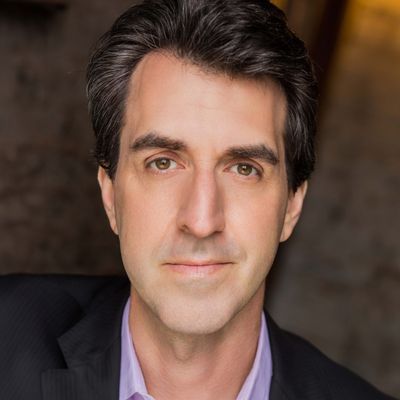
Guests
Featured Shows
About
The Broadway composer on writing for Ariana Grande -- and for himself.
Transcript
This transcript was automatically generated and might contain errors.
[0:06] Gordon Cox: Welcome to Stagecraft, Variety's Theater Podcast, bringing you backstage and behind the music with the stars and creators of the hottest shows on Broadway, off Broadway, and beyond.
[0:16] Gordon Cox: I'm your host, Gordon Cox.
[0:18] Gordon Cox: On this episode of Stagecraft, I talked to Jason Robert Brown. He's among the most prominent musical theater composers of his generation, with a resume that includes Honeymoon in Vegas, 13, and fan favorite The Last Five Years, not to mention his Tony-winning scores for Parade and The Bridges of Madison County. He recently released a solo album, How We React and How We Recover. And a new recording of his 2005 breakout, Songs for a New World, will be released January 25th, following a raved-about revival last year as part of City Center's Encourse program.
[0:49] Gordon Cox: Hey Jason, thanks for being here.
[0:52] Jason Robert Brown: And to you.
[0:53] Gordon Cox: Over the summer, it seemed like people fell in love all over again with Songs for a New World, thanks to the City Center production. What was it like to return to that show after so many years?
[1:04] Jason Robert Brown: Well, it had been twenty-three years since the last time we did a production in New York. And for all of that time, there were a lot of people who were saying, "Oh, I'd like to do it," or "Oh, can I, you know, direct a revival? Can I star in a revival?" But it was never the right people or the right place or the right thing. And so I kept hedging and saying, "No, so few people got to see the original production." You know, we did, I think it was twenty-eight performances at the WPA with this unbelievable cast, and it was a tremendous production. It was Billy Porter and it was Jessica Malaski and Andrea Burns and Brooks Ashmaskis. So it was this fantastic company. And they've all gone on to be these incredible performers with these great careers.
And nobody really got to see it. And so the only way people have ever known the show is through the album. And the album was this enormous blessing, obviously, but it was this chimerical thing to have happened in the first place.
[2:04] Jason Robert Brown: First of all, a blessing in that most off-off-Broadway shows in 1995 did not get recorded and distributed by major labels. That was not a thing. And because we had someone who paid for the recording itself, and then Billy Rosenfield at BMG was such a fan of the show, we managed to get the show out there and record it at a time when that was not standard practice. And because of that, the show has lived on in a way that it never would have without it. But that is the way that almost everyone knows the show, and nobody's ever really seen it the way that Daisy and I intended for the show to be. You may have seen a good production, but you certainly didn't see it the way that we thought it was supposed to go.
[2:46] Jason Robert Brown: So when Michael Friedman called me about doing the show at Encourse Off Center, I said, "This is apparently what I've been waiting for, is an opportunity to do it in a venue like that with the kind of singers that I really want to get, and to really revisit the show twenty-three years later so that the people who've only spent all this time listening to it will get a chance to really feel it the way that I had hoped you would feel it all those years ago." And so Kate Wariski came in to direct it and did just a sensational job, but the amazing thing was to just be in the audience with 2700 people at each of those performances and feel them. They were not discovering it because they had spent so much time.
So many of those people knew the show upside down and sideways, but they had never seen it. They had never seen it in context; they had never seen it flow the way that the show flows together. And it was amazing to be a part of that. It wasn't for me much of a rediscovery because I knew what the show was supposed to be, but I knew that nobody else knew it.
[3:47] Gordon Cox: Describe for us what, for the people who couldn't make it to the Encore Off Center production, describe the quality that you were looking for that you don't think anyone had seen in another production.
[3:53] Jason Robert Brown: You can't tell just from listening to it; there is something epic about the show, and there is something that is both epic and intimate at the same time. And you can sort of achieve that on a recording, but you almost never get to feel that on a stage. That feeling like you are in the midst of something that is sort of larger than life and almost mythic, and at the same time is talking directly to you in a very specific way. And I think we had acting singers of such an unbelievably high caliber that they could really communicate both the scale of it, you know, the scope of how big this music is, and also act the intimacy of it, you know, be able to really get into the crevices of what those lines mean and what happens between the lines that really brings the show to life.
[4:52] Jason Robert Brown: There is, if you do the show right, there are four people on that stage who all have a very specific, totally unarticulated relationship to each other. And I think that was one of the things that we pulled off really well at City Center, was to understand how these four people relate to each other and belong to each other and create a community with each other. And I think that's a thing you could never get from a recording, and a thing that's hard to pull off in any production. But boy, was it—I mean, it was just so worth it. It was just a real thrill.
[5:23] Gordon Cox: And you re-orchestrated it for the—was that just because they had more instruments available to you because it's Encourse, or...?
[5:24] Jason Robert Brown: No, they would have been happy for me not to reorchestrate it. I imagine. I think the orchestrations were the one part of the show that felt really dated to me. There are still some lyrics and a couple of things here and there that I'm like, "I was 25," or "I was 20," you know, I'm like, "I'm not afraid of anything I wrote when I was 19." You know, there's some really old stuff in there that I feel like, "Boy, that's a young writer." But I could defend it as like, "This is a young writer's work." The orchestrations, which I did with Brian Besterman, were great for 1995 and they were great for the situation we had, but there was—because it was sort of the aesthetic of Off-Broadway at the time, there's a synthesizer and a piano, and all the synth patches sounded very sort of dated to me, and I just don't use synthesizers in my work anymore.
I don't do any sampling or synth stuff. And so I thought what I really heard in my head was much more organic back then anyway. And I thought, let me just try and get back to what I heard in my head. So I thought it was just a good opportunity to reconsider what I wanted the show to sound like, and really to make it more in line with the aesthetic of the work that I've done since then, which is all about acoustic musicians all performing together.
[6:51] Gordon Cox: In terms of—you talked about yourself as a young composer—in terms of the composer that you are now, speaking of, you released a solo album just recently. This is your first solo album in 15 years. What was it that sort of prompted this one?
[7:10] Jason Robert Brown: The real story is I had always thought I was gonna be, on top of everything else, a singer-songwriter, and it turns out, ha ha ha, you can't do everything. But in 2004, I put out my first solo album after a lot of time. You know, I've always called it "somebody else's clothes." That's calling wearing someone else's clothes. And I've always been a performer. I've always done a lot of singing and performing out in the world, and it's part of my deal and who I am, and I write a lot of songs for myself, but I had never gathered them up in one place. So that's what the first album was in 2004, 2005, whatever that was. And the plan was that that was going to be me starting down the road of putting out solo albums.
So in 2006, we recorded another three or four tracks that were supposed to be the sort of the beginning of the next album. And then I moved to Los Angeles, and in that time, I wrote more songs and recorded them and just piecemeal was putting together stuff, but it never felt like a cohesive thing, and I never had the time because in that time I wrote—there was 13, and then there was The Trumpet of the Swan, and then there was The Bridges of Madison County and the movie of The Last Five Years, and then there was Honeymoon in Vegas. And in the midst of all of that, there was just no time to go into the studio in a dedicated way and say, "All right, now I'm really gonna put out my solo album." And after we did, I guess it was after the revival of The Last Five Years, Stacey Mindich, who had helped—this was at Second Stage.
[8:40] Gordon Cox: At Second Stage, then you directed, as I read.
[8:42] Jason Robert Brown: Yeah, and that was what, a year or two?
[8:44] Gordon Cox: Ha ha, that was twenty-thirteen.
[8:46] Jason Robert Brown: Was it really? Good cough. So Stacey Mindich had helped support that production, and she said to me afterwards, "I am a huge Jason Robert Brown fan, and I have worn out wearing someone else's clothes, and it's time for the next album, so get to it."
[9:00] Gordon Cox: Stacey Mindich, we should say, is the producer of Dear Evan Hansen.
[9:03] Jason Robert Brown: And yes, well, she is now.
[9:04] Gordon Cox: I guess she would not have been at the time.
[9:07] Jason Robert Brown: No.
[9:08] Jason Robert Brown: She had been one of the producers of Bridges of Madison County and also of 13. So I said, "Okay, I'll get to it." And so I called Jeffrey Lesser, who had produced all of my cast albums and the first album, and I said, "All right, I guess we have to start figuring out what this is." And this coincided exactly with the beginning of my residency at Subculture. Subculture is a club that's down in Soho. And they invited me four years ago now to just come do a concert there every month, and it could be whatever I wanted, and I could do whatever struck my fancy. And so I made a rule for myself that I would debut a new song every month. That no matter—and I haven't always stuck to it, but we're 44 concerts in, and I have done pretty well at always bringing new material to the table. And so as I was always bringing the new material in, it started to really respond to the political climate, to what it is to be my age. I moved back to New York in 2014.
[10:10] Jason Robert Brown: And so that was from Los Angeles.
[10:13] Gordon Cox: From Los Angeles, yeah.
[10:14] Jason Robert Brown: And so I was going through a whole lot of change in my life, and the country was going through a whole lot of change all at the same time. And I felt like suddenly I understood what the next CD was supposed to be. And finally, after, you know, after Honeymoon in Vegas closed, and after I kind of got some other things off my plate, I was able to say, "All right, it's time to focus on the solo album." And so last year, I got all the musicians into the studio and we recorded about 17 or 18 songs, a lot of which I had written at Subculture, and some of which I had written in all those years that I was waiting to make a new album.
[10:54] Jason Robert Brown: And then we just very gradually and not too frantically, but really taking the time to make sure that, you know, if I'm only going to make one album every 15 years, we should make sure that it's what I want it to be. But we just made sure that they all were what we wanted them to be, and we got rid of some of the things, some perfectly finished great tracks that just didn't fit in the structure of the record. And ultimately, uh, what we came up with is how we react and how we recover. Um, and it's an album that I'm immensely proud of it, but what I really feel like is it helps to sum up a lot of who I am in a way that, you know, you take all of my shows and you, I mean, if you're nuts, if you listen to them all, you'll have a sort of picture of who I am, but it's incomplete.
And the albums I think fill in the space and help illuminate the shows, but also illuminate me as an artist, as a writer. Um, and also I love to get to sing and to play and make music with all of these people. And I think the making music is the thing that I don't really get to do with the shows as much. But when I get to make the albums and play out at subculture and do all of that, that is for me, that's what really keeps me alive and it keeps me creative. So that's how the album came about. Um, and it turned out to be an album that really does feel like it had to be now. And there are some All Things in Time, which is the song that, uh, gives the album its title, was actually written in 2010, but it felt so, uh, resonant with this particular moment we're in and how I am getting through it, and I think how a lot of us are getting through, uh, what we all hope will be, uh, no more than the next couple of years.
[12:45] Gordon Cox: Uh, do you you've credited Sondheim as one of your major influences and Billy Joel. Uh, are there any more recent composers whose work or composers whose work have more recently had an influence on you, do you find?
[12:50] Jason Robert Brown: Um, I happen to love music, so I'm listening to it all the time and, you know, I grab little things, uh, all over the place. I have a feeling that the stuff that I listen to as a teenager in college and my first couple of years in New York, that stuff is so imprinted that it will always be kind of, uh, elemental. The Paul Simon, uh, Steve Reich, Leonard Bernstein, uh, Stevie Wonder. They are, and yet they, you know, they all fit into my, you know, I listen to my stuff and I hear all of those echoes really clearly, you know, and, uh, more obscure writers who I just loved, uh, Andy Partridge and Shawn Colvin and, uh, even like Frederick Shevsky, uh, really, you know, serious, uh, weirdo composer who I worship.
And all of that stuff is integrated into my work. So I think now it's not so much that, oh, I'll listen to the Punch Brothers album and think I've never heard anything like that before. It's that I listen to it and it attaches itself to older stuff and, uh, and you know, it just expands on things that I already grew up loving. Um, so I guess that's it. Uh, I find that when I'm listening to music, it is often actually music that predates me. I like right now I'm in the middle of this, there's a five CD set of Cuban jam sessions, descarga music that, uh, that all was recorded in the late 50s, um, that is just thrilling, the unbelievable, and I, it nourishes me like nobody's business. Um, but it's not, uh, you know, I, it's all just ingredients in the stew at this point.
[14:38] Gordon Cox: Right, right. Are there any recent musicals that you've admired?
[14:41] Jason Robert Brown: Some. Uh, I listen, I mean, I love Hamilton. Uh, I think, you know, Lynn Manuel is just a thrilling writer. Uh, and you know, before that, I think David Yazbek is sensational. I love the stuff he did in The Band's Visit. I really, I always loved Dirty Rotten Scoundrels. That was like, that was for me. I thought, oh, look, it's the perfect show. Um, and, uh, and Adam Gettle, who, you know, Light in the Piazza and Floyd Collins both were just, uh, tremendous, tremendous works. Those are all getting kind of old now, I guess. But, uh, you know, I didn't live here for a long time, so I missed a lot of stuff.
[15:17] Gordon Cox: Right. Um, and, uh, you know, for me what I like in musicals, as with what I like in anything, is I like the sort of the sound of everyone creating it at the same time, which includes the musicians.
[15:33] Jason Robert Brown: Um, I'm very much into how the musicians are integrated into a piece of theater. So the theater that I respond to most, and the musicals I respond to most are the ones where you can really feel them breathe. You can feel that it really matters that those musicians are doing it tonight, as opposed to, oh, it's just a bunch of subs, or oh, this is, you know, it's really locked in and that it's never gonna be different from one show to the other. There's a kind of machinery that I think most Broadway musicals have to be built on these days, and that is not interesting to me. Uh, I like this a somewhat more bespoke experience, I guess.
[16:10] Gordon Cox: Right. You began your career as sort of an arranger and a conductor and a pianist. Is that how you would you recommend that path to other sort of aspiring musical theater folks? What sort of advice do you give, uh, people who, you know, ask you for it when they're young and just starting out?
[16:26] Jason Robert Brown: I don't think I have any useful advice in terms of making a career because I can't believe that I managed to do it. I, uh, you know, as far as a career, I was an arranger and a music director and a pianist, and I did all of that because I needed to make money and I had those chops and I could do it. I never thought, oh, at the end of my life I'm going to have been the conductor of several Broadway shows. I was just trying to get the bills paid until somebody said, "All right, we'll produce your show." And that to my continued astonishment is actually what happened. Not, and that's not false modesty, like, oh, I can't, but I mean, I think I'm really good at what I do, but the odds are so against anybody getting their shows up on stage, anybody getting their work out in the world no matter how good they are, that I, uh, I still think that's kind of amazing.
So I, in terms of how to make a career, you're gonna move to New York City and then you're gonna do everything you can to survive. And I guess the best thing I can say is try to survive within the business rather than without it. And I've actually heard the opposite advice. People who say, oh, don't waste your artistic energy doing things that aren't what you really love. Better that every time you go into a theater, it's you love what you do and it's important to you, and then go make money at McDonald's or something. But I disagree just because I also think the relationships that you're gonna make in the theater are all that that's all the stuff that feeds you. And once you start writing, you don't end up meeting a whole lot of people because, you know, you're just in the world that you're in.
So a lot of my relationships, uh, with directors, with choreographers, with actors all come from the time when I was in the trenches when I was really out there, you know, playing dance auditions and playing auditions and, you know, doing arrangements and vocal arrangements and, you know, sitting as a rehearsal pianist, you know, in NIAC someplace. All of that stuff that I had to do just to make sure that the bills got paid.
[18:21] Gordon Cox: Of all of your shows that we have seen, what did you, which one is do you think of as the hardest to get right? I'll say that I think they're all pretty tough.
[18:37] Jason Robert Brown: I, and I say that because I've seen them all. I mean, they require all of them to dip into very new bags of tricks. You know, Songs for a New World is very hard because the singing is brutally difficult. It is an insanely difficult score to sing. And so if any one of those four people can't do it, then you know the show's gonna fall down. And Parade tonally is a very tricky show and it's very hard to cast, uh, and understanding the politics behind it, making sure that the dynamics of the black versus white and the South versus North and the pre-Civil War versus post-Civil War and all of that stuff, all of those colors have to be in it. So you really have to do your homework with Parade. Last Five Years, again, the God almighty is the singing hard.
And then beyond that, you have to make clear to the audience what's going on, which is not a simple task, uh, to begin with. Bridges, I again, it's really hard singing, and there's that the Marsha's book, which was so underrated, but Marsha's book is really, uh, this is Marsha Norman the book, right? Yeah, and it was all under the surface. So there's a lot of people they talk, but they talk in the way that Midwesterners talk, which is to say they don't just say the thing. It's all kind of hidden. And, uh, trying to excavate that stuff is just hard, and it's easy to play it too broadly and miss the boat. Honeymoon in Vegas is just hard because I, it's gotta be really funny and funny is tough.
I remember talking to you around that time, and you were explaining to me how difficult it is to sort of time you have to sort of the rhythm of humor is also now a thing that you have to think about, right?
[20:11] Gordon Cox: Yeah, no, you have to, and the songs are still hard, but now on top of all that other stuff, you've got to make sure that the lyrics are, you launch all of those lyrics at exactly the right place and the right time, and you can't be worried about how it sounds, and you can't be, you have to just have all that, and the director has to be able to get out of the way of it, and you know, so there's all that. But I think the hardest one to get right is ironically the one that gets done most, which is 13. Um, because I think what you're asking of 13-year-olds in that show is really, it's not that it is so difficult for them, but it's not asked for very much, which is to say, I just want them to be who they are.
But they have to be who they are and then still land a lot of jokes. It's a very funny show, and then they have to land all the singing, and emotionally there's a lot to deal with. And it, I've seen it a lot, and even when it's bad, it's okay. It's still fun to see the kids jumping around and all of that. But to get it to a really high level, it's not, I mean, the kids all have to be talented, but it's that the grown-ups who put it together have to really be able to bring out the best in the kids. They have to not impose their own stuff on it, but just say, what do these kids do best?
[21:23] Jason Robert Brown: What lets them shine the most? And I think that's just hard because there's not usually enough time to do that, even if you had the talent as a director or as a music director to do that.
[21:32] Gordon Cox: Right.
[21:33] Jason Robert Brown: You know, you how long does anyone have in rehearsal? Um, and also 13-year-olds are an unbelievable pain in the ass to work with. We should point out for people who didn't know it, uh, that uh a young Ariana Grande was in the Broadway uh cast of uh 13. And one thing I didn't know until I was prepping for this interview is that you wrote a song for one of her albums in the last couple years.
[21:54] Jason Robert Brown: I did actually her uh the the album right before this one was an album called Dangerous Woman, and so I have one song. I was in Los Angeles doing the tour of bridges, and Ari called me and she said, You want to come over? We'll write a song for my album, which I sort of thought like, ha ha ha ha, sure. Um, but I I went over and I just you know goofed around on the piano and she goofed around singing, and I you know, she sent me a file afterwards that was like what I had played, and she said, Write some lyrics. And I was like, I don't I I don't know how to write lyrics for a pop song. I mean, she said, No, no, you write lyrics like you write them, and I said, I okay. So I just wrote them and I sent them to her, and I thought this is silly, but okay.
And lo and behold, I you know, she just she made this gorgeous record out of it, and it's you know, because of that, I got to do two things that I never thought I was gonna be able to do, which I got to play with her at Madison Square Garden, which you know, if if you're a playing musician, that's pretty cool. And then I got to play that song with her and the roots on Jimmy Fallon.
[22:54] Gordon Cox: Right.
[22:55] Jason Robert Brown: And that was not, it was never going to happen in my life, and that I got to do that was it was just so great. I'm and I'm, you know, I think she's grateful to me for giving her that job and quote unquote discovering her, but she was gonna find her way one way or it didn't take me to find Ariana Grande. But I am immensely grateful to her for just you know wanting to do the kind of stuff that I do. She never asked me to write stuff that sounds like the rest of her stuff. She doesn't want me to write hip hop and or or you know hard R&B kind of stuff. She just she wanted me to do Jason Robert Brown things.
[23:29] Gordon Cox: And have you initiated conversations with her about starring in your next Broadway musical? Because that's gonna be a big hit when it happens.
[23:36] Jason Robert Brown: Uh I don't think she is really interested. I I mean I think she loves the idea. You know, she did Hairspray and and you know, and and she's she's done a bunch of those things, but the idea of like locking her down for a year or two years or whatever it is in a Broadway theater, you know, with what uh 1700 people, 2,000 people, when she can play to 20,000 people a night doing her own songs that she wrote, I'm just sort of like I I don't know that there's a lot in her in it for her to do that yet. But I am hoping that when I am in my late 60s, uh and she has finally said, ugh, enough with the touring and enough with all the crazy people, that she says it's time for me to go do the Jason Robert Brown musical, and you know what I presume will be the last show I write uh so I can retire will be the the big Ariana Grande musical.
[24:24] Jason Robert Brown: Um so your first Broadway show was uh Parade that was about 20 years ago. What do you find over the years has changed about Broadway?
[24:32] Jason Robert Brown: Everything. Everything and nothing, I guess. But I came into Broadway through Hal Prince. And we direct a Parade for listeners, I don't know. And when I would walk into Hal's office, I would see on the wall all the posters. And so you're looking at the poster for Sweeney Todd and for Evita and The Phantom of the Opera, obviously, but West Side Story and Company and A Little Night Music and A Doll's Life and Grind and sort of Kiss of the Spider-Woman, all of these things. Cabaret is on the wall. She Loves Me as I walk in the door. And so I came in at the tail end, I think, of Hal's Broadway, which was I like to say that I think it was it was a it was a less polished thing, and I mean that as a positive, obviously, but I it wasn't it wasn't a corporate entity.
And I feel like so much of Broadway now has become a corporate entity. And that started with Disney, you know, Beauty and the Beast and The Lion King, that these shows became these international things. Ironically, it might have started with Phantom of the Opera.
[25:46] Gordon Cox: Yeah, I was gonna say Hal some of Hal shows have a hand in that, I think too.
[25:50] Jason Robert Brown: And uh but I was never interested in that. I never wanted to be writing sort of I mean, I don't mind, but I it was not my idea that I was gonna write sort of the international hit. I, you know, I only like about four people in the world to begin with. So the idea that I was gonna write something that billions of people were going to respond to, I thought I don't want to have to think that way. I don't want to have to build it that way. And so the stuff that I write is much more specific to me, and it's it's just not as shiny, I think. And I look at Broadway musicals now and they are much shinier and they are much slicker and they are much cleaner, and they are really they're built for speed.
And I'm not sure that I respond that way. And so what has changed, I think, is just I mean, you you look at how much money Broadway shows make now, and it's infinitely greater than it was in 1995, even you know, uh accounting for inflation and all of that stuff. Uh the product is just uh there's a whole brand of what Broadway is supposed to be on a national level. And if you look at what that brand is, it's Chaser Lights and its jazz hands and it's tap dancing and it's big belty high notes and stuff that isn't in any of my work. And I think I'm not reflected in that. Uh I still like the Broadway musicals that I want to write. I still, you know, I still like that idea of these very personal and very specific pieces.
Um but I I don't I don't want to write for Broadway the brand. That's not that that it doesn't interest me at all. I just want to write for the theater. I love the theater, and it happens that Broadway is where the theater gets the most attention. So, you know, I I would love my work to get all the attention it can. Um but I think that's the the biggest change is that that branding of Broadway, which has obviously been a very good thing for those people who, you know, have signed on to it, those people who've managed to catch that that vibe and and you know, subscribe to it. Uh but it's it's been harder, I think especially for composers, composers who really wanted to explore musical ideas. It's just not a as good a forum as it was when Steve Sondheim and Leonard Bernstein were doing it, and let it be said that Steve Sondheim and Leonard Bernstein were doing it on Broadway to much smaller audiences than these shows are now.
[28:17] Gordon Cox: What's next for you?
[28:19] Jason Robert Brown: Oh God. Um I know you have a concert coming up at Subculture.
[28:23] Jason Robert Brown: I do. Uh February 11th I'll be doing another uh I guess it will be the 47th concert in uh in the residency so that's exciting. Um and Daisy Prince who directed Last Five Years and Songs for New World uh is working on a new show with me and uh playwright uh Jonathan Mark Sherman and that's called The Connector and uh back in December we did a uh a great reading of that at the McArthur in Princeton and so I hope that piece is the thing that's getting produced next. I I love it and original musical an entirely original uh piece. Um I'm working on a musical version of uh there was a film called Farewell My Concubine um and uh so I'm working on a musical adaptation of that which is wonderful and scary and terribly ambitious and sort of uh a a whole lot of a whole lot of really frightening uh and intimidating things but I I I've been loving doing it so far but it's really hard.
Um and I'm working on a piece with Billy Crystal and Amanda Green uh that is a uh an adaptation of one of Billy's movies uh that uh we think Billy which wants to star in. Uh I don't think I'm supposed to tell you you can't tell us but I think Billy wants to star in it. Uh and we we're we've already done uh a couple of readings of it and it's uh wildly funny and Billy is just he's just heaven uh and and writing with Amanda has been great because after Honeymoon in Vegas, I said I really would like to not have to write jokes in songs for a long time. And uh Amanda loves doing it and does it really well. So I was like, oh good, you you write the jokes, and I'll just sit here and and I'll make what the Tinkle Tinkle and we'll all be happy.
[30:01] Gordon Cox: You're not writing any of the lyrics.
[30:03] Jason Robert Brown: I'm not writing any of the lyrics. I I have abdicated the lyric writing uh and uh very happily. Yeah, I it's not a thing that I think I'll do often, because part of the way that I write music is with the words, and so I found it very challenging to write with another lyricist and to figure out how to make sure that we keep fitting our work towards each other. Um but it's been very rewarding and and uh very gratifying. Like I said, I don't think I'll do it very often, but uh but in this case it's worked out good.
[30:31] Gordon Cox: Right.
[30:31] Jason Robert Brown: And uh as we mentioned, Songs for New World comes out the uh 25th of January. Uh did we mention that?
[30:38] Gordon Cox: You might have mentioned that.
[30:39] Jason Robert Brown: I might not. Oh, yeah, that's true. I didn't mention it while you were here, but I mentioned it earlier. Oh, and now I'm mentioning it again. That that album comes out January 25th. And the album sounds so awesome. You can't oh it's uh it's to have to have Shoshana and Soleya and Michael and Colin Donald singing those songs uh in you know, with with this mix in that studio with this orchestration and those that those musicians, it's just it's so great. It is just such a heavenly wonderful thing, and it was such a gift to me that uh that they recorded this production because it just it sounds awesome.
[31:14] Gordon Cox: Well, we can't wait to hear it. Thanks for coming in, Jason.
[31:17] Jason Robert Brown: Nice to talk to you.
[31:18] Gordon Cox: My pleasure.
[31:25] Gordon Cox: That was the composer Jason Robert Brown, whose Songs for a New World will be released in a new recording January 25th. If you like what you've heard on this and other episodes of Stagecraft, don't forget to rate and review us on iTunes and subscribe wherever finer podcasts are dispensed. On the next episode of Stagecraft, I talk to writer-performer Heidi Schreck about what the Constitution means to me, her off-Broadway show that became a buzzy New York hit. Until then, see you at the theater.
© Broadway Podcast Network, All Rights Reserved