

The Tony-nominated actress offers a deep-dive into her performance's signature moments – and why one of them made her think of “Evil Dead.”.. Read More
From the show: Stagecraft with Gordon Cox
Guests
About
The Tony-nominated actress offers a deep-dive into her performance's signature moments – and why one of them made her think of “Evil Dead.”
Transcript
This transcript was automatically generated and might contain errors.
[0:06] Gordon Cox: Welcome to Stagecraft, Variety's Theater Podcast, your backstage pass to intimate conversations with stars, creators, industry leaders, and Tony nominees on Broadway and beyond.
[0:17] Gordon Cox: I'm Gordon Cox.
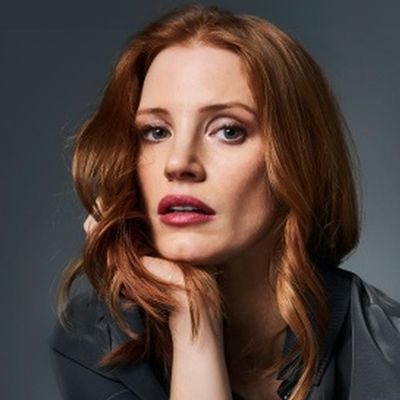
[0:19] Gordon Cox: On this episode of Stagecraft, I'm talking to Jessica Chastain.
[0:22] Gordon Cox: She's an Academy Award-winning actress whose resume includes movies like The Help, Zero Dark 30, Interstellar, The Martian, and the movie that won her an Oscar, The Eyes of Tammy Faye.
[0:33] Gordon Cox: She's also appeared on TV in limited series like HBO's Scenes from a Marriage and Showtime's Georgian Tammy.
[0:39] Gordon Cox: For the next couple of weeks, though, you can catch her on stage in her acclaimed Tony-nominated performance as Nora in the ultra-minimalist Broadway revival of the Ibsen drama A Doll's House.
[0:51] Gordon Cox: As that production winds down its run, and we head into the Tony Awards on June 11th, Chastain is in the virtual studio with me to tell us why after years of being scared to get back on stage, now she's ready to make it a habit.
[1:05] Gordon Cox: Hi Jessica, thanks for joining me.
[1:07] Jessica Chastain: Hi, thank you very much for having me.
[1:10] Gordon Cox: Congratulations on your Tony nomination.
[1:12] Jessica Chastain: Thank you.
[1:13] Jessica Chastain: It's very exciting.
[1:15] Gordon Cox: So you've been doing Doll's House since the show started previews in February, and now you're coming to the end of the run, and you've said that you found this experience on Broadway that you've had with this show really rewarding. Can you tell us a little bit about what you've loved about it?
[1:30] Jessica Chastain: Well, I mean, the thing I've loved, I think the most about it is it's what kind of brought me back to theater. Theater is the very first thing that I ever really loved in terms of thinking about it as a profession. And I was a kid who, you know, was very involved in community theater and I would record the Tony's on my VHS, and I was very excited about theater, it was really my first love, and I've been away from it for over a decade. So the beautiful thing about working with Jamie Lloyd and this production for Doll's House is it just feels like in some sense I'm it feels nostalgic and it's connected to me to I guess who I was as a child a little bit more. Um and it's been a very emotional experience.
[2:21] Gordon Cox: Yeah, you've said that you were scared to do another theater project for a while for several years. What caused that fear do you think?
[2:32] Jessica Chastain: Well, you know, the last thing I did it was I think I was releasing Zero Dark 30 at the same time it was late 2011, early 2012. It was most or I think that's right, I think it was 2012. Uh yeah, this is the heiress that you're talking about.
[2:47] Gordon Cox: Yeah, exactly.
[2:48] Jessica Chastain: The heiress. And I was there was so much going on and I wasn't really able to focus on what I was doing. And I remember feeling like the experience didn't feel as right for me anymore. Like maybe in some sense I shouldn't be I wasn't meant for the stage, which felt so weird because that's what I always wanted to do. But I had found, you know, a lot of success in the film world and I thought, well, maybe that's where I'm kind of supposed my career is supposed to live. And I just maybe I just felt like I don't know, it even though I wanted to do it so bad, but maybe I wasn't supposed to for some reason. And when Jamie asked me why, when we met on a set, he asked me why I wasn't doing theater anymore, and I told him, I just was honest.
I said I'm really scared to do it. And he asked me to lunch and we went and talked about it for a while and you know, he just reminded me that it's what I've always wanted to do. It's a big love of mine. The theater really is where I belong. And I shouldn't, you know, in some sense exclude it from my life. And um because I love it. So yeah, it's uh I was afraid, but thank goodness I had someone like Jamie to bring me back.
[4:06] Gordon Cox: Yeah, this is the director, Jamie Lloyd of the production. Had you seen one of his other productions, you know, there was the betrayal that was on Broadway with Tom Hiddleston and James McAvoy was in a Sierra No. Had you seen any of those shows?
[4:19] Jessica Chastain: Yes, I believe I saw Betrayal and Sierra No, both in London, I think before they came to New York. Um so yes, I you know I was very familiar with his work and his minimalistic, you know, minimalism and his tone and style.
[4:36] Gordon Cox: Not quite this minimalist.
[4:38] Jessica Chastain: Well, yeah, we're gonna talk about that, absolutely. How did you how did the two of you end up settling on Doll's House? It sounds like you considered a lot of shows.
[4:48] Jessica Chastain: Well, we were supposed to originally we were gonna do Duchess of Mafia, and that's what we decided on six years ago when we met. And then when it came time, we were about to, you know, put forward an announcement and do it. All of a sudden, there was a production of Duchess of Mafia playing in England, and he said, No, no, I can't. Like, he's like, It's not right, you know, we can't really do two productions of Duchess and Maffey within a few months of each other. So, is there anything else you'd like to do in the slot? And you know, I think my very first, I said, Well, what about um Summer and Smoke? Because I love Alma so much. And that I mean, Tennessee Williams said that that's the character he feels the most, he felt the most connected with.
I just I love that character. And then he said, Well, again, the last season there was a summer smoke. Yep. So I said, okay. Um, and so we started, he was like, Let's take the week and we'll just start reading through plays. And then I came up, you know, upon a Doll's House. So I and I thought, like, wow, I really actually never never seriously studied this. It's always been, you know, I've read it, it's always kind of been around me in theater school, but I've never even seen a production of it. I'm really coming to it in a new way, um, which I thought would be interesting. And then also Jamie was very excited when I mentioned that because he said it was a play he's always wanted to direct and and never really had the opportunity to.
[6:10] Gordon Cox: Yeah.
[6:11] Jessica Chastain: And the version you're doing is a new adaptation by the playwright and writer Amy Herzog, who you've worked with on uh Scenes from a Marriage. Was it important to you to do a to do a sort of updated version? Um, or you know, in in the manner that she updates it. And what do you feel like Amy's adaptation really brings out of the story for you?
[6:31] Jessica Chastain: Well, you know, um initially we announced that to do we were gonna do a different adaptation because we didn't really have any time. I mean, it was such a last-minute switcheroo, so it was kind of like we had to find an already written adaptation. Um and then when the pandemic happened and everything got put on pause, he reached out to me and said that he really wanted a female playwright to adapt it. And at that time I was working with Amy Herzog, so it really felt like a match made in heaven. And I suggested her, and he, of course, knew her work and was very excited to reach out to her. And the two of them I know when she was writing, they had a lot of conversations. I think what's so incredible about what she's done in this this is the first production with it where a woman has adapted A Doll's House on Broadway.
And I can't think of another. I mean, I read a lot of adaptations of A Doll's House. I really can't find any that you know, unless it's completely modernized or you know, changed the settings. And I really can't find one where a female playwright has looked at the original material and kind of, you know, you know, uh went in like a detective and deciphered it as she could. And what I love so much about what Amy did is Nora participates in holding up the world that oppresses her until she doesn't. And I find that to be really interesting. All I haven't, again, I haven't seen A Doll's House, but I felt in the past perhaps I hadn't been interested in it because it felt like Nora was such a victim throughout the play, where you know, in this patriarchal society, she's just so put upon all the time and so helpless, and this beautiful victim, but a victim no less until the very end of the play.
And Amy's version, she has so much agency, she's she's um working the system in some sense to try to gain power until she realizes like maybe it's scary, but perhaps it's more interesting to live a life that's an authentic life and to really get to know who you are, and even if it means that no one will love you and no one will do what you want them to do, or you know, you might be hungry even. Uh, the idea of being true to who you are and finding that out for yourself is is the question really exciting. And and so I f I love that Amy's adaptation really puts Nora in the driver's seat from the very first scene. I mean, the very first scene Torvald says to her, What's going on with you today? Like something's already different with Nora the moment we meet her. Something is happening inside of her.
[9:09] Gordon Cox: Yeah, yeah. Let's talk a little bit about that, the minimalism that you mentioned, the extreme minimalism of uh this production. It's you know, super stripped down. There's not much furniture, it's a mostly bare stage, there are no props, it's you and the lighting and the turntable and a few chairs, and that's about it. What have you found that does for you as actors? What does it um open up for you?
[9:34] Jessica Chastain: Well, I wasn't prepared for this, you know, starkness. And and rightly so, because I think it would have been way too overwhelming for me, you know, to get it all at once and to hear it. And I might have been very scared to show up at that first rehearsal. Um he's you know, he parsed out the information um sparingly. It started with, okay, there's gonna be no props. And I remember the one of the very first conversations I had with him, and it was even before we had our first rehearsal when I found out there were no props. I said, Jamie, I'm very confused here. Like in the play, especially, you know, even the one Amy's written her adaptation, Nora enters the stage with shopping bags, and she eats cookies.
And then the very first scene, she says to Torvald, I would never, you know, have a cookie, I would never go behind your back like that. So that's really important for the audience to see me do that because you know, that's how we understand that there's a deceit in the air. And he just looks at me and he goes, You'll do it with your acting. I was like, What? What does that even mean? I'll do it with my acting. So I guess this minimalist approach that he's done it really is unrelenting on the actors. I mean, he doesn't allow me to have a break from the audience at all. I mean, he he most of the time I'm not even allowed to I they I have to face them. Sometimes I'm not even allowed to face my scene partners.
The audience has full access to me, even in the pre-show. I they have, you know, I can't hide. Um, they have full access to me, and I can't hide behind props, I can't hide behind a set, I can't hide behind costumes, and sometimes I can't hide behind scene partners.
[11:18] Jessica Chastain: I am completely exposed and vulnerable. And it's very scary as an actor because you feel like, okay, how am I gonna keep people interested in what I'm doing for two hours when I'm not given the tools that help me tell the story? The only thing I'm given is my instrument and myself, my body.
[11:39] Gordon Cox: Yeah, yeah. And you're also mic'd pretty closely. You know, we can hear sort of whispers and, uh, you know, breaths and things like that. Does it does that allow you to kind of incorporate some of your film technique into the stage work that you're doing? Is that how that works? Can you tell us a little bit about how you then modulated your performance to that?
[12:00] Jessica Chastain: Yeah, it's very interesting what he does. It's like this audio intimacy, and he's done it in all of his work. Um, and he said to me that he has, you know, going to the theater and sitting in the third row and watching two people scream at each other or, you know, speaking really loudly when they're having an intimate conversation feels so false to real life. And so it's not just that we're mic closely, which we are, we're also mixed during the show. There's, um, a sound mixer who is in our very first rehearsal with us. So from the very beginning, we don't, we're not allowed to have scripts. They mic us from the very beginning, so the mics become part of our rehearsal process. And there's someone who's watching our performances, so they understand when to make the mic, the sound louder and when to make it softer, uh, depending on how to, on how we're collaborating our performance.
It's really this ensemble working alongside someone. And it's not, I guess the only it's not similar to film, except that, um, because a lot of times in film you're looking at like a tennis ball, or you know what I mean? Like you're doing something that, but I guess that is similar to this when I'm not allowed to look at a scene partner. The one thing that I think it's the most similar to is you're allowed to play the scene as though it was really happening. So you're not playing it as though it happened and you're trying to make it bigger so everyone can see it. Because the reality is if you're also making it bigger, then like the person in the second row isn't going to get the authenticity of the moment because you're trying to project it all the way to the back.
He wants, he's trying to bring into theater immediacy and intimacy and this feeling that it is authentic and it's real, and we are on the psychological journey, and it's not there's not like a wall between the audience and the actors. He wants it to feel like it is the what the breakdown, everything is truly happening because it is.
[15:02] Jessica Chastain: What it does is it makes you go, okay. I mean, he he's really he traps me. You go like there's nowhere to go, there's nowhere to hide. So you better get really good at acknowledging something that's happened and then getting on with your performance, getting on with what's the moment that's happening on stage. And you can't, you can't take a moment to, you know, you can't forget a line because no one's really there to help you. You can't take a moment to like find your emotions again because you're facing the audience. And so, yeah, there are many times where I wish I had all of that, but also I wonder if that takes away from the storytelling. I mean, his whole point of A Doll's House is he really wants to put the pressure on Nora and this sense that it's this pressure cooker, and she has no escape. And so, as much as I want Jessica to have a little bit of a breather, maybe in some sense that doesn't help tell the story.
[16:05] Gordon Cox: I'll have more with Jessica right after the break.
[16:17] Gordon Cox: And now here's more with Academy Award winner and Tony nominee, Jessica Chastain. One thing I was thinking about one of the, uh, Nora and Torvald have three children in the play, and they are not seen in this production. Their voices are piped in, which is a choice that is totally in keeping with the rest of the production. But it also presents a challenge to you as an actor because you don't have the same opportunity to kind of establish an emotional connection with those children, or to like show us what kind of emotional connection Nora has with her children, if any.
[17:30] Jessica Chastain: Do this multiple step of like, okay, let me figure out how to connect with these actors or help them around the stage, especially if they're really young. You know, I've worked with young kids before in movies, and there's a lot of putting myself aside because I'm helping them find their marks and all of that. And I wonder if the choice that Jamie made, what he's done is, but in giving me the voices, he's relying on my imagination, and he's also relying on the imagination of the audience. Um, I don't want to say too much, but I have a very, very strong connection to the voices of the kids. And when I hear their voices, I never have to pretend that I love them. I really feel, uh, that I feel 100% connected from the moment that they enter the stage, uh, in terms of the sound.
[18:29] Gordon Cox: Yeah. And what about the moment, uh, when it's one of the more famous moments in the play when Nora dances a dance called the Tarantello, which, um, you know, he's still not letting you move, right? Very much for that. Um, can you tell us a little bit about how that moment evolved and how you imagined it?
[18:45] Jessica Chastain: It's so interesting. This evolved, I think, from a lot of conversations, you know, Jamie and Jen and myself. I think Jamie's fear, and I could tell, because I could tell he was when we were doing rehearsal, he wasn't super excited about the dance. And I kept asking, I was trying to understand like what was good, and then I realized I think he was he doesn't the number one thing he didn't want was the dance to feel like it was an actress, like a vanity thing of like an actress going, look at me dance. Look how great I am at the Tarantelle. I, you know, in the past, it's probably been like that a lot. And so as we talked about it, I, you know, when we were talking, I said, Well, what if she means everything she says?
So, like, what if she's completely out of control and her body's taking over and she doesn't want it to happen? What if the dance, and I actually even said, I know, and I said, This is not how I'm gonna play it. But do you remember? I think it's called Night of the Living Dead or whatever, and Bruce Campbell, you know, do you know that actor? There's a scene or is it like, um, Evil Dead, maybe? Is that Evil Dead? Sorry, yes, Evil Dead. And his arm becomes possessed. Oh, yeah, sure. And yeah, and tries to kill him. And so I brought this up. I said, What if the dance is her body trying to break free and she's trying to stop her body because she wants to stay in the cage? It's safer, like the line when she says, Can you please take charge, Torvald?
What if she means it? Because life is easier when she doesn't have to make decisions and she doesn't have to deal with the stress, but there's something else going on. It's like this her body won't let her stay in the cage. So there's like a two thing going on. And then Jen, our choreographer, so like we were kind of on that path. She brought up, which is fascinating, the Tarantella in the, you know, it means like it's the day, it's a spider, right? It's and the woman would dance to release the poison of the spider. And when you look at, um, conservative societies throughout history, many times women would dance for freedom in societies that they didn't have freedom. And it was less of a dance and more like an exorcism.
It's like the women dancing in the woods in Salem, you know, this idea of like taking their clothes off and whatever, like their bodies just take over. There's not their minds stop and the body takes over. And it's almost like this sisterhood, this women finding the freedom in their bodies. And I think, you know, talking to Jen, talking to Jamie, um, that's where we ended up going is the dance in some sense she's trying to stay in her chair she's trying to stay in her place she's trying to do the dance as he wants her to do it but there's something beyond herself that takes over and she until she can't control it anymore.
[21:37] Gordon Cox: Yeah, yeah as you mentioned or you alluded to the pre-show when, uh, you are, um, you spend 15 or 20 minutes, uh, before the start of the show you're sitting on the stage or sort of rotating slowly and, um, you are acknowledging us it seems like us in the audience it seems like you're not, you're not pretending you don't see us. I feel like you know on the night I saw it I feel like I was one of the people you saw in the audience as you were going you're not quite reacting though it feels like and I just wonder if you could just like who are you in that moment? Are you Jessica? Are you Nora? Are you transitioning and how what are the ways in which the things you see in the audience and the what the audience brings in, uh, like what do you care how do you carry that with you then into your performance?
[22:22] Jessica Chastain: Well it's terrifying because I mean making eye contact with Bono or like Al Pacino or Lee Volman who have all been there it's it's quite, uh, it's quite nerve wracking um and my and my nerves of steel really have to show up but I think you know in all parts when I put the costume on I already start to feel I'm the character once I put on the clothing of the character, I'm I'm in that.
[22:49] Jessica Chastain: And especially when I sit in the chair, the second it starts, you know, the pre-show is like I've been sitting in that chair for years, if not my whole life. So there is also the way of like the slouch, you know, it's not like I'm sitting upright in the chair. I have been there for a long time. Uh and then the eye contact, it's a very interesting thing because it's like it does a couple things. You know, I think we were used to going to the theater, and the audience sits in the dark, and the actors are lit up, and it's like the audience can see you, but you can't see them. And what we're saying is like, no, no, no, you're part of this. You are all you are you're all you're going on this journey with me, and I'm looking at you.
Um, and and we're about to do and we're doing this together. I can see you. So I also I can see if you pull out a chicken and start eating it during the show. Like you and I are doing this together. We're gonna go on this journey. It's also in some sense treats me as an object, which is really interesting for A Doll's House because I'm turning like almost like on this pedestal that's being viewed. People are, you know, I know a lot of the time they don't allow photographs in the theater. The pre-show, it's allowed. You can take video, you can take photographs. It's just once, you know, the line the dialogue begins, it has to stop. And it always does. I mean, everyone gets their pictures, it's all out of their system.
They treat me as an object also because they walk in with the history of celebr. It's like Zero Dark Thirty. Oh, I saw her in that, or The Help, or It Chapter Two. And they're walking in with that, and they get now 20 minutes to let go of that and see me now as Nora. Um, and that is is and it's just a fascinating experience uh to be a part of. And they send me like it's sweet, like people send me hearts and they smile at me and they wave and they try to break me, and you know, in terms of like trying to make me laugh. And I look at them and sometimes I'll hold contact longer, but I always keep in character so they understand the space that we're creating and um they understand the journey that we're gonna go on.
[25:00] Jessica Chastain: Let's also talk about the final moments of the show, which I guess for any listeners who haven't seen the show yet. If you want to preserve the surprise of the ending, and you maybe haven't read about it yet, uh, maybe skip a couple minutes. But so there's no door to slam at the end of uh your production of A Doll's House. And so they do a cool thing where the sort of loading door at the back of the at the back of the stage um, you know, uh rises and you know, out Nora walks um onto the sidewalk. So the sidewalk is blocked off for that, yeah. At that point, is the whole street blocked off? The whole block. No, no. In fact, we've had a lot of interesting, like we've had been playing music, we've had a lot happening.
I mean, there's there's barricades on two sides, and usually there's a ton of people out of barricades filming, and you know, hope hopefully they're quiet. Sometimes they yell out my name, and you know, um, we try to get them to not because of course you don't want to break the illusion of the show. Again, I find it interesting, it mirrors the pre-show, you know. We start the pre-show, it starts like I'm on stage, but I'm not separate from the outside world. I'm making eye contact with you. We're doing this together, and then we go through this hour 45, hour fifty amnesia of kind of the outside world, and then we're confronted with it again. Um, and I think it makes it so interesting because yes, you know, I think A Doll's House sometimes could be a museum piece, you know, written in 1879, and it's like the parlor room drama, and we've got the beautiful costumes and the corsets, the petticoats and the fan work and all of those things.
And this is like, how is how is this how are you taking this home with you today? And I've had guy friends come up to me after they saw the show and say, and like maybe the next day, you know, text me, say, Am I like that sometimes? Am I like Torvald? You know, they're really it's it's an interesting um kind of confrontation of 1879 to the outside world of 2023, and how are you operating in that world um as Nora and as Torvald? And I find it really exciting.
[27:10] Jessica Chastain: Yeah. What if it's raining? Do is it covered? No, I thought I just walk out into the rain. Yeah, okay. Yeah. Yeah. I literally I just walk into the elements, it makes it very cool, you know. It's like so it's also I feel like I'm in awesome because the set there's so much minimalism, it feels like The Wizard of Oz, like you know, Kansas is black and white, I'm in black and white, and then all of a sudden the world opens up and it's technicolor. Um, and and she doesn't know what's ahead of her, but there's a lot of possibilities.
[27:40] Jessica Chastain: Yeah. What's the most surprising thing you've seen stepping out uh from from the stage to the sidewalk? Um my children. Aw. Yeah. One one day that my my children were there for Mother's Day, which was a kind of a beautiful thing to walk off the stage as Nora leaving, and then you know, and then all of a sudden see my family. That was that was very emotional for me.
[28:10] Jessica Chastain: Yeah. So you're in A Doll's House um through June 10th, and then what's next for you after that? Oh gosh, do you have any idea when this the strikes are gonna end?
[28:21] Jessica Chastain: Well, great question. I mean I mean, I am all about I am so supportive of the strike. It is uh it's really kind of devastating what I've seen happen with the industry, and I I hope that people are paired paid fairly for their work. They deserve to be. And so I do hope that we get to a place where we can, you know, continue telling stories, um, and that everyone goes back to the table and and and plays fair. But um, I you know, I have a lot of project. I love Michelle Franco, he's a uh collect uh filmmaker from Mexico. I did a film with him last year. I'm gonna do another one with him that he um recently wrote. I have a TV show um called Savant, I'm gonna make at some point. You know, we talked about possibly taking A Doll's House somewhere, so that would you know, it's there's a lot of possibilities, but again, you know, my my very first thing I guess I'm gonna do is sleep.
Because this is quite quite the um the exercise of you know, the eight shows a week of especially um theater where you feel like you're being you are in this pressure cooker. It's it's you you I'm gonna sleep for a week when I'm done with this.
[29:40] Jessica Chastain: Yeah, yeah. But it sounds like you're interested in making theater a habit, uh, you know, and kind of a regular thing in your career.
[29:47] Jessica Chastain: Oh, I definitely want to. Definitely. Say more about that. Why is that? Well, it's what I love. I mean, it's something that really uh I love what I get to do because I believe that acting is an exercise in empathy. You know, you get to walk in someone else's shoes. You get to experience someone else's decisions and choices. And they may make choices that are separate than yours or have a history that's different than yours. And it teaches you so much about life and humanity. And I feel like, you know, even when I wasn't doing theater, I was always in the audience for these 10 years. I saw every you know I love going to the theater. I love being in a room and feeling like I'm part of something bigger than myself.
And theater does that uh for me. I mean I love I love storytelling on all all levels. I love making movies. I love making television shows. I you know everything. Uh but there's something about being in a room with other artists, especially where the audience is involved. Like I feel so connected to the audience every performance. I feel everything um I hear everything. I'm just I'm I I don't know how to describe it. It it's just I don't feel it anywhere else. Uh and I mean I I went and had dinner with my agent a few weeks ago and I said how often can I go do theater where where it's it's okay because I go if I do it too much, does it make me not as valuable in the theater? How does it work?
So I was trying to understand. I mean I I would do it every year if I could. Um so I'm trying to to figure out what the next steps are again if you know if A Doll's House is gonna have a life beyond this and and when that could happen. I still want to play Alma. So we've got I what I want to figure out when I can do that. Um and there's a l there's so many incredible roles, and it would be amazing to also originate something uh in a in a new play. So yeah, uh when it, you know, well, I am open to all the opportunities, but I hope it is. I'm a New Yorker, I live in New York, and I love walking to the theater. Uh I it's just I want it to be a regular part of my life.
[31:57] Gordon Cox: Well, uh, we look forward to that, uh, seeing seeing you back in the theater. But um, in the meantime, uh the Tony Awards are coming up. We're not quite sure what exactly the ceremony is gonna look like, but it's gonna happen. What are you looking forward to most that night?
[32:12] Jessica Chastain: Oh, I love the musical numbers. I love them. I mean, there's so much I haven't had a chance to see when we close on June 10th, so that's when I'm gonna go see everything, you know, everything I can I can get. I won I I just can't wait. Um, but yeah, I I remember that was the thing when I was a little kid. I would just play it over and over and over again. I remember, and this is I can't imagine doing it now. It would be so awkward and so weird. But the Tonies used to do scenes from plays. I don't know if you remember that.
[32:42] Gordon Cox: Yeah, on and off.
[32:43] Jessica Chastain: They would do that, absolutely.
[32:45] Gordon Cox: Yeah.
[32:45] Jessica Chastain: So I think I mean that's what I love the most about the Tonies is the the watching the performances.
[32:51] Gordon Cox: Yeah, yeah. Um, well, I hope you enjoy them uh on Tony Night, and uh I hope you enjoy the rest of the run of A Doll's House. And we look forward to seeing you back on Broadway sometime soon. Thanks so much, Jessica.
[33:02] Jessica Chastain: Thanks for chatting with me.
[33:03] Gordon Cox: Thank you so much.
[33:04] Jessica Chastain: Of course, it's my pleasure.
[33:09] Gordon Cox: That was Jessica Chastain, a Tony nominee for her performance in A Doll's House, now playing at the Hudson Theater through June 10th. If you enjoyed this conversation and others we've had here on Stagecraft, I'd be so grateful if you took the time to rate and review us wherever you listen to podcasts. It really helps. Or tell a friend about Stagecraft. Find past episodes and subscribe at all the places you get your pods, including Apple Podcasts, Spotify, and on the Broadway Podcast Network, a great place to find more theater for your ears. Until next episode, find me on Twitter at GCoxVariety. Thanks for listening, and see you at the theater.
© Broadway Podcast Network, All Rights Reserved