

The "MJ" and "Intimate Apparel" writer talks operas vs. musicals, artistic legacy vs. personal legacy, and why she's not reading reviews right now... Read More
From the show: Stagecraft with Gordon Cox
Guests
About
The "MJ" and "Intimate Apparel" writer talks operas vs. musicals, artistic legacy vs. personal legacy, and why she's not reading reviews right now.
Transcript
This transcript was automatically generated and might contain errors.
[0:06] Gordon Cox: Welcome to Stagecraft, Variety's Theater Podcast, bringing you backstage and behind the scenes with the stars, creators, and industry leaders bringing Broadway and Off-Broadway back to life.
[0:18] Gordon Cox: I'm your host, Gordon Cox.
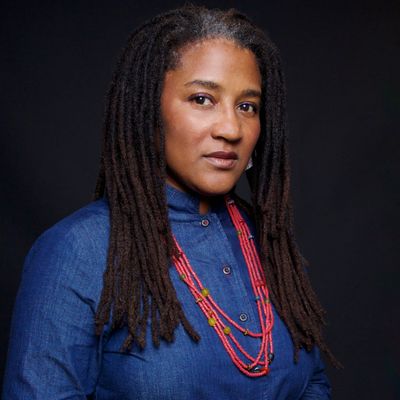
[0:20] Gordon Cox: On this episode of Stagecraft, I'm talking to the playwright Lynn Nottage. She's perhaps best known as the writer who's won not one but two Pulitzer Prizes for drama. One for her play Ruined and one for Sweat. And she's also a winner of the MacArthur Genius Grant Fellowship and the co-founder of a film production company, Market Road Films. This season, she's had a hat-trick of new stage productions opening in quick succession. Her Broadway comedy Clydes bowed earlier this winter, and then an opera adaptation of her own play, Intimate Apparel, for which she wrote the libretto, opened at Lincoln Center Theater last week. Then the very next night was the Broadway opening of MJ, the Michael Jackson musical for which she wrote the book.
Now, just a week later, Nottage is in the virtual studio with me to talk about the difference between musicals and operas, the complexities of weighing an artist's creative legacy against their personal legacy, and whether her production company will ever produce a Broadway show. Hey Lynn, thanks for joining me.
[1:23] Lynn Nottage: Hey there.
[1:25] Lynn Nottage: Yeah.
[1:26] Gordon Cox: I am talking to you the week that first Intimate Apparel and then MJ opened on consecutive nights. So question one is how you feelin'?
[1:36] Lynn Nottage: I'm feeling um exhausted, but very excited.
[1:42] Gordon Cox: And was it the was it solely the pandemic and the scheduling chaos that ensued that pushed all three of these shows together?
[1:52] Lynn Nottage: Yeah, it was definitely the pandemic because prior to that the shows were spread out in the very um human way and manageable way, and then the pandemic happened, and suddenly I found myself having to put up a play, a musical, and an opera almost at the exact moment.
[2:08] Gordon Cox: Yeah.
[2:09] Lynn Nottage: Was there, in addition to the general exhaustion, did you find that anything was surprisingly, I don't know, useful or beneficial about working in this way?
[2:20] Lynn Nottage: Well, you know, I will say this, because as difficult as the pandemic was and just um as challenging as it was, that there was this beautiful outcome is that we all returned to theater with a renewed sense of enthusiasm and community. And so um trying to walk, you know, uptown from one show to the next, I was actually quite excited because I was going into a community of artists who were just elated to be there, and um it made it much easier. So I think that that was the unexpected outcome of all of this.
[2:57] Gordon Cox: Yeah. And of the two shows that opened this week, one was a musical and one was an opera, and they superficially you can say those are both forms that you know tell stories on stage through a fusion of words and music and movement, but they're also very different, as evidenced by your two different shows. So I guess first of all, how do you define the difference between an opera and a musical?
[3:23] Lynn Nottage: Um well, I I I think that the fundamental difference is that opera is sung through, as that there is no traditional dialogue in this in Intimate Apparel. It's a very traditional opera in that sense. And uh a musical is really about um using music to expand the emotional moments, just when the character feels that they can say they don't have the words to quite express their interiority, they can sing. And so I think that that's the fundamental difference.
[3:56] Gordon Cox: Yeah, and Intimate Apparel, as you mentioned, is a more traditional opera. Was that part of the project going in, or was that a decision you made? Because I feel like there is a more, I don't know, whatever you want to call it, modern avant-garde, something a little less um hearkening to the traditions, which is its own thing. Um like what was the decision there?
[4:22] Lynn Nottage: Well, when Ricky Ian Gordon and I were contemplating making the the opera, and Ricky is the composer. We we both were very invested in creating something that felt like it had already always existed because that was true of the play. When I was writing the play, one of the things that I was thinking about, would it I want to write something that felt timeless that felt like it had always been part of the theatrical canon, and so going into this next endeavor, I said to Ricky, I'd like to figure out how we can do that in an opera. And uh Ricky is someone who who's very invested in the American songbook and in creating traditional sounds that sound fresh and very modern. He is not in the tradition of um opera composers who who are working with a very small palette.
His music tends to be expansive and lush and melodic in ways that many modern operas are not, and so I thought that was really a lovely marriage between this text that felt um traditional and this music that was reaching towards something that felt much you know felt much more traditional.
[5:39] Lynn Nottage: And one of the things we also wanted to do is create some uh a ragtime opera is to use like Americana music as our foundation, even though it departs from that. If you listen, you can hear the syncopated rhythms that really define music of early 20th century.
[5:56] Gordon Cox: Yeah. And how did the form, I mean, in addition to not using any spoken dialogue, how did the form dictate the tone and the way you made this translation from play to to opera?
[6:13] Lynn Nottage: Well, entering this endeavor, I was very much a neophyte. I've been to the opera, I love opera, but I had never endeavored to write an opera. And so I had to lean very heavily on Ricky, who was a very gentle, loving, nurturing guide through this process. And when I first sat down to write the libretto, um I was at a loss as what to keep and what to lose. And every word that I wrote was very precious to me. And I I gave my first attempt at the libretto to Ricky, and he came back and said, You have literally just rewritten your play. And he's like, You have to go back to the drawing board. I attempted um to rewrite it again, and when I came back, I had once again rewritten my play. And so finally, what Ricky said to me is like, you're not trusting me as a composer.
The real difference between sort of writing a musical, even writing a play is that an opera, um, 50% of the work is really done or by the composer. I would say even the percentage is larger, 60% of the storytelling is done by the composer. And he's like, You let me be your collaborator and let me say I love you with you without you having to write those words. And once I did that, I was able to go back and really distill the play and find figure out what is the essence of the storytelling that's necessary to be communicated through language and to allow Ricky to do the rest of the work.
[7:48] Gordon Cox: Yeah.
[7:49] Lynn Nottage: So it sounds like there could be uh hypothetically a musical version of Intimate Apparel that would be an entirely different beast.
[7:59] Lynn Nottage: Yeah, I think so. Just as the opera is in conversation with the play, but it is an entirely different piece of art. It lives and functions and breathes very differently. And I think that we, if I made a musical, the the same would be true. I was not interested in replicating the experience of Intimate Apparel the play. I was interested in replicating the emotional journey, but not you know, the the blow by moments that happen when you when characters are in the dialogue.
[8:32] Gordon Cox: Right.
[8:33] Lynn Nottage: And how would you characterize what Intimate Apparel the opera is and how it exists on stage versus on sort of broad strokes and how it exists on stage as a play and the way it lands?
[8:48] Lynn Nottage: Sure, I mean, that's a a great question. When I sat down to write Intimate Apparel, um, I had very a very strict um structural guideline. I knew exactly where I went to begin the play, where I went to end the play, and it was kind of a Laurent structure in which each scene is two people and they're in dialogue across a bed because I was very interested in what happens to people when they're in a bedroom or they're in a boudoir, and how does that shift the way in which they interact when there's that unspoken subtext that's always there and that sexual tension? And so that was the conceit of the play. And I realized when I was translating this to be an opera that I wanted to expand the storytelling. I want to invite more people onto the stage, and so I had to abandon some of the structural restrictions and conceits that were the guiding principles of the play and figure out well, how do we tell this story? But um with many more people. We have a chorus in the opera.
[9:56] Lynn Nottage: And we have people who are in the boudoir with all of the characters, and so that just gave us much more leeway in terms of storytelling. We also have scenes uh that occur in the opera that were not part of the the play just because of the conceit. It's like in the play, I couldn't ever leave the boudoir, but in the opera I can go, um, I can um I can go to the streets of the lower east side, I can go to you know the the saloon, and I can go to the the gambling hall.
[10:29] Lynn Nottage: Right, right, yeah. And this project is part of an initiative between Lincoln Center Theater and the Metropolitan Opera. So you knew going into it that you were working on an opera. Was there ever any thought of choosing a different play or maybe writing something original for this? Or was the idea going in always intimate apparel? Uh um, you know, it's it's when Ricky and I first decided that we were going to write an opera together, we began looking for other source materials for inspiration, you know, movies, books, other plays, and we spent, I would say about two years reading things, and finally Ricky said to me, you know, I don't know how to tell you this, but the thing I've always wanted to do was turn intimate apparel into an opera.
And I said to him, Oh my god, I don't know how to tell you this. The thing I've always wanted to do is turn intimate apparel into opera. And so we spent two years like circling each other, and we both really wanted to do this. Um that's the idea that was brought to Lincoln Center, you know, to the Matt Lincoln Center commission. So we always knew when we began this particular collaboration with Lincoln Center that that's what it was going to be.
[11:46] Gordon Cox: And tell me why for you uh the uh an opera version called out to you.
[11:52] Lynn Nottage: Because I I you know it's sort of a classic tragedy, and it's it has all of the perfect operatic voices. We have uh we have uh soprano and uh baritone and a tenor and a contralto. We have like all of the elements and the ingredients to make a great opera, and there's something very lyrical and beautiful, um, and intimate and yet also expansive about intimate apparel that I feel lends itself to that particular form.
[12:22] Gordon Cox: Yeah. And what can you tell me a little bit about the specifics of the working process in terms of it sounds like the libretto came first and then it was set to music? Or how did you interact with uh with the composer?
[12:38] Lynn Nottage: Yeah, in in in uh in opera, um you tend to write the entire libretto before the composer begins. It's somewhat different than working building a musical in which you're sort of working side by side at every single step is I wrote the l I would wrote the libretto, I shared it with Ricky and our dramaturgos Paul Cremo here at um uh at the the Met, and they gave me feedback and I tried to get the libretto in as good a shape as possible um so that when Ricky um began working, he could really just throw all of himself into it. And so um it was like tag you're it I finished and then he began his process. And then once he um he began working it through, Ricky was really great about inviting me over, and he has this little electric piano um with the orchestrations, and he'd sit me right next to him me and like sing me through scene by scene and ask me, you know, is this what you hear? Are there things that you feel should be different? And in that way it was somewhat collaborative, but he's such a fantastic composer that usually I'm like, it sounds great, continue.
[13:51] Gordon Cox: Yeah. And as you are writing alone in your room, uh are you working on meter? How what is like do you think about meters for a certain mood, or how do you think about sort of the poetry and the the sparseness of it? And what what is your job in terms of the structuring there?
[14:12] Lynn Nottage: That's that's such a a great question one of the things that I did when I sat down to begin the libretto was to build a soundtrack of the world and music that I imagine either um Esther would be listening to you know from downstairs or you know what would the Lower East Side sound like or what would the bordello that Mimi's in sound like and so I went about trying to find those particular um sounds and I built this this soundtrack and that's what I listened to as I was writing the piece and then when I was done I shared that soundtrack with Ricky and said this is the template that I was using um and to help him understand what I was hearing while I was writing and how does that manifest in what he wrote has there been anything in the experience of writing in verse for a libretto that you think might carry over into the way you write in general I yeah I think perhaps I I think for for me because um I don't think of myself as being a necessarily poetic writer you know there's some people that you know poetry just comes naturally and that's what they hear it's like I think of my me as myself as being much more of a naturalistic um playwright and I think writing the libretto I had to lean into a side of myself that I don't generally access which is the more poetic lyrical side.
[15:47] Lynn Nottage: And I do I found that I could do it, and I thought, oh, perhaps there are things that I learned in this process that can translate into my next play. You know, I also had to like use a rhyming dictionary for the first time. And it was also, it was kind of a bold um step to rhyme in an opera because so many traditional, I mean, not traditional, so many modern operas eskew that. And even and Ricky's like, you know, to hell with that.
[16:23] Gordon Cox: Yeah.
[16:24] Lynn Nottage: We're gonna do it.
[16:27] Gordon Cox: I'll have more with Lynn right after the break.
[16:38] Lynn Nottage: And now here's more with the playwright Lynn Nottage. Speaking in broad terms, is there anything structurally different about you know the way you structure intimate apparel versus something like MJ?
[16:54] Lynn Nottage: Um well yeah, yeah, because they're two different, they're two different beasts with um with M MJ, we had music that exists and we had um lyrics that wouldn't were sort of somewhat difficult because of the nature of them to to tell story story to tell the story. And so we had to figure out when we're crafting the narrative how to use music in ways that are emotionally satisfying and that drive narrative, um, but don't necessarily have lyrics that are traditionally crafted.
[17:33] Gordon Cox: Yeah, you know, and in intimate apparel Esther can say exactly what she's feeling through an area, but in MJ, I didn't necessarily have those areas that could um could communicate totally the interiority of Michael Jackson. And so I had to figure out very cleverly how to use some of those lyrics to do such.
[17:58] Lynn Nottage: Yeah. Another thing that is striking about the difference between those two productions is just the kind of size of them because intimate apparel is very intimate, you know, bigger than the play, but still, you know, two pianos and I mean fewer than 10 performers, I believe, it looked like um, and versus Michael Jackson, which is a massive Broadway.
[18:18] Gordon Cox: Yeah, it's a mega musical. There are so many elements that go into that. And I wondered watching MJ, if there was anything that is on stage right now that is very similar or basically unchanged from you know, a first spark of an idea that you had when working on that idea initially. Like is there for yeah, for go ahead for MJ the musical, uh yeah.
[18:44] Lynn Nottage: I mean, I think I think that one of the things that we wanted to do from the very beginning is to use thriller in a non-traditional way, and we knew that it was going to be a showpiece number that expressed some of the complicated emotions that Michael Jackson was feeling, and that we wanted him to be in conversation with himself. And so when you see the musical thriller, it's like it's a haunting of his life, and he's trying to work through the different manifestations of himself, and we knew that that was always going to be the case.
[19:19] Gordon Cox: And how much does intimate apparel you've spoken in the past about your work on that show and thinking about how an artist's artistic legacy can be complicated by their personal legacy? Um, and I wondered that's something we think about for lots of people these days, right? It's something we're grappling with uh on a regular basis. And I'm wondering if your own personal beliefs on the entire on the general idea has shifted or evolved or been just more clearly defined by your work on MJ or anything else you might have worked on that similar.
[19:58] Lynn Nottage: Yeah, I mean, I think that this moment in time, it's a complicated moment. And just the pause that we've had during COVID has allowed a lot of me, just as an artist, to contemplate many different things, you know, from you know, what kind of stories that I want to tell, but also, you know, um how I feel about this industry at large and you know, whether this is an ecosystem that is nurturing me and is responsive to the stories that I want to tell. And the phrase that I've used um and has been a guiding principle is just number one replacing judgment with curiosity, and the second thing is sustaining the complexity of the characters and understanding that as an artist I've always leaned into complicated characters, and that's never going to change.
[20:49] Lynn Nottage: Yeah.
[20:50] Gordon Cox: And you've had two openings this week. That means there are reviews that have come out this week. Do you read reviews? What's your take on reviews? How do you interact with them?
[21:01] Lynn Nottage: You know, it's fascinating. Throughout my career, I've always been a reader of reviews. I just feel like sometimes there's things that I can learn from the reviews, and you know I'm curious about the sort of the divergent reactions to my work and whether it be good or whether it be bad. But I decided this go around because I have three shows that were opening so quickly that it would probably just be too much for my spirit and my mental health to read all of the reviews about three plays. I mean, it's a lot. I mean, I don't think that people necessarily take into consideration what it feels like to spend many years making something and to open up a newspaper the next day and have that work dismissed.
I don't think that the reviewers necessarily consider that and I also don't think that the people reading the reviews necessarily can consider that. So I just felt like in this moment I know that the work that I have created is good and that it's connecting with audiences, and I thought that's all that matters right now is that I've been very deeply invested in mindfulness during this COVID pause and I've brought that practice into my theater making.
[22:28] Gordon Cox: Yeah.
[22:28] Lynn Nottage: And part of that practice is just allowing myself to be in the moment of experiencing the show rather than thinking about how people are going to react, just living in it moment by moment.
[22:44] Gordon Cox: Yeah, yeah, you mentioned that the pause of the pandemic gave you time to think about the kind of work you want to do going forward. What can you tell us a little more about what's shifted for you, if anything?
[22:59] Lynn Nottage: Yeah, I mean one of the things that I thought a lot about is what do I want to experience and how do I want to feel when I leave the theater? In part, I think that Clyde's is an extension of that, is that I want to create theater that's joyful, I want to create theater that's healing, I want people to leave feeling good, for lack of a better word. I think that so much of my career I've written plays that are somewhat tough and that raise difficult questions. And it's not that I won't do that anymore, but I feel like there's something in the way in which humor opens up the heart and allows us to access different kinds of emotions that really appeals to me in this moment.
[23:47] Gordon Cox: Yeah.
[23:49] Lynn Nottage: And do you have a sense of how any of the shows you worked on were changed by this enforced pause?
[23:58] Lynn Nottage: I know for one thing, Clyde's had been Floyd's, and then I know that the weight of that title was too weighty. Yeah, yeah, Clyde's, in its previous incarnation, it was called Floyd's, and it appeared in Minneapolis. And the play is really not connected to what happened to George Floyd, but certainly because of this cultural reckoning that we've been through, I felt that people, if they were going to see a play called Floyd's, would come with a set of assumptions that would not be true. And so I didn't want people to bring that baggage into the theater with them, and hence I changed it to Clyde's. Intimate Apparel was in performances when the lockdown happened. How, like what I saw earlier this week is the show that played its last performance on March 12, 2020.
I think it's really different. It's interesting. People who saw it prior to the shutdown and after said that the show feels more buoyant. I think that Ricky and I had this unique opportunity because of the pause to actually go back in and look at the libretto and the composition. We squeezed out some time and in some cases we lightened some moments, and so the music, the opera is actually shorter and moves faster, which is great. But also Bart, the director, had the opportunity to revisit some of the moments. One of the things that I felt in its first incarnation is that some of the attraction between the characters was overly sublimated, and I was like, we need to see the intimacy, we need to feel their love. And so he went back in and he was not afraid to let the emotion be more present.
[26:06] Gordon Cox: Yeah.
[26:06] Lynn Nottage: And so I think this iteration feels much more emotional.
[26:11] Gordon Cox: You are also the co-founder of a production company, Market Road Films, and I wonder if you could tell me a little bit about how you think about your work in that realm overlapping with the work you do as a creator.
[26:25] Lynn Nottage: Thank you for asking that question. Market Road, no one ever asks me about, so I'm happy to answer that question because right now we have a film that I think really exemplifies the kind of work that we do. It's called Takeover, which is a short documentary by Emma Francis Snyder, and it's about the young lords' takeover of Lincoln Hospital, which was a failing hospital in the Bronx in the 1970s. These young, very brave people decided that they, as a community, as a Puerto Rican community, really deserved better health care, and they were not getting any response from the authorities. So they decided to take over the hospital and occupy it and demand better health care. The outcome, which many people don't know, is the patient bill of rights.
[27:15] Gordon Cox: Where can we watch this? Is my next question. Don't let me forget to ask you.
[27:21] Lynn Nottage: Well, you can watch it. It's a fantastic documentary, and it's been shortlisted for an Oscar. You can watch it on opdox. The New York Times is streaming it, and I highly recommend it. People who see it respond because it's part of American history that's not told, and I think that as a production company, it's something that we're deeply invested in, telling stories that are overlooked.
[27:49] Gordon Cox: Yeah. Is there a chance that Market Road would get into Broadway producing?
[27:55] Lynn Nottage: No, tell me why not.
[27:58] Lynn Nottage: You know, it's very hard to be a Broadway producer. It's not muscles that I think we necessarily have, and we're really interested in this visual medium and its possibilities. My husband, Tony Gerber, who's my partner, not just in life but at the film company, he spent a lot of his time making international documentaries, adventure documentaries for National Geographic. Just as storytellers, as a company, we're really interested in traveling and going to places that folks might find difficult to get to. I think that that's the difference between what we're doing and sort of producing for Broadway, which you're really putting a box around the story and inviting people to experience something in a smaller frame.
[28:50] Gordon Cox: Yeah, yeah. Through all of this, the three shows and the work you're doing with Market Road, have you managed to do any new writing lately?
[29:03] Lynn Nottage: Not much.
[29:04] Gordon Cox: I couldn't imagine how you could.
[29:09] Lynn Nottage: It's funny because my agent asked me like the day after MJ opened, he's like, "Well, what's next?" I'm like, oh my God. I don't know. I mean, I think that through Market Road, there are things that we want to produce. I mean, we're very invested in turning Takeover, the documentary, into a narrative film because I think the story deserves a much larger scale and many more people just need to know about it. I think we have other projects that we want to produce, so I think that I'm gonna lean more into the role of a producer just for a little while to empower younger artists to make their work.
[29:52] Gordon Cox: Great. Well, we look forward to seeing the projects that come out of it, and then what comes from you next after this busy, busy time. Thanks so much, Lynn.
[30:03] Lynn Nottage: Thanks so much for your time.
[30:05] Gordon Cox: Thanks so much to you, Gordon. That was Lynn Nottage, whose opera Intimate Apparel is now playing at Lincoln Center Theater, while the Broadway musical MJ is at the Neil Simon Theater. If you like what you're hearing on this and other episodes of Stagecraft, I'd really appreciate it if you took the time to rate and review us wherever you listen to podcasts. It really helps us grow our audience of folks who love theater as much as you and I do. Or tell a friend about Stagecraft or give us a shout-out on social media. Find past episodes or subscribe on all the pod places, including Spotify, Apple Podcasts, and on the Broadway Podcast Network, which is a great place to find more theater for your ears. I'll be back in two weeks with another new episode. Until then, find me on Twitter at G Cox Variety. Thanks for listening and see you at the theater.
© Broadway Podcast Network, All Rights Reserved