

Gender politics, quick changes and honoring Robin Williams: a live conversation with Rob McClure, Jerry Zaks and more, recorded at BroadwayCon 2020... Read More
From the show: Stagecraft with Gordon Cox
Guests



Featured Shows
About
Gender politics, quick changes and honoring Robin Williams: a live conversation with Rob McClure, Jerry Zaks and more, recorded at BroadwayCon 2020.
Transcript
This transcript was automatically generated and might contain errors.
[0:06] Gordon Cox: Welcome to Stagecraft, Righty's Theater Podcast, bringing you backstage and behind the scenes with the stars and creators of Broadway's hottest shows on Broadway, off Broadway, and live from BroadwayCon.
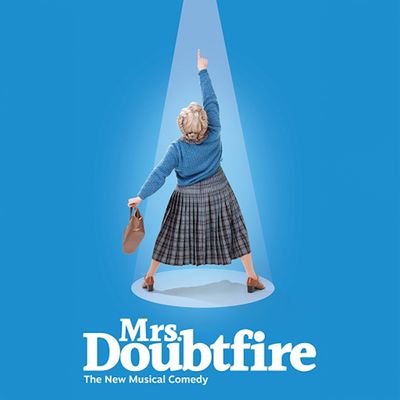
[0:21] Gordon Cox: I'm your host, Gordon Cox, and I'm going to be joined today by some of the fine people behind the new Broadway musical, Mrs. Doubtfire.
[0:31] Gordon Cox: Mrs. Doubtfire, of course, is based on the hit 1993 film comedy that starred Robin Williams and Sally Fields. The musical is fresh off its record-breaking run at the Fifth Avenue Theater in Seattle. It opens on Broadway this spring. It starts performances at the Stephen Sondheim, March 9th. But before that, we're gonna talk to, um, whoops, we're gonna talk to the folks, uh, behind the show. So please join me in welcoming director Jerry Zaks, choreographer Lauren Latarro, and actors Charity Angel Dawson, Jen Gambatese, and Mrs. Doubtfire himself, Rob McClure.
[1:27] Rob McClure: Hi, I'm here. Um, so let's get the elephant in the room out of the way first, which is Rob. Excuse me. Yeah. Robin Williams. He holds a very special place in not only sort of the history of comedy, but in a lot of fans' hearts. Like he's just beloved. What's it like to try and fill those shoes?
[1:47] Rob McClure: I can't. I know I never will. So I am as big a fan of Robin Williams as anyone. And something that was really important to me, so I had to assume it was important to the fans, is to honor that performance. Mrs. Doubtfire exists now as an entity, as a person, um, outside of Robin Williams' performance. You know, uh, it's an amazing character that he created. And I know that you all have a warm and fuzzy compartment of your heart that has a certain expectation of what she sounds like, of what, you know, yeah, all of the things that he created. And um, so I knew that I had to fulfill an expectation that I knew you would have, because I have the same one. And then once I feel like you trust me with it, I can take that character new places.
I feel like Daniel Hillard could be mine, um, but Mrs. Doubtfire, uh, I had to share with the incredible performance that he created, because I feel like I'm, uh, who doesn't want to honor something as timeless and legendary as what he did? Now that doesn't mean I'm gonna copy it, but it means that I'm going to fulfill the expectation in a way that I think gives you permission to come on a new ride with me.
[2:59] Gordon Cox: Yeah, and do you, what's the sort of mechanics of that for you as an actor? Did you watch the movie when you got the part and then never watched it again? Or did you not watch it? Like, how did you think about it?
[3:07] Rob McClure: I think I've seen the movie hundreds of times when I was a kid. I was obsessed with the movie. So when people said, did you watch the movie? I don't have to. I have, if I close my eyes right now, I can see it from start to finish. I really, I know that movie so well. Um, and more than, more than you know, the specifics of the voice or the accent or line readings, I remember how the performance made me feel. And that was the thing I felt like I needed to tap into, the way that that character made me feel. Um, so I started there. And luckily I'm, uh, McClure is a Scottish name, and my dad tells me that my great grandmother on that side had a brogue. So I think Mrs. Doubtfire was in here somewhere.
[3:49] Rob McClure: Was there a moment where you feel like you really discovered your Mrs. Doubtfire? You know, there's a line, uh, from the film that is that's not in the musical, um, because it's the musical's been updated, it takes place today. Um, so the ad that she places is online as it would be. But um, in the movie, it's in the paper, and there's a line from the film that's just so tenderly spoken and has the lilt of the brogue in its, um, uh, I'm calling in regards to the ad I read in the paper. Something about the lilt of regards to the ad I read in the paper. That I, uh, something about the lilt of that line that any time I need to get into that frame of mind and voice backstage and calling in regards to the ad I read in the paper. Here we go. You know what I mean? It's like there's something that locks you in.
[4:41] Rob McClure: And then this is sort of a question that we can open up to all of you. What, how did you use the inspiration, the movie as an inspiration, and then how did you go about sort of forgetting all that or honoring it, or however you thought about it, and then making it your own? What was that process like?
[4:56] Charity Angel Dawson: Well, I've actually done a few different shows that started as movies, Footloose, Hairspray. Um, so, uh, I've always found same as Rob, you know, it's about honoring the spirit of it. Um, and we're so blessed with this show that the writing is so fantastic. It's its own thing. So I, I don't refer back to the movie. I've watched it, I love it, it holds a special place in my heart, but I just like to encounter the piece like as it exists in front of me. And then of course, Jerry Zaks helps us.
[5:32] Jerry Zaks: Yeah, you know, it's a great question. And, uh, it starts with the script. It really starts with the script. Um, clearly the writers were inspired by the film as are all of us, you know. We should mention the writers, by the way, because they couldn't be here tonight, but they are, uh, Wayne Kirkpatrick and Carrie Kirkpatrick are the composers. And Carrie Kirkpatrick and John O'Farrell wrote the book. You know them from a show called Something Rotten.
[5:55] Jerry Zaks: Yes. Yeah, good for you guys. Really? Yeah, they're great writers, you know, and so they attacked us. And the first draft was completely wrongheaded. So we sat down and said, why would you want to start your show about Mrs. Doubtfire? Go ahead.
[6:12] Rob McClure: I was just gonna ask what was wrongheaded about it.
[6:14] Jerry Zaks: Well, it started with an, uh, the very first draft I read was, uh, involving a group of improvisational players led by Daniel who were putting on a show, and it somehow, I don't remember, but it felt very much like a group of improvisational actors saying, Hey, here we are, and we're gonna do a show for you. It was very meta, very Mickey Mouse Club, literally. Sort of felt like the Mousketeers were on stage. And it was, listen, a first draft is a first draft, and it's really important that you dive in somewhere. And I just, reading the first draft made me go back to the film just to observe its structure and the sequence of events. And you know, Daniel gets into trouble in the movie because he's impulsive, he's unafraid to make mistakes, and he's also got a moral stand, and so he improvises something and he gets fired.
You know, why would you not want to start the show with something that relates it to that? And, uh, we were blessed because our writers really understood that, grabbed it, and have flown with it, and we're still in the process of making the show even better. It's wonderful to get a second shot after Seattle. I will say we do start with the song Figaro, but not in the way it's used in the film. So it's a wonderful surprise as to, uh, why I'm singing Figaro in our Broadway context.
[7:37] Gordon Cox: It's good. What do you feel like, Jerry? You've worked on a whole lot of musical comedies, in fact from Guys and Dolls, and you just did Hello Dolly, which was a great big success. And he's got, he's got feel free, really. He's got the Music Man coming up with Hugh Jackman. So he knows, he knows a thing or two about musical comedy. So what do you feel like makes a good musical? And then this is a question for all of you, what's added to the experience of Mrs. Doubtfire when you musicalize it?
[8:04] Jerry Zaks: Well, uh, you know, I'll just jump in, but you know, music can transport you in a way that you know only music can. And I think, uh, I think the addition of music to the story elevates the story and it makes it easier. It's really critical that we fall in love with these folks, that we fall in love with Rob at the beginning of the show, that we fall in love with Miranda, that we understand and care about these people, because I've always believed that the sound of laughter is the sound of an audience falling in love. And you need to fall in love with the characters so that when things happen to them, you care. I mean, it sounds like a math equation, but it's true. It really is. So that's what sort of guided us all along the way.
[8:46] Gordon Cox: You know, I don't know if I answered your question, Gordon.
[8:48] Jerry Zaks: Yeah, definitely. No, and I will say I think the composers were really brilliant in the choices of moments they chose to musicalize. And I, it feels to me like the score. How many of you saw our first look yesterday? Okay, great. So the song, the song What the Hell from the kids, you know, that bridge of what the hell where they see how the pictures have changed on the wall, that mom has taken down the pictures of the full family and replaced it with just her and the kids. I feel like that emotional core is from which the music sprung. It's the hearts of those children amidst this ugly divorce. That is where the strings come from. You know, when they're orchestrating this thing. It's from that emotional place. So I feel like the entirety of the score is sort of birthed from that, uh, very real, uh, emotional core of that story. So they, Wayne and Carrie are brilliant musicians.
[9:43] Jerry Zaks: We, uh, sorry, the whole, everyone here was talking, uh, just before this panel, and it seems like everyone here really responded to and was surprised by the reaction in Seattle to the really strong emotional resonance of this story about divorce and people and a family sort of moving on in a different form. Um, is that, uh, tell me more about that. Jen, it sounded like you were about to say something about that.
[10:05] Jen Gambatese: Well, um, we were sharing, Charity and I have a shared friend, um, who had come to see the show in Seattle, and she came with her, um, mom and stepdad and the whole step clan. And, um, that have been a family for a long time now, but still after the show, she was like really gutted, um, from her own experience of her parents divorcing. And everything turned out happy, but she said as like the kid inside of her still felt that pain of you want mom and dad to get back together. And I think out in Seattle, you know, everyone comes to the show knowing they're gonna laugh and they're gonna just experience this joy ride, but they're really, um, surprised by how deeply tender the piece is and how moved they are, and that was kind of surprising to the degree I think.
And for me, like I had a moment myself on stage during the show at a point, um, because you know my parents divorced when I was one and, um, I had a moment, uh, when you know Rob as Mrs. Doubtfire is, you know, saying something at the end of the show and I'm sitting on stage listening and I just start to weep. And it's just that, and I was like you lack nothing. You've never lacked anything that if as long as there's love that that's all that matters, you know, and there's love, there was that love in my home. So, you know, so I was sitting on stage like the social worker and I'm sitting there crying, you know, because it does have such an impact because we've, a lot of us have been affected and touched, you know, by that, by, you know, by divorce. You know, it's affected a, you know, a number of us and so I feel like it really did resonate a lot with the audience.
[11:54] Jen Gambatese: And the family aspect in our show goes well beyond divorce in exploring unconventional family in a 2020 world. Um, the Harvey Fierstein role from the film is Brad Oscar for us. Yeah, he's, um, brilliant and, uh, and his partner is played by J. Harrison G who did Kinky Boots, who's amazing. Um, but, uh, they're, they are much more a part of this story and, and them as a couple, uh, them wanting to start their own family.
[12:21] Rob McClure: This is all expansions on the plot from the film that give us a really wonderful way to redefine family in a 2020 world using the Mrs. Doubtfire story. And you know, for anyone who's curious as to like, you know, why almost 30 years later do you want to do Mrs. Doubtfire? These answers are why and why in these meetings with this creative team you see the power this story has to cut to the heart of family and what it means to be a family in a way that's timeless, especially when you know the divorce rate is higher than ever. The definition of family is expanding, thankfully. The show is there to remind us of that. It's really special.
[13:05] Rob McClure: Lauren, tell us a little bit about your work in the show. Mrs. Doubtfire doesn't necessarily scream a dance musical to us, but tell us how dance works its way into the story and how you sort of created the movement language for the show.
[13:20] Lauren: I think the style runs the gamut. As far as style goes, there's some tap dancing, and though Robin Williams was extraordinary, Rob McClure taps. There's tap dancing, there's crumping, there's hip-hop, there's a little K-pop reference. So it really does all kinds of things. How do you decide what you draw on when you're sort of creating the dance world of a show?
[13:42] Lauren: The music helps dictate the style, and also the emotional state of the characters is always where I start. So, you know, I stay away from watching the movie. Same thing with Waitress, I stayed away from watching the movie, and I just read the script, like Jerry said, and then you sort of, as a choreographer, you're looking in between the words to try and say, you know, in the opening number, she's talking about why Miranda wants to divorce her husband. She's sitting in a therapy session, and she's, you know, but so then I'm writing down these other things like what happens at home? You know, she's probably cooking dinner, answering the phone, writing the monthly checks for the mortgage, changing a baby's diaper, putting away groceries, and then that became the choreography. So some of it comes from that place and some of it comes from, you know, when this woman is singing the way only Charity can sing, you know, you want to move in a certain way.
[14:40] Lauren: So does Mrs. Doubtfire dance differently from Daniel? I think it depends whether anyone around knows he's Mrs. Doubtfire at the moment. If he's by himself, then she'll be surprised at the situations Daniel finds himself in that require him to dance. The opening of Act Two, oh good lord. But it's really a blast, and you know there are fun moments from the movie, believe it or not, that did spawn ideas for choreography. Like I remember Lauren coming up to me and saying like, hey do you remember that two seconds in the movie when Mrs. Doubtfire is dancing with a vacuum? What's the Broadway version of that? And you're like, okay. And what is the Broadway version of that? How do you figure that out? Can you see how we arrive at that moment? It's such a beautifully crafted moment. It's toward the end of Act One where it's a song called "Rockin'" now when things, you know, the disguise is going well. People are buying it, and he thinks he's hot stuff.
[15:52] Rob McClure: And it leading into the transformation, you know, you see me transform into Mrs. Doubtfire and then go right into these iconic sort of things, you know, and then it grows from there in a way that's really exciting. Because again, it's about tapping into the nostalgia from the film and then surprising you with where we take it, which is so fun.
[16:11] Gordon Cox: Rob, you mentioned a little earlier the idea of sort of thinking about the story of Mrs. Doubtfire in 2020, which brings up a couple of thoughts. I wondered if I could talk to a couple of the actresses who play the two women in Rob's life, because one of the things movies of a certain age, you know, you sort of feel like, well, maybe in this case, perhaps the women are not fully realized characters, and how do you make sure that they are with our understanding of what representation needs to be now? How do you make sure that every character on stage is a fully living person and not a prop or a plot point or a caricature or whatever?
[16:44] Gordon Cox: So um Jen and Charity, I wonder if you could tell us a little bit about the work that you both did and that the writers have done to sort of make sure that uh your characters are these have these full rich inner lives.
[16:55] Jen Gambatese: Well, I think that's something that Broadway does better than Hollywood in some ways for the female actors, that we can be more fully realized. Certainly that's the case for me as Miranda in this show. I have, you know, I have Robin Williams to step into and I have Sally Field, but I'm given a lot more, I think, to work with than she was given in the film, and I'm very, very grateful for that. And again, it goes back to the writers. They're just so sharp and keen and human. Both the music and the book, it's just so human, and they do a great job of fleshing out Miranda. So I've been given it on the page, which is a gift.
[17:43] Charity Angel Dawson: Yeah, same. My character in the movie has a really small part. Yeah, she's barely... I watched the movie in preparation for this, and she doesn't have much of a part, right? She doesn't have much of a lot of things. She's got the scene with the frosting on the face, but that's about it, right? But even that, even in that scene in the movie, like she's like, you know, like putting it on her face and all this kind of stuff. But I feel like the writers and Jerry, they've done a really great job at understanding her purpose. And that's one thing that really helped me is Jerry helped me understand her purpose of what she is to him, you know, and what the space that she has to serve in the show. It's a very important spot, you know, and they've given me a number that is just... yeah, please tell us about this number. People are talking about this number. I can't wait.
[18:36] Charity Angel Dawson: Like it's just every actor's like just like, oh gosh, it's just meat and potatoes. It's such a wonderful number that they've musicalized this fire that she's putting underneath him to say, like, you need to get yourself together, you know what I mean? You're tripping, brother, you know, you know what I mean? But they've really fleshed it out, and I think the spirit of her purpose is way more important than I think it was highlighted in the movie, you know.
[19:06] Jen Gambatese: Can I just say one briefly? It should be noted that the writers were really open to the importance of making sure our female characters are three-dimensional, and it's been invaluable to have Lauren as part of the creative team because she's the one who'll say to a bunch of guys, wait a minute, she does this, she does that, she does this, she does that. That's what a woman in her position does, and she forces us to look at the reality and hopefully be inspired in a way that's reflected in the music and the script.
[19:40] Rob McClure: Another way that we would think about some of what happens in Mrs. Doubtfire differently now than in 1993 is our ideas about gender and gender identity are completely different now. And so if a guy putting on a dress isn't actually funny, like in itself, then where is the comedy and where do you find it?
[20:01] Jerry Zaks: That's a great question. Because it was very important to us that there wasn't a single moment where the punchline is because it's a dude in a dress, because that's not a punchline anymore. That's not funny. So what we're the lucky thing is that at the core of this story is a really great farce. And the farce is the comedy. The comedy is in the success or failure of the disguise. The comedy is in whether or not Daniel is pulling this off and the things that are going wrong and the pitfalls he encounters, and keeping this charade up is where the comedy comes from.
[20:43] Jerry Zaks: It was really important to us, you know, while we all understand that Mrs. Doubtfire is not transgender, right? He's dressing as a woman to hide his identity, not fulfill his identity, right? So we're not dealing with a transgender character, but that doesn't mean if the story is told in an irresponsible way, that there can't be collateral damage to people who could be hurt by it. So it was really important to all of us early on, very early conversations of the writers as well.
[21:39] Rob McClure: You look like you're about to say something.
[21:40] James: Yeah, no, just briefly, you know, the farce works because the circumstances are life and death. You know, this man will do, and you know, we all have been touched by divorce or family breakups, a lot of us certainly, and it's life and death for him to get it back, to get his children back, to be with his children. And when things are life and death, funny things, very funny things can happen. And that's one of the things we try to keep in mind when we're putting the show together.
[22:08] Gordon Cox: And Lauren, for you as one of the female voices in the creative team room, what do you feel like you ended up being sure to advocate for on behalf of sort of the female characters or sort of the thinking about gender and things like that?
[22:20] Lauren: Just the specificity of how much Miranda, the load that Miranda has taken on. I have a 21-month-old daughter, and you know, and though my husband helps out around the house, you know, it's just it's 2020, but there is I recognize the load on women, and I just sort of advocate for that, and Miranda, especially having a husband like Daniel. We got to we just talked about really specific things that must have gone on.
[22:50] Gordon Cox: How old is your oldest child?
[22:52] Lauren: I have a 10-year-old and a four-year-old, and a great husband, but the mental load on moms is different than it is on dads.
[23:00] Gordon Cox: And how old are Miranda's children?
[23:01] Lauren: Miranda's children are 15, 13, and 9. So for 15 years, right? Miranda's been, you know, what did I say in the room that day? For 15 years, Miranda's had some version of breastfeeding, waking up in the middle of the night, you know, maybe 10 years out of those 15 years with the way the kids divided down with AJ. So it's, you know, I just wanted the guys in the room to really hear that, you know. Fifteen, you know, breastfeeding, 2 a.m. crying calls, that kind of thing. She's been doing most of it.
[23:37] Charity Angel Dawson: Yes, my daughter's a 37 and 31, so but I remember this vividly. And as we mentioned, this show is from the creators of Something Rotten. Does this what can fans of Something Rotten sort of expect to see that will have the sort of flair that they showed in Something Rotten?
[23:56] Rob McClure: Yeah, exactly. Something Rotten, I um those guys write incredible melodies. You know what I mean? And you all have, you know, it's a musical. That type of musicality and the Grammy-winning ear of Wayne Kirkpatrick. So the score is beautiful and funny, and the lyrics are as witty as any of the, you know. I remember the day I in Something Rotten I realized that there was an internal rhyme. The lyric is, let's just say it's a Saturday night and you want to go out on the town. Got a lady to flatter who might give it up if you don't give her down. And I realized there was an internal rhyme with Saturday night and flatter who might.
[24:41] Rob McClure: And I was like, You guys are brilliant! But that, so you can expect that. Um, but I will say tonally, it's completely different. There is a bit of a parody aspect to Something Rotten that has a bit of tongue-in-cheek on the entirety of the production. Uh, Mrs. Doubtfire springs from a very earnest place. Um, so uh the genius of their composition you can expect, but the tone will be completely different. And as we mentioned, it was the show was a great big hit in Seattle. Um, you guys got to deal with, you know, a lot of audience members. You got to talk to them and find out what they liked about it. What sort of surprised you all most about what they responded to? And what are some memorable moments for you as you talked to the fans?
The brimming at the stage door. You know, you're signing autographs, and they're so appreciative of the delightful time they had, but they're really brimming with real emotion from the story that we just told. That was a surprise. There were two really big moments that affected me personally. I went out the stage door, and there was a 16-year-old boy who said, Can I give you a hug? And I said, Sure. And he started to cry on my shoulder. And uh his parents had told him to see the show because it was funny. And he came and he said, My parents got divorced two months ago. I'm newly openly gay and hoping to have my own family one day. And he said, and I came to laugh and didn't expect this show to be for me in the situation I'm currently in.
Um, that's what you know, that's why we do what we do. My gosh. Um, and then there was another day. Uh, I warm up by running the seats of the theater. Um, and I was at and I I was running the house. I get to know all the ushers that way. Um, and uh the house manager came up to me and said, Hey, uh, can I tell you something? I said, Sure. Uh, she said, There are two, there's an older female couple who has been fostering a child for three years, and um they are they they saw the show and they got their uh 18-year-old foster kid tickets for Christmas to see the show because after the show they're gonna tell the kid that they're adopting the kid. So I get to the end of the show, and I'm doing like those of you who know the movie, the moment when Mrs. Doubtfire is sort of giving the monologue on her television show about family can be defined in a lot of ways.
And I was like, and all I heard was Jerry in my head. Jerry in my head going, if you're emotional, the audience isn't. If you're emotional, the audience isn't. And I'm going to be harsh. No, no. And I'm just going like, Mrs. Doubtfire is helping. Mrs. Doubtfire is helping. If Mrs. Doubtfire is caught up in the in receiving the emotional language, she can't help. So help, help this kid, help this kid. Um and uh just knowing that there were people in the audience who were going through these types of things, and and uh it it's why we do what we do, and that was the laughter we all expect. And that's the part of what we do that is so I texted him uh the second that happened because he had left it, we had opened by then, and he texted me back, Well, I'm a blubbering mess.
Jerry, you always say that stories save lives. What's that thing? You always say that stories save lives, right? That Broadway and musicals that we're saving lives with the work that we're doing. And then it it it it does it, it moves me deeply that someone, one person might have a certain feeling about two men adopting a baby before they walk into the show. And I promise you, no arguing over Thanksgiving dinner, no reading articles in the newspaper is going to change that person's mind, but a show, a musical we have the best shot at opening up what the definition of family and it it's really important work that saves lives. Does and people came back time and time again over and over and over again.
[25:07] Jerry Zaks: So the show's a big hit in Seattle but uh you go into rehearsal was it what is it next week it's pretty soon. Um so Jerry what what kind of work do you want to do on the show between what are we no that's great. I have an entirely a new script not no now wait wait wait wait no a wonderful rewrite based on conversations that we had with the writers in Seattle and with Lauren and our musical director the whole team trying to identify what could be better. And I have a script that just arrived with within the last week that reflects that I think way the guys have succeeded in improving the material. And what what were those things that you feel like well I think we well one of the assignments was to give Miranda a better sense of humor you know I mean the the the the risk in that no no make her wittier make her wittier make her smarter make her you know again right from the film she was always the no person and she was the one who said no to Daniel and with you know, it was very dangerous that you become one dimensional.
And we're trying to make sure that in the writing she's given more dimension. We have a better ending to the play. The way the play ended in Seattle was not as good as it could have been or specific. It almost felt like we ran out of ideas. And it was okay. But we needed to be more honest about our show than the director of our show. This is what doesn't work. And uh, and and so, yes, like that. Uh uh there's a new song being worked on and reworking of several numbers. I mean, having the opportunity to do the show in Seattle was uh really a godsend, you know, because I don't believe there's any show that uh sh isn't better the second time around, or at least shouldn't be better the second time around.
So I'm very excited because um we've got a lot of wonderful work to do, and uh with a great foundation and a bunch of actors that I love working with so much, and uh, you know, it's it means everything to me. So, you know, yeah.
[30:46] Gordon Cox: I would like to talk a little bit about quick changes because as I as I mentioned, I watched the movie before uh talking to you guys, and uh I hadn't seen it in a while. And even with all the movie making magic of you can cut away, and at one point they sort of speed up Robin Williams as he's like stripping out of the fat suit. They are so slow, those quick changes on film. And you guys don't have the movie magic to try and speed it up, and nor do you even have the luxury of that kind of time. What please tell me about how that's so cool. Can I just say it's so cool because you guys know, right? You all have that restaurant scene in your head, right? Oh my god. Are they doing the restaurant scene?
Yeah, we're doing the restaurant scene. But now here it's so cool because you all know that every time Daniel runs into the restroom, he's got five and a half hours in a trailer in the movie. We're doing it in real time. Which is so fun. When he runs in that bathroom and then he comes out 18 seconds later, it's Mrs. Doubtfire. We're doing that. 18 seconds. Um can I say I have in this show Beetlejuice? I had one quick change. I had one costume change. And it was quick. Mrs. Doubtfire, I have 31 costume changes. It is uh, and that is a credit to our uh incredible costume designer Catherine Zuber, and uh and my little we call her Team Effie. Uh euphigenia. Yeah, uh how many people are on Team Effie?
That's what I wanted to know about. And uh it's uh we had shirts made in Seattle, it was very cute. Team F easier. Um, but I will say it's a little like the Indy 500 where the car goes in to change tires and you go and then the car keeps going. That's what it looks like. I actually watched, so remember when you come in at the end of um into the house and and you're rushing back after or you're a big number. Yep. And and I'm on the steps, and I for until like the end of the run, I didn't realize if I turn around, I can watch Rob getting under us. Whoa! Where is this where is this happening? Is this like in the wings there or sort of right off the stage? Listen, if the wing, if the wing is here and here's the stage, I'm changing here.
That's as much time as I have. Yeah, yeah. That's as far as I can go. And I did, I wasn't really watching him get under us, but I was watching the Indianapolis 500 thing and like clockwork. I mean, it was like it was really amazing. And and we're doing it, I mean, if if I can tell you, we've it's we've got bodysuit, clothes, shoes, pantyhose, earrings, teeth, wig, glasses. Now, it's just a really cool, technically proficient transformation, and it's all about uh my dressers. So I have these amazing dressers who are um yeah, uh uh please, you guys know what it takes. Um but it is it's an amazing it's an amazing thing. And um I I I will I will forever owe a lot of it to two dressers who are locals to Seattle at the Fifth Avenue Theater, Randy and Marlis, who are local dressers in Seattle, who helped build that track, who we will now teach to New York dressers, but I will forever be indebted to them for helping create the traffic that makes those changes happen. It's uh I owe them.
[33:54] Rob McClure: And there is a prosthetic in the way that there is in a film, the prosthetic face. There is there is use of prosthetics for sure. Okay. Um we learned a lot about how it should function, and there were early questions about whether, you know, how we were gonna do that. Or if or if we were going to use it. Yeah, right. Because it what's possible without, you know, without taking the time with adhesive and you know that what normally requires, you know, it's not like Shrek where we can get into a prosthetic before the show starts and then stay in it for the evening. I've got I've got to be in and out of it in 18 seconds. Um I asked you this uh before we came on, but I I think it's a fun answer.
As I asked you, well, can you have makeup on as Daniel? Put the Mrs. Doubtfire face on and then take it off again and still have makeup on. It won't last long, I'll tell you that much. Skyliner stage. I am sweating. Um but it's uh, you know, I every time my offstage traffic in this show is as complicated as in my onstage traffic. So if you're not looking at me, I'm I'm probably doing doing a quick change and doing my best to maintain my makeup, uh whether I'm Daniel or Mrs. Doubtfire, uh throughout the course of the evening, and that's all a credit to my team. Uh, this Vic Victoria Tinsman, who is also my uh my wig and face and teeth and makeup person. She's been really instrumental in helping with that uh maintain my face regardless of uh which character I'm playing.
[35:15] Jerry Zaks: And part of that for Jerry and Lauren, I've I imagine there must have been moments where oh, we need another 30 seconds here or two minutes or whatever to cover Rob getting in and out of whatever he needs to get in and out of, right?
[35:27] Rob McClure: That's when I would say, right, right, write me something. I need ten more.
[35:30] Jerry Zaks: Yeah, we have to yes, we did. There were several times when we had to figure out how to fill a few seconds of change. I remember it was really a wonderful compliment because there was a moment where you were like, Can he enter sooner? And I said, I'm changing, and you had forgotten that we were two uh Mrs. Doubtfire and me are the same person.
[35:52] Rob McClure: I was like, Why isn't Daniel entering sooner? Because I'm changing.
[35:56] Jerry Zaks: Oh, you just entered as Mrs. Doubtfire.
[35:58] Rob McClure: Yeah, you just exited as Mrs. Doubtfire.
[35:58] Jerry Zaks: Um, but it is, it's it's uh That never happened in tech.
[36:02] Rob McClure: No, in tech in tech.
[36:04] Jerry Zaks: Do you remember the day you were like, I'm forgetting that you're two different things?
[36:08] Rob McClure: I would be I he would be in Mrs. Doubtfire all day, and like you lose Rob, so then that like I'd be like I miss your face.
[36:17] Jerry Zaks: We walk into dinner afterwards there you are.
[36:19] Rob McClure: When we began when we began, we were good. I was convinced or determined to avoid prosthetics if we could.
[36:25] Jerry Zaks: Right.
[36:26] Rob McClure: And then well, because uh they're cumbers I thought they would be cumbersome. Slow they would look false, they would slow us down, it would be clumsy. But then I realized uh that not only were they be were they able to be manufactured well, but they were it was critically important when Rob, as Mrs. Doubtfire, look into Miranda's face or his children's faces, that there'd be no way that they could possibly recognize Daniel. And without the prosthetic, it begged it it begged the question a little bit. With the prosthetic on, there was no question that Miranda could be staring right into Mrs.
[37:01] Rob McClure: Doubtfire's face and not know she was staring into the face of her husband or ex-husband.
[37:07] Jerry Zaks: Did in Seattle did anything go horrifically hilariously wrong with that transition on stage?
[37:16] Rob McClure: Hallelujah, no. I mean there were a couple of times. I didn't mean to curse it.
[37:19] Jerry Zaks: No, no, no, no, no.
[37:20] Rob McClure: No, I will say, I will say there was there, oh, there was one time where a zipper broke.
[37:25] Jerry Zaks: Oh, yeah.
[37:26] Rob McClure: And I had to sort of like hold my suit closed on stage. Yes, yes. That that went wrong. Uh but there were a couple of times where you know, Mrs. Doubtfire should have entered. And you hear her say it'll be re out before you hear. Like, there's about a three-second, like because I'm back serious. Like reaching for my teeth as I'm entering. Um just make it.
[37:50] Rob McClure: This guy, though, like, I mean, now I'm just gonna brag on the case. Now, first preview, it's all gonna go wrong. Well, no, I mean, really, everybody spit over your left shoulder, whatever you have to do. But he just makes it work. He made like any like when you were asking, oh, did we have to write, did they have to extend time or write? Not often, because like I've never worked with an actor as game as Rob McClure. Like he's just so willing to make it work, and the whole show owes a whole lot to that.
[38:22] Rob McClure: It was very sweet of you to say. That's very sweet of you to say, but I will also say to aspiring actors out there, I will say that there's a bit of a strategy in how I choose to show Jerry things. Because like the prosthetic, if I know that he has concerns about the prosthetic being cumbersome and not working properly and holding us up if we have to wait for it story-wise, we gotta keep the pace high. Then they would say, Here's the first draft of the face. Do you want to use it in rehearsal? No. On every break, I want to go in the other room and practice putting it on and taking it off. So by the time I show it to Jerry for the first time, it works. Because if I go in and fail in front of Jerry, I'm amplifying his concerns already. So there's a certain amount as an actor that you can get a read on what the concerns are and do your best to assuage those concerns before you show it to them.
[39:19] Rob McClure: It's called the protecting the possibility of a happy ending. That's it. That's it. That's it. You figure out what you want to have happen and make sure. Because you only have one chance to make a first impression, you know.
[39:28] Jerry Zaks: So smart. Well done.
[39:31] Rob McClure: Thank you. Um we have time for a few audience questions. So I'm gonna look to this screen here and see a question that will pop up.
[39:41] Lauren: Aha. Um what is your favorite scene from the movie that you've adapted to the musical stage?
[39:47] Rob McClure: Lauren should answer this.
[39:48] Lauren: Okay, Lauren. For me, it's your baby, the gigantic tap dance.
[39:54] Rob McClure: Oh, so it when in the movie when Mrs. Doubtfire is trying to cook for the first time and it all goes terribly wrong, and you know, at the end her breasts are lit on fire. We have a version of that that the writers wrote a really witty and fun song. So, you know, I just said tap dance, maybe, you know, as long as it doesn't, you know, like as long as I can understand what they're singing, you can try.
[40:22] Rob McClure: Yeah, no, I mean it made perfect sense because at that point in the number, Mrs. Doubtfire thought she had done it.
[40:28] Lauren: That's right.
[40:29] Rob McClure: Right. She thought, Eureka, I've got this done. Well, celebrate by doing a happy tap dance. So we did we do this giant tap break celebrating that that you know, Mrs. Doubtfire turns the egg timer on as she puts her as the food goes in the oven, and then all the ensemble on stage that have been there sort of helping Mrs. Doubtfire. The idea is that Mrs. Doubtfire uses her iPad to Google recipes and look and watch, you know, all these celebrity chefs from the food network help Daniel figure out how to cook so those characters come alive in the room with him and help him cook in a really fun way.
[41:08] Lauren: So so tap dancing suits. I'm so thrilled you like that idea. Um it's really cool. But that's what I mean about our creative team, you know, choosing the moments in the movie to musicalize. That's a really great example. And not in the movie, to answer that question, I think my favorite one is actually it's from the cut scenes from the movie. And it is a song between him and his kids at the end, and that's when the whole audience is just like so they found that inspiration from scenes that didn't make it into the movie. One of my favorite moments is when um Andre and Frank are transforming Daniel into Mrs. Doubtfire for the first time. I stand in the wing every day, every night I was in the wing, just like just singing along and dancing, doing the choreography in the wings to this number make me a woman. It's just magnificent. It's one of my favorite moments.
[42:03] Rob McClure: All right. And question number two from the audience. Rob, how many unique different voices and impressions do you use throughout the show? And can you give us some examples?
[42:15] Rob McClure: Oh my God. Well, first of all, my the first time I ever performed in my life was in my fourth grade talent show and I did impressions. So I've been doing silly voices for a long time. But uh I you know, yeah, first of all, uh it's uh yet again another credit to our collaborative team that they would, you know, they would write 10 impressions, and I would get in the room and I would say, Hey, I think I can successfully pull off these seven. And then they would go, Okay, great. Who are three that you do that you know you can do impression wise and will write around the voices that you've got in your wheelhouse. Um but there God, I in this show I do everything from like there's this little oh yesterday, you all met Mousy, the little mousey puppet, um, who's like Elmo inspired, who's trying to learn how to rule the clock. Um, and uh everything from ham to like my God. There's oh yes, the entire cast of Star Wars is in uh um God, there's a what's a fun one to do for you? Oh.
[43:21] Rob McClure: For some reason, in our production of Mrs. Doubtfire, Gollum from The Lord of the Rings shows up. Um Lord Our Love. Um, yeah, it's a really weird job that I have. Um but yeah, though there's there's probably I think I somebody tried to count. I think Jake, who plays my son, tried to count, and it was uh upwards of twenty-five um characters who appear throughout the evening. Not as many voices as you have quick changes, though.
[44:03] Jerry Zaks: That's right.
[44:04] Rob McClure: That's right. Just under. All right. Next question. What's your favorite way the story has been updated for a 2020 audience?
[44:16] Lauren: My favorite way. I think it's added to the baby.
[44:22] Rob McClure: I think, yeah, the extension of um his brother Frank and Say more.
[44:27] Lauren: Say more, Lauren, please.
[44:28] Lauren: For me, I cry every night when Frank and Andre finally. It's a spoiler alert. Is that okay? That they adopt the baby that they've been talking about trying to do this whole night. So for me, every night I cry watching the show. And I will say, like, you know, that's a great example of one of the things from the movie that uh that couple, you know, uh Harvey Fierstein and Harvey Fierstein's partner, um, is are are a they're really a tool for comedy in the film. And I love the way the creative team has brought them into the Hillard family. And um they have they have very real wants and needs and concerns about what Daniel is doing. Um they I would say Andre, Frank's partner, Jay, Jay Harrison G, um, is sort of the moral compass of the evening.
He is he is sort of the person going, this is a terrible idea with very real consequences. Um and uh and and Jay as a human brings such a a wonderful um point of view and personal life experience to this process that I think we uh the creative team embraced. Um but I would yeah, I would agree with you though that Frank and Andre's relationship from the film has been the expansion of their purpose in the story is is my favorite uh way it's been changed.
[45:52] Rob McClure: All right, I think we've got time for one more question. What's one scene that you aren't in that you wish you could be a part of?
[46:02] Jerry Zaks: Well, you can't say like really anything.
[46:05] Rob McClure: Um I want to be in her number.
[46:09] Lauren: You all will want to be in her number.
[46:11] Rob McClure: Oh I wouldn't be in make me a woman.
[46:14] Lauren: Yeah. Um, Jerry and Lauren, what scenes do you wish you were in?
[46:19] Jerry Zaks: That's a great question.
[46:20] Lauren: That is.
[46:22] Jerry Zaks: I I I can't pick. I have no I have no favorites, you know. I you know, I have two kids. I like them both very much. You know. No, it's really hard. You know, you just you know, all the scenes that work, those are the ones I want to be in, you know.
[46:37] Rob McClure: But can I say though, what's really cool is that the way that Jerry directs is because he he was an actor, it was an actor for ten years and I loved it, and I stopped because I started directing things, but I live through vicariously through my actors, and I call them my because that's just the way I feel. They are and uh um they they're family and they fulfill something in me that used to be as an actor very important, very alive, and they keep it alive by the virtuosity and the fearlessness. You know, you can't do good comedy unless you're unafraid, you know, and these guys are really unafraid, and it's inspiring.
[47:19] Lauren: Yeah. What number did you wish you were in, Lauren?
[47:21] Lauren: I just d uh you just, you know, I used to perform on Broadway. In fact, Jerry directed the first Broadway show I was in, so here we are, full circle. Swing, yeah. But I just watching the dancers get to dance on stage. Sometimes I just there's a little twinkle in my eye. I sort of, again, I'm living through them. And now I I don't always just get the short girl roles. I can be tall and blonde and big guy. I can do anything now as a choreographer. So I live vicariously through everybody. Can I just take the opportunity to publicly say I had a very fun revelation in rehearsal where the first week we were working together, Jerry and I, I was uh I was going, I I went home and I was telling my wife, I was like, you know, we have the same comic instincts.
I was like feeling feeling myself, going like I've got the same comic instincts as Jerry Zaks. We keep on coming up, well, really feeding off each other. My wife was like, didn't you see every musical comedy that Jerry has ever done growing up? I was like, it's because you were my teacher. Like it's I saw I saw that that revival of funny thing happen on the way to the forum three times. Like my definition of musical comedy is Jerry's axe. Like I I uh so it's it's amazing to me that my instincts have been unknown to me, crafted by this guy. Um I'm I'm proud to work with you.
[48:41] Jerry Zaks: Thank you.
[48:45] Gordon Cox: Thank you all for being here. Thank you for joining us, and thank you, everyone. Thank you, tonight, Jerry Zaks, Rob McClure, Jen Gambatese, Charity Angel Dawson, and Lauren Lutaro.
[48:59] Gordon Cox: Thank you. Um you can find Stagecraft on Spotify and Apple Podcasts and the Broadway Podcast Network. And uh I'll be back next week with another new episode. So thanks for joining us. Thanks all.
© Broadway Podcast Network, All Rights Reserved