

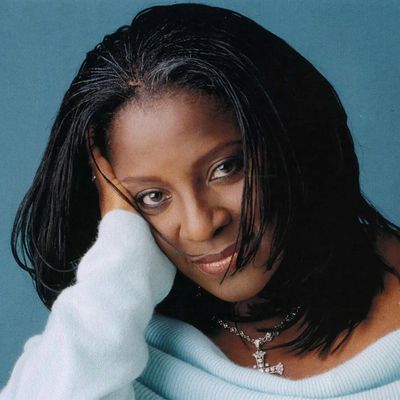
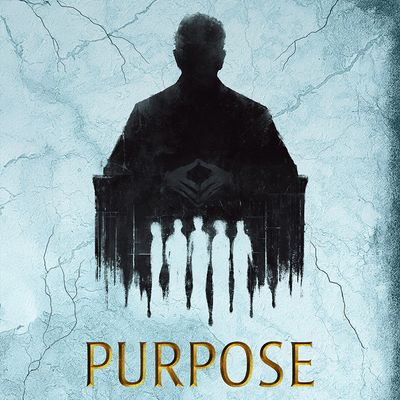
Three Tony-nominated actors from the cast of the Pulitzer Prize-winning best play nominee "Purpose" — LaTanya Richardson Jackson, Glenn Davis, and Jon Michael Hill — share the story of the show's development and reveal the challenges and joys of working with a playwright who can't help but rewrite up to very, very last minute... Read More
From the show: Stagecraft with Gordon Cox
Guests
Featured Shows
About
Three Tony-nominated actors from the cast of the Pulitzer Prize-winning best play nominee "Purpose" — LaTanya Richardson Jackson, Glenn Davis, and Jon Michael Hill — share the story of the show's development and reveal the challenges and joys of working with a playwright who can't help but rewrite up to very, very last minute.
Transcript
This transcript was automatically generated and might contain errors.
[0:00] Gordon Cox: Welcome to Stagecraft, Variety's theatre podcast. Your backstage pass to revealing conversations with stars, creators, and industry leaders. On Broadway, off Broadway, and beyond. I'm Gordon Cox. On this episode of Stagecraft, I'm talking to three Tony-nominated actors who are all cast members of the new play, Purpose. LaTanya Richardson Jackson. Glenn Davis. Jon Michael Hill. The latest play by Brandon Jacobs Jenkins, the writer of last year's Tony-winning revival, Appropriate, Purpose traces the fault lines in the Jaspers family, a nationally prominent black family who have gathered for a celebration in their Chicago home at a time of generational transition and high tension. The play originated at Chicago's famed Steppenwolf Theatre last year in a production in which Davis and Hill also starred.
Hill, last on Broadway in Passover, plays the family's youngest son, Nazareth, who's also the narrator of the show. And Davis plays his older brother, Junior, a congressman dealing with the repercussions of a scandal. Davis is also the co-artistic director of the Steppenwolf Theatre. And Richardson Jackson is back on Broadway after directing the starry revival of The Piano Lesson in 2022. Here, she plays the Jaspers family matriarch, Claudine. Now, all three are in the virtual studio with me to talk awards attention, last-minute rewrites, and where Richardson Jackson wants to take Purpose next. Hello, LaTanya, Jon, and Glenn. Thanks for joining me.
[1:32] LaTanya Richardson Jackson: Thank you for having us.
[1:34] Jon Michael Hill: Thank you for having us.
[1:36] Glenn Davis: Good to see you.
[1:38] Gordon Cox: And congratulations on your show's six Tony nominations, and also that Pulitzer Prize, and also the New York Drama Critics Circle Award, and all of it. What's it like to be performing in a show that has such attention on it at the moment? Go, guys. There are two of you. My voice is out. Now, you know, I can sit here and dominate, but I am trying to give you all an opportunity, young people, to have your voices heard. Now, go.
[2:00] Jon Michael Hill: Let me and Jon jump in first, and then cede the floor to Miss LaTanya Richardson Jackson. I will say it's amazing. It's thrilling. It's so much fun to share the stage with these amazing actors. I'm a part of the best company I've ever experienced. And to have so much, you know, we thought we had something special in the room, but to have that confirmed by audiences after the show, by critics, by nominations and all those things is icing on top. And I was talking to Jon the other day. This is not a shot we could have called when we first said we wanted to do this play when it was just 30 pages or 40 pages. We just wanted to be in the room together and work on something because we hadn't worked together in, you know, 10, 12 years, something like that.
And to have it be lauded in this way is sort of a best case scenario for us, having come from Steppenwolf and been members of that company for a few years now. But I will say that the only thing better than success is success with your friends and people that you love. And I've been watching Miss LaTanya Richardson Jackson for years. I first saw her in a play called Joe Turner's Come and Gone with one of our good friends, Andre Holland, and directed by Bartlett Sher. I forget what year that was.
[3:31] LaTanya Richardson Jackson: Yeah, here in New York.
[3:32] Jon Michael Hill: Yeah. I remember watching her being like, who is that? You know? And so to now be on stage with her and her playing her son, and then being on stage with John and Alana, who's also one of our best friends, and Harry Lennox, who's a giant to folks like me and John coming out of Chicago, and then the incomparable Kara Young. So I'm thrilled all the way around. It doesn't get better than this for me.
[3:59] Gordon Cox: Yeah. Does the attention, does the audience, Jon, I feel like you must have a particular rapport with the audience because you serve as the narrator, right? In addition to kind of being the central character around which so much of the play's action revolves. Do you feel, how can you tell us a little bit about that interaction with the audience? And has it changed at all now that there's kind of the awards enthusiasm behind the show?
[4:23] Jon Michael Hill: We've gone through phases. I feel like previews, when we were really still working on the script and trying to find our sea legs, were extremely enthusiastic and raucous. And closer we got to opening, and then once it opened, folks really settled in. And I really have to connect with folks and pull them along in this story. And they sort of gradually wake up. And the day after the Pulitzer came in, I think folks showed up waiting for a drama. It's the Pulitzer Prize for drama. So they came in expecting that, but Brandon is extremely funny. And he has a way of using that humor to open folks up to then be affected by the power of what he's done. So it's different every night. It really is. You cannot anticipate the personality of each individual audience from night to night.
That's what's thrilling about live theater. We have what we've planned and what we're going to present, but it's alive in that way. So audiences have been overwhelmingly supportive. And we get to talk to a lot of people after the show, and they, to a person, always see their family in this family. And I think that's a testament to what Brandon has done.
[5:55] Gordon Cox: Yeah. And LaTanya, we were saying just before we started recording that Tony season is a really busy time. If you are still starring in the show that you were nominated for, on your days off, you go from a Tony luncheon to a gala, to maybe another gala, to maybe a third gala, if you're Glenn, apparently. First of all, the Tony nominees luncheon sounds like a really good time. That is something that we in the press and everyone except the Tony nominees are really kept away from. Tell us a little bit about that experience.
[6:31] LaTanya Richardson Jackson: Well, it's really great because you don't have to be on. You're in a room where the camaraderie is authentic because you can just be yourself and hang out because nobody's watching you but you. So you get to at least have a conversation and meet some of the people that are in the other shows, people whom you admire, people whose shows you want to see, some of them we have seen, we were able to see before our show started. So it's just a great time to be together. And the galas, you go because this is the community. These are the people who support the work. And so Manhattan Theater Club gala was last night, Broadway Cares, Betz was last night, that's what Glenn went to, Harlem Stage, when Indira Wajdu was last night. And there were a lot. I'm naming three, but there were others because Cara Young was at a charades one for, oh God, created something with-
[7:37] Jon Michael Hill: Oh, Labyrinth maybe?
[7:39] LaTanya Richardson Jackson: Labyrinth, yeah. Oh, for Labyrinth, yeah. So there was a lot, there is a lot going on and you go to be supportive because you want purpose, which is our purpose. We want it known, so we show up for it. We show up for Brandon's.
[7:54] Gordon Cox: Yeah, yeah. I wonder, Glenn, you mentioned this, that this project sort of started out with 30 or 40 pages and you and John have sort of the earliest relationship with this play, it seems like. Can you tell us a little bit about how you first encountered the play? And then Glenn, of course, you ended up being the one to commission it after you became the artistic director. Just tell us a little bit about those early days with that play.
[8:22] Glenn Davis: Yeah, I'll give you a short version. So when I became artistic director, I'd had a relationship with Brandon and we had been talking about him doing something with Steppenwolf. He had already started working on something in which he would have written a play for myself, Alana Arenas, and John Michael Hill. As you probably know, Steppenwolf in the last 25 years has become a launching pad for new work, like Downstate, plays like King James, plays like Augustus H. County and other works have come out of Steppenwolf and gone on to acclaim in other cities, namely New York. So it was a dream that in success, we would have a play that would do well in Chicago and then we would bring it to New York.
Brandon had won the Genius Award, had been nominated, was a finalist for the Pulitzer twice. So I thought to have him write something for us would be thrilling. So he had already started like 30 pages of a thing. And so when I became artistic director, I said, hey, let's go ahead and finish that.
[9:34] Jon Michael Hill: Had you read that? Had you read those 30 pages?
[9:39] Glenn Davis: Yeah, we had done a workshop of it, I want to say in 2019. John, were you involved in that?
[9:45] Jon Michael Hill: No, I think their first one might have been up in Colorado. Is that the one you're talking about, Glenn?
[9:49] Glenn Davis: Yeah, it was in Colorado. And actually, John and Alana weren't available to be in that because they were working. And so it actually gave me time to just spend time with Brandon. So we talked a lot about his career, his work, and Steppenwolf and my career and what theoretically he would want to do. But it was just an idea. Writers have plays that they don't finish all the time. So it could very well not have resulted in anything. But anyway, I became artistic director in 21. And I said, hey, can you finish that play? He said, yeah, I think I can. He didn't know where it was going to go, but he did want to finish a play for Steppenwolf. And so I said, well, I'm going to program it. And he was like, well, it's only 33, 35 pages. You're going to put it on the season and it doesn't exist yet.
[10:35] Jon Michael Hill: Yeah.
[10:36] Glenn Davis: And I was like, well, I had seen Octaroon and I had seen Gloria and they were magnificent plays. And I said, if you can come anywhere close to that and you have taken myself out of it, John and Alana, who are two of the greatest actors I've ever encountered. I said, you start with them. I think we could do something special. I said, we need the right director. So right away I called Miss Phylicia Rashad and I asked her if she would come on board and help him birth this new play. And she actually read the 35 pages and she said, I love what he's written so far, but where is it going to go? And I was like, I actually don't know. I remember a conversation with her. We're on the phone and it was that moment where it was going to be, are you going to do it or not?
Because time was of the essence. And she said, where do you think this play is going to go? What do you think is going to happen with this play? I said, I don't know where it's going to go, but I think it could be the next great American play. And her next words were, I'm in. So that was how the train really got put on the tracks. I called Bran and I said, Phylicia's in? He said, Miss Phylicia's in? I said, yes. She said, yes. And so program the play and it was done. Everything sort of came together in Chicago. And then once we had Chicago, we knew we had something special, but then we got to New York, having added Miss LaTanya Richardson-Jackson and Carrie Hong and obviously Phylicia Rashad at the helm and the rest of us who had done it in Chicago, it just took off.
It reached another level. And we thought what we experienced in Chicago was great, but this was sort of magnanimous. I don't know how we could have dreamt up a better cast or a better situation. So it's been a dream.
[12:41] Gordon Cox: And what was it in that first, whatever, 35 pages that you saw that you really responded to?
[12:49] Glenn Davis: It was, you've seen the play, so it was, let's call it the dinner scene. That dinner scene was like, and it wasn't fully baked, that dinner scene. It was sort of like he had sprinkled some stuff in.
[13:07] Glenn Davis: It's a big moment in the play later on. No, I think in this version of the play, the dinner scene came earlier, so there was less build-up to the dinner scene. It was just like, that was the memorable thing that came right from that workshop. And I thought, wow, this could be special. And yeah, he delivered. He delivered. There were various moments, particularly in Chicago, where we rehearsed, Jon, I'll tell you, the first two weeks, we only had, you know, half the play, a third of the play. And he delivered it, sort of, it's gone on in Steppenwolf lore now, but he delivered it the night before first preview, the final after the play. And we were all, I don't know if we can curse on here, but we were all shit and bricks.
Yeah, you can. But he delivered it. And I'll never forget this moment. I think Jon feels the same. We were waiting for the play, waiting, waiting, waiting. And then we're all on stage during tech, our final day of tech. We're starting to preview the next day and he delivers the play and we all read it on the stage and everyone starts crying. And I didn't know if everyone started crying because the end of the play was so beautiful or because we got the play that we can do the next night for our audience.
[14:32] Gordon Cox: I'll have more with LaTanya, Glenn, and Jon right after this break. And now here's more of my conversation with the Tony-nominated actors, LaTanya Richardson-Jackson, Glenn Davis, and Jon Michael Hill. So Jon, what did you, what did you respond to in the play? What did you think of it as it was developing and how did it surprise you as these pages kept coming in, as you kept getting closer and closer to, you know, the big night?
[15:03] Jon Michael Hill: So I said yes to it, having not read a word. That's sort of, Steppenwolf sort of programs a season and they attach you to things. And I was attached to Purpose and I hadn't done a workshop yet. So I showed up to a workshop having not seen a word and I looked at the page and it was just my character talking and I flipped the page and he was still going. So I was like, Oh, what did I get myself into? But it was really that first page, literally just the language of how he describes what the character is doing in his life and being out in nature and taking pictures. He's a photographer and it really felt literary, which was fascinating to me. I think most of that dialogue that is addressed to the audience isn't really that conversational.
It's very, you can read it like a novel. It's really well crafted and beautiful. And I think that struck me first. And then, I mean, there are so many points of entry, I think, in this play. He touches on a lot of subjects and they're all conversation starters. I think that's why people come back and see this play many times. People bring their family, people bring their friends, different groups of friends, because there's so much to mull on, there's so much to chew on and ruminate, so much philosophy, theology, debates. So I really love plays that are argumentative. This is a very conflict-filled piece of work, and that sort of drives drama and drives story. So that's what I usually look for or hope for in a project.
[17:02] LaTanya Richardson-Jackson: Yeah. And then, LaTanya, you joined for the Broadway production. You're one of a couple actors, you and Kara, to join for the Broadway production. And you have acted on Broadway in, as Glenn mentioned, in Joe Turner's Come and Gone, and shows like Raisin in the Sun and To Kill a Mockingbird. But we last saw you as a director of The Piano Lesson, and it sounds like you weren't really looking for a stage role when this one came to you.
[17:28] LaTanya Richardson-Jackson: No, I absolutely was not. In fact, I told myself if I was going to really concentrate on directing, I had to sort of stop being seduced by acting. And so I said, because that's the only way at this age that I was going to get to really get into it and be nurtured by the process if I was only doing the process. So I stopped bugging all of my director friends by trying to tell them what to do when they were directing a play. So I really was not looking for an acting job. And I really, even though this job had been mentioned to me, I actually, in truth, told them, oh, they're never going to give that job to me. Because culturally, I think that we see the wife in a certain look that has been our norm for our culture. And I said, I don't think they put me with Harry. They're going to give Harry, I says, what they've got, what they were working with in Chicago.
[18:34] Gordon Cox: This is Harry Lennox, who plays your husband in the show.
[18:36] LaTanya Richardson-Jackson: Yes, he is. Yes, he is. And I know Harry. So I mean, I have a great rapport with him, but I just never thought about it. I read it. I read, at that time, which you all didn't really know, I really did read 45 pages. That's what I was sent, 45 pages. I said, they're never, and I forgot about it. Went on with my life and had a surgery and was in, came home, was in the bed from the surgery. And they said, we got something that we want you to read. So I read part of that several weeks ago. They said, no, they're very much interested in you. I said, no way. It's no way. They said, well, just read the script. And so they sent me the entire script the way it existed at that time, which is not what we're doing.
But I read it. And I was in the bed like, I got to get up. I got to get up and get over to that play at New York. Because if there's any way for me to do this, if they are bold enough to do this kind of play, I want to be a part of it. So I was like, okay. But first I did say, are we sure Felicia doesn't want to be in it and let me direct it? And my agent said, you cannot say that. Do not mention it. Do not say it. Don't even, I said, Latonya. I said, okay, I won't. But I said, but that's how I'm feeling.
[20:05] Gordon Cox: Yeah. And so what was it that grabbed you in that full script that you saw, that version of the full script that you saw?
[20:09] LaTanya Richardson-Jackson: Oh, listen, this boy is a genius writer. He's the most consequential writer of our time. When you think of Arthur Miller, when you think of Tennessee Williams, you read their works and you feel it jump off the page. That's what Brandon Jacob Jenkins' works does immediately. And for now, I don't know anybody else that's writing like that right now. He's it. He is the most consequential American writer right now. And I am overjoyed. I have left enough room in my life to make space for the unimaginable. And for me, this was the unimaginable. It still is. And I, with these guys, the reason I even keep saying, let them talk. I am only trying to encourage and support these young men, these young people who are out here at the beginning and in the middle of major careers who are worthy to be heard.
They have a voice. And I think that it is time that the American public, that the world embraces what they have to say and what they're doing. I mean, I'm just here to support all of them. And I am grateful to have the gifts that God had given me to do that.
[21:30] Glenn Davis: Thank you, Latonya. And Gordon, let me just add this real quick. Latonya Richardson-Jackson is a special human being. And she is overly generous with myself and John and everyone in our cast. Particularly, she has a particular fondness for people who are in this phase in their careers, the young folks, her kids, as she calls us. But watching her build the character, watching her come into the room, a lot of people, this is a step on production. And it was already fully baked in theory. It wasn't. But in theory, it had success in Chicago and then come to New York. And watching Miss Latonya build the character, find her footing as Claudine, take on me and John as her sons right away from day one was not only a pleasure and an honor, but it's great to watch her master at work. And she's going to shake her head or she's going to say, no, no, no. But truly, it is.
[22:39] Jon Michael Hill: Because you know how afraid I was. I mean, not afraid because that's not in my DNA. But I was, I looked at that, I was intimidated. Now, I can be intimidated. But I just stepped to it because you all are an intimidating force and aggressively are in this creative space. I am like, so proud of who you are and what you do. That's what I have to say. The other thing I'll just add, there's a certain type of actor that you want working on new plays. And I think Latonya advocates for her character Claudine with her life experience, with her stagecraft, all these things. And that makes a playwright deliver who's working on the play still. It holds their feet to the fire in a way that really brings out their best work, because you have an intelligent actor in a role advocating for the character and making sure arguments are sound and identifying the flaws that you want to be there in a very human representation of these characters. So we couldn't have gotten luckier having Latonya in this role. And she's so much fun, Gordon.
[24:00] Glenn Davis: So much fun. Good hang.
[24:02] Jon Michael Hill: As we say, when she's not around, that's a wild girl.
[24:09] Gordon Cox: And so it sounds like, and you've alluded to this a few times, Glenn, but not only were you getting pages up to the last minute in Chicago, but you were getting new stuff in previews as it was going. The show was changing night to night, it sounds like. Tell us a little bit about how that, and I imagine, John, as you were saying, you all as actors have some sort of input into kind of what is developed and what is kind of clarified and honed. Can you tell us a little bit about what that evolution was?
[24:39] Glenn Davis: Yeah, two things I'll say very specifically about that. Number one, Miss Latonya is correct in saying that Brandon Jacobs Jenkins is one of the most consequential writers of our time, of his generation. He's a master of his craft. And he's a genius. And he's proven it time and time again now. The thing that I would say about Brandon, I think he would say about himself is that he doesn't really get into the meat of his play, the real writing that he would call it, until he's in conversation with the actors. He wants to build it on whoever's playing the part. So we had a wonderful production in Chicago. It was great. We're all very proud of it. But Brandon didn't feel like it was finished until he had the final elements, the ingredients, the essential parts of his play that he was going to build the story around.
So the play changed when we got to New York, because he has new voices in Latonya Richardson-Jackson and Kara Young, who are masters of their craft. And so he was able to tailor to these parts bespoke to us. And it's a beautiful thing, because every writer can write like that. Some writers go build a thing, and then you have to come. They give it to you, and you have to find your way into it. And this way, as Miss Latonya was finding her character, Brandon was also finding it with her, because it was all together new. So we didn't treat it like... And kudos to Miss Felicia Rashad, who said, what we had in Chicago is not what we're going to have here. This is going to be a whole new, different experience. Let that thing go, right?
[26:16] Glenn Davis: She was the perfect ambassador for Brandon. She was the perfect leader in the room because she's like the flight attendant on a flight. When it gets turbulent and it's going up and down like that, you're like, oh, man, what's about to happen? She is a steady hand and she doesn't let anyone freak out when you're all freaking out like, hey, you don't have the play. Okay, he didn't change the lines. My characters did. What am I doing now? Make it make sense to me. She was the steady hand and she said, you're going to be well taken care of. I'm not going to let you fall. So in between those two, Miss Felicia being a master at what she does, and Brandon being a genius at what he does, that combination worked to great effect and really took care of all of us. And I couldn't be more grateful for the way that they let us do this journey.
[27:11] Gordon Cox: Yeah. Jon, how did your character change over the- what was the evolution? What was being sort of refined as the changes were coming in over the preview process?
[27:22] Jon Michael Hill: I think mostly for Nazareth, it wasn't so much his character changed much at all. It was more about crafting the context that the narrator gives for the story and tracing different elements through. He sort of had all of these arcs and it seemed like he just filled in a lot of those throughout the play. That's more of what most of the rewriting was about was sort of fleshing out these story arcs for each of these characters and making sure their relationships are clear and all that. But yeah, it's a fascinating thing to get out there in front of people and you're doing these monologues and you're running, you're running, and then you're like, oh, there's something new coming up. Am I going to remember what it is in the moment?
That is one of the more exhilarating and terrifying experiences I've had on the stage. But you could always see how clear the story was getting. So there wasn't much pushback from me at all with the rewrites he was doing because you could see how he's working. You know what he's going for, what he's trying to accomplish when you look at it most of the time. He took a lot of fat out of what you were saying.
[28:44] LaTanya Richardson Jackson: That's true.
[28:47] Jon Michael Hill: Some of the time and streamlined it for you to get to the point quicker.
[28:52] Glenn Davis: That's right. And I'll add, Gordon, and I think Brandon would say this about himself, he's not, every actor can't work on his work. It is not for the faint of heart because Brandon wants to continue writing. And he says, you have to pull me away. You have to pull me away from it because I'll keep rewriting and rewriting and improving and refining. And so as we're in rehearsal, we're doing this, and we're in previews actually, rehearsing during the day and previewing at night, we were getting two versions of a scene. So we'd have to rehearse one during the day and perform another at night and have to continue to, as he's refining the story, figure out which version is best. And so to have two, three versions of a play in your head while you're performing for audiences is, again, as John said, thrilling, but it's a tightrope that you have to be a very, you have to be like, you have to be LaTanya Richardson-Jackson to be able to do this.
[29:51] Gordon Cox: Yeah. Well, it sounds like LaTanya, from what I understand, you had a big monologue in the, you influenced some of your characters' monologues in the show and how she expresses herself. Is that right?
[30:05] LaTanya Richardson Jackson: I don't know. I think we, like I say, each character was influencing what Brandon was doing. I just want to add that, you end up telling, in dramaturgy, you end up telling a writer that everything can't be a pearl. And I told Brandon, I said, here's your problem. We can't say to you, everything isn't a pearl because this genius shit you're doing, everything is a pearl. So now you got to just make yourself an editor because you can't put it all in there. You could, if we had all day to stay and do the play, because the thing is, everything that he was saying and everything that he wanted to say was valid and was something that was also entertaining. We can't just keep saying it. So I said, that whole thing about everything can't be a pearl, okay, that doesn't apply to you because everything is a pearl.
You just need to slide that over to the side and get it for the next play. Hold it because that shit is genius that you just wrote. And I wish that we could say it because back in the day, we would have been trying to figure that out because this is what Zaki was trying to mash up. What a lot of people were trying to do, that he has found it. He has found it and it's in him. So yes, we were being influenced by it, but it was also because it was in him to give it to us.
[31:37] Glenn Davis: I will say, we as actors, we're interpretive artists, right? So we take what someone has built, created, and then we interpret it for audiences. Brandon is generative and boy, does he generate. He would come up with things that I'd be like, oh, man, this is amazing. How can we not have this in the play? I mean, there's a whole nother play that he had to cut and leave. Talk about writers killing their babies. I mean, genius stuff that we had to say, that we wanted to say that we just had to cut for the sake of time, that Ms. LaTanya is absolutely right. There's a whole other play in there. We could have gone down several rabbit holes and had more play there. So he's that incredible. And so then what, for each of you, do you consider the core themes of the play? The play as you are performing it right now, what is it that it gets at in contemporary life that really resonates with you all and that you're finding resonate with audiences?
[32:31] LaTanya Richardson Jackson: Well, the obvious one is legacy and what we are left with, what we have been given by our parents and what the parents expect out of our children that may or may not occur. But God, I'm going to let Glenn and John speak to that because they speak to it when they're in the play.
[33:00] Glenn Davis: Yeah, certainly legacy. But I would say the search for meaning in life, the investigation of what gives our lives meaning, I think each of these characters wrestle with pretty clearly in this piece. And that's something universal. That's something anybody could come in and say, oh, what is that thing for me? And what happens when you lose that thing? How do you pivot and find something else? Those are the large questions that are grappled with in human life. So there's many more. I mean, there's sexuality, there's theology.
[33:50] Jon Michael Hill: Sexuality.
[33:54] Glenn Davis: There's a lot. I think the title is sort of just, Brandon does this thing with his titles, comeuppance, octoroon, appropriate. And for me, it is exactly that. I talk about this often with the players that during the building of this play, Brandon, we first started conversations with Brandon around 2015, around doing something with Steppenwolf. We're now here in New York, 2025. So Brandon has grown as a person, as a man, as a writer. His life looks very differently today than it did 10 years ago when we first started this conversation. So I think he was in some ways finding his own purpose, right? I hear Ms. LaTanya talk about, I just wanted to direct. I wasn't looking to act no more. When we checked her avail for Chicago, I don't think, we must have got back from Asia.
Yeah, yeah, she ain't looking to act right now. Y'all ain't got but 35 pages, so holla at us later, right? So I think that each one of us through a play like this, how can you not are finding our own purpose, our own will? What are we after? What are we looking for? And that can shift, that can change. One minute I can say, hey, I just want to focus on directing, or I just want to focus on acting. And then something like this comes along and it says, oh, that's an itch I got to scratch. So I think for all of us, in some ways, to a person, we're searching for our own purpose. And I think that's a lifelong journey. I think that's why this play resonates with so many people. It's because like John said, whether you're white from the Upper West Side, or an Indian from Brooklyn, or a black from the South Side of Chicago, you go, I see my mother, I see my father, I see my sister, I see my brother, I see my friend, I see my neighbors, I see myself. And these people might not look like you, but they share life experience. And so I think essentially, it's about purpose.
[36:09] Gordon Cox: And the show is currently scheduled to run on Broadway through July 6. What's next for you all? Do you have anything coming up we should know about?
[36:19] LaTanya Richardson Jackson: You've got to enjoy your summer, Ms. LaTanya.
[36:21] LaTanya Richardson Jackson: I'm going to enjoy my summer and then look at the fall.
[36:27] Gordon Cox: And then get back to directing?
[36:28] LaTanya Richardson Jackson: Oh, God, yes. That's why when we first started the podcast, before they came on, I said, I'm going to talk to Lynn Meadows. So yeah, so I'm looking for directing in the fall. I know that I'm doing a play at the Geffen next year, next May, with their best friend, Terrell.
[36:49] Glenn Davis: Oh, this is Terrell Alvin McCraney.
[36:52] LaTanya Richardson Jackson: Yes. So I'm looking for directing jobs. I'm also looking to take this play to London. So hopefully.
[37:00] Glenn Davis: Okay. Great.
[37:02] Gordon Cox: Well, hopefully. You got that, Glenn?
[37:05] Glenn Davis: I love that. I heard it.
[37:07] Gordon Cox: Hopefully, you're taking us to London.
[37:10] Glenn Davis: It's in print now.
[37:11] Gordon Cox: Yeah, I was just going to say, well, now it's on the record.
[37:14] Gordon Cox: And Glenn, you've got Steppenwolf stuff to continue to shepherd.
[37:20] Glenn Davis: Yeah, yeah. We just announced our 50th anniversary season at Steppenwolf Theatre Company, where John and myself and a lot of company members. So we're actually doing a play next season, myself, John and Alana, written by Terrell Alvin McCraney, as part of our 50th anniversary season. So yeah, I'm looking forward to that. And John and I have several TV projects with our production company, with Terrell, that we're in development on. So yeah, everything's going, going, going fine. I would love to go to London if Miss LaTanya Richardson-Jackson would let me go with her.
[37:58] LaTanya Richardson Jackson: I have to go. My children, my babies, of course I'll take you. I'll take you there. Let's go.
[38:08] Gordon Cox: Yeah. Well, you heard it here first. Purpose in London, 2026. I don't know.
[38:15] Gordon Cox: Thanks so much for taking the time to speak with me at this very busy time. It was great to talk to you. And enjoy the rest of the run and all the awards attention that's coming your way for this.
[38:26] LaTanya Richardson Jackson: Thank you so much.
[38:28] Glenn Davis: Thank you, Gordon.
[38:29] Gordon Cox: That was LaTanya Richardson-Jackson, Glenn Davis, and Jon Michael Hill, three Tony-nominated members of the cast of the Broadway play Purpose.
[38:43] Gordon Cox: If you enjoyed this conversation here on Stagecraft, help us out. We'd so appreciate it if you would take the time to rate and review us on your favorite podcasting app. It really does help. Or tell a friend about Stagecraft. Find past episodes and subscribe at all the places you get your pods, including Apple Podcasts, Spotify, and on the Broadway Podcast Network, a great place to find more theater for your ears. Until next episode, find me on Instagram and X at Gordon B. Cox. You can also check out my newsletter about international theater. It's called JQuiz, and it's at GordonCox.Substack.com. Thanks for listening, and see you at the theater.
© Broadway Podcast Network, All Rights Reserved