

The Tony-nominated actor, now in “Tick, Tick… Boom!,” talks honoring his ancestors and shares the setbacks that kept him humble... Read More
From the show: Stagecraft with Gordon Cox
Guests
Featured Shows


About
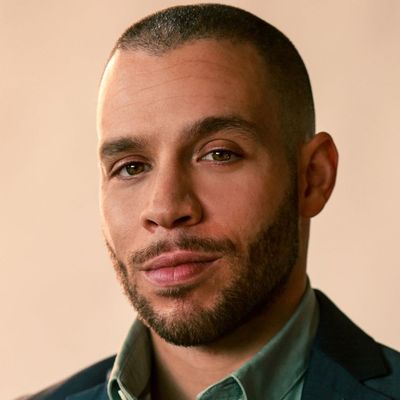
The Tony-nominated actor, now in “Tick, Tick… Boom!,” talks honoring his ancestors and shares the setbacks that kept him humble.
Transcript
This transcript was automatically generated and might contain errors.
[0:06] Gordon Cox: Welcome to Stagecraft, Variety's theater podcast, bringing you backstage and behind the scenes with the stars, creators, and insiders on stage, on screen, and around the world.
[0:16] Gordon Cox: I'm your host, Gordon Cox.
[0:18] Gordon Cox: On this episode of Stagecraft, I'm talking to Robin de Jesús. The actor is someone New York theatergoers have known for many years now, particularly after his breakout turn as Sonny in the original production of In the Heights. That performance earned him a Tony nomination. And since then, he's been nominated for Tonies for La Cage aux Folles and most recently for his performance as Emery in the starry 2018 revival of The Boys in the Band. He reprised that role in Netflix's film version of Boys, and this season he's back on Netflix and in the film awards conversation for Tick, Tick… Boom!, the movie adaptation of the Jonathan Larson musical directed by In the Heights and Hamilton creator Lin-Manuel Miranda. Now de Jesús is in the virtual studio with me to talk reuniting with Miranda, honoring his ancestors, and living through the setbacks that kept him humble. Hey Robin, thanks for being here with me.
[1:09] Robin de Jesús: Hey, what up, Gordon?
[1:11] Gordon Cox: How are you doing?
[1:13] Robin de Jesús: I'm good. I'm good. I wondered if first we could talk a little bit about your journey to where you are today. I feel like you're someone who a regular New York theatergoers like me. Like we know you from the roles you play, but we don't know as much about you, uh, Robin, as we might. And so I wonder if we could just start off talking a little bit about how you came to uh theater and performing.
[1:35] Robin de Jesús: Yeah. Theater came to me at uh in high school, the summer between my eighth grade and freshman year. I always wanted to be a singer, wasn't very talented. Middle school came and my puberty came, and suddenly I knew how to match pitch, and so that I was like, alright, I guess I know how to sing now. And I love the attention that it got me, and so I joined the church choir, the school choir, and my eighth grade year, we did a 15-minute skit version of Grease. And I kind of I was basically Kanicky.
[2:04] Gordon Cox: One five?
[2:07] Robin de Jesús: A 15-minute you said.
[2:09] Gordon Cox: A 15-minute version.
[2:14] Robin de Jesús: That was it. 15 minutes skit. There's not enough time for anything else.
[2:17] Gordon Cox: Yeah.
[2:17] Robin de Jesús: Noel Senna, who did shows with me, and he would do shows in the local community theater that also gave classes. We knew of another community theater in the town next door. And this is in Connecticut.
[2:27] Gordon Cox: You were you're from Connecticut, yeah.
[2:30] Robin de Jesús: I was born and raised in this sort of uh I was in I was born and raised in Fairfield County, which is a pretty bougie county in Connecticut. My specific town was also a factory town, so there's a portion of it that was bougie, and there's a portion of it that was uh working, super duper working class, and a lot of black and brown folks as well. My high school was 53% majority, so it was a minority majority high school, which you wouldn't expect. And it was also it had a pretty decent arts program. So by the time my freshman year came around, Noel Senna said, Yo, do you want to audition for this production of Grease? And I went to this community theater audition, I got in the ensemble, and I loved it. I loved it so much that the bullies didn't bother me because I was like, I don't care who you bullies are in this rehearsal because I'm living my life. And I clocked the power in that, I clocked how good that felt, and the addiction began.
[3:29] Gordon Cox: Okay, yeah. And so, and what you've you actually just my next question was gonna be what you sort of got out of like what what performing and what theater gave you that you didn't have before, but it sounds like you that's what it was is the.
[3:29] Robin de Jesús: There was multiple things. It was attention, it was something to be good, it was something I was finally good at, it was something I felt passionate about. It was something that when I was learning about it, it didn't feel like learning. I just wasn't ravenous. I'd go to the library and I'd pull out, I think you were allowed to pull out a max of 12 CDs and I'd get 12 cast recordings and read the synopsis and then reread it while listening to the score. And if I could get a hold of a script, I'd read that. I was just like, I geeked out completely. I devoted myself to it. And the thing about my family structure was that my parents came to the US to the mainland because they're from Puerto Rico and that is the US.
But you know, Puerto Rico being a colony, you're oftentimes very limited on what you can do there economically. And so my parents came stateside and their goal always was to build a house in Puerto Rico and to return. And the thing about acting was it was the first thing that competed with my love of Puerto Rico because my whole childhood, it was all about the family. We bought this house in Connecticut, but we were gonna sell it and build a house from scratch in PR and everyone was gonna just be happy there for the rest of our lives. But when theater happened, it was like, mmm, I can't do this there.
[4:53] Gordon Cox: Yeah.
[4:54] Robin de Jesús: Yeah. And you I the your first film was Camp, uh, which came out in 2003, but that was pretty early in your like how did you start go from the community theater that you were talking about into uh professional acting?
[5:09] Robin de Jesús: Yeah, so you know, I did a bunch of shows in high school. I would do I would I would I was crazy. My poor parents just driving me to all those rehearsals because I would be in church choir, school choir, school musical, and then the community theater, I would sometimes do two shows at once and just like bouncing around everywhere, learning music all the time. But I mean I was living, living. And the theater school that I went to in high school, the teacher who ran it in the summer would do a summer camp in Greenwich, Connecticut. And we had a parent of a student there who was the standby on Broadway in a show for all the older white men in the show. Neil Benari and Bernie Telsey, the casting director, uh also the casting director of Tick, Tick… Boom!, by the way.
Yeah. Love you, Bernie. Bernie said, Neil, don't you have a daughter who sings? And he was like, Yeah, and listen, I'm trying to cast this independent film called Camp. We need kids that are not in union because now the movie's gonna be non-union because of the budget. And Neil said, No, no, no, I'm not throwing my daughter into the deep end. He goes, but I'll submit the breakdown to her summer camp and see if any of the students there want to go. I was a counselor. The woman who ran it said, Go audition for this film. And a week and a half later, it was like it was like American Idol. And that was the first year of American Idol, actually. But like you know how you clock those cattle calls in the blinds?
Yeah, or I said the lines, wow, the voice. I'm just confusing all the singing shows. But you get the point. You know, it was it was like a massive cattle call with like hundreds and hundreds of folks, and you just go in real quick, sing 16 bars. And that was crazy. By the end of the week and a half, I ended up booking one of the leads. And so I suddenly went from thinking I was gonna be an opera singer to being an actor in a film.
[7:09] Gordon Cox: Yeah.
[7:10] Robin de Jesús: And then how did that lead? Because a couple years later, then you made your Broadway debut in Rent, yeah, as playing um in the ensemble.
[7:17] Gordon Cox: Is that what it was?
[7:17] Robin de Jesús: In the ensemble, when I covered, I was understudy for Angel.
[7:20] Gordon Cox: For Angel, yeah.
[7:22] Robin de Jesús: It was it was rough and it was humbling that those periods in between those years in between. It was like three years because I was 17 when I booked Camp. And I thought I was gonna pop off. I thought universe, you save me because my elders told me not to study musical theater and study classical voice. And so I thought I was gonna do that, and then you throw me this film that's about musical theater. So like I'm about to be like the Foxy Brown of musical theater, I'm about to pop off. That's what I thought.
[7:52] Gordon Cox: This is it, and crickets.
[7:54] Robin de Jesús: Crickets, weighted tables at the Bubba Gump Shrimp Company at this place called Bertucci's in Connecticut. Auditioned all as much as possible, you know, figured out how to audition because I didn't really know. And then this weird thing happened where I saw Caroline, or Change and I thought it was so brilliant and so beautiful, and just that it mattered so much. And I knew that a lot of what I had been focusing on was like was fluffy material. And there was something about that show that just tethered me and said, now you want to create art, you want to do what they're doing. Go back to school and study this. I didn't get to go back to school, PS. But here's what did happen I moved back to Connecticut.
I thought I was gonna leave the business after three years of auditioning. I'm just tired of being broke, and my only credits were Camp. I had done readings, that was it. Camp was my only credit. So my friend calls me one day and says, Yo, you need to audition for this musical I just saw a reading of called In the Heights. This guy named Lin-Manuel Miranda wrote it. No one knows him. He listed off the cast. You need to be in this show. And so I just kept an ear out for it. I'm in Connecticut, waiting tables. And one day I noticed on the union website that they're having auditions for a reading of it. So I call up my agent and say, yo, can we make this happen? Can we figure out how to be in this show?
I heard it's great. I'm going to go to college, but I would love like one more thing to do before I go to school and focus myself on focus on my studies. And somehow the like everyone in that show had seen Camp, and it was my only credit. And they were like, Yeah, just cast them. It's just a reading. It's like low stakes. And magic happened. When Lynn and I met and I read that script, I knew who that character was immediately. And we didn't even get to read the script because the script was they wouldn't allow us to read the script. You had to agree just based off of the creative team and the synopsis. And so I went with it, and that summer changed my life because I made so many lifetime friends that have been so good for my mental and creative health, right?
But also that summer was where I met the producers of In the Heights, who are Jeffrey Sellers and Kevin McCollum. And Joe Furman was there too, because she was producer in In the Heights. But me, Sellers and Kevin McCollum are the producers of Rent.
[10:18] Gordon Cox: They sure are.
[10:20] Robin de Jesús: So that was July. November comes around, and I get a phone call to say, Do I want to audition for Rent on Broadway as the understudy for Angel? My really my only two credits are Camp and In the Heights, the reading.
[10:35] Gordon Cox: Yeah.
[10:35] Robin de Jesús: And the musical director of Camp was Tim Wilde, the musical director of Rent, and the producers of In the Heights were the producers of Rent.
[10:43] Gordon Cox: Right.
[10:43] Robin de Jesús: So I still had to go in and kick ass and kill the audition. But you know, being a good person and knowing people really helped me make my debut.
[10:52] Gordon Cox: Right.
[10:53] Robin de Jesús: And then we'll talk a little bit about with your uh about your journey with uh you know Lynn from In the Heights into Tick, Tick… Boom! And then but more recently on Broadway, you did uh you did The Boys in the Band first on Broadway and then uh for the film.
[11:07] Robin de Jesús: Um, was that role particularly meaningful for you? Does that was that a play that meant something to you before you did it? Yeah, you know, it's funny when I was in middle school or high school, I remember one day turning on the TV to a random channel. It was probably Turner Classic Movies because I used to love that. I used to love watching that channel, and I noticed these dudes dancing the heat wave and they seemed kind of gay, and it felt like a period piece, and I thought, whoa, I didn't know this existed. Gay folks in a period piece, like was this allowed? And then I thought, change the fucking channel before mom or dad walks in and they catch you watching these homosexuals because they're gonna know.
And so I changed the fucking channel as fast as I could, and but I never knew what movie that was. Yeah, and years later, I knew of the production off probably it's an immersive production, yeah. Right. The play the boy, yeah, the transport thing did it. Yeah, exactly. Yeah, and then I just I put two and two together and I clocked, oh my god, that's that movie, but I never watched it until I did a play years ago at the Labyrinth Theater Company called Homos or Everyone in America. Right at Jordan CB role, brilliant playwright, fucking brilliant play that needs to be redone. Also, I want to make the movie version, so producer out there wants to make it hit me up. Um, but there was a reference to it.
Uh, and that made me go, oh no, you need to like sit down and really watch this movie. By the end, by the last month of the run of that show, Joe Mantello emailed me and said, Yo, you want to do a reading of the boys in the band? Wow.
[12:46] Robin de Jesús: Um, and so what was it like recreating that role for a film context, like sort of really calibrating your performance? That's a whole question before too, because I didn't answer that one. Yeah, yeah. I realized I gave you the setup and not the punch. Yeah. Do you know Emory, and it's a lot like Michael too, or it is not like it is Michael, the role you play in Tic Tick Boom perfectly. Tic Tick Boom, yes, thank you. Emery in Boys in the Band and Michael in Tic Tick Boom are in many ways an insertion of my ancestors into periods that have, you know, deleted them. So much of gay history is told from a white gay perspective, and it especially with HIV stories as well. And so when I think about my queer elders, I never got to meet them, or not many of them, because they either died or they weren't preserved in narrative form.
And so to me that I feel so blessed that I get to just go, look, you existed in this time. And that was what's really important to me about those two characters with Emery. What I loved about him was that I got to showcase, I got to trick everyone to thinking, oh, look, this is what Robin always does. The like the over the top, effeminate character that for some reason people tend to think is just fluff and whatever. And then I get to have that moment where I give you like an eight nine minute monologue, and I had never been given that opportunity. And so I knew that there was potential for that character to sucker punch the audience. With Michael, I knew that I could play the complete opposite of Emery. That I could show someone who was subtle, nuanced, and tethered in a completely different way. And so that's what I was trying to do with those characters.
[15:00] Gordon Cox: And now here's more with Robin de Jesús. And so let's talk specifically now about Tic Tick Boom. Um, at this point, you've known Lynn Manuel Miranda for years and years and years. As you mentioned, you have had a really strong connection with him ever since In the Heights. Did you audition for Tic Tick Boom? Was it did you have to go in and show what you could do and see what you could do with the role?
[15:20] Robin de Jesús: Yeah, it's funny. People always I like letting people know that I auditioned for it because as an actor, there is a difference in how you feel when you book something from an audition as opposed to a direct offer. Don't get me wrong, that feels real nice. Right, but there is something about like going in auditioning that goes, No, I know I deserve this role, and I feel that way. I very much feel that way about Michael. I did have to audition. Lynn wasn't at my initial audition. I just taped myself in for the casting director, Christian, who was so sweet to me, and like I knew after my first scene, I was like, hmm, I think I'm doing something. Something's coming through. And then I saw Lynn a week later at the opening night of Freestyle Love Supreme off Broadway.
And he had had a drink in him, and he ran up to me and goes, Your fucking audition for Tic Tick Boom is so fucking good, you're gonna be in this movie. And my eyes just like went wide, and he said, Oh my, I mean, I don't know if it's gonna be as Michael or what, but like you're gonna be in it in some capacity. And I thought, oh shit, oh okay, like something's happening here because he definitely said more than he should have.
[16:30] Robin de Jesús: And so I had a chemistry read with Andrew Garfield, and even at that moment, I knew that I could book the film, that it could realistically happen. But there was a huge part of me that also thought, yo, they're gonna get some singer who wants to act for the first time. Like it's a great opportunity for that. So I'ma just do me. And that actually afforded me some relaxation. And so I auditioned for Lynn with some of the Netflix folks there and Andrew, and I remember Andrew even like improved at one point, and I was like, Oh, we're doing this, okay. Like just got so nervous, but then there was something immediately that said, nah, surrender, like just give in. And I didn't, I couldn't read Andrew fully, but when I left, he gave me DAP.
He gave me like, you know, the like high five, and then you know, and there was something about the way he gave me DAP where I thought okay. And then like a couple weeks later, coincidentally, I was at a wedding in White Plains, which is where my character is from in the movie. Yep. Drive half hour away to my hometown. I'm at a diner, and Lynn FaceTimes me to tell me I got the movie. Wow.
[17:46] Robin de Jesús: And was Tic Tick Boom, uh, Jonathan Larson's work, obviously was important to you as you're, you know, you made your Broadway debut in Rent, but was Tic Tick Boom also important to you?
[17:57] Robin de Jesús: I love Tic Tick. You know what's funny? I didn't embrace all the meat that Tic Tick had. I love that score. I listened to it all the time. I had never seen the show until Lynn did it at Encores with Leslie Odom and Karen Olivo. And at that particular time, I was 31, 29 had been rough, turning 30 was like a big deal. So I was only sort of focused on the tick-tick section of the film, you know. In my mind, I was just like, fuck, yo, this is like that shit, like just oppression, oppression, oppression. But I couldn't find the allegory in that moment. And it wasn't really until doing book work on doing scene work on the film where I thought, whoa, yo, Jonathan, like I knew in Rent that you were a guru with like, you know, so much of his work is about being present and not focusing on the past, not focusing on the future, which is being here right now.
There's only us, there's only this, forget, regret, life is yours to miss. But like I hadn't, I don't know why that first time with Lynn, I hadn't clocked fear or love. And I think that was the overall thing that I really, really, really lean into this time.
[19:11] Gordon Cox: And what was it like working with Lynn again?
[19:15] Robin de Jesús: Great. So much fun, so much fun and liberating. At times ego inducing, at times, you know, nurturing. I say ego inducing only because oh, he's my boy. And I knew he was getting an opportunity. I knew this was a big deal for him and it's what he's wanted his whole life. And I also knew that he fought for me to be there. I also knew that there were other folks that would have preferred some big non-theater celebrity to come in and play this part. And I didn't want to be the one that like made him look bad or embarrass him. And so on certain days, if I wasn't aligned properly, it would be very easy for that voice to come in and go, don't embarrass Lynn. Don't. And if I could pull myself out of it, then great.
But if I couldn't, it was a bit more of a dance. But I will say this, Lynn never confirmed or affirmed any of that. If anything, you know, his joyous way of being would remind you, like, there's no time. This is not the place for that kind of thinking. Like, we're here to play, have fun, and work.
[20:20] Gordon Cox: Did you get a sense of reuniting with Lynn on a project after a certain number of years? How you had changed as an actor and sort of how your process had changed?
[20:30] Robin de Jesús: Well, yeah, because even for Lynn, like it was a shock. Sonny was such a big character in In the Heights. But he didn't, he'd only seen me do big characters. So when he saw my audition tape, the thing that really got him initially was that I was nuanced and subtle. And I remember he clocked it one day. He goes, I was just shocked I didn't know you could do that. I mean, of course I knew you could do that, and he got all nervous. He's like, I don't mean I was like, no, it's cool. He goes, but I just I hadn't seen you be able to do that. And so that was just like it was like a whole new room opened up. And that's the other cool thing about working with Lynn is like I know my friend is brilliant.
I've seen Hamilton, I've worked with him in In the Heights, I've seen what he's like when he's creating from the ground up. But sometimes, you know, the extraordinary is my ordinary. And so I'll forget, but seeing Lynn as a director made me go, oh my god, my friend is so fucking brilliant. Like, how cool that I get to create with this person, and that he's actually like someone in my life, and that he allows me to bring all of my brilliance in a way that is so comforting and natural and organic, and even being able to speak Spanish across the room. You know, growing up with this thing of like use your professional voice. What does professional voice mean? Your professional voice is always in English, your professional voice is grammatically correct, your professional voice, you know, doesn't got, you know, whatever the thing is, and to just be able to be like yo, Linketase Falta, que tu necesitas, okay yo te ayudo, you know, like and not fear, not even question whether we're being judged, actually just like give zero fucks and be liberated. That level of comfort is what we of all demographics should have.
[22:16] Robin de Jesús: Yeah, yeah. And of course, you were filming the majority of this movie during the pandemic. I feel like your TikTok was one of the first projects, at least that I was aware of. A lot of theater folks, you know, shooting this film and you know, quarantining and doing all the stuff in order to shoot safely. How did that sort of affect the mood on set for you and the experience overall? You know, Dominic, my bestie again, he's the one who gave me the perspective, because it's at first it was shocking that it took this many people to make the movie, you know, to make the movie in a pandemic, just clocking like all the nurses, all the tests, the three questionnaires a day, the um the zones because you have different different zones on set require different amounts of PPE, and like when you're in the the red zone, the main zone that's for the actors, that's the only place where masks can come down, and in each one of those zones, there's a COVID compliance officer.
And so there's just like you, you you it's everywhere. But the necessities that you now have because of COVID are ever present. But Dominic, like my second day back in rehearsals, said something about you know it's a privilege to be working right now, and for whatever reason, I hadn't clocked that. You know, we were one of the first films to come back, and Netflix did have their eye on us because we were the first film to shoot the bulk of their content in a pre-vaccinated pandemic world. And that meant that all eyes were on us because our success could help determine the success of every other project that came afterwards and who would get a green light. And so there was a responsibility there to get it right.
And I think once that math added up for me, it was really beautiful to take in all the COVID compliance officers because I knew those were the people that had our back, they were helping us do this thing, they were helping us tell this story, that were helping us stay working, and that whatever was happening between us in those relationships would allow other people to work. Right. Yeah. And create. So it was, it was uh it was it was humbling. It was actually what it was.
[24:39] Robin de Jesús: Michael, the character you play in in TikTok boom is uh someone who gave up acting, was an actor or gave up acting to work in advertising and found fulfillment there. Was there ever a point you talked about at one point wanting to go back to school to study uh acting and performing? Was there ever a point in your journey when you wanted to throw it all in and go to advertising or whatever the other thing would be? Yeah, yeah. Um you know, when I was younger, I had a couple moments, but I think after the after the Kajal fall, I um I remember I just wasn't getting the kind of work that I wanted. I remember thinking, wow, everything I'm gonna go in for is some stereotype of what you think being gay is or what you think being Latino is, which usually meant like selling drugs or some criminal, but then it w it wasn't even the fact that it was a criminal, it was the fact that it was an underwritten criminal.
There was no meat on the bone, there was nothing nuanced or or like good even. Like there was like it, yeah, it wasn't complex at all. And and I I've always been someone who's aware that I'm playing the long game. Cause even when I was 18 and not working, I remember saying, I don't want to take that job because it's not gonna feel right. I rather, if I have to hate something, I rather hate waiting tables than hate what I love. And not that hating hating anything is a great choice. I don't mean that it was still negative. I was young, but but I knew that I had to preserve my love of acting, and that I didn't want to put myself in a place where I wasn't creating with the best intentions and or with good intentions, or just feeling good about my creativity.
So that meant I didn't work sometimes. And when you have two Tony noms, sometimes what you get in your head is like, nah, nah nah, I'm working at a sec at a certain level. I want to make sure that everything matches that level. And it and the jobs weren't aligning. And I had to move back home to Connecticut. And I live with my sister. I was like, I was like, yo, I'm a two-time Tony Award nominee living in my sister's house. What is going on? Um, and you know that that does do a number on your head, but it but it allowed me some humility and it did give me um some perspective, and I came back hungrier.
[27:02] Gordon Cox: Yeah, I was just gonna ask what kept you going and what you know got you back.
[27:07] Robin de Jesús: I have no other talents. I got nothing. No, but like dead ass, yo, I have no, I don't know what else I could do. Um I will say that while the industry deserves many criticisms and is full of abundant fuckery in regards to people of color and queer folks and and disabled folks and and and so much more, there was a part of what I was experiencing that was I could point a finger at something that was working against me, but I wasn't acknowledging the three fingers that were pointing back at me and what was wrong with my my unhealthy perspective at that time, and also being someone who comes from scarcity and the trauma of scarcity, and sometimes acting brings up shit, brings up that shit. And so that that was in fact what I was going through, and it made me doubt my creativity.
But then I worked with Anna Shapiro. I did a play called Domesticated at Lincoln Center with Anna Shapiro directing Jeff Goldblum and Lori Metcalf starring in it. And I was in once and I was in one hell of a scene. I was giving you Viola Davis in doubt all day. All day, just the fiercest scene. And but I got to watch all of them work. And Anna Shapiro was was no offense to the other directors I worked with, but there was something about the way she spoke that she was the first person that taught me how to do eight shows a week, even though I've been doing it for years. There was something about the way she broke down a scene. And the way she broke down a scene, I found so stimulating that it got me out of my head.
That it was less about perfection and more like, oh my god, look at all these fun things I can do with this. She gave me fun again. She reminded me that a play is called a play. And I think whenever I remember that, it tethers me, it grounds me, it brings me back to why I'm trying to do what I'm trying to do.
[29:08] Gordon Cox: And what's next for you?
[29:11] Robin de Jesús: We'll see. I was supposed to do something next year that's not happening now. Maybe actually stage or a film. Stage. Stage. Stage. The goal, what I really, really want to do is my best friend Dominic's play, The War I Know. We're probably gonna workshop that next year. Um, that's like a baby. And Dominic writes a lot of stuff that's in development right now. That honestly, if I could work with Dominic the rest of my life, like I'd be very happy because his stories are all about working class black and brown folks in the Bronx. Um, and he and I come from very similar backgrounds, so it feels like home in the best way. It feels like healing, but I'm also on a um cartoon called um Santiago of the Seas on Nickelodeon, and I I play like a villain on that, super fun.
Nikki Lopez wrote it. Puerto Rican writer from Puerto Rico about this young Puerto Rican pirate and his pet cookie, which is like the animal of Puerto Rico, and they go on their adventures and that's super fun. And then um, you know, waiting on some things.
[30:14] Gordon Cox: Yeah. How do you think about screen the because you've done more and more sort of screen work uh particularly in the last couple years? How do you think about theater and film sort of coexisting or theater and TV and film existing?
[30:31] Robin de Jesús: I don't know why we ever thought they couldn't. I feel like we the industry comes up with weird rules, like randomly, you know. Like, like, for example, as an actor, it's like, well, do you want to do more film work or TV work? Why is it an or? Right. Why is it an and? Why why can't I do both? Why do I have to choose one? For me, I I I I always work character first and I want to go where the character is. And if that's on stage, then that's where I'm gonna go. If it's in camera, then that's where I'm gonna go. But I I do think that part of the reason that movie musicals specifically are having such a great moment, and I and I hope it gets to the point where I'm not referring to it as a moment and it just is the norm.
But I think it's because there's some accumulation, there's the accumulation of Ryan Murphy glee and the fact that all these folks that were kids that now love musicals grew up to be adults who are willing to pay full price for a Broadway ticket. And before the big conversation in theater was, well, what do we do to get a new generation in because the generation paying full price is dying? Right. And so that just changed our age median on Broadway, I feel like. Then you have the success of Hamilton, and then you have Sarah Borellis, Cindy Lauper, John Legend, and folks from the pop world coming in and writing musicals, and suddenly we're cool again. And I think that that being out in the zeitgeist, you're a smart film producer, you you recognize that there's money to be made.
And it's a lot easier when you have, like with Boys in the Band, go do a Broadway run, have your film be rehearsed, and then preserve it on film, and it's like this well marinated thing. Yeah. So I think it's just it's convenient for everyone, and it's good movie making, and when we have this many platforms, why not?
[32:19] Gordon Cox: Yeah. Yeah. Well, uh, we look forward to seeing more and more of you on stage and on all the screens. Uh thank you, Robin.
[32:27] Robin de Jesús: Thanks for chatting with me. I appreciate it. Pleasure. Blessings.
[32:33] Gordon Cox: That was Robin de Jesús, now appearing in the Netflix films Tick Tick Boom and the Boys in the Band. If you like what you're hearing on this and other episodes of Stagecraft, I'd really appreciate it if you took the time to rate and review us wherever you listen to podcasts. It really helps us grow our audience of folks who love theater as much as you and I do. Or tell a friend about Stagecraft, or give us a shout out on social media. Find past episodes and subscribe on all the pod places, including Spotify, Apple Podcasts, and on the Broadway Podcast Network, which is a great place to find more theater for your ears. I'll be back in two weeks with another new episode. Until then, find me on Twitter at G Cox Variety. Thanks for listening and see you at the theater.
© Broadway Podcast Network, All Rights Reserved