

The writer-performer gets both personal and political on her new Instagram Live show... Read More
From the show: Stagecraft with Gordon Cox
Guests
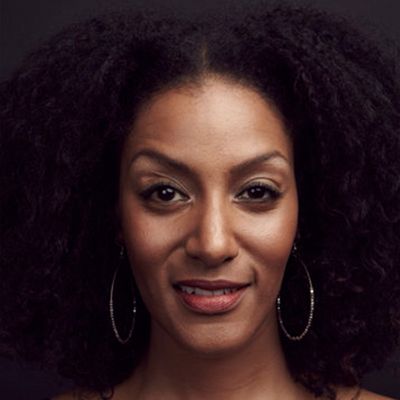
About
The writer-performer gets both personal and political on her new Instagram Live show.
Transcript
This transcript was automatically generated and might contain errors.
[0:00] Gordon Cox: Today's podcast is brought to you by the Hulu original documentary, We Are Freestyle Love Supreme.
[0:06] Gordon Cox: Before the world knew of the award-winning Broadway musicals in the Heights and Hamilton, Lynn Manuel Miranda, together with Thomas Cale and Anthony Veniziale, founded an improv hip-hop group called Freestyle Love Supreme.
[0:18] Gordon Cox: Experience their 15-year journey, culminating with much anticipated reunion performances in New York City in 2019.
[0:25] Gordon Cox: Stream We Are Freestyle Love Supreme on July 17th, only on Hulu.
[0:37] Gordon Cox: Welcome to Stagecraft, Variety's Theater Podcast, bringing you backstage and behind the scenes with the stars and creators keeping theater alive during the pandemic.
[0:46] Gordon Cox: I'm your host, Gordon Cox.
[0:48] Gordon Cox: On this episode of Stagecraft, I'm talking to Sarah Jones, the writer and performer who's been making socially engaged solo shows for 20 years now, portraying a wide array of characters from all backgrounds with seeming ease.
[1:01] Gordon Cox: Jones has explored everything from the immigrant experience to the sex industry, in titles including Sell by Date and Bridge and Tunnel, the show that won her a special Tony Award in 2006.
[1:11] Gordon Cox: For the last several weeks and continuing through July, Jones has been offering intimate new performances once a week on Instagram Live at YesI'm Sarah Jones, giving viewers a glimpse of how some of her most familiar characters, and some new ones, are thinking about inequality, racial justice, and life in the pandemic.
[1:29] Gordon Cox: Jones is in the virtual studio with me to tell us what's going on with her and with all the characters who live in her head.
[1:36] Gordon Cox: Hi Sarah, thanks for joining me.
[1:38] Sarah Jones: Thanks for having me, Gordon.
[1:39] Sarah Jones: This is exciting.
[1:40] Gordon Cox: Yeah, it's fun to talk to you across the country.
[1:44] Gordon Cox: First, let's start off just by having you tell us a little bit about what you're doing on Instagram and what inspired you to do it.
[1:51] Sarah Jones: Yeah, I feel like the theater, you know, being inaccessible to all of us right now, sort of forced me and probably others to reimagine what performance is right now. What does it look like? Where can we, you know, develop our work? I improv, I do these weekly, I jokingly call them Wednesday matinees.
[2:14] Sarah Jones: Oh yeah, yeah, right.
[2:15] Gordon Cox: Yeah, right.
[2:16] Sarah Jones: So every Wednesday afternoon, folks can join me at 3 p.m. Eastern, 12 p.m. Pacific. And it might be on a lunch break from work, or it might be, you know, an afternoon break where for somewhere around 15, 20 minutes, I do sort of a mini show. And it's topical. It's actually, you know, along the lines of what I've always wanted to do. Um, but of course, if you're on Broadway or if you're, you know, doing an off-Broadway show, you have a set script and there's a certain set of expectations. This is a whole other way for my characters and I to play that feels a little bit more like um sort of a hybrid between a real theater and a comedy club.
[2:54] Gordon Cox: Yeah, that was one of my first questions, actually, just watching them is how much of a script you have, if any, how much of it is improv and how much of it is, oh, I know I want to talk about, you know, make these few points. Like what's the balance between improv and written?
[3:09] Sarah Jones: Yeah, I would say there's virtually nothing written. I know that there, I mean, I'll put it to you this way: the world writes it for me. Every week we are living, you know, I was joking that we're, you know, kind of living at the speed of WTF, like a, you know, how many WPFs per hour. And um, so there's no shortage of sort of these epic, you know, uh these existential crises around everything from who we are as a nation to, you know, our history, identity politics, and how even that is a label that has sort of limited all of us in certain ways.
[3:49] Gordon Cox: Right.
[3:50] Sarah Jones: So the show is just kind of I wake up in the morning, I find out, you know, are we all still here? Okay. These are the things that are uppermost in my mind. Um, I kind of look around at, you know, other people whose work I admire and see what are they talking about or what's of interest to me that's coming up, and then let the characters have at it. Like what do they care about? I may pick the topics, but they may not, they may disagree with what I think is important. So it's an interesting kind of uh lucha libre.
[4:20] Gordon Cox: Yeah, a lot of these characters are people we have seen you do for a while now. And so does it how natural is that for you to think about the way someone like, you know, Lorraine feels about what's going on to someone like uh Joey, the cop, to what's going on? How easy is it and intuitive is it to sort of slip into that?
[4:40] Sarah Jones: Here's the part that I didn't think was gonna happen. She just put the glasses on. Listeners, you can't see the glasses, but she just put them on.
[4:45] Sarah Jones: You can't see them. If I had my way, they wouldn't be here. But my eyes, my eyes went a long time ago. Hi, Gordon. I didn't tell, I didn't tell Sarah Jones I was coming, but I'm on the Instagram too every week. And um, it's very interesting for me because I get to tell people, listen, I don't have it all figured out. I don't, I'm trying to do the right thing. And the I told her the truth during the the protesting and the the the riots. She doesn't let me say riots anymore. I have to say uprising. You know, there's a lot uh to uh we argue and it's very interesting. I'm learning a lot. Hopefully, Shear is anyway, Lorraine has her, you know, it's we're all kind of growing messily together.
[5:35] Gordon Cox: Right.
[5:36] Gordon Cox: Yeah. Do you and so how much of their growth is charted intellectually in your head? I'm just trying to figure out how you think about this as a writer, um, or if it's more intuitive than that for you.
[5:49] Sarah Jones: You know, I really try to take my cues from what's what I see. You know, people, I mean, and again, we're we don't have access to each other. It's not like when I lived in New York and I could hop on the subway and literally overhear the zeitgeist, you know, in in people's conversations. Now it's what's online. I have to be mindful that the algorithm is, you know, making my feed look different than Joey's feed would look. So you know, Joey the cop is consuming completely different information and news. I put news in quotations. You can't see my air quotes. But you know, to me, that's a huge part of this um experiment is that we're all operating in at the same time as it feels like we have more information than ever, we're in a vacuum in a certain sense.
And so I try to remember Joey would be disgusted to hear some of that when he hears me say defund the police, reimagine what safety looks like, he hears chaos and Armageddon and Black Lives Matter is a hate group, which is what Trump is telling everybody. So it's a very interesting dialogue and frustrating. I wish he would shut up, but I have to give him some space, you know.
[7:02] Gordon Cox: Yeah. How do you imagine them all existing in your head?
[7:05] Sarah Jones: I get the just based on the shows, I get the impression that they all know each other and probably they all talk to each other at, you know, a backyard barbecue or something that you've thrown or something. Like, are they in conversation?
[7:15] Sarah Jones: Is that for you?
[7:18] Sarah Jones: That's a much more genteel version of things than the way I literally break.
[7:23] Sarah Jones: Yeah. Right. Yeah, I do. I mean, it's a sort of a joke, but they do all kind of live rent-free. I think of myself as kind of the uh original human Airbnb, you know, they've all just been like living with me for so long and living together and talking with and about each other. And I do like to think that their better angels are in the mix somewhere too. I don't, I don't get to control that as much as I would like. There, you know, my progressive to radical sensibilities. I would love to have Joey, you know, suddenly become uh an anti, you know, anti-racist activist. That's not who he really is. Like my understanding of who he is doesn't allow me to get in there and tinker with the trajectory of his character. So it's kind of interesting.
[8:15] Gordon Cox: Yeah. And how are you finding the experience of these Instagram shows? You know, you're talking and people are commenting. And over the last couple weeks, you've done some, I don't know if you call it a takeover, but you're on streams like Marissa Tomei's stream and Jesse Tyler Ferguson's stream. How has it been reaching people? Has this are you considering this successful as you're doing it?
[8:37] Sarah Jones: I really am. It's, you know, first of all, the feeling of be going on the road, right? That's my joke, is that I took the show on the road to other people's platforms. This is a way to integrate the moment we're in and the opportunity to kind of, you know, have a cross-pollinating exchange of ideas. Jesse Tyler Ferguson's audience might never find me, you know, Marissa Tomei's audience might have found her because they love Spider-Man or whatever. They may never find someone like me. Um, and especially if they, you know, aren't necessarily uh inclined to follow a black artist. This is a really, you know, I think it's a really generous um and forward thinking um, you know, uh willingness on the part of Marissa and Jesse and whoever we end up doing this with.
They're taking a little chance. You know, there are a lot of people in their audiences who aren't ready for certain kinds of conversations, and they're allowing me to, you know, maybe push people, push the envelope a little bit. So I have found it exciting, refreshing. Um, I love the people who say, uh, you know, who are you? What are you doing here? And then they stay. That's my favorite part is that there's a connection that never would have happened otherwise. And um, I do find that my fellow artists, you know, this is a time when we're all kind of saying, hey, we get to green light ourselves, we get to get our voices out there. You know, it's kind of like we get to be our own fringe festival meets, you know, we get to self-select for what our values are instead of just being packaged by somebody else. Um so it's a it's a kind of a freeing time.
[10:18] Gordon Cox: Yeah, that was actually my next question for you was about this idea of green lighting yourself. Uh does that feel particularly empowering right now?
[10:26] Sarah Jones: It feels fantastic. I mean, I was so crestfallen. The start of this year was this incredibly painful journey for me. Long before we were all masked and you know, quarantined and isolated and separated. I was already feeling um just such disappointment around this show that I had worked my I just worked, I put everything into it. It was for a large major network, and I saw how in an effort to mainstream me, I got lost. And the show didn't end up getting to be able to air, and there's such beautiful interviews with like people I admire and the characters interacting with, you know, I won't name the names, but I just felt like you know, I and many other people, wonderful people put so much into this, and it just sits on a shelf because of corporate the way everything's structured.
This is the opposite. This is I had an idea this morning, and instead of developing it for six months and then another six months of focus groups, and you know, I actually get to put this up, and it's not even like Broadway, you know. You in Broadway is there's a development process, there's everything. I put one thing in my stories that says, hey, I'll see you at noon, and then there I am in your living room and you're in mine. It's a miracle.
[11:41] Gordon Cox: Yeah, is there is it is there a scary stuff about that as well for you?
[11:49] Sarah Jones: There's a part of me that's like, um, I need to schedule extra therapy every Wednesday. Like this is because it is, you know, if I if a character goes rogue or you know, like I said, um, uh, you know, I have characters who say words that I don't say in my daily life, and I'm like, oh god, does that just happen? And it's so it's a tight rope walk for sure.
[12:10] Gordon Cox: Yeah. And we also meet you in this in these shows in a way that I don't really feel like we've met you on stage. Um, what's that been like for you?
[12:21] Sarah Jones: Again, uh I'm like therapeutic, cathartic, and also um, there's a vulnerability. I don't know what it is about maybe our confessional culture or you know, but because I think people do feel comfortable just turning on their cameras and you know, sharing their innermost thoughts, I felt like in the moment when I was, you know, gripped by this. Um, it just almost felt like a mandate. We like you have to, because I felt so devastated, like we all did. I watched the George Floyd video and I just thought this, I can't, I cannot process this on my own. And then I realized, well, maybe I don't have to. Maybe I can actually bring my community, you know, I think I have to bring a polished, rehearsed, uh, fully realized show to people in order for them to receive me.
[13:13] Sarah Jones: And it was just the opposite. I've never had anything like, I mean, I wasn't active on Instagram. I was like, hi guys, you know, every once in a while like self-help, whatever. But all of a sudden, 200,000 people, it was like in a couple of days, and I thought, oh, people are hungry to, you know, be authentic and transparent and to share how impossible this all feels to be experiencing together and apart.
[13:40] Gordon Cox: Has there been moments of discomfort as yourself in these shows?
[13:45] Sarah Jones: Yes. Yes. I've thought to myself, oh, I wonder if my mom wouldn't like that. You know, there are things that I've said, um, talking about race. I've worried, like, oh, you know, I think I like mentioned an ex-boyfriend at one point that I was like, ooh, that was, you know, can't take that back. Can't say that for her. But, you know, I think there's something about the imperfection of it all that is, it's, you know, I have to give myself permission to um not do a perfect job. And as long as I have that, I, you know, I kind of make that pact with myself and I do the best I can. It's messy every time. And I also I've never been so transparent about how racism has impacted my career.
[14:29] Gordon Cox: Right.
[14:29] Sarah Jones: You know, I've never wanted to say out loud to anybody what now my fellow theater artists, I'm like, why haven't I mean we all we've always had these conversations, but it's never felt safe to share them with, you know, theater owners or even our agents. My agents have all been white, all my, you know, I, these are people I love, and also that's a problem. It's a problem that I am the only one on my own productions. I wrote it, I starred it, you know, and yet I'm the only one always. So I think finally being able to say all of that, um, and really letting go of like, oh, what if this looks hostile? You know what? We're exhausted. Like 400 years of, you know, politeness and uh euphemisms, and I shouldn't even say that.
We haven't been quiet for 400 years. We've been screaming and banging and cajoling and doing everything we can. And I think finally it's like no more. Like this, we just can't. We can't wait anymore. And thank God, you know, our, the people who love us and who love our work. Um, and for me, that's everybody from my own family members who are white to friends and loved ones and fans and colleagues. To have so many people on the same page is it's gonna mean better theater for everyone. It's gonna mean better entertainment across the board for everyone and more equity.
[15:50] Gordon Cox: You know, do you have a sense yet? I mean, I think it's too soon for all of us, but I'm just wondering what your sense is in terms of how you think the industry is gonna start to shift.
[16:00] Sarah Jones: I mean, you know, this is so strange. I certainly um never expected to be in this position, but I know that as a solo performer, I am one of the rare people who could, you know, come back to Broadway or come back to off Broadway when regulations allow for socially distant, spaced, you know, crowds. I could do that. And I want people to have theater. I love Instagram. I love doing my yes I'm Sarah Jones show. Hashtag yes I'm Sarah Jones Show. But sometimes I want to do work that doesn't have any hashtags in it. And so, you know, to be able to be one of the few people who could bring a show to the great, slightly less white way. Um, would be a I would love it if I could do that. So I'm open, you know.
Are there folks talking to me about different possibilities depending on how it's all gonna look? So I think all we can do is it's a very, this is a, this is faith-based in not the way that uh our alleged leadership thinks of it. We all just have to have, you know, faith in our craft and in our audiences.
[17:14] Gordon Cox: I'll have more with Sarah right after the break. Today's podcast is brought to you by the Hulu original documentary, We Are Freestyle Love Supreme. Before the world knew of the award-winning Broadway musicals In the Heights and Hamilton, Lynn Manuel Miranda, together with Thomas Cale and Anthony Veniziale, founded an improv hip-hop group called Freestyle Love Supreme. Experience their 15-year journey, culminating with much anticipated reunion performances in New York City in 2019. Stream We Are Freestyle Love Supreme on July 17th, only on Hulu. And now here's more with writer performer Sarah Jones.
[17:56] Gordon Cox: And in terms of some of the characters who there's some who you've been working on for ages. There's one, a newer one that at least I hadn't recalled meeting. I guess was this last week or the week before? Um, where how documentary is the process of creating a new character? And then how does it become, how does that character become a person who lives in your head?
[18:18] Sarah Jones: Yeah. I, they start out, you know, there's kind of a zygote. There's kind of a, um, sort of an idea. Is the zygote a person who you meet in a real world event? Usually it's, there's kind of a confluence of people and then a few events. You know, there have to, there sort of has to be a, they have to, you know, have a reason to emerge. Yeah, and that's usually related to the time or, you know, some current, some events. And uh, that's the very beginning. And then I think to myself, do I do, you know, I do all that work that we all do. Where, you know, where did this person grow up? Where are their parents from? Um, what do they care about? What are they embarrassed of? Uh, what are they afraid of?
And once I get that, then really listening for how their accent is related to um the ways they express themselves, themselves, their self. Um, and then they, I have to live with them for a while. I have to live with them for long enough that they don't feel um like an idea of a person, but that they feel like somebody who has moved in.
[19:31] Gordon Cox: And in just that was my next question about the accents, actually. Was how much, how do you work on an accent for a character that is based on a number of people? Do you stick with someone and listen to them for a little while and get it? Like how, how what's the technical process of figuring out um, you know, where a person from this particular place would how that person would speak?
[19:54] Sarah Jones: Yeah, I, it's varied, right? So when I was a little kid and these voices were first starting to, you know, kind of really percolate, I didn't have a choice. I was, I was in my house, and so there were, you know, relatives from everywhere, you know, including, you know, Lorraine is loosely based on one of my real relatives, anyway. But you know, that I was hearing all the time, and so I almost like was unwittingly recording and playing back for myself all the time. Now I find that I do have to record and listen. So for example, um, she hasn't made her IG debut yet, but she's in um Bridge and Tunnel that was, uh, character uh by the name of Hadiba, and uh in order to begin to start to hear what is this uh woman from Jordan.
Uh she is uh with the Palestinian roots, uh she is a lawyer, so I know that this means class-wise, her English will be quite proficient. Uh there were people who said to me, she will not be able to say peas or beat the presentiation will be different. So I learned all of these uh things, and then I factor in the class, uh, where did she go to schools? Um, all of that, and I actually found uh wonderful. There is a real lawyer, uh Asma Hader, who uh she is a part of this uh foundation, and uh then the parents of uh friends of mine who give me their uh teach me to speak a bit of Arabic, Arabia. So I borrow here, there I am like a little uh, you know, like a little uh trying to collect a collector of this uh and then the person they come and they can live with me after time.
[21:47] Sarah Jones: Yeah, so that's how she, she's wonderful because I, I remember obsessively the word girls in her accent sounds like gez. And it if you were to write it phonetically, it's G-E-Z, like a short E sound in a Z. It took me a week, I kept saying Gerez, get is because my mind as an English speak native English speaker couldn't drop the R. So anyway, this is very boring for whoever's listening to this.
[22:14] Gordon Cox: No, but this is, this is the kind of thing, this is the kind of work that it involves, right? Is figuring out figuring that stuff out.
[22:19] Sarah Jones: This is the unsexy, the very unsexy part is a deep dive down the rabbit hole of consonants with Sarah Jones. What is the timeline for that entire process in terms of creating a character and then living with that person enough to for them to show up in one of your shows?
[22:36] Sarah Jones: It really depends, and I would say that because, for example, I had, you know, I have West Indian people around me since I was a small child, right? So that's like an automatic thing. As soon as I hear them, it's coming, it's easy, I pick it up, and I don't have to put it down, I can do it all day. Then there was kind of like the more difficult one. Um, I had some difficulty. Uh, if people saw Bridge and Tunnel, uh, there was a character, there is a character, Pauline Ling. And uh, Pauline, this was uh so important that people uh have sometime stereotype about Asian uh uh English speaker, uh second language. The stereotype is uh hate hateful. So I don't want to play uh with that at the same time.
It was so important to me to live with her long more time, spend time with Chinese friends' parents. They let me come, I listen, I recall, I spend so uh more time with that character because not it's not my background. That's not my background, but I wait until I ask my friend, does it sound familiar to you? Does it sound good to you? They start to tell me, I hear my aunt, I hear my mom. Then I know I can start to live with her too. And then we stay together.
[24:06] Gordon Cox: Right.
[24:07] Sarah Jones: Yeah. And that actually leads me into my next question for you, which is one of the things, the thing that you have always done that feels particularly kind of alive and sort of slippery right now is the way that you inhabit all these characters from all walks of life and all backgrounds and all races. And as we're in the middle of this conversation that is about representation and authenticity and you know, equity and race, where does what you do uh sit in all that for you? And how does what you do kind of illuminate all that?
[24:37] Sarah Jones: Yeah, so this is a conversation I've been having with myself since long before the new um, you know, kind of reckoning we're all facing and engaging and I as a black woman in particular learned about power dynamics and what they mean long ago and I understood that as a black woman portraying a white man the sort of subversive, you know, reversing the flow of power in that direction has, you know, radical uh potential for creative conversation. I have been steeped in white male cult cis white male, you know, hetero culture all my life uh because that is the dominant culture and so I have access. I'm, I frankly think I'm usually more accurate when I am being a white guy than the white guys I've seen try to be black women.
So I really look at all of that because my culture, you know, blackness is not the dominant culture right and um the sense of respect that I know to bring to a character because I have watched black face and you know people um yellow face and people um you know frankly white folks playing I love Hank Azaria. I was I fangirled all over him when he came to, you know, see my work and at the same time I always remember thinking, you know Apu is not cool like it's not cool. I loved the Simpsons, I love Matt Groening and I still knew that that was totally unacceptable. Um so I think for me I am a social justice minded person first and foremost. I am willing if I, if I knew that in order to um make sure the art felt like it's like its best possible incarnation that I needed to stop, if I had to make sure that Prabeen can never come to the stage again, if I can never be a South Asian woman again, I will accept that that is part of the evolution of where we are as human beings.
[26:37] Sarah Jones: I know the work I have done, I know where I have been in India, I know that when I am there performing, literally people will say to me, "Okay, you tell the press that you are not Indian, but we know that you have."
[26:46] Is it your grandfather?
[26:48] Someone.
[26:48] I mean, I have literally been accused of lying, right? So for me, that is the sign that, and it is possible that people would say she does not have the right to do that.
[26:58] And I would like to engage with them, and I am open to having my mind change. But for me, this is about the deeper humanity which I carry within, and which I do very, very consistent work to be sure that I am countering those stereotypes, bringing an affirming sense of the humanity of the character. Not that they have to be a saint, but that they have to be a human being.
[27:22] And as long as I feel that humanity, like Lil Lily Tomlin does a black man that will, I mean, you know what I mean? I remember having a conversation with her about Pervis Hawkins.
[27:31] Yeah.
[27:31] And how because she grew up in Detroit and because she had an experience, a lived experience of black people around her and an understanding of blackness, when she brought that character out, Richard Pryor was like, "Damn."
[27:47] So, and that doesn't mean Richard Pryor is the arbiter of all things okay, but that's my point is that I am actively engaged in that conversation.
[27:54] Right.
[27:54] Yeah.
[27:55] And as you mentioned, social justice and political engagement has always been a major effector in your work. Where for you, and I think this is a lot of this is something that a lot of people right now in particular are really thinking about, a lot of artists right now are thinking about is what is the intersection of art and activism for them and how do you describe it for you?
[28:15] Yeah, I would say that every day of my life I have been an involuntary participant in conversations around white supremacist capitalist hetero patriarchy, say that three times fast.
[28:33] So you know what I mean? I just wake up and I would wake up in the morning as a small child and be like, "Oh, my mom has white skin, and that makes my life easier when I'm with her, and my dad is afraid of the Klan." Like that was just in my formative understanding of who I was in America.
[28:52] And then that, you know, broadened and got further complicated by the rest of my relatives, having Latinx relatives, having, you know, the conversation around Christian relatives, Jewish relatives, going to a school, the UN school, where there were so many different backgrounds, as well as anti-black racism, even at the UN school.
[29:12] So I've always had to be engaged in these conversations at a level that you know I might not have chosen it if I didn't have to, but I think the way most women are organically feminist, if they believe that they deserve the same human rights as a man, you know, and I think that for me, the notion of political art or, you know, all art is political.
[29:36] If your art is apolitical, you have the luxury of not addressing anything about the context in which you're living in your work. And by that I mean, you know, Oklahoma is political in the sense that it doesn't bother anybody unless you're a Native American, or you know what I mean? I don't know, but that's my point is that whenever people would say, "Oh, Sarah, your work is so political," and I would think, "Yeah, so is yours."
[29:58] I can tell that you like went to Dalton and don't really have that many problems. I'm sorry, that's terrible. Everybody has problems, but your skin color is not one of them, your gender, your sexual orientation, your immigration status, your ability, you know, whatever. Like, I can tell that you don't have to engage with these ideas.
[30:19] Right.
[30:19] Yeah.
[30:20] What you in addition to the Yes I'm Sarah Jones show, you are preparing for a documentary. Um tell us a little bit about that.
[30:30] I'm very, very excited about this. I want to tell I want to tell you who all the executive producers are. I can't, but let's just say you can find them in my bios of the past about who I've been lucky to be mentored by and stuff like that.
[30:44] Um, and I get to direct this thing, which I'm so excited about. Um, and it's inspired by Sell By Date, which is the one-person show I wrote after Bridge and Tunnel, and it tackles themes of, you know, sex and power and actually race and class and culture, all of it, through the lens of looking at the sex industry and how much nobody thinks, you know, we don't think of it as, "Oh, it's the hooker with the heart of gold," or "Oh, Pretty Woman," or whatever.
[31:16] But this is actually a topic that, you know, touches on the Me Too, post-Me Too. I mean, will we ever be post-Me Too? But you know, I wrote this show at a time when this is so crazy to me. Uh I developed it at the Sundance Theater Lab.
[31:33] And back then, I remember the draft I sent in, I believe still had it might have still had a reference to Donald Trump as a person who a pimp character admired. To think that years later he would actually be a candidate. I couldn't believe I actually removed his name from the script at a certain point because I felt like it cheapened.
[31:56] Every time you know the character said his name, I just thought, "Ugh, that's just gross." And now he's the president of the anyway. So all of this to say the show is, you know, kind of about this moment in a lot of ways.
[32:08] And there's even a pandemic in it. Like it's crazy, I feel crazy that I wrote that show. Um, but I'm borrowing from it as a framework to talk about kind of where we are in this moment.
[32:19] And is it a documentary? Is it like what is the genre of it? Do you have your characters in it? And are there real people in it?
[32:25] All of the above. I know real people, actual humans. I do know how to play well with others. Um, but it was partially inspired by, you know, the show I mentioned that didn't get to air. I got to interview Laverne Cox, I mean, you know, Gloria Steinem, Michelle Buteau, just all these amazing Kamau Bell, all these amazing people.
[32:48] And I thought, I get to bring them and those voices and those opinions into this conversation that had one life on stage and now can have this other expansive life in a documentary form.
[33:02] So it is gonna have me and my point of view on this topic and kind of the broader topics around it being solicited myself. I mean, one of the things I did on stage outside of a theater was I told a moth story at one point about how I and a Latinx woman walking in LA, this was years ago before I moved to LA and understood that people don't walk here for the most part.
[33:24] Um, but we got s we police assumed that we were soliciting. Two women of color, walking down the street in normal clothing in broad daylight, must be prostituted women. And so we were like bent over the hood of a cop car. I mean, I just remember this experience of like, "Wow."
[33:41] And anyway, moments like that, you know, kind of were germinating for years before Sell By Date actually got written.
[33:47] So will it be filmed socially distanced?
[33:51] Yeah, all that stuff.
[33:52] Okay.
[33:53] Um, for those of you listening, I'm pointing to myself like it's just me.
[33:57] So we can, you know, the producer, like everybody we're talking to, investors and everybody, they're like, "Oh, you're something that could actually shoot, like right now." So that's exciting too.
[34:08] Yeah.
[34:09] Um, you've talked, you talked about the show that you were working on with the network in one of the or in a couple of the Yes I'm Sarah Jones shows. And one of the things that get that you recalled getting said to you a lot was, "I don't know what to do with you," which is as you know, you talk about as kind of systemic in many ways, right?
[34:28] There's no place for I imagine you have lots of ideas about what people can do to do for you. What what haven't you gotten to do that you want to do?
[34:37] Well, I am looking forward to more animation. I love, I mean, you know, I mean, between like whatever, there's like Bella, who like love to voice something. There, you know, Nereda is like, why are there not more Latinx, you know, animation?
[34:54] I mean, I'm here for it. I can do Spanish, I can do whatever you need me to do. We can do the voiceover, I can do it fast, I can do it slow. So she's ready to have like a Dominican cartoon somewhere. All of my people are very excited about that.
[35:05] Um, series regular work is fun for I mean, you know, being on Broad City, so much fun. Like, I don't want to have to be the one-person show. I just always had to be because nobody was writing the kind of stuff that I wanted to do.
[35:19] Um, and so when people do, I love it. You know, being in a Noah Baumbach movie, so much fun for me. Like I loved Marriage Story. I loved getting to play in those ways with other people and be collaborative.
[35:32] So those are I'm here for all of it. And I this is so weird. I'm like, this is the Instagram confessional version of this podcast. I hope it's okay.
[35:42] Uh the, you know, I left one agency, so I've been told people are like, "We're looking for you," and they say they can't find you. So if you can't find me, just find me on Instagram.
[35:51] Uh I am still here. I have not. And your handle we should say, yes, I'm Sarah Jones.
[35:55] So yes, my handle is yes, I'm Sarah Jones.
[35:58] So and do you have a sense yet of how I guess are these Yes I'm Sarah Jones shows um percolating? Do you have a sense that they will percolate into something that turns into because we're a theater podcast, a stage show?
[36:16] It is entirely possible. I've just been feeling the kind of rumblings of a post-COVID and really looking at like, you know, there it's so odd, right? There's this sort of COVID kismet that is happening.
[36:31] I mean, for me, I'll speak for myself. There was a time when I feared that Trump that just nothing would ever stick to this person and that we would be, you know, this kind of in this crisis.
[36:43] I think of us as in a complete crisis since November, you know, since whatever it was, January 21st, 2017. And so to now feel like it took this kind of, you know, not just a panda, it's a like post-apocalyptic motivation to hopefully change the, um, just this I feel like there's a collective heartbreak.
[37:14] And I said in my most recent episode, I remembered hearing this from a friend that you know, a heart breaks to break open. And if that's what it will take for the United States to actually begin to fulfill the, you know, the promise of its potential, I'm here for it.
[37:30] And I think there's a show in that. You know, I think there's something to be written about that. An actual script, not just improv.
[37:38] Well, we cannot wait to see that show when it materializes.
[37:41] How many more weeks are you doing?
[37:43] Yes, I'm Sarah Jones.
[37:44] We're gonna see. I think we have we're definitely doing this coming week.
[37:49] Yes, this week to come.
[37:50] Uh, and then the characters and I are exhausted.
[37:53] So we might need a vacation in another couple of weeks or so.
[37:57] But knowing me and them, we'll probably do, you know, the what it didn't every sitcom in like the 80s and 90s they always did the like vacation episode.
[38:06] So it's in the go to Hawaii with a brain bunch.
[38:10] That's exactly right.
[38:12] It's all the characters in Lays.
[38:13] And we'll be talking.
[38:15] Well, we will make sure it's political. We'll be talking about how the native people's land was taken. Don't worry, it's still gonna be what you expect.
[38:21] It's still gonna be what you expect.
[38:23] Yeah.
[38:24] Um well, thank you so much, Sarah. It was great to talk to you.
[38:26] Such a pleasure.
[38:29] Sarah Jones: Thanks for having me.
[38:39] Gordon Cox: That was Sarah Jones, live streaming every Wednesday through the rest of the month on Instagram at Yes I'm Sarah Jones, where you can also catch up on past shows.
[38:48] If you like what you're hearing on this and other episodes of Stagecraft, you can rate and review us on Apple Podcasts, and you can subscribe and find past episodes there and on all the other pod places, including Spotify and on the Broadway Podcast Network, which is a great place to find more theater for your ears.
[39:05] I'll be back next week with another new episode. Thanks for listening and see you soon.
© Broadway Podcast Network, All Rights Reserved