

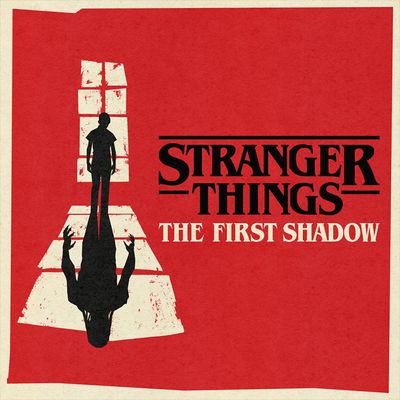
Two of the creators of "Stranger Things: The First. Shadow," writer Kate Trefry and co-director Justin Martin, talk through. the complicated puzzle of making theater scary — and making good TV that’s also. good theater... Read More
From the show: Stagecraft with Gordon Cox
Featured Shows
About
Two of the creators of "Stranger Things: The First
Shadow," writer Kate Trefry and co-director Justin Martin, talk through
the complicated puzzle of making theater scary — and making good TV that’s also
good theater.
Transcript
This transcript was automatically generated and might contain errors.
[0:00] Gordon Cox: Welcome to Stagecraft, Variety's theater podcast. Your backstage pass to revealing conversations with stars, creators, and industry leaders. On Broadway, off-Broadway, and beyond. I'm Gordon Cox. On this episode of Stagecraft, I'm talking to two of the creators of Stranger Things, The First Shadow. This Broadway play is a stage prequel to Stranger Things, Netflix's smash hit Spielbergian supernatural thriller. The TV series, created by the Duffer Brothers, focuses on a group of kids who meet a young girl with mysterious powers named Eleven, and on their parents, who help them uncover the mysterious happenings in their hometown of Hawkins, Indiana. In Stranger Things, The First Shadow, theater audiences meet those parents as teenagers, back in the 1950s, and learn the story of their first encounter with a young man who will become Vecna, a supernaturally powered villain introduced in the TV show's fourth season, and poised to play an even bigger role in the series' upcoming fifth and final season.
First seen in London's West End, where it's still running, Stranger Things, The First Shadow is a big, ambitious project. Chock full of stage effects and allusions, a production that wants to bring the world of Stranger Things to the theater in a way that can appeal both to fans of the series and to Broadway audiences who've never seen a single episode. Now, as Netflix gears up to air the final season later this year, Stranger Things, The First Shadow has just begun performances on Broadway. Here in the virtual studio, I've got Kate Trefry, a writer from the TV show who is also the playwright of The First Shadow, and Justin Martin, who co-directs The First Shadow with his frequent collaborator Stephen Daldry. The two of them are here to talk us through the complicated puzzle of making theater scary and making good TV that's also good theater. Hello, Kate and Justin. Thanks for joining me.
[1:59] Kate Trefry: Hello. How's it going?
[2:00] Justin Martin: Thanks for having us.
[2:01] Gordon Cox: Before we start talking about the specifics of the play itself, let's talk first about the impetus behind it. It sounds like it was an idea that came from, Justin, your co-director, Stephen Daldry. Is that right? What was your first run-in with this idea?
[2:19] Justin Martin: So Stephen and I had worked on The Crown for a number of years, and so had been in conversations with Netflix about this idea of doing something live because theater is very much both of our backgrounds. We talked about a number of titles and a number of worlds. Stephen came in and said, have you ever seen people be really frightened on stage, or have you ever been really frightened by someone on stage? I was thinking back to Woman in Black is probably the closest I've been. But I thought it was possible.
[2:51] Justin Martin: Woman in Black, by the way, in case people listening don't know what it is, Woman in Black is a long-running show in London. I've actually never seen it. Is it scary?
[2:59] Kate Trefry: It's sort of like old school, oldie-woldie, and the theater itself feels like it's haunted. But it's brilliantly old school in the way it does it. When you listen to the sound effects, that sounds like someone's made that at home. But it is genuinely, I do remember jumping at it a number of times. He was talking about that, and then out of that, he was talking about Stranger Things. I'm so interested in the world. We're both fans of it. I suppose what we were looking for is something that would really push us and test us with what our imaginations could do in terms of something we'd never seen on stage.
[3:45] Gordon Cox: Tell us about how you got involved. You are a writer on the series and immersed in the world. What made you want to get involved in this extension of the world?
[3:51] Kate Trefry: Because I don't have a theater background, I did not understand what the hell they were talking about. It seemed like a crazy idea to me.
[4:03] Gordon Cox: You were mostly in TV prior to this and film?
[4:12] Kate Trefry: Yeah, I did. I have some unmade features like everyone else in New York and Los Angeles. But I had been on the show for a few years, four or five maybe at that point, maybe six. Who knows? It's all one long season to my brain now. But it was a combination of meeting the directing team of Stephen and Justin and being pitched the logline of this is an origin story about Vecna. It involves the adults as their teenage selves in the 50s, which I thought was ingenious and surprising and just irresistible in terms of the origin story. Then it was an easy choice. Then I was like, well, who knows? I don't know what a stage play is, but I know a good story when I hear one and this is a really good story. Then I was hooked.
[5:35] Justin Martin: When we spoke to Kate, we said, don't write a play, write two episodes and don't be limited. She delivered these episodes, which were so expansive.
[5:41] Kate Trefry: Expensive.
[5:45] Justin Martin: But actually, it really pushed us. She'd written the essence of the series into this story, which then really meant we had to find a translation.
[5:52] Gordon Cox: And so who is Vecna for folks who don't follow Stranger Things closely? Tell us about, I guess, Kate, tell us about who Vecna is and Vecna will play a significant role in the upcoming season five, as I understand it. Tell us a little bit about that.
[6:00] Kate Trefry: Vecna was my special, special baby in the writer's room. Vecna is the main, I mean, arguably the big question I guess everyone has is who's the big bad in Stranger Things? Is it the Mind Flayer or is it Vecna? Like kind of who's in control? And that's something that we deal with a lot in the play, you know, is that question of who's in control. But he's, he's the primary antagonist in Stranger Things that is revealed in season four. And I don't want to spoil that for anybody because that is the greatest twist ever conceived, I think. But yeah, he's the bad, like simply put, he's the bad guy. And in our play, we discover kind of who he was before the bad guy and how he became the bad guy. And, you know.
[6:57] Gordon Cox: And were there other ideas being bounced around in terms of what nooks of story to explore in this stage project? Like this is a prequel that explores Vecna, but were there other ideas that you sort of thought about and then before you landed on what you ended up going with?
[7:05] Kate Trefry: Well, it's not just a prequel of Vecna, it's also a prequel of Brenner. It's also a prequel of Hawkins. It's also a prequel of Joyce, Hopper and Bob and their complex, you know, trio, their various relationships. And, and there's a lot of Easter eggs and introductions to characters that we know and love. So it, it, what it did was encapsulate a way in which we could be part of the canon, but not just doing a straight adaptation of something that had been done. So it, it, it balances the familiar with something new. And I think that's why we ended up with where we are, but it does a whole lot of things at the same time. And it just happens to be that the central character to it is this, is this baddie who, you know, the play really humanizes and you really understand how he became who he became.
[8:03] Justin Martin: Yeah. He's really a, you know, like spiritual brother to Eleven in a lot of ways. And I think serves as kind of a cautionary tale of, you know, both, you know, people gifted with similar powers, and it's just a matter of what kind of friends you meet that determines which direction you go in, you know? And so it was really fun. You know, this, the show has a certain tone to it, and it was really fun to do this origin story because it's inherently tragic. And it was fun to be doing the, you know, the show the way we always do it, but knowing that we were driving towards tragedy.
[8:48] Gordon Cox: Right. And so how did both the story and the script itself come together? It sounds like there were a lot of collaborators in, I mean, Kate, you worked on it. And then I know the Duffer Brothers were involved at some point, and the playwright Jack Thorne was also involved. It sounds like it was a collaborative process. And I imagine all of this must have developed in tandem with Justin and Steven and all the folks you were working with to, you know, to bring this to life. Tell us a little bit about how the, you know, who actually put words to page and sort of how you worked with kind of breaking the story and figuring out its beats.
[9:19] Kate Trefry: Yeah. So, I mean, Justin and Steven, alongside Jack Thorne, came up with the original story idea.
[9:30] Justin Martin: I see.
[9:30] Kate Trefry: Which was to do the prequel.
[9:38] Justin Martin: Which was to do the prequel with Vecna. And then I was handed that playbook, kind of, just that idea. And I worked alongside the Duffers while I was writing seasons four and five to develop the play. But, you know, there, it was an amazing collaboration, you know, with these, all these crazy geniuses. But I was given a lot of free reign to kind of do what I thought it should be.
[10:06] Justin Martin: Yeah. Because we didn't, you know, we asked Kate to write two episodes. And she, to hold onto the spirit of the series.
[10:19] Gordon Cox: And it's two episodes because act one and act two, is that right?
[10:21] Justin Martin: Act one and act two. Yeah. Okay.
[10:22] Kate Trefry: She did a lot of intercutting and things that are really inherent within the show, match cuts and stuff that theater doesn't do very well. And so, it forced us then to find a language. So, we went into a very long workshop process, which was something Kate hadn't experienced. I've experienced it a little bit, but not to this extent, where, you know, we're writing, throwing something up on stage, trying it in a room with actors, and then Kate's going home and writing again. And constantly trying to find how do we translate the energy of this series onto stage, so that when you watch it, you go, this is totally familiar. We have a title sequence, and people go absolutely mental on the title sequence.
And then we intercut in a way that means that there's a propulsive energy to it. Like, there's multiple journeys happening at the same time, and you're following a bit of this one, and that one, and this one. And the terrible way of doing that in theater is, oh, lights up on this scene, lights down, and the people just freeze, and lights up. And we didn't want to do that. So, we were like, how do we find a new way of giving that propulsive energy that the series does? We were getting snapshots with a cliffhanger of each bit, going, what's going to happen next there? And we're back at another story. So, it was, but you could only really do that, because we were given the space together to get in the room.
And Kate, who didn't come from a theater background, was amazingly dexterous, and I suppose took to it like a duck to water, and went, okay, so now I've seen your play pen, and we were like, we've seen yours, now we can figure out a way to go forward so that an audience are absolutely getting the series. And I always like to think about this, they're getting two episodes from the series, but without the screen in the way. So, they're completely unprotected by the screen.
[12:04] Gordon Cox: Yeah. And so then, Kate, how much of writing the script for The First Shadow was like working on a couple of episodes from the TV show, and in what ways was it different?
[12:11] Kate Trefry: I mean, at the beginning, it was, it was like, I was just, you know, I mean, I didn't have the, in the writer's room, we break the episodes really exhaustively. Before we go to script, we break together, beat by beat. And so, you usually go to script with a really detailed outline. So, I didn't have like my brain trust, my usual brain trust. But I did, you know, I spent so much time with Steven and Justin.
[12:48] Kate Trefry: I did spend a lot of time with the Duffers, coming up with the bones of it. But yeah, then it was a lot, just writing episodes of the show. I was totally unrestricted. I was like, because I don't know how to write a play. I was like, I don't know, people in a room talking. That's not really what I do. So I just kind of went for it. And then from there on, it was a matter of translating, and compromising, and always trying to drill down to what the essence is of what makes the show feel like the show. Because we never wanted to say no, but we did want to find ways in which we could translate it effectively. So that an audience, who are familiar with the series, can appreciate it and understand it based on their experience in the series.
And that also those people who've never seen the series can go, I understand what's going on. And Kate, you mentioned concentrating on the essence. What is the essence of the show? It's a great question. I think because I worked on the show for so long, I didn't really know until I just kind of did it. I was trained in the room to write the show. Do you know what I mean? So my default is kind of like writing Stranger Things at this point, which is a double-edged sword. Yeah, the series is over. But during this process of trying to weed through what really matters, I feel like we've arrived at things that we know are the show, what the essence of the show is. And it's surprising because it's not about nostalgia, it's not about the 80s, it's not about any of the kind of zeitgeisty, it's not even about Spielberg or something like that.
It's the core story of outsiders coming together. Friendship being kind of the saving force, the force of good. And there's always a mystery element. I mean, after writing the show for so long, there are rules that you follow consciously or unconsciously of going. As the episode goes on, the timeline starts to speed up until you're intercutting all of the threads. You start with the group, the group splits up, the group comes back together in the finale, and you intercut all these different things. So there's different levels of the essence of characters. One of the things, I think, that made Stranger Things such a celebration was that it's a really good-hearted show. It has, at its core, it's not cynical, it's not ironic.
It's a show that comes from a place of love and is about people who really care about each other at the end of the day. And you can call that Spielberg or you can call that human-forward storytelling. But that's an unshakable truth. Even though our story goes to a dark place, at the end of it, we're not doing funny games. This is a story that has heart at the center of it. The balance of humor and fear of comedy and horror is a huge part of the show on TV and in our show, which has been really fun and challenging, like Justin was saying, of how do you scare people on stage? That's definitely a core tenet of the show. But I think emotionally, it's about people who care about each other and the things that threaten those bonds. And it's about testing the strength of those bonds. And in this case, it doesn't work out so nice.
[17:18] Gordon Cox: I'll have more with Kate and Justin right after the break.
[17:27] Gordon Cox: And now, here's more with the writer Kate Trefry and co-director Justin Martin, two of the creators of Stranger Things: The First Shadow. Justin, you mentioned part of the impetus for the idea overall was to try and figure out how to scare people on stage and to find a kind of theatrical language for that. How would you describe the theatrical language that you have come to with this show, and how do you scare people on stage?
[17:43] Justin Martin: That's a really good question, and we're in the middle of it. We're trying to figure it out right now. But it's always about surprising. It's always about building a curtain in one direction and then doing something different and the like. But I think what we've tried to do with the show is, ultimately, the series is so about characters and people. And I think it's Kate saying what the essence of the show is. And I think the show very much is done in a very simple way. It goes, oh, here, we're just showing you a really simple show, which is just on the flat. There's no flair to it. And then we do something that is extraordinary. So what it's not trying to do is to go, it's not a show about illusions or phenomenal theatrical devices.
It's about people and characters. And then within that, we just find the moments in which they really, these moments need to happen, where something extraordinary happens you've never seen on stage. So it's a bit like a magic trick in the way of going, there's nothing up my sleeve. There's nothing up my sleeve, and then there is something. But I think that's the joy of it, is you don't, the illusions and the special effects and everything all feel very rooted in the story, as opposed to being for their own sake. Yeah. I mean, the crazy thing about doing theatre is, you know, like with, in the TV show, we're like, okay, we got one shot. So let's make it work. You know, we're gonna like blow up the bus or something, you know.
And everybody works for like two weeks getting ready to blow up the bus and blow it up. And then something goes wrong, and you fix it in post. And it's like, there's all these kinds of like safety guards. And in this, you have to do it, you have to restore it, and you have to replicate it every night, eight shows a week. And there's no blowing up the bus. You can't blow up the bus. But that has been like a bit, that was like a big paradigm shift of, well, how do we, how do we do, how do we do spectacle that you can replicate and restore? And how did you work, Justin, with, you know, you're not working just with sort of your usual team of stage designers, but you've got sort of illusionists and video effects and things like that. How, tell us about that process of collaboration that and how that helped you achieve the language that you were going for on stage.
[20:09] Justin Martin: Well, I think the thing I love about collaboration is I'm always limited by my own imagination. And so when you bring someone in like Jamie Harrison and Chris Fisher, but, you know, who come from an illusion background and from an understanding of how they're really directing those sections of the play in conversation with us. So, you know, I mean, the way in which they pitch things, I mean, there's one, there's one illusion at the end of the show, which Jamie pitched to us with two kitchen implements. And I was like, this is never going to work. There's no way this is going to work. And so Stephen and I had all these contingencies and actually, you know, the giving over to other people's creative expertise is a joy.
And like Kate, with her writing, like she was writing these sort of crazy stage directions, which, you know, it's nigh impossible, but, but it really pushed us to go, okay, what, what is she trying to do? And how, what can we do on stage that will give the same effect? And we just have an extraordinary group of people, whether that be the illusionists, the tech director in charge of everything, Gary Beestone, our lighting, sound. I mean, it is, it is a sort of total theatre in a weird way, almost to the extent of being total theatre slash circus. It's something so extraordinary about where the boundaries of everybody's imagination is because it certainly has expanded by. No, it's like, it's like a, I don't want to say like a symphony, but it's like a band or something where it's like, every, everybody has their own thing, but everything has to work in perfect harmony with everything else at the same time, in the same way, every single night, you know, and we have these like fabulous effects, but because, you know, things sometimes go wrong, the story has to have enough integrity to withstand any effect not working.
You can't, you know, like the effect can't be the point of the scene because you actually can't bank on that. And so that was kind of the way that we approached, you know, all of our illusions of going, it has to be narratively driven, it has to be great, but it also, the scene has to work if nothing else does.
[23:06] Kate Trefry: And how often have things gone wrong in London?
[23:10] Justin Martin: Well, when we, what a spicy question. I saw it in London not too long ago and it went off as far as I could tell perfectly.
[23:18] Kate Trefry: As far as you can tell.
[23:20] Justin Martin: Yeah, exactly. But I think that's a testament to it. The first, we had seven shows in which press were in and five of them, one major illusion and our producer was ready to shoot people. But I do think what Kate says is right. I think that the show holds up enough and there's enough in it that I think it can survive without, you know, with the odd thing. But it happens a lot less once they get into the running of it. It's when we're all there and there's a pressure on that simple things happen. And they're usually the simplest thing. Sometimes they're technical, but sometimes they're just simple because it does require everybody to be at their, sort of at their best. But, you know, we're much more knowledgeable now having made the show.
And so we feel much more confident in how we're doing it. And we've refined a lot of those systems. And so it's, knock on wood, it's rarer now than when we started. But that's the joy of live theatre is, and so, you know, we're trying to create shows that has a strong enough backbone that it can survive, you know, an illusion not working. But the best illusions in the show are so simple that Penn and Teller who were like, the brilliance of magic or illusions is that your brain tells you it's much more complicated than what it actually is. And so some of those are not things that can fail. They're just, you know, they're just so simple. And I do love those because you do go, you know, you do get so many gasps from the most simple things.
It's amazing. Yeah, we have like, one of our biggest effects is essentially like a pop-up book. Like, that's how it works. And it's just like amazing to be like, oh, it's a pop-up book. But yeah. Anyway, you won't want to give away too much.
[24:33] Kate Trefry: We're not going to give away anything.
[24:34] Justin Martin: Right, right. What is, is anything changing between West End and Broadway?
[24:40] Kate Trefry: Uh, so we, so when we built the show, the set takes about six months to build. And so when we got into tech, technical rehearsals with the set and the lights and everything together and the actors, there were certain things that didn't quite work in the way that we wanted to or illusions, a couple of illusions didn't quite work in the way we'd hoped. So we had to sort of get rid of those and put other things in and fudge it. The great thing about going back to the beginning is we're able to start again. And so much of the world and those, those illusions are built, embedded into the set so that they're a part of everything that you see. So it, the joy is being one coming back to it because, you know, second go at anything always means that you'll have, you know, you'll have different ideas and we'll move on.
And, and, and I still love the London show. And I think it's still got so much of our initial instincts on it. But I think what's happened here is you're just, you're seeing a second draft. We've been able to, a few of the illusions that we never quite realized.
[25:37] Kate Trefry: And how do you think about, what was it like, Kate, for you? It sounds like you were working on this as you were working on both season four and season five of the series, is that right?
[26:20] Justin Martin: Yeah. And so it was that, that sounds a little hectic, first of all, but how much did the, as things were shifting with the way, you know, season five developed, how much did that influence then your work on the show and sort of trickle back into the things you were writing for the prequel?
[26:38] Kate Trefry: Yeah. I mean, it was, I think one of the reasons that I was, you know, tapped to do the job is because the canon and the mythology is so complicated and specific for the show. And because we were like, kind of mid series, we really needed, they really needed somebody who was really like, steeped in all of the, you know, this kind of draconian, crazy, elaborate mythology and who was up to date, like minute to minute as we were making choices for season five. If you missed a week in the room, you’re done, like, you’ll never catch up, you know. And because we, the play was always designed to be an integral part of, of the, of the series, you know, something that informs the series and as part of the series, it’s, it’s totally integrated, you know, so it had to, first of all, agree with everything that came before, but second of all, agree with everything that’s to come.
And the only way to manage that, this crazy Tetris of storytelling was to kind of do it all simultaneously, which was very, it was hectic, but it was actually a lot of fun. And I felt like, because I had access in both directions, it made both projects so much better, you know, because I was, I could take, I like, things that I knew about season five and kind of, like, plant those seeds in the play and vice versa. It made, I think, both things so much stronger and also really informed this, like, amazing conversation between the two pieces of work. Like, I recently was just rereading some of that season five episodes, and it’s, it’s actually, like, it’s actually incredible. I mean, not to, like, be like, do-do-do-do, great job, Free Fry.
But it’s really interesting, I guess, to look at the, them side by side, because they’re in such conversation with each other, down to, like, word choice and dialogue. And, you know, like, and so I, it was, I think it was a huge benefit for, in both, you know, on both projects to have these two things working in conjunction with each other. Given all that and the interconnectedness of it with this, of the show with the series, and the complexity of the lore and the mythology that you mentioned, how then do you, how do you pitch the show to folks who maybe haven’t seen a single minute of Stranger Things, the TV series? How do you, what is the, what do you consider the, the, is, what, what is there for them to sort of hook into?
[29:39] Kate Trefry: Yeah, no, I mean, that was the, that was the third dimension of this project, which was it has to be, you know, it has to be almost essential, but not totally essential, because you have to be able to enjoy season five if there’s, you know, if you can’t get to see the play, but then also the play itself has to stand on its own as a, as a piece of work for people who haven’t seen the show, which we have a lot of in our audiences. And I think because it’s an origin story, and you’re not dropping into the middle of, you know, something that at least gave us a, like a starting point. But yeah, I mean, the show is, if just taken on its own, it just is, you know, you don’t know, you don’t know Joyce and Hopper and Bob and Vecna, but you meet them all as they are in this story.
And that has to be compelling. It can’t just be fan service. It can’t just be a bunch of inside jokes for people who are like, super, super fans. They all, everybody has to be have compelling arcs and be real characters. And the story at the center, really about a troubled kid, you know, and the friendships that he made that could save him, I think is, I find really moving and surprising. And, you know, in a world that feels very separated at the moment, the idea of a group of people coming together to solve a mystery and try and look out for each other feels like a sort of revolutionary act. But I think, I think that feels what the world needs.
[31:15] Justin Martin: Is there a moment on stage or an effect on stage that you were particularly proud of? There's, there’s, there’s a lot to be really honest. There’s a lot, but I, you know, I love the trio of Hopper and Joyce and their relationship and how that’s building. And, and Kate’s done a lot of work on that with, you know, building that to the X we’ve got at the moment. Louis McCartney, who plays Henry, he’s just one of the most extraordinary young actors I’ve ever met. And for someone to come out with that sort of skill level at the age that he has, I just, I just find him infinitely watchable. This is the actor who is playing the, the essentially the lead role in the show. He’s just, he’s just extraordinary, brings such humanity to it.
So there’s so many parts of him. And then there’s, and there’s one scene, which is very much about him and getting lost, I suppose, in his own head and starting to experience the monster, monsters that I just think I find, I find frightening every time I see it. And we’ve, we’ve redone it and we’ve deepened it and we’ve changed it a bit here, but it is, I find it utterly terrifying. And it’s my favourite at the moment. And it shifts, it shifts, you know, moment to moment, but we watched it last night and I was like, this is so extraordinary. And it’s so developed, like London is the beginning of the idea. And then here it really feels like we’ve gone to where we, where we always hoped it would go. That’s, you know, that’s really good.
[32:39] Justin Martin: There has been, there has been a story that the First Shadow is part of a potential stage trilogy, exploring the world of Stranger Things. What, what is the status of that? Tell us a little bit about that.
[32:51] Kate Trefry: What?
[32:52] Justin Martin: Look, honestly, who knows? We don’t know. We, I read this as well. I always know when those things come out. It was in some article. The two things that are...
[33:02] Kate Trefry: It’s news to Kate, apparently.
[33:04] Justin Martin: I wonder who’s writing it. Firstly, if the show’s a success, then it’s a, it’s a great thing for the potential of this conversation about how we can be in conversation, you know, multimedia can be in conversation with each other rather than I’m just going to do an adaptation of a film or I’m just going to be, there is no reason why we shouldn’t have multi-conversation. The second thing is, Netflix have been so supportive in it and I really hope that they continue in the live space because I think they have such a capacity to do that, both financially, but also their interest and their chase, their desire to work with creatives and commit to creative visions. I think coming into the live space would be a new model and I think that’s really good.
And I suppose the last part of it for me, that 60% of the audience who come to see the play in London have never seen theatre before and that is an astonishing amount of people. And so I don’t know whether that means a trilogy is the answer to that, but I hope it means the beginning of a further conversation with worlds like Stranger Things or with Netflix or with, because I do think there is a capacity to do really good theatre that has its own integrity, but that at the same time can really reach audiences who don’t normally come to the theatre.
[34:22] Kate Trefry: It’s so true. In this moment, everybody’s kind of paranoid, myself included, about AI and the future of entertainment and the communal, is the movie theatre dying? Is it being revived? Do we need to go out and touch grass? It’s such a novel experience, I think, for so many young people to go be in the space with the real actors and feel not just the communal feeling of watching something together, but also like bearing witness to something live. There’s no substitute. There really isn’t. There’s just nothing like it. It’s so electrifying. And it’s my secret hope that people get addicted to it the way that I have, someone who came from no theatre background, who now is like, well, how do you ever go back? How do you ever go back from this wildly collaborative, hugely electric feeling of togetherness and life? It’s so alive. And so, yeah, let’s do a trilogy. Who cares?
[35:45] Justin Martin: Yeah, I was just going to, are you interested in writing another play, Kate, whether in the world of Stranger Things or not?
[35:49] Kate Trefry: I still don’t know how to write a play, guys. I really want to write another play. I really do. I never learned. This experience did not teach me how to write a play. But it did teach me that you don’t necessarily have to write a play to write a play. You just have to find the right, you know, brilliant, mad scientists who want to go on the ride with you. And so I would do something with this team again. Absolutely. I think they’re the only ones who could put up with me and my expensive nonsense. Let’s put a real cat in it, you know, kind of mentality.
[36:28] Justin Martin: And what’s next for you both before we wrap up?
[36:31] Kate Trefry: I’m doing a play at the National, which is a sequel to Prima Facie, which is a play I did with Jodie Comer. It’s called Intralia and it’s starring Rosamund Pike, which opens in July at the National Theatre.
[36:48] Justin Martin: I don’t know. What am I doing? I wrote on a TV show this summer that’s going to come out called Something Very Bad Is Going to Happen, which rocks. That’s on Netflix. Me and my husband wrote on that together. I’m trying to raise money to direct my horror movie.
[37:06] Justin Martin: Great.
[37:09] Justin Martin: And I am writing a rom-com.
[37:12] Kate Trefry: We’re desperate. We’re desperate to work with Kate again. I love working with Kate.
[37:14] Justin Martin: Me too.
[37:19] Gordon Cox: Well, we will look forward to whatever comes next from you both, both on stage and on screen. And also look forward to the imminent Broadway opening of Stranger Things, The First Shadow. Thank you both for chatting with me. It was great to talk to you.
[37:28] Kate Trefry: Yes, likewise. Thank you.
[37:31] Gordon Cox: That was Kate Trefry and Justin Martin, two of the creators of Stranger Things, The First Shadow, now playing on Broadway and in the West End.
[37:45] Gordon Cox: If you enjoyed this conversation here on StageCraft, we’d so appreciate it if you took the time to rate and review us on your favorite podcasting app. It really does help. Or tell a friend about StageCraft. Find past episodes and subscribe at all the places you get your pods, including Apple Podcasts, Spotify, and on the Broadway Podcast Network, a great place to find more theater for your ears.
[38:05] Gordon Cox: Until next episode, find me on Instagram and X at Gordon B. Cox. You can also check out my newsletter about international theater. It’s called Jake Weiss, and it’s at gordoncox.substack.com. Thanks for listening, and see you at the theater.
© Broadway Podcast Network, All Rights Reserved