

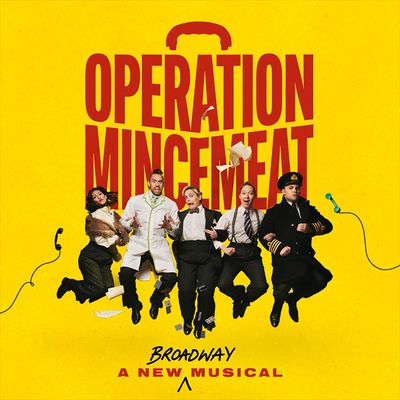
Get to know the complete cast of the West End hit "Operation. Mincemeat" — David. Cumming, Claire-Marie. Hall, Natasha Hodgson, Jak Malone, and Zoë Roberts — all now on Broadway in the New York transfer of the award-winning. musical comedy... Read More
From the show: Stagecraft with Gordon Cox
Guests
Featured Shows
About
Get to know the complete cast of the West End hit "Operation
Mincemeat" — David
Hall, Natasha Hodgson, Jak Malone, and Zoë
Roberts — all now on Broadway in the New York transfer of the award-winning
musical comedy.
Transcript
This transcript was automatically generated and might contain errors.
[0:00] Gordon Cox: Welcome to Stagecraft, Variety's theatre podcast, your backstage pass to revealing conversations with stars, creators, and industry leaders, on Broadway, off Broadway, and beyond. I'm Gordon Cox. On this episode of Stagecraft, I'm talking to the creators and performers of the Olivier Award-winning musical Operation Mincemeat. If you're someone who keeps up with London theatre buzz, then you've probably been hearing about Operation Mincemeat for a while now. It's a small-scale musical comedy about a truly bonkers true story from World War II in which MI5 misdirects the Nazis with a corpse and a harebrained scheme. Since its premiere in 2019, Operation Mincemeat the Musical has proven so popular in London that it's kept coming back to larger theatres until the show ended up in the West End and won the Olivier Award for Best New Musical, as well as the award for Best Actor in a Supporting Role in a Musical for performer Jack Malone.
Now, the full, original West End cast has brought the show to Broadway in a run that started previews just days ago. Here to tell us all about it are actors and co-creators David Cumming, Natasha Hodgson, and Zoe Roberts, with their fellow castmates, Claire-Marie Hall and Jack Malone. Hello to the entire cast of Operation Mincemeat. Thanks for joining me.
[1:19] Cast: Hey! Hello! Nice!
[1:21] Gordon Cox: Okay, we're going to start by having each of you introduce yourselves.
[1:25] Zoe Roberts: Hi, I'm Zoe. I'm one of the writers and one of the actors in Operation Mincemeat.
[1:31] Natasha Hodgson: I'm Natasha. I'm the same as Zoe, an actor and a writer.
[1:34] David Cumming: I'm David. I am also one of the writers and one of the actors in the show.
[1:38] Jack Malone: I'm Jack. I am an actor in the show. I play Hester.
[1:42] Claire-Marie Hall: And I am Claire. I'm an actor in the show. I play Jean.
[1:46] Gordon Cox: Thank you all for being here. Operation Mincemeat is a show that I feel like I've been hearing about for years, as it's been sort of snowballing toward the West End and then the Olivier Awards and now Broadway. I first heard about it back in 2021 when it was at the Southwark Playhouse. But it had been around and evolving since even before then. So I wonder if we could start by talking to the co-creator, three of the co-creators, three of the four co-creators here, and just telling us a little bit about how this idea got started. Natasha, let's start with you or whoever else.
[2:14] Natasha Hodgson: Yeah, sure. I'll take it. I'll fudge in. So we, yeah, the three of us, Zoe, I'm Natasha, and that's the one, and David and I have been writing theatre together for a while, writing comedy together. And we teamed up with a guy I was in a band with, Felix Hagen, and we wanted to write a musical together. We knew we wanted it to be a true story because we'd never written a musical before. It was absolutely terrifying prospect to us as we set about trying to find like an interesting true story because we knew musicals traditionally take a bit, take a bit of time to get right. And we wanted to put our weight behind a story that we really believed in that felt like had some resonance. We couldn't find anything.
And I was on a holiday with my family complaining about the fact that we were just wasting our time. We should give it all in, go back to writing stupid jokes. And my brother told me he just listened to a podcast that should be a musical. And that happens all the time with families. They always say like, oh, I just met a person who should be in a sketch. And you're like, yeah, sure. Thank you. But it turns out in this instance, he was absolutely right. And it was a podcast, Stuff You Should Know podcast on Operation Mincemeat. And I listened to it. I couldn't believe that I was going to suggest to the guys that we write a musical about World War Two, the most sort of overdone topic of culture in the history of anything, really. But I sent it to them and said, guys, I think this story might be the one. And it kind of went from there.
[3:38] Gordon Cox: And Zoe and David, what do you recall thinking about the idea?
[3:41] David Cumming: We're not going to write a story about tweed and eggs and, you know, everyone being sad during the war. But then you listen to this podcast and it's a completely different version of what life was like for some people during the war. And it's kind of a spy caper and it's quintessentially English. It's eccentric. It's farcical. And it's so unlikely that they would try and do this. It's even more unlikely that they managed to actually succeed with this plan, that it's just so audacious that it really kind of shed a new light on our understanding of our own history, which we found really interesting as writers.
[4:21] Gordon Cox: And how do you, Zoe, how do you describe the plot to folks who don't, who aren't aware of what this story is?
[4:25] Zoe Roberts: Oh, God, how much time have they got to start with? No, what's their understanding of the war? And no, the show is basically about the most crazy true story from World War Two, a real life spy operation, which involved using a dead body to fool Hitler and help win the war. Like at its top line, it's about a bunch of little freaks achieving something amazing.
[4:46] Gordon Cox: And how would you, how do you describe the aesthetic of the piece? It's sort of small scale and kind of very human powered, right? You all play multiple characters in it. How did that? Well, first of all, just tell us a little bit about how you all work together. There are four of you co-creating the words of the book and the lyrics and the music. How do you all fit together? Is one of you more of a composer and one of you more of a lyricist or do you all do everything? How does that work?
[5:17] Natasha Hodgson: Inefficiently.
[5:27] David Cumming: Luckily, we've known each other for a very long time. The three of us went to university together and, you know, we've known Felix for many years. And I think we do, as you say, sort of fit on a spectrum of composer and lyricist. Some of us are more musical than others, but we definitely all contribute to everything. We all write melodies. We all sort of throw in jokes and turn character ideas and story ideas. And then we sort of massage it depending on our specific skill set into a full song. But we've always worked with small casts. I think that's mostly due to poverty. God bless poverty for giving us that inspiration. But I think with a show like this, what we've realized is that what was initially felt like our biggest weakness, was that we could never afford to have a big cast and loads of dancing girls, while the rest of it ended up becoming a kind of unique strength of the piece, in that we'd have to be everything.
We are the dancing girls. We are the dancing boys. We are the baddies, the goodies and everything in between. And I think that's sort of why people really took to the show and kind of what became fascinated with it, in that what you're watching is five people slog their guts out for, you know, a two act musical trying to bring you every single element that a huge musical can bring to a big stage.
[6:33] Gordon Cox: Was there a moment that you recall thinking, oh, I think we've hit on something here that seems to be working?
[6:37] Natasha Hodgson: I think after the first few weeks of shows of the very first version, the reaction that audiences had to the show was so very different to anything they'd had, to anything we'd made before. I think that's for a twofold reason. One, this is our first full musical. And I think adding music throughout a show and full on songs, we put small amounts of music in previous shows, but this is a full musical. I think the addition of music means that people relate so much more intensely and emotionally to a show. So if they like it, they really, really like it. But also, I think we got a sense we'd hit on something that people wanted to see more of, and people were excited about the next iteration of the show in a way that they'd never been about our previous work.
They were like, I can't wait to see when you get a chance to work more or get to a bigger space. We were in such a small space. It was really an 80-seater venue called the New Diorama Theatre in Warren Street in London. But the show felt like it was really bursting at the edges of that space. And people were saying as they left, oh, when this gets to a larger space, it's going to grow even more. And that was a conversation that no one had ever said about our work before. So that's when I think—
[7:50] David Cumming: Depressingly, yeah.
[7:51] Natasha Hodgson: Yes, indeed. They had not. That was the first time we thought, oh, maybe this has an ongoing future and could be a long-form project for us. I honestly think it was after that first preview. I rudely remember the audience reaction of that first preview, and people that we'd loved kind of came backstage and were like, what the hell was that? In a way that was both, yeah, sobering and exciting at the same time. And so that was 2019, if I'm not mistaken, that first production, is that right? And so then Claire and Jack, at what point did you hear about the show and how and when did you each get involved?
[8:24] Jack Malone: I joined for the very first production, that same production, New Diorama we were just talking about. I was a huge fan of these guys as writers and the shows that they were doing at the time, which for the record, I was excited to see go to bigger venues. I really loved their work. It was always fast-paced and wordy and funny and so serious about being silly, and that really spoke to me. So when I heard they were writing a musical, I was like, well, that's really in my wheelhouse. Please, please, can I be in it? And after a couple of successful auditions, I was in and have clung on tightly ever since.
[9:11] Claire-Marie Hall: And then Claire, what about for you?
[9:19] Claire-Marie Hall: So I wasn't in the original New Diorama production. I joined on the second production. So I'd heard waves on the fringe scene about this little show, but didn't know anything about it because there wasn't too much on the internet. So I kind of went in blind to my audition. And then I remember I had to rap and do a couple of songs. I was like, what is this show? I just knew it was a comedy and multi-rolling with some songs about World War II. And then literally got through into the next recall and I got given some of the music and I was like, oh my God, this is amazing. And I think it was from then on, I was like, I am fully in for this. Like I really want this job. And then, yeah, I was kind of like cottoned in and I've been with it ever since.
[9:54] Gordon Cox: And how many roles do you play?
[9:57] Claire-Marie Hall: Oh, there's a lot. I think we were trying to figure this out yesterday, isn't it? We actually know, isn't it like, I think Zoe and Jack have the most.
[10:05] Jack Malone: Yeah. We were talking in the high 20s each.
[10:09] Claire-Marie Hall: Yeah. I think I'm just below.
[10:13] Jack Malone: 60 maybe.
[10:15] Claire-Marie Hall: In total? Yeah.
[10:20] Gordon Cox: And what is, I mean, it seems logical to me that the biggest challenge for playing that many roles is just being able to differentiate them quickly and figuring out ways to do it. Is that what the challenge is? Or what do you find to be the challenges?
[10:26] Jack Malone: Have you ever heard of a thing called a hat? Okay.
[10:40] Claire-Marie Hall: You don't need talent.
[10:45] Jack Malone: It's a lot of hats and a lot of voices. And also it's very physical. Our work has always had a high physical comedy element to it. So it's kind of body shapes and a lot of these characters you only see for seconds, really. And so you've got to make a really clear visual identity for that character. And so that's kind of the game we play on stage. And yeah, it's ridiculous and exhausting, but it's part of the fun of the show.
[11:13] Claire-Marie Hall: Sometimes we will try and write characters based on just a voice we know people can do, which often, which later gets cut, I'll be honest. But that voice, you can do a funny sort of old man voice. We'll put that in. We'll put that in. And then it's like, why is this old man in the middle of the scene? Gerard?
[11:29] Zoe Roberts: Did you want to add something?
[11:38] David Cumming: I think the show, on to other cast members, or welcoming new cast members in as well, is that because there are so many characters that you've got to occupy, what we don't want to do is lose the sort of reality in the heart of what we call the kind of core characters, the main characters that we each play. Because it's so important for us that an audience connects to those people, believes in those people, and cares about what they're doing. They don't need to care about waiter number three who, you know, minces across the stage with a tray of drinks. But, you know... No names, David. So we talk about almost having a sliding scale from one to ten of, you know, where these characters sit in terms of reality to complete cartoon.
And the joy of it is, you know, we all play people that sit in a different place in that scale, but we make sure that they're anchored with some people right down in the naturalistic kind of core, so that everybody cares. Otherwise, it would just really descend into a nonsense that just washes over you and happens at you. Yeah, the show is ultimately about five people, five real people from the past who put on this mission and did this amazing thing. And that is the thing that we want to keep sacred and keep sort of like most precious to us. So we always look, in terms of casting, that's what we look for the most. And then hopefully, if you can be an idiot on top of that, then all the better.
[12:58] Jak Malone: Jack and Claire, how does it change your experience as actors to be doing a show with the folks who have created it?
[13:04] Claire-Marie Hall: Be careful.
[13:06] Jak Malone: It's amazing. We're saying, like, when we first started, it's a massive privilege for me because it changes consistently. And I was in, like, it's been set now in the West End, but before that, it would kind of change on the fly so much. And if a joke didn't land, then it would change. And having the privilege of being able to do that, it doesn't usually happen. And it just kept exciting. It was always evolving. And yeah, I mean, for me personally, that's been a great experience.
[13:31] Claire-Marie Hall: Yeah, for me, there's so much pride that goes along with the show and the reception to the show and how well the show is doing. I just have such a deeper vested interest in this piece of work than any piece of work I've ever worked on because I've had such a hand in it. And I've been allowed to flex so many muscles just because I was in the room and I could do that. And it's really wonderful to have so much input and therefore get so much enjoyment and gratification out of what we're doing and how well it's going.
[14:04] David Cumming: Yeah, I mean, yeah, us four wrote it, but we really, it's a creation of the six of us. Like, you know, it wouldn't be anywhere near the same if it wasn't Jack and Claire who were in it and writing for them and around them and their skills. So, I mean, they're not going to get the royalty. Sorry, guys. The money is not going to come your way.
[14:19] Claire-Marie Hall: Amen.
[14:20] David Cumming: That's made that very clear on a podcast, but we appreciate it, though, guys.
[14:25] Gordon Cox: Thanks so much. I'll have more with David and Claire and Natasha and Jack and Zoe right after this break.
[14:41] Gordon Cox: And now, here's more of my conversation with the Broadway cast of Operation Mincemeat. The show has, it sounds like, evolved quite a bit since that first production in 2019. Can you tell us a little bit about how the show has changed and what has sort of guided the way the show has developed?
[14:59] David Cumming: Well, it's about an hour shorter. It's, I mean, there's about two musicals worth of stuff on the cutting room floor. It's a big story to tell. There's a lot going on. There's a lot of very unbelievable things that we would initially put in. And then we'd share it with audiences. And they'd be like, you can't lie about a war like this. And so, we have to—
[15:24] Claire-Marie Hall: Except it was true.
[15:25] David Cumming: Except it was true. It was all true, yeah. But it's just unknown. And so, there's a lot of stuff that has fallen by the wayside. And it's just been an iterative process of trial and error. And the audience let you know every night if your jokes are working. And then over time, you learn that the beats need to shift or change. And it's kind of a big jigsaw puzzle. I think the pandemic actually changed it quite a lot as well. Like, we did this run. And then we had, you know, we did this big silly comedy that I think, although it did connect with the kind of realities of war and the realities of sacrifice, we didn't, I think, have the bravery to kind of really delve into that. And the things that the characters are going through in terms of when a huge national tragedy strikes, how do you deal with that?
I think because we were primarily comedy writers, and we were a little bit nervous about trying to preempt what that would be like. And so, although we touched on it, in the first couple of versions, we were a bit like, how do we wrestle with this? The fact that they used a homeless man as this corpse to throw out to sea. And can we honour him? And do we have the authority to get into that? And then this terrible thing happened to us all, you know, globally. And we were trapped inside. And it gave us a lot of time. It gave us all a lot of time to kind of start thinking about how we do wrestle with what happens to a nation when a hideous tragedy strikes, and when you're suddenly so worried about your friends and your family.
And I think we, in some ways, were quite privileged that we got to kind of pour all of our worry and fear into the show that we were writing. And I think it really changed because of that. And I think it's now a much more human and bled by humanity and vulnerability story because of that event. So although it is, you know, what we want to make is a big, silly, joyful comedy, but it definitely now wrestles with those themes of what happens when all you can do is sit and worry about your friends and family. How do you try and be useful in a situation where you feel so powerless? And I think we have tried to put all of that into the story of the five people that go on this adventure.
[17:21] Claire-Marie Hall: It was also not quite a surprise, but I think we were quite... Well, we were surprised by how much people wanted to care about this gang when we first performed it, and how much the power of having songs in a show can affect an audience in terms of how much they deeply, deeply feel for these people. And I think we weren't really prepared for audiences to fall in love with this group so much. And particularly Jean and Hester are two female characters in the core gang, which Claire and Jack play. And I think that was also part of it was going, oh, we think we have some really important people on our hands and we need to do them justice. And, you know, we need to handle them very carefully and very delicately.
And actually, that's what's more important than actually all the military strategy that we were coming in at the top of the show trying to... Well, they must know what's happening in Europe, and if they don't know what's happening, okay, so we'll talk about the invasion plan and all. And actually, the more you dig into it, the more you go at its top line, it's a misdirection strategy. And it's almost like a fun heist. But actually, audiences don't need to know the intrinsic kind of deep, deep military history that's going on. And what they want to do is see these characters, you know, try and fail and interact with each other. And yeah, that became much more important. So I think that was a big evolution of the show over the last few years.
[18:41] Gordon Cox: How do you think about changing the show, if you have it all, for Americans' ears or our understanding of the war? Like, how does that... Tell us a little bit about sort of how you're thinking about the show now that it lands in New York.
[18:58] David Cumming: I mean, when we open this weekend, our first preview, we will be presenting pretty much what the show is on West End. And we've got five weeks of previews to make small changes or tinker with different bits. It's basically what we need to work out is if there's any contextual things we need to add so that an American audience understands what exactly it is we're talking about. Or any jokes or references that they might simply not get. I mean, we can't really change the plot of the story. And we don't really want to change any of the songs or the kind of meat of the actual show. It'll just be small things, but we're not going to know that until we don't hear laughter from an audience after a joke we expect to hear laughter from.
Ultimately, like, we've always built the show in front of an audience. Like, it's not frightening to us, the idea of like, we show something, we get a reaction, we'll either stick with it or we'll pivot depending on how we feel about it. Like, in some ways, it's quite exciting to be in that position again, to be like, you know, it's theater, it's live, it's breathing, it can change in a moment. And we're aware that potentially there's like a dialect thing, a speed thing, which may have to gently slow down. But we'd rather let America tell us how they're feeling it, how they're responding to it. And then we will, you know, pivot accordingly. Or hopefully just do the same. You know, it's just all great. Night one, done, tick, and we'll just do it like that.
[20:25] Claire-Marie Hall: Broadway is the latest stop on what has been quite a ride for this show. What has the experience been like for you? Like, tell us about your experience at the Olivier Awards. How was that experience for you all? And which of you demands now star treatment? Who wants to take that question?
[20:48] David Cumming: Well, I mean, the night itself was really amazing. Like the fact that we got to perform in the Royal Albert Hall. I think that, in terms of like this lasting memories, I don't know, certainly for me, striding out into the Royal Albert Hall with that beautiful, unbelievable building and having an audience of our peers and, you know, and amazing industry people and getting to sing one of our songs that we wrote in our little spare bedrooms and in the back of a pub and like—
[21:17] Claire-Marie Hall: They don't want you to.
[21:17] David Cumming: Yeah. It just felt like we'd sort of, we'd really managed to, like, heist our way in. Like we'd sort of ganged the system and they'd allowed us in and it was too late now because we had the mics on and we were going to bloody well sing and before anyone realised that we weren't supposed to be there. And then obviously from that experience to go on and win Best New Musical, which was so beyond our wildest dreams, really. Obviously, maybe in our secret, secret, tiny dream of heart, we dreamt of it, but we never really thought we'd get there. It was really magical to do that, I think.
[21:49] Claire-Marie Hall: I think that in the aftermath of that, like, I think it was, obviously it's a huge thing for us as actors and makers to get our work onto the West End and to almost, I would say, to kind of prove that the work that is generated in the fringe scene and that is publicly funded, like this project was, can, you know, it is just as good as the big shows with the big money behind them that hit the West End. And I think we had something to prove to ourselves, but also a little bit of us inside, like proving it for everyone else who's working in the fringe scene that like your work matters just as much as everyone else's. It's just a case of circumstance and support. And I think winning the Olivier Award actually made us, I think we were really proud of that fact and kind of ratified us as writers being like, no, no, we are good enough to play in this pond and we do belong here, which I think is a nice place to arrive in Broadway at in that we know we like our show and other people do like our show.
And so we have that in our hearts. So if for whatever reason, America has a different feeling towards it, that's more to do with us in America, less to do with us being like, oh no, our work is awful because I think we do now feel, no, we've got something good on our hands here and we're proud of that. We never dreamt we'd get here and let's see what happens. And it's quite nice.
[23:10] David Cumming: Can you expand a little bit about the early support and the fringe scene?
[23:16] Natasha Hodgson: In the UK, when we say Fringe Theatre, what we're usually talking about is small-scale venues and quite often self-funded work that's going on. You have the Edinburgh Fringe Festival, which is obviously a massive occurrence every year where a lot of that work is performed and celebrated, but it's going on through the year. It's kind of, I guess, off-Broadway equivalent. So yeah, when we started out, we were self-producing, we were self-funding. I mean, our general vibe has been, do you know what, we'll just figure out how to do it along the way. We'll apply for a five-week run at this New Diorama Theatre for a musical that we haven't written yet, having not written one before, and then we'll figure out how to find the money to actually do that and learn the skills to do that.
So it was quite daunting when we first did it, but it pushed us to actually deliver. And we were supported a lot by the venue, the New Diorama, we should say, they were absolutely unbelievable. So in the UK, there is an amazing resource, so the Arts Council funds creative projects of all kinds, but obviously there's a big application process and you have to give all the information about your project and submit and budget and everything. I mean, the sadness is that when we first started out making work 15 years ago, it was a lot easier to get that money. There was a lot more of that money and it was easier to get, particularly for projects that were entertainment-based, that weren't educational or weren't kind of community-led or anything like that.
But obviously, as the economy has shifted and politically things have shifted in the UK, that pot of money has shrunk and shrunk and shrunk. And I mean, we barely scraped through. I think it took us about four times applying to get the funding that we needed to do this show. It was really hard won. And we're very aware that in our country, there are so many amazing shows that just don't get to happen these days because they don't tick the boxes that would get them that cash. And it's also, it's just, it's a bun fight, like there's not enough to go around. So I think that's why it was really important to us at that moment at the Olivier's as well, to kind of give a shout out to, and also to the venues supporting that work.
Like we were supported by the Lowery and Salford as well, and New Diorama, they helped fund us and support us. And we're very much now in the place where we're like, if you don't support this kind of grassroots work, it's not going to get to these big stages. It's not going to get shared with the rest of the world. And that to us is something we care very, very deeply about. So it's always a bit of a flag that we're going to keep on waving, which is like, you know, support local theatre, go and see local theatre, you know, finance local theatre, do whatever you can. A lot of people saw Operation Mincemeat for a lot cheaper than they're going to see on Broadway because they took a punt when it was 20 quid.
[26:35] Jak Malone: And at what point did Broadway enter the conversation? Quite a long way into the West End, wasn't it? I think what was interesting about the Broadway of it all is that as with lots of these things, it was kind of led by the audience. I think we had some, the conversations were ongoing to begin with, but the general ethos was that actually, this is a very British story. It's a very English story. It's very sort of eccentric. And the conversation seemed to be heading towards the thing of like, this isn't really going to work. It's just too niche. And then what happened was that more and more Americans were turning up at the West End show. And like on our audience, it increases from like 15% of the audience were American.
And suddenly every night, and suddenly the conversation was a very different conversation, because the audience had proved the kind of investors and high-end producers wrong, because it obviously was speaking to something that Americans connected with. But it took that shift in the facts of the physical, you know, who was getting into the seats before the conversation sort of shifted. So we're very grateful to those Americans who came and saw it in the West End. You kind of got us here. And here you all are in New York. You've been here for about a week, it sounds like. You experienced a very heavy snow, which is, I guess, very rare for you.
[27:50] Claire-Marie Hall: It's very exciting for us. Thank you, yes. How is the city treating you?
[27:55] David Cumming: Do you know what, you guys really love theatre here in a way that's really powerful. And like, just people on the street, people around, there's a buzz around the idea of doing a show. And it seems that everyone wants, regardless of what that show is, they want it to succeed, because the idea of putting on a show is so exciting to everyone. And that is actually very palpably different to the way it is in London, possibly because the theatre district here is so much more contained and across a few streets, it's like the buzz around there. But also maybe just the kind of American, they love to see things succeed, and they love the underdog story, which I don't know that we have that so much in the UK. So it's been very energising to be here, despite working crazy hours, and we're all exhausted. But even just chatting to everyone you chat to is really excited for us to be here.
[28:40] Jak Malone: Can we talk about pizza, please?
[28:42] Zoe Roberts: Oh my god, the pizza!
[28:45] David Cumming: It's the best thing in the world.
[28:46] Claire-Marie Hall: Oh my goodness, mate. Great pizza.
[28:48] Natasha Hodgson: I don't want to eat a whole food, a whole meal, but I'll eat a slice of pizza.
[28:53] Jak Malone: Have you each found your own favourite slice yet?
[28:57] Claire-Marie Hall: It's ongoing. Jack's really amped it up.
[28:59] Jak Malone: Yeah, Jack, how's it going?
[29:03] Jak Malone: So far, it's Joe's. Joe's might be the best pizza I've ever had in my life. It's delicious. But if you have any suggestions, please.
[29:11] Natasha Hodgson: Yes, we have plenty. Every New Yorker is full of suggestions.
[29:18] Claire-Marie Hall: To the Golden Theatre, please. No, it's been really wonderful. It's such an honour to be here. The community that we've experienced so far among other performers and other writers and people working at the venues has been really, really lovely and kind. It might be that we're in that golden honeymoon glow. Talk to us again in a few months, but we feel very, very looked after and that we're in somewhere that this art form is so, so cherished and respected, which is a lovely place to be.
[29:48] David Cumming: Is every tech process basically the same no matter what theatre you go to, or is Broadway doing things differently in ways you did not expect?
[29:55] Natasha Hodgson: We're figuring that out. We're figuring out the difference between how things are done in the UK and how things are done in the US and the kind of processes and how it's all different. I mean, the main thing is that what we think is a really nice, generous tech time here is apparently really quick. We're going, oh, my God, we teched in the UK and the West End in about three days flat, sort of terrified, but pulled it together and it all worked. And here we've got, I think, almost twice that maybe. And there is a lot to do, and we are still just about getting through everything. And everyone is working amazingly hard in the theatre to put it together. But we're there going, oh, this is nice and luxurious.
We've got like a week. This is great. And all the Americans are like, what are you talking about? But I think that it's quite a nice meeting in the middle of the two teams of everybody kind of keeping each other nice and calm and not boiling over with terror, which we've definitely done in the past.
[31:18] Jak Malone: All techs suck. That's the universal unifier. It's like, it's long hours. It's you start going, is this crap? Is this always bit? Should we just cut this whole thing out? It's fine. We've done enough now. You have to just stay the course. You can't give into the siren voices of maybe we should just change everything. He's like, no, we've got to get to the island and we'll figure it out when we get there.
[31:29] Natasha Hodgson: And there's bits where we're teching bits for the fifth time. It's like a weird, we've been teching this number since 2019. How are we back here still working out how this chair moves from here to here? But we are teching some things for the first time. There are things that have shifted and changed. There are little additions, little sexy new things that we've added. And that is super exciting to tech because that is brand new, only going to be in Broadway. So that's very, very cool to kind of, we're excited to spring that on the audience to let them, you know, the people who've come from the UK to see it, we'll get some new treats.
[31:51] Claire-Marie Hall: We're learning about who's allowed to touch one in a Broadway theatre. It's crazy because obviously us all haven't come up through Fringe Theatre. You either do everything yourself or if you have like, if you're so lucky and you have one person backstage to help, you also do everything you can to support and facilitate them. So we're in, we're in this new space. I've never had so many people working backstage on a show I've been in. And everyone has their specific thing that they are allowed to do. And we're like, Ooh, I can just, I could, I could do, I could help and nobody wants our help. And we're there like moving bits of set on stage and our stage manager is like, stop doing that. You want me to get out of a job? In our first, the first few runs, we had one person backstage with us and we, and we did our Lauren costume change. We did move our set. We, we did everything. And now there's so many people.
[32:48] David Cumming: It seems comparing the two processes that because there are a lot more people and there are a lot more rules around who can do what, the process of building the tech is, it's a lot slower. But then when you go to run it, it runs, it seems to run very smoothly from like one try or two tries. And so you kind of make that time up later down the line. Whereas in the UK, one person's got like 40 jobs to do. So they're like, okay, I'll do this, this, this, this, and this. And then you run it and they're like, okay, so I need to run that 40 more times to do all my bits. And then you have to build in the therapy costs. It's all, it all spirals out of control.
[33:23] Jak Malone: Yeah. And Jack won't put his Olivier award down. Building into every costume, the Olivier, yeah, the Olivier pocket for Jack has been difficult. But you were almost, you can see the light at the end of the tunnel of this tech process here, and you will be beginning previews shortly. Break a leg on your first preview and all three previews and into opening. And I cannot wait to speak to you again this spring to learn what your favourite slice of pizza is and whether you've figured out what exactly. Whether Jack's got worse.
[33:55] Natasha Hodgson: At least when we put the Olivier down.
[33:59] David Cumming: Thank you all. It was great to talk to you all.
[34:01] All: Thank you.
[34:02] Natasha Hodgson: Thank you.
[34:03] David Cumming: That was the full cast of Operation Mincemeat. Now in previews at the Golden Theatre on Broadway.
[34:14] Gordon Cox: If you enjoyed this conversation here on StageCraft, help us out. We'd so appreciate it if you took the time to rate and review us on your favourite podcasting app. It really does help. Or tell a friend about StageCraft. Find past episodes and subscribe at all the places you can get your podcasts, including Apple Podcasts, Spotify, and on the Broadway Podcast Network, a great place to find more theatre for your ears. Until next episode, find me on Instagram and X at Gordon B. Cox. You can also check out my newsletter about international theatre. It's called JQuies, and it's at gordoncox.substack.com. Thanks for listening, and see you at the theatre!
© Broadway Podcast Network, All Rights Reserved