

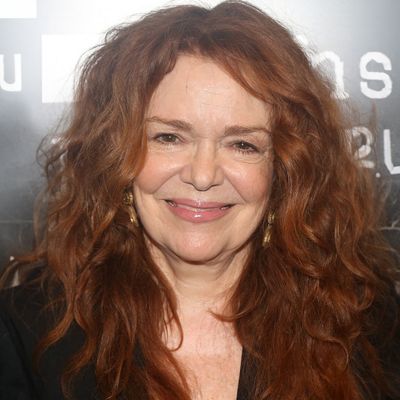
The actor ("Dana H."), now starring in "Becky Nurse of Salem," on making a career off Broadway and her search for un-self-consciousness... Read More
From the show: Stagecraft with Gordon Cox
Guests
About
The actor ("Dana H."), now starring in "Becky Nurse of Salem," on making a career off Broadway and her search for un-self-consciousness.
Transcript
This transcript was automatically generated and might contain errors.
[0:06] Gordon Cox: Welcome to Stagecraft, Variety's Theater Podcast, bringing you backstage and behind the scenes with stars, creators, and industry leaders on Broadway and beyond.
[0:16] Gordon Cox: I'm Gordon Cox. On this episode of Stagecraft, I'm talking to the actor Deirdre O'Connell. A lot of theatergoers, especially those who aren't in New York, might not have heard of O'Connell and her work before she won the 2022 Tony Award for Best Actress for her work in Lucas Hnath's play, Dana H. But for regular off-Broadway theatergoers, O'Connell has been a favorite for some 40 years, known for performances that feel effortlessly alive, idiosyncratic, and authentic, and often emotionally devastating. She got her equity card in a Sam Shepard play, The Unseen Hand, at the venerable downtown experimental theater institution La Mama in 1982, and has seemingly worked non-stop ever since, mostly off-Broadway, in shows like Annie Baker's Circle Mirror Transformation and Lisa Kron's In the Wake.
Dana H., the play that won her a Tony, was only her third Broadway credit. In a year that has already seen her win that Tony and star off-Broadway in Will Arbury's play Corsicana, this winter, she's back on stage again in Sarah Ruhl's new comedy, Becky Nurse of Salem. Coming to the end of her very busy 2022, O'Connell is in the virtual studio with me to talk character, process, and how winning the Tony Award didn't change her life, and why she's more than okay with that. Hi Dee Dee, thanks for joining me.
[1:33] Deirdre O'Connell: Hi Gordon, thank you for having me.
[1:33] Gordon Cox: So you're finishing off 2022 in Becky Nurse of Salem, and it comes after another stage role in Will Arbury's Corsicana, and of course, your Tony Award for Dana H. Were there any similarities or maybe concordances that you found in any of these roles or these plays that you were in over the last, you know, 12 to 16 months?
[1:56] Deirdre O'Connell: It's interesting. It's sort of, it's sort of no. The fact that the answer is no, it feels like three very extremely different experiences in terms of sort of restraint and release and the way that one feels exposed. It's been really interestingly a wide variety. It feels like as if I'm, I don't know, if I was a musician, one would have been like a marching band and the other one would have been like a quiet solo. So, I mean, the ladies all look similar, I have no idea.
[2:37] Gordon Cox: Right.
[2:43] Deirdre O'Connell: They have similar hairdos, yeah. Probably should work on that. You know, when I see pictures, I'm like, I look just like I looked in that. But if I don't think about what they look like, the experience, each experience has been wildly different than the others.
[2:59] Gordon Cox: Yeah.
[3:00] Gordon Cox: Do you find that there are similarities in the roles that you tend to be attracted to? Like can you characterize the kind of, or if not the kind of roles, then the kind of work that you were attracted to?
[3:11] Deirdre O'Connell: Well, I probably, I usually probably like to be challenged. So I like to do something that I can't quite see how it works, where there's a mystery there that I have to solve, or something I've never quite done before, or a curiosity about how this person's life is, or the task of doing the play itself. So there's that. They have that in common. I have to say, with Becky, you know, the idea that Becky was going to be something that I had never done before was something I let go of very fast. Like she's wearing clothes like I've played many characters who wear hoodies and if their hair up in a thing, it was like Becky, I know how Becky looks like. She wears a hoodie. I have a lot of them left over from a lot of plays.
We could choose some of those. So it was like there was a way that in some ways I felt like there's a lot of parts I've played that were getting me ready to do this part. Like there's a lot of plays of Lucy Thurber's. She's somebody that I've been sort of like moving toward for a long time.
[4:28] Gordon Cox: This is Sarah Ruhl's play, Becky.
[4:30] Deirdre O'Connell: Yeah, Sarah Ruhl's play, Becky. So what specifically, as you were moving toward it, what appealed to you when it finally arrived? What was it about the piece and the part that really spoke to you?
[4:28] Deirdre O'Connell: Well, I'm from a small city in Massachusetts. The person that it's about and the world that it's about is very familiar to me. I felt like Sarah had captured that lightning in a bottle, but in a very particular and odd and magical theatrical container. But I knew the world she was talking about really well because it's what I grew up in. The terrible things about those towns and the wonderful things about those towns were all kind of in this play. You know, what it's like to be that toughened and that defensive and yet that open-spirited at the same time, and to be still struggling to find love and to be still willing to be in that struggle in spite of being, you know, very shut down in a lot of ways.
There was just a lot of things about her that felt very, yeah, I was just very drawn to Becky and Becky's struggle with her grandkid and with her sorrow and with her rage. I felt like I've watched a lot of people kind of, and experienced it myself, where if you love somebody who's an addict and you lose them, you know, in one way or another, either they die or they just are lost to you, there's a lot of rage and there's a lot of shutdown that happens. I feel like part of what the play does, it's kind of like works as a pageant play for people who are going through that. I feel like it works as a journey about that kind of inability to empathize and then the enormous respect that Becky comes to have for her daughter and the sorrow she's able to feel because she respects her daughter as opposed to just feeling the feeling that one feels, which is rage and abandonment.
[7:10] Gordon Cox: If that makes sense.
[7:12] Deirdre O'Connell: Yeah, well, my next question was actually because Sarah Ruhl, the playwright, takes on a lot in the play. I was gonna ask you what your take on what the play is about. Like when people ask you, what's the play about?
[7:22] Deirdre O'Connell: I mean, it is about a lot of things. And that is one of the amazing things that Sarah does is she does not settle. She's like, I have all of these, I feel like there's a confluence, there's a magical confluence. And if I put all of these things in the brew, it will cook up to this really rich soup. Each person finds a different way in. For me, that was the most vivid part of the story in my life. So that was the journey with the granddaughter and the daughter. But the stuff about the Salem witch trials and the stuff about witchcraft in general and the sort of place of magic and witchcraft in our lives, where it might give you the courage to do something that you wouldn't be able to do on your own.
If you think that you can make a spell that's a love spell, you might have a little more courage about inviting the guy you're crazy about over to your house or going to visit him in his bar and putting the magic spell in there might give you that little burst of courage. I think she's writing about that too, in a kind of great way, that I've also experienced a little bit of.
[8:35] Deirdre O'Connell: The idea that there is a sort of at the center of the mystery of what happened that provoked the Salem witch trials. What is that event? What is the impenetrable veil that we cannot get through? I can't get through anyway myself that answers the question, what happened? What did it feel like to be those girls? What did it feel like to be those women? What was happening to them? We don't really know the answer to that question, and it makes me think about the impenetrable veil of history, of how we perceive history when so much of it is written with a very particular bent. For women, there is not a lot of writing to help us understand what it was like to be them, and we have to use our imaginations, and we also have to accept that we won't really know the answer to the question.
She's grappling with that, but she is also sort of finding in the core of that grappling the idea of people who are overwhelmed with the sheer difficulty of the life that they're living and the amount of sorrow that they're having to carry. You know, all the kids dying, the difficulty of starting that damn Salem township being part of why so much madness was able to sort of find its way into their lives, and how we're in a similar situation now in that same place, in that same exact spot. She just was really interested in how those two things resonate with each other, particularly for women and moms and people who've lost, who are enduring great loss and don't understand how they found themselves here.
[10:58] Deirdre O'Connell: So anyway. And all yeah so it's it's the sort of the veil and like what and the and the question of what occurred and how we answer that question and how Arthur Miller answered that question and how how particular that that the that answer is and yet how it's become like kind of the one that we accept. It's interesting.
[11:19] Gordon Cox: Yeah. You seem to gravitate toward new plays and new work as opposed to sort of classics and revivals at least that's the things that I've seen you in most often. Is that a conscious decision on your part I I guess it must be um I don't I I uh yeah I I do really really like writers and I like writing and I'm really curious about how each each piece of theater works and how each thing uh uh sort takes takes the takes the way that we experience watching a play to a different spot so I guess I and I love new writers so I think it is a conscious decision. Um I suppose if I'd been a person who had ended up getting to do a lot of Shakespeare maybe I would have had that life but I I'm I'm I'm good with this one.
I think I I think I do like the living writers. You know, every once in a while I'm like, I wish this writer wasn't living, because they're giving me all these rewrites. Like, what it wouldn't it be nice if this if this was Shakespeare or Chekhov. But um, but I think I think I actually love the process. I love the process of rehearsing, and I love the process of somebody grappling and figuring something out as we're going along. So yeah.
[12:41] Deirdre O'Connell: Do you have a sense of how you as an actor contribute to that process of them grappling with it? Like what what in what ways are you?
[12:49] Deirdre O'Connell: I'm pretty aggressive in my old age, I have to say. I mean, I think I used to I I think that my instincts about my gut instincts have gotten pretty honed in terms of going like, well, we're we're off the beam, we're not we're not making sense anymore, or we're asking too much of this moment, or we're or we're putting these these two scenes are canceling each other out, or my my gut about those kinds of things has gotten pretty good. So I'm pretty good. If you want to have a sounding board about that stuff, I'm pretty good to to uh raise my hand and say, hey, hey, hey, this hurts. Ouch, ouch, ouch. I think this doesn't work. But um, and in this process with Becky Nurse, um, Rebecca and Sarah and I talked a lot and talked a lot for the months before we actually started working, so that I had had a lot of thoughts and feelings about just how the how the play worked, and you know, some of those found their way into it.
I there are processes where I'm not where my I just kind of can um shut up and see and see how the thing unfolds. I'd be like with Corsicana, I did not do a lot of like, here's Miss Bossy Pants with a bunch of ideas. Sam Gold, who I love and who I'm friends with, and I don't really do that. Sam's Sam's Sam's in a different sort of uh he's more of a mysterious director to me. And I'm curious about what he's seeing, and I and I wait until he knows how to tell me what he's seeing. But so it's a it I'm I'm much more I sit back, I don't I don't b I don't blabbermouth with him as much. I blabbermouth a lot with these with these ladies. And it was fun to do both. Um I like both processes and they're very different from each other.
I don't feel like one's shutting me down and the other one's opening me up. I feel like I feel like uh yeah, they're just very different. They're just very different. They were just very curious about like what it felt like for me to be to be back in. Did this did this follow from this? Exactly. And so I was I was in there more talking.
[15:13] Gordon Cox: I'll have more with Deirdre O'Connell right after the break.
[15:25] Gordon Cox: And now here's more with the actor Deirdre O'Connell. You also work in film and TV pretty regularly. You had a role in the series Outer Range on Amazon Prime earlier this year.
[15:37] Deirdre O'Connell: I do, yes.
[15:38] Gordon Cox: But but stage appears to be your home, at least to those of us uh in the theater. Is that is that right? Would you say that?
[15:44] Deirdre O'Connell: I would say that. I feel like um partly it's you just you just uh learn learn to have a I don't know, a more instinctive uh instinctive touch with something that you get to do a lot and being in front of the camera and being on set it's you just don't log that many hours unless you do a bunch of series which I actually have but I there's a weird I there's I you know I think about this I think about why why is it that I am so much more attracted to stage and stage is hard so you know there's days when I get up as well why did I want to do this I am so scared I'm not a person who doesn't have stage fright I do you know like it's not like yay I get me out there I'm like filled with dread just like anybody so it's like why why why this and not that but it partly has to do with they think I'm like in a struggle with being an introverted person who's like forcing herself into being in relation to humans and then uh searching for a moment when you're not self-conscious searching for a moment when like the task is so big the the feelings that you're working with are so big the the thing is so fine that you that you find that moment where you're not self-conscious and I think that that's my struggle in search and I rarely can feel that in front of a camera.
[17:17] Deirdre O'Connell: I feel like the camera is just kind of like eating the moments and that that it's also it's also that as an actor in the theater you're more in in control of the making of the piece of art. You know, like ultimately the rhythm of it, the the way the story gets told is down to you you. You have to, you of course you collaborate with your collaborators to figure out what those rules are gonna be and how to get that tone. You you discuss it endlessly and tr really try to find it. But once you've found it, then it's down to you to do it every day. And that doesn't happen with m with film because you're you're just you're just one of the cogs in the wheel of it. So it's rare that I've felt that feeling of release, you know, that that weird, joyful release in a on a movie set.
[18:12] Gordon Cox: And how have you thought about uh Broadway over the course of your career? It can be a surprise to some people, you know, who've seen you on stage for years that oh, Dana H was only your third time on Broadway, but I've seen you in all these shows, you know, as you you know, if you're not really thinking about it. What did was it ever a location that was particularly meaningful to you and a thing you wanted to get to or wanted to do more of or didn't care about? What was your what was your relationship to it?
[18:37] Deirdre O'Connell: I think I I I don't think I cared about it that much. I you know, I've always been scared of those uh contracts that say that you'll do something for a year or two. And a lot of those Broadway contracts say that. So the times when I've when I've been like, you know, I should audition to be uh in Wicked or I should audition to be in and I would look at the real situation and I'd be like, oh, they will require you to sign a piece of paper that says you're gonna be there for a year, that and I would just balk. So it was partly that. Um, it's partly being not not a singer. So if I if I'd been a singer, probably it would have been more uh something that seemed like, oh, this that would be a blast to like, you know, to sing some songs on Broadway.
But there is a there just aren't that many straight plays that go to Broadway, and so I'm I'm uh you know, straight play actor. Yeah, yeah. But I have thought about like what if I was a singer, wouldn't that be fun? Yeah. And then I so it's not really a prejudice against it at all. It just has to do with scared of those long contracts and there not being a huge number of opportunities, but that didn't really bother me that much. I wasn't like, oh my god, I'm getting ripped off, I wanna be on Broadway. I didn't feel that way about it. Yeah. I was scared of those big houses too. I'm less scared of them now. But I was scared of those big houses. I feel like there's something about when your body is so small in the person's the people's eyes, you know, like when they're sitting so far away, it's very odd.
It's like uh I I I do like a smaller room in general. But then when we were working on Dana H uh in the Lyceum, I realized that those rooms are beautifully made, you know. Most of them are made so that the focus is very, very precise, and not that many people, especially for day and age, sat that far away. But there was the option of sitting very far away and having me be like a tiny dot, and that felt crazy.
[20:41] Gordon Cox: Right. N now that you have been living as Tony Award winner, Deirdre O'Connell for the uh O'Connell, excuse me, for the last um six months more. Um, do you have a sense of what that has have has that shifted anything for you? Has it brought opportunities or uh a feeling about what's happening?
[21:02] Deirdre O'Connell: I've not done no, it hasn't. Isn't that weird? Well, I mean I don't it's fine with me. I'm very I'm very happy doing this. And and this, I knew I was gonna do this before that happened so i uh i feel like um this is exactly what i would have wanted to have happen this if this had happened right after i got the tony i would have been like i got to do becky nurse of salem because of the tony but because i technically know that's not true because i got the offer you know a month before so i feel like i i've landed exactly where i would have wanted to this play doing this play is like being in a crazy dream sequence i couldn't believe it was there when i first read it i couldn't believe Sarah had written this beautiful beautiful thing and that I was gonna get to do it so I feel like yeah I'm exactly where I want to be but in terms of there being like people calling me up and saying will you come and do this and will you come and do that I haven't I am not experiencing that it may be you know just the age I am is just not gonna be quite like the magical the magic bullet but I I'm right now I'm fine I don't I don't I'm not like going like I'm not sad about that.
[22:19] Deirdre O'Connell: Yeah, did winning the Tony influence how you felt personally about your career or how are you like did it have any sort of personal effect on you? I guess it must, I guess it must. I mean, it's so hard to, I have, it's not like I think about it differently, but I might, maybe it helps you with confidence or something. I'm not sure, but it also, you know, it does both things. It makes you feel more confident, but it also makes you feel more exposed. Like, you know, maybe I, I'm more comfortable being a dark horse in some ways. I don't know. It's like, um, but that part hasn't been like when I first got it and we were doing Corsicana, which I don't know if you saw, but it was very quiet. Very quiet.
Quiet, very, very like contained play. And my first entrance was like I was just supposed to go stand by the wall. And I just go stand quietly by the wall and do nothing for I don't know, a full minute while the audience was just supposed to sit there and look at us do nothing for a full minute. Well, when I came in and there was entrance applause for the first time after the Tony, it's like, no, no, no, no, no, no, this isn't gonna work. I'm in a piece of art that does not want entrance applause. So, and then after a couple days it stopped, but I was like, is this what's gonna happen? And then there was a vibe in the audience where like I would open my mouth and say something and they would laugh and it wasn't funny.
I was kind of like, this is crazy. Is this what it's gonna be like now? And it went away like within three days. Right. But they were all like, she won a Tony, she must be funny. It was very odd, because that wasn't the way that play worked. But the entrance applause cracked me up because it really was like we were doing this very quiet, very odd, beautiful piece of experimental theater and with Becky Nurse, you know, that works. It's okay. It's okay that they're like, yay, and then I'm like, okay, but I'm not her, I'm Becky Nurse now.
[24:27] Deirdre O'Connell: Um, you got your start in experimental theater, um, which it feels like to thinking about it, Dana H kind of harkens back to in particular because Dana H this is a really sort of experimental kind of technical challenge that I feel like you could see it La Mama if you didn't see it. When uh when Lucas was trying to explain to me what how it was gonna be, and then my memory of watching um Rumstick Road at the Wooster Group was, I mean, I saw it like five times and I loved it so much. And there was one moment in it when it is Rumsy Crown that um Ron Voder, who was one of the great actors of our time, who is no longer with us, um lip-synced. He lip-synced with a conversation with Spaulding's mother, no, it was a conversation with Spaulding, and he and Ron was playing it Spaulding's uh mom's psychiatrist, and uh Spaulding had recorded the conversation.
Ha ha and I was playing it, and I couldn't believe what I was seeing, and it was maybe a three-minute scene, and I just couldn't understand how they had made it, and I couldn't believe what Ron was doing. It was like my chair fell from under me. I felt like uh whooshed into another world of what acting could be, and I didn't understand the first time I saw it like what I was seeing, and then gradually I was like, oh, it must be that he's lip syncing, and then gradually, you know, because I saw it a bunch of times. And I said to Lucas, I know what you're talking about, but the only time I've seen it was this one moment, and Lucas said, I know exactly the moment you're talking about. That's exactly what I'm talking about.
He's much younger, so he never saw it in person. Yeah. But he said, I own the film of it, and I've watched that moment over and over again. That's what I'm talking about. So that was completely how we connected. Because I was, yeah, I know what it is.
[26:34] Deirdre O'Connell: And then I was then it was his meat, you know, then I was like, okay, well I guess I'm gonna invest the next four years of my life in learning how to do this. Yeah. What do you have a sense of how your grounding in more experimental theater, particularly earlier in your career, has sort of uh served you as you moved into what we would consider more traditional theater? Um, well maybe the what we consider to be more traditional theater is also shifted a lot, you know, in the direction of, for example, Dana H, you know, like and even Sarah's writing, there's there's so there's so many um real, real uh delicate questions about tone with this piece that I feel like uh it would it I'm not you can't take anything for granted about what a writer the tone that a writer is looking for you know less and less it's not like we all are writing the same kind of thing or we're all I mean they're the right writing that we're all there are there are I think I feel like the experimental theater is kind of bled into the into the straight theater or whatever you want to call it the more commercial theater at the same time as I've sort of arri uh gotten to do it. So it's funny it's not like um yeah it's not like I feel like there's a huge a huge difference.
[28:03] Deirdre O'Connell: And what did you learn in particular from the uh kind of huge technical challenge of Dana H and marrying that with like kind of acting challenge of it? Like how is there was there a particular insight that uh really struck you from working that way? It was it in order to be able to do it, I had to surrender so completely to this moment to moment of it. And it's a thing that you think of as an actor and you think you're gonna do that, you think you're doing that and you wanna be doing that, but the technical requirements of being an actor on stage, breathing your own breath and using your own voice and working moment to moment and being with the audience and letting them respond, it's very different thing than being in that in the tightness that I it must be like being a concert pianist.
You don't pause because the audience uh is applauding in the middle of a piece. The piece has its own requirements. So I had never done anything or or maybe it's like being a dancer too, but that I had never done anything where the exact counts of it, the exact timing of it was not gonna be my breath, it was somebody else's breath, and I had to merge with it and therefore I had to be completely able to not have a moment where I had doubt, you know? Like if I if I went off for a second, I didn't have that other second to go like, oh man, I went off, what a drag. I had to just be like, forgive yourself and keep going. There was no time for that other voice that where where you start to get thrown. And that technical task forced me to do that kind of surrendering, which I think I've always wanted to be able to do and never, you know, you can't you can't fake a problem like that.
[30:03] Deirdre O'Connell: What do you know now uh that you wish you had known when you were first starting out? Oh boy, I don't know. Well, um that there would be parts that there would keep being parts. I think when I started out, um it seemed like there was gonna be a there it was a short, sh much shorter shelf life for a woman to be able to have great things to do. And that has changed during the time that I've been at acting. I think partly and I don't really know why. I think partly because more and more women's voices are in the in the world, and the more and more women are directing, more and more women are writing, and so the stories of women who are not young, they're just more in our, you know, they're what we want to see, they're what we're writing. So I didn't have to sort of cram it all in before I was whatever, 45, which I thought I would. So I would like to be able to go back and say to her, you're gonna be okay, you're gonna be able to keep doing stuff.
[31:10] Gordon Cox: Uh well, as this past year has uh indicated, you work all the time. What's next for you after uh Becky?
[31:15] Deirdre O'Connell: I don't know. Oh really? I'm going to rest. Yeah. I actually have no idea. It's not I'm not kidding. I'm not being like uh being like a cagey here. I actually have no idea. And I'm sort of I'm sort of okay with that.
[31:29] Gordon Cox: Yeah.
[31:30] Deirdre O'Connell: I feel like I'm I'm gonna rest and breathe for a second.
[31:34] Gordon Cox: Yeah. Well, we can't wait to see you on stage in the next thing, whenever it comes around. And of course, uh in Becky Nurse, which is running through the end of the year.
[31:41] Deirdre O'Connell: Um, thanks so much, G. It was great to talk to you.
[31:44] Gordon Cox: It was great to talk to you too.
[31:49] Gordon Cox: That was Deirdre O'Connell from Becky Nurse of Salem, now playing at Lincoln Center Theater. If you like what you're hearing on this and other episodes of Stagecraft, I'd really appreciate it if you took the time to rate and review us wherever you listen to podcasts.
[32:03] Gordon Cox: It really helps us grow our audience of folks who love theater as much as you and I do. Or tell a friend about Stagecraft, or give us a shout out on social media. Find past episodes and subscribe at all the pod purveyors, including Spotify, Apple Podcasts, and on the Broadway Podcast Network, which is a great place to find more theater for your ears. Until next episode, find me on Twitter at G Cox Variety. Thanks for listening and see you at the theater.
© Broadway Podcast Network, All Rights Reserved