

Actors Phillipa Soo and Jenn Colella on singing American history, filming musicals and acting in the moment... Read More
From the show: Stagecraft with Gordon Cox
Guests
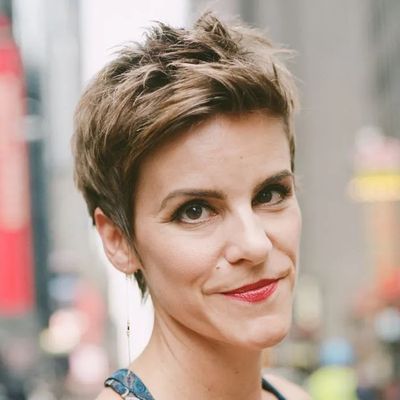
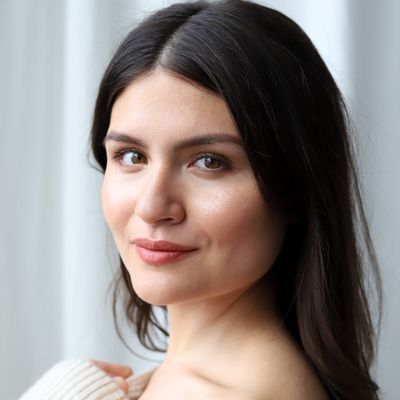
Featured Shows
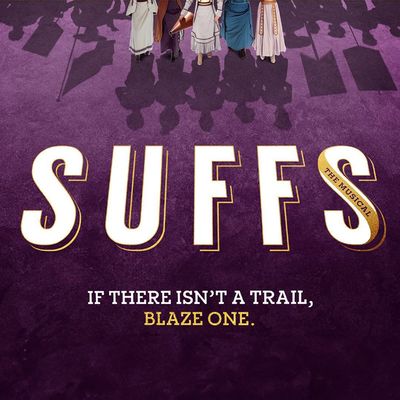
About
Actors Phillipa Soo and Jenn Colella on singing American history, filming musicals and acting in the moment.
Transcript
This transcript was automatically generated and might contain errors.
[0:00] Gordon Cox: Welcome to Stagecraft, Variety's theatre podcast, bringing you backstage and behind the scenes with the stars, creators, and industry leaders on Broadway and beyond. I'm your host, Gordon Cox.
[0:19] Gordon Cox: On this episode of Stagecraft, I'm talking to the actors Phillipa Soo and Jenn Colella. Soo, whose TV work includes Dopesick and the upcoming Shining Girls, created the role of Eliza in Hamilton, and Colella created the role of Captain Beverly Bass in Come From Away, two performances that we all had a chance to see or see again during the pandemic, with Soo in Hamilton streaming on Disney+, and Colella in Come From Away on Apple TV+. Now, the two are appearing together in a new off-Broadway musical at the Public Theatre called ‘Suffs’. Written by and starring Shaina Taub, ‘Suffs’ follows the fight for women's suffrage in the early 20th century, and the actors play two important suffragists. Soo stars as the labor lawyer and bon vivant, Inez Milholland, and Colella plays Carrie Chapman Catt, a veteran leader of the movement. These two co-stars are both in the virtual studio with me to talk acting history, streaming musicals, and on-stage mishaps. Hey, Phillipa and Jen, thanks for joining me.
[1:22] Phillipa Soo: Absolutely, my pleasure. Thank you for having us with you.
[1:25] Jenn Colella: Yeah. So, for listeners who don't know much about ‘Suffs’ other than that it's about the suffragist movement, how do you describe what the show is and what your role is in it? Philippa, let's start with you.
[1:36] Phillipa Soo: Sure. Well, I play a suffragist named Inez Milholland, who is probably best known for leading the suffrage parade that happened in 1913. It was the first women's march and the first march in Washington. And she sat on a white horse named Gray Dawn and led the march down Pennsylvania Avenue. And I think to sum up the story, it's essentially at its core the story of the suffragist movement and getting the 19th Amendment passed through the eyes of Alice Paul and her comrades and her fellow suffragists that are also fighting for the vote at the same time.
[2:28] Jenn Colella: Yeah. And that was one thing that I learned in the show the other night is that no one had marched, there had been no protest marches in Washington before that one. Isn't that amazing? That was a surprise to me.
[2:35] Phillipa Soo: Yeah, it seems late for that to have happened. But Jen, tell us about your role.
[2:40] Jenn Colella: I play Carrie Chapman Catt. She was the leader of the National American Woman Suffrage Association, NASA, for over 30 years. She was Susan B. Anthony's protege and successor. And she represents the old guard in our particular production, meaning her way of working towards getting the 19th Amendment passed is through gentility and grace and trying to approach the men like suffrage isn't anything to be afraid of. And then Alice Paul and her team comes in and they kind of shake up the system that my character has had in place for many, many decades.
[3:22] Gordon Cox: And how and when did each of you get involved in the project?
[3:26] Jenn Colella: I've been involved for six years. I was at the very first reading of it.
[3:30] Phillipa Soo: Well, playing the same role.
[3:31] Jenn Colella: Yes.
[3:32] Phillipa Soo: Yeah. Yeah. And what about you, Philippa?
[3:34] Phillipa Soo: I got involved a little bit later. I was, maybe, gosh, I remember it was like a reading of Act One. I think we hadn't quite gotten to Act Two yet. And that was, I want to say, in 2018.
[3:47] Jenn Colella: And didn't you play Alice Paul in that one?
[3:50] Phillipa Soo: Yes, I did. I started out playing Alice Paul and then eventually started playing Inez Milholland. And yeah, I mean, it's been quite a journey seeing it, you know, for you, Jen, seeing it from the very, very beginning. But, you know, I just feel so lucky that I get to be in rooms where I get to see these beautiful ideas, you know, start from a seed and germinate into a whole entire living, thriving organism. It's just really thrilling.
[4:18] Gordon Cox: Can you tell us a little bit about what that experience has been like seeing, how has the story shifted? Because it is such a sort of big, sprawling story. There are a lot of characters. How has the show focused as the years have gone on?
[4:33] Jenn Colella: It's changed a lot. It's changing. It changed just a second ago. We're in rehearsals right now and in preview. So changes have been constant throughout the entire process. I'd say the biggest change has come with the racial reckoning that the entire world is having right now and Shaina going back and making sure that diverse voices are more prominent within the show. I think those are the major changes that have happened and they're good ones.
[5:02] Phillipa Soo: Yeah. Yeah. Would you agree, Philippa? Is that what you've...
[5:05] Phillipa Soo: Yeah. And just to, I guess, the only thing I would add to that. A, how exciting it is to be in a room where we get to come together and tackle those issues in our storytelling, but also at the same time, the public theater, this particular rehearsal room has done such a beautiful job at trying to embrace the cultural transformation that is happening in our world. And we're holding it with multiple things at the same time, holding multiple things together. One is our ideals and what we hope that this process and this story and this world can be. And also at the same time, our own internalized biases that we carry with us, our privileges, and how do we progress? How do we tell a story? How do we come together and seek the change that we want to see in the world and acknowledge all of those things coming into play at the same time?
[6:07] Gordon Cox: And you just recently started preview performances, pretty recently. What have you learned from the audience reaction to the show?
[6:17] Jenn Colella: So many things. Oh my gosh. Everything. Everything. On a base level, it's just, people are so thrilled to be in a room again, seeing theater. It's just really powerful. And there's still some getting used to, I don't know how you feel, Jen, but I look out and I expect to see all these faces and I'm seeing a lot of masks, but I am seeing a lot of bright, engaged eyes behind those masks. And you can feel it. You can feel the love in the room. You can feel the energy coming back to you. And you just learn a lot in this part of the process where you're working on something that's maybe changed recently. You're trying to see how an acting moment is going to land, and it's nice to have that feedback.
[7:06] Phillipa Soo: Yeah. It makes a big difference, absolutely, to hear laughter, to hear sighs, to hear applause in places where we weren't expecting it. And then it's also quite beautiful and humbling and very valuable when we're like, and they're like, yeah, sure. And you're like, oh, yes. Oh, yeah. We thought it was amazing, but maybe... I'm going to tamp that down a bit. Yes. I'm going to take a look at that.
[7:26] Jenn Colella: Have there been any onstage mishaps yet as you're putting the show together with all the tech and everything?
[7:31] Phillipa Soo: You should ask, have there not been any mishaps? Yes. I mean, here's the beauty of making a musical. There's so many moving parts. And I say that figuratively and literally. The stage is moving underneath us sometimes. And we're wearing skirts. We're wearing heels. We're wearing corsets. There's props. There's lights. It's just so many elements that are coming together all at once. And that's honestly what is so thrilling is that everybody's got to be on their A game in order to make it work. So I have to acknowledge our backstage crew. We just have this amazing stage management team and backstage crew that are just working just as hard, if not harder than we are, to make all of these things happen. And then every once in a while, you might trip on a step or there might be something missing that you need that you have to carry on stage with you. But that's what the preview process is for, is to learn all of that stuff.
[8:38] Jenn Colella: I think it's actually interesting because I didn't realize this until getting into this process, but a lot of people actually don't understand what previews are. And I just find it fascinating because I think there's this expectation that we're open. Once the show's open and we're selling tickets, it's done. But there's a hole for us. I mean, sometimes it's two weeks, but sometimes for us, it's a month of previews before we open, before the show freezes, where we're changing things constantly. We're re-teching things. And the show that people saw last night is not the show that they're seeing tonight, and that's really thrilling. It's also quite vulnerable to have a world premiere musical on its feet for the very first time in New York City.
I understand why you would take a show out of town. To be out of town, you're not necessarily going to have, like Lin-Manuel came the other night, Leonardo DiCaprio came to our fourth preview. All of these people are descending on our rehearsal process, in essence, and so it's quite vulnerable and thrilling.
[9:46] Phillipa Soo: You're right, Pippa. It really is.
[9:52] Gordon Cox: With this project that you have both been involved in for several years now, what do you feel is particularly resonant about the show right now when it's finally landing?
[9:59] Jenn Colella: I think what's particularly resonant is that it's exciting to hear about these women we didn't hear about and to know, wow, women have been kicking ass for a very long time, and to also know there's still work to be done, that we haven't quite gained.
[10:44] Gordon Cox: Welcome to Stagecraft. Today, we're diving into the world of "Suffs," a new musical that has been described as more than just "Hamilton."
[11:14] Phillipa Soo: It's really exciting to explore how "Suffs" brings a different perspective to American history through its music and storytelling.
[11:44] Jenn Colella: Absolutely! The way it intertwines personal stories with historical events makes it unique and impactful.
[12:04] Gordon Cox: Can you both talk about the process of filming musicals? How does that differ from performing live on stage?
[12:24] Phillipa Soo: Filming a musical definitely has its own set of challenges. You have to think about the camera angles and how to convey emotion in a different way.
[12:44] Jenn Colella: Right, and there's something about the immediacy of live performance that you have to adapt to when you're on camera.
[13:04] Gordon Cox: Do you find that you have to hold back a bit when you're filming, or do you try to bring the same energy as you would on stage?
[13:24] Phillipa Soo: I think it depends on the scene. Some moments call for that raw energy, while others require a more intimate approach.
[13:44] Jenn Colella: Exactly! It's about finding that balance and understanding the medium you're working in.
[14:04] Gordon Cox: What do you think audiences take away from "Suffs" that they might not get from other musicals?
[14:24] Phillipa Soo: I believe "Suffs" offers a fresh lens on history, showcasing the voices of women who have often been overlooked.
[14:44] Jenn Colella: And it challenges the audience to think critically about the narratives we tell and who gets to tell them.
[15:04] Gordon Cox: That's a powerful message. How do you both prepare for such emotionally charged performances?
[15:24] Phillipa Soo: For me, it’s about connecting with the character's journey and finding personal parallels in my own life.
[15:44] Jenn Colella: I agree. It's essential to be present in the moment and allow yourself to feel everything that comes with the role.
[16:04] Gordon Cox: Do you have any specific rituals or routines before stepping on stage or in front of the camera?
[16:24] Phillipa Soo: I like to warm up my voice and do some physical stretches to get into the right headspace.
[16:34] Jenn Colella: I usually take a moment to breathe and visualize the performance, focusing on the story we’re about to tell.
[16:44] Gordon Cox: That sounds like a great way to center yourselves.
[16:54] Phillipa Soo: It really helps to ground you, especially when you're about to share such important stories.
[17:04] Jenn Colella: And it’s also about connecting with your fellow cast members. That energy is so vital.
[17:14] Gordon Cox: Speaking of connection, how do you both feel about the collaborative process in creating a new musical?
[17:24] Phillipa Soo: Collaboration is key! It’s amazing to see how everyone’s ideas come together to shape the final product.
[17:34] Jenn Colella: Yes, and it’s a constant learning experience. Each person brings their own perspective, which enriches the work.
[17:44] Gordon Cox: What has been the most rewarding part of working on "Suffs" for each of you?
[17:54] Phillipa Soo: For me, it’s been the opportunity to portray a character that resonates with so many women today.
[18:04] Jenn Colella: And for me, it’s about being part of a story that feels so relevant and necessary in today’s world.
[18:14] Gordon Cox: That’s wonderful to hear. Thank you both for sharing your insights on "Suffs" and the creative process.
[18:24] Phillipa Soo: Thank you for having us!
[18:34] Jenn Colella: Yes, it’s been a pleasure!
[18:44] Gordon Cox: And to our listeners, be sure to check out "Suffs" and experience this incredible musical for yourselves.
[18:54] Phillipa Soo: You won’t want to miss it!
[19:04] Jenn Colella: Absolutely!
[19:14] Gordon Cox: Until next time, this is Stagecraft with Gordon Cox.
[19:24] Phillipa Soo: Bye!
[19:34] Jenn Colella: Bye!
[19:44] Gordon Cox: Thanks for listening!
[19:54] ♪ Musical number: "Suffs" — performed by the cast ♪
[20:04] Gordon Cox: We'll see you next week!
[20:30] Phillipa Soo: Because, you know, I did ‘Hermilton’ on Broadway for a year and then with some change, you know, like six months in public. And it felt so freeing to be able to know your show and get to play within it. And, you know, all the technical elements and the cameras, you know, coming in a little bit closer, like that was just an opportunity to find something new after having done the show a lot, many, many times to be able to actually go back and, you know, dig deeper or go a little bit tighter and be a little bit more subdued in certain moments just to play. And I think it's just fun and refreshing as an artist to get to do something like that. And it's just so rare. I mean, you know, there's only a couple of shows that have done it up to this point.
And it's, you know, it's just it's beautiful. And then there's a thing at the end of it. There's a product. There's something that you can watch to, you know, at least for us to look back and say, oh, my gosh, remember that? Like, I never saw that moment on stage. I'm so glad that it was caught on camera because I was backstage, you know, drinking water and drinking some tea. So it's exciting to see the work of the other people you're working with and really just, you know, get to celebrate it.
[21:52] Jenn Colella: Yeah, I agree. That was the most thrilling part for me of coming back to Come From Away, making friends with the camera, you know, that it's like a little alien, another scene partner in my face. I was like, I have to make friends with you and pretend like you're not here right on. And yes, and find new things. Trust that if I raised an eyebrow, I didn't have to worry about the balcony scene, that I could have more internalized thoughts and emotions and actions within the character. That was super fun. And then, yes, Pippa seeing it, having this thing after that we can see. I mean, we're on stage pretty much the whole time for Come From Away, but we're usually seated behind whatever scene is going on. So I've been listening to my colleagues say these things for the past five years that had never seen their faces. I was so moved by what they were doing and how good they are in the show that that was also an added bonus to the whole experience.
[22:51] Gordon Cox: Yeah. What for each of you do you consider the particularly sort of formative musicals for you growing up or plays that kind of inspired you to, you know, develop a passion for theater and do it, choose to pursue it?
[23:01] Jenn Colella: You want me to go, Pippa?
[23:03] Phillipa Soo: Yes.
[23:04] Jenn Colella: Okay. Well, Barbara Streisand was the first like voice that I heard with consistency in my house. And I can remember being very, very small, held by my mom. She was dancing and singing along with Barbara. And I connected in that moment joy to the vibration of my mother's voice matching with Barbara Streisand's voice. Something in me in that moment was like, wow, there is joy in Barbara. So Barbara was definitely a gateway into following something that opened up my heart. And I lived in South Carolina. I was born in Charleston and grew up in a small town named Somerville just outside of Charleston. There wasn't a lot of theater. So I didn't get to see a huge production until high school. I went to go see Phantom of the Opera. And that for me, seeing how big the set was, the costumes, the grandeur of it all matched that tiny vibration of like what Barbara had kindled into a full on passion.
[24:10] Phillipa Soo: Babs, can't go wrong with Babs. You know what I mean? Just the best. I think my, I mean, well, yeah, I think my first exposure to musical storytelling was probably the Mary Martin Peter Pan. And it was like shot live. I'm pretty sure that that was live. And then also Mary Poppins, Julie Andrews, you know, a voice for the ages. And ultimately, I think with both, it really spurred this part of my imagination that could come out and be for other people. You know, I was a kid that was like always sitting in my room and, you know, all my toys and objects were like people and characters. And, you know, they all had names and stories. And eventually that play, you know, turned into playing those games with my friends.
But then eventually after seeing something like Mary Poppins, after seeing Mary Martin's Peter Pan, you know, it was like, oh, but this can also be shared for other people because I'm enjoying this. So maybe there's a part of me that also wants to create things like this so other people can watch it. And, you know, I got into dance, I got into some improv classes, some singing lessons, and that's just where I felt the most joyful. And so I just kept, you know, following that.
[25:43] Jenn Colella: And what do you consider sort of your most formative moments as an artist?
[25:47] Phillipa Soo: The hard moments. I feel like whenever I've had any sort of epiphany or breakthrough in what I'm doing, it usually comes after a moment where I feel like I'm in the dark. And so, you know, I learned, I went to drama school and I learned there, you know, how to deal with failures, how to deal with feeling like you're not quite getting there or you're doubtful. And really taking it as a sign that there's something to be learned there. There's an opportunity there to dig deeper, to not shy away from it and embrace it. I did stand up in Los Angeles after my graduate school stint and I learned a lot because I could fail on stage, and I did miserably, and I had no one to blame. It was my joke, it was my delivery, it was my timing.
And I realized that I could fail miserably on stage and then go on stage and then get them back in the next breath. And the world kept right on spinning. And so I really try to remember that when I am feeling insecure, when something does go wrong, to let it go, to trust that I can get them back, that I can get me back and keep moving forward. Stand up really, really helped me in that regard.
[27:19] Gordon Cox: Yeah. So you're both in Suffs for the run, however long it runs. And what's on your plate coming up after that? Do you know?
[27:23] Jenn Colella: I shot a TV show last summer for Apple TV called The Shining Girls, and that's actually coming out at the end of April. So I'm really excited for that. And I wrote a children's book. So hopefully, you know, that's a little more further off into the distant future, but I'm really excited for that.
[27:47] Gordon Cox: Can you tell us about it? What age range? What it's about?
[27:53] Jenn Colella: Um, yeah, I mean, well, it's, it's definitely, I would say closer to like a three to eight age range. It's for younger kids, you know, definitely like a hardcover picture book. But I wrote it with my sister-in-law, Maris Pasquale-Doran. And it was, you know, one of those things that we always talked about. And then the pandemic happened, and life happened. And, you know, we were both like, let's do it. Let's not, let's not wait, let's just do it. And it's the first time I've ever written anything. And it's, it's really, essentially, its focus is around the story of this little girl who's basically my avatar. Her name's Piper. And she loves music, and she loves to sing. And so it sort of follows her journey in, in, you know, understanding her love for singing and her stage fright, and dealing with that. And it's, it's very sweet.
[28:49] Gordon Cox: Did you work with an artist?
[28:53] Gordon Cox: Did you work with an artist on that as well? Was your sister-in-law the artist?
[28:57] Jenn Colella: Yes, we're working with an illustrator. Yes. Her name is Chin Leng. And she's a Canadian artist. And she's just great, and extremely just imaginative, and beautiful, and vibrant. We love, we love her. So we're really excited.
[29:13] Gordon Cox: Do you know when we should look out for that yet?
[29:16] Jenn Colella: Not sure. Not, there's nothing official yet. But, but yes, we are working on it. And, yeah, we're really excited.
[29:23] Gordon Cox: Great.
[29:24] Gordon Cox: I'm excited for that. That's awesome. That's so cool.
[29:28] Jenn Colella: Thanks.
[29:30] Jenn Colella: I do have some things in the pipeline, but I can't speak of them yet. So stay tuned.
[29:35] Gordon Cox: Stage, stage or beyond?
[29:38] Jenn Colella: It's, it's on stage.
[29:39] Gordon Cox: Great. All right. Well, we will look out for that. But first, we will see you both in Suffs. Thank you so much for joining me. It was great to speak with you.
[29:46] Phillipa Soo: Thank you, Gordon. Appreciate you.
[29:48] Jenn Colella: Thank you.
[29:49] Gordon Cox: That was Philippa Soo and Jenn Colella, now appearing in Suffs at the Public Theater. If you like what you're hearing on this and other episodes of StageCraft, I'd really appreciate it if you took the time to rate and review us wherever you listen to podcasts. It really helps us grow our audience of folks who love theater as much as you and I do. Or tell a friend about StageCraft, or give us a shout out on social media. Find past episodes and subscribe to our YouTube channel. Find past episodes and subscribe on all the pod places, including Spotify, Apple Podcasts, and on the Broadway Podcast Network, which is a great place to find more theater for your ears. I'll be back in two weeks with another new episode. Until then, find me on Twitter at G Cox Variety. Thanks for listening, and see you at the theater.
© Broadway Podcast Network, All Rights Reserved