

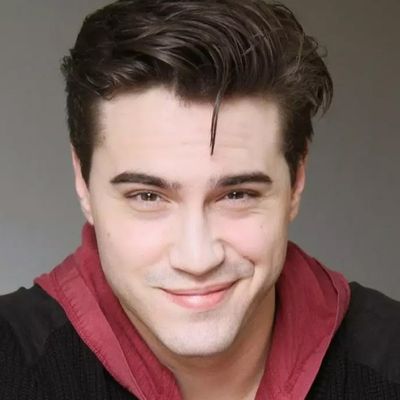
Ryan McCartan, Curtain Up! Ryan and Eli talk about: Liv and Maddie. Heathers The Musical. Wicked. Broadway Debut. Frozen. Rocky Horror Picture Show. Audiences seeing performances and not personal life. Growth through pandemic. Industry contracts... Read More
From the show: Take A Bow
Guests
Featured Shows
About
Ryan McCartan, Curtain Up!
Ryan and Eli talk about:
- Liv and Maddie
- Heathers The Musical
- Wicked
- Broadway Debut
- Frozen
- Rocky Horror Picture Show
- Audiences seeing performances and not personal life
- Growth through pandemic
- Industry contracts
- + a ton more
Connect with Ryan McCartan on Instagram: @mccarya
Connect with Take A Bow on Instagram: @takeabowpodcast
Connect with host, Eli Tokash on Instagram: @tokash_eli
Produced by the Broadway Podcast Network
Edited by Tessie Tokash (@tessietokash)
Transcript
This transcript was automatically generated and might contain errors.
[0:00] Eli Tokash: Hello everyone and welcome to episode 102 of Take A Bow. I'm your host Eli Tokash and we have an exciting episode for you all this week as always, but this time it's a little extra special because first of all we have a fantastic guest on this week's episode of the podcast. If you haven't, I guess, seen from the name or if you saw the photo or anything, if you haven't guessed I guess, we have Ryan McCartan on the show with us this week. Super exciting episode, great interview, a lot of great things discussed. We'll get into that a little bit later and we'll turn it over to him shortly, but it's also a special episode for me because the day that this release is actually my 19th birthday. So very exciting stuff. Episode 102 is my 19th birthday, May 5th, Cinco de Mayo baby. It's a holiday and you're tuning in to pregame with me.
[0:54] Eli Tokash: Anyways, as always, we're going to start this week's episode. I appreciate you all tuning in. We're going to start this week's episode with some Broadway news, as always, because there's been a lot of great news this week. Ariana DeBose will be kicking off our news section this week. Ariana DeBose is going to be hosting the 75th Annual Tony Awards, which they announced is going to be on June 12th. Very exciting. It's sooner than we think, which is just so exciting. And then the next time that I actually talk to you folks, we're actually already going to know the nominees. So I will be breaking down all of that fun stuff. I will be giving my predictions. Maybe not next week. I'll probably announce the nominees and just talk about them next week. And then I will kind of give predictions closer to the date just to make sure that I see as much as I can before the Tonys. I mean, needless to say, I'm just so excited and just cannot wait for this Tony season.
[2:05] Eli Tokash: I've talked a lot about Ariana DeBose on this podcast, especially this year and of late, because she's just been on a roll and she's just a superstar and she deserves all of the time and credit that everybody is giving her. And then, of course, the opportunity to host this. I mean, I talked about her hosting on SNL. We totally know that she can host and we totally know that she has all the skill sets. She's been in front of the camera. She is a theater gal, loves Broadway. I mean, she's a fan. She's an actress. She's done it all. And then, of course, she's won the Academy Awards this year. So congratulations to Ariana DeBose on doing this. I cannot wait. It's going to be June 12th. Please tune in. Check it out, CBS or Paramount Plus. It's going to be a fun night for sure.
[2:47] Eli Tokash: Some other news out of Broadway this week is that For Colored Girls on Broadway is going to be playing its final performance on Sunday, May 22nd. So originally it was scheduled to close three weeks later, but they actually had to push their closing up, which is so unfortunate. Fortunately enough, they had an opening before the Tony cutoff, so they will be in this season's Tony Awards. So we'll be seeing them in June, but it's not in a performance type of way, unfortunately. Everyone go see the show before May 22nd. Highly recommend it. I'm going to be seeing it before May 22nd. I've heard so many great things about it. And in our POTUS content that we got at the opening night of the red carpet, we talked to some of the cast members. We talked to POTUS cast members as their neighbors, just talking about it. So exciting stuff and more content to come through For Colored Girls on Take a Bow. So very exciting stuff. I cannot wait to see the show.
[4:01] Eli Tokash: And hopefully you all get to see it before May 22nd. I've heard nothing but great things, so let's go check it out. Let's all go together. Some exciting news. I know that was a little upsetting. This is very exciting news for me, particularly. Huge fan of Six. If you all listen to my episode with Brittany Mack, you all know that I'm a huge fan of Six. They announced that they will be releasing a cast album, a Broadway cast album that is, because they do have a cast album right now, but it is the London cast. And it is slightly different than what we listen to and see on Broadway. They're going to be releasing a Broadway cast recording. And interestingly enough, they will be doing the audio. They will be publishing the audio recording of the opening night as their cast album on Broadway. And that release is tomorrow, Friday, May 6th. So very exciting.
[5:00] Eli Tokash: This all came out of nowhere. The style that they're doing it, I love. I think that it's something that we should be seeing more of in the future. I think doing a live recording of a cast recording is just brilliant because people are doing it either way with like bootlegs and stuff like that, or just voice memos on the phone when they go see the show. And that's just like not what we want, but we do want the live aspect of it. So huge shout out to Six. It also helps with the production budget. I mean, you're not going to have to rent out a whole studio and you're not going to have to get studio space and pay the artists overtime and everything for coming into the studio to record this. So I think it's just brilliant, everything that they're doing here.
Six on Broadway, cast recording tomorrow, May 6th. So excited. Go check that out. It's going to be on all the platforms and everything. So very exciting stuff about that. I mean, Toby Marlowe and Lucy Moss just wrote an unbelievable score. So shout out to them. And I cannot wait to be blasting this in my house and in my shower.
[5:57] Eli Tokash: Okay, moving on. Oh, so a couple of weeks ago, I announced that Andre De Shields is going to be leaving Hadestown, which is just heartbreaking because first of all, I love Hadestown, but him in the show is just fantastic. He won a Tony Award for the show. But we now know we got some closure as to why he is leaving the show. It turns out that he, Wendell Pierce, Sharon D. Clark, and Chris Davis will be starring in Death of a Salesman, the revival that is coming to Broadway next season. So that's probably going to be in the fall, maybe early, early spring or late winter. I believe it's coming in the fall. Arthur Miller's Death of a Salesman. I think it's going to be great. This cast is incredible.
Very exciting to see it. Glad that Andre De Shields is not going to be taking off Broadway too long. I mean, he's getting up there in age. So people were like, oh, is this kind of like his little retirement kind of thing? And glad to see that it's not. I'm glad to see that we'll be able to see him back on the stage.
[7:22] Eli Tokash: So everyone, mark your calendars for that. Keep an eye out for all the news going on with Death of a Salesman. I think it's going to be extremely, extremely exciting. They had a successful West End run, and that's kind of sparked the revival to Broadway. So very exciting stuff. And I can't wait to see that one. And I'm glad that Andre De Shields is not staying off Broadway for too long. That's all the news I have for you folks this week. I know I'm going to keep this short because there's a lot to talk about with Ryan and all of that fun stuff. So I am going to do a Drama Dictionary Word of the Week because why not? It's my birthday and we haven't done it in a while. And I just love this segment.
So this week's Drama Dictionary Word of the Week is going to be call. And I know that's like kind of weird. It's like a phone call. Oh, cool. No, a call or a call time, it's sometimes referred to as, is a specific time that a rehearsal or a rehearsal is being taken place or the actors need to be at the theater or at the rehearsal space.
[8:08] Eli Tokash: It's kind of like the stage manager's announcement to bring all the actors to the stage to announce cues and to rehearse and to do all this stuff. So that's really like your time. It's really like your responsibility to be there at a specific time. And that's kind of what your call is. So you're called at six o'clock to be at the theater at six o'clock or at the rehearsal space at four o'clock or something like that. That's what they're referring to. It's just the time that you're supposed to show up or the time that is set aside to work on something. And sometimes it's with the whole cast and sometimes it's just an individual person or a couple of people that they just have to work out a couple of things or a scene or here and there, just fine tuning some things. And that's just the time that you're called or you're at the theater.
[9:01] Eli Tokash: And like every night before a show, it's like, oh, this is your five minute call, five minutes to places, please. And you're like, oh, five minute call. Like, what is that? Are you saying like five minutes? I like you're on your little monitor right now calling us that there's five minutes. No, it's like no in five minutes. Your responsibility is to get to the stage so that we can begin the show. So if you all have heard five minute call, 30 half hour call, 15 minute call, all these things, that's what that's referring to. It's literally like this isn't the announcement. It's the oh, this is telling you that your responsibility is that you have to be on the stage so that we can start the show or you have to be at this space so that we can work something or we can text something or do something.
So that's what a call means. For those of you, you may have known that you may not have. Hopefully you learned something new. I love that segment because I think it kind of brings the audience to see what where the lingo that we're using backstage and kind of connecting all of that.
[10:05] Eli Tokash: So anyways, that's this week's Drama Dictionary Word of the Week. Call. Remember that if you're doing your school production, work that into your school production and kind of have that going so that people can become familiar with this lingo and they can be prepared for when they are in a professional space, that they're going to be using that kind of language and they're not like, oh my god, what does that mean? Anyways, that's this week's Drama Dictionary Word of the Week. I know I already said it, but a very exciting one. Call. It's very important. It's used literally every day, multiple times a day. So there you have it, folks. And with that being said, I think we could just turn it over to Ryan McCartan.
We talk about so many wonderful things, and I just love the transparency of this interview with him. He was so sweet and he said it many times, like I want to do this justice and I want to share with everyone listening, you know, the truth about all of this. And he did it in such a beautifully intellectual way that I think it's going to be one that you all really enjoy super much.
[11:19] Eli Tokash: So without further ado, I think we should turn it over to Ryan McCartan. What do you say? Ryan McCartan, curtain up.
[11:40] Eli Tokash: Okay, so you may know this week's guest from Heather's The Musical, Frozen The Musical, Wicked, The Rocky Horror Picture Show, Liv and Maddie on Disney Channel, and even Twitch, where he's built an army of daddies. This guest can truly do it all. Everyone, welcome to Take a Bow, Ryan McCartan.
[11:58] Ryan McCartan: What an intro, my gosh. Oh my, no, you, this is everything. I admire your work and to be able to talk to you about it is just such a joy. And I know a lot of people listening will definitely enjoy this episode.
[12:12] Ryan McCartan: Well, I can't wait to be here. And I'm so excited to chat. Thank you. Thank you. The way I usually like to start my episodes before we talk about your incredible career is I like to start from the very beginning and ask what inspired you to want to tell stories and want to...
[13:00] Ryan McCartan: A lot of kids with diabetes can handle, you know, an athletic career for themselves, and that's fantastic. For me, for whatever reason, it was just really hard on my body, and so I did not want to play sports anymore, and my parents said, okay, well, you have to do something. So my sister was taking voice lessons from a voice teacher in Minneapolis where we grew up, and, you know, we didn't have a nanny or anything, so I just tagged along, and at the end of one of her voice lessons, the voice teacher, his name's John, said to my mom, you know, does your son sing? And she said, oh, I don't really think so. He was like, well, let me just do five minutes with him, and what we didn't know is that he was sort of in cahoots with the Artistic Director of the History Theater in St. Paul, and they were looking for a young boy for their Christmas show, and this voice teacher, like, fully lied and said, like, I found this boy.
He has so much experience, like, and totally, like, vouched for me after basically doing scales for five minutes. So the short answer is I was inspired to tell stories about my sister. The longer answer is I was accidentally inspired to tell stories because a professional lied on my behalf and got me into the business. That's incredible. That's just, like, it was meant to be. I guess. Like, someone was pulling you in. What show was it? It was, it was, it was, like, an original piece. It was called The Christmas Schooner, and it was about, like, a ship that brought Christmas trees to Chicago in the dead of winter and, you know, brave to the ice and stuff.
[14:49] Eli Tokash: Oh my god, that's iconic.
[14:51] Ryan McCartan: I was like, you know, the son of the sailor.
[14:53] Eli Tokash: Yeah, there you go. Oh my god, that's hilarious. So you were kind of forced into it. So you kind of started in theater then, I guess, and then you kind of went into the film and TV kind of world, yeah?
[15:06] Ryan McCartan: Yeah, I, but for, like, a few random industrials or commercials while I was in Minnesota, you know, going to middle and high school and stuff, it was all theater all the time. I worked professionally. I mean, you know, Minnesota is such an amazing minor market for theater, you know, regional Tony Awards, the Children's Theater Company, Lord A. Theater, the Guthrie, you know, Peter Rothstein, Theater Latté Da, just so many amazing places where theater is being made. And so I had the privilege to be able to work professionally as a kid from 8 to 18 until I left Minnesota. But also, you know, I did every single one of my competitive one acts at high school. I did every single one of my high school musicals.
So truly all theater all the time. And then everyone and their mother encouraged me to move to New York after I graduated from high school. And I was afraid. I mean, I didn't have any connections out there. I didn't know anyone out there. And so I knew that I didn't want to stay in Minnesota. So I kind of thought it was most likely either going to be New York or Los Angeles. Everyone was telling me to go to New York, but I didn't know anyone in New York. And I knew one person in L.A. Wow. So I decided to come to Los Angeles. And a year later, I was on Disney Channel. And then the year after that, it was Heathers. And it all kind of snowballed from there.
[16:43] Eli Tokash: Yeah. So talk to me, because that's basically Liv and Maddie was like your kind of big break then, I guess.
[16:49] Ryan McCartan: Yeah. Yeah, definitely. So I'm curious, from your perspective, how that whole kind of process and filming process was like when you have like one person playing two characters that you're supposed to be talking to, like what were some of those challenges that you had on set?
[17:08] Ryan McCartan: I mean, honestly, like there there weren't any challenges. I mean, like I can't speak for for Dove, who obviously, you know, being one person and playing two is a very heavy workload. So I think, you know, for her, that was a challenge. The sort of like line that we always used, which is true, is that, you know, it takes three girls to make one girl look like two girls. And so Shelby and Emmy, the two sort of like photo doubles, if you will. They, you know, they weren't just like stand ins. They were with us the whole time. And so they sort of made a career for themselves in those few years of, you know, studying the mannerisms, making sure that they were saying the lines in the same way, standing in the same place, all that kind of thing. And, you know, with some terrifically brilliant editors and some great camera magic, three girls made one girl look like two girls.
[18:20] Eli Tokash: Yeah. So like, what was it you would actually like your scene partner would be like Shelby or Emmy, like while Dove was another person?
[18:33] Ryan McCartan: Yeah. So if both of the twins were in a scene, then whichever twin Dove was playing predominantly or at least for initial coverage, the other twin would be played by either Shelby or Emmy. And Shelby always played Maddie and Emmy always played Liv. So that was another kind of benefit in terms of sort of familiarity, both for them and for us. And so, yeah, so, you know, Dove would would be Maddie. Emmy would be Liv. We would do the whole scene a billion times, really ensure that we had Dove's Maddie coverage. And then Dove would go back to hair and makeup and wardrobe, switch it all up. Emmy and Shelby would switch out. Shelby would be Maddie. Dove would be Liv. And then we would do it all again.
[19:28] Eli Tokash: Yeah. I mean, my mind is in a pretzel just like thinking about that. So it's incredible that you guys were able to pull it off.
[19:34] Ryan McCartan: Yeah. I mean, the amount of like sort of organization that probably had to go on in Dove's brain is truly something that I can't fathom. And another person or group of people who really deserves a lot of credit is, you know, our production staff and the first AD and the people who like actually had to keep track of what we're shooting, when we're shooting, how to most efficiently get those things done. I mean, if you think about a wig change, a makeup change and a wardrobe change, that takes a lot of time. So to kind of block shoot all of the Maddie stuff and then switch that over to the Liv stuff. I mean, it was a production pretzel and the people who worked on it were consummate professionals.
And I mean, like because we also had, you know, Tenzing was still technically a minor. And so he would, you know, there's the rule about turning into a pumpkin where the kids have to go home. And so, you know, regardless of, you know, Disney not wanting to pay us overtime, we were on a time crunch because we had kids on set. And I don't I don't recall us ever going over.
[20:50] Eli Tokash: Wow. That's incredible. Yeah. I mean, in itself. Yeah. The people who worked on that show did a tremendous, tremendous job making it.
[20:55] Ryan McCartan: Yeah. And that's a testament to you as well. Like, I mean, do you having to do that as like a scene partner and having a new scene partner in like one take and then a completely different one in another like that's huge for all of you guys working on the show. So kudos to the whole production team, the cast, everyone. It's insane. It truly takes a village. And I don't think people realize that.
[21:17] Ryan McCartan: Yeah, no. I mean, whether you're talking about a twin show or a Marvel movie or write something smaller, something bigger, everything in between. I mean, it takes an incredible amount of people to to make something like that happen. And when you're watching it, it feels so seamless and you don't think about the hours and hours and hours of time, not just that it takes for us to shoot it, but editing it, approving it. You know, Disney Channel is notoriously hawkish about, you know, the brand and what they are conveying and, you know, the family values. And Disney Channel plays in 90 million homes. I mean, it's a mammoth undertaking not only to ensure that the art gets done, but that it gets done in the way that they like.
And, you know, we an episode never came out late. You know, we never there was one time that we couldn't finish an episode because of a force majeure, like this crazy injury that just like happened. And there was like, OK, there's nothing we can do. And we delayed for two weeks. But then we like came back and double timed it and got it all out. I mean, it's truly insane what people have to do to make it happen.
[22:29] Eli Tokash: I know, because all we see is the final product. So we're like, oh, this looks easy, like it's like something I can do. It's just it's awesome. So then it's so funny that you say like, OK, you were a little timid to like move to New York because you didn't know anyone because just after a year being in L.A., you were brought to New York like you kind of had an opportunity in New York where you were in Heather's on Broadway. Talk to me about that. Talk to me about being J.D. Talk to me just about like, I don't know, like eight years later or however long it's been like it's still something that people talk about and it never made its way to Broadway. Like it's crazy.
[23:07] Ryan McCartan: Yeah. Yeah. OK. So a lot of things to touch on there. Yeah. Like, first of all, and and this is just, you know, I like this level of transparency for people who, you know, maybe want to get into the field like there. There's a difference between going to New York to doing to do a show and being brought to New York to do a show. And we were not brought to New York to do Heather's. The Heather's production, we the the initial production was in Los Angeles. We did a run for a couple of weekends at the Hudson Theater on Santa Monica Boulevard, a tiny theater. We broke fire codes every single day to fit an audience in there. And New World Stages, I forget, you know, sort of the term of who was representing New World Stages at the time.
But a few people had come from New World to see if Heather's would be a good fit and decided to put not us, but to put Heather's in their big theater in the basement. And so what happened from there was the producer said to us, we would love to bring you all to New York, but we can't if you want to do it. You know, we would love to have you, but you'll have to secure your own travel. You'll have to secure your own housing. And, you know, we'll be paying you an off Broadway salary, which isn't nothing but isn't much. So, you know, to and and it was the initial production was in Los Angeles. Most of us were L.A. locals. So a lot of us packed up our stuff and said this is an opportunity we can't miss and move to New York and spent all of our money getting ourselves there.
[25:01] Ryan McCartan: And then, and again, let's not be revisionist here. And then we opened the show and two months later it closed. I mean, Heathers flopped. So to answer your question about, you know, what's it like eight years later? I mean, the idea that it's like been this phenomenal success for eight years is not necessarily true. It was sort of objectively a failure. But then because of the brilliance of Larry O'Keefe, that amazing music, we sort of went viral. And, you know, the only thing that I could really compare it to is, I think, like kind of Spring Awakening, Book of Mormon, like these soundtracks that sort of like went viral as yeah, internet virality was happening. Well, yeah, Beetlejuice was after us.
But, you know, this was not something that we were used to. And this is not something that really happened at that time. You know, when you think of these albums that just got listened to over and over and over again, Rent and Wicked and what have you, it's because the shows were extremely successful, you know, and then you have shows that don't do all that well in terms of their run. But they get this whole other life, because people really respond to the music. And that's what happened with Heathers. None of us were expecting that. And I think because so many of us remember the experience being so short-lived, you know, I'm still close to so many people that I did Heathers with Barrett and Ellie and John and Evan and all of them.
And, you know, when we sit down and talk about it, we're sort of like, we don't really have any perspective about how that happened, because it didn't happen with us. It happened after us. And now everyone's sort of like, Oh, Heathers, that's so dope. You were in this amazing thing. And I was like, I don't remember it that way. But it has become this thing completely outside of our control. And there's a whole level of deliciousness that that brings to the table, because, you know, it's almost reflective of the original Heathers movie, you know, it got this sort of cult following, and people just wore it out, despite how, you know, the mainstream maybe felt about it. And here, you know, kind of mainstream New York theater goers decided, you know, with their pocketbooks that Heathers was a failure, but the cult following said, No, it's not. And now it's this huge definitive moment in the last decade of musical theater history that like, everybody knows and talks about. And that is just beyond me.
[28:06] Eli Tokash: Well, it's interesting that like, because you look at off-Broadway shows, and it's like, not many of them have a cast album. So it's kind of like incredible that you all even recorded a cast album in the first place.
[28:19] Ryan McCartan: And, and, and there's some prescience there that needs to, you know, be addressed. And my compliments to the producers of the show, because you have to understand what your assets are. And when Larry O'Keefe writes the music, you have to record it, you would be an idiot not to, because by the way, Larry did Bat Boy, which was off-Broadway, and never transferred, but people love that music. And thank God they recorded that album. So you know, there is sort of a formula of creating something that may appear as a failure into a success. And, you know, I think they did a really good job with licensing, too, because, you know, every community theater in high school is doing Heathers and Heathers 101, and stuff like that.
And then, you know, I think there's also sort of an elephant in the room when it comes to Heathers in America, which is that it's a musical and a movie about, you know, violence in schools, which, in some places, that can be campy. But in America, it's a little close to home. And so I think them bringing it to the West End, and seeing our sort of Heathers family blossom over there, you know, where they don't have an abject epidemic of, you know, school shootings. I think that makes a lot of sense, too. So, you know, we definitely pioneered a whole journey, completely on accident, without any self-awareness that any of this would happen after the fact, and to sort of be the spark that started this fire is like, a truly humbling honor, and something that brings me joy every day, because the fans love it, and nothing makes me happier than that.
[30:14] Eli Tokash: Yeah, exactly. I mean, that's what we're doing it for, right? We're just, we're trying to make other, we're trying to have an impact on other people's lives, you know, we're trying to give them something to look forward to, and something to be happy about. It's awesome. I'm obsessed with the album. I just sang Freeze Your Brain at a cabaret here in New York, so it's like, yeah, yeah, I'm obsessed, like, it's so good.
[30:38] Ryan McCartan: Anyways, so I'm curious, because you were saying, like, you know, you talked about being in LA with Disney Channel, and kind of them having a picture of themselves, and of the people that they have under contract, and everything, like, what was that move to New York like? Was it something that, like, Disney had to sign off of, because you would be away from LA? I mean, you're playing JD, which is kind of like a villain, and Diggy's this, like, heartbreaking, heartbreaker, like, soft, like, lover guy, like, everyone falls in love with, you know, he's the jock and cutie.
[31:20] Ryan McCartan: So, again, you know, just to try to speak as, like, transparently and candidly as possible, so that, you know, people can kind of see how these things work. I had a very interesting, accidental advantage by my role with Liv and Maddie, because I was not a series regular, I was a recurring guest star. And the semantics there, when it comes to Disney Channel, are very important, because I, as a recurring guest star, am employed by the producers. Whereas Joey Bragg, let's say, who played the brother, who's a series regular, he's under contract with Disney Channel. So they have all of their writers, and all of the, you know, explicit text about, you know, let's call it purity, or what have you, that recurring guest stars who are employed by the production company, not by Disney Channel itself, are not beholden to.
And so I got all of the advantages of being regularly seen on a Disney Channel show, because I didn't play in all of the episodes, but I played in, like, half of them. I got all of the advantages of regularly appearing on a Disney Channel show, but I never had to adhere to the strictures of what's called the morality clause, where Disney Channel, you know, sort of mandates that their actors and actresses, you know, uphold this kind of virtuous visage while they're on the channel. And, you know, we can, I completely see how that makes sense from a business standpoint. I think we have all seen how that does not make sense from a personal standpoint. We can get into the minutiae of that. But I was able to sort of avoid that sort of tricky hinge, because I didn't have to ask Disney Channel's permission to do anything.
You supplement that with my good fortune that the producer of Heathers was also the producer of Liv and Maddie. So for me to say like, hey, I still really want to be on this show, but I'm going to be moving to New York, that wasn't a hard conversation, because he was like, yeah, I know. And so there are some, you know, because Diggy sort of gets into this, he sort of falls in love with traveling and is doing all of these study abroad things. And when Diggy is in the fictional land of Tundravania, we actually shot those episodes, Diggy's footage that Maddie sees from the phone, we shot those episodes in the stage manager's office at New World Stages in New York.
[34:08] Eli Tokash: No way.
[34:09] Ryan McCartan: And Andy, the producer of Heathers and Liv and Maddie would just sit in and watch them and call action and call cut. And they would digitally render that into the phone that you saw in the insert shot on Liv and Maddie. And that's sort of how we got away with it while I was in New York.
[34:27] Eli Tokash: That's awesome.
[34:28] Ryan McCartan: Truly insane.
[34:29] Eli Tokash: So cool. Literally, see, it takes a village. You're literally doing it with everyone. You're doing it in two different states. I mean, what is happening? Like to be in a really good musical and to be on a television show at the same time. I mean, that was a dream. That was like one of the craziest years of my life.
[34:50] Ryan McCartan: Yeah, I'm sure. And I'm sure it was like, I mean, I know that like, it's a dream and like, that's what we want to do. But I'm sure that that's also, you know, tolling because especially like, I mean, they're two very different characters, right? Let's be real. And so like, when you're approaching, like when you're handed the script and everything, like from a performer and a storyteller point of view, how quickly and how, what's the process of kind of going in and out of those two very different dynamics of kind of being a protagonist and an antagonist?
[35:23] Ryan McCartan: Yeah. I mean, you know, so I have two thoughts on this. You can never underestimate the power of like your habitual muscle memory. And so, you know, not to be crass or to devalue this at all, but to be just completely frank, you know, I didn't really have to get into character for Diggy. I mean, you know, it's well within my wheelhouse to just kind of like be a doofy, lovable high school guy. To switch from doofy, lovable high school guy to literal sociopathic murderer, that was a big leap. Going back to Diggy was never a problem, but getting into JD was sometimes like, woof, how am I going to do this? And that's where muscle memory really kicked in. I mean, the circumstances, as silly as it sounds, just like even putting on the costume, clipping in the earring, donning the trench coat, you know, seeing the Heathers backstage, getting my mic on, standing backstage, like all of those things, you know, they're primers.
And they sort of catalyze what's about to happen for you. And so, you know, I would always just really do everything that I could to kind of tether myself to those kind of like circumstantial and environmental reminders about sort of what I'm here to do and who I am. And, you know, that on top of just living through the context of the play, that pretty much always got me into it. But it was incredibly taxing. And, you know, I was also going through like a lot of personal stuff at that time. And it's amazing, because I think as, you know, someone who loves entertainment, you know, were they to kind of study this phase of my career, they would be like, Oh, my gosh, like, you know, this big Broadway, there's this big off-Broadway show that turned into something huge.
[37:31] Ryan McCartan: This Disney Channel show that turned into something huge. This was the luckiest. This was the best he was. That's probably the worst I ever was. It was obviously so much amazing. Things were happening to me occupationally, but personally, emotionally, socially, I was just a zombie at that time in my life. That's a very interesting thing that I'm learning as I'm a little older and a little wiser. I mean, I'm still young. But to be able to, because there was a phase in my life where when people wanted to talk about Liv and Maddie and Heathers, the two things that I'm arguably best known for, I would kind of shut down because they would remind me of the really hard times that I was going through at that point in my life.
And to parse these things out, the interpersonal effect that they have on other people that can be separate from the interpersonal, you know, woes of the time. And to be able to separate those things and be able to celebrate them, in spite of what was going on for me personally, becomes easier and easier as time goes on. But it's wild to look back on some of those episodes. And just to remember where my head was at and how I was feeling at that time. I mean, because, you know, I was 20. I was really young.
[39:21] Eli Tokash: Yeah. And it's still very new in the industry, too.
[39:24] Ryan McCartan: Very new. Yeah. Well, new in this way. I mean, at that point, I had been acting for 12 years. But there's a big difference between acting. There's the show and there's the business. And the show I've always known. But the business gets very heavy sometimes, especially when you're young and you feel alone and or isolated. You know, you don't get any tools to deal with any of these things. I mean, like, I had a stalker when I was doing Heathers. I didn't know how to deal with that. You know, all of these sort of, you know, you suddenly people care about you or want something from you, but you don't have any resources to know how to adequately deal with that in a way that's appropriate. Because ultimately, you know, if someone really cares about the work that you're doing, that's a compliment.
But if they cross a boundary and you freak out, then you're the bad guy. You know, so there was it was it was just a lot of that kind of stuff where I just sort of felt like everything that I was doing was wrong. And I started therapy.
[40:51] Eli Tokash: Yeah. Yeah. Because you're just such in the public eye more and more, you know?
[40:54] Ryan McCartan: Yeah. But anyways, we're going to move forward. We're going to move on to hopefully better topics. I mean, I don't know. Okay, no, we'll talk to we'll talk about a better topic now. But I do. Well, and I also I just I just I do want to say, again, like I, I have found that the most impactful thing that I can do is tell the truth. Every time I just say honestly, what was going on and how I was feeling, I am overwhelmingly met with people who are in receipt of that and who are glad to hear it. And so this is not I just want to make sure that I'm clarifying for you and for our listeners. This is not a taboo topic. This is not a like, oh, gosh, I don't want to talk about this. It brings me great peace and clarity.
And I think it brings other people great peace and clarity to, you know, hear about the humanity behind a person. And while these were challenging times, you know, they were ultimately in service of who I've now become and will continue to become. So, you know, they they were so fundamentally flawed, but ultimately perfect in terms of the the use that they had these experiences had for me going forward.
[42:10] Eli Tokash: Right. And those are probably the best learning experiences.
[42:15] Ryan McCartan: Absolutely. Like, you have to fall to learn.
[42:21] Eli Tokash: Absolutely. Yeah. So totally understand. And that's what this is all about, just highlighting people's careers, really letting people know that like people that are listening are just people that want to get into the industry. Like we're big fans or something like that. And to really pull back the curtain and talk about what those experiences were like from a personal experience, because all you saw was us putting a smile on our faces going out perform.
[42:41] Ryan McCartan: Yeah, but there was a lot more going on.
[42:43] Eli Tokash: Anyways, we're going to talk about I want to talk to you about Wicked because that's you made your Broadway debut in 2018. Talk to me about what it was like to make your Broadway debut. I mean. Did it feel like different because like you said, like you've been performing for so long that like when you got to the Gershwin Theater, I mean, obviously, it's like a gigantic theater, but yeah, like, was there any added pressure? Did you feel pressure?
[43:15] Ryan McCartan: I mean, it's such a terrible interview answer, but it's a little bit indescribable. Like, so let me hit a couple of points. I mean, yeah. I don't the pressure for me, honestly. I mean, my two most ancient dreams in my entire life are to be on Disney Channel and to be on Broadway. And so the fact that I accomplished one at 20 and I accomplished another at 26, like both of those were like, I remember the first time being like sitting down at the first table read and being like, I'm on Disney Channel and like, seeing the check on the mental checklist of like, this is my most ancient dream, and I've just done it. And so that is exactly how I felt on Broadway, but probably more so. I mean, I discovered Disney Channel and wanted to be on it when I was 12.
I discovered theater and wanted to be on Broadway when I was eight. So I think the pressure came from like, you make sure that you remember every second of this, you know, and you make sure that you inject every ounce of joy and gratitude and openness into this experience, because you make your Broadway debut a single time, one time, and that's all you get. And so I put a lot of pressure on myself to like, really, not like make the moment perfect, not any of that, but just feel the moment as it happened. And, you know, theater is theater is theater. So that experience was, you know, something that I was used to, except I had never been put into a show before. So, you know, learning the show alone in a room with two dance captains completely separate from a cast, and then two weeks later, doing a put in with everyone.
And then the next day, you're just in the show, and you barely know anyone's first names, and you've never seen them in costume. I mean, Kevin Chamberlain was on Wicked, he was my wizard. And he talked about on his debut, how, you know, he did the put in, it went really well, everyone was like, you're great, you're gonna be awesome in this. And so then it's his night to do the wizard, and he goes out there, and he fully goes up, fully forgets his lines, because he turns around and he sees Elphaba Green for the first time, because he's never seen that before. Because you rehearse in a room by yourself. Yes, it's so funny. We actually had him on the podcast, maybe like two months ago, and he told us.
He told that story? Hysterical. So like, I didn't go up, thank God, but like a very similar experience, where like, suddenly, I'm seeing all of these people in their wigs, and their Ozzie in costumes, and there's Jessica Vosk in her green, and there's the bubble dress and all of this stuff. And I'm just like, woof, like, I was not prepared for this.
[46:42] Ryan McCartan: I remember seeing Wicked on, so there were two really cool moments from the night of my debut. I remember seeing Wicked on the road, when it was on the road, it came to Minneapolis, and that was the first time I saw it. I don't remember how old I was, but young enough that, while I thought it was really cool, I was kind of easily distracted, and I found myself very entranced by the dragon, the dragon over the proscenium that flaps its wings anytime something magical happens. I just always remember myself feeling very like, wow, that dragon is so cool. I mean, I was like 12 or something. And the one moment that Fiyero is fully alone on stage is right after As Long As You're Mine, when Elphaba leaves and the cyclone hits.
And again, anytime something magical happens in Wicked, the dragon is activated. And so I have this sequence where I back up and I sort of look around, and then I turn and I shut off my lantern and the entire stage goes black. And it's like, oh no, what happened to Fiyero? And I remember on the night of my debut, stepping back with my lantern and looking up and seeing the dragon. And being like, girl, you are underneath the dragon. This dragon that you were obsessed with 14 years ago when this show came to Minneapolis is now above you because you're on stage doing this on Broadway. That was truly a breathtaking moment. I got off stage and I handed the lantern off to the props guy and my dresser gave me water and I was like, I need to sit down. It was just, I mean, it was like so cool. I almost couldn't even stand it.
[49:10] Ryan McCartan: And then there was another moment, and I didn't know this, but apparently on Broadway, places means like you still have 10 minutes. So they called places for act two and it's my debut and it's my first Broadway show and I'm Fiyero and I'm just trying my best. And so I'm on deck like 45 seconds after the call and there's no one there for like a billion years. But it ended up being perfect because the only thing between me and the audience was the map. And I just kind of stood on stage alone and like listened to the audience talking and was just, and like had sort of a private moment of like, this is your debut, kid. You did it.
[49:56] Eli Tokash: That's beautiful.
[49:58] Ryan McCartan: All of your whole life. Yes, absolutely. All of that wrapped up in a tiny little bow. Because at 45 minutes before curtain, so 15 minutes before half hour, the dance captains had me come in just to run Dancing Through Life one more time with my boots on, just really make sure that everything's all good. And for my put in, I had someone else's boots. And for my first show, my boots were ready. So I put on my brand new slippery boots, went out on deck 15 minutes before the half hour call to my Broadway debut, climbed up the ladder, my boots slipped from the ladder rung, I fell off.
[50:01] Ryan McCartan: I went up the ladder and landed on my ankle like this and was fully like... I just sprained my ankle. And the dance captain was like, nope, no, you're fine. You're good. And I kind of walked it off and it really hurt, but I was like, OK, OK, no, I can do it. And like we iced it and we put me in a brace and I ended up doing it and then like... like I just kept doing the show on this busted ankle and then like four or six weeks later, something like that. I was like out of the show for three weeks because I had like snapped a ligament or something. Oh, but like it was and my debut was on 9-11. So like there were just there were so many things happening, but like that were so beautiful. I started with the because, you know, I just got kind of heavy a couple of minutes ago, though.
So I started with the pretty stuff. Right. But like there was some wild stuff happening too. Like, I will never forget, like just looking up at the dance captain Nikki and just like I couldn't even I was like, did this really just happen to me? Oh, but I got I mean, I got through it. It all worked out. And, you know, then I was out later, but like at least I didn't miss my debut. So, you know, that was the most important thing. I mean, it was just it was a wild night and my sister was there. My sister was in the audience. So like there was so much imperfect about it, but there was so much that was absolutely perfect about it. And I mean, you know, such is life, I suppose. But it was like the process, the show, it was all wild.
[51:35] Eli Tokash: Yes. Oh, my God. It's anything can happen. Truly. Yeah. And the stories, the stories, that's what we're here for.
[51:43] Ryan McCartan: Yeah. Well, I just want to ask you really quickly because I want to let you go, but I just need to talk to you about Frozen. It's so cool that you kind of, you know, you got your big break on Disney Channel and now you're going to play Disney Prince on Broadway and on tour and all the things. And I know that Frozen and your runs in both productions were wild and got cut short. I'd love to hear stories from Frozen. And you had this beautiful message on Instagram that you posted about, you know, both of your runs being cut short. And I'd love for you to touch and elaborate on that as well.
[52:23] Ryan McCartan: Yeah, it would be my pleasure. I mean, so, yeah, first of all, you touched on something that's just so incredibly true. You know, Disney is a very, you know, thick fiber woven through my particular tapestry. And I've worked for a lot of arms of that or a lot of tentacles of that octopus. As a matter of fact, you know, I've had my music play on Radio Disney. I've worked for Disney Channel. I actually played Flynn Rider at Disneyland. And I've also worked with Disney Theatrical Group. Doing the Broadway show Frozen and the tour. And so like, you know, Disney has really been buttering my bread. As a matter of fact, I actually just I did a TikTok deal with them in December to promote West Side Story.
So like I like they. I love me some Disney. And obviously like they are not without their problems. What corporation is? But, you know, they have been very good to me. And what I'll definitely say is Disney Theatrical Group. Disney on Broadway feels a lot more like the Disney tentacle of the Broadway octopus than the Broadway tentacle of the Disney octopus, if that makes sense. It's, you know, Disney sort of has this like cohesive brand and they're very professional and we have like a million lawyers. And then you go and you work on for Disney on Broadway. And it's very much like we are governed by theater. Like we are theater people. We are making theater. We have a legacy of changing the way theater is made on Broadway.
I mean, you just look at The Lion King or you look at the 90s with Beauty and the Beast and The Lion King alone, you know, not to mention Aladdin and just all of the things that they've done. And so, you know, that like that legacy and understanding of what theater is shines through a heck of a lot more than like we are Disney, which is a compliment. I think that I think that the group of people that I have worked for both in Frozen on Broadway and the tour, I mean, just exceptional experiences. And I was treated so incredibly well. I have a bottomless well of love for McKenzie, Kurt, Sierra, Renee and Ellen Marlowe, the three people who joined the company with me. Retect the show for this new generation of Frozen to just do it for two, three weeks to have it shut down because of the pandemic and then say, OK, we're going to do it again.
We're going to shut down because of the pandemic and then subsequently closed permanently. And again, I mean, in the same way that you can sprain your ankle on the night of your Broadway debut, it's like I'm. My heart is was broken. That Frozen closed, but retrospectively again, you know, our hardships teach us profound lessons. I feel so light on my feet now because I truly am prepared for everything and expect nothing, not in a not in like a weird, not in like a bad way, in like a very beautiful way. I feel that I feel that, you know, joining this incredible opportunity just to have it ripped away by a global pandemic. I mean, something that like truly no one had any control over. There was absolutely no way of knowing that that was going to happen.
You know, it actually sort of fundamentally changed the way that I approached my career. And so the tour was a really good example of that. And the fact that the fates aligned, that Mackenzie was able to join the tour at the same time that I was and we were able to sort of have our individual closure happen together was incredible.
[56:32] Ryan McCartan: But who we were together on stage was different than when we did it on Broadway, and I think the biggest difference was a more profound and more ethereal sense of presence that Mackenzie and I and of course, everyone who has done theater post-pandemic are now fundamentally aware that you had best be dropped in and present to every moment in every scene because Covid could shut us down at intermission. Right. Let alone, you know, after the show, let alone after this week. And so, you know, again, while, of course, I would prefer that a global pandemic didn't happen because it did, the lessons that I learned and the sort of emotional equipment that I was able to utilize as a consequence, you know, not in spite of the bad thing that happened, but because of the bad thing that happened. That was like just a gorgeous and revealing moment of growth.
[57:59] Eli Tokash: Yeah.
[58:00] Ryan McCartan: Yeah, what else can I say? I think Mackenzie is a force. I can't even I can't I can't believe what I had to do to get into the tour because we had a week. So I like what one well, actually, it was really six days, but it was really more like five. And our put in was the same day as our opening. So our put in was Thursday afternoon and then we had dinner and then we were on. Yeah. And like what I had to do to get right after not having done theater for two years because of the pandemic, I was so unconditioned. Like what I had to do to get ready for that was insane. But I'm Hans, honey. He doesn't do that much compared to Anna. So what Mackenzie had to do? Genuinely inhuman. I do not understand it. That woman is going to unfathomable places.
[59:01] Ryan McCartan: Yeah, go ahead.
[59:02] Eli Tokash: It's like so I know you mentioned doing, you know, you guys reimagined this whole production that Frozen was going to be on Broadway. Was it that reimagined version on tour or was it the original kind of version that they originally had?
[59:19] Ryan McCartan: Yes.
[59:22] Ryan McCartan: Yes, to both of them. So OK, great. So the sort of like reimagined retext version that we did on Broadway was a synthesis of our new ideas and all of the ingenuity that was coming from the tour cast who was rehearsing and mounting their show around that time. However, the tour cast is two or three people smaller. And there was another sort of rehearsal process post pandemic when the tour reopened. And so the sort of the amalgamation of what Frozen is, is a storied lineage of many people and many companies and many people's, you know, creative input, which in one sense is a beautiful thing for us. That was intense because we were relying on muscle memory for a show that we never truly knew from two years ago to get us into a show that was similar enough to make us think we could rely on muscle memory, but actually was not the same.
So if we did rely on our muscle memory, it was wrong. Yeah. Which was intense, but the company on tour. And yeah, I put this in the Instagram post that you mentioned before, right? I regard these people with truly the highest esteem. I mean, the way that they cared for us, the space that they gave us. The information that they knew we needed and shared with us. Not only are they amazing people off the stage, but on the stage, you know, what we had to do would have been impossible without their support. Absolutely. And I did. I mean, I truly thought as far as my Frozen legacy was concerned that the hardest thing I would have to do would be get over the fact that I didn't get to finish it the first time. But it was profoundly more difficult to have to say goodbye to it the second time.
[59:58] Eli Tokash: Oh, so I have a question.
[1:02:02] Eli Tokash: And I think go ahead.
[1:02:06] Ryan McCartan: Is it because that like I know the first time it was just so short, it was it kind of like that kind of thing, or was it because like just like you got to grow with it and you really got to understand and the pandemic put things into perspective and you were just so sad to like say goodbye to live theater?
[1:02:15] Ryan McCartan: I think it's that. I think it's more closely aligned with the second thing that you said. And, you know, yeah, so so. The my last weekend on tour, I had a sore throat when I woke up, so my closing.
[1:02:33] Ryan McCartan: Excuse me, Sunday night, I woke up Saturday morning with a sore throat and I knew for a fact like if I sleep all day, I could probably kick this but I can't sing through this. And so I called out Saturday morning but because COVID is still here, there is a very strict protocol chain and that protocol chain does not begin if you get a positive test. It begins if you report symptoms. So I never had COVID but because I reported a symptom of COVID, no way I had to be out until they could get a positive test certified by a lab and they couldn't get that in time for me to perform my last show on Sunday night. So a technicality ended up cheating me out of my second closing night. But what I'll say because as you so adequately or so adeptly put, because of the perspective that the pandemic offered me and because of the onstage presence that I talked about before, while I had no idea that Friday night was my final show, I remember everything about it.
That's very different than the Wednesday night two years ago. I remember nothing about my closing show on Broadway. A, because I had no idea it was going to be my closing show but B, because I didn't care to. Because I didn't know that anything could be taken away at any time. Now that I do, I'm present for everything. And I didn't know Friday would be my closing show but I remember everything about it because I cared to. Because subconsciously or consciously, I knew anything can happen at any time and we can't take advantage of these moments. We can't take them for granted. So it sucked that I didn't get to do my technical last show. But I still got my closure and it was still very beautiful. And that cast is just filled with phenomenal people. And it's only been like two weeks now but I miss them terribly, all the same.
[1:05:05] Eli Tokash: Oh my goodness. That is so sweet. I know, there's something about a touring cast. I mean, obviously, your days off are still spent with them because you have to travel and everything. So you literally don't get a second away from them. And I just think that a touring cast makes... it's a family. It's actually a family because there's something about going home after a show, going to a hotel or an Airbnb that you're rooming with someone in the cast, where when you're on Broadway, you're just going home after the show to the subway and just kind of living your life. And it's like everything's forgotten. And so the cast, the touring cast, just come together so beautifully. And I think everyone I talk to on here, and even from my personal experience, everyone has such a special moment and a special place in their heart for their company on the tour. It's incredible.
[1:05:53] Ryan McCartan: Yeah. Well, and then you subsidize that with the fact that all of those things that you say are so incredibly true, and they are bound by the collective trauma of the pandemic, of starting the show, then ending the show, then starting it again. And then, you know, I mean, they were running in Chicago when Omicron happened. Good things bind us together, obviously, I think most powerfully, but trauma binds us together too. And so all of those things that you say are so true about sort of the fraternity of the tour. But yeah, but you compound that with everything that they went through and that we all went through with the pandemic. And those links between everyone become all the more rigid, become all the more strong. And to be welcomed into that energy is really palpable, really overwhelming and a beautiful thing.
[1:07:07] Eli Tokash: Yeah, that's so beautifully said. And so true. I love it all. I think that's a beautiful place to end. Ryan, thank you for so much of your wisdom and just talking to me about your career. I mean, we didn't even get through all of it. We didn't even talk about Rocky Horror or anything like...
[1:07:25] Ryan McCartan: Rocky Horror is easy. I mean, best thing I ever did. Like, hands down, perfect experience. That one's easy.
[1:07:32] Eli Tokash: Yeah, absolutely. Oh, my word. Is it like the musical like movie? Like, why was it the best thing?
[1:07:40] Ryan McCartan: The people, the crew, the producers, having Kenny Ortega directed, having Tim Curry be in it. I mean, everyone in the cast was brilliant in front of the lens, but also behind the scenes, just great people. We were all in Toronto, we shot in a literal castle. We did night shoots. So literally, like we would be up, you know, from 6 PM to 6 AM. And then we would all like go out afterwards for breakfast and then sleep all day. We were so we were all just like vampires living in Toronto shooting this beloved piece of cinema history in gold makeup and corsets. And it's just it was it was an absolute riot. It was so much fun. It's one of my favorite movies. It's one of my favorite roles. It's one of my favorite directors.
[1:08:37] Eli Tokash: What's that? You look absolutely fierce in the movie.
[1:08:43] Ryan McCartan: You know, you're not wrong about that. I agree with you. And that also is why it was one of my favorite. It's my favorite thing I've ever worked on because like the looks. Yes. Of it all. It was everything.
[1:08:55] Eli Tokash: Oh my God. And that seriously, that has Laverne Cox. Oh my God. Just read Cardi.
[1:09:01] Ryan McCartan: Yes. Just incredible.
[1:09:03] Eli Tokash: That's awesome. Well, again, this is this is a blast and I can literally talk to you all day for everyone listening. I mean, I'm sure they follow you already, but please drop your Instagram handle. And then, of course, your Twitch stream or stream link or whatever.
[1:09:20] Ryan McCartan: Yeah. Drop. I don't even know. I'm all over the place. Instagram. I'm M.C.C.A.R.Y.A., which was my high school username to check my grades because someone already stole Ryan McCartan. So whoever is Ryan McCartan on Instagram, good for you, I guess. My partner and I have a YouTube channel. It's just called Sam and Ryan. You can check that out. We talk about theater stuff all the time. And then, yeah, I'm on Twitch as well. That's just Ryan underscore McCartan. If you like video games and if you like me making an absolute fool out of myself, please come watch. We have a lot of fun on there.
[1:09:55] Eli Tokash: Yeah. Become a daddy. I love it. Become a daddy. I love that. It's so iconic. It's perfect. OK, well, thank you so much again. It was so great to meet you. And thank you for coming on. Seriously, it was the candidness of like the conversation and everything that you were able to add and talk about was just really brilliant. And I think that a lot of people will enjoy this and get a lot out of it. So thank you.
[1:10:22] Ryan McCartan: Thank you. Means a lot to me.
[1:10:24] Eli Tokash: Take a bow, Ryan McCartan. Oh, my God. Literally, what a wonderful interview and just a wonderful chat about everything in the industry and just about his career. Just fascinating to see how his contracts work with Disney and Heather's and kind of them being the same producers that often helps. And then, of course, his experience in Heather's, how he doesn't remember it as such a glamorous thing. And now it's like, oh, my God, like it's just wild. I could have talked to him for days. Literally, there was just so much to talk to him about. I loved everything that he had to say about touring and with Frozen. And then, of course, his little behind the stage things that he unveiled to us from Wicked and his Broadway debut.
I just think that everything was just so perfect. I literally thank you, Ryan, for coming on and just being an open book and kind of letting us come into your journey. You really took us on a 50 minute journey, I guess it was. And yeah, I really enjoyed it. And I hope that you all did too. I hope you all learned a lot because I know that it's not necessarily like super educational, maybe per se, as far as like, I bet you didn't know this and this is how this works. But it was so educational from an experience point of view where he was able to show to peel back the curtain and really show us kind of how it all works and how interesting it is that there's so much that goes on behind the curtain.
And even like in a personal setting and our personal lives while we're performing that, yes, all you see is us smiling and putting on a face so that you can all be entertained and all of that. But at the end of the day, we're also human and we're going through our personal struggles and all of that kind of stuff. So I just think that him discussing all of that and talking about Disney Channel to Broadway to Rocky Horror to all the things, we didn't even talk to that as much as I would have liked to. But it was just it was so great. And he's done it all in this industry and he's not done. And Ryan McCartan is a name that we're going to be seeing for a while. I know he's established himself in the industry, but there's still a lot more of him that we will be seeing, I have no doubt.
He's just an incredibly kind human being, super intelligent. The stories that he has just left me on the edge of my seat and hopefully you all enjoyed it. So I'm rambling, but it was just so it was so fun. And literally, I was just enthralled the whole time like I he was talking and I was just in a trance just listening to him and just fascinated by his story. So thanks again for coming on. And I think that this was a perfect way. I mean, I told him like, I grew up watching him on Disney Channel and live in Maddie. And then of course, I'm a huge fan of Heather's I sang freeze your brain at the 100th episode and everything. So he knows I'm a fan. And I told him like, super exciting for me. And I just literally couldn't imagine a better birthday episode because it's very rare that my birthday would fall on a day that we would release an episode.
So thanks again, everyone for listening. I appreciate you all spending my birthday with me. And I appreciate you all just tuning in every week. And I hope that you enjoyed this week's episode. And I really hope that you all come back next week for another great episode with another great guest because we have an exciting one. Thank you all so much for listening once again, and I hope to see you next week. Bye everyone. Have a great week.
[1:14:08] Eli Tokash: For this episode's curtain call, I would like to recognize a few people who also deserve to take a bow. This podcast would not be possible without the help from Dory Berenstein, Brittany Bigelow, Katie Rosen, Alan Seals and the team at the Broadway Podcast Network. Next in line to take a bow is Tessie Tokash who edits the audio and all the visuals for this podcast. A special thanks to patrons Brian Thompson, Pat McNamara, the listeners at PCC, as well as all the other patrons for their continued support. If you're interested in becoming a patron, go to patreon.com slash TAB. And if you enjoyed this week's episode, don't forget to subscribe on the platform that you're currently listening to this on. Also, feel free to give us a follow on Instagram at Take a Bow Podcast. Take a Bow's logo is designed by Giselle Bustos and the music is by Nikki Torsha and Cormac Collinan. Bye everyone. Hope to see you next week.
© Broadway Podcast Network, All Rights Reserved