
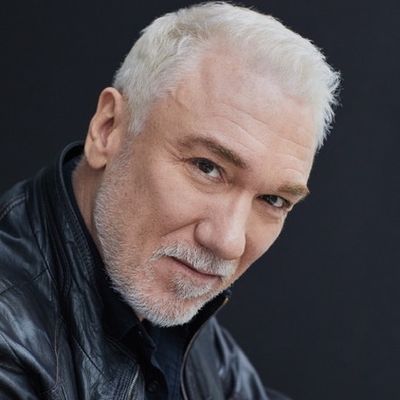
Can you imagine performing without hearing your own voice? Patrick Page began to lose his hearing completely and thought he was losing his voice because he couldn't hear himself and could only understand people by reading their lips... Read More
From the show: Take A Bow
Guests
Featured Shows

About
Can you imagine performing without hearing your own voice? Patrick Page began to lose his hearing completely and thought he was losing his voice because he couldn't hear himself and could only understand people by reading their lips. He was worried to test his hearing, until he remembered how important it was to embrace everything about yourself, similarly to the history behind his deep voice he began to accept what it was and leaned in to his uniqueness.
Page now performs with Widex hearing aids as Hades in the Broadway's Hadestown as well as Apple TV+' Spirited, Schmigadoon, and more! Patrick Page departs from the underground of Hadestown at the end of the month. Be sure to check out his incredible performance in the show after listening to the story's of its journey before Broadway and how it's been shaped into the show it is today on Broadway.
Curtain up Patrick Page!
Connect with Patrick Page on Instagram: @pagepatrick
Connect with Take A Bow on Instagram: @takeabowpodcast
Connect with host, Eli Tokash on Instagram: @tokash_eli
Produced by the Broadway Podcast Network
Edited by Jessica Lauren (@jessicalaurenradio)
Transcript
This transcript was automatically generated and might contain errors.
[0:00] Eli Tokash: Hello, everyone, and welcome to episode 132 of Take A Bow. I'm your host, Eli Tokash, and this week we have such an exciting episode for so many reasons. This is a, I don't, a friend of mine, I guess you could say, a friend of mine is joining the podcast today. We did Oliver together at the Pittsburgh CLO many, many, many, many, many moons ago. And now we got him on the podcast. And you can currently see him as Hades in Hadestown, where he absolutely kills that role. No, no pun intended, because he's like underground or anything like that. But he is absolutely incredible. He is an absolute legend. He just had a full-on movie just come out, and he's been doing a lot of TV and film stuff now, where he was just in the movie, the Christmas movie at for that matter, if you're in the holiday spirit here, Spirited, and it is just brilliant.
And we get to talk about Hadestown before he leaves on December 31. Unfortunately, that'll be his last day over in Hadestown, which is so depressing because I absolutely loved him in that role. I mean, he's come in and out of that show a million times, but it does seem like this is the one, you know, it's getting real. This is the one where he leaves, you know, and we don't see him back unless for the unforeseeable future, I guess we should say, not wanting to rule anything out because you never know what happens in this business. It's wild, folks. And, you know, very excited for this episode, very excited to share with you all. And he has had such an incredible journey that we'll get into. And I don't want to touch too much on it until afterwards because he does such a brilliant, he describes it and takes us through it in such a brilliant way.
So don't want to take anything away. It's definitely one that you want to hear and listen to. And before we get over to that, though, I got to talk to you about some Broadway news because there's so much going on lately that is so there's so much to talk about. There's just so, so much to talk about. And we'll start off here with the opening night of The Beautiful Noise. Happy opening to everyone involved in A Beautiful Noise. Very exciting stuff. This cast, I was able to see the opening night, by the way, and this cast is just ridiculous. I mean, Will Swenson, this is like, I mean, I don't want to compare it to like Miles Frost's MJ. But like, I mean, I kind of just did. But it's just like, it's next level performing.
And he brilliantly becomes Neil Diamond. It's wild. His voice and it's just ridiculous. And this isn't the first time I've seen Will Swenson on stage because I did see him in Waitress. But you know, he's brilliant. And I've never seen Will Swenson do anything like this before and sound anything like this. So it was pretty neat. It was pretty cool to see his range is ridiculous. The Beautiful Noise is awesome. I mean, if you're a fan of Neil Diamond, here's the thing. If you're a fan of Neil Diamond, you're gonna love this show and you're gonna love it. Like, oh my god, favorite Broadway show type. Um, if you're not like a Neil Diamond fan, I don't know, I'm curious to know how you'll react because you know, I mean, not that I'm a Neil Diamond fan, but I'm a Broadway fan.
I'm just a fan of performing and all that. And then of course, I know some Neil Diamond songs. I didn't realize how many Neil Diamond songs that I actually knew, though. I thought I would only know like Sweet Caroline, but he's written so many more songs that I'm sure you know, um, coming off the top of my head was We're Coming to America. I was like, wait, he sings this song. I mean, I could probably be like, showing how uncultured I am with my music artists and the songs that they produce and write. But he's also written, you know, for so many other people that you don't even realize that he wrote that song, you know. He's got so many, he's had such a wonderful career. But you know, it's one of those shows, you know, for us traditional Broadway folks who, it's another bio musical, and it's another one of those, you know, pop artists who become super famous, and they lose track of who they are and their family and all of that.
And they have these new burdens where they have to take care of everyone else that they've been employing, and they just need to keep working for them. And, you know, and then you lose your family, and you lose sight of all of it. And then it's like, oh, now who do I have? And now he can't perform, and he has Parkinson's, so he cannot technically go tour and all of that. And he's like, who am I now without that? And it's just like, it's wild. And it's just another one of those, you know, bio musicals that takes you through the life of a human being that is a pop artist. So it's kind of, it's really cool to see. It's a good, really good show. The after party was pretty fun, too. Max von Essen, Donna Murphy, Lance Roberts, Charlie Alterman, and I, we had an absolute blast.
We were dancing together, and we formed a little group and had our own little like party because, you know, there's like, investors, there's all kind of people there. And then like, we see the cast, and we're able to go up to them and see our friends who we've worked with and all of that. It was just a really, really fun, cool night that is definitely one for the book. So congratulations, everyone involved. And we'll get some of those folks on here soon on the podcast for sure to talk all about it. Now, of course, it always seems this way, with one opening comes one closing. It was announced that it's just so unfortunate, actually, to see this that the K-pop had to announce their final performance that's actually going to be taking place this Sunday.
Yes, literally, when you listen to this like three days, they are closing, and they announced closing a week before they actually close. So it was quite an abrupt closing. They clearly were not selling as well as they had hoped. And it was just becoming too much, too expensive. And you know, all the things as, you know, the business side, I feel like a lot of times we forget that this is a business, wasn't able to, you know, continue to put on. So unfortunately, K-pop will only have played 44 preview performances and 17 regular performances by the time it closes. Just so unfortunate because I actually wanted to see this one, I thought this was going to be pretty cool. And I'm not even like a K-pop like, super fan, you know, like, I know, there's some crazy super fans for K-pop, but definitely wanted to see this one.
And unfortunately, it won't be able to with the abrupt closing, but they will have a final performance that will host a special AAPI community event and panel discussion to celebrate and reflect on AAPI representation here on Broadway and, you know, beyond in our industry. So that is one really cool thing that they'll be doing on December 11th. Everyone, you know, if you can go see this show. I know some people who listen don't live in New York, but if you're here in New York and you're looking for something to do, go check this one out because it's going to be, it's the, I guess, what is it like the nearest closing show, I guess you could say. So yeah, so go check it out if you're interested.
And I don't know many people who see it. So I don't even know, like, I haven't even heard like much about it. Other than the scandal that's going on with Jesse Green in the New York Times. I won't get into all that. But, you know, it's craziness what's going on in the slander that has been taking place. And there's absolutely no room in this industry for any of that. So unfortunately, that is going on, and that's something that they're dealing with. But hopefully, you know, K-pop and what they're doing with this panel discussion and just to continue to raise more awareness for their community to be represented correctly and respectfully and in a good way and a light is so great. And I'm so thrilled to see that they're doing this.
And even with all of the craziness that's been surrounding this journey this past month here on Broadway. So that being said, congratulations to everyone involved in K-pop. It's been a whirlwind, I'm sure. And hopefully, we can get someone on from the show to talk about it and talk about the representation. And, you know, it's heartbreaking to see that and to see that this show is closing. I can assume, you know, in affection and in relation to the reviews and kind of like the slander that's been going on. So very unfortunate. My heart goes out to all of you folks. And just another congratulations because I know the amount of work and the amount of blood, sweat, tears, money, the everything that it takes to do this.
So you all made something to be really proud of, and especially with this panel discussion, and just continuing to raise awareness for that community is just absolutely brilliant. So moving on here, the six queens took their final bows, the six original six queens. So like Andrea Makise and Sam Pauly and Takeabout family member Brit Mac and Mallory Matkey, and I'm forgetting two, it'll come to me. They played their final bows here on Broadway. There seems to be like a whole clean out there at six. And now they have six new queens playing the role. Congratulations to all of them. And congratulations to those who had a happy trails this past Sunday. Incredible run in the show. I mean, everyone is obsessed with six.
And they've certainly made a name for themselves here on Broadway. And their final performance, I saw the videos, I didn't see the show. But the videos that are circulating, like social media and stuff like that, are it literally looked like an unbelievable, like pop concert. And like kind of like opening night was almost it literally looked like it had that same kind of essence to it. And it was, it's really cool to see that. And the six fans are no joke. So I'm excited. I'm excited to see this new, this new bunch over at six. And congrats to those folks who did it for so long and kind of led the way over there at six. It's just brilliant what they're doing. And those performances are ridiculous.
So I'm excited to see the new ones. Into the Woods. Into the Woods is I mentioned like, I would not be shocked if Into the Woods would get extended. And then of course, you know, it was announced that they couldn't because there's a new show lined up to go into the St. James Theatre after it closed. But now Into the Woods announced that it's going on tour. And it's going to be with the same cast. It's a tour, but it's a limited tour. It's nothing like not a two-year tour that I can see happening. Or I actually could see it happening just not with this cast because they are bringing the Broadway cast on tour with them. But Sebastian Arcelis will be leading the way as the baker with his wife, Stephanie J. Block.
And the rest of the cast is pretty much the same. So congrats to all of them for continuing to have jobs and going out on tour and just being such a success with this production. It's absolutely incredible. Montego Glover, all of that. Oh, and speaking of Into the Woods, actually, Patina Miller played her final role as the witch in Into the Woods. And now Montego Glover is over there taking the reins of the witch. So very exciting stuff for her. And yeah, let's see what else we got. I know there's a lot to talk about. So I'm trying to like speed it up here because I talked a lot. Okay, Britney Spears. Britney Spears musical, Once Upon a One More Time is going to be coming to Broadway in the spring of 2023 with previews beginning on May 13th.
And the opening night is going to be June 22nd. Very exciting. Hopefully, I have some friends that did it out of town. So hopefully I see them back on Broadway, which would be absolutely a thrill for me as a friend and, you know, as an audience member because it's so much more fun seeing shows when you know someone that's in the show. And you get to root for them, you know, you have like an attachment. Anyways, it's good stuff. So shout out to them. Shout out. I'm excited to see this one. I mean, again, another biopic, via musical, you know, I don't know. I don't know how to feel about it. You know, there's so many of them. But I'm so thrilled that, you know, it's something coming to Broadway.
And it's something that's employing a bunch of people. And, you know, that it's always good to see. And I'm excited to see this one. And you know, Britney Spears. I mean, she's got an iconic story. And I'm curious to see what they do with it. So I'm excited to see it for sure. So congrats to them. Hopefully we see a cast announcement here shortly. It would be hard for me to believe that they wouldn't keep the majority of their cast from their out of town because it was really successful. Obviously, you got a Broadway transfer, which is amazing. So stay tuned on that. And yeah, we'll see what else is happening. Oh, speaking of casting news, and cast announcements, that I swear to God,
[14:10] Eli Tokash: The big news always comes out on Thursdays. We're going to be playing the role of Christian in Moulin Rouge, doing a back and forth kind of thing. It seems like both of them continue to be fortunate enough to get some opportunities and they have to step away from the show for a little bit, and they're doing a little tag team here. I love it because Aaron Tveit is coming in and then Derek Klena is coming back to the show. Exciting stuff, and they had some great casting announcements just this past Thursday. And speaking of big news on Thursday, probably one of the biggest news that happened this entire week is that The Wiz is coming back to Broadway. I'm thrilled about this and thrilled to see The Wiz is coming back to Broadway.
I did a little dream cast on my story. My sister actually kind of built it, or she literally built it with this incredible cast. Ariana DeBose as Dorothy, Miles Frost as the Scarecrow, James Monroe Iglehart as the Cowardly Lion, Jared Grimes as the Tin Man, Andre DeShields as the Wizard. I mean, that is dream casting if I've ever heard of it. That would be absolutely brilliant. I'm saying this on here to manifest this to anyone who's involved in the production of The Wiz revival here that's going out on tour actually before it comes to Broadway in 2024. The tour begins in 2023, but Broadway, it looks like, is going to be in 2024. So manifesting that dream cast, if anyone cares to listen, I did post it on my story and it did get like, Jared Grimes liked it, Ariana DeBose reacted to it, and all the things.
So it was good to see that, you know, it was good to see people were actually excited about it and interested. The Wiz, I mean, it's awesome. I'm excited that it's coming back to Broadway. This is a revival I can get down with for sure. Anyways, that's all I have for you folks this week. I know I've ran a little long here in the intro, I apologize. But there's just been so much to talk about and it's just been so fun. So thanks for listening to me ramble and just talk. So without further ado, I think it's time for me to, you know, take a little bit of a backseat and ask some questions about our fabulous guest for you all to listen to and hear from. And this fabulous guest is Patrick Page, as mentioned earlier. So without further ado, Patrick Page, curtain up.
[17:19] Eli Tokash: Okay, I am pleased to welcome a Grammy Award winner and Tony nominee on the show this week. You've seen him in 14 Broadway shows, all of these in which he gave unforgettable performances with his unique, incredible voice. And now you can watch him from the comfort of your home on Apple TV's Spirited. So everyone, welcome to Take a Bow, Patrick Page. Hi, Patrick.
[17:44] Patrick Page: Hey, Eli.
[17:45] Eli Tokash: How are you?
[17:47] Patrick Page: Oh my god. I am thrilled now. My day is made. I'm so excited to be chatting with you and talking to you about your career and your unique journey through the industry.
[17:57] Eli Tokash: Thank you.
[17:58] Patrick Page: Yes, of course. So usually like how I usually like to start my interviews and episodes and all the things is by asking each performer, you know, how everything started. What kind of inspired you to want to be an entertainer and want to tell stories and do this thing that we call acting?
[18:16] Patrick Page: Well, thank you. My dad was involved in the theater. He was an actor and a director and a makeup artist and a teacher. And he taught theater most of my life in a little town called Monmouth, Oregon, where I grew up. And so I was always going to plays at the college. And when I was very young, he was an actor at the Oregon Shakespeare Festival in Ashland, Oregon. And I would see those actors up on the stage. It's a beautiful, still there, beautiful outdoor space, Elizabethan style theater. And as a little boy of two and three years old, I would see those grownups up there on the stage in their wonderful, colorful costumes with music and dancing and laughter. And I wanted to be part of that. I wanted to be with my dad. And so that's how I became an actor, I think.
[19:21] Eli Tokash: So was it always like, did you realize that there was like theater and movies and all the things? Or was it kind of just like you want to entertain and tell a story and be a character?
[19:27] Patrick Page: I wanted to do plays. I wanted to do theater. I wanted a relationship with an audience. I wanted that experience. I liked the experience of going to rehearsal with my dad and the trial and error process of rehearsal, working things through. And then I loved it when the audiences came in. I would go to the shows every single night, watch them as kids do. Kids want to find something they like. They do it over and over and over and over again. So I could just watch a show as many times as they would do it. There's no doubt about that.
[20:20] Eli Tokash: Yeah, that was it for me. Well, it's interesting that you bring that up because I have a very interesting story to share with you. My second ever show professionally that I did was actually Oliver at the Pittsburgh CLO with you playing Fagin and I was one of the Fagin children.
[20:39] Patrick Page: Yes, I actually, I have like a picture of us. I don't know. I have to see. I have to see. Wait. Hold it up.
[20:48] Eli Tokash: Yeah. I want to see which one you are.
[20:50] Patrick Page: I'm the one in the orange. I was the tiny one.
[20:52] Eli Tokash: This guy right here.
[20:53] Patrick Page: You were the little one.
[20:54] Eli Tokash: I was the youngest one. I remember that. I think I picked you up at some point.
[21:02] Patrick Page: You did. You did.
[21:04] Eli Tokash: Yeah. And we, you like, we never had like actual names, but in the end of one of our scenes, like we would all like go off in one of the wings. I think it was like a stage left wing and then you would call me because I was going off with them and then I would come over to you and go off with you in the wings and that's when you would pick me up. I remember it vividly because it was like, it was a new thing for me, the theater, and I loved it so much and I just wanted to keep doing it. So your story reminded me so much of me, you know?
[21:34] Patrick Page: That's so amazing because, you know, I mean, here I am and it feels like that happened yesterday and you were a little tiny boy then and now you're grown up.
[21:44] Eli Tokash: Yeah. Unfortunately, I did grow up, unfortunately. I do miss being like the little kid. But yeah, it's been such a journey ever since and I'm so thrilled to have a full circle moment today with you and talking to you on this today about theater and all the things. So I just wanted to share that with you.
[22:04] Patrick Page: Oh, thank you. That means a lot to me.
[22:07] Eli Tokash: Yeah.
[22:08] Patrick Page: Oh my God. No, you mean a lot to me and you're part of the reason why my love for theater grew as much as it did in such a short amount of time. You know how old you were when that happened?
[22:17] Eli Tokash: I was, I believe, seven years old.
[22:19] Patrick Page: Oh my gosh.
[22:20] Eli Tokash: Yeah.
[22:21] Patrick Page: You were a little guy too.
[22:23] Eli Tokash: I was so tiny. Were you small for your age?
[22:27] Patrick Page: I was small for my age and I actually played, the first ever production that I did was Tiny Tim at PCLO. So I played that for three years at Pittsburgh CLO and then I moved to New York and was doing shows on Broadway and touring and stuff like that. So I played Scrooge a couple of times at the CLO.
[22:46] Patrick Page: I know. The moment at the end of the show, you have to hoist Tiny Tim up onto your shoulder for that final image with the song. I always appreciated it when the Tiny Tims were actually tiny.
[23:03] Eli Tokash: Yeah, I got that a lot. My third year, there were only certain shows that he would actually pick me up. Tom Atkins was my Scrooge for all three of my years and he was like, you know, tonight I don't think I can pick you up. And I was like, I understand.
[23:16] Patrick Page: So it's so funny you say that. But yeah, I mean, speaking of like you playing Scrooge and everything, I mean, you just got done playing in a movie where you played his friend, Jacob Marley in Spirited. What was that like for you in doing like a movie musical while filming? Like you were doing a musical while filming a movie. So what was that experience like?
[23:43] Patrick Page: Oh, just amazing. You know, Christmas Carol just keeps coming back and back and back in my life. And the movie is, I think, I imagine it will come back every year. So I'm not quite sure when this podcast airs, but it is Spirited is streaming on Apple TV Plus through, I imagine, at least through the new year. So and it's just a delightful movie. It's a musical comedy, like real comedy. Two of the best comedic actors in the world, Will Ferrell and Ryan Reynolds, are the two leads. And I play Will's boss and friend, Jacob Marley. Will plays the ghost of Christmas present. There are lots of surprises in the movie, so I can't give away too much more than that. But the music is by Pasek and Paul, who wrote Dear Evan Hansen and La La Land and Greatest Showman.
The tunes are incredible. And it was just really one of the joys of my life making that movie. I was with them for five months. We shot in Boston and many of them started several months earlier in dance camp and singing camp. But they brought me in a little bit later. I didn't have to do that much dancing in the show. And the little that I did, luckily, didn't make it on camera too much. There was a reason for that. No, I'm just kidding. Yeah. So it was delightful. And to be able to play, I played Jacob Marley years ago, 20 or so years ago at Madison Square Garden. There used to be a yearly production of a musical Christmas Carol written by Alan Menken at Madison Square Garden. And I played Jacob Marley in that as well.
And he has a wonderful song called Link by Link. And I loved doing that. And so to come to that role and then to be able to play Marley, you know, not just haunting Scrooge, but Marley through the whole movie, when you see Marley as a man, not just as a specter and a ghost. So that was great fun.
[26:06] Eli Tokash: Oh yeah. They totally like expanded his story and his role in life and his relationship with Ebenezer as well. I thought it was brilliantly done. And you mentioned, you know, Spirited, it's a holiday movie, but I actually saw it. I was able to see it as I knew I was talking to you. And I think it's totally a movie that you could see year round, like sure it's centered around like Christmas and it's got the ghost of Christmas present and past and all the things. But it's really just about, you know, putting yourself before others. And I think that we are always needing a reminder of that, you know, just to be a better person and look out for your peers and your friends around you.
[26:35] Patrick Page: Yeah, I agree with you.
[26:46] Eli Tokash: Yeah, it's so brilliant. And your performance was just so, so great. And with you, Will and Ryan, it was just an absolute blast. Were you able, you know, you're the experienced musical guy. Were you able to give them like some tips?
[27:00] Patrick Page: Oh, it's so funny, Eli, because they would, you know, Will would come and ask me things. I think Ryan did, too, about musical theater. Oh, Will was really questioning me about it. And the fact of the matter is, I'm not an expert at all. I really just lucked in musical theater. I never expected to do musicals and I really just lucked into it. And so I'm not an expert dancer or singer or any of that, but I do have a lot of fun.
[27:34] Eli Tokash: Oh, it's amazing. Literally all of the musicals that you do are so much fun because your voice is so unique, especially your singing voice. It really gets down there. It's wild. It's unforgettable, truly. When did that like when did you know that you had that voice, that real deep, beautiful voice?
[27:55] Patrick Page: Well, I knew that that's where my voice sat. But for many years, when I started doing musicals, the first professional musical I ever did was Beauty and the Beast. I did the first national tour of Beauty and the Beast starting in 1995, which is where I met my wife, Paige Davis. And I it was just a complete accident that I ended up in that show.
[28:20] Patrick Page: And so I was learning on my feet and I thought I better try to learn how to sing. So I started taking some singing lessons and every singing teacher I ever had seemed very concerned and troubled by the depth of my voice, by how low it was. And they would always try to get me to go higher. And I felt quite inadequate and I would keep trying to push and trying to get up into a higher register. And it wasn't until many, many years later when I just finally accepted it and I finally found a teacher who was like, Oh, you're a bass. Why are they trying to make you into, you know, a baritone? You're a bass. And I was like, Oh, okay. And I started singing as a bass. And here's the amazing thing about how life works.
As soon as I did that, as soon as I made that switch in my mind, roles started coming to me. And I remember I got a call from a cabaret club in New York called 54 Below, which is a beautiful, beautiful club in New York City. And they asked me if I would come and do an evening of songs. And because this myth had gone around that I could sing. And so they asked me if I would do that. And I had just before that made a kind of New Year's resolution that I was going to say yes to things that frightened me. So I normally would have just said, No, I can't do that. I don't have anything. But I said yes, and I didn't have anything. So I put together a show. And then the shows at 54, at that time, at least I don't know now, but they ask you to do about 50 minutes.
So I put together about a 50, 50 minutes, 60 minute show. And I did it. And as soon as I said yes to that, I got a phone call from Disney Theatrical, asking me to play Dom Claude Frollo in the Hunchback of Notre Dame, which was written as a bass role. And it was the first bass role I was ever offered. And then after that, I did Hunchback of Notre Dame. And shortly after that, Hadestown came along. That was a bass role. And since then, people have begun offering me things that are right for my voice. So I'm doing a role now on Big Mouth on Netflix that uses my bass notes. Spirited obviously used my bass notes. I just shot a series for Apple, the new season of last year was called Schmigadoon, but now it's called Schmicago, because it's going to be Imaginary Village this year, in which I sing in a bass key.
So it was such a life lesson about accepting what is unique and strange about oneself. And the moment you do and sort of step into it, then things begin arriving for you. Absolutely. And you know what, speaking of pushing the envelope and kind of accepting all these wonderful things, you also recently through, I guess, your process and journey through Hadestown, learned that you were dealing with some hearing loss issues. And I just want to ask you, can you talk a little bit about that and talk about what you were experiencing and now what you do to help manage it and kind of overcome the obstacle that may have been presented to you?
[32:06] Patrick Page: Sure, I started losing my hearing in my 30s. So I started losing my hearing when I was quite young. And I was not like most people who lose their hearing, or many people who lose their hearing, it's a gradual process. And you don't notice at first, at first, you just think everybody's mumbling around you and you get irritated by people. And then you, or at least I begin to withdraw and not want to be in conversations, not want to be in group settings. All of those things happen. And it certainly contributed to depression and anxiety that I was experiencing. And I also thought that I was losing my voice because I couldn't hear myself. And so because I couldn't hear myself, I would then try to push louder so I could reproduce the sound I used to hear from myself.
And that didn't work. So it was a really, really hard struggle for many, many years until I finally, again, just accepted myself. So just like accepting I'm a bass, accepting that I'm hearing impaired. And once I did that, which happened around, I think, 2015. So that's a long journey. I went to an audiologist in New York City, a wonderful audiologist named Teresa Deerline. And she prescribed the Widex Moment hearing aids for me. And it changed my life, absolutely changed my life. I didn't realize until I had the technology, until I had the hearing aids, how much I had lost and how much of life I was not getting anymore. And it's not just, you have to imagine just one whole part of your sensory apparatus is gone.
If you were to imagine about what I hear, if I didn't have my hearing aids in right now, I would not be able to hear you at all right now. And because obviously, we're using technology to hear each other through the computer on this podcast, if we were in the same room together, I would be able to hear that you're making sounds, but I would not be able to understand what you're saying. So for years, I was reading lips, and I still read lips. But I wasn't so aware that I was doing it until the pandemic happened. And then everybody had masks over their faces. And then once again, I couldn't understand what anybody was saying. And so yeah, if you want to imagine what my hearing is like, you would just put both your fingers in your ears as firmly as you could.
And you would realize that some sounds would still penetrate, but that you would not be able to hear or follow things. You certainly wouldn't be able to carry a tune or hear the music. And that's where my hearing is. So with the Widex Moment hearing aids, I'm able to hear everything. These particular hearing aids that I wear have a very natural, lifelike sound to them. And it's extraordinarily helpful. So I wear them basically always. I wear them on stage in Hadestown. And I wore them in Spirited. And the technology nowadays is so amazing that you don't see them at all. You can watch that movie, you can see me in close-up, and you do not see the hearing aids.
[36:08] Eli Tokash: Wow. Yeah, I know you certainly can't see them in Hadestown either. It's a little further away than a close-up in a movie for sure. But it's incredible that you were able to get what you needed in order to continue in this career path, because I can't imagine how hard that must have been.
[36:34] Patrick Page: Yes, I certainly wouldn't be able to do my career. I wouldn't have any career at all if I didn't have this technology.
[36:44] Eli Tokash: Right. And it's interesting that you mentioned that, because I personally can't relate to having a hearing loss or anything. But my sister, who actually was also in Oliver with us, her name is Tessie. Shout out, Tessie. I know she's listening. She lost her hearing as well, fully in one ear and partially in the other. But she was one of those people who wanted to be a performer and noticed their hearing loss and couldn't understand. And she just kind of stopped altogether. So what kind of advice would you give to people who are going through that and want to be performers and just trying to seek the proper help to help them continue to do what they love?
[37:41] Patrick Page: I actually speak now to a lot of hard-of-hearing and deaf performers because of my own hearing loss, because people have been made aware of it. I've tried to be public about it because I want to try to destigmatize hearing aids. When I was younger, it was something that I didn't do because I thought, oh, that's what old people do. And I don't want to look like I am an old man. And I had worries about that. And so I would love it for it just to become completely destigmatized and for hearing aids to be no more remarkable than eyeglasses. And for the young people who are dealing with it, I just got an email today. I got two emails today from people who are hard of hearing and looking for some guidance.
And what I say is, first of all, communicate your needs. Have good technology. I very much recommend these hearing aids that I wear. The sound is great. It's lifelike. I have a little remote control device that I can even have in my hand. Nobody knows I have it. And I can change the settings on it very easily for when I'm in a restaurant, for example. If I'm in a restaurant, it can screen out the background noise. They've got little computers in them. It can screen out the background noise. If I'm in a direct conversation, I can turn the volume up or down. It has directional setting, Eli. If I'm riding in a car with my wife, Paige, and I'm driving, I can set it so that it goes over to my right where she's sitting.
Or if I'm in the passenger seat, I can set it so that it goes over to my left where she's driving. And it's just quite remarkable. And I'm just so grateful to live in a time when that technology is available. I think of somebody like, not to be too hyperbolic about it, but somebody like Beethoven who began losing his hearing and then was in complete despair because his life's work and career was slipping right through his grasp. And I just imagine what he would have been able to do if he lived today. I mean, he kept writing, too, remarkably. But you read letters from him, and he's in absolute torture at losing his hearing. It's like a painter losing his sight, or a sculptor losing her fingers.
And so that's how I felt when I felt I was losing my hearing and losing, I thought, my voice. And then when I got my hearing aids, suddenly I could hear myself again. And I went, oh, no, my voice is fine. It's just fine. It was just my hearing. And if I take my hearing aids out, once again, I can't hear my voice well. I can't hear pitches. But if I have them in, everything's fine.
[41:06] Eli Tokash: That's fantastic. I'm so glad that we have the technology. Technology can be dangerous, but it's also a blessing in some ways, for sure. And I'm so glad that you have had the opportunity to kind of seek the proper help that you need in order to hear yourself and hear others. So that's incredible, because I don't know what would happen if you weren't Hades in Hadestown, because I can't imagine anyone else playing Hades in Hadestown.
[41:23] Patrick Page: Oh, thank you.
[41:24] Eli Tokash: Yeah, no, seriously. I love the show. I've seen it a million times. I've literally only seen you as Hades. I've not seen anybody else. So that's why I can't picture anybody else, I'm sure. But I want to talk to you a little bit about Hadestown, because I know you're leaving December 30th, the end of the month here. I just want to ask you, you've been with the show for so long, and I'm sure you've seen so many versions of this show through all the different productions that it's gone through and leading up to Broadway. But just how much has this show meant to you and being along for the whole ride?
[42:03] Patrick Page: Oh, it's extraordinary. You know, you were mentioning earlier, I've done 15 Broadway shows, and what's amazing about that is until Hadestown, I had never been in a hit. I had never originated a hit. I had been in shows that were hits. I was in Lion King for a long time, which was a hit, both critically and with the audiences.
[42:30] Patrick Page: But many of the shows I did were either short runs. They were planned to be short runs, or they didn't hit for some reason. They could be good shows that didn't hit. A hit is a completely different animal in whatever medium you're in, whether you're in film or television or theater. It's very different to be in a TV show than it is to be in Game of Thrones. It's very different to be in a film than it is to be in Lord of the Rings. And it's very different to be in a play or a musical on Broadway than it is to be in Hadestown or Hamilton. And so that was an extraordinarily wonderful rollercoaster ride of just fun things, like you're talking about the Grammy, the album winning Grammys, the Tony Awards, winning the Tony Awards, being nominated for a Tony.
I had never been nominated before. It's all that fun stuff. But then on top of all of that, it's just a beautiful, beautiful show. The themes of the show, the words, the lyrics, the poetry, the music, the cast. And as you mentioned, I've been with it since 2016. We started a New York theater workshop with Labs even before we did the Off-Broadway production. Then we took it to Canada, did a completely new production there. The first production was in the round. We did it in Canada for the first time in a proscenium space, completely different show and cast. Amber Gray and I were the only two who were from the first production. Then we did it at the National Theater in London. And again, a whole new cast.
This time, Amber and I and Reeve Carney came from the last production. And we added on Andre De Shields and Eva Noblezada and The Fates. And then finally on Broadway with the London, Five London Principles and then New Fates on Broadway. And each time, Rachel Chavkin and Anais making just beautiful adjustments to the show. And it was such a lesson to me in patience and perseverance and just taking one step at a time and growing something organically over a period of time. Absolutely. I love asking people who have been in a long running Broadway show, who've been with the show for so long, do you remember a big change that was made to Hadestown that maybe didn't make it to Broadway that you just loved in the other productions?
[45:19] Patrick Page: Oh, that I loved in the other productions that didn't make it to Broadway. There are lyrics, certainly. There are a lot of things like that. Off the top of my head, I remember there are lyrics, especially in Chant 2. I used to have a lyric that said, when I was a young man like you, son, I loved a woman too. Held her in my naked hands when I was a young man. Now you know how it feels. Women are as slick as eels, always slipping from your grasp. I can't remember all the lyrics, but it was just a marvelous, intricate lyric that's not in the show anymore. But there were other things as well. We've tried it so many different ways. There's a song at the end that happens after the curtain call, which is called We Raise Our Cups.
And we've tried the show without that song, because having a song after the curtain call is strange and wonderful. Very, very common in the world that Anais comes from, which is the concert musical world, but uncommon in the theater. And so this show started really as concerts that she gave, and then had a theatrical presentation in Vermont, but always had a concert vibe. And when we did it first at New York Theater Workshop, it had a concert vibe. In fact, we even gave out set lists to the audience of the songs, as you would in a concert. And a lot of the songs were sort of sung with handheld microphones in the concert style, as if you were telling a story in that way. So, yeah, those are all changes.
The show used to begin with The Fates singing Any Way the Wind Blows, and then it went into The Road to Hell, which is the opening number, that iconic trumpet. That was not the beginning of the show. It used to start off with The Fates just going, ooh, ooh, ooh, ooh. And then Hermes would come in and go, all right, all right, let's start the show. And he'd start the show, boom, boom, boop-a-doop-a-doom, boom. And so all those things changed. It changed so, so much over the six years that I've been involved with it.
[48:00] Eli Tokash: Yeah, I can't imagine. That's crazy that you brought that up, because I absolutely love Andre De Shields coming out and just being like, taking the stage, taking his time walking out there, and then just saying, all right. And then I'm like, this is a way to start a musical. It gets everyone involved paying attention. It was so cool. Wow, that's really cool that you mentioned.
[48:23] Patrick Page: Yeah, I really learned from Rachel Chavkin, who directed, just through observation, through watching her work, I really learned that you can, along the way, there's a lot of different versions of good before you get to the version that's best, the version that's great. And she's willing to write a lot of drafts until she gets to great, perfect, that's right.
[48:54] Eli Tokash: Wow, incredible. Well, yeah, you guys really do have something that is great and very, I mean, if you want to say perfect is a thing, Hadestown is really darn close to perfect. I love it. I will always say it's one of my favorite Broadway shows. And you have till December 30th to go see Patrick Page playing Hades in Hadestown. So everyone go check that out. And now just two more questions before I let you go, if it's cool with you. I do want to ask, because I love this musical. This was a crazy musical for its time. I have to talk to you about Spider-Man Turn Off.
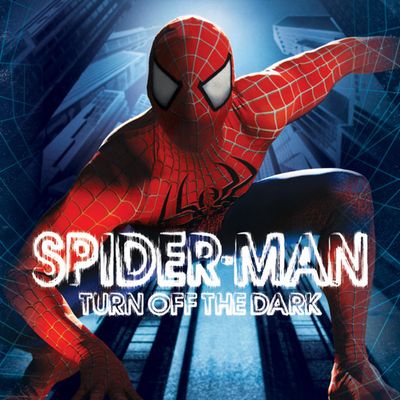
[49:28] Patrick Page: You played the Green Goblin. And I just can't imagine what that process was like, and just figuring out the incredible feats the show attempted and did oftentimes pull off. I want to ask you about what was your favorite stunt as the Green Goblin? And then of course, what it was like to be in that costume and take it off every night, because I'm sure it was craziness. Well, for people who didn't see it, I wore, in the second act of the show, in the first act of the show, the Green Goblin, for people who know the Marvel mythology, is Norman Osborn, a scientist. And in the first act, I was Norman Osborn, my own face, my own voice, essentially, and so on. And then at the end of the first act, I would enter this sort of chamber that he's designed and built.
And it would then mutate me into the Green Goblin. And so I had to go in as Norman and come out as the Goblin. And the Goblin was a complete prosthetic face, movable face, entirely prosthetic that was sculpted by Julie Taymor, who was a brilliant sculptor, and then executed and designed by Louis Zakarian, who does all of the makeup for Saturday Night Live. All that kind of prosthetic makeup. And so they built this thing on my face. And if anybody's ever worn prosthetics or seen them in movies, for example, I wear prosthetic makeup in a couple of scenes of Spirited, when I play Marley as a corpse, a ghost. And that kind of makeup, in my experience, takes about three hours to apply. And so the first time I put on the Goblin, it took three hours.
And we had to eventually do it in 12 minutes. And so it was an incredible process with a team of people who had everything ready to go. And at intermission, I would go, and they would lay me in a chair, and a team of four or five, six people would apply this to me. Of course, there's a full bodysuit, hands, head, wig, ears, you know, everything. And it was just unbelievable to be part of a process like that. And really the great thing about working on that, or like on a film like Spirited, is that you get to work with these artists, like Louis Zakarian, like the artists who did the face, and you get to work with them. And I think that's the beauty of it, is that you get to work with the artists who did the face, and my hands and neck and all of that on Spirited.
They are the very, very top of their field, and they're artists in their own right. So you sort of get to be the model for their artwork. And wearing a face like that, or like the makeup I wore in Oliver, is very freeing. Because I think even if you're not an experience, like on Halloween, when you go out and you're wearing your costume and it frees something in you, for that night you get to behave like Batman or Superman or Dracula or whoever it is you've chosen to be. It's very, very freeing and fun. I remember when I was playing the Grinch in How the Grinch Stole Christmas on Broadway, I used to go out onto the street in Times Square and as the Grinch. And when I would put on the face and makeup and everything, it wouldn't allow me to be Patrick.
So it was like I had to be the Grinch when I was in that. It felt wrong to be Patrick while I was in all of that. I'm sure I was Patrick backstage sometimes, but when I went out on the street, I would be the Grinch. And we were walking between theaters or going to the parade route or going to do the David Letterman Show or many of the fun things that we got to do. I was Grinch all the way.
[54:04] Eli Tokash: Oh, I love it. I've heard a lot of stories on here about the Elphaba costume. So I guess you could say the Grinch and the Green Goblin can be the male version of Elphaba.
[54:08] Patrick Page: Yes.
[54:09] Eli Tokash: That's awesome. One last question and then I'll let you go. I'm curious, we talked about your voice and how lovely it was and how you found your depth and you found where it sits and it's just worked so beautifully for you. I wonder in having that kind of voice, do you ever feel like you are in a way like typecasted where you have to play like the villain since you have like a deep voice or do you feel like it's written for you with your such like beautifully unique voice? Do you ever get that feeling?
[54:43] Patrick Page: Well, I play a lot of villains. I play a lot of dark characters. I guess there's a kind of tradition isn't there, right? There is certainly an opera that the villain is written as the bass role. And so that happens and that's okay. It's wonderful to have a niche that people are aware like they know Patrick can do this and so when those things come along, I'm grateful for them. I've been very fortunate that I have been able to do other things and that I haven't only done that but I am very, very interested in people that we might call villains or might call evil. I'm interested in what produces that behavior in human beings and I think that's one reason that people might ask me to do it is that I play the characters very much from their own point of view.
I don't ever judge the characters that I'm playing, whether it's Fagin or Norman Osborn, the Green Goblin or Hades. I think of them as human beings. I don't think of them as villains. Someone else can put that label on them if they want but I do a one-man show which I made a film of a couple years ago, I guess, maybe a year or a couple years ago. Time goes so strangely now called All the Devils Are Here in which I explore Shakespeare's creation.
[1:05:22] Eli Tokash: There is completely enough to be in this industry and to succeed in this industry because no one else is like you. And there is a story for you to tell and there's a story for you that needs to be heard, that you have a special relationship to because you've lived it or you've experienced it or you know someone who does and you want to honor that person. There is a story for you to tell, there's a reason that you are a performer and there's a reason that you go on these auditions and that people continue to see you and want to see you in auditions or you know there's a reason for it all. And you are good enough and whatever that is, you know, the skill set that you were given will be okay and you will find a way to succeed.
It may not come tomorrow but that's okay. There's a time and a place that will allow you to shine and I think that was kind of like a realization that needed to be, we haven't had much conversation about that on the podcast. So I appreciate Patrick for sharing that and I appreciate Patrick for talking to us about Hadestown because I'm a crazy Hadestown fan. I'm a super fan of Hadestown and I'm thrilled to get one of the leads here. I don't know if we've ever had someone from Hadestown on the podcast actually. So just to talk to him about that and to talk to him about the whole process because he was in it for the longest time of anybody else who's currently in the show. So to get all the process and all of the fun little tips that he shared with us was just so fun.
[1:07:07] Eli Tokash: Anyways, I'm continuing to ramble but needless to be said, I'm very grateful that Patrick came on and was willing to revisit with an old friend and join the podcast family here over at Take A Bow to chat about his career and to chat about Hadestown before he left. So everyone go see Patrick Page in Hadestown before he heads out of the show at the end of the month here. And yeah, that's all I have for you folks this week. So once again, thank you all for listening to this week's episode. I really, really do appreciate you and your support.
[1:07:39] Eli Tokash: We got some Spotify wrapped reports and because of you guys, I don't know if you saw this on social media or anything. We're a top 10% podcast worldwide. Crazy to me. I don't know exactly what percent we are, but it was fascinating to see all of that. And believe it or not, Take A Bow was in the one percentile of the range, I guess, of the amount of content that was made for an arts category podcast. So that was pretty cool to see.
[1:08:18] Eli Tokash: And I continue to make so much content because of how much response I get from it. And people seem to watch it. I mean, literally one person could watch it and I would consider putting it out there. So the fact that so many of you are enjoying it with the 10% followership and listenership worldwide was kind of crazy. And then to see that one percent is just a testament to all of you of what keeps me going and the work that gets kind of put into all of these episodes. So I appreciate you all again for listening. It really, really means more to me than you know.
[1:09:00] Eli Tokash: And yeah, I hope everyone is gearing up for the holiday season. And I look forward to revisiting with you all next week with another incredible guest. Stay tuned because it's going to be a fun episode. It's an exciting one. All of these ones are exciting to me. And they all have some incredible, unique story to tell and different perspectives as always. So stay tuned. Can't wait to see you all next week. And until then, I hope you all have a great week. Bye, everyone. Have a great week.
[1:09:28] Eli Tokash: For this episode's curtain call, I would like to recognize a few people who also deserve to take a bow. This podcast would not be possible without the help of Dory Berenstein, Alan Seales, Kimberly Garris, and the team at the Broadway Podcast Network. Next in line to take a bow are our fabulous editors, Jessica Warren, who edits the audio of the podcast that you just listened to, and Tessie Tokash, who edits the videos and visuals for this podcast.
[1:09:55] Eli Tokash: And how about a bow for our executive producer, Chris Griner. And our final bow are extra special to the patrons, Brian Thompson, Pat McNamara, the listeners of PCC, as well as all of the other patrons for their continued support. If you're interested in becoming a patron, go to patreon.com slash TAB. If you enjoyed this week's episode, make sure to subscribe on the platform that you are currently listening to this on. Or go check out our YouTube, where you can watch the episode. You can also subscribe, like, and comment on there as well.
[1:10:24] Eli Tokash: If you're more into the regular social media and want to follow us, you can do that at Take A Bow Podcast across all social media platforms. The music of this podcast was made by Nikki Torsha and Cormac Collinan, and the logo was created by Giselle Bustos. And that wraps up this episode's curtain call. Thank you all again for listening to this week's episode, and I can't wait to see you next week. Bye, everyone. Have a great week.
© Broadway Podcast Network, All Rights Reserved