

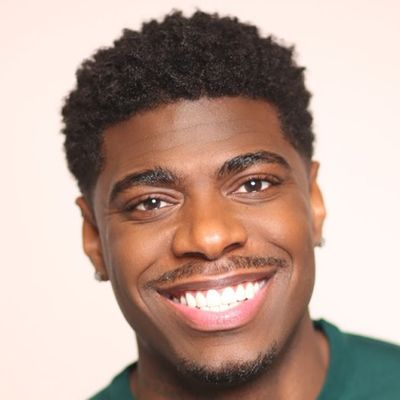
Emmy Nominated Actor Jawan Jackson talks about embodying the legendary Melvin Franklin in two Broadway shows! The Motown and Ain't Too Proud star shares his story on how he's worked his way up in the industry and appeared in the Get Down on Netflix... Read More
From the show: Take A Bow
Guests

Featured Shows
About
Emmy Nominated Actor Jawan Jackson talks about embodying the legendary Melvin Franklin in two Broadway shows! The Motown and Ain't Too Proud star shares his story on how he's worked his way up in the industry and appeared in the Get Down on Netflix. Now working at the top level in his career, Jawan gives back to the arts community by working closely with the non-profit Rosie's Theatre For Kids, and created a program for students in his hometown of Detroit to receive great education in the arts at a young age.
@jawanjackson, @tokash_eli, and @takeabowpodcast
Transcript
This transcript was automatically generated and might contain errors.
[0:00] Eli Tokash: Hey everyone and welcome to episode 37 of Take A Bow Podcast.
[0:05] Eli Tokash: I'm your host, Eli Tokash, and I am just so excited for this month and this episode.
[0:12] Eli Tokash: I have so many fun things planned, and I can't wait to see where this goes, and I hope that you all enjoy it as much as I'm enjoying putting it all together.
[0:21] Eli Tokash: First, I just want to start out the podcast and just give my condolences to the friends and family and everyone who's worked with Cicely Tyson.
[0:30] Eli Tokash: I mean, she absolutely broke barriers in this industry.
[0:34] Eli Tokash: Her work was phenomenal and extremely diverse, and I literally can't say better things about her.
[0:42] Eli Tokash: She's definitely someone that I look up to.
[0:45] Eli Tokash: I mean, just what she's done in both the Broadway community and in the film industry.
[0:50] Eli Tokash: She's a true role model, and I mean, you couldn't not fall in love with her anytime you saw her on a stage or on the big screen.
[0:58] Eli Tokash: And everyone I've talked to says nothing but great things, so just rest in peace, Cicely Tyson, rest in power, and thank you for all you've done to better this community and our industry as a whole.
[1:13] Eli Tokash: So to everyone who's listened to the last episode, which was Sydney's last episode as co-host, I'm now taking over full-time as your weekly host.
[1:24] Eli Tokash: I'm excited for February because Take A Bow is using this platform to amplify black stories, black voices, and black excellence in all aspects.
[1:36] Eli Tokash: We have some actors coming on, we have some stage managers, and let me tell you, each of these individuals have done so much for their community, for Broadway, for theater, for everyone.
[1:49] Eli Tokash: So I'm very excited because I still think this is a very important time to continue to listen, to educate yourself, and to learn.
[1:58] Eli Tokash: So with that being said, today's guest is Jawan Jackson, who you may have seen in Motown or Ain't Too Proud.
[2:05] Eli Tokash: Let me tell you, he is amazing.
[2:08] Eli Tokash: You're gonna hear his voice and you're gonna like immediately fall in love with this guy.
[2:12] Eli Tokash: You can hear his smile.
[2:14] Eli Tokash: He has this very deep voice.
[2:15] Eli Tokash: Oh my god, it's so—I was literally in awe talking to him, and it was a blast, and he had a lot of really amazing things to say.
[2:24] Eli Tokash: So without further ado, Jawan Jackson, curtain up.
[2:48] Eli Tokash: Well, this week, today we have a guest who is a Grammy nominated actor who you've seen on Broadway in Ain't Too Proud and Motown.
[2:56] Eli Tokash: You've probably also seen him right from the comfort of your homes in two Tony performances and on the Netflix hit show, The Get Down.
[3:04] Eli Tokash: So everyone, welcome, Jawan Jackson to Take A Bow.
[3:07] Eli Tokash: How are you doing?
[3:08] Jawan Jackson: First of all, I mean it's a crazy snow out there, so we're all just trying to stay safe.
[3:13] Jawan Jackson: How's it going with all of that?
[3:14] Jawan Jackson: It's going good.
[3:15] Jawan Jackson: It's an interesting time.
[3:17] Jawan Jackson: You know, I'm an introvert, extrovert, I like to tell people.
[3:19] Jawan Jackson: Uh-huh.
[3:20] Jawan Jackson: So, like, I enjoy being in the house.
[3:22] Jawan Jackson: So days like this is the absolute best because I got my food, I got fully stocked of stuff that I need for now, for a few days at least.
[3:31] Jawan Jackson: And then, you know, it's just chilling, watching Netflix and chilling.
[3:35] Eli Tokash: Yeah, I know.
[3:36] Eli Tokash: Too bad this couldn't be like an actual like two week snowstorm, because then people would actually quarantine.
[3:41] Jawan Jackson: Maybe we would all be on the mother nature way of saying.
[3:46] Eli Tokash: Yeah, for real.
[3:47] Eli Tokash: So Jawan, I have to ask, when did you know that you wanted to be a performer?
[3:52] Jawan Jackson: I feel like I didn't know for sure for sure until I actually like made it.
[3:57] Jawan Jackson: I was in college, but I know that the performing bug had been in me all my life, ever since I could remember.
[4:03] Jawan Jackson: And it goes all the way back to when I was like five or six, and I discovered—my family discovered I could sing.
[4:11] Jawan Jackson: My grandmother, she recorded the nineteen eighty-six Soul Train Awards.
[4:16] Jawan Jackson: And I used to watch that over and over and over again and repeat.
[4:20] Jawan Jackson: I knew every commercial, I knew everything like it was—I knew that the whole tape by heart.
[4:25] Jawan Jackson: That was also like my introduction to like Whitney Houston, 'cause that was her very first performance of You Give Good Love.
[4:32] Jawan Jackson: Stevie Wonder was on that award show, Dion Warwick, Luther Vandross, all my favorite gospel singers, you know, that I grew up loving.
[4:39] Jawan Jackson: And so, you know, just that crash course itself, you know, had a passion for my love for music.
[4:46] Jawan Jackson: And so honestly, music was my first love.
[4:49] Jawan Jackson: And then that kind of naturally, you know, as you know, grade school and things started to happen, I started to get into like theater and then musical theater.
[4:56] Jawan Jackson: My very first theater show was in that seventh or eighth grade.
[5:00] Jawan Jackson: I was in a high school version of Joseph and the Amazing Technicolor Dreamcoat.
[5:06] Eli Tokash: Of course, of course.
[5:07] Jawan Jackson: But that was my very first like for real for real show.
[5:11] Eli Tokash: Uh-huh.
[5:12] Eli Tokash: I love it.
[5:13] Eli Tokash: So wait, I have to ask because you mentioned it, so you started singing when you were super young, but when you were super young, did you kinda always have that kind of deep voice or did it just like drastically change?
[5:26] Jawan Jackson: Absolutely not.
[5:27] Jawan Jackson: So I used to sing really, really high.
[5:30] Jawan Jackson: I had like real TV voice and my voice changed to like 11, 12.
[5:36] Jawan Jackson: And so one morning it was kind of like night and day like I woke—I went to bed one day and then I woke up and it was like, "Hey, how you doing?" You know, where did this come from?
[5:36] Jawan Jackson: And so that was actually—I was actually scared of it because like, you know, when you go through puberty, your mind and your body automatically tries to do what you used to could do with like your high voice and so the notes that you try to hit I can no longer hit and I'm straining to get to them and I'm like, this is ugly.
[6:04] Jawan Jackson: How am I gonna maintain?
[6:06] Jawan Jackson: And so it was like a bit of refiguring trying to figure out how to use and what's this new voice of mine and for the longest I hated it.
[6:04] Jawan Jackson: I hated it.
[6:16] Jawan Jackson: Did not like it at all.
[6:18] Jawan Jackson: So, you know, it wasn't until like my church—because I also grew up in the church—my choir director, he kind of like mentored me and like he was like, "You got all this bottom range so let's figure something out, you know, to do with it."
[6:18] Jawan Jackson: And then from then on I kind of started to embrace it.
[6:34] Eli Tokash: So that's awesome.
[6:35] Eli Tokash: That's so cool.
[6:36] Eli Tokash: So tell us a little bit about you and your background and then like we'll get into like the whole Broadway spiel.
[6:43] Jawan Jackson: But so you're actually from Detroit and you kind of like got your start in performing in a way on like the radio shows.
[6:51] Jawan Jackson: Yeah.
[6:51] Jawan Jackson: Is that right?
[6:52] Jawan Jackson: Yeah, yeah, so born and raised in Detroit, Michigan and in college, my senior year in college I did this radio show called the Just O Show.
[7:02] Jawan Jackson: It was with a friend, and it was a college campus radio show.
[7:06] Jawan Jackson: We did it every Friday, and then, you know, that's kind of my introduction because I never even considered radio as a career path.
[7:13] Jawan Jackson: And then I graduated and was kind of leaving home from church.
[7:18] Jawan Jackson: Everything always happens after church, by the way.
[7:20] Eli Tokash: Yeah, that's cool.
[7:21] Jawan Jackson: In Detroit, you know, if you—if anybody knows, you know, what Detroit's comedy is, it's always like you're either going to church service, you go to Bible study, is a midnight musical, is a—it's a something going on.
[7:31] Jawan Jackson: So I was heavily involved in that.
[7:33] Jawan Jackson: And so I was riding home from church and I was listening to the radio, and this guy was on, his name was the Car Man, and he's like, "Hey, I'm looking for somebody to come and you know, actually be my assistant.
[7:45] Jawan Jackson: And like if you want to get, you know, your feet wet and break into the radio industry, but you don't know how, this would be a good opportunity for you.
[7:51] Jawan Jackson: And if you're interested, reach out.
[7:53] Jawan Jackson: And so of course I did.
[7:54] Jawan Jackson: I threw a shot at the win, and I met with him, and at first, you know, he was very like sticker like, "I don't know if it's gonna work out," but then after like talking to him for about an hour and a half, like a 20-minute interview turned into two hours, and like he hired me on the spot.
[8:11] Jawan Jackson: He was like, "I don't normally ever hire male assistants ever."
[8:15] Jawan Jackson: He was like, "Because y'all are unreliable."
[8:17] Jawan Jackson: Yeah, but he obviously saw something in me that was just like, "Actually, no, I'm gonna take a chance on you," and I'm glad he did.
[8:24] Jawan Jackson: And so from that, like the next three years, I got to, you know, travel the world and be across all types of markets.
[8:31] Jawan Jackson: I was in Vegas, I was in Mississippi, I was in Chicago, I was in Las Vegas, like doing radio shows with him, and it was an automotive talk show, and I basically was there like youthful social media guy, the person that was on the current events.
[8:47] Jawan Jackson: I was, you know, going to—I used to fly to the different auto shows, you know, and get flu'd out, as the girl says.
[8:54] Eli Tokash: Yeah.
[8:56] Jawan Jackson: To like cover like all the auto stuff, and then that was kind of like my bug.
[9:00] Jawan Jackson: And then I kind of started doing my own little passion pieces.
[9:03] Jawan Jackson: And then I would bring my friends and like break their music on the radios.
[9:06] Jawan Jackson: And then that was like another thing that was fun because I was like, that's my passion.
[9:11] Jawan Jackson: I want to, you know, music is my love.
[9:13] Jawan Jackson: And so I want to help people that I, you know, use my platform to help others.
[9:17] Jawan Jackson: And so then I did that, and that's, you know, then I kind of transitioned out and I auditioned for Motown and then moved to New York.
[9:23] Eli Tokash: So Motown was your like first professional audition then?
[9:27] Jawan Jackson: Yes, it was my very first professional audition.
[9:31] Jawan Jackson: And honestly, my first professional music theater job before that, that summer before I filmed Sparkle, Whitney Houston's last movie.
[9:42] Eli Tokash: Oh, right.
[9:43] Jawan Jackson: Yeah, and I did that, and that was a fun experience.
[9:45] Eli Tokash: So I was doing a lot of background work and stuff for that.
[9:47] Eli Tokash: Did you get to meet her?
[9:49] Jawan Jackson: I did get to meet Whitney.
[9:50] Eli Tokash: Oh my god.
[9:51] Jawan Jackson: And you were talking about her like back in your younger days.
[9:54] Eli Tokash: So that's cool.
[9:55] Eli Tokash: Like you got to meet like your idol or something.
[9:57] Jawan Jackson: It's a full circle moment.
[9:58] Jawan Jackson: I've had a lot of those in my lifetime over the last 19 years, like a lot of full circle moments.
[10:03] Jawan Jackson: You know, and that one in particular, like quick story about her.
[10:06] Jawan Jackson: You know, we were on set and like right before we, you know, we went out, these PAs and everybody, they was kind of like threatening us, just like, "Don't talk to the actors, don't look at them, get out their way when they're coming towards you.
[10:18] Jawan Jackson: And if we find you trying to engage or ask them for a picture or asking for anything, you're getting kicked offset," right?
[10:24] Eli Tokash: Oh my god.
[10:25] Jawan Jackson: Like very much like that.
[10:26] Jawan Jackson: And so we're like, "Okay, this is my first job. I ain't saying nothing."
[10:31] Jawan Jackson: And the actors were the least bit that way.
[10:35] Jawan Jackson: Like Jordan Sparks, you know, I was getting my wardrobe feed in, and she was—we was like passing, and she stopped by and had a whole conversation.
[10:41] Jawan Jackson: She spoke, Derek Luke, he spoke, Tika Sumter and Carmen, you know, Carmen Omari Hardwick.
[10:47] Jawan Jackson: They all were like so welcoming.
[10:49] Jawan Jackson: But anyways, so Whitney Houston comes on set.
[10:51] Jawan Jackson: And so everybody's waiting.
[10:52] Jawan Jackson: Because that's honestly the only reason I wanted to do the movie was to do Whitney Houston.
[10:57] Eli Tokash: Of course, of course.
[10:58] Jawan Jackson: She comes and she comes on set.
[11:01] Jawan Jackson: So of course everybody's clapping because like it's Whitney Houston.
[11:03] Jawan Jackson: You know, everybody stopped and clapped for Whitney Houston to come on.
[11:06] Jawan Jackson: Oh my god.
[11:07] Jawan Jackson: And as she wore me—exactly.
[11:09] Jawan Jackson: We're outside filming the church scene at this moment.
[11:11] Jawan Jackson: So we're like spending six, seven hours filming this one scene.
[11:15] Jawan Jackson: Of course.
[11:16] Jawan Jackson: And so she comes out and like walks up, and the very first person she walks up and bumps into is me.
[11:22] Jawan Jackson: And so she said, "Hello, good morning."
[11:24] Jawan Jackson: I said, "Who are you talking to?"
[11:27] Jawan Jackson: She said, "You."
[11:28] Jawan Jackson: I said, "Good morning."
[11:29] Jawan Jackson: I said, "Good morning, Miss Houston. How are you doing?"
[11:30] Jawan Jackson: She was like, "Why are you acting so shy?"
[11:30] Jawan Jackson: I was like, "They told us not to talk to you because we don't—I don't want to get kicked off set."
[11:35] Jawan Jackson: She was like, "Baby, you don't have to worry about that. You can speak, it's okay."
[11:38] Jawan Jackson: And so my god, she kind of gave us permission to like—and so when she gave us permission, everybody else on the set kind of like quiet down, which also let me know the power of your top build cast.
[11:50] Jawan Jackson: How do you run a set?
[11:51] Jawan Jackson: So however you act is how everybody else is gonna act, you know what I'm saying?
[11:55] Jawan Jackson: And you know, when in between sets and cuts, I would watch her teach Jordan Sparks how to sing I Will Always Love You, and like just being stuck in a room, like in the corner with Whitney Houston and Jordan Sparks, just like the memories of that happening.
[12:08] Jawan Jackson: It's just—it was just great.
[12:09] Eli Tokash: Unbelievable.
[12:10] Eli Tokash: Yeah, but like your first thing, that's kind of like the big deal.
[12:13] Eli Tokash: I mean, like that's crazy.
[12:16] Jawan Jackson: Best experience ever.
[12:17] Eli Tokash: Oh my god.
[12:18] Eli Tokash: So then, so you go after that and you go audition for Motown.
[12:22] Eli Tokash: Talk to us about your first ever audition.
[12:25] Jawan Jackson: So a funny story about that is I found that audition in the classifieds of the newspaper at home.
[12:32] Jawan Jackson: Right?
[12:33] Jawan Jackson: In Detroit.
[12:34] Jawan Jackson: So what I would used to do, once I decided that I wanted to become a professional actor, every day I would go online and I would dedicate an hour of my time looking for auditions and looking for things.
[12:44] Jawan Jackson: So I would go on the internet, I would, you know, read the classifieds or anything.
[12:49] Jawan Jackson: And by happenstance, I wasn't even looking for an audition, I was actually looking for another job.
[12:54] Jawan Jackson: Oh wow, I was looking and I found this.
[12:57] Jawan Jackson: It was like, hey, it was just clear day.
[12:58] Jawan Jackson: A little small ad.
[12:59] Jawan Jackson: It was like, "We got this audition. Do you want to try out?"
[13:01] Jawan Jackson: Try out to be this.
[13:03] Jawan Jackson: I'm like, "Okay, cool."
[13:04] Jawan Jackson: I emailed the people and I went out and they told us to prepare a song, a Motown themed song.
[13:11] Jawan Jackson: And I at the time I was with my vocal coach and I was like, "Well, what do I need to do? What do I want to do?"
[13:15] Jawan Jackson: She gave me this song, and I was again a bass.
[13:20] Jawan Jackson: And so I optioned everything down.
[13:23] Jawan Jackson: So she helped me like transpose it to a lower key.
[13:25] Jawan Jackson: And I went in and I sang it and then I left, not thinking anything of it.
[13:29] Jawan Jackson: And then they sent me an email the next week, and it was like, "Hey, can you actually put this song on tape and then these sides on tape?"
[13:36] Jawan Jackson: And then I did it, not thinking anything of it.
[13:39] Jawan Jackson: So my very first two auditions were in Detroit, and then the third one was also at the Motown Museum.
[13:47] Jawan Jackson: No way.
[13:52] Eli Tokash: Oh my wait, so you auditioned at the Motown?
[13:55] Jawan Jackson: I auditioned in Studio A in the Motown Museum.
[13:58] Eli Tokash: Yeah.
[13:58] Jawan Jackson: Stop it.
[13:59] Eli Tokash: Yeah.
[13:59] Jawan Jackson: That's freaking crazy.
[14:00] Jawan Jackson: It was crazy. And I didn't understand the magnitude of it at the time. You know, I was just like, oh, whatever. It's Motown. I've I drive past it to go to work, so I see it every day, but I never understood the significance of me auditioning there for Motown the musical. You know, just how that adds to the story. And so I walk in that audition, and Valencia Vic Laquay, who was playing Diana Ross and Brandon Victor Dixon, they were in there. And I can tell it had been a very, very long day because they were in there and they were just like sleeping, not paying attention now off in the corner, just like Valise was knocked out. Brandon was kind of like, whatever. And Charles Randolph Wright, and then some people from O Town, they were in there. And so they're like, What are you gonna sing for us? I sang Papa was a Rolling Stone for them.
[14:41] Eli Tokash: Oh and as I saw you got to pick that?
[14:43] Jawan Jackson: Yeah, they gave that to you.
[14:45] Eli Tokash: No, I got to pick it.
[14:46] Jawan Jackson: Oh wow. And so when I started singing, Valise and Brandon kind of like set up like, wait. He's it, he's it. And Brandon said it out of his mouth. He was like, No, that's him. We found him. We found him. It's him, it's him. And they flew me out the next day. Well, not the next day, the following week. And then I auditioned in New York. But still, not I didn't know at the time it was a Broadway show. This is the whole crazy part about all this. Right. You know, I didn't know it was a Broadway show until I booked it.
[15:14] Eli Tokash: So you thought it was a tour, correct?
[15:16] Jawan Jackson: No, I thought it was just another Detroit show. At the time I was doing a show called The Whiz of Motown. And so I just was like, I just want to work and I want to get all the shows and all the plays I can and whatever I gotta do to not have this nine to five because during the week I was teaching theater to high schoolers and middle schoolers. That was like my main source of income. And so I was trying to transition out of all of that. And um, yeah, so I didn't know that I had booked a Broadway show until I actually booked it.
[15:45] Eli Tokash: What? That's freaking crazy.
[15:47] Jawan Jackson: Oh my god. I love that. But that's it was it's so much better, like not knowing like the whole pressure behind it, I guess. I literally just it's like, yeah, it's just so relaxed that way, and you know, you don't have to like freak yourself out or anything like that. So that's pretty cool. And it's kind of one of those things is like, you know, because at the time, like I said, my life was so fruitful and I had so many things going on. For me, it was just like I'm just gonna do this thing, there's no pressure on it. I don't if I don't get it, there's gonna be something else. You know what I'm saying? Like some another opportunity is gonna come. So I think by having that mentality, you know, it actually pushed me further.
And that's something I also have to remind myself, even now when I'm auditioning for things, kind of like have that same mentality that 25-year-old Juwan had when he auditioned for your first Broadway show and you booked it, not knowing what it was, taking that pressure off of you. You know what I'm saying? I think that once we realize and once we unlock that tool and that key to life, we'll have everything we want.
[16:45] Eli Tokash: Yeah, it's so true. That was beautifully put. So you're coming from Detroit and you pack your bags and you come to New York. What was like the biggest like shock to you? Like just like lifestyle, culture shock, like all of that.
[17:02] Jawan Jackson: Well, you know, I always knew that I wanted to move to New York, so to me moving, I had came out to visit my best friend at the time. He lived here, so I had been out here twice before. And so he stayed in Harlem, and I was like, when I move into New York, I'm staying in Harlow, you know, because I love Harlem. Harlem feels like Detroit to me. Harlem feels like home. So I was like, I need to come here because this is more where I'm, you know, most where I feel comfortable at. And so I was like, I'm not coming here without a job though, because New York is is expensive, and I do know that. So I started saving and planning for that. So when I did come out here, I came out here with a plan because some of so many of my friends, you know, moved out here to New York, and then six months later, six months later they were back home and it was like, oh, it didn't work out, or it's expensive.
And I couldn't find a space. So I was like, that's not gonna be my story. And so, you know, I came and booked the job, and I was like, and I'm not going back. And so that's kind of like, but the shock, I think, was the trains, because before you know, in the past nine years that I've been here, the rats were the you know, they weren't as tamed as they were. So we were going to train platform, and then it's just rats zipping across, you know, all I was like, this ain't normal. This is not normal. You know, so that was the only thing for me. That was like a shell shock. I was like, Y'all rats are like ants or like squirrels back home, you know. Like we see a squirrel, like their rat, their rats are squirrels.
[17:22] Eli Tokash: Oh, really?
[17:22] Jawan Jackson: You know, so I was like, I cannot do that. Because I, you know, funny story, I got bit by a rat when I was younger, younger.
[18:39] Eli Tokash: Are you serious?
[18:41] Jawan Jackson: Yeah, I was like, we used to keep our dog food in the garage, and you know, one night, and I was just being lazy and I left it un you know, uncovered. And um, I went out there to feed my dog, and then so I usually dip my hand in a bag to get the scooper to scoop the food up. And so I dug my hand in the bag this time, and like something was moving. I'm like, what is you know, not thinking of it? So I was like, okay, maybe I'm tripping because it's night, it's late, whatever. So I dick my hand again, and then this time, like something bit my hand. So I'm like, well, I still not know I'm like, maybe I cut myself or something.
[19:17] Eli Tokash: Oh my god.
[19:18] Jawan Jackson: So my my thoughts was like, okay, Juwan, just take the bag up and pour the food in the bowl instead of trying to dip your hand in it. So I picked the bag up and I pour, you know, start pouring the food in the bowl, and out drops a big black and white rat in the bowl. And then I looked at my hand, I saw the rat, and I realized I got bit by a rat.
[19:38] Eli Tokash: That is terrifying.
[19:39] Jawan Jackson: So my mother had to take me to the hospital, get tetanus shot the whole nine yards. Then I was like, I don't want to mess with it anymore. So I was petrified a rat.
[19:49] Eli Tokash: Oh my god, I couldn't imagine. That's absolutely terrifying.
[19:53] Jawan Jackson: It's crazy. So you're in New York and uh you're about to make your Broadway debut. Like, come on, that's freaking crazy.
[20:02] Eli Tokash: Yeah. And so you got the role of Melvin Franklin, one of the temptations. Now, were you a fan of the temptations before you started Motown? Obviously, probably because you sang Papa's a Rolling Stone for your audition. But yeah, so you so that was always like someone a group that you like admired and looked up to?
[20:21] Jawan Jackson: Yeah, you know, the Temptations, Boys the Men, Blackstreet, just all of those groups. I mean, these are groups that we grew I grew up on, you know, being from Motown, like I've always heard the music. We know and are familiar with the their classic sound, but like more specifically because Melvin, there aren't there weren't many bases for me to go to reference and to find singing s uh similar singing styles of Melvin and the Barry White's and uh um Lua uh say Louie Armstrong's um Lou Rawls, you know, those were the ones that I kind of like referenced when it came to like figuring out like sound and how to like melodically sing a song, you know, instead of just like holding down like the baseline and the the foundation of a you know of a song.
And so those are the kind of people I turned to and would listen to. Um and so yeah, I did love it. But that was a big thing, and you know, you come to New York thinking that your traditional, you have this idea of what you think your Broadway experience or like finally making it to the Super Bowl of theater is gonna be like. Like, okay, I made it, I'm about to be a star, I'm about to get a Tony, I'm about to I just all of these things are about to happen. I'm about to be over billboards, yeah, and it was the furthest from it.
[21:45] Eli Tokash: Oh my god. Well, I mean, to be fair, you literally make your Broadway debut not even knowing you were gonna audition for Broadway, and then sure enough, a couple weeks later, you're performing on the Tony's. So, like, although you may not have like been nominated or won it, but like you performed. What was that like?
[22:02] Jawan Jackson: You know, performing in the Tony's Tony's was a a dream come true. I just remember just that whole experience. I remember that year. I was just in a state of grateful and gratefulness. And so everything that was happening, it was like checking off childhood dreams and and and check marks that I had only dreamed of as a child. And so that was one of those moments where, and now I don't I have a picture, but it's a picture of myself and at the time the guy who played little Michael Raymond. I'm holding him up, and like we're both like, yo, we made it. I'm so you know, we're so happy, and it was just like one of those moments like, oh, I'm here. This is what I've been trying to to do. It was just the best experience ever, you know, and that's awesome. I got to go backstage and hold the Tonies and like fake present, and yeah. It was just it was a good thing.
[22:53] Eli Tokash: Isn't that stage insane?
[22:54] Jawan Jackson: It's the radio city.
[22:56] Eli Tokash: Oh my god.
[22:57] Jawan Jackson: Very intimidating, you know. You know, even this even the second time around when I did it, you know, in 2020, I was just like, wow. Okay, I came here as a uh ensemble person. Now I'm here as a uh a lead on Broadway. Oh my god. And I do I get the first three minutes of the number to like be about me and my group members. Like as a lead, this is insane and crazy.
[23:20] Eli Tokash: Yeah. I mean, so Motown was lit literally one of the most influential groups that ultimately changed what popular music was and kind of changed the music culture. Can you talk a little bit like about what Motown means to you?
[23:36] Jawan Jackson: Yeah, Motown means Motown for me is family, honestly, uh, at this point, you know, just not even knowing the people, you know, dead and alive. I feel like I have to have a connection with them because so long I've been working with them for you know, Barry Gordy has become like you know, Uncle, you know, just family. Like I know I anytime I I see him or run into him, or I can talk, call him and talk to him. It's always love, you know, Uncle Otis, uh, Smokey Robinson, like Martha Reeves, just everybody that I I encounter now and I run into because I was a part of that legacy, they I don't know what I would do be without it today, honestly. You know what I'm saying? Like a lot of my music and who I am is influenced by the sound of Motown.
Right in general, whether I knew it or not. You know, like you can go back and you can listen, you're like, Oh my god, I know this song, but I didn't know it was a Motown artist. It's one of those things. They it's Motown so much ingrained in my body and my in my my DNA that you know I don't know who I would be without it.
[24:40] Eli Tokash: Yeah, I mean, I don't know who any of us would be. I mean, seriously, I I feel like all of those songs you listen to today's song and they're completely different to what it was in the 50s, 40s, whatever, and all because of Motown in that period of time of amazing music. And it it's cool to see like it's it's still being represented in some way today.
[25:02] Jawan Jackson: Yeah, and you can also I mean, even now, like when you play even any some of the most of the songs that you can play, they're still relevant today, which is exactly insane. So I'm like this timeless music, you know, and it always remains. They were way ahead.
[25:15] Eli Tokash: Yeah, they were way ahead, but it also informs the music that I aspire to create because I'm realizing I see the music that they made in the 50s and the 60s that can still be played as a a top Bill 100 single now. Like, I want to create music like that that laugh through generation to generation. So, you know, it just I use them as the blueprint.
[25:37] Jawan Jackson: Absolutely. So you played Melvin Franklin in Motown. First of all, we need to get a like a count on how many times Melvin Franklin's gonna be said during this podcast. Um but uh you play him in Motown and then you play him in Ain't Too Proud. What is it about like Melvin that is so easy for you to relate to and kind of tell his story and connect to him, other than your your vocal chunks?
[26:03] Jawan Jackson: Yeah, I feel like Melvin, who Melvin was is similar to who I am. I I feel like we are spin uh cure uh kindred spirits um in a way. Um anybody I've ever encountered that knew Melvin always, you know, spoke nothing but light and love about him. I ran into one person who it was like, Melvin was childish as hell. I was like, Yeah, that sounds like me too. I can be childish sometimes, it's fine. Everybody's youthful, you know. But like it just speaks anytime I I hear stories of like, oh my goodness, like me and this man was like almost alike and identical, just in the way that I would hear like he's given in the way that you know um he was that he was called everybody's best friend, and then you know, in high school, I was everybody's best friend, labeled everybody's best friend in my my yearbook.
So I was like, Oh, you know, it's like it's so many connections that I see that Melvin and I had, so I think that's what connects me to him, and and he's so special to me because I feel like even when I play him, this not putting on him, it's just being, you know, because we're so much alike, and so I just give myself and the essence of him flows out, and so I think that's what's what relates me to him.
[27:16] Eli Tokash: Wow, that's pretty neat. When did you when exactly did you join uh Ain't Too Proud? Did you join it on when they came to Broadway?
[27:24] Jawan Jackson: No, I joined it right um after their run in Berkeley, California. Oh then I went on I was in DC, Toronto, and LA with them for the first like three city tour.
[27:35] Jawan Jackson: And that was fun.
[27:36] Eli Tokash: Was everyone like in it at that time?
[27:39] Jawan Jackson: Like who they ended up taking to Broadway?
[27:41] Eli Tokash: Yeah, so the five of us on that three city tour were in the we were the five, yeah.
[27:46] Jawan Jackson: Yeah, so you could totally tell when I so I saw Ain't Too Proud, and I actually saw it twice. And it was actually funny because the first time I ever saw it, I was with my whole family, and I and including my grandparents, and after the show, I was like, they had like dinner reservations or whatever, and I was like, I'll meet up with you later. And I went to the stage door, and I only went just to take a picture with you. And after that, yeah, and as soon as you came out and you signed my playbill, and I took a picture with you, I left to go meet them for the dinner reservations. Cause I was like, that's all I wanted to meet. Your essence, I mean, like, it's so true. You totally tell the story of everyone's best friend, you know, that smile right there that you're doing, you know, like you it's so just warming and it's so like gravitating to watch. Um, so bravo by the way.
[28:33] Jawan Jackson: I appreciate it. Thank you.
[28:34] Eli Tokash: Yeah, no, of course. But you can totally tell that you guys have this connection of brotherhood and everything throughout the show. And how I mean, how important is that time of the rehearsal process and the out-of-town tryouts and going through all of that, all of those journeys together?
[28:52] Jawan Jackson: Um, how important is that to build a foundation of a show, especially one like Ain't Too Proud?
[28:57] Jawan Jackson: Yeah, it's really important because Ain't Too Proud is kind of like an ensemble driven show. And so the most important thing that I think that everyone needs in the show to do and to have the experience that we all have is trust. And so I think that is the one most important thing that I was, you know, um seeking when trying to figure out the dynamic of it is like can I trust who's next to me? If I if I if something happens, can I trust that they'll be able to pick me up or like hold me down when when I can't hold myself up, like I need to trust them. And so, you know, the good thing and the blessing is that we were all friends before the show. Oh you know, I worked with Ephraim in Motown. Ephraim was actually a Temptation with me.
He played Otis Williams in Motown. I was there. And so, you know, and then Jeremy Pope, like I knew him, like he Jeremy actually took my headshots one year. So that's you know, and then we became friends, and like I was like, cool. And I knew Derek through other shows because him, Derek and Ephraim were best friends. Um the only person honestly I did not know was James. So I kind of met James because I Ain't Too Proud. And but that was an easy gel because James Spear is just you know so sweet and he's so cool, and so like and he knows what he's doing, and so James was kind of like you know, one of those people like come on in, let's work together, let's figure it out. And um, we just was a fit.
And so the dynamic of the five of us is you could you could you couldn't cut us because we're so tight, and that was the show, like even like we just made sure we protected one another, and that's one thing that I think that's important, and people can actually feel like you said, when you they come on, you come and see the show is that we are actually friends. We actually are having a really, really good time because we care and we love about each other, and the jokes are not contrived, they're actually real when something is happening, we're actually laughing because somebody did something.
[30:53] Eli Tokash: Yeah, you know, and that's uh that's a blessing because you don't get to have that in those types of shows, you know. It's it and even to go as far further as the ensemble. I knew half the ensemble there too. I was close friends with everybody, and so like we we're just tight knit, like we know the goal, we know that everybody gets a featured moment, and everybody's responsible for passing the baton to the next person to keep the show moving. And so I think that those are the most important things, especially like when creating a show is that camaraderie and the trust that you have with the people that are next to you.
[31:27] Jawan Jackson: Right.
[31:28] Eli Tokash: Wow, yeah, it's so true. So obviously, being a principal in an original Broadway cast production, um, you have to do a lot of press for a show. You've obviously done a lot. Uh I feel like I see Ain't Too Proud over like uh in all locations at all times. And by the way, you always have the most fire suits on like you know, it's always different and you you always look fire.
[31:50] Jawan Jackson: But listen, that's my pilot. Shout out to Harrison.
[31:52] Eli Tokash: Right, yeah.
[31:54] Jawan Jackson: I love it. I mean, the colors you pull off, man. I I don't know, man. It's so I don't you know what I always you know, funny story. I always fight him when it gets kind of styling me. He will pull something something. I'm like, no, I don't know about that one here. So he was like, trust me, trust me. You got you got this dark skin, colors work for you. Colors is your thing. Trust me. I'm like, oh no. I like just give me the give me the black one, or just give me something regular. But then I'm glad I always let up and he push, push, push, because you know, I it always becomes out like fantastic, and I yeah, then I always go back and be like, you know, you was right, you were right.
[32:33] Eli Tokash: So what has been where yeah, I guess where or what has been your favorite place and event to perform at?
[32:42] Jawan Jackson: Well, we had this stint where Anna Wintour was calling us everywhere and like requesting for us. So anything, anything Anna went to wanted us to be to be in. Oh my god, we were there and we did. That's those are one of my favorite things because I always knew it was always gonna be a who's who, and then I always knew it was gonna be like high class and very legit and very great, and it was gonna be an experience. So that's that. But then like the TV show spots and things that we would do, those were fun too, because we just have fun and then like even though it'll be grueling, we have to wake up five, six AM to get there, and then you know, because I'm a base, I feel like we're all bases in the morning until we walk off sure.
So this hearing like Jeremy and Ephraim at five o'clock in the morning with you know their vocal coach, you know, that was of the show, and she would be whipping them in shape, warming them up in the morning so they can be hitting these high notes and stuff, you know, that was always fun. Just like the time we always spent to each other.
[33:40] Eli Tokash: So yeah, sure. I I know what you're talking about, man. There's Macy's Day, Thanksgiving, those parades and all of that.
[33:46] Jawan Jackson: Like are not it's fun crazy. I I mean, like they are fun, but like it's so cool to like look back on, but that day is just like not it. Because you're looking at that, oh my goodness, I was dead sick. Like one of those shows, I think it was the um Good Day America or Oh yeah, uh one today's show maybe. I was like definitely ill. Like, no voice, no like no horrible. So I just remember like looking at the shows, and sometimes like my body recoils because of like, oh, I wasn't feeling well. Like, how did I do that?
[34:19] Eli Tokash: Sure.
[34:19] Jawan Jackson: But that's the price that we do for you know, for the art that's the sacrifice we make. And so, you know, this is great memories.
[34:26] Eli Tokash: Yeah, for sure. So as we've talked about, you played Melvin in two different shows. Is there anything that you noticed the second time around about like how to add this to who Melvin is, or just as you continue to explore, um, what was something that built?
[34:49] Jawan Jackson: Uh I just I think the nuances of him was the thing that built. It was the subtleties and the nuances because I remember from Motown, I used to in trying to discover because Melvin was just like a feature and he came in and off, so I never really had time to actually let it marinate in me because I also played because I was a ensemble, I was also a miracle, and I was also a commodore, and I was also like whatever else that the show needed. So I never really had a time to marry who I wanted Melvin to be, but now coming to do this solely is just you know me noticing just like the nuances and the things that I wouldn't have normally like gotten to do on stage with him and just subtleties, subtleties.
[35:33] Eli Tokash: Yeah, I mean I feel like anytime you play a character, especially like I'm sure just how it's changed for since opening night to what it was the day before quarantine happened.
[35:46] Jawan Jackson: Absolutely, because I had time because we started our very first show was in Bloomington, Indiana, and that was the very first time that I got to like actually do the whole show with the whole cast. And so they had this invited run and they invited like two thousand people out in this big old arena, and I was like, oh, I gotta do this in front of people. And I don't know, I haven't got I haven't figured it out yet, you know. And so, you know, doing it for the first time, you know, after I finished, I remember coming off my once my last scene comes, and I we die off because everybody dies. No spoiler alert, because that's the truth, it's true to the story. So yeah, um, my death scene as I'm coming off.
I just remember the audience clapping. Now I'm getting a round of applause, like an exit applause. And then the next day I remember when we were in like rehearsal and you know a note section session, the director stopped and was like, Joanne, I just want to let you know, did you notice that you had an exit applause? I'm like, Yeah. I'm like, didn't everybody get one? They was like, that has never happened ever.
[36:49] Jawan Jackson: Wow.
[36:51] Jawan Jackson: You know, they did like I said, they did it in Berkeley Reference. And so that's when I begin to understand that actually my character is somebody special, and so I just need to focus and figure out and start to continue to do the work because the work is getting done and people are seeing it and feeling it. And so like let me continue to dive in and like become an onion and peel layers and be complicated and be gentle and be funny and be all of these things that I know Melvin was. And so, you know, ever since, like, that's been my motivation.
[37:23] Eli Tokash: Wow. That's pretty cool.
[37:24] Jawan Jackson: Yeah.
[37:25] Eli Tokash: Obviously, the Temptations are kind of known for their moves. Do you consider yourself a dancer? Like more of a mover? Because I can see you feeling yourself up there.
[37:33] Jawan Jackson: Oh no, no. Neither. I will even though I'm a mover. I will say I'm a cover.
[37:37] Jawan Jackson: Okay. So here's the thing. I remember my audition in Motown. They were like, Can you can you dance? Do you know choreography? Can you keep it up? I said, I'm a club dancer. I can dance in the club. Like, I can dance behind somebody and keep the rhythm. Like, you know, my mother, she taught me hustles. So back home, we used to do like, you know, ballroom dancing and stuff like that. So I know all of those moves and I can do all that, but as far as anything else, I'm not good at. And I literally had six weeks prior to joining the cast with just dancing and singing along to learn all that music and learn all the dance moves. Um but I am nobody's dancer.
[38:15] Jawan Jackson: No, you everything is like natural and and and innate. It's never it's I'm not classically trained at all. Did not take now one dance class um in college or anything. Like everything I'm I'm learning is self-taught.
[38:29] Eli Tokash: What did you go to college for?
[38:31] Jawan Jackson: I went to college for uh biology, biochemistry.
[38:34] Eli Tokash: Oh wow.
[38:35] Jawan Jackson: But then later on, probably my I ended up finishing my degree because I switched me like my sophomore year, and I ended up switching my degree and major to theater communications and then I kept my biology major.
[38:47] Eli Tokash: So okay.
[38:48] Jawan Jackson: Yeah, yeah.
[38:48] Jawan Jackson: Oh minor, not major. And so I did that, but yeah, and I still even then I still I never took a dance class. Never.
[38:55] Eli Tokash: Yeah.
[38:55] Jawan Jackson: It was just like always theories classes. It was like theory of a theater, theory of this, theory of that, but never like a physical movement class. Never.
[39:03] Eli Tokash: That's hilarious how you say that because uh I'm currently in the college audition process and uh all of the schools that didn't require me to dance for musical theater I auditioned for. Um and then all the others were just drama. So I I totally feel that I was like I'm not dancing for nobody.
[39:14] Jawan Jackson: I'm not dancing for you.
[39:16] Eli Tokash: No.
[39:16] Jawan Jackson: Why?
[39:23] Eli Tokash: Right in the room like, oh you're gonna teach it to me anyway so why am I having to learn it?
[39:28] Jawan Jackson: Right.
[39:28] Eli Tokash: So actually I I go to prof the professional performing art school the PPAS and I'm in the MT major and we uh work with Rosie's Theater Kids.
[39:40] Jawan Jackson: Yeah.
[39:40] Eli Tokash: That's one of our um I guess like our our program heads.
[39:45] Jawan Jackson: Uh huh.
[39:47] Eli Tokash: And I saw that you do a lot of work with them. So like can you yeah talk a tal I'm interested in hearing about this because I I've worked with Jess Tiel and all of them so closely the past four years.
[39:55] Jawan Jackson: So come on that's yeah yeah Rosie's Theater Kids have bec uh is an organization now to me is so near and dear to my heart. I joined with them I probably want to say like the end of 2018, beginning of twenty nineteen just because I realized that I one of my passions has always been keeping the arts and education and so my publicists I reached out to my publicist and was like, hey, I wanna be a part of an organization so I can start giving back and mentoring, you know, because this is a platform that I want to amplify now with the success of where I'm going. And so if I can share light and use my celebrity or my influence to, you know, shine a light on organizations that I believe in, like, let's do that now and find organization to help in.
So we went through a whole bunch of organizations and then kinda and then we landed on Rosie's Theater Kids and you know, Lisa Dancer has been, you know, who's the artistic director and everything there. She and I have gotten just such a a cool relationship now. But like I love it. Any any, you know, any time I can can mentor or give back or show up or say something or do something, I have and they become that organization that anything that I raise money for Rosie's Theater Kids because I believe in everything that that organization does, they do, you know, they're really, really great. The kids they come out of there and they're just they're knowledgeable, they're well mannered, they're talented, gifted, and you know, they're giving back and going into the inner city, helping the people who actually don't have it or in need it.
[41:27] Jawan Jackson: And so I've been with them now since 2018-19.
[41:32] Eli Tokash: Wow, that's awesome. I also uh read in your bio for Ain't You Proud that you successfully helped implement a program for high schoolers who had a passion for the arts. What can you talk a little bit about that as well?
[41:42] Jawan Jackson: Yeah, so it was an after school program where if you wanted to get into um arts and entertainment, we had some college students that would come to different high schools around the city and we'll go and we'll teach essentially another class and then you'll get credit for it that can go toward, you know, um graduation as like an elective, and then we also we were also given incentives so like college credit. So like you can be essentially taking the class after school and then when you graduated you had a credit already to go once you get into college, you know, which was a great incentive.
[42:15] Eli Tokash: That's awesome.
[42:15] Jawan Jackson: But mainly because the schools that we were going in, they really didn't have a thriving theater program. And so we would go in and implement, you know, these programs and then like even help out the non-existent programs to kind of like revitalize them. And so we'll come during the day helping the theater program do things and bring in awareness, and then we'll have performances and you know, showcases to help these kids. We had scholarships, we had mentoring programs, we had all kinds of things. And so it became really, really successful, and then we were over we were in over like ten to twelve schools uh within the city. It was really great.
[42:50] Eli Tokash: Oh, okay. It's really good.
[42:51] Jawan Jackson: So it's in New York.
[42:52] Eli Tokash: Oh no, it's in uh Michigan.
[42:54] Jawan Jackson: Oh, Michigan.
[42:55] Eli Tokash: Okay, that's what I was figuring. I was like, is it in your hometown or is it in New York?
[42:58] Jawan Jackson: Oh, that's awesome. I mean Detroit, sorry.
[43:00] Eli Tokash: Oh, right. I have to ask, uh, as well, going back to Ain't You Proud and all of that. What is it like to work with someone like Dominique Morisseau? 'Cause Blood at the Root is one of my favorite plays, and she I mean so like ever since I read that I've been a huge fan of her, and that's actually something that Rosie's introduced me to uh that show. And like ever since I've followed her work, so it's it's incredible to see women guiding the way, like being on a creative team and stuff like that. So like what is it like to collaborate with her and Ain't You Proud?
[43:32] Jawan Jackson: You know, Dominique is my hometown homegirl. Um she's also from Detroit. Um one thing I like about Dominique is that it does not matter what room that she's in, she's always gonna speak her truth and the truth, you know. You know, and so just watching her maneuver in these rooms and these situations, I always admire because anytime she opens her mouth, you know what's gonna come out, it's gonna be powerful, and you're gonna be take you're gonna take something away from it, and you're like, actually, let me write this down so I can refer back to it. And so just the joy in the and uh in that is inspiring. I remember like I was just trying to figure out my character when we were first first starting out.
I was kind of like at like a I was conflicted a little bit, and I was like, okay, so I feel I feel like he has a strong beginning, a strong end, but what's the middle, you know? Because I don't want to turn him into a uh auxiliary character within the show and get lost in the shuffle, and now he kind of like he's like a throwaway character and he doesn't matter. So how can I make him matter? What is it within the story that you wrote that we either add or we can expound upon so I can kind of like we can give this man you know a little bit just doing so she went and she talked and we talked for about an hour. I remember walking around the DC streets, just talking, and just everything that she said to me just was like wow, okay, I didn't think of that.
Okay, okay, cool, you know. She's like, you know, use this moment. Um, and she brought up the scene where Paul gets kicked off the group. Oh and I remember her saying she was like, in that moment, that is your climax, and that is when you know your character realization comes to to life. And she was like, This is you know, because up until that point, I'm agreeing with Melvin. I'm this mother's boy, you know, I'm always like, yes, yes, everything's cool. How you know, always kind of like just to sit bring the group together. But at this moment in the show, I was at my wits and I was like, nah, I done had enough. Because you, you know, she's like, take a moment and use that moment to catapult you into, you know, the next one.
And I was, you know, I thought about all the things she was saying. I was like, wow, okay, well, let me let me do that. And I did, and it. It was like, it made a world of a difference. And it kind of gave me an understanding for Melvin, my character arc um throughout the show. It was like, oh, I'm no longer I no longer feel like, oh, it's just another character in the show. But now, honestly, I feel like Eli, that was the the moment those things where people start to look at Melvin, you know, as a leading man and as the lead versus like just David, Otis and uh Eddie. Because I felt like that's what it was, and I and I realized like, oh, people actually now want to know Melvin's story, and people like, oh, and Joan, by the way, you know, but at first it wasn't like that.
I feel like, you know, I I worked so hard to make sure that he wasn't a forgettable character in the show, and Dominique helped me really bring that to life. And so it was just a joy working with her anytime I'm in the room with her, it's always a joy.
[46:35] Eli Tokash: Yeah, totally. I mean, I I've read so much of her work, and my my teacher, Greg Parenti, just he speaks so highly of her and everything like that. So like I've always been like a big fan, and then I saw that she like that's how literally that's how I found out that like uh about Ain't Too Proud was that Dominique was having a new show coming out on Broadway.
[46:55] Jawan Jackson: Yeah, and like yeah, so like that's like one of the first things I ever heard about Ain't Too Proud.
[47:00] Eli Tokash: So and then like after that, I was like, Oh, it's a temptation, this is awesome, like it's gonna be great, and and then of course you're in it, and so it's even better.
[47:08] Jawan Jackson: Yeah, but that's awesome. So say we're living in a world that we have theater, right? And you could play like quite literally any role you ever wanted. It's one that's like not typecasted in any way, or like like even like for your voice or anything like that. What would that one character be? And then follow-up question. If you had to play another legend like Melvin Franklin, what other one would you want to play?
[47:37] Jawan Jackson: Oh, these are tough. They're really sorry, sorry. Okay, I'm gonna go backwards. If I were to play any other legend, uh-huh, even though I know it it wouldn't necessarily be the type, but I probably would say James Earl Jones.
[47:54] Jawan Jackson: Oh Jones, we we forget that he's one of those silent killers, like he is uh American legend and has done so many, and he is the the pinnacle and the you know just uh benchmark of what you look to like uh the gold standard in like anything low voice, anything voiceover, anything, whatever. You got your Darth Vader voice ready, exactly. And then if I can play any role, you know, I don't know. I haven't really thought about that. I don't know if you consider it. Maybe maybe one that's not written yet, you know. Maybe you can be another original Broadway cast. You know, I've been doing so good with original Broadway cast, so yeah, let's just continue down that role for that. But I don't know, I don't know.
You know, I think it's interesting too. Like, I don't think people understand the like how like what an honor just being in the original cast is like is because like I've been in three Broadway shows, but I've yet to been in original cast, so like that is like my next goal, because like that's like one of the coolest honors to say that you know, like I opened this show and I performed at the Tony's and I did like the and we were able to do press and everything like that. Like, I think it's one of the coolest things just being a part, and also like people don't understand also what really goes in to putting up a show on stage. Blood sweat in tears, I'll tell you that.
[49:19] Jawan Jackson: Yeah, I mean seriously. More tears than I think blood and sweat. Absolutely. And like I think that that just the process like being a part of a process that is so unique and goes through all a bunch of trial and errors, and oh, let's try this and let's try that, but oh that didn't work, but this did, and like all I just find that so fascinating to be in a room to see where all of these brains are working together and create this masterful piece that is the final product that we all see.
[49:51] Eli Tokash: Oh thanks.
[49:52] Jawan Jackson: Yeah, no worries. It's definitely it definitely uh a honor. And um, I don't think I actually realized it either until I actually we actually did the Tony Awards and then we started re we recorded the cast album for Motown.
[50:04] Eli Tokash: Right.
[50:05] Jawan Jackson: You know, and I was like, wow, I got a CD with with my name in it, and I'm featured and I'm singing on it. That's the very first like professionally released CD I ever done, you know.
[50:16] Eli Tokash: And you were nominated for a freaking Grammy because of it, like for Ain't Too Proud. I mean, like just being in that uh original cast just like means so much and opens like a whole more news.
[50:29] Jawan Jackson: Right. You know, and so I'm I mean, and that and that is you know, just the goal. I I want, you know, I see for myself because it's one of those things where I also I tell people like shoot and and have raise the bar for yourself, you know. Like don't settle for just like oh okay, I'll be this. And I mean, for some people, don't get me wrong, that may work for them. But for me specifically, that doesn't work for me. I always m make sure that whatever the best is, that's what I'm going towards, you know, and I'm gonna work toward. I think it's important to have a standard for yourself.
[51:01] Eli Tokash: Right. Absolutely. I mean, you can only go as far as like your end goal, you know?
[51:06] Jawan Jackson: Yeah. You're not gonna push yourself any like harder after that. So just reach for the stars. I I I guess in a cliche way.
[51:13] Eli Tokash: Yeah. Um Do you have any of those like pre-show rituals or you know, like you have to eat certain things or like whatever that you do when you're a part of uh uh company on Broadway?
[51:25] Jawan Jackson: I feel like I don't, but I find myself doing the same thing every day. So what I what I normally used to do is I always have to get there. I never can get to the show and I try not to get to the show at half hour. I always want to get to the show before half hour so I can always like reset and like actually calm down and get my my mind in a space of you know, just like being able to flow. And so with that being said, like I'm I love ginger ale, so I always start with the ginger ale. I'll drink a ginger ale at the top of the right before the show and then intermission, I'll drink it. It has to be cold. It has to be a cold ginger ale. And then once I actually get on stage, what I would do, I would do the first number and then I'll go around and then that's usually because I always get I s I still get nervous on stage.
And so once I go around with the audience to my back, I usually I'll say my prayers there. So I always have to say my prayers like on stage and have to make sure that you know and so that I I guess that's a uh a ritual that I yeah get into, I guess.
[52:36] Eli Tokash: That's awesome. You wait till you get on stage then?
[52:39] Jawan Jackson: Yeah, I wait till I get on stage.
[52:41] Eli Tokash: Wow.
[52:41] Jawan Jackson: And then at my at the at my bow then I'm like thank you guys thank you guys thank you guys you know only because I'm also a religious guy so I was like I'm just in just in a state of gratefulness and so I'll just make sure that I'm not taking it for granted because I know from now my my s my first show being closing so abruptly that right are I mean this is a blessing to have a show running and being successful and so I just you know I just want to make sure that my gratitude is always flowing.
[53:12] Eli Tokash: Absolutely but that's it but ginger ale ginger ale and I also love Sour Patch Kids like candy and ginger ale like can't go no wrong with those two.
[53:19] Jawan Jackson: Absolutely not I'm gonna have to try that ginger ale I mean that's a pretty good idea.
[53:24] Eli Tokash: Yeah I'm a big Coca-Cola drinker but I I'll try ginger ale they often they always tease me because I was like you know I said but ginger is good for you and I don't get sick like that y'all sick I'm not right doesn't it help like your stomach or whatever everything is your vocal cords it has your body just like I love it.
[53:45] Jawan Jackson: Now last question last question do you w um I don't know how I'm trying to word this question right now but what it so I'm currently going through a vocal change myself and I obviously like you know like you said earlier in the show I can't reach the notes that I once hit and you know oftentimes it gets discouraged and so now you've really settled into like just m let your voice be what it is. And so like I want to hear from you like what would you tell to like kids who are my age or going through puberty or are going to face it. What do you tell them to like not get discouraged because there are still opportunities out there. You don't have to sing the highest note to have an opportunity. So what do you have to say about that?
[54:30] Jawan Jackson: Well, I well I what I say is that you know I only can speak for myself, but like you know, once I realized that my voice was unique and I embraced the fact that I was different from everyone else, then only then was I able to accept that I could do whatever I wanted to do. So with that being said, you know, I I tell people like, you know, what what makes you special is the insecurities that you feel like that is you know that you don't have just because everybody else, you know, has something and you see it, you know, like fine.
[55:07] Jawan Jackson: They're one in three thousand. You know, when you come on and this anomaly and it's different, it's unique, you stick out, and people are more so, you know, to gravitate towards your uniqueness and your specialness. So make sure that you know, even in, you know, your voice is changing, still do the work. You know what I'm saying? Because that's important. It's important to do the work and to still like learn and continue to learn and continue to get better and to find the things and to find the people that are doing what you want to do or the thing that your voice has changed to do, find them how they did it, and that story and in their way identical won't work for you because that was their journey, but something that they did with along those things will work for you, and then grab gravitate towards that, learn it, study it, figure it out, and just you know, stay encouraged.
I say everything is not gonna be for usually like we need one bass singer or we need you know, a bass and baritone, like you know, a second second tenor, like I also say like try to still push yourself to learn those other notes, even if you don't have it, just so you can be familiar with you can you don't have to live there, just be able to have some types of tricks and things that you can do that keeps you kind of working.
[56:25] Eli Tokash: Absolutely. Thank you. That's awesome. Yeah, uh well, Jawan, I honestly I can't thank you enough. This has been a blast. Thank you for everything that you've done for high schoolers and Rosie's Theater kids and like you just doing so much good for the art and just you being a performer and allowing to give people an escape and all of that. Like thank you so much. And you know, so many people look up to you and I appreciate you for talking to me today.
[56:51] Jawan Jackson: I appreciate it. Yeah, thank you.
[56:52] Eli Tokash: Of course. This is fun. I say thank you and keep going at it and you know, doing what you're doing, your spirit is great. And I would like nothing but the best of success, man. This is dope.
[56:53] Jawan Jackson: Thank you.
[57:04] Eli Tokash: Thank you. I really appreciate that. Of course. Take a bow, Jawan Jackson. I could have talked to him literally for a whole nother hour for a whole nother podcast episode. His stories, the type of person he is, his smile, his essence, everything about it. It was a blast, and I was thrilled that I was able to talk to him. As I shared in the episode, I saw Ain't Too Proud and just literally fell in love with this guy, and I was like, he is incredible. Like I watched him the entire show, and he immediately pulls you in, and I'm sure he did that for all of you listening. So yes, thank you, Jawan. Thank you for sharing your story. Thank you for everything that you do with Rosie's Theater kids and everything that you do for high school students who are trying to better their education in theater and giving them a space to just go and escape and do what they love.
I mean, literally, this guy is incredible, and I can't thank him enough for giving us an hour of his time. And I hope you enjoyed hearing from Jawan and all of his stories about you know the different experiences of him portraying the role of Melvin Franklin, or the person, I guess you could say, this legend of the music industry.
[58:25] Eli Tokash: So thank you. So we have some exciting news coming to the theater industry. Um, but also like the film industry, and I love that it's gonna be another movie musical that we can all look forward to. Thanks, Pasek and Paul. You're the best. We love that, right? We love movie musicals, it'll give us something to do, it gives us something to look forward to. Uh with that being said, for those of you who didn't hear, Dear Evan Hansen is coming out September 24th, and I could not be more excited for this. Ben Platt is reprising his role, as well as Isaac Powell is gonna be in it. There's a couple new characters, they're changing the story around a bit and adding some people. Like, it's gonna be really cool.
I'm really excited about it. Uh, the cast is incredible. I mean, Amy Adams is in it, like what? Come on. All of these amazing people, I literally couldn't be more excited. I could literally go on and on. But honestly, like, we all love Dear Evan Hansen, right? And like, we saw what Pasek and Paul did with The Greatest Showman. So, like, how could you not be excited for this? I don't know. That maybe it's just me, but I'm thrilled, and I know that no matter what, I'm gonna absolutely go crazy over it and probably watch it every day. And you know what? It's a good time to be a fan of Broadway, and it's so so cool to see Broadway getting the film industry attention that it really does deserve.
[59:56] Eli Tokash: It turns out that a bunch of Broadway stars and shows that were on Broadway and like the film adaptation and everything like that have been nominated for Golden Globes. So some of the people in some of the shows that were nominated include Hamilton, Shocker, The Prom, of course, that's amazing. Lin-Manuel Miranda was of course nominated for his role in Hamilton, uh, and they released on Disney Plus. Uh, Leslie Odom Jr. got a Golden Globe nomination, which is so cool, but it wasn't for his role in Hamilton. It was for playing Sam Cook in One Night in Miami. And this is actually he's actually also um nominated for Best Original Song from the film. Uh so and then that song is Speak Now. So that was really, really cool.
Um and another surprise I feel from the Golden Globe nominee, uh was that Meryl Streep did not get a nomination. And uh, James Corden did, but I have to say, I do think James Corden did deserve a nomination. I loved his performance in The Prom. Everyone who's worked in The Prom and everything like that says nothing but good things about him and just his effort and everything that he gave to that role. So it's really really cool to see him get a nomination after, you know, a couple Broadway performances and hosting the Tony Awards.
[1:01:25] Eli Tokash: And there are a few more uh Broadway, I guess you could say like legends, but like I don't know if they're legends for Broadway, but they're like definitely legends that have been on Broadway. Um, three-time Tony winner Glenn Close was nominated for a Golden Globe nomination. Al Pacino was nominated, um, Bryan Cranston was nominated, Cynthia Nixon, Jim Parsons, Jeff Daniels, Mark Ruffalo, uh, Cate Blanchett, like all of these people, all of these Broadway alums were nominated for Golden Globes. So it was really cool to see that and to see some Broadway recognition in the Golden Globes. We don't have the Tonys coming up anytime soon, so at least we can have something to look forward to with the Golden Globe nominations, and hopefully we can root on our Broadway peeps. Let's see what other fun Broadway news there is out there. Broadway.com. What have I missed? What have I missed? What have I missed?
[1:02:38] Eli Tokash: Oh, oh, oh yes. Speaking of movie musicals, it turns out that Broadway's Come From Away is also going to be filmed and released sometime this fall, and once again in September of 2021. So Come From Away is another amazing musical. I'm curious to see if they change it at all, or if it's gonna be the stage musical that's just being filmed. I'm excited to see what they do for it because Come From Away is literally one of my favorite musicals. That season, by the way, that 2015 Tony season and just Broadway season of new musicals that came in, it probably is one of the best that we've ever had, right? Like, it's pretty incredible. Um, Come From Away, Hamilton, Dear Evan Hansen, all of these amazing shows.
I mean, we were definitely blessed that season, and hopefully, those shows will still be back after this whole quarantine is over. We also heard that the Tony Award date will be based on Broadway reopening. So, although the nominees are out and the voting is going to begin in March, we're gonna still have to wait. And they're not gonna do it, doesn't appear that they're gonna do anything virtually. I'll keep you updated if plans change, but I think they do want to keep the live aspect of it. Uh, and that date will be announced based on Broadway's reopening date. So that is still yet to come. Everything's up in the air on that. Uh, but I think we can speak for everyone here that I'm very intrigued over this Tony season.
I mean, it's gonna be completely different to what we're used to. I mean, how can you not? There's one actor who's nominated for a whole category all by himself, and you know, he still has a chance of not getting that Tony. So, like, what that's crazy. So, I'm very excited and intrigued to see how this all plays out. Um, so a bunch of fun things are happening in the Broadway community, and more stuff to look forward to. Let's turn it over to uh drama dictionary, shall we?
[1:04:46] Eli Tokash: Today's drama dictionary is actually gonna be curtain call. So, the curtain call is the part of the show where it's over, right? But it's not technically over. So the curtain comes down, and the whole cast usually will the whole cast will be on stage in the last number. That's usually like that's kind of like an unwritten rule on Broadway almost. Um that like your whole cast will end the show and be on stage and then the curtain falls. And so when the curtain falls, everyone runs off to the wings and the curtain comes back up, and then it you go into the bows and take a bow, but um so then everyone takes their bow and there's a whole final bow. So that whole like there's usually like a reprise of some sort.
Uh so that whole section there is called the curtain call. You actually will hear it in the credits. If you stay to the end of the episode, you will be hearing the word curtain call. You'll have some context to it, I guess, and maybe a better understanding if that isn't clear. So that about wraps up this week's episode. Thank you for coming along. Thank you for listening. Um I think it's important that all of these episodes in February and beyond, we really listen and we take the time and we amplify the black voices in our community and to share their story and hear them and hear what they have to say and and listen and learn and educate ourselves and all and just be a better ally. So I'm excited to do that with all of you for the month of February and beyond.
[1:06:32] Eli Tokash: One more thing. I see everyone is really liking our Instagram clips that we're posting. So if you are enjoying those Instagram clips, uh, you know, we've gotten a lot of traction on them. And if you're enjoying them, then I encourage you to check out our Patreon. You can have access to the full episode on the whole episode visually is available on Patreon for a small fee. And um it's not just you don't just get that, there are plenty of other benefits that come along with becoming a patron. We have our first patron meeting this Friday, and I'm so excited for it. Um so become a patron before Friday to like have a meeting. And I'm looking forward to really making it a community and meeting everyone and working closely with everyone to help just build this podcast and grow it and um get more people interested in it.
So that's a really fun thing. So shout out to Tessie who also edits those Instagram clips and the visuals, because everyone's loving that. So thank you for your wonderful response on that. And if you don't follow our Instagram, you know, check us out at Take A Bow Podcast. And as always, if you enjoyed this episode, don't forget to rate and review this episode on the platform that you're currently streaming this from. See you next week, everyone.
[1:07:58] Eli Tokash: For this episode's curtain call, I would like to recognize a few people who also deserve to take a bow. This podcast would not be possible without the help from Dory Berenstein, Brittany Bigelow, Katie Rosen, Alan Seales, and the team at the Broadway Podcast Network. Next in line to take the bow is Tessie Tokash, who edits the audio and all the visuals for this podcast. A special thanks to patrons Brian Thompson, Pat McNamara, the listeners at PCC, as well as all the other patrons for their continued support. If you're interested in becoming a patron, go to patreon.com slash TAB. And if you enjoyed this week's episode, don't forget to subscribe on the platform that you're currently listening to this on. Also, feel free to give us a follow on Instagram at Take A Bow Podcast. Take A Bow's logo is designed by Giselle Bustos and the music is by Nikki Torsha and Cormac Collinon. Bye everyone. Hope to see you next week.
© Broadway Podcast Network, All Rights Reserved