

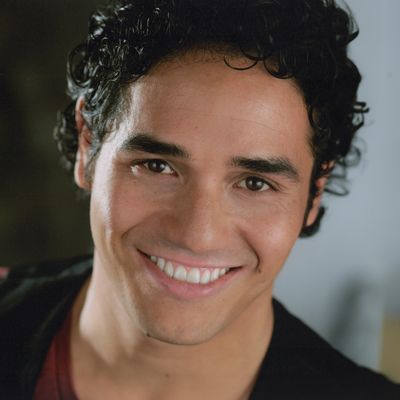
Grammy and Drama Desk Award Nominated Actor, Adam Jacobs joins the podcast to discuss his upcoming docu-concert, Behind The Curtain with Adam Jacobs. Adam gives a peak behind the curtains of his journey through 3 Broadway shows (Aladdin, Lion King, and Les Miz) on this episode, however he completely opens the curtains in the docu-concert... Read More
From the show: Take A Bow
Guests
Featured Shows

About
Grammy and Drama Desk Award Nominated Actor, Adam Jacobs joins the podcast to discuss his upcoming docu-concert, Behind The Curtain with Adam Jacobs. Adam gives a peak behind the curtains of his journey through 3 Broadway shows (Aladdin, Lion King, and Les Miz) on this episode, however he completely opens the curtains in the docu-concert. It is currently available to preorder on the iTunes store. With a background unlike any other and playing the title role in Aladdin for 7 years, his stories never failed to put you in disbelief or put a smile on your face.
We wrap up the episode with a discussion about another upcoming project called Last Call in the Dog House. Which leads to a discussion about the divide in actors of the theatre and film industry. Jacobs also shares his point of view on the difference between stage and camera acting. A fun and insightful episode you won't want to miss. *Special "Thank You" to Bruce Reissman!*
Adam Jacobs, Curtain Up!
Connect with Adam Jacobs on Instagram: @adamjacobsnyc
Connect with Take A Bow on Instagram: @takeabowpodcast
Connect with host, Eli Tokash on Instagram: @tokash_eli
Produced by the Broadway Podcast Network
Edited by Tessie Tokash (@tessietokash)
Transcript
This transcript was automatically generated and might contain errors.
[0:00] Eli Tokash: Hey everyone and welcome to episode 48 of Take A Bow. I'm your host, Eli Tokash, and this episode is literally one of my favorite episodes. It was so much fun. We have the prince of Disney on Broadway, basically. I mean, he's been in like so many Disney on Broadway shows, so I think it's fair enough to give him that title. And he's played a prince in the majority of those shows. So we have an exciting episode this week with the prince himself, Adam Jacobs, and he comes on to talk about so many fun upcoming projects that he's been working on during the pandemic and beforehand, everything like that. So I cannot wait to share this one with you guys. But before that, let's turn it over and let's talk about some Broadway news.
[0:50] Eli Tokash: Oh my goodness. So first of all, I want to shout out that Covenant is officially on Amazon Prime, and the Mighty Ducks has been officially on Disney Plus. This past episode of the Mighty Ducks was just amazing. And everything that you wanted to happen happened because we discovered that we love a good show tune in the Mighty Ducks. Shockingly, it's of course playing with my heartstrings some more and including show tunes with hockey, and I could not be happier because previous guest Luke Islam sang, and it was just incredible just the way that they like figured out a way to let him sing and do his thing. I was so happy. The second he started, like you could totally tell, like that was the moment that he was gonna sing.
Like you could totally tell that it was coming. And like then he starts, and then you're like, yes! Like this is everything you wanted. So it's so good. That's episode four, and then episode five comes out tomorrow on Friday. So yeah, it's amazing. It's a lot of fun. It took a second to pick up, but once it picked up, I think it's been a really great show and it's got a fun storyline going. The team name is so funny. They're called the Don't Bothers, and it's awesome. It's a bunch of misfits, and it's really cool to just see a bunch of theater actors playing hockey. It's awesome. So it's really fun. It's a lot of fun, especially if you like Broadway because they're doing a lot of fun stuff. They have a lot of actors in it from theater and everything like that. So go check it out. Covenant and the Mighty Ducks. Fun stuff.
[2:38] Eli Tokash: Oh, and by the way, if you're listening to this like at midnight or like early Thursday morning, drop what you're doing and actually just keep listening to this and just start getting ready and hop on a subway or a car, and you can finish listening to the rest of the episode that way. Um, and go to Columbus Circle today at 1 p.m. March on Broadway is happening in Columbus Circle, and this was organized by really the Broadway community, the people, the performers in the industry who are demanding change surrounding all of the stories with Scott Rudin and the issue of transparency from the Actors Equity Association, which is the union that we're all under, and the overall lack of representation for the BIPOC, AAPI, trans, non-binary, and gender non-conforming communities that have all come to light during the shutdown of Broadway.
So go check that out. There's gonna be a bunch of Broadway performers there because we organized it, we're leading the way, and it's also open to the public. It's happening right in the heart of Columbus Circle at 1 p.m. It starts. So if you can, if you're close to New York or whatever, and you're hearing this in time and you've seen posts on Instagram, I definitely encourage you to go to that tomorrow and go fight for what's right.
[4:01] Eli Tokash: And speaking of all these stories surrounding Scott Rudin, okay. So I mentioned last episode that I was gonna keep you all updated on whenever we got more information and what else would happen throughout this process. And of course, there was a lot. So Scott Rudin finally took steps in the right direction, and he decided that he was going to step away from his Broadway productions. Now, step away is not what overall needs to happen, but it is a step in the right direction, and it wasn't announced right then and there that he was also gonna step away from the film industry and his projects going on in film and streaming platforms and stuff like that. But then it came out a couple days later saying he was going to just take a step away from the whole industry of the entertainment industry itself and seek help and figure out and take the proper steps to hopefully get back on the right footing.
So I'm not sure what him stepping away means for Karen Olivo. I mean, I mentioned last episode that she was like, you know, I'm not coming back to Moulin Rouge because it's not like I want an industry that cares more about the people instead of the money that they're making and everything like that. Just an inclusive community, you know, and with him stepping away, I'm not sure how that influences her decision, but I will keep you updated if anything comes out about that.
[5:39] Eli Tokash: So, with that being said, a lot of you know, entertainment lovers of both the theater and film industry, they both actually called upon Sutton Foster and Hugh Jackman and you know, like the big names that were surrounding Scott Rudin and his productions to speak out and address the situation. Um, and this weekend, of course, Sutton Foster and Hugh Jackman both spoke out about the situation and saying, like, you know, it's unacceptable, we're trying to figure out a new team and we're taking the necessary steps. They apologized for not speaking out right away. They were just handling their situations off social media and privately, and now they're looking for a new team and figuring out what they're gonna do as far as Music Man is concerned.
Obviously, they will continue doing it as of right now, and we'll see what happens with all of that. So that'll be very interesting. Also, the theater performers and the theater workers were also calling out the Actors Equity Association, which of course is the union that I've talked about here before, and it's the union that we are going to challenge tomorrow with the March on Broadway. The theater workers and the theater performers in our industry were calling out Actors Equity, and they were hoping that they would put Scott Rudin on the do not work list. You know, the Actors Equity Association has this list where basically it's a list of people who you don't want to work with because of their behavior and their past and everything like that.
So theater workers and theater performers are aware of this, and they called on them to put him on that list, and they replied, and they said that they will not be doing that at this time. So that's partially what the March on Broadway marches for tomorrow at Columbus Circle, as well as many other topics that have needed marches for quite some time. Um, and hopefully that can actually impact some change because it's time for change. This is a great opportunity for Broadway to get back on track and be inclusive as possible and open better than it ever was before. So it's cool to see everyone, you know, coming together and trying to make Broadway better for when it does reopen.
[8:06] Eli Tokash: And with that being said, when Broadway does reopen, they're currently finding policies to figure out, you know, just the situations of what it's gonna be like when Broadway does reopen. And it seems like there's been a couple proposals that Broadway will reopen with less than eight shows a week. So definitely two shows a day were gonna be like no-goes, you know. So I figured it would probably be around six. They would do one a day, they'd have time to clean it during the day and after the show and everything like that. But they're actually coming out and saying that their current talks are starting at four shows a week. So maybe like every other day, and that way they have time to just disinfect the whole theater and take the proper precautions that they need to prevent the spread of COVID-19, of course.
So that's currently what it's at, and it seems like that's what it's going to be when it does reopen in September. But of course, as always, that can change. These protocols and the schedule and everything like that has changed millions of times throughout this whole process. So I'm sure there will be a change and I'll update you. But that's the latest word on that. So it'll be interesting to keep up with that.
[9:22] Eli Tokash: I don't know about you all, but I've had a really fun week. This week is the start of the one-year anniversary celebration of Take A Bow. We actually released our first episode, not even knowing that we had released our first episode. And that's how new Sydney and I were to the podcast world that we are in now. Our first ever episode came out on May 7th. So in two weeks, Thursday, May 6th, it'll be our 50th episode, but it will also be our one-year celebration. And I have to say, this week I've been trying to find guests and doing all these things to just have an exciting, you know, one-year anniversary celebration. And boy, have we found an amazing and awesome and fun and just great names. We have a great lineup coming at you these next couple weeks.
I'm so excited to share them all with you. And we're gonna kick it off today with Adam Jacobs. A little bit more about my week because I actually taught my first class this week. I just want to shout out to all the kids who either showed up and took this class that I was involved in, or just everyone who's involved in the program in general. Um, and thank you if you're listening. We got to talk a little bit about the podcast there, and I taught like, you know, just singing, and it wasn't like singing like vocally, it was more of the storytelling of the song. And I have to say, it was just amazing. It was the most fun I'd ever had. I had learned more than probably I was teaching the other kids.
I had learned more and was able to take more away from them and what I was kind of telling them by watching them. And I just have to say shout out to Trent Soyster for bringing me on to that. It was a blast, and who knows, maybe there'll be some more teaching opportunities for me, and I'll keep y'all updated if any of y'all want to take a class from me. It's been a lot of fun, and I definitely want to continue doing it.
[11:33] Eli Tokash: So, with that being said, we also have some exciting merch coming out for our one-year anniversary as well. So keep an eye out on our website and follow along, and that's at takeabowpod.com. So this week's drama dictionary word of the week is going to be showmance, and honestly, I would not usually do this word, but this word is in honor of Adam Jacobs, who is our lovely guest this week, and we talk about in his new project that he's doing, one of his new projects is a docu-concert. So he did a 54 Below concert about his life, and they filmed the concert, right? But they also took him aside and were able to do some interviews with him, and it was just beautifully done. It was literally like a documentary about his life, and then of course, like in a concert way, because he sang a lot of songs relating to his life and his story, his journey to Broadway, his heritage, and everything like that.
It was incredible. But a big theme in this Behind the Curtain, which is what it's called, and that's what he called the show as well. The big theme in Behind the Curtain is showmance because that's how he met his wife. So a showmance is, if you haven't guessed by saying that's how he met his wife, is a show romance, and he explains it so beautifully. So a showmance is of course when you're in the same show as the person that you either have a crush on, that you are dating, that you're married to, whatever it may be, that you're in like a special relationship with someone that you're on a show with, and it's really interesting to I guess kind of watch a showmance because there are times where it's fantastic and everything is so beautiful and it's going right, and you think that they're gonna last forever, and then there are days where it is rough, and like everyone in the cast is like, uh oh, what is happening?
[13:46] Adam Jacobs: There's something going on, there is some tension in the air, and it is terrifying for everyone, including the two who are involved in the showman's, um, because it's a real thing, you know, like working with someone that you like have a massive crush on or something like that.
[14:04] Eli Tokash: I was in a Christmas story.
[14:07] Adam Jacobs: Oh, oh my god.
[14:08] Eli Tokash: Maybe I'll save this for the triple E segment.
[14:11] Adam Jacobs: Uh actually, yeah, that's what I'm gonna do. I'm gonna save a story about a showmance for the triple E section, okay?
[14:19] Eli Tokash: So y'all have to stay after the interview to listen to my showmance story. So, with that being said, uh, we talk a little bit about it in the interview, so I'll let him explain it a little more there, or you can check out Behind the Curtain and you can learn a lot about a showmance and his in particular on iTunes. It's available for pre-order today. And with that being said, let's just turn it over to him. Adam Jacobs, curtain up this week, we have the Prince of Disney on Broadway.
[15:10] Adam Jacobs: He is an award-nominated actor who is most well known for his performance of Aladdin in Aladdin. Uh, and now he's been working in the new facets of the industry, going into film and TV and everything like that. Um, and he's working on a lot of new projects, uh, including a produced docu-concert of his cabaret show Behind the Curtain. So, everyone, welcome to Take A Bow, Adam Jacobs.
[15:33] Adam Jacobs: Hello, Eli and everybody. Thanks for having me.
[15:35] Eli Tokash: Thank you so much for coming on. I'm so excited. Uh, I was able to watch your docu-concert, by the way. It's incredible, and I can't wait to get into all of that. But before we do, let's start at the beginning. How did you kind of get into theater? What inspired you to just be like, oh, that's what I want to do. I want to be on a stage.
[15:54] Adam Jacobs: Yeah, sure, of course. Well, I started out, you know, seventh grade. I played Oliver in Oliver Twist. Yes. And then in eighth grade I played Curly in Oklahoma.
[16:05] Eli Tokash: Oh my God.
[16:06] Adam Jacobs: Yeah. So and even before that, I was performing as like a pianist because my parents put me in piano really early on, like age five, and I was doing piano recitals. Um, taking class at the San Francisco Conservatory of Music and taking Solfège and you know all that stuff and learning music. So that I really started with music and then kind of transitioned into theater really young, you know.
[16:33] Eli Tokash: Yeah.
[16:33] Adam Jacobs: And then in high school is where I really kind of like cemented it for me in terms of wanting to pursue a career in the performing arts.
[16:41] Eli Tokash: So basically like as you did it you kind of just continued to fall in love with it and that's like that's what you wanted to do.
[16:47] Adam Jacobs: Yeah.
[16:48] Eli Tokash: That's awesome.
[16:48] Adam Jacobs: Yeah pretty much. I also had like a really strong mentor in high school. He was my English teacher and also my drama teacher and he cast me in all of the roles. Um, you know I played Che in Evita, I played Billy Bigelow in Carousel. Yes. And I was Mr. Drummond in Inherit the Wind play. So like all these cool, you know, I had to like age myself with gray stuff in my hair. And I played all these great roles and you know he was like just so you know you have the potential to do this for a career if that's something you want and up until my junior senior year I wasn't particularly sure if that was going to be something I wanted to do and he kind of flipped the switch in my head and it made me think about it seriously.
[17:36] Eli Tokash: And sometimes it all it takes is just you know one person to do that, and for sure.
[17:41] Adam Jacobs: After that, I applied to NYU and got into the Tisch School of the Arts and the rest's kind of history.
[17:48] Eli Tokash: That's awesome. So do you think like, you know, kind of being so musically inclined, just starting out with music and piano and everything like that, do you think that has like kind of influenced and like helped you as an actor and a performer in general?
[18:03] Adam Jacobs: Well, for sure, uh, it's helped me with auditions, okay, for example, because a lot of times you'll get material and you have to learn it in two or three days and then go in and perform. Right. And if you have a strong music background, you can kind of already know what the notes are and focus more on the storytelling and the acting. So that's an advantage for sure when you have a limited amount of time. And then in terms of just uh approaching everything from a musical perspective, I think, you know, I'm drawn to types of shows and musicals that have strong, you know, a score, you know, anything like uh Sweeney Todd, you know, by Sondheim or Light in the Piazza by Adam Guettel, like think songs, shows that have such a kind of a classical base, like I'm always kind of drawn to those. And um anyway, it's just my taste and it's kind of directed me a, uh, somewhat in my career, I'm trying to say.
[19:03] Eli Tokash: Okay.
[19:04] Adam Jacobs: Yeah, yeah.
[19:04] Eli Tokash: So it definitely has played a role.
[19:06] Adam Jacobs: Yeah, that's awesome. So then after like, you know, you're doing piano recitals and everything like that, you go to NYU Tisch, and then you end up making your Broadway debut in Les Mis. So, like, first of all, I mean, it's one thing to make your Broadway debut, but also to like do it in such like a huge show that's so like classical theater, so well known by everyone in Les Mis as a lead role. Like, what was that like for you? Like, how cool was that experience?
[19:34] Adam Jacobs: Oh, that was incredible. I mean, I should say, you know, I played Marius on the road for about a year first. So my big break really came in playing Marius out on the third national tour. And then when the revival came up, all of us in the cast had a chance to audition. And fortunately, uh, myself and my co-star Ali Ewald, who played Cosette. Yes, the two of us, they kept us from the tour and brought us to the 2006 revival. Um, which, you know, a lot of people didn't make it from the tour to the show. Right. You know, being part of a non-traditional cast of um Les Misérables, you know, we had Norm Lewis as Javert, we had uh, Fontaine was um Daphne Rubin-Vega. So we had all these like amazing performers, and it was my first time in a big Broadway show, and I was learning so much just by watching how these people operate and how they rehearse and create characters, and I just remember that first opening night, how impactful it was to hear those first notes bum bum and you're backstage, and I'm just like sh my whole being is just quivering with excitement, and um, yeah, that I'll never forget that feeling.
[20:58] Eli Tokash: That's awesome. Okay, first of all, I have to mention shout out to Allie Ewald. We love her. She's been on the podcast. I did Secret Garden with her. She's the best. I love her.
[21:08] Adam Jacobs: So obviously, you mentioned you did a lot of shows in California, Oliver and everything like that. You went to NYU Tisch and everything, and you were doing shows as you before you made it to Broadway, of course. But what do you think was the biggest shock to you when you came to Broadway? Like what was the biggest difference for you in your first show?
[21:26] Adam Jacobs: Yeah, you know, I'm trying to think like what the big if there was anything that shocked me. Because I knew I knew it was like the big leagues, you know. You're here, you're with the cream of the crop, you have musicians that have trained at Juilliard, you have all of these, you know, really professional stage hands and crew and stage managers, and it's like it's a machine, essentially. And you have people who are like really good at what they do. Everybody on that team, um, and I'm talking, you know, everybody from front of house to everybody. It's like just a big production, and they're all professional and really great at what they do. So, in that sense, I felt a lot of respect uh and a lot of I felt a uh very privileged to be in that company.
It's like joining an elite, you know, club. You're like, I've broken in, right? I think what kind of surprised me was the fact that you know, a lot of these they they're just they're they're people, they're they're not god, right? You know, they're not like these superstars that I had kind of built up in my mind. I think I came to realize that it's a community, yeah. They support each other, they go and watch each other's cabarets and you know that sort of thing, and they all pitch in for the charities, Broadway Cares Equity Fights AIDS and doing exactly benefits and events for that kind of thing. So it was really uh refreshing to see how much love and support was in that community.
[22:57] Eli Tokash: Yeah, that's so that's it's so true. And that's such a great answer. This is so interesting to me because I didn't realize that you went on the Les Mis tour and now because I know like you did the Lion King and Aladdin tour. So like now I know that all like three of your Broadway shows you also did the tour. That's so awesome to me. And I we'll definitely talk about that. But you have an interesting experience uh in your experience in getting the role of Simba in the Lion King. I would love to talk to you about that. I mean for those listening they'll get this reference but it seems like this Lion King audition kinda is the adult version of the Matilda audition for the kids. Um it's pretty grueling. So just to yeah so what was your uh experience like?
[23:40] Adam Jacobs: Yeah, I mean it was this r it was almost like a uh the Iliad and the Odyssey right it was this this epic journey for me to go from from auditioning in college to over the course of like eight years of me auditioning for this part you know going in half a dozen times at least and then to finally booking it uh like eight years later out of college like it just took so long but you know it's it's amazing how I was able to go in and and audition and they gave me little the casting director was telling me things like you um you can do this. So they were giving me hints like they weren't saying like thank you, bye. Right. They were saying, why don't you take this with you and then go work on it, and then maybe I'll see you again next year. It was essentially like that.
[24:40] Eli Tokash: Sure.
[24:40] Adam Jacobs: And most people a lot of people would be like, oh, you know, that's they're just whatever. But I was like, you know what? I'm gonna believe you. I was a little naive, but at the same time, I did think that he was trying to help me. Um, casting people, and they're trying to because ultimately you can't think of casting people as your enemy. They are trying to help you book the role most of the time, right?
[25:09] Eli Tokash: Exactly.
[25:09] Adam Jacobs: They want you to be the person when you go in the room to to so that makes their job so much easier um when you when you can nail it. Anyway, so I go in and I get cut. I go in again, and um I get cut, but he's like, you know, you're you're on the verge. I essentially had to grow into the role as I aged and I had a little bit more life experience. I um put on a little bit of muscle because I had just finished Mama Mia. Walked up for Mama Mia National Tour, so I played Sky in that one. Amazing, and so you know, by the time I actually got cast, I was completely different person, essentially, from when I was in college. Sure. And and by then, that's when everything started to click and fall into place, and um, you know, that's when I went in and I went I had a callback and I danced, but then uh we love dance calls, but yeah, but then but then you know I got to the end and and everything just kind of fell into place. I felt really like you know, connected to what I was doing, and and the result was um yeah, they bought it.
[26:21] Eli Tokash: Unbelievable. Hey, I mean it worked out, right? That's all that matters.
[26:25] Adam Jacobs: But it's so interesting. Like it's so unique, but also like it's so relatable just to like continue to audition for the same show for so many years, you know, like a lot of people would be like, ah, yeah, move on to the next thing. But exactly I just felt like I felt like there was this chance. I felt like I had a chance. Like I knew that I was getting better each time incrementally. And so and I and and I was becoming more and more familiar with the material and relating to the character more and more as I grew as a person. So um that's amazing. Had a sense that if I just kept going that it would work out and lo and behold it did. I was lucky. So in your docu-concert, right, in Behind The Curtain?
[27:13] Adam Jacobs: Yeah, you mentioned that like the music director had approached you. Yes, yes. Do you think that like he like by him approaching you to like originally audition for it, do you think that like also had an influence on why you kept going? Um well it definitely influenced me to first go in in the first place because at the time I I I wasn't even on my radar as well actually, you know, I was so green I was non-union and I was like yeah I don't even know how people get auditions, right? And the fact that this guy in the music director of the Lion King approached me after one of my college productions and said, um you should come in um and I was like okay, you know and that that's kind of what set me on that path and it made me feel like it was something that was possible.
[28:03] Adam Jacobs: So in that sense, he gave me confidence and planted that kernel of faith. Right that this is something that could work out for me. Wow. That's so cool. Yeah. And then of course, you know, you work with Disney on Broadway and then of course you work with Disney on Broadway again in Aladdin, which by the way, love the genie lamp behind you. It's a beautiful touch.
[28:28] Adam Jacobs: So you were in Aladdin for seven years you were involved in that process. Yes. Um what was like the biggest like change I guess. So I mean you're with a character for so long and you're able to find out these new things in several different productions around the world in Toronto and in Seattle and in Broadway and on tour and everything like that. How do you think your relationship with Aladdin shifted?
[28:53] Adam Jacobs: I think it definitely shifted once my kids were born. Um I'm a father of twin seven-year-old boys now. But they were born first day of rehearsal for Aladdin on Broadway. Oh my God. Yeah so from out of town tryout in Seattle to out of town tryout in Toronto to then opening the show as a father, like that that was a huge for me just mentally in terms of you know where I was coming from and uh Right. And singing Proud of Your Boy for example like you know that as a parent singing that song it's completely different from when yeah you're one kid for for example, right?
[29:36] Adam Jacobs: So um the show, you know, I felt like I discovered and I feel like the show really got better as the longer I was in it, which is weird because most of the time actors feel like you know they're losing it the it's becoming lackluster and and um you know it's becoming stale. But I felt like I was able to find discoveries and and um I don't know, it just was interesting to me. And and I I don't know if that's just how I've operated in general, but I do feel like most of the time the longer I'm with the role, the more nuance I could add to it, the more you know I can find things, the longer I'm with the material.
[30:16] Adam Jacobs: And um totally yeah, I don't know, it's just interesting. And I love too what you said, like in the in Behind The Curtain, you mentioned that like you know, when you're with a piece for so long, you you find ways to keep it fresh, and you play with like the words and the lyrics and everything like that, and it's so interesting because the other day I was just having this conversation about how I like even on opening night, I don't think like my friend and I, I don't think we've ever done a show that has actually stayed true to the entire script and lyrics, you know, like like ever.
[30:52] Adam Jacobs: So it's so like relatable from an actor's perspective. Right, right. Don't tell the writers this, but the script is just the guideline, right? Yeah. And it's so fun too, like because you know, I was like when you're a child actor, you know, you have to you can't perform all eight shows a week, so you have multiple rotations of kids going into a show, and it's like completely different. And like those shows, when you have those other kids, they're totally saying different lines, and it totally keeps you on your toes. It's awesome.
[31:25] Adam Jacobs: Um so I was like, when you said that, I was like, Yes, I know exactly what he's talking about. That's so true. Whenever a new genie would come on as Aladdin, oh yeah, you know, they gave that role some artistic freedom so that whenever he came in, there he could throw in some new jokes, you know, for example, and oh wow, always kept it fresh for me. So I was always excited when you had an understudy.
[31:50] Adam Jacobs: And and as James, you know, who won the Tony for the role, James Eigelhart, right? Uh, he would be playing around and doing different things from show to show as well. So it never felt stale to me. That being in that show was fun every single time. Oh my god, that's incredible. Plus all like the magic and everything. I mean, the set is just insane. I mean, I'm sure there's definitely details that are different from show to show that the audience don't even realize, you know.
[32:20] Adam Jacobs: So I'm sure that also helps in keeping it fresh. But let's talk about Proud of Your Boy. You mentioned it. It was a cut song from the movie, and now they were able to debut it on Broadway. So, like, first of all, what was it like to like debut that song as part of the Aladdin story?
[32:37] Adam Jacobs: Well, I was so grateful that they brought that song to the musical, not only because I love that song, but um, you know, I worked with Alan Mencken with this production, and he kind of confided in me how much Howard Ashman really loved that song. And um, you know, they they fought really hard to keep that song in in the film, but because of time constraints, they had to they had to cut it, and they were really, really sad about it.
[33:09] Adam Jacobs: So when we brought it back for the musical, and Alan heard me sing it and perform it, you know, he came up to me and said, Howard Ashman, I'm sure is just in heaven right now, you know, literally, right because of um, you know, you performing the song so well and doing doing it justice, essentially. And I was so touched by his praise and and I'm just happy to, you know, to do it justice and and to honor him in that way.
[33:42] Adam Jacobs: Um, because it it is. It's just a beautifully written song, and they did a phenomenal job. And and I'm and I'm again, I'm just so glad that Disney Theatricals and Casey Nicholaw and everybody decided, yeah, we have to have this song in the Broadway production.
[33:56] Eli Tokash: Yeah, I mean, it's so beautiful, like for so many reasons, because it's also too like everyone listening to the song can relate to it. Like everyone is a child, you know, like everyone, whether you're singing to a your parents may have n are no longer here, but like that even increases the meaning of the song. Like, you know, like it's so just beautiful, like the story and everything in that song. Was there ever like a version of the musical that didn't have it? Or like uh like did they always have it?
[34:26] Adam Jacobs: Yeah, well, I mean, well, in in our production, they always had it. Um but you think of previous i for example in the theme park production, they didn't they didn't have it then. Um so this was the first time that they brought it back, you know, uh for real and integrated it into the story.
[34:45] Adam Jacobs: Yeah, yeah. And you know, the the film was action adventure based, and ours was more musical comedy based. So it had a different it had a different tone and and it hearkened back to the original vision of Aladdin, which is that's kind of how they wrote the show. Um when they first put it together. So the fact that we were able to to do that as well and create the genie as this kind of Cab Calloway figure, you know, again, um, was it's just was you know how it was supposed to be done originally, and and yeah, it's it's amazing.
[35:19] Eli Tokash: For sure. Wow, that's that's so cool. I I I love the whole I love the process of like just getting a show to Broadway and just seeing like cut songs and how they add it back in and everything like that. So thank you.
[35:32] Adam Jacobs: Like, I don't know, just I couldn't imagine just the feeling of like Alan Menken coming up to you and just being like, you know, Howard Ashman is like so like happy right now. That's so cool. So let's talk about Behind The Curtain because we're talking about songs, and I watched it and I the whole time I was just like, How?
[35:55] Adam Jacobs: Like every time you went into a new song, I literally said to myself, like, how because and I'm gonna tell you, like, not only were all of these songs like the best musical theater songs ever, but they were also like so perfect for you and your story. How did you like come up with that set list and how did you like manage to you know put it in the order that it was in to make it flow the way it did?
[36:22] Adam Jacobs: Oh well, thank you. Um well I I loved all the songs that were in there, and and I think I I approached it first from the story, you know, and how because I I wanted to be able to share my life, and then I thought, now what songs will fit what I'm talking about?
[36:40] Adam Jacobs: So it was mostly from that perspective, but then every once in a while you'll have a song like Why God from Miss Saigon, and I'm like, I want to be able to fit this into my story. So sometimes I would take a song and fit it in, but other time most of the time I would have the story and fit the songs in that way. You know, it's it's like when you write a musical, do you write the songs? Do you write the lyrics and the and the music first, or you write the story first?
[37:04] Adam Jacobs: It's the same idea. It's like when you're creating something, you don't necessarily have to pick one way or the other. It could be a mishmash, and that's kind of was a messy creative process to create this thing. But I was very happy in the way it turned out. It definitely felt like it had a flow. And I'm very glad that you that you enjoyed the the the songs we chose.
[37:25] Eli Tokash: Oh my god. And they were like, oh, like every time I was just like, oh my god, I could listen to him sing 24-7, but also like bringing me to tears because you're like totally giving us the background and what you're using as an actor to tell this story of the song.
[37:41] Adam Jacobs: Like it's just like it's it's just so moving. Um, and it was just so beautifully well done, too. Like, you know, sometimes it and this is a question that I want to ask too. Like, with when you do a live performance and you're doing it with a bunch of cameras, you like you're not sure how it's gonna turn out and if it's gonna be distracting and everything like that.
[38:00] Adam Jacobs: But there was never a time where I was like, I'm watching this through a bunch of different cameras that keeps like giving me new angles and everything like that. I was like, no, I'm totally watching this live at Feinstein's, it felt right, and I think they really did a good job of capturing the rawness and the live aspect.
[38:18] Adam Jacobs: Um, you know, it's not it's not like a lot of the these concerts that you can see now that are just huge production value lights and everything. This felt more you know, what we did was very intimate and real, and it was the very first time I had performed all of these songs in their entirety for an audience.
[38:36] Eli Tokash: No way.
[38:37] Adam Jacobs: Yeah, that was the first time, and they and they recorded. So that that really you can see everything that happened on that film was was new, was was the first time.
[38:48] Adam Jacobs: So wow. And we kept and I think they captured it really well. You know, they had like five cameras with the GoPros.
[38:54] Adam Jacobs: Yeah. You know, that was a testament. That I have to credit my producer Bruce Reissman for uh doing all that and and capturing it so well.
[39:01] Eli Tokash: Yeah, I mean, the way it opened up with you singing on Broadway, but like also like you were going through the audience and like the camera was walking or moving with you, like it was just like so cool. I was like, I'm sitting front row right now, not a big deal.
[39:16] Eli Tokash: Wherever he moves, I'm front row. So I have to ask, like, this is your first time doing it. You're you're surrounded by a bunch of cameras and everything like that. And I don't know, like if whenever I do like cabarets and like one night performances or whatever, I'm more nervous for those than like doing an actual show.
[39:33] Eli Tokash: Like, what was that like for you? How were you preparing for this? And like how like just knowing that like this is your first time and it's gonna be seen by literally almost anybody who wants to see it.
[39:43] Adam Jacobs: Yeah, I mean, I had to kind of throw out of my mind or take out of my mind the idea that this is gonna be a perfect show. Like, you know what I mean? Like you put a lot of pressure on yourself. It's like no, I'm gonna do what I know how to do, and I'm gonna get up and perform my stuff and not put pressure on myself to be perfect or to change myself in that way for the cameras. The cameras just happen to be there, and they're gonna pick up what's, you know, a live performance, and I'm gonna talk from my heart. I'm gonna, you know, tell people about my life and my experiences and funny things and sad things, and you know, and I'm really sharing it for the people in that room, right? And then the camera is just a bystander and they pick up on, and then we, of course, my producer had the great idea of throwing in some interviews, you know, some little things to splice it, splice it and spice it, make it more interesting, and I think that was a good decision as well.
[40:46] Eli Tokash: Well, yeah, I wanted to ask that because you're also like telling the story, right? And like as you're talking, I don't know if this was able to also be there at the live performance, like on a screen behind you or something, but as you're telling these stories, you know, like you're seeing a slideshow of photos of like your family and you as a younger kid and everything like that. Like, was that like kind of your idea and like you saying that you wanted that to be put in, or was that like kind of like a collaborative thing?
[41:13] Adam Jacobs: It was a collaborative thing. We wanted to figure out ways to make it as personal as possible. And obviously throwing in images of my family and, you know, I talk a lot about my grandfather who came over from the Philippines, like, you know, all that stuff just helps inform the audience, you know, about me and where I come from and then also throwing in those little small interviews, which we did on the day, you know, a lot of those interviews in the space. And yeah, you know, we just kind of created and tried to capture as much as we could, essentially. And I think what came out was pretty cool. I think at the end, you know, the second half of the concert, I think people will be surprised to see some of the rock and pop stuff that they maybe not really associate with me, you know, the Disney Prince, you know, rocking out to Journey, you know. So I think some people, it'll be fun for some of the fans out there to see another side of me.
[42:15] Eli Tokash: Yeah, totally, totally. And you totally, like the way that you were saying, like just, I don't know, just making it personable, like and like just so real and like true to who you are. It totally, you could totally see it. And it, you totally like connected with it even more and it's like even more enjoyable because it has that aspect of it. But I also I wanted to ask too, you mentioned like you, the second half of the scene is more rock and pop and stuff like that. But you also ended it with one of my favorite songs ever, "Bad Habit" by Ben Platt, and like I just wanted to ask, like, so I mean, it's literally you don't have many non-musical theater songs in it, but like this was one of the like rock pop songs. So like what was that decision like?
[43:04] Adam Jacobs: I love Ben Platt. I just love his work and, you know, I just wanted to do something of his and it just, that song just spoke to me. It just like, it's one of those songs that got stuck in my head. And I kind of ended up singing a lot in the shower and at home and I'm like, you know what, I think I wanna perform this and, you know, we'll figure out a way to make it work and yeah, and we did it.
[43:32] Eli Tokash: Yeah, no, it's so true. So that's kind of what you, you answered my question because I was wondering like, it was just you put it in so beautifully and I was wondering if it was one of those things that just was like organically that happened that you were like, this is perfect for that, or if you just wanted to like sing it really bad, like kind of like what you mentioned before.
[43:51] Adam Jacobs: Yeah, it was kind of both. You know, I was thinking of, you know, the storyline and I was thinking of Ben Platt's songs. You know, I was thinking of everything and kind of just, you're like creating this puzzle essentially, and you're taking different pieces and you don't know what the picture's gonna be when you put it together, you know. That's kind of how it is.
[44:11] Eli Tokash: Yeah, and I love it too because it all like relates to, you know, your relationship with like your family and everything, your wife and your kids and everything like that. You talk a lot about that actually, and you also talked about like, you know, your background. You have such a unique background, like how has your background and like your heritage kind of influenced how your career has turned out?
[44:35] Adam Jacobs: Yeah, it's definitely had a huge impact. Being of mixed ethnicity has been so, it was tough in the beginning because I didn't know where I fit in. And then as my career progressed, I found it to be something very positive, and I was able to play a lot of different kinds of roles, and so it was, I say in the film it's like a double-edged sword in that sense. And it's definitely true because early on I had a lot of identity issues growing up. I didn't know, you know, who I wanted to be, how people saw me, if they saw me at all, you know. Yeah, like I felt like just not really Asian, not really part of this Filipino community, not part of that, you know, so it was tough. It was tough figuring out having any confidence in who you were and, you know, and what do I have to bring to the world and to the table? And it takes time as a child, as a young adult to kind of come into that and own that and realize what you can share, what you can bring, right?
[45:46] Eli Tokash: Right.
[45:47] Adam Jacobs: So, you know, I talk about that in the film and then I, you know, move on to say how it's really been a plus. You know, I kind of rode that wave of the non-traditional casting with "Les Miz." And as it was starting to crest and it's still working. You know, we're still working hard to include more.
[46:08] Eli Tokash: Absolutely.
[46:09] Adam Jacobs: And diversity and that wave is getting bigger, but I kind of hopped on it as it was just starting to form. So, you know, I feel lucky that I'm able to surf, keep continuing to surf it.
[46:22] Eli Tokash: I think in a lot of ways you kind of influenced it in a way and you kind of just helped it rise even more. There can make an argument for that, I guess.
[46:31] Adam Jacobs: Yeah.
[46:32] Eli Tokash: Yeah, totally. Well listen, I mean the docu-concert is beautiful. It's "Behind the Curtain." Go check it out. Where are people able to see this?
[46:41] Adam Jacobs: Yeah, it's gonna be coming out in the next few days on iTunes. Yeah, you can rent it there and I'll be, you know, posting on my social media. You can follow me on Instagram, Adam Jacobs NYC, and I'll be posting it all over and hopefully you'll feel like you want to check it out and learn a little bit more about me and hopefully enjoy it at the same time.
[47:03] Eli Tokash: Absolutely. I mean, listen, there's so many like amazing kind of just tips that you give subtly, you know, there's a lot of things to be learned during the whole process of it. You'll learn all about the industry. He really does a great job of really giving you guys an inside look of what it's like behind the curtain, which was, I guess, the goal. So it was beautifully done. We also talked a lot about the showmance aspect, you know. I didn't really talk about that so much. But, you know, roll relationships in our industry is always a hot topic, and so I like to talk about that in the as well.
[47:44] Adam Jacobs: Yeah, I mean there's just so many great things, and just to hear like other people's journeys through the industry just teaches you a lot, and Adam's is no different. And it's a really unique journey, too, that a lot of people can learn from. So definitely go check it out on iTunes within the next couple days. Keep an eye out on his Instagram because he'll tell you when it's out and everything like that. And you can stay up on all things Adam Jacobs as well. So, like anytime he has a new project or anything, you'll know on his social media.
[48:15] Eli Tokash: So, before we end it, I also wanted to just ask you about this new project that you're working on that's currently in post-production called "The Last Call in the Dog House." So, is this your first movie that you did?
[48:29] Adam Jacobs: It is my first having a lead role in a feature. Yeah, it is.
[48:33] Eli Tokash: Oh, wow.
[48:34] Adam Jacobs: I've done some guest starring like on "Chicago Med" and some television episodic stuff, but this is the first time I've really delved into like a character and, you know, with some meaty scenes, and, you know, just like it's a great story. I'll just like quickly summarize. I play a character named Mo. He's, in short for Moses, he's a rabbi, he's a young rabbi, and he's adopted by a biblical family. I'll say they're omniscient, and they own a bar in New York City, and at last call, somebody randomly comes in and we help them. We essentially kind of save their souls. It's kind of like "Touched by an Angel," if you've seen that with Michael Landon. Or, and it's a little bit of that mixed with a little bit of kind of "Twilight Zone" supernatural stuff that happens.
[49:29] Eli Tokash: Oh, amazing.
[49:30] Adam Jacobs: Yeah. When I read that script, I was really, I thought, what a brilliant idea. And I really wanted to take a crack at it, and I was fortunate enough to be part of it. And it's with David Chokachi, Aaron Force, like some really great people, and so that's gonna be coming out very soon as well.
[49:49] Eli Tokash: Yay! That's so exciting. And literally, this trailer is actually out on YouTube, and I watched the trailer and I was like, I need the movie. Okay, it was so cool. And like you said, like just a brilliant idea that's like definitely something totally new and a new spin on like so many things. But also, like I wanted to ask, like, obviously, you know, you've done a lot of TV and film, and you've done a lot of Broadway. Like, what do you think was the major difference in, you know, having your first feature film in or your first major role in a feature film? How is that kind of different than what you have done before?
[50:30] Adam Jacobs: You know, it was a chance for me to really explore a character in a way that I never have before, right? I mean, because film and TV versus theater, that's such different mediums. You have an audience and you're getting feedback live with an audience, but with a film, with the camera, you don't have that luxury. So, you know, you're creating into this ether, and you don't know if what you're doing is going to be perceived the way you want, and you know, you're relying on an editor a lot of the time. So, I don't know. It was just a different way to flex my acting muscles and see what I'm, you know, if it's something that is going to be, you know, an avenue for me to express myself and to be an artist in a new way. And I was excited. I mean, I am excited to continue to explore that, you know.
[51:25] Eli Tokash: Absolutely.
[51:25] Adam Jacobs: Yeah, and I wanna, I never want to feel like I'm just resting on my laurels or just, you know, coasting. I want to kind of work and, you know, stretch myself and see what I'm capable of.
[51:38] Eli Tokash: For sure. And would you like, so are you now like hoping to go more in the film and TV route or just whatever presents itself?
[51:47] Adam Jacobs: I still want to explore it more. I mean, I will always love the theater first. Yeah, music and theater, like those are things that are so close to my heart and so much built into who I am, just, you know, so much a part of me. And at the same time, like I want to see what this film and TV world has to offer. And so I'm gonna go out there, give it a hundred percent, and see if it's something that I can, you know, find some kind of expression in.
[52:18] Eli Tokash: Good for you. I mean, I have no doubt the talent is just unmatchable. It's so incredible. I love watching you perform in any manner. And you mentioned this is the last thing I want to ask you before we wrap it up, but you mentioned in "Behind the Curtain" so many beautiful things, as I mentioned before, but you mentioned this transition from being like such a, so well known for the theater and you wanna like transition into like film. And like I just wanna hear your perspective on like why actors and performers and whoever, like at the end of the day, we're all storytellers, you know.
[52:59] Adam Jacobs: I just want to hear your perspective on why there's maybe this divide of the theater and film.
[53:04] Eli Tokash: Yeah, I mean I think what you said is absolutely right in that whether you are performing on a stage or behind a camera, we are all storytellers.
[53:15] Adam Jacobs: As actors, we are trying to tell the story in a clear and effective way. And you know, there's obviously so many differences, but there doesn't have to be such a divide. I think, I mean there's the business aspect of it is what creates that sort of divide and people's perspective of it, and just the fact that TV and film is so much more widespread than right in the theater and the live experience of the theater is, you know, something that's here and gone. It's not recorded, you know. In our industry in the theater, so much of our work is ephemeral, you know, it's here and it's gone and that's it. But when you do TV and film, it's recorded and people can re-watch it and you know, and you can gain different things from re-watching it and see different things, I mean to say. So it's interesting. I mean, I think part of the thing that drew me to the TV and film world is the fact that yeah, you have a record of your work.
[54:18] Eli Tokash: Yeah.
[54:19] Adam Jacobs: I was getting annoyed with the fact that I've had a great career, except if you were born, you know, like people won't know about it, really.
[54:28] Eli Tokash: Yeah.
[54:28] Adam Jacobs: They won't really have evidence of it unless they have built a time machine and they can go back and watch the shows that way. But you know, so I was like, well, you know, why don't I see what this is about and I'm gonna try to do my best. It's a different style, you know, different medium, as you know. And so it's really cool. I wanted, like I said, I wanted to challenge myself and see, you know, what I could do, and hopefully people will like it.
[55:00] Eli Tokash: Totally. Hey, do you think that your kids are like their favorite movie is Aladdin now?
[55:08] Adam Jacobs: Not right now, you know, they're totally like Pokemon and zombies, you know, like they're seven, so but you know, it's funny. When I was doing Aladdin, they would see the cartoon version of Aladdin and the animated, and they'd be like, they’d say, "Oh, that's daddy," you know.
[55:28] Eli Tokash: That's so cute.
[55:29] Adam Jacobs: They were a little confused, they were a little confused, but you know, it was fine.
[55:34] Eli Tokash: That's awesome. Well, Adam, I can't thank you enough. Thank you for coming on. This is a blast. Everyone, keep an eye out on his social media at Adam Jacobs NYC, and look out for Last Call in the Doghouse and Behind the Curtain with Adam Jacobs because they're gonna be incredible. I saw Behind the Curtain, it is incredible, so go check it out. It's gonna be available super soon. Go follow him and Adam, thank you for doing this.
[56:01] Adam Jacobs: Thanks so much.
[56:02] Eli Tokash: Proud of Adam.
[56:04] Adam Jacobs: I'll make you proud of Adam.
[56:07] Eli Tokash: Right? I mean, come on, take a bow, Adam Jacobs. That was awesome. Okay, um, his story is so unique. I loved everything that he said about just his heritage and kind of finding who he was. You know, he's this Filipino with Russian and Polish and half Catholic, half Jewish, like all of these vastly different areas that he and his family came from, and he's just kind of figuring out who he was at such a young age and had to find that out first before he was able to become successful in the business. And I thought that was incredible, and just hearing what he said as far as you know, riding the wave of diversity in the industry and everything like that was so beautifully put. I literally, it was a blast talking to him.
I loved his stories about Aladdin. I mean, being with a role for seven years is no joke. You really have to love a character and love a show and a production and a story to do it that long, and just his story with Lion King about how he auditioned for eight years. It took him eight years to finally get the role of Simba in Lion King. And that just goes to show like everything that has kind of been said in the past 48 episodes of kind of just like, you know, not giving up and just staying true to who you are, and it'll work out eventually. Like, just it's all timing, and it's all a little bit of luck. It's all about keeping true to who you are and continuing to practice and play with who you are and your gift.
It was awesome. And Behind the Curtain, I can't say this enough. I was able to watch Behind the Curtain with Adam Jacobs. They sent me access to it, and it was just absolutely gorgeous. It was like watching a full one-act musical. It was like watching Fun Home of Adam Jacobs. I don't know, not actually Fun Home because the story is completely irrelevant to Adam Jacobs, but I'm saying like a one-act musical. It's kind of rare. And literally, I mentioned it in the interview. You're literally front row at his concert at this one-act musical. It's awesome. He literally paints a perfect picture of his life and incorporating all of our favorite show tunes in it at the same time, as well as our favorite like pop and rock songs.
Like we mentioned Ben Platt, there's Journey, there's everything. And there's this one part where I'm still kicking myself. Okay, I interviewed him a couple days ago, and I'm still kicking myself because I completely like missed the question on my list and saw it as soon as I like hung up with him. But he sang this beautiful, beautiful Disney medley, and it had Aladdin, Hercules, and it was perfect for him. It perfectly like stayed true to his story still, just to see how they all flowed together was beautiful. And I really wanted to ask, you know, like if he wrote that, if he like figured out the medley himself, or if it was written already or written for him. I don't know. I could have talked to him about that all day because I literally just stared at my TV while I was watching that.
I was like, I love every second of this. It was also just like seeing him sing an Aladdin song again was just everything that you want, you know. I mean, Alan Menken himself like came up to him and was like talking about how beautifully he sang Aladdin and Proud of Your Boy. Like, what that just goes to show you what a talent Adam Jacobs has and he has an even better story, so please go check out Behind the Curtain. It's available for pre-order on iTunes right now. And check out Adam Jacobs at NYC because he has a brand new film coming out, which is his first lead role in a feature film, and I'm so excited for it, and he'll post about that and when it's available and where it's available, all when the time is ready. So with that being said, let's turn it over to the triple E segment.
[1:00:22] Eli Tokash: I don't know. Oh my goodness, y'all are gonna like come at me so hard. This is like totally like fake, like it's not even like anything serious. So the triple E segment is going to be Eli's experience of showmances, and it was one of my first ever professional productions that I was involved in that had other girls involved. And you know, this one show, my child wrangler who is actually my manager now, knew I had like this biggest crush on this one girl, and he pulled me aside and was like, you know, like I'm gonna warn you like she's like three years older than you, and this thing called showmances are never good ideas. And I was like, what are you talking about? Like, I can handle it, I'm fine.
I talk to all kinds of girls, whatever. I was like, no, I got this. And he was like, no, no, no, like, I don't think you understand. Like, I don't know if she's interested in you. And like, kind of was like dropping hints, you know. And I was just like, no, like, it's not it. And I was like, and what are you talking about? Like, why do you keep saying like a showmance? And he was like, oh, you know, like it's this thing that is like it's this term that we use in the industry where you probably shouldn't have a relationship with a girl that you're in the same show with, especially at such a young age. And I was like, I don't know. Like, I guess I understand where you're coming from. And it turns out, like, all the guys in the show were like had a crush on her, and like they were all older than me.
I was the youngest, so I clearly had no chance, and like the older guys definitely had a better chance. So he was kind of like letting me down easy for her and also like educating me. And ever since then, I've always been like, oh my god, you can't be in a showmance. That's not okay. And like, it's just like so silly. I don't know, like, whenever you have that experience, you know, you just kinda carry that along with you in a way. And I've always just like loved when like teasing people when they have a showmance, and I'm like, ooh, where's your boyfriend? Where's your girlfriend? Like, where's your significant other? Where's your partner? All of these like fun things that like we all like to poke fun at each other.
And like that's definitely something that I've carried along with me. So when Adam Jacobs was telling me about his showmance, at first I was like, uh oh, this didn't end good. And then he was like, and then she became my wife. And I was like, oh, see, that's what I want. That is adorable. I'm so glad that it worked out for him and his wife and his two kids. Oh my god, he has two twins. They're adorable. I love that they were Pokemon fans and they were kind of confused about Daddy not being the cartoon Aladdin. And all of these things. So, it was just a lot of fun. This episode is full of fun and amazing memories. Sorry to talk about my showmance rant, but I thought it was a fun rant. And that was kind of my first ever experiences with like a girl in my professional show with me.
I was like, ooh, like, oh, I don't know who you are, but like you're really pretty and like, you know, like all of these like silly things, but I will say we've never dated, but we are friends now, so it's all good. But yeah, that's this week's episode of Take A Bow. Next week is 49, and then the following is fifty, 50 episode, and that is gonna be our one year anniversary. And that guest, oh my god, y'all better watch out. Y'all better be prepared for a few days because it's gonna be amazing, and I know you all will enjoy it. So, stay tuned. I'll see you all next week. Join me in Columbus Circle if you're able to today, basically, at 1 p.m. it starts for March on Broadway, and I can't wait to see you all next week and see what happens within the next seven days because as we all know a lot can happen.
So thank you, Adam Jacobs, for coming on, and we'll see you all next week. For this episode's curtain call, I would like to recognize a few people who also deserve to take a bow. This podcast would not be possible without the help from Dory Berenstein, Brittany Bigelow, Katie Rosen, Alan Seales, and the team at the Broadway Podcast Network. Next in line to take the bow is Tessie Tokash, who edits the audio and all the visuals for this podcast. A special thanks to patrons Brian Thompson, Pat McNamara, the listeners at PCC, as well as all the other patrons for their continued support. If you're interested in becoming a patron, go to patreon.com slash TAB. And if you enjoyed this week's episode, don't forget to subscribe on the platform that you're currently listening to this on.
Also, feel free to give us a follow on Instagram at Take A Bow Podcast. Take A Bow's logo is designed by Giselle Bustos, and the music is by Nikki Torsha and Cormac Collinon. Bye everyone. Hope to see you next week.
© Broadway Podcast Network, All Rights Reserved